Magnum, P.I. in the 80s: The Ferrari, the Mustache & the Formula

Magnum, P.I. in the 80s: The Ferrari, the Mustache & the Formula
Selleck’s charm, Higgins’ raised eyebrow, the friends behind the favors—and the stories that complicated paradise.
By Gizmo
THE FRIENDS.
THE UNFINISHED PAST.
INSIDE THIS ARTICLE19 sections • Jump to what you remember
The red Ferrari got your attention. The people around Thomas Magnum were why you kept watching.
If you were watching television in the early eighties, there was a pretty convincing argument for moving to Hawaii. It involved a red Ferrari, an oceanfront estate, a helicopter that seemed to be available whenever somebody needed it, and Tom Selleck strolling around in shorts with that mustache. Never mind that most of us would have needed three jobs to cover the Ferrari’s insurance. On Thursday nights, Thomas Magnum made the whole arrangement look perfectly reasonable.
The best part was that Magnum didn’t actually own most of it. The car belonged to the estate. The guesthouse came with conditions. His friends had businesses to run. Higgins kept a mental list of every rule Thomas had broken since breakfast. Magnum lived in paradise, yet somehow spent half his time trying to talk people into lending him things. I knew kids who operated exactly that way, except their transportation was a borrowed BMX instead of an Italian sports car.
But Magnum, P.I. wasn’t just a vacation brochure with a detective attached. Thomas had served in Vietnam, and so had his closest friends. They carried memories that occasionally pushed the easy banter right out of the picture. One week you got Magnum aggravating Higgins or begging T.C. for another free flight. The next, you got an episode that could leave you staring at the credits instead of reaching for another snack. It was an essential part of eighties television.
CBS ran the original series from December 1980 through May 1988. Eight seasons gave us one of television’s great leading men, a supporting cast that could steal his scenes, a theme song that practically announces itself in your head, and some truly memorable hours. Sure, the mysteries weren’t all winners. Sometimes the Hawaiian scenery did an awful lot of heavy lifting. But if you’ve ever put on a rerun just to spend another hour with Magnum, Higgins, T.C. and Rick, you already understand the secret of the show. The cases were an excuse to visit people you liked.
A private eye with a very unusual support system
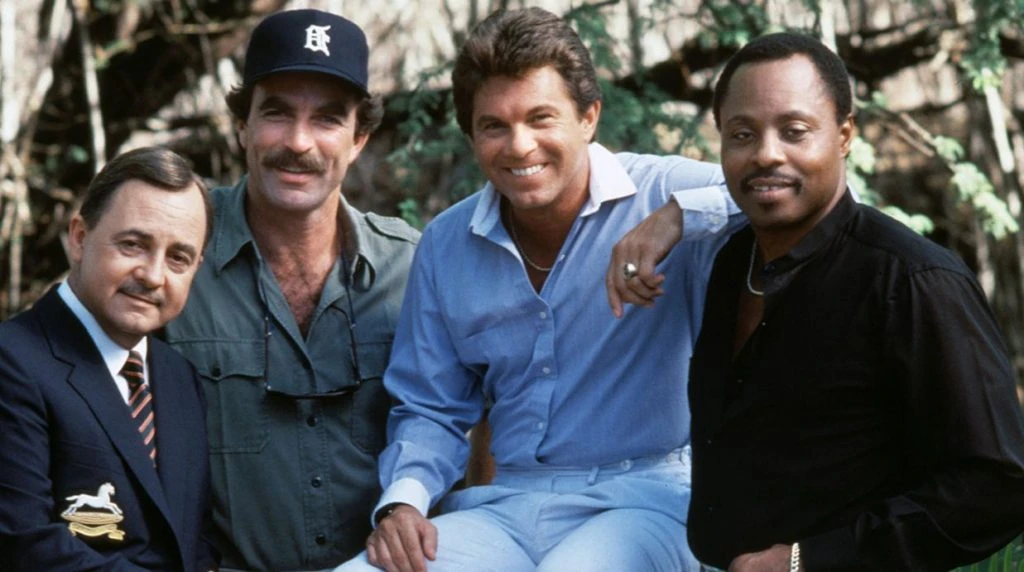
Think about Magnum’s living arrangements for a moment. He occupied the guesthouse at Robin’s Nest, the spectacular Hawaiian property owned by bestselling novelist Robin Masters. His job involved security. His benefits apparently included palm trees, access to an outrageous sports car and an almost daily opportunity to irritate Jonathan Quayle Higgins III. It was the sort of employment package that might make you overlook a few difficult coworkers.
Higgins, however, did not consider himself a difficult coworker. He considered himself the only adult on the property. Every time Thomas reached for the Ferrari keys, occupied a room he shouldn’t have occupied or decided that estate equipment could support a good cause, Higgins was there to remind him that permission was a thing people generally requested before using somebody else’s property. Magnum usually had a counterargument. Sometimes it was even a good one.
That arrangement was more than a running joke. Most TV detectives either worked for the police or maintained their own little offices where clients arrived with trouble and money. Thomas lived in a rich man’s backyard, working on cases that might pay well, pay badly or require him to spend more than he earned. He looked like a millionaire while regularly needing to borrow something from a friend. It kept him from becoming one more impossibly competent television hero whose biggest problem was finding a parking space for his sports car.
Glen A. Larson and Donald P. Bellisario created the series, and the Hawaiian setting was familiar television territory after Hawaii Five-O. But Jack Lord’s Steve McGarrett and Tom Selleck’s Magnum were two very different approaches to handling a crisis. McGarrett could walk into a room and make it an official matter. Magnum might have to charm his way in, bluff his way past a guard and then phone T.C. for a ride home. He was good at his job. That didn’t prevent him from occasionally making a glorious mess of the arrangements.
The first story, Don’t Eat the Snow in Hawaii, already showed that there was a darker history behind the smiles. A death tied to Magnum’s military past draws him into a case with personal stakes. The show didn’t wait several seasons to reveal that its laid-back detective had lived through something serious. It was there almost from the beginning, tucked beneath the Aloha shirts and the easy conversation.
And that is why the larger world of 1980s detective shows has room for Magnum alongside the tougher cops and private eyes of the period. He could handle danger, but he also had to handle friendship, bills, old obligations and the embarrassment of being caught out by Higgins. The clues mattered. So did the people who would have to come bail him out if his latest brilliant plan went sideways.
Selleck made the hero worth interrupting a Thursday for
Tom Selleck had one of those television faces you could recognize from the other side of the room. The mustache helped. The voice helped. Being about six feet four and looking entirely natural in a Hawaiian shirt didn’t hurt, either. But the thing that made Magnum work wasn’t the poster-boy stuff. It was that Selleck understood how funny a guy could be when he was trying very hard not to look foolish.
Watch him start explaining something to Higgins. He approaches with confidence, the way a man does when he’s already rehearsed the entire conversation in the shower. Higgins asks one perfectly reasonable question. Suddenly the explanation needs an exception. Then another exception. By the time Magnum gets to the end, he looks as though he’s negotiated a complicated trade agreement and somehow come away owing everyone money.
Selleck could also make you feel as if you were in on the joke. Magnum would look toward the camera, or offer one of those slightly defensive observations in the voice-over, and you knew he was aware that things weren’t going as planned. He wasn’t winking because the show was silly. He was inviting the audience into the awkwardness of being Thomas Magnum. It was a surprisingly personal way for an hour-long detective series to operate.
Then he could shut all of that down. When Magnum was hurt, frightened or angry enough to stop performing the laid-back guy, Selleck made the difference count. The eyes changed. The voice changed. There was less talking, and the whole room seemed to get colder. It helped that we’d spent so much time seeing him relaxed and joking. The darker version wasn’t somebody else. It was our guy with the easy smile suddenly unable to find a reason to smile.
He won the Emmy for outstanding lead actor in a drama in 1984, which should settle any lingering idea that the job was mostly standing beside a Ferrari looking handsome. There were plenty of handsome men on eighties television. Very few could make a borrowed guesthouse and a running argument about household rules feel like the center of a genuine human life.
One more thing: Selleck never had to make everybody else look dumb so Magnum could look smart. Higgins won arguments. Rick knew things Thomas didn’t. T.C. could tell him no and be absolutely right. That’s a pretty generous choice for the star of a show with his character’s name on the title card. And it made Magnum more likable, not less. Who wants to watch a guy who is always right? We’ve all met one. Five minutes is usually enough.
Higgins was the landlord of Magnum’s conscience
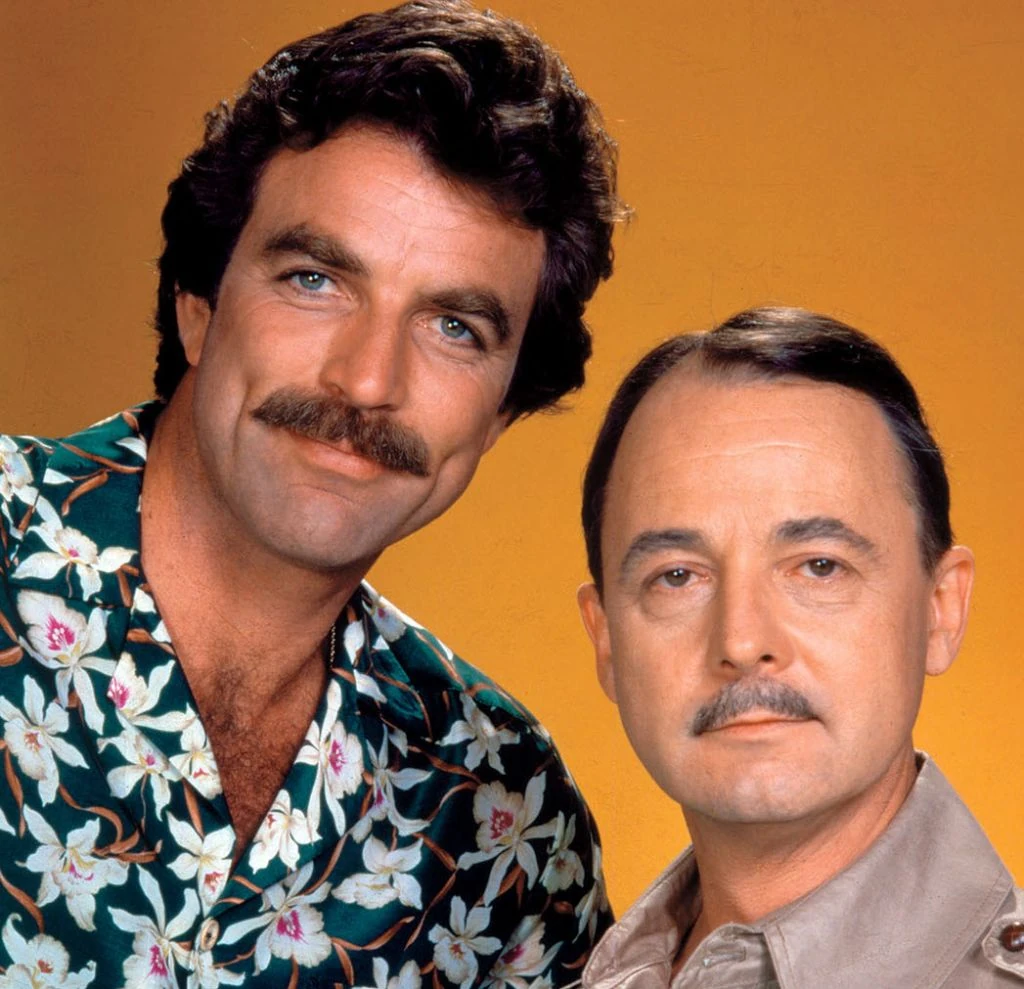
If you remember Higgins only as the British guy who kept saying no, it’s time to watch a few episodes again. John Hillerman turned a raised eyebrow into a full-contact sport. He could walk into a room, observe Thomas Magnum doing something he shouldn’t be doing and express the disappointment of an entire civilization without even raising his voice.
The two men were a terrific mismatch. Magnum considered rules a starting point for negotiation. Higgins regarded them as evidence that somebody, somewhere, still had standards. Thomas wore shorts and wanted to borrow the car. Higgins wore the expression of a man who had been asked to supervise a kindergarten run by professional criminals. On paper, one of them should have been unbearable. Together they were wonderful.
Hillerman also gave Higgins far more life than the caretaker role required. He had military stories, personal pride, hard-earned knowledge and a streak of stubbornness impressive even by Magnum’s standards. Sometimes his long stories were the joke; sometimes the joke was Thomas not bothering to listen. The more you saw of Higgins, the clearer it became that he had survived plenty before a certain private investigator began rearranging the estate’s daily schedule.
Of course, there were Zeus and Apollo, the Dobermans who made sure the rules had a little backup. Magnum could go toe-to-toe with dangerous criminals, but those dogs still found ways to make him look like a man who had entered the wrong yard. Every great detective needs a nemesis. Thomas had two with four legs and one with a spectacular vocabulary.
The arguments turned into a friendship so gradually that you could almost miss it. They continued bickering about cars, privileges and responsibilities, but when one man was in actual trouble, the other cared. You believed the feeling because nobody had to make a speech about how much their relationship meant. Years of irritation had already established how thoroughly they knew each other.
Hillerman won a supporting-actor Emmy in 1987. He was actually from Texas, a fact worth remembering the next time you hear that voice and assume somebody found him tending a country estate somewhere outside London. And the ongoing question about Robin Masters—whether Higgins might be more than the man he claimed—gave him another delicious chance to keep Magnum guessing. The show was clever not to wrap every part of that mystery in a nice little bow. Watching Higgins decide exactly how much information Thomas deserved was half the fun.
Paper War makes a household feud wonderfully inconvenient
You don’t have to begin with the big tragic episodes to see how good Selleck and Hillerman were together. Try Paper War, the 1986 installment that takes a familiar Magnum-Higgins feud and keeps pushing until the two end up stuck in an elevator. It’s the kind of setup a sitcom might use, except here we’ve already spent years learning how much these two enjoy getting under each other’s skin.
Everything they normally use to escape an argument is suddenly unavailable. Magnum can’t head out to the Ferrari. Higgins can’t retreat into the reassuring order of his estate duties. They’re standing within arm’s reach of each other, and neither man is particularly interested in admitting he may have contributed to the problem. If you have ever shared a small space with a stubborn relative, you know the general atmosphere.
Naturally, the Robin Masters question comes up. Thomas suspects there’s more to Higgins than the official story, and Higgins is hardly going to give him the satisfaction of an easy answer. It’s a mystery, but it plays like an argument between old friends who know precisely which subjects to bring up when they want to be irritating.
The episode doesn’t need a spectacular chase, an international villain or somebody arriving in a helicopter to justify itself. Two good actors, two familiar characters and a situation neither can easily escape: that’s plenty. Sometimes Magnum, P.I. worked best when the show remembered that the people arguing in the guesthouse could be every bit as entertaining as the people committing crimes outside it.
The Ferrari was borrowed; the appeal was entirely his

Let’s not pretend the car wasn’t a big deal. That red Ferrari 308 was a serious piece of eighties television real estate. You could spot it in a promo and know exactly what show was coming. It looked fast sitting still, looked even better with the ocean somewhere behind it, and made ordinary family sedans seem terribly disappointed with their own lives.
If you were a kid watching at the time, the car could easily become a future-life goal. Someday, you figured, you’d have one of those. Maybe you’d also live in Hawaii. Maybe you’d learn to grow a mustache like Selleck’s. Later, adulthood introduced concepts like insurance, repair bills and the terrifying cost of a replacement part. The fantasy suffered a few setbacks.
The really funny part was that Magnum didn’t own the Ferrari. It was associated with Robin Masters’ estate, which meant every joyride came with the possibility of a lecture from Higgins. Thomas had an exotic-car lifestyle on a borrowed-car budget. That arrangement is considerably more relatable than a hero who simply buys another one when the first gets scratched.
The Aloha shirts, shorts, sneakers and Detroit Tigers cap completed the look. Magnum seemed permanently prepared to attend a backyard barbecue, provided the barbecue had an unusually high chance of turning into an investigation. He could look completely at ease lounging around Robin’s Nest, then turn out to know an awful lot about surveillance, firearms or surviving a very bad day.
Other shows of the period also knew that a vehicle could be a star. KITT practically shared top billing on Knight Rider. Magnum’s Ferrari didn’t talk, offer advice or solve crimes. It just made every entrance look better. Thomas still had to do the detective work himself, and sometimes it might have been wiser if the car had offered advice.
The car and the mustache still turn up in every nostalgia conversation about the show because they belong there. They’re part of what made it unmistakably Magnum. But those things got you to stop turning the dial. They weren’t why you stayed through the entire hour. That job belonged to Selleck and the people he had to answer to when he finally drove home.
T.C. was running a business, not an unlimited favor service
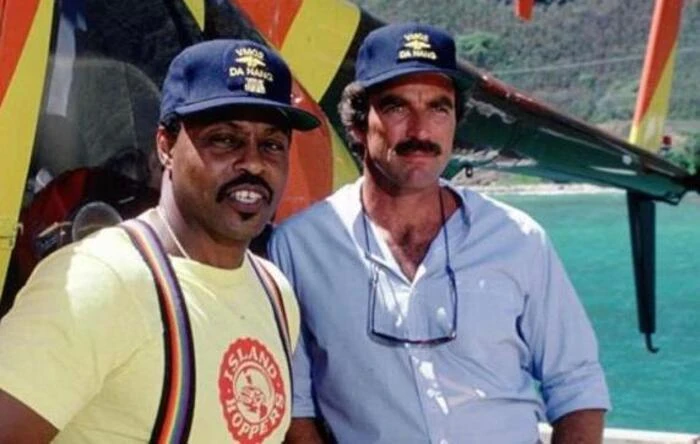
Theodore Calvin—T.C. to everybody who knew him—owned a helicopter business. This made him a very useful person to have on speed dial, if speed dial was actually common equipment in your house back then. To Magnum, it apparently meant the phrase “Can you do me a favor?” could be followed by a request involving aviation fuel, flight time and somebody else’s entire afternoon.
Roger E. Mosley gave T.C. the correct reaction to those proposals: a mixture of loyalty, disbelief and the expression of a man calculating expenses he was definitely not getting reimbursed for. When Thomas called with another supposedly simple job, you could practically see T.C. deciding how annoyed he intended to be before agreeing.
But T.C. wasn’t merely the helicopter operator in Magnum’s personal action sequence. He had his own business, his own life and his own reasons to say no. That mattered. A lesser show might have treated him as a piece of equipment with dialogue attached. Here, at least in the best stories, he was a friend who could be fed up with you and still show up when it counted.
Their history went back to Vietnam. Magnum, T.C. and Rick had shared experiences that couldn’t be explained away with one line about having served together. They had the kind of bond where a call for help meant more than inconvenience, even if somebody was going to complain loudly during the trip. The series wasn’t always subtle about that past, but it made their friendship feel as though it existed before the first episode.
Not every season gave T.C. as much independent story as Mosley deserved. Too often the job was to provide transportation and the occasional exasperated comment. Whenever the writers remembered his business, family and judgment, the whole cast benefited. The sky looked fantastic from that helicopter, but the guy flying it was worth getting to know on the ground, too.
Rick knew somebody, which was often the whole point
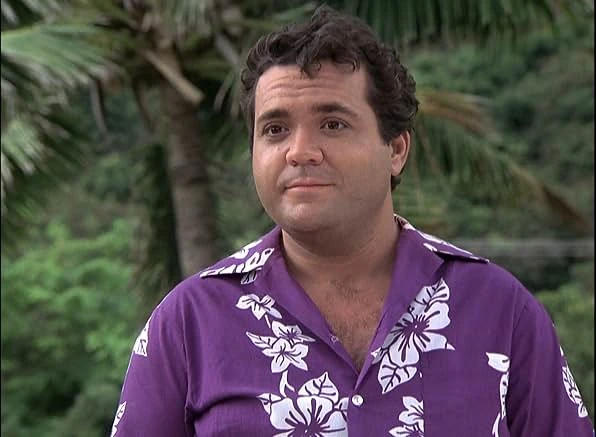
Every successful TV detective needs a guy who knows a guy. Magnum had Rick Wright, and Rick usually seemed to know somebody even when knowing that person might raise a few questions. Played by Larry Manetti, Rick worked around the King Kamehameha Club and had the kind of connections that could turn a dead-end investigation into a conversation in a very interesting bar.
Rick wasn’t the cool, silent type who delivered a clue and vanished. He had opinions. He had feelings. He could get genuinely offended when Thomas treated his contacts like a free information service. Rick wanted to be appreciated, which was an amusing demand to make of a man who occasionally needed help just remembering to reimburse his friends.
His relationship with Ice Pick, played by Elisha Cook Jr., gave the character another layer. Rick’s world wasn’t restricted to the polished dining rooms of the club. There were old acquaintances and odd arrangements, people who knew things but didn’t necessarily want their names mentioned, and social debts that didn’t fit neatly into a detective’s notebook. Rick could find a door that most people never knew was there.
He and T.C. also had different styles of putting up with Magnum. T.C. might tell Thomas exactly how much the helicopter fuel cost. Rick might complain about the way a request made him look or what it might do to a relationship he’d worked to establish. They were both right often enough to make Magnum’s confidence a little suspicious. I always liked that these guys were allowed to be irritated with the hero instead of spending every scene congratulating him.
The three men also carried their shared service history without turning every get-together into a solemn reunion. They could argue about something ridiculous, enjoy a meal, tease somebody about an old mistake and then stand shoulder to shoulder when trouble arrived. That’s more like how long friendships work. People who’ve been through serious things together don’t spend every afternoon delivering speeches about the experience. Sometimes they just spend the afternoon wondering who’s paying for lunch.
It’s tempting to remember Rick as a secondary character who was useful when a clue was needed. In the best episodes, though, he was part of the appeal of being in this world. You wanted to visit his club, listen to the chatter and see who would walk through the door. It wasn’t a detective agency built around one genius. It was a collection of people who kept finding themselves involved in one man’s very busy life.
The theme most people remember was not the first one
Go ahead and hear the Magnum, P.I. theme in your head. You know the one: Mike Post and Pete Carpenter’s charging instrumental that makes it sound as though something exciting is already happening and you’re a few seconds late getting to the television. One of those great eighties openings that could get you off the couch before the first scene.
Here’s a detail plenty of people have forgotten: that wasn’t the original music. Early episodes had a more relaxed, jazzier theme composed by Ian Freebairn-Smith. It suited the Hawaiian surroundings, but it didn’t have quite the same get-moving energy as the version that followed during the first season. The music changed while the show was still figuring out exactly how it wanted to introduce itself.
Once Post and Carpenter’s version took over, it felt inevitable. The montage gave us the car, the helicopter, the water, the faces and just enough action to suggest another entertaining hour ahead. You didn’t need to know the plot. You recognized the neighborhood. There was Magnum looking as though he’d probably been up to something, Higgins looking as though he knew it, and the music telling you this was going to be a good ride.
These openings mattered more in the years before everybody could jump ahead with a streaming remote. Television themes were part of the ritual. You heard a few notes from the next room and knew you had better get back before you missed something. They were little invitations into places you visited every week. An hour of Magnum didn’t really feel underway until that familiar music told you it was time.
Reruns have a way of smoothing out a show’s history. If you first discovered it in syndication, the early episodes may not have come to you in precisely the form original viewers saw. That’s why it’s fun to revisit the first opening. It’s like finding an alternate version of a record you thought you knew by heart. The old version isn’t wrong. It’s a reminder that even our most familiar television memories were sometimes assembled a piece at a time.
Still, ask me to pick the version I want blasting when the Ferrari appears, and I’m going with Post and Carpenter. Some television themes are just good music. That one practically carries its own car keys.
The voice in his head was not always making a strong case
Magnum had a habit of talking us through his thinking, and the voice-over was one of the show’s best tricks. He’d tell us what he expected to happen, why he was doing something or how a perfectly reasonable decision had somehow brought him to his current predicament. Quite often, the picture suggested he might have been giving himself a generous review.
It made watching him feel like spending time with a friend who enjoys telling stories about his own adventures. You know the kind. Everything sounded sensible when he started explaining it. Then you discovered he’d driven across town, borrowed your tools and left the keys inside somebody else’s locked car. By the end, you were less interested in the plan than in hearing how he intended to justify it.
Selleck’s delivery was the secret. The narration could be funny without insisting on a punch line, and it could be intimate without slowing the mystery to a halt. Thomas was letting us in on thoughts he wasn’t prepared to share with Higgins, T.C. or Rick. Sometimes those thoughts were useful. Sometimes they were proof that a talented detective could still be a champion at rationalizing his own mistakes.
And then there were the looks toward the camera. A raised eyebrow, a slightly exasperated glance, the unmistakable suggestion that we had both noticed something absurd and should probably keep it between ourselves. It sounds like a gimmick when described that way. In the show, it helped make Magnum feel approachable. Instead of standing at a distance admiring a TV hero, you felt as though you were right beside him enjoying the trouble.
That warmth connected him to an older tradition of private eyes who could take a punch and still find something funny to say about it. Jim Rockford had already made being broke, annoyed and in over his head an entertaining occupation. Magnum lived in rather nicer surroundings, but he understood the same basic truth: a detective becomes more interesting when the world is allowed to give him a hard time.
The voice-over also made the serious moments hit harder. There were situations Thomas couldn’t talk his way out of and memories he couldn’t turn into amusing anecdotes. When the familiar narration gave way to silence, you felt the absence. A guy who usually had something to say had finally reached a point where the words weren’t going to help.
Michelle made the past impossible to file away
For all the sun, beaches and apparently endless opportunities to wear shorts, Magnum wasn’t running away from just another tedious office job. He had been to war. The show knew that history could follow a person into even the most beautiful place on earth, and some of its best stories brought it right into the middle of his new life.
Memories Are Forever, from 1981, is one of the big ones. Magnum encounters Michelle, the woman he’d married in Vietnam and believed had died. Imagine going through years thinking someone you loved was gone, only to find that the story wasn’t finished. You don’t need a complicated espionage plot to understand the emotional shock. The person in front of you is alive, and suddenly everything you thought you knew about your own past needs to be examined again.
Marta DuBois played Michelle, and she had to carry more than the job of being an astonishing surprise for Thomas. There were reasons the two had been separated, a difficult history involving war and political loyalties, and decisions that couldn’t be untangled by running toward each other in slow motion. The show occasionally complicated the story more than necessary, but the central ache was believable. The past hadn’t stayed where Magnum left it.
This is where Selleck’s easygoing performance paid off again. The detective we knew could talk his way around most embarrassments. Michelle wasn’t an embarrassment. She was a piece of his life that had never properly healed, and Thomas couldn’t fix the situation by giving us one of his funny little explanations. He was plainly out of his depth, which is exactly where the story needed him.
As the series went on, Michelle remained important, and the story eventually connected Magnum to Lily, his daughter. These weren’t little case-of-the-week details you could erase when the credits rolled. They changed the possibilities for the character’s future. Paradise was still paradise, but it wasn’t an unlimited holiday from everything he’d left behind.
It’s one of the reasons I don’t think you can reduce the show to a car, a shirt and a mystery. The older you get, the more those returning memories make sense. Most of us don’t have a wartime marriage showing up unexpectedly in a tropical paradise. But we all know what it means to think we’ve put something behind us and discover that life has other ideas.
Did You See the Sunrise? makes the charm go quiet
If someone tells you Magnum, P.I. was only a lighthearted detective show, there’s one episode I’d put in front of them immediately: Did You See the Sunrise? It opened the third season in September 1982, and by the end it had taken the familiar cheerful guy with the Ferrari to a place where the usual smile didn’t belong.
The story brings Magnum and T.C.’s Vietnam experience back through Ivan, a dangerous man from that past played by Bo Svenson. He knows things about them, understands where to push and has no interest in playing by the friendly rules of the TV show we’ve been visiting. Mac’s death makes the danger personal, and the story keeps tightening until an ordinary end-of-episode arrest is no longer where things are headed.
Then comes the confrontation everybody remembers. Magnum asks Ivan whether he has seen the sunrise, and he shoots him. No victory speech. No clever little comeback. No gentle return to the guesthouse where Higgins can complain about the state of the furniture. The moment lands like a door slamming on the version of the hero we’d been enjoying.
You can argue about what Magnum did. You’re probably supposed to. The show had already made Ivan monstrous, but it didn’t make Thomas’ choice feel like a routine piece of private-eye business. This was a man carrying things from the war that a pretty location and an easy manner could never completely bury. The scene was upsetting partly because we’d been so comfortable in his company.
Selleck didn’t need to overplay it. Sometimes a man who usually smiles going absolutely still is more frightening than someone shouting at the top of his lungs. By that point we’d watched Thomas laugh, bluff, apologize and argue. Seeing him reach a place beyond all of those responses was startling.
There were plenty of action shows in the eighties where the bad guy’s defeat was the cue for everybody to relax. The A-Team could make a wild battle look like one more entertaining problem solved. Magnum sometimes wanted you to keep thinking after the trouble ended. That difference wasn’t always present, but on nights like this it was impossible to miss.
It’s a great example of why the show deserves credit beyond nostalgia. The same leading man who could amuse you by begging for a helicopter ride could also leave you wondering about what war, loyalty and revenge had done to him. You didn’t always know which version of Magnum would be waiting at the end of the hour.
Home from the Sea leaves the glamour on shore
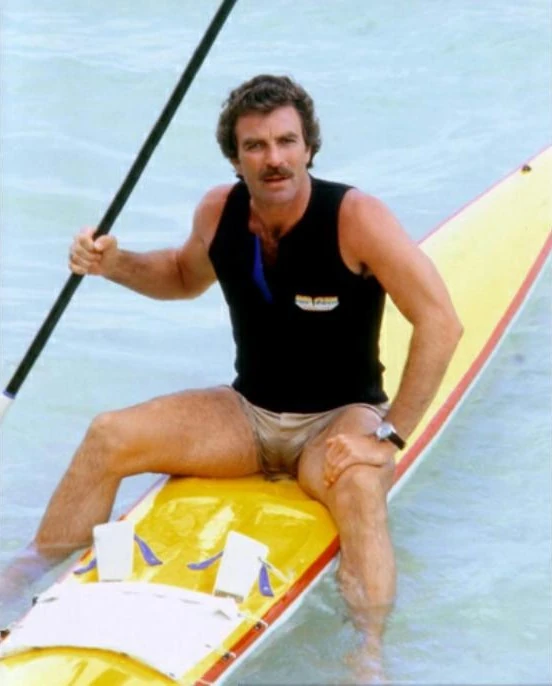
In Home from the Sea, Magnum goes out on his surf ski, becomes separated from it and finds himself stranded in the ocean. That’s the crisis. No sinister billionaire. No international criminal organization. No wonderfully complicated mystery that requires Rick to call six friends and T.C. to fly three places before lunch. Just a man in the water, farther from safety than he ever intended to be.
The episode aired in 1983, and it remains one of the easiest to recommend because the premise doesn’t need much explanation. Anybody who has ever been out beyond the point where the water feels completely friendly can understand it. You look toward shore, decide it seems farther away than it ought to be, and suddenly the situation is no longer recreational.
Of course, Magnum’s experience becomes much worse than an unsettling afternoon at the beach. Time passes. His strength drains. The ocean doesn’t care that he’s a decorated veteran, a capable investigator or the man who normally gets to drive the Ferrari. There is nothing to charm and nobody to bargain with. Higgins can lecture him about breaking rules later, assuming there is a later.
The episode brings in memories of his father as Magnum struggles to stay alive. The flashbacks give us glimpses of how he became the man we’ve known for three seasons, but they don’t stop the drama so somebody can deliver a history lesson. They feel like the kind of memories that might surface when a person is scared, exhausted and trying to find one more reason to keep moving.
Back on land, his friends begin to recognize that something is wrong. Their concern matters because we’ve spent so much time watching them argue with Thomas over completely ordinary things. When somebody who usually shows up begging for favors doesn’t show up at all, the absence becomes frightening. All those small jokes and daily annoyances suddenly pay off.
There is something almost unfair about watching that hour now. Hawaii looks magnificent while a man struggles to survive in it. The water is blue, the sun is out, and the setting refuses to behave like the reward Magnum’s television life has promised. It strips away every glamorous accessory until there is only Selleck, the character and an ordeal we want him to survive.
Some episodes are remembered for a great villain or a wonderful last line. Home from the Sea is remembered because the show trusted us to care about Thomas Magnum without any of the toys. It was right.
Hawaii was more than the space behind the car
One reason Magnum, P.I. remains such an easy show to recognize is that it never looked like it could have been filmed on the same anonymous backlot as everything else. The Hawaiian roads, beaches, mountains and waterfront homes weren’t just quick establishing shots before the detective walked into a room. They were part of the pleasure of spending an hour with him.
If your own view out the window involved a gray winter afternoon, it was difficult not to admire the arrangement. Magnum could get up, walk outside and be surrounded by the sort of scenery families saved all year to visit for a week. Then he’d complain that Higgins was being unreasonable about the car. There is something admirable about a television character who can live in those surroundings and still find a way to have a lousy Tuesday.
The location worked best when it felt like a place people actually lived. Rick had customers at the King Kamehameha Club. T.C. had aircraft to maintain, flights to arrange and business responsibilities that didn’t disappear because a detective needed help. Higgins had an entire estate to supervise. People had jobs and routines. The scenery was beautiful, but nobody could spend every day sitting beneath a palm tree admiring it.
The show also had recurring characters who made the world feel bigger than four guys hanging around Robin’s Nest. There was Lt. Tanaka, the police officer who didn’t always appreciate Magnum’s methods; Carol Baldwin, a lawyer with her own professional life; Maggie Poole; and Agatha Chumley, who could keep up with Higgins in ways Thomas sometimes couldn’t. They made Hawaii feel more like a community of continuing relationships than a vacation resort with a different murder each week.
Still, the series had its blind spots. A television show built around a mainland private investigator and his circle could sometimes treat local Hawaiian life as background for the adventures of its stars. The islands are far more than pretty beaches and picturesque places for a chase. That doesn’t mean the show lacked affection for its setting. It does mean that watching it now, you notice who gets a full character and who gets a quick appearance to make the scene feel exotic.
I don’t think enjoying those gorgeous locations requires pretending the show provided a comprehensive view of Hawaii. It wasn’t trying to be a documentary, and it certainly wasn’t shy about selling the fantasy. You can appreciate the fantasy and still see its edges. Sometimes the best thing an old favorite gives you is a chance to enjoy what you remember while noticing what you missed.
The location remains one of the show’s great advantages. A familiar street, a stretch of coast, an entrance to Robin’s Nest—any of them can bring the whole series back before a character speaks. And once Thomas arrives complaining about some arrangement Higgins has refused to approve, you know you’re home.
The audience stayed, even when the competition changed
Here’s something worth remembering when people talk about Magnum as though it were merely a cult favorite that survived on reruns: this thing was a big network hit. Not a little show that found its people decades later. Families were making room for it in the weekly schedule, back when you couldn’t simply watch whenever you felt like it.
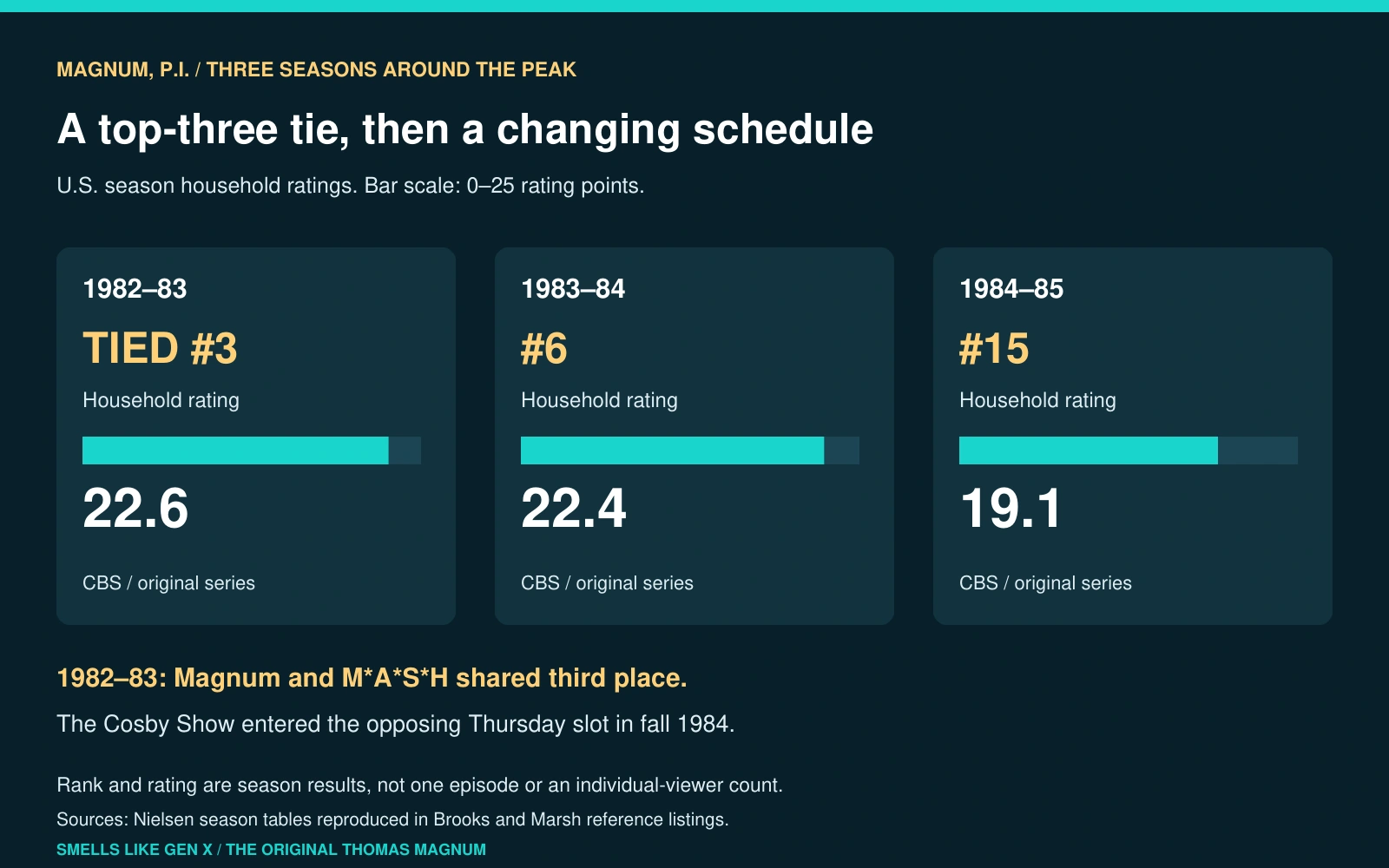
At its peak in the 1982–83 season, Magnum, P.I. tied M*A*S*H for third place in the national season rankings, with a 22.6 Nielsen household rating. That’s mighty good company. In 1983–84 it finished sixth, with a 22.4 rating. It was already established as one of CBS’s dependable attractions, and there was no shortage of competition for viewers’ attention.
Then NBC changed Thursday nights. The Cosby Show arrived in 1984, and suddenly a lot of living rooms had another popular reason to be watching at eight. Magnum dropped to fifteenth in 1984–85, which sounds a lot less impressive until you remember that fifteenth place was still a top-twenty finish in an era with huge weekly network audiences. That’s not exactly being shown the door.
And this is where the old way of watching TV matters. You couldn’t tell a network to hang on while you finished something else. If two shows you liked came on opposite each other, you made a choice, programmed the VCR if you had one, or began negotiations with whoever controlled the remote. A lot of families probably discovered just how important those Thursday-night preferences were to the peace of the household.
Magnum’s success wasn’t limited to the famous theme or the advertising-friendly pictures of Selleck. People returned because they liked the characters and trusted the show to provide a good hour, even if they couldn’t predict whether that hour would lean toward a murder investigation, an argument at Robin’s Nest or something much more personal.
Not everybody in the press was sold from day one. Washington Post critic Tom Shales was tough on the premiere, and the show inspired plenty of debate about whether it was a glossy star vehicle or something richer. Both descriptions could be true in different episodes. What the ratings show is that enormous numbers of people decided the program was worth making an appointment to see, whatever the critics thought about the arrangements.
Later seasons and schedule changes altered the numbers, but the show’s reputation didn’t evaporate the moment its peak passed. In eight seasons it had built a place in the culture big enough to survive new competition, a changing Thursday lineup and all the TV programs that came after it. You didn’t have to have watched every episode to know the car. Or the mustache. Or the sound of Higgins preparing to say no.
The crossovers understood the pleasure of good company
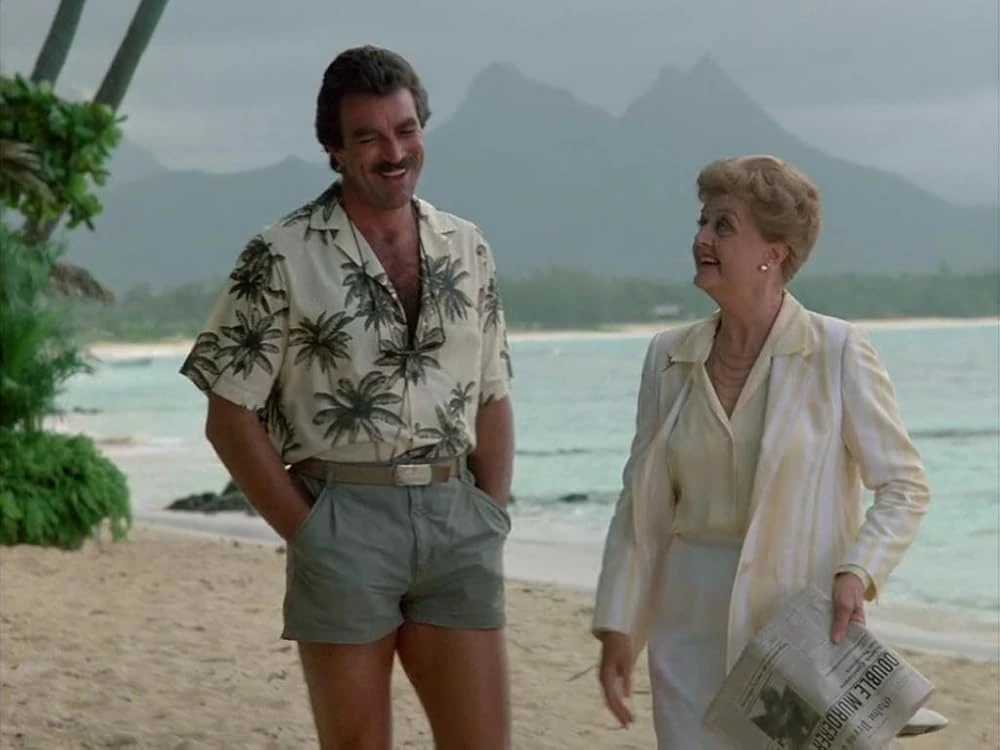
The eighties loved a TV crossover. It was the closest thing network television had to a special event that didn’t involve a wedding, a disaster or somebody getting shot in the season finale. Two familiar casts would turn up in the same story, and part of the fun was seeing how everybody behaved when the usual arrangements changed.
Magnum had a particularly good setup for it because Thomas was already surrounded by personalities strong enough to push back. Bring another detective into the picture and he didn’t automatically get to run the investigation his way. The Simon & Simon crossover in 1982 offered one kind of meeting: another pair of private eyes arriving with a different set of habits and attitudes. Suddenly Magnum wasn’t the only guy in the room who thought he had a plan.
The most memorable meeting, though, was with Jessica Fletcher. In 1986, Magnum, P.I. and Murder, She Wrote joined forces for a two-show story: Novel Connection on Magnum, followed by Magnum on Ice on Jessica’s series. If you caught only one half in reruns, you may have wondered why the story seemed to start or stop in such a peculiar place. Television schedules could be cruel to the casual crossover viewer.
Angela Lansbury as Jessica was an inspired guest because she had absolutely no need to compete with Selleck’s beachside charisma. Magnum might arrive in the Ferrari, know the local characters and be prepared to run after trouble. Jessica could stand quietly, ask the right question and make him realize he’d overlooked something sitting in plain sight. She didn’t need a helicopter. She had a suspiciously effective notebook and the ability to make people answer her.
That’s what a good crossover delivers. Not simply the thrill of recognizing a second show’s title, but the pleasure of watching characters who already have distinct personalities share a problem. How would Magnum deal with Jessica? How would Higgins react when another visitor seemed rather less impressed by Thomas’ explanations than he hoped? You tune in because you know the people, and now you get to see them surprise one another.
There were weaker television crossovers that felt like somebody had arranged a parade of familiar faces and forgotten to write a story. The better Magnum examples knew they needed relationships and genuine differences in approach. The case still had to matter, but we were also interested in the conversations. That’s the kind of event television that made the old network schedule feel like a shared pop-culture neighborhood.
Limbo, a return and a different kind of resolution
When Limbo arrived toward the end of the seventh season in 1987, it felt as though the show might be preparing to say goodbye. Magnum is shot, falls into a coma and finds himself moving through the world while the people who love him cannot see or hear him. For a character accustomed to narrating his thoughts, asking for favors and occasionally talking his way out of trouble, that’s an especially cruel situation.
The episode is affecting because we know the people around him. Higgins, Rick and T.C. aren’t anonymous visitors placed at a hospital bed to tell us the hero is important. We’ve watched them argue with him, worry about him, forgive him and put up with his more spectacularly questionable decisions for years. Their fear means something. Even a show famous for good-natured bickering can become unbearably quiet when the person everybody argues with might not come back.
Contemporary accounts and later interviews aren’t always perfectly aligned on every behind-the-scenes intention, but the basic television history is clear enough: Limbo has the shape of a possible ending, and then the series returned for an eighth season. If you were watching without knowing the future, the uncertainty was part of the experience. The streaming menu that now shows eight seasons wasn’t available to tell you what would happen next.
The actual farewell came on May 1, 1988, with Resolutions. By then Magnum’s life was moving toward responsibilities that went beyond another case or another round of requests for the Ferrari. His daughter Lily mattered to the future he was choosing, and a return to the Navy offered a path that took his military past and his adult obligations seriously. The man who had spent years enjoying a very unusual version of freedom was deciding what he wanted to do with the next part of his life.
It’s a surprisingly good ending for a guy who had always looked as though he might be able to live at Robin’s Nest forever. The show didn’t need to punish him for having fun. It just needed to recognize that a charming adult eventually has to make decisions that aren’t entirely about what he’d like to do this afternoon. Somewhere, Higgins was probably delighted to hear a plan that involved somebody finally taking responsibility for something.
And then there was the Robin Masters business, still slippery enough to keep people arguing years later. That’s appropriate. Not every running mystery needs an official answer typed on a card and handed to the audience. Some things are more enjoyable because the characters get to keep their secrets.
Selleck’s final gesture to the viewers felt like the end of a long visit. After eight years of voice-overs, camera looks, borrowed cars and arguments with the people he loved, Magnum could acknowledge the audience one last time. You weren’t just losing a detective. You were saying goodbye to somebody whose weekly company had become familiar.
What is worth keeping on a rewatch
The first thing I notice when I go back to Magnum, P.I. isn’t the Ferrari. It’s how comfortable Tom Selleck is being teased. Thomas can be a strong, capable detective and still look ridiculous when Higgins catches him doing something he swore he wasn’t going to do. That combination gives the show a warmth a lot of eighties action television never quite managed.
The second thing is the cast. John Hillerman could turn an objection into an entire comic scene. Roger E. Mosley made T.C. feel like a genuine friend with a real business, not simply a pilot waiting for instructions. Larry Manetti gave Rick enough pride and personality to make asking for a favor its own little adventure. None of them were interchangeable. You can take away an occasional weak case and still have an hour worth watching because those people are in it.
Then there are the serious episodes. Did You See the Sunrise? doesn’t offer the reassuring version of the hero. Home from the Sea puts him in a situation where the wonderful lifestyle can’t help. The Michelle stories remind us that the past isn’t something you put in a drawer and forget because you now live beside a beautiful beach. These moments stayed with people because the regular, funny Magnum had already become somebody we cared about.
Not everything holds up. A few mysteries are thin, some guests are forgettable and certain romantic stories give women considerably less to do than Selleck’s character. The show could also rely on a gorgeous location when a script wasn’t providing much more. That’s normal for a long-running weekly series. You can be nostalgic without pretending every Thursday was a masterpiece.
It also becomes a different show when you revisit it at a different age. As a kid, I could admire the Ferrari, the helicopter, the estate and the idea of a job where your primary wardrobe requirements seemed to involve shorts. As an adult, I’m increasingly on Higgins’ side when Thomas casually volunteers somebody else’s property for an adventure. Somebody had to pay for the repairs. Somebody had to keep that place running. The man had a point.
But Magnum’s friendships look better with age, too. People who can argue, set boundaries, get fed up with one another and still show up when somebody is in real trouble are worth keeping. The show had that idea running under the surface long before it asked us to pay attention to the bigger dramatic episodes. It knew a hero could be charming without being self-sufficient, and that a beautiful place isn’t much good if there’s nobody you want to share it with. You can see what it inherited from 1970s television and what later 1990s television learned from dramas that gave their leads a personal history.
The red Ferrari still looks terrific. The theme still works. The mustache remains a formidable achievement in facial hair. But after all these years, the best reason to spend another hour with Magnum, P.I. is the same reason we liked him the first time: Thomas Magnum was good company, and he had a group of friends who refused to let him forget how lucky he was.
Questions about Magnum, P.I. in the 80s
When did the original Magnum, P.I. air?
The CBS original premiered December 11, 1980, and ended May 1, 1988, after eight seasons. Some episode guides count longer stories differently, so you may see slightly different totals. This is Tom Selleck’s original series, not the later reboot.
Who were Magnum’s closest friends?
John Hillerman played Higgins, Roger E. Mosley played T.C., and Larry Manetti played Rick. Higgins kept Robin’s Nest in order, T.C. ran the helicopter business and Rick knew people through the King Kamehameha Club and beyond. All three had plenty of reasons to complain about Magnum, which is part of why the friendships felt real.
Was the famous theme song always used?
No. Ian Freebairn-Smith wrote the more relaxed original theme heard in the early broadcasts. During season one it was replaced by the Mike Post and Pete Carpenter instrumental that most of us instantly recognize. One listen and you’re practically looking for a Ferrari.
How popular was Magnum, P.I.?
Very. Its best season finish was a tie for third in 1982–83, with a 22.6 Nielsen household rating. It finished sixth in 1983–84 and fifteenth in 1984–85. Those are season rankings and household ratings, not the audience figure for one particular episode.
Was Higgins really Robin Masters?
The show delighted in suggesting that possibility, but it never provided one completely uncontested answer everybody has to accept. Half the fun is watching Magnum try to figure it out while Higgins decides how much to tell him.
Which episodes should I watch first?
Start with Don’t Eat the Snow in Hawaii to meet the characters. Try Paper War if you want the Magnum-Higgins comedy. For the show’s serious side, watch Did You See the Sunrise?, Home from the Sea, Memories Are Forever and Limbo. Those give you a sense of why the series was more than beaches and a sports car.
Sources and further reading
- Television Academy: Magnum, P.I. series and production interview index.
- Original episode dates and cast records.
- Tom Selleck’s Emmy record.
- John Hillerman’s Emmy record.
- Art of the Title: the changing opening sequences.
- Tom Shales’ 1980 premiere review.
- TV Guide: second-season stories.
- TV Guide: fourth-season stories.
- Apple TV: Home from the Sea.
- Apple TV: Limbo.
- 1982–83 season schedule and rankings.
- 1983–84 season schedule and rankings.
- 1984–85 season schedule and rankings.
- Magnum Mania: original-series conclusion.
- Apple TV: Paper War.