Prime-Time Soaps of the 80s
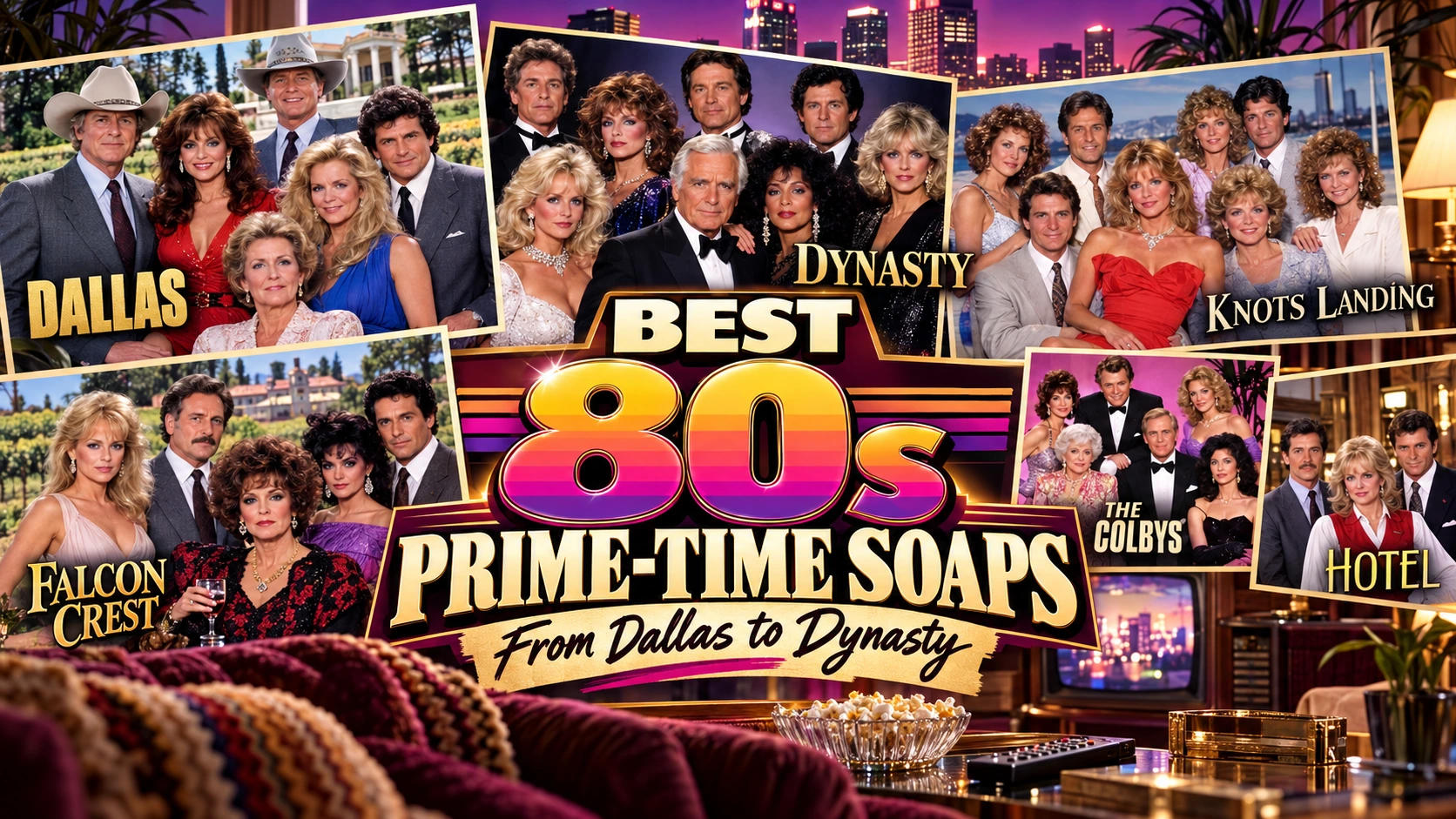
Prime-Time Soaps of the 80s
Before we could binge an entire season over a weekend, Dallas, Dynasty, Knots Landing and Falcon Crest made us wait seven days for the next betrayal. These were the 80s prime-time soaps where family dinner could become a corporate takeover, marriage was rarely a safe investment and one look across a ballroom could ruin somebody’s year.
What Were the Biggest 80s Prime-Time Soap Operas?
The four giants were Dallas, Dynasty, Knots Landing and Falcon Crest. Dallas made the nighttime soap a national obsession, Dynasty turned glamour into combat, Knots Landing made suburbia dangerous and Falcon Crest brought the family war to California wine country.
But the dial was much deeper than those four. The Colbys, Flamingo Road, Hotel, Paper Dolls, Bare Essence, Berrenger’s and several wonderfully short-lived experiments show just how completely the 1980s prime-time soap opera took over network thinking.
Why Prime-Time Soaps Took Over 80s Television
We remember the 80s for sitcoms, cartoons and action shows, but the grown-ups in the house had their own weekly obsessions. A lot of Gen X learned the rhythms of serialized television from the floor while our parents watched rich families destroy one another. We might not have understood hostile takeovers, alcoholism, inheritance law or why everybody kept remarrying the same three people, but we understood one thing perfectly: something huge was going to happen before the credits.
Dallas proved that a continuing nighttime drama could become national conversation. Once that happened, every network wanted its own empire, family, business or neighborhood capable of producing the same kind of addiction. Dynasty went bigger and shinier. Knots Landing went more intimate. Falcon Crest found its battlefield in wine country.
That variety mattered. The genre was not only about rich people. It was about continuity. What happened last week still mattered tonight. A lie could sit there for months. A marriage could collapse slowly. A villain could win for an uncomfortable amount of time. The shows gave television memory before most of us ever used that word for it.
Inside the larger 1980s TV lineup, prime-time soaps were the shows that made waiting part of the experience. You could not skip ahead. You could only hope the VCR worked if you were not going to be home.
The schedule itself helped. These soaps were not background television in their prime. You planned around them. A Friday-night Dallas episode or a Wednesday Dynasty could be the adult equivalent of Saturday-morning cartoons: familiar time, familiar channel, familiar ritual. That habit gave writers enormous power because a cliffhanger was not only asking whether you cared. It was asking whether you would keep the same appointment next week.
What Made an 80s Prime-Time Soap a Prime-Time Soap?
We did not sit around in 1984 arguing about definitions. We knew the feeling. A prime-time soap carried stories from week to week, built its world around relationships and family power, and treated secrets like long-term investments. The characters did not reset when the episode ended. They remembered who cheated, who lied, who stole the company and who pushed somebody into the pool.
The purest examples were Dallas, Dynasty, Knots Landing and Falcon Crest. Other shows sat closer to the edge. Hotel mixed ongoing regulars with guest stories. Glitter used a magazine as the recurring home base. The Yellow Rose blended western family drama with soap structure. That does not make them identical; it makes the decade more interesting.
The broad TV dramas of the 1980s include plenty of series that were not soaps at all. This page is about the shows that lived on continuing entanglement — the ones where the most dangerous sentence in the episode was often, “There’s something I have to tell you.”
How 80s Prime-Time Soap Operas Changed Across the Decade
The genre evolved fast because the competition kept raising the stakes. Early in the decade, Dallas was still defining the rules. By the middle, Dynasty had turned glamour and spectacle into weapons. As the decade wore on, networks tried the formula in fashion, hotels, department stores, magazines, military bases and anywhere else that looked expensive enough for somebody to betray a relative.
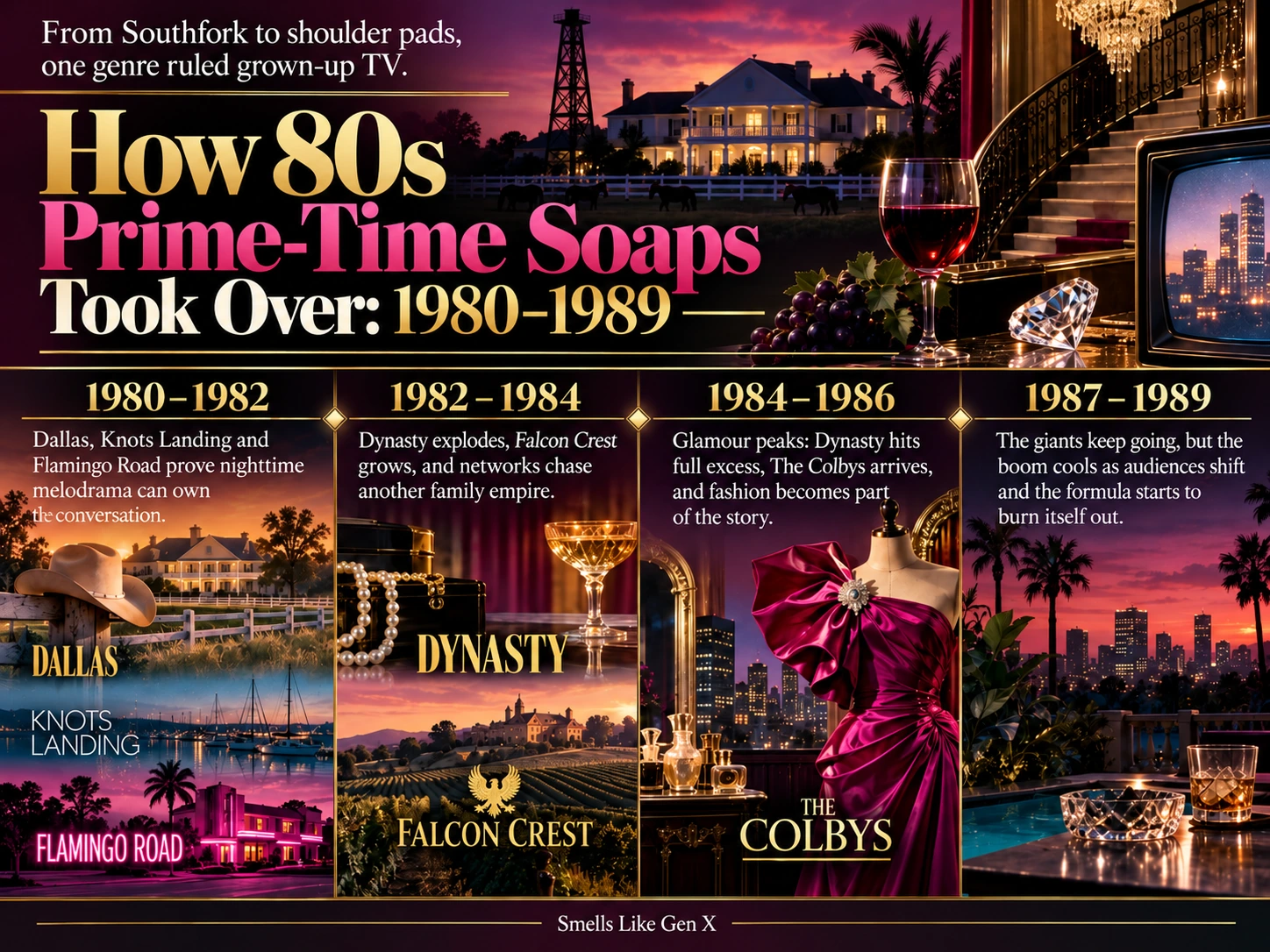
15 Best 80s Prime-Time Soaps Gen X Remembers
This is not only the four giants. Those shows deserve the top of the conversation, but the prime-time soap boom is more interesting when you can see the experiments around them — the shows that moved the formula into fashion, perfume, hotels, department stores, naval bases and old-money summer homes.
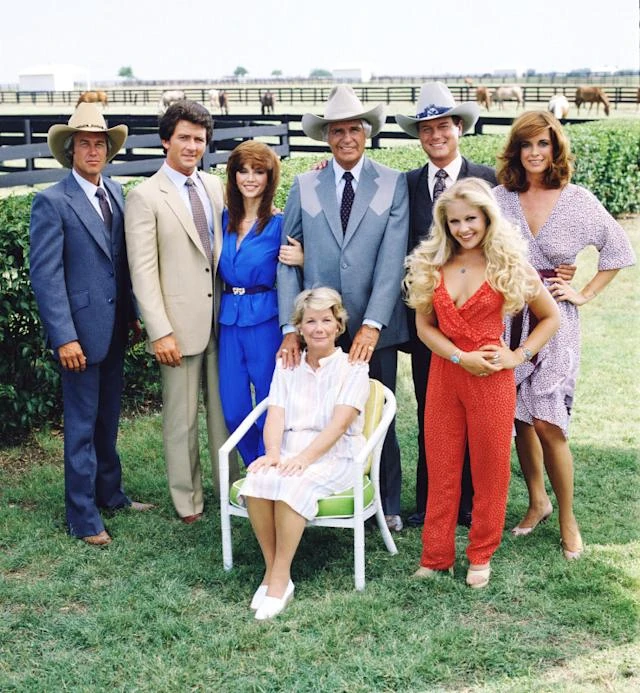
Dallas
If you were anywhere near a television in 1980, you did not need to watch Dallas to know somebody had shot J.R. Ewing. That question escaped the show and became part of everyday life. Adults talked about it at work, kids heard it at school, magazines put it on covers and the answer was held until fall like the country had collectively agreed to wait. For Gen X kids sitting nearby while our parents watched, this was one of the first times television felt like a national event instead of just another program.
Larry Hagman’s J.R. was the engine. He was greedy, charming, cruel, funny and somehow impossible to stop watching. The show understood that a great soap villain could not simply be hated. He had to be entertaining enough that the audience secretly worried about what would happen if he ever became nice. Sue Ellen’s battles with him, Bobby’s steadier presence, Pam trying to survive the Ewing-Barnes war and Miss Ellie’s authority at Southfork gave the series a whole family structure around that central blast radius.
Dallas also taught prime time how to end an episode. The final minutes mattered. A look across a room, a door opening, a gunshot, a revelation — those were not little details; they were the reason you came back. There was no streaming queue waiting ten seconds later. If the credits rolled on a cliffhanger, you carried it around for seven days. That waiting made the story feel bigger because we had time to argue about it.
Even the show’s wildest later twist — bringing Bobby back and wiping away an entire season as Pam’s dream — became television history because Dallas had earned that level of attention. Viewers could complain and still show up. That was its real power. For much of the first half of the 80s, Southfork was not just a setting. It was one of the addresses prime time revolved around.
The show also had a rhythm that made Friday night feel specific. Southfork dinners, Ewing Oil offices, the Cattlemen’s Club, the ranch driveway — those places became familiar enough that returning to them felt like checking in on relatives who happened to be richer, meaner and much better dressed. That familiarity is easy to underestimate now. When a series lived in your week for years, the rooms themselves became part of the memory. You could picture J.R. pouring a drink before he had even reached the cabinet.
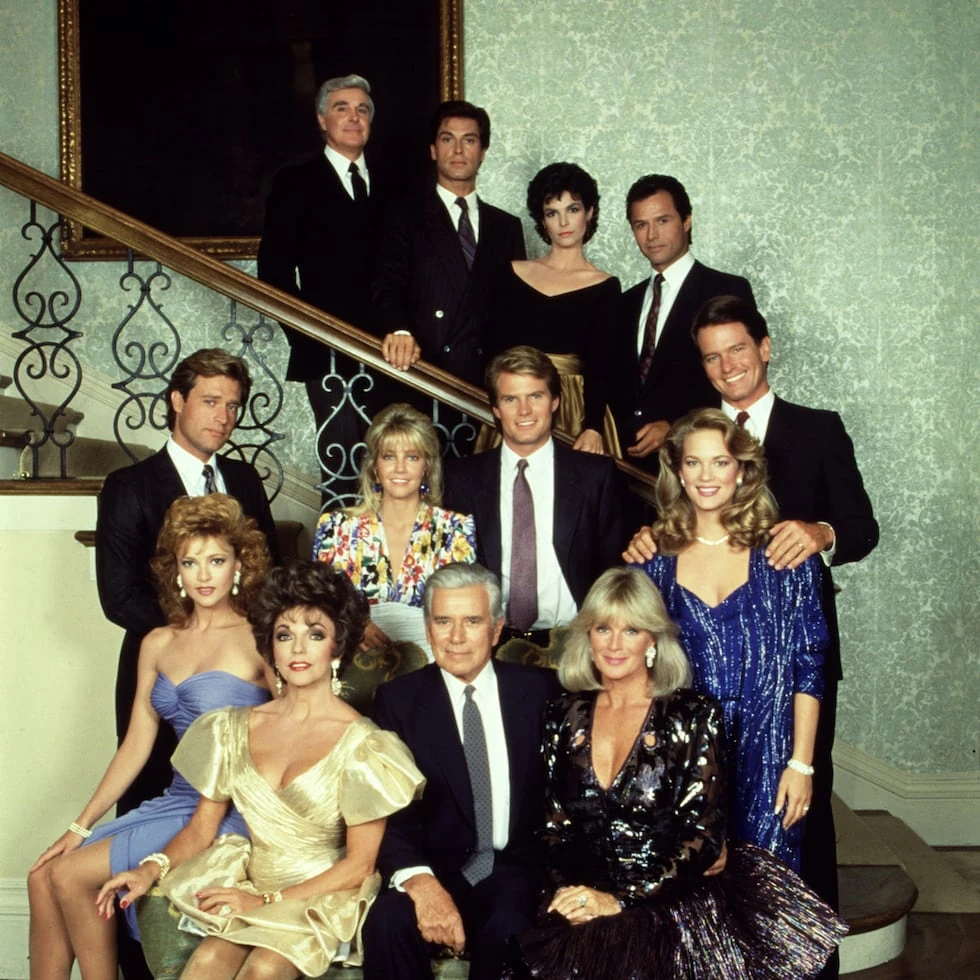
Dynasty
If Dallas made wealth dangerous, Dynasty made it look like it had been sprayed with perfume and lit from underneath. Denver was colder than Southfork, but everything else felt hotter: the clothes, the feuds, the jewelry, the bedrooms, the boardrooms and especially Alexis Carrington walking into a scene like she owned the building even when she did not.
Joan Collins changed the series because Alexis gave it a villain who enjoyed the performance of power. She did not simply plot; she entered. Nolan Miller’s costumes turned entrances into events. Krystle’s softer elegance became the perfect visual opposite. Their fights — verbal and otherwise — pushed the show toward the kind of operatic excess that people who never watched a full episode could still recognize.
The Carringtons made family conflict look corporate. Blake could be fighting over love, business, loyalty and control in the same conversation. Fallon, Steven, Adam and the rest of the family carried their own resentments into a mansion where nobody seemed capable of walking into breakfast without bringing a secret. The series took the basic soap formula and dressed it like a fashion campaign.
At its peak, Dynasty became the biggest show on television. That mattered because it proved the nighttime soap was not a side genre anymore. It could sit at the absolute center of American pop culture. Shoulder pads got larger, houses got grander and cliffhangers got more insane because the show understood the assignment: if you were going to make excess the point, there was no reason to whisper.
What separated Dynasty from a cheaper imitation was commitment. The series believed every confrontation deserved atmosphere. A business argument could happen in evening wear. A family insult could land beside a staircase that looked like it required its own mortgage. Even when the plots crossed into absurdity, the show rarely looked embarrassed by itself. That confidence was contagious. We watched because we knew subtlety was not coming and, at its best, that was exactly what made Wednesday night fun.
Knots Landing
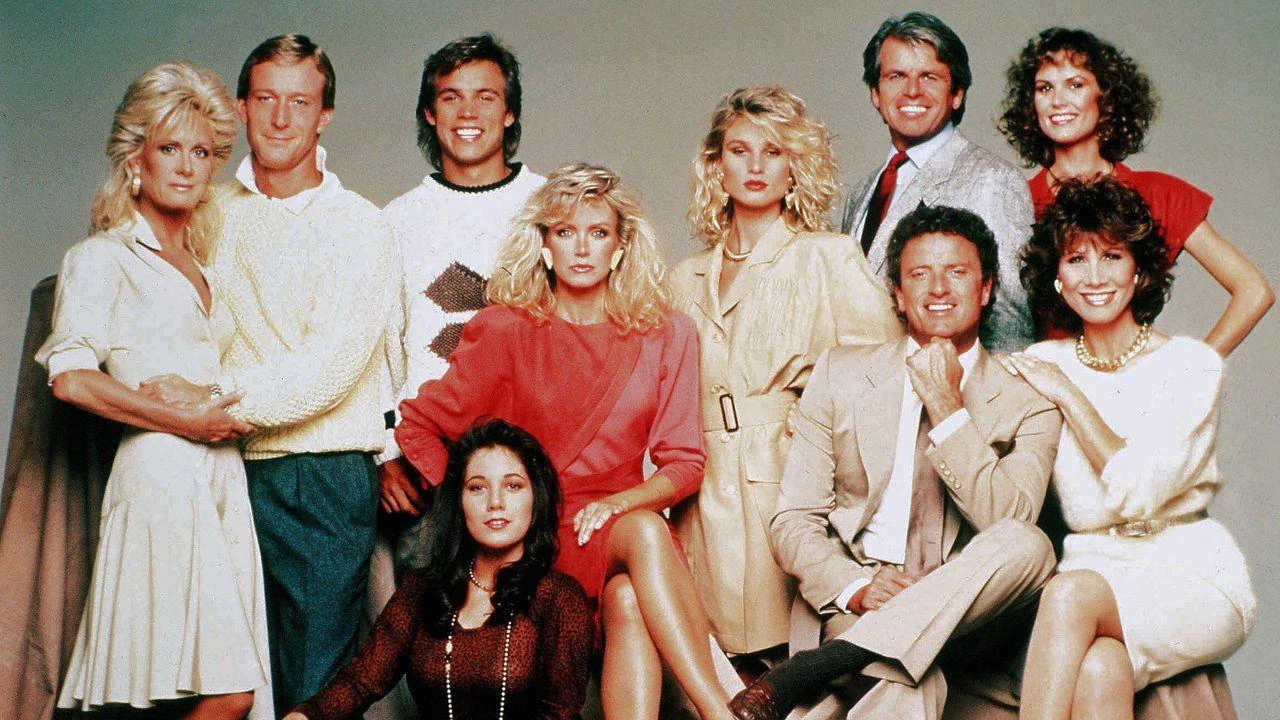
Knots Landing was the quieter member of the family, which is funny because its characters went through enough betrayal, addiction, kidnapping, affairs and corporate warfare to exhaust three ordinary neighborhoods. But compared with Southfork and the Carrington mansion, the cul-de-sac felt recognizably human. People had driveways. They had neighbors. Problems could begin over dinner instead of a board takeover.
The connection to Dallas gave Gary and Valene Ewing a starting point, but the series quickly became its own thing. Val’s emotional life, Gary’s weaknesses, Karen’s steadiness and Abby Cunningham’s spectacular ability to calculate three moves ahead gave the show a different balance. Donna Mills made Abby the kind of character you wanted to warn everyone about while also wanting her to stay because the room got more interesting when she entered.
What Knots Landing did especially well was let consequences linger. The show could be outrageous, but relationships had history. A betrayal did not disappear because next week’s plot needed a clean slate. That made the characters feel older and more complicated as the decade moved on. We were watching people accumulate damage, not merely cycle through storylines.
For Gen X viewers who remember it from parents’ television sets or later reruns, Knots Landing can feel less flashy in memory than Dynasty. That is exactly why it has aged so well. It was a soap that understood the most dangerous place in the world might not be an oil field or a corporate boardroom. It might be the house across the street.
The suburban setting also gave the show something the richer soaps could not fake: proximity. These people could see each other’s cars pull into the driveway. They could borrow something, overhear something or notice who had not come home. Secrets had less room to breathe. That made the show feel almost claustrophobic in a useful way. A cul-de-sac looks peaceful until you realize everybody living on it knows a little too much about everybody else.
Falcon Crest
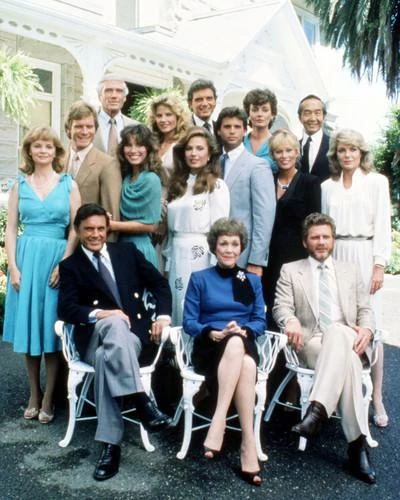
Wine country gave Falcon Crest a look nobody else had. Instead of Texas oil or Denver corporations, the power lived in vineyards, land and family inheritance. Angela Channing sat at the center of it all with the calm authority of somebody who had already decided how every argument would end.
Jane Wyman made Angela formidable without turning her into a copy of J.R. or Alexis. She did not need the same kind of flamboyance. Her power came from history, property and the certainty that Falcon Crest belonged under her control. Chase Gioberti’s return created the family conflict the series needed: blood ties on one side, ownership and competing ideas of loyalty on the other.
The show could absolutely go full soap — marriages, affairs, blackmail, revenge, shifting alliances and enough family secrets to poison a wine cellar — but the setting gave all of it texture. The vineyards made the battles feel rooted in something physical. Characters were not merely fighting for a company name. They were fighting for land that represented legacy.
For several seasons, Falcon Crest was a major CBS hit, and its place behind the louder giants sometimes causes people to underestimate how big it was. If your family watched Friday-night television in the early-to-mid 80s, there is a good chance Angela Channing was part of the routine. The opening theme hits now and the whole era comes rushing back.
The Friday-night placement helped define it too. Dallas and Falcon Crest could turn the end of the workweek into one long block of family warfare. For adults, it was appointment viewing. For kids in the room, it was background culture that slowly became foreground whether we meant it to or not. We may not have cared who controlled the winery, but we knew Jane Wyman meant business long before we could explain why.
The Colbys
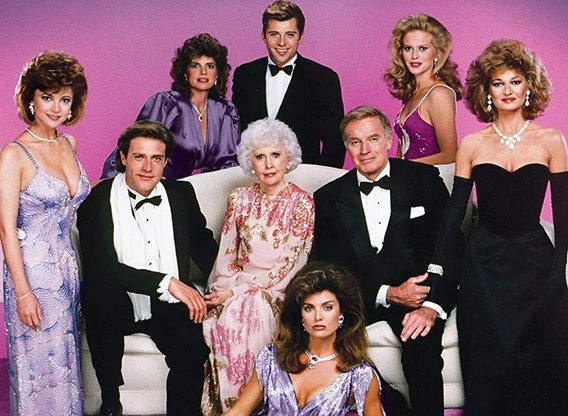
By 1985, Dynasty had become so large that ABC tried spinning the universe outward. The Colbys moved the soap opera west and built another wealthy family around Jeff and Fallon, then stacked the cast with names that made the whole thing feel expensive before anybody said a word: Charlton Heston, Barbara Stanwyck, Katharine Ross, Stephanie Beacham and Maxwell Caulfield.
On paper, it made perfect sense. More money, more mansions, more family power struggles, more beautiful people making catastrophic romantic decisions. The problem was that prime-time soap success was never only about ingredients. Audiences had to become attached to the particular family chemistry, and Dynasty already had years of emotional investment behind it.
Still, The Colbys is a perfect snapshot of mid-80s confidence. Networks believed viewers had an almost unlimited appetite for wealthy families destroying each other’s lives in enormous rooms. For two seasons, the show leaned into exactly that fantasy, and the scale is part of what makes it fun to revisit now.
And then there is the ending. Fallon apparently encountering a UFO became one of those television moments that sounds made up even when you know it happened. It is hard to imagine a more fitting symbol for the genre reaching maximum altitude: by 1987, even a billionaire-family soap could look at ordinary cliffhangers and decide it might need a spaceship.
The series is also useful because it shows the limit of simply going bigger. Star power, money and an established universe can get people to sample a show, but continuing drama depends on emotional habit. Viewers had spent years learning the Carringtons. The Colbys were arriving late to a party where audiences already had favorite enemies. That does not make the show a failure of imagination; it makes it a lesson in how difficult serialized loyalty is to manufacture on command.
Flamingo Road
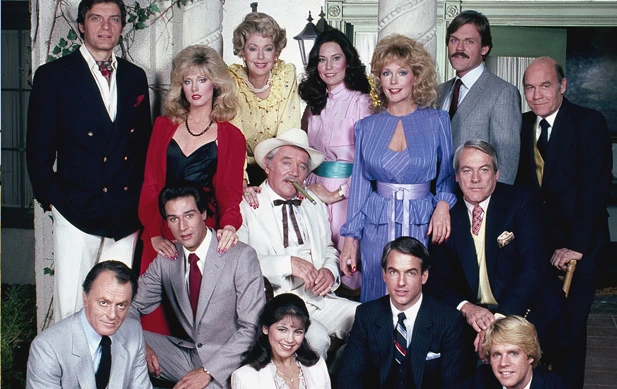
Before the prime-time soap boom reached full speed, Flamingo Road was already warming up the engine. The 1980 TV movie became a series set in the fictional Florida town of Truro, where politics, romance, corruption and social class could all become weapons. The heat was not just weather. Everybody seemed to want something from somebody else.
Morgan Fairchild’s Constance Weldon gave the show one of those faces that instantly says early-80s television. Mark Harmon and Cristina Raines were part of a cast built for romantic collision, while Howard Duff’s corrupt Sheriff Titus Semple supplied the kind of power figure who could make an entire town feel compromised.
Compared with the later giants, Flamingo Road feels less polished and more transitional. That is part of its appeal. You can watch television figuring out how to take daytime-style entanglements and stretch them across a glossy nighttime hour. The ingredients are all there before the formula became standardized.
It only lasted two regular seasons after the pilot movie, but it belongs in this conversation because the genre was not born fully dressed in sequins. Shows like Flamingo Road helped prove that viewers would follow continuing romantic and family conflict after dark — especially if everyone involved looked like trouble.
The Florida setting also gave the show a different kind of humidity than the later mansion soaps. There was a sense of a town watching itself, where politics, respectability and reputation mattered because everyone belonged to the same social machine. That small-town pressure made romantic choices feel public. Long before prime-time soaps became shorthand for giant houses and shoulder pads, Flamingo Road was proving that scandal only needs enough people who care about your business.
Hotel
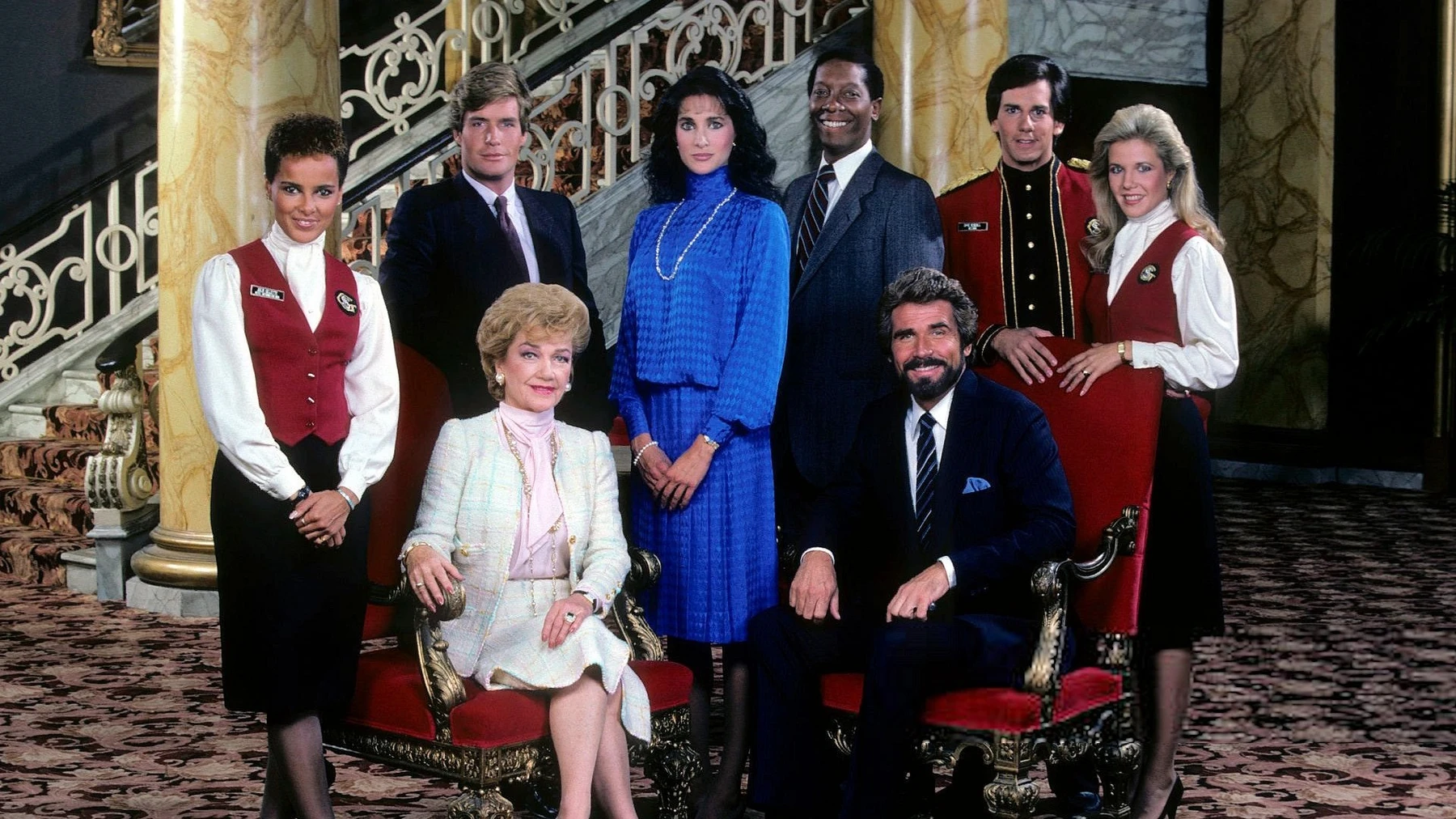
Hotel was not a pure family dynasty soap, but it lived comfortably in the same 80s ecosystem: elegant surroundings, romance, recurring staff and guest stars arriving every week with secrets in their luggage. The St. Gregory in San Francisco was essentially a giant story machine with room service.
James Brolin and Connie Sellecca gave the series continuity while new guests supplied fresh drama. Anne Baxter brought old-Hollywood authority as Victoria Cabot. The format could swing from romance to tragedy to scandal without abandoning the sense that we were checking into the same familiar place each week.
That made Hotel a different kind of nighttime soap experience. Instead of one family carrying every catastrophe, the building collected other people’s lives. A celebrity guest could appear for one story while the regular characters kept the emotional spine intact. It borrowed some of the anthology comfort of The Love Boat but played the world more seriously and more luxuriously.
For Gen X kids, the hotel itself was half the fantasy. Adults dressed up. Lobbies gleamed. Everybody seemed to have somewhere important to be. Even before we understood the relationship problems, we understood that the St. Gregory was the kind of place where ordinary life had checked out.
The guest-star structure also made the show feel like an 80s version of opening a glossy magazine and seeing who had turned up this week. Familiar actors could check in, carry a dramatic story and disappear, while the staff remained our anchor. That made the St. Gregory feel larger than the regular cast. It was a place where television celebrities passed through and ordinary staff members somehow had front-row seats to everybody’s worst day.
The Yellow Rose
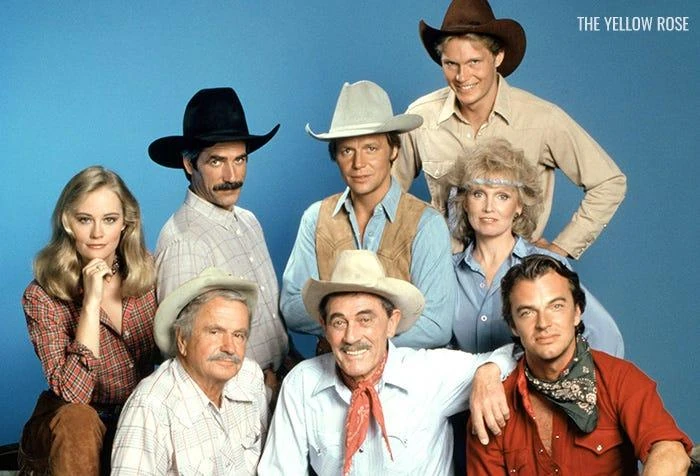
The Yellow Rose asked a wonderfully 80s question: what if the family soap moved onto a Texas ranch but pushed the western side harder? The Champion family ran the Yellow Rose, and the series mixed land battles, romance, family conflict and criminal trouble with a cast that included Sam Elliott, David Soul, Edward Albert and Cybill Shepherd.
The setting made it rougher than Dynasty. Boots and ranch work replaced gowns and penthouses, but the emotional machinery was familiar. Families had history. Property mattered. Romance crossed loyalties. Enemies understood that attacking the business meant attacking the family.
Sam Elliott was exactly the kind of presence the concept needed. He made the world feel genuinely western even when the story was working in soap-opera territory. That distinction kept the show from feeling like Dallas with the labels changed.
It lasted only one season, but the experiment is worth remembering because the prime-time soap boom encouraged networks to try the format in almost any setting. If oil families and wine families could work, why not a sprawling ranch clan with a little more dust on its boots?
There was also something smart about using a ranch family because land makes soap conflict immediately understandable. You do not need a business degree to understand why people would fight over a place that has been in the family for generations. The Yellow Rose was home, money, pride and identity at once. That gave the show an emotional shortcut the more corporate soaps sometimes had to explain.
Emerald Point N.A.S.
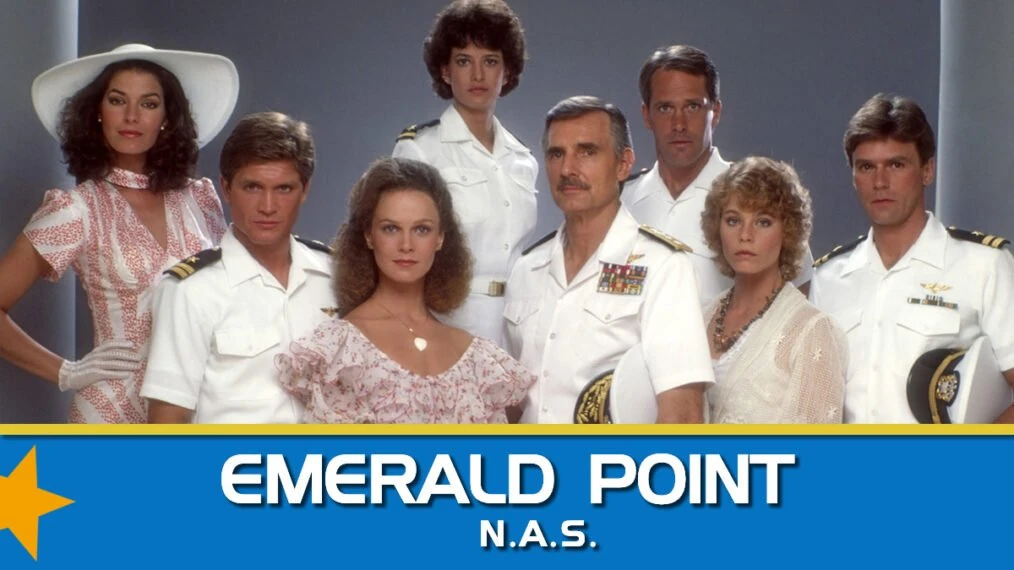
If the 80s could turn oil, wine and ranches into family soap territory, somebody was eventually going to try a naval base. Emerald Point N.A.S. did exactly that. Dennis Weaver headed the Mallory family in a world where military duty, romantic rivalry and family secrets were all sharing the same runway.
The show came from Esther and Richard Shapiro, the creators associated with Dynasty, and you could feel the attempt to apply that continuing-drama energy to a different institution. Officers, daughters, lovers, rivals and powerful families created overlapping stories around the base rather than a mansion.
What makes the series memorable now is the sheer specificity of the pitch. It is not simply ‘a military drama.’ It is a naval-air-station soap. That confidence is pure 1983 television. Networks were willing to believe an audience might follow melodrama almost anywhere if the cast was attractive and the cliffhanger was sharp enough.
It ran for one season, 1983–84, and then disappeared into the enormous pile of shows the decade tried once. But if you saw it, that combination of uniforms, jets and romantic chaos is hard to confuse with anything else.
The military setting added rules the usual soaps did not have. Rank, duty and public reputation existed alongside romance and family allegiance. That should have created a pressure cooker: people could not simply storm out of the family business because the institution itself was bigger than them. The series never lasted long enough to exploit every possibility, but the setup shows how adventurous the genre had become about where continuing melodrama could live.
Paper Dolls
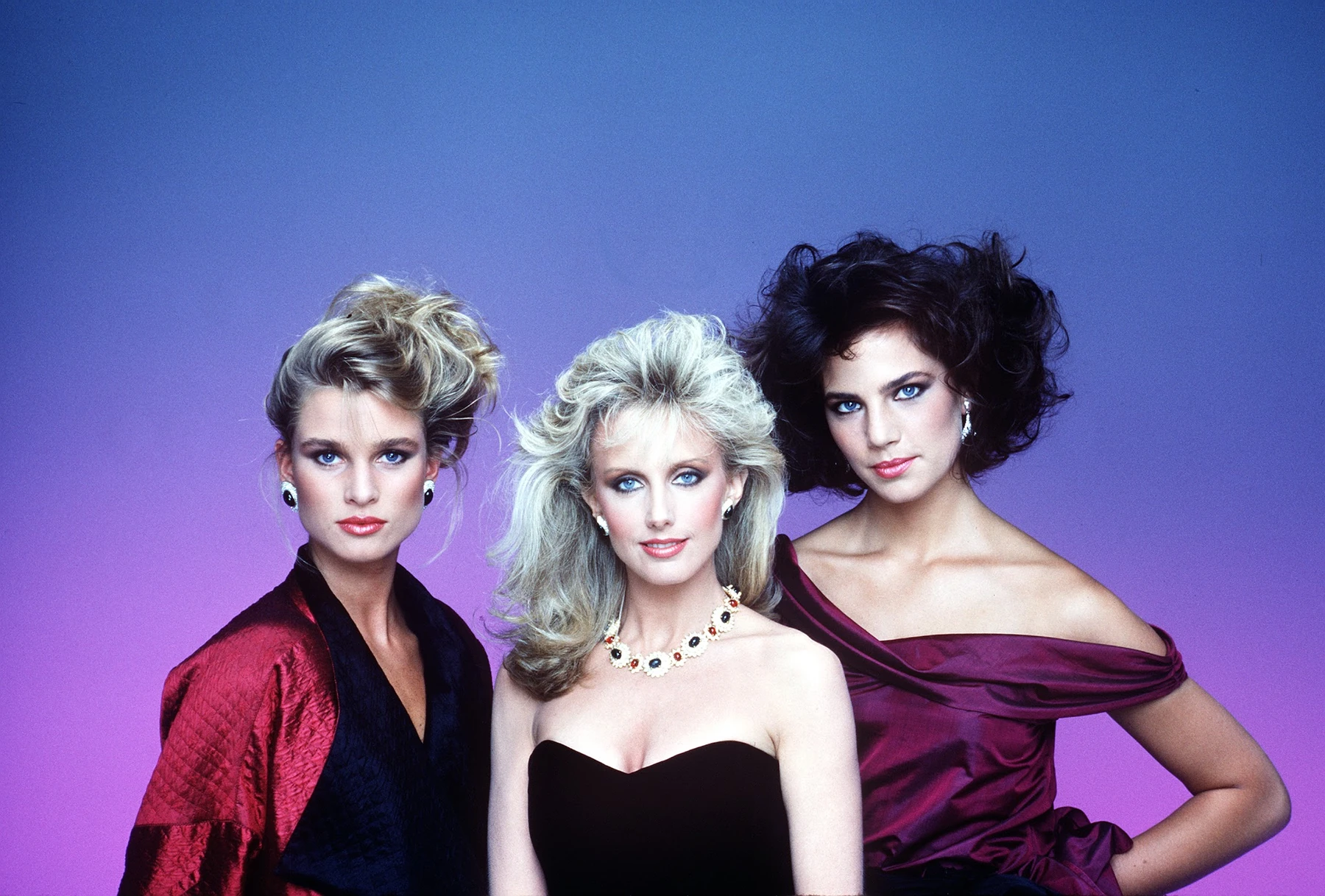
Paper Dolls took the prime-time soap into the fashion industry, which sounds obvious now but felt perfectly timed in 1984. Modeling, ambition, image and money already came with built-in competition. Add Morgan Fairchild, Lloyd Bridges, Mimi Rogers and a young Nicollette Sheridan and the series practically arrived wearing shoulder pads.
The show grew out of a 1982 television movie and focused on the people behind the glossy images: models, managers, families and executives. The fantasy was the fashion world. The soap came from what people were willing to do to stay visible inside it.
For Gen X viewers, Paper Dolls is one of those titles that may trigger the cover before the story. The look was the point. Studios, photo shoots, clothes and magazine-style glamour made the show feel like television had swallowed an issue of a fashion magazine.
ABC canceled it quickly, but short-lived does not mean culturally useless. Paper Dolls shows how far the soap boom had spread by the middle of the decade. If an industry had status, money, beauty and competition, somebody could imagine it as prime-time melodrama.
It also arrived at a moment when modeling and fashion felt almost impossibly glamorous to kids watching television. The photo shoots, studios and agency politics looked like a secret adult world built entirely around appearance. That made the show’s darker side — pressure, ambition and people being treated like products — more interesting than the clothes alone. Even in a short run, Paper Dolls understood that glamour works best on television when the surface is beautiful and everybody underneath it is miserable.
Bare Essence
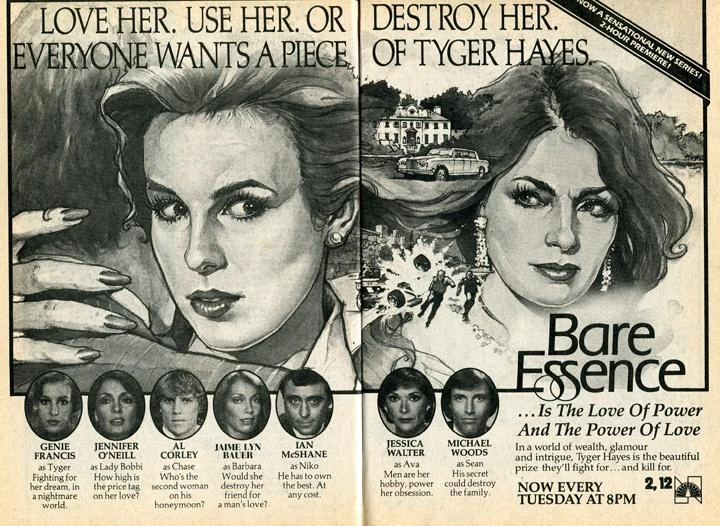
Perfume was the battleground in Bare Essence, which may be the most gloriously early-80s business premise imaginable. The story centered on a young woman entering the fragrance industry, where ambition, family connections, romance and corporate rivalry mixed together behind bottles designed to smell expensive.
Genie Francis brought daytime-soap recognition with her, which made sense for a show trying to translate that kind of continuing emotional storytelling into nighttime. The series had first existed as a miniseries before NBC expanded the concept into a weekly run.
What is interesting now is how seriously television believed the business world itself could become fantasy. Oil had worked. Fashion looked promising. Perfume could be made to feel like an empire if the offices were polished enough and everybody at the table had a reason to betray somebody.
The weekly series did not last, but Bare Essence belongs in the museum of 80s prime-time soaps because it captures the genre’s expansion perfectly. The idea was no longer ‘can a nighttime soap work?’ The question had become ‘what industry have we not tried yet?’
The perfume setting gave the series a built-in visual language too: glass bottles, luxury counters, advertising campaigns and the promise that identity could be packaged. That is soap-opera territory almost by accident. Characters were selling fantasy while living through their own betrayals. The show did not become a lasting hit, but the premise now feels like a perfect little capsule of the decade’s fascination with branding, image and corporate glamour.
Berrenger’s
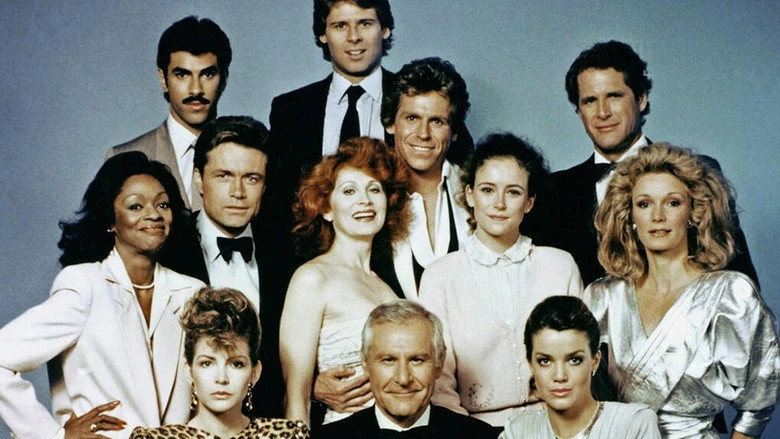
Berrenger’s moved the family war into a high-end department store. Simon Berrenger ruled the business while his children, grandchildren and executives carried enough romantic and corporate baggage to fill every floor from cosmetics to home furnishings.
The premise was pure soap logic: make the company inseparable from the family, then ensure nobody agrees on what either one should become. Affairs could affect business decisions. Business decisions could wreck marriages. A merger could feel as personal as a divorce.
The cast included Sam Wanamaker, Ben Murphy, Yvette Mimieux, Anita Morris, Jeff Conaway and a young Claudia Christian. The show lasted only twelve episodes in 1985, which makes it easy to forget now, but the concept tells you everything about the period. A fancy department store was not just a retail location. It could be a kingdom.
For those of us who remember when department stores themselves felt grander than they do now, Berrenger’s makes a strange kind of nostalgic sense. Marble counters, executive offices and family ownership could absolutely look like power from the other side of the television screen.
A department store also gave writers a natural cross-section of people. Executives could fight upstairs while employees, customers and family members moved through the same building. In another era, that could have become a long-running ensemble. In 1985, however, the audience already had a crowded schedule of richer, louder continuing dramas. Berrenger’s arrived with a workable engine at exactly the moment viewers may have been running out of parking spaces for another soap in their week.
Secrets of Midland Heights
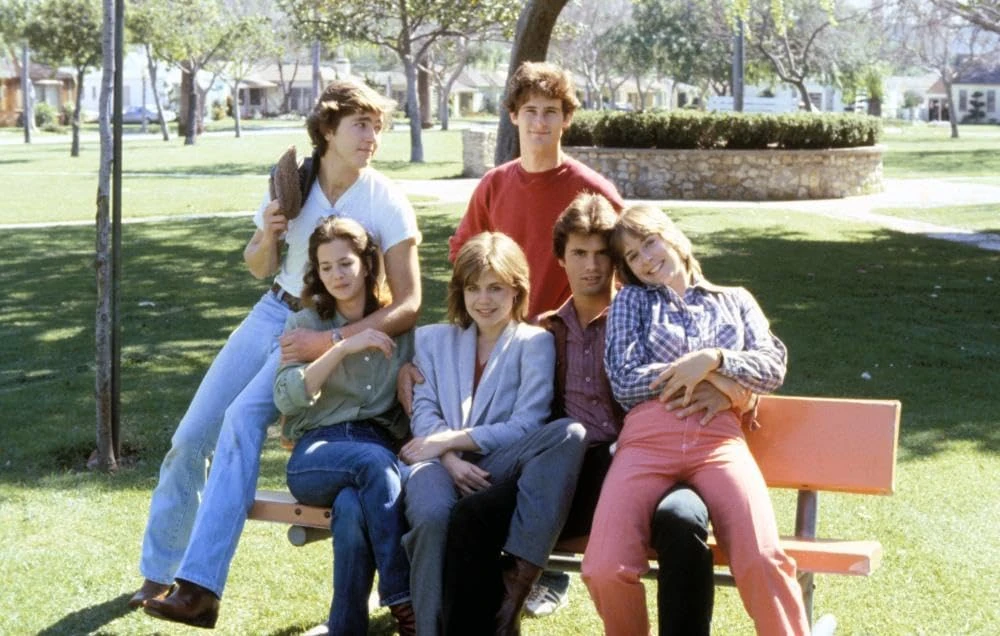
Secrets of Midland Heights arrived in late 1980, when networks were still figuring out exactly how much continuing soap storytelling prime-time audiences wanted. Instead of oil money or fashion, the series centered on several families in a Midwestern university town where old wealth, affairs, ambition and buried history kept colliding.
The wealthy Millington family sat near the center, but the show spread its attention across households and generations. That gave it more of a community-soap feeling than the later dynasty empires. The drama could be about money one minute and teenagers or marriages the next.
It ran only eleven episodes, but the timing makes it fascinating. Dallas had just demonstrated what serialized nighttime drama could do, and television was suddenly looking for other places to plant the same kind of emotional fuse.
You can almost see the networks experimenting in real time: maybe the next huge soap does not need an oil baron. Maybe it needs a college town full of respectable people hiding things from one another. The audience did not stick around long enough for Midland Heights to become Southfork, but the attempt is pure early-80s television history.
Because it arrived so early, the show also feels closer to daytime soap structure than the later empire series. The emphasis was spread across families, affairs, teenagers, marriages and community secrets rather than one huge corporate throne. That makes it less visually iconic but historically interesting. Television had not yet decided that every nighttime soap needed a billionaire. It was still testing whether a town full of bad decisions might be enough.
Glitter
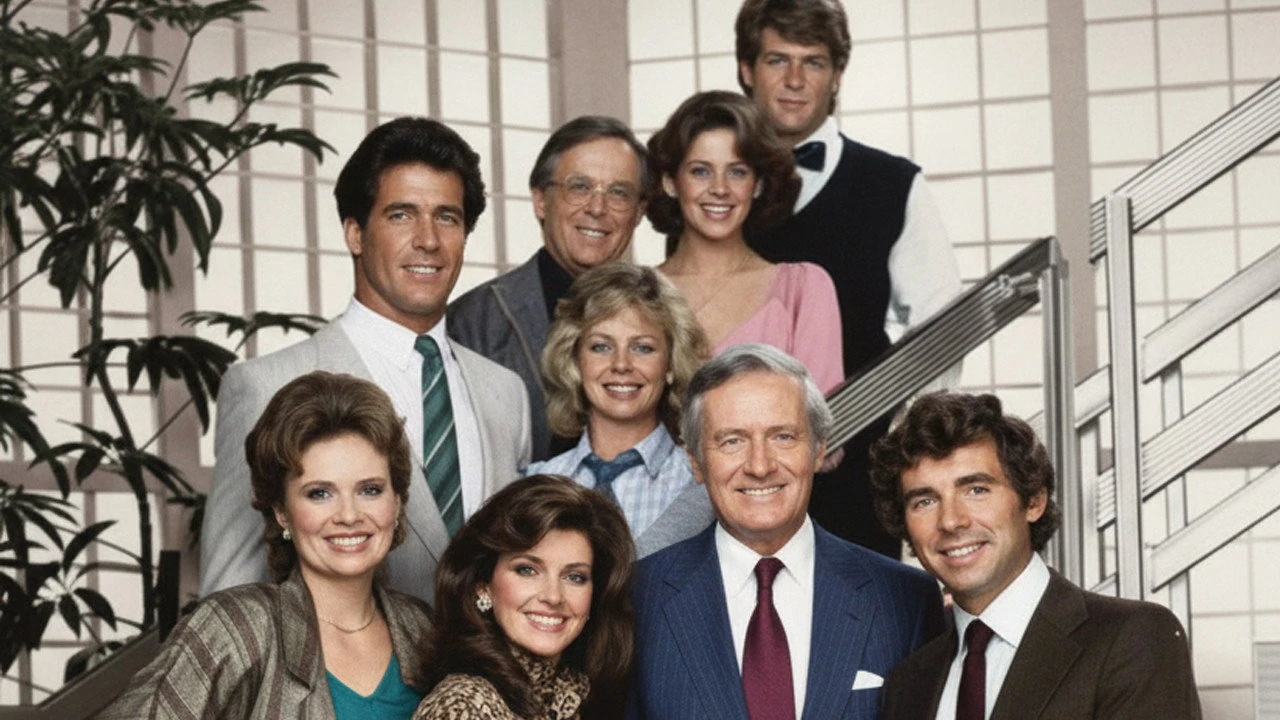
Aaron Spelling’s Glitter put the drama inside a glossy magazine, where reporters could chase celebrity stories while their own lives generated complications. The title did not exactly hide the ambition. This was supposed to look shiny.
The format mixed recurring staff with guest-driven stories, which made it a cousin to Hotel as much as a traditional family soap. Reporters were sent after glamorous people, scandal and human-interest stories, giving the show an excuse to bring a new world through the office every week.
David Birney, Morgan Brittany and Arthur Hill were among the regulars, and the series carried the unmistakable feel of a network trying to make one more polished ensemble drama happen in the middle of the soap boom. The magazine setting gave it built-in celebrity culture before celebrity culture became a full-time television genre of its own.
It did not catch. Fourteen episodes were produced, with the later unaired installments eventually surfacing after the original 1984 launch. But Glitter belongs here because the 80s were full of shows that believed glamour itself could be a setting. Sometimes that belief built a hit. Sometimes it built a very interesting time capsule.
The magazine premise also foreshadowed how much celebrity and media culture would eventually swallow television. Reporters chasing famous people gave the show a reason to live near scandal every week. In the mid-80s, that was still fiction wrapped in glamour. A couple of decades later, entire channels would be built around watching real celebrities generate similar chaos. Glitter missed as a hit, but the world it imagined did not exactly disappear.
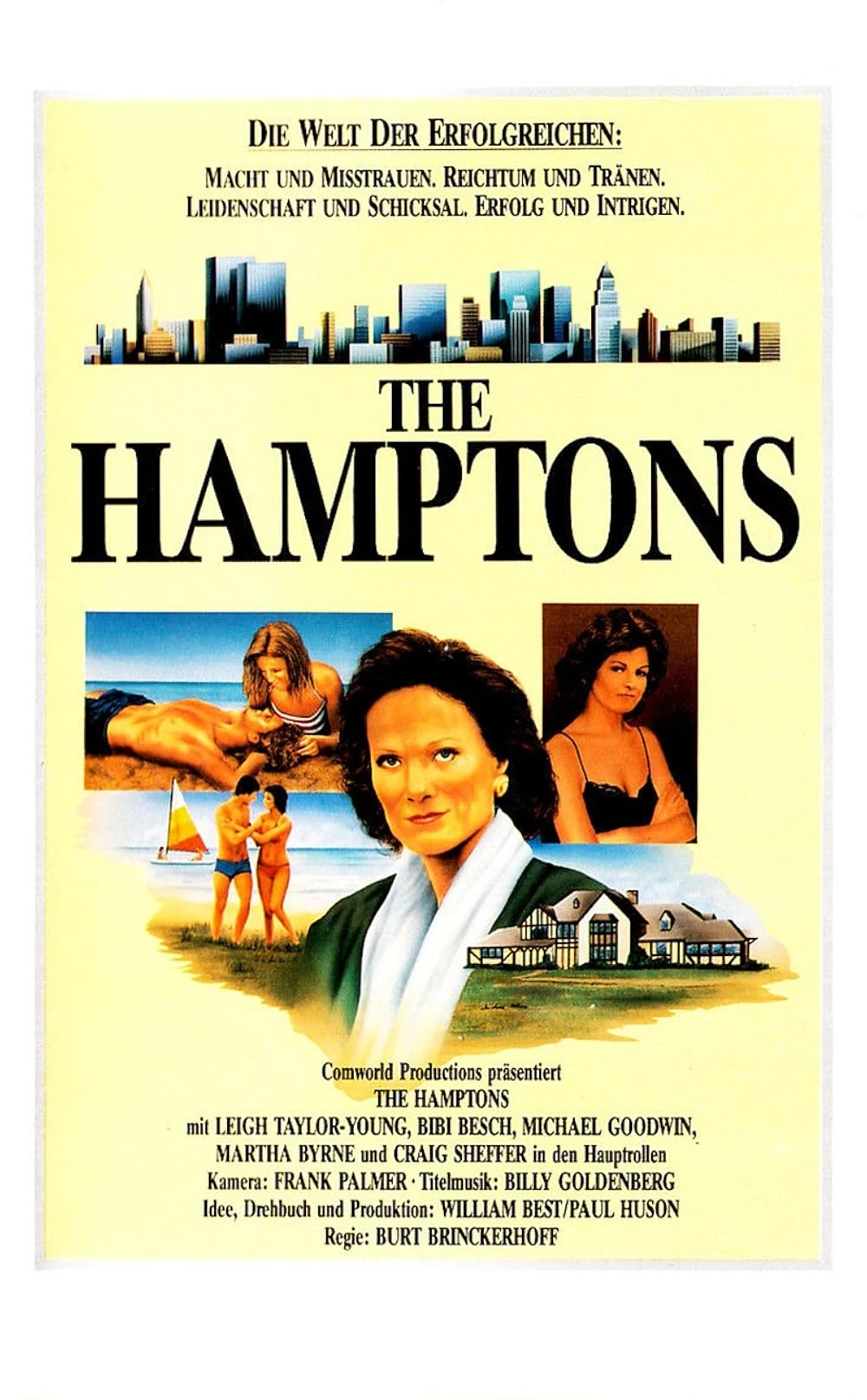
The Hamptons
Five episodes. That was all The Hamptons got in the summer of 1983, but the premise might as well have been assembled from a prime-time soap checklist: two old-money families, a luxurious Long Island resort, a jointly owned department-store chain and relationships complicated enough to make everybody miserable between weekends.
The Chadways and Duncan-Mortimers moved between the Hamptons and New York business life, giving the show both beachfront wealth and corporate conflict. It was exactly the kind of environment the genre loved because property, romance and family identity could all be threatened by the same decision.
What makes it worth remembering is not that it secretly rivaled Dallas. It did not. The value is seeing how eagerly networks were testing the format. By 1983, prime-time soap was not one or two successful shows. It was a programming idea that could be adapted, repackaged and thrown into summer to see if lightning struck again.
For Gen X, this is deep-cut territory — the kind of title that separates ‘I know 80s TV’ from ‘wait, I vaguely remember that.’ Sometimes the forgotten failures tell you more about an era than another paragraph about the hits. The Hamptons proves how badly television wanted another glamorous family war.
Its five-episode life also captures a part of television history we tend to forget: summer used to be a laboratory. Networks could try a limited run and see whether viewers responded. There was no algorithm quietly feeding the show to an audience six months later. If people did not show up in those weeks, the experiment was basically over. That makes The Hamptons less a failed epic than a snapshot of how risky serialized television was before on-demand viewing gave shows more time to find people.
Dallas vs. Dynasty vs. Knots Landing vs. Falcon Crest
Put the four biggest 80s prime-time soaps next to one another and the differences are obvious. They all used continuing stories, family conflict, romance and cliffhangers, but they did not feel interchangeable. That was a big reason the genre could support several major hits at once.
If you want the individual stories behind the four giants, keep going with Dallas in the 80s, Dynasty in the 80s, Knots Landing in the 80s and Falcon Crest in the 80s.
Why “Who Shot J.R.?” Changed Prime-Time Television
The question worked because J.R. Ewing had spent years giving half the cast a reason to pull the trigger. Dallas did not invent the cliffhanger, but it demonstrated what happened when a cliffhanger escaped the program and became a national guessing game. You could sell magazines, run promos, make jokes and keep the country talking for months without revealing the answer.
The episode that resolved the mystery drew an enormous American audience, and the lesson for network television was impossible to miss: serialized drama could create an event without sports, news or a miniseries. A regular weekly show could stop the country if enough people cared about the characters.
That success helped make the early 1980 television season feel like the starting gun for a new kind of prime-time competition. The next several years would be full of networks trying to build their own long-running question.
Why 80s Prime-Time Soaps Needed Great Villains
J.R. Ewing and Alexis Carrington understood the same basic rule: being awful is not enough. You have to be fun to watch. J.R. could smile while ruining somebody’s life. Alexis could turn a walk into a declaration of war. Abby Cunningham could make a suburban conversation feel like a negotiation where only one person knew the real terms.
The best villains were not monsters from outside the family. They were already at the table. That made every victory personal. A business move hurt a sibling. A romantic move humiliated a spouse. A secret threatened children, inheritance and status all at once.
That is why these soaps were so addictive. The villain did not disappear at the end of the hour. They went home to the same house, showed up at breakfast and started another plan next week.
The Women Who Made 80s Prime-Time Soaps Unmissable
The genre gave women enormous screen presence, even when the stories were still operating inside very 80s ideas about marriage, beauty and power. Linda Evans, Joan Collins, Donna Mills, Michele Lee, Jane Wyman, Victoria Principal, Linda Gray and others became the faces people remembered because the shows gave them conflict that could last for years instead of forty-eight minutes.
Alexis was openly ambitious. Angela Channing controlled an empire. Abby Cunningham treated opportunity like oxygen. Sue Ellen Ewing’s story became far more complicated than simply being married to J.R. Valene Ewing could be vulnerable without being weak. Karen MacKenzie gave Knots Landing a moral center without becoming dull.
And the clothes mattered because costume was part of character. You knew who had entered the room before the dialogue caught up. A hat, a shoulder line, a fur, a jewel, a color — visual language did half the storytelling.
Why Mansions, Fashion and Wealth Were Part of the Story
The 80s did not do subtle wealth particularly well, and prime-time soaps were better for it. Houses were enormous. Offices had wood, brass and enough square footage to land a small aircraft. Women wore clothes that entered the room before they did. Men conducted family warfare in suits that looked like they had never met a wrinkle.
But the luxury was not only decoration. It raised the stakes. Losing the company meant losing identity. Losing the ranch or winery meant losing family history. A marriage could be a romantic decision and a merger at the same time. The money made every emotional choice look larger because the consequences could extend through an entire empire.
For Gen X kids, the whole thing was another planet. We watched from rooms with wood paneling, shag carpet leftovers and a television somebody had to walk over to adjust. On-screen, the Carringtons were descending staircases in formalwear because they had apparently decided dinner required architecture.
Why the Cliffhanger Was the Secret Weapon of 80s Nighttime Soaps
A cliffhanger hits differently when there is nowhere to go. Today, television can ask whether you want the next episode before the credits have finished. In the 80s, a gunshot, wedding interruption, missing body or shocking return meant you were done. That was it. See you next week.
The waiting turned viewers into amateur writers. We argued about who did it, whether somebody was actually dead and whether the obvious explanation could possibly be right. Television Guide covers, entertainment shows and supermarket conversations kept the story alive between episodes.
Season-ending cliffhangers stretched that tension across months. Dallas made the strategy famous. Dynasty kept trying to make finales look bigger. By the time the Moldavian wedding massacre arrived, a soap finale could resemble an action sequence because ordinary betrayal no longer felt large enough.
Why Every 80s Prime-Time Soap Seemed to Need an Empire
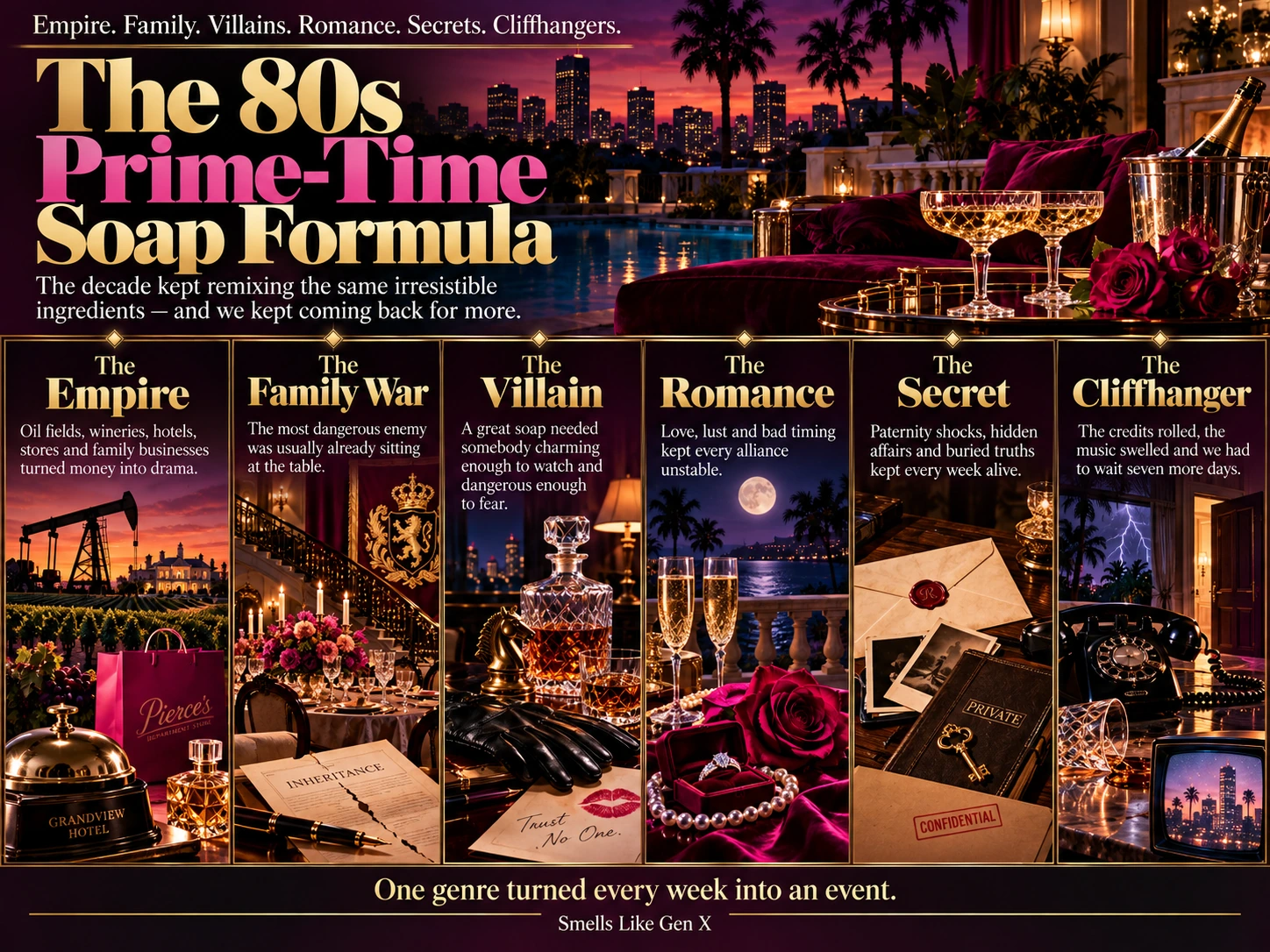
The family business was the perfect soap machine because it made love and money impossible to separate. If your father was also your boss, rebellion at home could become rebellion at work. If your ex-wife owned stock, a divorce could turn into a boardroom problem. If the ranch, winery or company carried the family name, losing control meant losing more than income. It meant somebody else had taken your identity.
Dallas had oil. Falcon Crest had wine. Berrenger’s had a department store. Bare Essence had perfume. Paper Dolls had fashion. The specific business changed, but the trick stayed the same: give the family something everybody needs from one another and then make trust impossible.
It also made the shows legible even when the corporate details went over our heads as kids. We did not need to understand shares or mergers. We understood that J.R. wanted control, Angela was not giving up the winery and somebody at Carrington Atlantic was about to make Blake furious. The emotional math was simple even when the paperwork was not.
What Watching an 80s Nighttime Soap Actually Felt Like
There is no way to separate these shows from the way we watched television then. Most families were not spreading out across personal screens. The main TV was a shared piece of furniture, and whoever controlled the evening schedule controlled the room. If your parents watched Dallas, you probably knew more about the Ewings than you ever consciously decided to learn.
The VCR helped, but it was not magic. Somebody had to program it correctly. Somebody had to remember whether the cable box needed to stay on channel 5 while the television itself stayed on channel 3. A blinking 12:00 could still destroy your plan. Missing a soap episode meant walking into next week with actual information missing.
That made recaps and opening scenes important. It also made conversation useful. Somebody at work, school or in the family could tell you what you missed. Spoilers existed, but they traveled by mouth, magazine and entertainment show instead of appearing on a phone before breakfast.
For more of that lived-in television routine, the stories of 80s reruns, syndicated television and the larger 1980s TV world explain why these shows became memories tied to rooms, nights and family habits instead of just episode titles.
How 80s Prime-Time Soaps Dominated the Nielsen Ratings
Dallas spent years near the very top of American television. Dynasty climbed until it reached number one for the 1984–85 season. Falcon Crest and Knots Landing became major hits in their own right. For a while, the television schedule looked like the networks were competing to see which wealthy family could create the largest national argument.
The year-by-year rankings show how dominant the genre became and how quickly the balance shifted:
Those charts also explain why the lesser soaps existed. When one format starts occupying that much of prime time, networks do not politely admire the winner. They start ordering their own version.
The Theme Songs and Opening Credits Were Part of the Event
The openings were not filler. Dallas split the screen and rolled through faces with a theme that still sounds like money, Texas and trouble. Dynasty presented its cast like portraits in a very expensive hallway. Falcon Crest gave wine country the gravity of a family crest. The music announced what kind of world you were entering.
Those long cast openings also mattered because soaps were ensembles. The credits reminded us who was currently in the war. A new face was a promise that the balance was about to change. An absent face could feel suspicious before the episode even began.
For Gen X, theme songs were also navigation. You could be in another room, hear the first few seconds and know exactly what the adults had chosen for the next hour.
Why the Prime-Time Soap Boom Cooled Before the 80s Ended
Once viewers had seen shootings, secret children, amnesia, corporate theft, catfights, massacres, fake deaths and dream seasons, escalation became a problem. The bigger the genre got, the harder it was to surprise people without becoming ridiculous.
Audience tastes also moved. Sitcoms surged. Crime dramas evolved. New networks and cable started changing the television landscape. Some soaps kept going — Knots Landing especially proved remarkably durable — but the sense that every network needed another wealthy-family serial began to fade.
The short-lived shows tell the story. Paper Dolls, Berrenger’s, Emerald Point N.A.S., Glitter and others had many of the right ingredients. What they lacked was the audience’s willingness to add one more continuing drama to an already crowded week.
By the end of the decade, the prime-time soap had not disappeared. It had simply stopped feeling like the automatic answer to what television should build next.
Why Gen X Still Remembers the Nighttime Soaps of the 80s
A lot of us did not choose these shows at first. They were what was on because our parents were watching. That is an important kind of television memory. You are playing on the floor, doing homework, wandering through the room or pretending not to watch, and eventually you know who J.R. is anyway.
We learned the theme songs by accident. We knew Alexis was bad news. We understood Southfork was important. We could identify Donna Mills before we could explain what Abby Cunningham actually did for a living. Television was more communal because most houses had fewer screens, and adult prime time leaked into childhood whether we asked for it or not.
And then there was the waiting. These shows trained us to live with unresolved stories. No recap video. No spoiler site. No instant second episode. If Dallas ended with somebody on the floor, that image had to sit in your head until television decided you were allowed to know more.
80s Prime-Time Soap Operas: Frequently Asked Questions
What were the biggest prime-time soaps of the 1980s?
Dallas, Dynasty, Knots Landing and Falcon Crest were the defining giants. Each developed its own identity: Texas oil, Denver glamour, suburban relationships and California wine-country power.
Was Dallas the first prime-time soap?
No. Serialized dramas existed before it, but Dallas became the breakthrough that turned the modern nighttime soap into a huge national phenomenon and pushed networks to chase the format throughout the 80s.
Which 80s prime-time soap was number one in the ratings?
Dynasty reached number one for the 1984–85 television season. Dallas had already spent multiple seasons at or near the top and remained one of the decade’s defining ratings forces.
Was Knots Landing a Dallas spinoff?
Yes. Gary and Valene Ewing connected the two shows, but Knots Landing quickly developed its own tone and ensemble identity and ultimately outlasted Dallas‘ original run.
Why were cliffhangers so important to 80s soaps?
Because viewers had to wait. A strong ending kept people talking for a week — or all summer — and made the next episode feel like an event instead of simply the next item in a queue.
What are some forgotten 80s prime-time soaps?
Flamingo Road, Emerald Point N.A.S., Paper Dolls, Bare Essence, Berrenger’s, Secrets of Midland Heights, Glitter and The Hamptons are some of the deeper cuts from the boom.
What is the difference between a daytime soap and an 80s prime-time soap?
Daytime soaps aired throughout the week and usually produced far more episodes. The 80s prime-time soaps ran in the evening, generally once a week, with larger budgets, shorter seasons and network-event cliffhangers built around shows such as Dallas, Dynasty, Knots Landing and Falcon Crest.
Which 80s nighttime soap lasted the longest?
Knots Landing ran from 1979 to 1993, outlasting the original runs of Dallas, Dynasty and Falcon Crest. Its long life is one reason it feels different from the flashier boom-and-bust soaps around it.