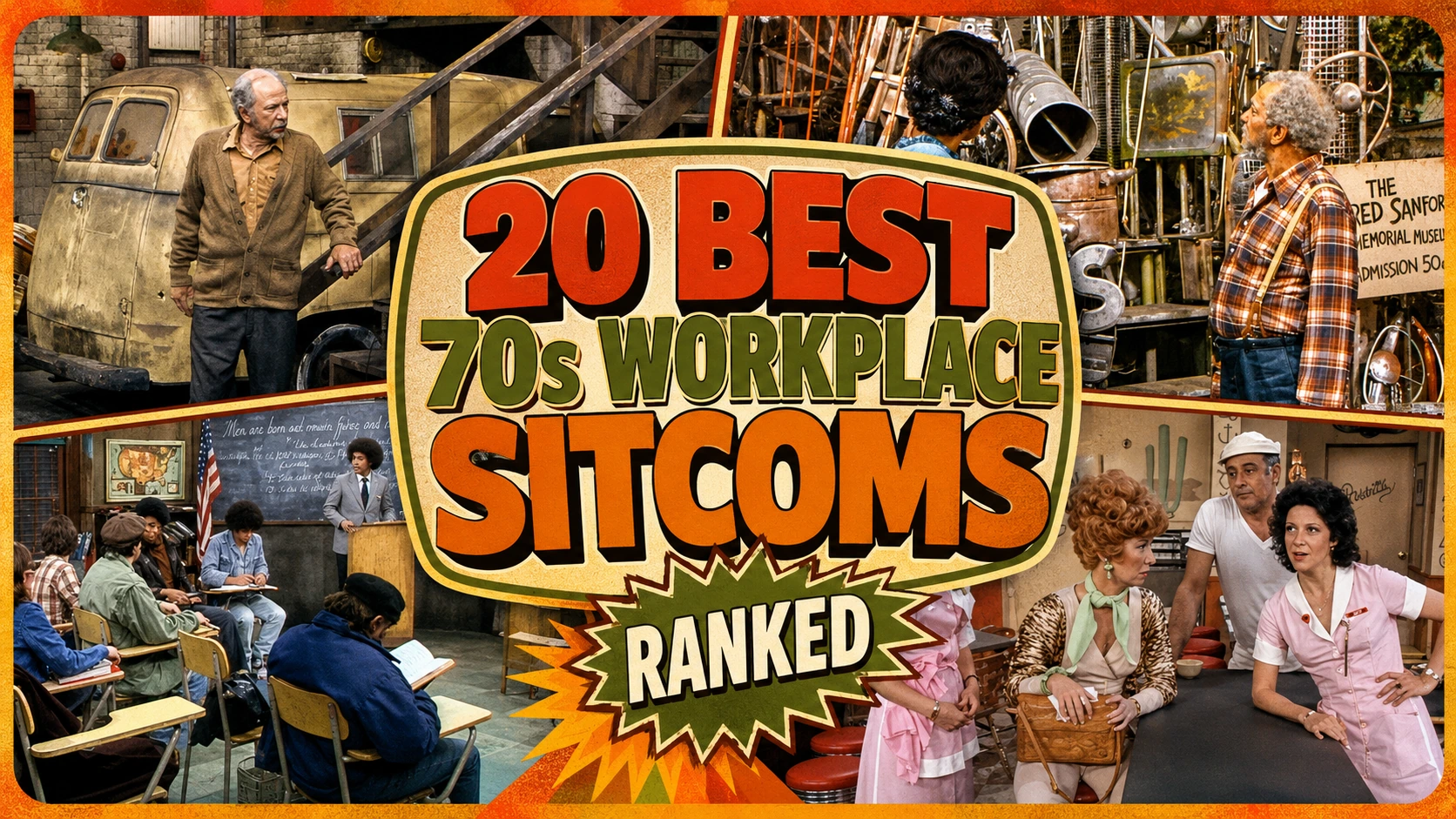
20 Best Workplace Sitcoms of the 1970s, Ranked
9 TO 5
20 Best Workplace Sitcomsof the 1970s, Ranked
Before The Office had Dunder Mifflin, the best workplace sitcoms of the 1970s had already figured out that a newsroom, hospital, cab garage, diner, precinct, classroom or brewery could be as funny and lived-in as any family living room. We got WJM, the 4077th, Sunshine Cab, Mel’s Diner and a Cincinnati radio station where management once learned something important about turkeys. These were jobs—with bosses, shifts, paychecks, bad coffee, co-workers who became family and days when quitting sounded pretty good.
What were the best workplace sitcoms of the 1970s?
The Mary Tyler Moore Show takes our top spot because it helped define the modern workplace ensemble. M*A*S*H, Taxi, Barney Miller and WKRP in Cincinnati follow because each turned a job site into a complete world. Then come The Bob Newhart Show, Alice, Laverne & Shirley, Welcome Back, Kotter and Sanford and Son.
- The Mary Tyler Moore Show
- M*A*S*H
- Taxi
- Barney Miller
- WKRP in Cincinnati
- The Bob Newhart Show
- Alice
- Laverne & Shirley
- Welcome Back, Kotter
- Sanford and Son
Why workplace sitcoms took off in the 1970s
The decade figured out that co-workers could be every bit as funny, irritating and important as relatives.
There had been workplace comedy before the 1970s. The Dick Van Dyke Show had already shown how much fun could live in a writers’ room, and plenty of earlier sitcom characters had jobs. But the 1970s did something different: it made the workplace itself feel like a second home. The office, station, garage, diner, school, precinct or hospital did not simply provide a reason for the lead to leave the house. It became the place where the ensemble lived.
That change fit the decade. American television was getting more interested in adults whose lives did not revolve entirely around the traditional family living room. Women were entering and redefining professional spaces on screen. Blue-collar jobs were getting more visibility. Institutions—schools, hospitals, police departments, the military—could be treated as messy organizations full of personalities instead of clean backdrops for authority.
And television discovered the great secret every person with a timecard already knew: you do not get to choose most of the people you work with. That is comedy gold. Family sitcoms have to invent reasons relatives keep arguing. A workplace just schedules everybody for the same shift.
Look at the places on this list. WJM is a low-rated local news operation. Sunshine Cab is a garage full of people who would mostly rather be somewhere else. The 12th Precinct is a government office with handcuffs. WKRP is a struggling radio station where sales, music and management barely speak the same language. Mel’s Diner is a job Alice needs while she tries to build another future. Shotz puts Laverne and Shirley on a bottling line. These are not fantasy workplaces. Even when the comedy gets broad, the job underneath it feels recognizable.
For Gen X, a lot of these places became familiar through reruns. We did not need to know what an associate producer did to understand that Lou Grant was Mary’s boss. We did not need a driver’s license to know Louie De Palma was the manager from hell. We learned the emotional map of work before many of us ever had a first job: the competent person, the loudmouth, the dreamer, the boss who means well, the boss who absolutely does not, and the co-worker who somehow knows where everything is.
That is why this ranking is not simply a list of sitcom characters who happened to collect paychecks. The job has to matter. The workplace has to create relationships, conflict and rhythm. If you could move the exact same show to a suburban living room and lose almost nothing, it is not a workplace sitcom for our purposes.
And if you want the larger view of what the decade’s comedies were doing beyond the job, our look at how 1970s sitcoms started talking about real life shows how work, money, race, gender and family all started colliding on the same prime-time schedule.
How we ranked the best 1970s workplace sitcoms
Being funny helps. Being set at work is not enough.
We ranked these shows on four things: how much the job actually drives the comedy, the quality of the ensemble, how well the series holds up as television, and how much influence or staying power it had. A short-lived show can make the list if the workplace idea was strong. A giant hit can fall lower if the job was mostly background.
Grab the coffee, find the timecard and stay away from whatever Herb Tarlek is selling. We are clocking in at number twenty and working our way to WJM.
20
#20 Temperatures Rising
A chaotic hospital comedy that changed its own cast and format almost as often as the patients changed beds.
Temperatures Rising is the deep cut at number twenty, and it earns the spot because the premise is pure workplace comedy even if the show itself never quite settled down long enough to become a classic. Capitol General Hospital gave the writers everything a sitcom needs: doctors with different ideas about how the place should run, nurses trying to keep the floor moving, patients bringing fresh chaos through the doors, and administrators who would really prefer everyone follow the rules for five consecutive minutes.
In the original version, Cleavon Little supplied much of the comic energy, playing against the more buttoned-down authority around him. Later seasons kept reshuffling the formula, including a major reworking that put Paul Lynde at the center. The result is a show that can feel less like one series evolving than several related hospital comedies sharing the same building.
That instability is why it sits at #20 instead of much higher. The workplace itself was strong; the identity of the show was not. But the hospital setting was already pointing toward a big 1970s idea: institutions are funny because everybody inside them has a job to do, a chain of command to answer to, and a completely different opinion about what should happen next.
Where M*A*S*H would use medicine to move from absurdity to heartbreak, Temperatures Rising usually chose speed, personality and chaos. It is messy, very much of its era, and exactly the kind of forgotten schedule oddity that makes digging through 1970s television fun.
#19 The Betty White Show
Betty White playing an actress stuck working with her ex-husband? That is a workplace problem.
The 1977 Betty White Show gave Betty White one of the best workplace setups nobody remembers: she played actress Joyce Whitman, star of a television police series produced by her ex-husband. That is already enough professional discomfort for a full season before anyone has even called places.
The clever part is that the job lets the comedy happen on two levels. Joyce has to perform inside the fake police show, then step off the set and deal with the people making it. Directors, producers, actors and crew all become part of the workplace pressure. And because her ex is still in the building, the line between professional patience and personal irritation is permanently one bad note away from disappearing.
White was perfect for that kind of tension. She could make a pleasant smile feel like a warning and turn a polite response into a tiny act of revenge without raising her voice. That ability would become even more famous later, but you can already see why a television production set is such a natural workplace for her: everybody is pretending for a living while Joyce is trying not to pretend she enjoys working with her ex.
The show only lasted one season, which keeps it this low. But as a workplace idea, it feels ahead of the curve. Long before behind-the-scenes television comedies became their own little genre, The Betty White Show understood that a soundstage is an office with better lighting, bigger egos and absolutely no privacy.
#18 The Associates
A critically admired late-70s office comedy that barely got time to unpack its briefcase.
The Associates arrived in 1979 with one of those pedigrees that makes television nerds stare at the credits and wonder how the show managed to disappear. James L. Brooks, Stan Daniels and Ed. Weinberger were part of the creative team, and Martin Short was among the young lawyers. That is a lot of later comedy history squeezed into one very short-lived office.
The setting was a prestigious Wall Street law firm, but the real comic territory was what happened to young professionals once they got inside the building. The junior associates had the education, the suits and the ambition, but they were still low enough on the ladder to discover that prestige mostly meant more elaborate ways for somebody above you to ruin your afternoon.
That is a terrific workplace engine. Offices run on hierarchy, and law firms make the hierarchy impossible to miss. Partners have power. Associates want power. Clients arrive with problems that do not care how late you were there the night before. You can be brilliant on paper and still spend the day trying not to look terrified in front of the people who sign your future.
The series barely had time to build an afterlife, and that is why it sits below the shows we actually lived with for years. But the tone points directly toward the smarter professional workplace comedies that would flourish later. There is a little Mary Tyler Moore sophistication in the DNA and a little Taxi-era anxiety too: smart people, real jobs, fragile confidence, and co-workers who know exactly how lost you are.
#17 Carter Country
A Southern police workplace comedy built around a Black deputy and an old-school white sheriff.
Carter Country set its workplace inside a small-town Georgia sheriff’s department, with Victor French as old-school Chief Roy Mobey and Kene Holliday as Curtis Baker, the younger Black deputy who regularly sees the world—and the job—very differently from his boss.
That contrast gives the show more to work with than the usual small-town police comedy. Authority, race, region, age and professional pride are all sitting behind the same desk. The department cannot simply avoid those differences because the characters have to keep showing up together. Somebody still has to answer the phone, handle the town’s latest crisis and figure out who is actually in charge when everybody thinks they are.
The humor can be broad, and parts of it are very obviously from the late 1970s. That is true of a lot of television from the period that was trying to turn changing social expectations into weekly comedy. Sometimes the joke lands. Sometimes you can almost see the writers pushing two cultural viewpoints together and waiting for sparks.
What makes Carter Country interesting now is the workplace mechanism underneath it. A sheriff’s office is a hierarchy, but a good sitcom can make the hierarchy unstable by giving the supposedly subordinate employee the clearer head. Curtis often understands people and the changing world better than Roy does, which makes every official title a little less secure.
It never became a Gen X rerun staple like Barney Miller, but as a forgotten workplace comedy, it deserves the badge.
#16 The Tony Randall Show
Before Night Court, Tony Randall was already finding comedy in robes, clerks and judicial routine.
The Tony Randall Show cast Randall as Judge Walter Franklin and dropped him into a Philadelphia courthouse full of clerks, lawyers, defendants, fellow judges and the daily reality that the law may be orderly on paper while people remain gloriously uncooperative.
Randall was built for that contradiction. After years of watching him as Felix Unger, audiences already knew how funny he could be when a civilized man encountered a world that refused to meet his standards. As Judge Franklin, he gets the authority of the bench without the magical ability to make human behavior reasonable. That is a perfect workplace problem.
The series split time between the courthouse and home, but the professional side gave it its strongest identity. A courtroom provides built-in structure: cases arrive, somebody wants a decision, staff members have opinions, and the judge is supposed to be the adult in the room. The comedy comes from how quickly that last part becomes negotiable.
There is also a clear line from this kind of institutional ensemble to later legal workplace comedies. Night Court would eventually turn judicial routine into something much broader and stranger, but The Tony Randall Show was already finding humor in the robes, paperwork, staff personalities and endless procession of people who make the justice system less tidy than the architecture suggests.
It is remembered less vividly than the shows above it, but the courthouse setting still feels surprisingly modern.
#15 Arnie
A loading-dock worker gets promoted into management and discovers the carpet is stranger upstairs.
Arnie is one of those early-70s comedies that makes you wonder why workplace-TV histories do not bring it up more often. Herschel Bernardi played Arnie Nuvo, a longtime blue-collar employee suddenly promoted into management at the fictional Continental Flange company. One day you are one of the guys on the floor. The next day somebody gives you an office and expects you to think like management.
That promotion is the entire joke and the entire tension. Arnie knows the workers because he was one of them. He knows what management sounds like from the other side because he spent years hearing it. Now he is stuck between the people who think he sold out and the executives who assume a nicer chair has erased where he came from.
Workplace comedies thrive on divided loyalties, and Arnie bakes them directly into the job description. Success is supposed to feel like arrival, but the show understands that moving up can also make you socially homeless. Your old friends think you changed. Your new peers can tell you are not quite one of them. Meanwhile, the company still expects results.
That class angle feels very 1970s in the best way. Jobs were not abstract background details; they said something about status, identity and who got to make decisions. Arnie turned the management ladder into the sitcom set.
It never had the syndication life that burned WJM or Mel’s Diner into Gen X memory, but as a workplace premise, it is sharper than its faded reputation suggests.
#14 The Doris Day Show
The show reinvented itself until Doris Martin finally landed in the office the 70s wanted.
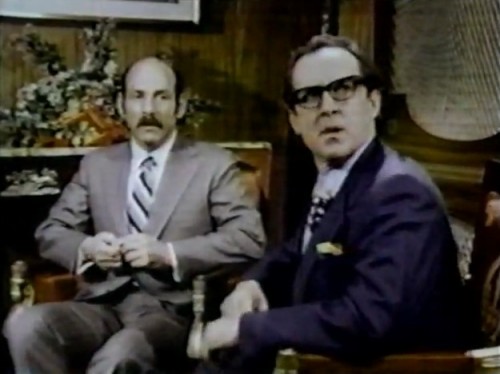
The strangest thing about The Doris Day Show is how aggressively it reinvented itself. It began as a rural family comedy, then kept moving Doris Martin toward San Francisco until the show had transformed into something that looked much more like the working-woman sitcom the 1970s were learning to love.
By the later seasons, Doris’s job at Today’s World magazine had become a major part of the series. McLean Stevenson played her boss, and Rose Marie brought exactly the kind of seasoned co-worker energy you want in a television office. Suddenly the show had deadlines, professional relationships, workplace irritation and the daily question of how a single woman builds an adult life around a job rather than waiting for the plot to marry her off.
That shift matters. The Mary Tyler Moore Show did the working-woman format better and with far greater influence, but The Doris Day Show is evidence of how quickly network television noticed the change in the air. A star who had begun the series on a ranch was now in a city office because the office itself had become attractive television territory.
Doris also brought a different personality to work than Mary Richards. She was more established, more polished and already carrying the confidence of a movie star persona. The comedy was less about discovering whether she belonged and more about watching an obviously capable woman navigate people who occasionally needed to catch up.
The constant format changes keep the series from ranking higher as a pure workplace comedy. But by the time Doris Martin was walking into that magazine office, the show had become a fascinating bridge between the old domestic sitcom and the new professional one. It is worth remembering that The Doris Day Show was still a Top 10 television hit in 1970, right before the decade’s workplace-comedy revolution really took off.
#13 C.P.O. Sharkey
Don Rickles as the boss you absolutely did not want conducting morning roll call.
C.P.O. Sharkey took the military chain of command and handed it to Don Rickles, which is almost unfair to every recruit standing beneath him. Sharkey is the abrasive chief petty officer responsible for a company of new Navy recruits, so the workplace comes with ranks, inspections, rules, bunks and the absolute certainty that somebody is about to get yelled at.
That makes the structure beautifully simple. Sharkey is the boss. The recruits cannot quit because he hurt their feelings. Every new arrival gives Rickles another personality to bounce off, insult or accidentally reveal affection for. The military setting turns the old boss-versus-employees formula into something even tighter because everybody is literally wearing the hierarchy.
The series was designed around Rickles’s performance style, and you can feel it. He had spent years turning confrontation into an art form on stage. Television tried to bottle that energy inside a weekly character, and the training base gave him a reason to keep firing verbal shots at everybody in sight.
Some of the ethnic humor and broad stereotypes land very differently now. There is no useful reason to pretend otherwise. But that also makes the show a revealing time capsule of what network comedy thought it could turn into workplace banter in the late 1970s.
It is nowhere near as layered as M*A*S*H, but it knows exactly what kind of workplace comedy it wants to be: the loudest supervisor in the Navy trapped with a crew that keeps giving him material.
#12 Room 222
A half-hour comedy-drama that helped prove a school staff could carry adult, socially aware television.
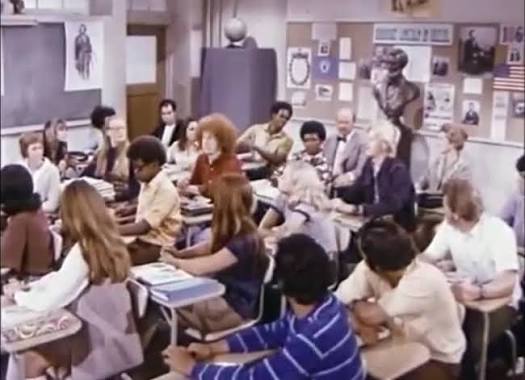
Room 222 is the one deliberate border crossing on this list. It is better described as a half-hour comedy-drama than a traditional sitcom, but leaving it out would erase an important step in the evolution of the workplace ensemble. Most of its run falls in the 1970s, and the school staff at Walt Whitman High operated like a workplace family before that phrase became television shorthand.
The series centered on history teacher Pete Dixon, guidance counselor Liz McIntyre, student-teacher Alice Johnson and principal Seymour Kaufman. The adults were not just there to introduce teenage plots. They had different philosophies about education, authority and what teachers owed the young people who came through the building every day.
That distinction is what makes the show feel important. A school is one of the most recognizable workplaces in America, but television had often treated teachers as supporting machinery for student stories. Room 222 let the staff disagree, struggle and carry the emotional weight of the institution itself.
It also tackled serious contemporary subjects—including race, sexism and other social pressures—without abandoning humor or the rhythms of a half-hour show. The Television Academy’s program history specifically identifies it as an early model for the realistic ensemble storytelling that would later become associated with MTM and Norman Lear-era television.
And the creative bridge is not theoretical: James L. Brooks and Allan Burns worked on Room 222 before moving on to create The Mary Tyler Moore Show. You can feel that evolution. The workplace is not just where the characters happen to stand. It is the thing that keeps bringing them together, forcing different values into the same room and giving them another day to try again.
#11 Chico and the Man
A rundown garage became the meeting point for generational change, neighborhood comedy and real chemistry.
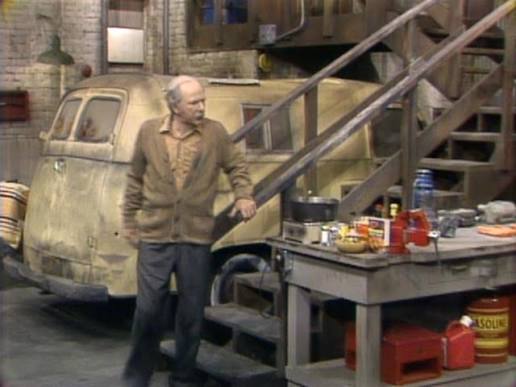
Chico and the Man built its entire central relationship around a job. Chico Rodriguez walks into Ed Brown’s rundown East Los Angeles garage looking for work and ends up changing the life of the stubborn older owner who initially wants as little to do with him as possible.
The garage is what makes the relationship believable. Chico and Ed do not have to become friends because a sitcom needs them in the same living room. They are stuck together because engines need fixing, customers keep arriving and the business has to open again tomorrow. Work gives two people from different generations and backgrounds a reason to keep testing each other long after either one might have walked away socially.
Freddie Prinze and Jack Albertson had the chemistry to make that friction warm rather than mechanical. Chico’s optimism bounces off Ed’s suspicion, but neither man is only one thing. Ed can be difficult without becoming unwatchable, and Chico can be hopeful without seeming naive. Their growing attachment sneaks up on the workplace comedy until the garage starts feeling less like a shop and more like a complicated home neither one planned to build.
The setting mattered culturally too. The Television Academy’s show history notes that the series was set in a Mexican-American neighborhood, giving network television a location and point of view it had rarely centered before.
Prinze’s death during the third season changed the series permanently, and there is no way to discuss its legacy without that shadow. But the early run remains a strong example of what workplace comedy can do: take two people who would probably avoid each other anywhere else, give them a shared job, and let familiarity slowly turn into family.
#10 Sanford and Son
Home, family and business were all the same address—which meant nobody ever really clocked out.
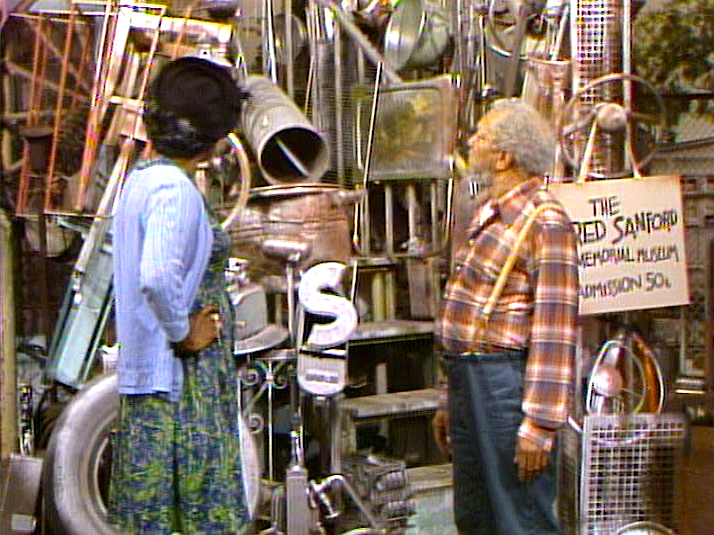
Sanford and Son is usually filed under family sitcom, and obviously Fred and Lamont’s relationship is the heart of it. But the junk business is not scenery. Sanford & Son Salvage is how they eat, how they fight, how they meet half the people who wander into their lives and why Lamont can never quite separate his future from his father.
That makes it one of the decade’s best family-business workplace comedies. Fred can be boss, father, employee, obstacle and chief executive of a ridiculous scheme before lunch. Lamont is the younger worker trying to make the business function while also wondering whether every day in the yard is another day his own life is standing still.
The work itself gives the comedy texture. They buy, sell, haul, repair and argue over objects somebody else threw away. Customers can be marks, opportunities or headaches. Every piece of junk has a possible dollar value, which means Fred’s instinct to hustle is not just a personality trait—it is part of the business model.
The setting also grounds the series in working-class Los Angeles. The Television Academy describes the show as chronicling Fred and Lamont in Watts, and that location gives the salvage yard a sense of neighborhood rather than isolation. Friends, relatives and regulars can drift in because the business is connected to the community around it. By the 1974 television season, Sanford and Son was the #3 show in America—the lone NBC entry inside a Top 10 almost completely owned by CBS.
For Gen X viewers who met Fred in reruns, the yard was instantly recognizable: the battered furniture, the truck, Fred’s throne-like chair, the feeling that no one had filed anything properly in years. And somehow the place worked because Lamont kept it moving and Fred could smell a deal from across the lot.
It belongs in the Top 10 because it reminds us that a workplace does not need fluorescent lights or a time clock. Sometimes the office, warehouse, family home and lifelong argument all share the same address.
#9 Welcome Back, Kotter
A teacher goes back to the room he barely escaped and finds four versions of his younger self.
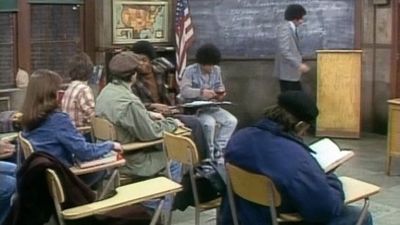
Welcome Back, Kotter works as a workplace sitcom because Gabe Kotter is not a student entering a school story. He is an adult returning to his old high school as a teacher. Buchanan High is his job, and the Sweathogs are the clients who have absolutely no intention of making the job easy.
The setup is better than it first looks. Kotter used to be one of those kids. The Television Academy’s program history notes that the character returns to his alma mater to teach the same kind of remedial class he once occupied himself. That gives him something most TV teachers do not get: memory from the other side of the desk.
Understanding the Sweathogs does not mean controlling them. Barbarino has charisma to burn and no urgency about using it academically. Washington can talk his way around almost anything. Epstein arrives with notes from a mother who apparently has access to every excuse in Brooklyn. Horshack can turn raising a hand into an event. Kotter’s real work is figuring out when to joke with them, when to push, and when the wisecracking kid in front of him actually needs an adult.
Mr. Woodman represents the administrative side of school—the part that wants rules, order and measurable results. That gives Kotter the classic workplace problem of answering upward while trying to protect the people below him. Anyone who has ever had a boss who only sees the policy and a room full of people who only see the person will recognize the squeeze.
As kids, we watched for the Sweathogs. In reruns as adults, Kotter’s patience becomes the better joke. He knows exactly how ridiculous they are because he remembers being ridiculous himself.
That makes Buchanan High more than a backdrop. It is a workplace about returning to the place that made you and discovering the job is harder from the front of the classroom.
#8 Laverne & Shirley
Blue-collar work, best-friend chemistry and a conveyor belt that never cared about your dignity.
Laverne & Shirley is remembered for the basement apartment, Lenny and Squiggy, Carmine, milk and Pepsi, and physical comedy that could make an ordinary doorway feel like an insurance claim. But its original workplace is one of the reasons the show felt different from so many other hit sitcoms.
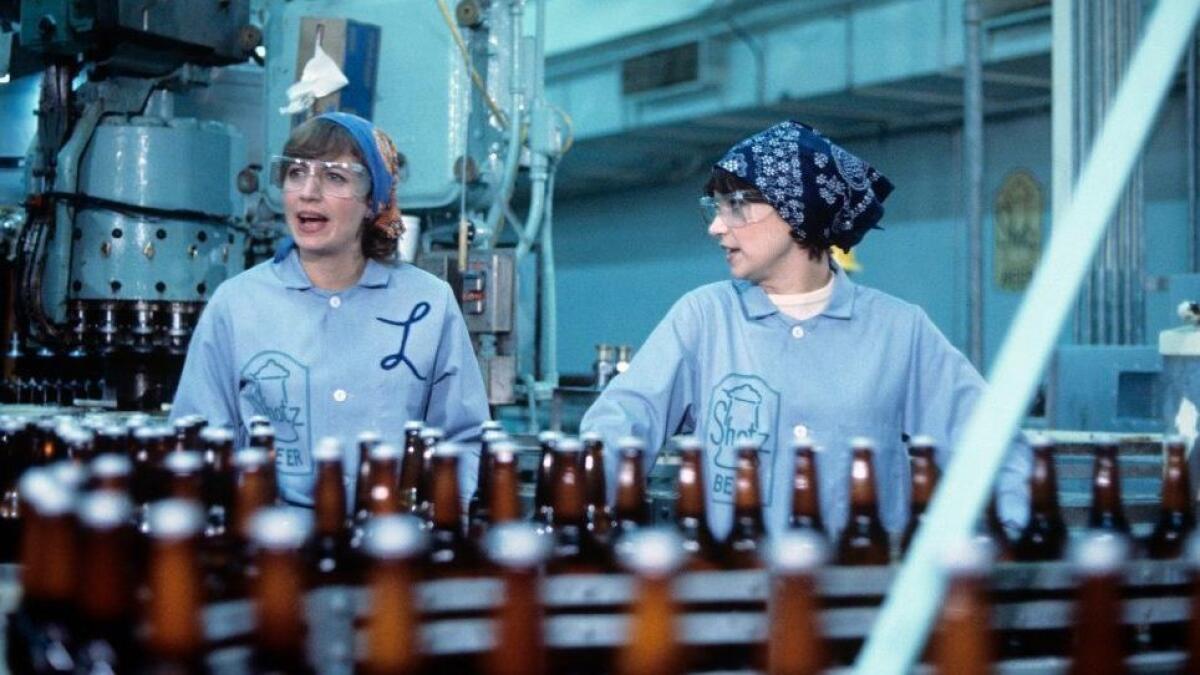
Laverne DeFazio and Shirley Feeney were bottle cappers at the Shotz Brewery. Not executives. Not glamorous professionals. Not women using a job as a temporary stop on the way to marriage. They worked a repetitive blue-collar shift because that was the job they had, and the opening sequence made the bottling line part of the show’s identity before the first joke even landed.
That matters because the workplace gave their friendship extra weight. A bad shift is easier when your best friend is standing beside you. A humiliating boss, an impossible quota or a piece of machinery that suddenly becomes a physical-comedy partner is survivable because the other person is already laughing. The job could be boring, but the women were never boring inside it.
The Television Academy has described the series as valuing the viewpoints and experiences of working women, and that is easier to see when you look past the slapstick. Laverne and Shirley were economically independent in a very practical way: they had rent to pay, jobs to keep and dreams that did not disappear just because the paycheck was small.
The show later moved them through other jobs and eventually out of Milwaukee, but the Shotz years are the ones burned into memory. That blue-collar setting gave prime time another economic register and gave two women permission to be messy, ambitious, loud and completely themselves on the factory floor. The audience was enormous almost immediately: Laverne & Shirley ranked #3 in the 1976 Nielsen season, and the show would climb even higher as the decade rolled on.
And for Gen X? A few notes of that theme song and you can practically hear the bottles moving down the line.
#7 Alice
The shift was long, the customers were worse, and ‘Kiss my grits’ became a national phrase.
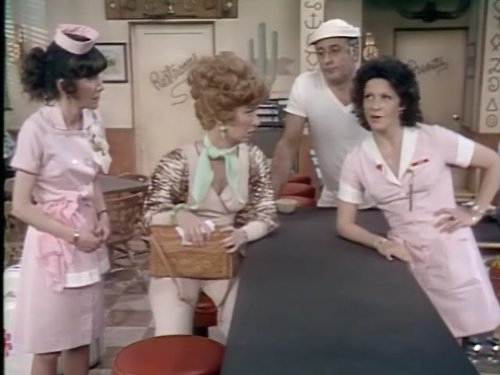
Alice takes the workplace sitcom down to the level most people actually recognize: you need the job because the rent is real. Alice Hyatt is a widowed mother trying to rebuild her life while working at Mel’s Diner, and the diner is not a cute backdrop. It is where the shifts happen, where customers get difficult, where the coffee never stops, and where the dream of doing something else has to coexist with the apron you are wearing today.
The series was based on Alice Doesn’t Live Here Anymore, but television turned Mel’s Diner into the permanent engine. The Television Academy’s program history notes that most episodes revolve around what happens there, and that makes sense. Diners are perfect sitcom workplaces: people come in and out all day, customers bring stories with them, and employees know one another too well because there is nowhere to hide during the lunch rush.
Linda Lavin gave Alice warmth without making her soft. She could be patient with Tommy, practical about money and still hold onto the idea that she had a life beyond the counter. Polly Holliday’s Flo could detonate a scene with one line. Vera’s sweetness and confusion gave the room another rhythm. Mel could be cheap, grouchy and impossible, but he was also the boss everyone had learned how to work around.
What separates Alice from The Mary Tyler Moore Show is economics. Mary had a career she wanted. Alice had a job she needed while she still imagined a singing career somewhere beyond Phoenix. That difference gives the show a blue-collar ache underneath the catchphrases. Plenty of people know what it is like to be good at the job that was never supposed to be the dream.
The diner crew also captures the weird intimacy of service work. Co-workers know who is late, who is dating whom, who needs money, who is pretending everything is fine and exactly how long Mel can be ignored before he explodes.
For Gen X rerun viewers, Mel’s Diner felt like one of those fictional places that had always been open. You could almost hear the plates hit the counter before the scene began. And this was not some cult favorite hiding at the edge of the schedule: Alice was a Top 10 show in the 1978 Nielsen season. That sense of a real shift continuing beyond the episode is why Alice belongs this high.
#6 The Bob Newhart Show
Dry, adult and quietly influential: therapy sessions downstairs, married life upstairs.
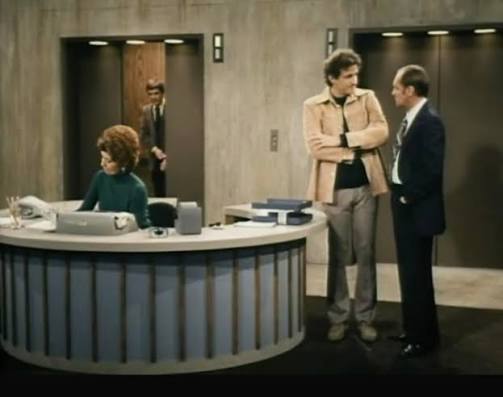
The Bob Newhart Show split its time between Bob Hartley’s marriage and his psychology practice, but the office half was strong enough to give the series a professional identity all its own. Bob did not simply leave home to go somewhere called “work.” His job shaped the way he listened, reacted and tried—usually in vain—to keep the people around him from getting more complicated.
That is where Bob Newhart’s style becomes workplace magic. Bob Hartley is a psychologist, which means he is professionally obligated to remain calm while other people explain the most astonishing things with total confidence. Newhart could make a pause feel like a full paragraph. He did not need to win the argument. He only needed to look at someone long enough for us to realize he had run out of professionally acceptable responses.
The office ensemble gave him constant help. Carol Kester was much more than a secretary answering phones; Marcia Wallace made her part of the comic pulse of the place. Jerry Robinson, the orthodontist across the hall, turned the building into a little professional neighborhood. Then Bob’s therapy groups could bring an entirely different set of personalities into the room and force him to keep being the calmest man in Chicago.
What makes the workplace side feel so modern is that everybody has a recognizable job function. Bob is good at what he does. Carol is good at what she does. Jerry is a professional too. Competence does not eliminate comedy; it actually makes the absurdity better because these are adults trying to get through a normal day while human behavior keeps refusing to be normal.
The show also helped prove that a workplace sitcom did not need a huge institution. No newsroom. No factory. No diner full of strangers. A waiting room, a receptionist, a few neighboring offices and one therapist whose patience is being professionally tested can be enough.
For those of us who first saw Bob in reruns, the office had that wonderful beige 1970s seriousness to it—the sort of place where you expected adults to know what they were doing. Then Mr. Carlin would open his mouth.
#5 WKRP in Cincinnati
The place where sales, music, ego and complete managerial panic shared one hallway.
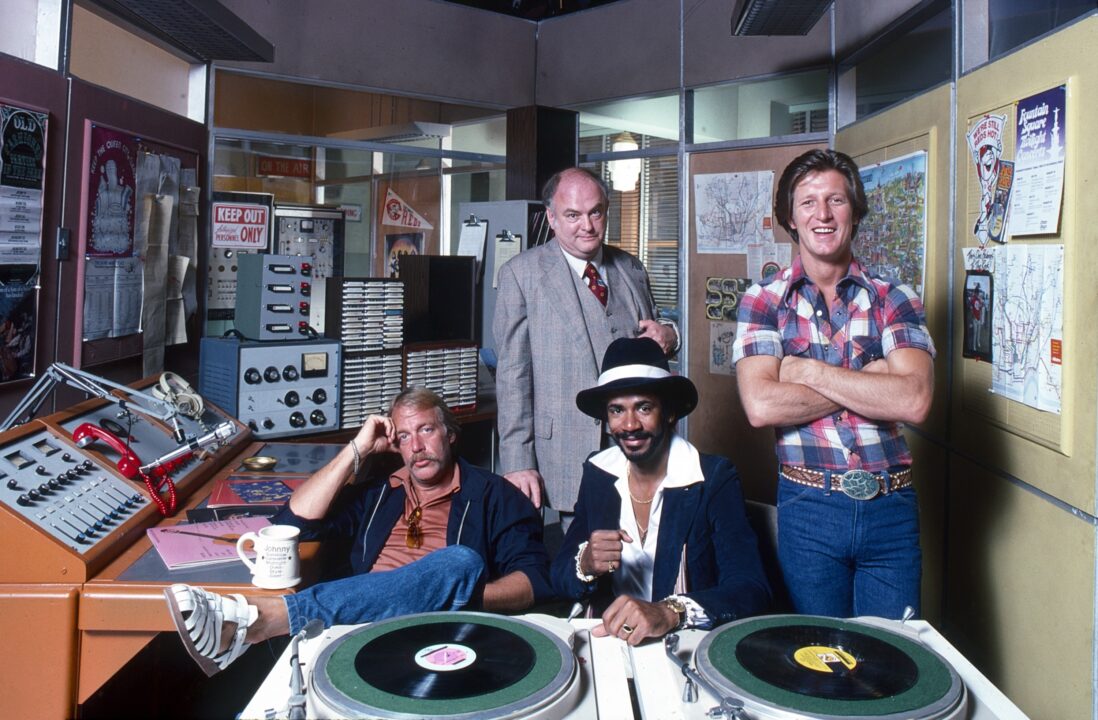
WKRP in Cincinnati can feel less like a sitcom than somebody bugged an actual radio station and added better lighting. Creator Hugh Wilson had experience around radio through advertising sales, and the series understands the little workplace truths that make the building believable: management wants better ratings without too much risk, sales promises things programming has to live with, air talent has giant personalities, news wants to be taken seriously, and somebody is always protecting a piece of turf nobody else knew existed.
Andy Travis arrives with an actual job to do—turn a sleepy station into a rock outlet—and that gives the entire ensemble a reason to collide. Johnny Fever gets the format he was born for. Venus Flytrap brings intelligence, cool and a completely different on-air presence. Bailey Quarters wants more responsibility than the station initially gives her. Jennifer Marlowe sits at reception but operates with the calm authority of the person who understands everybody’s weaknesses. Herb Tarlek is sales in plaid form. Les Nessman can turn a hog report into a matter of national security.
And then there is Arthur Carlson, the Big Guy. Every workplace has a manager who means well enough to be dangerous. Carlson can be warm, insecure, desperate to prove he is in charge and completely capable of launching a publicity stunt without thinking through what happens after the words “live turkeys” enter the conversation.
“Turkeys Away” became the famous episode because it is the perfect workplace-disaster story. It is not funny only because the stunt goes wrong. It is funny because every employee has experienced some version of a bad idea that came from above, could not be stopped, and had to be survived by the people below. “Who approved this?” is practically the unofficial slogan of office life.
The show was also unusually good at letting employees care about the work. Johnny cares about music. Bailey wants to grow professionally. Les cares deeply—sometimes absurdly—about news. Andy wants the station to succeed. That layer of commitment keeps WKRP from becoming a room full of fools. They are funny because they care about a place that continually gives them reasons not to.
For Gen X viewers who discovered the series in syndication, that station felt lived in. You knew where the booth was. You knew who would be late. You knew Herb’s jacket before his face came into frame. And if you ever worked in radio, advertising, media or any business where creative people and salespeople share oxygen, the joke became almost suspiciously specific.
WKRP is #5 because the workplace is not just a setting. The radio station’s competing jobs, goals and personalities generate nearly everything we love about the show.
#4 Barney Miller
A shabby squad room, endless paperwork and coworkers who had seen everything twice.
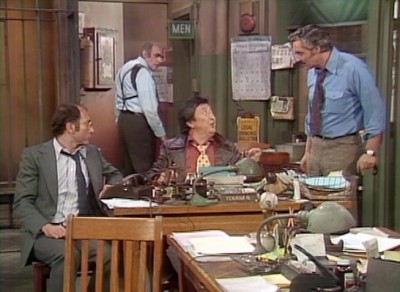
Barney Miller is what happens when a cop show notices that most jobs are mostly waiting, paperwork, bad coffee, annoying co-workers and customers who arrive with problems nowhere in your job description. The 12th Precinct had criminals and crises, but the detectives spent an extraordinary amount of time in one tired squad room listening to New York come through the door.
That was not a limitation. It was the entire workplace engine. Barney is the supervisor trying to keep the room calm and the paperwork moving. Harris is smart, ambitious and already imagining a life beyond the precinct. Fish carries the exhausted energy of a man who seems to have been old since birth. Yemana can drop a line so dry you almost miss it. Wojo is sincere, hardworking and occasionally several exits behind the social situation in front of him.
The job gives all of those personalities boundaries. They are police officers, but the show rarely treats the badge as a superhero costume. Reports have to be written. Suspects have to be processed. Somebody has to answer the phone. The building is shabby. The coffee is terrible. Bureaucracy wins a surprising number of rounds.
That realism lets the people coming through the station feel more human too. The precinct encounters loneliness, mental illness, sexuality, homelessness, race, age, drugs, bureaucracy and plain old New York weirdness because those are the people the city sends through the door. The detectives cannot choose the social issue of the week; it is standing at the desk waiting to be booked.
For a Gen X kid raised on louder cop shows, Barney Miller could seem almost like somebody forgot to film the car chase. Rewatch it later and that restraint becomes the whole point. Real work is often a room full of people trying to keep a system functioning while the world delivers one strange problem after another.
The show also understands one of the deepest truths of any workplace: after enough years together, co-workers develop a language nobody outside the room fully hears. A look from Barney, a sigh from Fish, a Harris complaint, a Yemana one-liner—half the comedy lives in familiarity.
That is why the 12th Precinct ranks above flashier workplaces. It feels like a place people actually report to, endure, complain about and secretly miss when they are gone.
#3 Taxi
Maybe the purest 70s workplace comedy: people with other dreams stuck on the same shift.
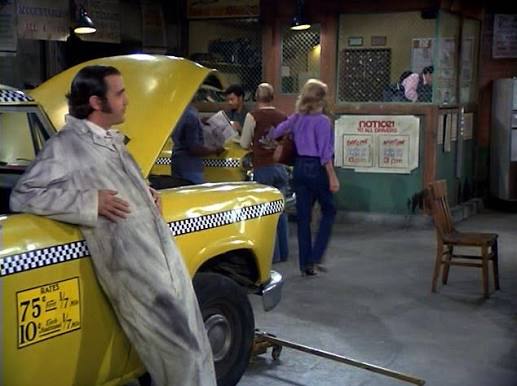
Taxi arrived late in the decade, but it feels like the 1970s workplace sitcom reaching full maturity. The Sunshine Cab Company garage is not glamorous, and that is the point. This is not where most of the characters dreamed of ending up. It is simply where the shift begins.
Alex Reiger has largely accepted driving a cab as his life. Bobby wants to act. Tony wants to box. Elaine works at an art gallery and drives because she needs the money. Reverend Jim seems to have taken a wrong turn from another dimension. Latka is a mechanic with his own universe of logic. They share a workplace, but they do not share the same relationship to the work.
That difference gives Taxi an emotional layer most office comedies never touch. Your co-workers know the version of you that clocks in, but they also know the person you keep saying you are going to become. They hear about the audition. They know the fight went badly. They watch the relationship collapse. They know when the dream is starting to sound less like a plan and more like something you tell yourself between shifts.
Then the dispatcher calls your number and you go back to work.
Louie De Palma makes the workplace even more perfect by turning the dispatch cage into the worst manager’s office in television. Danny DeVito could make Louie petty, cruel, insecure, predatory and still somehow funny enough that you waited for him to climb down and make the situation worse. He is not a cartoon boss pasted onto the garage. His power is small but real, which is exactly why he abuses it so enthusiastically.
The brilliance of the ensemble is that nobody is just “the workplace type.” Alex is not only the sane one. Elaine is not only the competent one. Jim is not only the weird one. Tony is not only the dumb one. Over time, the show keeps finding bruises underneath the comedy, and the garage becomes the place where those private disappointments are witnessed by people who have no choice but to know you.
That is the part Gen X syndication burned into memory. Taxi often came to us already feeling a little sad, with that bridge in the opening credits and a garage full of adults who had not become what they expected. As kids, Reverend Jim was hilarious. As adults, Alex’s acceptance hits differently.
The Sunshine Cab Company ranks #3 because it captures the workplace not merely as a job, but as the place where unfinished lives keep meeting at the same time every day.
#2 M*A*S*H
A workplace comedy where the shift could become life and death before the laugh finished.
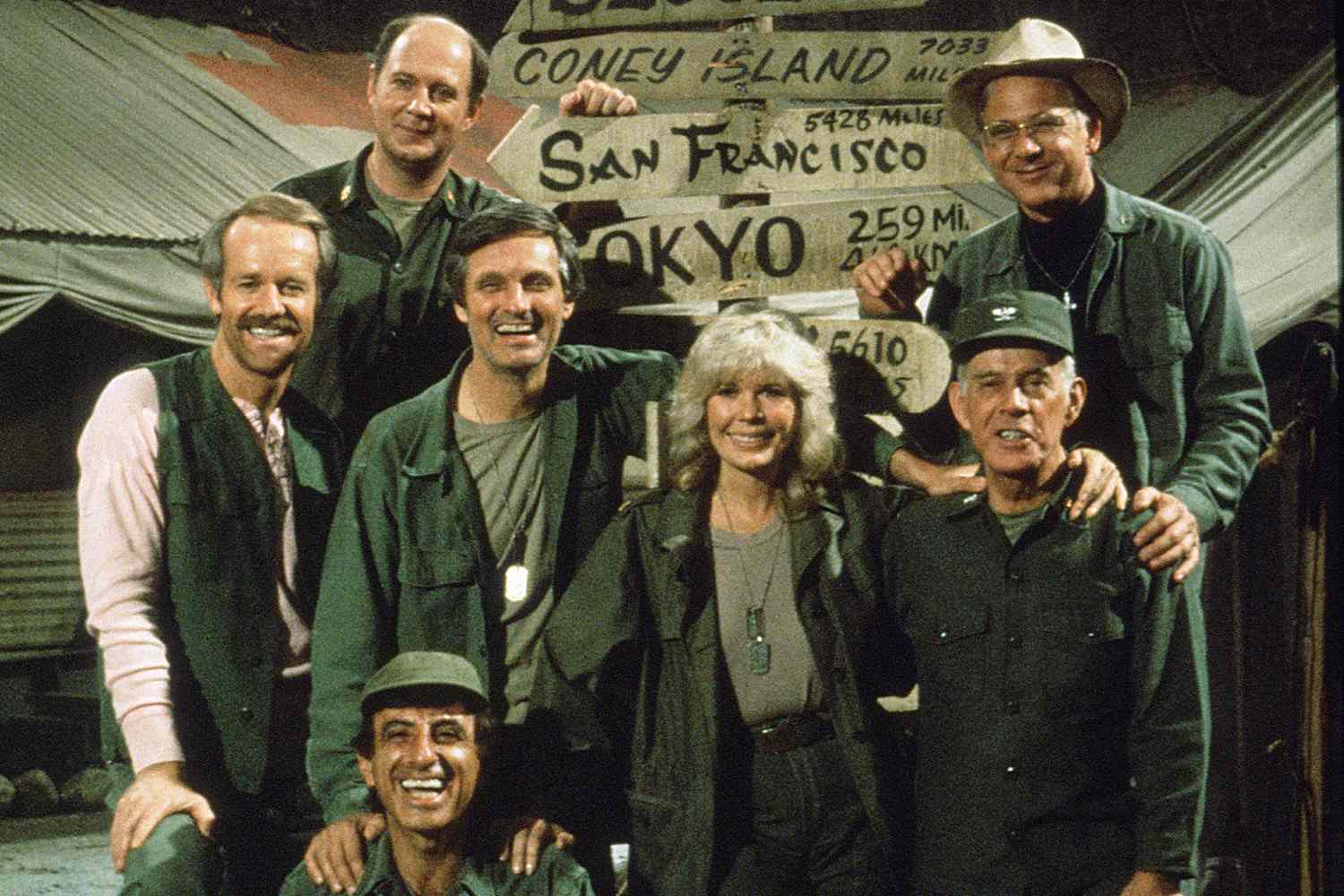
M*A*S*H is so much bigger than the phrase “workplace sitcom” that the label can sound almost disrespectfully small. But look at the machinery of the show and the workplace is exactly why it works. The 4077th is a job site under impossible conditions, filled with people who did not choose the assignment and cannot simply hand in two weeks’ notice.
Hawkeye, B.J., Margaret, Potter, Radar, Klinger and the rest have shifts, bosses, supply shortages, paperwork, meals, sleeping quarters, professional rivalries and a chain of command that can make the dumbest corporate rule look merciful. Then helicopters arrive and the ordinary workplace complaints vanish because the next case is life or death.
That whiplash is the genius of the setting. Hawkeye can be drinking, flirting or playing cards one minute and scrubbing for surgery the next. Margaret can move from rigid military discipline to extraordinary medical competence without changing characters. Radar’s ability to anticipate what the commanding officer needs before he asks is basically the fantasy version of the perfect administrative assistant. Klinger spends years trying to transfer himself out of the worst posting imaginable.
The humor feels recognizable because gallows humor is still workplace humor. Anyone who has survived an awful shift with people who understand exactly why you are laughing at something outsiders would find inappropriate recognizes the mechanism. The stakes at the 4077th are simply higher than any normal office could bear.
What elevates M*A*S*H above nearly every other workplace comedy is competence. These people can be ridiculous off duty and extraordinary when the wounded arrive. The doctors and nurses are not funny because they are bad at their jobs. They are funny because the job is so brutal that humor becomes one of the ways they stay human enough to keep doing it.
The institution also creates conflict that no character can fully solve. Orders arrive from above. Supplies fail. Officers make decisions far from the operating table. The war keeps producing patients. Unlike most sitcom workplaces, the 4077th cannot “win.” The best the staff can do is perform their work brilliantly inside a system they often despise.
That is why the show could move from absurdity to grief without feeling like it had changed channels. The job connects both tones. The same hands that pull a prank are going to be inside an operating room twenty minutes later.
For Gen X, the reruns taught that rhythm almost before we understood it. We knew the tents, the signpost, Radar, Klinger and Hawkeye’s one-liners first. Later we noticed why the choppers changed everybody’s face. By 1974, M*A*S*H had become the #4 show in the country, proof that audiences were more than willing to follow a workplace comedy into much heavier emotional territory.
The 4077th ranks #2 because few television workplaces have ever felt more necessary, more hated, more intimate or more capable of turning co-workers into family.
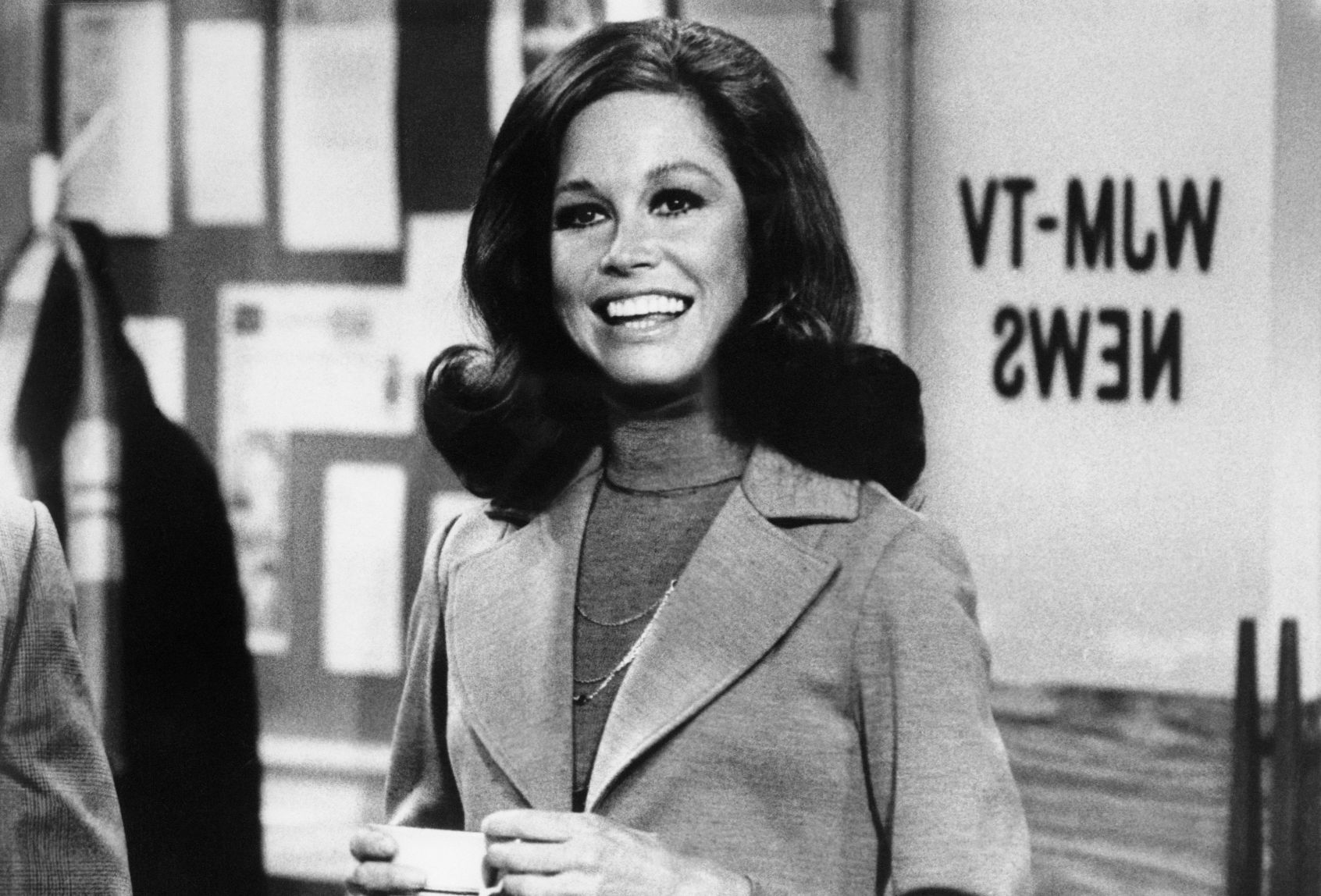
#1 The Mary Tyler Moore Show
The blueprint. A workplace that felt like a second family without pretending the job was easy.
The Mary Tyler Moore Show is still the blueprint. It was not the first television comedy to give characters jobs, and it was not the first show to build stories around an office. What it did was make the workplace feel like a complete adult social world—important enough to shape who Mary Richards was, funny enough to carry whole episodes, and warm enough to become a second family without pretending the job itself was easy.
Mary does not simply have a job because the writers need somewhere to send her between apartment scenes. WJM matters. The newsroom has deadlines, hierarchy, ratings, egos and the constant low-level panic of putting a broadcast on the air. The work gives every character a function before it gives them a punchline.
Lou Grant is the boss, but he is not merely “the boss character.” He can bark, mentor, panic, drink, defend his people and make a bad call. Murray Slaughter is the writer whose work gets delivered by somebody with much more confidence than skill. Ted Baxter is a walking reminder that visibility and competence do not always travel together. Later, Sue Ann Nivens proves that the cheerful corner of local television can hide a flamethrower.
And Mary is good at the job. That matters. She is learning, but she is not a child playing office. She wants responsibility. She wants to be taken seriously. She can make mistakes without the show using the mistake as evidence that a woman does not belong in television. The job becomes part of her adulthood rather than a temporary stop before marriage.
For those of us who first met Mary in reruns, that revolution arrived disguised as normal life. Mary went to work. She had friends there. She cared about the broadcast. Her job sometimes made her miserable and sometimes made her proud. Nobody needed to stop and explain why this was important. By the time Gen X was absorbing WJM in syndication, the image of a single woman building a career had already been repeated enough to feel ordinary.
That may be the show’s greatest achievement: it made a new model feel comfortable without making it small.
WJM also established one of the workplace sitcom’s most durable rules: the office gets funnier when everybody is good at something and terrible at something else. Lou understands news but not always feelings. Murray can write but cannot control Ted. Ted can perform confidence at industrial strength. Mary can hold a room together and still have days when the room wins.
The station itself is not successful enough to become fantasy. WJM is a local newsroom trying to get through another broadcast. That modest scale makes everything better. These people are not saving the world. They are trying to make six o’clock.
And that is why the show still feels so recognizable. Most of us have known some version of Lou, Murray or Ted. Most of us have had a workplace that annoyed us all day and then somehow became part of our identity. We complained about the people, worried about them, celebrated with them and occasionally realized we had spent more waking hours with them than with almost anyone else.
At #1, The Mary Tyler Moore Show is not here because it was simply influential. It is here because WJM still feels like the moment television understood that going to work could be the whole show—and that the people at the next desk might become the people you remember for the rest of your life.
5?
How women at work changed 1970s sitcoms
Mary, Alice, Laverne, Shirley, Bailey and others made the paycheck part of the character.
The workplace sitcom mattered especially because television was changing what it allowed women to do every week. Mary Richards is the obvious landmark, but the shift did not stop at WJM. Alice Hyatt works because she has to support herself and her son. Laverne and Shirley are blue-collar workers, not glamorous professionals. Bailey Quarters comes into WKRP with education and ambition and gradually pushes toward more meaningful work. Jennifer Marlowe turns the supposedly low-status receptionist job into a position from which she often runs circles around management.
These women were not all selling the same version of independence. That is the important part. Mary has a career. Alice has a job and a dream. Laverne and Shirley have each other and a factory line. Bailey wants to prove she can do more. The decade was beginning to understand that ‘working woman’ did not describe one television character type.
The change also made the workplace ensemble richer. A job creates hierarchies that family sitcoms do not have. Who gets promoted? Who gets heard? Who is assumed to be the assistant? Who actually knows how the place works? Those questions could become jokes without needing a speech. Sometimes the most revealing moment is simply watching who everybody turns to when the boss has made a mess.
That is why Mary Richards at WJM still matters so much. The revolution became familiar by repeating itself every week. She showed up for work, and eventually television stopped acting like that required an explanation.
Blue-collar workplace sitcoms put the shift, shop and paycheck on television
A brewery line, junkyard, garage and diner widened the idea of what counted as a prime-time workplace.
One reason the 1970s list feels different from later office-comedy lists is how many of its workplaces involve physical labor or low-wage service work. Laverne and Shirley at Shotz, Fred and Lamont in the junkyard, Chico in Ed Brown’s garage, Alice carrying plates at Mel’s Diner, cabbies pulling the night shift—these people are not joking around a conference table because the presentation deck is late.
The work gives the comedy weight. If Alice loses the diner job, that is not a cute setback. If Lamont cannot make the salvage business work, his future feels smaller. If Bobby Wheeler does not get the acting job, he is back behind the wheel. The joke lands against the reality that everybody has to keep earning.
That is also part of why the shows became such strong rerun companions for Gen X. Many of us grew up around adults who punched clocks, worked second jobs, took overtime, came home tired or spent years saying a job was temporary. The workplaces on television could be exaggerated, but the feeling underneath them was familiar.
Our broader ranking of the best 1970s sitcoms has more living rooms and family tables. This list is where the decade puts on the work shirt.
How 1970s workplace sitcoms shaped the comedies that came later
The modern office comedy still runs on machinery these shows helped build.
By the time the 1980s rolled in, the workplace ensemble no longer needed an explanation. You could build a sitcom around a bar, a courthouse, a design firm, a television station, a medical office or almost any place where people were trapped together by a schedule. The 1970s had already taught viewers how to read the structure.
The Mary Tyler Moore Show established the workplace as a chosen family without making it sentimental. M*A*S*H proved comedy could survive inside an institution with real consequences. Barney Miller made the public-sector office funny by paying attention to routine. Taxi built comedy around deferred dreams. WKRP understood that organizations are funniest when everybody cares about a different definition of success.
You can draw a line from those shows to later workplace classics without pretending television evolves in a straight line. Cheers understood the ensemble hangout. Night Court inherited some of Barney Miller‘s institutional absurdity. NewsRadio clearly knew what WKRP had discovered about broadcasting. The Office, Parks and Recreation, Superstore and Abbott Elementary all operate on the old rule that work is not funny because people hate it. Work is funny because people bring their whole weird selves to it.
The Television Academy’s history of Hill Street Blues explicitly points to M*A*S*H, The Mary Tyler Moore Show and Barney Miller as key antecedents in ensemble workplace storytelling. That legacy goes beyond sitcoms. Once television learned to make an institution feel inhabited, dramas wanted that tool too.
But the reason we still watch is simpler. We remember the places. WJM. The 4077th. Sunshine Cab. The 12th Precinct. WKRP. Mel’s. Shotz. And sometimes the memory starts before the set even appears—just a few notes from one of those 70s TV theme songs and the whole workplace is back in the room. You could sketch half those places from memory if you spent enough afternoons with the reruns. A good workplace sitcom does not just give characters jobs. It gives the audience somewhere to report for duty.
Questions about 1970s workplace sitcoms
What counts as a workplace sitcom?
A workplace sitcom is a comedy where the job and the people connected to it drive a major share of the stories. The office, diner, garage, newsroom, hospital, school or precinct is not just background—it creates the relationships, hierarchy, pressure and routines that make the comedy work.
What was the most influential workplace sitcom of the 1970s?
The Mary Tyler Moore Show is the strongest answer. It made the newsroom a full ensemble world and helped establish the modern idea that co-workers could function as a second family while the job itself still mattered.
Was M*A*S*H really a workplace sitcom?
Yes, even though it also became much more than a conventional sitcom. The 4077th is a functioning military hospital with jobs, hierarchy, shifts, paperwork and professional pressure. The work is central to nearly every relationship and story.
Why is Taxi considered a workplace comedy?
The Sunshine Cab Company garage is the show’s central meeting place, and the characters are connected because they work the same shift. Much of the comedy comes from the fact that most of the drivers imagine the job as temporary while life keeps happening around them.
Which 1970s workplace sitcoms were about women at work?
The Mary Tyler Moore Show, Alice, Laverne & Shirley and the later workplace-centered seasons of The Doris Day Show all put women’s employment near the center of the premise, but they represented very different kinds of jobs and economic situations.
What was the best 1970s blue-collar workplace sitcom?
Laverne & Shirley, Sanford and Son and Chico and the Man are all strong choices. We rank Laverne & Shirley highest among them because the Shotz Brewery years made factory work part of the show’s identity while the friendship remained the real heart.
Did WKRP in Cincinnati become more popular in reruns?
Yes. The show struggled for consistent ratings and scheduling during its CBS run, but it developed a strong syndication life. That rerun afterlife is a big part of why so many Gen X viewers remember the station so vividly.
Where to go next
More 1970s television once you have officially punched out.
Sources
Premiere dates, workplace settings and historical context were checked against Television Academy Foundation program histories and oral-history material, with additional reference checks for the shorter-lived series.
- Television Academy Foundation — The Mary Tyler Moore Show
- Television Academy Foundation — M*A*S*H
- Television Academy Foundation — Taxi
- Television Academy Foundation — Barney Miller
- Television Academy Foundation — WKRP in Cincinnati
- Television Academy Foundation — Bob Newhart oral history
- Television Academy Foundation — Alice
- Television Academy Foundation — Laverne & Shirley
- Television Academy Foundation — Welcome Back, Kotter
- Television Academy Foundation — Sanford and Son
- Television Academy Foundation — Chico and the Man
- Television Academy Foundation — Room 222
- Television Academy Foundation — C.P.O. Sharkey
- Television Academy Foundation — The Doris Day Show
- Television Academy Foundation — Hill Street Blues history on 1970s workplace-comedy influences