Roger “Raj” Thomas
The aspiring writer and self-appointed strategist whose plans usually survived until Dee or Mama entered the room.
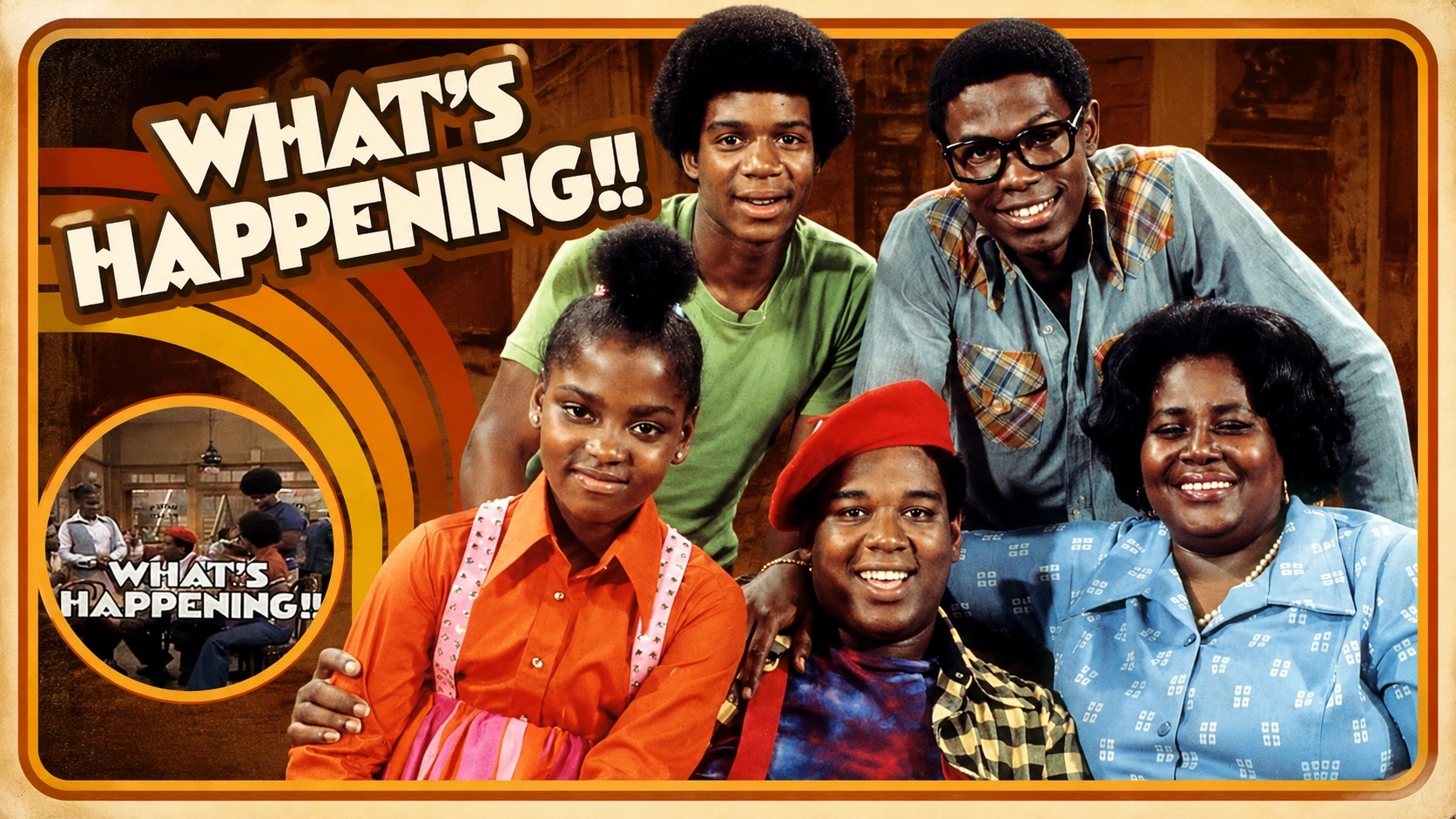
Some sitcoms survive because the premise was brilliant. Some survive because the writing was technically perfect. What’s Happening!! survived because a handful of people felt like somebody you knew before you were old enough to understand why. Raj had a plan. Dwayne had the greeting. Rerun had the red beret and the moves. Dee had information she could weaponize. Mama had the look that ended negotiations. Shirley could flatten a grown man with one sentence. And Rob’s Place felt like the kind of neighborhood hangout where nobody had enough money to order much but everybody stayed anyway.
For Gen X kids, especially those of us who found the show in afternoon reruns, the episodes had the loose, everyday rhythm of hanging around after school. Nobody was saving the world. Raj, Rerun and Dwayne were trying to get concert tickets, talk to girls, avoid trouble, make a little money and figure out who they were going to become. The scale was ordinary. That was the magic. Television rarely let Black teenagers be this funny, this specific and this gloriously normal without making every half-hour carry the whole weight of American history.
What’s Happening!! was an ABC sitcom that aired from August 5, 1976 through April 28, 1979, running three seasons and 65 episodes. Loosely inspired by Eric Monte’s 1975 film Cooley High, it followed Los Angeles teenagers Roger “Raj” Thomas, Dwayne Nelson and Freddie “Rerun” Stubbs, along with Raj’s sister Dee, his mother Mabel, waitress Shirley Wilson and the neighborhood world around Rob’s Place. Its most famous moments—from Rerun’s dancing to the Doobie Brothers bootlegging two-parter—became permanent rerun-culture currency.
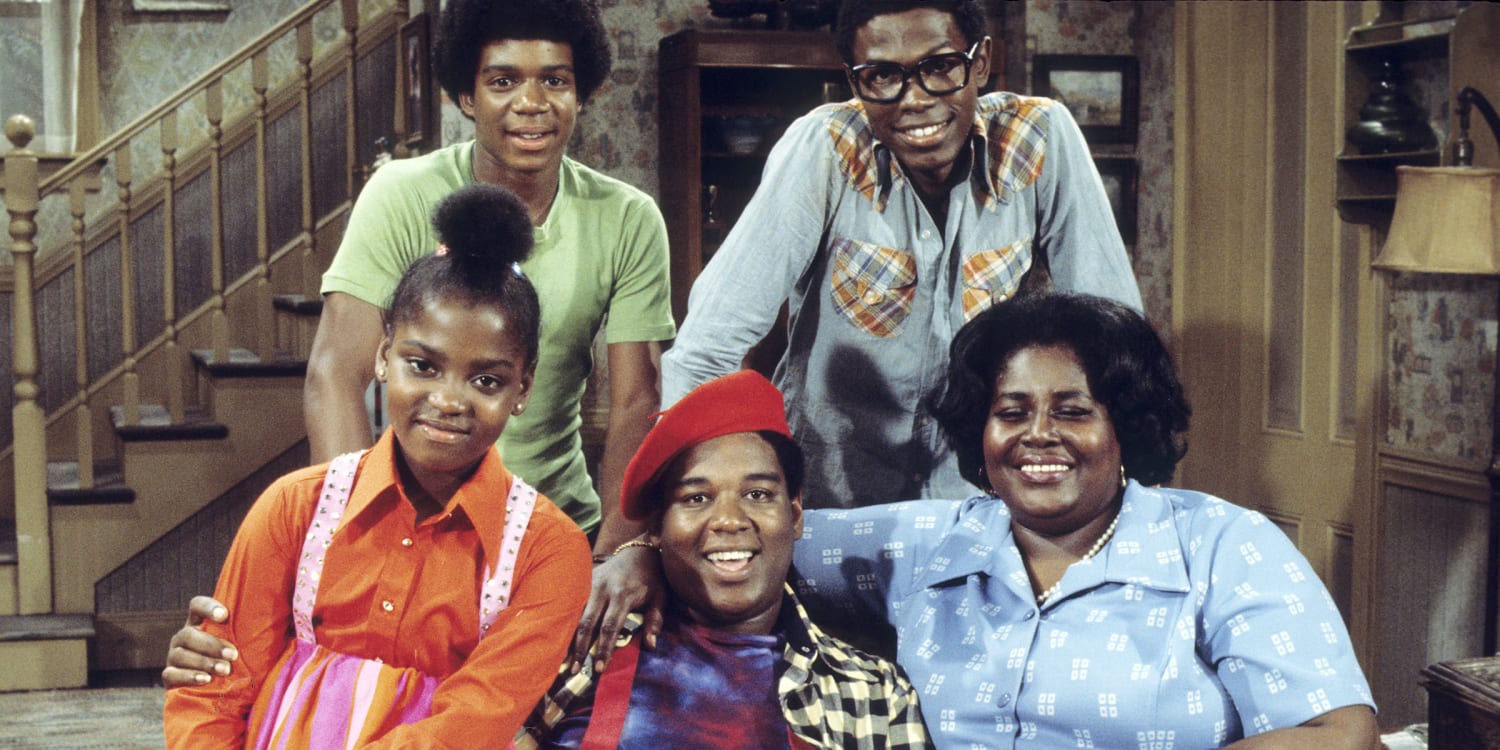
Three friends, one little sister, one neighborhood hangout and a thousand schemes that sounded better before anybody tried them.
What’s Happening!! was a 1970s sitcom about three Black teenagers growing up in Los Angeles: Roger “Raj” Thomas, Dwayne Nelson and Freddie “Rerun” Stubbs. The boys bounced between school, home and Rob’s Place while dealing with the stuff that actually filled teenage life—girls, jobs, money, parents, pride and whatever scheme seemed brilliant until somebody tried it.
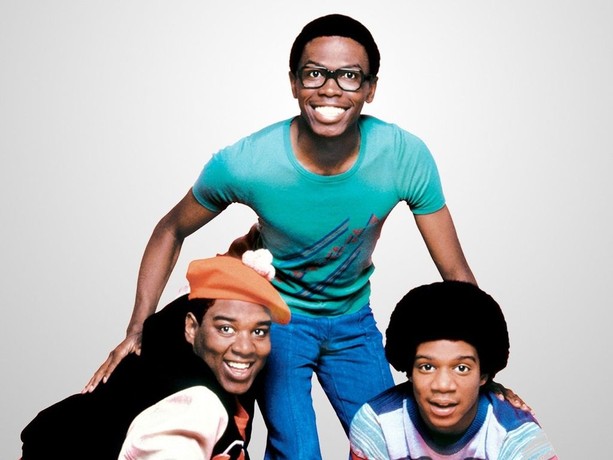
Raj was the planner and aspiring writer, usually the guy trying to convert a bad idea into a sentence that sounded responsible. Dwayne was younger, shy around girls and instantly recognizable from the “hey, hey, hey” greeting that could announce him before he crossed the room. Rerun was bigger, louder and born to turn a doorway into a dance floor.
The boys did not exist in a teenage bubble. Raj lived with his mother Mabel and his younger sister Dee. Mabel worked, worried and kept the family moving. Dee had the terrifying power of a little sister who remembered everything and respected confidentiality only as a theoretical concept.
Then there was Shirley Wilson, the waitress at Rob’s Place. Shirley Hemphill could look at Rerun, wait half a beat and send back an insult so cleanly that you almost forgot the show was still technically about the teenagers.
That combination gave the series its shape. Home mattered. School mattered. Rob’s Place mattered. Friendship connected all three, and the stories could move between them without the show needing a complicated reason.
The larger history of the decade belongs in The Best Black Sitcoms of the 1970s. This show’s particular gift was simpler: it let three Black teenagers be teenagers on prime-time television, with enough space to be foolish, kind, selfish, scared and funny.
The roots were more bittersweet than the sitcom that grew from them.
The family tree begins with Cooley High, the 1975 coming-of-age film written by Eric Monte. AFI’s catalog notes that Monte based the screenplay on his own experiences growing up around Chicago’s Cabrini-Green housing project and attending Cooley High School.
The movie was funny, loose and alive, but it also carried real grief. Its teenagers were not protected by sitcom architecture. Friendship could end badly. Growing up had a cost.
What’s Happening!! took inspiration from that world and converted it into a weekly ABC comedy. Television Academy interviews with producers Bernie Orenstein and Saul Turteltaub describe building the series with Bud Yorkin around the basic idea of young friends coming of age.
The credits and later histories have never been as simple as the finished sitcom looked. Eric Monte’s connection to Cooley High and to the television project became part of a larger dispute over authorship, ownership and credit in 1970s television. AFI documents Monte’s later lawsuit, and the Television Academy interviews with the producers also address the controversy.
What matters onscreen is that the show kept the central pleasure of Monte’s earlier work: young Black characters talking to each other like their interior lives mattered. The television version was lighter, safer and more broadly comic, but it did not need to make the boys criminals or cautionary tales just to justify their presence.
That distinction is important. Other great Black sitcoms of the decade often centered parents, marriage, economic survival or generational conflict. What’s Happening!! put friendship and adolescence right in the middle of the frame.
What’s Happening!! premiered on August 5, 1976 as a summer series. It worked well enough that ABC brought it back later that fall as a regular weekly comedy. That debut also makes it a natural stop in our 1976 television rewind, even though the show’s real afterlife would eventually be measured in afternoon reruns rather than one Nielsen season.
Raj could turn a scheme into a speech and still end up explaining it to Mama.
Roger “Raj” Thomas was the closest thing the trio had to a captain, which mostly meant he was the first person blamed when the boat hit something.
Ernest Thomas played Raj with nervous intelligence. He was verbal, ambitious and already imagining a future beyond the neighborhood. The show repeatedly connected him to writing, school and the idea that words might eventually become a career.
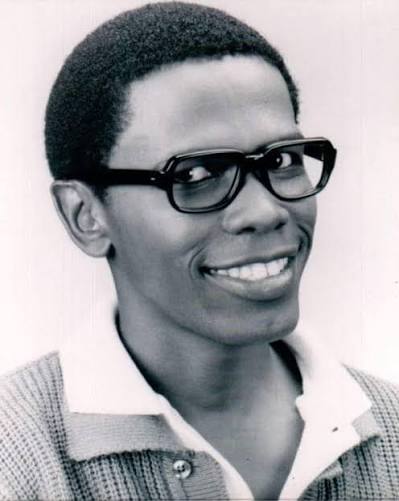
That made Raj a natural engine for plots. He could talk Rerun and Dwayne into a plan, talk himself into believing the plan was ethical and then spend the third act discovering that Dee had heard everything.
The first episode, “The Runaway,” establishes the problem immediately. Raj wants to go to a party, Mama needs him to babysit Dee, and Raj thinks he can solve both obligations at once. This is basically the operating system for a teenage sitcom.
Raj also had enough seriousness to carry stories about his father, responsibility, school and money. “Raj Goes to Press” puts his interest in writing directly into the plot when he starts an underground school newspaper and learns that freedom of the press gets complicated when your sources are your friends.
Thomas kept Raj from becoming a scold. The guy was smart, but he was still a teenager. He could give good advice to Dwayne and then make an astonishingly bad decision for himself before dinner.
That balance gave the trio structure. Raj was not the straight man because he lacked comedy. He was the straight man because Rerun and Dwayne made normal look like a temporary condition.
You did not need dialogue to know Rerun had entered the scene.
Fred Berry played Rerun, and the casting worked because the role did not ask him to fake the thing everybody remembered. Berry already knew how to move. The red beret became the uniform, but the dancing was the part nobody else on television could have borrowed.
Freddie “Rerun” Stubbs became the visual signature of What’s Happening!!: red beret, suspenders, enormous physical confidence and dance moves that looked like the floor had been waiting for him.
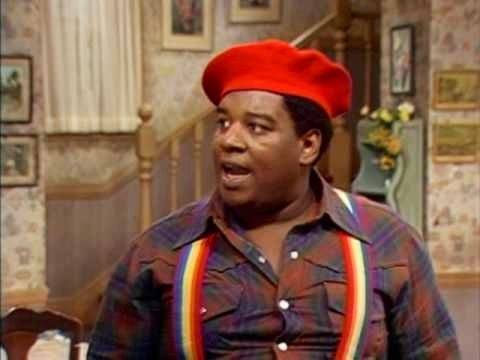
Fred Berry already knew how to move. Before television fame, he had danced with the Lockers, the influential Los Angeles locking group. The Los Angeles Times later remembered that dance background as part of the path that made him an instant television figure.
The show often used Rerun’s size for jokes, and some of those lines have aged badly. That is part of watching 1970s comedy without pretending the calendar stopped. The important counterweight is Berry himself: his physical presence was never passive. He could take a joke and immediately own the room again.
The nickname was tied to the character’s school history—the joke was that he had repeated grades. But the nickname eventually became bigger than the setup. By the time the red beret appeared, “Rerun” sounded less like a school insult than a stage name.
His dancing mattered because it made Rerun joyful before the script told us anything. In an era when a bigger character could easily be written as only appetite and embarrassment, Berry gave him rhythm, confidence, vanity, sweetness and a performer’s instinct for where the laugh really lived.
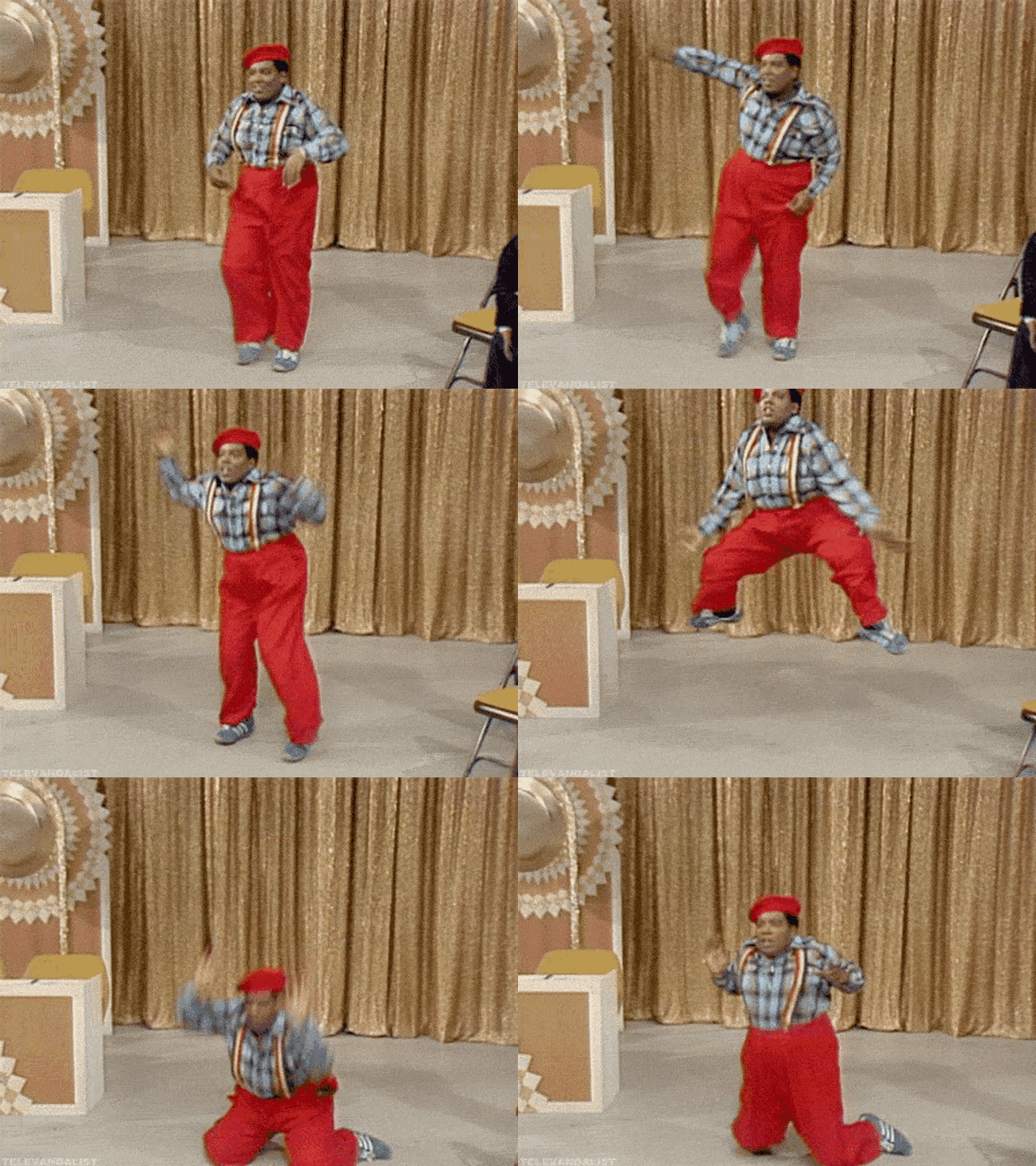
“My Three Tons” centers his dancing. “Going, Going, Gong” lets performance drive the story again. And the Doobie Brothers episodes turn his body into the comic mechanism of the entire plot: Rerun is supposed to secretly record a concert, then gets caught because he cannot stop moving.
That is Rerun in one image. Give him one job—stand still—and television history happens because he absolutely cannot.
Dwayne could announce himself like a parade and then panic if a girl answered.
Dwayne Nelson was younger and softer than Raj and Rerun, which made him essential to the trio. Haywood Nelson played him with an open face and a kind of permanent good faith. Dwayne usually believed the people around him, even when the evidence suggested a short waiting period might be wise.
Dwayne did. The triple “hey” became his signature entrance and one of those sitcom greetings that could survive decades of reruns because it belonged completely to the actor’s delivery.
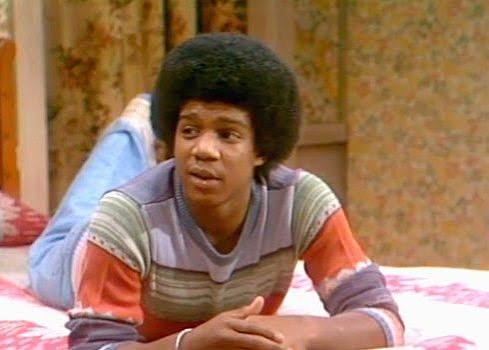
The contradiction was the joke: Dwayne entered with total confidence and often became shy the moment the conversation turned romantic. “Speak for Yourself, Dwayne” builds an episode around Raj trying to help him talk to a girl because Dwayne’s courage has apparently been stored somewhere offsite.
Nelson was also young during the series, which added something the show needed. Raj and Rerun could sometimes feel like guys already auditioning for adulthood. Dwayne still had one foot in childhood.
That allowed him to be scared without being humiliated, earnest without being dull and occasionally the person who understood something before his more confident friends did.
The three personalities fit together because none of them was complete alone. Raj could overthink. Rerun could overcommit. Dwayne could hesitate. Put them in one booth at Rob’s Place and eventually the problem solved itself— or Shirley solved it for them.
Every teenage mastermind needs somebody at home who has already read the case file.
Dee was Raj’s younger sister and one of television’s great small-scale extortionists. Danielle Spencer delivered sarcasm with the calm of somebody who knew the adults would eventually believe her.
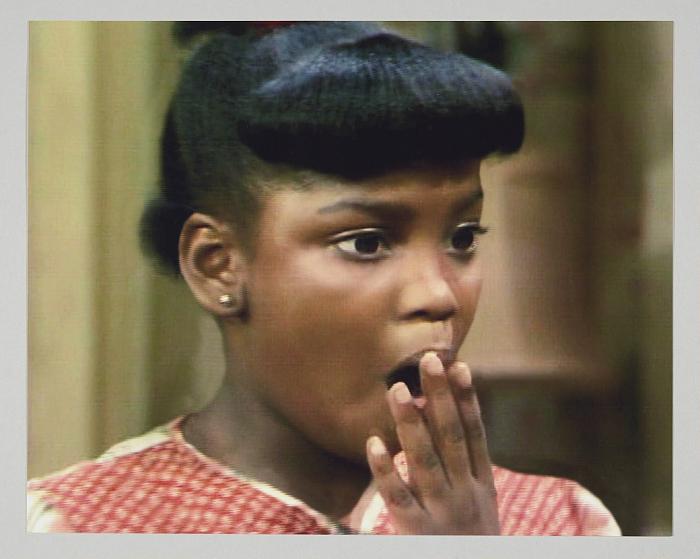
“Ooh, I’m gonna tell Mama” became more than a threat. It was Dee’s constitutional authority. Raj could be older, taller and theoretically in charge, but Dee understood leverage.
Mabel King gave the Thomas house its adult gravity. Mama worked, raised Raj and Dee and dealt with an ex-husband who could reenter the story carrying both charm and trouble.
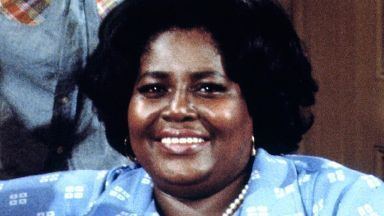
The show did not need to make Mabel a saint. She could be impatient, proud and wrong. What mattered was that she was clearly carrying the financial and emotional weight of the household.
Her departure after the second season changed the balance. Television Academy interviews with Saul Turteltaub and Bernie Orenstein discuss Mabel King leaving and the production’s need to adjust the show afterward. The third season simply does not have the same home-center gravity.
Bill, Raj and Dee’s father, appeared periodically rather than living with the family. The series could play him for suspicion one week and tenderness another, which reflected the complicated reality of a divorced family rather than forcing every episode into a clean lesson.
That family structure also connects naturally to the decade-wide changes covered in how television families changed during the 1970s. The Thomas household did not need a traditional sitcom father in the living room every week to feel like a complete family.
The boys had homes. Rob’s Place was where they became themselves in public.
Every great youth sitcom needs neutral territory. On What’s Happening!!, that was Rob’s Place: the restaurant and neighborhood hangout where Raj, Rerun and Dwayne could sit around long enough for trouble to find them.
Earl Billings played Rob, the owner of Rob’s Place. He appeared periodically rather than dominating the show, which was exactly right. Rob owned the room. Shirley ran the temperature.
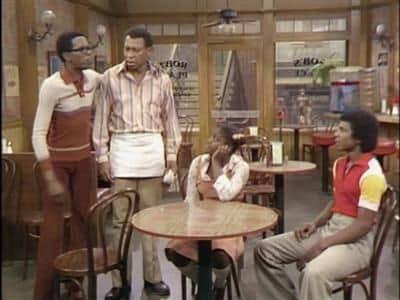
Shirley was the waitress, insult comic, older friend and unofficial border patrol between teenage nonsense and adulthood. Shirley Hemphill had appeared in comedy before the series, but What’s Happening!! gave her a character built around the speed and force of her delivery.
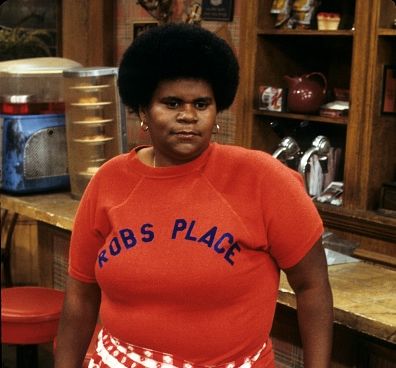
Her exchanges with Rerun became a recurring rhythm. The writing often went straight to weight jokes, which are some of the most dated material in the show. The saving grace is that Shirley and Rerun both fought back. Neither existed only to absorb humiliation.
As Mama’s presence diminished, Shirley carried more of the adult energy around the younger characters. She was not their mother, and the show was smart not to turn her into one. She was something more useful to teenagers: an adult who knew their business and could still choose not to call home.
Rob’s Place also gave the series a physical memory. You can picture the counter, the booths, Shirley moving through the room, the boys settling in. For people who watched the show in syndication, the place feels less like a set than somewhere you accidentally spent part of childhood.
The trio mattered, but the show became a world because Dee, Mama, Shirley, Rob and Bill could hijack the story at any time.
The aspiring writer and self-appointed strategist whose plans usually survived until Dee or Mama entered the room.
Red beret, suspenders, fearless dancing and enough comic presence to turn a supporting role into a cultural memory.
The shy, good-hearted friend whose “hey, hey, hey” greeting became the show’s most portable catchphrase.
Raj’s younger sister, professional observer and keeper of information that could be traded for immediate compliance.
Raj and Dee’s hardworking mother, the adult center of the Thomas household through the first two seasons.
Rob’s Place waitress, neighborhood truth-teller and one of the fastest insult artists on 1970s television.
The owner of Rob’s Place, the neighborhood hangout that gave the series a second home outside the Thomas house.
Raj and Dee’s father, whose periodic returns complicated the family instead of reducing divorce to a one-episode lesson.
The cast worked because the roles overlapped without becoming interchangeable. Raj could lead a plot, Rerun could explode it, Dwayne could soften it, Dee could expose it and Shirley could finish it with one line.
That ensemble quality is easy to miss because Rerun became such an instantly recognizable icon. The show would not have worked nearly as well if every episode had simply waited for Fred Berry to dance.
Ernest Thomas gave the stories direction. Haywood Nelson brought vulnerability. Danielle Spencer made childhood sarcasm feel like a legal profession. Mabel King and Shirley Hemphill supplied adult comic authority from opposite directions.
The result was a cast viewers remembered by first name and nickname: Raj, Rerun, Dwayne, Dee, Mama, Shirley. That is one of the strongest signs that a sitcom world has done its job.
The show’s biggest cultural statement was often that it did not need to make a speech.
By 1976, Black family sitcoms were not new. Sanford and Son, Good Times and The Jeffersons had already proven that Black-led comedies could become major network television.
What’s Happening!! shifted the angle. Raj, Rerun and Dwayne were not mainly children inside an adult family story. Their friendships, embarrassments, dates, grades, jobs and ambitions were the story.
That gave the series a different emotional temperature from Good Times or The Jeffersons. Those shows often carried large arguments about class, race, economics and family power directly into the living room. What’s Happening!! was more likely to worry about concert tickets.
That does not make it less significant. Sometimes representation changes television by lowering the dramatic burden. A Black teenager should be allowed to have a crush without the episode needing to explain America first.
The show also gave the characters future ambitions. Raj wanted to write. Rerun wanted to perform. Dwayne imagined adulthood in less defined ways. They were not frozen as “urban teenagers”; they were people in motion.
The full ranking and comparison belong on The Best Black Sitcoms of the 1970s. Here, the thing worth remembering is the joy of seeing teenage life treated as worthy of prime-time attention.
A concert, a bootleg recorder and one of the most replayed punch lines of the decade.
If one story escaped the show and became permanent pop-culture shorthand, it was the two-part Doobie Brothers episode. “Doobie or Not Doobie” began airing in January 1978 and put the band directly inside Raj, Rerun and Dwayne’s world.
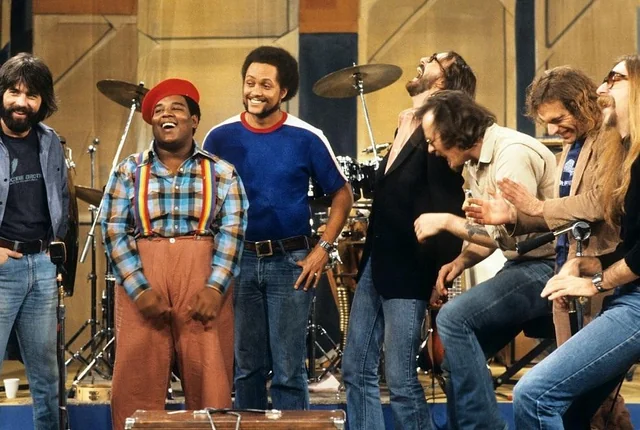
The line comes from the gang’s attempt to connect with the Doobie Brothers. It became one of those quotations people repeated even when they had not seen the episode in years.
The plot gives Rerun a job he is spectacularly unsuited to perform: secretly record the band’s concert as part of an illegal bootlegging operation. The recorder is hidden under his clothes. The success of the plan depends on Rerun remaining inconspicuous. Anyone who has watched Fred Berry for more than six seconds understands the structural problem.
Rhino’s retrospective on the appearance notes that the band performed material including “Black Water” and “Takin’ It to the Streets” and that the plot explicitly dealt with unauthorized concert recording, a genuine concern for musicians in the era.
The comic payoff is perfect because Rerun is caught doing the thing audiences most wanted to see him do: dance. The character cannot suppress the joy that makes the character lovable, and that joy ruins the criminal enterprise.
The episode also captured the way television and music used to collide before celebrity came prepackaged through social media. A favorite band suddenly walking onto a sitcom felt like the neighborhood had somehow become connected to the larger culture.
The Doobies did not appear as an abstract “special guest.” They mattered to the plot, played music and got one of the series’ defining memories in return.
Henry Mancini had already written some of television’s coolest music. Then he gave this neighborhood its own bounce.
The What’s Happening!! theme was written by Henry Mancini. Mancini’s official site lists What’s Happening! among his 1976 television themes.
That credit can surprise people because the music does not announce itself as “Henry Mancini” in the way Peter Gunn or The Pink Panther might. It simply fits the show.
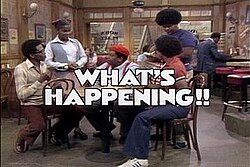
The theme has bounce without trying too hard to sell excitement. It sounds like the door opening at Rob’s Place, somebody sliding into a booth and Dwayne arriving before the conversation has settled.
That is what a great sitcom theme does. It prepares your nervous system for a particular world before the first line.
It belongs in the larger collection of 1970s television theme songs, but its real power is local. Hear a few seconds and you are back with Raj, Rerun and Dwayne.
Start with the premiere, Rerun dancing, Dwayne dating, Raj writing and the Doobie Brothers walking into television history.
The premiere establishes Raj, Dee, Mama and the entire logic of teenage freedom colliding with family responsibility.
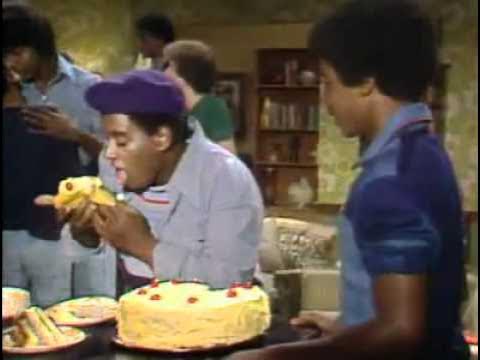
Rerun’s dancing takes center stage, turning Fred Berry’s physical comedy into the plot rather than decoration.
Dwayne’s shyness around a girl gives Raj the terrible idea that he can speak for his friend without making anything worse.
Raj starts an underground school newspaper and discovers that free speech gets complicated when your reporting begins with snooping.
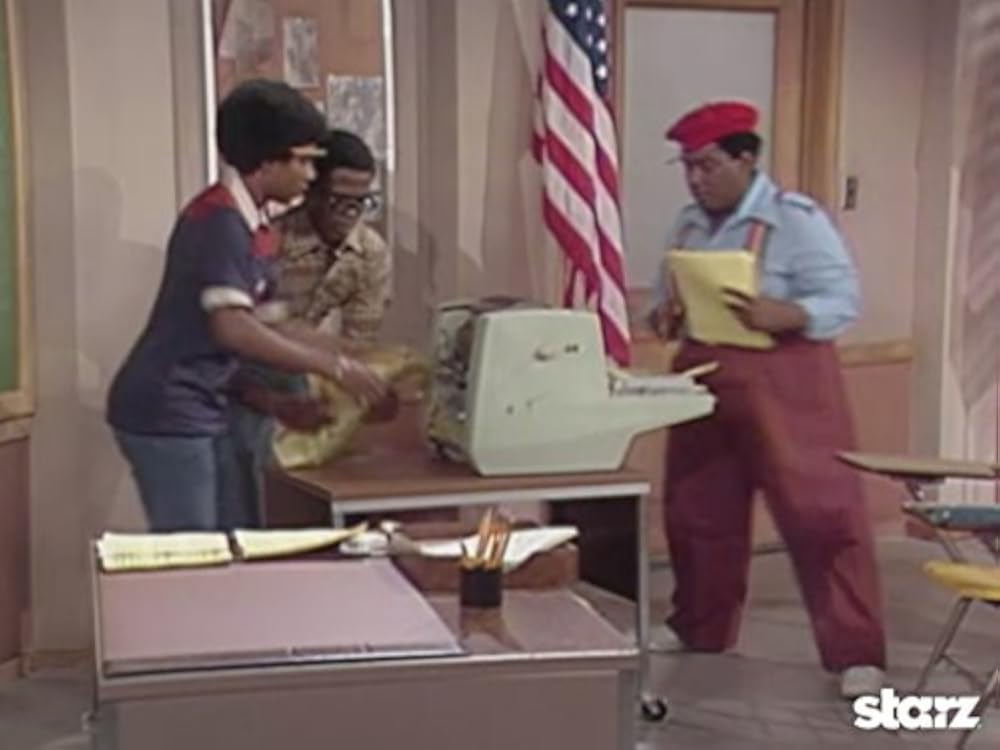
Rerun’s performance instincts get another showcase in an episode built around a talent competition.
The Doobie Brothers arrive, Raj makes the phone call and Rerun gets dragged toward a bootlegging scheme.
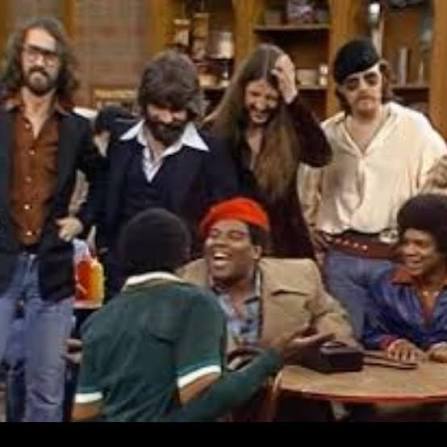
The scheme reaches the concert, Rerun starts dancing and one of the show’s most famous stories earns its reputation.
The final broadcast episode closes the original run without pretending the neighborhood needs a giant ceremonial goodbye.
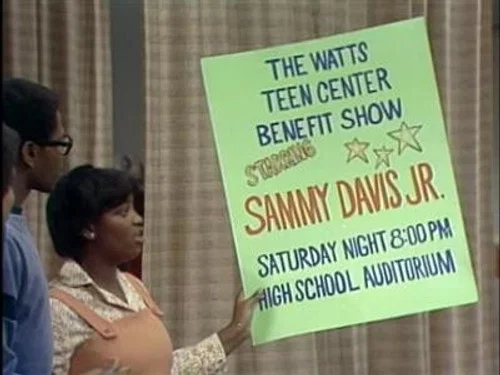
This is a viewing route, not a sacred ranking. The series made 65 episodes, and half the pleasure is finding one you forgot: Dee turning a tiny fact into a weapon, Shirley verbally ending somebody’s afternoon or Rerun deciding that confidence counts as planning.
These eight give you the core machinery quickly—the Thomas house, the trio, Rerun’s movement, Dwayne’s shyness, Raj’s writing ambitions, Rob’s Place and the show’s single biggest music crossover.
The finished show felt easy. The production history was anything but.
Television Academy interviews with all three producers preserve their recollections of creating and casting the series. Orenstein and Turteltaub had a long comedy-writing partnership, while Yorkin was building TOY Productions after ending his famous partnership with Norman Lear.
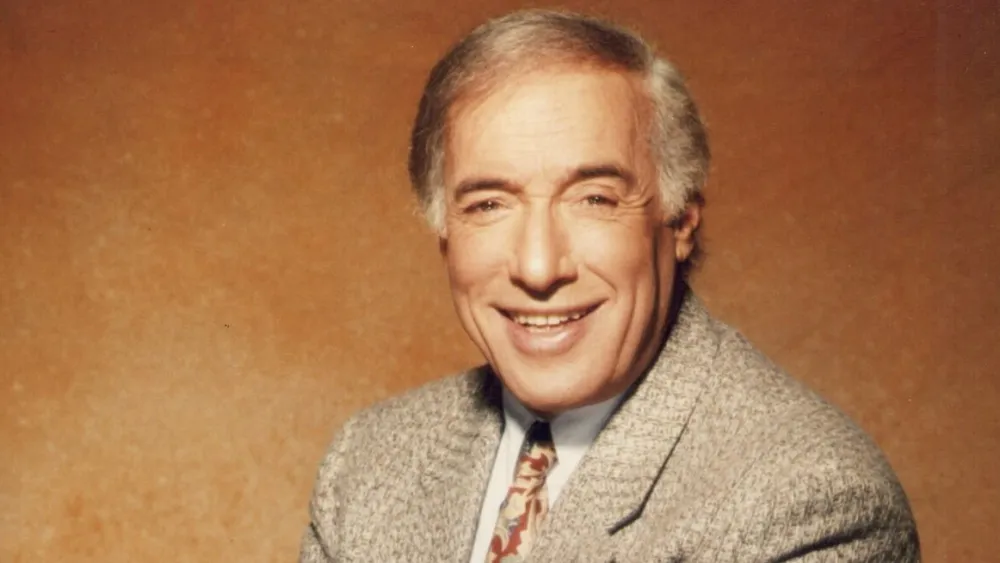
Turteltaub’s oral history specifically discusses casting Fred Berry as Rerun and remembers the rest of the ensemble, including Haywood Nelson, Danielle Spencer and Shirley Hemphill. The chemistry looks casual onscreen, but casting three young leads who could plausibly waste an afternoon together was the whole job.
The series grew from Cooley High, written by Eric Monte, and the end credits acknowledged that connection. Monte later sued over credit, ownership and ideas connected to several television projects. AFI’s history of Cooley High documents the dispute and eventual settlement.
That history deserves care because it is easy to flatten into a winner-and-loser anecdote. The safest thing to say is that Monte’s creative relationship to the material was real, the producers’ work building the television series was real, and the dispute over ownership became a painful part of both stories.
Weekly television required a softer landing. The sitcom leaned away from the film’s harsher outcomes and toward repeatable neighborhood comedy. Raj, Rerun and Dwayne could learn something on Thursday and still make another bad choice next week.
The series could address divorce, money, school, prejudice and work, but it usually pulled back toward humor before becoming a full social-issue comedy. That kept the tone welcoming, though it also meant the show sometimes relied on broad stereotypes and body jokes that feel much rougher now.
Remove Mama from the Thomas house and the show still runs—but the center of gravity moves.
Mabel King left the series after the second season. Television Academy interviews with Bernie Orenstein and Saul Turteltaub both discuss her departure and the adjustments that followed.
Whatever happened behind the scenes, the effect onscreen is easy to feel. Mama had provided the Thomas household with an adult anchor. She did not just stop Raj from getting away with things. She gave the show a daily sense of work, money, responsibility and family history.
Without her, the series leaned more heavily toward the young characters and the world around Rob’s Place. Shirley’s adult presence became more valuable because the show still needed somebody who could look at the boys’ latest plan and identify the flaw before they had finished explaining it.
Third seasons are often where sitcoms prove whether the original balance was an accident. What’s Happening!! remained recognizable, but the chemistry shifted.
That is not a criticism of the remaining cast. It is a compliment to King. Mama had been doing structural work the audience did not have to notice until she was gone.
Three seasons, 65 episodes and enough behind-the-scenes turbulence to make the final year feel less carefree than the reruns.
What’s Happening!! ended after three seasons, with “The Benefit Show” airing April 28, 1979 as episode 65. The episode chronology is straightforward. The circumstances around the cancellation are messier.
Television Academy’s interview page for the series includes Bud Yorkin discussing controversy surrounding the show and its cancellation. Orenstein’s interview also addresses the end of the series and the dispute connected to Cooley High.
Later accounts describe contract and salary conflicts involving cast members during the run. The production had already absorbed Mabel King’s departure, and by the third season the easy neighborhood comedy viewers saw onscreen was sitting on top of a more strained working environment.
Rather than pretend one clean event “killed” the show, it is more accurate to say the series reached the end of a turbulent third season and ABC did not continue it.
“The Benefit Show” was the last episode of the original ABC run, airing April 28, 1979. Like a lot of sitcom endings from the era, it was not designed as a giant emotional finale.
The lack of closure turned out not to matter much. The show did not disappear. Syndication kept the original episodes alive, and the characters eventually came back.
Three network seasons became a much longer childhood once local television started repeating them.
The title itself almost feels prophetic. Rerun was not just a character. Reruns were how a huge part of the audience actually met him.
A series with 65 episodes can become enormous when local stations keep cycling it through the afternoon. Gen X television memory was built from repetition: the same opening, the same Rob’s Place booth, the same red beret, the same “hey, hey, hey.”
That repetition changes the hierarchy of television. A show does not need a ten-year first run if three seasons become part of daily routine for another decade.
What’s Happening!! was especially suited to that afterlife because the episodes were easy to reenter. You did not need continuity notes. Raj wanted something. Rerun was confident. Dwayne was worried. Dee knew. Shirley was waiting.
The catchphrases got stronger with repetition. The costumes got more iconic. Rerun’s dancing became less like a gag from one episode and more like a permanent character trait lodged in cultural memory.
This is one of those shows where Nielsen ratings during the original run tell only part of the story. Syndication is where familiarity turned into affection.
The rare sitcom sequel that asked what happened after the teenagers became adults.
In 1985, the characters returned in What’s Happening Now!!, a first-run syndicated sequel that moved the old neighborhood into adulthood.
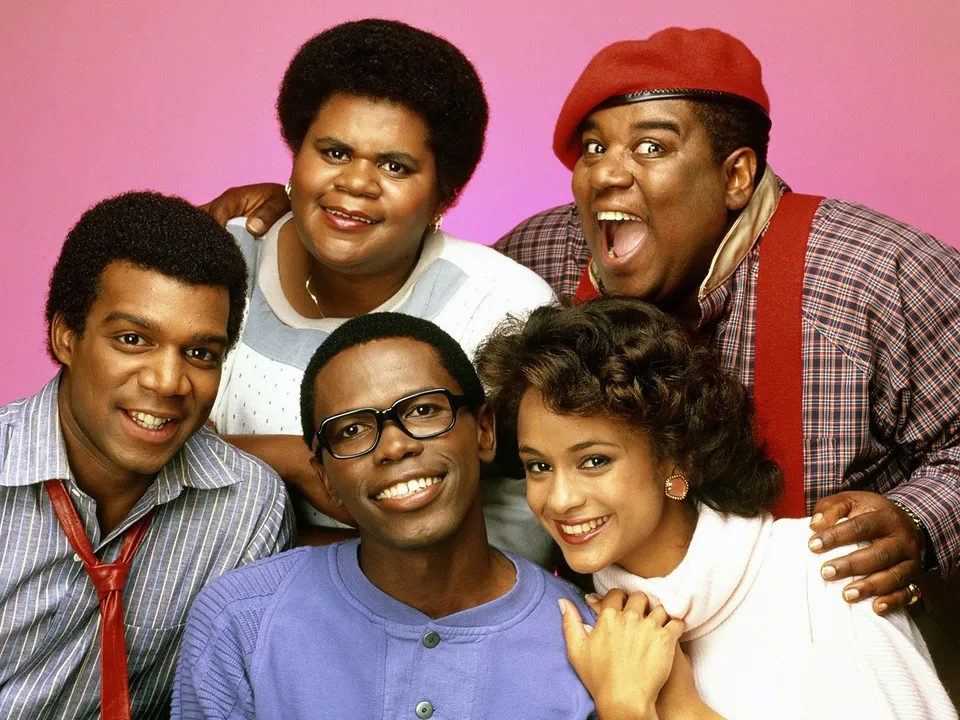
Apple TV’s current listing describes the premise simply: Raj, Dwayne, Rerun and Shirley are adults now. Ernest Thomas, Haywood Nelson, Fred Berry, Shirley Hemphill and Danielle Spencer all returned in some capacity.
Raj came back with a wife, Nadine, and a writing career. Dwayne and Rerun were no longer kids hanging around after school. Shirley was still Shirley, which may be the most believable piece of continuity television ever produced.
The sequel lasted from 1985 to 1988. That is an unusually long second life for a sitcom that had only run three seasons the first time.
The revival also confirms how much value distributors saw in the original characters. You do not rebuild a neighborhood six years later unless people still know who is supposed to be standing in it.
For Gen X viewers, the sequel created a strange double exposure: the guys from the reruns were suddenly adults while the reruns themselves kept them teenagers forever.
Because ordinary joy can be cultural history too.
The legacy of What’s Happening!! is easy to underestimate because the show rarely behaved like it was trying to make history. It wanted to make you laugh before dinner.
That is exactly why it matters. Raj, Rerun and Dwayne were allowed to be teenagers first. Their Blackness was part of the world, not a weekly problem to solve.
The show also created images that lasted: Rerun in the red beret, Dee preparing to tell Mama, Dwayne walking in with three heys, Shirley at the counter and the Doobie Brothers discovering that Rerun was physically incapable of bootlegging a concert quietly.
Some humor has aged badly, especially repeated jokes about weight. Watching the show now means holding two things at once: the affection is real, and parts of the comedy came from habits television needed to outgrow.
Within the decade, the series belongs alongside Sanford and Son, Good Times and The Jeffersons, but it owns a lighter lane: teenage friendship, neighborhood comedy and pop-culture joy.
It also sits comfortably beside Laverne & Shirley as a show where friendship could be the main event rather than the thing waiting behind romance.
In our best sitcoms of the 1970s, What’s Happening!! earns its place not because it was the decade’s most ambitious comedy, but because it made hanging out feel worth remembering. Sometimes the show you carried with you was simply the one whose people felt like they might still be sitting in the same booth after you changed the channel.
And that is why the show still belongs on the old woodgrain dial. For the rest of the neighborhood, head back through our 1970s television archive—the decade where three networks somehow gave us everything from socially explosive family comedies to three guys killing an afternoon at Rob’s Place.
A movie, a summer premiere, three ABC seasons, a Doobie Brothers concert, six years of rerun memory and a syndicated reunion.
Eric Monte’s coming-of-age film provides the creative foundation that the later sitcom would reshape for weekly television.
“The Runaway” airs August 5 as part of a summer launch. ABC brings the show back in November as a regular series.
Raj, Rerun, Dwayne, Dee, Mama and Shirley become a durable ensemble as the show completes its first full season.
The two-part “Doobie or Not Doobie” story creates the series’ most enduring music crossover and one of its most quoted lines.
The third season moves forward without Mama, changing the balance of the Thomas household and increasing the importance of the broader neighborhood cast.
“The Benefit Show” airs April 28 as episode 65 and the last installment of the ABC run.
What’s Happening Now!! begins in first-run syndication with several original cast members returning as adults.
The sequel finishes after three seasons, giving the characters a television life far longer than the original ABC run alone suggests.
What’s Happening!! did not need an epic premise. It had Raj trying to talk his way through another plan, Rerun treating every room like a stage, Dwayne saying hey three times, Dee collecting evidence and Shirley waiting at Rob’s Place with the line everybody else deserved. The series made friendship visible, made ordinary Black teenage life funny without turning it into a lecture, and then let syndication repeat the whole thing until the neighborhood felt like somewhere we had actually been.
Cast, episodes, the three heys, Rob’s Place, the Doobie Brothers, Henry Mancini and the sequel.
The sitcom followed Los Angeles teenagers Raj, Rerun and Dwayne as they dealt with school, friendship, dating, family and everyday schemes, alongside Dee, Mama, Shirley and the neighborhood around Rob’s Place.
The original series aired on ABC from August 5, 1976 through April 28, 1979.
The original ABC series ran three seasons.
The original series produced 65 episodes.
Ernest Thomas played Roger “Raj” Thomas, Fred Berry played Freddie “Rerun” Stubbs and Haywood Nelson played Dwayne Nelson.
Dwayne Nelson, played by Haywood Nelson, used the triple “hey” as his signature greeting.
Danielle Spencer played Raj’s younger sister Dee Thomas.
Rob’s Place was the neighborhood restaurant and hangout where Raj, Rerun and Dwayne spent much of their time. Shirley Wilson worked there as a waitress, and Earl Billings played owner Rob.
The band appeared in the season-two two-parter “Doobie or Not Doobie,” built around an illegal attempt to record their concert.
Henry Mancini wrote the series theme; his official catalog lists What’s Happening! among his 1976 television themes.
“The Benefit Show,” aired April 28, 1979, was episode 65 and the final broadcast of the original ABC series.
Yes. What’s Happening Now!! reunited several original characters as adults and ran in first-run syndication from 1985 to 1988.
Television Academy oral histories, AFI, Henry Mancini’s official catalog, episode chronology and the Doobie Brothers’ label archive.
From Rob’s Place into the decade’s sitcoms, Black television history, family changes and friendship comedies.