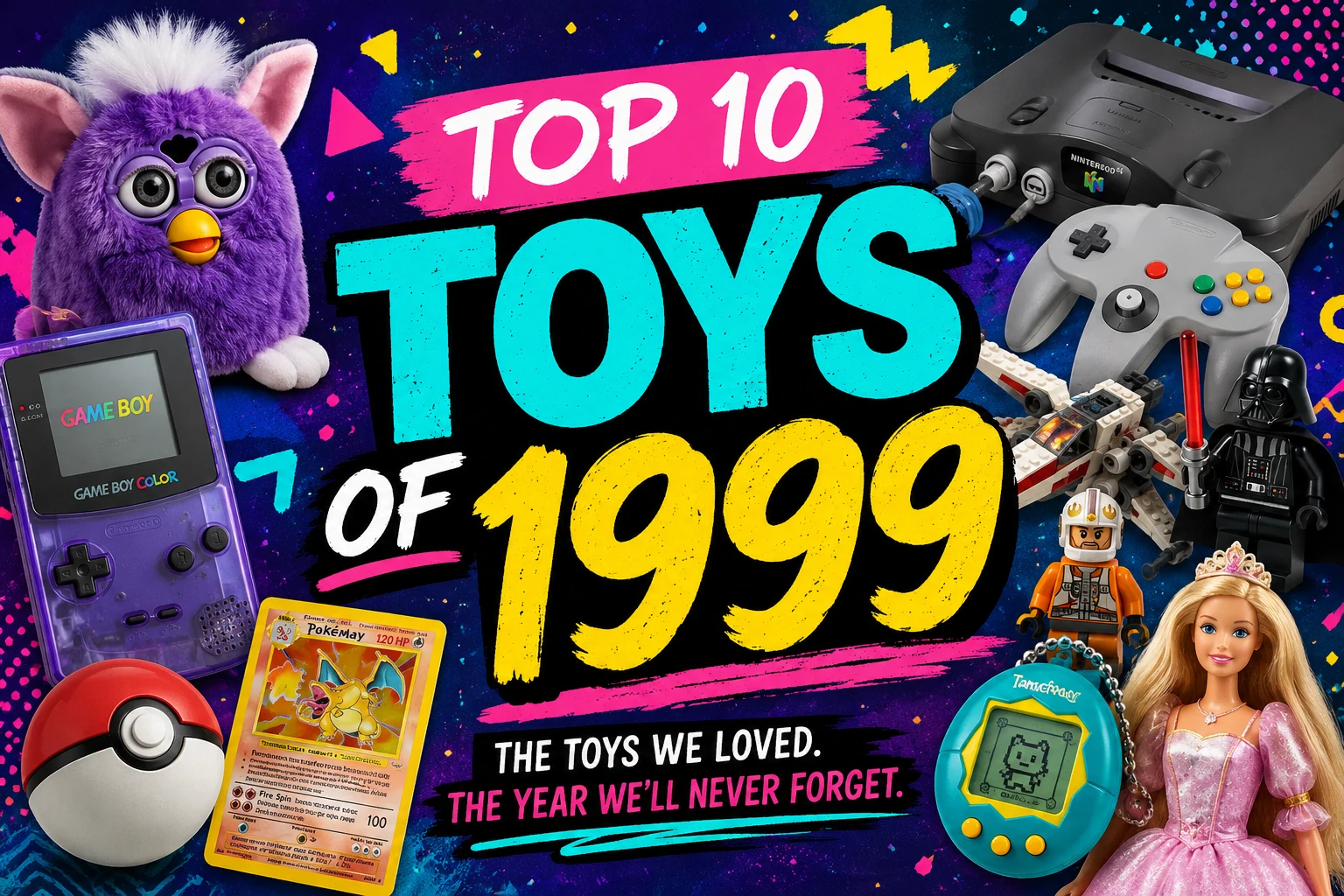
The Final Boss of 90s Toy Culture
Top 10 Toys of 1999: Pokémon Cards, Furby & Y2K Toy Chaos
The top toys of 1999 were Pokémon Trading Cards, Furby and Furby Babies, Game Boy Color with Pokémon games, Star Wars Episode I toys, Toy Story 2 toys, LEGO Star Wars, Beanie Babies, Nintendo 64, Millennium Princess Barbie, and Digimon virtual pets and toys.
This was the year the 90s toy aisle went out in full ecosystem mode. Cards connected to games and television. Movies created action figures, building sets and collector waves. Plush toys talked back, and Y2K packaging made ordinary products look like artifacts from the future.
The Short Answer
What Were the Most Popular Toys of 1999?
The most popular toys of 1999 included Pokémon Trading Cards, Furby and Furby Babies, Game Boy Color and Pokémon games, Star Wars Episode I toys, Toy Story 2 toys, LEGO Star Wars, Beanie Babies, Nintendo 64, Millennium Princess Barbie and Digimon.
Pokémon Trading Cards rank first because they best capture the complete 1999 kid-culture takeover: collecting, battling, trading, television, Game Boy games, booster packs, school rules and cardboard status all feeding one another.
The Fast Rewind
Top 10 Toys of 1999 at a Glance
Start with the complete ranking, then jump directly to any toy for the full explanation.
- #1Pokémon Trading CardsThe card game that became currency, identity and playground politics
- #2Furby and Furby BabiesThe talking electronic plush craze gets a smaller second wave
- #3Game Boy Color and Pokémon GamesPortable gaming becomes the electronic heart of Pokémon culture
- #4Star Wars Episode I ToysPrequel fever fills the aisle with figures, vehicles and lightsabers
- #5Toy Story 2 ToysPixar turns the movie about toys into another massive toy event
- #6LEGO Star WarsLicensed construction sets open a new era for the brick system
- #7Beanie BabiesThe plush collector bubble remains visible as the decade closes
- #8Nintendo 64The four-controller living room remains a major social destination
- #9Millennium Princess BarbieBarbie turns Y2K packaging into a collectible holiday object
- #10Digimon Virtual Pets and ToysDigital monsters add evolution and battle behavior to pocket play
How the List Came Together
How the Top Toys of 1999 Were Ranked
This is a transparent editorial ranking. No single complete public chart cleanly compares trading cards, electronic plush, handheld gaming, movie action figures, construction sets, collectible plush, consoles, dolls and virtual pets across the year.
Holiday demand and public visibility
The ranking weighs Christmas-list pressure, shelf presence, shortage stories, parent awareness and whether the product became recognizable beyond the children who actively played with it.
Social and collector behavior
Pokémon cards, Beanie Babies and Star Wars products generated trades, repeated store visits, completion goals and condition rules that extended far beyond one purchase.
Platform and franchise strength
Game Boy Color, Nintendo 64, LEGO Star Wars and movie merchandise belonged to systems capable of creating future software, characters, sets and accessories.
How clearly each toy defines 1999
The strongest entries capture the exact end-of-decade mood: Pokémon binders, Furby chatter, prequel packaging, Millennium Barbie, licensed LEGO and one last burst of Y2K plastic optimism.
Everything Connects to Everything Else
Why 1999 Changed Toy Culture
The year matters because the biggest products were no longer isolated objects. They were access points into games, television, movies, collector markets, sequels, character rosters and future purchases.
Pokémon fused play, collecting and identity.
Pokémon cards worked as a game, collection, social language and status system, while the handheld games and animated series reinforced the same creatures everywhere children looked.
Franchises reached several toy categories at once.
Star Wars supported figures, vehicles, role-play gear and LEGO sets, while Toy Story 2 converted movie emotion directly into character demand.
Interactivity remained a major feature.
Furby continued the talking-plush phenomenon, while Digimon extended digital-pet play toward evolution and battle.
The millennium itself became packaging.
Millennium Princess Barbie shows how the calendar could turn an established product into a keepsake, collectible and end-of-era gift.
Five Demand Engines in the Final 90s Aisle
What Actually Drove the 1999 Toy Market?
The year becomes clearer when the toys are grouped by the type of pressure they created. Each force receives a full-width horizontal card.
The Playground Economy
Pokémon Trading Cards created a visible, portable market built around rarity, favorite creatures, booster packs, trades and binder presentation.
The cards crossed into school policy because the social system around them became too active to remain a private hobby.
The Interactive Plush Sequel
Furby remained powerful because the product had a recognizable personality, behavior and language. Furby Babies supplied a smaller, cuter reason to re-enter a craze that had already survived one major holiday season.
The brand demonstrated how an electronic character could create variants and follow-up products without abandoning its central gimmick.
The Portable Game Ecosystem
Game Boy Color connected Pokémon games, trading and travel into one daily loop. The hardware made the property portable, while the property made the hardware urgent.
Cartridges, batteries, accessories and new releases ensured the first purchase remained only the beginning.
The Franchise Takeover
Star Wars Episode I, LEGO Star Wars and Toy Story 2 demonstrate three different ways entertainment could dominate the shelf: action figures, construction sets and emotionally familiar character toys.
The larger movie-to-toy pipeline now served children, parents and adult collectors at the same time.
The Collector and Y2K Mood
Beanie Babies kept condition and scarcity visible, while Millennium Princess Barbie turned the approaching year 2000 into a packaged keepsake.
Collectibility increasingly depended on the box, edition, tag, date or story attached to the object—not only the play value inside it.
From #10 to #1
The Top 10 Toys of 1999 Countdown
Ten products and one final 90s year where cards, electronic plush, handheld gaming, movie merchandise and Y2K collecting all competed for the same attention.
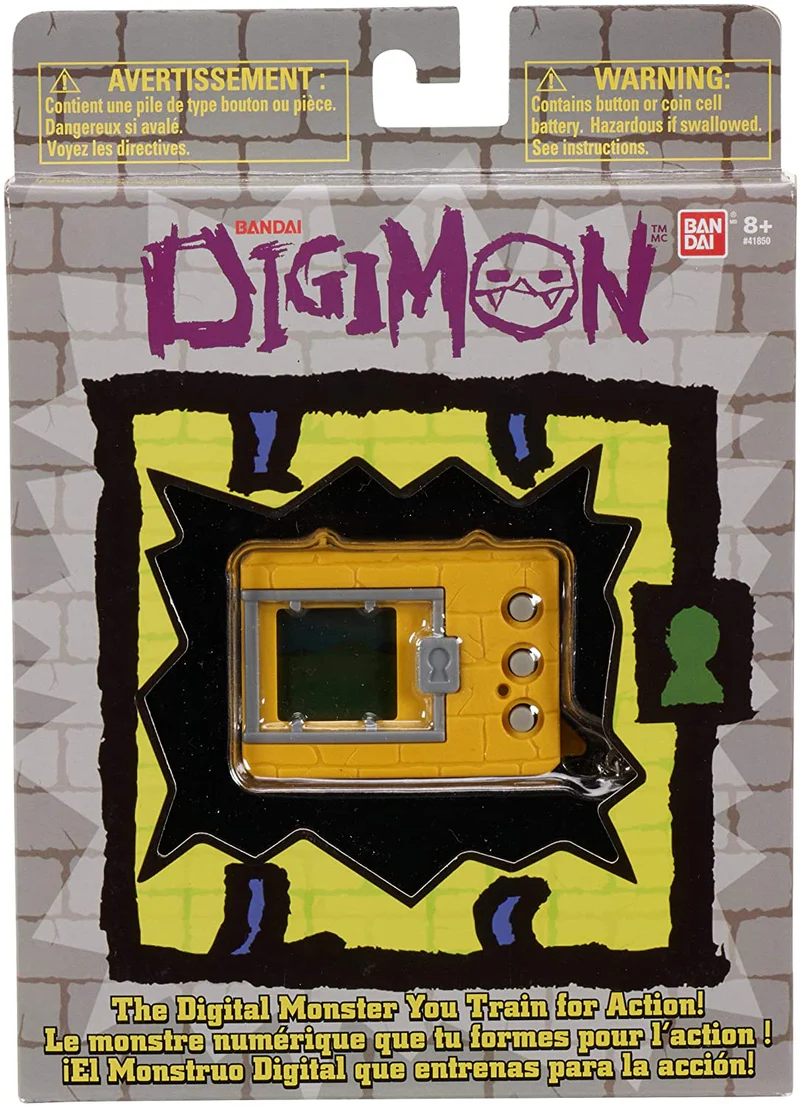
Digital Monsters Add Evolution and Combat
Digimon Virtual Pets and Toys
Digimon virtual pets and toys open the countdown because 1999 was large enough to support another digital-monster universe even while Pokémon occupied most of the available oxygen.
The original virtual-pet format gave Digimon a familiar entry point. Children could raise a creature through electronic stages, but the battle and evolution emphasis made the product feel more competitive than a conventional pet simulator.
Progression was the hook. Keeping the creature active was only part of the experience; the creature was expected to become stronger, evolve and perform in a larger monster system.
Figures and media connections expanded the product beyond the keychain device. Digimon represented the wider late-90s expectation that one toy property should work across several formats and keep revealing another level.
The brand did not outrank Pokémon because no honest reading of 1999 could support that argument, but its presence proves the digital-monster category had become bigger than one product.
For Gen X adults, Digimon looked like the virtual-pet concept had completed combat training and returned with statistics.
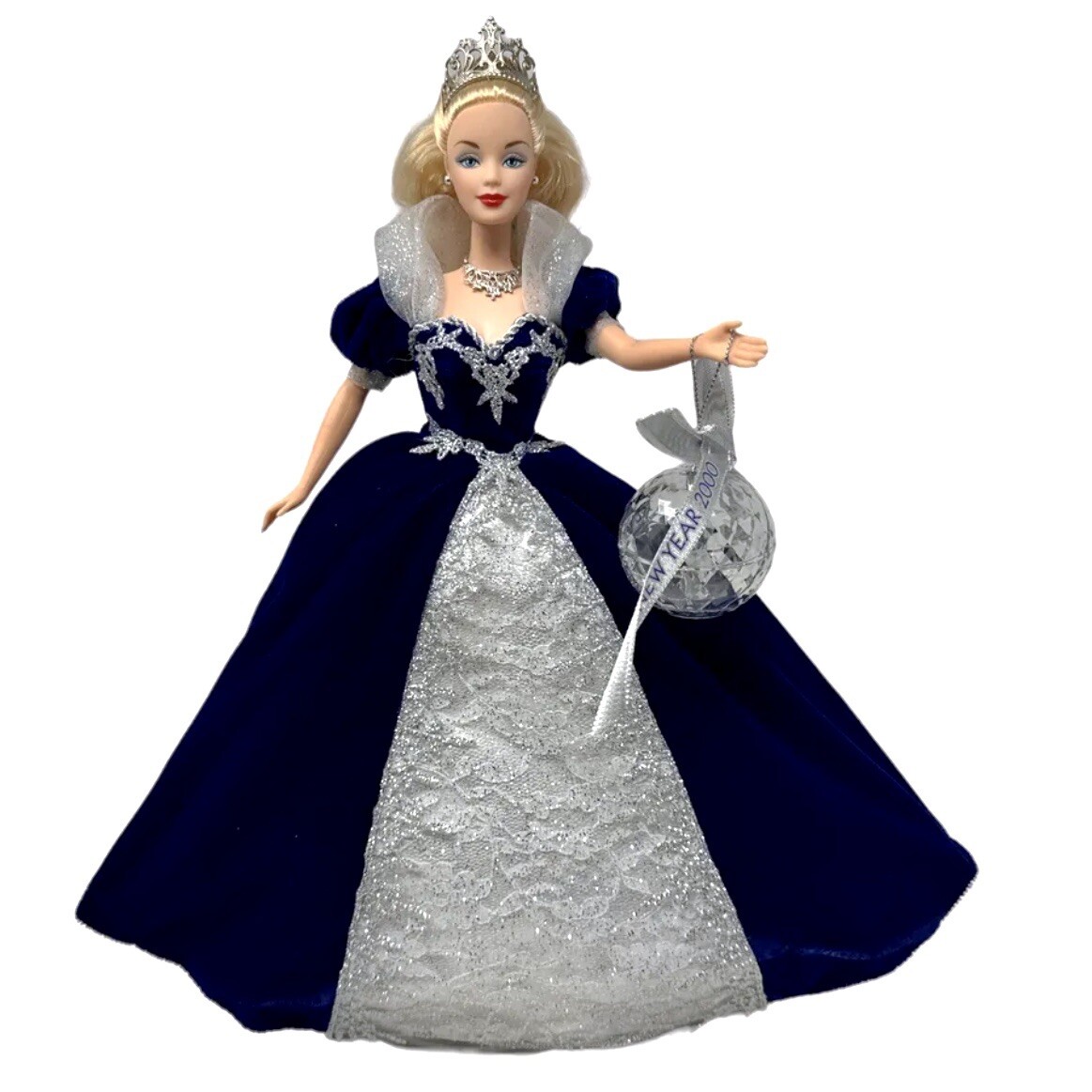
Barbie Turns the Calendar Into a Collectible
Millennium Princess Barbie
Millennium Princess Barbie ranks ninth because the approach of the year 2000 became one of the strongest packaging themes in retail, and Barbie was perfectly built to convert that moment into a gift.
The doll combined holiday styling, collector presentation and a date-specific identity adults could understand immediately. The box announced that this was not simply another Barbie; it was a keepsake attached to a supposedly historic calendar turn.
That positioning widened the audience. Children could see a glamorous doll, while parents and grandparents could justify the purchase as a commemorative object connected to the millennium.
Barbie remained powerful because the brand could absorb cultural moments without becoming unrecognizable. Y2K silver, formal styling and collectible packaging changed the edition while preserving the permanent Barbie system.
The doll ranks below the year’s larger crazes because 1999 was dominated by Pokémon, Furby, gaming and movie merchandise, but it captures the calendar-driven retail mood better than almost anything else.
For Gen X families, Millennium Barbie was the polished retail promise that the future would arrive wearing a formal gown and remain safely inside a display box.
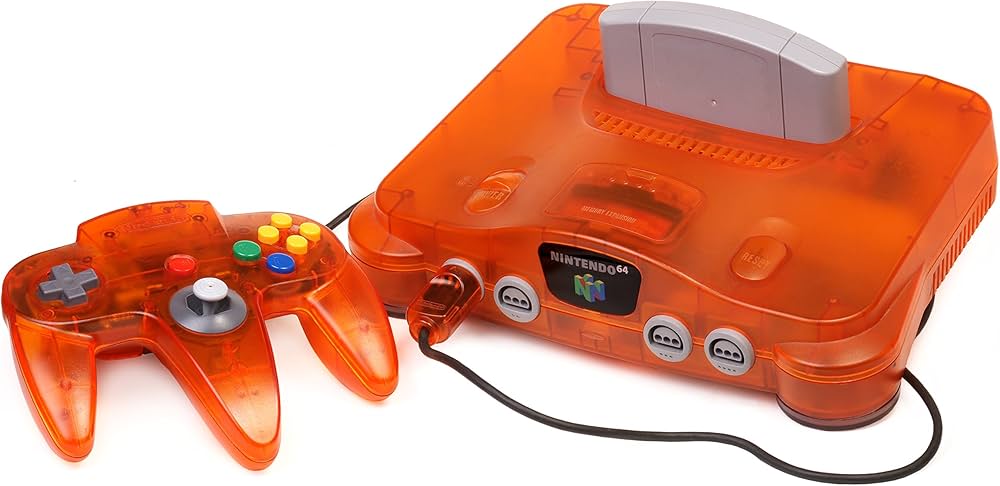
The Four-Controller Living Room Still Matters
Nintendo 64
Nintendo 64 ranks eighth because the console still controlled a large part of the living-room social experience even while Pokémon pulled Nintendo’s cultural center toward handheld gaming.
Four controller ports remained the machine’s most visible social advantage. Multiplayer games turned the console into a destination where hardware ownership could determine whose house became the weekend headquarters.
The N64 library had already created strong shared memories through racing, fighting, sports and first-person competition. By 1999, the platform’s appeal came from the accumulated system rather than one launch event.
That maturity explains the lower ranking. The console remained highly desirable, but it was no longer the newest cultural engine in a year ruled by cards, Furby variants and prequel merchandise.
For children, the distinction between electronics and toys remained academic. A console under the tree that reorganized the whole room clearly belonged in the same wish-list conversation.
For Gen X households, Nintendo 64 remained the final great couch-war machine before online play made cheating accusations less physically immediate.
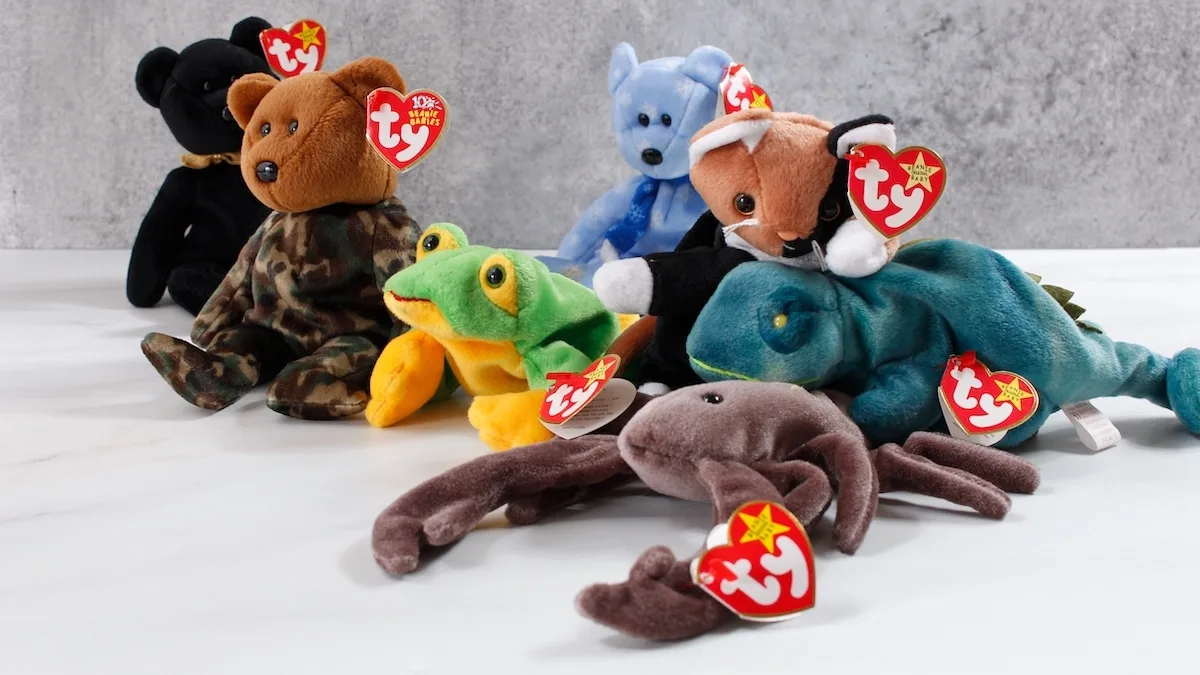
The Plush Market Reaches the End of the Decade
Beanie Babies
Beanie Babies rank seventh because the plush craze remained highly visible as the decade closed, even though the market was beginning to look less invincible than it had during the peak years.
The line still benefited from small size, low original price, endless character variation and a collector system built around retirements, tags and perceived scarcity.
Adults remained a major part of the story. Price guides, display cases and future-value expectations had changed a child-friendly plush product into a household market conversation.
The strength of Pokémon cards made the contrast especially revealing. Beanie Babies represented the earlier collector model built around plush, while Pokémon introduced a more active system of trading, play, media and rapid expansion.
The seventh-place position reflects a craze losing momentum, not disappearing. By 1999, Beanie Babies had already changed how mainstream shoppers thought about toys and speculative value.
For Gen X adults, the final Beanie years were the part of the experiment where everyone began noticing that a tag protector was not the same thing as a financial plan.
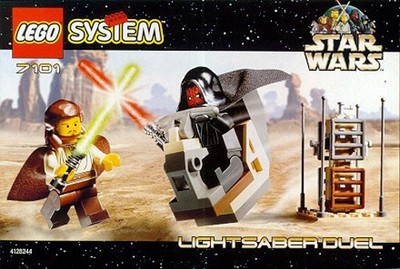
The Licensed LEGO Era Begins
LEGO Star Wars
LEGO Star Wars ranks sixth because 1999 marked the beginning of a combination that would permanently reshape licensed construction toys.
LEGO already offered an open-ended building system. Star Wars supplied ships, characters, locations and conflicts with decades of recognition. Together, the brands gave children both instructions and a larger universe waiting beyond the finished model.
The product also reached multiple generations. Children could build and play, while adults recognized the vehicles and characters from their own history with the franchise.
The timing of The Phantom Menace gave the first wave immediate relevance, but the deeper importance came from the model itself: an established construction system could work with a major entertainment license without losing its identity.
LEGO Star Wars ranks below the louder Episode I figure takeover because the action-figure wave was more visually overwhelming in 1999. The building sets carried the larger long-term strategic legacy.
For Gen X parents, LEGO Star Wars was the perfect excuse to help with a child’s set for several hours while insisting the assistance was purely structural.
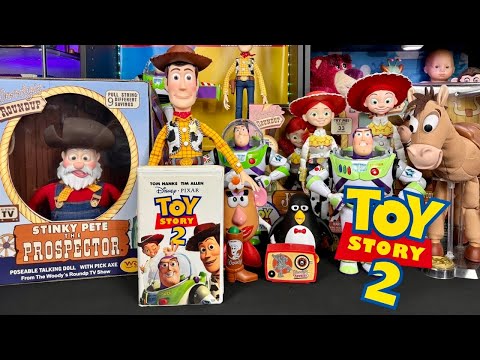
Pixar Makes Toy Merchandise Emotionally Unfair
Toy Story 2 Toys
Toy Story 2 toys rank fifth because the sequel renewed one of the most naturally merchandise-friendly worlds ever created.
Buzz and Woody were already familiar, while Jessie, Bullseye, Stinky Pete and other characters expanded the product roster. The movie gave every toy a personality and emotional history before the package reached the shelf.
That relationship made the merchandise feel unusually direct. Buying the character was not merely owning a screen likeness; it felt like owning the exact kind of object the story asked the audience to care about.
Pixar also had strong family trust by 1999. Parents recognized the quality, children recognized the characters and the holiday release gave the products immediate seasonal relevance.
The line connected play, collecting and movie emotion without requiring a complicated new explanation. Toy Story remained one of the cleanest screen-to-shelf systems of the decade.
For Gen X adults, Toy Story 2 merchandise used every forgotten childhood figure as emotional leverage and then placed a price tag beside the solution.
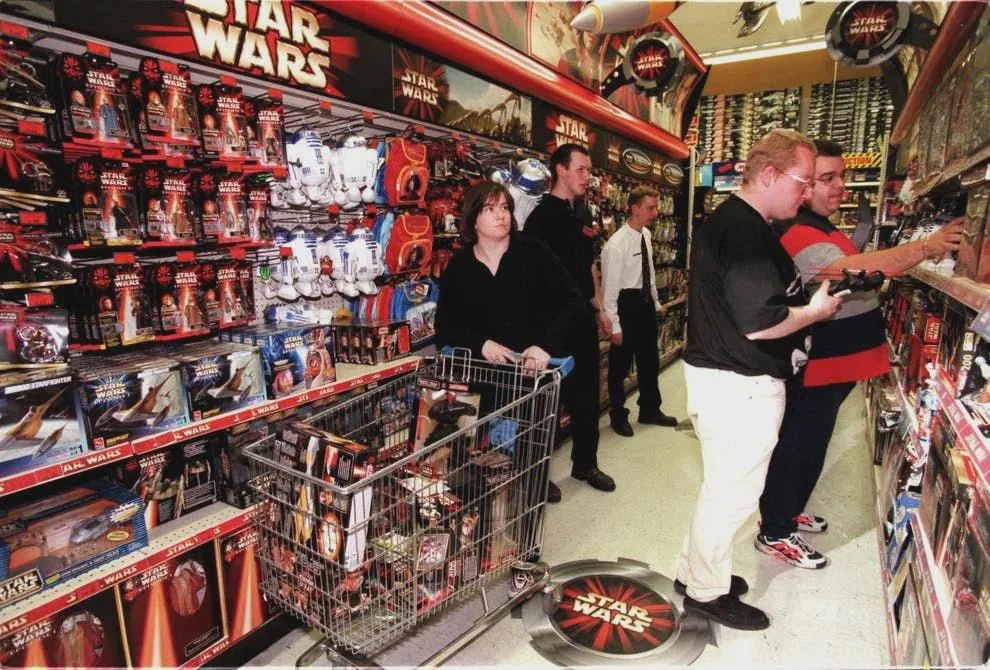
Prequel Fever Occupies the Entire Aisle
Star Wars Episode I Toys
Star Wars Episode I toys rank fourth because The Phantom Menace was treated as far more than a movie release. The merchandise push became one of the largest retail events of the year.
Darth Maul, Queen Amidala, Obi-Wan Kenobi, Qui-Gon Jinn, Anakin, battle droids, podracers, ships and lightsabers created a huge character and vehicle roster.
The property reached children and adults simultaneously. Kids saw a current space adventure, while Gen X adults carried the memory of the original trilogy and often participated as collectors.
Darth Maul supplied especially strong shelf appeal through a red-and-black design and double-bladed lightsaber that required no detailed explanation.
The sheer quantity of products created both excitement and overproduction risk. That tension is part of the authentic 1999 story: enormous anticipation, massive inventory and a belief that almost every package might matter later.
For Gen X, Episode I toy shopping was the rare family activity where the adult and child could disagree about the movie while still reaching for the same aisle.
Pocket-Sized Domination
Game Boy Color and Pokémon Games
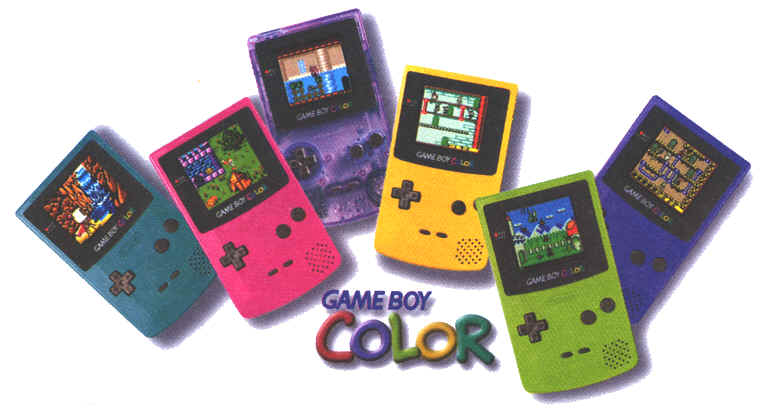
Game Boy Color and the Pokémon games rank third because the handheld system formed the electronic center of the year’s largest child-culture phenomenon.
The games gave the cards depth. Children could catch, train, battle and trade creatures rather than only collect their printed versions.
The link cable created a physical social network. Trading and battling required another player and device, turning portable progress into a face-to-face event.
Game Boy Color also had excellent gift logic. The hardware was more substantial than a conventional toy, backward compatible with a large library and tied to a property children were already encountering through television and cards.
The system was carried through bedrooms, car rides, school buses and waiting rooms, making Pokémon part of daily life instead of an activity limited to one location.
For Gen X parents, Game Boy Color was the portable device that could create silence in the car and immediate battery negotiations at the destination.
The Talking-Plush Phenomenon Gets a Sequel
Furby and Furby Babies
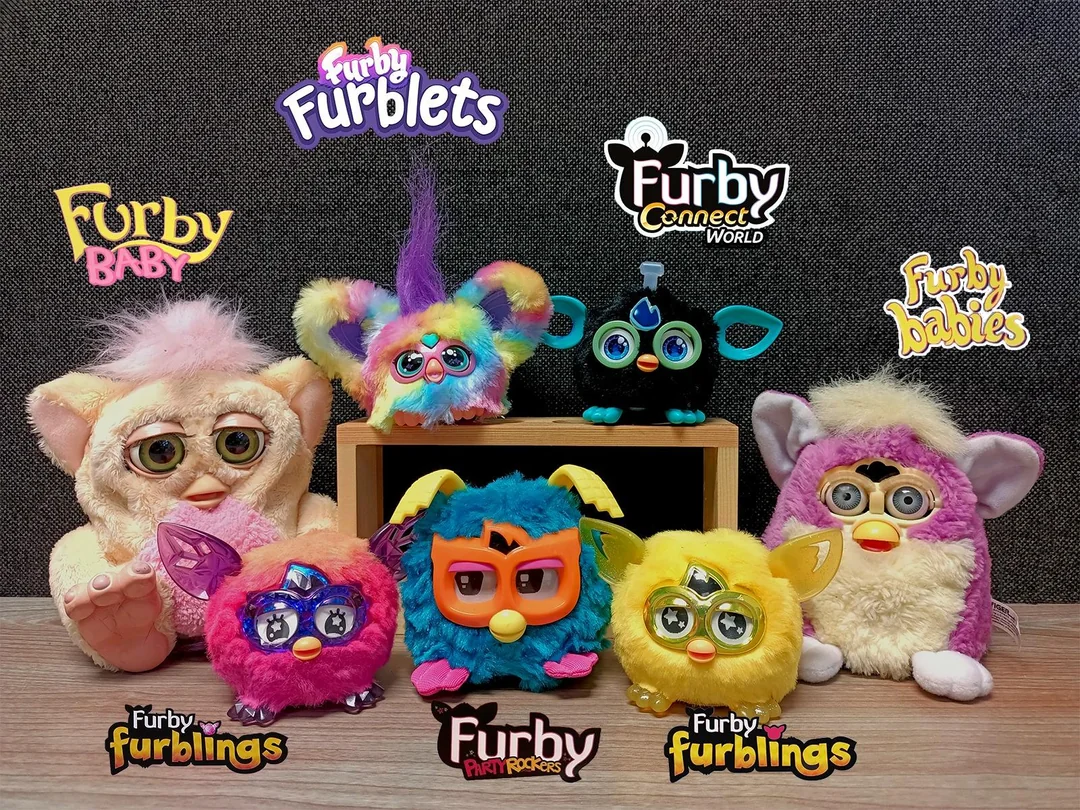
Furby and Furby Babies rank second because the talking electronic plush remained one of the strongest and most recognizable toy brands as the decade ended.
The original Furby had established the basic appeal: sound, movement, blinking, interaction and a strange design that felt alive enough to become a household character.
Furby Babies refreshed the line through a smaller, younger-looking variation that preserved the central behavior while creating another reason to purchase.
Variants and personalities kept the product collectible, while the electronics made it demonstrable. A commercial could show the toy reacting, and a child could repeat the performance immediately after opening the box.
Furby loses the number-one position because Pokémon cards controlled a much wider social ecosystem in 1999. The plush remained enormous, but the cards reached schoolyards, games, television and collecting all at once.
For Gen X families, Furby Babies proved the original creature had apparently reproduced and the household electronics budget would now support a second generation.
The Playground Economy Takes Over
Pokémon Trading Cards
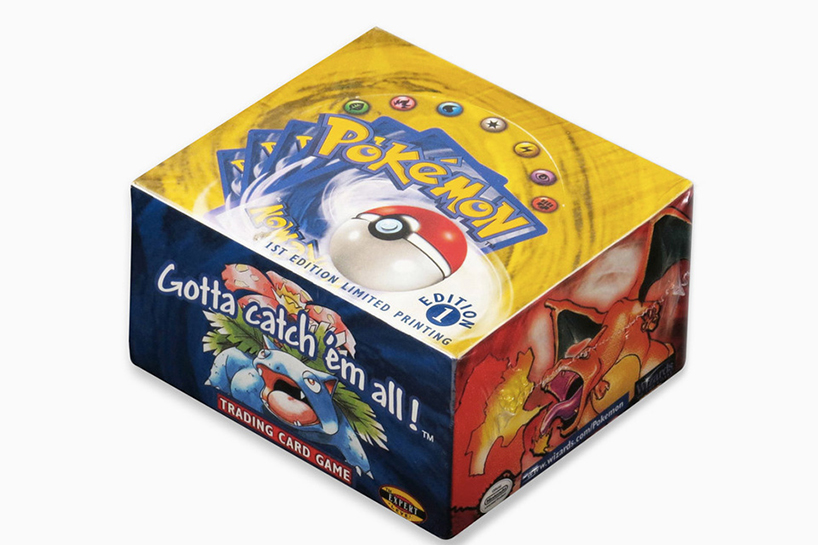
Pokémon Trading Cards take the number-one spot because nothing else controlled 1999 kid culture through as many overlapping behaviors.
The cards could be collected, traded, played, displayed and discussed. Rarity gave booster packs uncertainty, holographic cards supplied status and favorite creatures connected the cardboard directly to the games and animated series.
The product was portable enough for school but socially active enough to create conflict. Trades, perceived value and unequal knowledge forced adults and administrators to become involved in rules they had never expected to write.
Binders became presentation systems. Decks became strategic identity. One card could be a game piece, favorite character, bargaining object and object of rumor at the same time.
Pokémon cards also formed the center of a wider ecosystem. The games taught the creatures, the television show gave them personalities and the merchandise made the property visible everywhere.
For Gen X parents and teachers, the cards were the moment cardboard developed liquidity, social power and an alarming ability to interrupt lunch.
The Decade Ends as One Giant System
1999 Was the Final Boss of 90s Toy Culture
The year collected nearly every major trend of the decade into one aisle: electronic personality, handheld gaming, adult collecting, movie hype, licensed construction and schoolyard trading.
The Pokémon Machine
Cards, Games and Television Reinforced One Another
No single product format explains Pokémon’s 1999 strength. The power came from moving through every format at once.
The Cards
Booster uncertainty, rarity and trades made collecting socially active.
The Games
Game Boy gave the creatures progression, battles and personal teams.
The Show
Television supplied personalities, names and repeated recognition outside the game.
The final-boss argument: every Pokémon purchase increased interest in the next format.
The Toy Box Afterlife
Collecting Toys From 1999 Today
Exact version, authenticity, condition, completeness, working electronics, original packaging and verified completed-sale demand matter much more than age alone.
Pokémon cards require authentication and condition discipline.
Set, card number, edition markings, language, print variation and condition all matter. Compare authentic examples and verified completed sales rather than screenshots of extreme asking prices.
Furby and Digimon need functional testing.
Test sound, movement, sensors, screens, buttons and battery contacts. Corrosion, repairs, language versions, shell designs, packaging and working mechanisms can materially change value.
Game systems and software depend on exact bundles.
Game Boy Color and Nintendo 64 values depend on screens, controllers, cables, cartridge authenticity, save functionality, boxes, manuals and whether the hardware matches the original release or bundle.
Star Wars, LEGO, Barbie and Beanie pieces need exact identification.
Figure accessories, LEGO minifigures and instructions, Barbie packaging, Beanie tags and release-specific details matter. The guides to 90s collectible crazes and forgotten 90s toys provide broader context.
What the Wish List Felt Like
Christmas Morning 1999 Looked Like the Future Had Been Merchandised
The room could contain booster packs, a talking creature, a color handheld, a prequel action figure, a licensed building set and one formal doll announcing that the calendar itself had become collectible.
Every wrapper held the possibility of a holographic victory or several duplicates requiring immediate negotiation.
The smaller Furby arrived ready to join a household that had not completed its conversation with the first one.
Portable Pokémon progress depended on a steady energy supply and adults who remembered the correct battery size.
Red-and-black packaging made one villain look like the entire prequel merchandising plan had become a person.
The model began as instructions and became an invitation to reconstruct the galaxy across the carpet.
The family immediately divided into people who saw a doll and people who saw a sealed historical document.
The memory: Pokémon cards covered the table, Furby talked over the television, Star Wars occupied the floor and everyone waited to see whether Y2K would affect the batteries.
Under Fluorescent Lights
What the 1999 Toy Store Looked Like
The final 90s store looked less like a collection of categories and more like several entertainment systems competing for floor space.
The Pokémon wall
Cards, games, figures, binders and guides made one property visible across several store sections.
The Star Wars takeover
Episode I figures, vehicles, role-play gear and LEGO sets created an enormous two-generation merchandise zone.
The electronic shelf
Furby, Digimon and handheld gaming made batteries, demos and working screens part of the buying decision.
The collector display
Beanie Babies and Millennium Barbie kept packaging, tags and future value in the conversation as the decade closed.
The full 90s Toy Store Culture guide follows the mall trips, catalogs, card sections, collector displays and holiday rituals that made the search for the toy part of the memory.
Commercial-Break Pressure
Watch the 1999 Toy Commercial Energy
Pokémon advertising sold cards, games and a larger universe. Furby showed the talking interaction. Star Wars sold prequel anticipation, Toy Story 2 sold emotional character recognition and Digimon sold evolution and battle.
The strongest 1999 ads did not only show a toy. They explained the world, collection or platform the child was expected to enter.
The 90s Toy Commercials & Videos archive is the direct next stop for Pokémon cards, Furby, Game Boy Color, Star Wars, Toy Story 2, LEGO and Digimon advertising.
The Rest of the Year
Keep Rewinding 1999
The toy aisle was only one part of a year filled with teen-pop explosions, Latin pop crossover, futuristic movies, twist endings, prequel fever, network television and enough Y2K imagery to make silver clothing seem inevitable.
The 1999 Toy Aisle Verdict
Why These Toys Define 1999
The top 10 toys of 1999 show the decade ending with everything connected. Pokémon cards are a playground economy. Game Boy Color is the portable platform. Furby is the interactive character.
Star Wars and Toy Story 2 turn movies into enormous product systems. LEGO Star Wars previews the future of licensed construction. Beanie Babies preserve the collector bubble, while Millennium Barbie packages the calendar as a keepsake.
For Gen X, 1999 feels like the toy aisle completing its transformation. The stores and commercials still looked familiar, but the products now operated across several media, created repeat transactions and invited adults to participate as collectors, fans and fellow nostalgic shoppers.
Questions From the Toy Aisle
Top Toys of 1999: Frequently Asked Questions
What were the most popular toys of 1999?
Popular toys of 1999 included Pokémon Trading Cards, Furby and Furby Babies, Game Boy Color, Star Wars Episode I toys, Toy Story 2 toys, LEGO Star Wars, Beanie Babies, Nintendo 64, Millennium Princess Barbie and Digimon.
What was the biggest toy of 1999?
Pokémon Trading Cards take the number-one spot because they dominated collecting, trading, schoolyard conversation and the larger Pokémon media ecosystem.
Why are Pokémon cards ranked above Furby?
Furby remained a major interactive toy, but Pokémon cards reached a broader social system through trades, gameplay, rarity, Game Boy games, television and school culture.
Why were Pokémon cards so popular in 1999?
The cards combined favorite characters, rarity, booster-pack uncertainty, trading, deck play and status. The games and animated series made the creatures recognizable before children opened a pack.
Were Furby and Furby Babies still popular in 1999?
Yes. Furby remained one of the decade’s defining interactive toys, and Furby Babies refreshed the line with a smaller variation.
Why was Game Boy Color important in 1999?
Game Boy Color provided the portable hardware behind Pokémon play, trading and daily kid culture while supporting a large game library.
Why were Star Wars Episode I toys so visible?
The Phantom Menace was treated as a major cultural event, producing figures, vehicles, lightsabers, playsets and collector demand across two generations.
Why is LEGO Star Wars on the list?
LEGO Star Wars launched a major licensed construction era by combining an open-ended brick system with one of the world’s most recognizable franchises.
Why were Toy Story 2 toys popular?
The movie gave Buzz, Woody, Jessie and other characters emotional meaning as toys inside the story, making the merchandise feel like a direct continuation of the film.
Were Beanie Babies still popular in 1999?
Yes. Beanie Babies remained a large collector craze, though the market was beginning to lose some of its earlier momentum.
Why is Nintendo 64 only number eight?
The console remained highly desirable, but the ranking emphasizes year-specific heat. Pokémon, Furby and the major 1999 movie-merchandise waves produced stronger new cultural stories.
What was Millennium Princess Barbie?
Millennium Princess Barbie was a Y2K-themed fashion doll and keepsake release that connected the established Barbie system to the approaching year 2000.
Why is Digimon included?
Digimon extended the digital-pet craze through evolution, battle mechanics, virtual pets, figures and a larger monster universe.
What made 1999 toys different from earlier 90s toys?
The largest products were more connected to media, games, collecting and future purchases. One toy increasingly served as an entry point into a larger ecosystem.
What were the hottest Christmas toys of 1999?
Hot Christmas toys included Pokémon cards, Furby and Furby Babies, Game Boy Color, Star Wars Episode I toys, Toy Story 2 toys, LEGO Star Wars, Beanie Babies, Nintendo 64, Millennium Barbie and Digimon.
Are toys from 1999 valuable today?
Some can be, but value depends on authenticity, exact version, condition, completeness, working electronics, original packaging and real completed-sale demand. Use the 90s collectible toy guide for broader context.
Was there one official top-10 toy chart for all of 1999?
No single complete public list cleanly compares every toy category across the full year. This page uses a transparent editorial method based on holiday demand, cultural visibility, social behavior, platform impact and category strength.
Where can I watch commercials for 1999 toys?
The 90s Toy Commercials and Videos archive connects Pokémon, Furby, Game Boy Color, Star Wars, Toy Story 2, LEGO and Digimon with the advertising behind the demand.
The Complete Decade
Explore the Top Toys From Every Year of the 90s
Follow the aisle from Turtle Power and Troll comebacks through Power Rangers, Elmo, digital pets, Furby and the final Pokémon-card takeover.