Dynasty Took the Crown
The Carringtons delivered the glamour era’s last full number-one victory lap.
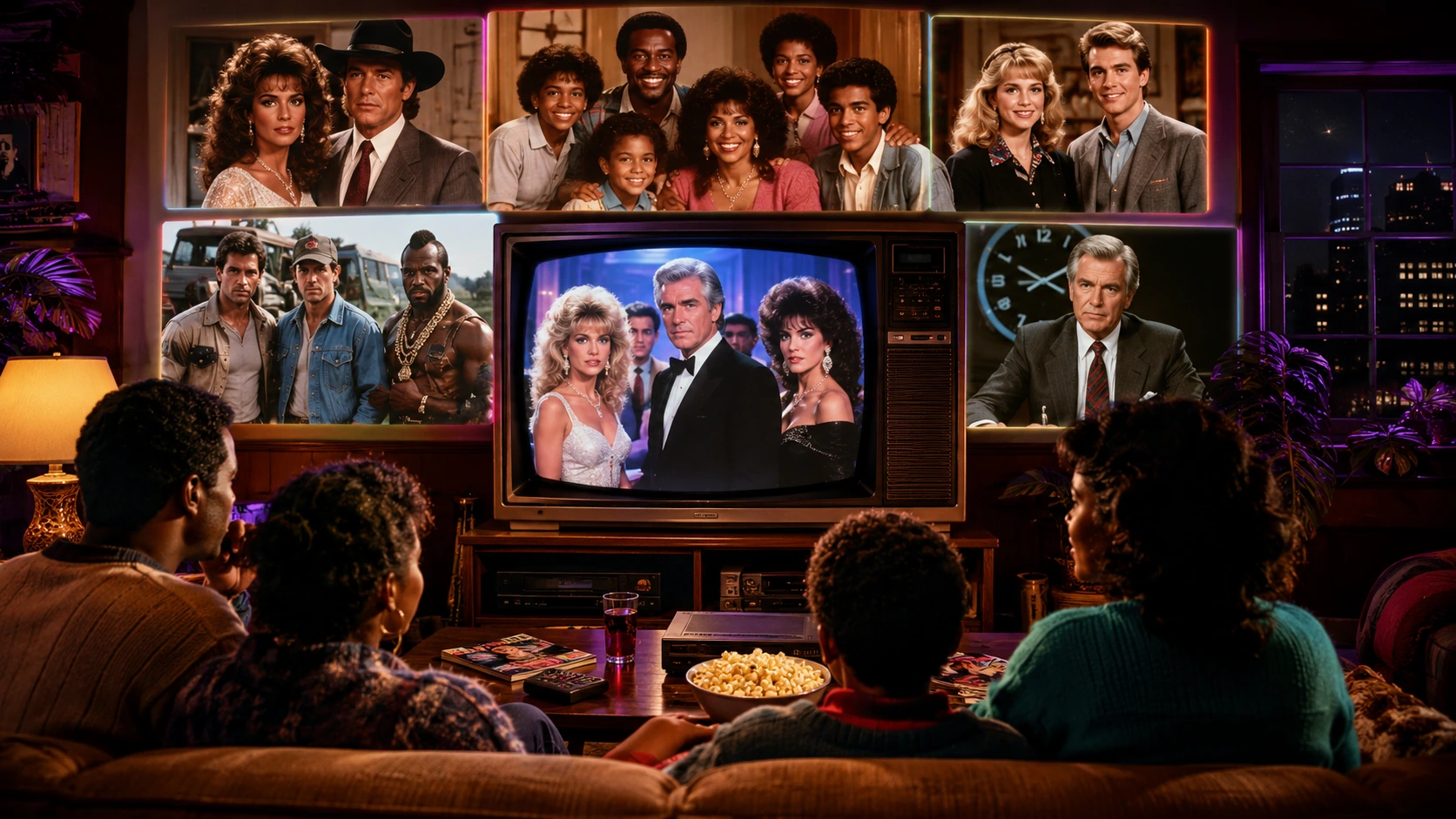
According to the Nielsen rankings for the 1984–85 television season, Dynasty was America’s most-watched show with a 25.0 rating. Dallas ranked second, followed by The Cosby Show, 60 Minutes and Family Ties.
The ranking captures a television industry in transition: the prime-time soaps still held the crown, but NBC’s family sitcom surge was already moving into the center of the American living room.
 Now Broadcasting
Dynasty ranked number one in the 1984–85 Nielsen season with a 25.0 rating. Dallas ranked second at 24.7, The Cosby Show ranked third at 24.2, 60 Minutes ranked fourth at 22.2 and Family Ties completed the top five at 22.1.
The A-Team, Simon & Simon, Murder, She Wrote, Knots Landing and Falcon Crest completed a top ten that visibly bridged the glamour era and the coming sitcom boom.
CBS placed six programs in the top ten, but NBC’s three entries told the bigger future story: a breakout family sitcom, another top-five family comedy and one giant action brand. ABC held the crown through Dynasty.
The old prime-time order did not vanish. It met the next one head-on. Glossy soaps still ruled the first two positions, while NBC’s family comedies began building the center of gravity that would dominate the rest of the decade.
The Carringtons delivered the glamour era’s last full number-one victory lap.
The Cosby Show and Family Ties both reached the top five and changed the direction of NBC.
Six different CBS programs reached the top ten, from journalism and mysteries to private eyes and soaps.
Jessica Fletcher and the Keaton family proved that warmth, intelligence and competence could compete with spectacle.
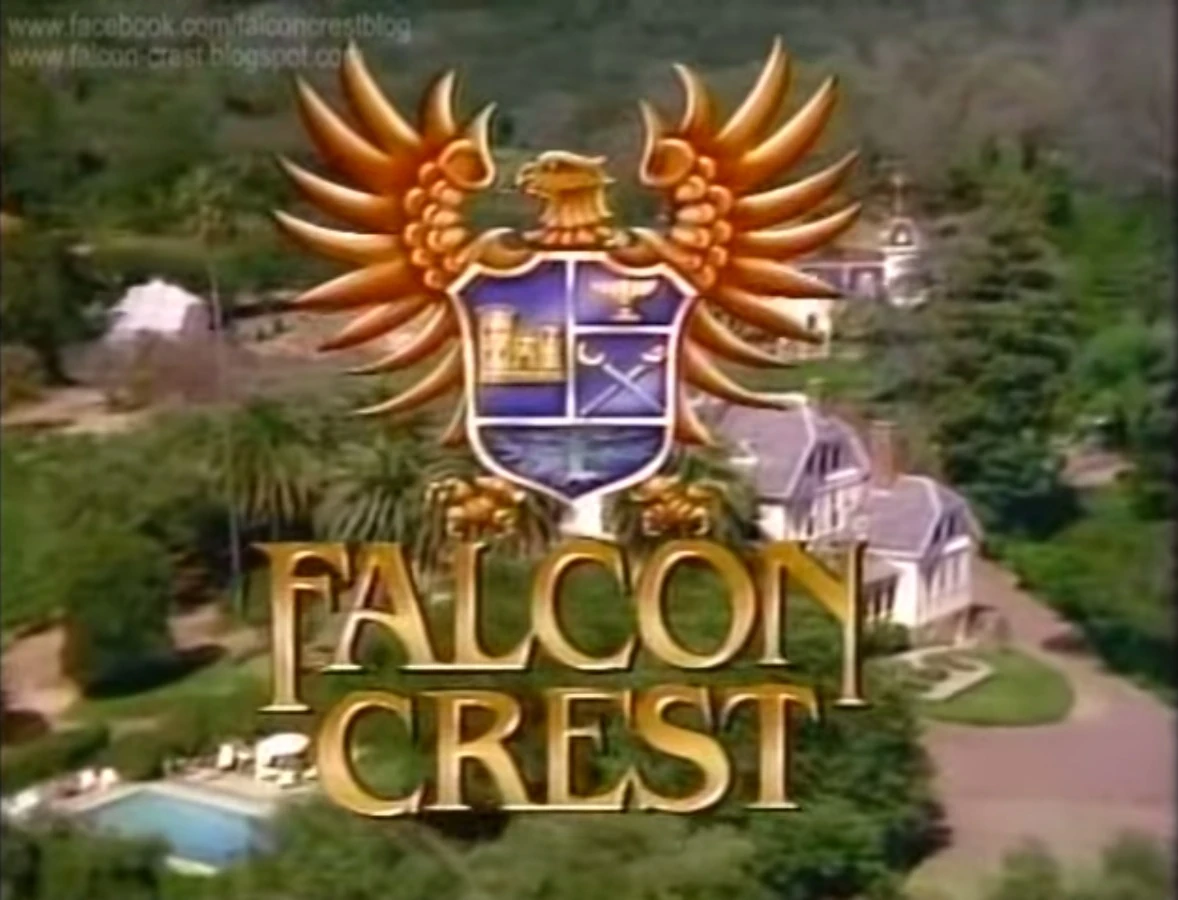
Falcon Crest hanging onto the top 10 in 1985 is a great reminder that the prime-time soap audience had not disappeared just because the decade was changing shape. Set in California wine country and built around the feuding Gioberti and Channing families, the show delivered exactly what viewers wanted from this era’s nighttime drama: property battles, inheritance drama, old grudges, romantic betrayals, and the constant suspicion that everyone smiling at dinner was quietly planning to ruin somebody else by dessert.
What makes Falcon Crest particularly interesting in the 1985 lineup is that it feels like a genre loyalist. It did not need to reinvent the soap form. It refined it. The wine-country setting gave it elegance and texture, but the real draw was still control: who owned the land, who held the leverage, who knew the secret, and who was going to crack first. That slow-burn power struggle made it perfect comfort food for viewers who liked their TV glossy but not cartoonish.
In a year where sitcoms were starting to punch much harder near the top of the chart, Falcon Crest works like a marker of continuity. The soap era had not surrendered yet. It was still very much in the room, still stylish, still vindictive, and still getting serious ratings.

Knots Landing is one of the most useful shows on the 1985 list because it demonstrates that “soap” did not only mean giant mansions, oil barons, or couture warfare. A spin-off of Dallas, it began with a more suburban, relationship-oriented identity and slowly evolved into one of the sharpest long-form dramas on television. It had affairs, betrayals, business schemes, addiction stories, and emotional damage aplenty — but it filtered all of that through a world that felt closer to ordinary life than the more overtly operatic shows around it.
That difference matters in 1985. By now, the audience for serialized drama had split into preferences. Some viewers wanted maximum glamour and maximum display. Others wanted something that still had stakes and continuity but felt more intimate and cumulative. Knots Landing excelled at that second thing. It made viewers invest in the slow corrosion and repair of relationships over time, which can be just as addictive as diamonds and shoulder pads when the characters are strong enough.
It also provides a smart counterbalance to Dynasty and Dallas. It shows that the 1985 TV audience wasn’t one-note. They liked excess, yes — but they also liked drama that felt closer to home, even when it was still dressed up for network prime time.
Murder, She Wrote breaking into the top 10 so quickly is one of the smartest things on the 1985 chart. In the middle of all the decade’s glam warfare, heavy action branding, and rising family sitcoms, here comes Jessica Fletcher: a mystery writer from Cabot Cove solving murders through patience, intelligence, and the kind of calm observational skill that made everyone else in town look wildly underqualified.
What made the show special was not just the mystery format. It was the tone. Murder, She Wrote understood that a murder mystery could still feel cozy, civilized, and welcoming if the center of the story was stable enough. Angela Lansbury’s Jessica Fletcher was exactly that center. She was clever without being smug, warm without being naïve, and authoritative without needing to perform toughness. In a medium that often rewarded noise, she won through composure.
For 1985, this matters because it shows another kind of shift in audience appetite. Viewers still wanted intrigue, but they did not always want chaos. They also wanted order restored, clues arranged, and someone competent enough to make the whole thing satisfying. That is part of why the show became such a durable institution.
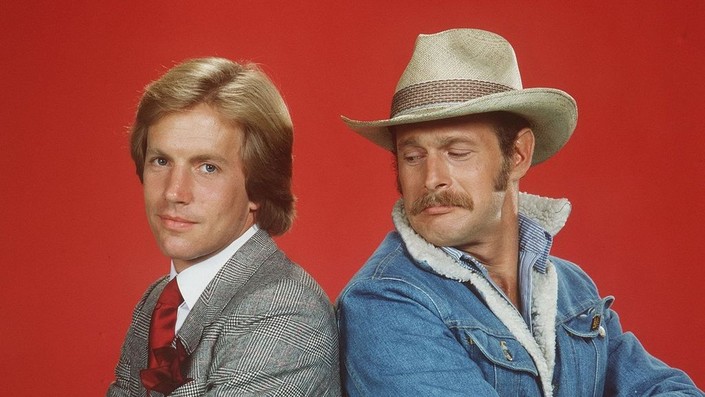
Simon & Simon staying this high in 1985 shows how much value television still placed on chemistry. On paper, the show sounds simple: two brothers with opposite personalities run a detective agency in San Diego. In practice, that simplicity was the whole trick. The cases gave the show a weekly engine, but the reason people came back was the pleasure of spending time with Rick and A.J. Simon as they argued, improvised, frustrated each other, and kept moving.
In the context of 1985, Simon & Simon reads as a really strong middle-lane hit. It was not as image-heavy as the soaps. It was not as loud as The A-Team. It was not as culturally game-changing as The Cosby Show. It was simply very good at being the kind of show households liked to keep around. That is a deceptively hard thing to pull off. You have to be warm without being soft, funny without being a pure sitcom, and procedural enough to feel reliable without becoming generic.
That balance is why it remained such a durable 1985 hit. It reminds readers that 1985 television was not just about giant swings. There was still enormous value in being steady, personable, and highly rewatchable.
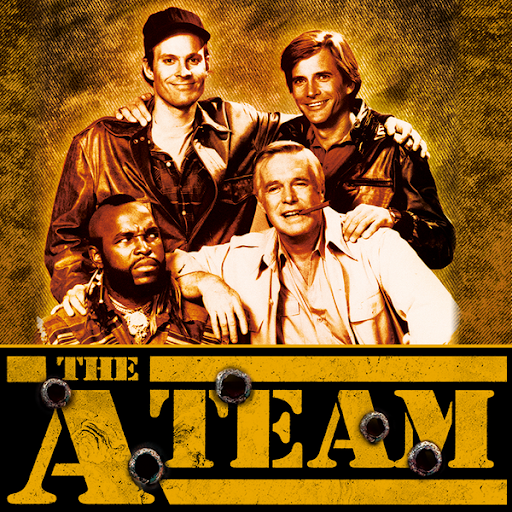
The A-Team in 1985 represents the high-energy, brand-conscious side of the decade at full volume. Four ex-commandos, one van, endless improvised machinery, broad villains, and enough catchphrases to power a toy aisle — it was action TV that knew exactly how to make itself memorable. The show did not aim for realism. It aimed for momentum, recognition, and fun.
The 1985 angle worth emphasizing is that by this point, The A-Team was bigger than just the weekly plot. It had become a pop-culture object. Mr. T was an icon. The team roles were instantly legible. The van was famous. The formula was practically indestructible: find a problem, outsmart the bad guys, build something improbable, and make it all look cool enough that kids would try to recreate parts of it with bicycles, cardboard, and extremely poor judgment.
In the broader TV ecosystem of 1985, The A-Team shows how valuable strong branding had become. It wasn’t just a show people watched. It was a show people recognized at a glance, which is a huge part of why it stayed so powerful.
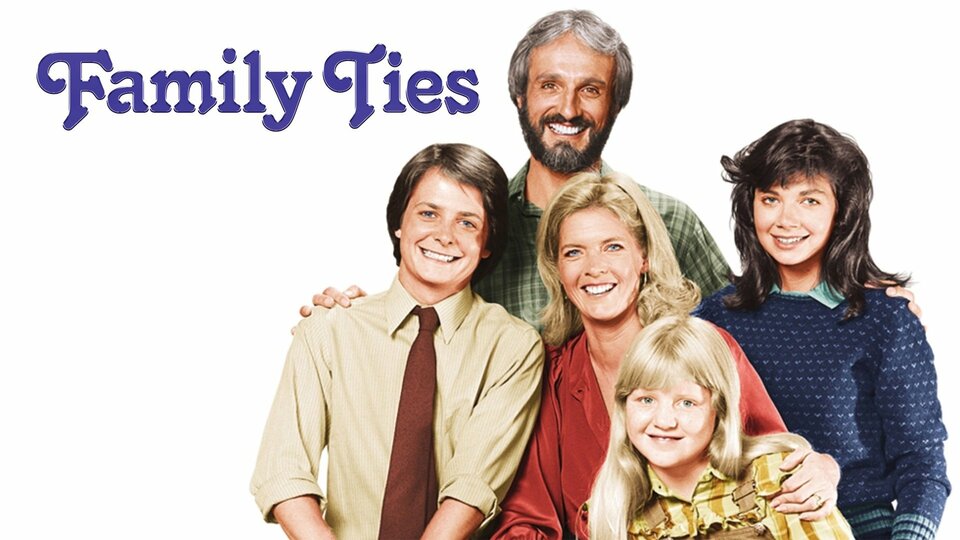
Family Ties being this high in 1985 says a lot about where television was headed. The sitcom centered on former 1960s liberals Steven and Elyse Keaton and their children, most famously Alex P. Keaton, whose ambition, conservative politics, and unshakable self-confidence made him one of the decade’s defining TV sons. That setup gave the show built-in ideological tension, but the series worked because it never forgot the warmth underneath the disagreements.
What makes the 1985 season especially important is that Family Ties feels like proof of concept for the new NBC. It was funny, but it was also deeply comfortable. Even when Alex was ridiculous, the emotional center held. The Keatons could disagree about values, money, politics, and growing up without becoming cruel or brittle. That warmth gave the comedy an extra layer of rewatchability that many more ironic or more chaotic shows never quite manage.
It is one of the clearest signs that the television tide was turning. Viewers still loved big drama, but they were increasingly rewarding sitcoms that felt like places they wanted to live in.

The fact that 60 Minutes still ranked fourth in 1985 remains one of the best reminders that the old network audience was capable of supporting much more than just escapism. In a top 10 full of soaps, sitcoms, action shows, and mysteries, a serious newsmagazine still held onto a massive share of national attention.
What keeps this from feeling like a repeat of the earlier years is the 1985 context. By now, television was getting more segmented and more image-conscious. That makes the continued strength of 60 Minutes even more impressive. The show was not selling fantasy. It was selling authority, sharp reporting, and the sense that informed television could still be compelling enough to compete directly with the most polished entertainment on the dial.
For Gen X viewers, this entry is a reminder of how big “the serious adult show” really was. It wasn’t some niche thing that your parents happened to like. It was one of the dominant programs in the country, which says a lot about what prime time still meant in 1985.
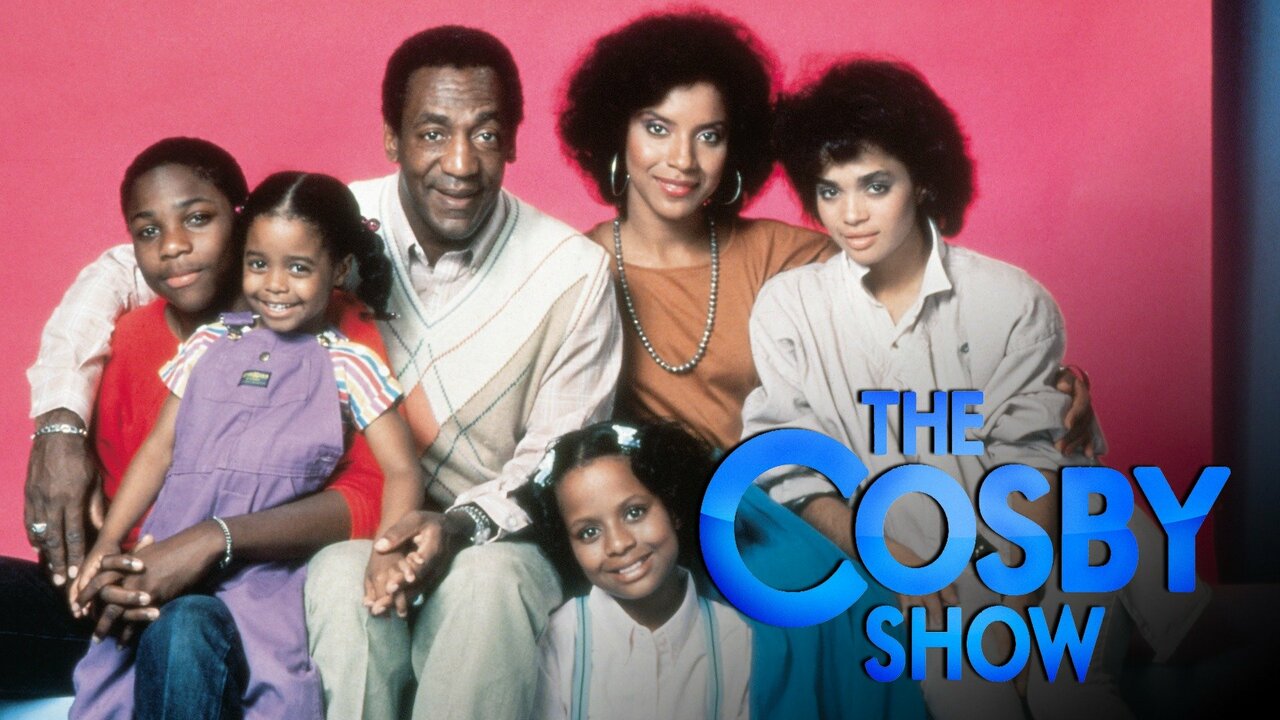
The Cosby Show landing at #3 this quickly is the biggest structural clue in the entire 1985 ranking. The sitcom centered on the Huxtable family — affluent, affectionate, funny, and unmistakably warm — and it hit the culture with unusual force almost immediately. It wasn’t just another successful family comedy. It felt like a reset button for what a mass-audience sitcom could be.
What made the show so powerful in this season was not simply that it was funny. It was that it made family life look aspirational without making it feel fake. The Huxtables were successful and stable, but the comedy still came from familiar friction: parenting, sibling rivalry, school pressure, teasing, embarrassment, and the normal domestic storms that happen when multiple strong personalities share a house. That blend of polish and recognizability gave the show huge reach.
In the 1985 ranking, The Cosby Show is the hinge point. The soaps are still huge. Action TV is still thriving. But here comes a family sitcom strong enough to start rewriting the league table. That’s not just a hit. That’s a trend line, and by 1985 it was impossible not to see it.
Dallas slipping to #2 does not mean it had lost its grip. It means the environment around it was changing. The show remained one of the defining forces of the decade, still powered by oil money, family conflict, marriage collapse, and the strategic evil genius of J.R. Ewing. By 1985, it was no longer the insurgent hit that had reinvented prime time. It was the established empire defending its throne from multiple directions.
That actually gives the 1985 version of Dallas more depth than some earlier years. This is not the story of a show rising. It’s the story of a show enduring under new pressure. NBC comedies were taking up more oxygen. New kinds of audience comfort were emerging. Yet Dallas still finished second in the nation, which says a lot about how strong its serialized machinery remained.
In the larger story of 1985 television, Dallas represents the old order still fighting beautifully. It is the dominant 80s soap refusing to fade quietly, even as the next phase of TV is assembling itself in plain view.
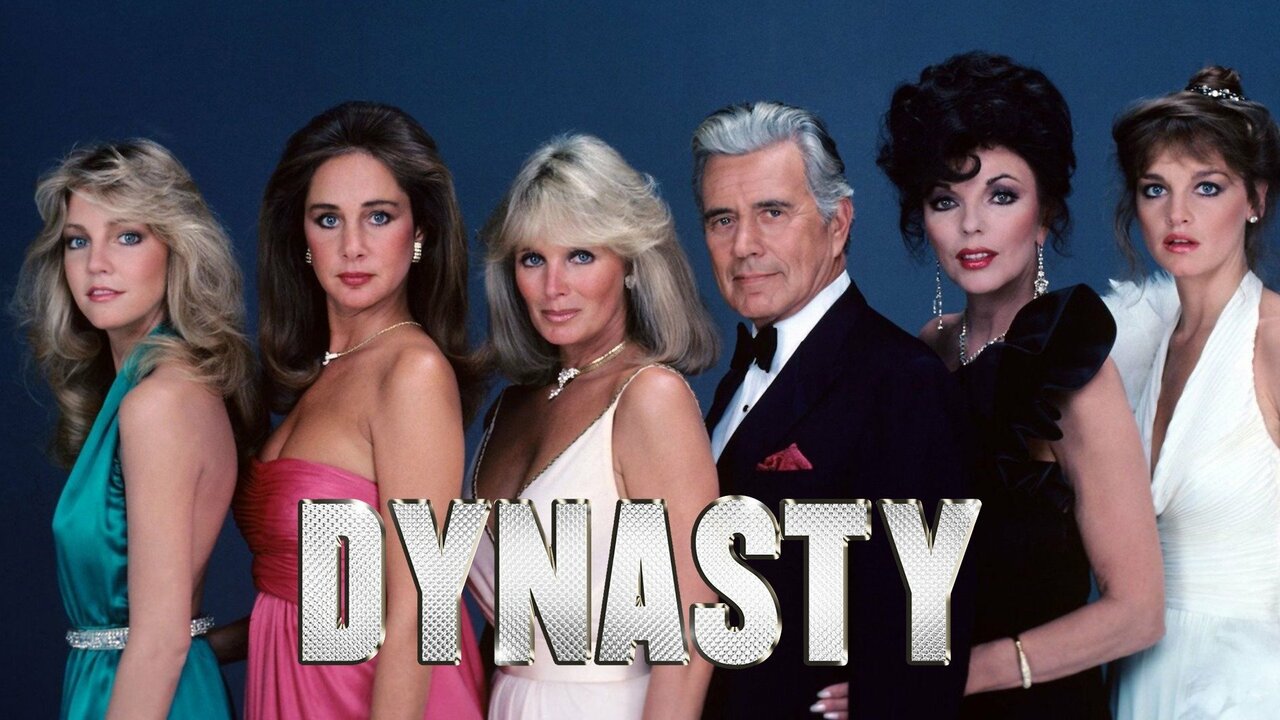
Dynasty topping the 1984–85 season makes 1985 feel like the last full victory lap for the pure glamour era of early-80s prime time. The Carrington world was built on money, status, betrayal, image, and family warfare staged with maximum theatrical confidence. If Dallas had the original empire energy, Dynasty often felt like the version with brighter lighting, sharper tailoring, and absolutely no interest in understatement.
What makes the 1985 angle special is that Dynasty feels both triumphant and slightly precarious at the same time. It reached #1, which is the clearest possible sign of success. But it did so at the exact moment NBC comedies were beginning to redraw the map. That gives the ranking a fascinating tension. The old glamour machine is still winning, but you can already hear the next phase of television warming up in the next room.
That makes Dynasty the perfect number one for this year. It embodies the excess, style, and visual confidence of mid-80s TV at the exact moment that mode is peaking. If you want one show to stand on top of the 1985 chart and represent the end of one television era just before another takes over, this is the one.
The top TV shows of 1985 show two television eras occupying the same chart. Dynasty and Dallas still had the glamour, betrayal and serialized machinery to dominate the first two positions.
But The Cosby Show and Family Ties were no longer side stories. They were top-five signals that warmth, family rhythm and repeatable sitcom comfort were about to reshape the rest of the decade.
For Gen X, that made the living room feel like a battleground between sophistication, action, serious adult television, cozy mystery and everyone’s personal definition of the good channel.
Television shared the year with Back to the Future, Madonna, Tears for Fears, Teddy Ruxpin, Garbage Pail Kids, Hulkamania and New Coke chaos.
The chart-toppers from the year movie soundtracks, MTV stars, power ballads and charity singles took over.
Watch the Countdown → MusicThe Billboard year-end hits that made mall radio, mixtapes and soundtrack singles feel enormous.
Explore the Songs → MoviesBack to the Future, Rambo, Rocky IV, Cocoon and peak mid-80s cinema.
Explore the Movies → ToysTeddy Ruxpin, Transformers, He-Man, Care Bears, Pound Puppies and toy-aisle overload.
Explore the Toys → FadsGarbage Pail Kids, Hulkamania, friendship pins, big hair and New Coke chaos.
Explore the Fads → The Full DecadeMusic, movies, toys, television and the rest of the decade’s Gen X pop-culture overload.
Enter the 80s →Move through the decade one Nielsen season at a time, from the network-heavy opening of 1980 to the changing television landscape at the end of 1989.
Clear answers about the 1984–85 Nielsen season, Dynasty’s number-one finish and the family-sitcom shift visible in the top five.
Dynasty ranked number one during the 1984–85 Nielsen television season with a 25.0 rating.
The top five were Dynasty, Dallas, The Cosby Show, 60 Minutes and Family Ties.
Yes. It ranked third in its first full season with a 24.2 Nielsen rating and signaled the coming family-sitcom boom.
Yes. Family Ties ranked fifth during the 1984–85 season with a 22.1 Nielsen rating.
Network television popularity was measured by season rather than by January-through-December calendar year. The season ending in 1985 is therefore the standard reference.
CBS placed six programs inside the top ten. NBC placed three and ABC held the number-one position with Dynasty.
New articles, countdowns, videos and whatever other corner of the Gen X television schedule gets unlocked next.