Why Cop Shows Ruled 1970s Television
ON AIR
CHANNEL 70s CRIME DESK
SIRENS • SIDEBURNS • CITY STREETS • ONE LAST QUESTION
Smells Like Gen X • Sirens, sideburns and one more question
Quick Answer • Prime-Time Case File
Why Cop Shows Ruled 1970s Television
Back when one television served the whole house, crime night meant a siren, a memorable car and one stubborn detective who noticed what everybody else missed.
The decade gave us Columbo’s raincoat, Kojak’s lollipop, Rockford’s answering machine, Starsky’s Gran Torino and enough city streets to keep the whole family watching until the late news.
Why did cop shows dominate 1970s television?
Cop shows ruled because the format fit the decade and the three-network schedule almost perfectly. Each hour brought danger, a fresh guest cast, a recognizable detective and enough closure to send the household to bed feeling that one confusing thing had finally made sense.
CHANNEL 70 • CASE OPEN
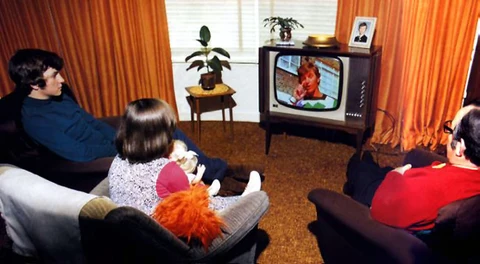
Three networks. One shared living room. Another case before the late news.
The adults chose the show. The kids still knew which car was coolest.
The real change: The badge stopped being the whole attraction. We returned for the detective’s walk, coat, car, partner, theme song and way of noticing what everybody else had missed.
Why 1970s Cop Shows Became a Shared Living-Room Ritual
For Gen X kids, 1970s cop shows and detective shows did not arrive as a television trend. They arrived as noise from the good set in the living room: a siren, a horn section, a rotary phone and an adult yelling, “Come here, this one’s starting.”
Most of us were not choosing the program. The adults were. We were simply still on the carpet when the murder happened. By the first commercial break, we had already decided who looked guilty, which car was coolest and whether the captain was going to admit the detective was right.
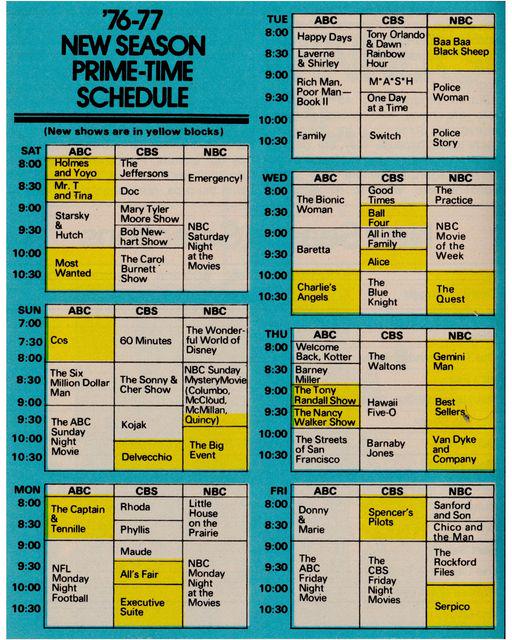
The genre supplied tension without requiring a permanent commitment. Most cases began and ended in the same hour. Viewers could miss a week, return the next, and understand the rules immediately. That reliability mattered in a three-network world where a household could not pause the program, restart the opening or search for the previous episode.
Crime shows also created a kind of temporary order. The city looked dangerous, institutions looked imperfect and powerful people lied. Yet somebody kept noticing details. The detective might be rumpled, broke, abrasive or tired of being hit, but the lie would eventually lose its shape.
That promise explains why the boom felt bigger than a schedule category. The shows told us the system might be slow, crooked or clueless—but somebody in a wrinkled coat was still paying attention.
That shared-set ritual belongs beside the larger 1970s TV story, when the schedule belonged to everybody and missing the opening meant asking the room who had been murdered.
Why 1970s Cop Shows Fit the Mood of the Decade
The country outside the television set already felt like a crime drama nobody had bothered to wrap up. Cities were struggling, prices were rising, Watergate had made official confidence look suspicious, and adults seemed less certain that the people in charge knew what they were doing.
That uneasy mix of city fear, political distrust and one-hour closure is a big part of why cop shows ruled 1970s television.
The connection should not be reduced to a simple equation in which higher crime automatically produced higher ratings. Television genres grow through many forces at once. Yet the visual and emotional vocabulary of the era clearly mattered. Empty warehouses, wet pavement, struggling neighborhoods, political corruption and strained police departments did not feel like distant fantasy.
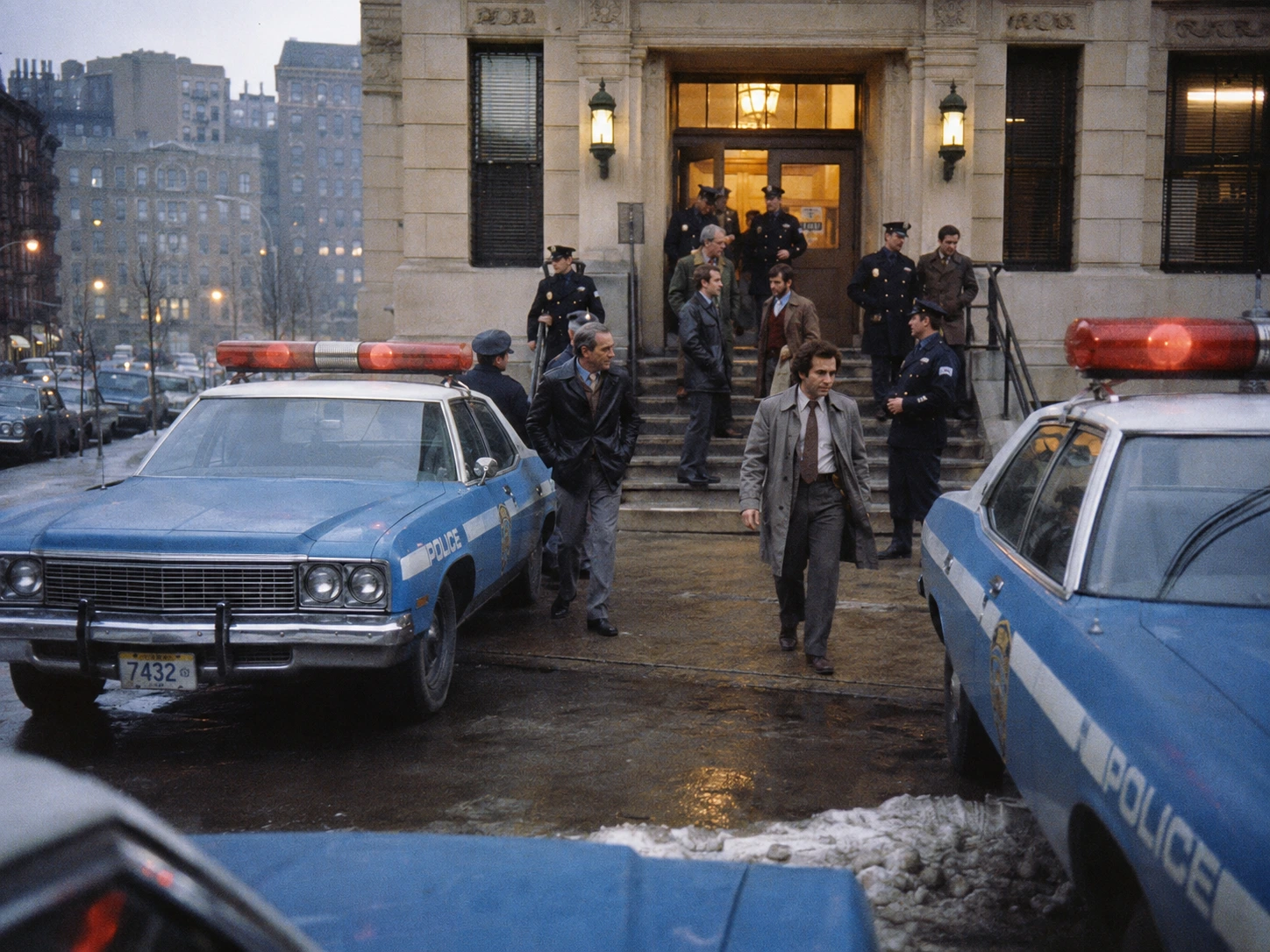
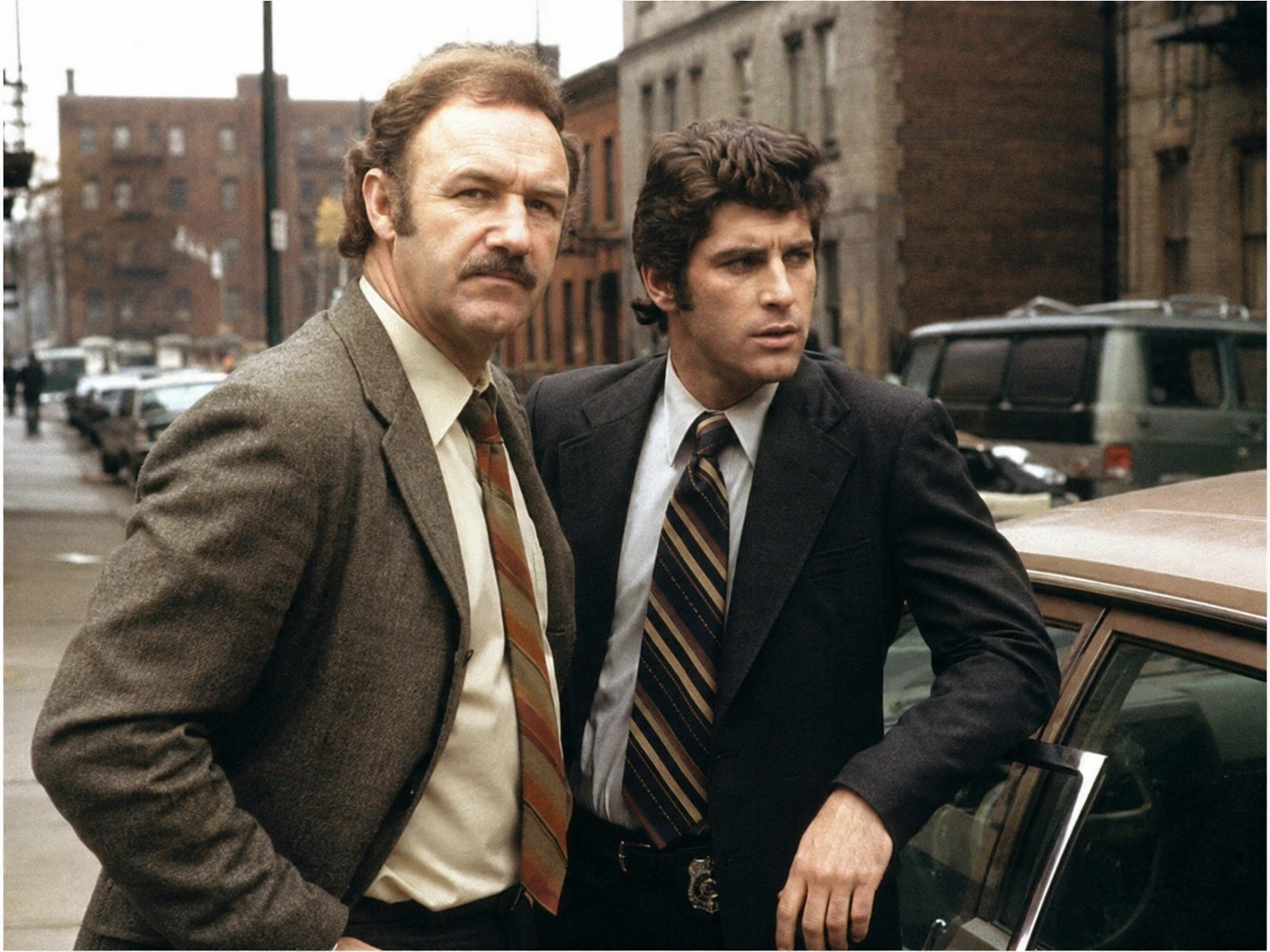
Watergate deepened the national suspicion of authority. The FBI’s own historical account begins its 1972–1988 era with the Watergate burglary, a crime that became a constitutional crisis. Television detectives entered a culture where the uniform, badge or government office no longer guaranteed moral certainty.
That mood created the perfect 1970s hero: somebody inside the system—or just outside it—who trusted his own eyes more than the official explanation. Columbo worked for the department but never acted impressed by wealth. Rockford expected bureaucracy to make things worse. Police Story showed that the badge could follow a person home.
Crime television gave viewers enough realism to feel current and enough structure to feel manageable. The case could expose corruption, prejudice, greed or institutional failure without leaving the audience completely trapped inside the uncertainty.
The best shows never promised the city was safe. They promised one stubborn human being would keep looking after everybody else had accepted the easy answer.
How TV Detectives Broke Away From the Dragnet Mold
Dragnet gave television police work a straight back, a pressed shirt and a report written in triplicate. Joe Friday represented the department, the procedure and the belief that the facts would behave if everybody stayed calm.
By the 1970s, that department-first calm looked increasingly limited. The Museum of Broadcast Communications describes a decade in which television cops became more individual, more eccentric and much less likely to behave like Joe Friday.
Then the 1970s loosened the tie. Suddenly the detective could be rumpled, sarcastic, vain, stubborn, broke or wearing a cowboy hat in Manhattan. You could identify the show from the hallway before the character introduced himself.
These traits were not merely decoration. They gave the series a method. Columbo’s apparent disorder encouraged suspects to underestimate him. Kojak’s forceful style fit a show that treated the city as a place requiring direct confrontation. McCloud’s outsider status allowed him to question local assumptions.
The badge still mattered, but the detective’s personality now mattered just as much as the department. Detectives argued with bosses, improvised, leaned on informants and followed hunches that no stack of paperwork could explain.
That was the real break. We were not just watching a case move through a department anymore. We were watching one very specific personality lean on the world until the truth fell out.
The Many Kinds of 1970s Cop and Detective Shows
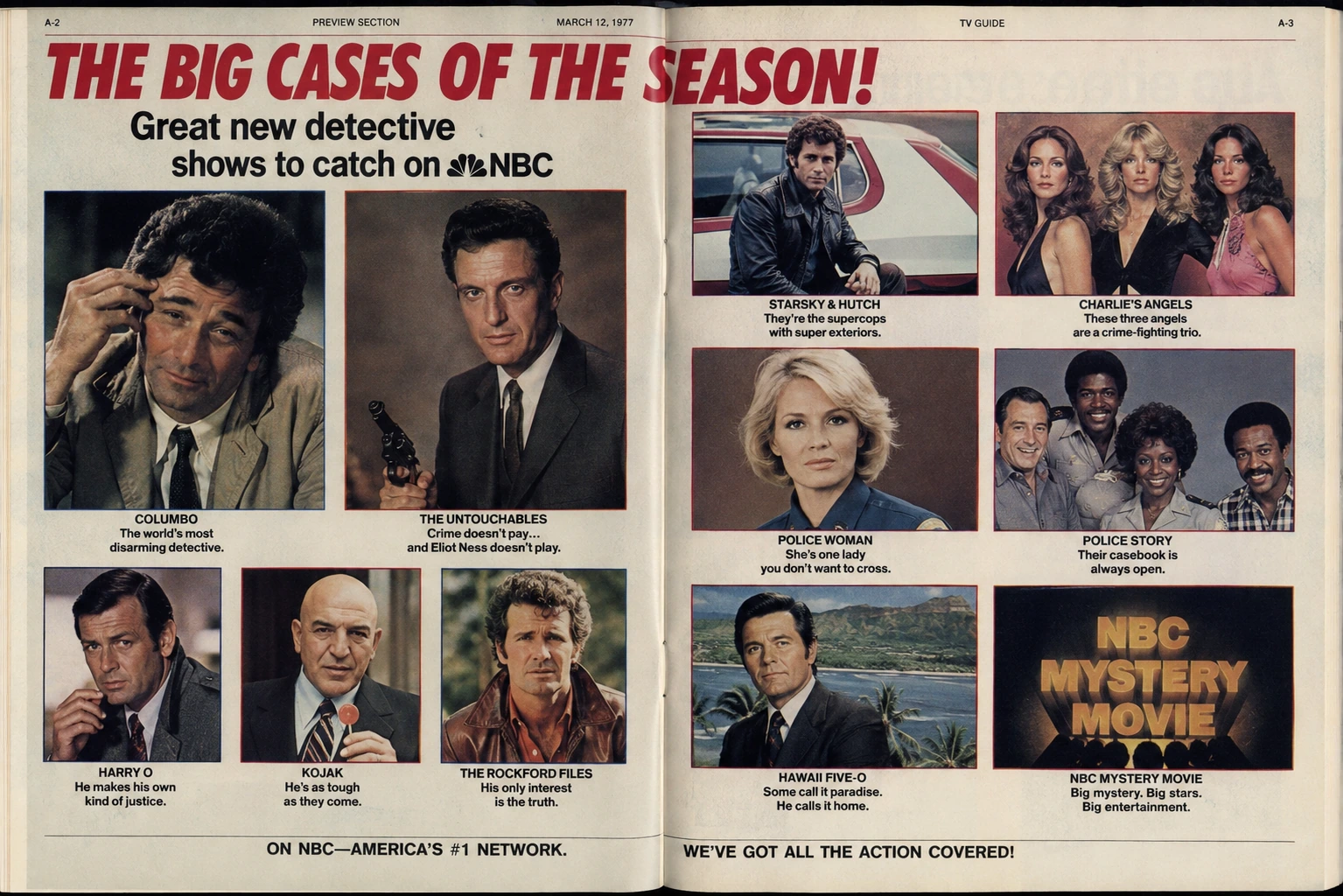
By the middle of the decade, finding a night without a cop, detective or private eye felt like spotting an empty parking place downtown. The Museum of Broadcast Communications estimates that about forty-two police programs premiered during the 1970s.
A viewer could watch a traditional procedural, a private-eye mystery, an inverted whodunit, an anthology, an action team, a medical investigation or a glamorous undercover caper. Crime supplied the engine, but tone determined the ride.
The variety kept the whole thing from feeling like forty copies of the same arrest report. These 1970s detective shows could be completely different animals: Columbo was a chess match, S.W.A.T. was velocity, Police Story wanted the job to hurt, and Charlie’s Angels looked like the network had added fashion photography to a case file.
The genre also crossed neighboring categories. Emergency! used rescue and paramedic work. Quincy, M.E. used forensic medicine. Hawaii Five-O combined procedural authority with location spectacle. The borders of crime television were broad enough to absorb public service, medicine, Western mythology and fashion.
We were not choosing “crime television.” We were choosing a mood: raincoat, squad room, trailer, tropical location, red-striped car or three women walking toward the camera like trouble had already lost.
The eccentric detective
Columbo, Kojak and McCloud made personality inseparable from method.
The reluctant private eye
Rockford and Harry O treated danger as bad for business and bruises as an occupational complaint.
The department procedural
Adam-12, The Streets of San Francisco and Police Story kept the department, radios and squad-room rules in view.
The action partnership
Starsky & Hutch and S.W.A.T. increased speed, vehicles and team chemistry.
The medical investigator
Quincy, M.E. shifted the search for truth into laboratories, autopsies and public-health conflict.
The glamorous caper
Charlie’s Angels and Vega$ mixed investigation with fantasy, fashion and location spectacle.
The complete field is ranked in 40 Best Cop and Detective Shows of the 1970s, where the raincoats, patrol cars, private eyes and glamorous capers finally share one evidence board.
Why Cop Shows Ruled the Three-Network Schedule
Network programmers loved crime drama for the same reason adults loved a dependable diner: you knew the basic shape of the meal, but the special could change every night.
The case-of-the-week structure created a natural beginning and ending. A viewer could enter without studying previous episodes. That made 1970s police shows perfect for a household that might miss one week and still be back on the couch the next.
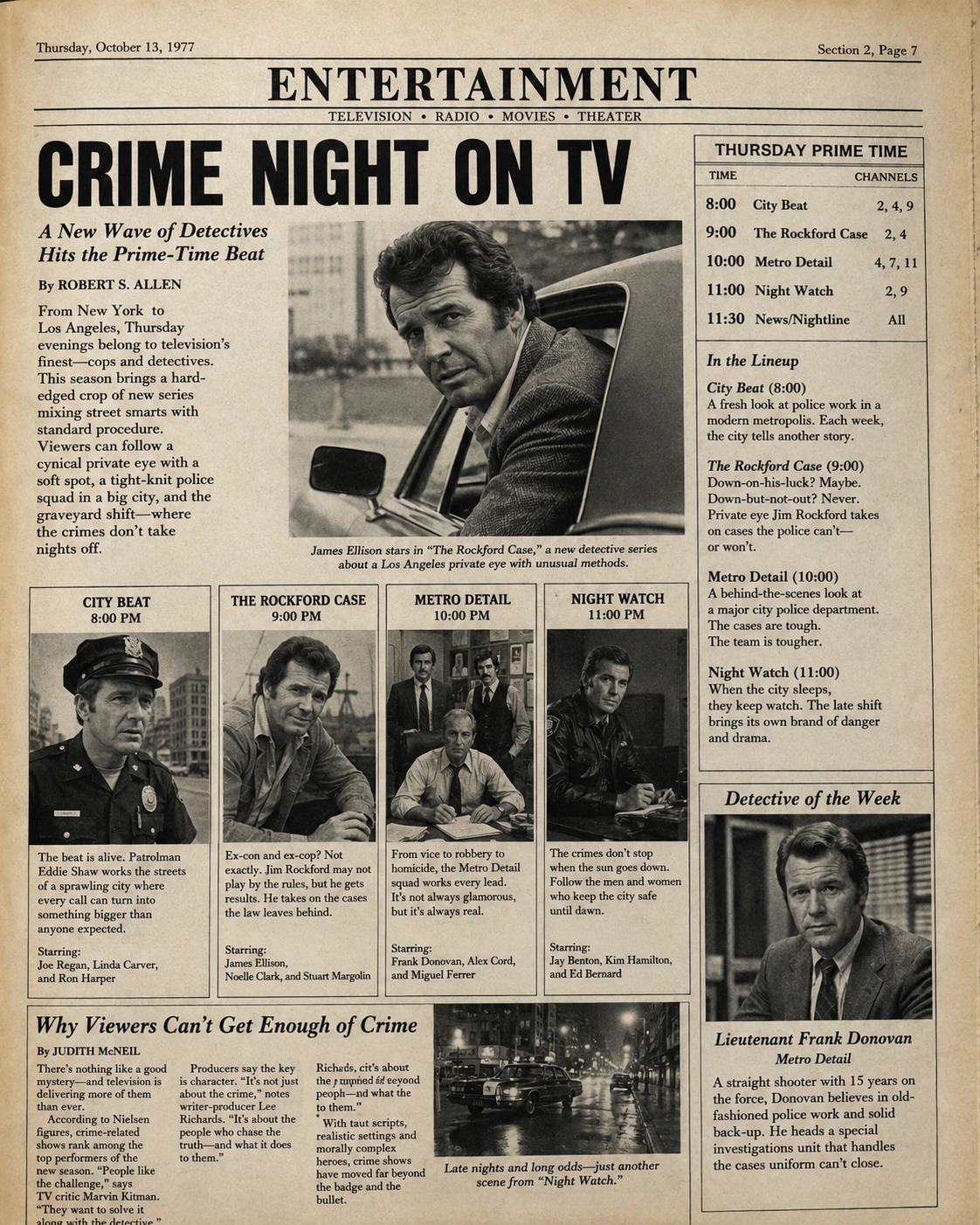
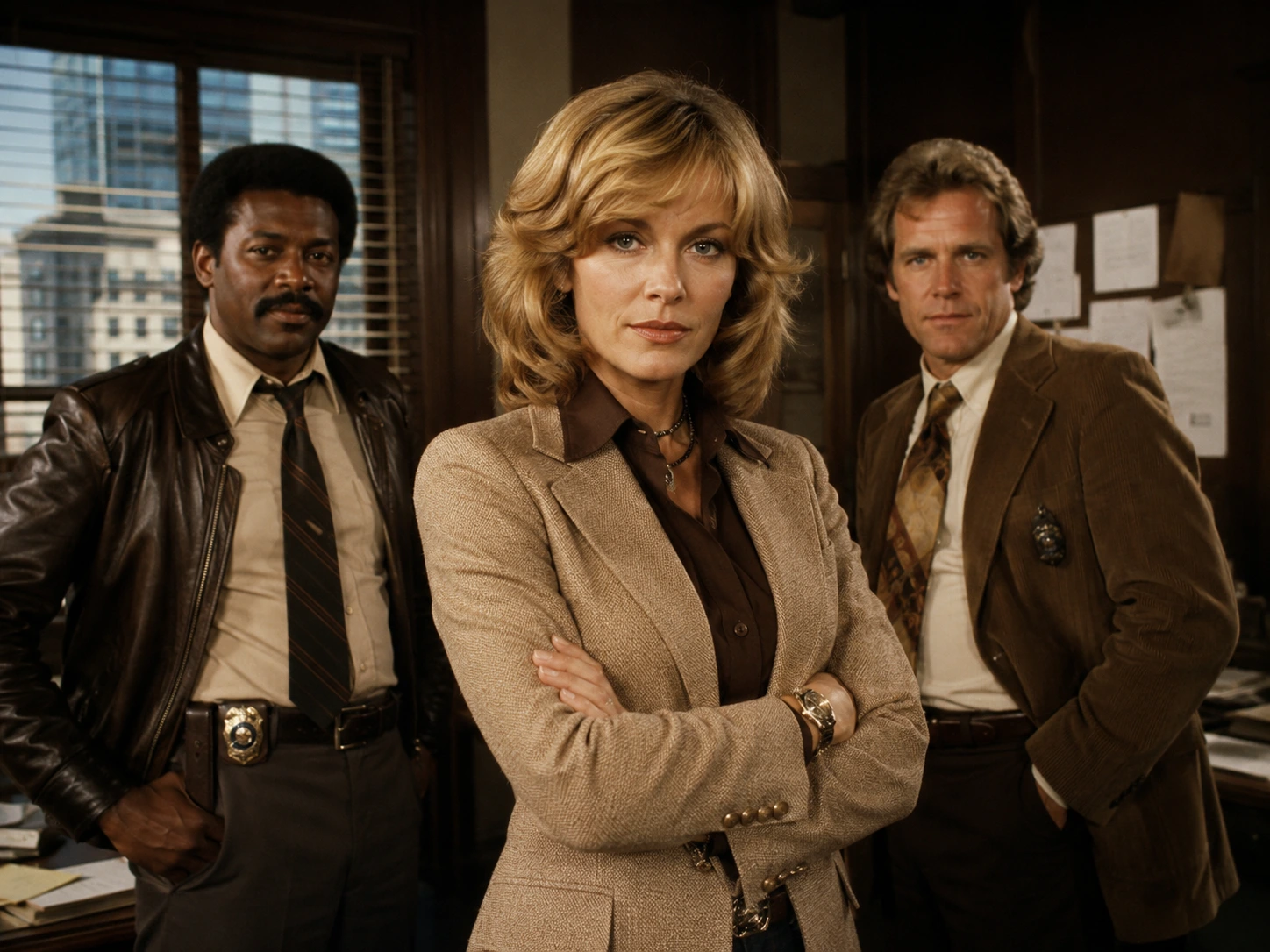
Guest stars were another gift. A familiar actor could show up as a surgeon, millionaire, grieving parent or extremely polite murderer, carry the emotional weight of the hour and disappear before next week.
Promotion was efficient. A gunshot, a speeding car, a frightened witness, a famous guest and one sharp line from the detective could sell an episode in twenty seconds. The premise did not require explanation.
Crime drama also reused production resources. Police stations, courtrooms, offices, apartments, alleys and streets could support different stories. Location footage created scale, while recurring sets controlled cost.
Self-contained episodes remained valuable after the original broadcast. Stations could rerun them out of order without confusing viewers. That afterlife mattered because syndication could turn a successful network run into years of additional value.
That is the network sweet spot: familiar enough to trust, flexible enough to keep selling and tidy enough to rerun five years later at an hour when half the audience had just gotten home from school.
THE LIVING-ROOM RULE
The person holding the TV Guide picked the show. Everybody else became an expert on the case anyway.
Why the Whole House Could Watch the Same Crime Show
Crime drama was one of those rare things the adults and kids could watch for completely different reasons. Adults followed the mystery. We watched the car leave the ground and waited for the boxes.
The mystery offered intellectual participation. Viewers could notice clues, judge stories and compare their own suspicion with the detective’s. The action supplied a more immediate attraction. Different age groups could watch the same hour for different reasons.
Advertisers liked the habit. The detective was familiar, the case was new and the audience knew exactly when to come back from the kitchen.
The genre also traveled across the week. A slower mystery could occupy Sunday night. A gritty anthology could fit a later hour. A brighter action series could move earlier. Crime was not one scheduling block; it was a flexible ingredient.
Networks could use an established hit to introduce another program, and viewers who already trusted one crime drama were easier to persuade into trying a new detective. The boom strengthened itself because every successful show taught the audience how to understand the next variation.
Plenty of shows still failed. A memorable car and one angry captain could not save a weak series forever. But the basic crime-show kit was useful enough that the networks kept reopening the file.
Why the Case-of-the-Week Format Kept Us Coming Back
The weekly reset was not a flaw. It was the deal. You could miss two episodes because somebody else controlled the television, come back on Thursday and still understand everything before the first commercial.
The case provided motion, but the detective provided continuity. Viewers returned to see how the same mind handled a different social world. A homicide in a mansion asked different questions from a robbery in a neighborhood store, even when the central structure remained recognizable.
That structure also gave the shows room to get weird. One week could be funny, the next grim, the next built around a movie star playing a killer who owned more living room than our entire house.
Commercial television benefited from clear pressure points. A discovery, threat or chase could send the audience into a break with a reason to return. The hour was designed around interruption without feeling completely broken by it.
The ending delivered more than the arrest. It reorganized the evidence. Viewers received the pleasure of seeing scattered details become one coherent account.
In a decade where the real news rarely ended cleanly, television handed us one small victory: the loose pieces finally clicked together, and somebody got caught.
A crime creates urgency
The episode begins with a question that cannot be ignored.
The detective establishes method
Observation, procedure, instinct or persuasion tells the viewer what kind of show this is.
Guest characters expand the world
Suspects and witnesses bring class, profession and location into the hour.
Advertising arrives at natural pressure points
Revelations, chases and danger lead cleanly into commercial breaks.
The final detail reorganizes the story
A clue, confession or contradiction gives the audience the pleasure of completion.
The hero resets for next week
The case closes while the raincoat, car, partnership or unpaid invoice remains.
Why the Best Crime Shows Needed Both a Brain and a Pulse
The best shows knew a detective needed a brain and the episode still needed a pulse. Too much talking and the kids wandered off. Too much action and the adults stopped believing the case.
Columbo could spend long stretches on conversation because the audience already knew the killer and watched for psychological pressure. Starsky & Hutch could move faster because the partnership and pursuit supplied the central energy.
A hero who solved everything with his fists became boring fast. A hero who never had to run, duck or ruin a perfectly good sedan could feel like he was investigating from another planet.
Writers used interviews, documents, stakeouts and laboratory results to advance the puzzle. Directors used cars, doors, telephones and city movement to keep the information visual.
Commercial breaks encouraged alternation. A quiet scene could reveal the clue, then danger could rise before the interruption. After the break, the show could reorient the viewer through action.
The formula taught viewers to value observation. A broken object, repeated phrase or schedule inconsistency might matter more than the obvious weapon. The chase was exciting, but the detail ended the case.
That balance is why the old episodes still move. The chase gets your attention. The tiny contradiction is what you remember.
Why Every Week Could Feel Like a Small Movie
A 1970s crime show could turn “Hey, I know that guy” into an entire evening. Guest stars gave the weekly case a little movie-premiere energy.
Columbo made the guest murderer almost as important as the lieutenant. We watched a polished, successful person build the perfect crime and then watched the shabby little detective make one tiny question feel like a leak in the ceiling.
Other series used guests to create emotional stakes. A victim’s family could challenge the detective. A client could lie to Rockford. A public official could turn procedure into obstruction. The crime became a doorway into another part of the city.
It also gave the networks a fresh face to advertise every week without adding another permanent cast member. The detective stayed familiar while the suspect changed the whole mood of the hour.
The detective was the familiar face we trusted. The guest star was the face we spent an hour trying not to trust.
How Partners, Captains and Informants Made the World Feel Real
The suspects changed, but the people waiting back at the office, trailer or family dinner kept the show from feeling disposable.
Rockford had Rocky, Dennis Becker, Beth Davenport and Angel Martin—the kind of group that made adulthood look like one long string of favors, debts and somebody showing up at the worst possible time.
Partners performed a similar function in police dramas. They could question a hunch, provide access, absorb frustration or remind the hero that the department still existed.
Captains were often written as obstacles, but the best ones had a point. They worried about evidence, budgets, politics and the wreckage one impulsive detective could leave behind.
Informants connected the hero to parts of the city the department could not officially enter. Their relationships exposed debt, loyalty and unequal power.
Family members prevented the detective from becoming only a method. A father, spouse or child could reveal exhaustion and vulnerability that the case scenes concealed.
That continuity mattered. The murder was new. The unpaid bills, irritated captain and family obligations were still there next week, just like real life.
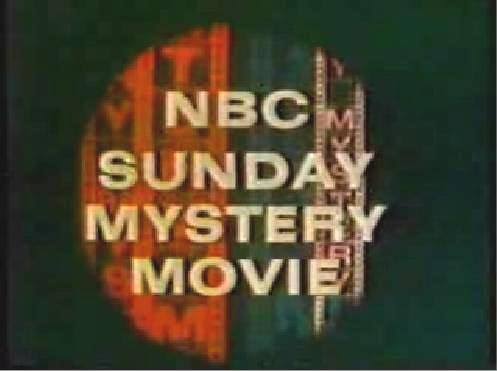
Why the NBC Mystery Movie Felt Like a Sunday-Night Event
The NBC Mystery Movie understood something modern streaming sometimes forgets: making people wait can make a show feel bigger. You did not get Columbo every Sunday. That was why his return mattered.
The rotating schedule solved a practical problem and made each detective feel special. Each series produced fewer installments than a normal weekly drama, leaving more time for longer stories. We did not get the same detective every Sunday, which made every return feel bigger.
The umbrella opening told the whole house what kind of night it was, but the featured detective changed the flavor. One week meant rumpled psychology. Another meant cowboy logic in Manhattan.
Television Academy interviews about Columbo explain that the slower schedule suited Peter Falk and gave the stories room to breathe. The longer running time let one small question become a full evening of pressure.
The wheel also taught networks that a brand could contain several series. The audience could remain loyal to the destination even when the featured detective changed.
Waiting for the next Columbo was part of the experience. Nobody had a library of every episode. We had the schedule, the television and the hope that this was the right Sunday.
THE WAITING WAS PART OF IT
There was no episode library. You caught Columbo when NBC served him, and missing the opening meant asking somebody what the rich guy had done.
Why Columbo Changed the Rules of the TV Mystery
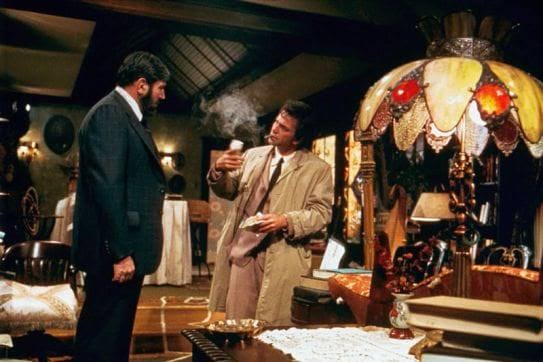
Columbo spoiled the murder on purpose, and somehow that made the show better. We already knew who did it. The fun was watching the killer slowly realize the little guy in the raincoat knew too.
The question was not who committed the murder. The question was how this apparently disorganized detective would dismantle a person who believed the crime had been perfected.
The killer’s confidence became the real crime scene. Every patient question scratched the paint until the expensive, respectable surface started showing cracks.
The class tension strengthened the formula. The lieutenant often confronted wealthy, powerful or professionally respected killers who read his coat, car and manner as signs of inferiority. Their contempt made them careless.
Peter Falk’s performance held two possibilities at once. Columbo could seem genuinely distracted and completely strategic. The uncertainty kept the audience alert because even we were not always sure when the trap had closed.
A closer look at the character appears in Why Columbo Was Unlike Every Other TV Detective. We did not need the phrase “inverted mystery” back then. We just knew the murderer was finished the moment Columbo turned around and said he had one more question.
How Kojak and McCloud Made the City Part of the Detective
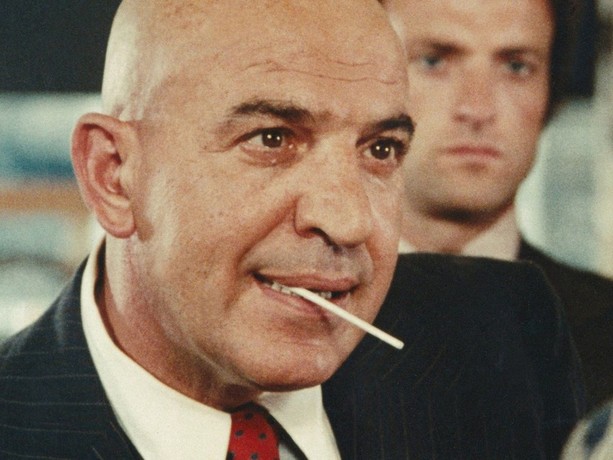
Kojak and McCloud proved a detective could carry his city—or his complete lack of belonging in that city—into every scene.
Kojak’s confidence was theatrical because New York demanded a detective capable of controlling the scene before the scene controlled him. The lollipop and polished style became instantly recognizable, but the attraction was the force of attention behind them.
McCloud worked in the opposite direction. His hat and New Mexico manner made him look misplaced in Manhattan, which gave him permission to ask why everybody else accepted the city’s habits.
The contrast created comedy and action, but it also let the series question local assumptions. McCloud could see the city differently because he did not accept every department habit as natural.
Both programs demonstrate how the 1970s detective became inseparable from place. One belonged to the city so completely that he seemed to own the pavement. The other became interesting because the pavement never quite belonged to him.
Kojak’s story continues in Kojak and the Detective Who Owned the Streets of New York. The broader lesson was simple: sell us the detective and the city together, and we remembered both.
Why 1970s Private Eyes Made Independence Look Expensive
The private eye was supposed to be independent and cool. The 1970s kept the independence, then handed him an invoice, a dented car and a client who was definitely lying.
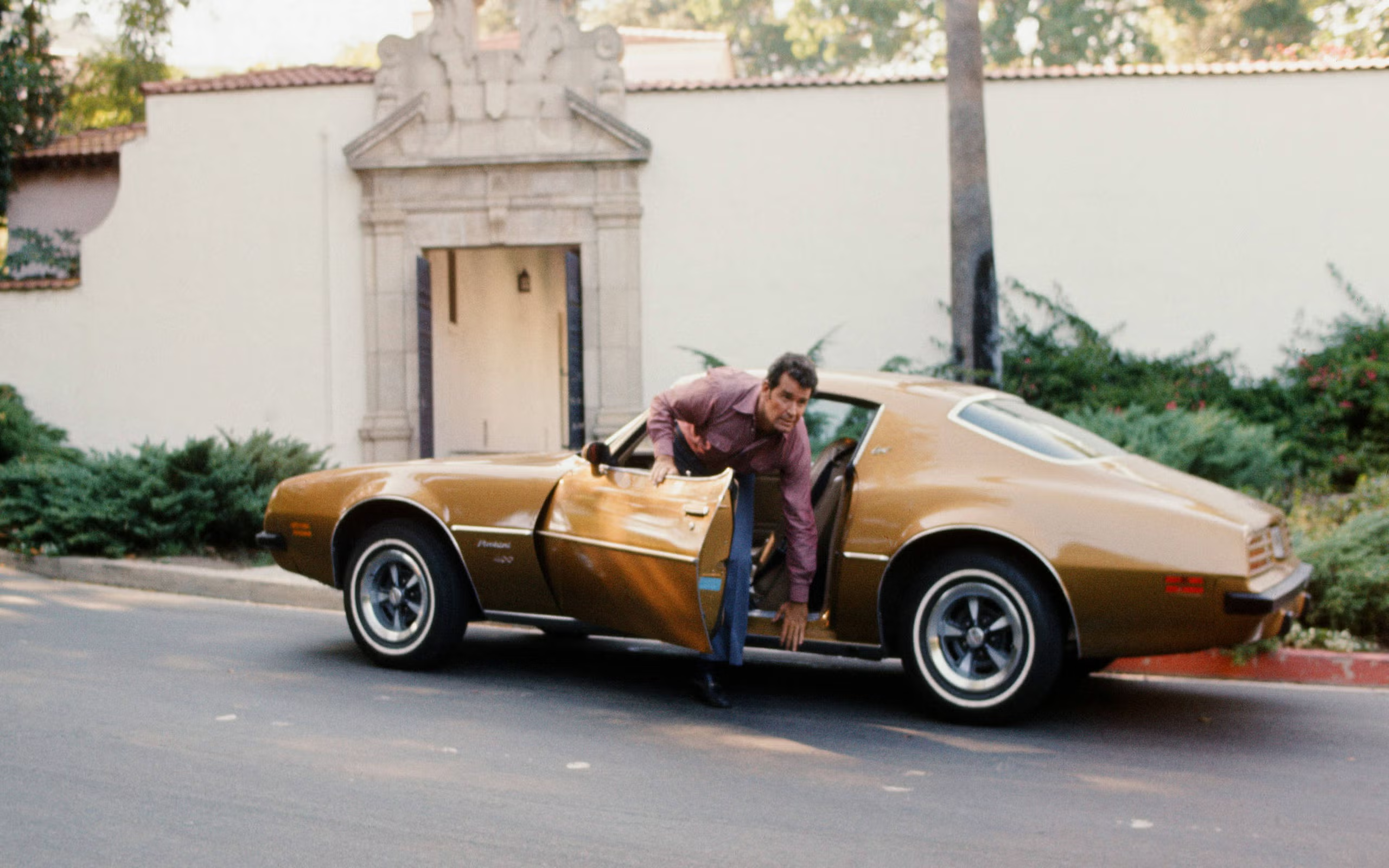
Jim Rockford lived in a trailer, charged two hundred dollars a day plus expenses and preferred not to get hit. That alone made him more believable than half the square-jawed heroes on the schedule.
The character’s reluctance made him more believable. Rockford was not afraid of moral responsibility, but he understood that heroism rarely covered expenses. He talked when other detectives punched and improvised when official access disappeared.
Harry Orwell of Harry O carried physical weariness into a quieter version of the form. Cannon and Barnaby Jones offered experienced competence. Mannix brought a more physically forceful private-eye tradition forward from the 1960s.
These investigators widened the crime boom because they distrusted the system from the outside. The client could be lying, the police could be irritated and the detective’s rent could become part of the case.
The wider field appears in Best Private-Eye Shows of the 1970s, while The Rockford Files and Television’s Reluctant Private Eye follows the man who made heroism look like something you did reluctantly because the rent was due.
ADULTHOOD, ACCORDING TO ROCKFORD
Bills on the answering machine, clients who lied, a father with opinions and a car payment that did not care whether the case was dangerous.
How Police Story Showed the Cost of Carrying the Badge Home
Police Story was less interested in making one detective into a lunch-box icon. It wanted the job itself—the pressure, the fatigue and what happened when the uniform came home.
The changing cast kept one heroic personality from defining the whole department. An episode could focus on partnership, ambition, corruption, fear, marriage or the exhaustion of carrying the job home.
The changing cast let Police Story follow different officers and different kinds of pressure. It was still television, but the job felt heavy enough to follow people home.
The show could also generate other series. Episodes led to Police Woman and Joe Forrester, demonstrating how the anthology served as a laboratory for characters and formats.
Realism was still television realism. The cases were compressed and the danger arrived far more often than it would in an ordinary shift. But the show let paperwork, fear and family strain into the room.
The broader department tradition appears in Best Police Procedurals of the 1970s. Police Story mattered because it asked the question most hero shows avoided: what does carrying this job around do to a person?
How Radios, Pay Phones and Paper Files Slowed the Case Down
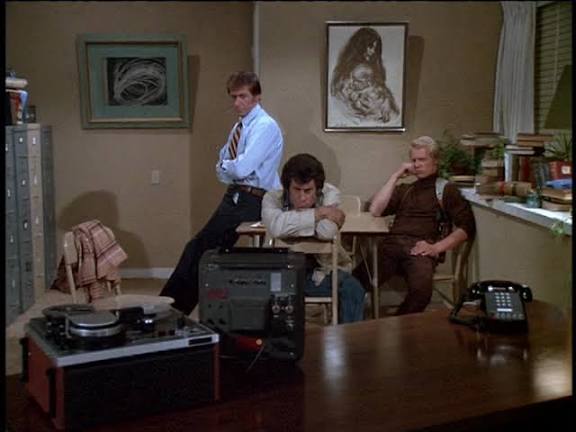
Before a database could solve the case between commercials, information had to move through the city one phone call, radio burst and paper file at a time.
Dispatch radio connected the patrol car to the city. A clipped voice could redirect the episode instantly, while static and repetition made urgency feel real.
Phones created real delay. Detectives missed calls, hunted for pay phones and returned to the office for messages. Rockford’s answering machine made that inconvenience sound like the funniest possible version of adult life.
Paper files gave information weight. A detective had to locate, carry and read the record. Misfiled or withheld documents created believable obstruction.
Teletypes, laboratory reports and photographs arrived as objects rather than invisible data. The audience could follow the evidence because it occupied the frame.
The absence of instant surveillance and searchable records made witnesses more important. A person’s memory, lie or fear could determine whether the case moved.
The slower technology gave the people room to matter. A witness could still change the whole case before a computer had a chance to look impressive.
How Adam-12 and The Streets of San Francisco Kept the Department in View
Not every 1970s officer needed a gimmick. Some shows still believed a patrol car, a partner and a radio were enough—as long as the people inside felt real.
The patrol-car perspective mattered. The officers entered calls without knowing whether they would find danger, confusion, domestic conflict or ordinary human trouble. Procedure created the show’s rhythm.
The Streets of San Francisco placed veteran Mike Stone and younger Steve Keller inside a more character-driven department series. Their partnership created a generational exchange while the city supplied hills, neighborhoods and visual energy.
These programs kept the department visible without making every officer interchangeable. Procedure mattered, but so did the person holding the clipboard or sitting in the passenger seat.
The procedural also offered a fantasy of public service. Radios connected the city, partners watched one another and the department possessed enough organization to respond. The reality of policing was far more complicated, but the television form made coordinated competence emotionally reassuring.
The Streets of San Francisco and the Classic Police Procedural revisits the show that proved a city’s hills could do more stunt work than some actors.
How Buddy Cops and Tactical Teams Turned Up the Speed
By the middle of the decade, television had decided the detective did not merely need to reach the scene. He needed to arrive sideways.
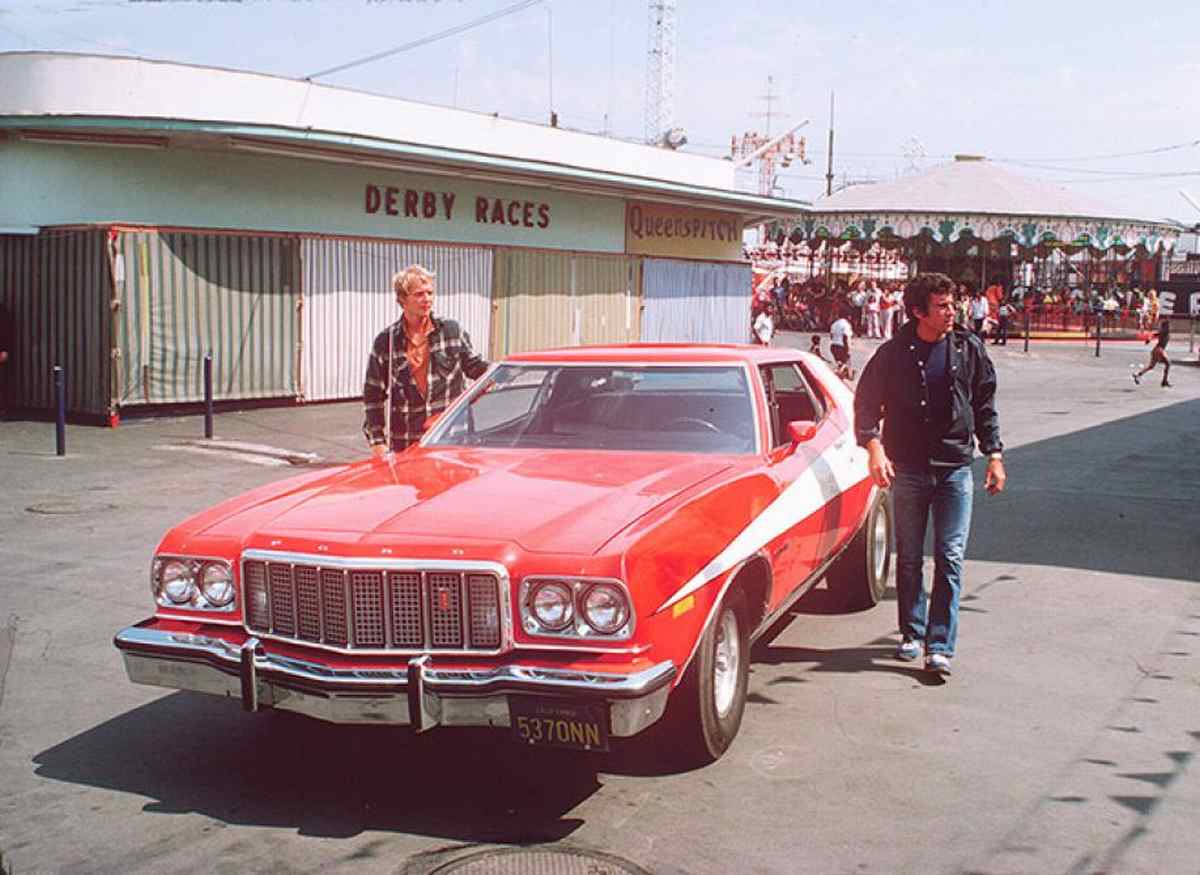
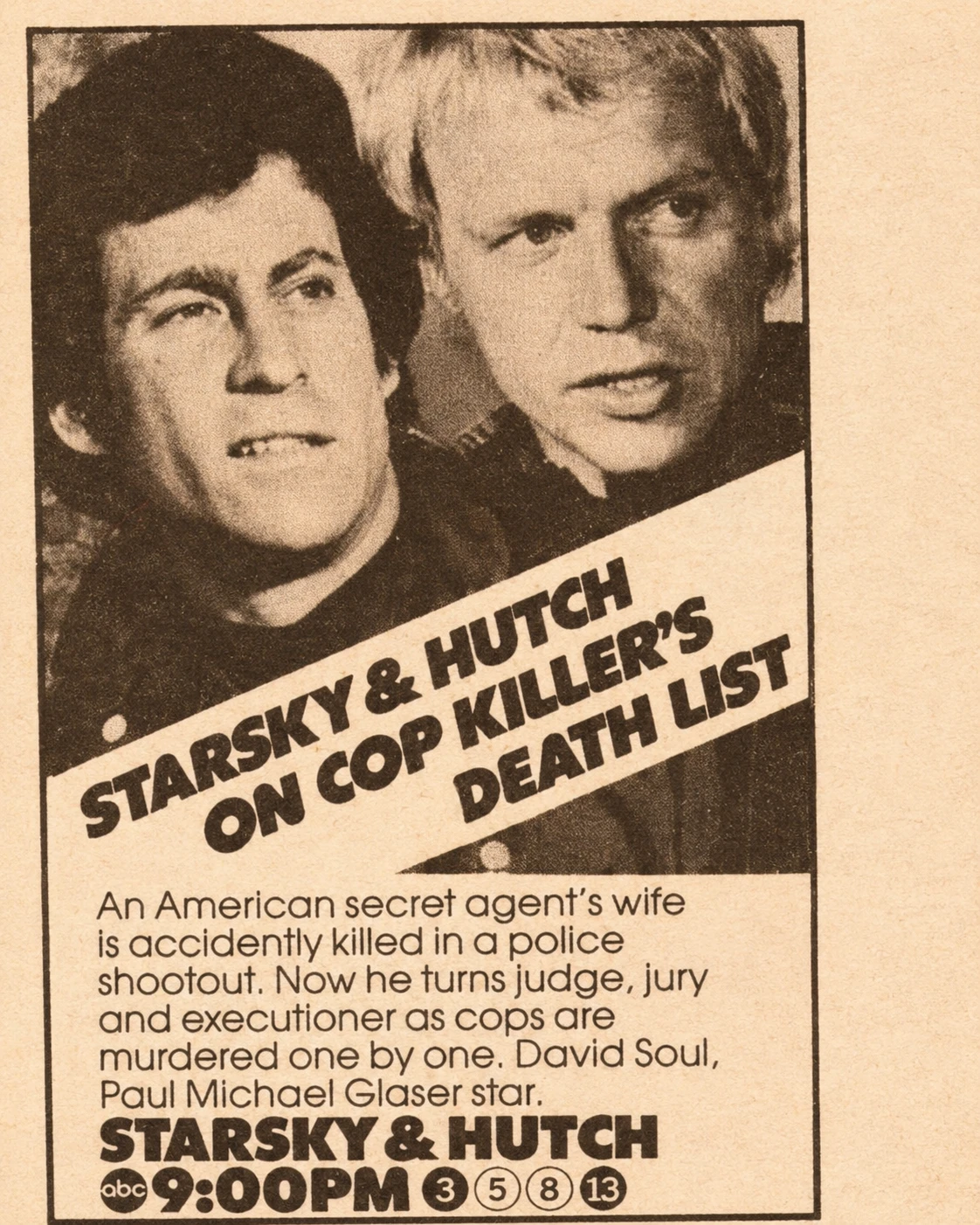
Starsky & Hutch worked because the partnership mattered as much as the Gran Torino, which is saying something because that car entered every frame like it wanted top billing.
S.W.A.T. foregrounded specialized raids and coordinated action. The Rookies used younger officers to combine procedural stories with generational identity. CHiPs later turned motorcycle patrol into brighter, more accessible action television.
The partnership structure solved a storytelling problem. One officer could explain, challenge or protect the other. Dialogue could reveal the case and the relationship at the same time.
Action also strengthened promotion. A chase or raid sold an episode instantly, even when the completed story contained more character work than the advertisement suggested.
Starsky and Hutch and the Rise of the Buddy-Cop Show follows the partnership in depth. The larger change was obvious from the couch: chemistry and velocity had become equally important.
THE BOXES KNEW THEIR PURPOSE
Every warehouse district apparently kept a fresh stack beside the intersection in case a Gran Torino needed to make prime time more exciting.
Why the Cars, Clothes and City Streets Mattered So Much
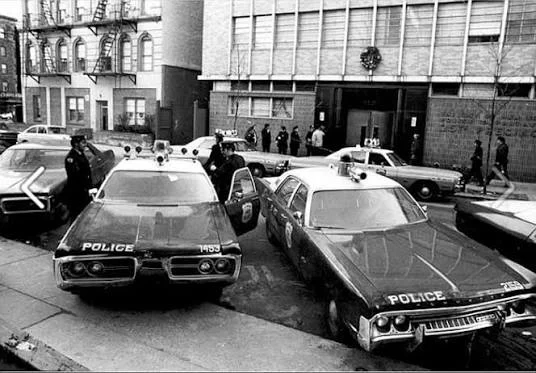
If you want to remember what the 1970s actually looked like before nostalgia polished the wood paneling, watch a crime show. The streets, offices and cars were doing unpaid documentary work.
Cities looked crowded, worn and imperfect. Offices had wood paneling, metal desks, fluorescent light and rotary phones. Streets carried newspaper boxes, industrial buildings, neon signs and enough rain to make every reflection look guilty.
Cars were never just transportation. Rockford’s Firebird said practical speed. The Gran Torino said subtlety had left the building. The unmarked sedan said somebody in a sport coat was about to ruin a stack of boxes.
Wardrobe created silhouettes. Wide lapels, leather jackets, turtlenecks, sport coats, mustaches and sunglasses separated the plainclothes officer from the uniformed department and the private eye from both.
The visual culture is explored fully in The Cars, Clothes and Street Style of 1970s Cop Shows. Here, the important point is economic and emotional: a glance at the street or vehicle could tell the viewer which version of crime television had begun.
That is why the look survives even when the plot disappears. We may forget the victim, but we remember the raincoat, the lollipop, the answering machine and the red stripe down the side of the car.
How New York, Los Angeles, San Francisco and Hawaii Became Characters
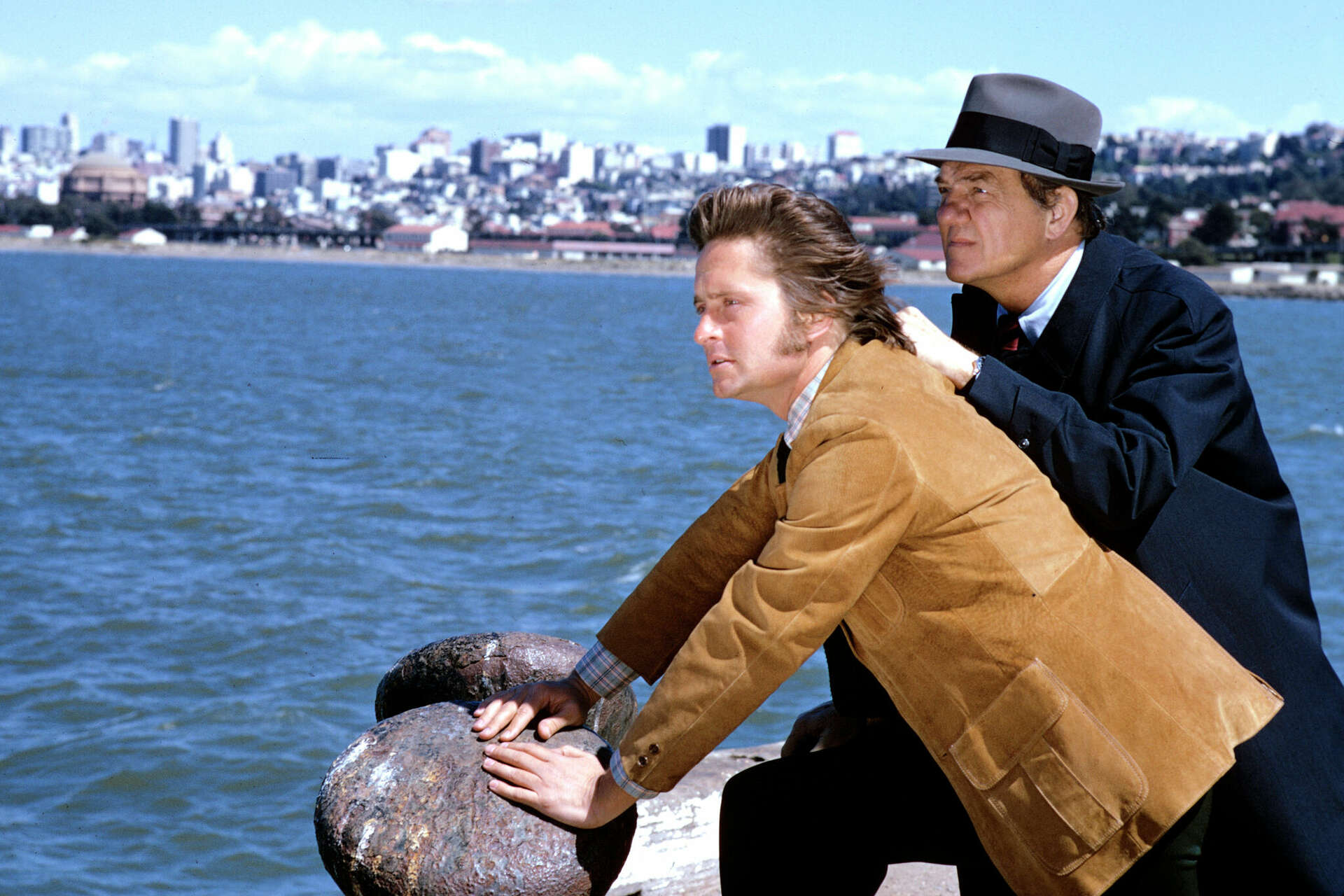
The city name in the opening credits was often another cast member. New York, Los Angeles, San Francisco and Hawaii each promised a different kind of trouble.
New York represented density, history, bureaucracy and confrontation. Kojak and other police series used hallways, squad rooms and crowded streets to make every case feel connected to a larger city machine.
Los Angeles meant distance, sunlight and a lot of driving. A private eye could cross beaches, freeways, industrial streets and rich neighborhoods before the next commercial.
San Francisco supplied hills, architecture and instant motion. A simple drive could become action because the street itself created danger. The Streets of San Francisco used the city as both location and rhythm.
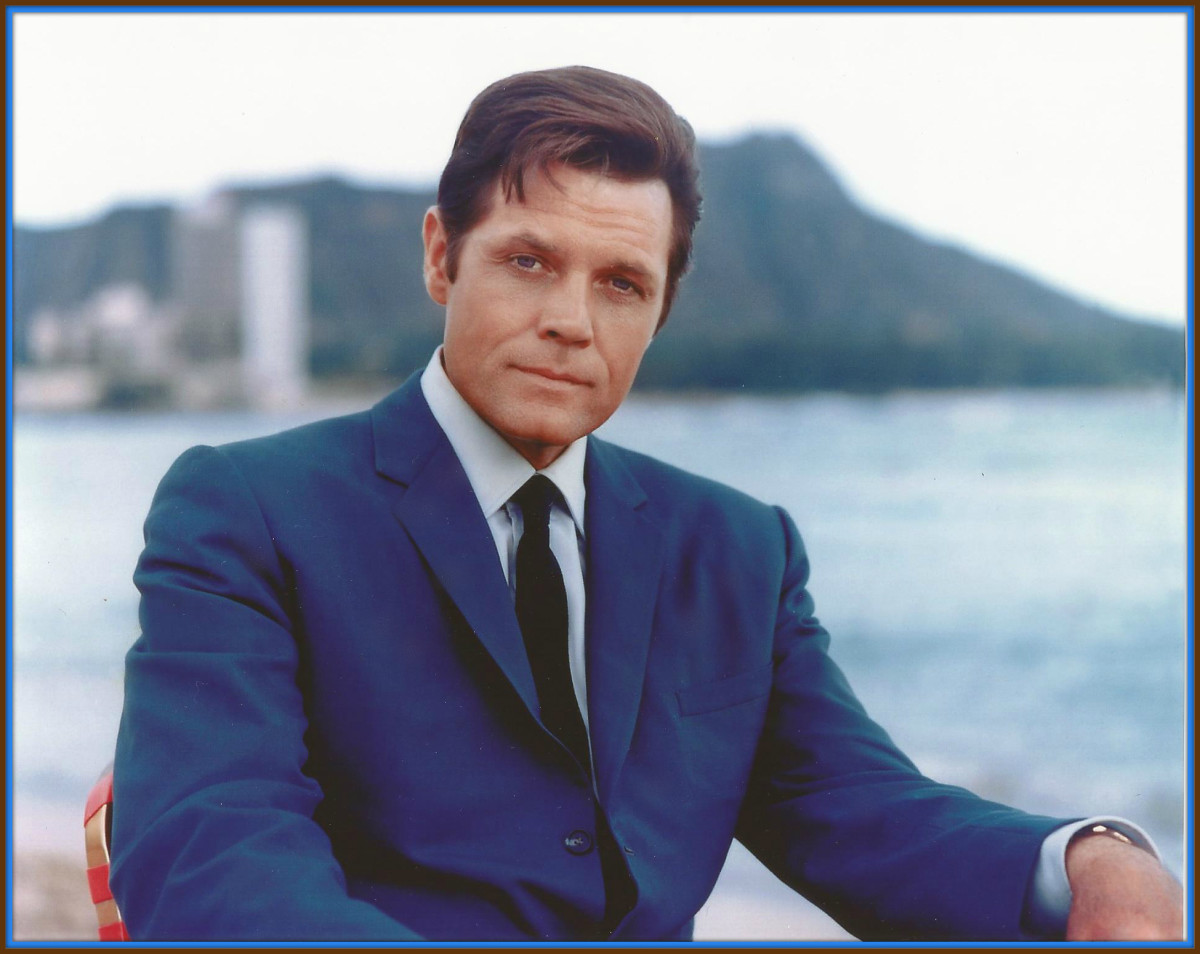
Hawaii Five-O turned island scenery into a weekly identity while still delivering a department-based crime drama. Paradise looked beautiful, but McGarrett was never there for the view.
Real streets did two jobs at once: they sold the episode and made the case feel like it belonged to an actual city instead of the same backlot with a different sign.
Before the first witness spoke, the city had already told us what kind of detective belonged there.
Why a Great Crime-Show Theme Could Pull Us Back Into the Room
A good crime-show theme could call you back from the kitchen faster than anyone in the family. A few notes and you knew whether the evening belonged to Hawaii, Rockford or a tactical team moving in slow formation.
The Hawaii Five-O theme delivered forward motion and scale. The Rockford Files used a lighter, modern groove that matched a detective who preferred conversation and improvisation. S.W.A.T. turned tactical action into a rhythmic command.
The opening mixed sound with shorthand: badge, skyline, car, gun, face. Before anybody explained the case, the show had already explained its attitude.
By the time the opening credits ended, we already knew the rules: which city we were in, how fast the show moved and whether the hero solved problems with patience, horsepower or both.
Promos borrowed that identity. A few notes could carry recognition faster than dialogue. In a household where viewers might be across the room, sound called them back to the television.
More of that muscle memory lives in 70s TV Theme Songs. Crime shows ruled partly because they knew how to announce themselves from three rooms away.
YOU HEARD IT BEFORE YOU SAW IT
A great theme song could pull you back into the room while the network logo was still fading.
How Women Detectives Claimed More Prime-Time Space
The genre was still overwhelmingly male, but women finally started getting the badge, the case and the last word—usually while the network made sure the wardrobe department stayed very involved.
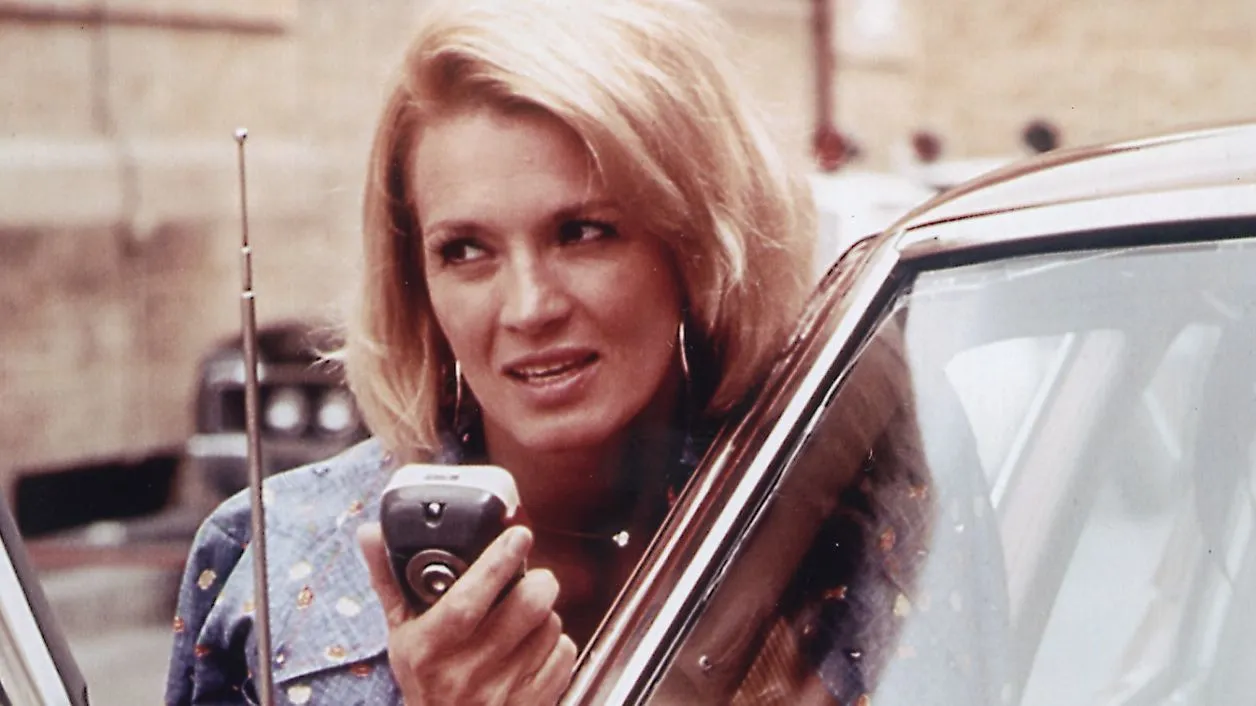
Police Woman placed Angie Dickinson’s Pepper Anderson at the center of a network police drama. The series made female authority visible while repeatedly relying on undercover situations shaped by the expectations of male viewers.
Get Christie Love! starred Teresa Graves as a Black female detective, a rare and important network lead. The show’s brief run does not make that image any less striking.
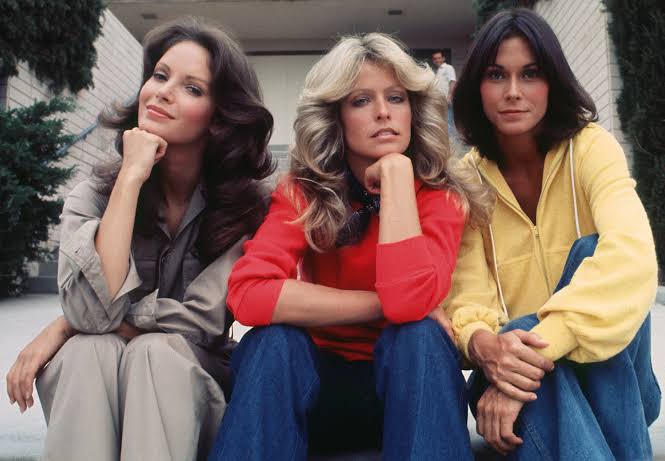
Charlie’s Angels became a sensation because it combined investigation, glamour and star power into something the entire culture noticed. The women drove the action, even while the show was packaged through the expectations of male executives and viewers.
Both things were true. The Angels drove the action and solved the crimes, while the network also sold the show through beauty, clothes and glamour.
That tension belongs to the decade’s larger pattern: progress often arrived in forms networks believed were safe enough to sell.
The broader field appears in Best Female Detectives and Crime Fighters of 1970s TV. The full stories continue in Police Woman and Angie Dickinson’s Prime-Time Breakthrough and How Charlie’s Angels Became a Pop-Culture Phenomenon.
Who Got the Badge—and Who Television Still Shortchanged
The decade put more Black officers and investigators on the screen, but television still had a long habit of deciding who got to be complex and who merely represented the neighborhood.
Black officers and investigators appeared more frequently, reflecting social change and the need for television cities to look less artificially white. Yet supporting characters were often given less interior life than the central white detective.
Programs could criticize prejudice in one episode while returning to familiar assumptions in the next. Neighborhoods were sometimes treated mainly as sources of danger. Poverty could become atmosphere rather than a condition with history.
Class operated just as powerfully. Columbo’s working-class presentation exposed the arrogance of wealthy murderers. Rockford’s financial insecurity separated him from the glamorous private-eye fantasy. Other series associated professional polish with moral authority more easily.
Crime television also made aggressive policing look clean and useful because the hero’s instinct was usually right by design. That is satisfying drama and a lousy substitute for reality.
The strongest episodes questioned the badge. The weakest assumed the badge had already answered the question.
How the Mansion and the Alley Told Different Crime Stories
The mansion and the alley were both crime scenes, but television did not always treat them the same. Wealth could disguise guilt; poverty could be used as visual shorthand for danger.
Columbo loved putting a modest detective in an expensive room with a killer who mistook taste for innocence. We knew exactly who had the nicer car and exactly who was going to lose.
Private-eye stories often exposed clients who could afford investigation while withholding the truth. The detective’s need for money placed him inside the transaction without guaranteeing loyalty to the person paying.
Street-focused police dramas could humanize neighborhoods or reduce them to atmosphere. The difference depended on whether residents received motives and relationships or appeared only as evidence of danger.
White-collar crime, corruption and wrongdoing inside powerful offices let the genre take a swing at people with money and titles. The weekly ending could still pretend one arrest had fixed a much bigger problem.
The moral universe worked best when guilt and respectability separated. The detective saw through the suit, office or title.
Watching it now means noticing both sides: the pleasure of seeing arrogance exposed and the times a poor neighborhood was treated like evidence before anyone spoke.
How Weekly Crime Shows Built Another Citywide Case on Deadline
Those car chases did not simply happen because somebody found a hill and yelled, “Go.” A weekly crew had to build another hour of danger on a deadline.
Location managers found streets, warehouses, offices and houses capable of supporting danger while remaining practical for a crew. Directors balanced wide city views with controlled interiors.
Stunt crews planned fights, falls and car action on a weekly deadline. Streets, sets and tricks were reused because another case was already waiting on next week’s call sheet.
Editors created speed from cuts, engine noise and reaction shots. Half the time, the car looked more dangerous because the camera believed in it.
Lighting created the look: bright precinct fluorescents, shadowed private-eye offices, wet night streets and expensive homes where a murderer believed taste could disguise guilt.
The weekly crew made the boom possible. They kept turning ordinary streets, offices and warehouses into another hour of danger before the schedule caught up with them.
From the couch, it looked like one hour of danger. Behind the screen, it was writers, stunt crews, location managers, actors, editors and one poor person assigned to replace all those boxes.
How Prime-Time Rules Shaped the Violence We Saw
The shows promised danger, but they still had to survive in the family living room. Networks wanted enough violence to sell the episode and not so much that parents changed the channel.
Programs often emphasized pursuit, threat and aftermath more than graphic injury. A gunshot could occur quickly; the emotional consequences might be handled through reaction, music and dialogue.
The hero’s force was usually made to look reactive. The suspect swung first, the music rose and television granted moral permission for the next thirty seconds.
Commercial breaks influenced the pattern. Danger rose before the interruption, then returned with enough explanation to keep viewers oriented.
Standards also affected language, sexuality and corruption. A series could imply more than it showed, which encouraged writers and directors to use suggestion, performance and atmosphere.
The limits sometimes flattened reality, but they also produced craft. A tense interrogation or quiet contradiction could become more memorable than a larger act of violence.
That family-viewing balance helped the genre own prime time. Adults got crime and tension. Kids got the chase and learned to look away right before the serious part.
How Television Made Police Work Faster and Cleaner Than Real Life
The cases felt realistic because the radios, streets and paperwork looked real. The results were pure television: faster, cleaner and much more certain than life.
Investigations that might require weeks or months were resolved inside an hour. Laboratory results arrived when the story needed them. Witnesses were easier to locate. The detective usually confronted the correct suspect.
A detective’s hunch became evidence because the script had already decided he was right. In real life, that is not a method. On television, it was often the third-act engine.
Confessions and final confrontations gave us closure that many real cases never provide. The solved case could make the department look far more effective than the world outside the television.
Programs also emphasized unusual crimes because ordinary calls lacked the same promotional value. Viewers saw a profession shaped by murders, conspiracies and dramatic pursuits.
Some series complicated the mythology through bureaucracy, corruption and personal cost. Police Story was especially interested in the damage carried by officers.
The genre was never a neutral picture of police work. It was a promise that attention, persistence and authority could force an answer before the credits.
Ten Reasons Cop Shows Ruled 1970s Television
No single series, crime statistic or network decision created the boom. These forces reinforced one another until crime television became one of the decade’s dominant languages.
Together they explain why the schedule could contain dozens of police and detective programs without the audience treating them as one interchangeable block.
The complete lineup appears in 40 Best Cop and Detective Shows of the 1970s, Ranked. This page explains why the schedule had room for so many different badges, private eyes and city streets.
A national mood of anxiety
Urban fear, political distrust and economic strain made crime stories feel current without becoming news.
The one-hour case engine
A complete mystery offered urgency and closure inside a dependable weekly structure.
Detectives with instant silhouettes
Raincoats, lollipops, cowboy hats, mustaches and answering machines made recognition immediate.
A format the networks could keep using
Reusable sets, guest stars and self-contained episodes made the shows easier to keep making and easier to rerun.
Cities with personality
New York, Los Angeles, San Francisco and Hawaii sold different versions of danger.
Cars as character
Vehicles supplied movement, identity and promotional images before the detective opened the door.
Guest-star prestige
A new suspect or victim could turn each episode into a small event.
Music that branded the hour
Themes and cues announced pace, place and personality before the case began.
A controlled promise of order
The system could fail, but one observant individual usually forced the truth into view.
Enough variety to avoid sameness
Procedurals, private eyes, action teams, anthologies and glamorous capers shared the boom.
The 1970s Cop-Show Boom, Year by Year
The genre did not arrive fully formed. It moved from procedural discipline toward eccentric heroes, realism, action partnerships, female leads, forensic investigation and glamorous capers.
The timeline shows expansion rather than replacement. Older forms remained on the schedule while newer ones changed what viewers expected from a television detective.
The old procedural still has the radio
Dragnet ends its second television run while Adam-12 continues Jack Webb’s belief in routine police work.
The eccentric detective becomes an event
Columbo and McCloud move into the NBC Mystery Movie and prove character can carry feature-length cases.
Cities and departments expand
The Streets of San Francisco begins, combining partnership, procedure and one of television’s most active locations.
Realism and personality share the schedule
Kojak and Police Story arrive, offering radically different ways to make the officer human.
The private eye gets bills and a father
The Rockford Files and Police Woman widen the genre through revisionist private-eye comedy and a female police lead.
The action partnership accelerates
Starsky & Hutch and S.W.A.T. increase vehicles, team chemistry and promotional velocity.
Glamour and investigation collide
Charlie’s Angels becomes a ratings sensation while Quincy, M.E. expands crime solving through forensic medicine.
The genre covers nearly every lane
CHiPs brightens patrol action as private eyes, departments, forensic investigators and capers crowd the schedule.
Crime television becomes cultural wallpaper
Vega$ and returning hits show how deeply the genre has settled into prime-time expectations.
The next decade is already forming
The Rockford Files nears its end while the genre prepares for ensemble realism, female partnerships and visual reinvention in the 1980s.
How Reruns Made the Crime Boom Part of Gen X Childhood
Reruns were where many Gen X viewers actually inherited the crime boom. We met half these detectives years after the original airdate, usually in the afternoon or late at night.
That flexibility introduced shows to viewers who had been too young, watching another network or not yet born when the episodes premiered.
The opening theme did the orientation. The detective walked in, the crime appeared and nobody needed to explain what happened three episodes ago.
Syndication also strengthened visual memory. Repeated exposure turned the raincoat, theme, car or squad room into instant recognition even for people who could not name a specific episode.
The format worked well in late afternoon and late night, where viewers entered and left more casually. A familiar detective could become background company and still reward close attention.
Reruns blurred decade boundaries. A 1960s series could become part of a 1970s childhood, while a 1970s detective could dominate 1980s local television.
The network runs created the boom. Syndication made the detectives feel like they had always been there.
THE GEN X HANDOFF
A lot of these shows became ours in reruns, not premieres. The decade ended; the detectives kept working afternoons.
Watching the Reruns Now: What Still Works and What Does Not
Watching the reruns now is where the fun and the discomfort meet. Columbo still works. Rockford is still funny. Some ideas about police authority land very differently after a few more decades of life.
The weekly closure also retains its appeal. Modern serialized dramas can produce extraordinary depth, but the completed case offers a different pleasure: attention rewarded inside one sitting.
What needs context is the idea that the hero’s instinct should automatically outrank everybody else’s rights. Television made that shortcut feel satisfying because the episode had already shown us the villain.
Stories about race, poverty, sex work, addiction and mental illness often show the limits of the era. Women received more screen time while still being sold through glamour. Black and Latino officers appeared more often without being given as much say in the story.
The constant shootings, pursuits and major crimes made ordinary police work look far more dramatic than it was. A smoothly working squad room could also make the department look cleaner and more effective than real life.
Watching these shows now does not require throwing them out. It means enjoying the acting, cars, cities and mysteries while noticing the shortcuts they sometimes took with power and authority.
Nostalgia does not have to throw out the evidence. It just has to stop pretending the whole case was clean.
Why the Best 1970s Crime Shows Still Play
The cars, telephones and lapels are dated. Human arrogance is not. That is why the strongest episodes still play.
Arrogance still creates mistakes. Fear still changes a witness’s account. Money still complicates loyalty. A patient question can still be more threatening than a raised voice.
Distinctive heroes age better than generic competence. You remember Columbo, Rockford and Kojak because the method came from the personality.
The episodic format offers relief from permanent escalation. A viewer can select one story, receive a complete experience and leave without a multi-season obligation.
Location work preserves texture that digital polish sometimes removes. The streets, offices and apartments carry ordinary physical detail.
Guest performances create another point of entry. An episode can feel like a compact movie built around one suspect and one confrontation.
The episodes that last are rarely the loudest. They are the ones where one detective walks into a room, notices the emotional weather and quietly changes the balance.
Why the 1970s Crime-Show Boom Still Shapes Television
Television never closed this case. The 1980s, 1990s and every streaming service after them kept borrowing from the menu the 1970s built.
The 1980s did not abandon the genre. It reworked it. Hill Street Blues complicated the department ensemble. Cagney & Lacey expanded the female partnership. Miami Vice turned visual culture and music into a complete crime-show language.
Later procedurals built enormous franchises around the same case engine. Forensic dramas inherited Quincy’s belief that the body could speak. Character mysteries inherited Columbo’s pleasure in method. Revisionist private eyes inherited Rockford’s discomfort with heroic fantasy.
The decade proved procedure and personality could share the same hour. The crime dramas of the 1970s gave us a case to solve, but we returned because we liked the person working it.
That balance is the real reason the boom endures. The crime created the weekly obligation. The detective created the relationship.
To revisit the programs themselves, see 40 Best Cop and Detective Shows of the 1970s, Ranked. This story is the reason the list is so crowded: the national mood, network logic, city streets, guest stars, car culture and the basic human need to watch one confusing thing finally make sense.
For sixty minutes, confusion became evidence. Then the theme returned, the credits rolled and another case was already waiting somewhere else on the dial.
That weekly ritual belongs inside the larger 1970s TV story: one shared screen, a schedule everybody had to respect and a detective whose theme song could pull us back from another room.
In the end, why cop shows ruled 1970s television comes down to a simple bargain: the case created the urgency, but the detective created the relationship.
THE GEN X VERDICT
We learned that detectives never parked normally, captains hated the correct hunch until minute fifty-two, and every high-speed chase had a constitutional right to one stack of empty boxes.
Put the Crime-Show Boom Back Into Each Television Year
Crime shows competed with sitcoms, family dramas, variety programs, news and movies for the same shared household screen.
Choose a year to see which detectives were arriving, which shows were peaking and what else viewers were watching around them.
CASE70
PRIME-TIME FILETop TV Shows of 1970
CASE71
See what was sharing the schedule with the decade’s police and detective boom.
PRIME-TIME FILETop TV Shows of 1971
CASE72
See what was sharing the schedule with the decade’s police and detective boom.
PRIME-TIME FILETop TV Shows of 1972
CASE73
See what was sharing the schedule with the decade’s police and detective boom.
PRIME-TIME FILETop TV Shows of 1973
CASE74
See what was sharing the schedule with the decade’s police and detective boom.
PRIME-TIME FILETop TV Shows of 1974
CASE75
See what was sharing the schedule with the decade’s police and detective boom.
PRIME-TIME FILETop TV Shows of 1975
CASE76
See what was sharing the schedule with the decade’s police and detective boom.
PRIME-TIME FILETop TV Shows of 1976
CASE77
See what was sharing the schedule with the decade’s police and detective boom.
PRIME-TIME FILETop TV Shows of 1977
CASE78
See what was sharing the schedule with the decade’s police and detective boom.
PRIME-TIME FILETop TV Shows of 1978
CASE79
See what was sharing the schedule with the decade’s police and detective boom.
PRIME-TIME FILETop TV Shows of 1979
See what was sharing the schedule with the decade’s police and detective boom.
Frequently Asked Questions About 1970s Cop Shows
The quick answers cover why the boom happened, what made the detectives different and why the old shows still hold the room.
Why were cop shows so popular in the 1970s?
Why cop shows ruled 1970s television comes down to the fit: a fresh case, a familiar detective, strong guest stars, city atmosphere and enough closure to satisfy the whole living room before bedtime.
How many police programs premiered during the 1970s?
The Museum of Broadcast Communications estimates that approximately forty-two police programs premiered during the decade.
What made 1970s detectives different from Dragnet?
Dragnet emphasized procedure and the department. Many 1970s shows built their appeal around detectives with odd methods, visible flaws and a style you could recognize from the hallway.
Why was Columbo unusual?
The audience normally saw the murder and killer first. Suspense came from watching Columbo discover the flaw, apply pressure and overcome a suspect who underestimated him.
Why did private-eye shows return in the 1970s?
Private investigators fit the decade’s distrust of the system. The Rockford Files removed the glamour with unpaid bills, lying clients and the strong possibility that Rockford would get punched before dinner.
What was the NBC Mystery Movie?
It was a rotating wheel of feature-length mystery series. The original combination included Columbo, McCloud and McMillan & Wife.
Which 1970s crime shows focused on realism?
Police Story was especially important because its anthology format examined different officers and the personal cost of police work. Other procedurals used varying degrees of realism.
Which 1970s crime shows featured women as leads?
Police Woman, Get Christie Love! and Charlie’s Angels were prominent examples, though each combined progress with different limitations and commercial expectations.
Why were cars so important in 1970s cop shows?
Cars supplied action, location movement and instant character branding. The Gran Torino and Rockford’s Firebird became visual identities as recognizable as costumes.
Did crime statistics alone cause the television boom?
No. Public concern about crime mattered, but the flexible weekly format, guest stars, reusable locations and unforgettable detectives mattered just as much.
What did 1970s cop shows influence?
They refined the eccentric detective, realistic ensemble, buddy-cop partnership, forensic investigator, revisionist private eye and visually branded crime drama.
Where can I find a ranked list of the shows?
Sources
These interviews and archives preserve the memories, schedules and television history behind the 1970s crime-show boom.
- Police Programs — Museum of Broadcast Communications
- Columbo — Television Academy Interviews
- The Rockford Files — Television Academy Interviews
- Police Story — Television Academy Interviews
- Charlie’s Angels — Television Academy Interviews
- Police Woman — Television Academy Interviews
- Crime and Corruption Across America, 1972–1988 — FBI History
- The NBC Mystery Movie — Museum of Broadcast Communications