Why Columbo Was Unlike Every Other TV Detective

Why Columbo Was Unlike Every Other TV Detective
MYSTERY MOVIECHANNEL 70s COLUMBO FILENBC • LOS ANGELES • JUST ONE MORE THING
Smells Like Gen X • The murderer had already made one mistake

Why Columbo WasUnlike Every Other TV Detective

The audience saw the murder before the lieutenant entered the room. The suspense came from watching a wealthy, talented suspect discover that the rumpled policeman asking basic questions had noticed the one detail the perfect plan could not explain.

Peter Falk turned hesitation, curiosity, courtesy and apparent distraction into a detective method that made arrogance visible. Columbo did not dominate the room. He let the murderer believe the room still belonged to them.

Quick Answer • Homicide Desk

Why was Columbo unlike every other television detective?

Columbo usually revealed the murderer first and transformed the mystery into a psychological contest. His rumpled appearance encouraged powerful suspects to underestimate him, while his patient questions, genuine curiosity and tactical politeness slowly forced their perfect story into contradictions.

The murderer had status, money and a perfect plan.The lieutenant had a raincoat, a tired Peugeot and nowhere else he needed to be that afternoon.
The Mystery After the Answer

Columbo told us who did it, then made every conversation more suspenseful

The howcatchem format moved tension away from concealed identity and into behavior, status and the suspect’s slowly shrinking ability to control the story.

Knowing the killer made the audience Columbo’s silent partner

We watched the murder, the planted evidence and the rehearsed alibi before the lieutenant arrived. That knowledge changed every later scene. A casual glance toward a drawer mattered. A correction offered too quickly felt dangerous. A question about an ordinary object carried suspense because we knew exactly why the suspect wanted it dismissed.

The structure also gave the murderer unusual dramatic weight. The killer was not a name revealed in the final minutes but the episode’s co-lead—often a brilliant professional whose expertise made the crime possible and whose pride made escape impossible.

Columbo’s apparent uncertainty kept viewers guessing about a different answer: how much did he already understand? Falk could make the lieutenant seem genuinely puzzled in one moment and devastatingly precise in the next without breaking the character.

Before the Raincoat Became a Ritual

Richard Levinson and William Link built a detective designed to be underestimated

The character passed through anthology television, the stage and two feature-length mysteries before becoming the most dependable figure in NBC’s rotating mystery-movie era.

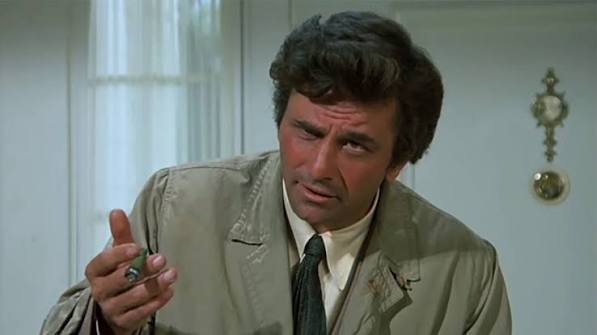
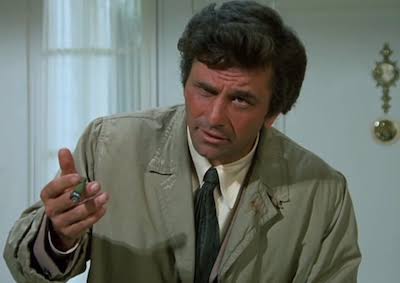
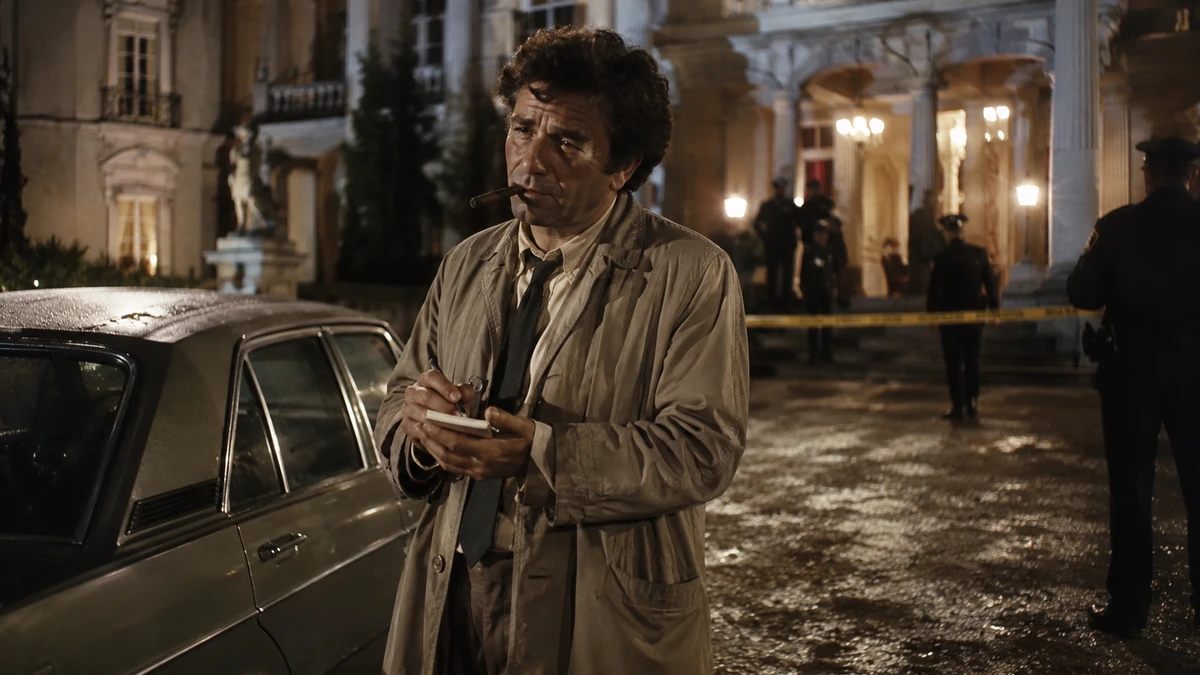
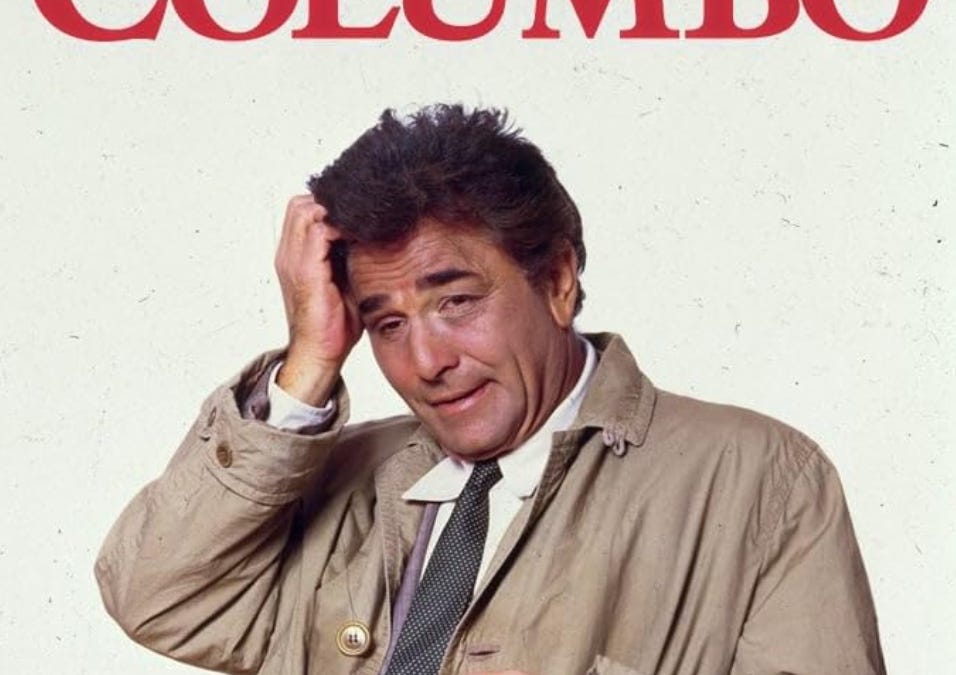
Peter Falk as Lieutenant Columbo in his rumpled raincoat during the original television series
Peter Falk made the lieutenant’s pauses, unfinished thoughts and worn raincoat feel natural enough to hide a relentless investigative method.
The foundation

The inverted mystery existed before Peter Falk completed the character

Levinson and Link were interested in the pressure created when the audience knows the criminal and watches an investigator dismantle certainty rather than search through a lineup of suspects.

The performance

Falk made disorder look natural enough to hide strategy

The role depended on an actor who could appear distracted without becoming foolish and reveal intelligence without changing posture. Falk’s pauses and unfinished thoughts made the method impossible to separate from the man.

The schedule

The NBC Mystery Movie gave each case room to become a world

Rotating with other detectives allowed longer running times, distinctive locations and major guest stars. A Columbo installment felt closer to a television film than another interchangeable hour.

The contrast

Los Angeles success became the perfect habitat for underestimated intelligence

Mansions, studios, concert halls, military academies and vineyards announced control. Columbo entered those spaces without accepting the social ranking that came with the furniture.
From Prescription: Murder to the Nightlife

The Columbo timeline crosses four decades without changing the essential game

The clothes, technology and television landscape changed. The pleasure of watching certainty collapse under polite attention did not.

1960

The earliest television version establishes the basic idea

The character appears in the anthology drama Enough Rope, adapted from work by Richard Levinson and William Link. The detective is not yet Peter Falk’s fully formed lieutenant, but the structure is already interested in a killer who underestimates a seemingly ordinary investigator.

1968

Prescription: Murder introduces Peter Falk’s Columbo

The television movie pairs Falk with Gene Barry’s polished psychiatrist and establishes the central contest between status and attention. The raincoat is less mythic than it will become, but the apologetic pressure is already unmistakable.

1971

Ransom for a Dead Man and the NBC Mystery Movie launch

Lee Grant’s calculating attorney gives Columbo a formidable opponent, and the second pilot proves the character can sustain a feature-length investigation. The regular rotating series begins later that year.

1972

Peter Falk wins his first Emmy for the role

The award confirms that the pleasure is not simply the puzzle. Falk’s pauses, digressions, false exits and flashes of certainty have made the detective a performance event.

1973

Any Old Port in a Storm deepens the emotional range

Donald Pleasence’s Adrian Carsini becomes one of the series’ most admired killers because Columbo can respect the man’s expertise while refusing to excuse murder. The arrest feels inevitable and strangely sad.

1974

The series attacks power inside the police hierarchy

A Friend in Deed places a deputy police commissioner behind the crimes. Columbo must work beneath the man he suspects, turning the lieutenant’s humility into protection against institutional authority.

1975–76

Falk’s method becomes one of television’s most recognizable rituals

The raincoat, cigar, Peugeot, stories about Mrs. Columbo and the delayed return to ask one more question now function like musical cues. Audiences know the pattern without knowing how the trap will work.

1977–78

The original NBC run closes with mature, character-rich mysteries

Try and Catch Me and later entries demonstrate how much sympathy the format can allow without losing moral clarity. The original cycle ends after a compact set of feature-length films rather than a routine weekly volume.

1989

Columbo returns after more than a decade away

ABC revives the character with Columbo Goes to the Guillotine. Falk is older, but the central method remains intact because it depends on attention, patience and social misdirection rather than youth.

2003

Columbo Likes the Nightlife becomes the final completed mystery

The last film places the old lieutenant inside a younger nightclub world and proves the character can remain himself without becoming a parody of the 1970s. The raincoat has outlasted several television eras.

The Lieutenant’s Working Method

Columbo looked like a collection of weaknesses and investigated like a pressure system

His habits were memorable because each one changed the suspect’s behavior. The raincoat was not merely costume, and the digressions were not merely comedy.

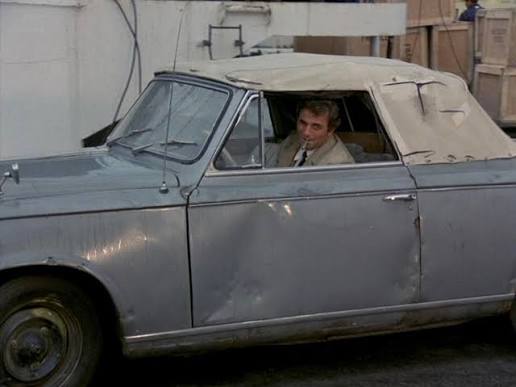
Lieutenant Columbo standing beside his battered Peugeot detective car
The battered Peugeot announced low status before Columbo asked a question—and encouraged powerful suspects to underestimate the man who drove it.
The surface

The raincoat, cigar and battered Peugeot

Everything about Columbo announces low status before he asks a question. Wealthy suspects see wrinkles, a cheap cigar and an unreliable car. They relax because they confuse presentation with ability, giving the detective room to observe them when they believe nothing important is happening.

The tactic

Polite persistence

He apologizes for returning, praises the suspect’s expertise and asks for help with one detail that is bothering him. The courtesy makes refusal look unreasonable and allows the interrogation to continue without the theatrical hostility the murderer has prepared to resist.

The rhythm

Apparently scattered attention

Columbo interrupts himself, searches for a pencil and wanders into domestic stories, yet the missing detail comes back at the exact moment it can do damage. Some distraction is genuine; some is tactical. The suspect can never be sure which is which.

The unseen life

Mrs. Columbo and the relatives

His wife is always nearby in conversation and never available to settle the mythology. She admires a celebrity, needs a recipe or has an opinion about the suspect’s work. The stories humanize the lieutenant while quietly extending his access to people who dismiss him.

The intelligence

Attention instead of performance

Columbo rarely enters a professional world already knowing more than its expert. He asks how wine ages, how film develops or how a machine operates. Then he notices the one explanation that sounds too prepared because he has listened without trying to look brilliant.

The morality

Respect without surrender

He can admire talent, understand motive and feel sorrow for a person he arrests. The empathy never becomes permission. Columbo’s kindness matters because it survives beside his obligation to the victim.

The pressure point

The suspect’s need to remain superior

The murderers usually built successful lives by controlling rooms. Columbo gives them chances to correct, instruct and patronize him. Each display of superiority locks the suspect into another statement the evidence can test.

The final turn

Just one more thing

The phrase reverses the exit. The suspect has begun to breathe again when the lieutenant turns back and asks the question that proves the earlier conversation was never casual. It is not a catchphrase pasted onto the character; it is the structure of the investigation.

The Psychology of the Howcatchem

The killer spent ninety minutes identifying himself

Showing the crime allowed the series to study how guilt changes speech, posture and the desperate need to keep one explanation intact.

Lieutenant Columbo studying a case while questioning a suspect
The case often turned on one ordinary detail the murderer had classified as too small for anyone important to notice.

The suspect’s profession supplied both the crime and the weakness

A conductor controlled tempo, a photographer controlled images, a writer controlled narrative and a police commissioner controlled procedure. The same confidence that created success created the murder plan—and the expectation that a shabby lieutenant could not understand it.

Columbo learned by inviting instruction. His basic question allowed the expert to display mastery, but the answer also fixed the suspect to one version of how the equipment, schedule or professional practice worked.

The final trap usually succeeded because character remained consistent. Pride made the killer correct him, retrieve something, identify an object or act on information only the murderer should possess.

The Perfect Crime, Repeated Differently

The six beats that made the Columbo formula endlessly reusable

The audience knew the broad shape, which made every variation in profession, motive, performance and final trap easier to appreciate.

01

The murderer performs the perfect crime

The audience watches planning, execution and cover-up in detail. We know the professional skill, emotional motive and tiny compromise that may eventually matter.

02

Columbo arrives from the wrong visual universe

The suspect expects authority to look polished. Instead, a rumpled lieutenant admires the house, asks where he can find coffee and seems more interested in the victim’s appliances than the murder.

03

One detail refuses to behave

A clock, photograph, wine bottle, fingerprint, word choice or professional process does not fit the explanation. Columbo may not yet know what it means, but he knows the story is too smooth around it.

04

The suspect becomes the lieutenant’s teacher

Columbo asks basic questions and invites the expert to demonstrate superiority. The explanation creates commitments, and each commitment shrinks the space available for a later revision.

05

Politeness becomes psychological pressure

The lieutenant keeps returning without offering the suspect a dramatic confrontation to defeat. Irritation grows because the murderer cannot identify the moment when courtesy became accusation.

06

The trap depends on character

The final proof often works because pride, control or professional vanity causes the killer to act exactly as Columbo predicted. The murderer completes the case by trying to preserve the identity that made the crime possible.

Raincoat Versus Respectability

Every Columbo mystery was partly about class and the danger of mistaking status for intelligence

The lieutenant entered beautiful spaces without performing the cultural sophistication their owners expected, then listened to the workers and details those owners barely noticed.

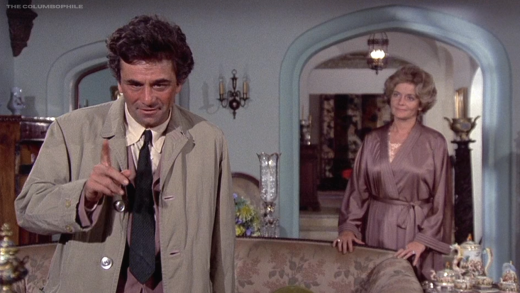
Columbo questioning an affluent suspect inside a polished upper-class setting
The murders often began in rooms where money, taste and professional authority had made contradiction seem impolite.
The mansion

Wealth gave suspects control over the first impression

The homes, offices and collections told everyone else how successful the owner was. Columbo admired them without accepting that success made the explanation true.

The employee

Practical knowledge often lived lower in the hierarchy

Technicians, assistants, household staff and tradespeople understood how things actually worked. Columbo asked them because he was interested in function rather than rank.

The insult

Contempt produced information

A suspect who considered Columbo socially inferior felt safe correcting him, displaying expertise or dismissing the importance of a small clue. Superiority loosened the tongue.

The democratic pleasure

Status could not make a contradiction disappear

The series did not claim ordinary taste was automatically virtuous. It claimed a perfect story still had to survive contact with evidence and a worker willing to keep asking.

First-Watch Murder Files

10 essential Columbo mysteries

These ten mysteries follow the two foundational movies and eight cases that showcase unforgettable killers, professional worlds and final traps.

MYSTERY01
The character enters fully formed

Prescription: Murder

Gene Barry plays a psychiatrist who uses professional authority and emotional manipulation to construct what he believes is an unbreakable murder plan. Falk’s lieutenant looks almost too disorganized to notice the room, which allows the suspect to display confidence before understanding the danger.

The film is essential because the central power relationship is already complete. Columbo does not defeat the psychiatrist by matching sophistication with sophistication. He lets the doctor’s certainty become visible, then turns psychology back on the person who expected to control it.

MYSTERY02
The second pilot perfects the long-form rhythm

Ransom for a Dead Man

Lee Grant’s brilliant attorney murders her husband and builds a staged kidnapping around the assumption that intelligence can replace grief convincingly. Columbo sees a capable opponent and refuses to hurry the duel.

Grant gives the killer enough discipline to make each small mistake meaningful. The final pressure works because the story has spent time showing how badly she needs to remain the most intelligent person in every room—including the room where Columbo appears to be losing.

MYSTERY03
Spielberg, Cassidy and a writer who knows every trick

Murder by the Book

Jack Cassidy plays one half of a successful mystery-writing team who kills the partner responsible for the actual talent. Steven Spielberg directs with visual confidence, giving the first regular episode the scale of a television movie rather than a routine procedural.

The episode understands the delicious problem of a murderer who thinks he knows how fictional detectives behave. Columbo wins by refusing the expected performance. The writer keeps explaining the plot until his own need for authorship becomes evidence.

MYSTERY04
One of the cleanest final reversals

Suitable for Framing

Ross Martin’s art critic murders his uncle and arranges the evidence to frame the victim’s former wife. The world of collectors, galleries and cultivated taste gives the suspect every reason to view Columbo as an uncultured interruption.

The ending is a model of fair-play satisfaction. Columbo has allowed the killer to believe he controls where the evidence is located. The lieutenant’s own gloved hands turn that certainty into the final trap without requiring a speech larger than the clue.

MYSTERY05
Two great actors turn pursuit into performance

Étude in Black

John Cassavetes plays a celebrated conductor whose control of orchestra, marriage and public image cannot survive one private relationship. The expanded running time lets Falk and Cassavetes study each other rather than race through plot.

Music supplies both texture and structure. The conductor is accustomed to every movement beginning on his command, while Columbo keeps entering at the wrong moment and asking questions without respecting tempo. The irritation is the sound of control failing.

MYSTERY06
The most beloved meeting of admiration and duty

Any Old Port in a Storm

Donald Pleasence’s Adrian Carsini is a wine expert with refined taste, crushing arrogance and genuine devotion to his craft. Columbo learns the language of the cellar because respect is part of his method, not a disguise for contempt.

The final meal carries unusual sadness. Detective and killer understand each other well enough to appreciate what is being lost. Columbo’s sympathy makes the arrest more serious, not less necessary, and the episode becomes the clearest proof that an inverted mystery can still surprise emotionally.

MYSTERY07
Power hides inside Columbo’s own institution

A Friend in Deed

Richard Kiley plays a deputy police commissioner who first helps cover a murder and then commits another. Columbo suspects a man with the rank, knowledge and authority to interfere with every stage of the investigation.

The case strips away the safety usually provided by the lieutenant’s badge. His humility becomes camouflage because the commissioner expects obedience and sees no threat in a subordinate who appears confused. The final planted-apartment strategy is audacious because it uses institutional arrogance against itself.

MYSTERY08
Public warmth becomes private cruelty

Negative Reaction

Dick Van Dyke plays a famous photographer who stages his wife’s kidnapping and murder. Casting weaponizes the performer’s familiar warmth, allowing the episode to reveal bitterness beneath an image audiences instinctively trust.

Photography gives the story a perfect professional vocabulary: framing, exposure, timing and the difference between what a picture records and what someone wants it to prove. The final camera-shop mistake is satisfying because vanity acts before caution can intervene.

MYSTERY09
Patrick McGoohan builds a prison out of discipline

By Dawn’s Early Light

McGoohan plays the commandant of a military academy threatened by modernization. His posture, language and environment all communicate control, while the murder reveals how completely that identity has consumed him.

The atmosphere is unusually restrained, allowing ritual and silence to carry pressure. Columbo respects military order without accepting it as a moral defense. McGoohan’s Emmy-winning performance makes the killer rigid, lonely and responsible all at once.

MYSTERY10
Ruth Gordon makes the arrest feel like a loss

Try and Catch Me

Ruth Gordon’s mystery writer Abigail Mitchell believes she is punishing the man responsible for her niece’s death. She is witty, emotionally persuasive and fully capable of enjoying her contest with the lieutenant.

The episode permits sympathy without turning private vengeance into justice. Columbo understands the grief and still follows the victim’s final clue. Their last exchange feels tender because both know respect cannot erase what happened in the locked room.

The Killer Was Often the Headliner

Famous guest stars made each mystery feel like a duel rather than a procedural assignment

Because the murderer was visible from the beginning, the episode needed an actor capable of holding the screen opposite Falk for feature length.

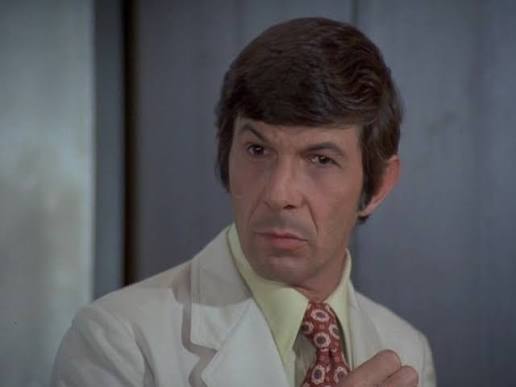
Leonard Nimoy appearing as a Columbo murder suspect opposite Peter Falk
Leonard Nimoy’s appearance as a brilliant, controlled murder suspect showed how the series used familiar stars as full-length opponents rather than disposable guest villains.
The repeat offenders

Jack Cassidy, Robert Culp and Patrick McGoohan returned as new forms of arrogance

Repeated casting became part of the pleasure. The same performer could embody literary vanity, corporate control or military rigidity without turning the role into an inside joke.

The image reversal

Familiar warmth could conceal private cruelty

Dick Van Dyke, Johnny Cash and other performers brought public personas the episode could complicate. Recognition gave the suspect power before the mystery began.

The sympathy

Some killers were allowed to become emotionally understandable

Donald Pleasence and Ruth Gordon demonstrate that empathy can make an arrest more painful without changing the legal fact. Columbo’s response becomes part of the ending.

The screen time

The murderer remained a character after the opening crime

The long format followed fear, improvisation and the gradual collapse of control. The killer was not merely waiting to be named in the final scene.

Cinematic Television Before Prestige TV Needed a Name

The series used time, location and silence as investigative tools

Major directors, careful production design and feature-length pacing allowed one small question to carry more pressure than a conventional chase.

The professional world was never generic scenery

Wine cellars, laboratories, camera shops, military academies, concert stages and television studios supplied the mechanics of the crime. The audience learned enough about each field to understand how expertise could conceal murder and later expose it.

Los Angeles became a collection of private kingdoms. Wealthy homes and specialized workplaces gave suspects visual authority, while Columbo’s tired car and coat looked increasingly impossible in every driveway.

The camera often remained with the killer after the lieutenant left. A face relaxed, tightened or reconsidered a casual question. Silence showed the exact moment when the suspect understood that the conversation had not gone the way it appeared.

A Compact Original Run With an Enormous Afterlife

Feature-length mysteries and four decades of television made Columbo feel permanent

The relatively small original episode count preserved the sense that every appearance was an event rather than another file produced by a procedural factory.

The format could disappear from the schedule without disappearing from memory

The original NBC cycle followed two foundational television movies and unfolded through the rotating Mystery Movie schedule. Television Academy programming records list 43 original films from 1971 through 1978, followed by a revival beginning in 1989.

Falk’s four Emmy wins across the original era and revival confirm how completely the role belonged to him. The later mysteries did not ask an older Columbo to become an action hero. They returned to the qualities that age could deepen: patience, experience and comfort with being underestimated.

That durability also came from protecting the character’s private mythology. The series did not need to explain every relative, show Mrs. Columbo or convert the lieutenant into an origin story. Work, habit and conversation were enough.

The Adult Rewatch

What aged beautifully, what moves slowly now and what deserves context

Falk and the guest stars remain immediate, while the long format asks modern viewers to surrender to conversation, process and a world built around wealthy suspects.

Still exceptional

The performances remain completely alive

Falk listens rather than waits for his line. Great guest stars respond to the listening, making each exchange feel like character sparring instead of clue delivery.

A modern advantage

The patient pace allows expertise to matter

Wine, photography, music and machinery receive time. The knowledge is not filler; it gives the crime texture and gives the suspect another reason to keep explaining.

Period limitations

The social world is narrower than Los Angeles itself

Women appear more often as victims or glamorous killers than investigators with equal institutional power, and some portrayals carry the assumptions of their production era.

Still radical

Attention defeats performance

The detective wins without becoming fashionable, physically dominant or socially intimidating. Intelligence looks like curiosity disciplined by work.

The Rerun Was Part of the Ritual

Gen X could understand the game before understanding the psychology

The murder appeared first, the famous guest star looked guilty and the shabby detective arrived to notice the thing adults with better furniture had missed.

The show made observation feel like a superpower ordinary people could actually possess

There was no need to track twenty suspects. Kids could wait for the lieutenant to return, watch the murderer become irritated and recognize that one more question meant the perfect plan was already in trouble.

In reruns, the episodes felt like afternoon movies. The large houses, recognizable stars and patient conversations created a world that could be entered without homework. The routine was dependable even when the method of proof was not.

One More Thing Never Really Ended

Columbo became the patron saint of underestimated people who keep asking the right question

The character’s influence extends beyond direct imitations into every investigator who appears distracted, ordinary or socially outmatched while conducting the sharpest inquiry in the room.

The series made intelligence look like attention rather than dominance

Columbo does not need to arrive knowing more about wine than the collector or more about music than the conductor. He learns enough to recognize when the explanation has been engineered around the crime.

The howcatchem remains durable because behavior does not become obsolete. New technology can change evidence, but pride still causes people to overexplain, underestimate and protect a story long after silence would have been safer.

Most importantly, the lieutenant’s decency prevents the method from becoming cruelty. He can pressure a murderer relentlessly without enjoying humiliation for its own sake.

Return to the Original Schedule

Follow Columbo through 1970s television

These annual guides place the mystery movies beside the sitcoms, dramas and other crime shows competing for the same shared living-room audience.

Questions From the Homicide Desk

Frequently asked questions about Columbo

The essential facts about the howcatchem format, Peter Falk, Mrs. Columbo, the Peugeot and the best mysteries for a first watch.

Why do Columbo episodes show the murderer at the beginning?

The series uses an inverted-mystery or howcatchem structure. Viewers watch the crime first, then follow Columbo as he identifies the flaw, pressures the suspect and proves what the audience already knows.

How many original Columbo mysteries were made?

Television Academy programming records list 43 films in the original 1971–1978 NBC cycle, following the two foundational television movies. Later ABC mysteries continued from 1989 through 2003.

Who created Columbo?

Richard Levinson and William Link created the character and developed the inverted-mystery format that became the series’ signature.

How many Emmy Awards did Peter Falk win for playing Columbo?

The source article cites four Primetime Emmy wins for Falk in the role: 1972, 1975, 1976 and 1990.

Was Mrs. Columbo ever shown in the original series?

Columbo constantly talks about his wife, but the original mysteries keep her offscreen. The unseen marriage gives him stories, social access and a domestic life without shifting the series away from the investigation.

What kind of car did Columbo drive?

He drove a battered Peugeot 403 convertible. Its tired appearance reinforced the class contrast between the lieutenant and suspects whose homes, cars and professional spaces announced money and control.

What is the best Columbo episode?

Any Old Port in a Storm, Murder by the Book, A Friend in Deed, Suitable for Framing and Try and Catch Me are common starting points. The best choice depends on whether the viewer values the final trap, guest performance or emotional complexity.

What Columbo mysteries should a new viewer watch first?

Begin with Prescription: Murder, Ransom for a Dead Man, Murder by the Book, Suitable for Framing, Any Old Port in a Storm and A Friend in Deed.

Sources

Sources behind the investigation

These references document the series history, Peter Falk’s awards and the original NBC mystery-movie run.

Get the Weekly Gen X Drop

New videos, rewinds, and savage nostalgia — first.

SUBSCRIBE WATCH VIDEOS

MORE REWINDS