Simon & Simon in the 80s: Brothers, Pickups & Prime-Time Mystery
Revisit Simon & Simon in the 80s: Rick and A.J., the pickup, Cecilia, Downtown Brown, the Magnum crossover, and three seasons in television’s Top 10.
The shows, the moments, and the nights we were there for it.
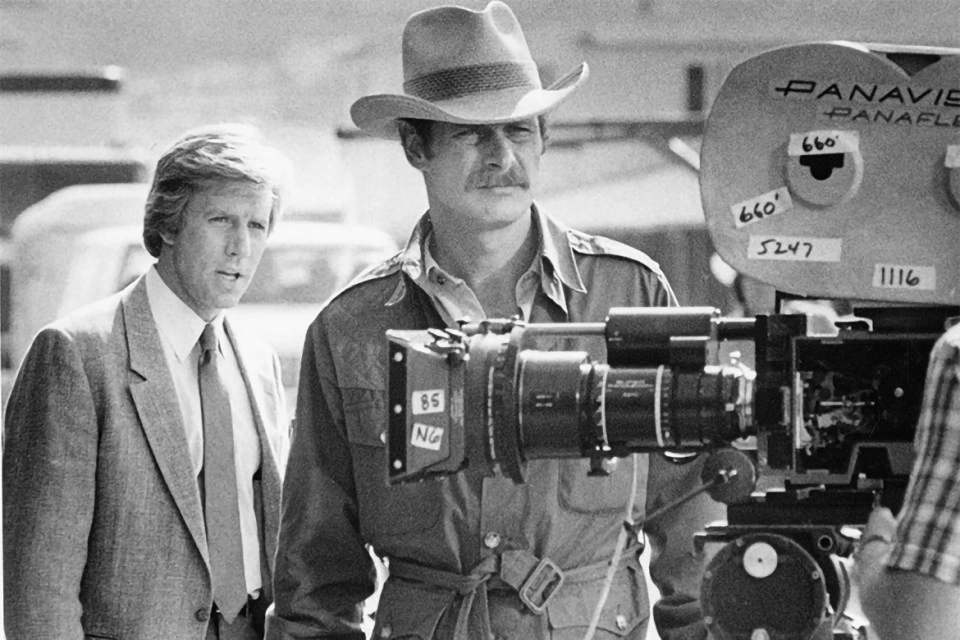
A.J. Simon looked like the person you should give the deposit to. Rick Simon looked like the reason the deposit would not be coming back. One favored a clean line, a respectable introduction, and a car that suggested some interest in appearances. The other had a cowboy hat, a mustache, and a pickup that could turn a disagreement about parking into a structural problem. Put them together and you had a detective agency. Put them in the same conversation and you had the show.
Simon & Simon never needed a talking car or a mansion to explain its appeal. Gerald McRaney and Jameson Parker played brothers whose business arrangement depended on doing useful work with a person who had been annoying them for decades. The cases supplied danger, guest stars, and occasional excuses to leave San Diego. The family supplied the reason to come back.
It became a substantial CBS hit, including three consecutive Top 10 seasons. That can get lost when the 1980s detective-show conversation turns into a traffic jam of Ferraris, helicopters, and enormous hair. The Simons were there too, arguing over the route, getting the job done, and reminding each other that being right was almost as important as getting paid.
Inside This Article
- Two names on the door, two completely different approaches
- Rick Simon: the hat, the truck, and the useful bad idea
- A.J. Simon was more than the brother with the better jacket
- “Details at Eleven” starts with a missing girl and a respectable face
- San Diego gave the cases room to breathe
- The office, the boat, and the shortage of personal space
- Cecilia Simon knew who both detectives were before the business cards
- The Fowlers gave the early agency something to push against
- “Love, Christy” makes a stolen car everybody’s problem
- “Trapdoors” brought computer trouble into the agency in 1981
- “A Recipe for Disaster” takes the family business across the border
- Magnum brought company, Higgins brought complications
- Downtown Brown was a friend with an actual job to do
- For three seasons, these brothers were Top 10 television
- The Whiz Kids visit was a different sort of crossover
- “Shadow of Sam Penny” lets the younger detectives admire an older one
- Old letters and old guns could still cause new trouble
- Concert tickets, cruises, and a deeply unwise game-show appearance
- “Simon Without Simon” understood the danger in individual success
- Later cases found the old loyalties underneath the routine
- “May the Road Rise Up” opens a door the family wanted closed
- A new lieutenant, a tougher schedule, and the late-run problem
- That theme sounded like the brothers getting on with it
- The Simons belonged to a crowded neighborhood of television detectives
- What still works when you reopen the agency
- Questions about Simon & Simon
Two names on the door, two completely different approaches
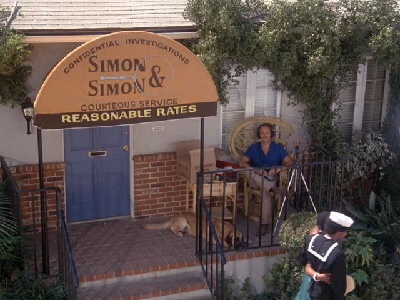
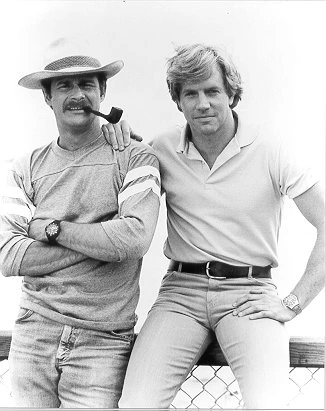
The title was an unusually honest piece of advertising. It promised two Simons and delivered two Simons, with very little agreement about how a Simon should conduct himself. Philip DeGuere’s series premiered on CBS on November 24, 1981, during the 1981–82 television season. The younger brother was Andrew Jackson Simon, generally A.J., played by Parker. McRaney played Rick, the older brother, a Vietnam veteran whose rougher manners came with a quick read on trouble.
The contrast registered immediately, without a narrator stopping to explain it. A.J. could look at home in an office where people had appointments. Rick looked as though he might have entered through a loading dock. Neither impression told the whole story. A.J. could get into a mess despite his good judgment, and Rick’s impatience with polite procedure did not mean he was an idiot. Watching them underestimate each other’s methods was part of the pleasure.
A two-person detective partnership needs more than incompatible clothing. These men had a shared mother, a shared childhood, and the ability to hear an accusation inside a perfectly innocent sentence. A professional disagreement could become a family disagreement before either man had finished stating the professional part. The writing could get a laugh out of that familiarity without requiring a comic-relief character to run into the room.
It also gave the agency a dependable emotional floor. However exasperating the other brother became, he was not a disposable coworker. The show could let a case put genuine strain on their loyalty because the loyalty was already visible in the small stuff. That was its place among the decade’s private-eye shows: a partnership you understood before the client finished describing the problem.
Rick Simon: the hat, the truck, and the useful bad idea

Rick’s hat did a remarkable amount of introductory work. So did the denim, the boots, and McRaney’s expression when somebody presented a plan with too many rules in it. He had the face of a man who expected the official explanation to leave something out. On a detective show, that is a useful occupational instinct. At a family gathering, it can make dessert take considerably longer.
McRaney gave the roughness enough humor to keep it companionable. Rick could be stubborn, untidy, and far too pleased with a shortcut. He could also be protective, observant, and unexpectedly gentle. The performance worked in the change between those registers. A joke did not erase his experience; a serious moment did not require the series to pretend he had never been funny.
His military background gave the character another layer, especially when cases brought old loyalties into the present. The series belonged to an era in which Vietnam veterans appeared across action television, but Rick was not simply an explanation for why this particular hero knew how to handle danger. He had a brother to irritate, bills to avoid thinking about, and a life that continued between confrontations.
The pickup was a natural extension of that personality. It looked useful before it looked fashionable. A.J.’s sense of proportion could disappear under the wheels of Rick’s confidence, sometimes quite literally in the show’s action business. The joke was not that a truck made him more authentic than his brother. It was that Rick could treat his own preferences as the obvious solution to a problem that had not asked for them.
That combination helped McRaney carry a leading role without sanding down the character. Rick did not need to become a polished television gentleman whenever the music turned serious. The same man could have the bad idea, make the difficult call, and be the person A.J. needed when the situation stopped being amusing.
A.J. Simon was more than the brother with the better jacket
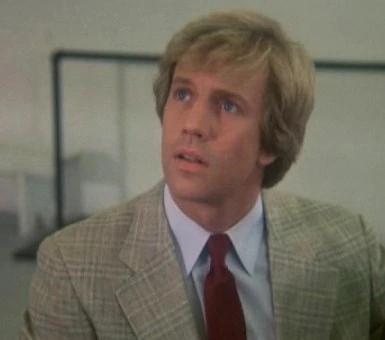
Jameson Parker had the less noisy assignment. Put a cowboy-hatted whirlwind next to a tidy man in a jacket and the whirlwind is going to draw the first look. Parker made sure the second look mattered. A.J.’s irritation had precision. He could communicate that Rick was being unreasonable without making A.J. seem delighted to be the adult in the room.
The neatness was part of the character, not an assurance that he always understood people better. A respectable appearance could help him cross one threshold and leave him looking conspicuous at another. He had his own pride, blind spots, romantic complications, and appetite for recognition. Rick did not hold the exclusive franchise on getting carried away.
A.J.’s seriousness also made the physical comedy work. It is funnier to put an apparently composed detective into an indignity when the actor lets you see him attempting to preserve a little dignity. Parker could play that battle without abandoning the case. The audience did not have to choose between believing he was capable and enjoying the fact that his day was going badly.
His tastes in cars reinforced the difference between the brothers, but the show did not reduce him to a showroom display. Early episodes include the classic Chevrolet convertible as well as the familiar Camaro association. Those vehicles gave him a cleaner, more controlled visual identity than Rick’s pickup. They also provided more things for a case, or a brother, to put at risk.
Most important, Parker could make affection appear inside aggravation. If A.J. had simply despised Rick’s habits, the partnership would have become a weekly puzzle about why he tolerated them. Instead, the tolerance had a history. He might object to the entire method and still understand the man using it. That is a considerably better foundation for eight seasons than two attractive people who happen to share a business card.
“Details at Eleven” starts with a missing girl and a respectable face
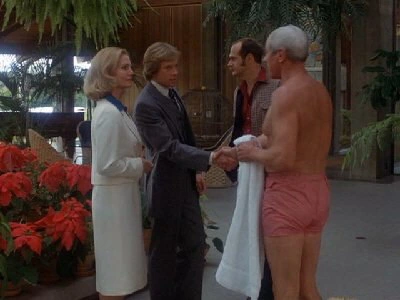
The first regular episode, “Details at Eleven,” gives the fledgling agency a missing-person job connected to a prominent television newsman. Peter Graves plays Wade Christian, a public figure whose familiar face makes a useful entrance into the story. The brothers are not initially chasing an international mastermind. They are trying to find a young woman, and the job opens onto a larger problem.
That is a strong way to introduce this particular business. A client arrives with a version of events. The detectives follow it into places where the version begins to fray. The respectable exterior matters, because both brothers make decisions about appearances even when they do it differently. A.J. can work the polished introduction. Rick is less impressed by the polish.
The early episode also lets the small-agency economics remain visible. These are men who need cases. An investigation is not an interruption of a luxurious private life; it is their job, and the job comes with uncertain information. That makes the series feel closer to the working private-eye tradition than to a fantasy of unlimited resources.
Graves brings a familiar television authority to the guest role, and the surrounding cast includes Markie Post. Revisiting an early episode now has the added pleasure of seeing recognizable performers moving through somebody else’s show. The guest faces are enjoyable, but the important introduction is the brothers’ rhythm: how quickly they can disagree, how differently they approach the same person, and how much the case improves when both sets of instincts are in play.
The premiere did not arrive with the ratings momentum the series later enjoyed. It belonged to a show still finding its audience. Remembering that makes the eventual success more interesting. The instantly readable partnership was there; the network environment that would let a much larger audience find it was still to come.
San Diego gave the cases room to breathe
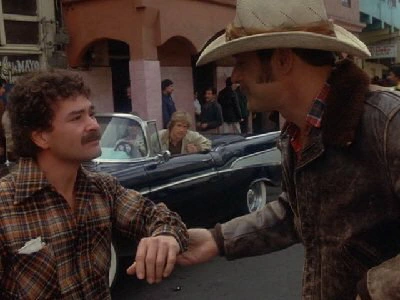
San Diego was a smart fictional home for the Simons. The harbor, the border, the military presence, and the distance between a respectable office and a rougher transaction gave the stories different directions to travel. A client could pull them toward money, a family emergency, a waterfront job, or an old acquaintance without the show having to reinvent its town.
The setting also distinguished the series from the Hawaiian escape of Magnum, P.I. Both offered sunshine and detective work, but the Simons did not come with Robin Masters’ estate. Their San Diego was a place to conduct business, maintain awkward relationships, and get into trouble on roads that were not waiting for a glamorous arrival.
That does not mean every later shot should be treated as a San Diego travel document. Television production and a story’s stated location are different things. What mattered to the weekly viewer was the world the series assembled: coastal, mobile, close enough to other worlds that an ordinary assignment could become something considerably less ordinary.
The cars helped keep that geography tactile. Roads were not just connecting lines between two offices. A vehicle could be a workplace, an escape route, evidence, a joke, or the thing the client wanted back. The brothers spent enough time in motion that the audience got their relationship in transit as well as across a desk.
Within the larger landscape of 1980s television, that combination was easy to settle into. The show could be sunny without being weightless, and local without trapping itself inside one neighborhood. It had enough space for the week’s adventure and enough familiar ground to make returning to the agency feel like returning to the program.
The office, the boat, and the shortage of personal space
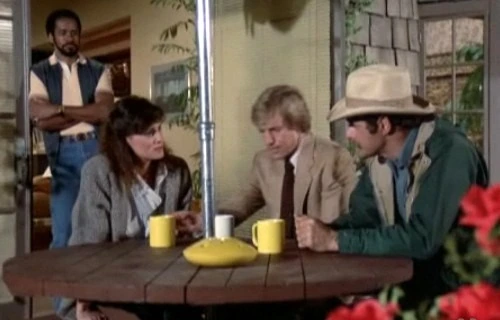
A small detective agency needs a door with its name on it. It also needs somewhere for the people behind that door to go when the day is finished. With the Simons, the boundaries between working hours and family hours were not especially secure. Rick’s boat in A.J.’s yard made the point more efficiently than a speech about incompatible lifestyles.
It was an arrangement that turned personality into scenery. A.J. might favor order, but order had to negotiate with a brother living close enough to be inconvenient. Rick might favor independence, but his version of independence was not always separated from his brother’s property. Neither man got to enjoy the clean theoretical version of his chosen life.
The agency itself had a similar function. A sign and a desk could make them look established, but the cases kept reminding them how much a small business depends on people paying, telling the truth, and not bringing an entire criminal operation through the front door. Rick and A.J. could disagree about expenses or methods without those disagreements feeling imported from another program.
There is a good reason offices and homes are so important in a weekly series. A chase delivers excitement once. A place where two characters keep encountering each other’s habits delivers material every week. Simon & Simon had both. The audience could enjoy the exceptional case because the ordinary friction had already made the people recognizable.
And the boat was an unusually economical domestic joke. It did not require a laugh track or a new explanation at the beginning of every episode. It was simply there, an object that said Rick had solved his housing problem in a way that guaranteed A.J. would continue having a housing problem of his own.
Cecilia Simon knew who both detectives were before the business cards

Mary Carver’s Cecilia was essential to the family part of the series. She could look at two grown professionals and see her sons, which was a useful corrective whenever either of them became too impressed with himself. A mother in a detective show can easily become a delivery system for worry. Cecilia had opinions, a social life, and the capacity to create complications of her own.
She also made the brothers’ history believable. With her in the room, their differences did not look like two personality descriptions assigned by a casting department. They looked like the continuing result of a family that had known both men much longer than the audience had. Carver could carry that familiarity without turning every scene into an explanation of childhood.
The writing sometimes allowed her ordinary requests to become cases. “The Hottest Ticket in Town” begins with a family favor involving concert tickets and develops into a counterfeiting investigation. That is a particularly suitable Simon problem. A task that should be small becomes a job, and declining it was never likely to be as simple as telling a stranger that the agency was busy.
Later stories gave Cecilia a past that did not begin with motherhood. “Still Phil After All These Years” uses a high-school reunion and an old time capsule to connect her social history to a murder mystery. It lets the sons discover that knowing their mother is not the same thing as having known every part of her life. Carver gave the program enough presence to make that a story about a person, not just a surprise in a file.
That mattered whenever the series leaned into the family. The mother was not standing outside the real show waiting for the men to return. She was part of its center. Rick and A.J. could travel across a border or chase somebody through a new setting, but Cecilia remained one of the people who made those two names belong together.
The Fowlers gave the early agency something to push against
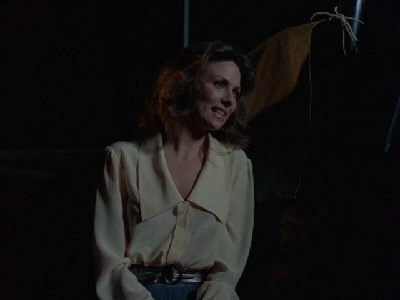
Eddie Barth’s Myron Fowler offered an especially practical source of friction: another detective, with a more established operation and a history with A.J. Competition was not an abstract subject when the person across town knew how one of the brothers worked. Myron could stand for professional success while giving Rick another authority figure to needle.
Jeannie Wilson’s Janet Fowler complicated those lines in a different way. Myron’s daughter had connections to the brothers and a developing professional life of her own. Her movement into legal work gave the series another point of contact beyond the agency. The relationships supplied assistance, embarrassment, and reasons for people to know more than the latest client had told them.
In “Uncivil Servant,” an investigation involving Myron’s own business brings that competitive relationship inside the job. It is the sort of premise that suits a series about people who cannot quite separate work from personal history. You may prefer to stay out of a rival’s problems, but that is harder when the rival already belongs to your world.
The Fowlers are also a reminder that the familiar version of a long-running show is not always the version that began. Early Simon & Simon had its own professional neighborhood. As the series developed, other characters became more prominent and some early arrangements receded. That process did not require pretending the first seasons were merely a rough sketch.
Those episodes are worth watching for the specific tensions they offer. A.J.’s effort to establish himself, Rick’s relationship to conventional professionalism, and Janet’s position between overlapping loyalties all give the early cases a different texture. There was room for the series to grow without replacing the basic thing that worked: two brothers who could turn almost any practical question into a conversation about each other.
“Love, Christy” makes a stolen car everybody’s problem

“Love, Christy,” the second regular episode, begins with Rick helping a college student recover a stolen car. A modest assignment is an excellent way to get these brothers into trouble. It sounds manageable, it puts Rick’s willingness to help on display, and it gives the series a reason to visit people who are not going to be impressed by a respectable introduction.
The episode’s vehicle action also makes the difference between the brothers visible. Rick’s truck is not simply a colorful item parked outside the agency. It is a working piece of the show’s comic and action vocabulary. An early car case is exactly the place to establish that one brother’s approach to machinery may be a threat to the other brother’s sense of proportion.
What keeps the premise from becoming a collection of car stunts is the way it begins with a person. Rick takes an interest, agrees to help, and pulls A.J. into the consequences. The client does not have to be famous or fabulously rich. A small problem can lead to dangerous people, and the brothers cannot assume the size of the original favor measures the size of the eventual mess.
For viewers who remember the series mainly through the later theme music, an early episode like this is useful. The surfaces are a little different, but the durable arrangement is already in place. Rick opens a door through instinct and connections; A.J. has to deal with what comes through it; the two approaches become more useful together than either man would care to admit.
It also establishes a very 1980s pleasure without requiring a lecture about the decade: real vehicles occupying real space and causing visible inconvenience. The truck does not need to announce a special capability. It just needs Rick behind the wheel and a problem that he thinks can be improved by proceeding.
“Trapdoors” brought computer trouble into the agency in 1981

Before the brothers crossed into the world of Whiz Kids, “Trapdoors” was already giving them a case involving a teenager and a bank computer. Robbie Rist plays the young computer user. The job begins with an adult who wants the boy found, but the adult’s motives make the assignment more complicated than a clean division between responsible authority and troublesome kid.
That is a good fit for Rick and A.J. They can disagree about procedure while still having to decide whose account deserves belief. The technology supplies a new kind of access; the detective work remains concerned with familiar things, including manipulation and the possibility that the client is not being entirely helpful.
Watching an early-1980s computer story now is enjoyable partly because the machinery occupies such a different place in everyday life. The kid’s ability is specialized and surprising. The brothers cannot settle everything by casually reaching into a pocket for a connected screen. Information has to be obtained, explained, and checked through people who do not all share the same knowledge.
The series would later make a more explicit connection to young computer experts in “Fly the Alibi Skies.” The earlier “Trapdoors” shows that a detective program could absorb contemporary technology without surrendering its identity to it. Rick did not have to become an enthusiast for every new machine. A.J. did not have to turn into a computer genius. They had to understand enough about the problem to keep somebody else from controlling the story.
The early stills also catch the agency’s modest scale. The name on the entrance looks perfectly respectable. The operation behind it is still two men trying to make the next assignment work. Whether the problem involves a stolen car or a computer-assisted theft, the staffing situation remains stubbornly Simon and Simon.
“A Recipe for Disaster” takes the family business across the border
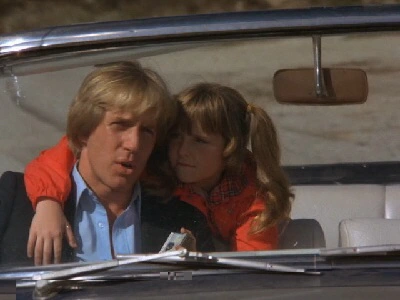
“A Recipe for Disaster” sends the brothers to Mexico on a job involving a missing child. The central question is personal before it becomes larger: where is the girl, who is telling the truth about her situation, and what has the agency actually been hired to do? It gives the series a border story without having to manufacture a sudden international career for the Simons.
Parker and McRaney can play different kinds of competence in that setting. A.J.’s conventional presentation remains useful, but it does not automatically solve the problem of arriving somewhere with incomplete information. Rick’s willingness to operate outside a neat plan can help, but the willingness is not a guarantee that he understands every danger. Each man needs something the other brings.
The child also changes the emotional scale of the case. A person who is frightened, dependent, or caught between adults cannot be treated as just another object to recover. That gives the performers a chance to soften the businesslike surface. The brothers are paid investigators, but the program is more appealing when it lets them register the human stakes of a job.
It is worth distinguishing that kind of story from the show’s later travel adventures. The attraction here is not simply a change of scenery. San Diego’s proximity to the border makes the trip feel like an extension of the agency’s world. A short description on an invoice can conceal a much larger argument about who is using whom.
The episode belongs to the first season, when the series was still introducing the range of things a Simon case might become. Its photographs give us something equally useful: the brothers outside the office, moving through a physical world together, with the bright coastal surface doing little to guarantee that anyone’s day will be uncomplicated.
Magnum brought company, Higgins brought complications
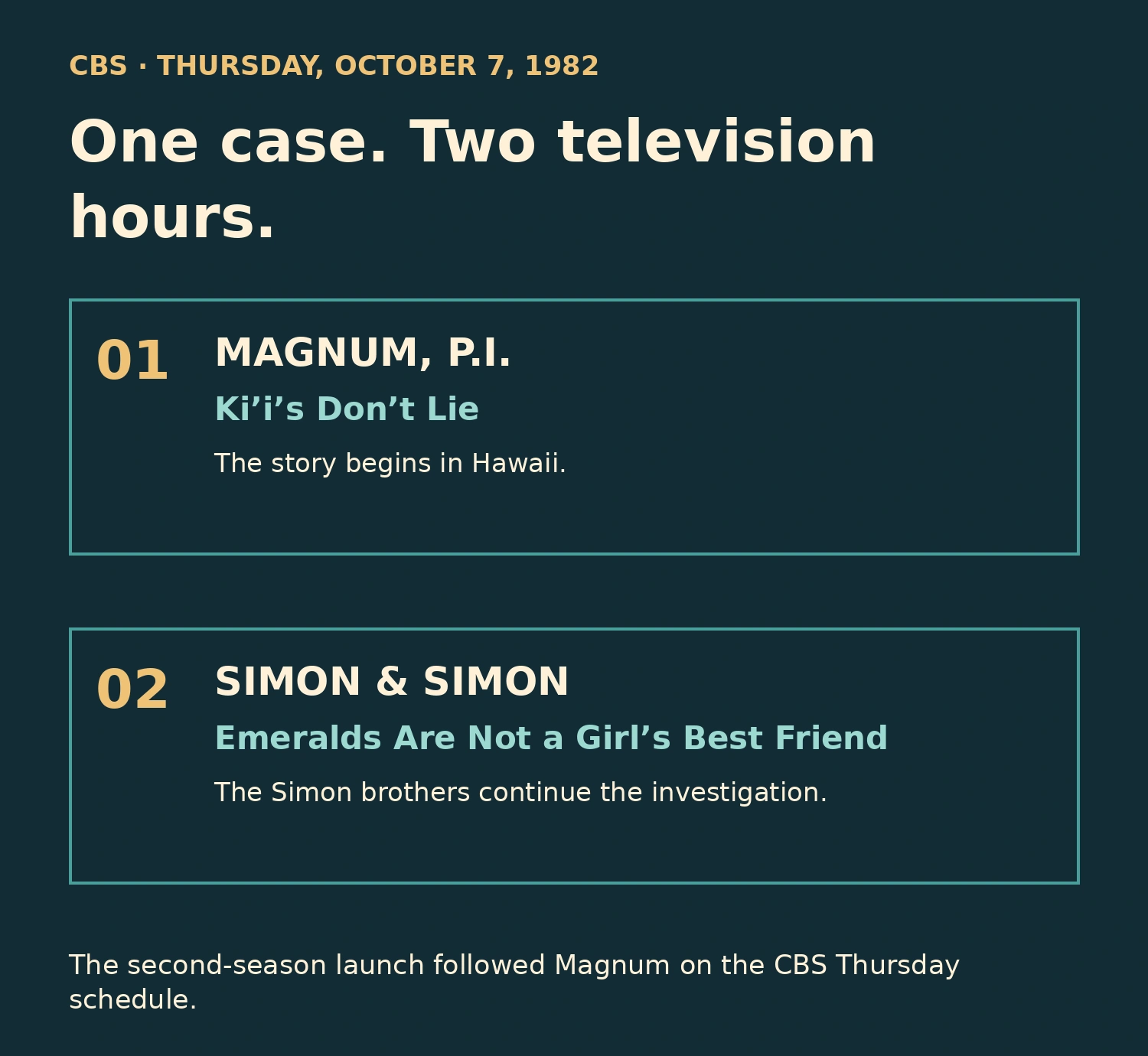
The big break came with a better place on the CBS schedule and a very well-connected neighbor. For the second season, Simon & Simon followed Magnum, P.I. on Thursday nights. On October 7, 1982, the shows shared a crossover: “Ki’i’s Don’t Lie” on Magnum led into “Emeralds Are Not a Girl’s Best Friend” on Simon & Simon.
That was more than a character waving from the edge of somebody else’s frame. It gave viewers a reason to follow an investigation across the hour. The story involved a con artist, stolen valuables, and Higgins becoming entangled with the brothers. John Hillerman’s particular brand of controlled displeasure was excellent company for two men who could disagree before they had finished receiving instructions.
The crossover worked because the programs were compatible without being identical. Magnum already occupied a world where a charming investigator could be both resourceful and inconvenient. The Simons brought a different source of friction: the argument was inside their own partnership. Rick and A.J. did not need to borrow Magnum’s entire lifestyle to belong in the same adventure.
It is easy to describe a scheduling move as though the network simply placed one show behind another and watched the audience flow downhill. Viewers still needed a reason to stay. The brothers had a legible relationship, the case made the handoff inviting, and the following weeks gave the new audience the same people to return to.
The results were substantial. The season ending in 1983 put Simon & Simon in seventh place. You can see the company it was keeping in the 1983 television rankings. The series had gone from a program fighting for attention to a genuine member of the network’s hit lineup. Rick still looked unlikely to wear a tie voluntarily, but the business was suddenly doing rather well.
Downtown Brown was a friend with an actual job to do
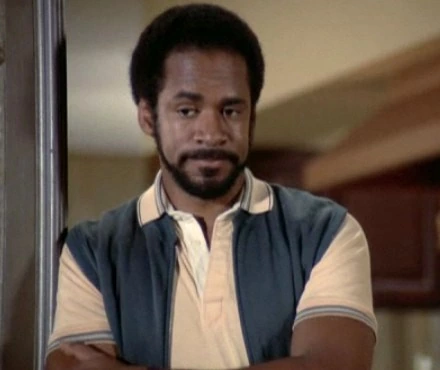
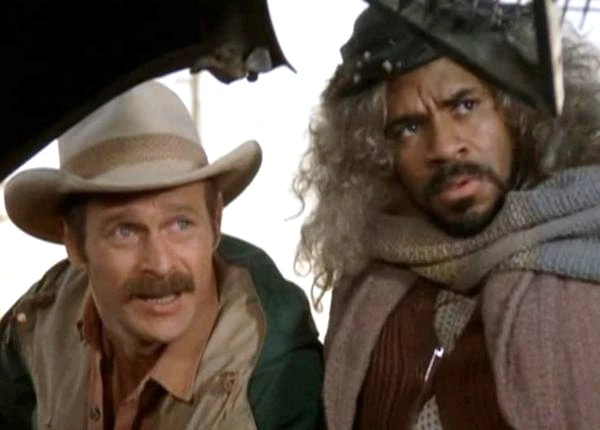
Tim Reid joined the regular world of the series as Lieutenant Marcel “Downtown” Brown in the third season. A police contact is almost a household appliance in private-eye television: somebody must occasionally explain what the department knows and why the hero should stop interfering. Reid made Brown feel like a person who had his own intelligence, responsibilities, and limits.
He could be friendly without becoming the agency’s unpaid employee. That distinction gives a recurring relationship room to breathe. The Simons need cooperation, but Brown belongs to a police department, not their business. His work cannot always wait for Rick’s theory or A.J.’s certainty. The friction can be funny because the friendship is established, and the boundaries can matter because the job is real within the show’s world.
Reid also brought a different rhythm to the ensemble. The brothers had their familiar two-way argument; adding Brown changed the room. He could assess the situation instead of merely choosing which Simon to believe. The series benefits when supporting characters are allowed to be competent around the leads. It makes the leads’ world seem populated rather than arranged for their exclusive convenience.
Daphne Reid’s reporter Temple Hill added another useful relationship, especially when an investigation touched competing accounts of what had happened. A reporter and a police lieutenant do not arrive at a story with the same obligations. That gave the cases more possibilities than a single helpful contact supplying one decisive piece of information.
Brown’s seasons are part of the version many viewers remember most clearly. His presence helped the agency feel established inside a larger community, while leaving the partnership at the center. The show did not stop being about brothers when it gave them friends. It gave the brothers more people who could recognize, and occasionally refuse to accommodate, their particular habits.
For three seasons, these brothers were Top 10 television
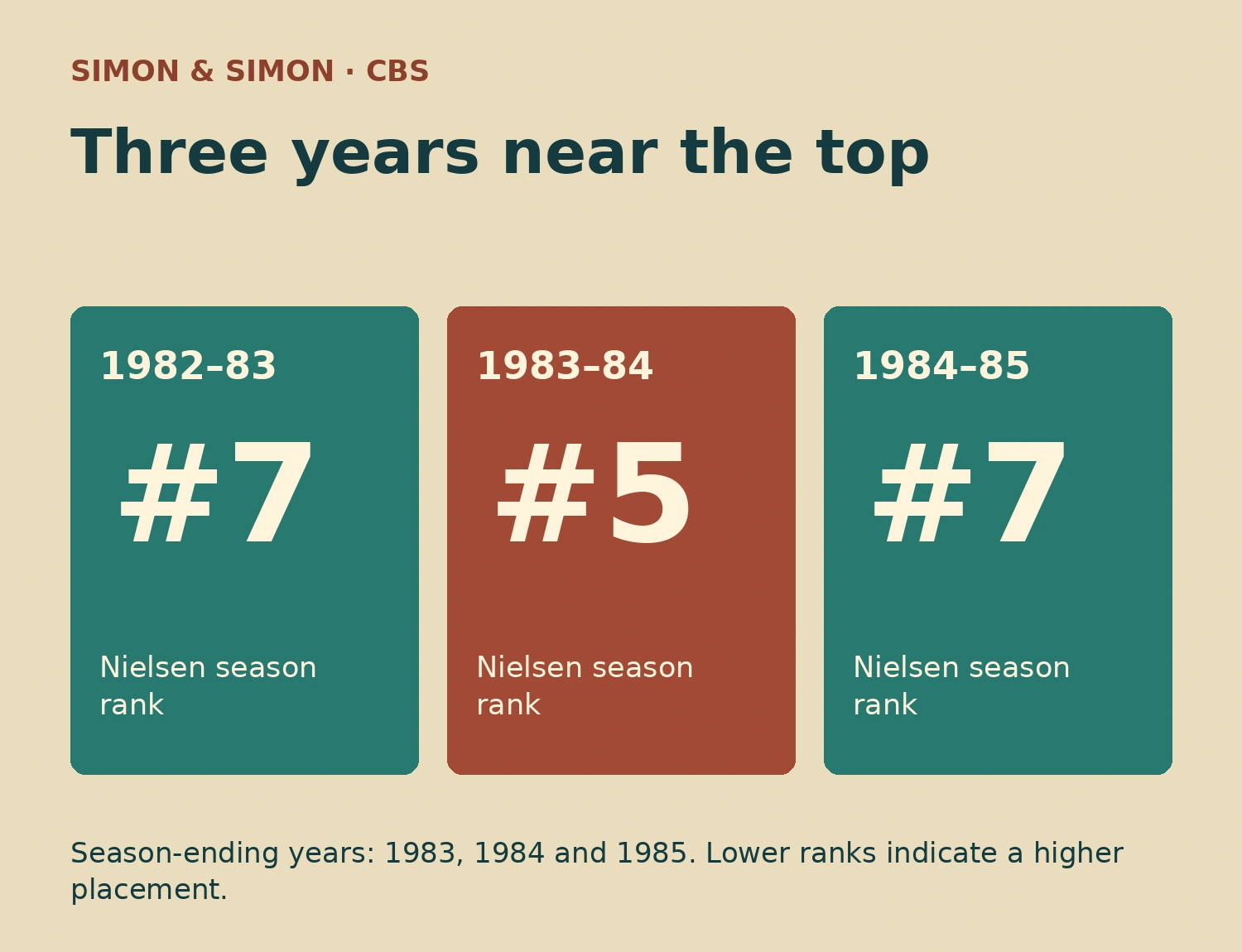
The simplest correction to the idea that Simon & Simon was merely a pleasant second-tier memory is its peak: seventh in 1982–83, fifth in 1983–84, and seventh in 1984–85. Those are season rankings, not a particularly good week selected to make the show look bigger. The series was a major CBS performer.
Its fifth-place finish puts a useful wrinkle in the way we remember television history. For the season ending in 1984, the Simons finished ahead of Magnum, P.I. That does not erase the value of the earlier lead-in. It shows how effectively the newer show developed an audience of its own. The neighbor who helped introduce the business was no longer the only reason people were arriving.
The biggest television hits of 1984 put that achievement in perspective. The Simons were sharing the upper reaches with enormous soaps and other heavily remembered programs. Their success was not a tiny cult story discovered after cancellation. It happened while the series was producing new episodes for a large weekly audience.
The following season stayed strong even as NBC’s Thursday identity changed. The Cosby Show arrived in fall 1984, and NBC’s comedy lineup became an increasingly important competitor. The Simons nevertheless finished seventh for 1984–85. The season ending in 1985 belongs in their success story, not in a premature account of the decline.
Ratings do not explain every reason an audience liked the show. They do establish that the affection was widespread at the time. A.J. and Rick were not just two familiar faces hanging around the edges of an action-TV decade. For a while they were among its most successful weekly appointments, which is a pretty good return on a detective agency with this much internal disagreement.
The Whiz Kids visit was a different sort of crossover
Magnum was not the only neighboring series to cross paths with the brothers. In October 1983, A.J. appeared in the Whiz Kids episode “Deadly Access.” The next night, “Fly the Alibi Skies” brought characters from that computer-centered CBS show into Simon & Simon. Richie Adler, played by Matthew Laborteaux, helped with a case involving airline reservations and lookalike travelers.
That pairing has a particular early-1980s flavor. The new electronic world was exciting, complicated, and capable of doing things the adult detective did not necessarily understand. A teenager could possess useful expertise without possessing Rick’s life experience or A.J.’s professional confidence. The investigation gave the different kinds of knowledge a practical reason to meet.
There is an enjoyable generational awkwardness built into the arrangement. The brothers are the leads of their own show, accustomed to being the people who figure things out. Bringing in a young computer expert creates a place where they have to ask somebody else. A good recurring hero can survive that. In fact, being allowed to need help generally makes him better company.
The crossover also connects to “Trapdoors,” which had already put a capable young computer user into an early Simon case. The technology had changed the kind of evidence people could manipulate, but it had not made dishonesty a new invention. An airline record still pointed toward people with motives, movements, and something they preferred to conceal. The machinery widened the problem; it did not remove the need for investigators.
It is a modest piece of shared television history compared with the Magnum event, and that is part of its appeal. The Simons’ world was flexible enough to admit another show’s premise without suddenly turning Rick into a futuristic gadget specialist. A.J. could ask a useful question, Richie could bring an answer from a different direction, and Rick could remain Rick. The agency did not need to update its entire personality just because somebody else understood the computer.
“Shadow of Sam Penny” lets the younger detectives admire an older one
“Shadow of Sam Penny,” from November 1983, gives the Simons an investigation involving a celebrated older private eye. Robert Lansing plays Penny, whose disappearance is tied to a woman and a case from his past. A.J.’s enthusiasm for the detective adds a personal angle: admiration is useful until it starts doing the thinking for you.
The guest cast is part of the pleasure. Anne Francis, Elisha Cook, Dane Clark, Scott Brady, and Joan Leslie connect the episode to earlier screen worlds. The story does not have to pause for a formal history lesson. Familiar faces can bring an atmosphere with them, and an older detective with unfinished business is enough to give the brothers a different kind of company.
For A.J., the attraction of a legendary professional makes sense. He is the brother more likely to value the appearance of an orderly career. Meeting the person behind a reputation gives the show room to complicate that attraction. For Rick, respect is less likely to arrive neatly packaged. Their different reactions can become part of the investigation without turning either man into a spokesman for an entire generation.
This is one way Simon & Simon could acknowledge the private-eye tradition while remaining a weekly 1980s series. The older world is not a museum case. Its unfinished relationships and imperfect people can still interfere with a current job. A reputation survives, but so do the consequences of what the person actually did.
That is more interesting than simply dressing the brothers in old-fashioned hats for an hour. The episode uses the attraction of the legendary detective and then asks the working detectives to deal with the complications. A.J. may admire the profession, but admiration does not eliminate the need to ask another question.
Old letters and old guns could still cause new trouble
“The Dead Letter File” begins with an old letter arriving at the agency. That is an appealingly small way to disturb the present. The delivery itself is ordinary; what the message points toward is not. Rick and A.J. inherit a question that belonged to another time and discover that passing years do not necessarily make a dangerous secret harmless.
The premise suits a show whose investigators are so heavily attached to their own shared past. They know that history is not something stored in a separate room. It changes the meaning of current relationships. A letter can reopen a problem just as a familiar name can change the tone of a conversation between the brothers.
“The Dillinger Print” uses a different piece of the past: a retired FBI agent’s murder and the theft of a gun associated with John Dillinger. The attraction is not only the famous criminal’s name. A collectible object arrives with competing stories about its importance, and a daughter needs answers about a much more immediate loss.
Both cases give the agency something more tactile than an anonymous criminal conspiracy. There is an object to examine, a history to question, and a person whose interest in that history may not be innocent. The brothers’ different habits can be useful here. One might respond to the respectable account; the other might wonder who is benefiting from everybody accepting it.
These episodes also show why the series can be enjoyable outside its biggest action sequences. A gun in a collection or a letter in the post is small enough to hold in a hand. The danger comes from the people attached to it. That keeps the investigation at a human scale, even when the history behind the object stretches well beyond the Simons’ ordinary day.
Concert tickets, cruises, and a deeply unwise game-show appearance
The Simons were particularly good candidates for assignments that ought to have been pleasant. “The Hottest Ticket in Town” turns a family request for concert seats into a counterfeiting case. “Bon Voyage, Alonso” puts Rick on a cruise with Cecilia and younger relatives before the ship’s trouble overtakes the social arrangement. “Family Forecast” has the brothers and their mother pose as contestants while investigating a crooked game show.
Each premise puts the family into an environment with rules of its own. A ticket is supposed to admit you to something. A cruise is supposed to deliver a vacation. A game show is supposed to make its procedures look entertaining and fair. Investigators become useful when the friendly surface conceals another operation, and the Simons become especially entertaining when they cannot stop being family long enough to blend in smoothly.
“Family Forecast” is a particularly apt situation for this trio. A program that presents a family as a coordinated unit is inviting trouble when it recruits Rick, A.J., and Cecilia. The case gives them a practical reason to participate, but their existing dynamics supply the human interest. Nobody needs to invent a brand-new rivalry for the sake of the set.
The cruise episode similarly lets the show change scenery without leaving its relationships behind. Cecilia is not simply a voice on the telephone reminding Rick to be careful. She belongs inside the setting, with her own reasons for being there. When danger arrives, the family connection is already present rather than added as an emotional instruction.
This is where the program’s easygoing reputation can undersell its machinery. Light entertainment still needs relationships that function under changing conditions. The Simons could carry theirs from an office to a vacation setting to a television studio. The cases changed the surroundings. The recognizable people made the surroundings worth visiting.
“Simon Without Simon” understood the danger in individual success
The two-part “Simon Without Simon,” broadcast in January 1985, takes an obvious fear built into the title and lets it become the story. The brothers receive attention after uncovering a smuggling operation. Attractive offers follow. They decide to dissolve the partnership, and the separation turns out to be considerably less liberating than it might have sounded.
A partnership show can threaten a breakup cheaply. All it takes is one unreasonable argument and a scene in which somebody walks out. This premise has a better pressure point: success. The men do not merely need relief from each other. They can imagine that recognition has finally provided an opportunity to be the version of themselves a brother keeps interrupting.
That temptation suits both characters. A.J. has reasons to value professional legitimacy. Rick has reasons to dislike being managed. Offers from outside the family can flatter different parts of them, which makes the rift more useful than a contest over who gets the larger desk. The case is testing the business arrangement through something the business presumably wanted.
The second part returns danger to the equation, including a shooting and the attention of the FBI. Those are action-show devices, but they reconnect to the personal problem. Whatever the brothers tell themselves about independence, they know things about each other that a new admirer or employer does not. Their shared history becomes a practical resource again.
It is a strong mid-run reminder of why the show works. The title contains the answer, but the pleasure lies in watching the characters reach it. Rick without A.J. and A.J. without Rick may each have advantages on paper. The television series lives in the space where those advantages collide with the fact that neither brother is quite as self-sufficient as he would prefer.
Later cases found the old loyalties underneath the routine
By the middle seasons, the series had enough established history to move between a light assignment and something more personal without introducing the brothers all over again. “A.W.O.L.” involves a young sailor who needs help after being framed in a drug case. The military connection belongs comfortably in the show’s coastal world, while the accusation supplies the familiar question of whose official account should be trusted.
“The Last Big Break” brings back a surfer believed to have died years earlier. The premise offers the attractive surface of a California past, then asks what happens when the missing person reappears with danger following him. It is another example of the series using old history as active trouble rather than decorative background.
“Ties That Bind,” in the seventh season, gives Officer Nixon a reason to bring the brothers a problem involving another policeman and a loan shark. A recurring contact can do more than pass information across a desk when the trouble lands inside his own circle. The case changes who is asking for help, and that makes the familiar network of relationships feel less mechanical.
The variety matters. A sailor, a returning surfer, and a police friend bring different kinds of vulnerability to the agency. The brothers can joke, argue, and use their usual methods, but they do not have to treat every client as the same person in a different jacket. Good weekly television often depends on that balance: enough familiarity to feel like the show, enough difference to justify this particular hour.
Not every later story has the energy of the peak years, and the format can certainly show its age. A revisit does not require pretending otherwise. The better cases still find something specific for Rick and A.J. to care about, and something that puts their easy assumptions under pressure. That is where the series earns the loyalty its central partnership asks us to believe in.
“May the Road Rise Up” opens a door the family wanted closed
In April 1988, “May the Road Rise Up” puts the brothers’ own family history at the center of an investigation. They see the Buick associated with their father’s death, a car they understood to have been destroyed. The sight pushes them toward questions Cecilia does not want reopened.
It is an excellent use of the show’s accumulated familiarity. An old car means something very different when it is connected to your father instead of a client’s collection. The brothers cannot keep a professional distance from the facts, and their mother cannot be treated as merely another reluctant witness. Everyone involved already has a life built around what they thought happened.
That gives Carver an especially important place in the story. Cecilia’s objections are not just a device for delaying the answer until the last act. They belong to a parent whose relationship with the past differs from her sons’ relationship with it. The episode asks the series to take its own family seriously after years of deriving comedy from how well its members know one another.
The car is a particularly appropriate trigger. Vehicles have been carrying the show’s personalities since the beginning. Here, one carries a memory the brothers cannot simply drive around. The object is recognizable, but the explanation attached to it has become unstable. Their ordinary professional impulse to investigate now threatens a piece of the household’s emotional order.
By this point the Simons do not need to prove that they are brothers through a fresh batch of teasing. The audience has watched them make room for each other over many seasons. A story about their father can draw on that history and let the partnership become quieter. It is one of the clearest reasons to remember Simon & Simon as a family series with detective cases, as well as a detective series with an unusually persistent family.
A new lieutenant, a tougher schedule, and the late-run problem
The later seasons changed the agency’s supporting world. Joan McMurtrey played Lieutenant Abigail Marsh in the seventh and eighth seasons, following the years associated with Downtown Brown. A new police contact brought a different personality into a relationship the show could not simply leave vacant. The brothers still needed somebody whose working day did not revolve around their preferred methods.
The larger television environment was changing too. CBS’s Thursday detective combination no longer occupied the same position it had when the Simons surged into the Top 10. NBC’s comedy strength made the night a different contest. The series eventually moved to Saturday, and its final season was much shorter than the years when it had been a dependable large order on the schedule.
It would be too easy to reduce that whole decline to one rival sitcom. Audience habits change, familiar formats lose novelty, and networks make choices about where to place aging series. The 1986 television season gives the change some surrounding context, without turning the Simons’ entire later life into a footnote to another network’s success.
The final CBS broadcasts came in late 1988. Two remaining episodes were shown later in syndication, which is one reason series listings can carry the run into 1989. The broad distinction is more useful than forcing every listing into one tidy end date: the network run ended before the last produced episodes had all reached viewers.
A short final season can make a long-running show look smaller in retrospect. It should not erase the earlier scale. The series had already produced eight seasons of the partnership, weathered changes in supporting characters, and spent three consecutive seasons in the Top 10. A.J. and Rick had been more than temporary tenants on CBS, even if the final exit did not have the ceremony later audiences might expect.
That theme sounded like the brothers getting on with it
The familiar Simon & Simon theme, credited to Barry DeVorzon and Michael Towers, helped sell the show’s personality before the case began. It had forward motion without sounding sleek. The guitar gave it some grit; the overall feel promised action with room for a grin. It suited Rick’s rougher edges without shutting A.J. out of the picture.
The first season used different theme material associated with “Best of Friends,” credited to DeVorzon and Linda Creed, with the Thrasher Brothers performing the vocal version. That is a small but enjoyable shock for somebody revisiting the beginning after remembering the later opening for decades. A familiar series can briefly feel unfamiliar because the music that has become attached to it is not there yet.
Television themes did a demanding job in a short space. They had to identify the program, introduce or reinforce the cast, and make a promise about the hour ahead. This one could tell you that the brothers were going to get into something without making it sound like the end of the world. That was a good promise for the series to make.
The opening also belonged to a period when recurring images could become almost as familiar as a character’s voice. An actor’s look, a moving vehicle, a bit of physical business, and the music together formed a compact introduction. You did not need to remember the details of last week’s culprit to recognize the people arriving this week.
That is part of the pleasure of returning to the show now. The music brings back its pace, but the episodes still have to earn the feeling. At its best, Simon & Simon does. The brothers remain capable enough to follow into danger and fallible enough that the trip does not become an exercise in admiring their perfection.
The Simons belonged to a crowded neighborhood of television detectives
The decade had no shortage of investigators with a defining arrangement. Remington Steele played with identity and attraction. Moonlighting made the collision of personalities part of its dazzling, unruly center. Magnum had his own mix of charm, friendship, and private history. The Simons’ distinction was family: the argument preceded the agency and would survive the latest case.
That gave them a different kind of intimacy from the will-they-or-won’t-they partnership. There was no romantic question waiting to change the whole arrangement. There was the more durable question of whether two people who knew exactly how to annoy each other could keep doing worthwhile work together. The answer could be yes without requiring the annoyance to disappear.
They also occupied a different space from the decade’s police ensembles. Rick and A.J. did not have a squad room full of colleagues, a department hierarchy, or an institution paying the basic bills. Their connections to the police mattered, but their small agency put them in a more precarious position. Taking a job meant taking on uncertainty personally.
The private-eye tradition offered plenty of room for humor about money, status, and imperfect domestic arrangements. Simon & Simon added the useful knowledge that your partner might have been making the same irritating expression since adolescence. A stranger can misunderstand you. A brother can understand you perfectly and choose the most inconvenient moment to demonstrate it.
That made a natural connection to Jim Rockford’s earlier brand of private-eye trouble: the bills, the inconvenient acquaintances, and the distance between doing the job and looking glamorous while doing it. The Simons added another permanent complication to the working detective’s life. When the partner criticizing your judgment is your brother, even ending the business meeting does not necessarily end the discussion.
Placed back among the familiar pleasures of the 1980s, the series looks less like an overlooked imitation and more like a successful variation. It did not need to own every detective-show trick. It needed two people whose company made an ordinary case feel like an hour worth spending.
What still works when you reopen the agency
The most useful way to revisit Simon & Simon is to let the brothers be the attraction before asking the mystery to be a masterpiece. Some cases are cleverer than others. Some guest plots announce their direction early. The regular pleasure is McRaney and Parker finding different routes through the same day and refusing to let the other man forget the route he chose.
The supporting players deserve attention too. Carver makes Cecilia a person whose presence changes the men. Reid makes Brown a friend with responsibilities beyond the friendship. Barth and Wilson give the early series its own web of professional and personal connections. McMurtrey brings another temperament into the later police relationship. The agency’s world feels stronger when those people are allowed to have purposes of their own.
The period details are enjoyable without being the whole reason to watch. A car, a telephone, an office sign, and a piece of clothing can all locate a scene quickly. The more lasting attraction is the work of the actors inside it. The fashions can date; the expression on A.J.’s face when Rick has improved the plan without asking remains perfectly understandable.
There was a 1995 reunion movie, Simon & Simon: In Trouble Again, which brought the partnership back after the original run. That later return belongs outside the 1980s story, but its existence makes sense. The central idea was portable. People might change jobs or addresses, yet the brother who knows exactly how to get under your skin remains unusually difficult to replace.
The best memory to keep is not a claim that the show was secretly better than every other detective series. It is more specific, and more affectionate: Rick and A.J. could turn a ride to the next appointment into a scene. The case got them out the door. The conversation made you want to go with them.
Questions about Simon & Simon
Who played the Simon brothers?
Gerald McRaney played Rick Simon, and Jameson Parker played his younger brother, Andrew Jackson “A.J.” Simon. The performers were not brothers. Their characters operated a private detective agency in San Diego.
Was Simon & Simon a Magnum, P.I. spin-off?
No. It began as its own series. The shows later shared a crossover in October 1982, when the Simons followed Magnum on the CBS Thursday schedule. “Ki’i’s Don’t Lie” led into “Emeralds Are Not a Girl’s Best Friend.”
How successful was it in the ratings?
Its peak included three consecutive Top 10 seasons: seventh in 1982–83, fifth in 1983–84, and seventh in 1984–85. Those are full-season placements, not ratings for individual episodes.
Who played the brothers’ mother and their police friend?
Mary Carver played Cecilia Simon throughout the series. Tim Reid played Lieutenant “Downtown” Brown during the middle seasons. Joan McMurtrey played Lieutenant Abigail Marsh in the final two seasons.
Why do listings say the series ended in either 1988 or 1989?
The CBS network run ended in December 1988, while remaining episodes reached viewers in syndication afterward. That difference leads reference listings to use different end-year labels for the original series.