Who’s the Boss? in the 80s: The Sitcom That Flipped the Household
Tony did the housework. Angela signed the checks. Mona knew exactly what was going on—and made sure everyone heard about it.
By Gizmo
THE CHEMISTRY.
THE COMMENTARY.

Inside This Article
- Mona had worked it out before everybody else
- A new job, a new address, and one very large adjustment
- Tony Danza brought more than the grin
- Judith Light made Angela more than the uptight boss
- The employee was becoming the person she waited for
- Mona Robinson did not require permission
- Samantha wasn’t a decoration on Tony’s new life
- Jonathan brought a different kind of childhood
- The bathroom had a door for a reason
- A baseball mitt wasn’t the answer this time
- Requiem let the laughter wait
- First Kiss came with complications
- Nick Milano knew how to occupy a sofa
- The clothes were doing some of the arguing
- Tony went to college without becoming somebody else
- Working Girls put both jobs on the table
- Ray Charles was not an ordinary guest at work
- Frank Sinatra made Tony lose his cool
- Sam’s world kept getting larger
- An ordinary household with an extraordinary amount of room
- Tuesday’s climb into the top ten
- The theme promised a beginning, not a solution
- The bargain works best when both adults get to be right
- The house still feels occupied
- Questions Readers Ask
Mona had worked it out before everybody else

Angela Bower has a handsome man living in her house, making dinner, looking after the children, and paying rather more attention to her moods than the average employee. She would prefer everyone to understand that this is a perfectly straightforward professional arrangement. Mona Robinson, her mother, finds that explanation adorable.
That little triangle is the engine of Who’s the Boss?. Tony Micelli and Angela keep discovering reasons to get closer, followed by reasons to retreat to their respective corners of the employment contract. Mona supplies the commentary that a less patient viewer might otherwise direct at the television. The children watch the grown-ups behave as if adulthood came with instructions that neither of them has received.
The sitcom’s premise sounds like one of those ideas a network executive can explain between elevator floors: a working-class widower becomes the live-in housekeeper for a successful businesswoman. Reverse the expected domestic roles, add two children, and see what happens. What happened was Tony Danza, Judith Light, Katherine Helmond, Alyssa Milano, and Danny Pintauro making an arrangement feel like a household.
That’s the part worth returning to. Tony’s cooking and Angela’s career gave the show its hook, but the attraction wasn’t simply that a man had discovered the vacuum cleaner. It was the awkward, affectionate business of people figuring out how much room to make for one another. Tony wanted a better life for his daughter. Angela wanted a home that functioned while she worked. Both got considerably more company than the original job description suggested.
Across 1980s television, families were being assembled in all kinds of combinations. This one arrived with a payroll relationship, unfinished grief, clashing ideas about class, and enough romantic hesitation to power several seasons. The title asked who was in charge. The enjoyable answer kept changing. Except when Mona entered the room, of course. Then everybody else was mostly there to provide material.
A new job, a new address, and one very large adjustment
Who’s the Boss? premiered on ABC on September 20, 1984. Martin Cohan and Blake Hunter created the series, with Bill Persky directing the pilot. Its first appearance was a Thursday evening preview; its durable identity would be on Tuesdays. The date also happened to be the night NBC introduced The Cosby Show, which makes autumn 1984 a particularly busy moment for the future of family comedy.
Tony Micelli is a former professional baseball player and a widowed father. He leaves Brooklyn with his daughter Samantha, hoping Connecticut will give her a safer, more promising childhood. Advertising executive Angela Bower needs help at home with her son Jonathan. Mona connects the two sides of the arrangement, displaying the sort of practical initiative that frequently makes Angela wonder whether her mother is helping or entertaining herself.
The home is in Fairfield, Connecticut, a setting that immediately establishes distance from Tony’s old neighborhood. It isn’t merely a different ZIP code. The house, manners, expectations, and money say something before anyone has delivered the first misunderstanding. Tony enters as an employee, but he doesn’t arrive convinced that his new employer knows more about every aspect of life.
Angela is divorced, Tony is widowed, and their children have separate histories. Nobody gets to pretend this is a family beginning from a spotless page. The series has losses and departures behind its bright furniture. It doesn’t constantly dwell on them, but they help explain why the adults care so fiercely about making the new situation work.
Embassy Television produced the show, and the cast quickly gives the premise more buoyancy than its description suggests. Tony’s physical ease contrasts with Angela’s careful presentation. Samantha’s toughness contrasts with Jonathan’s more sheltered habits. Mona regards the whole arrangement with a freedom neither parent can afford to exercise quite so openly.
There’s no wedding to certify the group and no sudden agreement that they will all function beautifully. There is a job, a move, and a lot of negotiation. It’s a stronger beginning than instant harmony. A sitcom needs reasons for people to collide, and these five can produce a collision without anybody leaving the kitchen.
Tony Danza brought more than the grin
Danza arrived from Taxi, where his Tony Banta had combined a boxer’s ambitions with an endearing shortage of reliable judgment. Tony Micelli shares the actor’s warmth and physical confidence, but he has a different responsibility. A daughter is depending on him. The comedy can make him foolish; it can’t make him indifferent.
That is the foundation of the performance. Tony cares visibly, often before he has worked out how to express the concern. He is quick to act, quick to take offense, and sometimes slow to admit that somebody else has understood a situation better. Danza makes the eagerness appealing enough that the corrections don’t feel like a weekly punishment.
His physical presence does useful work. He looks entirely comfortable carrying something, fixing something, or standing between a child and a problem. The show then redirects that energy into cooking, cleaning, school obligations, and the daily maintenance of a house. His masculinity isn’t presented as something he must surrender to do the job. The point is that the job isn’t capable of taking it away.
The premise still protects him in familiar ways. He has a sporting past, a strong body, a Brooklyn identity, and a ready response to anyone who mistakes domestic employment for weakness. The series wants the reversal without making a mainstream audience too nervous about it. That caution is visible, but it doesn’t erase the pleasure of a male lead treating care work as something worth doing well.
Danza is especially effective when Tony’s confidence runs out. A daughter’s changing needs, a class distinction he doesn’t know how to cross, or an emotional conversation can leave him briefly without a usable tactic. The grin doesn’t disappear from the character; it stops being sufficient. Those moments give the show a little weight beneath the easy charm.
His affection also explains why the household tolerates the boundary problems. Tony sometimes moves from housekeeper to self-appointed authority without consulting the person paying him. In an actual workplace, that might require a stern conversation. In this one, it produces comedy because the audience understands the care behind the intrusion. It helps that Danza can look both absolutely sure of himself and one sentence away from realizing he’s overdone it.
Judith Light made Angela more than the uptight boss
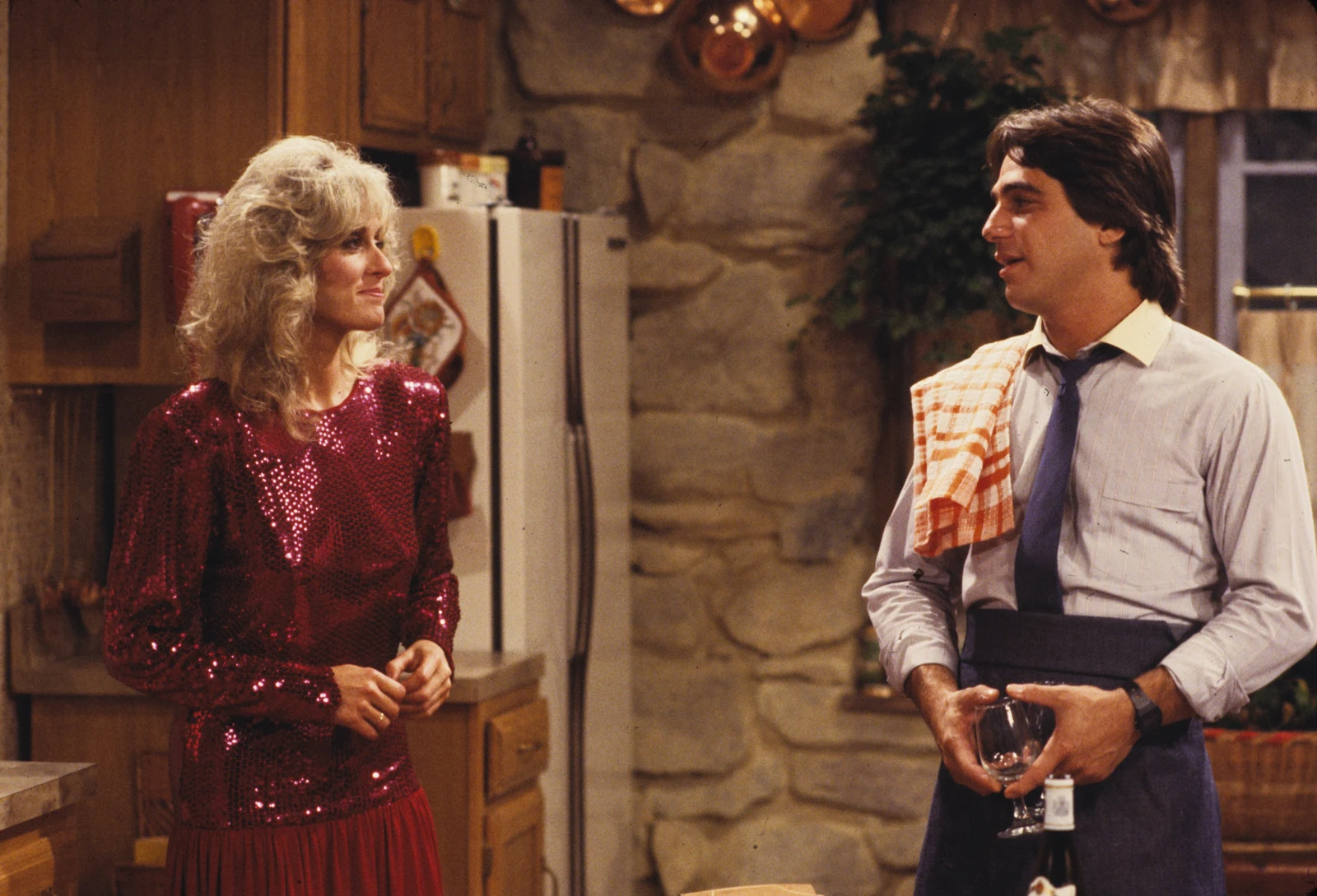
Angela Bower has several disadvantages in a sitcom built around a charming employee. She owns the house, makes the rules, pays the bills, and is expected to object when he ignores the rules. If the writing isn’t careful, she becomes the woman who arrives from work to stop everyone else enjoying themselves. Judith Light makes her much more interesting than that.
Angela’s control is effort, not a natural state of perfect competence. She prepares, arranges, anticipates, and occasionally winds herself into a condition in which the smallest disruption feels like a personal attack. Light lets you see the labor behind the composure. A smile can become a grimace without quite abandoning its intention to remain a smile.
Her previous work on One Life to Live had established a serious dramatic range, but the comedy here is often gloriously physical. Angela straightens herself, reacts a fraction too late, or tries to recover dignity after a situation has already escaped it. Light knows how funny a very capable person can be while attempting not to look ridiculous.
The character’s career matters. The series doesn’t require Angela to abandon advertising so the house will become emotionally healthy. She needs assistance, not a revelation that paid employment was a mistake. At its best, the show allows her to be a good mother and an ambitious professional without presenting either identity as a disguise waiting to be removed.
At its weaker moments, the old sitcom reflexes return. A successful woman is made socially clumsy; a man supplies common sense; the audience is encouraged to find her authority a little excessive. Light helps those jokes survive by locating the person inside the stiffness. Angela can be wrong without becoming contemptible, and vulnerable without suddenly losing the intelligence that makes her convincing at work.
She also gives Tony a partner who doesn’t simply applaud him. Their attraction is more enjoyable because she can resist him, challenge him, and recognize his vanity. The house doesn’t need a charming man and a woman assigned to notice his charm. It needs two people whose strengths become especially visible when the other one is being difficult. Light makes sure Angela holds her end of that bargain.
The employee was becoming the person she waited for
Tony and Angela’s chemistry doesn’t depend entirely on big romantic moments. It lives in the smaller domestic exchanges: checking the other’s mood, explaining a date too carefully, reacting to a visitor with suspiciously intense interest. They know enough about each other’s daily lives to make neutrality increasingly unconvincing.
Danza and Light are particularly good at the transition between a joke and a feeling. A teasing exchange can suddenly become sincere, leaving both characters with more exposed than they intended. The comedy then gives them a way to step back without resolving everything. Somebody changes the subject, Mona appears, or an ordinary household demand rescues them from having to finish the conversation.
This is a gentler form of romantic delay than the combat in Moonlighting. Tony and Angela aren’t simply professional antagonists who happen to be attracted. They are helping raise children in the same house. An argument carries different stakes when everyone still needs breakfast together afterward.
The employment relationship gives the romance complications that the scripts don’t always explore as deeply as they might. Angela has financial authority; Tony has emotional and practical influence inside her home. Neither can pretend a romance would affect only a pair of dates. Samantha and Jonathan would be living with the consequences of the adults’ experiment.
That helps the delay feel plausible in the early years. These are people with reasons for caution, not merely two attractive leads refusing to speak because the writers need another season. They have established a workable life after earlier upheaval. Wanting to protect it is understandable, even when the audience has begun issuing unsolicited instructions from the sofa.
Eventually, hesitation can become its own habit. The series sometimes sends them through another round of jealousy or misunderstanding when a more honest conversation would be both kinder and fresher. But the central affection is strong enough to make many of those detours pleasant. You aren’t only waiting for a kiss. You’re enjoying the company of two people who already behave, in several important ways, as if they belong together.
Mona Robinson did not require permission
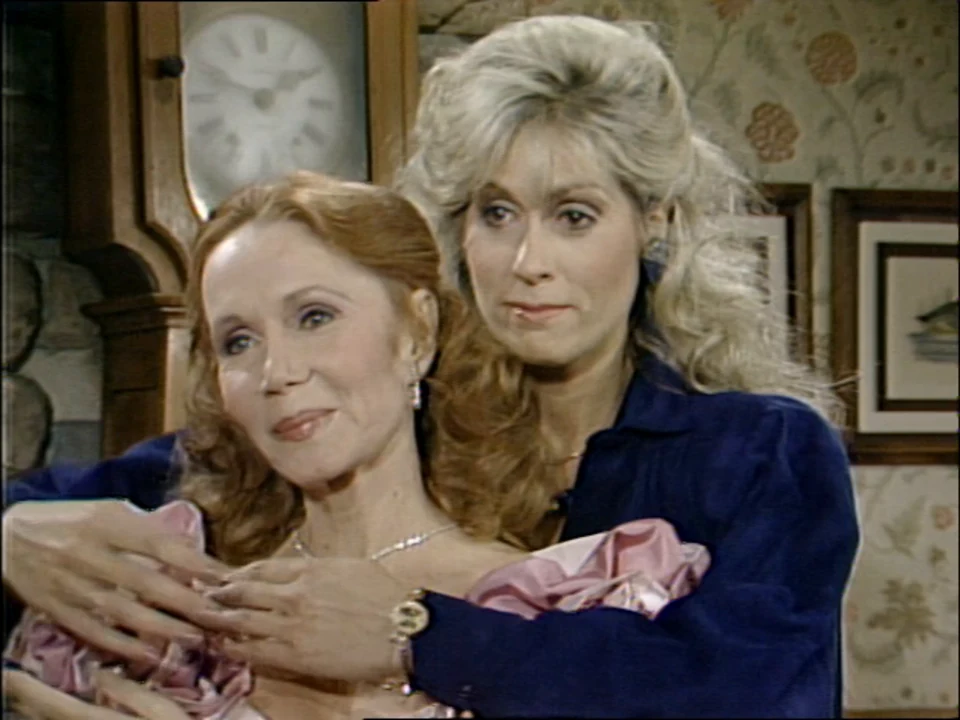
Katherine Helmond understood exactly how to play a woman who had no intention of being embarrassed on somebody else’s schedule. Mona enjoys men, attention, and the opportunity to say what Angela would prefer remained politely unspoken. She is capable of causing trouble, recognizing trouble, and offering herself a generous exemption from the rules about trouble.
Helmond’s earlier Soap performance had shown how delicately she could carry comic absurdity. Mona is more knowingly mischievous. She often understands the situation before the others do and waits for the most entertaining moment to demonstrate it. A line doesn’t need volume when its owner has chosen the landing so accurately.
The generational contrast is a particularly good joke. Angela, the younger woman with the high-powered career, is often the one defending propriety. Her mother, who might traditionally have been assigned the task of disapproving, sees no reason the evening should be dull. Family rebellion has traveled in the unexpected direction.
Mona’s apartment in the converted garage gives her the perfect degree of access. She has an independent space, yet she is close enough to arrive when a conversation becomes interesting. The architecture understands sitcom timing. People can attempt privacy, but they shouldn’t make any financial commitments based on achieving it.
Some of the jokes rely on the simple proposition that an older woman’s sexual appetite is funny. That is a limited joke if repeated without invention. Helmond improves it by making Mona a person who enjoys the reaction as much as the appetite. She isn’t merely oblivious to how she appears. She often knows precisely which nerve she has touched.
Her affection keeps the character from becoming an elegant nuisance. She cares about Angela and the children even when her methods would benefit from supervision. She may push Tony and Angela toward one another because their hesitation amuses her, but she also sees something good between them. The meddling has a heart, though Mona would probably prefer that nobody make a solemn announcement about it.
Every sitcom benefits from someone who can puncture the main characters’ preferred story about themselves. Mona has that job and performs it with professional enthusiasm. Angela may insist everything is under control. Her mother has already noticed the interesting exception.
Samantha wasn’t a decoration on Tony’s new life
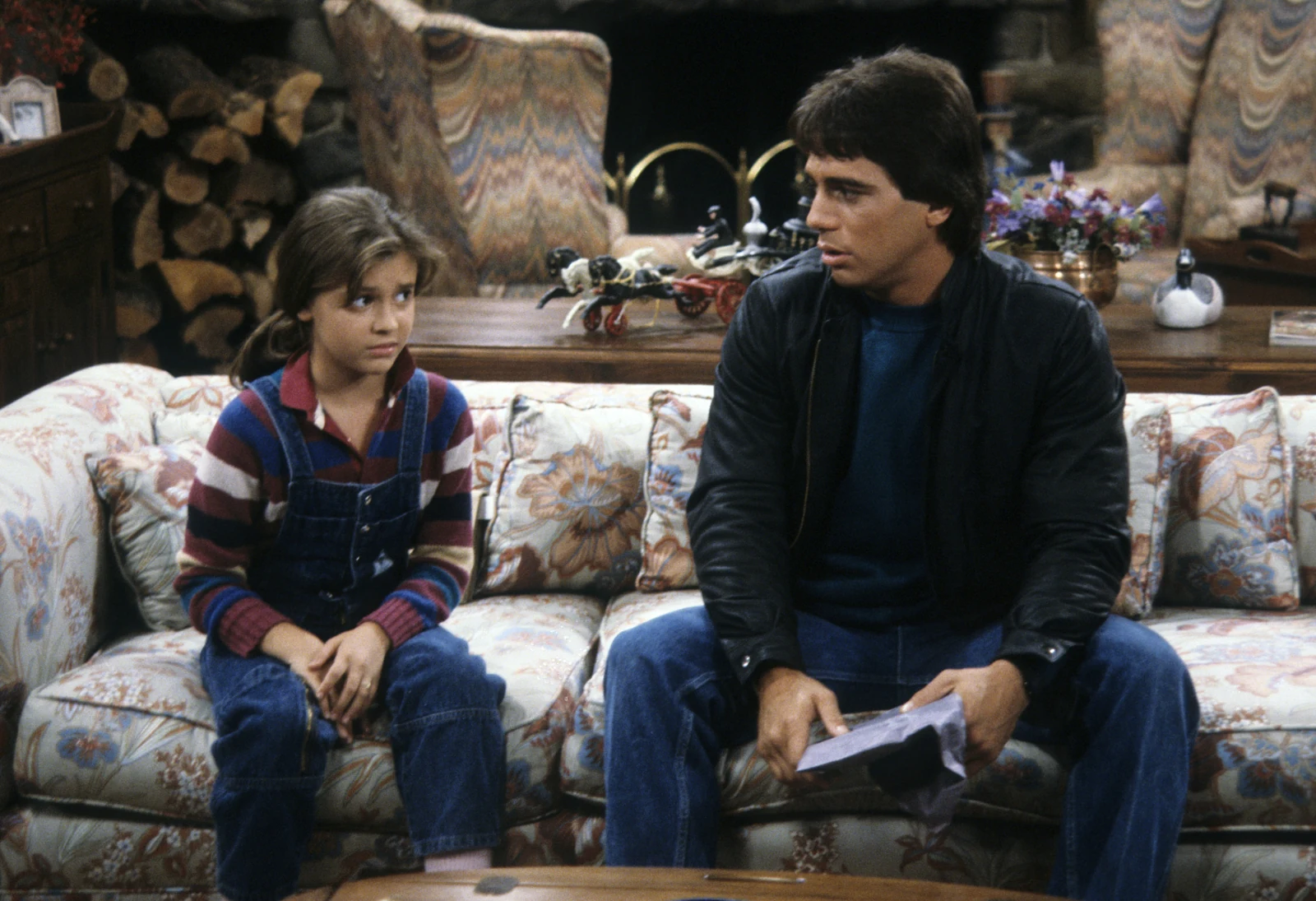
Alyssa Milano’s Samantha is the reason Tony makes the move, but the character becomes much more than proof that her father is a good man. Sam has her own loyalties, tastes, defenses, and embarrassments. She isn’t simply grateful to have been installed in a nicer house. She has to work out who she is inside it.
Early Samantha is athletic, direct, and closely bonded with Tony. Their ease together gives the show a relationship that exists before Angela enters the picture. They have shared a home, a loss, and a way of getting through things. Connecticut is an opportunity, but accepting its opportunities doesn’t mean she instantly stops being a girl from Brooklyn.
Milano makes the resistance lively rather than tiresome. Sam can be guarded, competitive, or suddenly self-conscious, and the shifts feel like a child adjusting to circumstances rather than a writer turning a personality dial for the week’s lesson. Her affection for Tony remains visible even when she would very much like him to stop doing whatever he is doing in public.
As the decade continues, the series lets her grow. Friendship, clothing, dating, and the wish to be taken seriously become subjects in their own right. That growth changes the father-daughter comedy. Tony’s physical protectiveness is useful in some situations and spectacularly inadequate in others. An adolescent girl’s discomfort cannot always be fixed by standing between her and a problem.
Her relationship with Angela is equally important. Angela isn’t replacing Sam’s mother by decree. Their connection develops through shared life, with room for awkwardness and negotiation. A woman can offer help that Tony can’t easily supply without the show declaring that his parenting has been a failure. Sam gains another adult, not a correction to the one she already loves.
For viewers growing up alongside her, the appeal went beyond identifying a favorite character. Sam moved from an outspoken child toward a teenager with increasingly complicated choices. The series didn’t always handle those changes elegantly, but it allowed change to happen. She wasn’t forever waiting in the kitchen to deliver a cute line before the adult story resumed.
Jonathan brought a different kind of childhood
Danny Pintauro’s Jonathan Bower begins from a more sheltered position than Samantha. He has a comfortable home, a mother with professional responsibilities, and habits formed in a different household. Tony doesn’t arrive to discover a miniature version of his daughter. He arrives to discover a child who requires another approach.
That difference produces some of the show’s useful small jokes. Samantha tends to move toward a challenge; Jonathan may want an explanation, reassurance, or a more favorable arrangement. Neither temperament has to be the permanent winner. Put them together and the adults have two sets of needs to manage, which is rather more recognizable than a sitcom in which every child responds identically to a family meeting.
Pintauro’s gift is a kind of earnest precision. Jonathan can announce something with the confidence of a child who has thought carefully about his own immediate interests. He is often sweet without being entirely selfless. The combination gives him more comic possibilities than simply being the little boy everybody protects.
Tony’s involvement with him also expands the central premise. The housekeeper isn’t only a man who can cook; he is a dependable adult with time and attention to give. Jonathan’s relationship with him grows through ordinary contact. The show doesn’t need to declare a replacement father in order to show that the boy benefits from another person caring about his day.
There are limitations. As Samantha’s teen stories and the adults’ romance become larger attractions, Jonathan can be left with smaller pieces of an episode. The ensemble isn’t always equally served, and an affectionate memory of the series shouldn’t pretend otherwise. His presence remains essential to the original bargain, even when the writing gives someone else the more interesting problem.
He also helps explain why the title isn’t only a duel between Tony and Angela. Children exert power by needing things, refusing things, misunderstanding things, and choosing the worst moment to be completely honest. A household can have an employer and an employee and still find that the day’s real agenda was established by a small boy before either adult had coffee.
The bathroom had a door for a reason
The second episode, “Briefless Encounter,” broadcast September 27, 1984, wastes little time testing the awkwardness of the arrangement. Tony uses Angela’s bathroom and sees more than either of them intended. Privacy, authority, embarrassment, and attraction all arrive in the same dispute. Subtle? No. Efficient? Extremely.
It’s an old farce mechanism placed inside the show’s new domestic setup. A man and a woman sharing a house will encounter boundaries, and the writers choose one that can be explained in a single startled reaction. Angela isn’t unreasonable for expecting privacy. Tony isn’t prepared to regard himself as the only person who has handled the incident badly. Pride does the rest.
Light’s comic strength is especially visible when Angela tries to reassemble her dignity. The joke isn’t only what Tony has seen. It’s the difficulty of resuming an employer’s authority while both people know the conversation contains an image neither can politely remove. She wants to establish a rule. He wants to escape looking like a fool. Neither objective encourages calm.
Mona’s intervention makes the episode more than a prolonged argument about a door. The characters are encouraged to consider one another’s position, though the series understandably prefers jokes to a polished conflict-resolution seminar. It wants them to recognize the embarrassment beneath the outrage without becoming so enlightened that nobody can make trouble next week.
Some early situations use Tony’s access to the house more casually than a modern viewer may prefer. The employer’s private space, the employee’s private life, and the attraction between them form an untidy triangle. The show is sometimes very aware of that untidiness and sometimes treats it as permission for another joke.
Still, the episode identifies a real comic strength. These people can’t keep every part of life in a separate compartment because they live where they work and work where they live. The front door doesn’t end the relationship at five o’clock. A conversation can be professional, personal, and painfully embarrassing before anyone has managed to put on a comfortable expression.
A baseball mitt wasn’t the answer this time
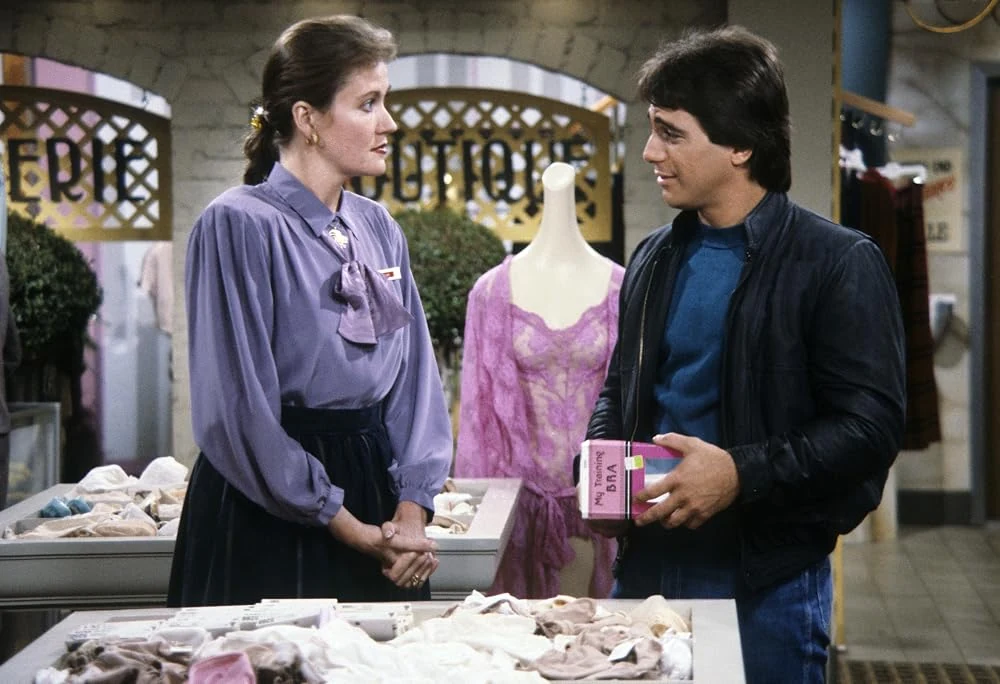
“Samantha’s Growing Up,” broadcast January 8, 1985, is one of the clearest early tests of Tony’s confidence as a parent. He knows his daughter as the girl who likes playing ball with him. Now she’s becoming self-conscious, interested in different things, and in need of help he isn’t sure how to provide. His familiar map is suddenly missing a road.
The episode sends Tony shopping for her first bra, a situation constructed to maximize his embarrassment. A physically assured man faces a retail conversation he can’t handle with athletic confidence or paternal determination. Danza’s unease is the joke, but the more important feeling belongs to Sam: she is changing and doesn’t want that change turned into a spectacle.
Milano’s performance gives the story somewhere to go beyond a flustered father in a department store. Her hesitation isn’t random teenage difficulty. She is negotiating how much to say to a father with whom she has previously shared almost everything. Loving him hasn’t disappeared; the terms of talking to him are becoming more complicated.
Angela offers a different kind of understanding. Her involvement allows Sam to accept help without requiring Tony to know everything. That is one of the healthier implications of the household. A child can benefit from another adult’s experience without reducing the parent’s importance. Tony’s adjustment is learning that care sometimes means making room.
The episode is very much of its moment in how carefully network comedy approaches a girl’s developing body while extracting jokes from an adult’s discomfort. Some of the vocabulary and embarrassment can feel fussy now. Yet the decision to let Samantha grow rather than preserve her as a permanently unchanged sitcom child gives the story a real purpose.
It also belongs in the longer history of eighties family sitcoms that tried to turn ordinary growing-up problems into a shared evening’s conversation. The best parts don’t come from a perfect lesson. They come from Tony recognizing that the daughter he loves isn’t staying the age at which he felt most useful. Parenthood has once again declined to consult his preferences.
Requiem let the laughter wait
December 1984’s “Requiem” reveals that Tony is still paying rent on his late father’s apartment. What might first look like a suspicious use of money turns into a problem of grief. Giving up the place means doing something final, and he hasn’t been ready to do it. The series slows down enough to let that reluctance matter.
It’s a valuable early episode because it shows what Danza can bring when Tony’s warmth isn’t being used only to launch a joke. A room contains objects; the objects contain a relationship. Sorting them is practical work with an emotional cost. The fact that a person is dead doesn’t make deciding what to keep feel like an administrative exercise.
Angela’s involvement deepens the central relationship without needing a romantic milestone. She can help because she is there, because she cares, and because she doesn’t require him to turn the feeling into a performance of toughness. The scene gives their intimacy a form that a flirtatious misunderstanding can’t supply.
The sitcom setting makes the change of temperature noticeable. These are people usually surrounded by an audience’s laughter, arriving at a task for which the easy reply isn’t enough. Light and Danza allow a more ordinary silence into the relationship. You can see why they might trust each other, rather than being told that trust exists because the story needs it.
“Requiem” also adds depth to the move from Brooklyn. Tony hasn’t simply traded an old address for a more attractive set. The earlier life still has claims on him. He carries a past into the new household, including attachments that aren’t solved by having made a sensible decision for Samantha.
Not every sitcom turn toward seriousness earns its pause. This one does because the problem belongs naturally to the character. Tony is a widower, a son, and a father trying to establish a new life. He is used to acting on behalf of someone else. Here he needs help dealing with something he has postponed for himself. The show doesn’t become better by ceasing to be funny; it becomes fuller by knowing when the joke can wait.
First Kiss came with complications
The first season ends in April 1985 with an episode titled “First Kiss,” which is a fairly direct way of telling an audience not to leave the room during the commercial. Angela’s birthday and an evening involving alcohol bring her and Tony into a less guarded encounter. The story advances the attraction while leaving the morning after considerably less straightforward than a romantic promise.
It’s a revealing choice for a series that has already made their closeness appealing. A sober, deliberate declaration would force both characters to acknowledge a change. An impaired encounter gives them uncertainty, embarrassment, and room to retreat. The sitcom wants the event and the hesitation afterward. It gets both, though the device comes with some familiar television evasions.
The alcohol is part of the episode’s setup, not a model for a healthy romantic beginning. What remains interesting is how the actors handle the exposure. These people spend much of their time maintaining a useful explanation for their relationship. The explanation has been interrupted, and restoring it takes effort. You don’t need a sweeping speech to recognize that something has shifted.
Light is especially good at making Angela’s dignity a moving target. She wants to understand what happened without appearing desperate to understand it. Danza’s Tony can enjoy a moment of confidence and then discover a fresh reason to be unsure. Both performances allow the scene to feel personal even while the plot is protecting another stretch of unresolved attraction.
That is one of the pleasures and irritations of watching the show now. The big moments aren’t necessarily the moments that bring the clearest progress. A kiss can leave the practical arrangement almost intact, while a conversation in an unremarkable room can deepen the bond more convincingly. The series sometimes treats uncertainty as a renewable household resource.
Still, the episode explains why people followed the relationship. Tony and Angela have made the prospect matter. A title alone can’t do that, however enthusiastically a network might promote it. The audience wants these particular people to find a way forward, and is prepared to tolerate a considerable number of detours in return for seeing the expression on Angela’s face when another one begins.
Nick Milano knew how to occupy a sofa
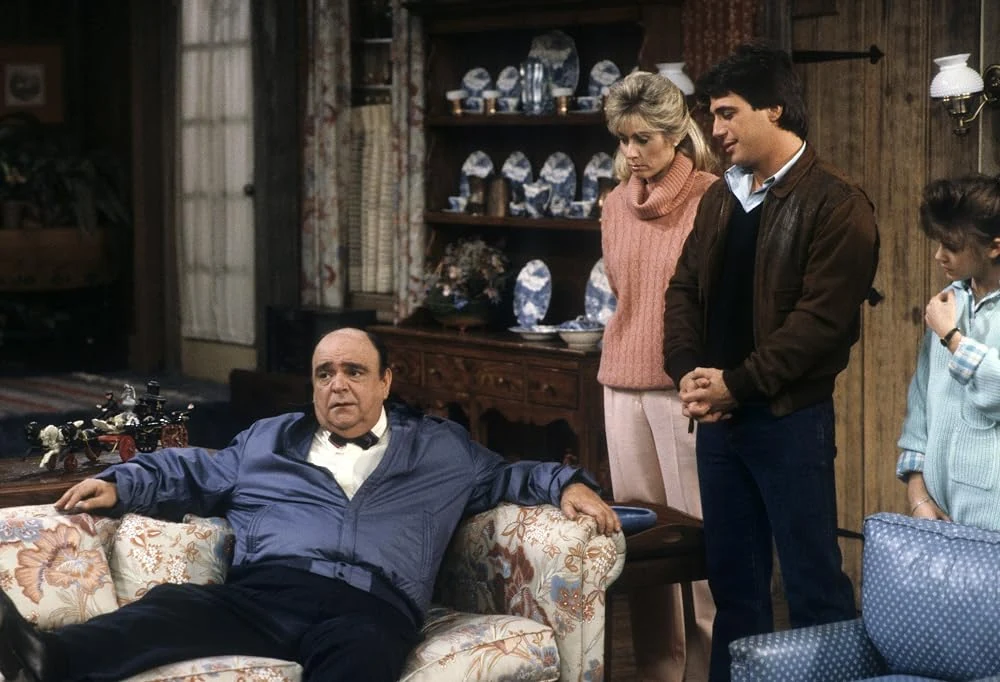
James Coco’s Nick Milano, Tony’s father-in-law and Samantha’s grandfather, arrives with the sort of personality that makes a household rearrange itself. In March 1985’s “Tony’s Father-in-Law,” he conceals impending imprisonment by claiming he is dying. The family offers sympathy; Nick discovers that sympathy comes with useful amenities.
It is a broad, shameless sitcom deception, and Coco is an excellent performer to entrust with it. He can make self-pity expansive without losing the comic pleasure of a man enjoying his own performance. Nick isn’t merely telling a lie to escape an awkward conversation. He’s finding ways to live comfortably inside it.
The episode gives Tony an older relative who isn’t automatically wiser or more responsible. That is useful in a family comedy. A grandparent needn’t arrive carrying the moral answer wrapped in a cardigan. Sometimes the older generation has developed more elaborate methods of avoiding consequences, and the younger adults must do the practical work.
Samantha’s involvement gives the deception an emotional cost. Nick isn’t manipulating strangers who will disappear after the next scene. He is risking a granddaughter’s trust. The show can enjoy his extravagance while acknowledging that affection doesn’t make the lie harmless. Tony’s irritation has a personal basis beyond the inconvenience of another person on the sofa.
The visit also keeps Tony’s earlier family life connected to Connecticut. He and Sam haven’t entered a sealed new universe where previous relationships cease to exist. Relatives bring old loyalties, old habits, and old excuses through the front door. The Bower household has room for them, although it might appreciate advance notice.
Coco’s guest work demonstrates how a strong supporting performer can broaden a sitcom without competing with its center. He supplies a different comic appetite: more theatrical, less restrained, prepared to exploit an audience’s sympathy with impressive speed. The house already contains five people negotiating authority. Add Nick, and the question becomes how much sympathy is available before someone checks the facts.
The clothes were doing some of the arguing
Angela’s wardrobe is part of her preparation for the world. Structured jackets, carefully assembled outfits, and those unmistakable eighties proportions announce a woman who expects to be taken seriously. Light then gets to make that same woman lose composure inside the clothes. The contrast is a reliable visual joke.
Tony’s more relaxed presentation answers it without requiring a speech about class every time he enters. Shirts, jeans, physical ease: he belongs comfortably to his own body and is less interested in dressing as an extension of a professional title. Angela’s outfit may be ready for a meeting. Tony looks ready to move a table so the meeting will fit.
Mona approaches appearance from another direction. Clothes can attract attention, create an entrance, or suggest that the evening might yet improve. She doesn’t dress to reassure Angela’s colleagues that the household is entirely respectable. Helmond makes the pleasure in presentation part of the character’s independence.
For Samantha, clothes become a negotiation with age and belonging. A change in what she wants to wear may register to Tony as a larger change in who she is. To Sam, it can be an ordinary wish not to look like a child. The disagreement is familiar enough that a costume choice sometimes does more work than a long explanation.
These are entertaining period details because they belong to people. The series doesn’t become more evocative simply by placing another dated object on a shelf. Angela adjusting herself before an encounter, Sam anticipating a reaction, or Mona enjoying one creates a relationship between appearance and behavior. The fashion is funny because someone is trying to achieve something in it.
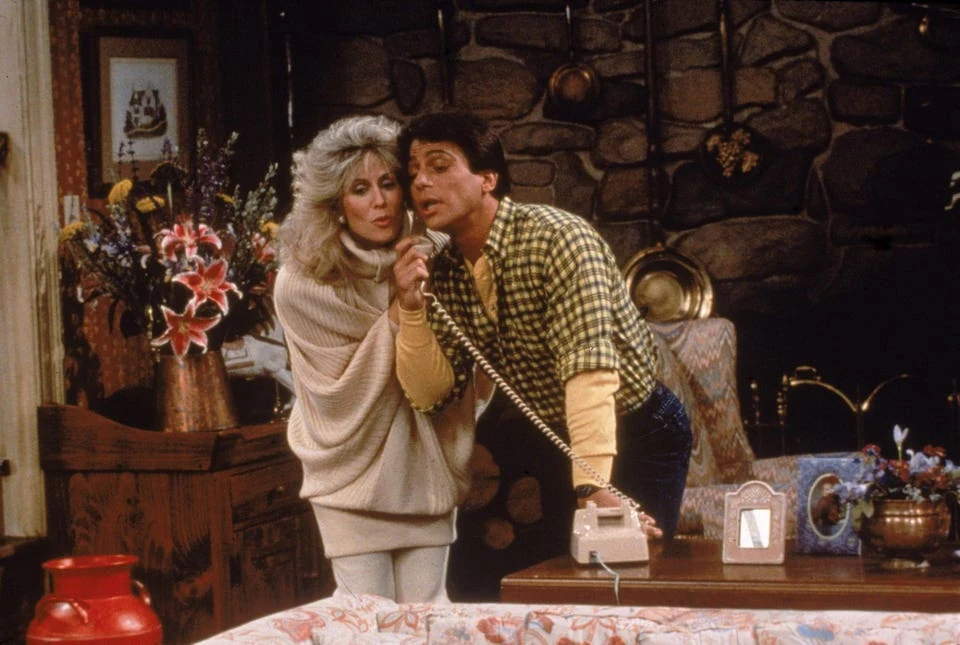
Revisited now, the exaggerations also help restore the show’s scale. The silhouettes, living-room fabrics, and hair are unapologetically of their moment. They don’t require constant mockery to be enjoyable. A little visual excess is an honest part of the 1980s, and Angela can carry an astonishing amount of it while looking as if she has one more difficult telephone call to make. The shoulder pads are prepared. Her nerves are less certain.
Tony went to college without becoming somebody else
“My Fair Tony,” broadcast October 25, 1988, sends Tony into a college speech class, where his Brooklyn manner becomes a target. The title gives away the joke’s ancestry. Someone with formal authority has opinions about how he ought to sound, and improvement threatens to become a request that he erase himself.
The episode puts a sharp version of the series’ class question in front of him. Tony wants to learn. That doesn’t mean his background is a defect to be removed. The difference is easy for a teacher to blur if the teacher has mistaken familiarity with a preferred style for evidence of intelligence.
Danza’s performance is useful here because the viewer knows how much Tony communicates through his ordinary rhythm. Change the rhythm and something familiar goes missing. A more polished sound might win approval, but the approval comes at a comic cost: he begins to resemble a performance designed for someone else’s comfort.
The show has sometimes leaned on Tony as the streetwise answer to Angela’s education. This story is more interesting when it lets both learning and identity matter. Education can enlarge a life without requiring contempt for the life that preceded it. He shouldn’t have to choose between being himself and being curious about something he doesn’t know.
Angela’s place in the story is also telling. She has the formal advantages he is trying to navigate, but their bond depends on more than a shared vocabulary. She recognizes a man whose warmth and directness have helped make her house a home. A corrected accent is not automatically an improved companion.
The joke remains broad, and the stern instructor belongs to a well-stocked sitcom cupboard. Yet the episode gives Tony a vulnerability beyond romantic jealousy or paternal worry. He is an adult entering a room where he may feel inadequate, and trying to decide which criticism deserves attention. That’s a useful late-eighties development for a character who began by taking a job to improve his daughter’s opportunities. He is allowed to want an opportunity for himself, too.
Working Girls put both jobs on the table
April 1989’s “Working Girls” turns a work-experience project into a neat test of the show’s premise. Samantha and her friend Bonnie are paired with Tony’s domestic work and Angela’s advertising office. The assignments make visible what the girls think each adult’s day contains, which is not necessarily what the day actually contains.
The joke begins with the attraction of appearances. Advertising offers a professional setting, interesting people, and the possibility that lunch might count as work. Housekeeping looks familiar and therefore easy. A teenager deciding which sounds less demanding is not necessarily conducting a rigorous assessment of either profession.
That is a smart subject for this particular show. The central arrangement has always depended on work that happens inside the house being useful, skilled, and time-consuming. If the series treats that work as a permanent punch line, the premise starts undermining itself. An episode in which someone else has to try it provides a better answer than another earnest declaration that Tony does a good job.
Angela’s office is equally valuable as a place with demands rather than a glamorous room she visits between household scenes. Sam can see another version of adulthood there: ambition, responsibility, and the need to perform competently for people who aren’t required to find you charming. Angela’s authority becomes something observable rather than merely announced.
The story also lets the younger characters develop preferences separate from the adults’ expectations. Sam isn’t obliged to choose Tony’s world because she loves him. Nor does admiring Angela’s career mean rejecting the care that has supported her. The household becomes healthier when its members can learn from more than one person.
Bonnie’s participation helps keep the plot from becoming a private father-daughter lesson. Shana Lane-Block gives Sam a friend with a different angle on the same opportunities. The girls compare impressions, make choices, and discover that a working day may contain more effort than its attractive parts suggest. It is hardly a revolutionary conclusion, but the episode earns it through two actual jobs. The vacuum cleaner and the presentation both have to be ready, whether anyone feels inspired or not.
Ray Charles was not an ordinary guest at work
In February 1987’s “Hit the Road, Chad,” Angela hires Ray Charles to record an advertising jingle drawn from a love song written by Samantha’s boyfriend. It’s an impressively efficient collision of the household’s interests: Angela’s account, Sam’s relationship, a young man’s song, and a musician whose presence makes everybody else seem temporarily less composed.
Charles appears as himself, which gives the show a pleasure that doesn’t require a viewer to pretend not to recognize the guest star. Recognition is the point. A sitcom character may have a difficult week at the office; this one gets Ray Charles. That is a substantial improvement over the usual coffee and an argument about the budget.
The premise also gives music two different values. To Sam and Chad, a love song is personal. To the advertising business, a usable song can become an asset serving a client. Those perspectives aren’t naturally aligned. Something intimate is being asked to perform a commercial job, and the resulting discomfort belongs neatly to a household already mixing employment and feeling.
Angela’s professional competence is part of the attraction here. The show can make her nervous or ridiculous at home, but the guest story places her in a world where she has something substantial to arrange. She isn’t merely waiting for Tony to tell her the sensible thing. There is an account to handle and a recognizable performer to work with.
The episode’s star power inevitably tilts the room. Sometimes a celebrity appearance overwhelms a sitcom’s ordinary scale, leaving the regular characters to beam while the guest completes the event. This story has a better route because the music is tied to Sam and Angela’s separate concerns. The household has reasons to care beyond being delighted that someone famous has arrived.
It also belongs to the show’s easy relationship with performance. Danza’s musical and physical ease, the romantic tease, the live-audience energy: the series is comfortable with entertainment that knows it is entertaining. Bringing Charles into that world feels celebratory without requiring the sitcom to stop being itself. The client may be buying a jingle. The audience gets a rather better bonus.
Frank Sinatra made Tony lose his cool
February 1989’s “Party Double” gives Tony and Mona a shared ambition: attend a gala where Frank Sinatra is appearing. There are sitcom stories about fitting in with wealthy people, and then there are sitcom stories about getting close to Frank Sinatra. Tony’s composure faces a more serious test in the second category.
Sinatra plays himself, allowing Danza to turn admiration into a comic obstacle. Tony normally enters a room with plenty of personal confidence. Here the presence of an idol changes the balance. A man who can take charge of the household becomes someone trying very hard not to make a fool of himself, which is often a promising first step toward doing exactly that.
Mona is an excellent companion for such a scheme. She has far less investment in pretending she doesn’t want what she wants. Put her beside Tony and the story acquires two forms of eagerness: his emotional attachment to the occasion and her cheerful determination not to be excluded from it. Neither is likely to be improved by an instruction to remain discreet.
The guest appearance also says something about the show’s position by its fifth season. This is an established hit with enough confidence and reach to turn a major star’s visit into an episode. The event doesn’t have to prove the series exists. It can play with the characters the audience already knows.
Asaad Kelada later recalled that Sinatra’s scene was filmed without the usual studio audience. That change is a useful glimpse of the practical adjustments behind an apparently effortless visit. The regular cast’s working rhythm was built around an audience; the guest’s appearance required a different arrangement. The finished episode has to make those conditions disappear into a single evening.
Celebrity stories are not necessarily the deepest expression of a family sitcom’s appeal. This one earns its place by letting a familiar adult become endearingly overwhelmed. Tony doesn’t need a new backstory to explain why Sinatra matters to him. Danza’s enthusiasm supplies the connection, and Mona supplies the likelihood that the evening will become more complicated than the invitation suggested.
Sam’s world kept getting larger
By the later eighties, Samantha’s friends and boyfriends give the show another social world beyond the Bower kitchen. Chad, played by Scott Bloom, and Bonnie are among the people who help make her adolescence feel populated. A teenager doesn’t live only in a series of conversations with a concerned parent, however much that parent might prefer the arrangement.
Tony’s reactions are often predictable, but predictability can be part of the joke. He wants Sam to become confident and independent, provided confidence and independence do not involve any decision that makes him uncomfortable. This is a fairly demanding set of terms. Danza’s task is to make the contradiction loving enough to be funny and visible enough to be challenged.
Milano increasingly supplies the counterweight. Sam can recognize when his concern has become an overreaction. She may still need guidance, but needing guidance doesn’t mean surrendering every claim to privacy. Their disagreements work best when both sides have something understandable to lose.
Angela’s presence gives these stories another route. She can recognize Sam’s wish to be taken seriously and Tony’s fear of losing access to his daughter. The household’s unusual shape becomes an advantage: there is someone who knows the girl well without sharing every one of the father’s reflexes. Advice can arrive from another direction.
The stories aren’t always subtle. A sitcom boyfriend may be little more than an alarm bell wearing a shirt, and a parent can become unreasonably dense so an episode will have somewhere to go. Sam’s strength is that Milano keeps her particular person visible inside those devices. She is capable of affection, impatience, foolishness, and recovering her balance.
This is where a comparison with Growing Pains makes sense without making the two shows identical. Both found major stories in children changing under their parents’ noses. Sam’s version carries the history of the move from Brooklyn and the father-daughter partnership that made it possible. She isn’t simply getting older in an affluent household. She is discovering how much of the larger world she wants to claim for herself.
An ordinary household with an extraordinary amount of room
The Connecticut house is a lovely piece of television wish fulfillment. There is space for the two families, room for Mona nearby, and enough attractive domestic scenery to make a move look like an immediate improvement in the weather. The show isn’t pretending to offer a realistic housing plan for every single parent leaving Brooklyn.
Its class fantasy is gentler than the excess of a prime-time soap, but it is still a fantasy. Tony’s job gives Sam access to comfort and opportunity without requiring him to become a different man. Angela’s income supports a substantial household while the comedy usually keeps financial anxiety at a manageable distance. The rooms make the arrangement look easier than many comparable arrangements would be.
Yet the space isn’t emotionally neutral. Tony and Sam live in a house he doesn’t own, under the terms of work he needs. Angela has privacy and authority complicated by an employee who is becoming central to her family. The home provides security and dependence at the same time. The series notices those tensions when it suits a story, then sometimes lets the attractive furniture smooth them over.
It’s an interesting difference from the professional prosperity of The Cosby Show or the political disagreements in Family Ties. Here, money and class live inside the main relationship. Tony and Angela don’t simply have different tastes; one employs the other. Their affection has to make room for that imbalance, whether or not the week’s script wants to discuss it.
The series is most appealing when it lets neither world win automatically. Tony’s directness doesn’t invalidate Angela’s education. Her professional success doesn’t make his domestic skill trivial. Their mutual usefulness is the point, even when the jokes fall back on easier stereotypes.
The fantasy isn’t that five people can avoid needing one another. It’s that needing one another can turn out pleasantly, with enough money for the house and enough affection to survive the arguments. There are worse things for a family comedy to offer, provided you can enjoy the floor plan without mistaking it for a social program.
Tuesday’s climb into the top ten
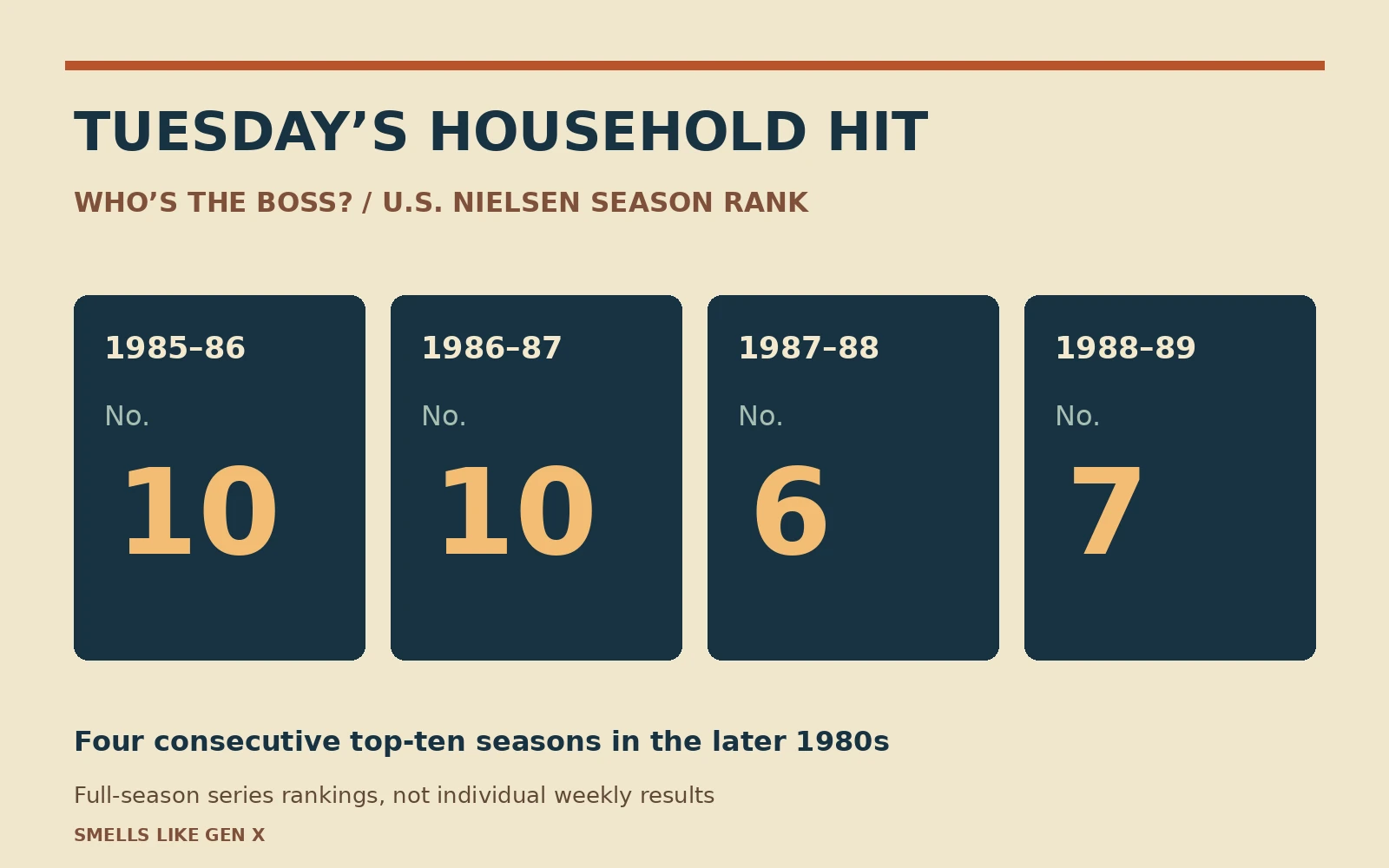
Who’s the Boss? didn’t begin as an instant top-ten institution. Its first season sat outside that group. The larger breakthrough came in 1985–86, when it finished tenth in the Nielsen season rankings. The next season it was tenth again, then climbed to sixth in 1987–88 and seventh in 1988–89. The household’s success had become substantial enough to anchor a night.
The 1986 television rankings capture the move into the leading group. In the 1987 list, it remains there as ABC’s family-comedy strength develops. The 1988 and 1989 rankings show just how securely Tony and Angela had taken their place among the country’s most-watched programs.
By the fall of 1985, ABC was using the show at 8 p.m. on Tuesdays, followed by Growing Pains. The pairing made sense: two inviting households, children with recognizable problems, and adult leads capable of keeping the comedy lively for the rest of the family. Later in the evening, Moonlighting offered a rather different kind of romantic bickering. ABC had found several ways to make viewers remain in the neighborhood.
That schedule helps explain why the show feels like an appointment as much as a collection of episodes. You might arrive for the family comedy and stay for another series. You might know that the next program was approaching because Tony and Angela had reached the week’s temporary truce. A network night gave the household a place inside a larger evening.
The ratings don’t require a claim that everyone watched or that every child in the audience wanted the same thing. Some viewers followed Sam, some enjoyed Danza, some waited for Mona to say the useful rude thing. The ensemble offered several doors into the same house.
What the rankings establish is that the premise had become more than a novelty. An idea about reversing a domestic job description had turned into familiar prime-time company. Viewers weren’t returning only to see whether a man would cope with housekeeping. They knew he could. They wanted to see what would happen when the people benefiting from his competence made the rest of life complicated.
The theme promised a beginning, not a solution
“Brand New Life,” the show’s opening theme, fits a series built around starting again. Its title names the hope without pretending the new arrangement will be simple. Tony and Sam are changing addresses; Angela and Jonathan are changing their daily lives; Mona is acquiring fresh entertainment. Everybody has something to gain, though nobody has fully agreed on the terms.
The music, associated with Larry Carlton and Robert Kraft, has a friendly forward motion rather than the grand declaration of a heroic arrival. Steve Wariner’s voice became familiar through the mid-to-late-eighties version. It feels like a welcome into a busy, manageable world, the sort of world in which a bad day might end with a conversation instead of a catastrophe.
That invitation does a useful job before the first scene. The premise contains bereavement, divorce, economic difference, and a child leaving home turf. The song lets an audience enter through possibility rather than through the weight of the background. A family comedy needs enough light to make a weekly return attractive.
The opening also belongs to the era of television themes that told you what emotional temperature to expect. You didn’t have to hear a character explain the setup from scratch. A tune, familiar faces, and the promise of another visit did much of the work. It is part of why eighties theme songs remain attached so firmly to the shows themselves.
There is a trap in treating that familiarity as proof that every part of the series was as welcoming as its opening. A good theme can polish a mediocre episode’s memory. But the attachment here has a basis in the performances. The song promises people worth spending time with, and the cast usually supplies them.
It is also a more fitting description of the series than a tidy answer to the title’s question. A new life doesn’t necessarily produce one permanent boss. It produces a series of adjustments: whose rule applies, whose feelings need attention, whose plan has just become impractical. The tune keeps moving. Inside the house, someone is already objecting to the next adjustment.
The bargain works best when both adults get to be right
The weakest version of Who’s the Boss? makes Tony naturally wise, Angela needlessly tense, and a misunderstanding the only thing between everyone and happiness. That is an easy half-hour to write and a less interesting household to revisit. It reduces the reversal to a familiar reassurance that the man still knows best, even when the woman signs the paycheck.
The better version gives Angela a real point. Tony may overstep. His protectiveness may become control. His confidence may outrun his information. Letting Light hold the line doesn’t damage the chemistry; it gives the chemistry an adult basis. Attraction is more appealing when it isn’t payment for somebody surrendering all authority.
Mona also benefits from limits. Her irreverence is delightful until a script treats everyone’s legitimate discomfort as proof that she should be allowed another joke. Helmond can sell an outrageous line, but the character becomes fuller when the family is allowed to object and she is allowed to care about the objection.
The romantic delay eventually shows its machinery. Another date appears, another pang of jealousy follows, another potentially useful conversation ends too soon. The show often gets away with it because Danza and Light remain enjoyable together. Getting away with a device isn’t the same as the device becoming invisible.
Still, judging the series only by whether it resolves the romance misses much of what it does well. Shared work, ordinary worry, parental embarrassment, and the pleasure of someone knowing your habits give the relationship substance between the milestones. “Requiem” and “Working Girls” don’t depend on a proposal to make the household feel worth keeping.
The show’s place beside 1970s family television is useful here. Earlier programs had already made room for single parents and unconventional homes, including One Day at a Time. This series didn’t invent a family outside the married-couple template. It found an especially appealing combination of employment, attraction, parenting, and a grandmother who would not quietly retreat to the background. Its innovation was a blend, and the blend was usually funny.
The house still feels occupied
The series continued into 1990s television, completing eight seasons and 196 episodes before its April 25, 1992 finale. The final years have their own developments, but the eighties establish the version that made the household familiar: Tony and Sam’s arrival, Angela’s careful order coming apart, Jonathan’s adjustments, and Mona taking a healthy interest in everybody’s business.
Revisiting those years can change where the sympathy lands. A younger viewer may side automatically with Sam when Tony becomes embarrassing. An adult can see his fear more clearly while still agreeing that he should stop. Angela’s desire for order may look less like fussiness after you’ve tried to keep a job, a house, and a child’s life functioning in the same week.
Mona, meanwhile, becomes either funnier or more alarming depending on how close your own relatives live. Her freedom is attractive partly because other people are maintaining enough stability for her to enjoy it. The series knows that occasionally. Helmond knows it almost all the time, which is why a look can make the joke more interesting than the line.
The title’s question survives because a household rarely has one simple chain of command. Angela is the employer. Tony is the person who knows what needs doing. Sam and Jonathan have the power of being loved. Mona has the power of saying the thing everyone else is trying to avoid. On a good night, all five get to use their particular advantage.
That is what keeps the house feeling occupied after the fashion and scheduling have become history. These people have recognizable habits, not just assigned functions. They irritate one another in specific ways and know how to offer comfort when the irritation isn’t the important thing. The warmth comes from that knowledge rather than from everyone behaving beautifully.
A man took a housekeeping job. A woman hired help. Their children acquired a larger circle of adults, and a grandmother acquired an exceptionally promising vantage point. The premise was clever enough to get the door open. The cast made staying pleasant. Tony and Angela might need several more seasons to settle certain questions, but Mona already understood the essential arrangement: there was something happening in this house, and she had no intention of missing it.
Questions Readers Ask
When did Who’s the Boss? premiere?
The ABC sitcom premiered in September 1984, bringing Tony Micelli into Angela Bower’s household as a live-in housekeeper.
Who played Tony, Angela, and Mona?
Tony Danza played Tony, Judith Light played Angela, and Katherine Helmond played Mona.
What made Tony and Angela different from a typical sitcom couple?
They started with an employer-housekeeper arrangement and very different expectations. Their chemistry grew through family life and years of comic near-misses.