How Scooby-Doo Took Over Saturday Morning Television

How Scooby-Doo Took Over Saturday Morning Television
RUT ROH! CHANNEL 70s MYSTERY GUIDE ONE VAN • FIVE FRIENDS • ENDLESS MASKS
Smells Like Gen X • Saturday Morning Since 1969

How Scooby-Doo Took Over Saturday Morning Television

Scooby-Doo turned haunted castles, abandoned amusement parks and suspiciously motivated ghosts into a weekly ritual children could understand before they could spell “property fraud.” The scares were real enough to thrill us, the jokes arrived before panic settled in and the mask always came off.

The original show premiered in 1969, but the franchise became permanent 1970s television infrastructure through reruns, new formats, celebrity crossovers and one of animation’s most reusable ideas: young people solving the problem because the adults accepted the legend.

Quick Answer • Mystery Desk

Why did Scooby-Doo rule Saturday morning television?

It made fear repeatable, funny and safe. Each episode offered a memorable monster, a spooky location, clues, a chase and an unmasking that restored order. Scooby and Shaggy reacted like frightened kids, while Fred, Daphne and Velma showed that evidence—not volume—solved the case.

Fred, Daphne, Velma, Shaggy and Scooby-Doo examining a clue in the original 1969 cartoon
The case was always stranger than the culprit.Haunted property, hidden machinery and enough sandwiches to qualify as evidence.
The Saturday Morning Takeover

Why the idea was bigger than one cartoon

Scooby-Doo did not merely become popular. It created a format, a cast arrangement and a tone that competing cartoons spent years trying to reproduce.

Fear came with an exit door

The monster looked supernatural, the music said danger and Scooby and Shaggy reacted exactly as a child might. Then the gang investigated, found evidence and revealed a human scheme. The scary world became understandable without losing the pleasure of being scared.

That balance was the secret. A show built only around horror would have pushed younger viewers away. A show built only around jokes would have lost the mystery. Scooby-Doo let suspense and comedy regulate one another, so the same episode could feel creepy at 8:05 and comfortable by 8:27.

For Gen X, it became less a single series than permanent television infrastructure. Titles changed, guest stars arrived, Scrappy tested household diplomacy and reruns blurred the original air dates. The ritual stayed intact: creepy laugh, flashlight, clue, sandwich, chase, trap failure, Velma explanation and one furious adult blaming meddling kids.

Hanna-Barbera Development File

A frightened executive and one goofy dog changed the concept

The finished series emerged after a more serious teen-mystery idea was softened, simplified and rebuilt around comedy.

The network request

A mystery for Saturday morning

CBS executive Fred Silverman wanted a program about teenagers confronting spooky situations. Early versions leaned more heavily toward a musical group and straight mystery, but network concerns about frightening children pushed the team toward comedy.

The creative team

Ruby, Spears and Hanna-Barbera

Writers Joe Ruby and Ken Spears helped shape the repeatable mystery structure, while William Hanna and Joseph Barbera guided the studio production system that could deliver new adventures on a network schedule.

The design decision

Make the dog visually wrong

Designer Iwao Takamoto famously exaggerated traits that would be undesirable in a prize Great Dane. Bowed legs, a sloped back, an oversized chin and loose movement produced a character built for collapse rather than dignity.

The breakthrough

Let the biggest character be scared

Once Scooby became the emotional entry point, children had permission to feel nervous. His fear announced that the monster mattered; his comedy promised the show would not leave viewers trapped there.

Franchise Timeline

How Scooby-Doo kept changing through the 1970s

The title card changed repeatedly, but the dog, the friendship and the promise of an explanation kept the audience oriented.

1969

Scooby-Doo, Where Are You! establishes the machine

The original CBS series arrived just before the decade began, but its structure became one of the defining languages of 1970s children’s television: four teenagers, one talking dog, one spooky location and one adult hiding behind a mask.

1972

The New Scooby-Doo Movies gets bigger and stranger

Hour-long episodes paired Mystery Inc. with celebrities and fictional guest stars, stretching the formula without abandoning it. The crossover idea became a franchise engine of its own. Read the planned companion page, The New Scooby-Doo Movies and the Ultimate Celebrity Crossover.

1976

The Scooby-Doo Show refreshes the weekly mystery

New episodes returned to a tighter format while adding memorable threats such as the 10,000 Volt Ghost and the Ghost of the Bad Humor Man. The franchise proved it could change titles and still feel immediately familiar.

1977

Laff-A-Lympics turns Scooby into a network mascot

Scooby’s All-Star Laff-A-Lympics placed him at the center of a giant Hanna-Barbera crossover. By then he was no longer merely the dog from one show; he was a recognizable host for an entire Saturday morning universe.

1979

Scrappy-Doo changes the chemistry

Scooby-Doo and Scrappy-Doo introduced a smaller dog with the opposite response to danger. Scrappy’s confidence divided viewers, but the change also showed how urgently the franchise was willing to reinvent itself to remain on the schedule.

Mystery Inc. Personnel File

The characters made the formula feel like a world

A monster could get viewers through one episode. The relationships inside the van made them return for decades.

The frightened star

Scooby-Doo

Scooby works because the biggest body in the room has the least interest in confronting danger. His appetite, fractured speech and loyalty to Shaggy turn every scare into comedy, but the joke never makes him useless. He may run first, yet he nearly always circles back when his friends need him.

The best friend

Shaggy Rogers

Shaggy is Scooby’s human mirror: skinny, hungry, suspicious of every dark hallway and somehow still available for another case. Casey Kasem’s panicked delivery made him instantly recognizable, while his friendship with Scooby gave the franchise a warmer center than the mystery formula alone could provide.

The detective

Velma Dinkley

Velma notices the footprint, reads the inscription and connects the practical motive to the theatrical monster. Her intelligence is not decoration; it is the engine that makes the unmasking believable. For generations of viewers, she became one of Saturday morning television’s clearest examples of competence being cool.

The planner

Fred Jones

Fred supplies direction, confidence and an apparently limitless faith in ropes, pulleys and nets. His traps fail often enough to generate comedy, but his willingness to organize the group keeps the mystery moving. He represents action without needing to become the smartest person in every room.

The explorer

Daphne Blake

Daphne’s old ‘danger-prone’ label never tells the whole story. She is often the first person willing to enter the suspicious room, question a witness or keep moving when the setting turns strange. Later versions expanded her agency, but the original already gave the gang social confidence and curiosity.

The rolling clubhouse

The Mystery Machine

The van is transportation, headquarters and one of the most recognizable vehicles in television history. Its flower-power colors announce that Mystery Inc. is not official authority. These are young people arriving under their own power, asking questions and refusing to accept the local legend at face value.

The Weekly Blueprint

The mystery formula was television engineering

Repetition was not a failure of imagination. It was a ritual sturdy enough to support a new location, monster and motive every week.

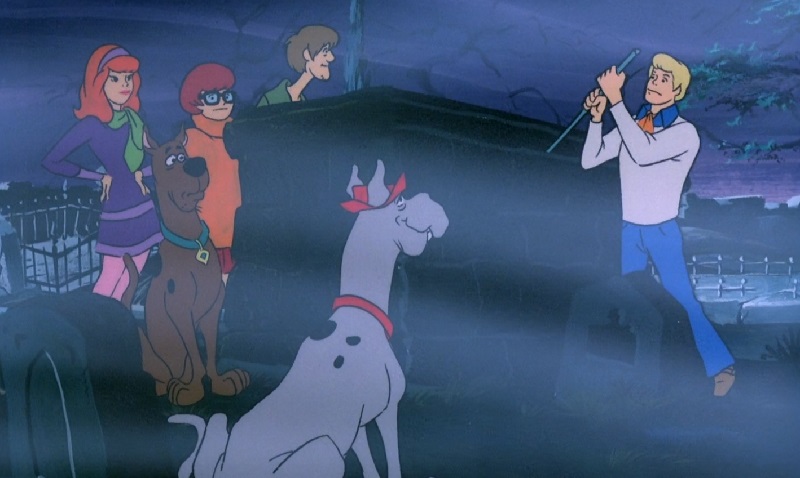
Scooby-Doo and Mystery Inc. investigating a spooky mystery
Scooby-Doo turned every suspicious location into one more mystery for the gang to solve.
1

A place with a story

A castle, amusement park, museum, mine or abandoned hotel arrives with a legend already attached. The location is never neutral; it tells viewers what kind of fear the week will use.

2

A monster makes an entrance

The villain needs one clean visual idea—a glowing diver, laughing skull, ghost clown or shambling Creeper. A child should recognize the threat before anyone explains it.

3

The gang finds a practical clue

A footprint, wire, projector, hidden passage or suspicious document gives the audience something solid to hold against the ghost story.

4

Everybody splits up

It is a terrible safety plan and excellent television. Splitting the gang creates different comic pairings, isolates the frightened characters and lets the setting become a maze.

5

The chase turns fear into rhythm

Doors, hallways, recycled backgrounds and pop music transform pursuit into a visual song. The monster is still dangerous, but the sequence lets viewers laugh while leaning forward.

6

The mask comes off

The reveal turns supernatural panic into a human motive—usually greed, fraud, theft or revenge. The world is restored because evidence beats performance.

Behind the Curtain

The villains made skepticism feel adventurous

Every mask hid a motive, and nearly every legend became easier to understand once somebody followed the wires.

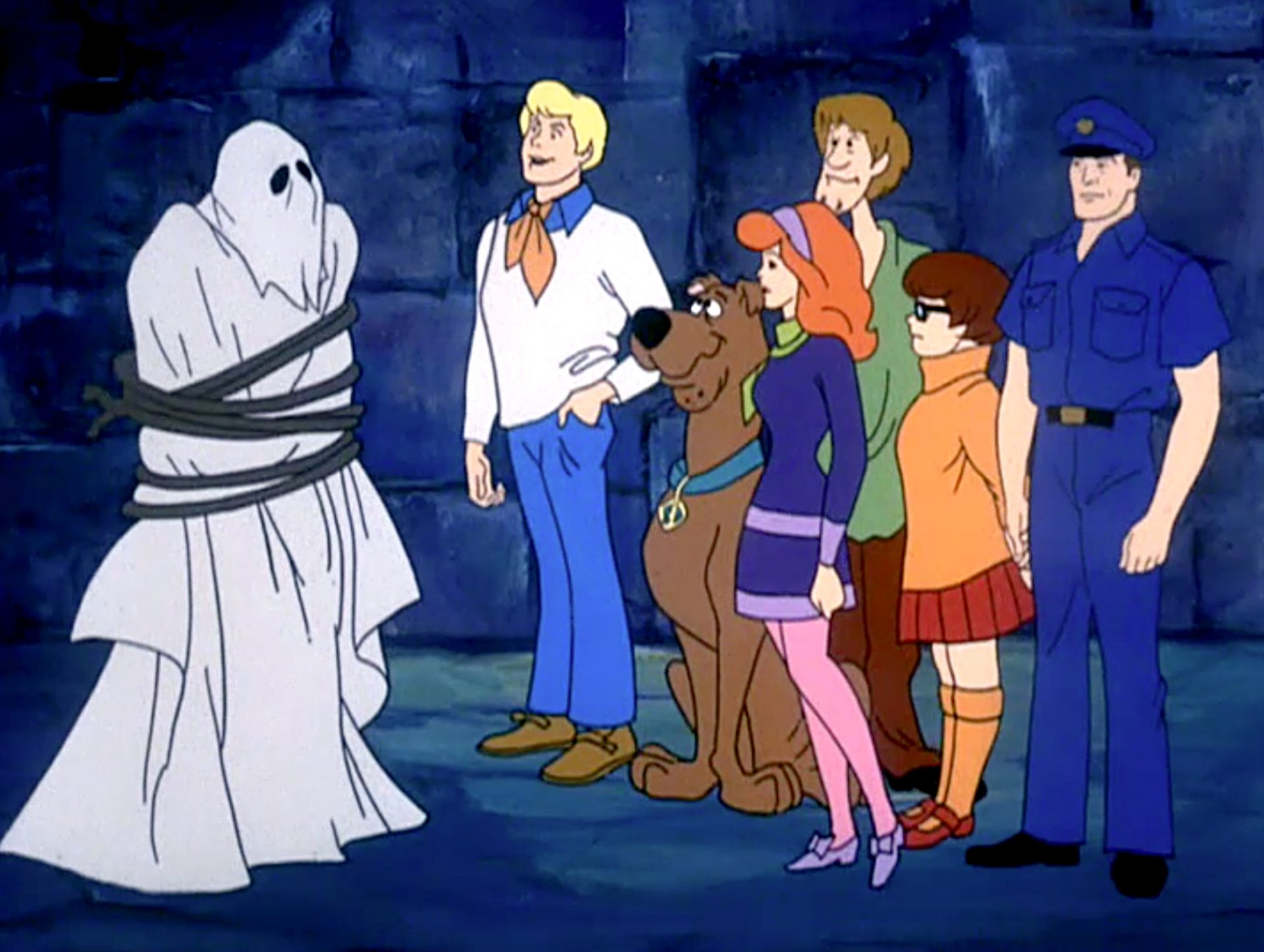
Fred, Daphne, Velma, Shaggy and Scooby-Doo standing beside an unmasked ghost and a police officer
The final reveal turned a frightening ghost into a human culprit with a very practical motive.

The mask made a promise

The unmasking told children that a frightening claim could be examined. The person creating panic often benefited from the empty property, abandoned mine, hidden treasure or missing witnesses. Fear was not random; it was being used.

That is why the reveal remains satisfying even when viewers already know the culprit. The pleasure is not only surprise. It is the transformation of a chaotic image into a readable plan.

Sound, Color and Limited Animation

The atmosphere was doing more work than we noticed

Static corridors, bold monster silhouettes and an unforgettable soundscape made a budget-conscious cartoon feel much larger than its movement count.

Sound

The hallway followed you

Echoing footsteps, organ stings, rattling chains and distorted laughter told viewers when to lean forward. The Space Kook’s electronic cackle or a distant moan could make a held background feel alive.

Backgrounds

Every building leaned wrong

Castles tilted, docks disappeared into fog and amusement parks glowed without crowds. Because characters often moved across limited backgrounds, those paintings had to establish mood immediately.

Monster design

One feature was enough

The Creeper’s walk, Captain Cutler’s glow, the Ghost Clown’s grin and the Space Kook’s skull face were simple enough to read on a lunch box and strong enough to survive decades.

Chase music

Repetition became rhythm

Doors, hallways and recycled runs became part of a visual song. Second-season pop tracks connected the gang to contemporary youth culture and made panic feel strangely celebratory.
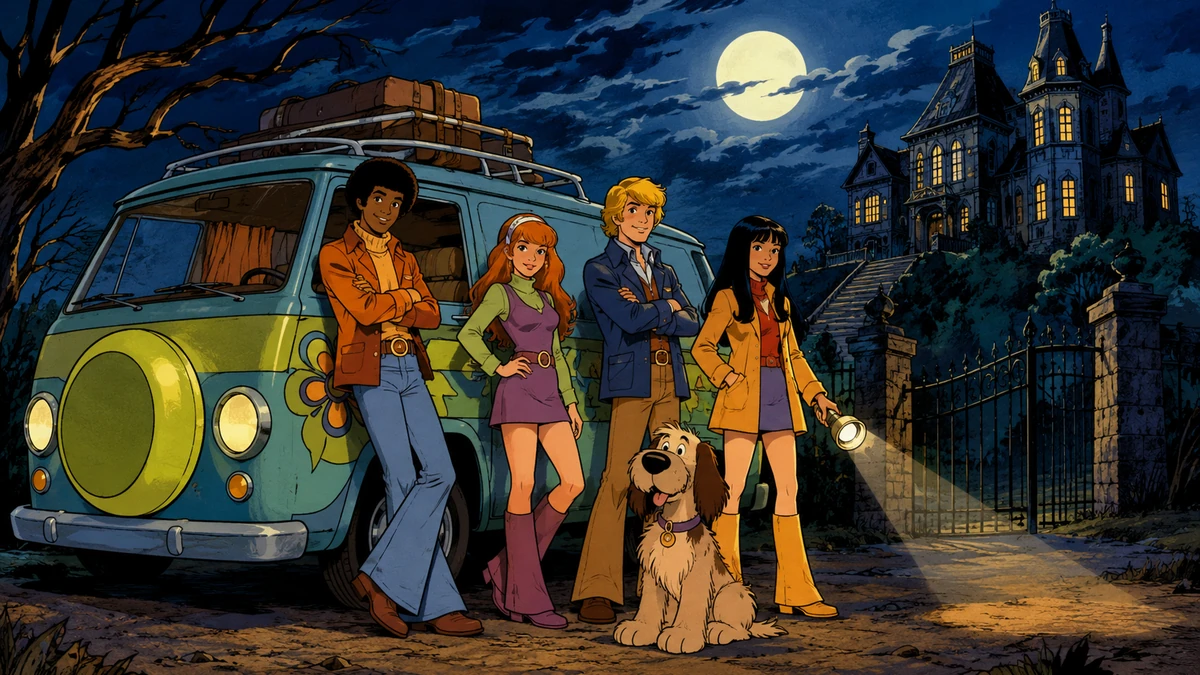
The trick was consistency: fluid animation mattered less when color, sound, silhouette and timing all agreed on the same mood. The hallway only needed to move once if the laugh followed you for fifty years.
First-Watch Guide

10 essential episodes that explain the original show

These ten episodes provide a guided first watch of the formula’s range, atmosphere and monster design.

EPISODE01
The blueprint

What a Night for a Knight

The first broadcast mystery opens with a black knight, a missing archaeologist and a museum full of hiding places. More important, it arrives with the complete rhythm already in working order: a strange event, clues, separated teams, physical comedy, a trap and an adult culprit with a practical scheme.

Watch how quickly the characters become readable. Fred directs, Velma interprets, Daphne explores, and Scooby and Shaggy turn panic into movement. The episode matters because the franchise did not need years to discover its basic grammar; most of it was present on opening night.

EPISODE02
Atmosphere by the sea

A Clue for Scooby-Doo

Captain Cutler’s glowing deep-sea suit remains one of the original series’ strongest monster designs. The docks, fog and underwater setting make the threat feel larger than the smuggling plot hiding beneath it, proving that atmosphere can elevate a very simple mystery.

The episode is also a clean example of Scooby-Doo skepticism. Local legend explains the ghost, but physical evidence points somewhere more ordinary. The pleasure comes from letting the supernatural possibility hang around just long enough before the machinery of the fraud is exposed.

EPISODE03
The haunted-house template

Hassle in the Castle

A boating accident leaves the gang near an abandoned castle where a floating phantom appears to move through walls. Secret passages, portraits and echoing rooms give the show a setting that feels built from every childhood idea of a haunted mansion.

This is Scooby-Doo at its most architectural. The castle is not merely a backdrop; it controls the pacing, separates the group and lets the villain appear anywhere. Later mystery cartoons would borrow this basic arrangement again and again because it makes a small production feel like a large world.

EPISODE04
Western ghost story

Mine Your Own Business

The Miner Forty-Niner stalks an old mining town and the Gold City Guest Ranch, bringing Western imagery into the standard haunted-property plot. The creaking hotel and automated features give Scooby and Shaggy plenty of room for physical comedy without weakening the mystery.

The episode shows how easily the format could absorb another genre. One week could feel like a Gothic story, the next like a cowboy ghost tale. The gang stayed the same, which meant the setting and monster could change radically without making the audience relearn the show.

EPISODE05
An empty midway

Foul Play in Funland

A deserted amusement park should be cheerful, which is exactly why it becomes unsettling after dark. The super-fast robot Charlie races through the midway while lights, rides and machinery seem to operate without people, creating some of the original series’ most durable imagery.

Unlike many masked-ghost stories, this mystery leans toward technological anxiety. The threat is not an old legend but a machine behaving beyond anyone’s control. That variation proves the Scooby formula could handle modern fears as comfortably as castles and curses.

EPISODE06
The circus gets creepy

Bedlam in the Big Top

The Ghost Clown uses hypnosis to control members of the gang, turning a place built for childhood entertainment into a series of unnerving set pieces. His fixed grin and commanding voice make him one of the show’s most effective villains.

The episode works because it briefly disrupts the team itself. Instead of merely chasing everyone, the clown turns friends into performers inside his plan. That gives the mystery a personal tension that many episodes avoid while preserving the eventual comic release.

EPISODE07
A monster built to last

Jeepers, It’s the Creeper

The Creeper has no elaborate costume concept—just a hunched walk, green face and repeated growl—but that simplicity made him unforgettable. A school dance, a mysterious paper and a barn chase give the episode a strong balance of teen life and monster comedy.

The chase sequence captures the franchise’s bubblegum-pop phase at full strength. Music does not pause the story; it reorganizes fear into rhythm. The Creeper remains threatening while the repetition of movement invites viewers to enjoy the pattern.

EPISODE08
Cold storage nightmare

Scooby’s Night with a Frozen Fright

A prehistoric caveman is thawed from a block of ice and begins stalking an aquarium and research facility. The premise sounds ridiculous when summarized, yet the bulky silhouette and empty institutional setting make the creature surprisingly effective.

This episode is a reminder that Scooby-Doo never required a respectable legend. It only needed a clear monster, a place to investigate and a scheme that could eventually be explained. The show could turn almost any visual idea into twenty-two minutes of suspense and comedy.

EPISODE09
The puppet master

The Backstage Rage

A phantom puppeteer, counterfeit money and a theater full of curtains create one of the original run’s moodiest mysteries. The backstage setting naturally provides ropes, hidden rooms, trapdoors and figures that appear alive when nobody is touching them.

The story also makes strong use of scale. Puppets imitate people, props resemble evidence and the theater itself is built to deceive an audience. Scooby-Doo’s usual lesson—that appearances can be engineered—fits the location perfectly.

EPISODE10
The skull in space

Spooky Space Kook

A laughing alien skeleton in a space suit haunts an abandoned airfield, combining science-fiction imagery with the standard property scheme. The electronic laugh, blinking skull and empty hangars make the Space Kook one of the franchise’s most recognizable threats.

The episode demonstrates the importance of sound. Long before the villain is explained, the laugh tells viewers exactly how to feel. Limited animation becomes less important when the audio, silhouette and background design agree on the same nightmare.

Why Reruns Never Broke the Mystery

Knowing the culprit changed the pleasure

A solved mystery did not become useless. It became a ritual viewers could participate in more completely.

Recognition replaced surprise

Children rewatching an episode could notice the clue earlier, wait for the chase song, repeat the villain’s line and predict exactly how Fred’s trap would fail. The structure encouraged participation rather than requiring novelty.

That repeatability made Scooby-Doo unusually valuable in syndication. Each new version inherited an audience already fluent in flashlights, suspicious footprints and abandoned properties. The franchise could change clothes, networks or animation styles without starting from zero.

The Honest Rewatch

What aged well—and what did not

Nostalgia works better when the strong ideas and the period blind spots are both allowed into the room.

Still strong

Teamwork without perfection

The gang’s members contribute in different ways. Nobody has to be fearless, athletic and brilliant at the same time to remain useful or loved.

Still strong

Evidence beats theater

The show repeatedly asks who benefits from the frightening story. That lesson about motive, performance and proof remains remarkably durable.

Needs context

Some cultural images are dated

Several original episodes use stereotypes in costumes, legends and settings. Those choices should be acknowledged rather than excused or erased by affection for the franchise.

Visible limitation

The animation repeats

Adult viewers can see recycled runs and held backgrounds. The best episodes survive because the design, sound and comic timing turn those limitations into part of the style.

The Gen X Rerun File

We remember the ritual before the air date

Most Gen X viewers did not separate 1969 originals from 1970s follow-ups or later reruns. Scooby-Doo simply seemed to be waiting whenever Saturday morning started.

The chase sequence became a language

Doors opened in impossible order. Heroes and monsters passed one another in the same hallway. A bubblegum song turned panic into a miniature music video before MTV existed. We knew the geography made no sense and loved it more because of that.

We also learned that adults insisting a property was haunted were statistically likely to possess mining equipment, counterfeit machinery or a disputed deed. Property law was the real monster.

Scooby Snacks became the universal name for any affectionate bribe, while “meddling kids” became shorthand for what happens when curious people ignore an official story and keep asking questions.

The Franchise That Would Not Leave the Schedule

The legacy reaches beyond Saturday morning

Broadcast networks, syndication, cable, direct-to-video movies, theaters and streaming all found room inside the Mystery Machine.

A format other shows could understand

Scooby-Doo created a portable arrangement: young investigators, a comic mascot, a memorable vehicle and a weekly mystery. The formula spread because producers could replace the dog, location or gimmick while preserving the basic engine.

For the wider studio catalog and the production culture that kept these formulas moving, continue to Hanna-Barbera Cartoons of the 1970s. For the whole weekend ritual, visit The Complete History of Saturday Morning Cartoons in the 1970s.

The Gen X verdict: the ghosts were fake, the appetite was real and the van never ran out of gas. Scooby-Doo made Saturday morning spooky enough to thrill us and safe enough to come back next week.
Questions From the Mystery Machine

Frequently asked questions about Scooby-Doo

The quick facts behind the original show, its characters and its 1970s expansion.

When did Scooby-Doo, Where Are You! premiere?

The original CBS series premiered on September 13, 1969. New formats, reruns and follow-up series made Scooby-Doo a central part of 1970s Saturday morning television.

Who created Scooby-Doo?

The original series was developed at Hanna-Barbera by a creative team that included Joe Ruby, Ken Spears, William Hanna, Joseph Barbera and character designer Iwao Takamoto.

Why did Scooby-Doo become so popular?

It combined safe scares, comedy, a repeatable mystery, memorable villains and a cast whose roles were easy to understand. The show let children enjoy fear and then watch evidence restore order.

What kind of dog is Scooby-Doo?

Scooby is a Great Dane, although Iwao Takamoto intentionally exaggerated traits that would be considered incorrect in a prize-winning show dog.

Why do the villains usually wear masks?

The unmasking turns the supernatural story into a human scheme. The frightening performance hides a practical motive such as theft, fraud, smuggling, revenge or control of valuable property.

Who are the original members of Mystery Inc.?

The classic team is Fred Jones, Daphne Blake, Velma Dinkley, Shaggy Rogers and Scooby-Doo.

What are the best original Scooby-Doo episodes to watch first?

A strong starter set includes What a Night for a Knight, A Clue for Scooby-Doo, Hassle in the Castle, Foul Play in Funland, Bedlam in the Big Top, Jeepers, It’s the Creeper and Spooky Space Kook.

Did Scooby-Doo begin in the 1970s?

The original series began in 1969, but the franchise expanded across the 1970s through reruns, new episodes, hour-long celebrity crossovers, ensemble programs and the arrival of Scrappy-Doo.

Sources

Where the production history comes from

These references cover the series, its creative team and the television history behind Scooby-Doo’s rise.

First-watch guide: These ten episodes make a strong introduction for new viewers and highlight the formula that kept Scooby-Doo moving through the 1970s.

Get the Weekly Gen X Drop

New videos, rewinds, and savage nostalgia — first.

SUBSCRIBE WATCH VIDEOS

MORE REWINDS