Cabbage Patch Kids and the 1983 Toy Store Frenzy
The adoption papers were cute. The dimples were strange. The store lines were not kidding around. This is how one homely little doll turned American Christmas shopping into a national emergency with yarn hair.
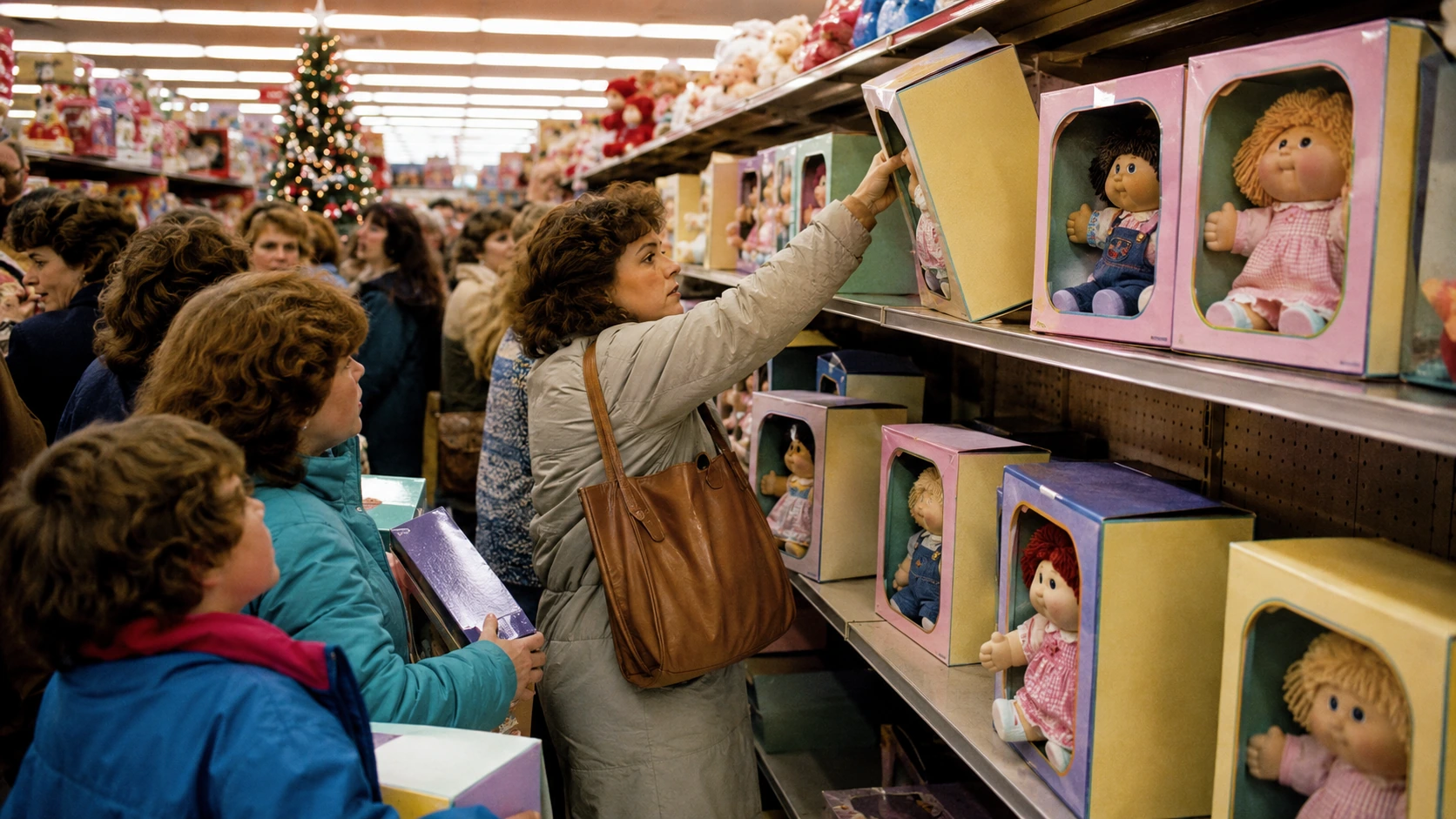
The toy aisle had seen hits. This was something else.
The Cabbage Patch Kids craze did not begin with a sleek electronic toy or a cartoon robot carrying six missiles. It began with soft bodies, oversized vinyl heads, yarn hair, strange little names, adoption papers, and the suggestion that families were not buying dolls at all. They were bringing children home from the busiest corner of the 80s toys aisle.
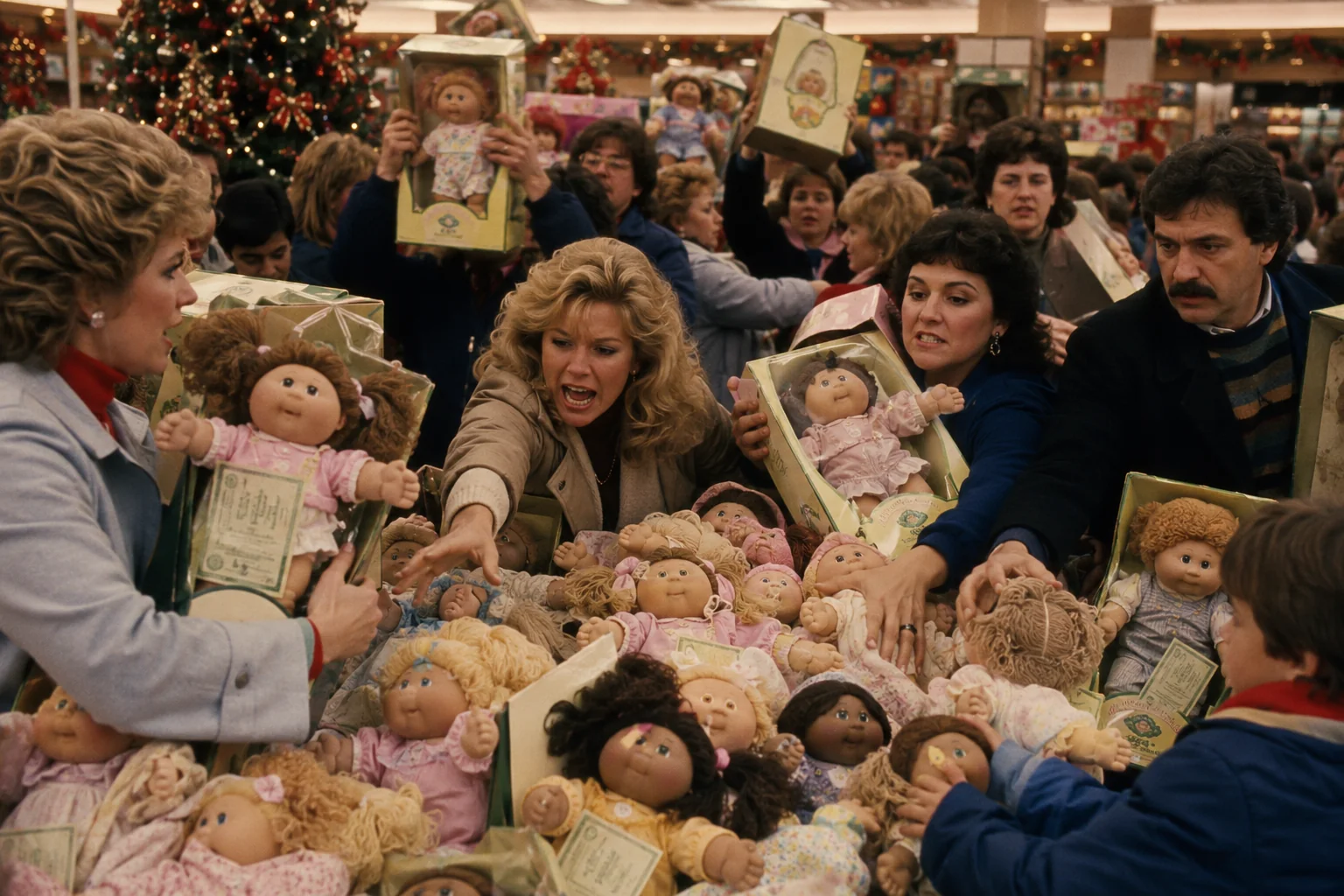
By Christmas 1983, the dolls had become a national scavenger hunt. Parents called stores, followed delivery rumors, joined lines before sunrise, accepted purchase limits, and watched television reports showing other adults doing everything they had told children not to do in public.
The dolls earned a place among the most iconic toys of the 80s, but the real story is bigger than nostalgia. Cabbage Patch Kids changed the language of toy marketing, the psychology of scarcity, the role of television news in creating demand, and the expectations surrounding the annual must-have Christmas gift.
Before Coleco, before the riots, before somebody’s aunt started calling stores three states away
Cabbage Patch Kids History Before 1983: The Handmade Little People
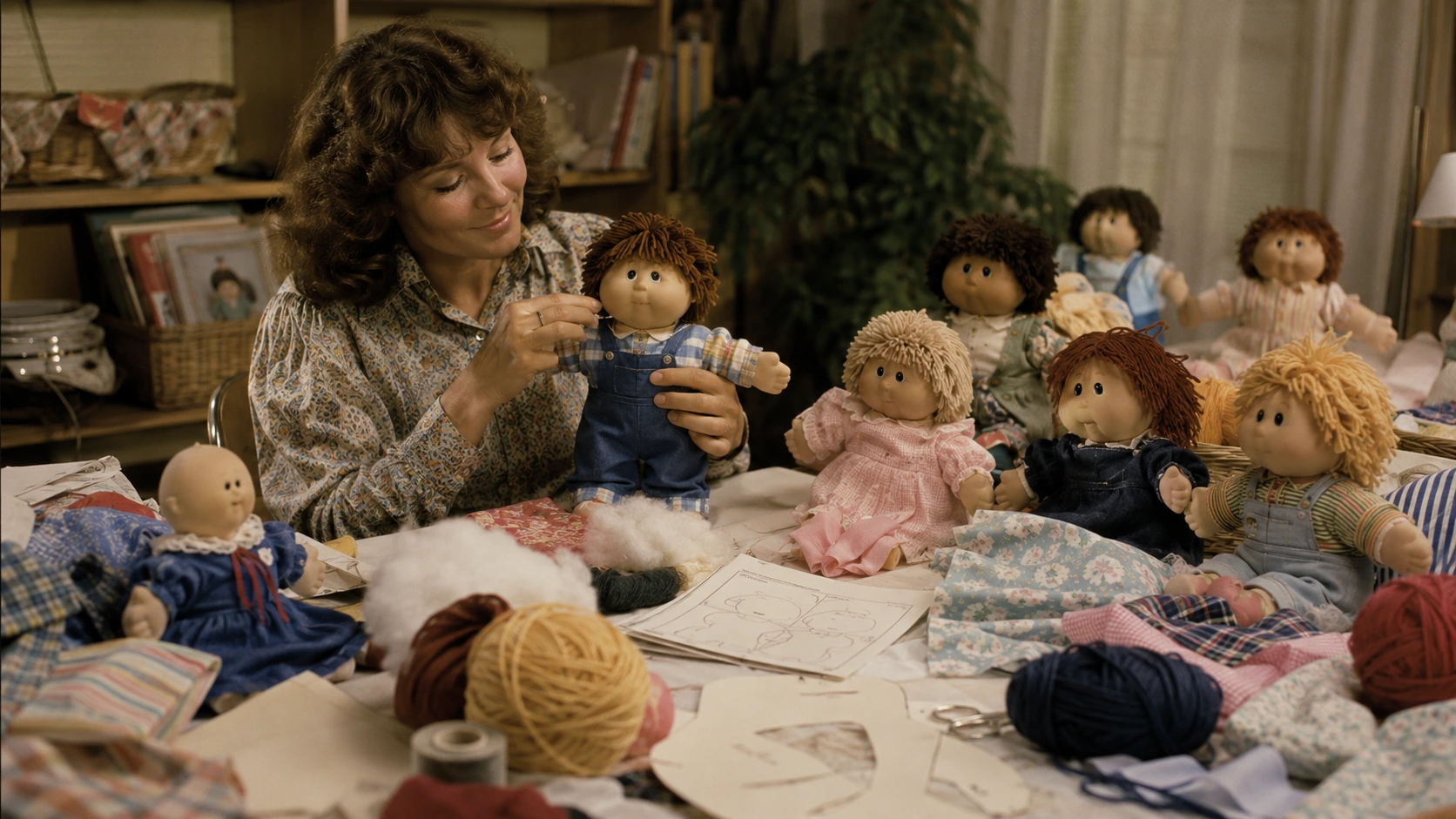
The mass-market story begins in 1983, but the idea did not appear in a corporate conference room five minutes before Christmas. Its roots were in the soft-sculpture doll work associated with Xavier Roberts in Cleveland, Georgia, during the late 1970s. The early dolls were handmade cloth creations with carefully shaped faces, painted features, yarn hair, and individual identities.
They were called Little People, and the presentation mattered as much as the construction. They were not lined up as identical babies with the same face and a different dress. They were treated as individuals. They had names. They had birthdays. They had personalities. The buyer entered a small fictional system built around where the dolls came from and what taking one home meant.
That was a powerful shift. Traditional dolls had always encouraged nurturing play, but the Little People added paperwork, ritual, and a sense of selection. The customer was not simply choosing a product. The customer was being matched with somebody.
The handmade origin gave the dolls credibility
Before mass production, the dolls carried the appeal of folk art and craft fairs. The faces were irregular, the bodies were soft, and the idea felt far removed from a perfectly symmetrical fashion doll. They looked handmade because they were handmade. The imperfections became personality.
That visual language survived the transition to vinyl-headed mass production. Coleco could not reproduce the exact feel of a hand-stitched soft-sculpture face at toy-store scale, but it could preserve the broad features: round cheeks, close eyes, small mouths, dimples, yarn hair, soft bodies, and enough combinations to suggest individuality.
BabyLand General turned a sales location into a world
The early operation in Georgia used the language and imagery of a hospital. Staff wore medical uniforms. Dolls were presented as babies being born and adopted. The physical location became part store, part attraction, part performance, and part origin story.
That matters because the Cabbage Patch phenomenon was never only about the object. The brand sold a whole emotional sequence: birth, naming, adoption, responsibility, family, and belonging. The toy came with a story that started before the box was opened.
The dolls already had demand before the national explosion
The handmade Little People became popular enough that production had to expand. More people were needed to make them. More space was needed to present them. The adoption idea had proven that buyers would pay for the emotional experience, not just the cloth and yarn.
That earlier popularity is important because Coleco did not create demand from nothing. The company took an existing concept with regional and national attention, adapted it for larger production, and placed it into the full machinery of 1980s toy distribution and advertising.
You did not buy one. You signed paperwork and accepted responsibility.
Why Cabbage Patch Kids Had Adoption Papers and Birth Certificates
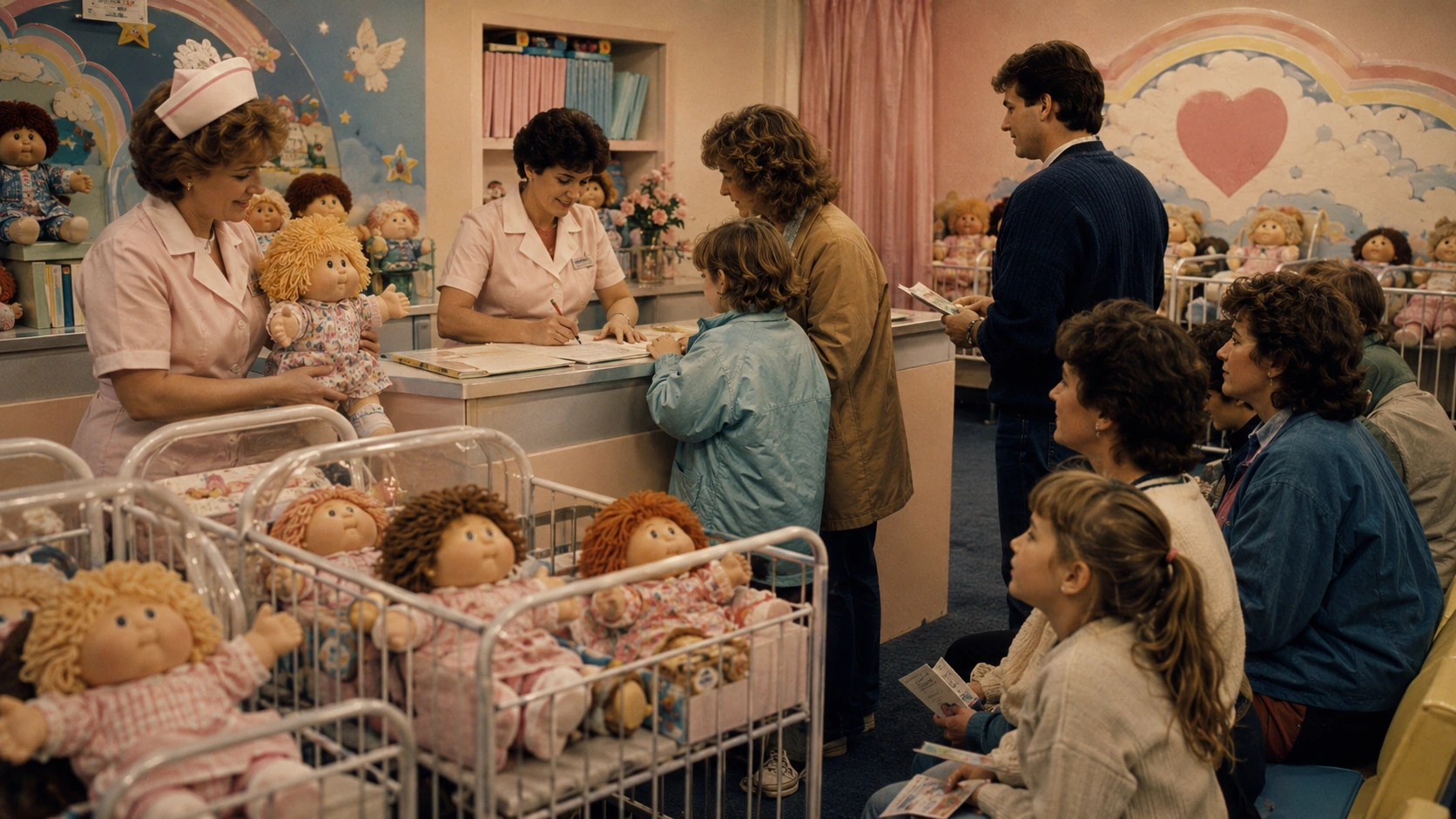
The word “adoption” changed the transaction. A doll could be returned, replaced, or forgotten. An adopted child came with an emotional obligation. The paperwork made the child feel official, and the name gave the relationship a beginning before the buyer created one.
A Name Already Waiting
The doll arrived as somebody, not something. Even when the computer-generated name sounded like three relatives had been pulled from a hat, it made the package feel individual.
A Birth Certificate
The certificate established a birthday and identity. It turned paperwork into part of the play and made replacement or renaming feel like a serious family decision.
Adoption Papers
The buyer signed into the story. The form suggested responsibility, care, and permanence—the exact opposite of a disposable fad, even while the entire country was treating it like one.
The Signature
The Xavier Roberts signature on the doll reinforced the idea that this child came from a specific creator and place rather than an anonymous factory line.
Individual Appearance
Hair, eyes, skin tone, outfit, face mold, and name combinations made shoppers feel they had found the right child—not merely the last box available.
A Story Adults Could Repeat
Parents, grandparents, sales clerks, and television reporters could explain the idea in seconds. That simplicity helped the brand travel faster than any instruction manual.
The paperwork extended play beyond the doll
Children could celebrate birthdays, write down personality traits, keep the certificate safe, create family relationships, and explain the child’s history to friends. The toy encouraged ownership, but the language framed ownership as care.
That also made loss or damage feel more personal. A missing shoe was not just a missing accessory. It belonged to your child. A stain on the outfit was a family problem. A sibling borrowing the doll without permission could be treated like a custody dispute.
The name made substitution harder
Scarcity usually encourages buyers to accept any version of a hot toy. Cabbage Patch Kids complicated that because every doll looked different enough to trigger preference. A child might want a girl with blond yarn hair, a boy with brown eyes, a bald preemie, freckles, a particular outfit, or simply the exact face seen in a friend’s house.
Parents facing empty shelves were not only trying to find the product category. They were trying to find a child who passed inspection. In 1983, finding any box was a victory. Finding the right one felt like divine intervention in a department-store aisle.
The concept made adults part of the fantasy
The adoption language did not stay inside children’s play. Adults used it in ordinary conversation. Stores announced arrivals as if children had been delivered. Reporters talked about families hoping to adopt. The vocabulary softened the commercial transaction while making it emotionally more intense.
It was cute, strange, effective, and extremely 1980s: consumer culture wearing a hospital gown and asking you to sign at the bottom.
How a handmade concept became the doll every mall in America was missing
When Did Cabbage Patch Kids Come Out? Coleco’s 1983 Launch
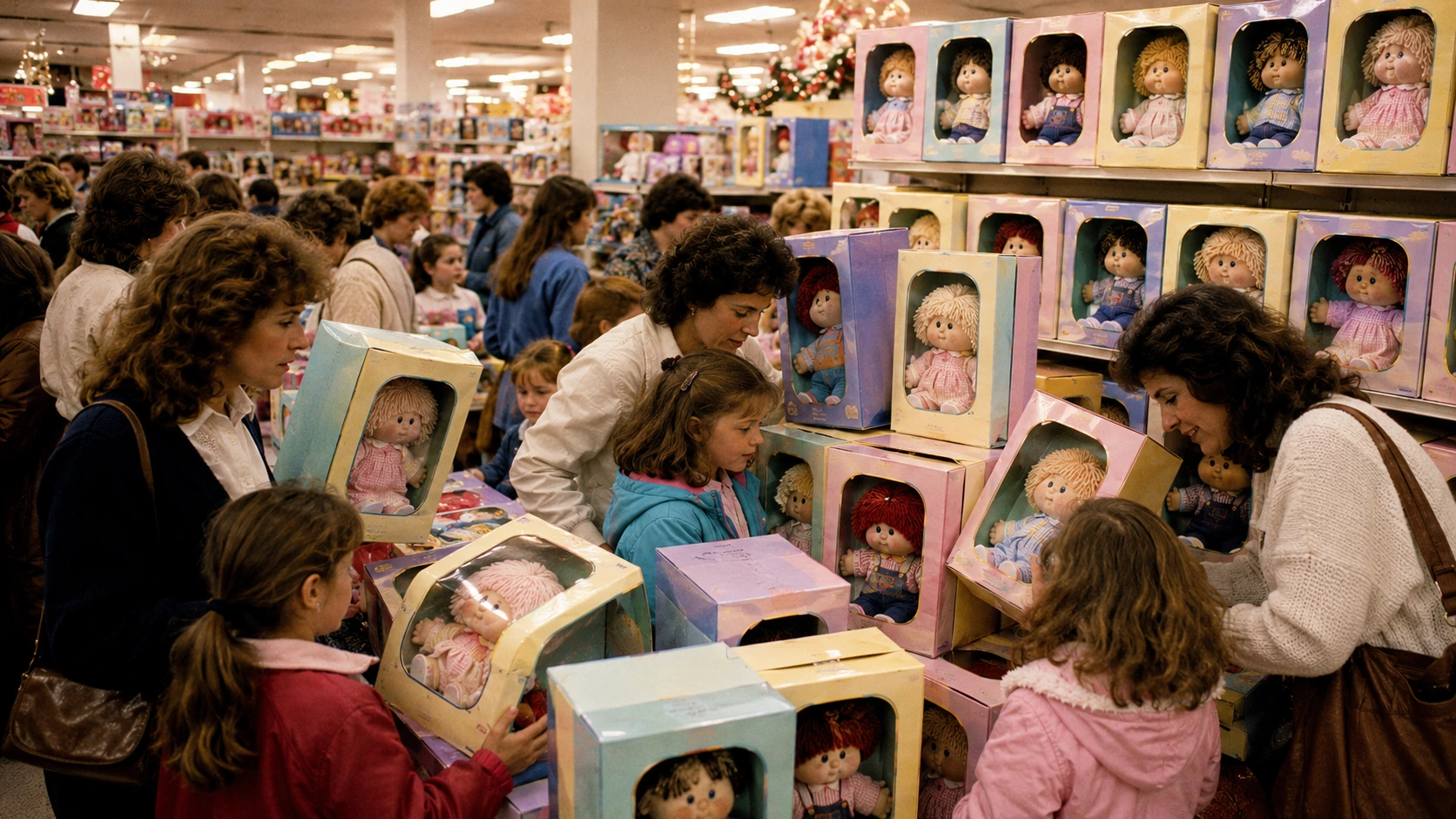
Scaling the Little People concept required changes. A fully soft-sculptured face was labor-intensive and difficult to reproduce consistently at the volume demanded by national toy retail. The mass-market dolls used vinyl heads with cloth bodies, preserving the broad appearance while allowing factories to produce far more units.
The name changed too. The mass-market brand became Cabbage Patch Kids, supported by a fantasy mythology involving the cabbage patch, Bunnybees, magic crystal dust, and a place where children were born waiting for adoption. It was odd enough to be memorable and simple enough to explain during a commercial.
Mass production had to preserve the illusion of uniqueness
A factory line usually creates sameness. The Cabbage Patch concept depended on difference. Coleco addressed that through combinations of head molds, hair styles, hair colors, eye colors, skin tones, outfits, names, and paperwork. The dolls were not literally one of a kind, but they looked varied enough on a shelf to make the claim feel emotionally true.
That variation created a practical retail advantage. A shelf full of identical dolls can blur together. A shelf full of different faces invites inspection. Shoppers picked up boxes, compared children, read names, and searched for the one that felt right.
The timing was almost too perfect
The dolls entered a toy market already powered by television, licensing, mall culture, catalog shopping, and the growing expectation that every Christmas would produce one gift children absolutely had to own. The top toys of 1982 had already shown the strength of character-driven lines such as He-Man, My Little Pony, and the revived G.I. Joe. In 1983, Cabbage Patch Kids brought that kind of world-building to the doll aisle with a much more intimate emotional pitch.
The line reached stores in time for the 1983 holiday season. That meant the brand had only months to move from new product to national obsession. It did not need a long slow build. Television, print, word of mouth, store scarcity, and news coverage accelerated the process.
Coleco underestimated the size of the wave
Toy companies forecast demand months before the holiday. Raw materials, factory capacity, shipping, packaging, retailer orders, and distribution all have to be planned. A new doll line could be successful and still produce more than enough inventory if buyers did not respond.
Coleco’s problem was the opposite. The company had a hit larger than the production system had been prepared to serve. Once demand exploded, adding more dolls was not as simple as turning a dial. Factories needed materials, workers, schedules, transportation, packaging, and time. Christmas was approaching whether the supply chain was ready or not.
The shortage was not a separate event from the craze. Scarcity became one of the main reasons the craze grew.
The wider top toys of 1983 lineup was already loaded with He-Man, G.I. Joe, Care Bears, Atari, and other major names. Cabbage Patch Kids became the year’s defining story because families could not simply walk into a store and decide to buy one.
They were not conventionally beautiful, and that was the point
Why Were Cabbage Patch Kids So Popular in 1983?
Traditional doll marketing often emphasized idealized beauty, fashionable clothing, delicate features, or a polished baby-doll sweetness. Cabbage Patch Kids looked like actual children had been filtered through a county-fair caricature booth. The cheeks were round. The eyes sat close together. The heads were oversized. The mouths were small. The faces were cute, homely, mischievous, awkward, and strangely familiar.
The faces looked like personalities
The design did not need to be glamorous because the goal was attachment. A slightly odd face invited interpretation. One child looked stubborn. Another looked shy. Another looked like he had already blamed the broken lamp on his sister. The same broad sculpt could feel different through hair, eyes, freckles, skin tone, and outfit.
This was a major reason the dolls survived imitation. Competitors could reproduce the basic formula of a soft body and unusual head. They could not automatically reproduce the exact emotional response created by the face, the paperwork, the name, and the brand story working together.
The soft body made the doll feel like a child
The vinyl head provided recognizable features and manufacturing consistency. The cloth body gave the doll warmth, weight, and flexibility. A Cabbage Patch Kid could be carried, hugged, dressed, tucked into bed, placed at the dinner table, dragged through the house, and wedged into a car seat.
The combination mattered. A fully hard-plastic doll could feel like an object. The cloth body made the Kid feel more like somebody who needed help sitting upright.
Hair expanded the choices
Yarn hair became one of the brand’s signature features. Braids, pigtails, short styles, curls, colors, ribbons, and later variations gave each doll a different look. Bald babies and preemies created another category of attachment. Children could choose a doll who looked like them, looked unlike them, or simply had the best hair in the shipment.
The brand made room for difference
The range of skin tones, hair, eyes, genders, outfits, and facial combinations helped children imagine a broader family than many doll lines offered. The adoption story made that range part of the premise. The children came from the same Cabbage Patch world but were not supposed to look identical.
That emotional message—there is a child for everyone, and every child belongs—sat beneath the commercial frenzy. It was sincere enough to matter and marketable enough to end up on more than two thousand licensed products at the peak of the brand.
It belonged inside the larger 80s doll explosion
Cabbage Patch Kids shared the decade with Strawberry Shortcake, Care Bears, My Little Pony, Rainbow Brite, Barbie, Jem, Pound Puppies, Popples, and talking plush. The broader story of 80s dolls, plush toys and pet-toy chaos shows how many brands competed for affection. Cabbage Patch Kids won 1983 because affection was built into the transaction.
The craze was enormous, but the object inside the box still had to work
What Came With an Original 1983 Cabbage Patch Kid?
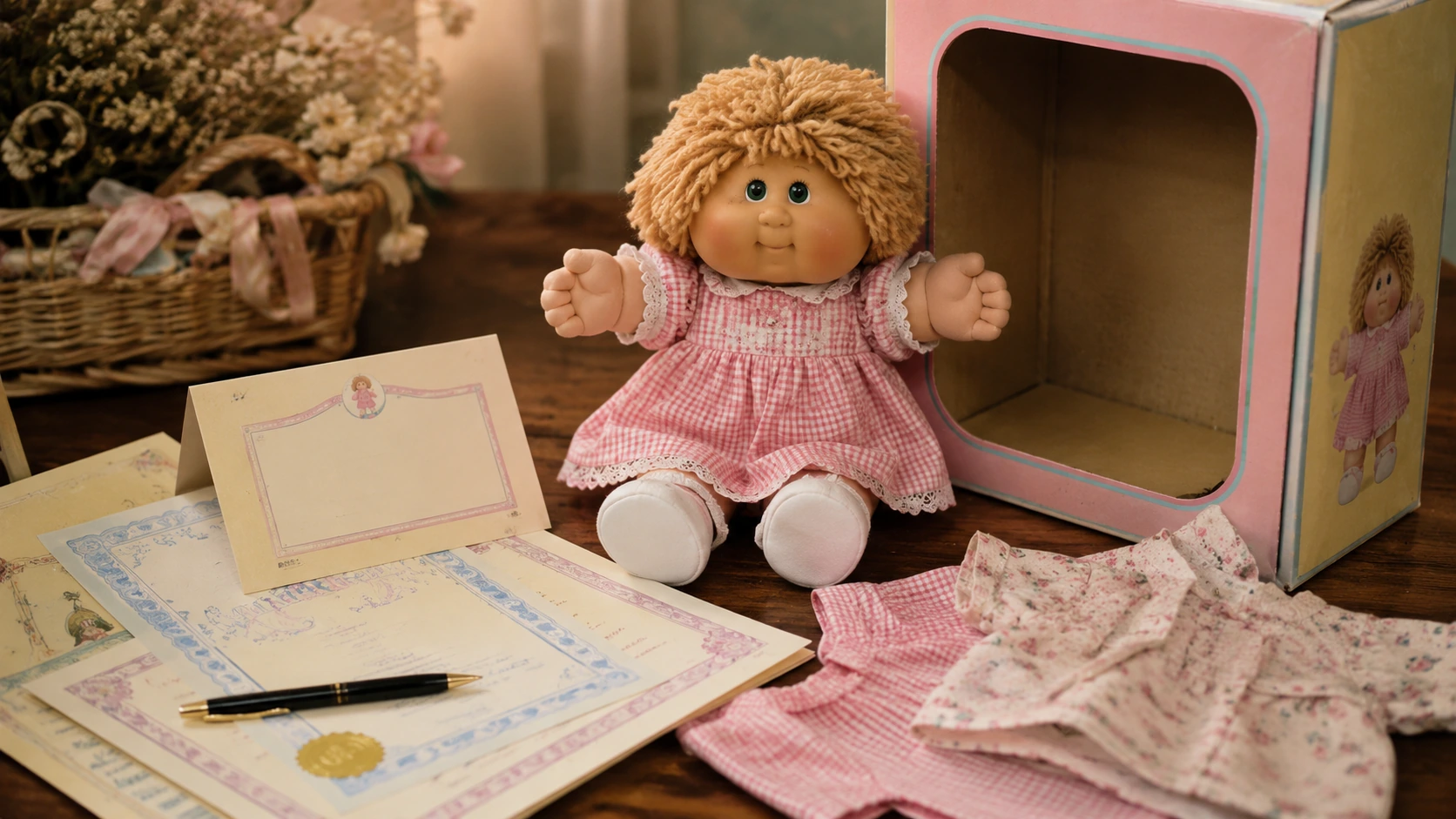
Scarcity can make any product look desirable for a season. Cabbage Patch Kids lasted because the product delivered the emotional experience promised by the advertising. The doll was large enough to hold, soft enough to hug, varied enough to feel personal, and packaged with enough documentation to make adoption feel official.
The vinyl head carried the identity
The head had to preserve the soft-sculpture look while surviving mass production. Round cheeks, close-set eyes, small mouths, dimples, freckles, hair, and skin tone created the recognizable Cabbage Patch expression. The face did most of the emotional work because the cloth body was largely hidden under clothing.
Different face molds produced different reactions. One child seemed sweet. Another seemed worried. Another looked as though she had already hidden the television remote and was waiting for the adults to blame each other.
The cloth body changed how the doll was handled
A rigid fashion doll is posed, dressed, and displayed. A Cabbage Patch Kid was carried against the body. The softness made the doll comfortable in bed and easy for smaller children to hold. The weighted shape created a sense of substance without making the toy hard and cold.
The body also made the doll vulnerable to childhood. Fabric absorbed stains, smells, dust, food, markers, and the general atmosphere of a house. That history is part of why surviving dolls can feel intensely personal even when collectors would describe the same evidence as condition issues.
The clothing established personality before play began
Overalls suggested an active child. Dresses looked formal. Tracksuits felt modern. Pajamas suggested a baby ready for bedtime. Sweaters and corduroy made the dolls look like actual children from family photographs rather than tiny adults on a fashion runway.
The clothing was removable, which expanded play and created an accessory market. It also created the future collector problem of dolls wearing outfits assembled from three different decades and one unrelated teddy bear.
The certificate turned the box into an archive
The birth certificate and adoption papers gave children something to read, sign, protect, and show. The documents made the doll’s identity portable. A child could explain the name and birthday without inventing them.
Paperwork also made the box feel more valuable at the moment of opening. The package contained not only a toy but a record. Adults who had spent weeks searching could point to the papers and feel that the effort had produced something official.
The name was sometimes more memorable than the face
Computer-generated combinations produced names that ranged from charming to gloriously awkward. The names sounded specific enough to be real and strange enough to become stories. Families shortened them, replaced them, or repeated the full name for comic effect.
A child might forget which store sold the doll but remember the full name decades later. The paperwork made memory easier because identity arrived prepackaged.
The box showed the child while protecting the story
Visible packaging allowed shoppers to compare faces and outfits. It also framed the doll as someone waiting to leave. The adoption idea depended on seeing the child rather than opening a sealed mystery box.
At the same time, the package protected the certificate, outfit, and presentation. A doll removed from the box became a family member. A doll preserved in the box remained permanently in the moment before adoption.
The differences encouraged repeat adoption
Once a child owned one doll, the variety made a second doll feel less repetitive. The new child could have different hair, skin, eyes, clothing, age, or personality. The collection became a family.
That was the quiet commercial genius beneath the 1983 shortage. The product looked singular enough to feel special and varied enough to make owning only one feel incomplete.
Television sold the feeling, then the news sold the shortage
How 1983 Cabbage Patch Kids Commercials Fueled the Craze
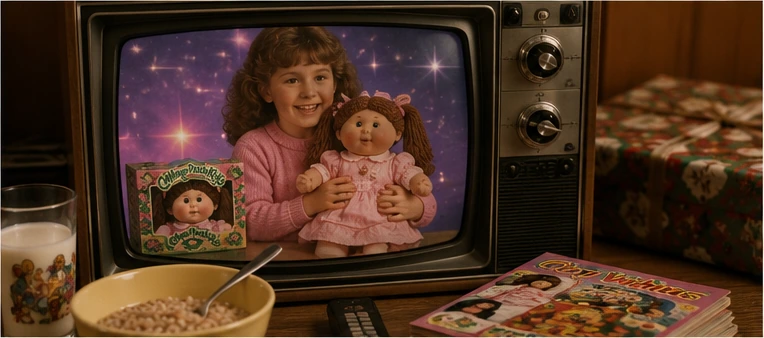
The commercials did not need to explain complicated features. There were no missiles, transformation steps, electronic voices, or batteries. The message was emotional: these children were waiting, they were individual, and one of them could become yours.
The commercial demonstrated adoption
The best toy ads show what ownership feels like. Cabbage Patch Kids commercials showed children holding dolls, caring for them, reading names, dressing them, and treating them as family. The action feature was attachment.
The wording mattered. Adoption, birth certificates, names, and homecoming gave the ad a built-in story. A parent watching from across the room could understand the appeal without studying the product. A child could repeat the pitch later with devastating accuracy.
Saturday morning kept the dolls in the conversation
Commercials appeared in the same television environment that powered action figures, cereal, board games, and character merchandise. Rewatching 80s toy commercials and videos makes the rhythm obvious: bright package, excited children, quick explanation, emotional payoff, and a final reminder that accessories were sold separately.
The wider 80s cartoon toy commercials had trained children to connect screen worlds with physical products. Cabbage Patch Kids did not need a daily action cartoon to dominate. The dolls had a concept vivid enough to function like their own show.
Print made the craze look official
Catalogs, newspaper advertisements, magazine stories, trade coverage, and department-store circulars gave the dolls legitimacy beyond television. A child could point to the page. A grandparent could study the box. A parent could carry the exact name into a store and still discover that knowing the name did not create inventory.
National news became unpaid advertising
Once cameras began showing lines, empty shelves, purchase limits, arguments, and adults wrestling over boxes, the story changed. The news was no longer reporting a doll. It was reporting a phenomenon.
Every segment told viewers the same thing: these dolls were important because everybody else wanted one. Families who had not considered Cabbage Patch Kids now knew they were scarce. Children who had been mildly interested learned that other children might receive the season’s defining gift. Scarcity became social proof.
The coverage created a loop
Step 1: Advertising Creates Interest
Children see the dolls, understand adoption, and start asking.
Step 2: Stores Run Short
Demand exceeds supply, and shelves empty quickly.
Step 3: News Reports the Chaos
Lines and fights become national footage.
Step 4: Scarcity Creates More Demand
Families who were undecided now fear missing the year’s defining gift.
The dolls did not need to stay on the shelf to advertise themselves. The empty shelf became part of the campaign.
Every shipment was too small because demand learned to travel faster than inventory
Why Cabbage Patch Kids Sold Out in 1983
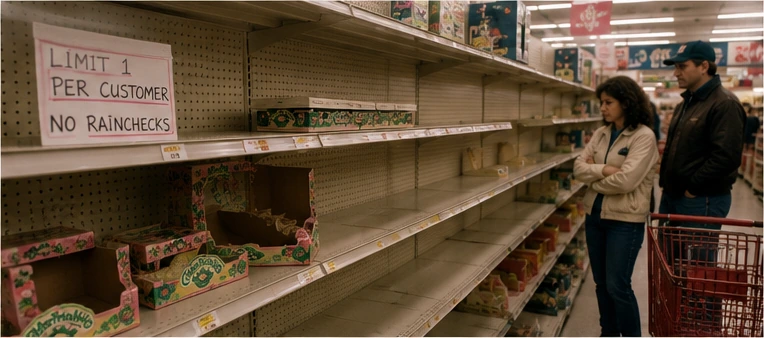
The shortage had several layers. Coleco had underestimated how large demand would become. Production depended on materials and factory capacity. Retail orders reflected expectations formed before the craze reached full speed. Shipping had to move dolls from factories to warehouses, then from warehouses to stores across a large country during the most crowded retail season of the year.
Distribution made the shortage feel random
One store might receive a small shipment while another had none. A catalog retailer might have inventory unavailable to a nearby department store. A truck could arrive in one city and create rumors across the region. Families learned that “sold out” did not mean permanently sold out. It meant the hunt had moved.
That uncertainty kept people calling. A definite no allows a family to accept disappointment. A possible Thursday truck creates a new schedule.
Purchase limits proved demand without solving it
Stores limited customers to one doll, held lotteries, distributed numbered tickets, accepted names for waiting lists, or created special pickup procedures. Those policies tried to spread inventory fairly and prevent resellers from buying everything.
They also announced scarcity in giant invisible letters. A product limited to one per customer feels more important than a product stacked to the ceiling.
The variety made every shipment complicated
A store could receive dolls without receiving the exact children customers wanted. The shipment might contain mostly boys, mostly one hair color, several bald babies, or outfits that did not match the wish list. Parents had to decide whether any Cabbage Patch Kid was better than the wrong Cabbage Patch Kid.
Children could be flexible once the doll was home, but the shopping stage encouraged precision. The adoption concept made people believe the right match existed somewhere, even when somewhere was apparently a store three counties away.
Coleco tried to increase supply under a deadline
Additional production and air freight could move more dolls into the market, but Christmas did not shift to accommodate industrial planning. Every extra unit satisfied one family and demonstrated how many families remained unsatisfied.
The more dolls arrived, the more footage showed them disappearing. Increased supply did not immediately calm the market because the publicity had widened the audience.
The 1983 toy aisle had plenty of competition
He-Man, G.I. Joe, Care Bears, Atari games, and other major lines were all competing for Christmas attention. The top toys of 1983 show a year packed with recognizable brands. Cabbage Patch Kids became the symbol of the season because they were the gift families could not simply decide to buy.
Adults entered the doll aisle and briefly forgot civilization had rules
What Caused the Cabbage Patch Kids Store Fights and Toy Riots?
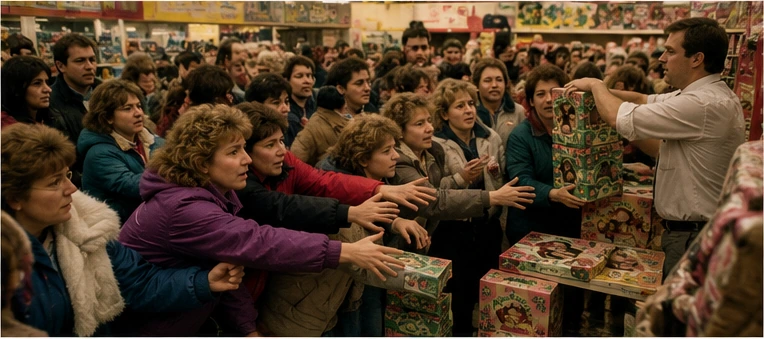
The phrase “Cabbage Patch riots” compresses many separate incidents into one dramatic label. Not every store became violent. Many purchases involved ordinary lines, lucky timing, patient clerks, and parents leaving disappointed. But enough stores experienced pushing, grabbing, arguments, stampedes, damage, injuries, police involvement, or chaotic crowd control that the behavior became part of the national story.
The shipment rumor could create a crowd before opening
News traveled through telephone calls, employees, advertisements, neighbors, relatives, and word of mouth. A store expected to receive dolls could find people waiting before the doors opened. Nobody knew whether the shipment contained ten dolls or a hundred. Everybody knew it would not be enough.
Normal shopping behavior collapsed under scarcity
When the door opened, the transaction stopped feeling like shopping and started feeling like competition. The box in another shopper’s hand represented the child at home, the approaching holiday, the hours already spent searching, and the fear of being the parent who failed to deliver the one gift everybody was discussing.
That does not excuse the behavior. It explains why a soft doll could produce hard elbows.
Retail employees became crowd-control officers
Clerks had to answer the same question repeatedly, manage lines, protect inventory, enforce limits, explain lotteries, and absorb anger from people who believed the employee was hiding dolls in the back. Managers faced a product that could generate publicity and foot traffic while also creating serious safety problems.
Some stores distributed dolls directly. Others used tickets. Some announced random selection. Some attempted first-come, first-served sales that immediately demonstrated why first-come, first-served works better when the customers are not sprinting.
Families created shopping networks
Parents called grandparents, siblings, coworkers, and relatives in other states. People checked stores during lunch breaks, after work, and while traveling. A family member who found a doll became the hero of Christmas logistics.
This network effect expanded the demand visible in every store. One child’s wish could send six adults into six different retail systems. Each adult looked like a separate customer even though they were all searching for the same living room.
The secondary market moved immediately
Scarce dolls appeared at markups through resellers, classified advertisements, informal networks, specialty shops, and anyone willing to treat a toy shortage as a business opportunity. Some parents paid well above normal retail because the time remaining before Christmas mattered more than the principle.
The markup created outrage and proved the demand. It also demonstrated a rule that future toy crazes would repeat: once scarcity becomes public, a second market appears before the first market has recovered.
The broader hottest Christmas toys of the 80s story contains plenty of shortages. Cabbage Patch Kids became the standard every later holiday panic was compared against.
Before store apps, online inventory, and texts from three different family group chats
How Parents Searched for Cabbage Patch Kids Before the Internet
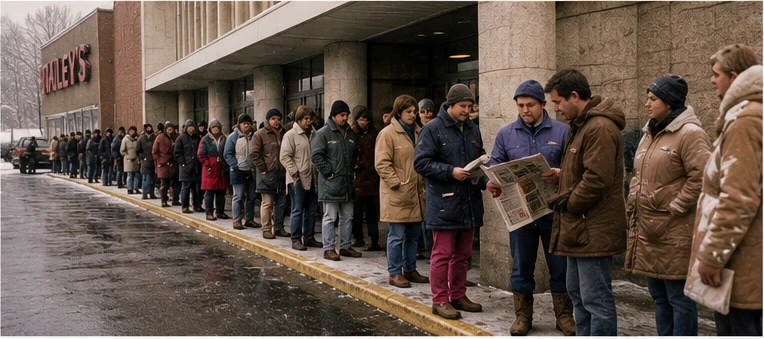
The mechanics of the hunt are difficult to understand now because modern shopping has trained people to expect information. A retailer’s website can show whether a product is available. A customer can place an order, watch a shipping tracker, join a waitlist, receive a notification, compare prices, and check resale listings without leaving the kitchen.
In 1983, most families worked from rumors, telephone calls, newspaper advertisements, catalog listings, store employees, and the possibility that a truck might arrive. The uncertainty was not a minor inconvenience. It was the central experience.
The telephone was the inventory system
Parents called department stores, catalog showrooms, toy chains, discount retailers, and local shops. The call usually produced one of several answers: no dolls, no information, maybe later in the week, a shipment expected but not confirmed, a waiting list already full, or an employee who had answered the same question so many times that the tone communicated more than the words.
A successful call did not reserve a doll. It created a race. “We have some” might mean twenty boxes and forty people already driving toward the store. A family member had to leave work, change plans, find transportation, or send whoever was closest.
Catalog stores added another layer
Catalog retailers displayed photographs and item numbers while much of the inventory remained behind the counter or in a warehouse area. The shopper submitted a form and waited to learn whether the item still existed. Cabbage Patch Kids turned that orderly system into suspense. The number could be correct, the clerk could recognize the request, and the answer could still be no.
When a catalog store did receive dolls, the experience felt less like browsing and more like claiming a shipment. Customers often had little opportunity to compare faces. The box that came out might be the child they took home.
The mall spread rumors efficiently
A mall concentrated stores, shoppers, and information. One parent could check a department store, toy shop, catalog showroom, and specialty retailer without moving the car. The same parent could also encounter three people saying another store had received dolls that morning.
Rumors moved down escalators and through food courts. A shopping bag with the recognizable box became visual proof that the dolls existed somewhere in the building. Other shoppers wanted to know where it came from, how many were left, and whether the person carrying it had personally taken the last one.
Employees could not manufacture certainty
Shoppers often treated clerks as if they controlled the supply chain. Employees were accused of hiding dolls, reserving them for friends, buying them before opening, or refusing to reveal delivery times. Some accusations may have reflected real favoritism. Many reflected frustration with a worker whose actual power ended at reading the same inventory sheet.
The phrase “check back tomorrow” was both an answer and a new obligation. Parents returned because not returning created the possibility that tomorrow would be the day everyone else found one.
The box became visible status
A person who found a doll still had to cross the store and parking lot with it. During the peak frenzy, the box attracted attention. Other shoppers stared, asked questions, followed, or tried to learn whether more remained. Some retailers used bags or wrapping to reduce attention. The product had become too recognizable for ordinary shopping.
The search consumed ordinary errands
A grocery trip included a stop at the toy counter. A commute included a department-store detour. Visiting relatives meant checking stores in a different town. Thanksgiving travel became a regional inventory strategy. The doll inserted itself into adult schedules long before it entered the child’s bedroom.
Success often depended on timing rather than strategy
Some parents searched for weeks. Others walked into a store at the exact moment a clerk placed boxes on the shelf. The second group could appear more resourceful even though luck had done the heavy lifting.
That randomness made the hunt addictive. Every failed visit supported the belief that the next visit might be different. The doll could arrive at any time, and a parent who stopped searching risked missing the one lucky moment everybody else seemed to receive.
How a new doll turned into a holiday emergency in a few months
Cabbage Patch Kids Christmas 1983 Timeline
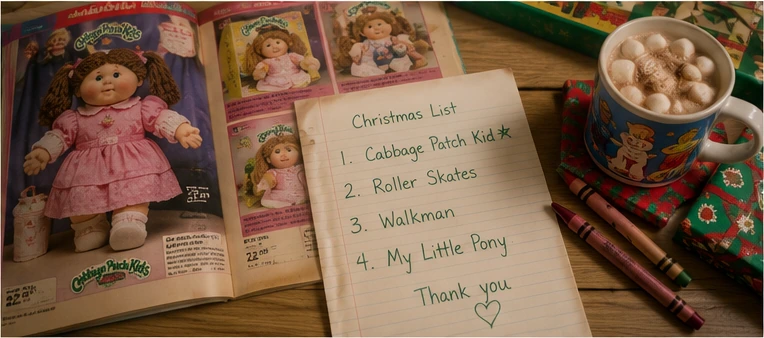
The dolls reach the national toy market
Children and parents begin encountering the vinyl-headed Coleco version, the adoption papers, the unusual names, and the story of the Cabbage Patch.
Word of mouth outpaces ordinary advertising
Friends compare dolls, children see them in homes and commercials, and the variety of faces makes each encounter feel like discovering a different line.
The dolls move from interesting to required
Catalogs, commercials, playground conversation, and early shortages place Cabbage Patch Kids near the top of Christmas requests.
Store arrivals become events
Lines form, purchase limits spread, shipments disappear quickly, and local television begins documenting the scramble.
National media amplifies the shortage
Stories about empty shelves, desperate parents, and chaotic stores make the doll famous even among families who had not been following toys.
The hunt becomes part of Christmas
Families widen their searches, call relatives, consider markups, accept substitutions, and begin preparing children for the possibility that Santa has supply-chain problems.
The final box becomes priceless to one household
At this point, retail value has almost nothing to do with emotional value. The doll represents weeks of effort, luck, and parental secrecy.
The craze becomes a family memory
Children open dolls. Parents tell the story of how they found them. The hunt becomes attached permanently to the gift.
Christmas 1983 was the turning point. The broader history of the hottest Christmas toys of the 80s includes plenty of shortages, but Cabbage Patch Kids made the shortage itself part of the gift’s identity.
The children wanted a doll. The adults carried the entire emotional freight train.
Why Parents Were Desperate to Find Cabbage Patch Kids
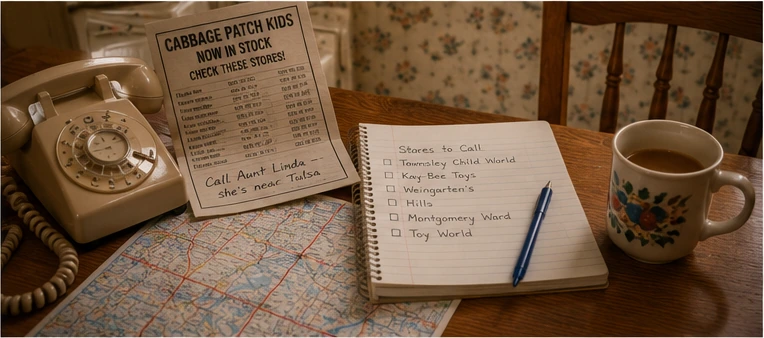
A toy craze becomes dangerous when the product stops representing itself. By December 1983, the doll represented parental competence, holiday magic, social belonging, and protection from disappointment. That was far too much responsibility for a box with yarn hair.
The request was specific and public
Children did not want a private obscure toy. They wanted the toy everybody at school knew was scarce. Friends would compare Christmas mornings. Cousins would bring dolls to family gatherings. Parents understood that failure would be visible, even if the child behaved graciously.
Christmas created a deadline nobody could negotiate
A birthday can be delayed with an explanation. Christmas morning arrives on schedule. The fantasy of Santa made the shortage even more awkward because children could reasonably ask why a magical workshop was affected by inventory at Sears.
Parents had already invested time
Every phone call, store visit, line, rumor, and missed shipment increased commitment. After ten failed attempts, giving up felt worse than it had after one. The search itself created pressure to justify the effort.
News footage turned private disappointment into national anxiety
Parents saw other adults fighting and could feel superior. They also saw proof that the dolls were disappearing. The footage said, “This behavior is absurd,” and “You are running out of time” in the same segment.
Extended families became involved
Grandparents wanted to help. Aunts checked stores. Coworkers reported sightings. Relatives traveling for Thanksgiving were assigned retail reconnaissance. The gift became a family mission, which increased the number of people emotionally invested in success.
The good-parent trap
Most parents understood that a child would survive without the doll. They also wanted to produce one unforgettable morning. The craze exploited the gap between what children needed and what loving adults wanted to give them.
Finding a box solved the supply problem. Choosing the child created several new problems.
How Families Chose an Original Cabbage Patch Kid
In an ordinary doll aisle, a shopper might compare price, outfit, and hair. In the Cabbage Patch aisle, every visible difference became part of identity. The child’s name, face, eyes, hair, skin tone, outfit, and gender all mattered.
The name could decide everything
Some names sounded charming. Some sounded like a payroll list had collided with a family reunion. Children could love the name, reject it, shorten it, or rename the doll while keeping the paperwork safely stored. Parents read box after box looking for something that felt right.
The face created instant preference
Even small differences changed the emotional response. One smile looked cheerful. Another looked skeptical. One face resembled a child in the family. Another resembled the kid who had stolen a crayon and denied it under questioning.
Hair created status within the line
Yarn hair could be braided, brushed, tied, or decorated. Bald babies and preemies offered a different nurturing appeal. Shoppers developed preferences, and children learned the vocabulary quickly.
Outfits suggested personality
Overalls, dresses, tracksuits, sweaters, pajamas, and baby clothes made one Kid feel sporty, fancy, sleepy, practical, or ready for a family photo. Clothing also created future accessory purchases, because one adopted child apparently required a wardrobe.
Scarcity forced compromise
During the frenzy, shoppers often had seconds to choose. The perfect match might not be available. A parent could take the doll in hand or watch another shopper take it. Many children fell in love with the child who arrived, regardless of whether that child matched the original request.
The match became part of family folklore
Years later, people remember the name, the hair, the outfit, the store, the relative who found the box, and the story of why that particular doll came home. Mass production created millions of units. Memory converted one unit back into an individual.
The paper came off, the certificate came out, and every miserable phone call suddenly became worth it
What Cabbage Patch Kids Meant on Christmas Morning 1983
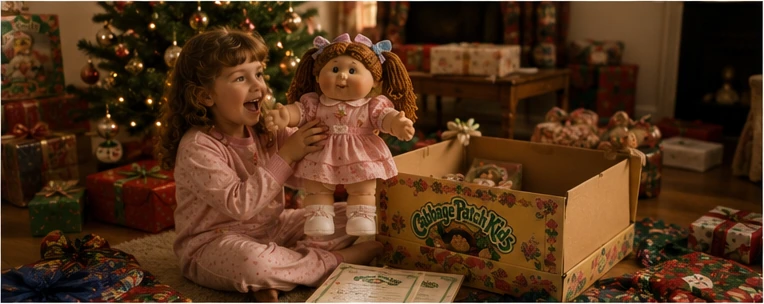
The emotional payoff was unusually layered. Children recognized the shape of the box. Parents knew the hidden story of the search. Other adults in the room may have contributed leads, money, transportation, or luck. Opening the doll revealed both the child and the effort.
The adoption happened immediately
The name was read aloud. The paperwork was examined. The outfit was inspected. The child was removed from the box and introduced to the room. Unlike a game requiring setup or an electronic toy requiring batteries, the doll was ready for attachment.
The doll became part of the family performance
It appeared in photographs, sat at meals, visited grandparents, slept in beds, rode in cars, attended tea parties, and entered sibling negotiations. The certificate gave adults a way to participate without pretending the toy was an ordinary baby doll.
The hunt was retold before the day ended
Parents explained where the doll came from, how long they waited, who called whom, what store received the shipment, and what almost went wrong. That story increased the gift’s value because it made the doll feel rescued from a national shortage.
Some children did not receive one
The frenzy also created real disappointment. Parents substituted other dolls, promised a later adoption, wrote notes from Santa, or explained that the dolls had not reached every home. Children handled that disappointment in the full range of childhood ways—from grace to devastation.
The season permanently linked the brand to Christmas
Cabbage Patch Kids remained popular after 1983, but the brand’s cultural identity was forged in that holiday. Every future must-have toy would be discussed in the same language: shortages, lines, fights, resellers, frantic parents, and the question of whether this was “the new Cabbage Patch Kid.”
The hottest Christmas toys of the 80s changed year by year. Cabbage Patch Kids established the modern script.
A lesson in supply, demand, emotion, and adults paying too much because Christmas was next week
Why Cabbage Patch Kids Cost More on the 1983 Resale Market
The 1983 frenzy became a live demonstration of basic economics. Demand rose quickly. Supply could not adjust quickly enough. Retail prices stayed relatively stable in many ordinary stores, but availability disappeared. The gap between official price and emotional willingness to pay created a secondary market.
Scarcity changed the meaning of price
Under normal conditions, a parent could compare the doll with other gifts and decide whether it was worth the money. Under shortage conditions, the comparison became the price versus the chance of finding another one before Christmas.
A doll priced well above retail could still feel rational if the search had already consumed time, gasoline, telephone calls, missed work, and emotional energy. The markup purchased certainty.
Resellers converted information into profit
A person who knew when a shipment arrived could buy a doll and immediately offer it to someone who had failed to find one. The reseller was not manufacturing value or improving the product. The reseller was selling access.
This created anger because access had become the scarce resource. Parents saw the marked-up doll as evidence that somebody else had taken a place in the line without needing the toy for a child.
Purchase limits attempted to protect ordinary buyers
One-per-customer rules reduced the ability of a single shopper to clear the shelf. They also encouraged families to send several adults, which technically respected the rule while defeating its purpose with teamwork.
Tickets and lotteries separated the right to buy from the physical race to the shelf. They were safer, but they turned a toy purchase into an event with winners and losers before anybody reached the register.
Publicity increased the size of the buyer pool
A shortage can resolve if frustrated buyers choose alternatives. National coverage did the opposite. It brought new buyers into the search. The shortage itself became evidence that the doll was the correct choice.
That feedback loop made ordinary production increases less effective. More dolls reached stores, but more families had entered the market.
The product had unusually strong emotional price elasticity
Adults do not value all purchases in the same way. A person may refuse to overpay for a toaster and still overpay for a toy that represents a child’s Christmas morning. The doll’s emotional purpose allowed the price to drift away from the cost of materials.
The craze created hidden costs
The purchase price did not include travel, time, lost work, telephone calls, parking, waiting, or the risk of driving home empty-handed. A family that found the doll at normal retail after weeks of searching may have spent far more than the receipt showed.
The brand benefited from scarcity without controlling every consequence
A manufacturer wants demand to exceed supply enough to avoid clearance shelves. It does not necessarily want injuries, angry retailers, counterfeit products, or customers paying resellers instead of buying official accessories.
The 1983 experience showed how quickly scarcity can leave the control of the company that created the product. Once the story became national, every store, shopper, reporter, and reseller became part of the market.
The modern resale world uses the same logic at greater speed
Today, online listings, automated purchasing, instant price comparisons, and social media can create a secondary market within minutes. In 1983, the process moved through newspapers, telephones, parking lots, and word of mouth. The technology changed. The emotional math did not.
A craze this large does not disappear. It spreads into every product category with a licensing department.
What Happened to Cabbage Patch Kids After the 1983 Craze?
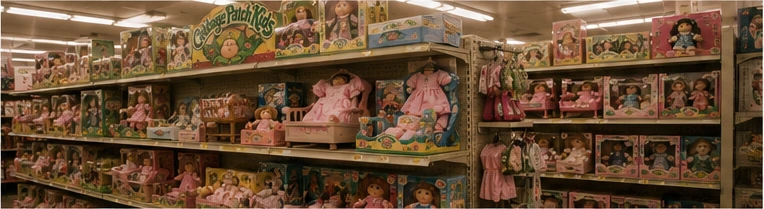
The most intense shortage eased as production increased and more dolls reached stores. That did not mean the brand vanished. It meant the brand shifted from impossible-to-find phenomenon to massive franchise.
1984 turned the craze into a product world
Families who had found one child could now buy clothing, furniture, accessories, strollers, play items, books, records, lunchboxes, bedding, and licensed products. The adoption did not end the purchase cycle. It opened a household account.
The top toys of 1984 show how crowded the market became with Transformers, He-Man, Cabbage Patch Kids, GoBots, and major games. Cabbage Patch remained powerful, but it no longer owned the entire national panic by itself.
New varieties kept the family growing
Different sizes, babies, preemies, hairstyles, outfits, characters, and related concepts gave existing owners reasons to adopt again. The same child who had desperately wanted one Kid could now argue that the first Kid needed a sibling.
Licensing made the faces unavoidable
At the peak, the brand appeared across thousands of licensed products. That saturation proved the power of the image and the name. It also risked turning a special adoption experience into ordinary merchandise.
The market normalized
Once stores carried more inventory, the urgent secondary-market markup weakened. The product became easier to evaluate as a doll instead of a scarce event. Parents could shop without rumors. Children could choose among several boxes. Civilization slowly returned to the aisle.
1985 and beyond brought stronger competition
The top toys of 1985 included Nintendo, Teddy Ruxpin, She-Ra, My Buddy, Jem, and other lines with powerful media or electronic hooks. Cabbage Patch Kids remained a major brand, but the toy market had learned from the phenomenon and was building the next wave of must-have products.
Coleco’s larger corporate problems complicated the story
The doll line was enormously important, but Coleco was also dealing with problems in other parts of its business. The success of Cabbage Patch Kids could not erase every mistake elsewhere. That contrast made the brand even more remarkable: a soft-bodied doll became one of the company’s strongest assets while technology ventures created expensive trouble.
The craze became a template rather than a one-season memory
Retailers, manufacturers, media companies, and resellers learned that scarcity could create national attention. Parents learned that a toy could become impossible before Thanksgiving. Children learned that popularity could be measured by how hard adults were willing to search.
Every major craze produces two things: shortages and products that look suspiciously familiar
Cabbage Patch Kids Knockoffs and Imitation Dolls
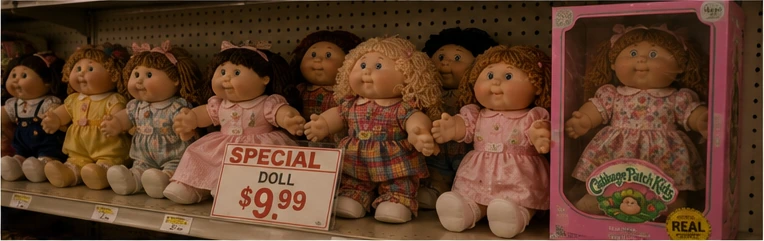
Once demand became obvious, competitors and opportunists rushed toward the same broad idea: soft-bodied children with unusual faces, individual identities, and nurturing appeal. Some products were legitimate alternatives. Others lived in the foggy territory between inspiration and “we changed the freckles, so legally this is probably fine.”
Parents needed substitutes
A family unable to find the official doll still needed something under the tree. Retailers had every reason to stock alternatives. Some children accepted them happily. Others could identify the difference from twenty feet and treat the substitute as evidence that adults had not understood the assignment.
The adoption concept was harder to copy than the shape
A manufacturer could produce a round-faced cloth doll. The full Cabbage Patch experience included the name, paperwork, signature, mythology, BabyLand origin, advertising, and social meaning. Without those pieces, the copy felt like a doll rather than an adopted child.
Counterfeits exploited desperate shoppers
Scarcity creates buyers who are moving quickly and paying emotionally. That environment invites mislabeled products, unauthorized merchandise, fake paperwork, and dolls presented as official to people who do not know the manufacturing details.
The copies proved the size of the opportunity
Imitation is market research with less paperwork. Every copy announced that the original concept had changed what consumers expected from the doll aisle.
The cameras arrived to report the madness and discovered the madness improved with cameras
Were There Really Cabbage Patch Kids Riots in 1983?
The 1983 coverage operated on several levels at once. It was a consumer story about the season’s hottest toy. It was a business story about Coleco and retail shortages. It was a human-interest story about parents. It was a public-safety story when crowds became dangerous. It was also irresistible television.
The footage had visual simplicity
A reporter did not need to explain an abstract economic trend. The camera could show a line, an empty shelf, a box being lifted above a crowd, two adults arguing, and a child holding the final product. The entire story fit into seconds.
The contrast created comedy and judgment
The object was a soft, round-faced doll associated with care and adoption. The behavior involved pushing, shouting, grabbing, and police. That contradiction made the story easy to mock. Adults were behaving aggressively to purchase a toy meant to teach nurturing.
Reporters framed shoppers as irrational while increasing urgency
Coverage often carried a tone of disbelief: look what people are doing over a doll. But viewers also learned the dolls were scarce, important, and disappearing. The same report criticized the frenzy and recruited more participants.
The word “riot” simplified different events
Some stores experienced serious disorder. Others had tense lines, minor arguments, or rushed sales that looked dramatic on camera. The label grouped them together and made the national story larger than any one incident.
That does not make the danger imaginary. It means the historical memory should distinguish between documented violence and the broader atmosphere of scarcity.
The coverage invited a debate about parenting
Commentators could ask whether parents were teaching materialism, rewarding demands, or allowing advertising to control family decisions. Parents could answer that they were trying to make children happy, not overthrow the social order.
The argument ignored the middle ground where most families lived. They understood the craze was excessive and still checked another store.
The story became a symbol of 1980s consumer culture
The decade is remembered for malls, branding, licensing, television advertising, credit, status goods, and conspicuous consumption. The Cabbage Patch frenzy fit that interpretation perfectly: a product became a cultural requirement, then adults competed for access.
But the story also involved genuine affection, craft origins, inclusive doll designs, family effort, and children caring for a toy. Reducing the craze to greed misses why the doll mattered enough to generate the behavior.
News memory outlived ordinary ownership
Millions of dolls were adopted. Most purchases were not filmed. The fights survived because conflict becomes archival footage. As a result, people who never owned a Cabbage Patch Kid may remember the riots more clearly than people who played with one every day.
The brand learned to live with the contradiction
The company could celebrate demand without celebrating danger. The dolls remained associated with care, family, and belonging while the historical craze remained associated with adults briefly losing their minds.
That contradiction is one reason the story remains interesting. It is not a simple tale of marketing success or consumer failure. It is both, wearing overalls.
Once the doll entered the family, the lunchbox, bedsheets, record player, and bathroom were next
Cabbage Patch Kids Merchandise and the 1980s Licensing Explosion
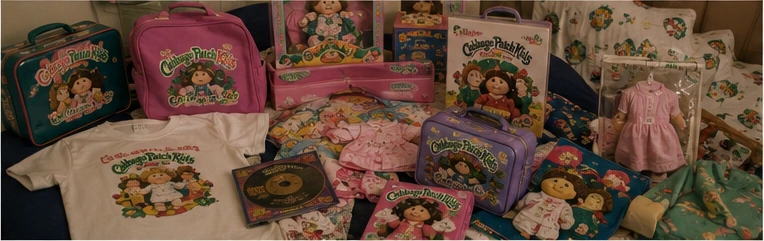
A hit toy creates demand for the toy. A cultural phenomenon creates demand for everything carrying the face. Cabbage Patch Kids moved rapidly from dolls into a licensing universe that could follow children through the entire day.
Clothing made children part of the brand
Shirts, pajamas, socks, hats, and accessories allowed children to display the characters without carrying the doll. The visual style worked well on fabric because the faces were simple, colorful, and immediately recognizable.
School supplies carried the craze into public
Lunchboxes, folders, notebooks, pencils, bags, and other items moved Cabbage Patch Kids into classrooms. Ownership of the doll remained private at home. Branded school gear announced participation to everyone.
Bedroom products turned the brand into an environment
Sheets, blankets, pillows, lamps, furniture, wall decorations, and storage products could surround the child with the same imagery. The adopted Kid no longer lived in an ordinary bedroom. The bedroom lived inside the Cabbage Patch brand.
Books, records, and entertainment extended the mythology
Stories and music gave the characters adventures beyond the adoption certificate. The brand did not require a daily cartoon to create a narrative world. It could distribute the story through many formats.
Accessories turned one doll into continuing revenue
Clothing, furniture, carriers, strollers, feeding items, bedroom sets, and play accessories encouraged owners to keep investing in the child they had already adopted. The doll’s emotional status made accessories feel like care rather than expansion purchases.
Too much licensing can reduce specialness
The 1983 box felt rare and personal. A few years later, the face could appear on nearly anything. Licensing increased visibility and revenue, but saturation risked turning the unusual child into ordinary background decoration.
The scale proved the brand was larger than the shortage
A one-season fad cannot support thousands of licensed items without collapsing immediately. The Cabbage Patch universe had enough emotional recognition and visual identity to sustain a broad commercial ecosystem.
The brand became a case study in total-world marketing
Modern franchises routinely surround children with toys, clothing, games, bedding, food packaging, media, and digital products. Cabbage Patch Kids demonstrated the power of that strategy before online platforms made the ecosystem continuous.
The irony remained perfect: the brand told children every Kid was an individual while producing merchandise at a scale capable of covering the entire house.
The doll left the store and entered jokes, news, arguments, business case studies, and family mythology
How the 1983 Cabbage Patch Kids Craze Changed Christmas Toys
It established the modern holiday toy panic
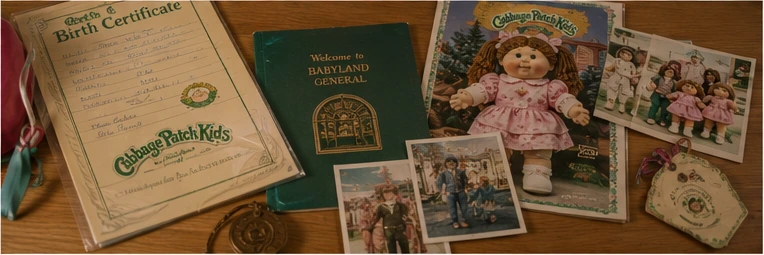
There had been popular toys and shortages before 1983. Cabbage Patch Kids created the version people now recognize: national media coverage, store chaos, emotional parents, secondary-market markups, and a product that became more desirable because it was visibly unavailable.
It showed that news coverage could become part of marketing
The reports were not created by Coleco, but they performed advertising work. Every story explained the product, demonstrated demand, and showed the consequences of waiting. The distinction between reporting and promotion became difficult when the camera spent several minutes showing a toy everybody wanted.
It made individuality scalable
Mass-market toys had offered variations before. Cabbage Patch Kids made variation central to identity. The combination of names, faces, hair, outfits, and certificates allowed a large production system to sell the feeling of personal selection.
It gave paperwork emotional value
Birth certificates and adoption papers were inexpensive physical components with enormous psychological impact. Future toys would use certificates, tags, profiles, digital identities, serial numbers, and collectible data to create a similar sense of uniqueness.
It changed what parents expected every Christmas
After 1983, the annual question became not whether there would be a hot toy, but which toy would cause the problem. Retailers planned crowd control. Manufacturers chased cultural ignition. News programs looked for the season’s shortage story.
It became a Gen X memory even for people who never owned one
You did not need a doll to remember the frenzy. You might remember the commercials, the news footage, the jokes, the empty shelf, the cousin who received one, the friend who brought hers to school, or the adult who refused to participate on principle and then quietly checked three stores.
The design survived because it was never trying to be fashionable
Fashion dolls can become tied to a specific style moment. Cabbage Patch Kids were already strange. The faces did not age out of a beauty standard because they had never asked permission from one.
Every later panic borrowed part of the script, but the characters changed
How Cabbage Patch Kids Created the Modern Must-Have Toy Craze
Tickle Me Elmo
Television exposure and holiday scarcity created another parent-versus-inventory crisis, but the product centered on an electronic performance rather than adoption.
Furby
A strange face, personality, electronics, and limited supply created the feeling that every child wanted a living creature from the future.
Beanie Babies
Names, tags, perceived rarity, collecting, and secondary-market speculation pushed the identity-and-scarcity formula into the 1990s.
Tamagotchi
The responsibility concept became literal. The owner had to feed, clean, and care for a digital creature or watch the consequences.
Pokémon
Character variety, collecting, media, trading, rarity, and social play created an ecosystem far larger than one holiday.
Modern Limited Drops
Online countdowns, resale platforms, bots, influencers, and instant sellouts use new technology to produce the same ancient feeling: everybody else is getting one before you.
What made Cabbage Patch Kids different
The frenzy centered on emotional care rather than technological novelty or competitive collecting. The doll arrived with a ready-made identity and asked the child to become a parent. The shortage made that relationship difficult to obtain, which only made it feel more meaningful.
The doll your mother fought for may be valuable. It may also be one of several million wearing the wrong shoes.
Are Vintage Cabbage Patch Kids Worth Money Today?
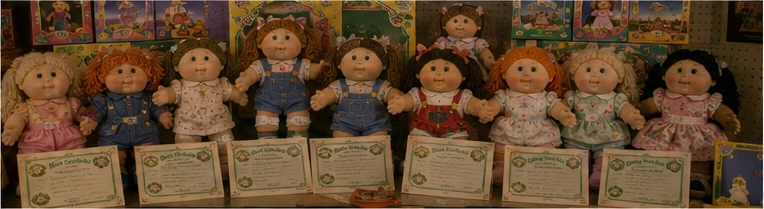
Collector value depends on the exact doll, manufacturer, year, factory, face mold, hair, eyes, skin tone, outfit, paperwork, box, condition, and rarity. The 1983 frenzy created strong nostalgia, but enormous popularity also created enormous production.
Most ordinary dolls are not retirement plans
A common loose Coleco doll with replaced clothing, missing papers, stains, odors, or a haircut may be loved and affordable. Earlier handmade soft-sculpture examples, unusual factories, rare combinations, original outfits, adoption papers, strong boxes, and exceptional condition can belong to a different collector market.
Paperwork matters because paperwork was part of the toy
Birth certificates, adoption papers, name information, tags, boxes, inserts, and original clothing help establish completeness. A random certificate cannot automatically be paired with a random doll just because both came from the same decade.
Condition has a doll-specific language
Collectors inspect haircuts, yarn condition, stains, fabric wear, odors, vinyl discoloration, marker, plasticizer issues, loose seams, replaced outfits, missing shoes, fading, and storage damage. A doll can photograph well and still carry forty years of basement atmosphere.
The separate value guide handles pricing
The full framework for condition, sold prices, packaging, authenticity, and realistic expectations is in valuable 80s toys worth money today. This article stays focused on the historical craze rather than promising that every adopted child is funding a vacation.
Do not use one wild asking price as evidence. The 1983 shortage is history. Modern value still depends on what comparable buyers actually purchase.
The story has been repeated for four decades, which means several details have picked up extra yarn
Cabbage Patch Kids Craze Myths: What Really Happened in 1983
Myth: Every Store Became a Riot
Many stores experienced ordinary lines and disappointment. The documented fights and dangerous crowds were real, but the dramatic label should not turn every transaction into a wrestling match.
Myth: The Dolls Were Accidentally Popular
The exact size of the craze surprised the company, but the concept had already proven demand. Adoption, individuality, media, packaging, and retail distribution were deliberate.
Myth: Every Doll Was One of a Kind
The combinations created the feeling of uniqueness, but mass production reused molds, features, outfits, and components. The individuality was emotional and combinational, not absolute.
Myth: Every 1983 Doll Is Extremely Valuable
Popularity produced many dolls. Condition, factory, face, outfit, paperwork, box, rarity, and buyer demand determine modern value.
Myth: The Craze Ended After Christmas
The shortage eased, but the brand expanded through dolls, accessories, licensing, entertainment, and new product variations throughout the decade.
Myth: Children Only Wanted Them Because Adults Panicked
Adult behavior amplified demand, but the dolls had genuine child appeal through nurturing play, variation, names, paperwork, and unusual design.
The doll aisle was gendered. Childhood was always messier.
Cabbage Patch Kids, Adoption Play, Family, and Belonging
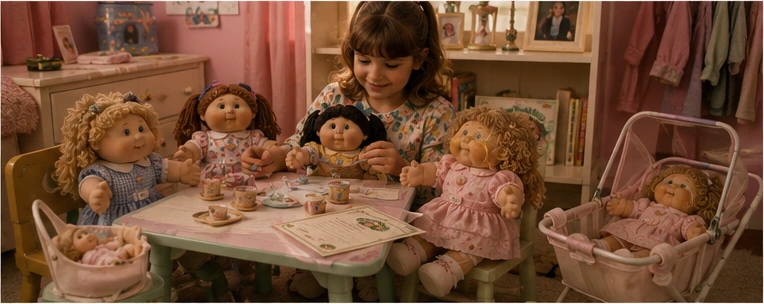
Advertising and retail placement often treated dolls as girls’ toys, while action figures, vehicles, and electronic games were marketed toward boys. Cabbage Patch Kids existed inside that divided toy culture, but the brand’s range and adoption concept created more room than a simple pink-aisle label suggests.
Boy dolls changed the family possibilities
Male Cabbage Patch Kids were visible, named, dressed as children, and included in the same adoption system. A child could choose a son, daughter, brother, sister, baby, preemie, or growing family without the product assuming every doll had to be a girl.
Boys could participate without the fashion-doll script
The dolls were about caregiving, family, humor, and personality rather than glamour. Boys who wanted one could frame the relationship as a sibling, child, friend, or member of the household. Some families encouraged that play. Others enforced the era’s gender rules with unnecessary determination.
The dolls made diverse families visible
Different skin tones, hair, eyes, faces, and genders allowed children to create families that did not all look alike. The adoption theme made difference part of the story rather than an exception requiring explanation.
Representation was not perfect, and availability varied by shipment and store. Still, the line offered a broader range of children than many competing dolls and made the idea of belonging across appearance central to the brand.
Adoption carried emotional meaning beyond marketing
For some children, adoption was not fantasy. It was part of their family. The paperwork and language could feel affirming, simplistic, commercialized, or all three at once depending on the household.
The brand presented adoption as loving, celebratory, and normal. It also turned a complex real-world experience into a consumer ritual. That tension deserves more thought than either blind praise or easy dismissal.
Sibling play expanded the world
One child’s doll could become another child’s sibling character. Families combined Kids into households, assigned relationships, shared clothing, celebrated birthdays, and negotiated custody during sleepovers.
Sharing was not always peaceful. The paperwork established ownership with alarming clarity. A sibling could borrow the child, but the certificate knew who the parent was.
Grandparents often embraced the adoption language
The dolls gave adults a role. Grandparents could buy clothing, ask about the child’s name, celebrate birthdays, and refer to themselves through the family joke. The product encouraged intergenerational play without requiring adults to understand a cartoon mythology.
The dolls invited nurturing without realism
Cabbage Patch Kids did not look exactly like babies, which may have made play more imaginative. They were recognizable as children without asking the owner to care for a highly realistic infant. The odd faces kept the experience playful.
Belonging became the brand’s deepest message
The visual differences, adoption story, and individual names all supported the same idea: every child had a place and every child could be chosen. That message was powerful enough to survive the commercial excess surrounding it.
Because the doll was never just the doll
Why the 1983 Cabbage Patch Kids Craze Still Feels So Gen X
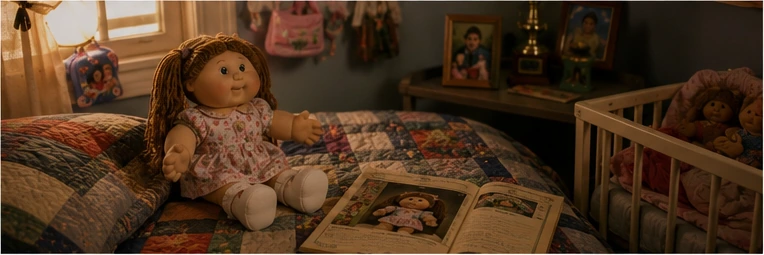
The story contains nearly everything that made 80s childhood distinctive: Saturday-morning commercials, mall and department-store culture, paper catalogs, local television, national magazine covers, relatives calling landlines, parents driving from store to store, and children learning that Santa apparently depended on trucking schedules.
It happened before online inventory, resale apps, store alerts, social media, and same-day shipping. Information moved through people. A shipment rumor came from a clerk, neighbor, cousin, or coworker. By the time the news reached you, the dolls might already be gone.
The craze also exposed the strange bargain beneath childhood consumer culture. Adults knew love could not be measured in toys. They still wanted the right toy to make love visible on one specific morning.
And for the children who received one, the doll absorbed the entire story. The yarn hair, odd name, papers, outfit, and lopsided smile became attached to a parent’s search and a family’s Christmas. That is why people remember the exact Kid long after forgetting dozens of objectively better-designed toys.
Questions from the adoption desk, the empty shelf, and the parent who has called every store in the county
Questions About Cabbage Patch Kids in 1983
When did the Cabbage Patch Kids craze happen?
The largest national frenzy happened during the 1983 Christmas shopping season, after the Coleco mass-market dolls reached stores and demand dramatically exceeded available supply.
Why were Cabbage Patch Kids so popular in 1983?
They combined an unusual appearance with names, birth certificates, adoption papers, varied faces and outfits, emotional television advertising, strong word of mouth, limited supply, and intense news coverage.
Were the Cabbage Patch Kids riots real?
Several stores experienced documented fights, pushing, stampedes, injuries, arrests, or other crowd disturbances. Not every store became violent, but enough incidents occurred that the phrase became attached to the 1983 craze.
Who created Cabbage Patch Kids?
The dolls grew from the soft-sculpture Little People associated with Xavier Roberts in Cleveland, Georgia. The concept was licensed for mass-market production, with Coleco releasing the vinyl-headed Cabbage Patch Kids in 1983.
What was BabyLand General Hospital?
BabyLand General was the Georgia home of the original soft-sculpture doll operation, presented with a hospital and adoption theme. Staff wore medical clothing, and dolls were treated as children being born and adopted.
Why did Cabbage Patch Kids come with adoption papers?
The paperwork made the doll feel like an individual child and turned a purchase into a ritual. The birth certificate, name, and adoption documents extended play and emotional attachment.
How much did Cabbage Patch Kids cost in 1983?
Normal retail prices varied by store and version, but the dolls generally sold in the range of an expensive mass-market doll. Scarcity led some resellers and specialty sellers to charge much more.
Why could Coleco not make enough dolls?
Demand grew faster than production plans, raw materials, factory capacity, packaging, transportation, and retailer distribution could adjust before Christmas.
Did every Cabbage Patch Kid have a unique name?
The dolls used many generated name combinations and varied appearances, creating a strong impression of individuality. Mass production still reused molds, features, clothing, and components.
What happened to Cabbage Patch Kids after 1983?
Production increased, shortages eased, and the brand expanded through new dolls, accessories, licensed products, entertainment, and additional variations throughout the decade.
Are original 1983 Cabbage Patch Kids worth money today?
Some can be collectible, especially unusual, complete, boxed, early, rare, or exceptionally preserved examples. Most ordinary loose mass-produced dolls are not automatically highly valuable.
Why is the 1983 craze historically important?
It helped establish the modern must-have holiday toy pattern: advertising creates demand, scarcity creates news, news creates more demand, stores struggle with crowds, and secondary-market prices rise.