BATTERIES NOT INCLUDEDEACH SOLD SEPARATELYASK YOUR PARENTSNEW FROM KENNERTHE TOY YOU’VE SEEN ON TVSATURDAY MORNINGSOME ASSEMBLY REQUIREDNOW AVAILABLEBATTERIES NOT INCLUDEDEACH SOLD SEPARATELYASK YOUR PARENTSNEW FROM KENNERTHE TOY YOU’VE SEEN ON TVSATURDAY MORNINGSOME ASSEMBLY REQUIREDNOW AVAILABLE
COMMERCIAL BREAKCHANNEL 70s TV GUIDE30 seconds • one toy • permanent memory
Smells Like Gen X • When the cartoons paused and the wish list began
How Saturday Morning CommercialsSold Toys to 1970s Kids
We came for the cartoons, but the commercial break knew exactly what it was doing. A toy car screamed across a kitchen floor. Evel Knievel cleared a ramp he would never clear in our house. A doll ate, grew hair or needed a diaper. By the time the show returned, the product had already moved from the screen to the part of our brain where Christmas lists lived.
The best 1970s Saturday morning toy commercials did more than announce
what was in stores. They demonstrated, exaggerated, repeated, sang and turned small pieces of
plastic into complete adventures. This is the story of that selling machine—the cereal-break
culture, camera tricks, jingles, licensing and the connection between
Saturday morning cartoons,
the wider world of 1970s television and the
toys we dragged into every room of the house.
We did not watch these ads like
little media analysts. We watched them like kids who knew the couch cushion could become a ramp,
the shag carpet could become another planet and the toy box was never quite full. The same set
that gave us cartoons nobody else seems to remember also taught
us the names Evel Knievel, Stretch Armstrong, Baby Alive and every accessory that was—of course—
sold separately.
Quick Answer • The Cartoon Was Only Half the Morning
Why Did 1970s Saturday Morning Toy Commercials Work So Well?
They reached us inside the hours we watched most closely, then showed the toys doing
something a box on a shelf could not: launching, stretching, glowing, growing hair or turning
a television hero into something we could hold. Fast demonstrations, close-up camera angles,
jingles, excited kid actors and complete collections made one product feel like the entrance
to an entire world. The cartoon brought us to the set; the commercial gave us the exact words
to use later when we found an adult with a wallet.
We knew the disclaimer before we knew what a disclaimer was.Batteries not included. Each sold separately. Some assembly required. None of it slowed the wanting down.
Thirty Seconds of Concentrated Wanting
Why Saturday Morning Cartoons Were the Perfect Place to Sell Toys
We did not experience cartoons and commercials as two completely separate worlds. They arrived from the same television, in the same bright colors, during the same bowl of cereal.
The Audience Was Already There
Networks Gathered Children in One Predictable Place
Saturday morning delivered something advertisers rarely get: a large audience with
similar interests watching at the same time. The Library of Congress describes weekend
cartoons as a ritual by the end of the 1960s, complete with advertising aimed at children.
By the 1970s, that ritual had become the backbone of the
Saturday-morning cartoon schedule and one of the most
dependable stops in the larger world of 1970s television.
The Mood Carried Over
Adventure Did Not Stop When the Cartoon Cut Away
A superhero chase could lead directly into an action-figure battle. A comedy segment
could give way to a game full of laughing kids. The commercial borrowed the emotional
temperature of the show, then redirected it toward something we could ask for. That
connection was especially strong beside the decade’s
superhero cartoons and character-heavy adventures.
The Cereal-Bowl View
Kids Were Close to the Screen and Ready to Repeat Everything
We watched from floors, beanbags and whatever piece of furniture put us closest to the set. The songs and slogans did not have to survive adult distraction; they only had to reach children who were already memorizing cartoon themes. That is why the sound of the ads belongs beside the decade’s great television theme songs.
The Request Came Later
The Child Watched, but the Parent Held the Wallet
The commercial spoke to us first and trusted us to carry the message into the kitchen, department store or Christmas-list conversation. The toy company did not need a child to make the purchase. It needed a child to remember the name exactly.
The cartoon gave us a world for twenty-two minutes. The commercial offered to sell us a piece of it before the next scene.
The Thirty-Second Formula
The Selling Tricks Behind 1970s Saturday Morning Toy Commercials
The products were different, but the basic sales rhythm appeared again and again: show the fantasy, prove the gimmick and make the child imagine what was missing at home.
1. Start With Motion
Cars launched, dolls moved, games snapped and figures punched. A toy that performed gave the camera an instant reason to stay close.
2. Build a World
The ad supplied scenery, friends, complete collections and accessories so the product never looked small or lonely.
3. Name It Repeatedly
The jingle, announcer and children all repeated the brand until we could deliver the request without getting the words wrong.
Low Angles and Tight Frames
The Camera Got Down on the Floor With the Toy
A vehicle photographed from adult height looks like a small object. The same vehicle photographed beside its wheels looks fast, heavy and ready to hit something. Toy commercials understood scale as a camera decision.
Sound Added Power
Motors Roared Louder Than the Toys Ever Did
Engines, crashes, lasers and transformation sounds gave plastic movement an emotional charge. We remembered what the toy sounded like on television even when the real version produced little more than a click.
Children Modeled the Reaction
The Kids in the Ad Showed Us How Excited to Be
They leaned forward, shouted, smiled and played without the long pauses familiar to actual children opening instructions. The commercial did not simply demonstrate the toy. It demonstrated the correct level of desire.
The Fine Print Whispered
“Sold Separately” Protected the Dream From the Box
Commercials often showed every figure, vehicle and playset together while a quick line explained that one purchase did not include the entire scene. The fantasy stayed large even when the package was small.
Jingles Worked Like Memory Glue
A Product Name Became a Song We Could Carry Around
The best toy jingles reduced the sales message to rhythm. Decades later, Gen X can forget a coworker’s phone number and still sing a product line from a commercial that ran between cartoons in 1976.
Repetition Created Importance
Seeing the Same Ad Every Week Made the Toy Feel Inevitable
A product that appeared across multiple weekends stopped feeling new and started feeling established. Repetition suggested that everybody knew about it—even when nobody on our street owned one yet.
The Words at the Bottom of the Screen
Batteries Not Included: The Fine Print Every 1970s Kid Knew
We may not have understood advertising law, but we knew the rhythm of the warnings.
The announcer raced through them while the full toy world stayed on screen, looking complete,
powered up and ready to play.
Each Sold Separately
The Commercial Showed the Whole Collection; the Box Did Not
The figures, vehicles and playsets appeared together because that was the dream.
The disclaimer reminded adults that the dream had a price tag for every piece. For us,
it simply revealed what was still missing from our corner of the
1970s toy shelf.
Batteries Not Included
The Toy Needed a Second Purchase Before It Could Become the Commercial
Electronic sounds and moving parts made a toy look alive on television. At home,
somebody still had to find the right batteries, open the compartment and hope the old
ones in the kitchen drawer had enough power left for one more afternoon.
Some Assembly Required
The Adventure Often Began With an Adult, a Screwdriver and the Instructions
Commercials started after the decals were straight, the track was connected and the
tiny parts were exactly where they belonged. Our version sometimes began with a parent
on the floor muttering at a diagram while we waited close enough to be unhelpful.
Accessories Not Included
The Scenery Was Selling Us the Life Around the Toy
Rocks, ramps, furniture, extra figures and carefully built backgrounds made the scene
feel enormous. Most of that did not come home in the package. The commercial sold the
object, but it also trusted our imaginations to provide the rest.
Twelve Ways the Ads Worked
12 Famous 1970s Toy Commercials—and What They Taught Us to Want
These twelve commercials are here because each one shows a different trick: the stunt,
the collection, the transformation, the licensed hero, the glowing payoff and even the promise
of toys that were not ready yet. We are not pretending one toy “won” the decade. We are
remembering the moments when the commercial made every one of them feel necessary.
1
The stunt demonstration
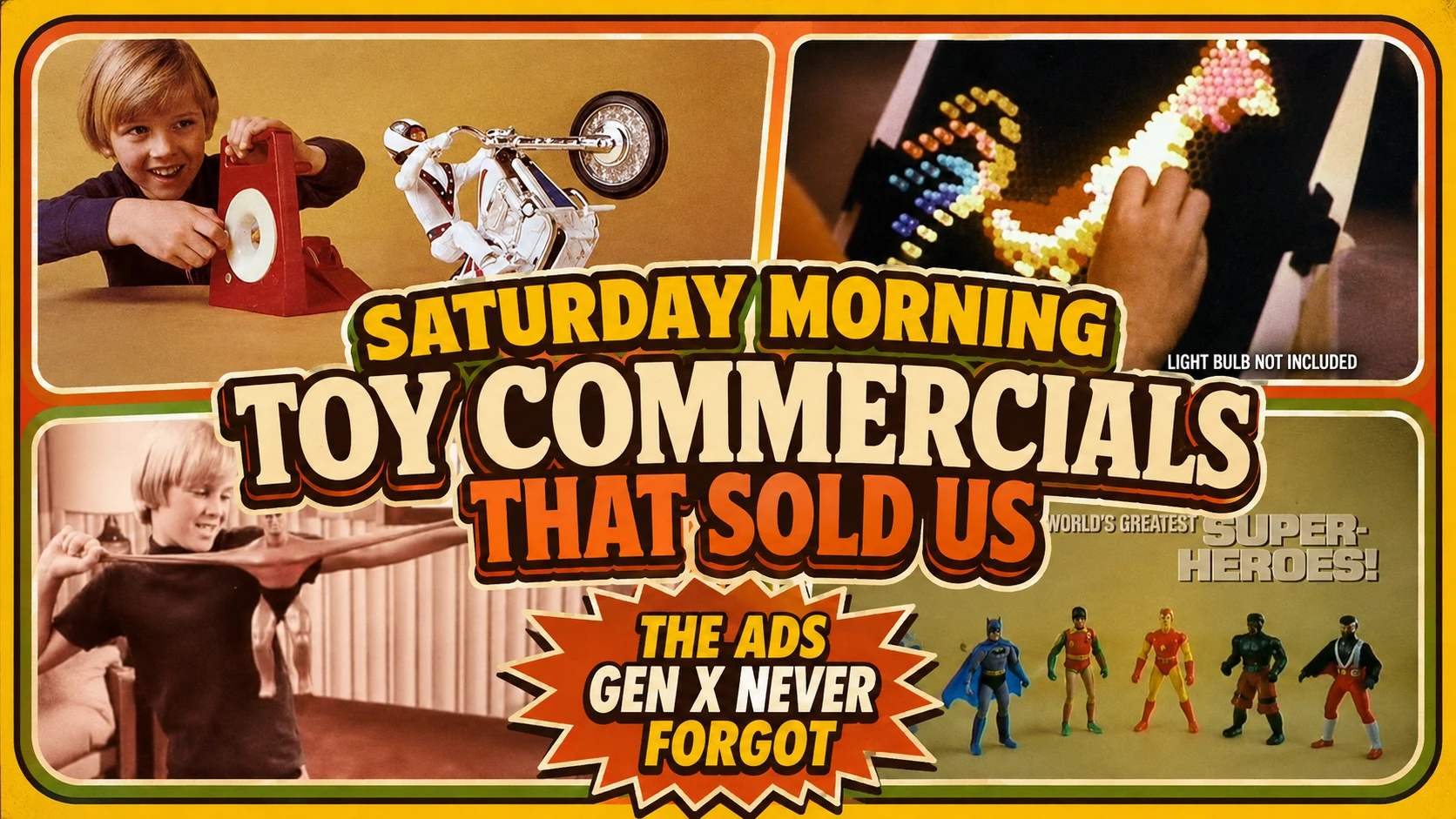
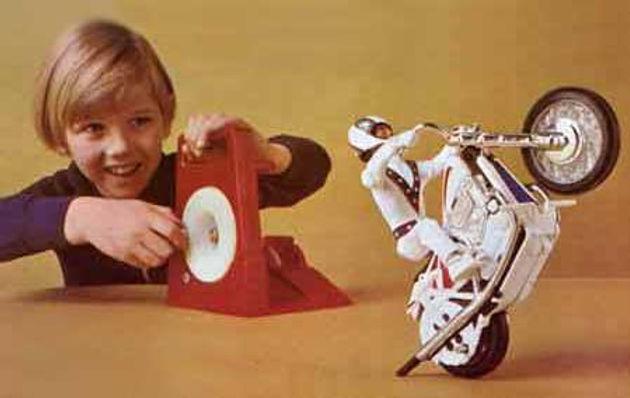
Evel Knievel Stunt Cycle Made the Commercial Feel Like a Dare
The Ideal commercial did not merely show the Evel Knievel Stunt Cycle. It wound the thing up,
aimed it at a ramp and made every living-room floor look like a place where history might happen.
The toy’s appeal was movement, so the ad built everything around the launch: the revving sound,
the sudden release, the jump and the landing that looked cleaner than most of ours ever did.
We were not being sold one more item from the decade’s crowded
toy shelves. We were being sold the possibility that the next attempt
would clear the books, the couch cushion and whatever other household object had been drafted as a ramp.
This was the perfect Saturday-morning demonstration because a child could understand the entire promise in seconds. Wind it. Release it. Watch Evel fly. The commercial made the stunt look repeatable while quietly leaving out the long minutes spent retrieving the motorcycle from under the furniture. That gap between the beautiful television run and the slightly chaotic home version was not a flaw in the ad. It was the whole engine of desire.
The Evel Knievel Stunt Cycle commercial in motion—the launch, the ramp and the thirty-second promise that our next try would be the perfect one.2
The borrowed television hero
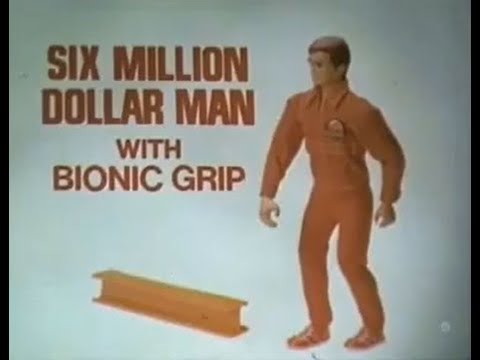
The Six Million Dollar Man Figure Put a Prime-Time Power Fantasy in Our Hands
Kenner’s Six Million Dollar Man advertising started with something toy companies love: a hero children already understood. Steve Austin had bionic strength, a telescope eye and the sound effect that could make any slow-motion backyard action feel expensive. The figure translated those powers into visible features—an eye you could look through, limbs with replaceable mission parts and accessories that turned a television character into a continuing play system.
The commercial’s job was to collapse the distance between prime time and the toy aisle.
Adults watched the series; kids absorbed the powers, the red tracksuit and that unmistakable
electronic rhythm. By the 1975 television season,
the sales pitch did not need much explanation. It only needed to demonstrate that this version of
Steve Austin could come home. The same shared-screen household helped make so many
1970s family television memories spill into our figures,
lunch boxes and playground games.
3
The collectible team
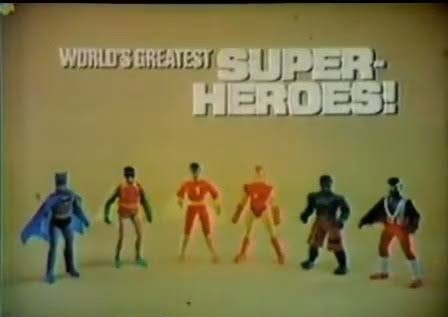
Mego’s Superheroes Turned One Figure Into a Request for the Entire Line
Mego understood that Batman was good, Superman was good and Spider-Man was good—but a row of all of them was better. The World’s Greatest Super-Heroes line made the package and commercial do double duty. The figure in front of you was the product, while the larger team in the background was the next six products. The shared scale made every hero look as if he belonged in the same adventure, even when the characters came from competing comic-book universes.
That collect-the-team invitation became stronger when superheroes were already filling the
television schedule. A child watching the decade’s superhero cartoons
did not need a lecture on why a Hall of Justice–sized roster was appealing. The commercial showed a
group, not a purchase. Once we owned one figure, the empty spaces in the imaginary team became visible—
and the larger world of 1970s action figures and playsets started calling.
4
The action-figure lifestyle
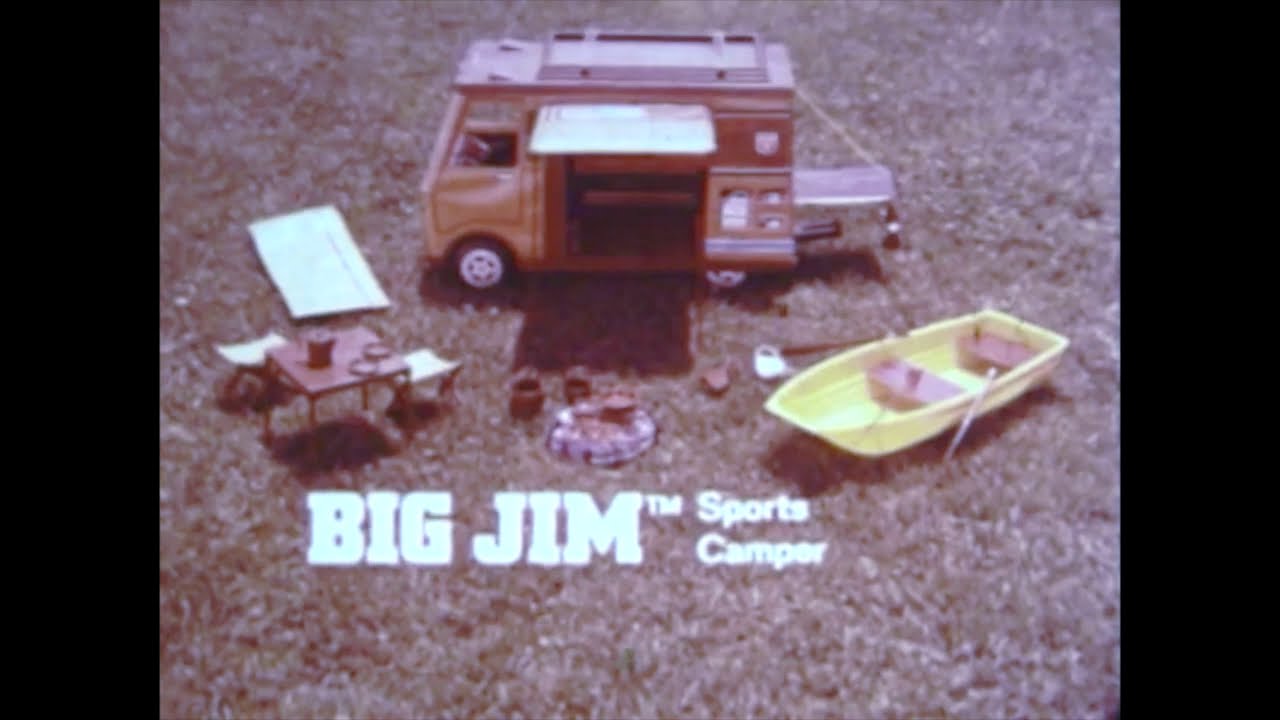
Big Jim Sold a Whole World of Gear, Vehicles and Tough-Guy Adventure
Big Jim commercials rarely left him standing around. He camped, drove, climbed, trained, rescued and generally lived the sort of outdoor action life that made a suburban backyard feel underused. Mattel built the line around a muscular figure with an action feature, but the real advertising power came from the expanding environment: sports equipment, rescue gear, vehicles, friends and the promise that one purchase opened the door to the next mission.
The ads gave the toys scale by filming them at ground level and keeping the action moving.
A small plastic vehicle could look ready to cross a canyon if the camera stayed close enough.
We saw a complete adventure with every accessory in place; the box at home might contain only one
part of it. The phrase “each sold separately” had to do a lot of work across the
toys of the 1970s.
5
The impossible body trick
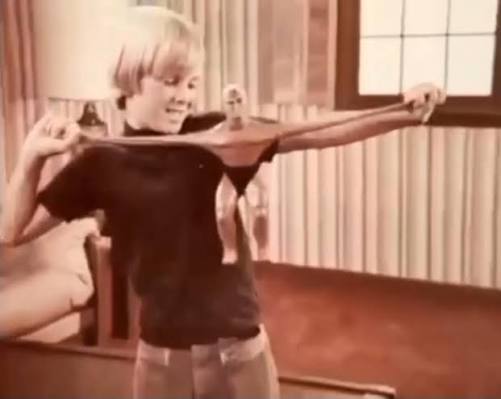
Stretch Armstrong Needed Only One Shot to Make Us Want to Pull Him Apart
Some toys required a story. Stretch Armstrong required two children pulling in opposite directions. Kenner’s commercial could explain the product with a single physical image: a muscular figure stretching far beyond anything a normal action figure could survive and then returning to shape. It was weird, slightly gross and immediately understandable. The toy did not imitate a television hero. The toy itself was the special effect.
That made Stretch almost perfect for a thirty-second spot. The ad created a challenge—how far
can he go?—that followed the toy home. Of course, many of us eventually discovered what happened
when the skin tore and the syrupy filling found daylight. The commercial sold durability; childhood
curiosity kept testing the claim. It remains one of those classic 1970s toys
we remember as much for what eventually went wrong as for what worked.
6
The doll that performed
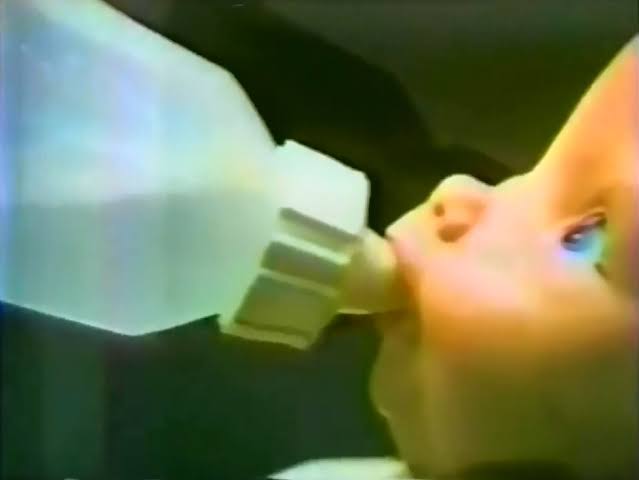
Baby Alive Made Feeding and Changing a Doll Look Like a Television Event
Baby Alive commercials sold a sequence rather than a pose. Mix the food, feed the doll, give her a bottle and wait for the famous result that required a diaper change. Every step was visible, and every step turned the child in the commercial into a capable little caregiver. The doll seemed responsive because the ad connected the actions into a miniature story with a beginning, middle and slightly messy ending.
The demonstration made the product feel more advanced than a regular doll. This one did things.
That phrase mattered across 1970s toy advertising: dolls grew hair,
cars launched, figures stretched and electronic games answered back. A toy that performed gave the
commercial something to prove on camera—and gave us a reason to believe the toy aisle had changed
since last Christmas.
7
The transformation reveal
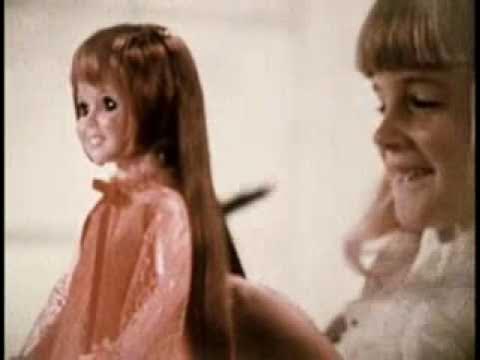
Crissy’s Growing Hair Turned a Doll Feature Into a Magic Trick
Crissy advertising built toward the reveal. Her hair could be short, then long, then styled in ways the commercial made look far easier than the results many children achieved at home. The mechanism was hidden inside the doll, so the ad could present the change almost as magic. A quick turn, a pull and suddenly the hairstyle was different.
The commercial did not sell only a doll. It sold control over appearance, the pleasure of transformation and the idea that the same toy could become new again. That message was aimed overwhelmingly at girls, just as action ads aimed speed, combat and danger overwhelmingly at boys. Saturday morning divided the playroom with remarkable confidence.
8
The slogan that did not need explaining
Weebles Wobbled Their Way Into Memory Before We Even Saw the Playset
“Weebles wobble, but they don’t fall down” may be the cleanest toy proposition of the decade. The line explained the product, demonstrated the gimmick and gave children something to repeat after the commercial ended. The rounded figures could be placed in houses, vehicles and increasingly elaborate playsets, but the wobble was the hook that made every expansion easy to recognize.
The commercials also understood the power of a family of products. Once Weebles lived in a
tree house, haunted house, camper or neighborhood, the little figures stopped being a single novelty
and became a population. A playset commercial made the toys we already owned
feel incomplete and the empty shelf beside them feel like available real estate.
9
The speed illusion
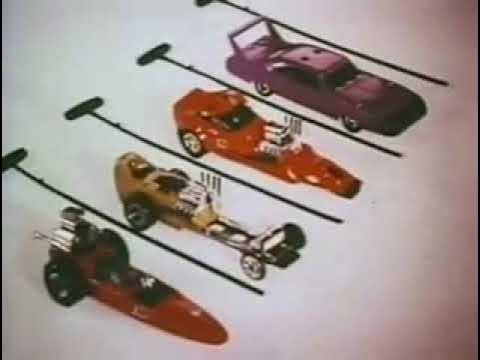
SSP Racers Used Sound and Camera Angles to Make the Kitchen Floor Feel Like Daytona
Kenner’s SSP cars had a simple mechanism: pull the ripcord, hear the wheel scream and let the car go. On television, that launch became a motorsports broadcast. Low camera angles made the vehicles feel larger, rapid cuts created speed and sound effects supplied an intensity that linoleum could not produce by itself. The toy was real—the cars genuinely moved—but the commercial arranged the movement into something closer to a race movie.
This is where toy advertising became a lesson in framing. A child sees the car perform; the
camera decides how big the performance feels. The same SSP racer filmed from adult eye level would
have looked small and lonely. Down on the floor, with the lens beside the wheels, it joined the long
line of 1970s cars, tracks and stunt toys that made the kitchen feel
temporarily unsafe.
10
The screen that glowed
Lite-Brite Commercials Made a Dark Room Look Like Creative Freedom
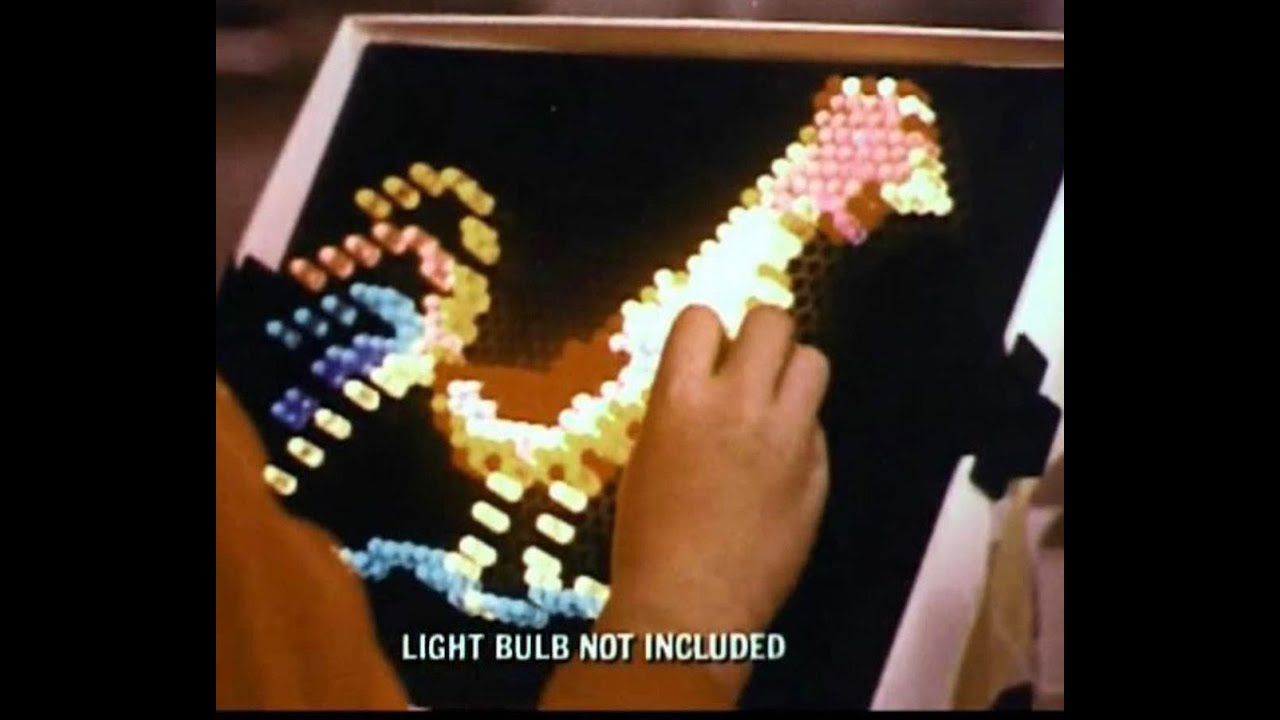
Lite-Brite had been around before the 1970s, but its television appeal fit the decade perfectly. The commercial darkened the surroundings, lit the colored pegs and made the finished picture glow like a tiny marquee. The product looked part toy, part art kit and part piece of television technology. The light itself was the reward.
The ad solved a common problem for creative toys: it showed the finished result before the
child had to do the work. We saw clean patterns, bright colors and the magical moment when the lights
came on. At home, we spent more time sorting pegs and trying not to lose the black paper—but the promise
fit naturally beside the decade’s educational shows and cartoons,
where learning was always easier when music, color or light did some of the lifting.
11
The noise-and-chaos game
Hungry Hungry Hippos Sold the Sound of Everyone Playing at Once
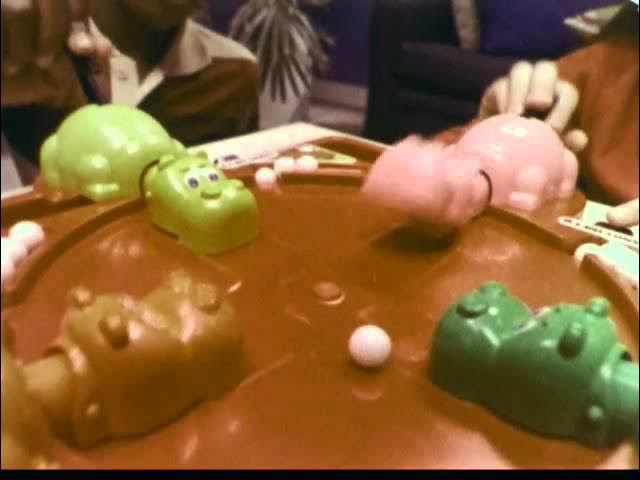
Some game commercials tried to explain strategy. Hungry Hungry Hippos showed hands pounding levers while plastic animals snapped at marbles in a burst of noise. That was enough. The commercial made the game look fast, social and just barely under control. Nobody waited politely for a turn; everybody attacked at once.
The ad sold the room as much as the game. Friends leaned in, shouted and laughed. A child
watching alone saw the product as an instant group activity—a box capable of creating the kind of
loud gathering television always made look available. Whether the real game ended with marbles under
the couch was a later concern, and exactly the sort of detail missing from our memories of
1970s games and toys.
12
The empty-box miracle
Star Wars Proved That Television Could Sell the Promise of Toys That Did Not Exist Yet
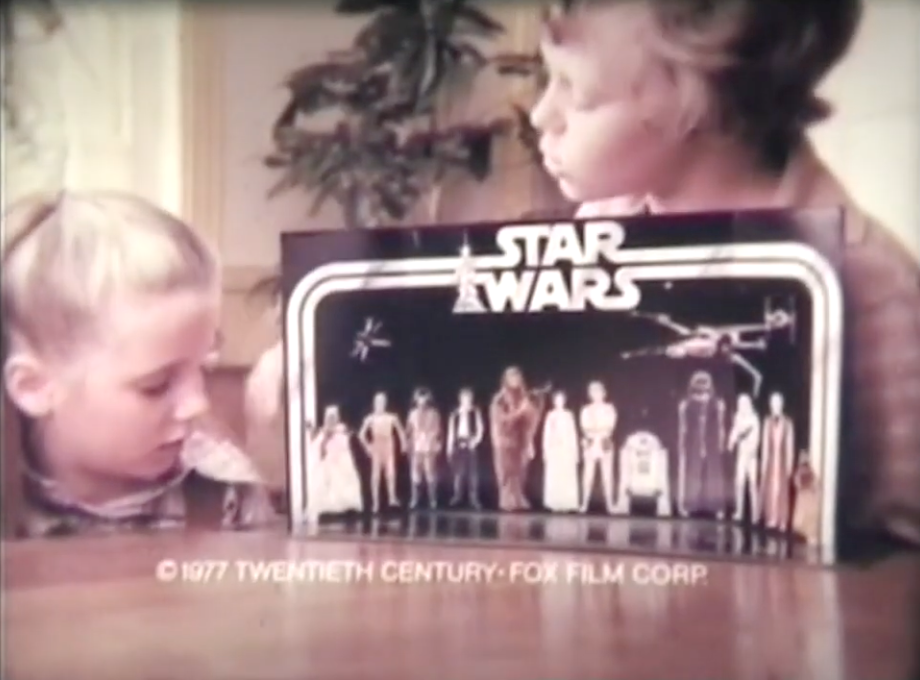
The 1977 Star Wars rush pushed the screen-to-toy relationship into a new era. Kenner had the license but not enough action figures ready for Christmas, so the company sold an Early Bird Certificate Package that promised four figures later. The product was essentially a display stand, a certificate and faith in the movie. Children accepted the promise because the characters already felt indispensable.
When the figures arrived in 1978, the advertising and packaging encouraged a different kind of
ownership: collect the cast, fill the display, add the vehicles and rebuild the movie at home.
The small scale made a larger universe financially and physically possible. What started as a
1977 pop-culture explosion quickly became
one of the biggest turning points on the 1970s toy shelf. The commercial
break was no longer selling one toy inspired by a hit. It was selling an expandable world.
The Television-to-Toy Connection
From Saturday Morning Cartoons to 1970s Toy Shelves
The 1970s did not invent character merchandise, but the decade tightened the connection between what children watched and what they expected to own.
By the late 1970s, the box, the commercial and the character were all selling the same world.
The Character Came Pre-Sold
Television Did the Introduction Before the Commercial Began
A known hero carried personality, powers and stories into the ad. The commercial could skip the origin and move directly to the feature: Steve Austin’s eye, Batman’s vehicle or the costume on a Mego figure. Recognition shortened the sales pitch.
The Show Extended Into Play
The Episode Ended, but the Story Could Continue on the Floor
Figures, vehicles and playsets let children reconstruct the adventure and then ignore it completely. We started with television characters and quickly created stories the writers would never have approved.
Hot Wheels Raised an Early Alarm
When a Cartoon Looked Too Much Like a Toy Commercial
The 1969 Hot Wheels cartoon became an early flashpoint because the program and the Mattel toy line were so closely connected. The controversy helped define a question that followed children’s television through the decade: when does entertainment become advertising?
Star Wars Changed the Scale
The Collection Became the Product
Kenner’s smaller figures made it practical to sell more characters, vehicles and environments from one fictional world. The card backs and carrying cases made the missing pieces visible. One figure was fun; the full galaxy was the real proposition.
The Cartoon Factories
Hanna-Barbera and Filmation Made Characters Easy to Recognize
We could identify a silhouette, a voice or a team setup before the plot had started.
That weekly familiarity made characters easier to move onto lunch boxes, figures and playsets.
The connection runs through both Hanna-Barbera’s 1970s cartoons
and the bold, instantly readable worlds of Filmation.
The Rerun Lottery
Sometimes the Product or Jingle Outlived the Cartoon
A short-lived series could disappear while a figure, lunch box or advertising phrase
stayed in the room for years. That is one reason the decade’s
forgotten Saturday morning cartoons can return through
a commercial even when we cannot remember a single episode.
The screen, the break and the toy box: The cartoons themselves belong in
the main 1970s Saturday morning ranking, while the figures,
games, dolls and vehicles belong in our guide to 1970s toys.
This story lives in the thirty seconds between them—the moment watching became wanting.
Two Different Playrooms on the Same Television
How 1970s Toy Commercials Sold Boys and Girls Different Childhoods
The divide was not subtle. The music, voices, colors, camera speed and even the way children touched the toys changed depending on who advertisers believed was watching.
Action Ads
Boys Got Speed, Danger, Competition and Control
Cars smashed, heroes fought, sports figures flexed and machines obeyed commands. The announcer often sounded urgent and the editing rarely sat still. The message was that play meant conquering space, opponents or mechanical limits.
Doll and Home Ads
Girls Got Caregiving, Beauty, Friendship and Domestic Skill
Dolls needed feeding, hair styling, changing and affection. Play kitchens and appliances presented miniature household work as delight. The performances were warmer and slower, but the instructions about gender were every bit as strong.
The Children in the Commercial
Who Was Allowed to Play Told Us Who the Toy Was For
A child rarely needed a spoken rule. The cast, bedroom colors, music and announcer delivered it. Boys and girls could cross those lines at home, but the commercial usually built a fence first.
The World Was Changing Anyway
Real 1970s Families Were More Complicated Than the Ads
Women’s roles, work and family structures were changing across the decade, while many toy commercials repeated older expectations. The contrast becomes clearer beside the era’s evolving television families.
Adults Finally Looked at the Commercial Break
The FCC, Host Selling and the Fight Over Children’s TV Advertising
The same techniques that made the ads unforgettable also raised an obvious concern: young children did not evaluate selling claims the way adults did.
The commercial break eventually became a fight over how much selling young viewers could reasonably understand.
Action for Children’s Television
Parents Challenged the Amount and Nature of Commercial Selling
ACT, founded in 1968, argued that broadcasters owed children more than a schedule packed
with cartoons and sales messages. The group pressed the FCC on educational programming,
advertising time and the blur between a show and the products attached to it. That fight
belongs beside the decade’s educational television shows
and cartoons, where adults were asking what children’s TV should give us besides another
thing to request.
The 1974 FCC Policy
Host Selling, Tie-Ins and Separation Became Central Issues
The FCC said broadcasters should eliminate host selling and product tie-ins, clearly separate commercials from programs and follow voluntary time limits. The weekend guideline was 9.5 minutes of advertising per hour. The rules were not a complete wall, but they recognized that children needed help knowing when entertainment had turned into a sales pitch.
Industry Self-Regulation
CARU Began Writing Guidelines for Ads Directed at Children
The advertising industry created the Children’s Advertising Review Unit in 1974. Its guidelines addressed deception and the limited ability of children to judge what an advertisement showed. Disclosures had to be understandable to the children who heard the main claim, not merely present somewhere on the screen.
The 1978 FTC Fight
“KidVid” Turned Children’s Advertising Into a National Political Battle
The Federal Trade Commission considered sweeping restrictions on advertising to young children, especially commercials for heavily sugared foods. The proposal triggered fierce industry and congressional opposition. It did not end children’s advertising, but it revealed how economically important the audience had become.
The fight was never really about whether children liked commercials. It was about whether liking them made children unusually easy to sell to.
The Door Into the Next Decade
How 1970s Toy Commercials Led to 1980s Toy Cartoons
The 1970s usually sold toys around the programs. The next decade would make it much easier to build entire programs around products.
The 1970s Model
License a Hit, Advertise the Toy and Keep the Show Separate Enough
The strongest 1970s examples moved characters from television or movies into figures and playsets. The connection could be obvious, but regulators still cared about program-length selling and direct product tie-ins.
The 1980s Model
Create the Characters, Story World and Product Line Together
Later deregulation opened more room for cartoons built around toy properties. The skills advertisers had refined in the 1970s—collecting, transformation, teams, vehicles and continuing worlds—became the foundation of entire series.
Gen X Was Ready
We Had Already Learned to Read Television as a Catalog
By the time product-driven cartoons exploded, we understood the system instinctively. A new character meant a figure. A new vehicle meant an accessory. A new team member meant an empty space in the collection.
The Difference in Memory
Sometimes the Commercial Outlived the Toy and the Show
The product could break, disappear or get donated, yet the jingle stayed. That is why old commercial compilations can unlock memories as powerfully as the forgotten cartoons between them.
The Selling Machine, Year by Year
1970s Saturday Morning Toy Commercials, Year by Year
The ads changed as action figures, electronics, licensed characters and regulation changed. Each year page restores the wider television schedule around those commercial breaks.
Questions About 1970s Saturday Morning Toy Commercials
Most of the answers begin with a jingle, a disclaimer or a toy that looked twice as large on television.
Why Were So Many Toy Commercials Shown During Saturday Morning Cartoons?
Saturday morning gathered a large national audience of children into a predictable block of programming. Toy companies could reach interested viewers repeatedly, while the excitement of cartoons made action figures, vehicles, dolls and games feel like natural extensions of the morning.
What Made 1970s Toy Commercials So Memorable?
They used simple demonstrations, repeated product names, catchy jingles, close-up camera work, exaggerated sound and excited children. The strongest ads reduced the toy to one unforgettable promise: it stretches, launches, grows hair, lights up or brings a television hero home.
Did the Toys Really Work the Way They Did in the Commercials?
The toys usually performed the advertised basic function, but commercials controlled the setting, camera angle, sound, pacing and completeness of the collection. A launch could be filmed from floor level, a game could be shown with every piece perfectly arranged and a small disclosure could explain that batteries or accessories were not included.
What Did “Each Sold Separately” Mean?
It meant the commercial was showing a larger group of figures, vehicles or playsets than one package contained. The phrase protected the advertiser while allowing the visual scene to present the full toy world—and encourage children to want all of it.
Were There Limits on Advertising During Children’s Television?
The FCC’s 1974 policy expected broadcasters to follow voluntary commercial-time limits, clearly separate ads from programs and eliminate host selling and certain product tie-ins. The weekend guideline was 9.5 minutes of advertising per hour.
What Was Host Selling?
Host selling occurred when a program host or character appeared to sell a product during or near the show, making it harder for young children to distinguish the entertainment from the advertisement. Regulators and children’s advocates viewed that blur as especially troubling.
Did Star Wars Change Toy Advertising?
Yes. Kenner’s Star Wars figures strengthened the idea of collecting an entire cast, then adding vehicles, creatures and playsets from one story world. The 1977 Early Bird package even sold the promise of figures that would arrive later, showing how powerful the screen connection had become.
Where Can I Revisit the Cartoons and Toys From These Commercials?
The toy may have lasted a year. The advertisement had thirty seconds. Somehow the sound stayed for fifty years.
Repetition
We Heard the Same Lines Every Weekend
The ads returned across weeks and sometimes years. Repetition turned commercial copy into
a form of childhood folklore, working on the same part of the brain that stored the decade’s
television theme songs.
Wanting Is a Strong Memory
Desire Made the Details Feel Important
We listened closely because we needed the name, the feature and the proof for the later parental negotiation. Attention sharpened the memory.
The Room Came With It
A Commercial Can Restore the Whole Saturday Morning
The jingle brings back the carpet, the television cabinet, the cereal and the sense that
noon was still far away. The ad became attached to a place in our lives, not just a product.
That is why a commercial can unlock the room as quickly as one of the
cartoons the rerun machine left behind.
We Shared the Same Breaks
Mass Television Created a National Memory Bank
With three networks carrying the main cartoon blocks, millions of children saw many of the same commercials. That shared schedule is part of why Gen X nostalgia can begin with five sung words and end with an entire room joining in.
Keep Turning the Dial
More 1970s Toys, Cartoons and Television Memories
The commercial break makes the most sense when it is placed back between the cartoons, the family television schedule and the toys waiting on the other side.