What Watching TV in the 80s Was Actually Like
Shared sets, weekly appointments, channel negotiations, rabbit ears, local stations, and the household soundtrack that came with eighties television.
The guide, the clock, the remote, and the people sharing the room. The show was only part of the evening.
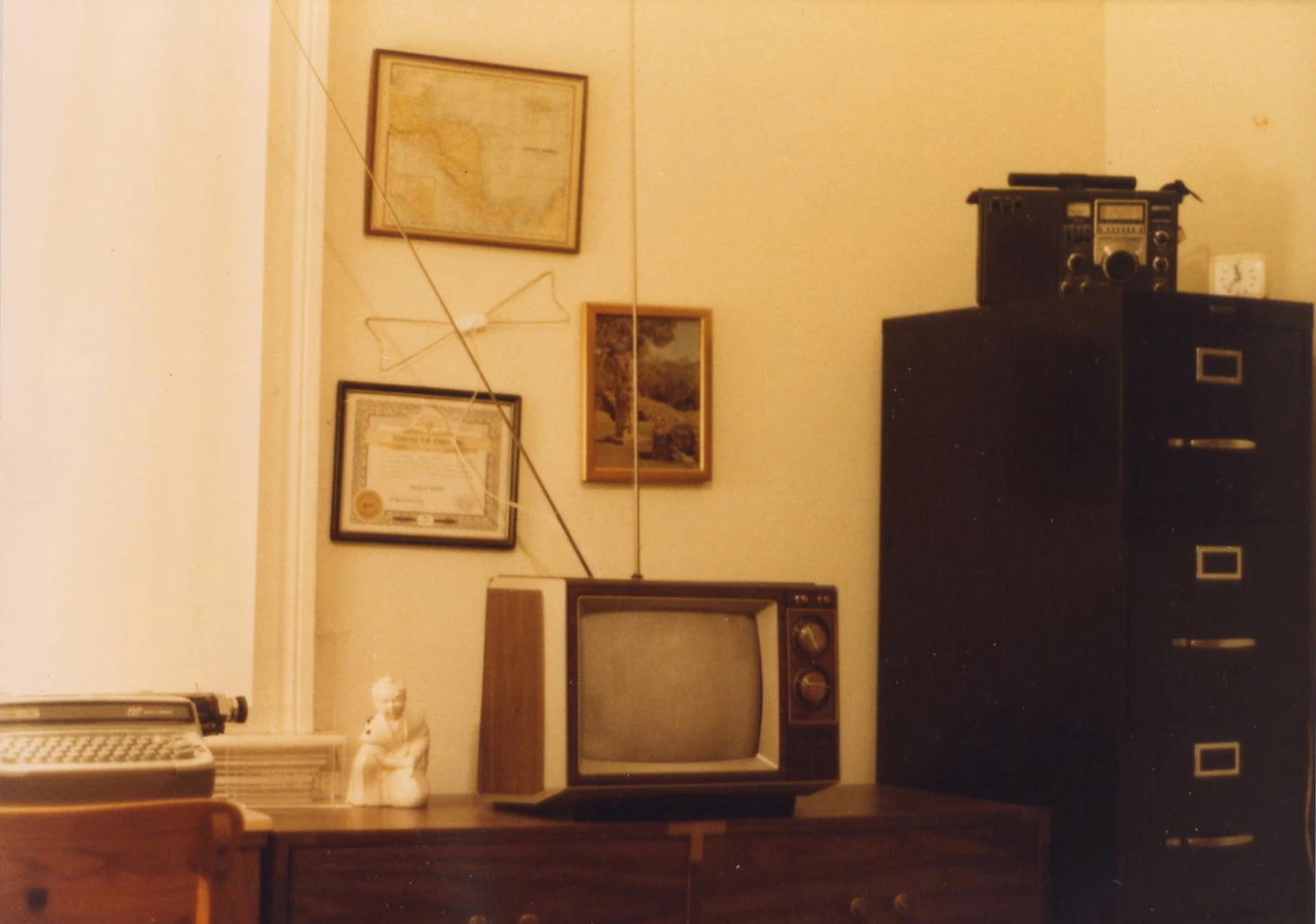

Somebody was always standing in front of the television at the wrong moment. Not for the whole show. Just long enough to become the most unpopular person in the room. You could have spent twenty minutes talking over the plot yourself, but now something important was happening and a relative had chosen that exact second to explain where the scissors belonged.
Watching TV in the eighties involved the program, certainly. It also involved the chair, the clock, the telephone, the people allowed to choose, and the complicated negotiations required to leave the room for forty seconds. A commercial break could become a small household evacuation. The person left behind acquired a responsibility: announce the return loudly enough to be heard over a running faucet.
There wasn’t one universal Gen X living room. Some homes had cable early. Others didn’t get it during the decade at all. There were remote controls, stubborn tuning knobs, impressive color consoles, little black-and-white portables, and families with very different ideas about what children ought to watch. The same network evening could be experienced through a fine picture or a snowstorm with occasional actors in it.
What many of those homes shared was television that arrived on somebody else’s schedule. You could prepare, bargain, miss something, catch a rerun, or eventually record it. You couldn’t assume that the episode would simply wait while you finished whatever you were doing. The eighties put a great deal of entertainment in the house. They also gave the house something new to argue about every half hour.
Inside This Article
- The set had an address inside the house
- Three big networks didn’t mean three possible channels
- The picture occasionally required an assistant
- The remote was power small enough to lose in a cushion
- Finding out what was on was a separate job
- The clock could win an argument without saying anything
- An unanswered question could occupy the whole week
- Commercial breaks came with a return-to-seat alarm
- The phone didn’t know this was the important scene
- The family audience had its own programming department
- A weekday could have several television identities
- After school, the dial belonged to a different crowd
- Saturday morning had its own jurisdiction
- A favorite became part of the week
- A movie could take over the whole evening
- Fall brought strangers; summer brought somebody you knew
- The local station made national television feel nearby
- Being in the room wasn’t the same as receiving the whole show
- The neighbor’s cable could make your dial feel small
- A VCR offered freedom with several conditions attached
- A second television could be independence in miniature
- Sometimes the argument wasn’t about a channel at all
- The evening could stop being entertainment without warning
- Watching together didn’t mean watching the same way
- Then it was off, and the room was just a room again
- A few things the couch still gets asked
The set had an address inside the house
In an eighties house, the main television had a permanent address. Maybe it was a wood-grain console that outweighed the furniture beside it. Maybe it perched on a stand above a little archaeological dig of TV Guides, game cartridges, dust, and one mystery cable nobody dared unplug. Either way, the room had been arranged around that screen long before anyone thought of calling it a media center.
The seating grew around that location. There was the good chair, the end of the couch with a clear view, and the floor, where a child could conduct a serious experiment in how close a face could get to a picture tube before an adult commented. Moving furniture could therefore become an entertainment decision. A new lamp was lovely unless its reflection moved directly over somebody’s favorite actor.
Not every home was watching the same kind of picture. An older set could remain useful in a bedroom or kitchen after a better one arrived. Its color, reception, sound, and screen size might all be less impressive. It still offered an excellent feature: a channel someone else wasn’t currently controlling.
That physical arrangement shaped the way people watched. A show could be heard from the kitchen, glimpsed from the hallway, or followed carefully from a particular cushion. There was no need for everyone to announce that they were joining an activity. Someone could enter for a minute and remain until the credits, leaving whatever they had originally intended to do in another room.
The room also imposed an audience on the audience. You heard the joke and the response beside you. A parent’s laugh could tell you something about the scene you hadn’t understood. A sibling’s bored commentary could tell you considerably more than you wanted to know about the sibling. The soundtrack had two sources, and only one was under the network’s supervision.
Even an empty chair could carry authority. Somebody would be back in a minute, and apparently the upholstery had agreed to hold their place in the meantime.
Three big networks didn’t mean three possible channels

ABC, CBS, and NBC dominated the commercial-network conversation for much of the decade. That is different from saying every American television had exactly three things on it. PBS, independent stations, other local outlets, and the channels a household could actually receive made the dial a more particular place.
A network was an identity carried by a local station, not necessarily a matching channel number from city to city. A child could know the familiar number before understanding the affiliation. Moving, visiting relatives, or staying in a hotel could make the map feel wrong. The program existed, apparently, but somebody had put it in another numerical neighborhood.
Independent stations were especially important to the hours around the big network evening. Cartoons, old sitcoms, movies, syndicated programs, and local personalities could turn a station into a familiar companion without its carrying the same prime-time schedule as one of the big three.
Reception could shrink or enlarge the practical choices. A listing didn’t guarantee a usable picture at your house. Geography, antennas, the set, and the signal mattered. Someone elsewhere in town might regard your difficult channel as a completely ordinary part of the evening.
Then cable and, late in the decade, Fox further complicated the easy shorthand. Remembering the power of the big three makes sense. Remembering them as the entire contents of every household’s television leaves out quite a lot of the television people actually watched.
The picture occasionally required an assistant
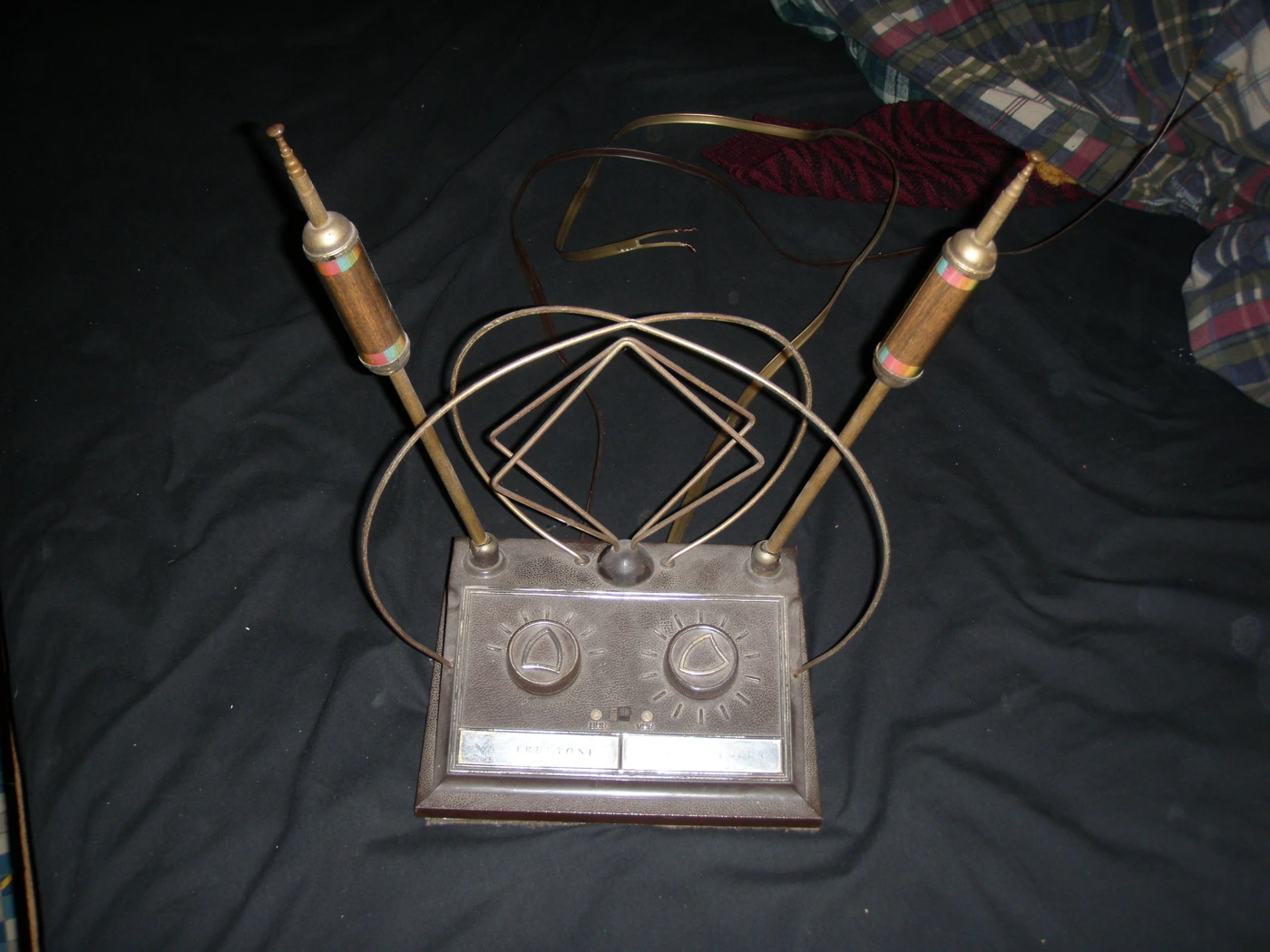

With an antenna, watching could include a preliminary discussion about why the picture looked like that. Rabbit ears were adjustable because their position could matter, not because the manufacturer wanted to add an interpretive sculpture to the room. The UHF loop and the telescoping rods were parts of receiving a signal, even if the family treated them as objects requiring persuasion.
Someone might make a small adjustment while the seated audience supplied instructions of questionable scientific value. Better. Worse. Go back. No, the other way. The person touching the equipment could discover that the best picture appeared while they were standing in an extremely inconvenient position.
Some sets offered tuning controls that demanded more attention than a modern viewer would expect from choosing a channel. The right number was the beginning; a fine adjustment could still be necessary. The picture might contain snow, ghosts, interference, or a troubling tendency to roll instead of remaining where an ordinary picture ought to stay.
Those experiences varied enormously. A good antenna installation or a solid cable picture could make the whole ritual seem like somebody else’s problem. There was no national requirement that every family wrestle with a bent rod before the comedy began.
But if reception was part of your evening, it became part of the memory of the show. You remember the reveal and the effort required to see it. The television could be both the thing providing entertainment and a temperamental member of the group insisting on attention before it would cooperate.
The remote was power small enough to lose in a cushion
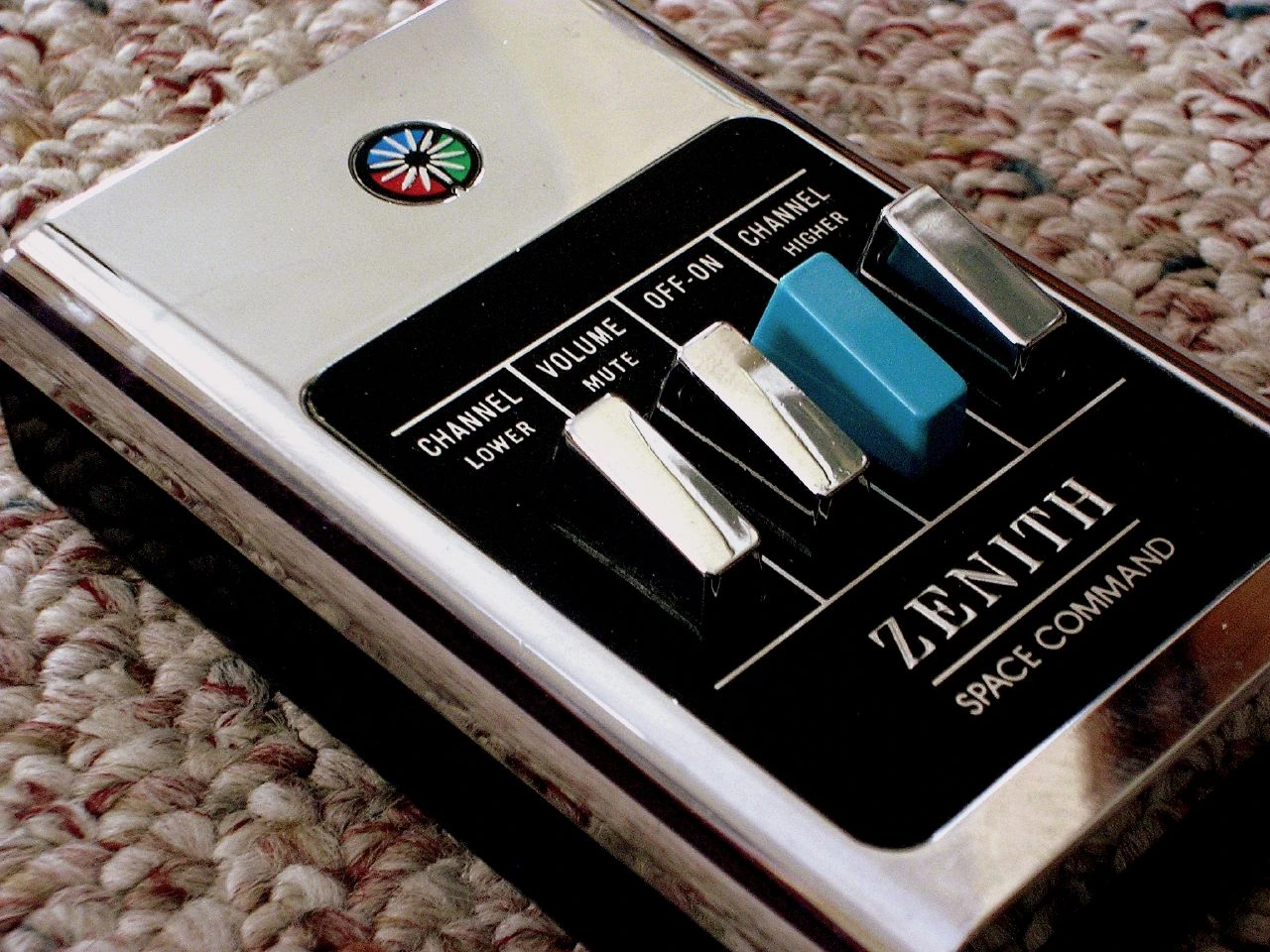

Whoever had the remote had a remarkable amount of authority for somebody sitting down. Without one, switching channels meant getting off the couch, crossing the room, and publicly announcing that you were bored with what everyone else was enjoying. With one, the takeover could happen from behind a throw pillow. Then somebody would ask where the remote went, and the entire living room would turn into a search party.
Remote controls were not invented in the eighties, and they were not present in every eighties home. Older ultrasonic designs and newer electronic controls belonged to a longer story. What matters from the couch is that a household with one had a portable way to decide what everybody else was watching.
Possession didn’t always mean authority. An adult could request it from a child who had made the mistake of sitting too close. Someone could announce that they were only checking another channel, a phrase with no enforceable limit. The current program’s defenders then had to decide how long to tolerate the experiment before accusing the operator of abandoning it entirely.
The remote could also vanish while remaining somewhere within an arm’s length of four people. Cushions were investigated. Blankets were shaken. The person who last used it became the first suspect, regardless of whether they were currently in the building.
A family didn’t need a remote to disagree about the television. It simply made the disagreement easier to perform repeatedly. The argument over what to watch acquired a device capable of changing the evidence before the other side had finished its sentence.
Finding out what was on was a separate job

Before the television told you what was on, the newspaper and TV Guide did. Someone unfolded the listings while another person shouted the channel number from the couch. A promising movie description or a new episode of a favorite show was enough to set the evening’s schedule. Getting the day wrong, of course, was a problem the television had no intention of helping you solve.
That distinction mattered. The guide gave a name, a time, a station, and sometimes a description that could turn a vague possibility into the evening’s most urgent appointment. A movie might become irresistible once its compact summary mentioned a haunted house, an escaped creature, or an actor somebody in the family liked.
Local information was essential. Channel numbers, station choices, cable availability, and scheduling differences could change what a household could see. An edition or newspaper from somewhere else was an interesting document, but not necessarily a useful instruction sheet for your set.
Knowing what was on also gave someone an advantage in the household discussion. A child proposing a show could arrive with a time and a description. An adult could discover an alternative and quietly remove the proposal’s supposed lack of competition. Printed listings were entertainment information and negotiating material.
The magazine itself deserves its own visit in the story of TV Guide and the weekly plan. Here, its importance is simpler: before you could miss a show, somebody had to know it was coming. Sometimes the entire evening turned on which person had bothered to look.
The clock could win an argument without saying anything
A scheduled program put a boundary around another activity. Dinner, homework, a bath, a visit, or a shopping trip could become the thing happening before the show. The minutes mattered because the beginning wasn’t waiting for your household to organize itself.
That gave a child a reason to care about a clock with a degree of concentration rarely applied to getting ready for school. The opening might contain a favorite sequence. It might explain the case. It might simply be the opening, which you had been expecting all day and had no desire to have described to you afterward.
There were ways around a missed episode, but they came with uncertainty. A rerun might return. A friend might have watched. A household with the necessary equipment could make a recording, provided someone arranged it correctly. None of those possibilities automatically restored the experience of being there at the intended time.
The schedule could therefore become part of a family’s language. The time wasn’t always announced as a number. It might be before the news, after the sitcom, or when the particular theme began. Programs marked an evening in units people could hear from the next room.
It wasn’t a more virtuous relationship to entertainment. It could be inconvenient, bossy, and absolutely inflexible when something else ran late. But it gave an ordinary half hour the feeling of an appointment. You didn’t merely choose it from a shelf; you got yourself to the room before it started.
An unanswered question could occupy the whole week
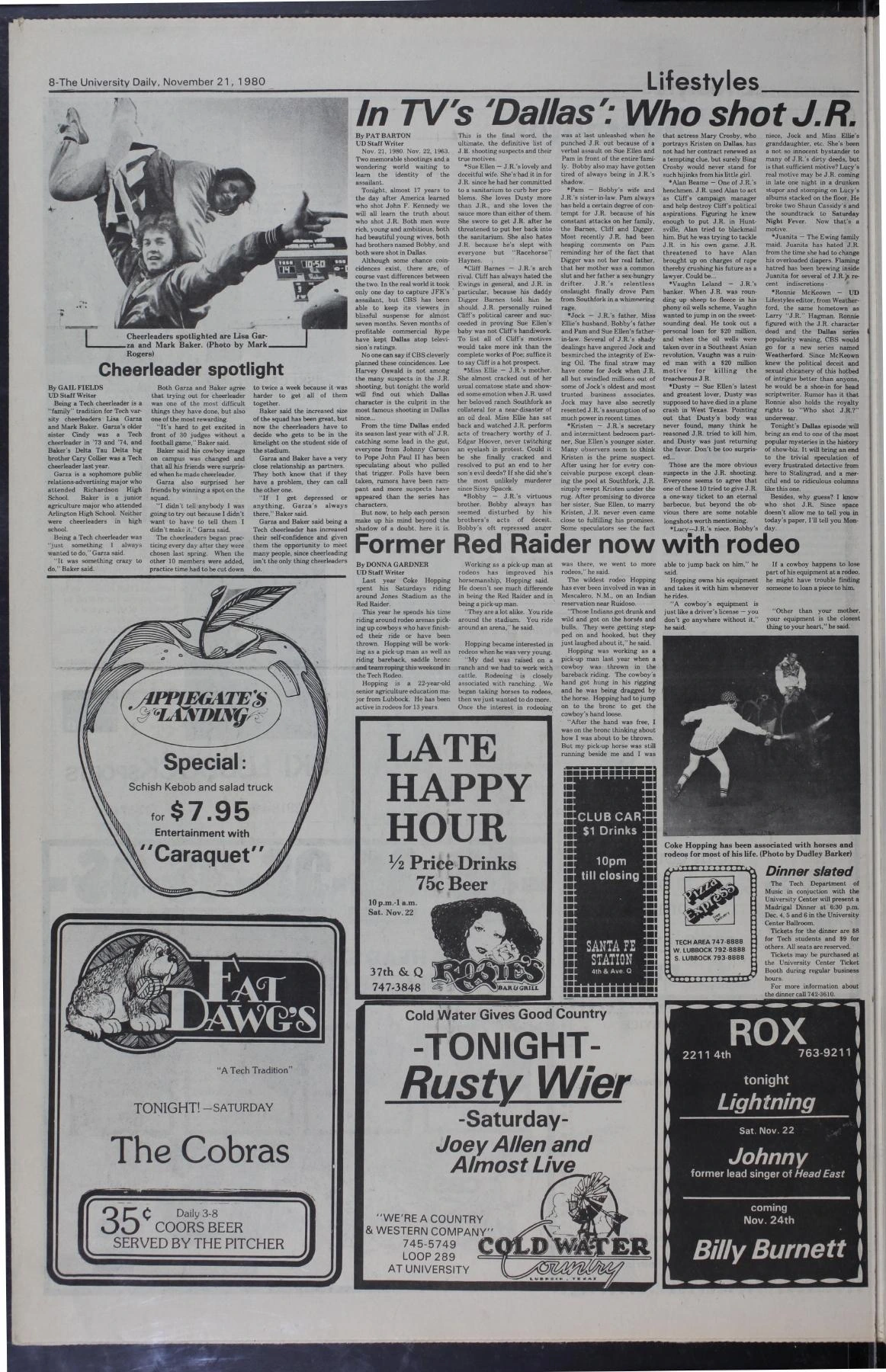
Dallas made the wait unusually visible. The question of who shot J.R. carried from the spring of 1980 to the November revelation. For someone following the program, anticipation lived well beyond the hour when CBS was actually showing it.
A cliffhanger worked on a weekly audience differently from a story with the next episode already within reach. You could discuss, guess, disagree, hear a theory, and become convinced that an incidental glance was decisive evidence. The network had not yet supplied the next chapter to settle the argument.
The revelation on November 21, 1980 belongs to the 1980–81 television season. That season label is useful when looking at the year’s standings; it doesn’t move the actual broadcast out of November. A calendar memory and a ratings-season label are doing different jobs.
The experience didn’t require literally everyone to watch. People who disliked the program, lacked access, worked that evening, or preferred something else remained perfectly real. A large shared conversation can feel universal from inside it without having occupied every room in America.
Still, Dallas and J.R.’s prime-time empire show how a program could reach beyond its airtime. Missing it wasn’t only losing an hour of plot. It could mean entering the next day’s conversation with a strong desire that everybody else stop talking until you found out what happened.
Commercial breaks came with a return-to-seat alarm
The commercials were the starting gun. Someone headed for the refrigerator; someone else gambled on a quick bathroom trip; another person suddenly remembered the popcorn. Nobody knew exactly when the show would return, which meant the last person back got to hear, ‘You missed it!’ from people who were absolutely not going to explain what happened until the next break.
Someone calling that it was back could set a household in motion. The announcement wasn’t always dependable. A false alarm might bring people rushing in for another advertisement, producing a level of irritation out of proportion to the number of seconds involved. An accurate call was an act of cooperation and, in some homes, grounds for expecting the favor returned.
The ads were also part of what people absorbed. A jingle could be learned without any conscious decision to memorize it. A local commercial might become more quotable than the expensive program surrounding it. Children could supply a slogan with the confidence of a person who had never once considered buying the product.
That familiarity shouldn’t be confused with a golden age of loving every interruption. Viewers could complain, leave the room, turn down the sound, or become thoroughly tired of the same pitch. The appeal of skipping an ad later was not a mysterious preference invented by a new generation.
What changed the memory is repetition in company. People heard the same material together and carried it into their own speech. A break that was supposed to sell carpet, cereal, or a car could leave a phrase in the family for years after anyone remembered which episode had been interrupted.
The phone didn’t know this was the important scene
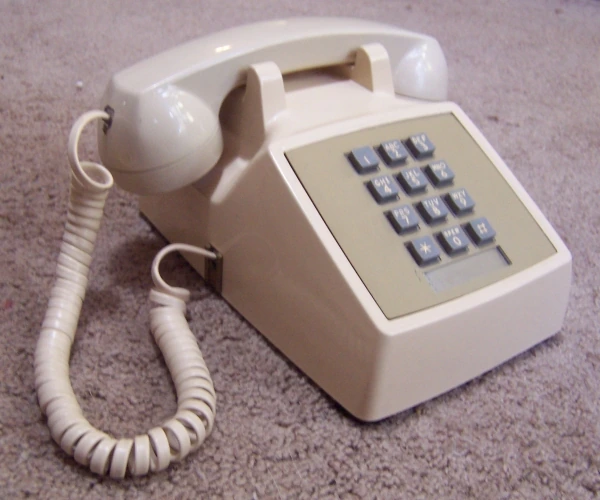

A ringing household telephone created a different sort of interruption from a message arriving silently on a personal screen. It made a sound other people could hear, often from somewhere you had to go. The question of who would answer could become a short argument conducted over both the ringing and the television.
If the call was for you, the program might continue without you. A long cord could offer a compromise, although dragging a conversation toward the room didn’t guarantee the other viewers wanted to share it. Somebody eventually had to turn down one source of sound or persuade a person to move.
The caller could be a friend watching the same thing. Then the interruption became part of the viewing, a running exchange about what had just happened. It could also be someone with no knowledge that they had reached the house precisely when a killer was about to explain a motive.
A person returning after a conversation had to request the missing story from the room. That could produce an excellent account, a vague summary, or the unhelpful assurance that nothing important had happened. The latter was particularly irritating when delivered by someone who had been watching closely enough to know otherwise.
The doorbell, a visitor, a pet, and a request from another room could do similar work. Television had to coexist with the household around it. The scene might be beautifully staged, but its local reception could still depend on whether the dog had noticed a delivery.
The family audience had its own programming department
A family television was a democracy right up until an adult wanted the news. Then the constitutional protections for cartoons disappeared. Kids made deals: one half-hour for homework, an early bedtime postponed until the credits, or a promise to watch the grown-up program without complaining. The household with a second television had an escape route; everybody else had to negotiate with whoever owned the chair nearest the screen.
Children learned the available routes. Watch with the adult. Negotiate for the next half hour. Offer to sit through one program in return for another. Move to the smaller set if the house had one and if the person already using it could be persuaded.
Siblings could practice a very specific kind of fairness: the kind that became urgent immediately after the other sibling’s choice ended. Previous agreements were remembered differently by the participants. A promise that sounded clear at seven o’clock could develop remarkable ambiguity by eight.
Sometimes the compromise produced an unexpected favorite. A child who wouldn’t have chosen a courtroom drama could learn to enjoy Ben’s final questions. An adult waiting for a later program might begin following a sitcom they had previously dismissed. Shared space could introduce someone to television outside the little collection they would have assembled alone.
It could also mean an evening spent watching something you didn’t like. Nostalgia doesn’t need to turn every surrender of the channel into a valuable lesson. The memorable part is that other people’s tastes had a physical presence in the room, and you occasionally had to sit beside them while those tastes received the better picture.
A weekday could have several television identities
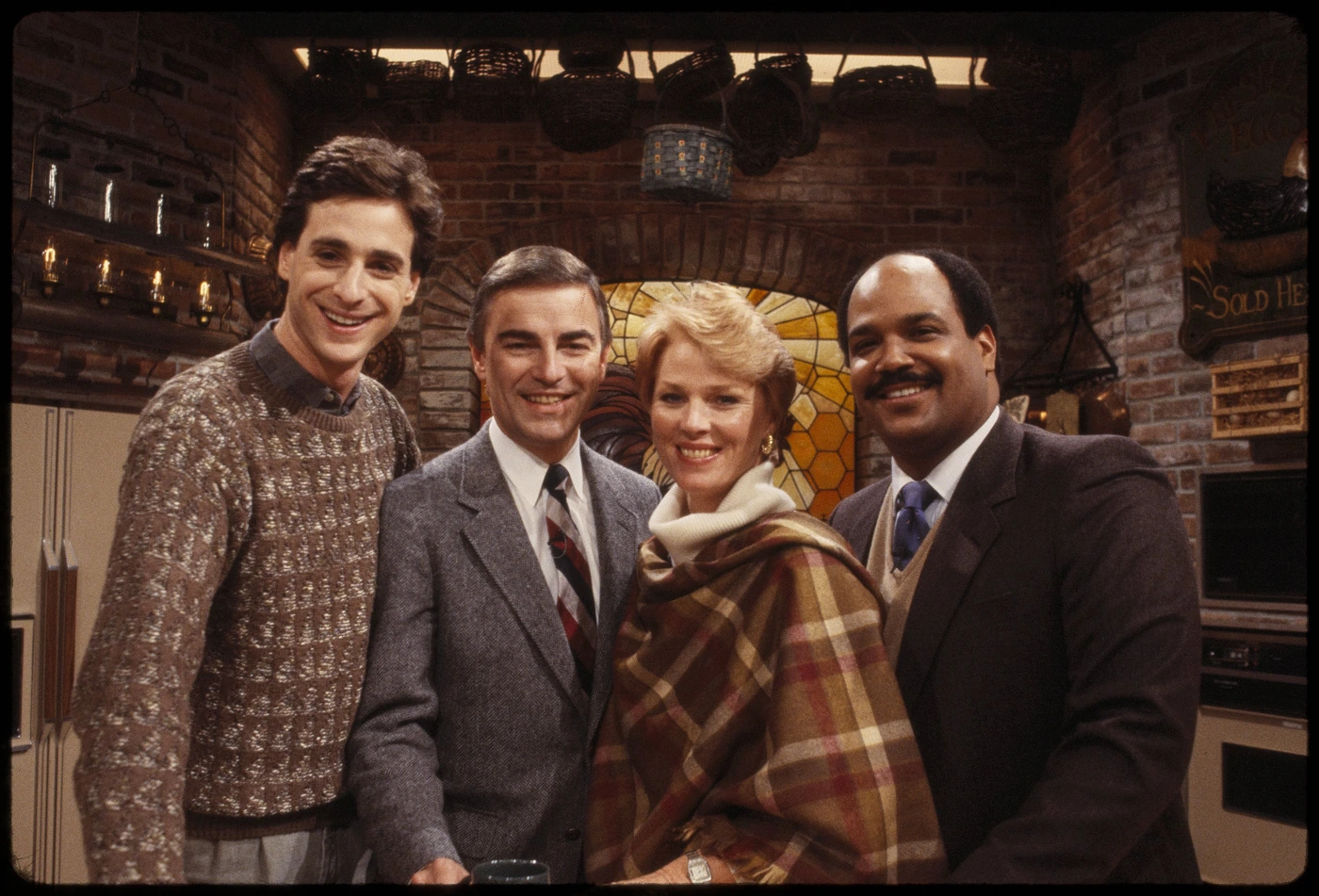

The morning set might be supplying news, weather, conversation, and reminders that somebody was going to be late. The same machine could later become the place for a daytime serial, an after-school cartoon, the local news, and a prime-time story with a completely different audience.
That changing company mattered. The television’s importance to one person might occur during an hour another family member never saw. A child could regard the station as the home of cartoons while an adult associated it with a familiar afternoon drama. Neither had a complete picture of how the household used the set.
Morning television could also be television only partly watched. Someone might listen for the forecast while making breakfast or preparing to leave. A presenter became a voice in the routine, with the visual attention saved for the moment that sounded relevant.
Local stations shaped those surrounding hours. They chose programs and personalities, carried announcements, and inserted the community into what could otherwise look like a national appliance. A weather map was suddenly about the roads outside the house, rather than a distant place in the evening’s fiction.
The resulting routine had variety without requiring a new device for each use. One box could be a morning companion, a babysitting argument, a source of news, and the evening’s principal entertainment. Its place in the room stayed the same while the people claiming it changed shifts.
After school, the dial belonged to a different crowd

The after-school ritual barely required instructions: get in the door, put the schoolbag somewhere it shouldn’t be, locate a snack, and see which rerun or cartoon was already underway. Syndicated shows were especially good at becoming part of the afternoon. You didn’t have to wait a week for those characters. They were there again tomorrow, right about the time someone should have been starting homework.
The order wasn’t the same everywhere. A station in one market might schedule a favorite at a time another city used for something else. Daytime dramas and game shows also occupied important places in the household routine. Being home sick could reveal an entire television world usually hidden behind the school day.
A soap could sound baffling to someone arriving midway through a long relationship. The people already watching knew why a look mattered and why the person entering a room was bad news. A child might not understand the history but could recognize that an adult had become unusually interested in what was about to be said.
Eighties cartoons created their own sort of familiarity. A theme, a returning character, and a dependable time could make the afternoon feel settled. You could know a program through repeated encounters without knowing which production year any particular episode belonged to.
That is an easy detail to lose when remembering television by premiere dates alone. A childhood favorite might have been made earlier, shown locally later, and watched in an order nobody in the room was tracking. The person on the rug didn’t require a broadcast history. They needed the channel to remain where it was until the story finished.
Saturday morning had its own jurisdiction
Saturday could reverse the usual difficulty of getting a child out of bed. An appointment with television had advantages over an appointment with a classroom. The early audience might be quiet, purposeful, and already arranging breakfast before the adults had decided the day was officially underway.
The pleasure was partly the programming and partly the territory. For a stretch of the morning, the set could feel as though it had been scheduled for you. That feeling wasn’t guaranteed in every home, and it certainly didn’t prevent a sibling from wanting the wrong cartoon, but it was different from being allowed to remain in the room during an adult’s choice.
The channels also forced a decision. A rival program could begin while the favorite was still running. Changing over might mean losing a conclusion. Staying put might mean missing an opening. A child could conduct these calculations with impressive concentration while remaining unable to remember where a school assignment had been placed.
Advertising and toys were woven into that morning, sometimes so closely that it took an adult’s raised eyebrow to distinguish enthusiasm for a show from a carefully prepared shopping request. The child generally regarded the distinction as less important than obtaining the item.
Eventually somebody needed the television, the room, or the child for another purpose. The spell ended with chores, sports, an outing, or a request to go outside. That doesn’t diminish the memory. A territory can feel especially valuable when you know its ownership is going to be challenged before lunch.
A favorite became part of the week
A recurring program could lend a day its personality. The show belonged to the routine alongside school, work, dinner, and whatever else the household expected. You might not have been planning the whole week around television, but you knew which evening contained the family you liked visiting.
By the 1986–87 television season, an NBC evening could bring familiar households and workplaces into that plan. A viewer interested in Family Ties and the Keatons wasn’t only selecting a half hour of jokes. They were returning to relationships whose disagreements they already understood.
The same was true of Cheers and its Boston bar. Regularity let a room become familiar even if the viewer had never visited anything resembling it. The next episode could introduce a problem without rebuilding the whole social arrangement from the beginning.
That familiarity made the week between episodes useful. You could remember a line, anticipate a development, or merely look forward to hearing the theme again. The wait wasn’t always exciting, but it gave a favorite a place to occupy outside the time actually spent watching.
It also let the program accompany changes in the household. Children grew older while a series continued. An early bedtime could become a later one; an adult’s show could become something a teenager understood differently. The set was showing another season, and the people looking at it weren’t quite the same audience they had been the year before.
A movie could take over the whole evening
A movie on broadcast television was an all-evening claim on the living room. Somebody checked the start time, somebody checked when it ended, and a younger viewer quietly did the math on whether bedtime would interfere with the ending. The person who had already seen it became both the movie’s biggest salesman and its greatest danger: one unguarded sentence away from spoiling the whole thing.
Choosing one could involve several kinds of persuasion. An adult recognized the title or an actor. A child liked the premise described in the guide. Someone remembered seeing it earlier and became a dangerous source of unsolicited information about what happened next. The person who knew the ending had to be reminded that the rest of the room had come to discover it in the intended order.
The television presentation could also be a particular version of the movie experience. Commercials broke up the running time. A film might be edited for broadcast. A wide cinema composition could reach the household’s squarer screen in a different presentation. Watching at home wasn’t simply the theater arriving unchanged in a wooden cabinet.
For a young viewer, those distinctions might not be obvious yet. This could be the first encounter with the film, and therefore the version that established its rhythm in memory. A break before a confrontation became part of the suspense. An adult’s explanation of an actor’s earlier work became part of the cast introduction.
There was practical endurance involved too. Someone could fall asleep before the last act after insisting fiercely that everyone watch. Someone else, having objected to the choice, might become the person most committed to seeing it through. At the end, the household’s original voting positions were no longer a reliable guide to who had enjoyed the evening.
Those nights gave television a useful capacity for discovery. An older film, a made-for-TV story, or a local station’s late selection could become a favorite because it happened to be available when you were there. You hadn’t searched a catalogue for it. You found the description, took a chance, and persuaded the room to leave it on.
Fall brought strangers; summer brought somebody you knew
Fall promotion could make a new program feel like an event before anyone had seen a full episode. A network promised comedy, excitement, a familiar star, or a premise that sounded just strange enough to investigate. The household had to decide which promise deserved the first evening.
A new show could be introduced through the schedule around it. Leave the set where it was and meet the next family. A person who wouldn’t have searched for the program might discover it because a favorite had just ended and nobody felt strongly enough to reach for the control.
Summer reruns offered another kind of encounter. A missed episode could return. A familiar story could become pleasant company even when its surprise had expired. Knowing the joke didn’t always make hearing it again a problem; a family could anticipate the scene and still laugh when the performer arrived at the line.
There were also disappointments. The guide’s description might reveal that tonight’s episode was one you had already seen. A new series could vanish before it had become a dependable part of the week. A time change could turn a comfortable habit into an argument with bedtime.
Those changes were part of following television rather than evidence that every year unfolded neatly. The schedule was a plan made by people elsewhere, adjusted by stations and events, and encountered by a household with its own competing plans. Sometimes everybody’s plans matched. Sometimes the rerun had arrived just when you were finally ready for something new.
The local station made national television feel nearby
A network show could come from a world of recognizable stars, but the station around it knew the place outside the front door. Its call letters, channel number, weather people, news presenters, and local advertisements gave the set a regional accent.
A station announcement might promote a movie, change the expected program, or remind the audience where to find the evening’s news. The same voice could become familiar through repetition without being the voice of anyone in the network series itself.
Local ads supplied an especially vivid layer. A car dealer, furniture store, restaurant, or service business could become a household reference. The production might look modest beside the program, but the location was close enough that someone could point it out from the family car.
Weather could change the mood more abruptly. A forecast might matter to tomorrow’s clothes; an urgent warning could matter immediately. The station’s connection to the local area wasn’t merely a decorative interruption around the entertainment. At times it was the reason to stop talking and listen.
That mixture explains why recreating an old network schedule doesn’t recreate a whole old evening. The local broadcast contained material that belonged to that market and moment. Two households watching the same sitcom in different states could share the jokes while carrying very different memories of the voice that followed the credits.
Being in the room wasn’t the same as receiving the whole show
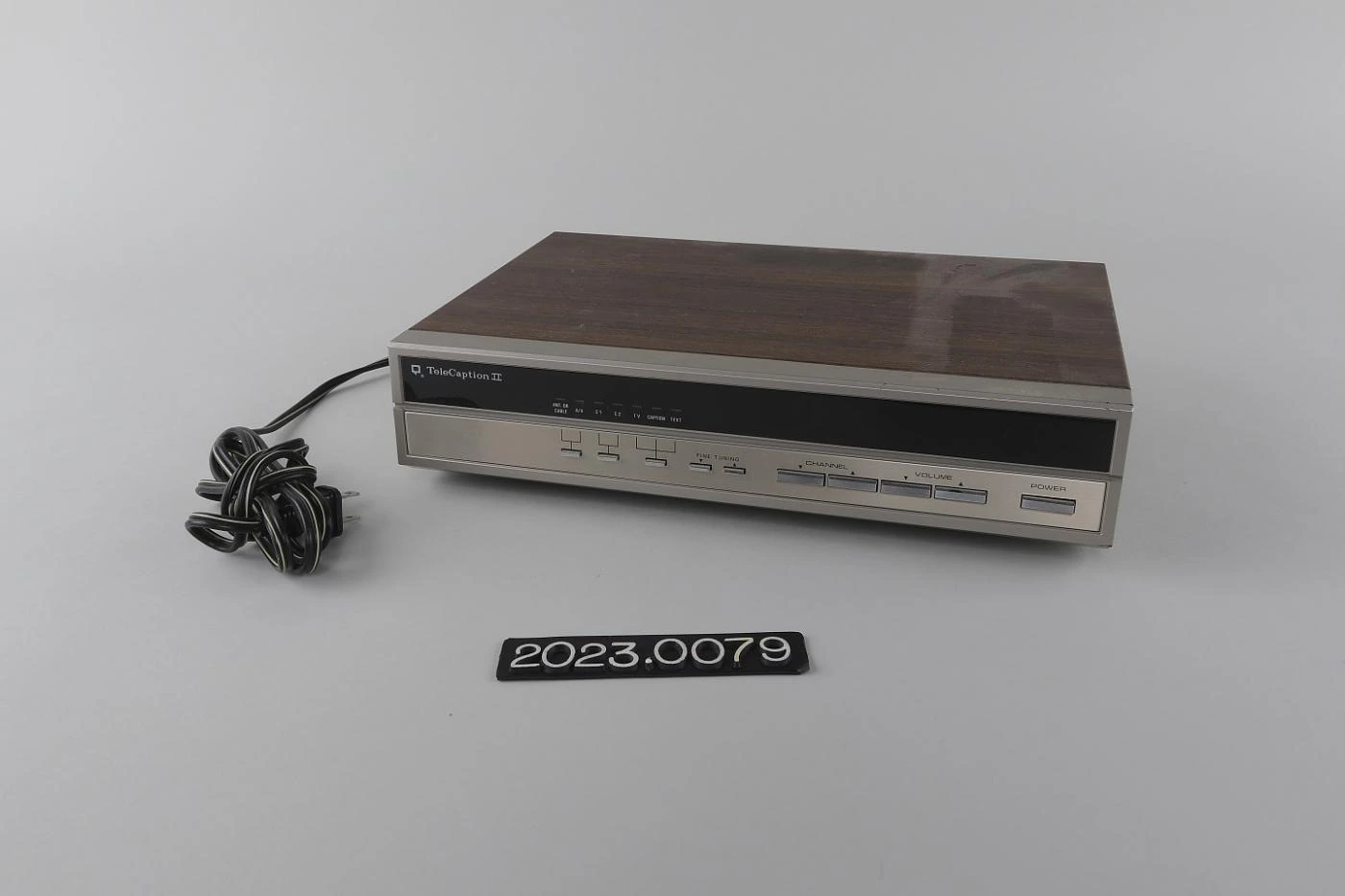
For a deaf or hard-of-hearing viewer, the familiar claim that everyone could gather around the television left out a basic problem. Having a picture didn’t guarantee access to the dialogue. A laugh in the room could arrive without the line that explained it.
Regular broadcasts of selected closed-captioned programs began in 1980. During the decade, receiving those captions could require a separate decoder rather than a feature simply assumed to exist inside the set. The additional equipment, its cost, and the programs available made access a practical household question.
The caption decoder is therefore as much a part of eighties viewing history as the more frequently remembered remote or VCR. It changed who could follow a program directly, rather than relying on another person’s summary or the information visible in the picture.
It also changes the meaning of a shared television memory. The people sitting together weren’t necessarily receiving the same amount of information. Good reception, useful sound, understandable dialogue, and an accessible presentation were separate things that nostalgia can mistakenly fold into the simple act of turning on a set.
Remembering that difference doesn’t take the warmth out of the room. It makes the room more complete. The decade’s changes included people working to gain access to entertainment others already treated as an effortless household habit.
The neighbor’s cable could make your dial feel small
Cable brought a new kind of comparison between homes. A friend could mention a channel your family didn’t receive as though it were an ordinary part of life. You could understand the attraction perfectly while having no way to make the local television produce it.
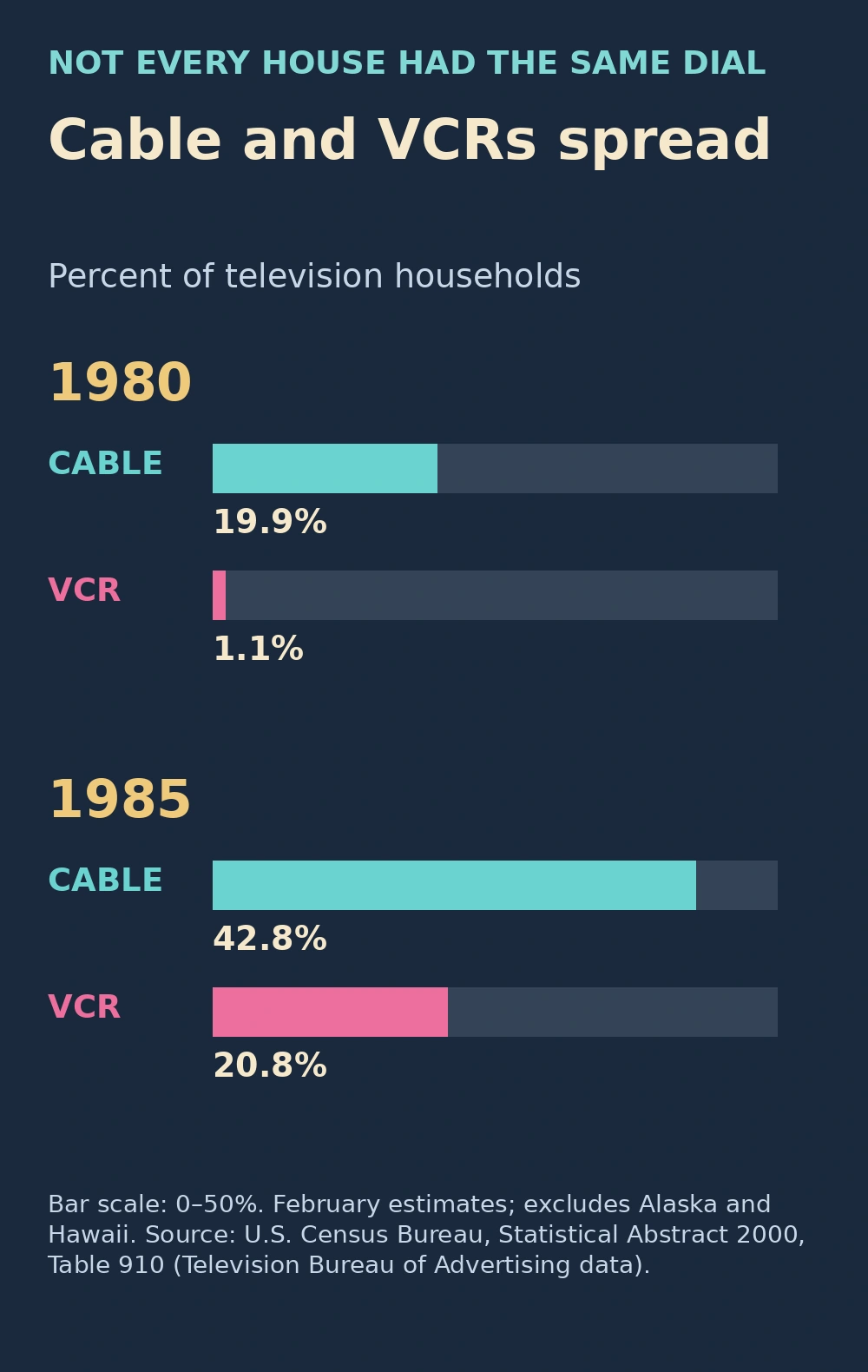
The change happened unevenly. The Census Bureau’s 2000 Statistical Abstract, compiling industry estimates, lists cable in 19.9 percent of TV households in February 1980 and 42.8 percent in February 1985. That series excludes Alaska and Hawaii. Cable was becoming much more common, but those figures leave ample room for different childhoods.
More channels didn’t simply add more versions of the network evening. Music videos, news, movies, children’s programming, sports, and other specialized choices could reorganize what somebody expected a television to provide. The channel itself could become the attraction rather than one particular weekly program.
That story continues in what getting cable felt like. Inside the shared room, the immediate effect was another set of choices to learn and another reason for one person’s preferred channel to become everyone else’s interruption.
Basic service, premium subscriptions, local availability, and family rules still mattered. A house with cable didn’t automatically have every channel mentioned at school. The expanded dial offered possibilities; it wasn’t an agreement that each child could watch all of them whenever they pleased.
A VCR offered freedom with several conditions attached
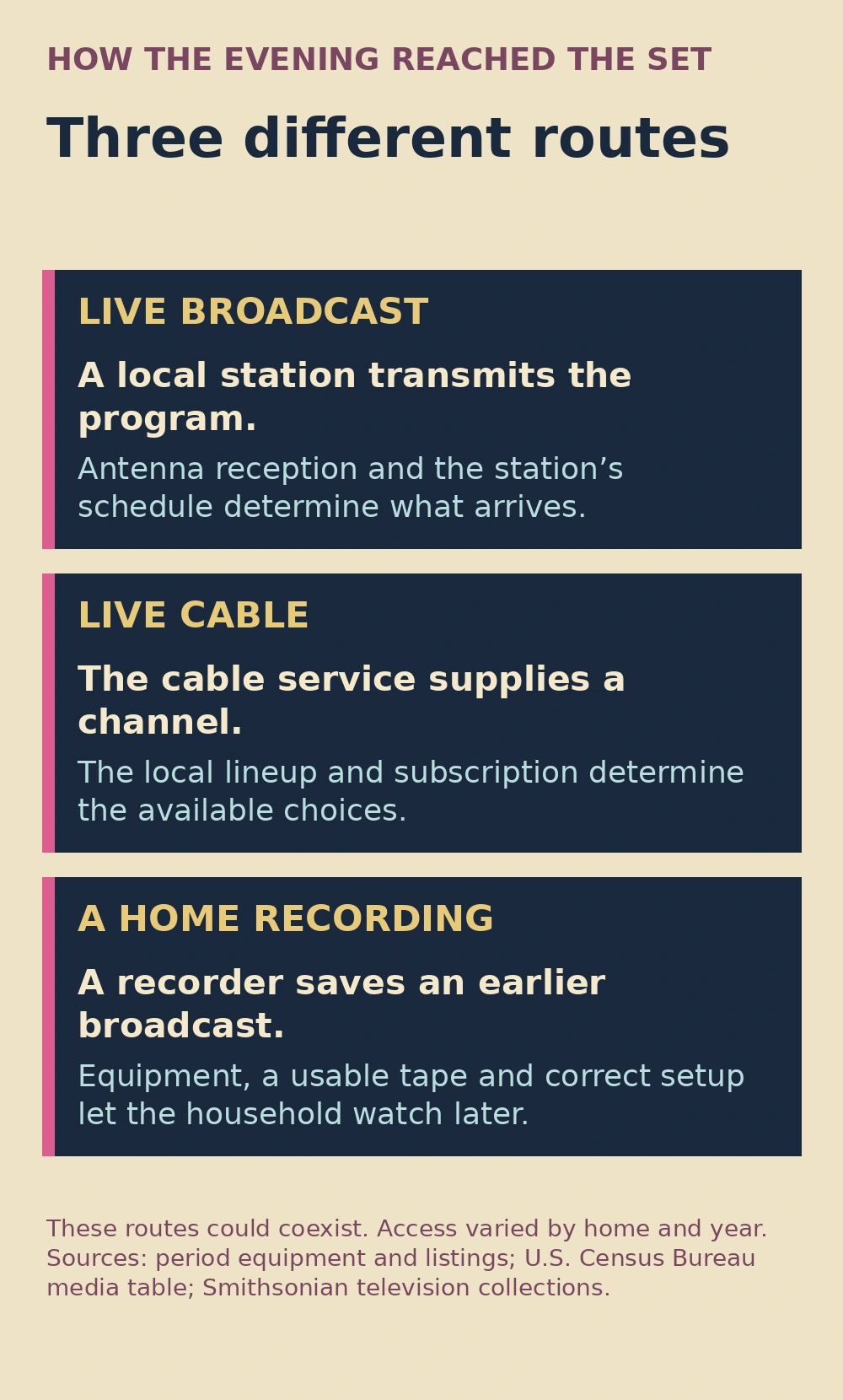
A recorder could loosen the schedule’s grip. Leave the house, record the program, and watch afterward: a very appealing proposition for anyone who had previously learned about a favorite episode from the people who managed to be home.
It wasn’t an option every household began the decade with. The same Statistical Abstract series puts VCRs in 1.1 percent of TV households in February 1980 and 20.8 percent in February 1985, excluding Alaska and Hawaii. A memory of elaborate recording plans belongs to a different equipment situation from simply hoping for a rerun.
Even with the machine, the program had to reach the tape. There needed to be a usable cassette, an appropriate connection, the right channel, and whatever setup the particular recorder required. A flashing clock could turn the promise of freedom into a request for the family member willing to read instructions.
The practical triumphs and failures have their own place in recording television on VHS. For the household routine, the big change was permission to move the show to another hour. That could reduce one argument about the schedule while beginning another about who was allowed to record over the tape.
The recorder didn’t remove the people around the screen. A taped episode still needed a time to be played. Someone still wanted the set for something else. Technology had made the original broadcast less demanding without entirely abolishing the family’s programming committee.
A second television could be independence in miniature

It is tempting to remember the decade as one household, one enormous console, one argument. Many homes had more than one set. That didn’t guarantee matching pictures, matching reception, or matching permission to watch, but it could create a route out of the main room’s choice.
The smaller television might be an older set moved elsewhere, a portable brought out when needed, or a bedroom appliance with rules attached. Its advantages were often personal rather than technical. A tiny black-and-white picture of your program could feel better than a beautiful color picture of somebody else’s.
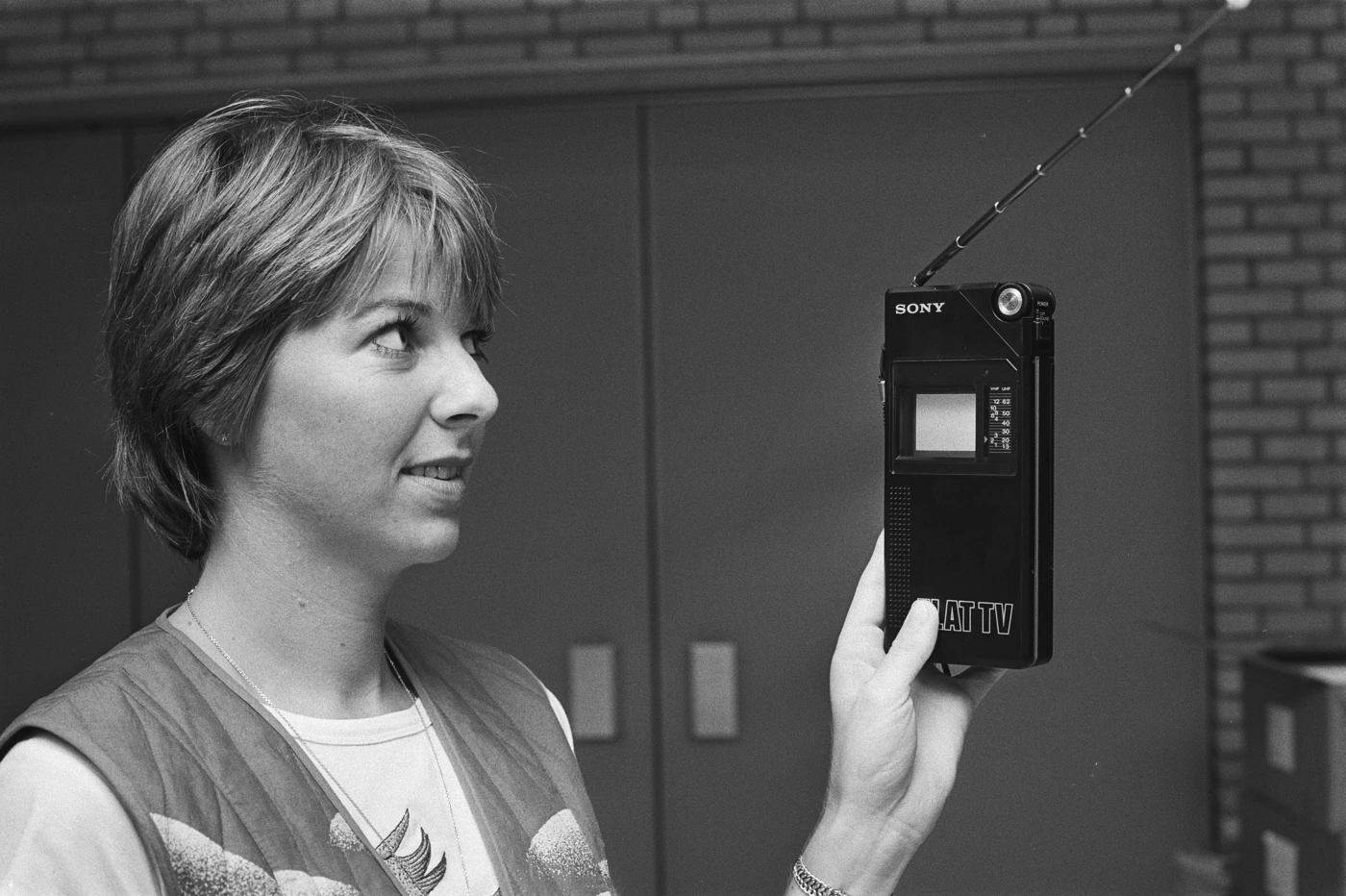
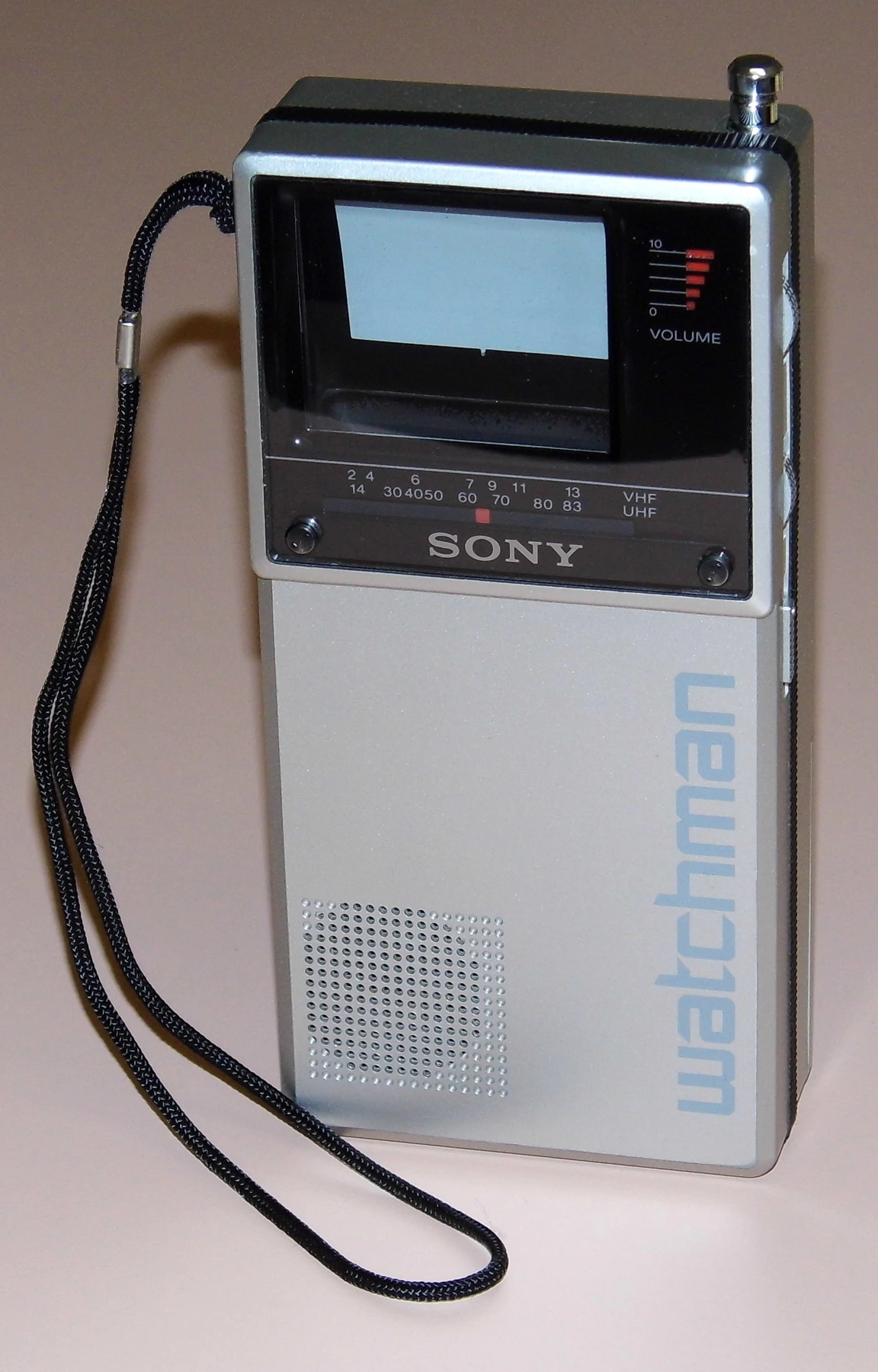
Portable sets pushed the idea further. Sony’s Watchman put a remarkably small television into a handheld form. The contemporary photograph of a Sony miniature set at an Amsterdam trade fair shows that portability was being demonstrated during the decade; it isn’t a photograph of an American family’s ordinary living room.
Small didn’t mean the program became a file you could summon. A portable receiver still depended on an available broadcast and usable reception. Moving the screen changed where you could watch, while the station continued deciding when the show arrived.
That difference is a useful measure of the time. The equipment could look increasingly personal, yet television remained closely tied to signals, places, and schedules. A child could finally escape the adult choice and still have to finish the homework before the right program came on.
Sometimes the argument wasn’t about a channel at all
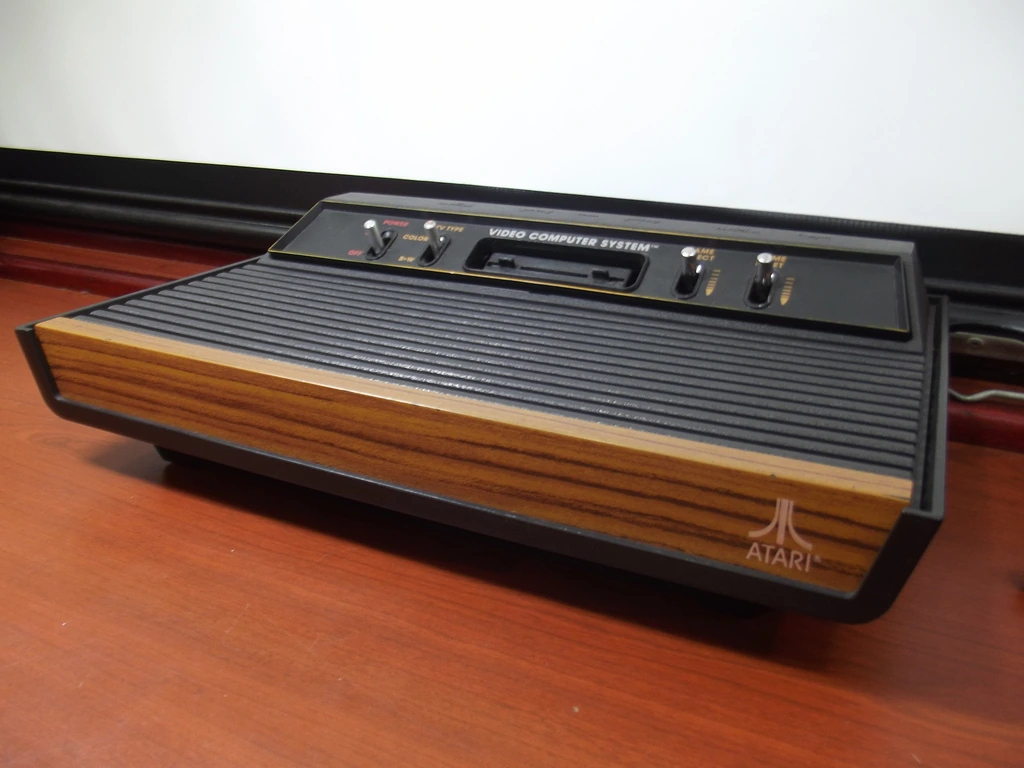

Then a kid wanted to hook up the Atari or Nintendo, and suddenly the argument wasn’t about ABC versus NBC. It was about whether a game of anything deserved the one good television in the house. Somebody had to find the switch box or coaxial connection, somebody else accused them of wrecking the picture, and the adults wanted to know why the regular channels no longer worked. High technology had arrived, complete with family negotiations.
Depending on the equipment, switching between the game and ordinary reception could require attention to a switch box, a cable, or the television’s selected channel. The transformation wasn’t necessarily accomplished by choosing an input from an elegant menu. A misplaced switch could leave the next person wondering why the station had become unhelpful.
The ordinary household hierarchy then returned. Someone wanted the news. Somebody else’s show was starting. The player was extremely close to finishing, a statement difficult for a nonplayer to evaluate and capable of being renewed several times.
A smaller second set could solve the dispute, although the person assigned to it might question why their entertainment always received the less impressive picture. A family with only one usable set had to decide when a game ended in terms the game itself had not supplied.
The memory belongs beside the remote battles because the same scarce resource was involved. A screen could be available, valuable, and occupied by somebody else’s enthusiasm. More entertainment had entered the house. The number of comfortable chairs facing it had not necessarily increased.
The evening could stop being entertainment without warning
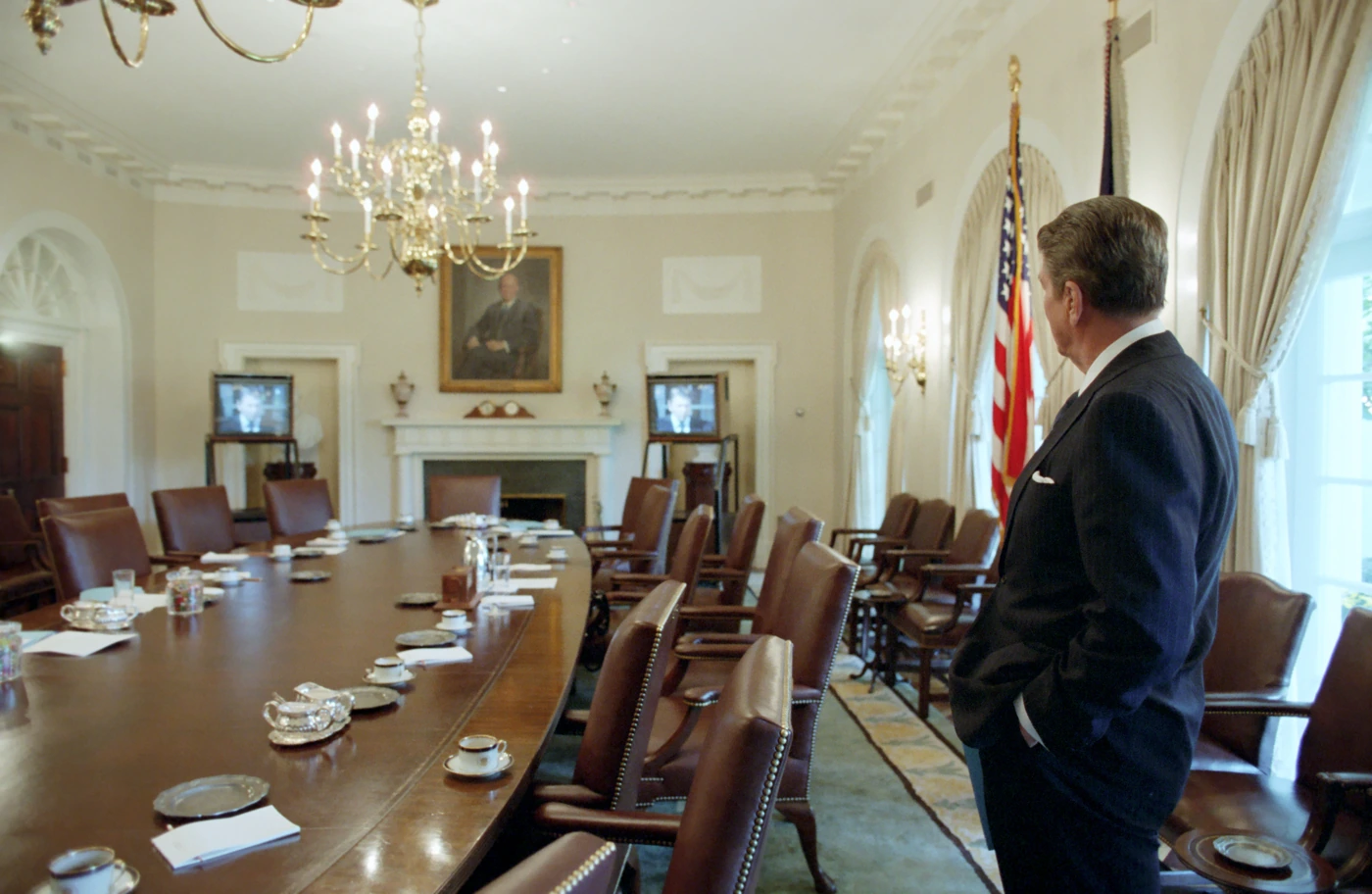

The television carrying a sitcom could also carry an event nobody in the house had expected. News interruptions changed the relationship to the set. People who had been talking over a program might become quiet, and a child’s first clue that something mattered could be the adults’ response.
A scheduled news broadcast offered a more regular version of that shift. The set moved from invented lives to places and people outside the room. For a younger viewer, some of the information could be difficult to interpret. Hearing adults explain, disagree, or worry became part of receiving it.
The photograph of President Reagan watching a television after a Cabinet meeting in October 1986 shows a very particular viewer in a very particular workplace. It isn’t offered as a representative family scene. It does catch the peculiar relationship television creates when a person can stand in one room looking at an image of himself produced elsewhere.
For ordinary households, the screen’s authority came partly from that ability to bring distant events into familiar space. The same object that had supplied a cartoon in the afternoon could become the focus of an anxious evening.
That history deserves room without turning tragedy into a nostalgic accessory. Some television memories are funny because of the household surrounding them. Others remain serious because the household was trying to understand something frightening together.
Watching together didn’t mean watching the same way
One person could follow the plot, another admire the clothes, and a third wait for the guest star they recognized. A child might absorb a theme tune long before understanding why the adults liked the show attached to it. Sharing the room didn’t require sharing a reason for being there.
Matlock’s reassuring courtroom routine is a good example. An adult could enjoy the mystery while a younger viewer simply recognized that the gray-suited man was about to make somebody regret an answer. The different amounts of attention could coexist until someone asked a question over the important dialogue.
Family sitcoms also reached viewers at different levels. A parent heard a joke about responsibility; a child heard a sibling insult. The same scene could work twice in the room without either person needing to announce which part they had enjoyed.
None of that requires pretending the group was always affectionate. There were complaints, boredom, criticism, and people walking out. A shared television could bring tastes into contact that would have remained comfortably separate if everyone had been choosing alone.
That contact is part of what survives. You remember the program and who liked it. You remember who laughed first, who explained too much, and who treated the opening music as a cue to arrive. The set supplied an evening. The people around it supplied the version that became yours.
Then it was off, and the room was just a room again
The credits rolled, the set clicked off, and the living room stopped being everybody’s destination. Someone went to bed, someone finally washed the dishes, and somebody tried to make a case for watching just one more thing. Once the picture disappeared, the TV Guide was back on the table and the screen was just another dark, glass-fronted piece of furniture. Until tomorrow night, anyway.
Switching off could feel decisive because the screen wasn’t a collection of half-finished choices waiting in a pocket. It became a dark piece of furniture again. The lamp, the chairs, the folded guide, and the sound from another room reclaimed the space.
It is easy to remember that arrangement fondly without wanting all of its limitations back. Being able to pause, find an episode, use captions readily, or choose a convenient hour solves real problems. A person can enjoy those improvements and still miss a voice calling that the show was back on.
What made eighties television feel like part of a household was the continual crossing between the program and ordinary life. People arrived, left, talked, adjusted the picture, negotiated the choice, and occasionally managed to watch the whole thing without an interruption.
Sometimes you remember the final scene. Sometimes you remember who stood in front of it. Both belong to the evening, although one of those people probably still owes the room an explanation.
A few things the couch still gets asked
Did people really have only three channels in the eighties?
The three major commercial networks dominated much of the conversation, but actual choices varied. PBS, independent and other local stations, reception, cable service, and later Fox could all affect a household’s dial. Three major networks wasn’t a universal three-channel limit.
Did every family have cable and a VCR?
No. Both became much more common during the decade, but availability, budget, and household choices differed. A late-eighties memory of recording cable programs shouldn’t be assumed to describe the same family’s equipment in 1980, much less every other family’s home.
Were all those old televisions black and white?
No. Color television was well established. A household might have a main color set alongside an older or smaller black-and-white television, or a different arrangement entirely. Screen size, reception, age, and the place the set occupied could matter as much as its color capability.
Was watching television always a whole-family activity?
No. People watched alone, listened from another room, used additional sets, or had schedules that kept them away. The shared family room is one important memory of the period. It becomes less accurate when it is treated as the only way anyone watched.
Sources & Further Reading
- Household media ownership: Statistical Abstract 2000, Table 910
- TV Guide’s original 1984 cover archive
- The University Daily, November 21, 1980
- Smithsonian history and 1986 Telecaption II decoder
- An actual 1986 New Orleans room: photograph and provenance
- Library of Congress: The Morning Program photograph