What Getting Cable TV Felt Like in the 80s
The first installation, the converter box, local lineups, premium temptations, and the moment the same old television opened onto a larger world.
One new wire, an unfamiliar converter, and a family discovering how many different things it wanted to watch.

The cable installer had not even put the tools away and somebody was already pressing every button. The television was still the same television. The room still had the same furniture. Yet the little box on top of the set appeared to contain a much larger country than the one available that morning.
Getting cable in the eighties could feel like admission to a club whose members had been talking about things you couldn’t see. There were music videos, movie channels, unfamiliar children’s programs, news that kept going after the usual news had ended, and an impressive number of choices that nobody in the family immediately understood.
There was also a bill. The children tended to focus on the first part. The adults showed an unreasonable interest in the second.
Across the 1980s, that arrival happened at different times, with different equipment and different channel packages. This corner of eighties television belongs to the afternoon the wire finally reached your house: the unfamiliar controls, the discovery tour, and the ordinary negotiations that followed the excitement.
Inside This Article
- Before the cable, there was the waiting
- The house needed an actual wire
- A small box became the new command center
- Your channels had moved into unfamiliar addresses
- Basic did not mean everything, and premium did not mean free
- The little television upstairs raised another question
- The picture you couldn’t watch was still a temptation
- MTV made a channel feel like somebody’s room
- HBO brought a different kind of movie night
- Children discovered that a channel could notice them
- A subscription could have something unexpectedly gentle inside
- The news no longer had to wait for the news
- Somebody immediately found the sports
- The headend was local, even when the promise was enormous
- Not every new channel wanted the same viewer
- The channel card still needed the magazine
- The old favorites did not pack up and leave
- The VCR introduced another small negotiation
- Looking for something became something to do
- A major change did not happen to everybody at once
- Eventually the miracle became part of the furniture
- Questions from the other end of the coax
Before the cable, there was the waiting
Before the installation truck ever showed up, cable was something somebody else’s family had. A friend talked about a channel you couldn’t find on your dial. A cousin had cartoons at hours when your local station was showing something very adult and uninteresting. Meanwhile, you were standing beside the rabbit ears trying to improve a picture by two degrees. The promise wasn’t just more television. It was more television than the neighbors had.
Having heard of a channel did not mean the local system carried it. Having a cable company in town did not mean a particular street had service. Even houses close enough for a child to consider practically identical could have different access, different arrangements, or parents with very different opinions about paying for television.
The anticipation therefore had a physical geography. It involved the neighborhood, the route of a wire, the building, the landlord, and the telephone number on a piece of advertising. The future had to travel past your actual address before it could deliver anything to the screen.
That made the friend with cable unexpectedly important. An invitation to hang out could include a chance to inspect this supposedly superior television universe. The host might barely notice a channel that a visitor found astonishing. Familiarity and novelty were sitting on the same carpet, arguing about what to watch.
It is tempting now to remember the decade as a place where every Gen X household had the same electronic childhood. Cable makes that impossible. The person who met MTV early and the person who encountered it years later can both remember the eighties accurately. They simply entered through different doors.
Before installation, the imagination did some generous editing. It kept the music, the movies, and the promise of more. It usually left out the subscription choices, the service restrictions, and the chance that an expanded lineup might still contain an evening when nobody could agree on anything.
The house needed an actual wire
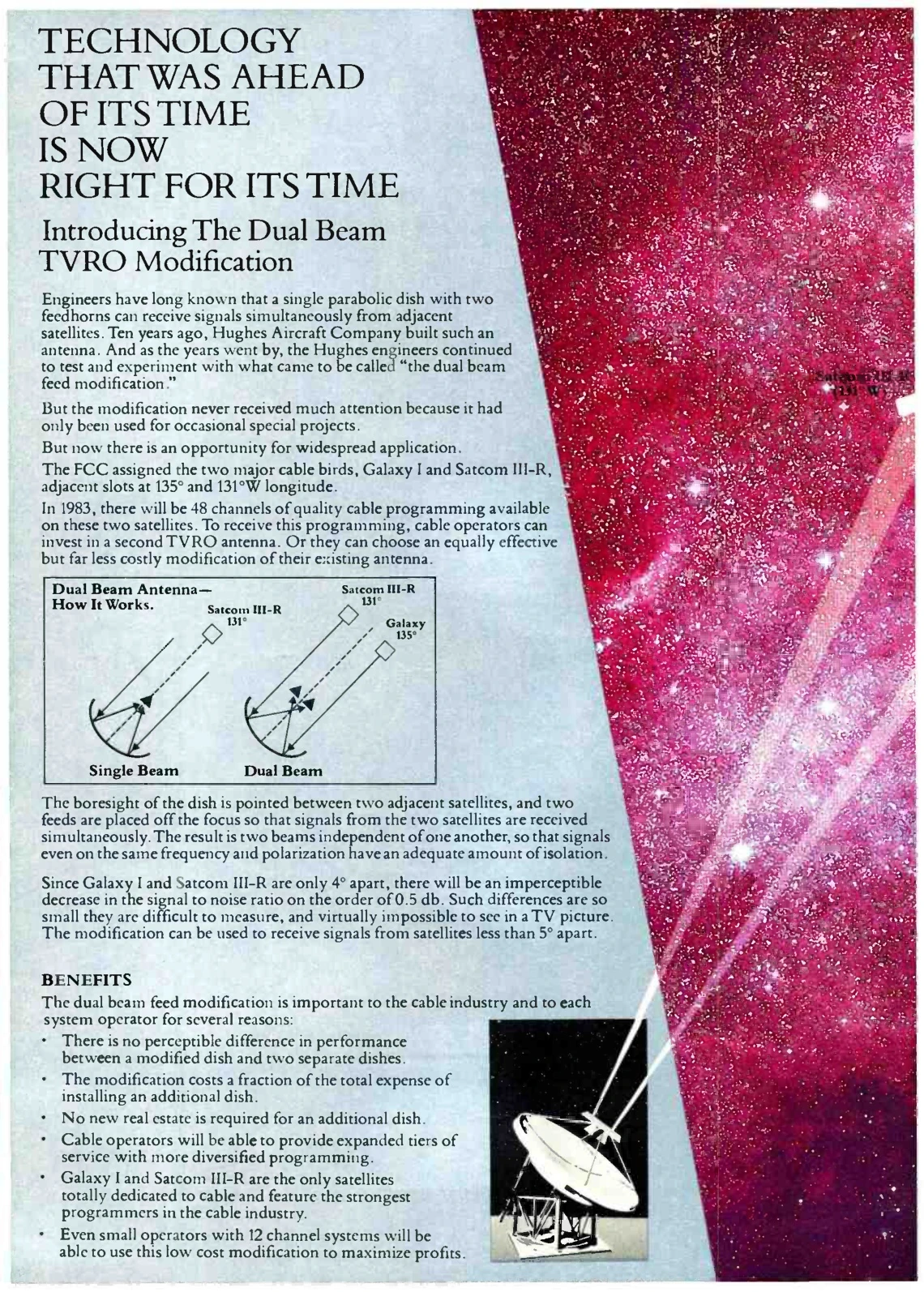
An installation turned a distant service into a household object. Somewhere between the system outside and the television inside, cable had to become a connection that worked. That could mean a route along a wall, a new entry point, a connector, or a rearrangement behind furniture that had not moved since a previous presidential administration.
The details varied with the building and existing wiring. A detached house, an apartment, and a place already prepared for cable did not present the same job. There is no single sacred eighties installation ritual that every family performed. What many households shared was the discovery that television had acquired another physical dependency.
For a child watching the process, the work could look wonderfully specific. This wire mattered. This connection mattered. The person making them understood how the promised channels would arrive. The television was temporarily part of a technical operation, and the adults were listening carefully enough to suggest that nobody should start experimenting yet.
Then came a demonstration. A picture appeared where there had not been one. A control selected something unfamiliar. The new service became real through a small, visible result rather than through the grand language in the advertisement.
The installer might explain the controls to one adult while everyone else heard only the exciting words. Later, the family would have to reconstruct the instructions from memory. This was how an apparently simple arrangement could become a household puzzle involving three switches and four confident theories.
The extra wire also changed the room’s sense of permanence. A portable set could be moved, but the service now arrived at a particular place. The family might have gained more television while becoming more attached to the corner where it entered. Freedom, in this case, came with a cable long enough to reach the cabinet.
A small box became the new command center
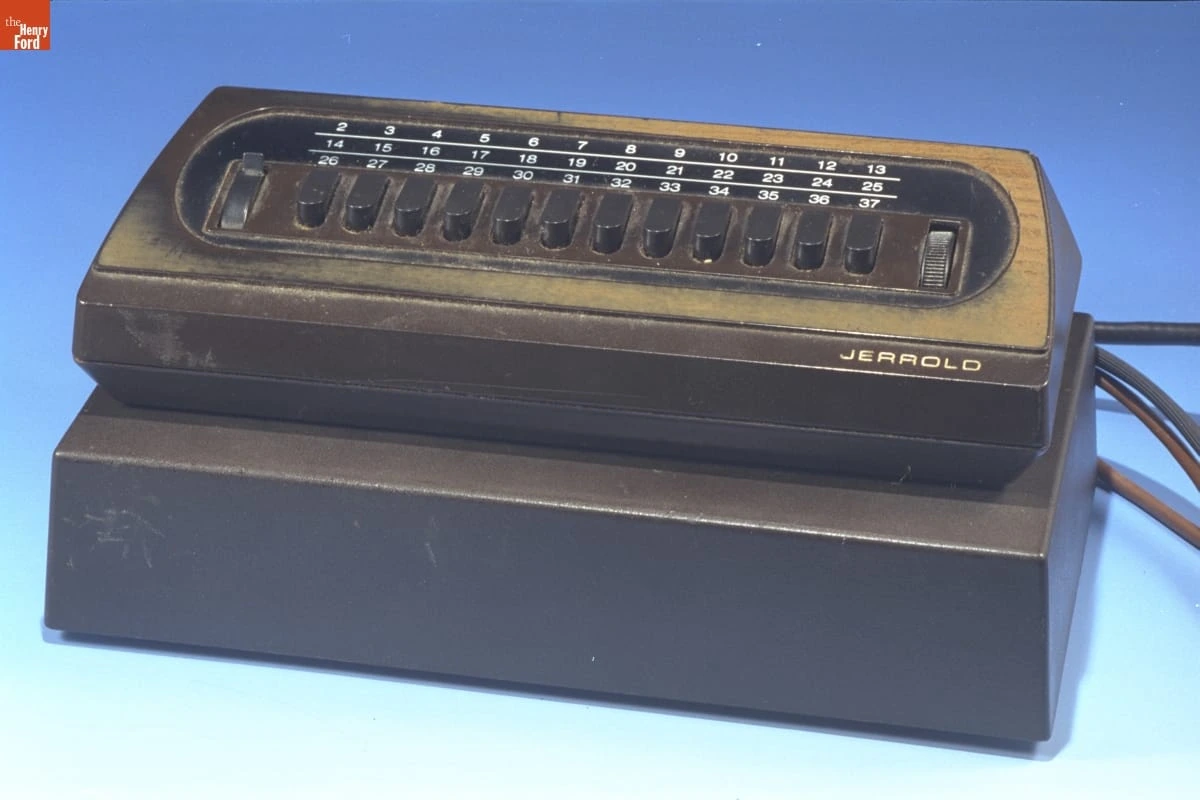
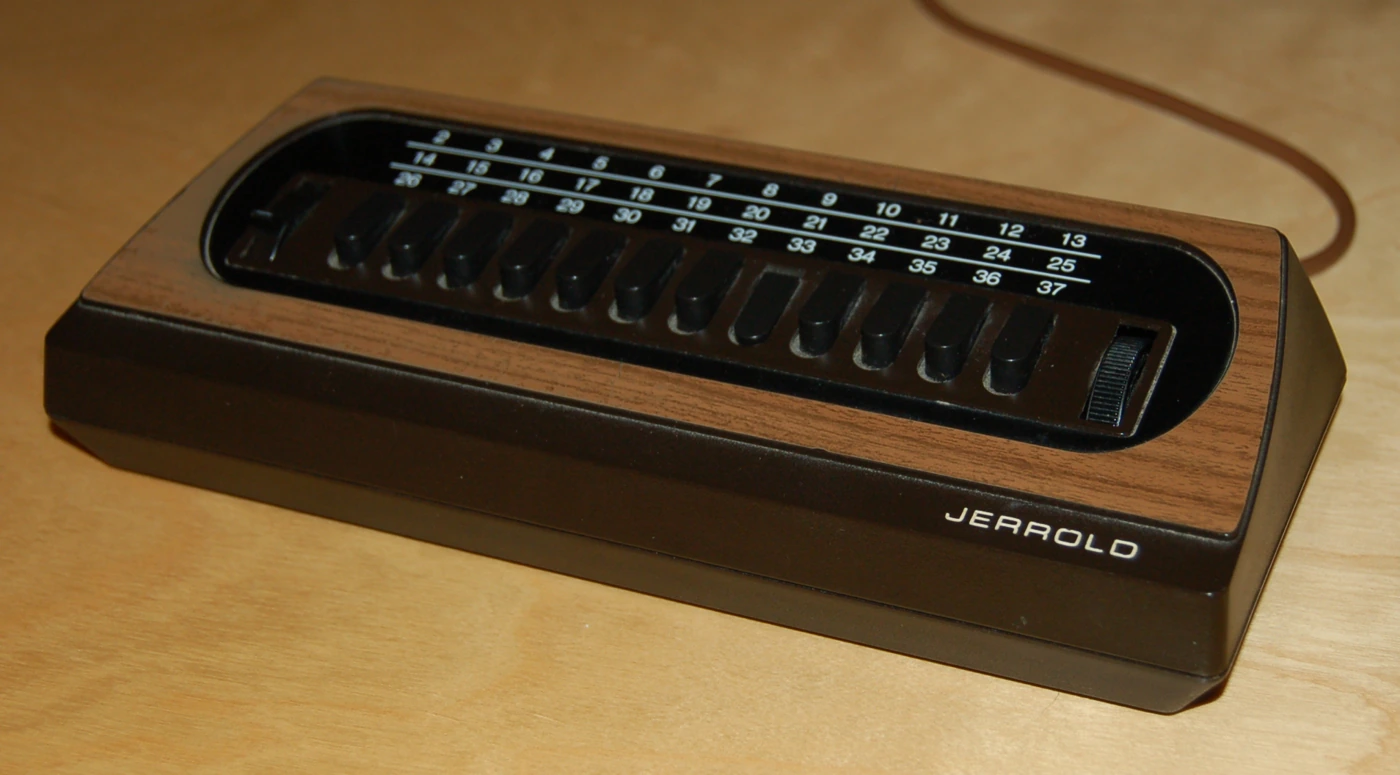
The converter box arrived and immediately became the most powerful little object in the room. Depending on the system, it had numbered buttons, a sliding selector, a dial, or a remote that looked ready for a space mission. The television itself suddenly had less say in what appeared on its screen. Of course, somebody still had to explain which combination of settings made the new box work.
Older Jerrold equipment makes the change especially easy to understand. A bank of push buttons and a range selector could place more choices under a hand than the television’s familiar channel dial suggested. The Henry Ford preserves a Jerrold Starcom II converter dated 1980, a useful reminder that the hardware had its own names and generations.
The television did not necessarily do all the tuning anymore. In a common arrangement, the set stayed on an output channel while the converter selected the program. Somebody who turned the television’s dial could appear to have destroyed the entire new service by making one perfectly reasonable old television move.
That was an excellent way for a younger member of the household to become indispensable. Learn the new box first, rescue the picture once, and suddenly you had a limited technical office. It did not come with money or the right to choose the evening’s movie, but it did come with the satisfaction of knowing which control mattered.
The box’s location mattered too. A wired controller could reach only so far. A unit on top of the set required a trip across the room. A remote needed to be found. The expanded electronic world still had to cooperate with the distance between the sofa and the television.
All those controls also supplied a new household rule: stop touching things until somebody figures out what they do. It was a difficult rule to respect when the things were buttons and the buttons visibly contained television.
Your channels had moved into unfamiliar addresses
The channel lineup took a while to learn. Numbers that had always meant your local stations now shared the dial with unfamiliar destinations. One family member memorized the new order in a day. Everybody else kept changing channels and accidentally discovering a cooking show, a movie in progress, or a station that appeared to be broadcasting from another planet.
A friend could say that a program was on a particular number and be completely right at home, then completely useless in your living room. The service name, the station identity, and the number selected on a box were related pieces of information rather than interchangeable ones.
That is why the printed lineup had a practical importance disproportionate to its size. It translated the system’s arrangement into something the family could use. A channel card near the set might save several minutes of exploratory button pushing, assuming nobody had put it somewhere safe.
The older habit of thinking in terms of a few familiar stations did not disappear immediately. People could still say that they were watching the same local station as before, even though it now reached the screen through the new connection. Cable could change the route without changing the program.
Then there were the unfamiliar names. Some suggested exactly what they offered. Others required a visit. A sports service, a movie service, a children’s channel, and a channel devoted to news represented different ways to organize the day. Their identities helped turn a number from a mystery into a destination.
Learning that map could be pleasurable in itself. The child exploring the lineup did not need a carefully selected program to enjoy the discovery. The order, the names, and the strange confidence of a channel that seemed to exist for one particular interest were enough. Before the family settled into habits, cable was a place to look around.
Basic did not mean everything, and premium did not mean free
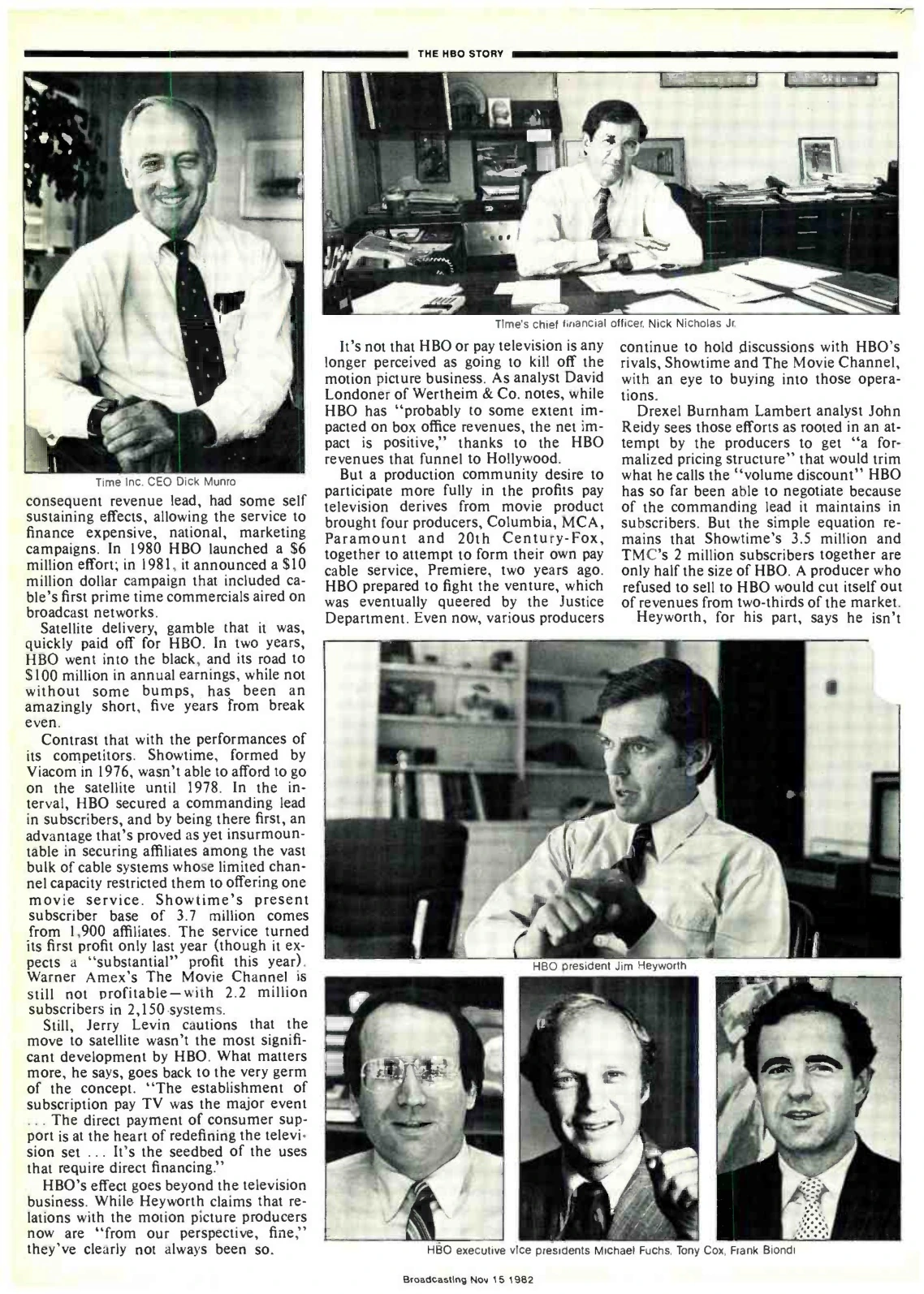
Basic cable sounded like it ought to mean all the channels. It did not. There were packages, add-ons, and the especially persuasive little promise of premium movies. Parents studied the monthly bill while children studied the channels they weren’t getting. The television had expanded, but the family budget still had a vote.
Exact tiers, prices, and equipment charges depended on the operator, market, and date. An old advertisement is evidence of a particular offer, not a universal eighties bill. The durable distinction is that the package defined what the subscriber received, while additional services could require additional payment.
That distinction entered family life as a negotiation. Adults wanted to know what the regular bill would be. Children wanted to know whether the channel their friend watched was included. These were related questions, although the children sometimes treated the first as an unnecessary interruption of the second.
Premium service could also be described through a particular desire. A movie somebody wanted to see made an abstract upgrade concrete. A child could develop considerable interest in the contents of a brochure once it contained a title worth lobbying for.
Meanwhile, basic cable had its own appeal. Music, news, sports, children’s programming, and other services could make the lineup feel dramatically larger without turning the household into a premium-channel subscriber. Remembering the excitement accurately does not require pretending everybody bought the most expensive arrangement.
The new bill changed the emotional bargain around the television. A parent could now ask whether the family was actually using something it paid for. An idle afternoon of viewing might temporarily become evidence that the subscription was worthwhile. This was a rare situation in which watching more television could be presented as fiscal responsibility, though the argument had limits.
The package also created a boundary visible on the screen. Knowing that another service existed could intensify the feeling of having an incomplete version of an otherwise impressive new world. Cable made more possible and then attached a price to some of the possibilities.
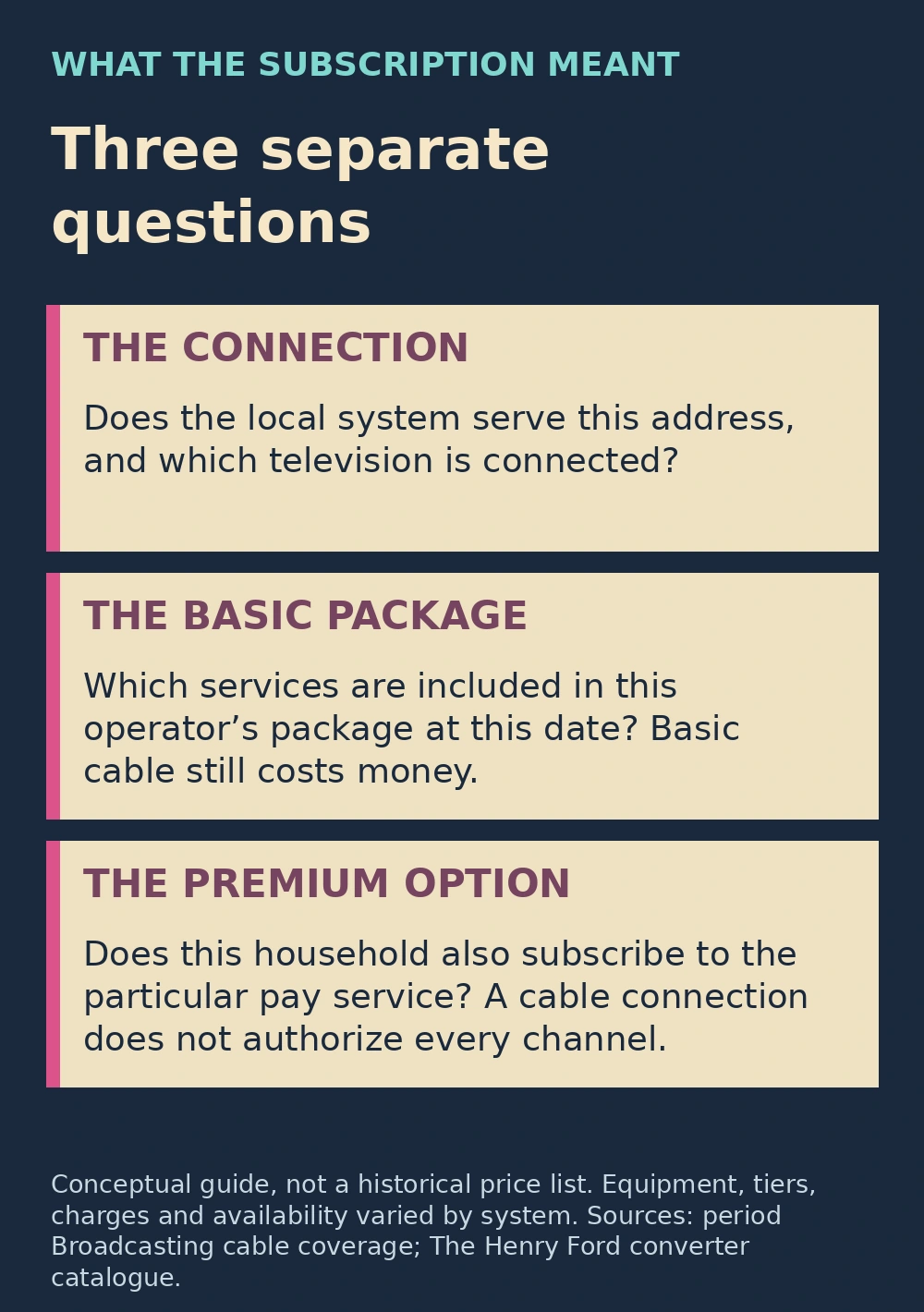
The little television upstairs raised another question
A successful installation at the main set could immediately inspire a second request. What about the television in the kitchen, the parents’ room, or the bedroom that had inherited an older portable? The family had expanded its choices, and somebody naturally wanted to distribute those choices more conveniently.
Connecting another set was not simply a matter of assuming that everything available downstairs would appear upstairs. The existing wiring, signal, converter requirements, and operator’s service arrangements all mattered. A second television might receive some channels directly, need another converter for particular services, or remain outside the new arrangement altogether.
For children, that was an unwelcome detail. The dream had briefly included a private cable universe free of competing opinions. The actual result might be a subscription attached to the same family room where all the old arguments already lived.
The adults had practical questions of their own. Another connection could involve installation work, equipment, or charges depending on the service. Running a wire through the house was a physical decision as well as an entertainment decision. The short route a child imagined might cross a doorway or demand access to a wall nobody wanted to disturb.
Even where an additional set worked, it changed the social experience. A shared program could become separate viewing. Someone could follow a game while another person watched a movie. The household gained flexibility, but it could also lose the accidental togetherness produced by having only one desirable screen.
None of those outcomes belongs to every cable story. Some families used one set for years; others already had several televisions. The point is that access inside the house could remain uneven after access reached the address. The installer had solved the first connection. The family still had to decide how far its new television world should spread.
The picture you couldn’t watch was still a temptation
The channels you couldn’t receive had their own strange attraction. A friend would mention something on a premium service and act as if everyone had watched it. You had to nod along, ask what happened, or admit that your household was still on the other side of the subscription line. Nothing made an ordinary cable package look small faster than somebody else’s channel lineup.
Children could treat that refusal as a challenge to perception. Was that a face? Was that the movie? Had the picture briefly become less strange? The result was usually a great deal of attention devoted to television that could not reasonably be called viewing.
The equipment behind access varied. A converter, a separate decoder, a filter, or an addressable arrangement belonged to a technical system and period, not to a single universal box used everywhere. The important household fact was simpler: receiving a cable connection did not authorize every service traveling through it.
A free preview, when offered, changed that situation legitimately and temporarily. It let a family sample a service, consider the programming, and perhaps argue over whether to keep it. The offer’s limits belonged to the particular promotion. A remembered preview weekend should not be expanded into an invented national calendar.
The restricted channel could become part of cable’s salesmanship without anybody in the house saying so. Its existence suggested another level beyond the current one. The family had crossed into the world of cable and could still see a further doorway with a charge attached.
What survives in memory is often the absurdity of the effort: a perfectly watchable program elsewhere, ignored while someone stared at an unusable picture hoping it would confess. More choice had arrived, and human curiosity had promptly selected the one option the subscription did not include.
MTV made a channel feel like somebody’s room
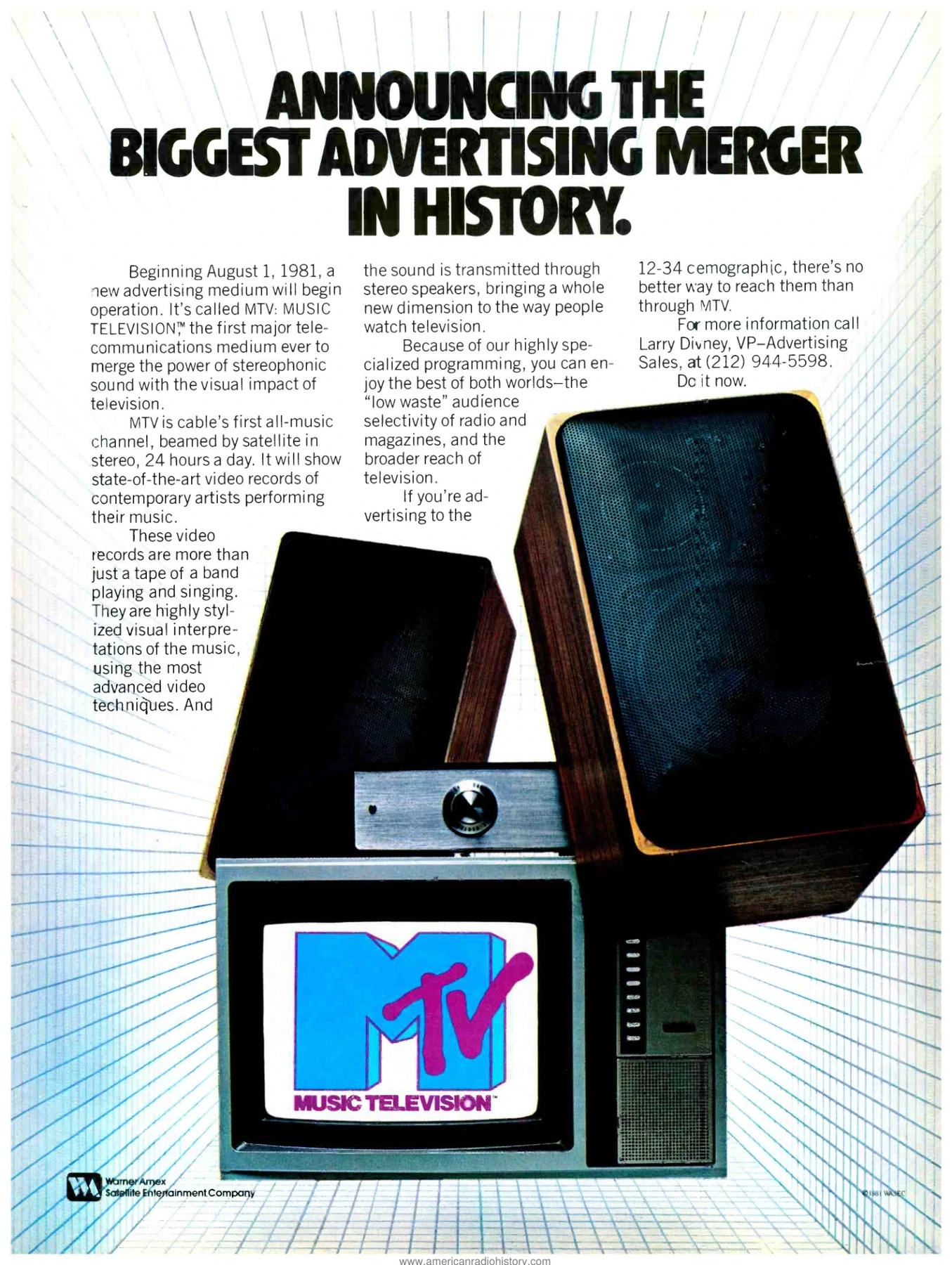
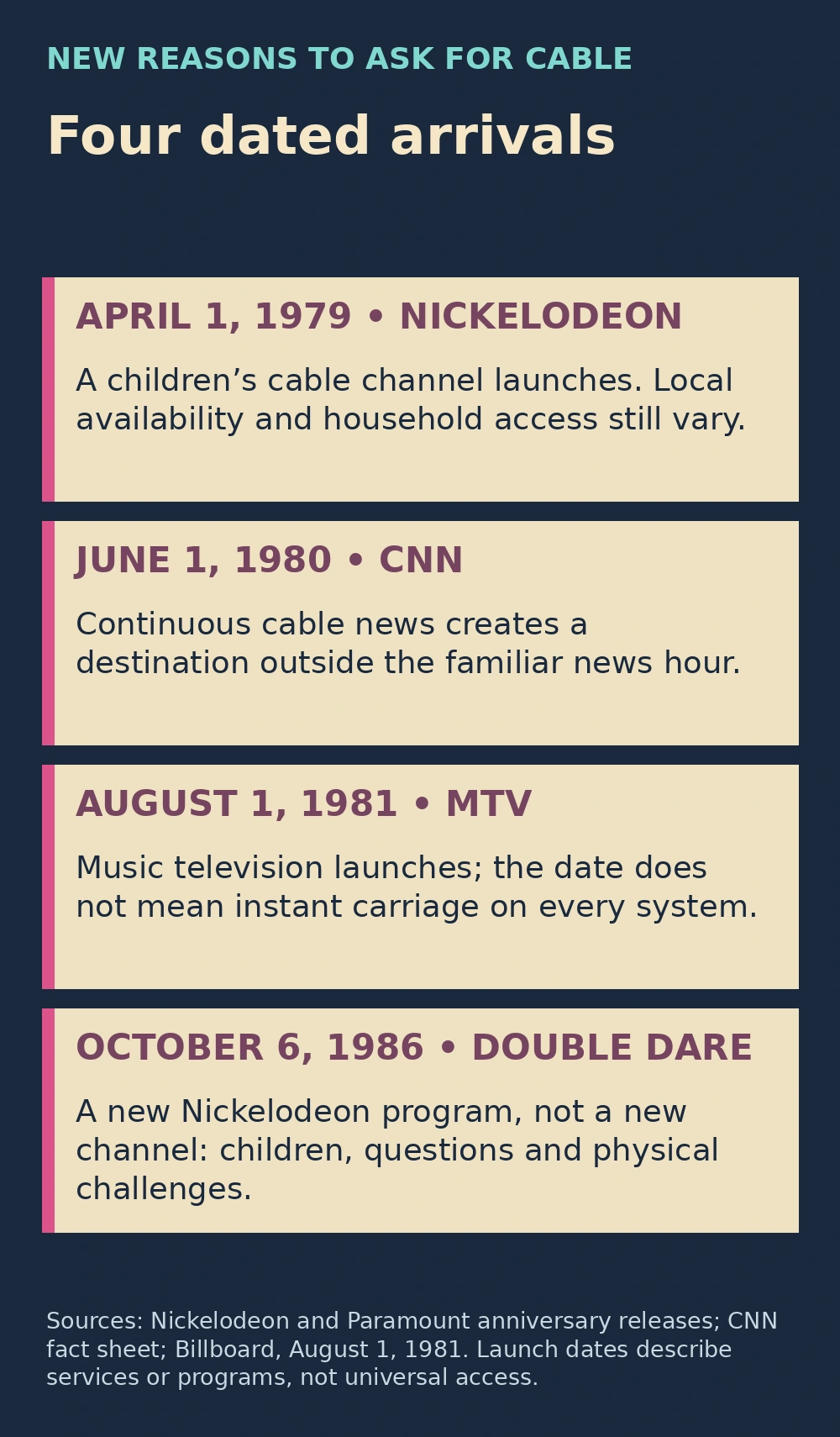
MTV launched on August 1, 1981. A contemporary Billboard advertisement announces the service’s arrival, with the television and the new brand presented as partners in a different kind of music experience. That date matters, but it does not tell us when any particular town or family could watch.
For a viewer encountering it during the decade, music television could make the expanded lineup feel personal. The broadcast networks asked a broad household to follow a schedule of different programs. A music-video channel offered the possibility of returning repeatedly to a place with a recognizable sound, visual style, and attitude.
The next video was a small suspense engine. A viewer might stay for a favorite artist, discover somebody unfamiliar, or sit through something unappealing because the next selection could be better. The promise was not a searchable library. It was an ongoing sequence controlled somewhere else.
Videos also gave songs a visual life that could become inseparable from hearing them. Clothes, hair, gestures, sets, and editing became material for playground analysis or bedroom imitation. A child did not need to understand the business behind a clip to recognize that the television was supplying another way to imagine being older.
That made cable availability socially visible. Two people could know the same song and have different associations because one had seen the video repeatedly and the other had mostly heard it. Access changed the conversation around familiar music without requiring an entirely new taste in music.
The service was neither a complete musical universe nor an evenly inclusive one. Its choices and omissions mattered. The memory of excitement can coexist with that limitation. For the household on installation day, though, the immediate discovery was vivid: there was now a place on the television where a kid might want to linger even when no parent had announced a particular show.
HBO brought a different kind of movie night
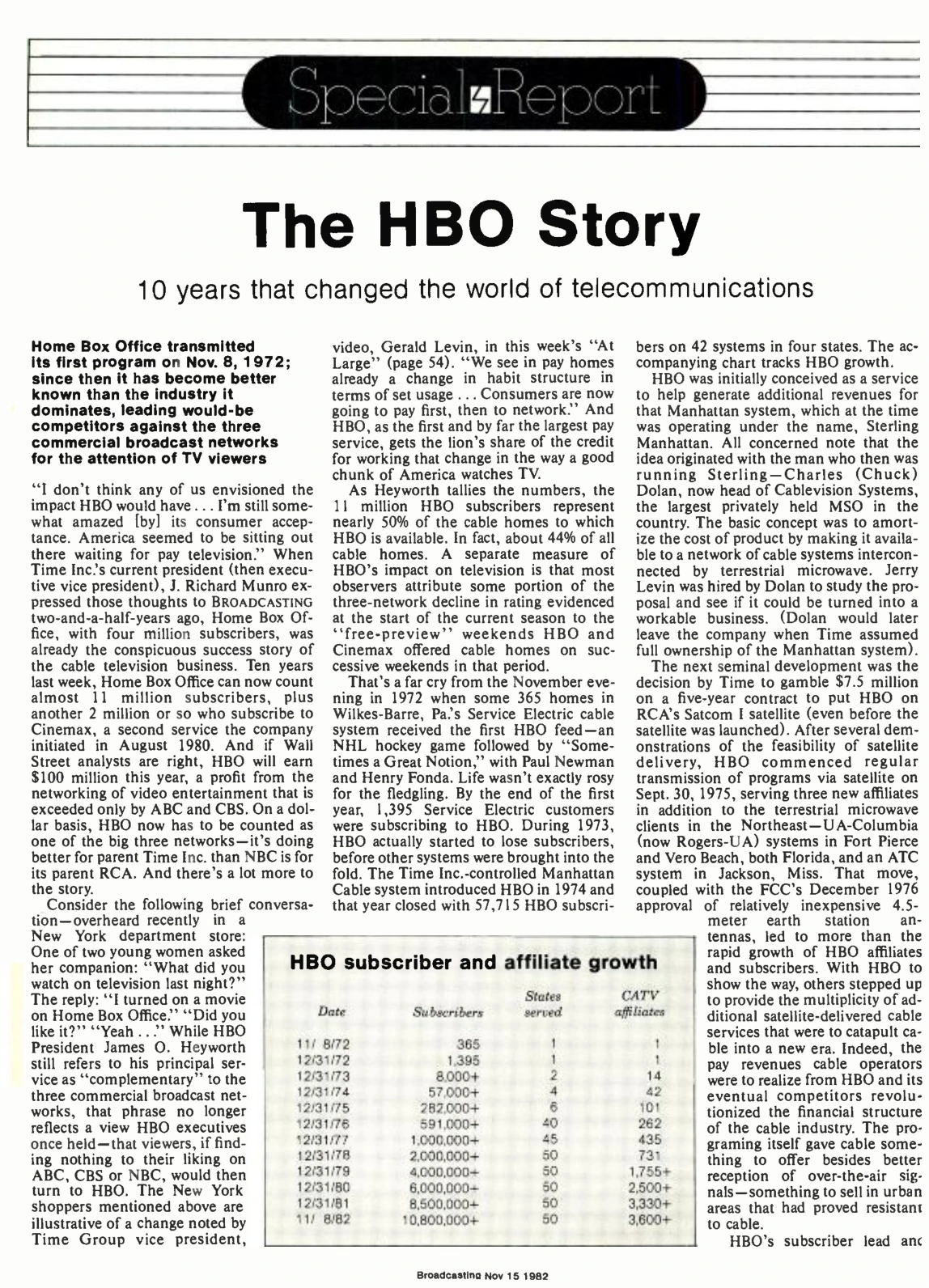
HBO was already around before the eighties, with its first telecast in 1972 and satellite distribution beginning in 1975. But to a family getting cable later, those dates were less urgent than the idea of a movie playing at home without the familiar commercial interruptions. The real negotiation came when somebody wanted to subscribe and somebody else wanted to know why the regular television bill wasn’t enough.
The attraction was easy to explain. A family could plan around a film without arranging a trip to the theater. The presentation could feel more like an occasion than stumbling across an edited movie on a commercial station. The subscription and schedule still set limits, but the room acquired another version of movie night.
It was not modern on-demand viewing. The film started when the service scheduled it. A repeat showing could provide another opportunity, provided somebody noticed the time. A printed movie guide therefore belonged to the experience rather than merely advertising it.
Repetition had a peculiar effect on children. A film that adults regarded as one selection among many could become something a kid recognized from repeated partial encounters. You might know the middle remarkably well before ever arranging to see the beginning.
The premium identity also required household judgment. Not every movie was suitable for every viewer, and a subscription was not a promise that a parent would approve whatever appeared. A film’s rating and the time it aired could become part of the rules around the set.
Showtime and other pay services gave the market additional choices; their actual availability depended on the system. The useful memory is not that every house received the same movie package. It is the shift in possibility when a particular household could schedule a film at home and treat the living room as the destination rather than the place left behind.
Children discovered that a channel could notice them
Nickelodeon launched on April 1, 1979, so it was already part of cable’s developing world when the eighties began. A child encountering it later in the decade was meeting a service with its own history, rather than witnessing the instant invention of children’s television.
Children’s programs had long existed on broadcast television and public television. What cable could change was the feeling of continuity: a destination associated with younger viewers, outside the familiar appointment with a particular station’s cartoon block or afternoon show.
The lineup changed over time. It would be inaccurate to fill the eighties with the Nicktoons that arrived in the following decade. The actual period had its own mixtures of imports, live action, educational ambitions, comedy, and games. The older child who remembers that mixture and the preschooler who encountered a different part of the schedule are remembering different slices of the service.
The experience could feel oddly liberating. A channel seemed to understand that children had tastes and jokes of their own. That did not remove adult supervision or make every program brilliant. It did give a young viewer another place to form preferences beyond the choices adults made for the household’s evening.
Double Dare, which premiered on Nickelodeon on October 6, 1986, made one version of that appeal wonderfully literal. Children answered questions and faced messy physical challenges. The prospect of watching other kids attempt an obstacle could be more compelling than a polished adult explanation of why the channel was good for you.
The contrast with the broader world of eighties cartoons matters. Cable expanded children’s choices without erasing broadcast animation, syndicated favorites, or public television. A new destination joined an existing childhood schedule and then began competing for the most valuable available resource: the time before somebody told you to turn the set off.
A subscription could have something unexpectedly gentle inside
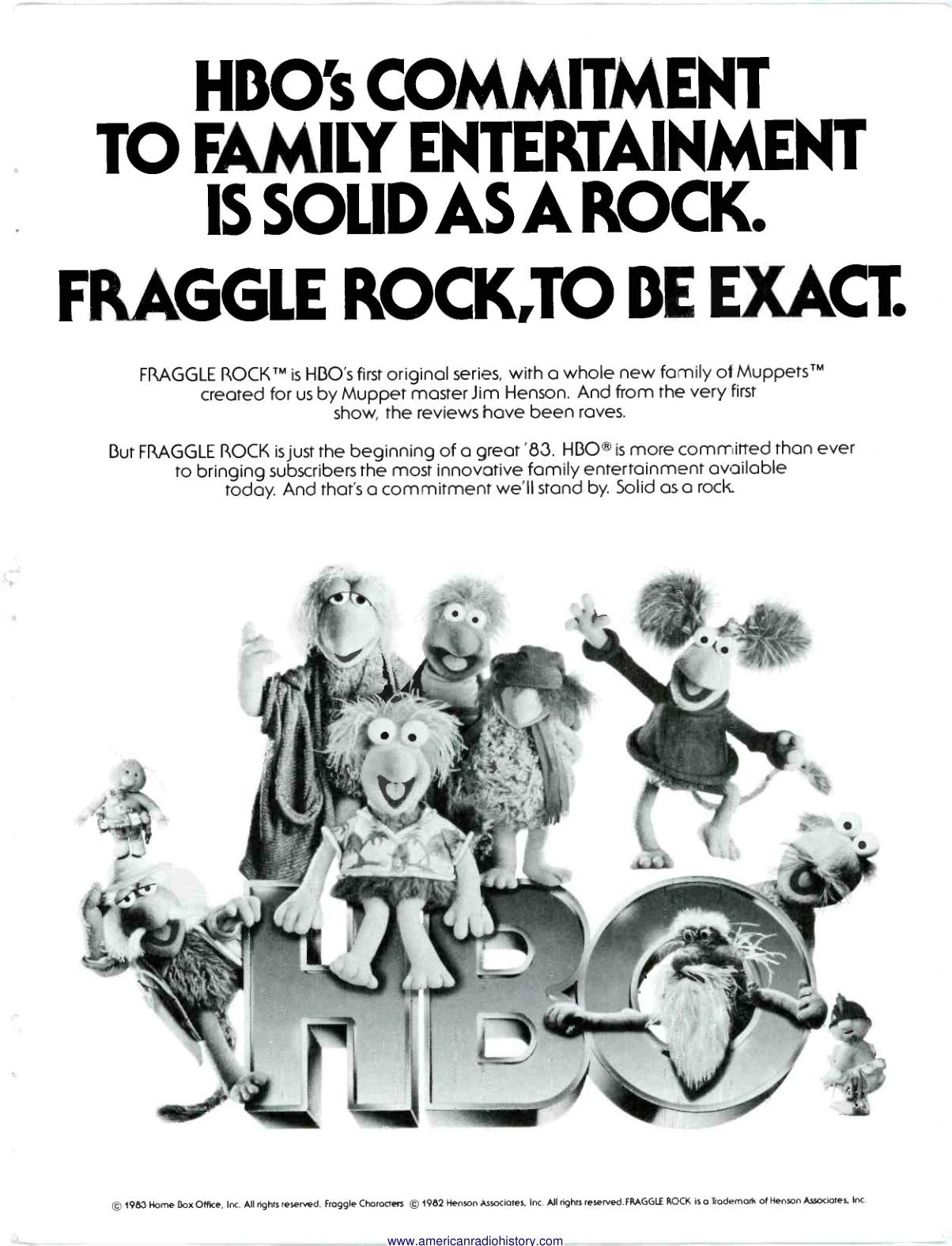
Premium cable wasn’t all late-night movies and adult curiosity. HBO brought Fraggle Rock to American viewers in 1983, and suddenly the service associated with movie nights had something for younger members of the household too. A kid who couldn’t have cared less about subscription economics could make a surprisingly detailed argument for staying with the Fraggles.
The contrast was part of the charm. The same premium subscription that adults discussed in terms of films or specials could contain a program a child wanted for entirely different reasons. A package sold to a household had to pass through the competing interests of the people living in it.
Fraggle Rock offered music, comedy, and relationships among its different communities. Its appeal did not depend on a viewer knowing anything about how cable distribution worked. A child saw characters, heard songs, and wanted to return. The adults saw another reason to notice what a paid service could provide.
There was still a practical question behind the imaginative world: did your system carry the service, and did your household subscribe? Enthusiasm for a program could therefore become entangled with access in a way that a favorite local broadcast did not.
A friend’s account of an episode could be both an invitation and a reminder. The story existed somewhere nearby, inside a familiar television set, but not necessarily inside yours. Children learned these distinctions without using the language of distribution or subscriber penetration. They simply knew who could watch what.
That is one reason the first cable memories are often attached to a particular program rather than to a channel count. The number explained the expansion to adults considering the purchase. A character, a song, a game, or a weekly ritual explained it to the child who finally had a reason to care about the little converter box.
The news no longer had to wait for the news
CNN launched on June 1, 1980. The date marks a service beginning, not the moment every American household acquired it. Where it was available, the idea of a channel devoted to continuous news changed a familiar relationship between the clock and the television.
Broadcast news had appointments. A person might watch a local newscast, a network bulletin, or a special report that interrupted other programming. Cable news offered another possibility: turn there because you wanted news now, even when the ordinary news hour had not arrived.
For a child, this could initially seem like an astonishing misuse of a whole channel. The adults had been given more television and selected additional people talking about events. It took a major story, an unusual image, or the discovery that the world was doing things outside the family schedule to make the attraction clearer.
The change was partly about availability. A viewer could check a developing story and return later. That did not make every minute equally informative, and repeated material could become familiar quickly. It did make the channel a destination organized around a need rather than around the household’s usual viewing hour.
It also created another reason to interrupt entertainment. Somebody could ask to check the news during a movie break, then remain there longer than promised. The expanded lineup had supplied a new choice without supplying a second television or a peaceful mechanism for dividing the first.
In a household that followed events closely, the service could become one of cable’s strongest practical arguments. In another, it might be a channel passed on the way to something else. The significance of the innovation and the amount any one family used it were different questions. Cable made room for that difference by offering a destination that did not need everyone in the room to be its ideal viewer.
Somebody immediately found the sports
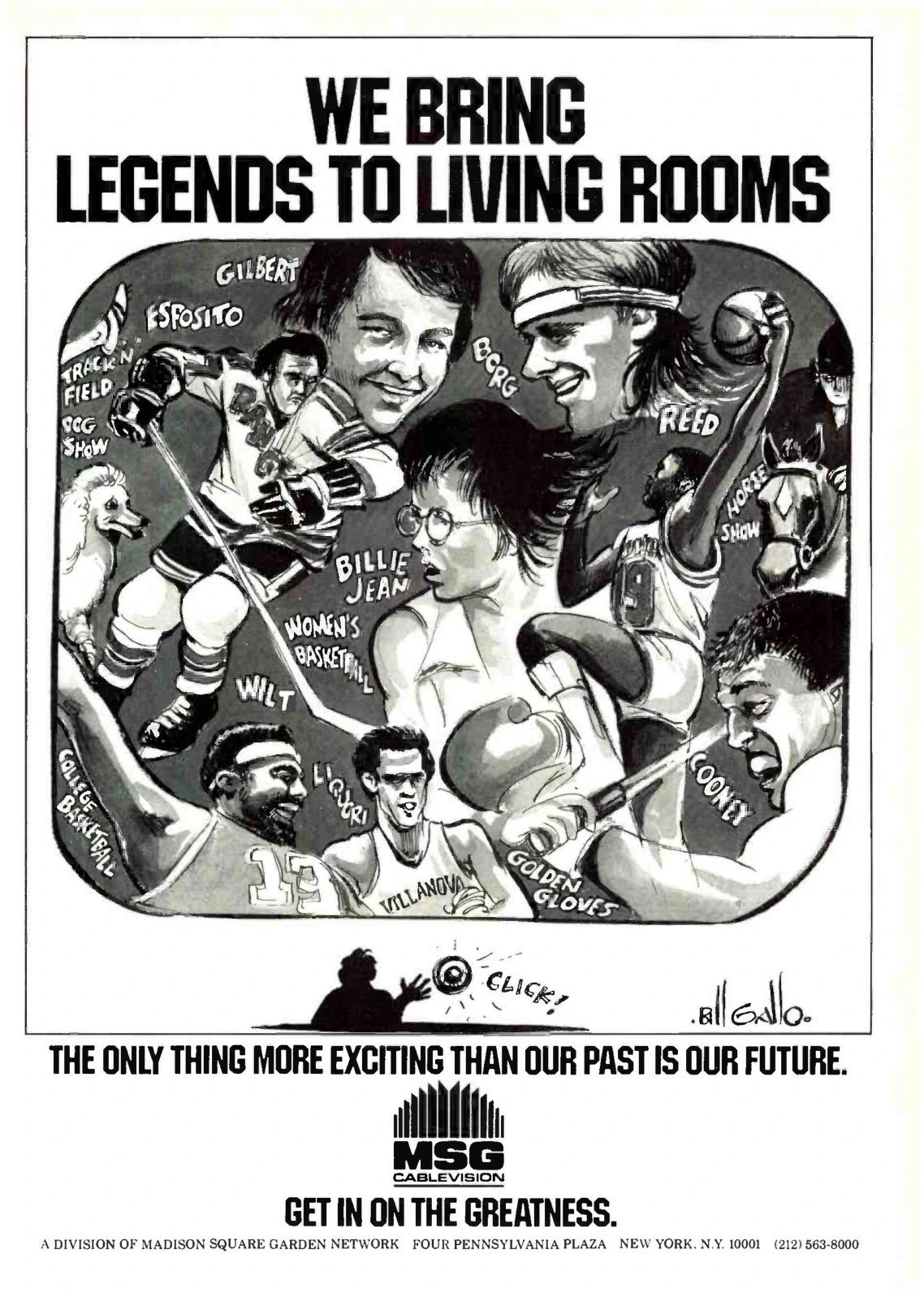
A sports enthusiast did not need much time to locate a reason for liking the new service. Cable could add events and specialized coverage beyond the household’s familiar broadcast choices. The exact offering depended on the channels carried locally, including national services and, where available, regional sports programming.
That qualification matters. A surviving Madison Square Garden advertisement, for example, documents a particular sports service and its appeal. It is not evidence that a child in every town could turn on the same games. The cable lineup had a geography, and sports often made that geography unusually obvious.
For the fan, the appeal could be depth rather than simple quantity. A channel organized around sports offered a place to look even when the broadcast networks were showing something else. The possibility of finding an event changed an idle tour of the dial into an ongoing habit.
For everyone else, it could mean discovering that a larger lineup contained more opportunities for the same household member to monopolize the set. More channels did not distribute themselves fairly among the people on the couch. A sports program could still occupy the television for a considerable stretch.
There was a distinct pleasure in unfamiliarity too. A viewer might encounter a sport, competition, or style of coverage that had not been part of the usual routine. Sometimes this produced a new interest. Sometimes it produced ten minutes of explaining the rules before somebody asked to change the channel.
The common thread was specialization. Cable did not require a sports viewer to wait for a general entertainment schedule to make room. It could offer a destination more closely aligned with that viewer’s taste. That was exciting for the fan and useful to the person selling the subscription, even when the rest of the family remained unconvinced that another game improved the evening.
The headend was local, even when the promise was enormous
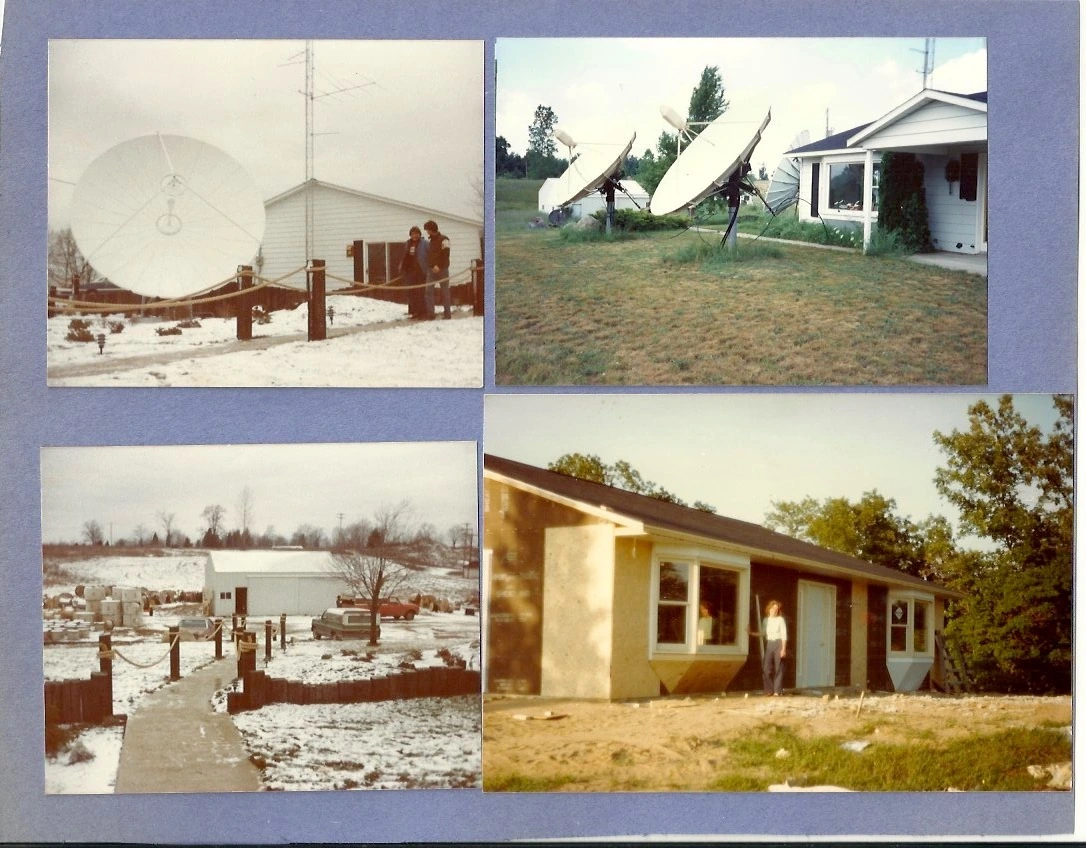

Behind the household’s sense of expansion sat a local system. A headend received and organized signals for distribution. The photograph of the original Charter CATV headend in Michigan makes that otherwise distant machinery tangible: a particular facility, in a particular place, helping deliver a service that a family experienced as a button on its television.
The photograph’s description calls it a 1980 system, while its recorded photograph date is January 3, 1981. Both details belong with the image. Neither needs to be improved into a claim that it represents every cable installation of the decade.
The local nature of service explained some confusing conversations. A national channel could exist without appearing on a particular system. A new service might be advertised before a household received it. A friend could describe a lineup that sounded like a different product because, in practical terms, it was.
Channel capacity mattered too. An operator had to fit an offering into its equipment and arrangements. The new era did not consist of an unlimited menu materializing simultaneously across the country. Expansion happened through actual systems with actual constraints.
That local layer could become visible during a problem. A household called the cable company rather than the distant producer of the show. The failure might affect one connection, a neighborhood, or a broader service. From the sofa, these were initially all described with the same technical diagnosis: the picture had gone wrong.
For the viewer, knowing the machinery was unnecessary on a good day. Press a button, receive a program. Yet the local system is essential to understanding the memory honestly. The television felt connected to a larger world because a very specific chain of equipment and people had made that connection work at your address.
Not every new channel wanted the same viewer
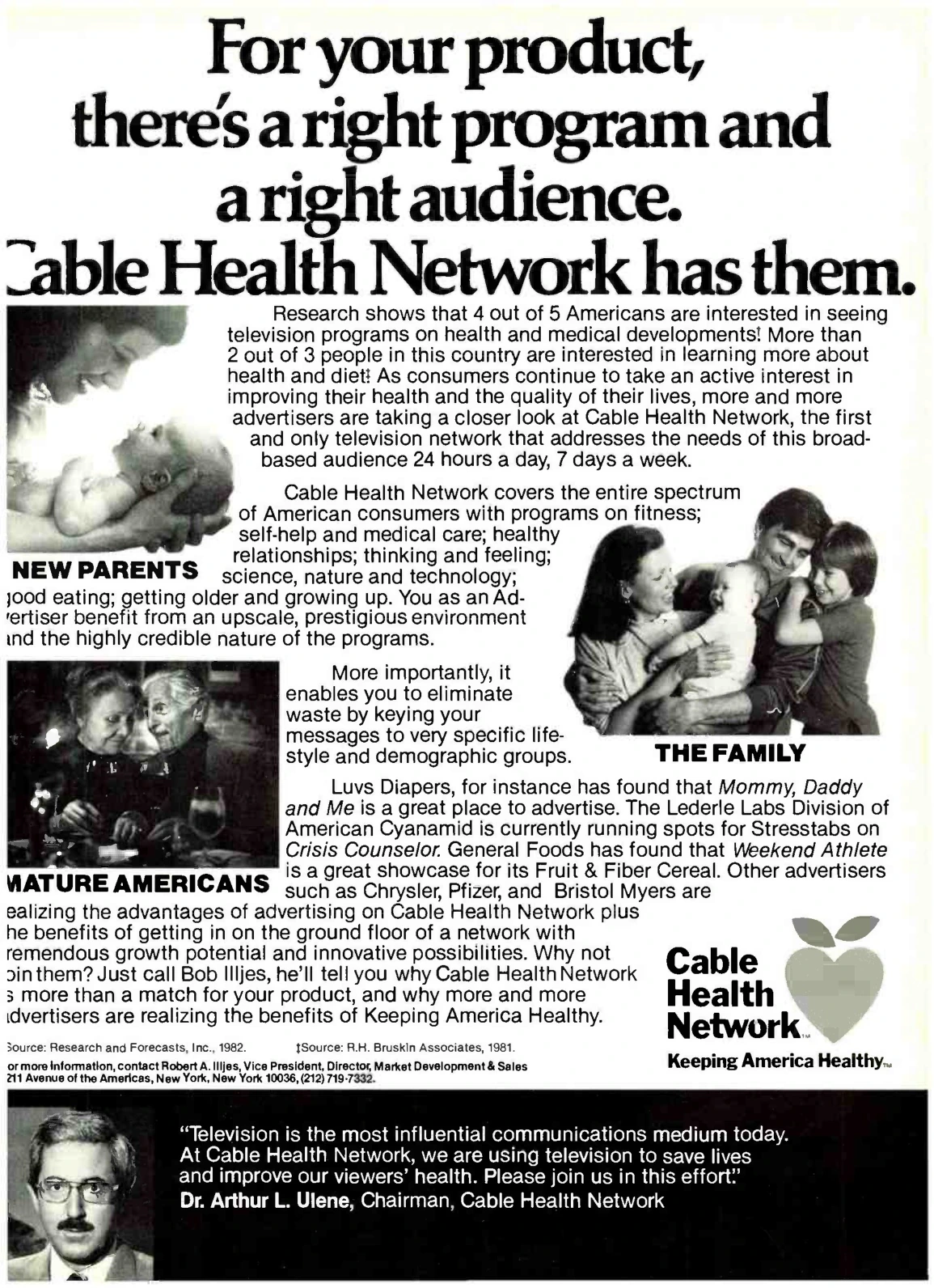
The lineup’s strangeness was part of its appeal. An unfamiliar service could be aimed at interests that had rarely occupied a whole channel in the household’s earlier experience. Health, music, sports, movies, news, and children’s programs appeared in different proportions and combinations as the decade developed.
Contemporary trade advertisements show how openly those services discussed specialized audiences. A Cable Health Network advertisement sold the relationship between a program and a suitable audience. A Sunshine Entertainment Network advertisement promoted urban contemporary, jazz, and reggae programming. These are dated examples of the industry’s ambitions, rather than proof of what every subscriber received.
For the person turning the dial, specialization could be both inviting and baffling. A channel might seem made for you. Another might look as though it belonged to an entirely different household. That was a meaningful change from expecting every station to offer a similar mixture at roughly familiar times.
It could also expose the difference between a channel’s promise and its daily usefulness. A name sounded interesting. A brochure sounded impressive. The actual hour on the screen might not hold anyone’s attention. The first tour eventually gave way to a smaller collection of reliable destinations.
The industry was selling audiences to advertisers as well as selling choice to subscribers. A child did not need to know that business model to feel the result. Television had begun dividing the family into more specific tastes while continuing to place them around the same set.
That fragmentation could be enjoyable. A viewer no longer had to justify every interest by finding it in a broadly popular program. The interest might have a home of its own. It could also make the evening’s negotiation more complicated, since each person could now point to a channel apparently designed to support that person’s case.
The channel card still needed the magazine
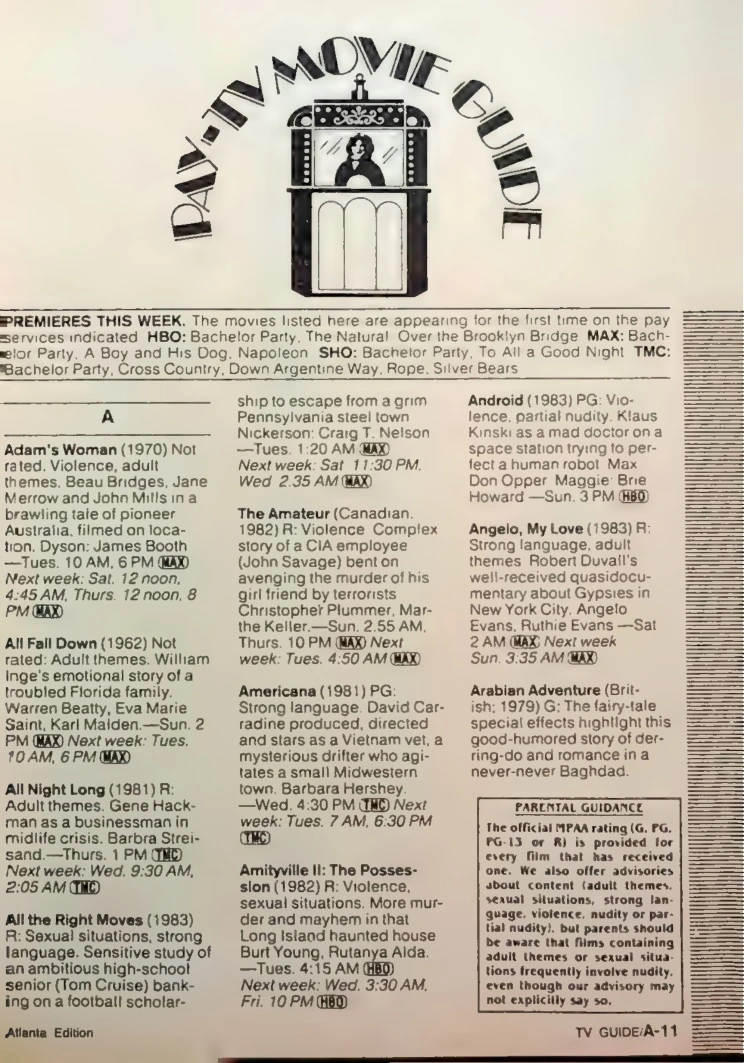
Learning which button selected HBO was not the same as knowing what HBO would show at eight. Cable added destinations; the schedule still determined what waited at them. A printed guide, channel booklet, newspaper listing, or copy of TV Guide helped turn the expanded map into an evening.
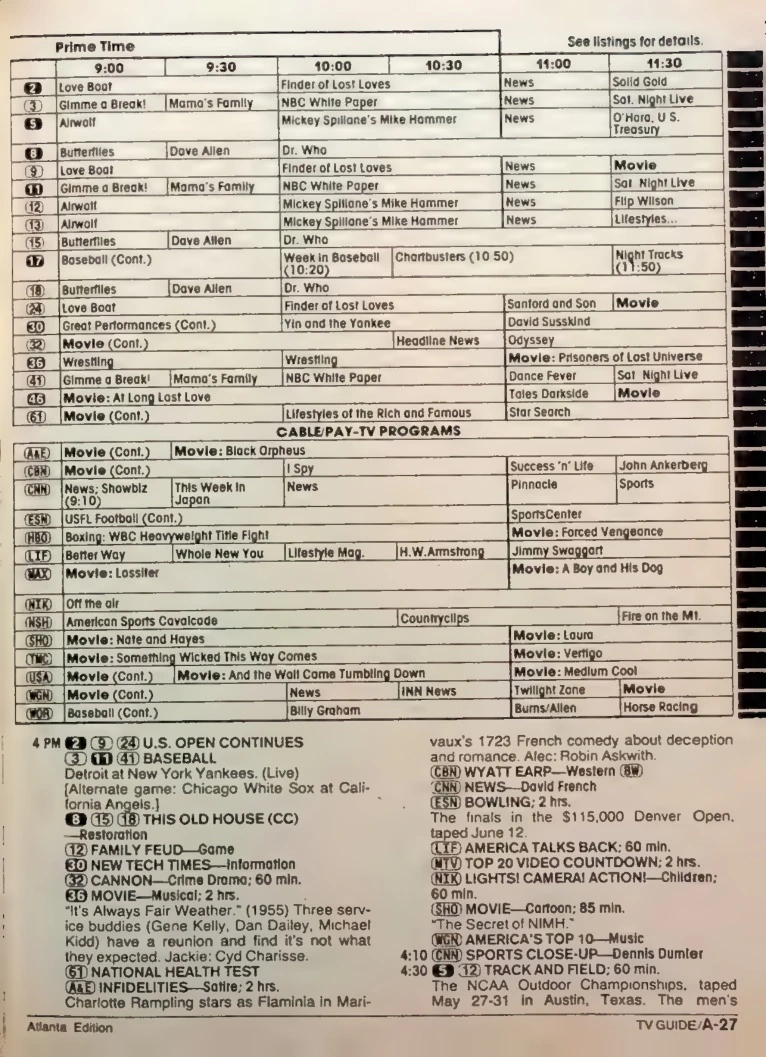
The June 15–21, 1985 Atlanta edition of TV Guide provides a useful, specific example. Its pay-movie information and local program grid belong to that edition and week. They show how cable and broadcast possibilities could be read together without pretending the resulting page was a universal American lineup.
A movie title could send a person backward through the information: which service, which time, which number on this system? The viewer was translating among several small maps. A familiar channel name reduced one problem without solving the others.
The listings also restored a sense of scarcity inside the abundance. Two interesting things could begin together. A movie could continue past bedtime. A family might have more channels and still possess only one usable television, one recorder, or one evening’s worth of patience.
A guide could make the purchase feel worthwhile before anything aired. Looking ahead revealed films, specials, games, and unfamiliar programs. The subscriber was seeing the subscription as a collection of future possibilities rather than as whatever happened to be on at that moment.
Then the week ended and the possibilities changed. Cable’s larger world remained tied to the ordinary movement of days. That is part of what separates this memory from later services built around searching a library. In the eighties, a new connection could expand the schedule dramatically while leaving the family responsible for finding the right place in it.
The old favorites did not pack up and leave
Nobody held a ceremony when the old broadcast favorites survived the arrival of cable. They simply did. The family explored strange new channels after school, sampled a movie on a premium service if it had one, and still came back to the shows it had always watched. More choices didn’t end the living-room argument. They gave everyone more ammunition.
The 1980–81 television season, the season ending in 1981, belongs to the period when CNN was new and MTV was about to arrive. The broadcast success of Dallas helps explain why expanding access and continuing mass-audience habits could coexist. A new cable channel did not immediately erase the conversation everybody already wanted to have.
Later in the decade, the 1986–87 broadcast-season standings provide another useful comparison. More households had cable choices, yet network series still organized a great deal of the shared week. Those year pages describe broadcast rankings; they should not be read as rankings of every cable service.
Family Ties could remain an appointment even in a house enjoying music videos and premium movies. Cheers could still be the answer to what the adults wanted after a day of more specialized viewing. The growing choice worked alongside the continuing appeal of broadcast sitcoms.
This is where memory can mislead by choosing one dramatic transformation and letting it explain everything. Cable changed the household’s possibilities. It did not instantly settle the household’s preferences, replace every old habit, or dissolve the cultural power of a successful broadcast show. The television became more complicated while remaining recognizably the same family television.
The VCR introduced another small negotiation
A family with both cable and a recorder could discover that the new equipment did not automatically cooperate in the way everyone hoped. The answer depended on the wiring, the tuners, the converter, and whether the desired service required the box to select or decode it.
If one converter supplied the recorder’s picture, changing the converter could change what was being recorded. The person watching casually might therefore alter a carefully planned tape without ever touching the VCR. The resulting explanation could be technically accurate and still fail to improve relations in the room.
Other arrangements allowed different choices. Some channels could be received through a recorder’s own tuner; equipment capabilities and service restrictions varied. It is more useful to remember the practical question than to prescribe one wiring diagram for the entire decade: which device was actually selecting the program?
The guide could list two attractive options, but the hardware decided whether the family could watch one and record the other. An expanded lineup did not necessarily mean expanded simultaneous access. This was the stage at which a child learned that a very large number of available programs could still produce a very small number of choices right now.
The detailed pleasures and failures belong to recording television on VHS: timer settings, tape lengths, and the unsettling discovery that the recording contains something other than the intended show. Cable added another control that had to remain in the right position.
Once understood, the arrangement could be powerful. A household could save a scheduled program for later and make better use of a service it paid for. But the freedom was conditional. Somebody had to know how the picture traveled, and everybody else had to resist helping by changing it.
Looking for something became something to do

The first cable tour could eventually turn into a durable habit: move from channel to channel, testing the evening a few seconds at a time. The pleasure was partly in finding a program and partly in knowing another choice was available.
The hardware shaped the pace. Buttons, dials, wired controls, and remotes did not produce identical movements through the lineup. What they shared was the possibility of sampling a larger range of material without deciding in advance what the viewer wanted.
This could frustrate anyone else in the room. A person trying to understand a scene might be granted three seconds before the screen became a game, a music video, a news report, or an advertisement. The channel changer was conducting research. The rest of the family was trying to watch television.
Abundance also created a peculiar form of dissatisfaction. A decent program could be abandoned because a better one might exist elsewhere. The search made the available choice feel provisional. Even after settling, a viewer could wonder what had been missed on the way.
Sometimes the tour produced an unexpected favorite. An unfamiliar performance, movie, subject, or children’s program could interrupt the motion and hold attention. That accidental discovery was part of cable’s appeal: the viewer did not need to know enough to ask for it first.
At other times, a larger lineup yielded a complete circuit and the announcement that nothing was on. This was not necessarily a failure of the service. It was the discovery that channel quantity and personal interest were different measurements. The household had acquired more places to look, along with a new way to spend twenty minutes looking.
A major change did not happen to everybody at once
The scale of cable’s growth is easier to understand when it is kept separate from the idea that everyone had it. The Census Bureau’s retrospective Statistical Abstract table reports cable in 19.9 percent of television households for February 1980 and 42.8 percent for February 1985, excluding Alaska and Hawaii.
Those are television-household percentages for the stated dates and coverage, not percentages of all people or a count of every American residence. The difference matters because even a rapidly expanding service could remain absent from many childhood homes.
A child without cable was not living outside the decade. Broadcast stations, public television, local programming, and other entertainment still supplied a substantial daily world. The absence might feel frustrating when friends discussed a program, but it did not make that child’s memories less authentic.
Nor did subscribing guarantee the same experience. Package choices, system capacity, regional offerings, household rules, and the year of arrival all shaped what a family could watch. Two cable subscribers could have more in common with their own local neighbors than with a supposedly universal national cable childhood.
That unevenness deserves a place in the nostalgia. It explains the sleepover discoveries, the invitations to watch a particular service, and the slightly exaggerated reports of what another family received. The new television world spread partly through the stories children told about access.
The strongest memory is therefore allowed to be modest and local. Your house got a box. Your friend already knew the controls. Your parents selected a package. Somewhere else, another family was still waiting, declining the offer, or perfectly content with what it had. The larger change contains all those experiences.
Eventually the miracle became part of the furniture
The discovery tour did not last forever. A family learned its favorite channels, developed rules, lost the lineup card, found it, and learned enough numbers to stop consulting it. The new equipment became another thing dusted around on the television cabinet.
That ordinary stage is worth remembering because it explains what the purchase actually changed. The subscription supplied more than the thrill of installation. It added destinations the household could return to, arguments it could repeat, and programs that could become familiar enough to feel as though they had always been available.
The bill stayed more visible to adults than to children. A package might be reconsidered, a premium service dropped, or a new offer examined. The lineup itself could change. Cable remained a service with continuing conditions rather than a machine the family bought once and then owned outright.
Meanwhile, the room retained its older limitations. Somebody still wanted the good chair. Somebody still talked over the part another person wanted to hear. Somebody still announced bedtime at a moment when the television had just become interesting. More channels were a remarkable improvement in opportunity and a poor solution to the basic politics of living with other people.
What made the arrival memorable was the smallness of the visible change compared with the size of the felt one. A wire and a box appeared. The familiar screen began offering unfamiliar places. A household could remain in exactly the same room and feel newly connected to things happening beyond its old viewing routine.
The most convincing souvenirs are often the practical ones: a worn button, a handwritten channel number, the place a cord crossed the carpet. They belong to an ordinary household rather than to a national advertising campaign. A spectacular promise became something used between homework, dinner, and the next request to take the garbage out.
That is why the first day can remain clearer than hundreds of later programs. The family was still testing the boundaries of a new purchase. People asked what a control did, what a service cost, and whether a favorite program could be found. The answers gradually became habits. Once those habits settled, the house no longer needed to announce that it had entered a different television era. Somebody simply reached for the correct button and expected the picture to appear.
For a while, pressing a button was enough to recover that feeling. The picture changed, another channel appeared, and the television seemed larger without having grown an inch.
Questions from the other end of the coax
Did every eighties cable household receive MTV, HBO, and Nickelodeon?
No. Local carriage, the year, available packages, and household subscription choices all mattered. MTV’s 1981 launch did not place it instantly on every system. HBO commonly required a premium subscription rather than being included automatically with basic service. The accurate way to describe an old lineup is to identify its market and date, then distinguish the operator’s offering from the channels a particular family actually bought.
Why did some televisions stay on one channel while the cable box changed programs?
In a common converter arrangement, the box selected the incoming program and delivered its output on a channel the television could receive. The set needed to remain on that output channel for the box’s picture to appear. Other equipment and wiring arrangements existed, so the remembered instruction to leave the television on a particular number belongs to a setup, not to every cable household in the decade.
Was eighties cable television completely commercial-free?
No. Paying for cable did not remove advertising from every channel in the package. Commercial basic services and premium movie services had different business models and presentations. A premium film without commercial breaks inside it was a specific benefit, not a description of the entire cable lineup. Viewers could still encounter advertisements, promotions, and commercial broadcast stations through their connection.
Could getting cable replace the need to plan around broadcast times?
It expanded the available schedule rather than making that schedule disappear. Movies, programs, and events still began at listed times, and local guides helped viewers find them. Repeat showings might offer another opportunity, while a recorder could save a program if the equipment was set correctly. The result was more choice within a timed television world, not the searchable on-demand library a later viewer might imagine.
Sources & Further Reading
- Contemporary cable coverage and HBO history: Broadcasting, November 15, 1982
- MTV launch advertisement: Billboard, August 1, 1981
- HBO Fraggle Rock advertisement: Channels, May–June 1983
- Jerrold converter dated 1980: The Henry Ford
- CNN official fact sheet
- Nickelodeon’s founding date: official anniversary release
- Double Dare debut: Paramount anniversary release
- Cable household percentages: Census Statistical Abstract, table 910
- TV Guide, June 15–21, 1985, Atlanta edition