Why Richie worked
He was earnest without being helpless
He could learn from Fonzie without surrendering judgment, and he could disappoint his parents without making the family feel unsafe.
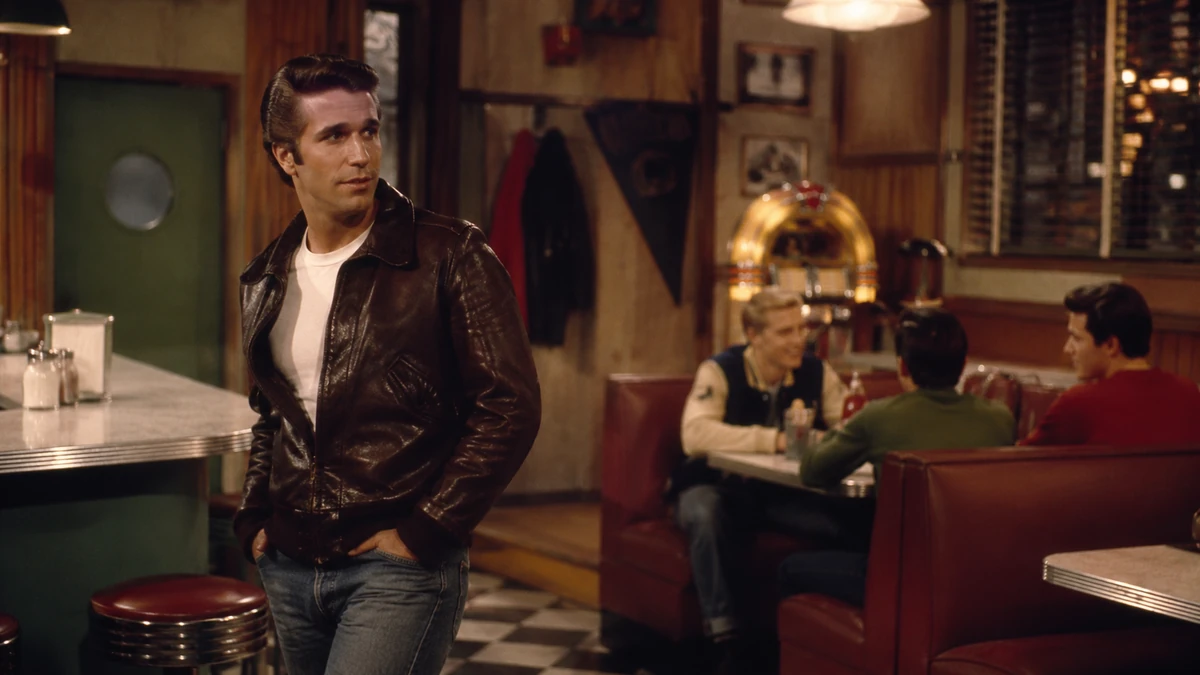
Richie, the Cunninghams and one leather-jacketed outsider turned a nostalgic family comedy into the show every kid knew—even if we were watching it years later in reruns.
Happy Days became a 1970s television phenomenon because it hit three audiences at once: adults who remembered the 1950s, teenagers who recognized Richie’s awkward climb toward independence and kids who could understand Fonzie before they understood the decade. The show then did something television rarely pulls off—it changed formats in public, moved its breakout character to the center, reached No. 1, launched a family of spin-offs and still kept the Cunningham kitchen as its emotional home. We came for the jukebox and the thumbs. We stayed because somebody always opened the door.
The show offered the imagined safety of the 1950s and the emotional safety of the Cunninghams. The first brought viewers through the door. The second made them stay.
The jukebox, cars, saddle shoes and doo-wop harmonies created a past polished until the chrome reflected the 1970s back at itself. America had spent years watching assassinations, war, protest, inflation and political scandal arrive on the evening news. Happy Days offered a neighborhood where the largest crisis might begin with a date, a dented car or a teenager testing curfew.
But the series lasted because it understood that nostalgia without people becomes a catalog. Howard and Marion Cunningham gave the house rules, patience and a table where a mistake could be admitted. Richie gave young viewers a hero who wanted experience without losing his decency. Fonzie gave the fantasy its voltage—and then slowly revealed that the coolest man in Milwaukee needed the family more than he wanted anyone to know.
That combination created unusual reach. Adults could recognize the period references and appreciate the family values. Teenagers could identify with Richie, Joanie and the constant negotiation for independence. Children could imitate the thumbs, the jacket and the catchphrases without understanding the decade being recreated.
Before every person in the house had a separate screen, a show this big did not belong to one age group. It landed in the middle of the room and everybody had to negotiate around it.
For a lot of Gen X kids, Happy Days was simply there. Maybe we saw the original run while somebody’s father adjusted the antenna. Maybe we met it in afternoon syndication after school, when local stations stacked sitcoms like a second childhood schedule. Either way, the show never felt sealed inside 1974. It felt permanent. Fonzie had already become a symbol by the time many of us were old enough to understand why the adults laughed before he finished the line.
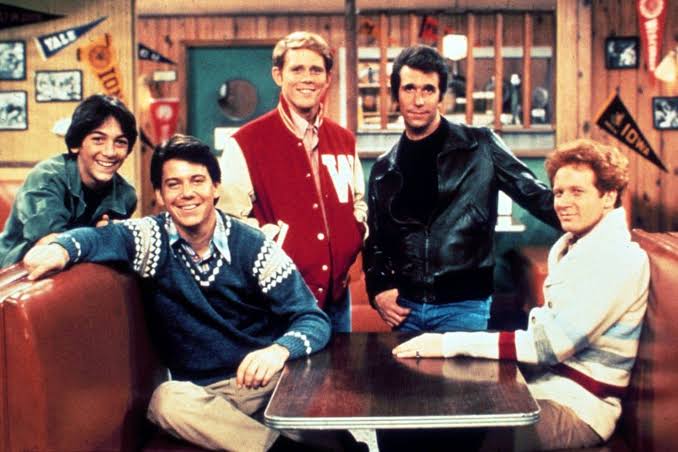
The experience was communal in a way that is difficult to recreate now. When Fonzie entered Arnold’s, the studio audience exploded and the living room usually reacted too. Somebody repeated “Ayyyy.” Somebody else insisted the show had been better before it got silly. An older sibling knew every word to the theme song and sang it badly on purpose. We absorbed the series through those extra voices, not just through the television speaker.
That matters because Happy Days was built for recognition. The second the opening music started, we knew the route: Cunningham kitchen, Arnold’s, garage apartment, jukebox, leather jacket. The show did not ask us to remember a complicated mythology. It asked us to remember how everybody fit together. Richie worried. Potsie misunderstood. Ralph made a joke. Howard said something practical. Marion saw through everybody. Fonzie waited until the room had made enough noise, then solved the emotional part.
There was also a strange generational loop built into watching it. Our parents could look at the cars, songs and clothes and say, “That part is wrong,” or “We really did wear those,” while we were busy treating the entire 1950s as one giant diner with no closing time. We learned nostalgia before we learned history. The show did not give us the decade as it happened. It gave us the version adults missed—or wished they missed.
And because the episodes were self-contained, reruns did not punish us for arriving late. We did not need a recap or a fan wiki. We could walk in halfway through, see Richie sweating through a lie, notice Fonzie leaning near the men’s room and understand the situation. That accessibility helped make the show part of everyday life rather than a special project.
It functioned like a household alarm. Even from another room, you knew exactly what had started.
Fonzie did not merely enter. He arrived with proof that everybody already knew he mattered.
It looked less exciting than Arnold’s and felt more important every year we got older.
The best memory is not one specific episode. It is the feeling that the show had already been waiting for us. The diner lights were on. The booth was open. Marion had probably made enough food. Even when the story got broad, that invitation remained.
The earliest episodes look and feel different from the version most people remember. They were filmed single-camera, used a softer visual style and focused on Richie’s adolescent dilemmas. Howard Cunningham offered steady advice, Marion Cunningham supplied warmth and comic surprise, and Joanie operated as the younger sibling who could expose Richie’s pretensions with one sentence.
Arthur Fonzarelli entered as a local tough with mysterious confidence. He was not initially the center of every story, and network concerns about appearing to glorify motorcycle culture reportedly helped place him in a cloth jacket before the leather became permanent. Winkler understood that Fonzie’s power came from stillness. While everyone else scrambled, he leaned.
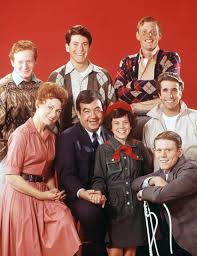
The second-season ratings were vulnerable, and the series underwent a major retooling. Production shifted to a three-camera format before a live audience. Sets became brighter. Stories grew larger. Fonzie moved above the Cunningham garage. The theme song changed, the applause grew and Happy Days became the show preserved in popular memory.
Purists sometimes prefer the quieter first seasons, while others view the retooled version as the moment the show found its true identity. Both perspectives are useful. Early Happy Days is a gentle coming-of-age sitcom. Peak Happy Days is a pop-cultural machine.
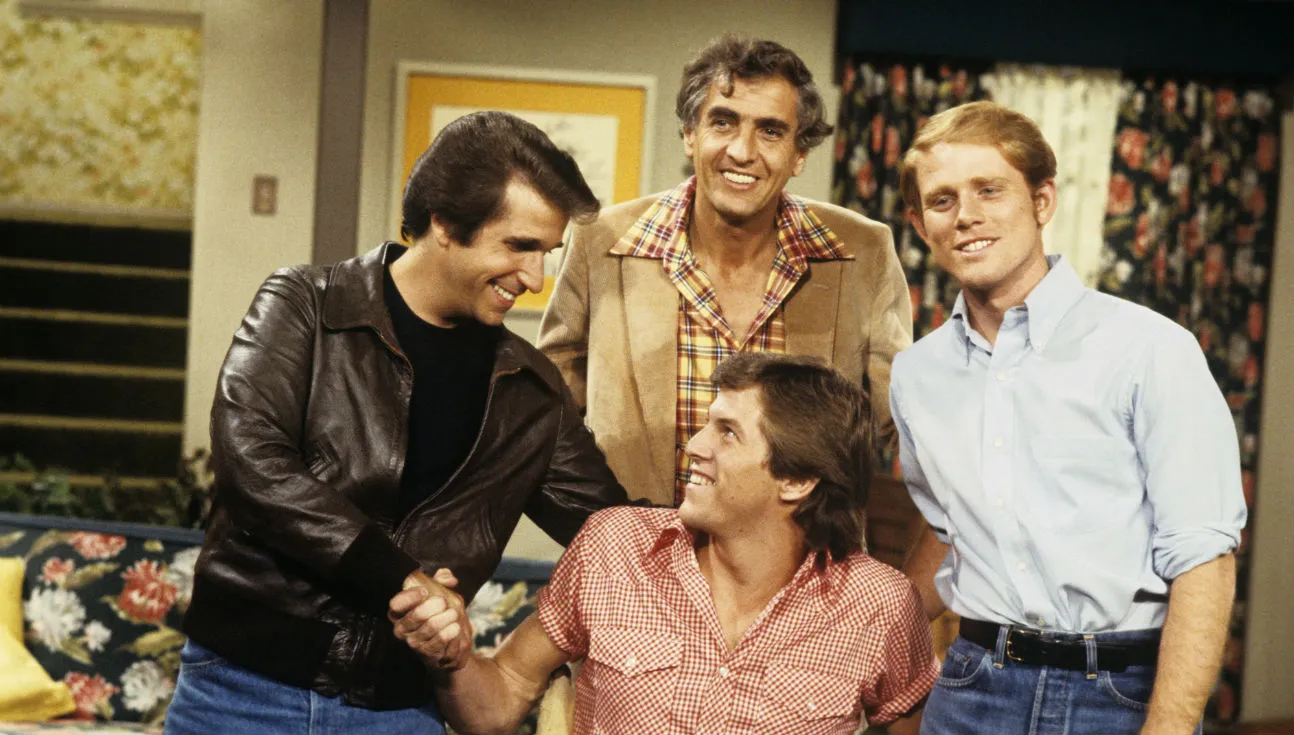
It is easy to remember Happy Days as “the Fonzie show,” but the early series works because Richie is the person who lets us enter the world without already knowing how to act.
Richie wants what teenagers on sitcoms have always wanted: a little more freedom, a better car, a date that proves something and enough privacy to make the mistakes before his parents hear about them. What makes Ron Howard’s performance special is that Richie never becomes stupid just to move the plot. He can be naive, vain and easily persuaded, but he usually understands the moral problem before he understands how to escape it.
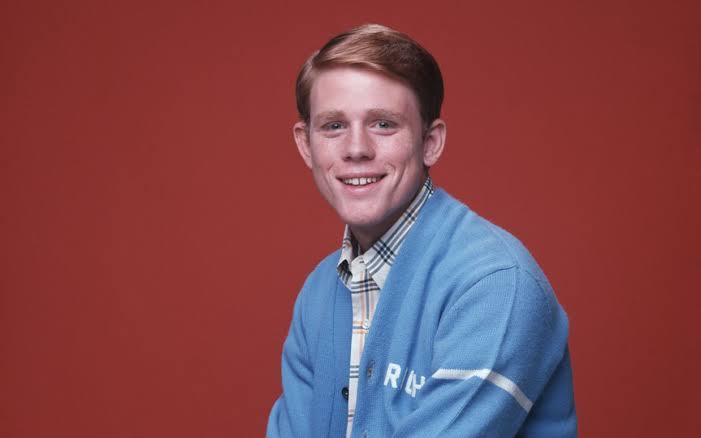
For Gen X viewers, Richie was often the more recognizable figure even when we were pretending to be Fonzie. Very few of us could walk into a room and silence it with a thumb. Plenty of us could overthink a phone call, trust a friend’s terrible advice or discover that the confidence we practiced in the mirror did not survive contact with another person.
Howard also plays decency without turning it into blandness. Richie is not good because he lacks desire. He wants girls, popularity, money and independence. He is good because those wants keep colliding with a conscience that will not stay quiet. That conflict gives the early episodes their shape and keeps Richie from becoming merely the square friend standing beside the cool guy.
His relationship with Howard Cunningham is especially important. Howard is not a buffoon waiting to be outsmarted by the teenager. He understands money, consequences and the difference between a rule that protects the family and a rule that protects his pride. Richie may resist him, but the show rarely requires the father to become an idiot so the son can grow.
Then there is Fonzie. Richie admires him, but the friendship is not entirely one-directional. Fonzie recognizes that Richie has something he does not: a stable home, parents who notice where he is, a future that includes college and the luxury of being embarrassed by ordinary things. Richie sees Fonzie as freedom. Fonzie sees Richie as access to belonging. That exchange is the emotional deal underneath all the jokes.
He could learn from Fonzie without surrendering judgment, and he could disappoint his parents without making the family feel unsafe.
You could see Richie calculating whether a lie might work, realizing it would not and trying it anyway because Potsie had already opened his mouth.
When Ron Howard eventually left regular series duty, the show lost more than a lead actor. It lost the young person whose growth gave the nostalgia a direction. Fonzie could continue evolving, Joanie and Chachi could carry romance, and new characters could fill airtime, but the original engine had been Richie trying to become an adult without losing the people who knew him before he started trying.
Most shows protect the original formula until cancellation. Happy Days survived because its producers recognized that the audience had already chosen a different center.
The Cunningham concept appears through Love, American Style, but the weekly series is still waiting for the cultural moment to catch up.
Richie’s dating life, the Cunningham household and a softer single-camera style define the first seasons. Fonzie is memorable, but not yet the entire weather system.
The production moves toward a multi-camera setup, the visual palette brightens and Fonzie moves above the garage. Applause becomes part of his entrance.
The transformation works. The series becomes America’s top-rated television program and the anchor of ABC’s expanding comedy lineup.
Robin Williams’ guest appearance turns one strange episode into Mork & Mindy, showing how powerful the series had become as a launchpad.
Ron Howard moves toward directing and Donny Most exits. The show continues, but its original coming-of-age balance is permanently altered.
“Passages” gathers the family, marries Joanie and Chachi and lets Howard Cunningham acknowledge the audience that had been visiting for eleven seasons.
The retooling changed more than the camera system. The early show observed teenage life. The later show celebrated characters as icons. Fonzie’s entrances became events, plots grew larger and the 1950s became less like a remembered period than a brightly colored television language.
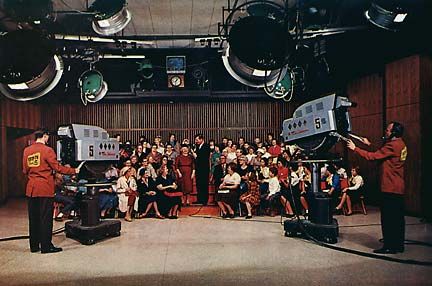
That evolution created the series’ central critical argument. Some viewers prefer the subtle first seasons. Others believe the live-audience years are the real Happy Days. The honest answer is that the phenomenon required both: the early version built the family, and the later version built the myth.
Without the Cunninghams, Fonzie is a pose. Without Fonzie, the Cunninghams risk becoming another pleasant television family. The series works because each side gives the other something missing.
Richie is open-faced, earnest and desperate to appear more experienced than he is. Ron Howard makes decency active rather than dull. Richie wants girls, freedom and adventure but retains a conscience that repeatedly interrupts the fantasy.
Fonzie begins as the cool outsider and becomes the family’s adopted older brother. The thumbs, jacket and motorcycle are the image. The character lasts because Winkler reveals fear of rejection, limited schooling and a fierce need for dignity beneath it.
Tom Bosley gives Howard authority without making him infallible. He can be square, stubborn and bewildered by the younger generation, but the Cunningham home remains safe because Howard’s rules are ultimately grounded in care.
Marion Ross turns Mrs. C into the one person who can puncture Fonzie’s cool without threatening him. Her warmth is not obliviousness. She sees what people need, including when they are pretending not to need it.
Joanie grows from sharp younger sister into a lead with ambitions and romantic stories of her own. Her development helps the series survive Richie’s departure, even when the later years struggle to replace the original chemistry.
Potsie and Ralph provide teenage insecurity in stereo. Chachi becomes a younger romantic lead. Pat Morita’s Arnold and Al Molinaro’s Al give the diner a personality beyond the booth and jukebox.
Pat Morita and Al Molinaro give Arnold’s two distinct custodians. The diner is where a booth can become office, stage, date location and emergency family meeting.
Scott Baio’s Chachi arrives as Fonzie’s younger cousin and gradually becomes Joanie’s partner, helping the later series transfer its teen-romance engine after Richie leaves.
The family’s relationship with Fonzie is the show’s emotional spine. Howard offers respect without trying to imitate him. Marion offers unconditional inclusion. Richie offers friendship before Fonzie learns how to admit that friendship matters. The garage apartment becomes a perfect symbol: Fonzie is independent, but no longer alone.
When we were young, Howard was the obstacle and Marion was the easy parent. Rewatching the series later reveals how much more work both performances were doing.
Tom Bosley gives Howard a recognizable middle-class authority. He worries about money, reputation, the hardware store and whether the family is drifting away from values he understands. That can make him sound square, especially beside Fonzie. But Howard’s rules are usually attached to consequences, not to the need to dominate the room. He can be wrong. He can apologize. He can also tell when Richie is asking for trust before he has earned it.
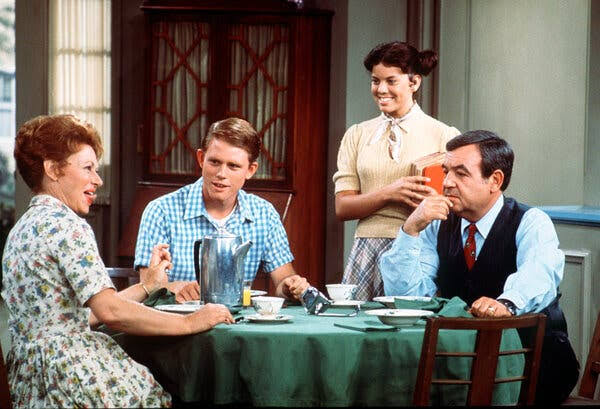
Howard’s relationship with Fonzie may be the clearest measure of his character. He does not romanticize the leather jacket or try to become one of the boys. He sees a young man with talent, pride and a history of being judged too quickly. Respect develops because Fonzie proves dependable when it matters. Howard’s acceptance therefore means more than applause at Arnold’s. It is adult recognition from someone Fonzie cannot impress with a motorcycle.
Marion Ross has an even trickier job. Mrs. Cunningham could have been written as the smiling mother who serves breakfast and exits before the real story starts. Ross keeps finding the person inside the role. Marion is curious, playful, occasionally bored, sharper than the men expect and capable of embarrassing her children because she still experiences the world rather than merely managing it.
Her bond with Fonzie becomes one of the show’s great relationships because she refuses the terms everybody else accepts. She calls him Arthur. She touches his face. She asks direct questions. None of it feels like a challenge to his masculinity because she is not trying to defeat the image; she is simply speaking to the person. Fonzie can intimidate half of Milwaukee, but Mrs. C can tell him to sit down and eat.
As Gen X kids, we mostly noticed that Marion was warm and Howard had rules. As adults, we notice the emotional labor. The house remains open because Marion keeps making strangers feel expected and Howard keeps making generosity sustainable. Somebody has to pay for the groceries, draw boundaries and decide that the garage apartment can become a home.
The series sometimes trapped Marion inside period gender expectations, and later episodes occasionally reduced Howard to exasperated reaction. Still, Bosley and Ross give the show a stability that survives changing hairstyles, catchphrases and cast members. When the final episode ends with Howard raising a glass, it feels right because he has spent eleven seasons holding the center while everybody else was busy growing.
Television hangouts become powerful when viewers understand the rules immediately. At Arnold’s, the booths belonged to conversation, the counter belonged to public performance and the area near the restroom belonged to Fonzie’s “office.” A problem that began at school could be debated over fries before following Richie home.
The diner also gave the show a reason to keep generations and social groups moving through the same space. Teenagers arrived for dates. Adults entered when the plot required supervision. Musicians, performers, guest stars and future spin-off leads could appear without feeling completely imported.
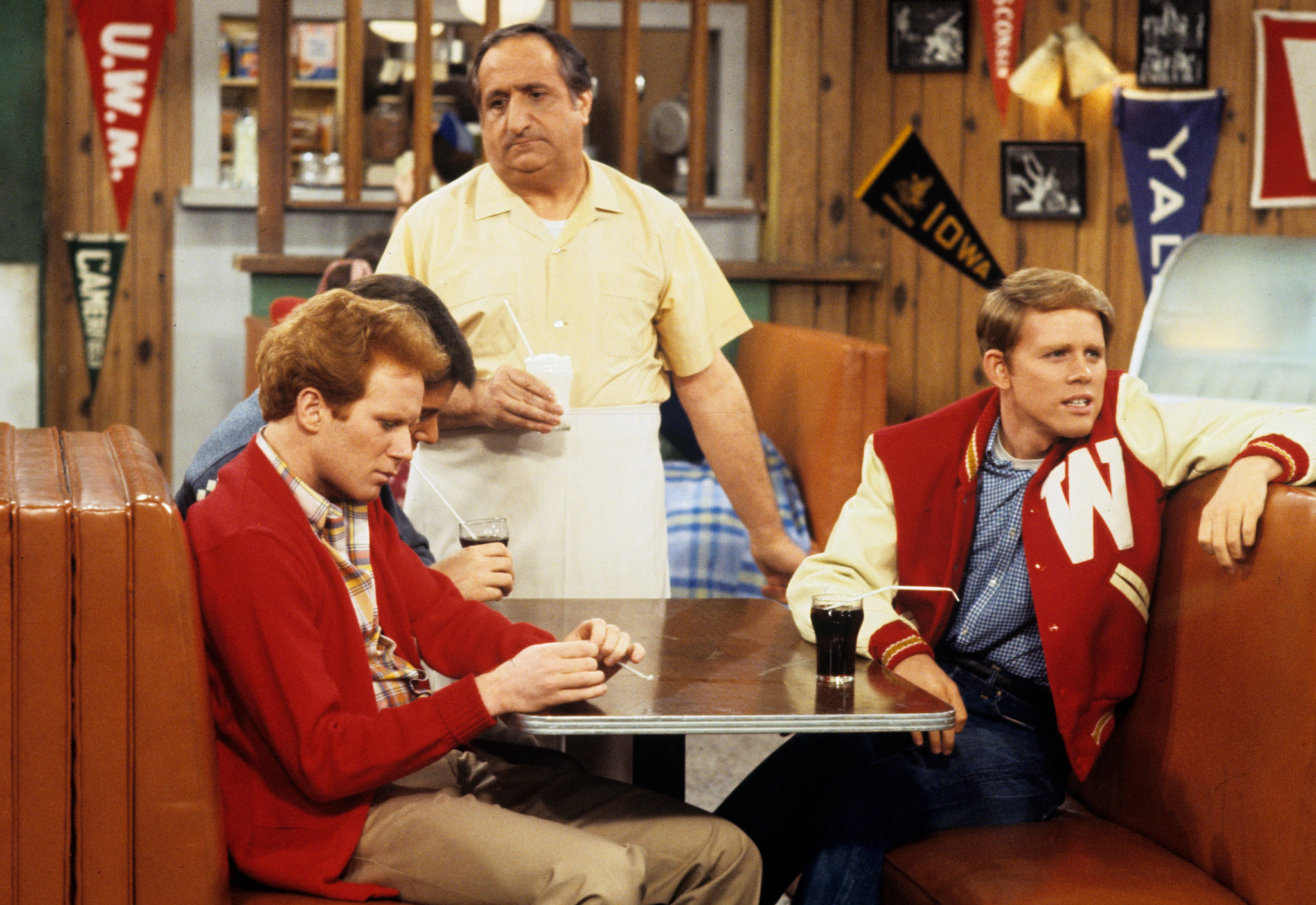
Pat Morita’s Arnold brought speed, wit and a specific personality to the location. Al Molinaro’s Al offered a slower, weary warmth and the catchphrase “Yep-yep-yep-yep-yep.” The change in proprietors altered the rhythm without destroying the function.
Most importantly, Arnold’s made friendship visible. The Cunninghams provided private safety; the diner provided public belonging. Fonzie’s power there did not come only from fear. Everyone accepted that when a crisis became serious, he would stop performing and help.
The show gave us a city through a handful of dependable addresses, which is how childhood geography usually works anyway.
We knew the Cunningham house, Arnold’s, the school, the garage apartment and whatever stretch of road was available for cruising. The wider city existed around those points, but the series rarely needed to map it carefully. Milwaukee functioned as emotional shorthand: solid, middle American, close enough to industrial work to feel practical and far enough from Hollywood to make the characters seem grounded.
That setting helped distinguish the series from a generic nostalgia show. Richie was not wandering through a fantasy theme park labeled “The Fifties.” He was supposed to be part of a neighborhood where people knew the family, Howard had a business and reputations traveled from the diner to the kitchen before bedtime.
Arnold’s served as the public square. The Cunningham house served as the private court of appeal. Fonzie’s garage apartment sat between them—close to family but with a separate entrance, which is basically the perfect arrangement for a character who wants belonging without witnesses.
For those of us watching in suburbs, small towns or city neighborhoods, the exact Milwaukee details mattered less than the route. We understood the pleasure of a place where everybody eventually showed up. Before group texts, location sharing and constant contact, there was a deep comfort in the idea that the same booth, corner or parking lot would reliably collect your people.
The show’s Milwaukee is not a comprehensive portrait of the real city, especially when it comes to race, class and neighborhood diversity. It is a television town built to support a family comedy. But within that limit, it feels unusually coherent. The characters do not merely live in sets. They move through a social ecosystem where the diner owner, mechanic, hardware-store father, classmates and younger siblings all belong to the same story.
If Richie was in trouble, he would end up at Arnold’s. If the trouble became serious, it would reach the Cunningham kitchen. If pride was involved, somebody would eventually climb the stairs above the garage.
On paper, Fonzie could have become unbearable—a character who wins every fight, attracts every woman and controls machinery through supernatural confidence. Winkler makes the performance work by treating cool as a discipline. Fonzie has built a character called “The Fonz” to protect Arthur Fonzarelli.
His difficulty saying “wrong” or apologizing became a running gag, but it also revealed the cost of the persona. Admitting weakness feels dangerous. He teaches other people confidence while struggling to ask for help himself.
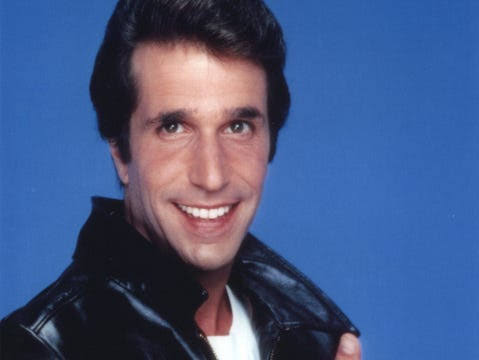
The Cunninghams gradually expose that contradiction. Marion can call him Arthur. Howard can challenge him without losing his respect. Richie can disappoint him. When Fonzie cries, prays or fears losing someone, the moment lands because the series has invested so heavily in his control.
The character’s popularity transformed American youth culture. Lunch boxes, posters, T-shirts and catchphrases spread everywhere. Children who had never been near a 1950s Milwaukee motorcycle knew what “Ayyyy” and the thumbs meant. Fonzie became larger than the show while remaining emotionally dependent on the family within it.
The jacket made Fonzie recognizable. The fear that nobody would want Arthur made him human.
Winkler lowered the rhythm and resisted filling space. Fonzie’s pauses let everyone else reveal their nerves first.
Stillness made the character look as though the world would eventually come to him—and on the soundstage, it usually did.
His greatest fear was not losing a fight. It was discovering that the family could stop making room for him.
Mechanic, teacher, mentor and potential father gave Fonzie an adult path instead of leaving him permanently beside the jukebox.
The character came with instructions simple enough for a playground: thumbs up, jacket, “Ayyyy,” and the belief that confidence could fix machinery.
We imitated the parts that were easy to carry. The thumbs did not require a costume. “Sit on it” could be deployed with almost no understanding of the original scene. A bathroom mirror could become Arnold’s if you leaned against the wall with enough conviction. The character was built for repetition, which made him perfect for a generation that encountered television through reruns, lunch boxes, cartoons and other people’s impressions.
But what made Fonzie survive the imitation was the part we noticed more slowly. Henry Winkler rarely played him as somebody enjoying power for its own sake. Fonzie often looked most comfortable when helping another person recover dignity. He could scare a bully, repair a car or provide dating advice, but the strongest episodes asked whether he could admit fear, loneliness, educational insecurity or love.
That mattered because the culture around boys and men did not provide many models for vulnerability that still preserved self-respect. Fonzie could cry and remain Fonzie. He could pray beside Richie’s hospital bed, struggle to say he was wrong and accept affection from Marion Cunningham without the show treating him as diminished.
There is a reason the character became especially meaningful to kids who felt outside the polished center. Arthur Fonzarelli was not a Cunningham by birth, money or manners. He had built his identity from scraps: mechanical skill, nerve, style and an absolute refusal to let other people define his value. The family’s acceptance did not erase that history. It gave him a place where the defense could occasionally come down.
A gesture, a sound and a look could turn an ordinary hallway into a performance.
When the joke stopped, Fonzie showed up. The character’s authority became believable because he used it to protect people.
None of this erases the cartoonish moments or the gender attitudes that belong to the era. Fonzie’s dating mythology can look ridiculous now, and the series often treated women as evidence of his status. Yet Winkler’s performance keeps pushing against the shallower version. Beneath the applause sign is a person trying to become worthy of the family that already decided he belonged.
Howard is not presented as cool, but the show respects the steadiness required to create safety. His hardware-store practicality counters Fonzie’s legend. When Howard accepts him, it signals that the outsider has earned more than teenage admiration.
Marion offers another kind of authority. She can be playful, frustrated, ambitious and occasionally tired of being defined only as Mrs. Cunningham. Her relationship with Fonzie works because she refuses to treat him as either dangerous or magical. He is Arthur, and Arthur needs dinner.
Richie completes the bridge. He admires Fonzie’s confidence, while Fonzie admires Richie’s access to a stable family and educational future. Neither says that directly very often. Their friendship allows each to borrow the quality he lacks without becoming a copy of the other.
There was also an older Cunningham son—at least until the show quietly acted as though there had never been one. Chuck Cunningham’s disappearance deserves its own chapter, because his vanishing became television shorthand for characters who simply stop existing.
It was the idea that the front door could open for a local tough, a nervous teenager, a younger cousin or an alien—and the family would figure out where to put another chair.
Before the Cunninghams became television’s most famous two-child family, Richie and Joanie had an older brother who played basketball, went to college and then vanished so completely that his name became a television term.
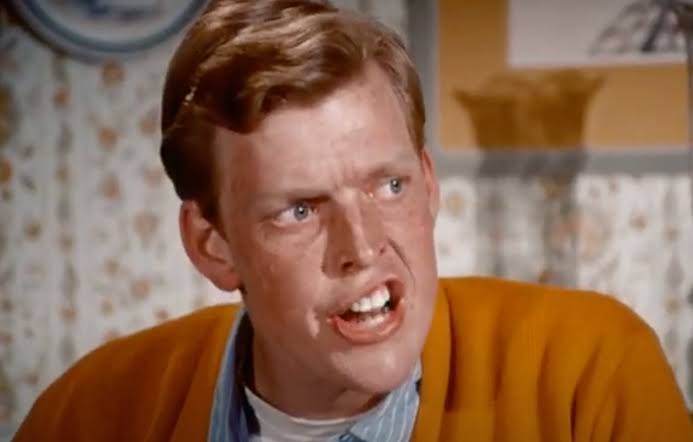
Chuck was part of the original family design. He was Howard and Marion’s oldest child, Richie’s older brother and the athletic college-age son who was usually identified by a basketball tucked under one arm. In the earliest version of the show, that made sense: Richie was the teenager still learning the rules, while Chuck represented the next stage of leaving home.
Gavan O’Herlihy originated the weekly-series role. Randolph Roberts later appeared as Chuck during the second season. Then the character simply stopped coming home. There was no farewell episode, no military assignment, no move across the country and no line about a job that kept him away. The Cunningham staircase apparently led somewhere television could not follow.
Most Gen X viewers who discovered Happy Days through syndication barely noticed at first because reruns rarely respected chronology. One afternoon Chuck was dribbling through the house; another afternoon Fonzie lived above the garage and Howard spoke as though Richie and Joanie were the complete set. The show had changed its mind, and the rerun schedule made that change feel like a strange memory we could not quite prove.
The practical reason is visible in the series’ evolution. Chuck did not have a strong weekly function once Richie’s friends, Fonzie and the diner world expanded. He was too old to share Richie’s high-school problems, too undefined to compete with Fonzie and not integrated deeply enough into the family comedy to generate his own stories. As the show tightened around Richie, Joanie and the breakout character upstairs, Chuck became a piece the new machine no longer needed.
What made the disappearance famous was not merely that a supporting character left. Television shows replace actors and drop characters all the time. Chuck became legendary because the family eventually behaved as though he had never existed. That inspired the phrase “Chuck Cunningham syndrome,” used for a character who disappears without an on-screen explanation while the remaining cast quietly rewrites the family photograph.
There is something almost perfect about Chuck becoming one of the show’s longest-lasting contributions by not being there. Fonzie needed a jacket, a motorcycle and a catchphrase to become immortal. Chuck needed a basketball, a staircase and the power to vanish between reruns.
The series gave its women warmth, comic intelligence and memorable personalities, but it also carried the limits of both the 1950s setting and 1970s television.
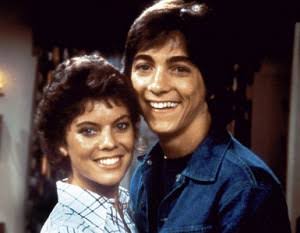
Joanie begins as the younger sister who can puncture Richie’s confidence because she sees him before he reaches the front door. Erin Moran gives those early scenes real sibling accuracy. Joanie is not impressed by the story Richie plans to tell at Arnold’s. She already knows which part went wrong.
As the series continues, Joanie grows into dating stories, music and a central romance with Chachi. That development gives her more screen time but also places much of her identity inside the relationship. She becomes a lead, yet the stories do not always provide the same range of ambition, friendship and independent failure that Richie received.
Marion faces a different limit. The show occasionally lets her express frustration with domestic routine or reveal interests beyond the household. Marion Ross uses those openings beautifully, showing that Mrs. Cunningham is not merely the emotional furniture. But the series usually returns her to the same work because the family’s stability depends on labor television often leaves invisible.
Recurring women such as Pinky Tuscadero briefly challenge the pattern. Pinky enters with her own reputation and physical confidence, making her a plausible equal to Fonzie rather than another admirer. Leather Tuscadero, played by Suzi Quatro, brings musical authority and a harder edge. Laverne and Shirley arrive with enough comic force to build an entire series around female friendship.
Those exceptions show both what the franchise could do and what the main show often chose not to do. Women could be funny, ambitious, skilled and rebellious, but the weekly structure frequently measured them through romance, beauty or their effect on male characters.
The younger sister could destroy an older brother’s performance with one accurate detail.
Mrs. C usually understood the emotional truth before the men finished explaining the problem.
Female growth was often translated into who the character dated rather than what she wanted to build.
The franchise’s biggest female success came when two women were allowed to make friendship—not a man—the central relationship.
A stronger modern reading does not require pretending the show was secretly ahead of every limitation. It means recognizing the work the actresses did inside the available space and noticing how often the emotional intelligence of the series depended on women who were not given the loudest entrance.
Happy Days arrived alongside a broader revival of interest in the 1950s and early 1960s. American Graffiti, oldies radio, doo-wop revivals and retro fashion all offered a version of youth before the turbulence associated with the late 1960s and 1970s.
The series’ 1950s are selective. The Cunninghams live in a comfortable white middle-class world where national politics barely disturb the kitchen. Racial conflict, Cold War fear and many limitations of the period remain at the edges. That selectivity is not accidental. Nostalgia works by choosing which details to illuminate.
Yet the show’s fantasy is more emotional than historical. Arnold’s is the place where friends are always likely to appear. The Cunningham house is the place where a mistake can be admitted. Fonzie’s apartment is the place where independence remains within shouting distance of family. Those spaces feel safe even when the plot is chaotic.
The program also helped teach television how to market nostalgia as an active style rather than a museum display. The 1950s became colors, music cues, cars, hair and language that could be remixed for the 1970s. Later decades would repeat the trick with the 1960s, 1970s, 1980s and eventually the 1990s.
The wider story—how television, music, fashion and movies across the decade revived the 1950s—belongs in How 1970s Television Revived the 1950s. Here, the focus stays on how Happy Days used that trend to build its cast, format, ratings and legacy.
You can hear the difference between early and peak Happy Days before you analyze a single script.
The first seasons feel closer to a filmed family comedy. Scenes breathe. The camera can observe embarrassment without an immediate wall of reaction. “Rock Around the Clock” ties the opening directly to the early rock-and-roll era, and the show’s 1950s world feels like a memory being reconstructed rather than a stage waiting for applause.
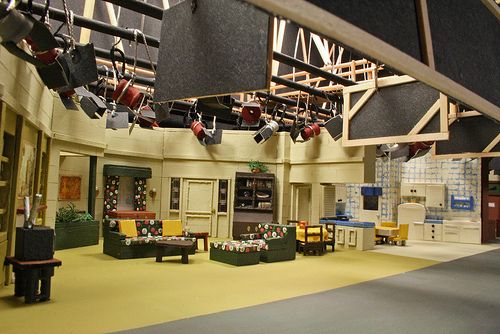
After the production shift, the audience becomes part of the rhythm. Fonzie’s entrance earns a roar. A catchphrase gets space before the next line. A kiss, a motorcycle stunt or a sudden display of emotion can create the sound of an event rather than a private moment.
As kids, we rarely thought about why the pacing worked. We simply understood that the applause told us when the room had changed. Fonzie did not need to announce his authority because hundreds of people did it for him. That response could make the character seem larger than life, but it also placed pressure on the writing to deliver bigger moments.
The later theme song completed the transformation. “Sunday, Monday, Happy Days” is not subtle, and it does not need to be. It turns the weekly calendar into a singalong and announces that the show is no longer quietly borrowing the past. It owns a bright, marketable version of it.
There is a trade-off. The live audience adds energy and communal pleasure, especially in episodes built around Fonzie, music or spectacle. It can also flatten quieter scenes by telling us exactly where the reaction belongs. Rewatching the early years after the peak seasons can feel like discovering that everybody in the family used to speak more softly.
Not every installment follows the same pattern, but the show’s most reliable stories combine adolescent desire, public embarrassment and a family reset in a way that feels simple only because the timing is precise.
A date, a car, status, independence or proof that he is no longer a kid.
Bad advice turns a manageable problem into a performance no teenager can sustain.
The rule creates resistance, but it also defines the safe boundary Richie is testing.
His advice sounds absolute until the story reveals the limit of cool.
At Arnold’s, school or home, somebody has to admit fear, vanity or loneliness.
The lesson lands, dinner continues and the neighborhood remains available next week.
The phenomenon needed an icon, but the weekly comedy needed people willing to misunderstand the assignment.
Potsie Weber is often remembered as the gullible friend, yet Anson Williams gives him a sweetness that prevents the jokes from turning mean. Potsie wants to belong, wants to sing and usually believes the last person who spoke with confidence. His friendship with Richie creates the feeling that these boys knew one another before the episode began.
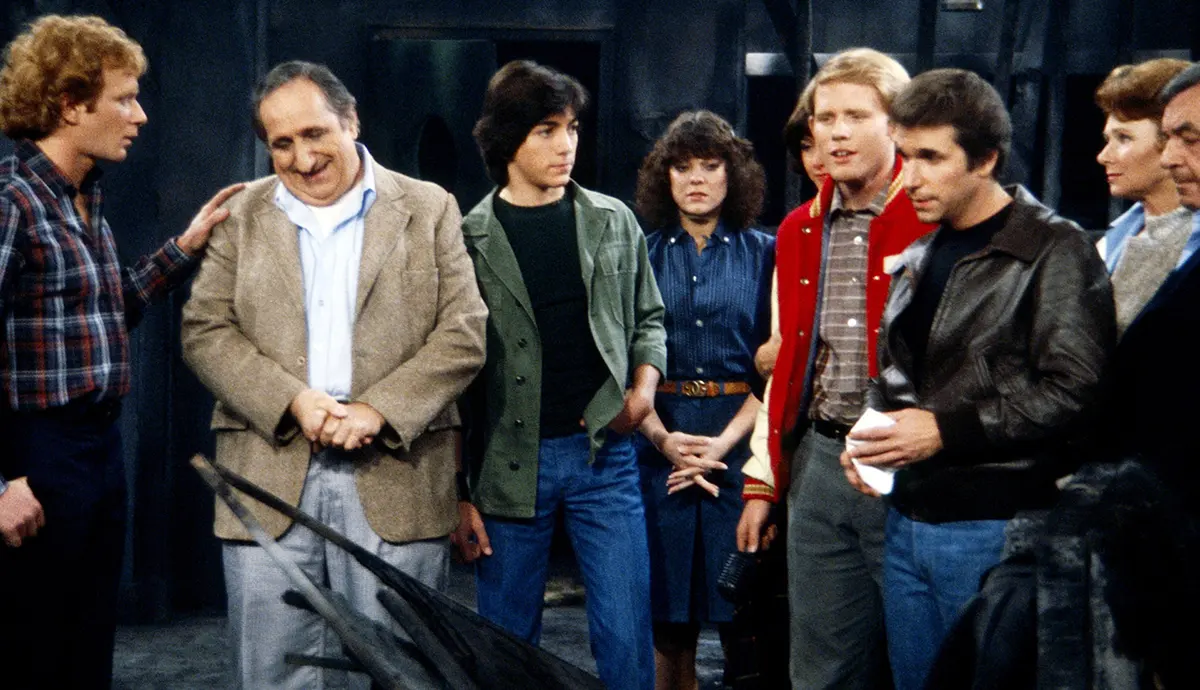
Ralph Malph approaches insecurity from the opposite direction. Donny Most plays him as somebody who fills silence before silence can judge him. The jokes are not only entertainment; they are cover. Ralph’s need to perform makes him a comic counterpart to Fonzie, whose power comes from refusing to perform until everyone is waiting.
Pat Morita’s Arnold brings a sharper, faster energy to the diner. He can trade jokes with the teenagers without becoming one of them, and his presence reminds the series that Arnold’s is a business as well as a clubhouse. Al Molinaro’s Al is slower, more openly weary and wonderfully dependable. “Yep-yep-yep-yep-yep” is not much of a sentence, but Molinaro turns it into an entire weather report.
Later characters had the nearly impossible job of entering a world whose chemistry had already become familiar. Roger Phillips, Lori Beth, Jenny Piccalo, Flip and K.C. tried to create new combinations after the original younger cast changed. Some worked better than others, but they reveal the practical challenge of an eleven-season sitcom: the characters cannot remain teenagers forever, while the show still needs teenagers.
The recurring guest world could also become gloriously strange. Pinky and Leather Tuscadero, demolition derbies, alien visitors, Hollywood stunts and celebrity appearances kept the show open to spectacle. That looseness helped create spin-offs and cultural moments, even when it pulled the series away from the quiet dating comedy that started everything.
Every teenage disaster needs somebody willing to say, “This could work,” before understanding any of it.
His need to keep the room laughing made him more recognizable than the punch lines alone.
They let the diner function as a real place, not just a waiting room for teenage plots.
Newer characters had to supply youth after the people we grew up with started moving on.
These selections form a viewing path rather than a strict ranking. Together they show the quiet original comedy, Fonzie’s move into the family, the live-audience peak, the spin-off machinery, the shark that became a metaphor and the final return home.
The premiere introduces Richie Cunningham, his family, Potsie and a Milwaukee that looks back toward the 1950s without yet turning the decade into a neon theme park. Ron Howard’s natural uncertainty gives the show its original center: a decent teenager trying to become confident while surrounded by people who claim they already are.
It is essential because nearly everything the show later enlarges is already here in smaller form—the Cunningham kitchen, Potsie’s bad advice, Howard’s rules, Marion’s patience and a Milwaukee built from teenage anticipation.
Watching it now, the surprise is how little the episode depends on Fonzie mythology. The humor comes from pauses, parents and the painful distance between what Richie says happened and what actually happened. It reminds us that the show had a complete heartbeat before the leather jacket became the logo.
Richie and Potsie buy a car that immediately becomes a mechanical disaster. The episode captures the early show’s small-scale charm—teenage independence measured in borrowed money, unreliable machinery and the terrifying possibility of explaining the mess to Howard Cunningham.
The broken car also establishes a theme the series never abandons. Cars, motorcycles and cruising look like escape, but the Cunningham home remains the place where consequences are explained and damage is assessed.
Any Gen X kid who grew up around adults constantly fixing used cars understood this one instinctively. The car was supposed to be freedom; the open hood was the family reality. The episode smells like gasoline, bad judgment and the long silence before a father asks how much you paid.
Richie discovers that Fonzie is spending Christmas alone and invites him into the Cunningham celebration. The story begins shifting Fonzie from cool supporting figure into emotional family member. His reluctance to admit loneliness gives Henry Winkler space beyond the leather jacket.
The episode changes the long-term meaning of the series. Fonzie stops being merely the exciting outsider who enters Richie’s stories and becomes someone the family will make room for.
This was the episode that changed how many of us saw Fonzie. The guy who could get any date did not have somewhere to go for Christmas. Once the Cunninghams recognized that, every later meal and garage conversation carried the memory of the first invitation.
Fonzie rents the apartment above the Cunningham garage, permanently changing the balance of the series. The move makes his connection to the family structural rather than occasional and signals the show’s transition into the live-audience, three-camera era.
The garage apartment is one of television’s smartest visual compromises. Fonzie can remain independent enough to protect the image while living close enough for Marion to call him Arthur.
The move also created one of the greatest sitcom arrangements ever designed. Fonzie remained technically separate, which protected the fantasy, while the family could reach him in seconds. He lived alone with a mother close enough to tell him he needed a sweater.
Fonzie attempts a motorcycle jump for a television stunt and confronts the possibility that his body may not obey his legend. The two-parter helped establish the character as the show’s event engine while revealing that fear does not disappear merely because everyone expects you to be fearless.
This is where Fonzie’s legend and vulnerability begin working together at full strength. The audience wants the jump, yet the character becomes more interesting when he admits that the myth can hurt the person carrying it.
The stunt is remembered, but the anxiety is the real story. As kids we watched to see whether he made the jump. As adults we notice the trap of becoming the person everybody expects to be fearless, even when your body and common sense are filing objections.
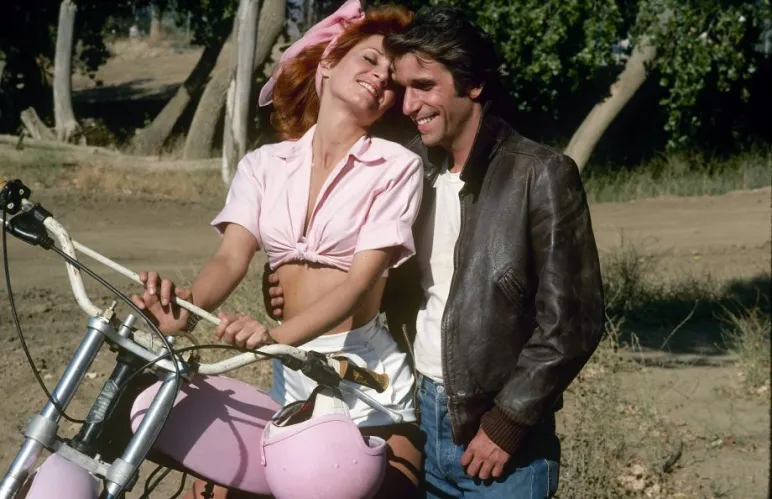
The three-part demolition-derby story turns Pinky Tuscadero into one of the few women presented as a plausible match for Fonzie’s confidence. It is broad, colorful and completely representative of the show at its popularity peak.
The story is peak phenomenon-era Happy Days: colorful, expanded, romantic and built like a television event. It also reveals the difficulty of giving Fonzie a lasting partner without changing the fantasy.
Pinky’s appeal is that she arrives with her own mythology. She does not need Fonzie to make her interesting. The disappointment is that the series never found a permanent way to keep that equality in the weekly structure.
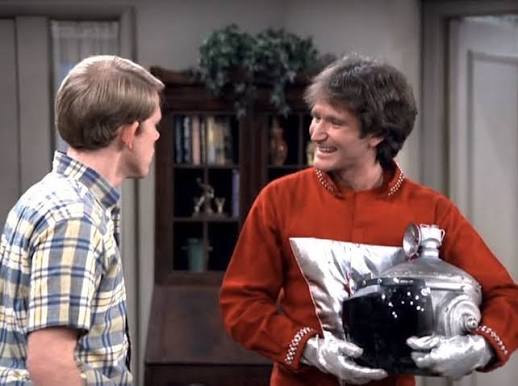
Robin Williams appears as Mork, an alien sent to study humans. The premise is cheerfully absurd even by later-season standards, but Williams is so explosive that the guest character launches Mork & Mindy. It is one of television’s purest examples of a spin-off announcing itself in real time.
The episode became the launch point for Mork & Mindy, proving how powerful the Happy Days platform had become. Arnold’s could introduce a guest from another planet and send him toward his own hit series.
In reruns, the episode felt like the television had suddenly changed channels without telling us. Williams moved faster than the established rhythm, and everybody else had to hold on. The fact that the weirdness worked says as much about the strength of the home base as it does about Mork.
A motorcycle accident leaves Richie gravely injured, and Fonzie struggles with helplessness. His prayer in the hospital is effective because the character usually treats emotion as something to control through posture. Here, the coolest man in Milwaukee has nothing to perform.
The episode works because the friendship has accumulated years of ordinary scenes. Richie’s danger threatens the person who first treated Fonzie as a friend rather than a local legend.
This is one of the episodes people remember not for a catchphrase but for a room becoming quiet. The show had spent years making Fonzie impossible to rattle, so the hospital scene hits with the force of watching a wall admit it has been holding up the house.
Richie returns from California with Lori Beth and their son, giving the series a reunion with its original center. The episode reminds viewers how far the show traveled after Ron Howard left and restores the connection between Richie and Fonzie before the final stretch.
The episode lets Richie and Fonzie meet as equals. Their old contrast still exists, but neither needs the other to perform an assigned role.
For viewers who missed Richie after he left, the return carries a surprisingly adult feeling. He is not coming back to resume high school. He is showing the people who raised him what their investment became, while recognizing that home continued without waiting for him.
Joanie and Chachi marry, Fonzie begins the process of adopting Danny and Howard addresses the audience with a toast. The finale is less interested in closing plot machinery than in confirming the central promise: this collection of friends and strays became a family.
Its final point is exactly the one the series earned. The Cunninghams were not only a 1950s household; they were a place where friends, strays and younger generations could be folded into family.
Howard’s toast lands because the finale understands that the audience had become part of the family ritual. We had watched cast members arrive, vanish, marry and grow older. The speech is sentimental, but after 256 episodes sentiment is not a shortcut. It is the bill coming due.
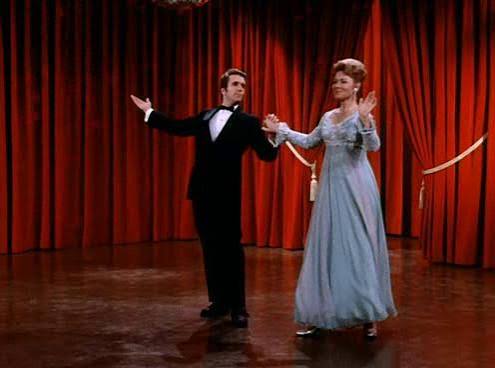
Fonzie enters a televised dance competition with Mrs. Cunningham, turning the show’s most unlikely friendship into pure performance. Marion can enjoy his cool without worshipping it, and Fonzie can be affectionate without feeling exposed.
The episode matters because the emotional center is not only Richie and Fonzie. Marion’s acceptance gives Arthur something different from popularity: an adult who sees the act and likes the person underneath.
The pairing of Fonzie and Mrs. C captures the show at its warmest. She gets to be playful outside the kitchen, and he gets to show affection without a crisis forcing it. Their dance says the family relationship has become real enough to be fun.
Fonzie reluctantly gets a library card and discovers that an institution he assumed had nothing for him can offer access rather than judgment. The setup is comic, but the episode addresses his limited education without humiliating him.
The story uses Fonzie’s influence to make reading, asking for help and entering a library look compatible with cool.
A lot of us remember the library episode because it used Fonzie’s cool for something practical. The show understood that a kid who ignored a public-service message might follow Arthur Fonzarelli through the front door and discover the place was not built to embarrass him.
Fonzie water-skis over a shark while wearing his leather jacket, creating the image later used to describe the supposed moment a television series passes its creative peak.
Its reputation needs context. The show remained popular and produced memorable episodes afterward; the shark became a metaphor because the image is ridiculous and unforgettable, not because ratings immediately collapsed.
We can laugh at the jacket on the water skis and still admit the image did exactly what television images are supposed to do: it refused to disappear. The phrase outlived the plot, the stunt and generations of executives who kept trying to prove their own show had not reached it.
The show’s rise was not an isolated success. It helped turn ABC from the network chasing the leaders into a place that could manufacture national comedy events.
The retooling worked. During the 1976–77 television season, Happy Days reached No. 1 in the Nielsen rankings. The series ultimately produced 256 episodes across eleven seasons, an extraordinary run for a show that had once faced cancellation.
The program became the anchor for a group of spin-offs and related hits. Laverne & Shirley followed two recurring characters into a working-class friendship comedy and became a ratings powerhouse of its own. Mork & Mindy launched Robin Williams after a single explosive guest appearance. Joanie Loves Chachi extended the younger romance. Blansky’s Beauties and animated projects expanded the family further.
That ecosystem demonstrates how effectively Garry Marshall’s shows created characters who arrived with clear comic identities. A guest could step through Arnold’s door and feel ready for a separate series. The results were not equally durable, but the ambition was unmistakable.
| Measure | Why it matters |
|---|---|
| 1974–1984 | Eleven seasons that moved from single-camera teen comedy into live-audience pop phenomenon. |
| 256 episodes | One of the decade’s longest-running sitcom institutions. |
| No. 1 in 1976–77 | The nostalgia experiment became the most-watched show in American television. |
| Multiple spin-offs | Arnold’s became a launchpad for one of ABC’s most recognizable programming families. |
| 9 Emmy nominations, 1 win | Recognition for Henry Winkler, Marion Ross, Tom Bosley, directing and editing, with a 1978 editing win. |
In the three-network era, a hit did not merely collect fans. It redirected millions of living rooms at the same time.
ABC had spent years as the network people joked about. The rise of Happy Days helped change that identity. The show was bright, instantly promotable and broad enough to lead viewers into other comedies without making the schedule feel like work.
For families watching together, the network lineup created momentum. You did not necessarily choose every show with the precision of a streaming menu. The television was already on. The next theme started. A character from one show had appeared on another. Before long, the entire night felt connected.
Laverne & Shirley strengthened that effect because the spin-off shared Milwaukee DNA while shifting the center to two working women and a different kind of friendship. Mork & Mindy took the connection much farther, turning one bizarre guest character into a completely different comedy universe. The audience followed because Arnold’s had already introduced him.
The collective nature of the ratings also intensified the cultural impact. When Happy Days was No. 1, the next morning did not produce scattered micro-audiences. It produced a common reference. Kids repeated the line at school. Radio hosts mentioned the stunt. Magazines put the cast on covers. Adults who claimed not to watch still knew the jacket.
That concentration helps explain why the show can feel bigger than programs with similar episode counts. It occupied fewer channels, more shared attention and a media environment that amplified the same images repeatedly. A hit character did not need an algorithm. He needed a weekly entrance, a lunch box and enough children willing to practice a thumb in the mirror.
Penny Marshall and Cindy Williams first appear in Richie and Fonzie’s world, then move into a series whose female friendship, physical comedy and Milwaukee setting become a ratings giant.
Robin Williams’ guest performance is so explosive that the character moves from one fantastical episode to a separate sitcom and another major ABC hit.
Joanie and Chachi carry their romance into a music-oriented series. Its shorter run shows that recognizable characters do not automatically reproduce the chemistry of the original household.
Other live-action and animated extensions show how aggressively the brand could be expanded. Not every branch lasted, but the ambition was unmistakable.
The spin-offs changed the meaning of Arnold’s. The diner was no longer only a setting; it was a platform where a network could test a new character inside a trusted hit before moving that character into another time slot.
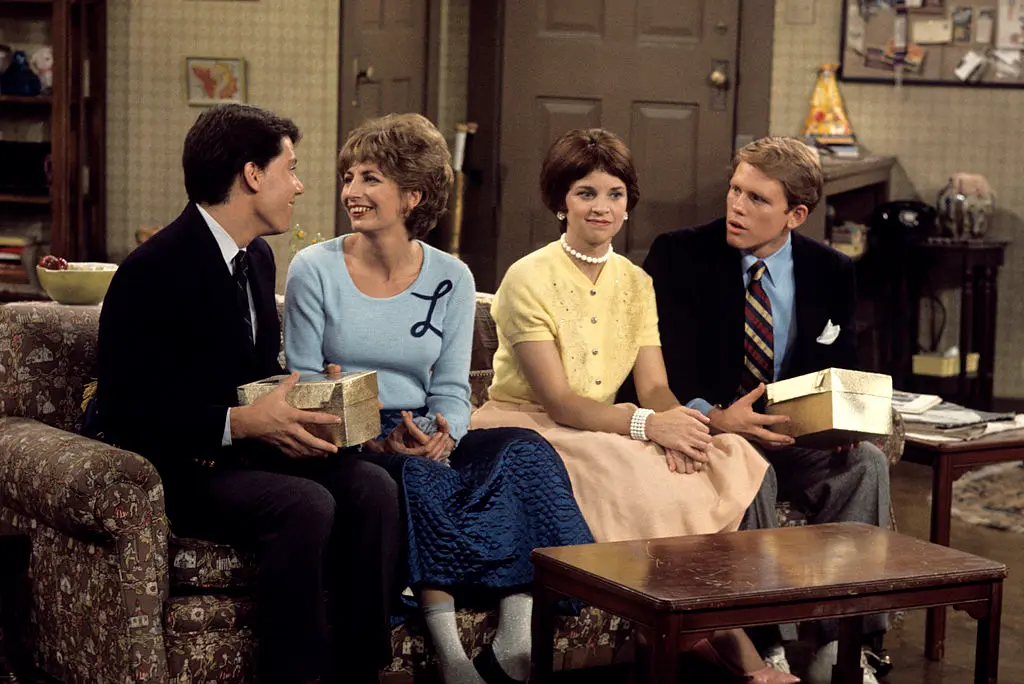
A phenomenon becomes obvious when the character no longer needs the episode to remain visible.
Fonzie appeared on lunch boxes, posters, shirts, trading cards, magazines and enough licensed objects to make the 1950s feel like a new product line. The show inspired novels, records, board games and animated versions. Henry Winkler’s face and the leather-jacket silhouette could sell the idea even when the item had very little to do with a specific plot.
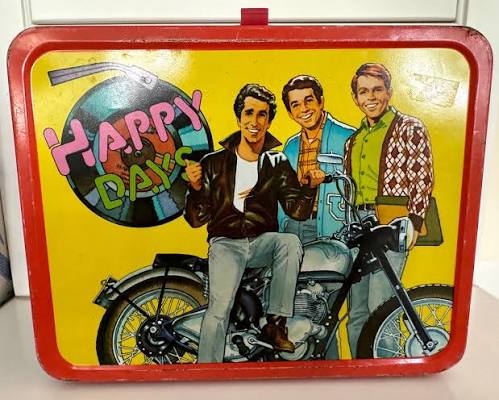
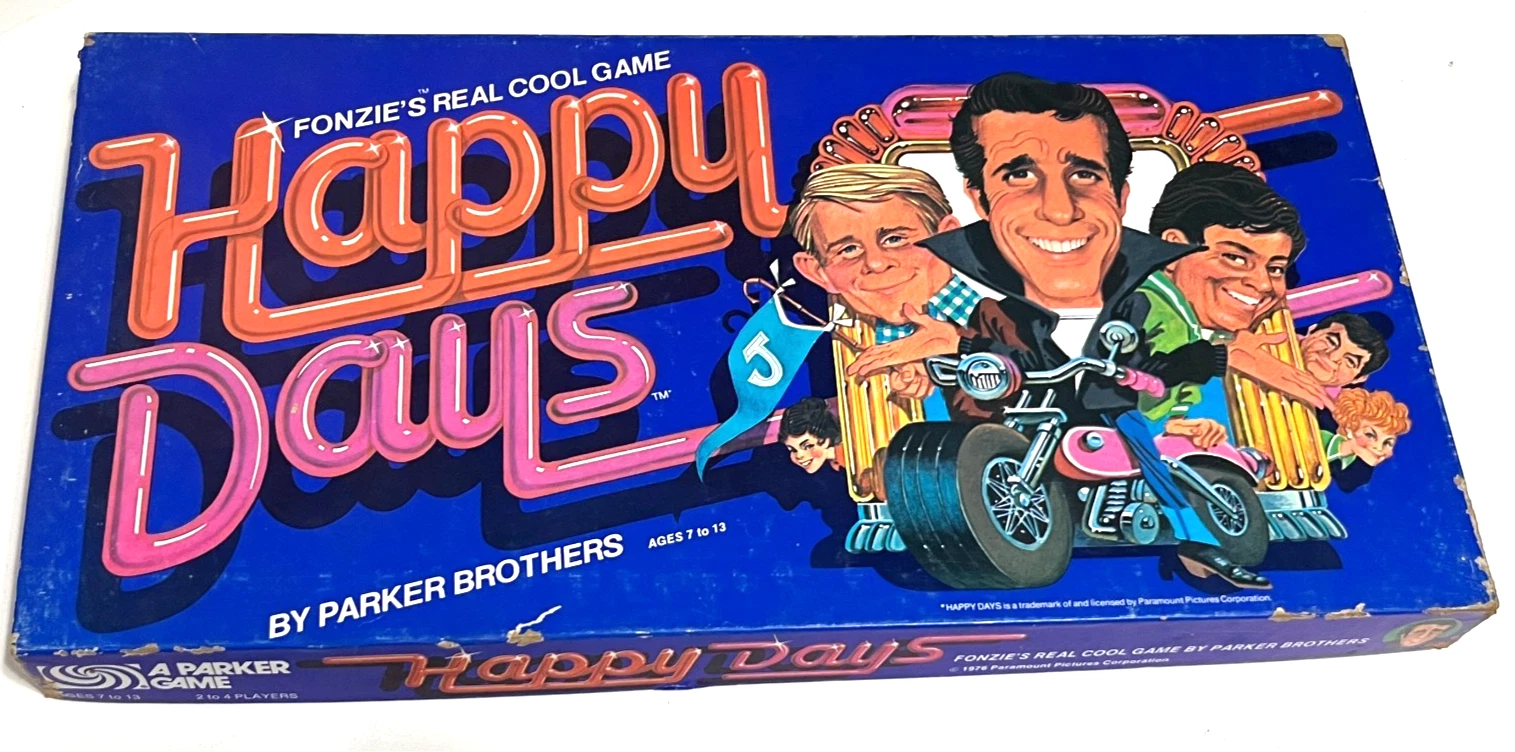
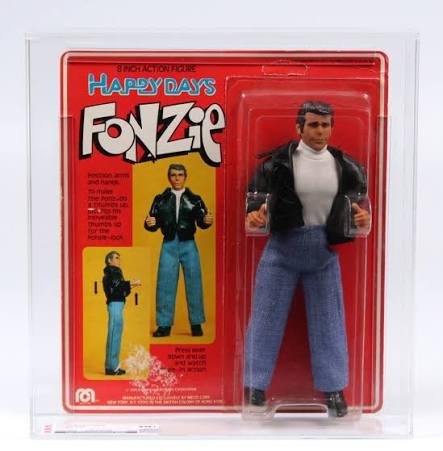
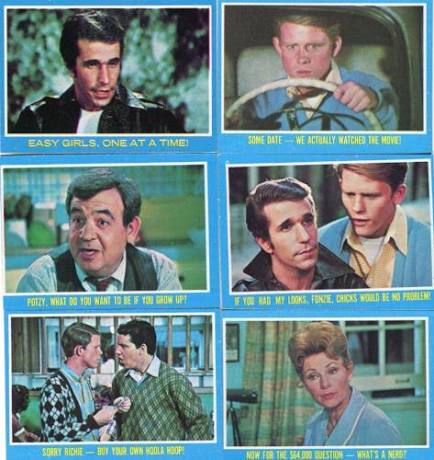
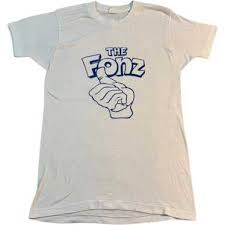
For Gen X kids, that meant the series lived beside us even when it was not on. A classmate might own the lunch box. Somebody had a sticker. A magazine at the grocery checkout promised a story about Henry Winkler, Ron Howard or Scott Baio. The characters entered the same commercial ecosystem as superheroes and rock stars.
The animated Fonz and the Happy Days Gang may be the purest evidence of how far the image had traveled. Once Fonzie could enter a time machine with an anthropomorphic dog and still remain recognizable, historical realism was no longer part of the contract. The jacket and voice had become portable mythology.
Merchandising also blurred the actor and character. Winkler became associated with cool despite being thoughtful, soft-spoken and open about challenges far removed from Fonzie’s effortless image. That contrast eventually enriched the legacy, but during the peak years the public often treated the persona as if it belonged to the actor full time.
The saturation could be ridiculous, but it also demonstrates the character’s design strength. Not every popular lead can survive reduction to a gesture. Fonzie could. The danger was that the reduction might erase the vulnerability that made him worth watching. The series’ best episodes kept putting Arthur back inside the symbol.
The phrase “jump the shark” comes from the fifth-season story in which Fonzie water-skis over a shark while wearing his leather jacket. It later became shorthand for the moment a television series resorts to an outrageous stunt because its best days are over.

The irony is that Happy Days remained a major hit after the stunt and continued for several more seasons. The episode is broad, but broadness was already part of the show’s peak identity. The phrase tells us more about how viewers discuss television decline than it does about one precise historical turning point.
The deeper change came gradually. Fonzie’s abilities expanded. The 1950s setting became less socially specific. Richie eventually left, along with Ralph, and the series had to redistribute stories among Joanie, Chachi, Roger and newer characters. The original coming-of-age center weakened.
Still, later episodes contain genuine feeling, especially when Fonzie confronts adulthood, teaching and the possibility of becoming a parent. A show can move past its creative peak without becoming worthless. Gen X viewers who encountered the series out of order in syndication often loved pieces from every period without consulting a decline chart.
Long-running sitcoms do not usually collapse in one spectacular moment. They thin, adapt, discover new strengths and keep going because audiences have relationships with the people, not just the original premise.
When Ron Howard left regular duty, Happy Days lost the character whose adolescence had organized the early years. Donny Most’s departure removed another piece of the original peer group. The show could no longer return to the simple arrangement of Richie, Potsie and Ralph trying to become adults while Fonzie watched from a few steps ahead.
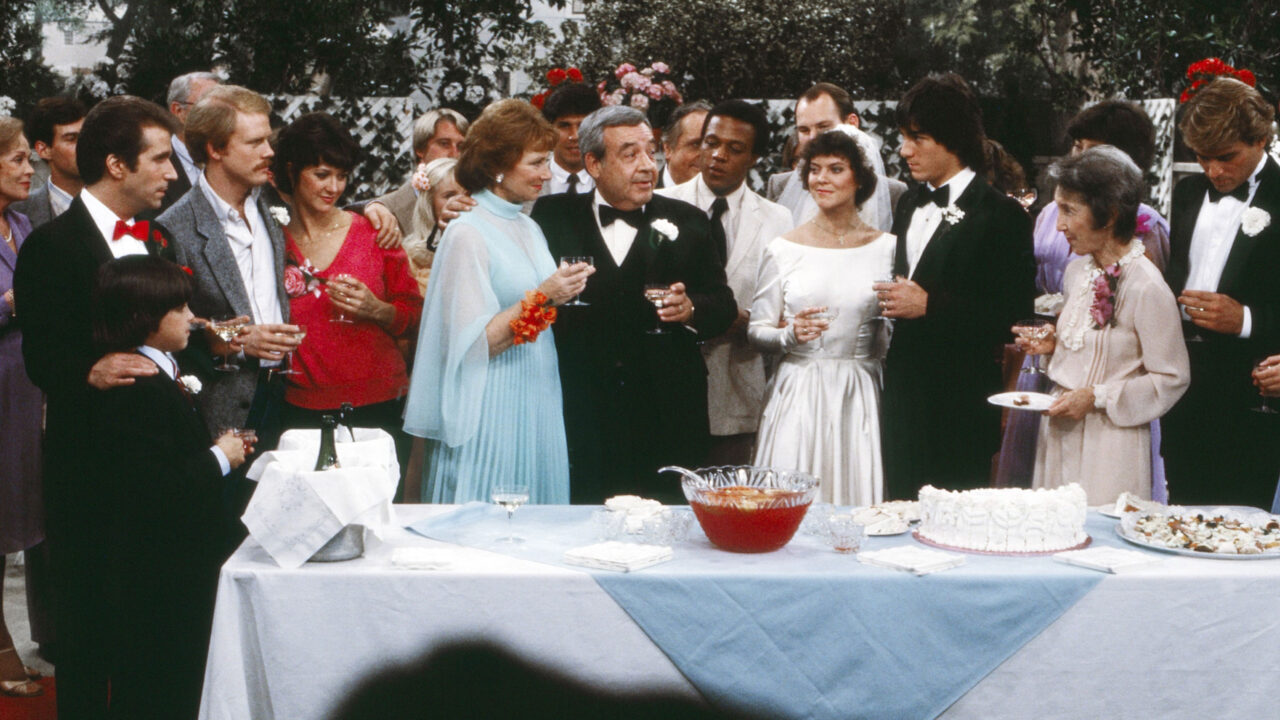
The solution was to redistribute the future. Joanie and Chachi carried the younger romance. Roger Phillips brought a new adult male into the Cunningham orbit. Jenny Piccalo moved from offscreen legend to visible friend. Fonzie’s work as a teacher and mentor gave him stories that acknowledged aging without making him surrender the image completely.
Some of those episodes feel like a different series because they are. The 1950s setting becomes increasingly elastic. The production style grows broader. Characters who were once high-school kids now operate in a world where the decade sometimes seems frozen to keep Arnold’s open.
Still, the later run contains a meaningful arc for Fonzie. The character who began by protecting absolute independence gradually accepts responsibility for younger people. Teaching requires patience rather than intimidation. The possibility of adopting Danny asks him to become the stable adult he once needed.
That direction makes emotional sense even when individual plots do not. Fonzie cannot remain a permanent symbol of teenage rebellion without becoming sad. The series lets him convert cool into service. He stops being the guy who belongs nowhere and becomes one of the people who creates belonging for somebody else.
Joanie’s growth also deserves more credit than the standard decline narrative gives it. She is no longer only the sister delivering a punch line from the stairs. Her romance, music and eventual marriage provide continuity between the original Cunningham family and the next phase, even when the writing does not always give her the independence she deserved.
The finale understands that the show’s real subject has become passage. Joanie marries. Fonzie moves toward fatherhood. Richie returns as an adult. Howard raises a glass. The 1950s have become less important than the fact that everybody changed while the house remained capable of receiving them.
Without the original lead, weekly stories had less natural tension between adolescence and adulthood.
Teaching, mentoring and adoption gave the icon a destination beyond another stunt.
Even when the lineup changed, Howard and Marion preserved the emotional logic of the series.
Many Gen X viewers did not experience a clean decline. We met early Richie one afternoon and teacher Fonzie the next.
The original opening used “Rock Around the Clock,” tying the series to one of early rock and roll’s defining records. The later “Happy Days” theme became a permanent earworm, promising that the week belonged to us before listing the days like a calendar with a jukebox.
The later theme did more than identify the show. It reset the room. The handclaps, saxophone and day-by-day roll call announced that Arnold’s was open, Fonzie was somewhere nearby and whatever embarrassment Richie had created would probably be survivable by the closing credits.
Watch the Happy Days theme on YouTubeArnold’s gives the show its social stage. The booths, counter, jukebox and parking lot allow characters to display clothes, status and romantic confidence. Cars function as freedom, embarrassment and identity. Richie’s vehicles break. Fonzie’s motorcycle responds to legend.
The visual style became increasingly saturated after the switch to a live-audience format. The show stopped resembling faded family photographs and began looking like the 1970s’ idea of a televised sock hop. That stylization helped the iconography survive. A leather jacket against bright diner colors reads instantly even in a small rerun frame.
The series also contributed to the commercial return of oldies music and 1950s imagery. The soundtrack was not merely decoration. It helped make the past available as a consumer experience, something later nostalgia cycles would repeat on an even larger scale.
A lot of us did not watch the show transform season by season. We watched whatever episode the local station handed us at four-thirty.
That meant early single-camera Richie could appear on Monday, the shark jump on Tuesday and a later Joanie-and-Chachi story on Wednesday. The opening credits, hairstyles and audience noise changed, but we accepted the whole thing as one enormous present tense.
This is one reason arguments about the “real” Happy Days can feel different to Gen X viewers. People who saw the original broadcasts may remember the retooling as a clear break. Rerun kids often experienced the eras as different rooms in the same house. We might prefer one without knowing which season produced it.
Syndication also increased repetition. Certain episodes returned often enough to become personal folklore. We knew the Christmas invitation, the motorcycle jump, Mork, Richie’s accident and the finale before we knew episode titles. The plots became objects: the jacket, the shark, the library card, the hospital room.
That repetition created comfort but also exposed the formula. We could see the misunderstanding coming. We knew Howard’s first answer would not be the last. We knew Fonzie would resist emotion until resistance became impossible. Familiarity did not ruin the episode because the resolution was part of the pleasure.
The commercial breaks became part of the memory too. Afternoon reruns sat beside cereal ads, local car dealers and whatever toy was being pushed that week. The 1950s existed between 1980s commercials, which made the show’s nostalgia feel even stranger and more durable.
Streaming organizes series into clean seasons and encourages completion. Syndication taught us to love fragments. We did not need to possess the full chronology. We needed the characters to be recognizable when the television happened to find them.
Arnold’s felt familiar anyway. The jukebox, booths and parking lot promised that everybody knew where to find everybody else. By the time we were old enough to hang out somewhere without adults, most places did not come with a house band, a perfect booth or Fonzie leaning near the restroom.
The show’s reruns blended with merchandise, cartoons and references. Fonzie became a symbol detached from chronology. Adults remembered the original craze; children inherited the gesture. Few television characters have crossed generations through body language so efficiently.
Watching now, the safest part is not the 1950s. It is Marion Cunningham opening the door. The series’ most enduring fantasy is that there is a household where the outsider will eventually receive a plate at the table.
We also inherited the show through older people. Parents corrected the cars and songs. Older brothers and sisters remembered the first Fonzie craze. Grandparents sometimes treated the whole thing as nonsense because the real 1950s had not come with applause every time somebody entered a room. Those reactions became part of the viewing experience.
The series gave us a vocabulary for family roles. Richie was the kid trying to be older. Joanie saw through him. Howard was the rule. Marion was the pardon. Fonzie was the friend who acted like he needed no one until the plot proved otherwise. Even if our homes looked nothing like the Cunningham house, the arrangement was easy to translate.
There was wish fulfillment in Arnold’s, but there was also wish fulfillment in Howard saying no. A boundary meant somebody was paying attention. The adults were close enough to be annoying and dependable enough to make rebellion relatively safe. Plenty of kids understood that fantasy more deeply than the jukebox fantasy.
As we got older, the show changed meaning. Fonzie’s entrances became funnier and a little more theatrical. Howard’s worry became reasonable. Marion’s constant work became visible. Richie’s awkwardness stopped looking like weakness and started looking like the normal cost of growing up without pretending you already know everything.
That is why the series remains more than a collection of catchphrases. It lets viewers age into different sympathies. The same episode can belong to Richie at twelve, Fonzie at sixteen, Howard at thirty-five and Marion once you finally notice who has been holding the whole room together.
The chemistry among Howard, Marion, Richie and Fonzie remains strong. Winkler’s emotional precision is better than the iconography sometimes allows us to remember. Bosley and Ross ground scenes that might otherwise float into pure cartoon.
The show’s sense of community also ages well. Characters have places where they belong, adults who notice when something is wrong and friendships that survive embarrassment. That structure offers real comfort.
The historical world is narrow. The polished 1950s largely avoids racial conflict and many social realities. Women are often framed around dating, beauty or their relationship to male characters, though Joanie and later stories gain more room. Some comedy depends on stereotypes common to the era.
The later broadness can be difficult for viewers expecting the quieter pilot-year tone. The key is understanding that Happy Days became two related shows: an early coming-of-age comedy and a later live-audience fable about Fonzie and the family that adopted him.
The treatment of race is one of the clearest limits. The series uses Milwaukee and the 1950s as a broad comfort setting without seriously engaging the segregation, discrimination and changing urban life that shaped the real period. Pat Morita’s Arnold is memorable and sharply performed, but the show rarely lets his background complicate the nostalgic frame.
Gender works similarly. The series can be generous toward Marion, Joanie, Pinky, Leather, Laverne and Shirley while still organizing much of the world around male friendship and male approval. The women are often the smartest people in a scene, yet the plot may still define success through who gets the date.
The broad later comedy can feel more artificial now, especially when binge viewing removes the week between episodes. A stunt or catchphrase that felt like an event in 1977 can become exhausting when six episodes run automatically. The show was designed for weekly anticipation and syndicated sampling, not necessarily for a ten-hour marathon.
What ages best is the refusal to equate cool with cruelty. Fonzie can be intimidating, but the series increasingly measures him by loyalty, restraint and care. Richie’s decency is not mocked out of him. Howard’s responsibility is not treated as failure. Marion’s warmth is not stupidity. Those choices remain more modern than some of the fashion surrounding them.
The early seasons also benefit from time. Their slower, quieter style once looked less exciting than peak Fonzie. Now it can feel refreshingly human. The pauses, modest stakes and location texture let Richie’s embarrassment exist without becoming a stadium event.
The series helped establish the commercial power of recent-past nostalgia. It showed that a network could package an earlier decade for viewers who remembered it, viewers who wished they remembered it and children who simply liked the cars.
Its spin-offs shaped ABC’s schedule and gave television Laverne and Shirley, Mork and Mindy, and a broader Garry Marshall comedy world. Its catchphrases and imagery became permanent references. The phrase “jump the shark” alone ensures the series remains part of how television talks about itself.
Yet the emotional legacy is smaller and better. Fonzie begins as a man who needs nobody and ends as a teacher, mentor and prospective father. Richie begins by trying to impress Fonzie and eventually becomes his equal. Howard and Marion never stop providing the safe structure around both.
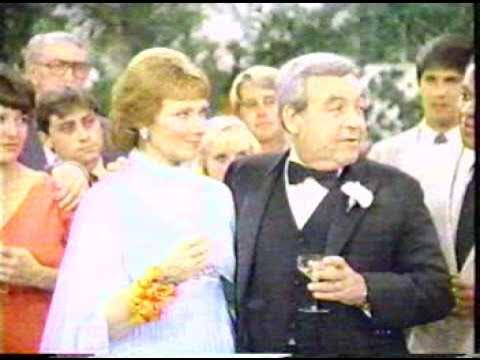
That emotional structure is why a show built from deliberately softened nostalgia can still feel honest. The 1950s may be polished, but the need underneath the polish is real. Everybody wants a place where the performance can end without the invitation being withdrawn.
More generously, the series left behind a model of chosen family that continues to work. Fonzie does not become a Cunningham by changing his clothes, background or voice. He becomes family through repeated acts of loyalty and through the Cunninghams’ decision to keep making space. The outsider is not cleaned up before admission.
“Jump the shark” gave Happy Days a second legacy inside television criticism. The phrase is used so casually that many people know it without knowing the episode. That is an odd form of immortality: one stunt became the language used to judge every show that stayed too long.
Its franchise model remains familiar too. Introduce a character inside a hit, let the audience react, then build a separate series around the response. Laverne & Shirley and Mork & Mindy proved the strategy could produce shows with their own identities rather than temporary copies.
The series also changed the idea of the breakout character. Network television had always produced surprise favorites, but Fonzie became the template for a supporting figure who could reorder scripts, promotion and audience expectations. Every producer since has dreamed of finding that kind of electricity and worried about what happens when it overwhelms the original premise.
These annual rankings place the series back in the schedule it originally competed in, surrounded by the other programs America was watching that year.
Happy Days premiered on ABC on January 15, 1974, and ended on May 8, 1984, after eleven seasons.
The Television Academy Interviews programming history lists 256 episodes.
Yes. The series ranked No. 1 in the Nielsen ratings for the 1976–77 television season.
Henry Winkler gave the supporting character an instantly recognizable image and an unexpected emotional vulnerability. Audience response pushed Fonzie toward the center of the series.
Major spin-offs and related series included Laverne & Shirley, Mork & Mindy and Joanie Loves Chachi, along with additional live-action and animated projects.
The phrase describes the point when a television series appears to rely on an implausible stunt after its creative peak. It comes from an episode in which Fonzie water-skis over a shark.
Start with “All the Way,” “The Lemon,” “Guess Who’s Coming to Christmas,” “Fonzie Moves In,” “Fearless Fonzarelli,” “My Favorite Orkan” and “Passages.”
The jacket became central to the character’s visual identity. Network concerns about showing a motorcycle-riding character in leather initially limited its use, so early stories often kept Fonzie near the bike before the jacket became permanent.
Chuck was Howard and Marion Cunningham’s oldest son and Richie and Joanie’s older brother. Gavan O’Herlihy played him during the first season, and Randolph Roberts later appeared in the role. Chuck disappeared during the second season without an on-screen farewell, and later dialogue treated Richie and Joanie as the Cunningham children. His unexplained disappearance inspired the term “Chuck Cunningham syndrome.”
Howard left regular series duty after the seventh season as his directing career expanded. Richie later returned for guest appearances, including the final years.
Production history, episode totals, awards information and creator recollections were checked against the television archives listed below.