thirtysomething in the 80s: The Drama That Made Adulthood Feel Complicated
They had the houses, the careers and the relationships. Nobody had received the instructions for making all of it feel settled.
Seven friends, two marriages and enough unfinished conversations to fill another evening.

The strange thing about thirtysomething is how much older its people used to seem. They had houses, marriages, children and jobs that apparently required a tremendous amount of discussion after everyone came home. The title sounded like a settled destination. The program then spent an hour explaining that nobody at that destination felt particularly settled.
On a return visit, the scale changes. A tired parent trying to finish a conversation is no longer a mysterious adult species. A friend giving advice that also serves his own convenience is easier to recognize. So is the uneasy feeling that the life you chose may be a good one and still require more negotiation than the brochure suggested.
I like that thirtysomething was willing to give those feelings room. I also understand the impulse to tell some of these people to stop circling the same problem and load the dishwasher. Both reactions can be part of enjoying the show. Its characters were often perceptive about one another and remarkably inventive about avoiding the same perception at home.
The ABC drama began in 1987 and continued into 1991. This return concentrates on its eighties years: the first friendships, the two central marriages, the work and parenting arguments, the early recognition and a significant 1989 episode. The later medical crisis, major loss and finale belong to the nineties portion of the story. There is plenty to discuss before those events arrive.
Inside This Article
- A Different Sort of Emergency at Ten O’Clock
- Meet the Seven People at the Center
- Michael Wanted to Be a Good Man and Receive Confirmation
- Hope’s Day Was Full Before Anyone Asked What She Did
- Elliot Could Make a Room Lighter and His Own Home Harder
- Nancy Had to Recover Space for Herself
- Melissa Was More Than the Friend With a Camera
- Gary’s Freedom Had a Bill Attached
- Ellyn Did Not Need a Marriage to Have a Full Story
- Marriage Was a Conversation With Other Things Happening
- A House Could Be Another Unfinished Argument
- The Holidays Made Private Assumptions Public
- Work Let the Men Make Things and Avoid Things
- The Friend Group Could Be Supportive and Intrusive
- A Daydream Could Tell Us What the Polite Conversation Did Not
- The Music Let an Ordinary Room Hold a Feeling
- The 1988 Recognition Was Real; So Was the Argument
- Strangers Belongs to 1989, and Its Intimacy Mattered
- The Comfortable World Had Boundaries Worth Noticing
- Gen X Got Older, and the Distance Changed
- Keep the Nineties Stories on Their Side of the Line
- A Rewatch That Starts With the People
- Questions About thirtysomething in the Eighties
A Different Sort of Emergency at Ten O’Clock
Created by Marshall Herskovitz and Edward Zwick, thirtysomething followed a circle of friends in Philadelphia. The central people were in their thirties, with relationships shaped by college friendships, family connections and the gap between youthful expectations and adult arrangements. The show did not need a precinct, courtroom or emergency department to provide a weekly reason for them to meet.
That made the size of the dramatic event unusually flexible. A holiday gathering could matter because two people did not understand what the celebration meant to each other. A work decision could expose a friendship’s imbalance. A baby needing attention could prevent an argument from reaching its satisfying conclusion, which was precisely why the argument felt real.
Other programs had already made relationships and private lives essential to television drama. It would be unfair to pretend thirtysomething invented human complexity. What distinguished it was the amount of the hour it was prepared to give ordinary domestic and professional experience without using a case of the week as the main delivery vehicle.
The contrast with Hill Street Blues helps. That program could move among a large ensemble while police work supplied continual pressure from outside. thirtysomething often found the pressure in the room before anyone had opened the door. The unfinished conversation was not a pause between the stories. It could be the story.
The late-evening ABC setting suited an hour about sexual relationships, professional compromise and the ongoing management of disappointment. For younger Gen X viewers, the show could look like a preview of a stage of life still somewhere ahead. The characters themselves were baby boomers, not a group of Gen X classmates conveniently waiting to represent us.
That difference makes the return interesting. We can watch across a generational boundary and still recognize a situation. The program’s particular world is not everybody’s adulthood. Its attention to how people explain themselves, however, travels farther than its Philadelphia social circle.
Meet the Seven People at the Center
Michael Steadman, played by Ken Olin, and his wife Hope, played by Mel Harris, are new parents when the series begins. Their daughter Janey changes the practical arrangement of the household and the emotional arrangement of the marriage. Michael works in advertising with Elliot Weston, so his professional life is also tied to one of his oldest friendships.
Elliot, played by Timothy Busfield, and his wife Nancy, played by Patricia Wettig, provide a different marriage beside the Steadmans’. They have children and a history that does not make the present easy. Their difficulties become increasingly visible, making them both part of the friend group and a possible warning that other people in the circle would prefer to interpret from a safe distance.
Melissa Steadman, played by Melanie Mayron, is Michael’s cousin and a freelance photographer. Her work gives her an independent creative identity, while her family connection places her near the center without making her part of either marriage. She is not simply the single person assigned to illustrate what the parents have wisely left behind.

Gary Shepherd, played by Peter Horton, is an academic whose charm and resistance to conventional settling down make him attractive and frustrating. His friendship with Michael preserves a connection to earlier versions of their lives. That history can be affectionate, but it can also give each man an audience for a self-image he might need to reconsider.
Ellyn Warren, played by Polly Draper, works in city government and has an especially close history with Hope. Her career, relationships and choices develop under the gaze of friends whose own arrangements are not necessarily more successful. Being single in this group does not mean living without obligations or becoming a blank space until the next date arrives.
Those seven form the original social center. Other people enter and become important, but beginning with the core relationships makes the early episodes easier to follow. There are two marriages, a business partnership, an extended-family connection and friendships that predate the current households. No one walks into a gathering with only one role to manage.

Michael Wanted to Be a Good Man and Receive Confirmation
Michael’s central difficulty is not that he lacks ideals. He has plenty, and he can usually explain them. The problem is how those ideals behave when a client, a deadline, a friend or an exhausted spouse asks something inconvenient of him. He wants to be decent, creative, engaged and dependable. He would also appreciate people noticing the effort before bringing up the shortcomings.
Ken Olin makes that combination persuasive because Michael’s intelligence and uncertainty are both visible. He can understand a situation while still reacting defensively to it. A useful observation about someone else does not prevent him from becoming injured when the same kind of observation comes back across the table. The performance allows self-awareness to coexist with very ordinary evasion.

His advertising work sharpens the problem. Professionally, he helps shape persuasive versions of things. Personally, he has a persuasive version of himself that he would prefer his friends and family to accept. The series can put those two habits beside each other without declaring that earning a living in advertising makes every private feeling false.
The partnership with Elliot also gives him a place to seek approval outside the house. Work can offer the pleasures of shared invention and familiar jokes, especially when home has become a series of tasks with no clear finish line. That does not automatically mean the work is more important. It means it may provide a more flattering audience on a particular afternoon.
I find Michael most interesting when he is right about a problem and wrong about his entitlement to be congratulated for seeing it. That is a recognizable adult arrangement. You can make a valid point in a manner that makes it harder for anyone else to hear, then spend the rest of the evening wondering why the conversation became unpleasant.
The show does not always keep his anxiety from becoming repetitive. Sometimes the volume of interpretation exceeds the size of the event. But the character’s contradictions are useful. A drama about ordinary life needs people capable of making a normal difficulty complicated without realizing they have contributed quite so much to the complication.
Hope’s Day Was Full Before Anyone Asked What She Did
Hope’s early situation makes a persistent imbalance visible. Michael can point to work outside the house, while much of her work with Janey is repetitive, necessary and difficult to package as an achievement at the end of the day. A baby being safe, fed and attended to is a successful result. It can also look, to someone arriving home, like nothing has visibly been completed.
Mel Harris gives Hope enough warmth and impatience to keep that situation from becoming a diagram. She loves her child and can still miss parts of her previous identity. Those feelings are not mutually exclusive. The drama becomes more honest when it permits affection to exist alongside boredom, fatigue or resentment about how the workload has been distributed.
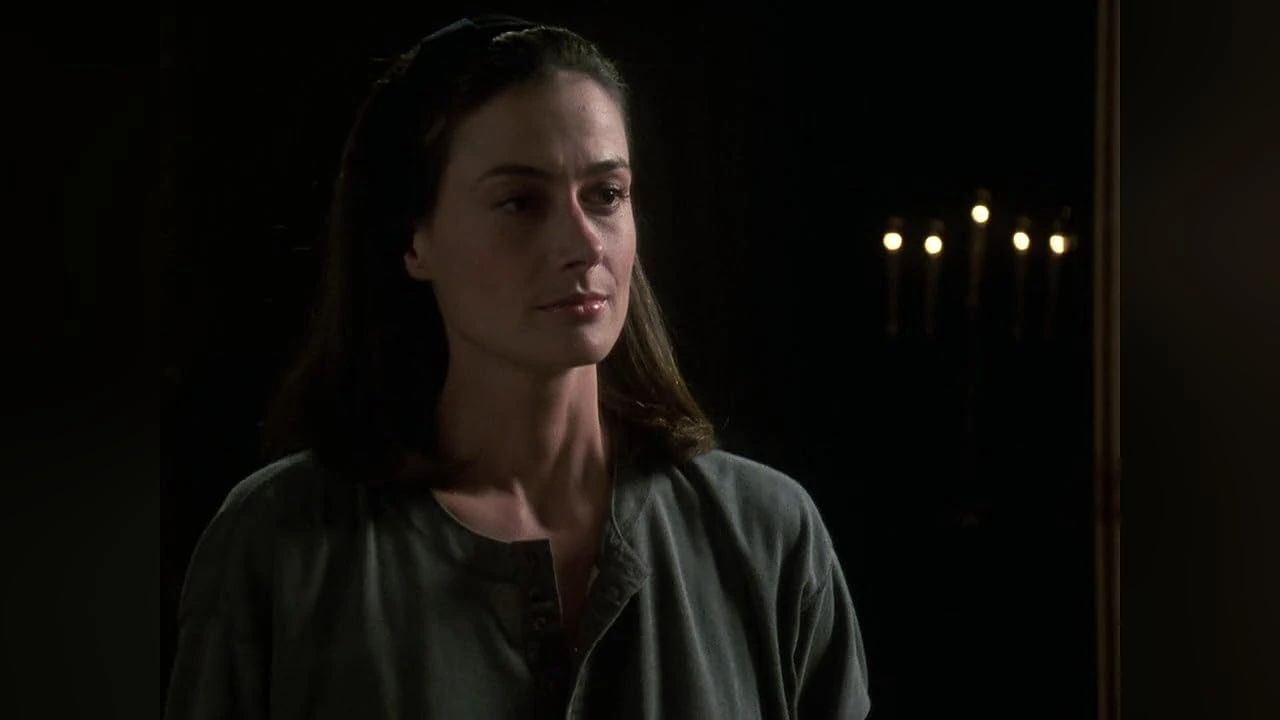
“Weaning” puts one version of that transition directly into the story. Janey’s changing dependence creates practical questions about Hope’s work and a more private question about what being needed has come to mean. A development that ought to count as progress can also feel like a small loss. The show is interested in the uncomfortable space between those two reactions.
Hope’s relationship with Ellyn makes the issue more social. An old friend may remember the person she was before motherhood while failing to understand the conditions of the day she is now having. Hope may hear criticism where Ellyn intends concern, or treat her own arrangement as a measure against which the friend is being judged. Familiarity does not guarantee accurate listening.

The program’s treatment of motherhood has been argued over for good reasons. It can give domestic experience serious attention while still leaving difficult questions about whose choices receive the most sympathy. A viewer does not have to declare Hope either a model to imitate or a problem to reject. The useful thing is watching the particular negotiations the character has to make.
On a return visit, I am less interested in whether she has selected the officially correct adult identity. I am interested in whether the people around her can recognize the work, desires and ambivalence that actually exist. That is a better question for a drama than pretending one tidy choice ends the argument.
Elliot Could Make a Room Lighter and His Own Home Harder
Elliot’s humor is part of the show’s appeal and part of its trouble. He can make a difficult atmosphere more bearable. He can also use the same ability to avoid staying with something serious long enough to answer for himself. A joke is not automatically an evasion, but in the right hands it can become an excellent exit ramp.
Timothy Busfield understands how charm can work before a viewer has decided whether to trust it. Elliot can be lively, inventive and good company. Those qualities help explain why Michael values the partnership and why the friend group does not simply identify him as a walking marital problem. The person causing pain can still be enjoyable to sit beside.

The series becomes stronger when it refuses to let that enjoyment settle the moral question. Being funny in a group does not erase what happens in a marriage. Friends who prefer the entertaining version of Elliot may have an incentive to minimize the version Nancy has to live with. The social circle can therefore help him remain comfortable even while believing it is being fair.
His relationship with Michael contains a related imbalance. Business partners have to evaluate ideas, divide responsibility and survive disappointment. Old friends also want loyalty, forgiveness and the right to keep telling familiar jokes. When both relationships occupy the same office, a professional disagreement can quickly become evidence of personal betrayal.
“Competition” makes that friction useful by letting a client’s preference disturb the partners’ sense of balance. A shared business does not remove the desire to be the person whose contribution is most valued. The work can succeed and still make one partner feel smaller. That is a more specific problem than a general complaint about the stress of having a job.
I appreciate that Elliot is allowed to be talented as well as difficult. If every fault belonged to a man with no appealing qualities, Nancy’s history and Michael’s loyalty would become harder to understand. The stronger drama lies in the mixture: a person worth knowing who can also make being close to him exhausting.
Nancy Had to Recover Space for Herself
Nancy’s early story is not the later medical storyline that many people remember first. In the eighties episodes, the central pressure is her marriage, her children and the uncertain process of recovering a stronger sense of herself. Keeping those stages distinct lets the character exist before the events that later came to dominate discussion of the series.
Patricia Wettig makes uncertainty visible without emptying Nancy of thought. A quiet response can contain hurt, calculation and the question of whether speaking more forcefully will make any difference. The character’s lack of easy confidence is not the same as having nothing to say. Often she has been living with the problem longer than the people who are now offering quick interpretations.
“Therapy” gives the marriage an explicit space for discussion, while also revealing what happens when other people in the friend group become interested in that discussion. Private difficulty can turn into shared information with remarkable speed. The friends may call it concern, but the people being discussed do not necessarily experience it as support.
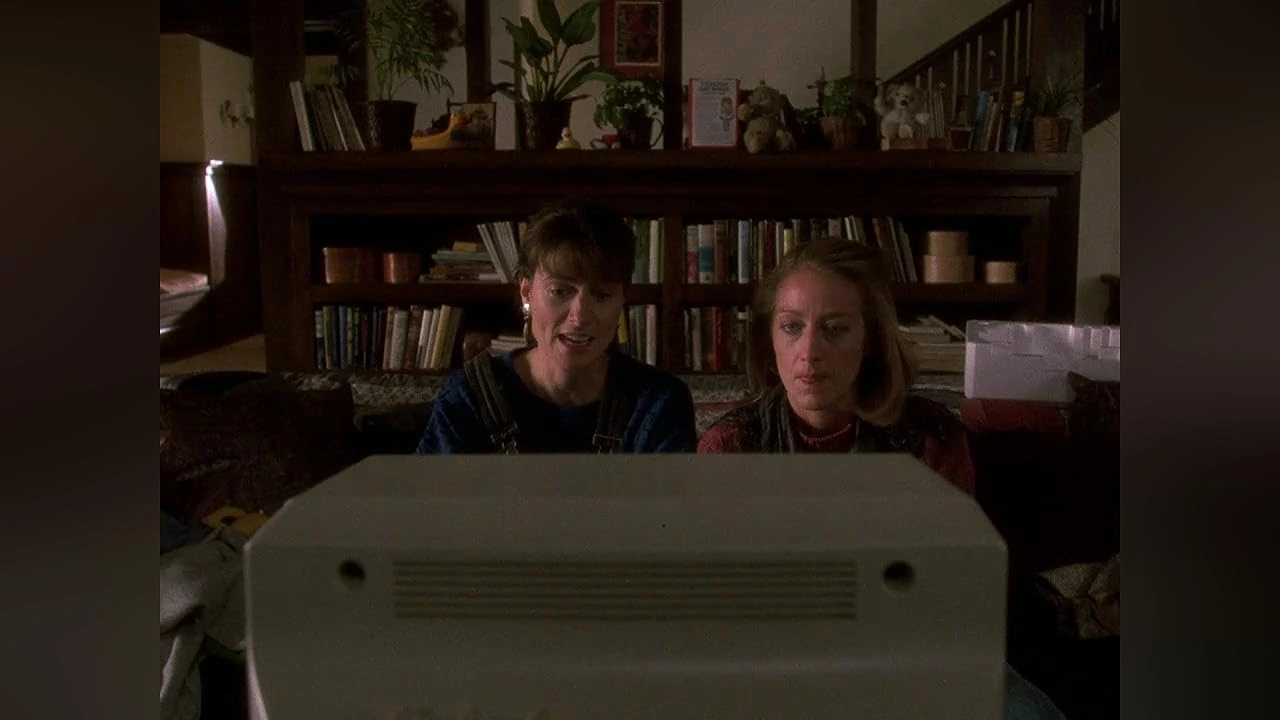
“Separation” changes the household arrangements and makes the rupture harder for the group to keep at a comfortable distance. Elliot’s presence elsewhere creates practical consequences for other people’s domestic lives. A marriage ending or pausing does not happen inside an invisible room. Friends, children and routines all have to respond to the new arrangement.
Episodes such as “Whose Forest Is It?” keep the children’s experience within view. An adult may be occupied with defining the relationship, while a child is trying to understand what the change means for safety and daily life. The same separation can therefore produce several different stories at once. The show is at its best when it lets those perspectives remain distinct.
Nancy’s movement toward greater independence is valuable because it is not accomplished by a single speech. A date, a decision or a firmer response can be a development without resolving everything. Her eighties story gives the series one of its clearest examples of change accumulating through ordinary acts.
Melissa Was More Than the Friend With a Camera
Melissa’s photography gives her a way of looking at other people while she remains vulnerable to being looked at herself. She has a creative life, a family connection to Michael and relationships that do not fit neatly into the two-household arrangement at the center. Her independence is real, but it does not protect her from wanting approval or fearing that everyone else has received instructions she missed.
Melanie Mayron gives the character an appealing combination of humor and exposed feeling. Melissa can recognize an absurd situation and still be hurt by it. That is a difficult balance to maintain without making a person seem either permanently defeated or too effortlessly witty to experience consequences. The performance lets both sides remain available.
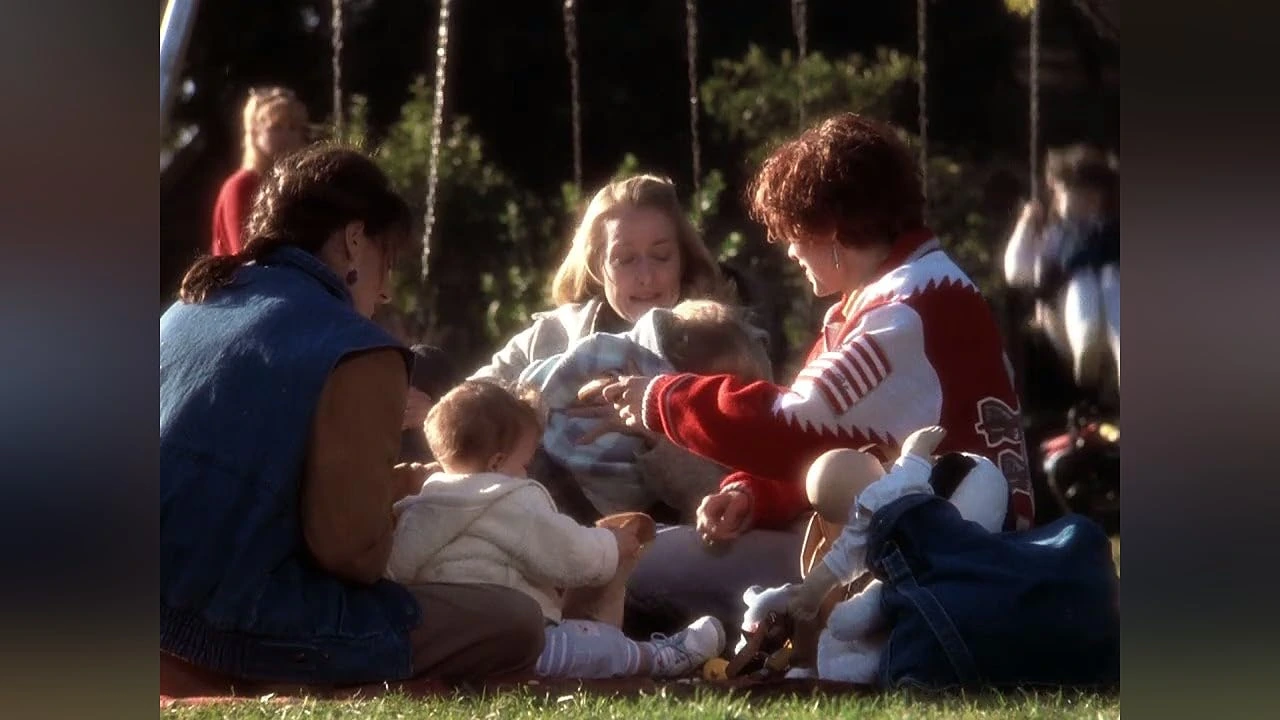
The job matters. Freelance work has a different rhythm from an established office position, and a photographer’s creative identity can be important even when income and recognition are uncertain. Melissa has not simply failed to acquire the life the parents possess. She is trying to sustain another one, with pleasures and problems of its own.
Her relationship with Gary in the early series also unsettles the friend group’s comfortable categories. A long-standing friendship can contain attractions and possibilities that are easier to manage in theory than after someone acts on them. The shared history does not prevent awkwardness; it supplies more people who will have an opinion about it.
By 1989, her relationship with a younger man gives “Strangers” one of its linked stories. Melissa’s concern is partly about what her friends will make of the relationship. That is a precise use of the group: the people who provide belonging can also become an imagined panel evaluating whether your private life is appropriate.
I like that Melissa’s desire for connection does not cancel the value of her work. The character is not required to become indifferent to romance in order to count as independent. She wants a life containing several things, and those things do not always arrive together or make one another easier.
Gary’s Freedom Had a Bill Attached
Gary can look like the friend who has managed to keep the enjoyable parts of youth. He is charming, academically employed and less visibly tied to the domestic routine that occupies Michael and Elliot. That appearance gives him a useful role in the group’s imagination. He can represent a road someone else did not take.
The series complicates that role by asking what his freedom depends on. Avoiding certain commitments is a choice with effects on other people. A manner that feels spontaneous to him can feel unreliable to someone trying to build a relationship. Keeping options open may preserve an appealing self-image while requiring others to absorb the uncertainty.

“Tenure” is an especially useful early episode because it puts his professional identity under evaluation. The institution has standards and expectations that are not automatically satisfied by his intelligence or charm. He has to confront a judgment that cannot be dismissed simply because he dislikes the people making it.
That gives his academic life substance beyond a flattering occupation in a character description. Work contains obligations, competition and decisions about what is worth pursuing. Gary’s wish to remain true to himself can be admirable, but it does not answer every practical question about how the life will be sustained.
Peter Horton makes the character’s ease attractive enough for the problem to matter. A person who was merely selfish and dull would offer no temptation as an alternative to settled life. Gary can be good company, a meaningful friend and somebody whose understanding of adulthood still needs work. Those qualities do not have to cancel one another out.
The story later gives him additional responsibilities and relationships. For this eighties return, it is enough to see the early version confronted by the limits of remaining available to every possibility. Freedom can be valuable. It is less persuasive when its costs are consistently assigned to somebody else.
Ellyn Did Not Need a Marriage to Have a Full Story
Ellyn’s career and single life give the group another way of arranging adulthood. She works in city government, has ambitions and maintains relationships whose significance is not determined by whether they lead immediately to a family home. The show becomes more generous when it lets those commitments matter in their own right.
Polly Draper makes Ellyn capable of being direct, uncertain, funny and defensive without needing to tidy those traits into one flattering label. A person can be effective at work and less sure of what to ask for privately. The contrast does not make the professional competence fraudulent. It makes the domains of a life operate by different rules.
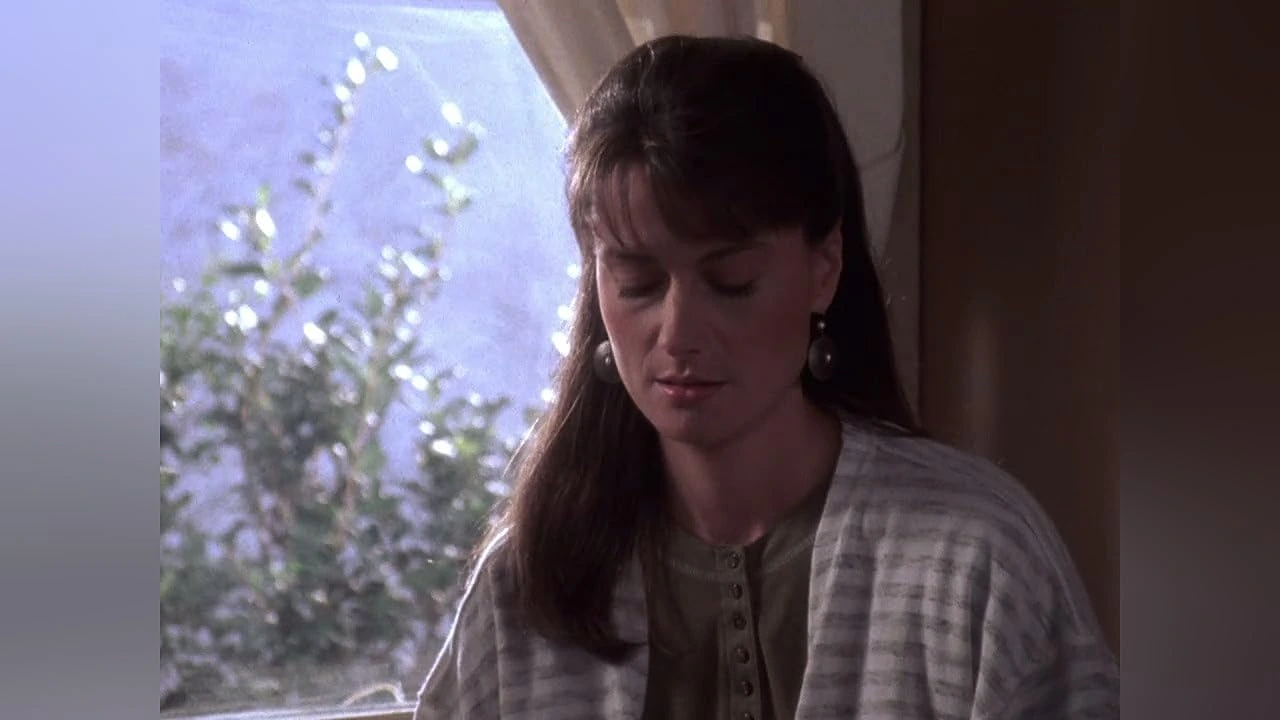
Her friendship with Hope is particularly useful because neither woman has complete access to the other’s experience. They can remember earlier versions of each other while responding to present choices through their own anxieties. Advice can therefore carry affection and judgment in the same sentence, even when the speaker would prefer to admit only the affection.
A choice about a home, a date or a professional opportunity does not need to become evidence that one woman has selected the correct path and the other has failed. The stronger episodes allow the comparison itself to be part of the pressure. Friends do not stop being friends when their lives become less symmetrical, but they may have to learn a new way to listen.
That is why Ellyn’s scenes should not be treated as breaks from the central adults’ real problems. Her concerns are part of the series’ account of adulthood. The parents are not the only people whose time, attachments and future require serious negotiation.
On a return visit, I find that perspective especially useful. Television can make marriage look like admission to the main plot. Ellyn’s place in this ensemble gives us a chance to resist that arrangement, even while noticing the moments when the show itself remains uncertain about how evenly to distribute its sympathy.
Marriage Was a Conversation With Other Things Happening
One of the early series’ useful observations is that a couple rarely gets to discuss a problem under ideal conditions. Somebody is tired. A child needs something. There is work waiting or a friend in the next room. A reasonable point can arrive at a moment when the other person has no capacity to receive it gracefully.
The drama often lives in that interference. Michael and Hope may disagree about a decision while also disagreeing about whose day has been harder. The second argument can enter the first without being named, turning a practical question into a contest for recognition. Both people may have legitimate complaints and still make the conversation worse.
That is different from a story built around one concealed fact whose revelation will settle the matter. Information helps, but the characters may already know a great deal about what is wrong. They need a workable response, and a workable response can involve giving up the pleasure of being completely vindicated. The series is interested in how difficult that small surrender can be.
Elliot and Nancy give the same general territory a less secure foundation. A conversation can take place inside a marriage whose future is in question, making every word carry an additional possible meaning. Is this an attempt to repair something, a performance for the other person or another example of why repair may not be enough?

I do not think every repeated argument becomes profound simply because it resembles something real people do. Repetition can be accurate and still make dull television. The stronger scenes introduce a new pressure, perspective or consequence. They let us understand why the people cannot get past the same place, rather than merely sending them around it again.
The best of the marriage writing also leaves room for affection. People can be annoyed with someone whose company they still want. A remembered joke or an unguarded moment can explain why a relationship remains worth negotiating. Without that warmth, an hour of conflict would become less a drama than an extended recommendation that everyone find separate apartments.
A House Could Be Another Unfinished Argument
“Housewarming” gives the first season a useful combination of renovation and a social occasion. A home is supposed to offer stability. A project inside that home can make the occupants feel as though stability is still waiting on one more repair, purchase or decision. Invite people over before that feeling has settled and the house becomes both a living space and something its owners imagine being evaluated.
That is a particularly good situation for Michael and Hope because it places practical work beside the wish to look as though adult life is under control. A room can need attention without becoming a verdict on a marriage. An anxious person can nevertheless find a way to hear the verdict. The program’s interest lies in how quickly an ordinary project can acquire a second, less manageable meaning.
The social occasion adds another layer. Friends who know the history may offer sympathy, advice or an observation they think is harmless. The people doing the work may hear every remark through the accumulated frustration of living with it. Nobody has to arrive intending to insult anyone for an evening to become more complicated than the invitation suggested.
I find that scale useful because it gives the show a physical problem. There is something to do, an occasion to prepare for and a space the people have to share. The anxiety is attached to an actual task rather than floating free as a subject for another extended conversation. It is easier to understand why somebody loses patience when we can see that the day has already used a portion of it.
The house also carries a longer expectation. Acquiring a home can seem like proof that a person has reached a more secure stage. Maintaining it promptly reveals a new collection of obligations. The achievement is real; the end of effort is imaginary. That small disappointment fits the series very well, and it makes a housewarming an appropriate occasion for discovering how much adulthood remains under construction.
The Holidays Made Private Assumptions Public
“We Gather Together” uses Thanksgiving to bring the friends into a shared occasion that does not unfold as cleanly as the idea of the occasion. A gathering requires plans, contributions and expectations about what counts as a good day. It also brings people together at exactly the moment their private arrangements may be least stable.
That makes the holiday a useful dramatic container. The event gives everyone a reason to meet without requiring a contrived emergency. A small disappointment can expose a larger feeling because the day is supposed to represent family, continuity and belonging. The more significance people place on the occasion, the more opportunities it has to fail their preferred version.
“I’ll Be Home for Christmas” brings a different set of expectations into Michael and Hope’s marriage through Christmas and Hanukkah. Their backgrounds are not decorative character details. They shape what a celebration means, what should be passed on to Janey and which apparently simple household decisions carry a history.
The useful point is not that an interfaith marriage must become a permanent crisis. It is that two people can agree to build a family before discovering how many ordinary rituals have arrived with instructions neither person thought needed explaining. A holiday makes those instructions visible. What feels natural to one partner may feel like an unannounced decision to the other.
The episodes also demonstrate why the friend group matters. People away from their families of origin can make new rituals together, but friendship does not automatically remove the difficulties that family rituals contain. Someone still does the organizing. Someone feels left out. Someone assumes that the comfortable arrangement is comfortable for everybody.
These are good early return points because they let the show make a large emotional claim through a specific day. We are not simply told that the characters value belonging. We watch them try to arrange it, then discover the practical and emotional labor involved.
Work Let the Men Make Things and Avoid Things
Michael and Elliot’s advertising business has a genuine creative attraction. The two men can invent together, test an idea and enjoy the quick recognition that comes from an old partner understanding a joke. The series does not have to dismiss that work as meaningless in order to show the evasions it can accommodate.
“Nice Work If You Can Get It” places creative difficulty inside the early partnership. A blank or uncooperative idea is a practical problem when somebody expects a result. The friendship can offer encouragement, but it can also produce distraction, rivalry or a familiar routine that postpones the uncomfortable admission that the work is not going well.
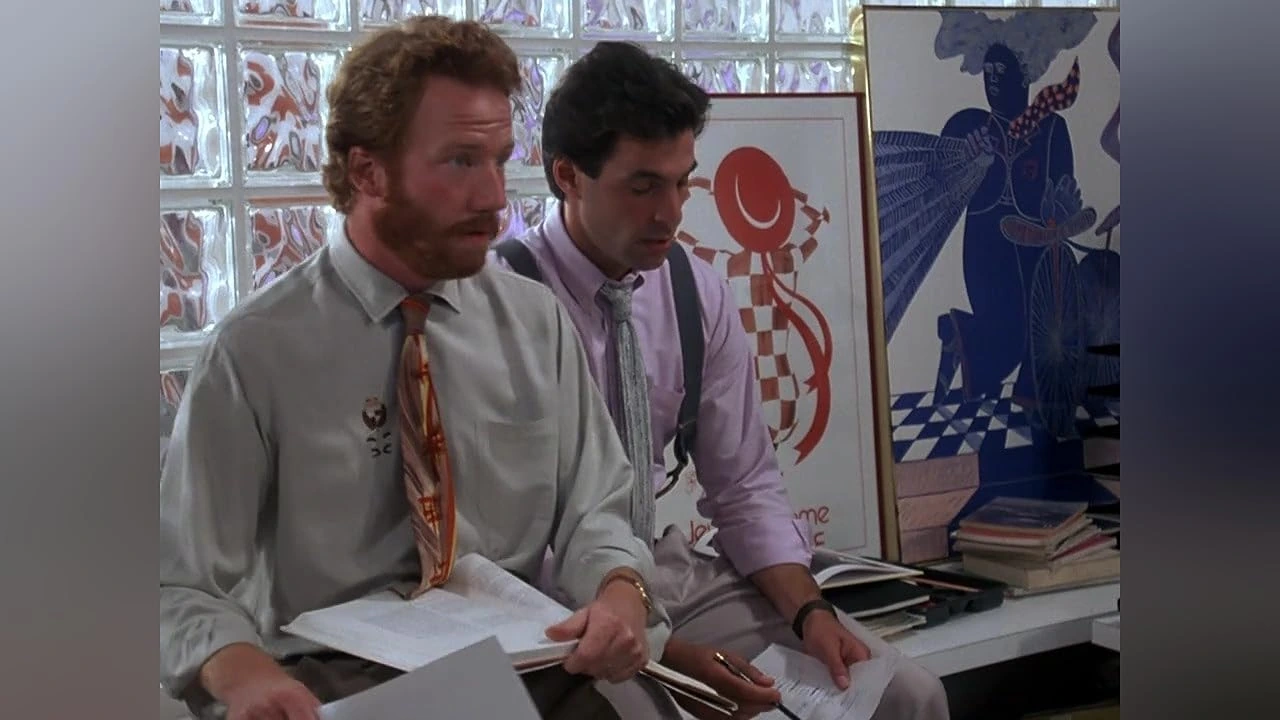
“Competition” sharpens the personal stakes by letting an outside preference disturb the balance between them. A client choosing one man’s contribution is not simply a business success to be celebrated equally. It can feel like a judgment of talent, value and who has been carrying whom. Old friendship supplies context without guaranteeing generosity.
The larger agency world and Miles Drentell become important as the series develops. By 1989, corporate power gives the men another arrangement to confront, with David Clennon’s Miles providing a very different kind of authority from the partnership’s familiar banter. His presence makes compromise feel less like an abstract question discussed after dinner and more like a condition attached to professional advancement.
That work story belongs beside the wider network landscape in the 1989 television season. The annual rankings show the larger programs competing for household attention; they do not measure how insistently one drama examined a client meeting. Popular reach and the depth of a particular workplace scene are different things worth describing accurately.

It is also important to keep later episode dates straight. The well-known “Towers of Zenith” business two-parter, including “Samurai Ad Man,” aired in 1990. Its reputation can color our memory of the show’s eighties identity, but those episodes do not belong inside a 1989 viewing list. The earlier work material already gives us plenty to discuss without borrowing from the next decade.
The Friend Group Could Be Supportive and Intrusive
The circle gives people somewhere to go when a marriage or job becomes difficult. That is a real benefit, especially for adults constructing a life away from the places where they grew up. A friend can provide practical help, a place to stay or the relief of being understood without explaining every piece of the history.
The same closeness can become intrusive. Information moves quickly, loyalties overlap and a private difficulty can become an evening’s subject before the person living it has decided how to describe it. Knowing someone for years can create the mistaken impression that you already understand what the present problem means.
“Therapy” is particularly useful here because the subject seems to invite helpful interpretation. The people outside a troubled marriage may want to understand, but they may also be protecting their own sense of security. If they can explain exactly why Nancy and Elliot are in trouble, perhaps they can reassure themselves that their own relationship is a different case.
That motive does not make concern entirely false. It makes it mixed. The series is good at showing how affection and self-interest can occupy the same act. A person may offer a sincere opinion while enjoying the chance to be the competent one, or keep a confidence partly because knowing it makes him feel especially close to the speaker.
I recognize that as one of the program’s more durable observations. Adult friendship does not become pure simply because it lasts longer than school. It still contains status, jealousy, habit and the desire to be needed. A convincing group can hold those elements without making every relationship cynical.
The stronger episodes allow the intrusion to have consequences. A friend who is hurt by gossip should not be required to accept that the good intention cancels the harm. The group remains valuable, but the people inside it have to learn where closeness stops granting permission.
A Daydream Could Tell Us What the Polite Conversation Did Not
thirtysomething’s reputation for naturalism can obscure how willing it was to leave literal reality. Fantasy, imagined exchanges and shifts of perspective let an episode show the private version of an event alongside what other people can actually observe. The characters are not only having conversations. They are preparing, revising and sometimes badly misrepresenting those conversations inside their heads.
That is a useful formal choice for a show about self-conscious adults. A worried person can stage a disaster before arriving at dinner, then react to the real room as though it has already delivered the imaginary verdict. The audience can understand why the response is disproportionate because it has been allowed to see the rehearsal.
“South by Southeast” makes the playfulness especially visible through its suspense-film approach. The title itself announces a conversation with movie conventions. The episode lets the series’ familiar people occupy a different dramatic shape without requiring us to believe that its entire world has permanently become a thriller.
The experiment is a reminder that domestic subject matter does not require visually obedient television. The show can use genre, memory and imagination to find another angle on an ordinary concern. A relationship question may become more legible when its emotional logic is briefly exaggerated rather than explained in another kitchen conversation.
That places the series in an interesting conversation with Moonlighting’s willingness to bend television form. The programs have different tones and central arrangements, but both can let the audience notice that an episode is being told from a particular angle. The hour is not a transparent window someone happened to leave open.
The risk is that cleverness can get ahead of feeling. A formal trick is more rewarding when it reveals something specific about a person. The strongest thirtysomething experiments keep the human problem underneath the style, so the unusual presentation becomes another way of understanding rather than a request to admire the presentation by itself.
The Music Let an Ordinary Room Hold a Feeling
The theme and score helped establish an atmosphere before every emotional point had to be spoken aloud. W.G. Snuffy Walden and Stewart Levin are associated with the original theme, while the series’ musical approach makes room for intimacy and unease rather than treating every domestic problem like an approaching villain.
That restraint matters in a show where the event may be a look, a pause or the aftermath of an argument. Music can allow a moment to remain unresolved without feeling empty. It can tell us to stay with the person a little longer, even though nobody is about to confess the entire meaning of the scene.
Of course, an emotional cue can also become too insistent. A viewer who already finds the characters overinterpreted may feel that the soundtrack is joining the discussion. The useful distinction is between supporting a feeling and announcing exactly what the audience must feel about it. The series is worth hearing as well as watching because it sometimes walks close to that line.
The domestic spaces contribute too. A room contains work in progress, belongings and evidence that a life continues outside the selected scene. The camera can make those spaces feel occupied rather than merely available for the next argument. The house is not a neutral platform on which people deliver opinions about marriage; maintaining it is part of the life being discussed.
I like how different that scale is from the show’s loud reputation. A series remembered as a national argument about self-involved adults can contain quiet craft choices about a doorway, a shared table or somebody not quite looking at a partner. Those small choices give an emotional claim something concrete to rest on.
The hour does not always need a dramatic declaration to justify the attention. Sometimes a change in how two people occupy the same room is the development. The music and visual arrangement help make that development available to a viewer who is willing to stop waiting for a siren.
The 1988 Recognition Was Real; So Was the Argument
The early acclaim arrived quickly. thirtysomething won the Emmy for Outstanding Drama Series in 1988, and Patricia Wettig won that year in supporting actress. The Peabody Awards recognized the series for 1988 as well. Those honors establish that the attention was more than a later audience deciding an old program had been underappreciated.
The 1988 network television rankings provide a useful separate view of the same era. An awards result and an annual audience chart describe different forms of success. The series’ creative reputation should not be converted into a claim that it led the national Top Ten, and a chart position by itself would not explain the particular intimacy viewers responded to.
The next year brought an Emmy for Melanie Mayron’s supporting performance as Melissa, among the series’ other 1989 recognition. The importance here is the attention to an ensemble with different ways of registering uncertainty. A quieter character or an awkward emotional moment could become part of what the industry chose to honor.
But acclaim did not make the program universally welcome. Its focus could look searching to one viewer and self-absorbed to another. The cast and writers have described strong negative reactions alongside devotion. The show did not simply introduce a style that everybody immediately agreed was healthy for television.
That disagreement is part of the history, and it makes the series more interesting to revisit. The question was partly about what deserved an hour of serious attention. Were these ordinary conflicts being examined carefully, or were relatively comfortable people assigning enormous importance to difficulties other viewers could not afford to contemplate for so long?
An honest answer can vary from episode to episode. A program can earn recognition and still invite a fair criticism of its limits. The best reason to return is to see what the scenes actually do, rather than making either the trophies or the reputation for complaining settle the matter in advance.

Strangers Belongs to 1989, and Its Intimacy Mattered
“Strangers” aired on ABC on November 7, 1989. Written by Richard Kramer and directed by Peter O’Fallon, it links Melissa’s relationship with a younger man to the beginning of a relationship between Russell and Peter. The parallel is important: the episode is interested in the fears people bring to forming an attachment and in the judgments they expect from the world around them.
Melissa worries about the difference in age and about presenting the relationship to friends. That concern uses an established feature of the series. The social circle offers belonging, but its imagined reactions can become part of a person’s private difficulty even before anyone has said anything unkind.
Russell and Peter’s story includes a conversation in bed after sex, a scene that was significant in the network television environment of the period. David Marshall Grant plays Russell and Peter Frechette plays Peter. The dramatic value is that the men are allowed uncertainty, desire and the possibility of an ordinary relationship conversation, rather than existing only as a problem someone else has to discuss.
The period context also includes the AIDS crisis and the pressures surrounding gay intimacy. The episode’s treatment belongs to its particular moment and carries the limits of that network environment. It should not be described as though late-eighties television had already become broadly comfortable with the lives it was beginning to show more directly.
I would also be careful with a sweeping “first ever” claim. Television history contains distinctions involving country, broadcast medium, what is depicted and how a scene is framed. The more useful statement is the specific one: this ABC episode placed two men’s post-sex intimacy inside a prominent continuing drama in 1989. That is substantial without stretching the wording into a universal record.
For the series itself, the episode asks whether its close examination of relationship anxiety can extend beyond the central heterosexual arrangements. The answer gains force from the linked structure. Melissa’s worry and the men’s uncertainty are not identical experiences, but they can be allowed to illuminate one another without being reduced to the same thing.
This is also a good example of why the decade boundary matters. “Strangers” belongs within the eighties story. Several other famous developments do not. Remembering the series as one continuous emotional experience is understandable; writing its history requires giving the individual episodes their actual place.
The Comfortable World Had Boundaries Worth Noticing
The criticism of the show’s social narrowness deserves more than a joke about complaining. Its central circle is largely white, educated and professional, with cultural references and opportunities that are not evenly shared across a city. Giving those people depth does not make them representatives of every adult trying to sustain a household.
The production’s Philadelphia setting should therefore not be mistaken for a complete portrait of Philadelphia. The program follows a particular group. What it notices carefully within that group can coexist with what it leaves outside the frame. A viewer may recognize a feeling without recognizing the material circumstances in which the character has time to explain it.
Money complicates that criticism. The characters do have work pressures, financial uncertainty and practical limits; they are not all floating through a life with no bills. But professional opportunity, education and a supportive circle remain forms of advantage even when cash is tight. A serious reading can acknowledge both the pressure and the cushion.
The show’s gender arrangements invite similar attention. Giving motherhood and private emotional labor a central place is valuable. It does not automatically settle whether the unmarried women, working mothers or people choosing a different arrangement receive equal dramatic permission. The distribution of sympathy matters as much as the number of issues mentioned.
I do not think those limits require rejecting the series. They require watching it at the size it actually occupies. It is a particular social world examined with considerable skill and occasional indulgence. The program is strongest when its specificity produces a recognizable person, rather than an assumption that the person’s concern must be the era’s defining concern.
That distinction can make a rewatch more enjoyable. We can stop requiring the show to explain every kind of adulthood and still question moments when it seems to expect that authority. The attention it gives its people is often worthwhile. The rest of the world remains entitled to exist beyond their conversation.
Gen X Got Older, and the Distance Changed
For a Gen X viewer, thirtysomething can be both familiar television and somebody else’s generational portrait. The principal characters were shaped as baby boomers looking back on their younger ideals while negotiating work and family. They were not teenagers growing up with us, and their nostalgia did not automatically describe our own.
That makes the comparison with The Wonder Years useful. Both shows can make an audience look across time, but they stand at different points. The Wonder Years places adult reflection around childhood. thirtysomething examines adults who have not yet found a stable account of what their own growing up is supposed to have accomplished.
The returning viewer brings another interval into the room. Concerns that once looked remote may now seem ordinary, while an age that sounded substantial may seem surprisingly young. That does not prove the series predicted every later experience. It shows how a viewer’s position can change the emphasis of the same scene.
A tired parent’s impatience may register differently. So may the insecurity of a talented friend, the wish to remain attractive or the difficulty of accepting help without feeling judged. These are not exclusive generational properties. The eighties details give them a setting; the behavior can remain legible after the furniture and clothes have become period evidence.
There is humor in that changed distance too. The title once sounded like it described people who had reached the adult floor and were complaining about the service. Now it can look like a group still finding the elevator. The program’s uncertainty becomes easier to understand when we stop assuming that an age should have conferred complete instructions.
That is the part I find worth bringing back into the broader eighties television story. The decade did not consist only of people who knew exactly who they were. It also made room, sometimes uncomfortably, for people who had apparently acquired the right life and still needed to figure out how to live inside it.
Keep the Nineties Stories on Their Side of the Line
The series continued through 1991, and its later developments are a major reason many viewers remember it so intensely. A whole-series retrospective would need to discuss the later medical story, a major death, the business conflicts and the finale. This eighties visit does not need to move those events backward to make the earlier episodes seem consequential.
That matters especially for characters such as Nancy and Gary. Their early identities should not be reduced to summaries of what happens to them later. Nancy has a marriage, creative ambitions and a developing independence before the later crisis. Gary has friendships, work and difficult choices before the event that can dominate a retrospective description.
The same care applies to the advertising plot. Remembering Miles Drentell does not mean every celebrated agency episode aired in 1989. “The Go-Between” and “Samurai Ad Man” are 1990 stories. A season that begins in one decade can continue into the next, so a season label alone does not settle an individual episode’s year.
Keeping those distinctions clear also makes the early show easier to enjoy on its own terms. We can meet the people before knowing the destination. Their ordinary decisions do not have to function only as preparation for a famous later shock. Sometimes a Thanksgiving gathering is worth watching because of what the people bring to that Thanksgiving gathering.
A Rewatch That Starts With the People
I would begin with the pilot, then choose a small group of early episodes that show different kinds of pressure. “We Gather Together” and “I’ll Be Home for Christmas” use holidays to make belonging and background concrete. “Therapy” and “Separation” show what happens when a marriage’s problems alter the arrangements around it.
“Competition” gives Michael and Elliot a focused workplace test. “Weaning” lets Hope’s changing relationship with Janey carry both practical and emotional consequences. “Tenure” gives Gary’s apparent freedom something more demanding to answer to. Those selections let the supporting people remain distinct rather than treating everyone as an extension of Michael’s latest worry.
After some time with Melissa, “Strangers” offers a meaningful 1989 return point. Its relationship questions connect with the series’ established concerns while extending who is allowed to occupy the intimate conversation. It gains something from being seen as part of the continuing world, rather than only as a clip from television history.
If you want another ensemble from the decade, St. Elsewhere provides a useful comparison. Its hospital gives events a different urgency, but both programs can make an hour depend on the accumulating history among people. The wider range of eighties television dramas shows how many different places a serious story could find its pressure.
A return does not require agreeing with every character or admiring every long explanation. Some people will still annoy you. A few scenes may feel more pleased with their own sensitivity than you are. Those reactions can coexist with appreciating a precise observation, an excellent performance or the small relief of recognizing an ordinary difficulty handled with care.
The lasting appeal is that adulthood remains unfinished in these rooms. The house, job, marriage or single life is not the end of the story. It is the arrangement inside which the next choices have to be made. The program gives those choices company, then waits to see whether anybody can listen well enough to make the evening a little easier.
Questions About thirtysomething in the Eighties
When did thirtysomething begin, and what years does this article cover?
The ABC series began in September 1987 and continued through 1991. This article focuses on 1987–89, including the original ensemble, early domestic and work stories, the 1988 awards and the 1989 episode “Strangers.” The major later medical and loss storylines belong to the nineties portion of the run and are kept outside this focused return.
Were the main characters Gen X?
The central characters were baby boomers in their thirties. Gen X viewers could encounter them as older adults whose concerns seemed distant, then return with a different perspective later. The show’s generational identity and its relevance to a viewer are separate questions. Recognizing a marriage or work problem does not require belonging to the same age cohort as the characters.
Who are the two central married couples?
Michael and Hope Steadman are played by Ken Olin and Mel Harris. Elliot and Nancy Weston are played by Timothy Busfield and Patricia Wettig. Their marriages have different pressures, while Michael and Elliot’s advertising partnership connects the households through work as well as friendship. Melissa, Gary and Ellyn complete the original seven-person center.
Did the show win the drama-series Emmy in the eighties?
Yes. thirtysomething won Outstanding Drama Series in 1988. Patricia Wettig won supporting actress that year, and Melanie Mayron won supporting actress in 1989. The series also received a Peabody Award for 1988. These are awards results, rather than claims that the program led a national annual audience chart.
Is Strangers an eighties episode?
Yes. “Strangers” aired on ABC on November 7, 1989. It links Melissa’s relationship with a younger man to a developing relationship between Russell and Peter, including the significant scene of the two men talking in bed. The episode belongs within an eighties discussion, while the 1990 business two-parter and 1991 conclusion require their later dates.
Sources & Further Reading
- The Television Academy’s creator, cast and writer oral history
- The Television Academy’s official award records
- The Peabody Awards’ 1988 recognition of thirtysomething
- Original first-season episode descriptions and period stills
- The Paley Center’s Strangers broadcast record and credits
- TV Guide’s episode listings for the 1989–90 season