Hill Street Blues in the 80s: The Cop Drama That Changed Television
Revisit Hill Street Blues in the 80s: Furillo, Joyce, Belker, Hill and Renko, the roll call, Esterhaus, and the precinct that changed television drama.
The shows, the moments, and the nights we were there for it.
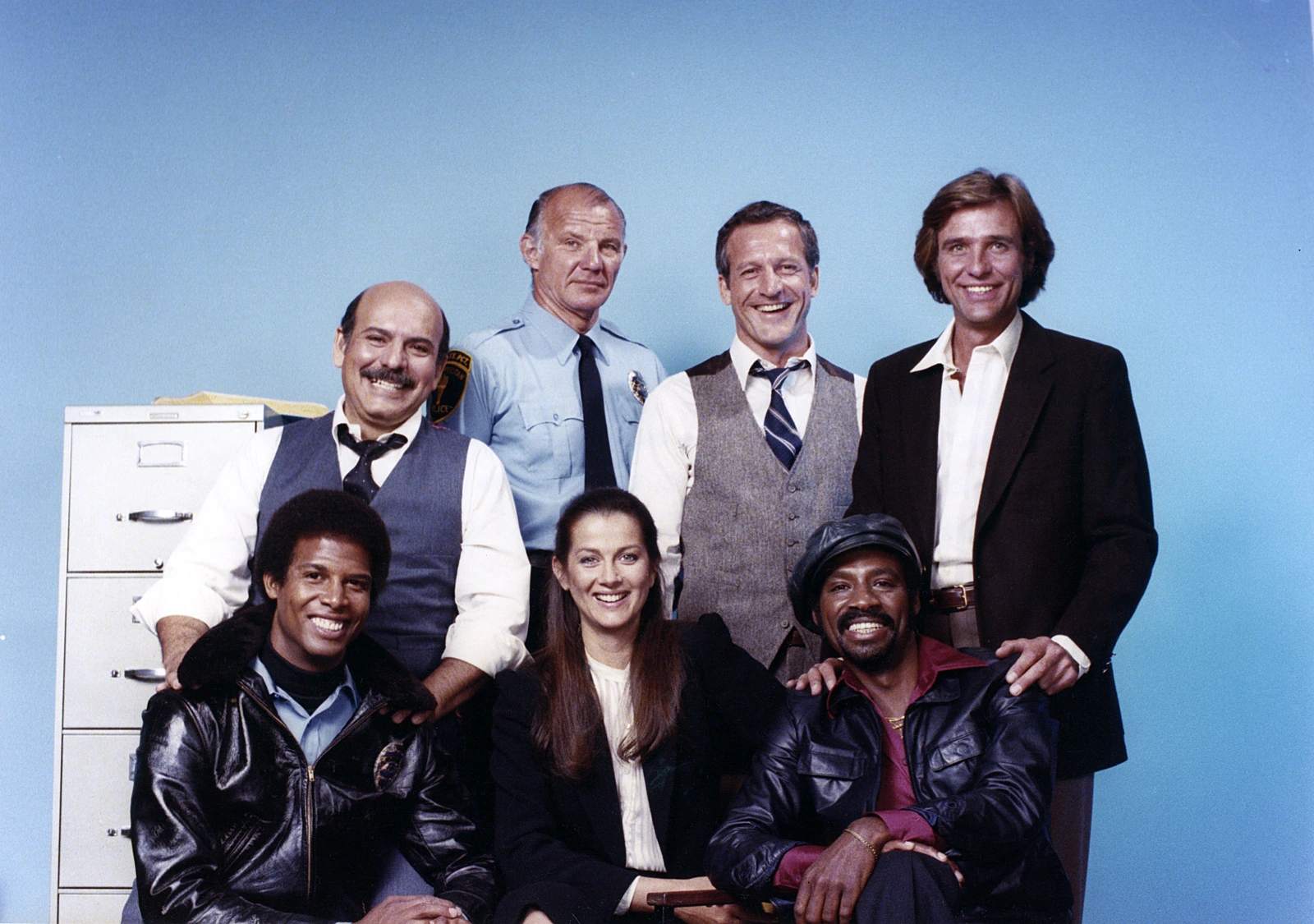
Somebody was always talking at the wrong time. In the Hill Street roll-call room, information had to compete with complaints, jokes, paperwork, and the accumulated fatigue of people who already knew the morning was going to become a problem. Sergeant Phil Esterhaus stood in front of it all with the patience of a man supervising several kinds of weather. Then he sent his officers out with a request: “Let’s be careful out there.”
It was decent advice. The series spent seven seasons demonstrating how difficult it was to follow. Hill Street Blues arrived on NBC in January 1981 and made the precinct feel occupied before the viewer had learned everybody’s name. Cases collided. A joke could end beside a body. A captain could win an argument and still lose control of the day. The police were central, but their uniforms didn’t confer wisdom, emotional stability, or immunity from an embarrassing conversation.
Created by Steven Bochco and Michael Kozoll, the show helped change the shape of American television drama. That’s the respectable version of its reputation. The reason to watch is less ceremonial: Frank Furillo trying to keep the place standing, Joyce Davenport refusing a convenient answer, Belker looking as though he might bite somebody, and Hill and Renko getting through another shift together. Among the defining shows of 1980s television, this one made a crowded room feel like a place with a past and a tomorrow.
Inside This Article
- Roll call was the show before the show
- The pilot doesn’t wait for anybody to settle in
- Frank Furillo’s job is to absorb the impact
- Joyce Davenport is not there to make the police comfortable
- Frank and Joyce take the argument home
- Fay Furillo refuses to become a footnote
- Hill and Renko have to get back in the car
- Mick Belker looks like an arrest waiting to happen
- Howard Hunter has brought a tactical solution
- Lucy Bates earns authority the hard way
- LaRue has a plan; Washington has concerns
- Henry Goldblume keeps taking people seriously
- Calletano understands the organization behind the noise
- Chief Daniels can turn a crisis into an opportunity
- The city doesn’t come with a simple label
- The camera has to find its way through the room
- Mike Post’s theme finds the tired heart of the place
- Yesterday’s mistake is still here tomorrow
- Rites of Spring lets a hard case stay hard
- A rough first year becomes a reason to keep watching
- The Emmys discover an entire precinct
- Trial by Fury puts Furillo’s judgment on the line
- Grace Gardner is more than Esterhaus expected
- The briefing room loses its familiar voice
- Jablonski brings a different kind of morning
- Dennis Franz gets two very different turns
- The later years still find trouble in small places
- Coffey’s loss doesn’t get a tidy little compartment
- A bad day can still contain a very good joke
- The women have work that isn’t waiting for a romance
- The show keeps changing the shift
- The last episode leaves the people in motion
- The revolution was a room full of people
- Hill Street Blues questions worth answering
Roll call was the show before the show
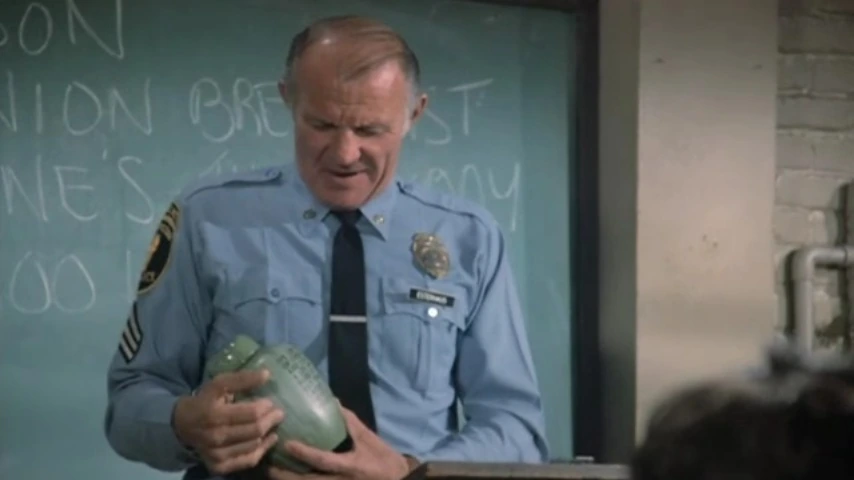
The briefing did several jobs at once. There were assignments to distribute, incidents to explain, and reminders that sounded as though someone had already ignored them yesterday. There were also people listening badly. The camera could find a reaction, a side conversation, or an officer apparently attending a different meeting in the same room.
That was an invitation to watch actively. A tidy procedural might introduce a case with a clean exchange between two people. Hill Street Blues handed over the information amid a working population. Some of what you heard would become the day’s major trouble. Some would turn into a joke. Some would sit in the background until it suddenly mattered.
Michael Conrad’s Esterhaus gave the commotion an affectionate center. His precise language and deliberate delivery made an excellent foil for the room’s interruptions. He seemed to believe that a properly constructed sentence could improve the day. The day had other plans. His authority included concern, and that concern made the ritual more than a clever way to distribute exposition.
The farewell at the end of the briefing never promised safety. It asked for care in circumstances that could make care insufficient. That’s why it traveled beyond the series so easily. It could sound practical, weary, fond, or ominous without changing the words. The cops left the room. The audience knew them a little better, and the street was waiting to test whatever confidence they had brought upstairs.
The pilot doesn’t wait for anybody to settle in
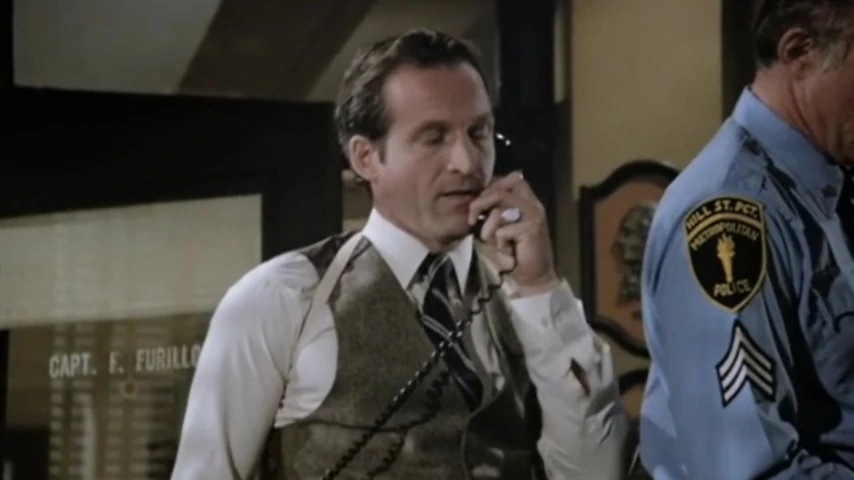
Hill Street Station premiered on January 15, 1981. Frank Furillo has a hostage situation to contain, a tactical officer eager for action, and a gang leader whose cooperation is neither simple nor guaranteed. Joyce Davenport is looking for a client who has vanished into the station’s administrative confusion. Meanwhile, the daily business keeps happening around them.
Bochco and Kozoll’s script doesn’t clear the room so the viewer can receive an orderly introduction. Robert Butler’s direction makes the precinct feel like a place the camera has entered during business hours. People overlap, cross a frame, and bring their own urgency. You have to learn where to look, the same way a new arrival would have to learn whom to ask for help.
Then Bobby Hill and Andy Renko are shot. The violence arrives early enough to change the viewer’s assumptions about the people just introduced. These aren’t interchangeable uniforms who will reliably be back with the same wisecrack after the commercial. Their bodies can be hurt, and their partnership can carry that damage into the next episode.
The pilot’s final movement also changes our understanding of Furillo and Joyce. The professional opponents have a private intimacy that the precinct doesn’t share. One episode has established a workplace, disrupted its apparent security, and revealed that two of its sharpest adversaries go home to a much more complicated conversation. That’s a great deal of machinery, but it feels like life overflowing the available room.
Frank Furillo’s job is to absorb the impact
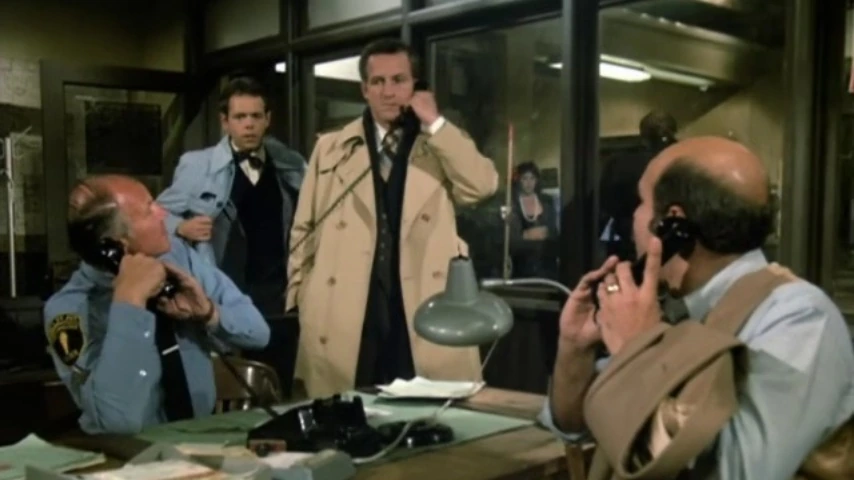
Daniel J. Travanti plays Captain Frank Furillo with a control that never feels quite free. The composure is work. People bring him emergencies, accusations, grievances, and terrible ideas, and he has to decide which problem deserves the next ten seconds. His office is a place where everybody expects an answer from someone whose own day has not become any longer.
Furillo can negotiate with a gang leader, protect an officer, challenge a superior, and disappoint someone he loves before lunch. Travanti makes that burden visible in small adjustments: a pause, a look, the voice held steady when another character’s voice rises. He isn’t an action hero temporarily assigned a desk. The desk is where much of the action reaches him.
His recovery from alcoholism complicates the apparent steadiness. Self-command isn’t merely a professional style; it has personal stakes. The show doesn’t need a drink in every scene to make that history matter. Pressure has a destination inside him, and the audience knows that being useful to everyone else doesn’t guarantee his own security.
Furillo’s decency is persuasive partly because it has to be renewed. A patient man can become impatient. A fair-minded captain can bend a rule for reasons that seem urgent. The series respects him enough to let him be wrong and strong enough to survive our noticing. On a less interesting cop show, the captain would either obstruct the heroes or endorse their instincts. Here he has to live with the consequences of both.
Joyce Davenport is not there to make the police comfortable
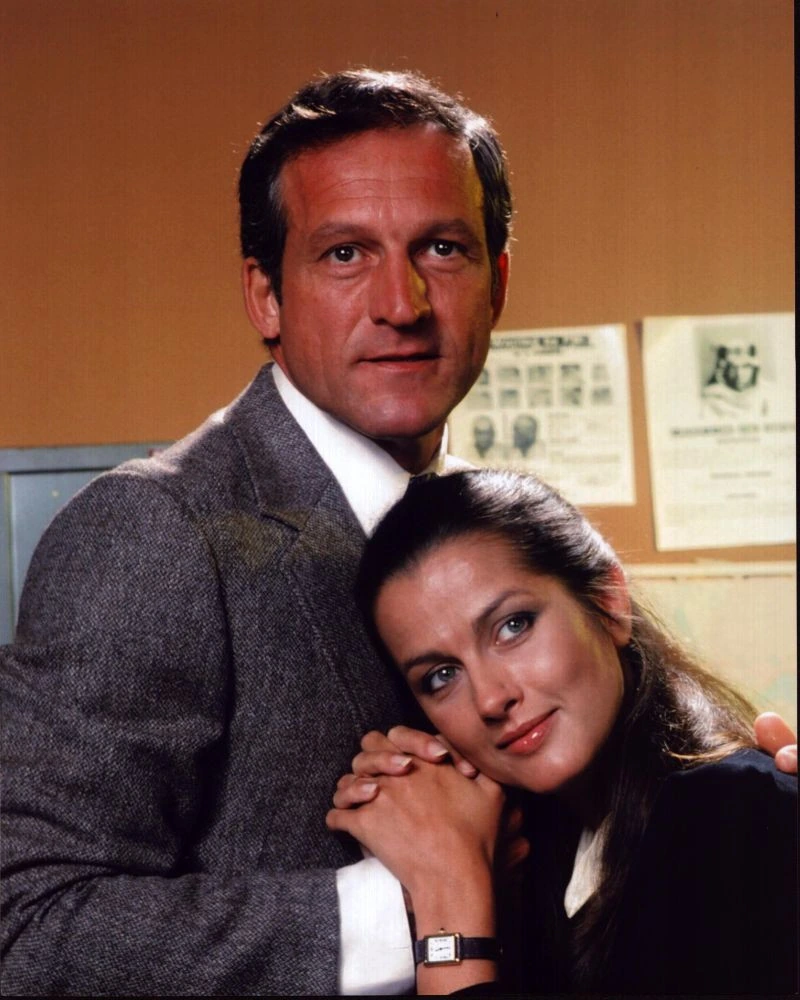
Veronica Hamel’s Joyce Davenport enters police space with the understanding that the people running it are not automatically her allies. She is a public defender. Her client needs representation whether the officers like the client, trust the client, or would prefer the entire question to go away. She doesn’t have to apologize for doing the job.
That independence gives the series an essential source of friction. Joyce can respect Furillo and challenge the way his institution behaves. Their arguments aren’t merely romantic misunderstandings dressed in legal vocabulary. They have competing professional obligations. An outcome that looks efficient from the captain’s desk may look intolerable from the defense table.
Hamel gives Joyce elegance without making her remote. The coolness can sharpen into anger or open into warmth. She is capable of affection, exhaustion, ambition, and fear, and her intelligence isn’t a decorative explanation for why the captain finds her attractive. When she enters a disagreement, the show lets her have something substantial to say.
The arrangement distinguishes Hill Street from a procedural in which the defense lawyer exists to delay justice until the hero finds a shortcut. Joyce’s presence makes the shortcut a subject for argument. The accused person is still a person, the rules still count, and the police point of view doesn’t get the only microphone. In a series full of people interrupting each other, that is one interruption worth hearing clearly.
Frank and Joyce take the argument home
The private scenes between Furillo and Davenport are among the show’s quietest departures from routine. At the station, they can appear to be locked into opposite sides of a contest. Away from it, they are two tired adults trying to preserve a relationship without pretending the contest never happened.
The bedroom isn’t simply a reward after the case. It’s another place where the day’s decisions come due. They can revisit an argument, disagree about conduct, or discover that one of them needs sympathy the other isn’t quite ready to provide. Intimacy changes the way they speak; it doesn’t erase what they believe.
Their secrecy in the early seasons adds its own pressure. The people around them see one part of the relationship while the audience sees another. Professional hostility can coexist with tenderness, and a public exchange can acquire a second meaning because we know where these people were the night before. The series trusts the viewer to carry both versions at once.
When the relationship becomes public and they marry during the third season, the program doesn’t run out of reasons to put them together. Marriage isn’t a solution to the difference between commanding police officers and defending their suspects. It makes the shared life more explicit. Hill Street finds continuing drama in a couple who have chosen each other and still have difficult things to discuss. That’s considerably more useful than making them break up every time an episode needs an ending.
Fay Furillo refuses to become a footnote
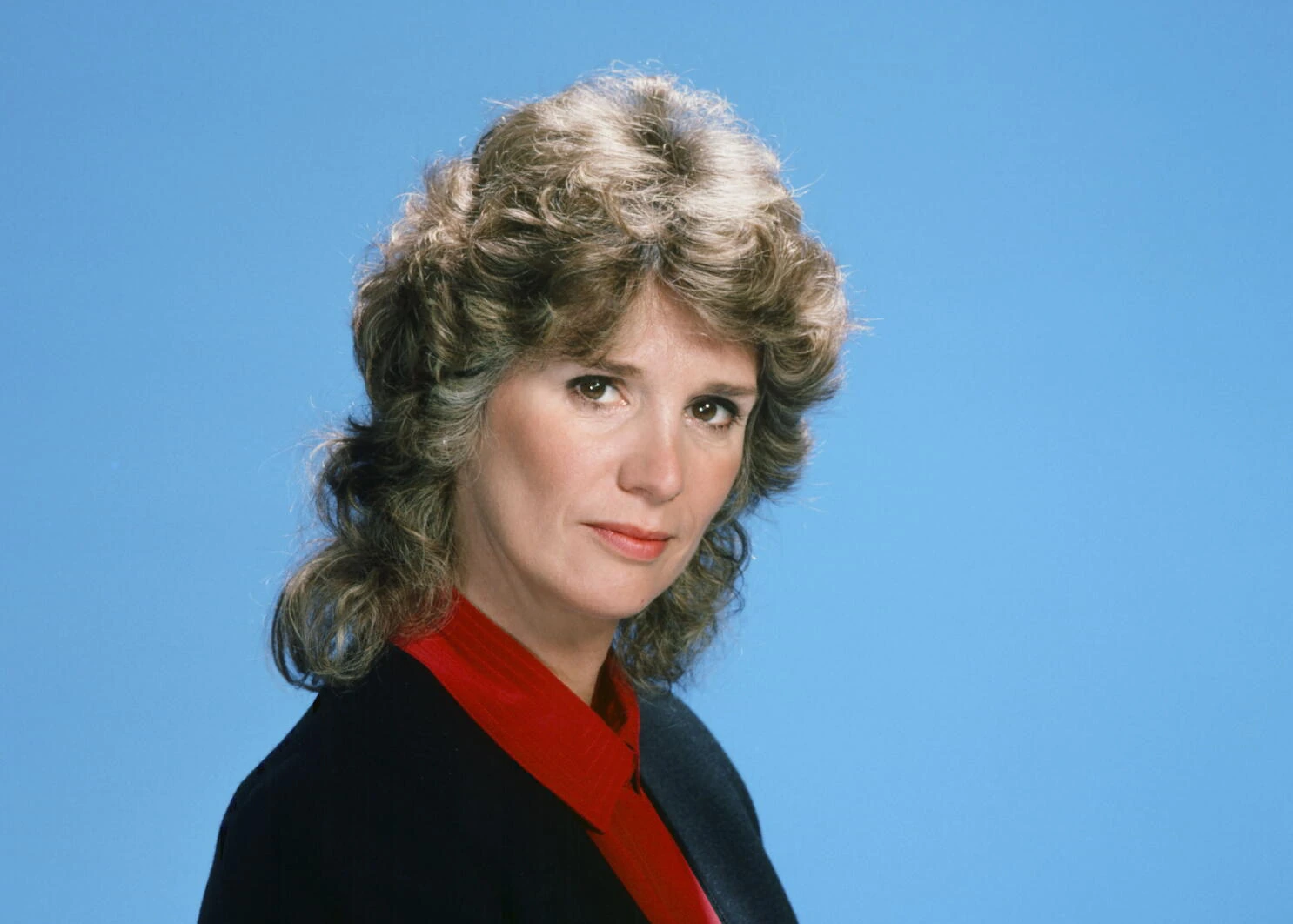
Barbara Bosson’s Fay can arrive like an additional emergency, usually one Frank hasn’t put on his calendar. She is his former wife and the mother of their son, and their old marriage remains a living arrangement of responsibilities, resentments, affection, and unfinished arguments. A divorce decree hasn’t made either of them disappear.
Fay can be demanding, funny, embarrassing, and perceptive. Bosson doesn’t sand down the edges to make her an easy guest in the captain’s office. She knows which buttons are available and has a long history of pressing them. Frank’s public composure can be tested very quickly by someone who remembers him before the current crisis made him look indispensable.
Yet the character is more than the ex-wife who interrupts a new romance. Fay has vulnerabilities and a need to be taken seriously. The show gradually gives her work connected to victims, letting her concern for other people exist outside her relationship with Frank. Her life expands rather than remaining permanently parked beside his desk.
That development is typical of the series at its most generous. Someone introduced as a source of trouble acquires enough space to become a person. Bosson’s emotional directness contrasts with Travanti’s restraint, and the contrast can be uncomfortable in productive ways. Frank can manage a negotiation with strangers and still fail to answer the person who has known him for years. His rank carries limited authority in that conversation.
Hill and Renko have to get back in the car
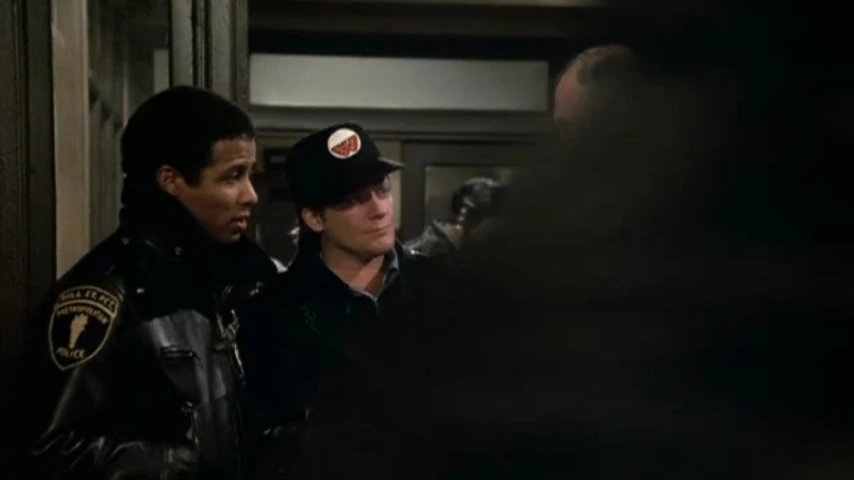
Michael Warren’s Bobby Hill and Charles Haid’s Andy Renko are one of the show’s most durable partnerships because their differences never make their mutual dependence feel unlikely. Hill has a steadier presence. Renko is more explosive, more likely to announce a grievance before deciding whether it needs an audience. Together they have the intimacy of people who spend hours in a confined space and may have to save each other before the shift ends.
The shooting in the pilot gives that relationship a shock at the beginning. Recovery doesn’t instantly restore their ease. They can be angry, frightened, and uncertain about going back to the work together. The aftermath matters because it refuses the common television convenience of treating a wound as a dramatic punctuation mark followed by a clean reset.
The partnership can also be extremely funny. Renko’s appetite for a complaint is a renewable resource, and Warren’s reactions give Haid something to push against. The comedy doesn’t require Hill to become a silent straight man without a life. He has his own family concerns, loyalties, and disappointments. Both men bring something into the patrol car that the uniform can’t tidy away.
Race is part of their experience and their surroundings, but the series doesn’t reduce the pair to a portable debate with two assigned positions. Friendship, prejudice, fear, and professional trust emerge through actual situations. Their affection isn’t proof that the city has solved its problems. It is one relationship that has to keep working inside a city that plainly hasn’t.
Mick Belker looks like an arrest waiting to happen
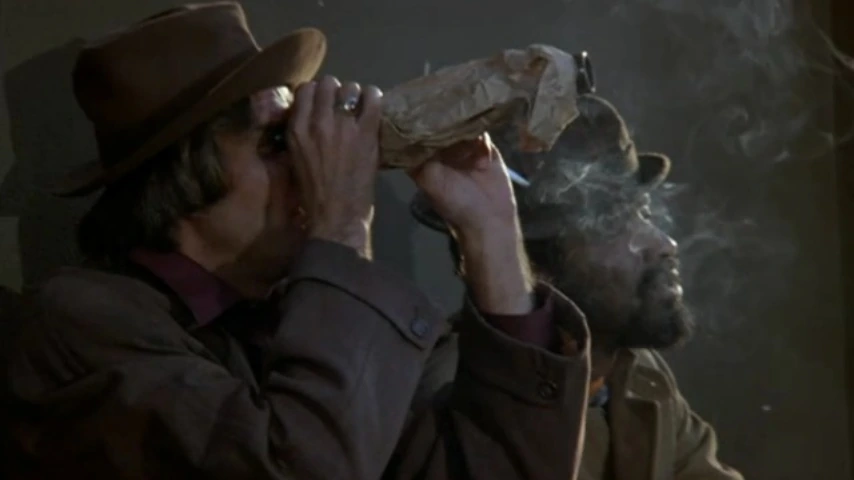
Bruce Weitz’s Mick Belker is an undercover detective whose appearance suggests that regular laundering may be an enemy operation. He growls, crowds people, and seems prepared to solve a dispute with parts of his body that the department manual probably doesn’t recommend. In an ensemble full of distinctive faces, he is exceptionally easy to find.
That could have become a one-note grotesque. Weitz gives him tenderness as well as teeth. Belker’s contact with vulnerable people can reveal a concern that the abrasive surface conceals. His relationships with his mother and, later, Robin Tataglia place domestic demands beside the street persona. The growl doesn’t get him out of being somebody’s son or partner.
The undercover assignments provide a remarkably broad comic wardrobe of situations. Belker can be placed among people who don’t recognize the authority under the grime, and the audience gets to enjoy how little his usual manner helps disguise his impatience. The performance remains human because the character can be hurt, lonely, and frightened despite the intimidating exterior.
His friendship with Eddie Gregg is one of the series’ ways of making that humanity concrete. Eddie isn’t merely a recurring source of information. His troubles become something Belker has to care about beyond a useful exchange. The detective who initially looks least suited to gentle attention can become its source. Hill Street is very good at allowing a face to make an alarming first impression and then asking us to look at it longer.
Howard Hunter has brought a tactical solution
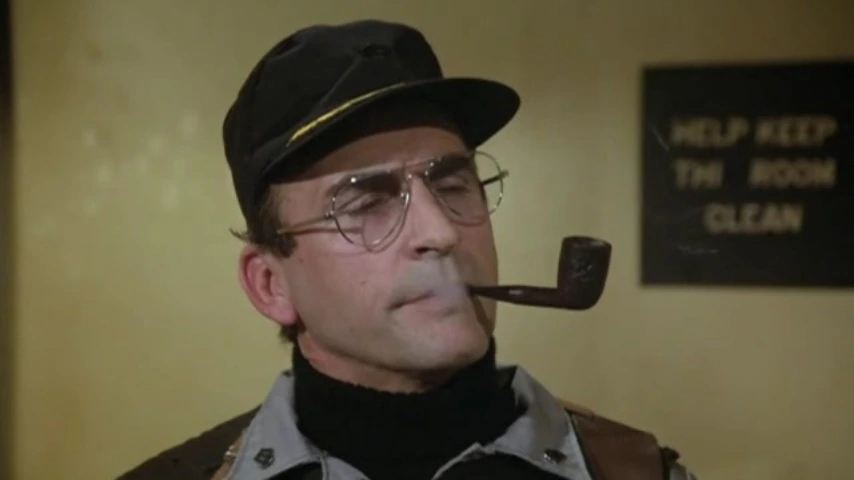
James B. Sikking’s Lieutenant Howard Hunter is ready. For what, exactly, is sometimes a question Furillo would prefer to settle before Howard deploys anything. The Emergency Action Team commander has the posture, jargon, and equipment-minded confidence of a man who can see a tactical opportunity in circumstances that other people would describe as a conversation.
The show gets enormous comic mileage from that certainty. Howard can propose an aggressive response while the captain is trying to keep the situation from becoming one. His faith in specialized force often arrives dressed as common sense. Sikking’s controlled delivery makes the absurdity sharper because Howard generally believes he is being entirely professional.
But the character isn’t only a satire of militarized enthusiasm. His loneliness, disappointments, and vulnerability become visible over the run. The man who seems most committed to invulnerability can be desperately insecure. The series is willing to make him ridiculous and then remain with him after the joke has stopped being comfortable.
That mixture is demanding. If Howard were merely a buffoon, his power would be harmless. If he were only dangerous, the comic life of the precinct would lose one of its most peculiar sources. Sikking keeps both possibilities present. Furillo’s job includes understanding that a colleague may mean well, possess real skills, and still need to be prevented from turning the afternoon into a demonstration.
Lucy Bates earns authority the hard way
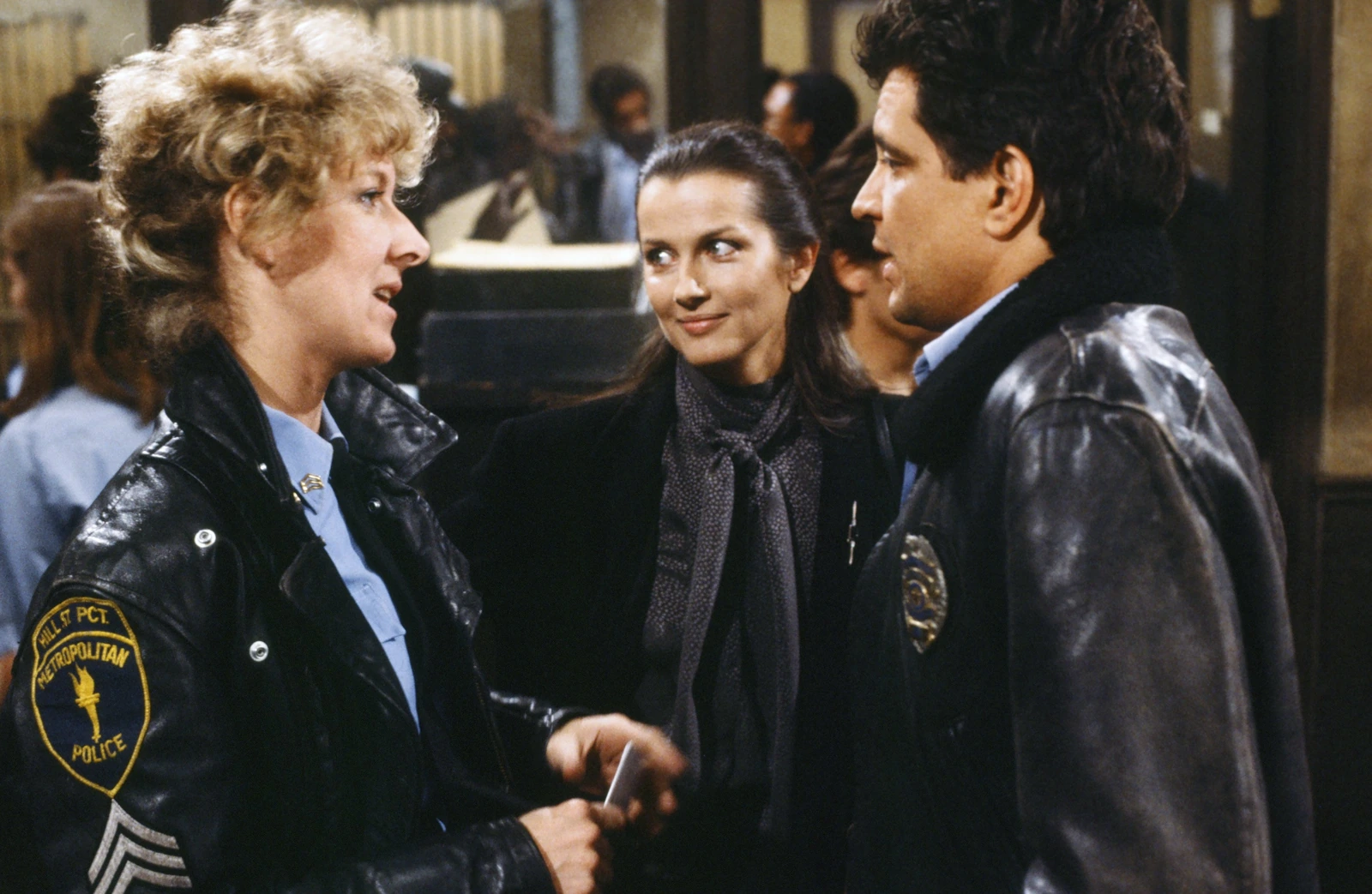
Betty Thomas gives Lucille Bates a grounded physical presence that makes her useful immediately. Lucy can stand in a room without asking permission to be there. The people around her don’t always recognize her competence as quickly as the audience does, and the series lets professional respect become something she has to negotiate rather than something automatically granted.
Her partnership with Joe Coffey, played by Ed Marinaro, develops its own blend of teasing and reliance. They work together, irritate one another, and face danger without the show turning every exchange into a declaration about partnership. Coffey’s ease can be appealing and exasperating. Bates’ impatience often has evidence behind it.
As Lucy moves into supervisory responsibilities, the job changes. Being capable in the field doesn’t make a room full of officers obedient. The roll-call position requires a different kind of command, made harder by comparison with someone as beloved as Esterhaus. Thomas lets Lucy’s awkwardness and determination coexist. Authority can be earned without arriving fully rehearsed.
The broader story of 1980s police television includes very different ways of putting women at the center of the work. Bates belongs in that conversation beside Cagney & Lacey, though the series have different structures and emphases. Lucy’s progress is lived through assignments, colleagues, rank, and personal choices. She isn’t there to provide a weekly inspirational speech while the men get the interesting cases.
LaRue has a plan; Washington has concerns
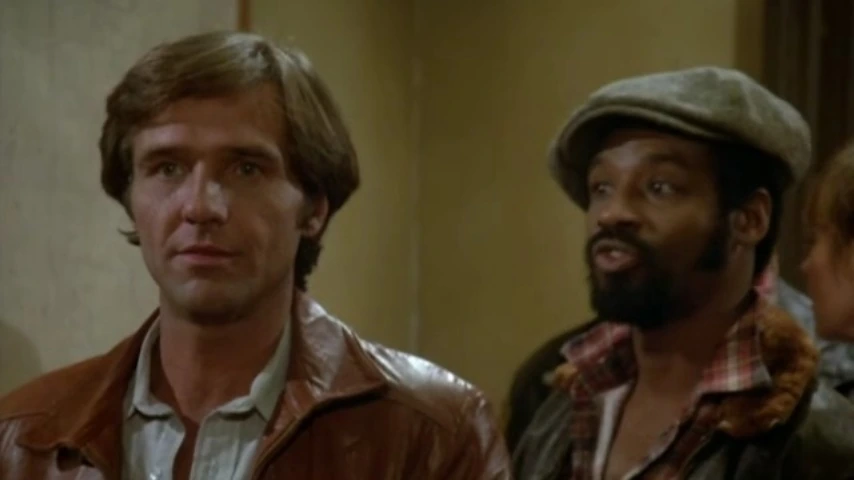
Kiel Martin’s J.D. LaRue is forever capable of discovering a promising angle. It may involve police work. It may involve money. It may involve an enterprise whose advantages seem clearest to J.D. Taurean Blacque’s Neal Washington has the expression of a man who has already heard an earlier version and remembers how it ended.
The partnership is funny because Washington isn’t simply assigned to provide a moral lesson at the end. He has the weary familiarity of someone who knows his colleague’s strengths as well as his evasions. LaRue can be resourceful and effective. He can also use that resourcefulness to create a problem that his partner will then have to help contain.
LaRue’s drinking gives the relationship a much darker pressure. Schemes, excuses, and lapses stop being harmless personality color when they threaten the work and the people depending on him. The first season allows the deterioration to become visible across episodes. Furillo’s own history gives his intervention a personal force beyond the captain issuing a warning.
Martin and Blacque make the friendship survive its unevenness without making the damage disappear. Neal can help without pretending every explanation is credible. J.D. can be ashamed without becoming instantly cured by a meaningful look. Their scenes are one reason the show benefits from continuity. A viewer who has watched the earlier excuse can hear the next one differently, and so can the man standing beside the person delivering it.
Henry Goldblume keeps taking people seriously
Joe Spano’s Henry Goldblume brings an exposed conscience into a workplace where exposure can be costly. He is interested in motives, in possibilities for help, and in the person who might be missed by a more efficient response. That sensitivity can make him valuable. It can also make him impatient with colleagues who are trying to solve a different part of the same problem.
Goldblume isn’t a machine for delivering the humane position while everyone else waits to learn. He can be proud, frustrated, and drawn into situations by his own need to matter. Compassion doesn’t exempt him from vanity or bad judgment. Spano gives the character enough nervous energy to keep his seriousness from becoming a monument.
His work often presses against the limits of what the precinct can provide. A person may need housing, psychiatric help, protection, or simply sustained attention, while the available system offers a cell, a form, and another appointment. Henry’s anger can be justified even when his chosen response creates a new problem for Furillo.
The later story involving his old friend Steve Merkur expands that vulnerability beyond a case. A friendship, a frustrated writing ambition, and the consequences of fear enter the same crowded life. The series doesn’t reserve personal complication for its romantic leads. Henry can be trying to help and trying to repair something in himself at the same time. The show is interested in what happens when those purposes stop being easy to separate.
Calletano understands the organization behind the noise
René Enríquez’s Ray Calletano is part of the precinct’s essential connective tissue. He can be less flamboyant than Hunter, Belker, or LaRue, but the station needs people who understand procedure and can carry authority without turning every instruction into a personal performance. The ensemble is stronger for containing different temperatures.
Calletano also has ambitions and frustrations of his own. Promotion doesn’t automatically solve the problem of being heard, respected, or given a manageable assignment. His later command elsewhere in the department allows the show to examine the difference between a new rank and actual institutional support. An office can be yours while the crisis arriving through its door is larger than the resources behind you.
The character’s presence matters in a series that can otherwise make Furillo seem like the only reasonable administrator within miles. Ray is another working professional with skills and limitations. He can carry part of the load, disagree with the captain, or find himself exposed to pressures the Hill Street routine had made less visible.
His humor is often quieter than the precinct’s broader business. That helps the room feel populated by people rather than an audition line for the biggest reaction. A workplace full of Belkers would be exhausting. A workplace without a Calletano would probably stop functioning before the end of the briefing. Hill Street gives both kinds of presence somewhere to stand.
Chief Daniels can turn a crisis into an opportunity
Jon Cypher’s Chief Fletcher Daniels is a recurring reminder that Furillo’s authority sits inside somebody else’s political calculation. The chief can want a result, a headline, a sacrifice, or a reassuring public appearance. Those wants may overlap with good policing. They may also require the captain to explain why doing the right thing is becoming inconvenient.
Daniels isn’t useful only as a villain in a suit. He represents a different view of the department’s survival. Public confidence, career advancement, and control of a damaging story can become priorities in their own right. Furillo has to navigate that reality while dealing with the actual people whose lives will be affected by the chosen response.
The friction keeps the precinct from becoming a sealed moral island. An investigation can reach someone powerful. An officer’s mistake can become a public test. A sound decision can be made to look insubordinate, and a cowardly one can be presented as responsible leadership. The show repeatedly finds suspense in who will be allowed to define what has happened.
Cypher’s confidence makes the pressure effective. Daniels doesn’t need to enter with a theatrical announcement of bad intentions. He can sound perfectly reasonable while arranging the terms of somebody else’s impossible afternoon. Furillo’s politeness then becomes a form of resistance. A captain who has spent the day controlling a chaotic room has to control himself again when the person creating the next problem outranks him.
The city doesn’t come with a simple label
Hill Street’s city is deliberately unnamed. Chicago imagery in the opening and the series’ production geography have encouraged plenty of confident identifications, but the dramatic setting isn’t a straightforward claim that this is a documentary about one actual department. The neighborhood is a constructed place with its own accumulating history.
That choice allows the city to feel familiar without making every civic reference line up with a map. It contains neglected buildings, businesses, homes, gangs, political machinery, and people who know what the police look like from the other side of the encounter. The precinct isn’t above the neighborhood. It is one institution inside it, dependent on cooperation it cannot simply command.
The series can be harsh in its depiction, and some of the era’s shorthand about race, crime, poverty, and sexuality deserves a critical eye now. Admiring its ambition doesn’t require treating every portrayal as timelessly accurate. The show is a made drama from the 1980s, with insight and blind spots living uncomfortably close together.
Its best street stories refuse to let a uniform settle the whole question. A resident can distrust the police for reasons the audience understands. An officer can be trying hard and still make the situation worse. The neighborhood is most convincing when it contains people with their own claims on the day, not simply a supply of trouble waiting for the regular cast to arrive.
The camera has to find its way through the room
Robert Butler’s pilot direction establishes a look that makes the viewer feel present amid activity. People move across the frame. The camera reframes instead of always waiting for a clean, isolated speech. The sound can carry more than one thing worth hearing. A station full of work looks and sounds full of work.
The technique has a practical dramatic effect. You can’t assume the only important person is the person placed neatly in the center. A reaction, a shouted complaint, or a figure crossing behind a conversation can widen the scene. The workplace continues around the featured story. That makes a familiar standing set feel less like furniture arranged for the current guest star.
It also creates a particular kind of comedy. Somebody can be earnestly explaining a procedure while a small disaster develops nearby. A dignified announcement can be undermined by the room receiving it. The series doesn’t always need a separate joke scene; the background is already full of colleagues who have declined to cooperate with the intended mood.
The style became influential enough that later viewers may experience it as familiar television grammar. Returning to the early episodes helps recover its energy. The program isn’t merely adding camera movement to an ordinary case. It is changing the amount of life a scene can contain. A clean resolution becomes harder to believe when you can still hear several other problems waiting just outside the office.
Mike Post’s theme finds the tired heart of the place
The opening music doesn’t charge into the street with a siren’s confidence. Mike Post’s theme has a gentler, melancholy line, a pause in the noise before the people return to it. Against the patrol cars and city images, that sound gives the series an emotional temperature that the title alone could never supply.
It is a particularly good fit for a program whose heroism is often a matter of continuing. Furillo’s patience, Hill and Renko’s friendship, and Esterhaus’ concern don’t need a fanfare. They need enough feeling to suggest that the routine has a cost. The tune can be remembered fondly without turning the city it accompanies into a pleasant place.
The contrast also makes the transition from roll call effective. The briefing has supplied jokes, arguments, and practical details. The music opens a little room around those voices. Then the hour returns to the consequences of the assignments we have just heard. A familiar theme becomes a threshold between knowing the plan and discovering what will go wrong with it.
Later television inherited a great deal from Hill Street’s storytelling, but this specific marriage of melody and workplace is hard to reproduce. The tune doesn’t tell us that the officers will win. It makes us care that they are going out again. That is a more durable introduction to the series than a promise of weekly triumph would have been.
Yesterday’s mistake is still here tomorrow

Hill Street didn’t invent continuing characters, ongoing romance, or serialized storytelling. Daytime soaps and prime-time serials had already demonstrated that an audience could remember trouble. What it did so effectively was weave those continuing pressures into a police drama whose individual hours still had their own momentum.
A case might resolve while a marriage worsened. An investigation could move forward while an officer’s drinking became harder to hide. The viewer could enjoy a day’s story and still feel the tug of unfinished business. Returning next week meant visiting people who hadn’t stopped existing when the previous episode ended.
That changes the weight of a small scene. A joke about a colleague’s habit might be funny now and troubling later. A favor can create an obligation. A compromise can return in another form. The program’s crowded structure isn’t simply a way to include more plots; it gives choices time to acquire consequences.
The same appetite for continuing workplace lives would help animate St. Elsewhere’s hospital. The settings differ, but both series ask an audience to keep track of people whose professional competence doesn’t protect their personal lives. Hill Street’s influence is often discussed as a technical achievement. For a weekly viewer, it could feel simpler: you wanted to know how the people were doing, and you knew some of them would give an unreliable answer.
Rites of Spring lets a hard case stay hard
The first season’s Rites of Spring stories bring Hill and Renko into contact with a young mother who leaves her small children alone. A police response is necessary, but an arrest doesn’t magically supply a safe household or explain away the circumstances. The officers have to confront a family problem whose needs exceed the immediate tools in their hands.
That’s one of the show’s most useful recurring situations. The law can describe an offense more neatly than the people can describe their lives. Hill and Renko aren’t relieved of responsibility by understanding some of the difficulty. Nor does enforcing the law make the difficulty vanish. The characters have to keep acting inside an inadequate arrangement, with children who need something more durable than a sympathetic expression.
Alongside it, an investigation involving police misconduct forces the precinct to look inward. The officer under scrutiny can be objectionable, the institutional pressure can be self-serving, and the obligation to find out what actually happened still remains. Washington’s persistence is valuable precisely because it isn’t the loudest thing in the room.
Those parallel stories show how the ensemble structure earns its space. The episode can move between an intimate domestic crisis and an institutional one without pretending that either has a convenient solution. Meanwhile, familiar personal trouble continues. LaRue’s drinking grows harder to separate from his performance at work. There is no clean border between the case, the organization, and the person wearing the badge.
The later first-season Jungle Madness material carries several of those pressures forward. What began as a weekly police show now asks the viewer to remember what happened to vulnerable people after their first appearance, and what a colleague did after promising to improve. A recurring guest is allowed to have a worsening life; a regular is allowed to become less reliable. That can be frustrating if you came for a neat solution. It is absorbing if you have begun to care about the people.
The strongest episodes don’t congratulate the officers for caring. They give caring a cost: time, frustration, a difficult follow-up, or another conversation nobody wants to have. Hill Street’s sympathy is most convincing when it makes the work more complicated. The precinct can be a refuge for the audience and still be a place where answers run out well before the day does.
A rough first year becomes a reason to keep watching
The first season was a midseason arrival with a complicated broadcast path, including nights other than the Thursday slot most closely associated with the show. It wasn’t an instant mass-audience victory. The unfamiliar density, the grim surroundings, and the refusal to explain everything twice made it a demanding proposition by network standards.
The season ending in 1981 puts that arrival beside the established hits in the 1981 television rankings. Hill Street’s importance shouldn’t be mistaken for a claim that it topped those charts. Its early survival tells a more interesting story about a network making room for a program whose reputation outpaced its household audience.
The first episodes also contain the roughness of a series discovering how to sustain its own crowded world. Some comic business is broad, some tonal shifts are abrupt, and the accumulated chaos can ask a lot from a viewer who has just arrived. But the relationships become clearer through the effort. Familiarity is earned by watching rather than supplied as a neat instruction sheet.
That experience helps explain the attachment the series developed. A viewer who learned the room could enjoy distinctions invisible in a brief sample: who was bluffing, who was about to lose patience, which colleague should never be trusted with an investment opportunity. The station became easier to follow without becoming a simpler place. Television could reward attention with recognition, and recognition could become a reason to stay.
The Emmys discover an entire precinct
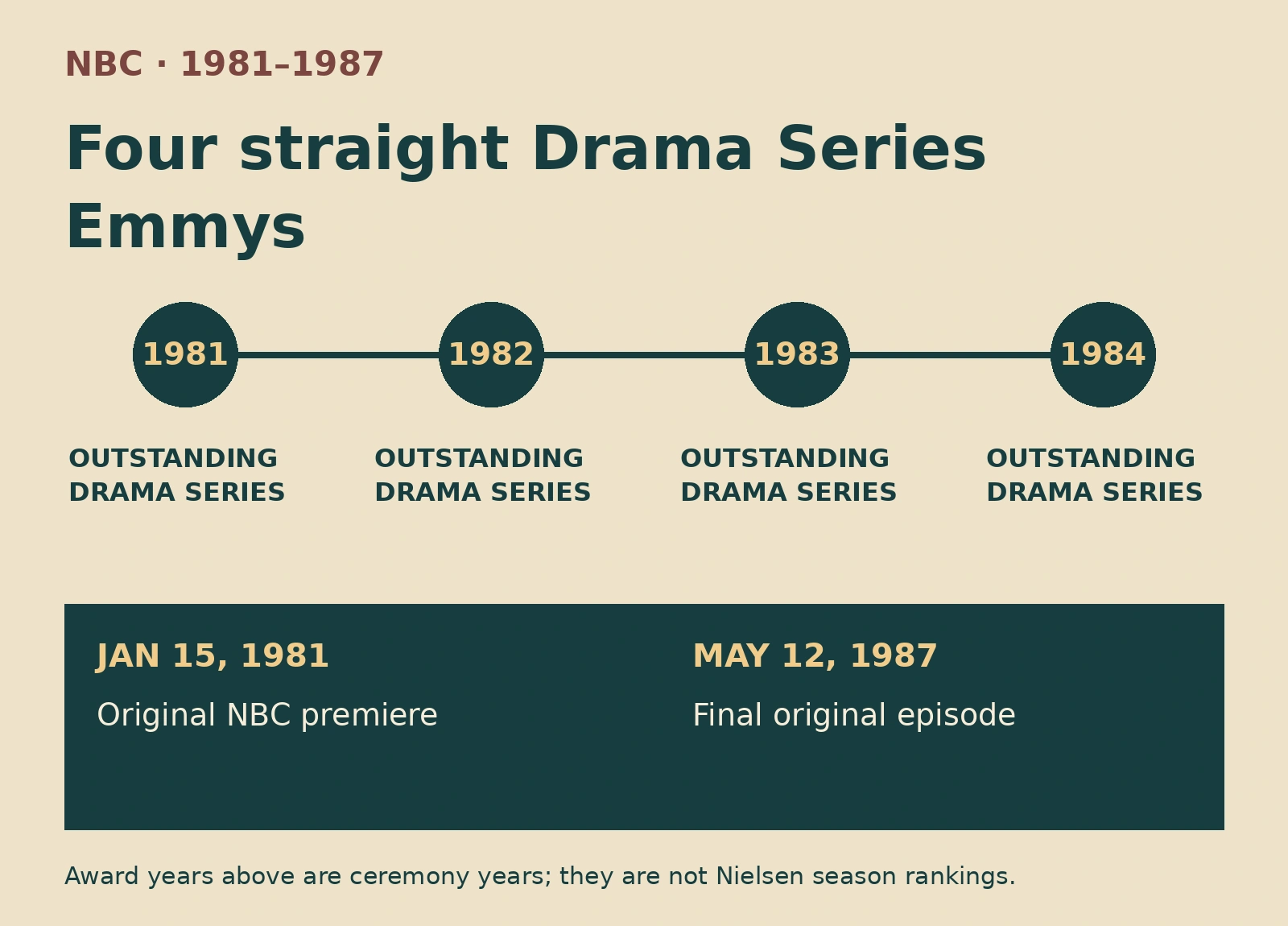
Hill Street Blues won eight Emmys in 1981, including Outstanding Drama Series. The awards recognized a debut that the ratings alone had not made secure. Travanti, Conrad, and Barbara Babcock were among the acting winners, while writing and directing honors helped underline how much of the series’ impact came from the whole production.
The show went on to win Outstanding Drama Series four consecutive times, from 1981 through 1984. That run is a substantial achievement without requiring any claim that every episode was perfect. The appeal was in the sustained ambition: a large cast, continuing stories, tonal risk, and a police drama willing to make its own people uncomfortable.
The acting recognition also suited the ensemble. A scene could be carried by someone far from the captain’s office. Michael Conrad’s ceremonial patience, Bruce Weitz’s ferocity, Betty Thomas’ grounded frustration, or Barbara Babcock’s Grace Gardner could provide an episode’s most memorable human texture. The cast wasn’t merely support arranged around one heroic lead.
By the season ending in 1982, the series had moved from an uncertain debut into a much more conspicuous place in the conversation. The 1982 television charts describe the competition for viewers; the awards describe another part of the story. NBC had a show people could point to when arguing that a weekly network drama could be more demanding, more populated, and more emotionally untidy than the safest version of the form.
Trial by Fury puts Furillo’s judgment on the line
Trial by Fury opens the 1982–83 television season in September 1982 with the rape and murder of a nun and an intense demand for action. Furillo’s determination to obtain results puts pressure on the rules that ordinarily support his authority. The episode becomes especially uncomfortable because the person testing the limits is the character the audience has learned to trust.
That is a more serious challenge than introducing an obviously corrupt outsider. Furillo has reasons, anger, and a belief that the situation is exceptional. Joyce has obligations that cannot disappear simply because public feeling is overwhelming. Their conflict turns the professional argument into something the series has prepared us to care about personally.
David Milch’s script gives the crime story moral pressure without letting the pressure become a clean answer. Viewers can understand the captain’s urgency and still see why urgency is dangerous when it starts rewriting procedure. The show doesn’t need to make Frank a different person to expose the flaw. It uses his familiar strength—his determination to act—as the route into it.
The episode demonstrates why the series’ humane reputation is more complicated than a collection of admirable speeches. A decent person can rationalize a bad method. An unpopular client can need a defender. An audience can want a result quickly enough to share the temptation. Hill Street can be most challenging when it refuses the reassuring idea that the right character’s certainty is sufficient proof.
Grace Gardner is more than Esterhaus expected
Barbara Babcock’s Grace Gardner arrives with an appetite for life that upsets Esterhaus’ careful arrangements. His romantic complications are among the early series’ broadest pleasures. A man so committed to orderly announcements finds his own personal affairs considerably less manageable than a briefing.
Grace’s confidence gives Conrad something exuberant to react to. She can take up space, express desire, and make the sergeant look both flattered and alarmed. The joke isn’t only that he has a private life. It’s that his private life can move at a speed his formal manner is poorly equipped to regulate.
The series sometimes pushes the sexual comedy hard, and its early romantic business doesn’t all have the same lightness. But Babcock makes Grace a person with force rather than a mere punch line attached to Esterhaus. His composure becomes funnier because she can genuinely disturb it. For a large, authoritative man, he is remarkably susceptible to being swept along.
That history later deepens the account of his death. The same relationship associated with comic excess becomes part of the precinct’s grief. Hill Street’s willingness to let humor and sorrow occupy the same story can be disconcerting. Here it also feels appropriate to the man everyone has known: ceremonious at the front of a room, much less predictable away from it, and missed as a whole person.
The briefing room loses its familiar voice
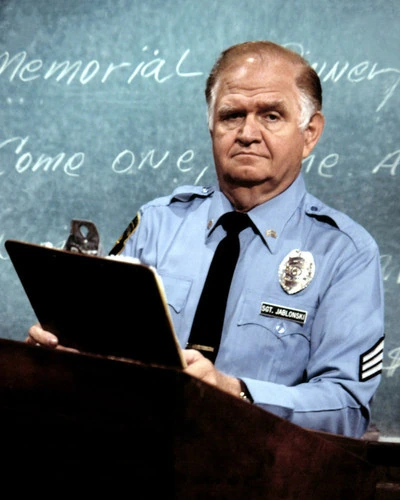
Michael Conrad died in November 1983. The fourth season had to continue without the actor whose presence had helped establish the series’ daily ritual. Grace Under Pressure, broadcast on February 2, 1984, brings Esterhaus’ death into the story and lets the station react.
The episode doesn’t turn the precinct into a perfect assembly of mourners. People need facts, stumble over their reactions, remember incongruous details, and continue dealing with the day’s work. Grief has to coexist with the business that refuses to stop. The absence is especially sharp in a series whose opening has taught the audience to expect a particular man in a particular place.
Tributes and practical consequences continue beyond that hour. Parting Is Such Sweep Sorrow includes the scattering of his ashes on the Hill. The city he served becomes part of the goodbye. It is a particularly fitting gesture for a character whose best-known words were always directed toward people leaving him to enter those streets.
The season ending in 1984 is the setting for the 1984 television rankings, but this change can’t be described through ratings. A workplace story has lost a piece of its ordinary sound. The series lets the audience feel that a replacement in the organizational chart cannot reproduce a person. Somebody can conduct roll call tomorrow. It will still be a different morning.
Jablonski brings a different kind of morning
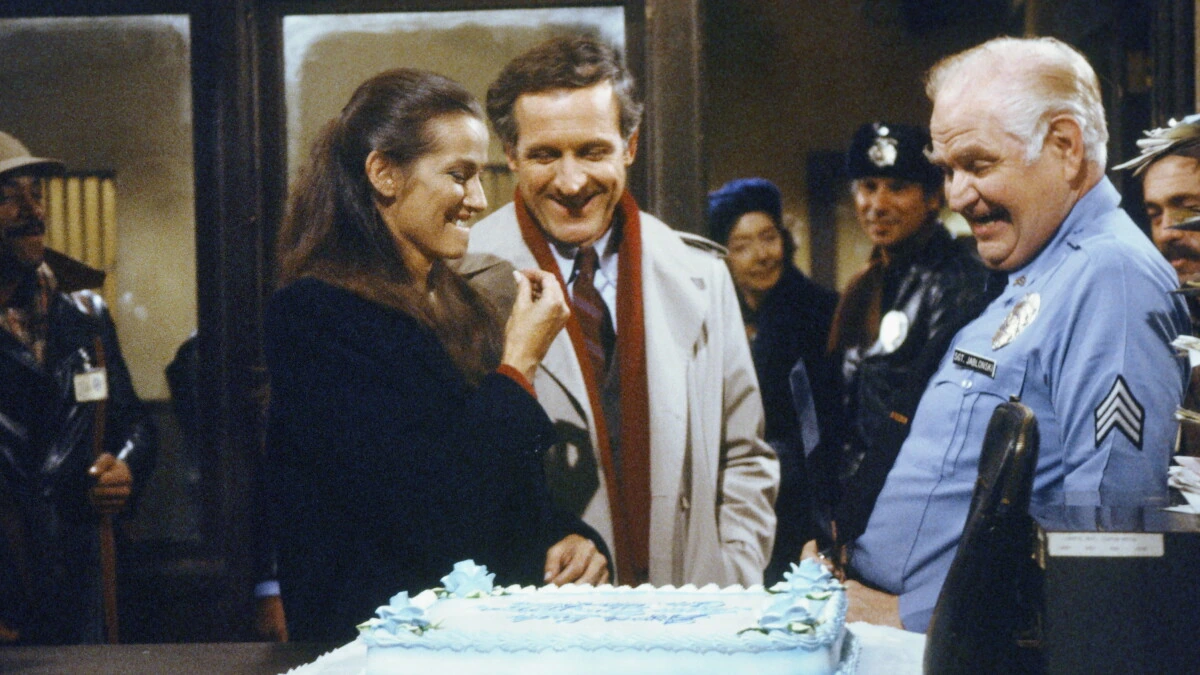
Robert Prosky’s Stan Jablonski joins in the fifth season and eventually makes the briefing his own. The series doesn’t ask him to impersonate Conrad. Jablonski has a different rhythm, a different history, and a more combative sendoff. The room still needs somebody at the front, but familiarity has to be built again.
Prosky gives him the texture of a veteran who has accumulated habits that seem perfectly reasonable to him. Some can be funny. Some become obstacles when the institution or his health changes around him. He is capable of warmth and stubbornness, and the show lets those qualities interfere with each other.
His later heart trouble and efforts to return to work place the need to belong beside medical reality. An officer’s identity can become so closely tied to the job that an enforced absence feels like erasure. The precinct may look exhausting to everyone trapped inside it. To someone kept outside, it can look like the place where his life still makes sense.
That is a useful development for a series full of arguments about duty. Jablonski wants to continue being useful, but wanting doesn’t settle whether he can safely do the work. His situation gives the ensemble a problem that neither rank nor affection can resolve neatly. The replacement has become a person whose own absence would matter, which is the only convincing way for the series to move forward.
Dennis Franz gets two very different turns
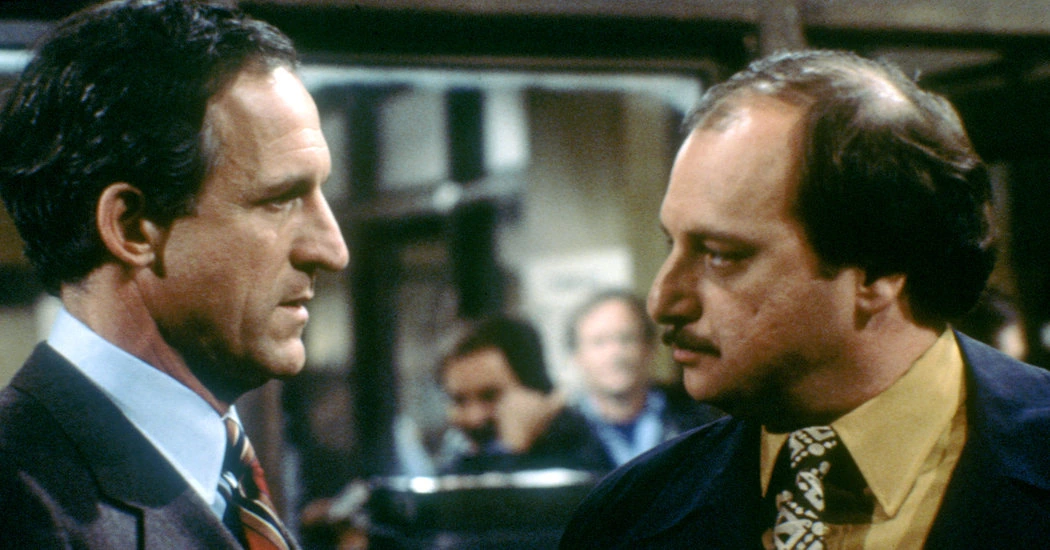
Dennis Franz first appears as Sal Benedetto, an officer whose corruption makes him a dangerous presence. Later he returns as Norman Buntz, a different character who becomes part of the regular ensemble. Recognizing the same actor can be momentarily disorienting. Treating the men as one person would be considerably more confusing.
Buntz arrives with a rough manner and a willingness to push. He can read a street situation quickly, act decisively, and make colleagues wonder how much trouble his decisiveness will create. Franz gives him an aggressive energy that can be funny without making his judgment automatically sound. The character doesn’t need an invitation to become involved.
His connection with Sidney Thurston, played by Peter Jurasik, provides a particularly fertile mixture of information, favors, irritation, and opportunism. Sid is useful, difficult, and very much his own operator. Their exchanges can turn a minor transaction into a test of who understands whom better.
Buntz gives the later years a source of momentum after several familiar arrangements have changed. The series is still interested in a cop who may be effective and professionally alarming in the same scene. Franz would later become closely associated with NYPD Blue, but Buntz deserves to be watched as this specific man in this specific room, bringing his own problems to a station that was already comprehensively supplied.
The later years still find trouble in small places
By the sixth season, the writers can set a story in motion with a task that looks manageable and then discover how many human complications it contains. What Are Friends For? combines Belker’s undercover work, a former athlete’s arrest, Buntz in danger, and Furillo confronting a personal problem tied to insurance. The range is part of the program’s established appetite.
I Want My Hill Street Blues brings a music-video crew into the station. It is a useful collision between the precinct as somebody’s workplace and the precinct as an image somebody else wants to use. The regulars still have work to do while visitors arrive with another set of priorities, a reliable recipe for irritation in any office with cameras.
The show can also move abruptly into physical danger for its center. Remembrance of Hits Past puts Furillo in surgery after a shooting and gives Joyce time to look back on their relationship. The captain who usually absorbs other people’s emergencies becomes the emergency around which they gather.
These stories belong to the television season ending in 1986, alongside the 1986 season’s biggest audience draws. Hill Street had become an established name by then, but familiarity didn’t remove the need to invent a day’s worth of pressure. At its best, the late series can still find it in a small obligation that refuses to stay small.
Coffey’s loss doesn’t get a tidy little compartment
Joe Coffey’s death in the sixth season lands on Bates with the weight of a long partnership. The show has already made violence part of the job, but repetition doesn’t make each loss interchangeable. Lucy has to deal with this particular absence, the man whose habits and reactions have been beside hers through years of assignments.
Ed Marinaro’s easy presence helped make Coffey feel at home in the room. Losing him changes the texture around Bates. The aftermath includes the practical demands of identifying a killer and the private difficulty of continuing to function while the work itself is full of reminders.
The series doesn’t suggest that grief gives a police officer automatic clarity. Professional obligation and personal shock can pull in different directions. Bates still has authority, responsibilities, and other people watching how she handles them. The job doesn’t become less public simply because the pain has become more private.
That refusal to isolate a death inside one dramatic hour is part of Hill Street’s lasting strength. A familiar person can be gone while his effect remains in the room. The show doesn’t need every later scene to announce the loss. Watching Thomas carry Lucy forward is enough to make the change present. Continuity can work through what a character no longer has beside her.
A bad day can still contain a very good joke
The comedy is often remembered less formally than the show’s innovations, but it is essential to the experience. LaRue’s next venture, Hunter’s certainty, Renko’s indignation, a bizarre suspect, or a station-house nuisance can open a pocket of absurdity inside an otherwise punishing day. The people doing the work need relief, and so does the audience.
Sometimes the jokes are broad enough to creak. Hill Street isn’t uniformly restrained, and a later viewer may find particular sexual or ethnic gags tired. The tonal ambition remains striking. The series is willing to place farce close to tragedy without assuming the two cancel each other out.
The best humor grows from a person’s familiar limits. Howard believes his solution is sensible. J.D. believes this opportunity might finally be the good one. Renko believes someone should hear his complaint. Their sincerity makes them funnier than an ensemble in which everybody pauses to deliver a polished punch line.
It also makes the serious material bearable. A precinct consisting only of noble suffering would become a very expensive lecture. These people can be foolish and still be worth following. The laughter makes the room feel inhabited, and the inhabited room makes danger more consequential. When a familiar clown is suddenly frightened, the audience knows exactly what has gone missing from his voice.
The women have work that isn’t waiting for a romance
Joyce, Lucy, and Fay occupy different positions in the series, and that difference matters to the texture of the ensemble. One challenges the police through legal work. One works inside the uniformed hierarchy. One begins with a family relationship to the captain and develops a broader place in the world. None can stand in for all the others.
The show can be uneven in the space it gives women, and its point of view remains heavily shaped by the men of the precinct. Still, Hamel, Thomas, and Bosson create forms of authority and emotional force that the men have to take seriously. Their characters don’t all want the same thing, and agreement among them isn’t assumed.
Later officers and detectives add more perspectives, including Kate McBride, played by Lindsay Crouse, and Tina Russo, played by Megan Gallagher. Their stories enter a working culture with habits already in place. Being admitted to the room isn’t the same as being free of scrutiny, sexual politics, or colleagues’ assumptions.
That makes the series’ achievement more concrete than a blanket claim that it solved representation. It created opportunities for memorable women to argue, command, defend, fail, and continue. The particular performances are more interesting than a retrospective gold star. Joyce holding her ground, Lucy taking a difficult responsibility, and Fay demanding to be heard remain scenes worth watching because the people are alive inside them.
The show keeps changing the shift
Seven seasons require more than repeating an impressive first year. People arrive, leave, gain rank, marry, lose partners, and discover that a familiar place can feel different without changing its address. The series’ large population makes those changes both possible and visible. There are always other lives continuing when one story ends.
The writing and producing team changes as well. David Milch, Jeffrey Lewis, Karen Hall, Mark Frost, and other contributors help sustain and reshape the work. Bochco’s departure from the production in 1985 is a significant change, but the series continues for two more seasons. Calling everything after the creator’s exit an epilogue would erase a good deal of work by people still making the precinct function.
The change can be felt unevenly. A new character may bring energy, while another story repeats an earlier pressure less effectively. Some viewers prefer the earlier balance; others have strong attachments to Buntz or Jablonski. The show gives them different versions of its room to remember.
That is part of what a long ensemble series becomes: an institution with eras inside it. It can survive a departure without rendering the departure trivial. The people left behind still need scenes, cases, and somewhere to put their coffee. Hill Street’s form makes room for that continuation while preserving the audience’s awareness that the original roll-call room cannot be assembled again exactly as it was.
The last episode leaves the people in motion
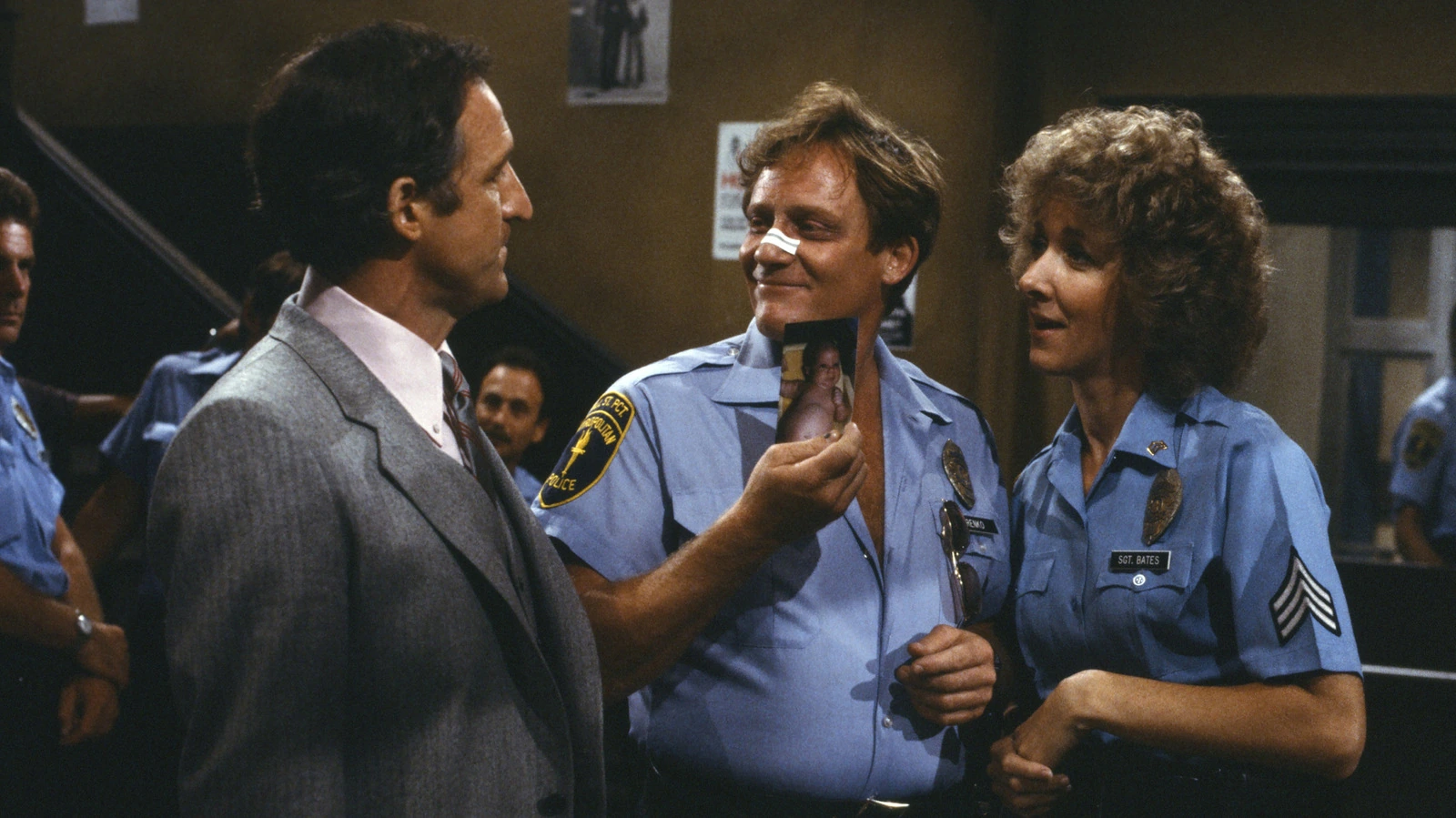
It Ain’t Over Till It’s Over aired on May 12, 1987. The station has been damaged by fire, Buntz is under pressure from an investigation, and the regulars still have complications that have not politely resolved themselves for the end of a television series. The title is a fair warning against expecting a ceremonial finish to everybody’s life.
A final episode can make a workplace seem as though it exists only until the camera leaves. Hill Street is better served by a sense that tomorrow will still be inconvenient. The room may change, the assignments may change, and the audience may be departing, but these people haven’t reached the end of every conversation.
The seventh season’s conclusion belongs to the season ending in 1987 and the 1987 broadcast-year landscape. The series had spent its run accumulating critical stature without turning that stature into a claim to dominate the entire viewing public. It leaves behind a different kind of success: habits of storytelling that would become normal in later dramas.
The short-lived Beverly Hills Buntz follows one character into another format, but the original precinct is its own ensemble. Its ending doesn’t need to turn every officer into a symbol of television history. They have been specific people doing specific, difficult things. Letting them remain a little unfinished is more faithful to the series than giving each one a perfectly labeled last word.
The revolution was a room full of people
It is easy to honor Hill Street Blues so solemnly that the actual pleasure gets misplaced. A program can become a landmark, an influence, a turning point, and finally something people feel obliged to admire without watching. That would be an unfortunate fate for a series with this much noise, appetite, irritation, and badly managed personal business.
Its achievements are there in the form: overlapping stories, continuing consequences, an ensemble large enough to contain different moral temperatures, and a visual style that makes the room feel busy. Its life is there in the people. Frank trying to answer fairly. Joyce refusing a shortcut. Hill and Renko returning to the car. Belker revealing a tenderness his appearance has done everything possible to conceal.
Within the wider story of the 1980s, it offered a vision of public work that could be both committed and compromised. The characters weren’t always admirable, and the institution wasn’t a universal answer. Yet trying to do the work decently still mattered, particularly when the effort was inconvenient and the result uncertain.
Esterhaus’ instruction lasts because it sounds like care offered without a guarantee. The series never found a way to make the city safe by the end of the hour. It found people worth worrying about as they walked into it. The briefing would end, somebody would complain, and another difficult day would begin.
Hill Street Blues questions worth answering
When did Hill Street Blues originally air?
The original NBC series ran from January 15, 1981, through May 12, 1987, across seven seasons. Its debut was a midseason launch. Thursday night became its best-known home, but the early and final broadcast periods included other nights.
Is Hill Street Blues set in Chicago?
The dramatic city is unnamed. Chicago footage is part of the show’s visual identity, and production used other locations as well. Recognizing a real building in the opening doesn’t make every fictional street, department, or political detail an exact account of Chicago.
Who are the central couple?
Daniel J. Travanti plays Captain Frank Furillo, and Veronica Hamel plays public defender Joyce Davenport. Their private relationship runs alongside frequent professional conflict. Barbara Bosson plays Fay Furillo, Frank’s former wife, who remains an important person in his family life.
Why did Sergeant Esterhaus disappear?
Michael Conrad died in November 1983. The series wrote Esterhaus’ death into the fourth season, beginning its major farewell in Grace Under Pressure in February 1984. Robert Prosky later joined as Stan Jablonski, a separate character rather than a recast Esterhaus.
Did Dennis Franz play two characters?
Yes. Franz first played the corrupt Sal Benedetto, then returned later as Norman Buntz. They are separate men. Buntz became a regular part of the later ensemble and subsequently led the short-lived spin-off Beverly Hills Buntz.