Cagney & Lacey in the 80s: The Cop Show That Changed the Rules
Revisit Cagney & Lacey in the 80s: Sharon Gless, Tyne Daly, the revival campaign, six straight acting Emmys, and the friendship behind the 14th Precinct.
The shows, the moments, and the nights we were there for it.

At the 14th Precinct, the ladies’ room was sometimes the most useful room in the building. Christine Cagney and Mary Beth Lacey went there to argue, compare notes, ask questions they did not want the men overhearing, and occasionally say the thing they had spent the rest of the hour avoiding. Television had supplied plenty of police headquarters. This one had a place where the two women doing the job finally got a little privacy.
Not much privacy, obviously. They still had each other.
Sharon Gless’s Christine was impatient, ambitious, funny, and not always interested in a second opinion. Tyne Daly’s Mary Beth had a husband, children, a household budget, and a fairly clear idea of what happened when somebody else’s grand plan came due. They made a terrific team partly because neither woman was a convenient accessory to the other. One wanted to push ahead. The other wanted to know what they were stepping into. Sometimes both were right. Sometimes they managed the more impressive feat of both being wrong in different ways.
Cagney & Lacey in the 80s was a police drama with cases, suspects, guns, and a wonderfully urgent theme. But the reason to come back was the people carrying all of that home. Harvey Lacey’s bad back mattered. Charlie Cagney’s drinking mattered. A promotion, a late shift, a medical appointment someone was putting off: these were not little interruptions before the real show resumed. They were the show.
The familiar partnership took a while to reach the screen. Before Gless, there were Loretta Swit and Meg Foster. Before the long run, there were network doubts, a cancellation, and viewers who declined to accept the verdict quietly. The production history is a good story. The better one is what those efforts preserved: two complicated women whose friendship did not require them to become easier people.
Inside This Article
- Two Good Cops, Neither of Them Easy
- Christine Cagney Wants the Next Assignment
- Mary Beth Lacey Knows What Time It Is
- Harvey Lacey Is Not Waiting Patiently in the Kitchen
- “Conference, Christine”
- Before Sharon Gless, There Was Loretta Swit
- Meg Foster Deserved Better Than a Footnote
- The Third Cagney Found Her Own Toughness
- The Cancellation That Viewers Refused to Accept
- Seven Episodes to Prove It
- Lieutenant Samuels Has a Squad to Run
- A Squad Room Full of Other People’s Opinions
- The Cost of Refusing a Captain
- “Entrapment” Asks Too Much of a Partner
- “Heat” Remembers That the Job Is Dangerous
- The Medical Appointment Mary Beth Does Not Want
- Charlie Cagney Is More Than Christine’s Backstory
- “Turn, Turn, Turn” Takes Away Christine’s Defenses
- When Christine Needed Someone to Believe Her
- The Microwave, the Elevator, and the Parts Between Crises
- That Theme Put Them Straight Back on the Street
- Six Years in a Row, One of Them Won
- Neither Charlie’s Angels nor a Trip to Miami
- It Was Not Subtle Every Week
- The Shift Ended. The Partnership Did Not.
- A Few Precinct Questions
Two Good Cops, Neither of Them Easy
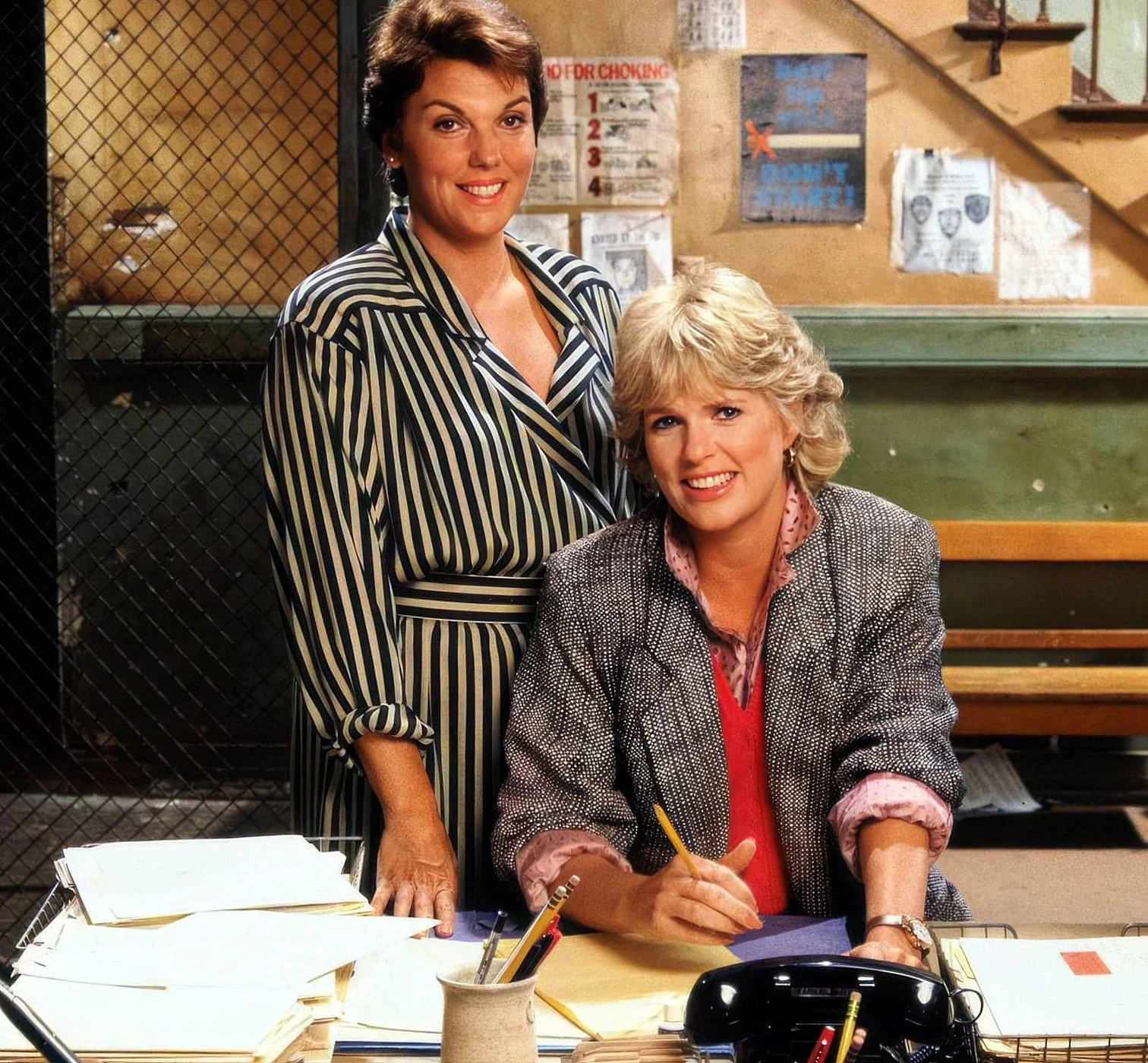
Cagney had a gift for turning professional ambition into forward motion. She wanted the important assignment, the difficult suspect, the next rank. Gless made that appetite appealing without sanding away its inconvenient parts. Christine did not always pause to ask whether her partner had the same appetite or the same freedom to indulge it. Mary Beth was hardly an unwilling passenger. Daly gave her a voice with weight, a manner that suggested she had already heard the explanation and was waiting for the useful part, and a capacity for anger that made the description “the sensible one” seem dangerously incomplete. She wanted to do good police work. She also wanted to remain a person when the work was over.
That difference produced more than a tidy contrast between single and married, glamorous and ordinary, reckless and careful. Those labels get you through the door and then become inadequate. Christine’s independence concealed needs she disliked admitting. Mary Beth’s family life supplied love, frustration, fear, and demands that she did not always handle gracefully.
The pleasure was watching the partnership adjust in real time. A witness might respond better to Mary Beth’s persistence than Christine’s pressure. A case might require Christine’s nerve. A problem at home might leave one woman less available than the other expected. Neither detective was permanently assigned to deliver the correct answer.
Other 80s cop shows had entertaining partners and crowded squad rooms. This one made the daily bargain between its leads unusually important. What do you owe a friend? What do you owe a partner? What happens when those obligations collide with your own judgment? The series found those questions inside ordinary work rather than saving them for an anniversary episode.
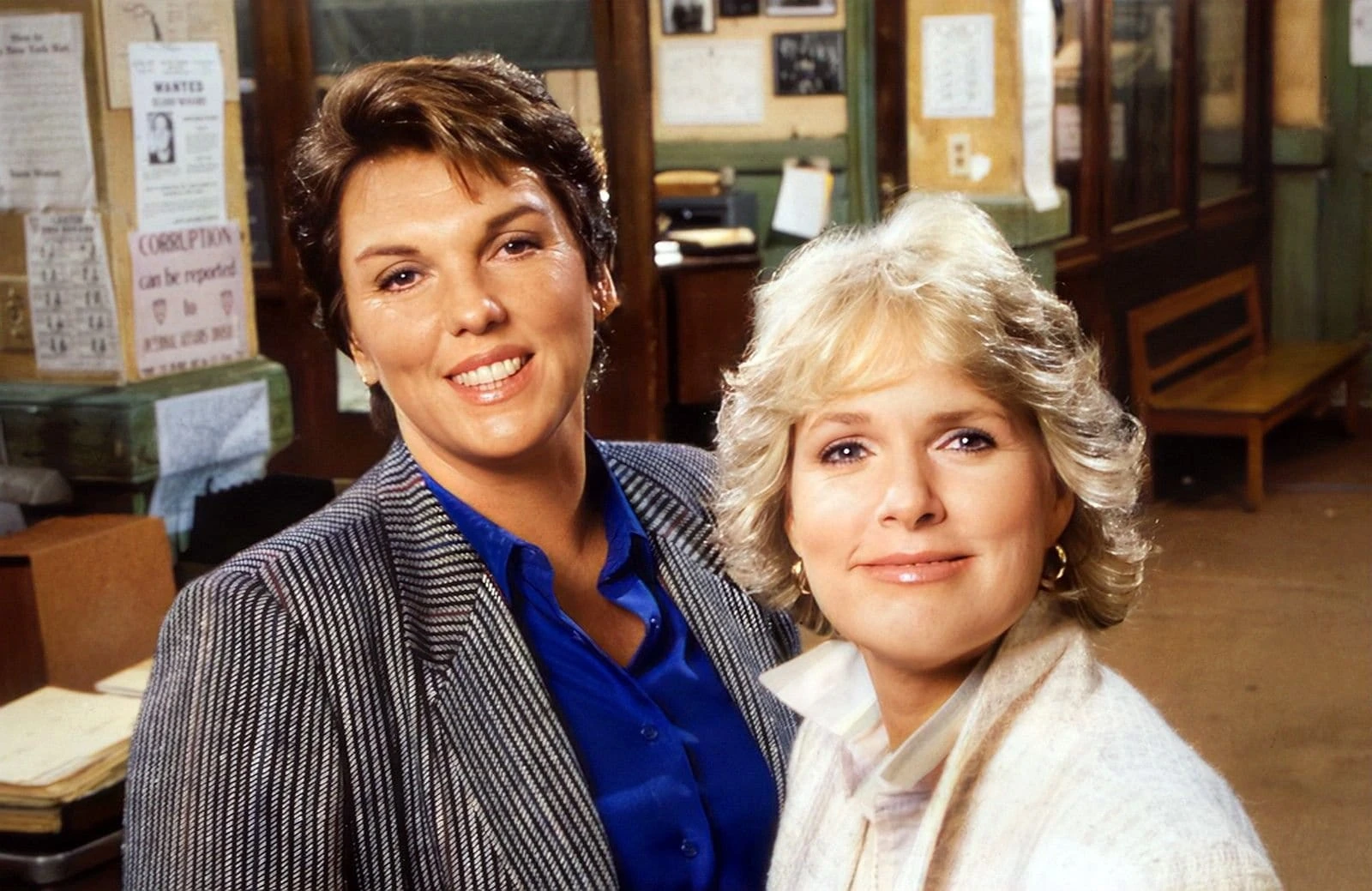
Gless and Daly made the affection visible even during disagreements. They knew how to listen on camera: a pause, a sidelong look, a refusal to soften a response merely because it would make the conversation pleasant. Their characters trusted each other enough to risk making things unpleasant. That is a more substantial kind of friendship than television’s interchangeable supportive pals.
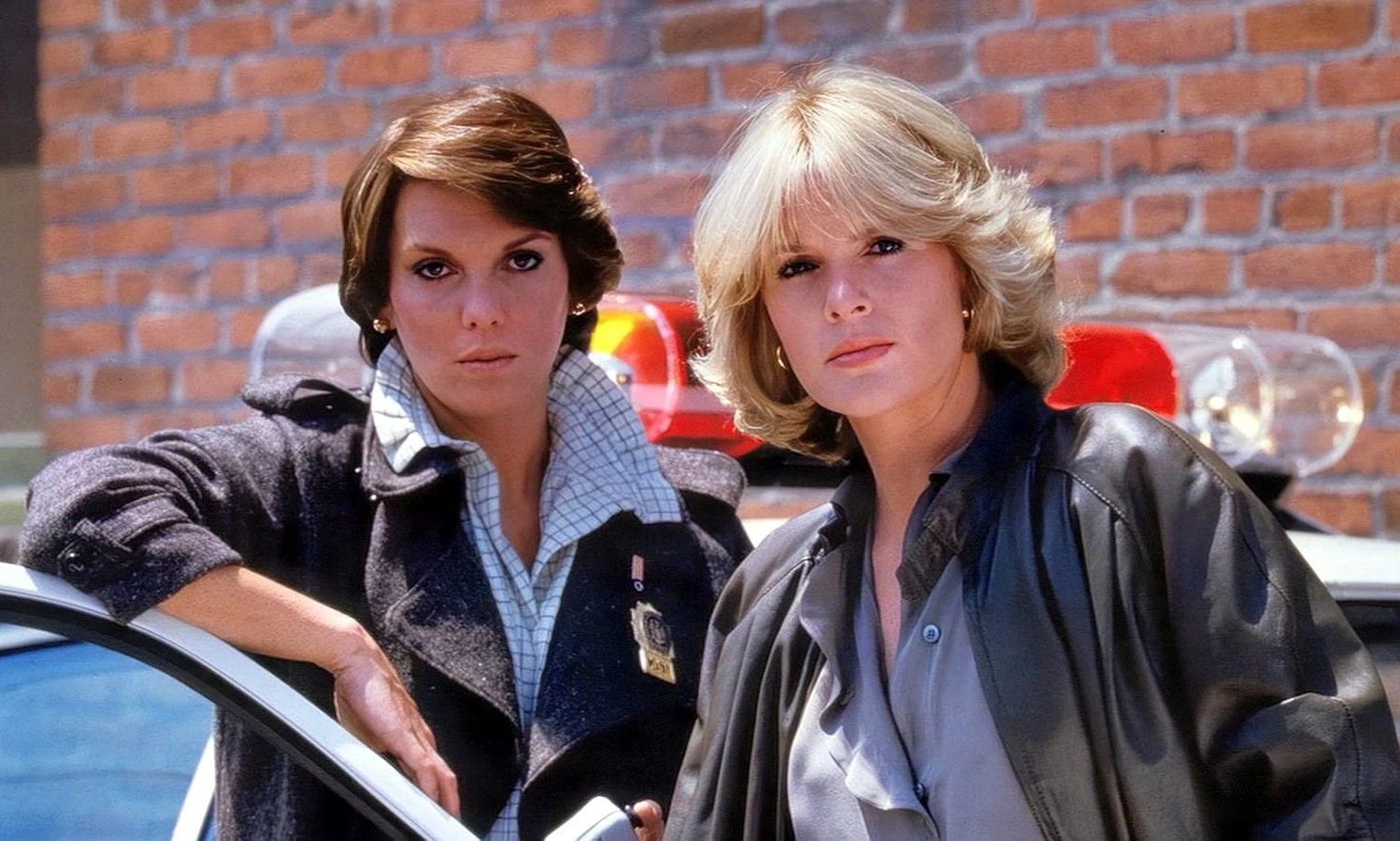
Christine Cagney Wants the Next Assignment
Christine did not enter the squad room hoping someone would notice how agreeable she was. She wanted to be taken seriously as a cop. If that meant joining the men’s competitive rituals, pushing a little too hard, or treating an objection as an obstacle to clear, she was usually prepared to proceed.
Gless gave her a quick, dry comic edge. Christine’s impatience was not a permanent scowl; it arrived with banter, self-confidence, and a willingness to enjoy herself. She liked the city. She liked having money and room to make choices. She liked men, although liking one did not mean she wanted to reorganize her life around him.
Her independence also had material support. The character’s background combined her retired-cop father Charlie’s world with money from her mother’s side. Christine’s loft and freedom were not rewards available on precisely the same terms as Mary Beth’s working-family life. The contrast made moments of envy between the partners more honest. Each occasionally wanted something the other had.
Promotion was a practical ambition, not simply a line in her character description. The sergeant’s exam gives the squad something to compete over, and Christine’s eventual advancement changes the partnership without dissolving it. Being good at the job does not automatically make every workplace conversation easier once rank enters the room.
Her relationships were equally resistant to a neat destination. Barry Primus’s Dory McKenna and Stephen Macht’s David Keeler brought different complications. A fellow officer’s troubled history raised one set of questions; a lawyer whose work did not always align with her police instincts raised another. Christine did not need a weekly failed date to prove she was single. She needed choices that revealed what she valued.
Occasionally her determination was magnificent. Occasionally it was a pain in the neck. The series was better for admitting both. A supposedly strong heroine who is never selfish, unfair, or unwilling to listen becomes less a person than an employee-of-the-month plaque. Christine had no intention of fitting neatly on the wall.
Mary Beth Lacey Knows What Time It Is
Mary Beth’s life had a clock running behind it. A shift extended. A child waited. Harvey needed something. The money would have to cover a little more than it had covered last week. Daly made those pressures seem present even when Mary Beth was not discussing them.
She was not the television mother who existed to reassure everybody else. Mary Beth had judgment, impatience, pride, and a job whose risks her children were old enough to notice. Her empathy helped her with people in trouble, but it did not make her endlessly accommodating. Daly’s expression often suggested the precise point at which accommodating had ceased to be an option.
The character’s method was one of the show’s great strengths. Mary Beth listened for the part of a story that did not fit. She let people reveal something about themselves. Her steadiness was active, rather than a way to keep her safely in the background while Christine supplied excitement.
Family also complicated her apparent certainty. She wanted to protect her children without lying to them about the work. She wanted a better home without turning Harvey’s happiness into an item they had agreed to sacrifice for the mortgage. She wanted time with the people she loved, and also the right to care about something beyond them.
For a younger viewer, she might first register as the partner with more rules and more reasons to go home. Rewatch the series after a few years of managing schedules and expenses, and those reasons become considerably more interesting. Mary Beth was not less committed because other people depended on her. Commitment was precisely why she had so much to negotiate.
Daly’s performance refuses the comforting assumption that competence removes fear. Mary Beth’s response to illness, danger, and trouble involving her children is sometimes avoidance, sometimes anger, sometimes frantic activity. She does not become a different woman when she is frightened. The capable woman is frightened. That is what makes the performance so convincing.

Harvey Lacey Is Not Waiting Patiently in the Kitchen
John Karlen gave Harvey a lived-in warmth that no amount of shorthand about “the supportive husband” really captures. Harvey loved Mary Beth. He also had opinions, insecurities, work problems, and the occasional belief that he knew exactly what was wrong with the world. He was a spouse, not a service desk.
His construction work gave the household a life outside the precinct. When an inner-ear problem interfered with high-steel work, the consequences were not merely an excuse for Mary Beth to look worried before returning to a case. Losing a familiar way to earn a living affected Harvey’s sense of himself and the family’s arrangements.
The partnership at home required adjustments just as the one at work did. Harvey’s later remodeling and contracting work offered a different schedule. Children still needed looking after. Money remained a consideration. Neither adult enjoyed a magical supply of free hours that appeared whenever the script needed someone to be available.
“American Dream” puts their wish for a house alongside Harvey’s experiment with selling tax shelters. A better income looks attractive until the work itself becomes miserable. That is a very Lacey problem: the dream is not frivolous, and neither is the cost of obtaining it. Mary Beth’s disappointment does not mean she regards Harvey as a machine for producing mortgage payments.
Karlen made the marriage affectionate without requiring it to be quiet. These two had private jokes and shared history, along with the practical disagreements that come from sharing a home instead of visiting one for a romantic montage. Their physical ease together mattered. Mary Beth did not become a sexless symbol of responsibility when she left the squad room.
Harvey also had reason to be wary of Christine’s influence. The exciting assignment for one detective might mean unnecessary danger for the woman he loved. His objections did not always settle the question, but they were not automatically cowardice. When he worried, the show remembered that a person outside the badge had something real at stake.
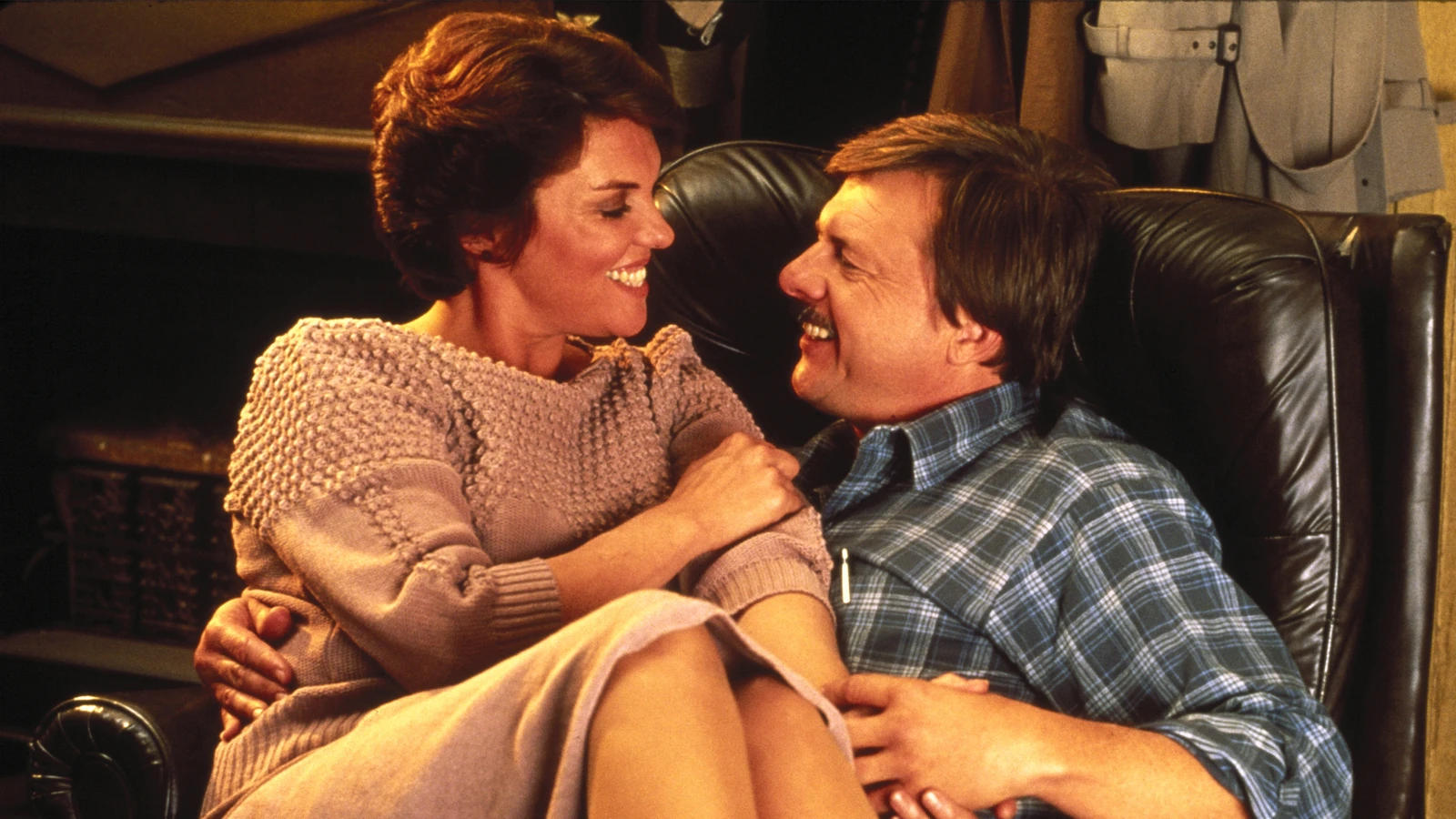
“Conference, Christine”
A bathroom conference sounds like a modest contribution to television history until you watch what Gless and Daly do with one. Away from the men’s desks, their characters can stop performing professional composure for a moment. They can criticize, confide, tease, and ask for something without having an entire squad turn into an audience.
The setting is funny partly because it is so practical. A grand speech does not require a grand location. Nor does a very small argument that turns out not to be small at all. An inconveniently public workplace offers few doors the women can close without explaining themselves.
These scenes also let the series change scale. A case may involve danger, a crowd, or an authority figure determined not to cooperate. The conversation afterward can reduce the drama to two faces and a sentence one of them is reluctant to finish. The actors are strong enough that the reduction does not feel like a loss.
Mary Beth and Christine do not always use the privacy generously. One can corner the other. A request for support can conceal an attempt to win an argument. An apparently casual remark can carry irritation from something that happened earlier. The room does not guarantee honesty; it gives honesty a fighting chance.
That is part of why the partnership feels substantial. Friendship is not only what these women say when they agree, and it is not a prize handed to them for having the same job. They work on it. Sometimes the work consists of telling Christine something she absolutely does not want to hear.
Before Sharon Gless, There Was Loretta Swit
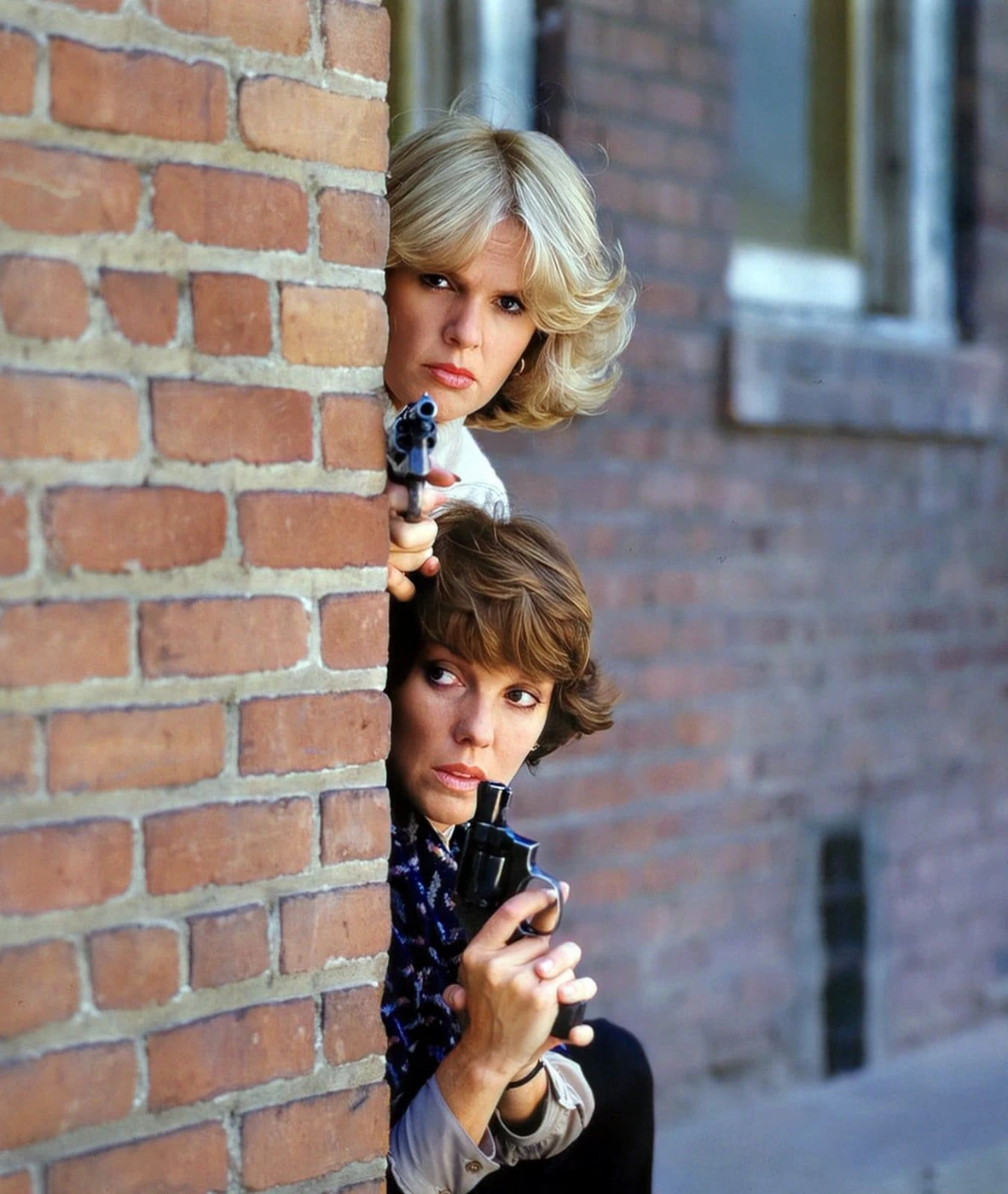
The first Christine Cagney was already a familiar face. Loretta Swit played her opposite Daly in the 1981 television movie, bringing a star associated with M*A*S*H to a very different working partnership. The film gave the project a route onto television after years of resistance to the idea of two women carrying this kind of story.
Barbara Avedon and Barbara Corday had developed the concept in the 1970s, initially as a feature. Barney Rosenzweig helped shepherd it toward the screen. The eventual movie was not an overnight discovery of a subject nobody had considered. It was the result of people continuing to push an idea that buyers repeatedly found reasons to pass over.
The useful thing about the early history is not simply the length of the struggle. It tells you what needed defending. These were not two interchangeable glamorous investigators with different hairstyles, and the family material was not an obstacle to be removed so the women could get back to looking exciting. The ordinary complications were part of the proposal.
Swit’s existing commitment to M*A*S*H kept her from continuing when the project became a series. That is a contractual chapter, not a story about a performer failing to make the concept work. Daly remained as Mary Beth; the role beside her changed hands.
It gives the franchise an unusual starting point for a rewatch. The partnership everybody remembers was not the first one viewers saw. There was a successful television movie, then a short first series with another Cagney, then the Gless era. Knowing that sequence makes the familiar title look less like a finished product arriving intact and more like a show that had to earn several opportunities to become itself.
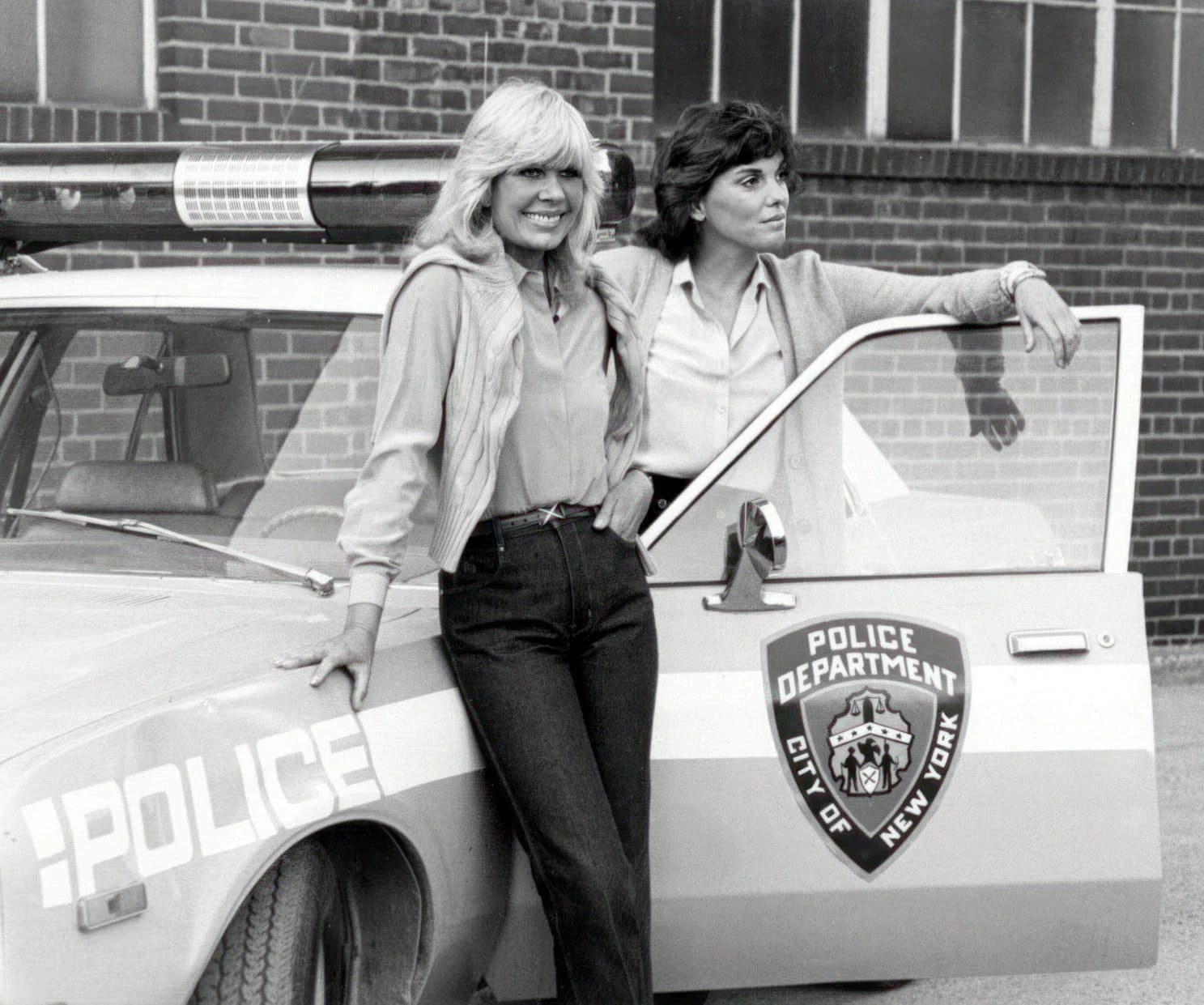
Meg Foster Deserved Better Than a Footnote
Meg Foster played Christine in the six weekly episodes that began March 25, 1982. Her directness and striking gaze offered a tough interpretation of the detective. It was a version of Cagney the network did not ultimately want to keep.
CBS’s response involved judgments about how the two women appeared together, including anxiety about femininity and the possibility that viewers would read their relationship as lesbian. That history should be described as a judgment made about Foster, not as an objective flaw in her performance. “Not feminine enough” tells us something about the people setting the conditions, not a useful measure of acting ability. The distinction matters because later success makes it easy to retell the casting changes as an inevitable march toward the correct answer. Gless and Daly became a superb team. That does not retroactively make Foster an error that had to be deleted. She was working within an early version of a series whose identity was being negotiated under pressure.
There is also an uncomfortable irony in a show about women demanding professional respect having one of its own leads assessed through such narrow expectations. The contradiction belongs to the history. Leaving it out produces a much tidier account and a less truthful one.
Daly was the constant through all three Cagneys. The work of building a partnership therefore fell to her repeatedly, with each actress bringing a different manner and rhythm. Her eventual chemistry with Gless was an achievement, not a quality that existed independently of the people making it.
Those six episodes are useful to see for that reason. They are part of the series, not a rehearsal to be erased from the count. Foster’s departure and Gless’s arrival mark a major change in the show, but they do not permit the first chapter to be dismissed without looking at it.
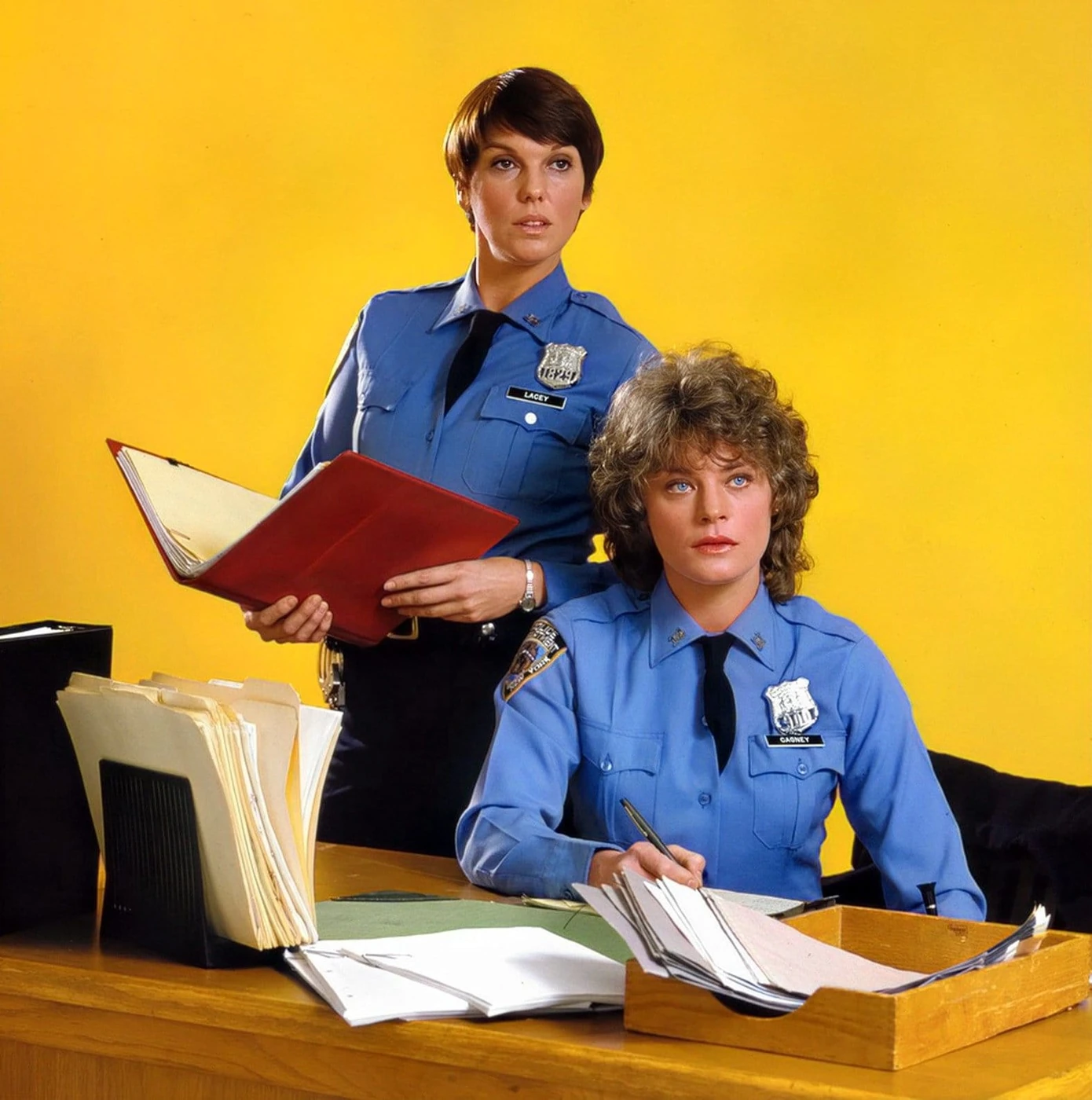
The Third Cagney Found Her Own Toughness
When Gless took over in the fall of 1982, she inherited a name that had already belonged to two actresses and a role surrounded by instructions about how it should be played. That is not the world’s most relaxing first day at work.
Her version was not simply the tough detective made more agreeable. Gless developed a woman who enjoyed competition, guarded her independence, and had trouble letting other people see where she hurt. The lightness in the performance made the hardness more interesting. Christine was capable of delight, flirtation, and wonderfully dry amusement, so a closed expression told you something had changed.
Daly’s steadiness gave that energy something to play against. A line from Christine did not land in empty space; Mary Beth received it, considered it, and quite possibly refused to provide the reaction Christine had ordered. Their timing gave ordinary conversations a current running beneath the information being exchanged.
Gless also understood that charm did not have to mean approval. Christine sometimes sided with the men’s assumptions or treated toughness as an obligation she had to perform. When she got something wrong, the show had somewhere to go besides letting a villain demonstrate that she had been right all along.
That is the version worth protecting from easy nostalgia. Christine was not a collection of admirable positions wearing a badge. She was ambitious, loyal, contradictory, and occasionally defensive enough to exhaust a much more patient partner. Gless made you want to see what she did next without requiring you to endorse it in advance.
The familiar series begins to click when both women have that room to move. Neither must serve as a permanent advertisement for good behavior. Their job is difficult enough without having to represent flawless adulthood on every shift.
The Cancellation That Viewers Refused to Accept
In the spring of 1983, CBS canceled the show. Gless’s arrival had not immediately produced the audience the network wanted, and a program about a partnership with unusually committed viewers was suddenly a program those viewers might lose.
The response became one of the most famous parts of the series’ history: letters, publicity, pressure, and a producer who knew that an angry audience needed somewhere useful to direct its anger. Rosenzweig encouraged the campaign rather than merely hoping executives would experience a spontaneous change of heart.
This was an argument conducted without a social-media counter conveniently displaying how many people were upset. Viewers wrote. Newspapers covered the story. The National Organization for Women was among the organizations involved. The audience had to turn affection into an activity that the network would notice.
Summer repeats supplied another part of the case. An August 10, 1983, UPI ratings report noted that the canceled series had again reached the weekly top ten, placing eighth for the week ending August 7. That was not a full-season ranking, and it did not prove every original scheduling decision wrong. It did make the claim that the show lacked a meaningful audience rather harder to deliver with a straight face.
The 1982–83 television season helps explain the uphill struggle. The network was judging the original run against its competition, while the repeat audience was showing that the existing verdict was not the only possible outcome. Those are separate sets of numbers, not evidence to mix until the show looks like a top-ten hit all along.
Tyne Daly’s first lead-actress Emmy, awarded in 1983, added prestige to the campaign. Awards, improving repeat performance, organized attention, and persistent viewers all belong in the explanation. Reducing the revival to one miraculous sack of letters makes for a pleasant legend, but it loses the combination that gave CBS reasons to reconsider.
It is still a satisfying story. A network cancellation can feel like a door slammed from the other side of the room. Here, people kept knocking. Eventually somebody opened it, although not without conditions.
Seven Episodes to Prove It
The return came in March 1984, with seven new episodes. That shortened third season was a test of whether the revived series deserved a continuing place, not an immediate restoration of every certainty it had lost. Seven is not many opportunities for a show to make its case. Fortunately, the argument did not require inventing a new pair of detectives. Gless and Daly already had a partnership worth following, and the material gave their work personal consequences alongside the cases.
“Partners” makes that dependence painfully obvious when Christine is shot and Mary Beth has to carry on with a replacement. A familiar working arrangement becomes easier to appreciate when it is no longer available. The question is not simply whether Mary Beth can solve the case; it is what changes when the person she expects beside her is in a hospital instead.
“The Baby Broker” gives Mary Beth another kind of involvement, taking in an abandoned baby and becoming attached. Daly’s warmth is not a shortcut around the character’s judgment. It puts her judgment under pressure. Helping someone can stop feeling temporary before anyone has changed the official arrangements.
The season ending in 1984 placed the series tenth. Among the top TV shows of 1984, that rank is a remarkable postscript to the previous cancellation. It also belongs to a short returning run, a useful detail before comparing its position with a show that aired through the entire fall and winter.
The outcome was four more seasons. Viewers had not merely won the right to revisit the old episodes and feel aggrieved. They had helped preserve the room for new work: illness, parenthood, promotions, grief, bad judgment, and the ordinary arguments that made the partnership feel alive.
Lieutenant Samuels Has a Squad to Run
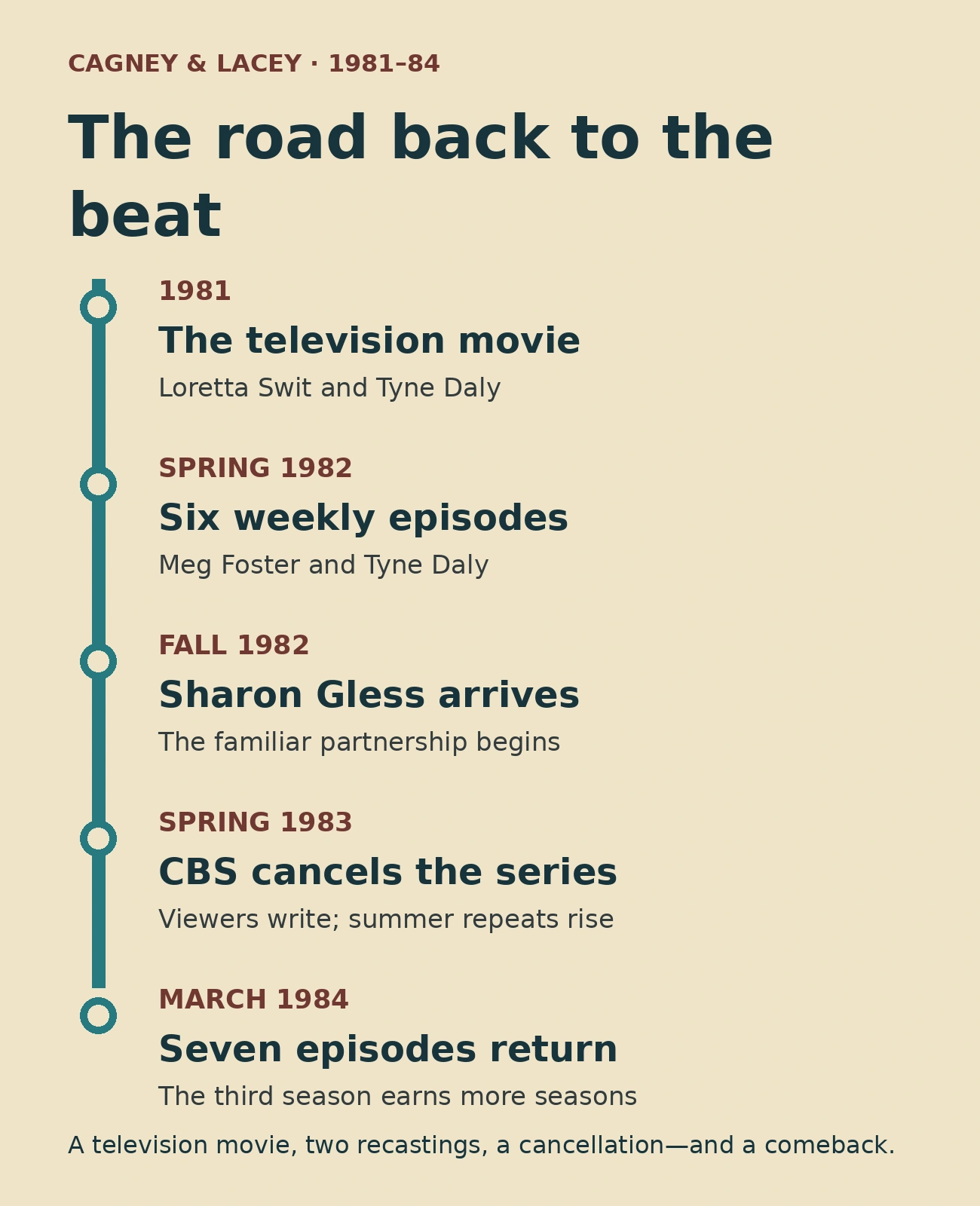
Al Waxman’s Samuels had the air of a man who suspected that today’s manageable problem would become tomorrow’s paperwork. He was gruff, overworked, protective of his people, and not automatically delighted by every change they brought into the squad room.
Waxman made him more useful than the standard blustering boss. Samuels had a position to defend within the department, his own disappointments, and enough knowledge of the detectives to recognize the difference between Christine’s flash and Mary Beth’s quieter work. He did not always respond perfectly. He did usually respond as someone who knew the people in front of him.
That gave a disagreement with him texture. The women were not facing an interchangeable representative of Authority in each episode. They were dealing with a supervisor whose habits they knew, who sometimes backed them and sometimes made the job harder. Being on the same side of a case did not settle every other question.
He also belonged to the show’s off-duty world. Family trouble and the business of rebuilding a private life kept him from existing only behind a desk. The series was particularly good when it let the men be as complicated by their home lives as the women.
The result was a squad room that did not feel built for one inspirational speech to fix. Samuels might learn something and remain capable of getting the next thing wrong. The detectives might respect him and still need to challenge him. That is a more recognizable workplace than one divided permanently between enlightened heroes and men waiting to be corrected.
A Squad Room Full of Other People’s Opinions
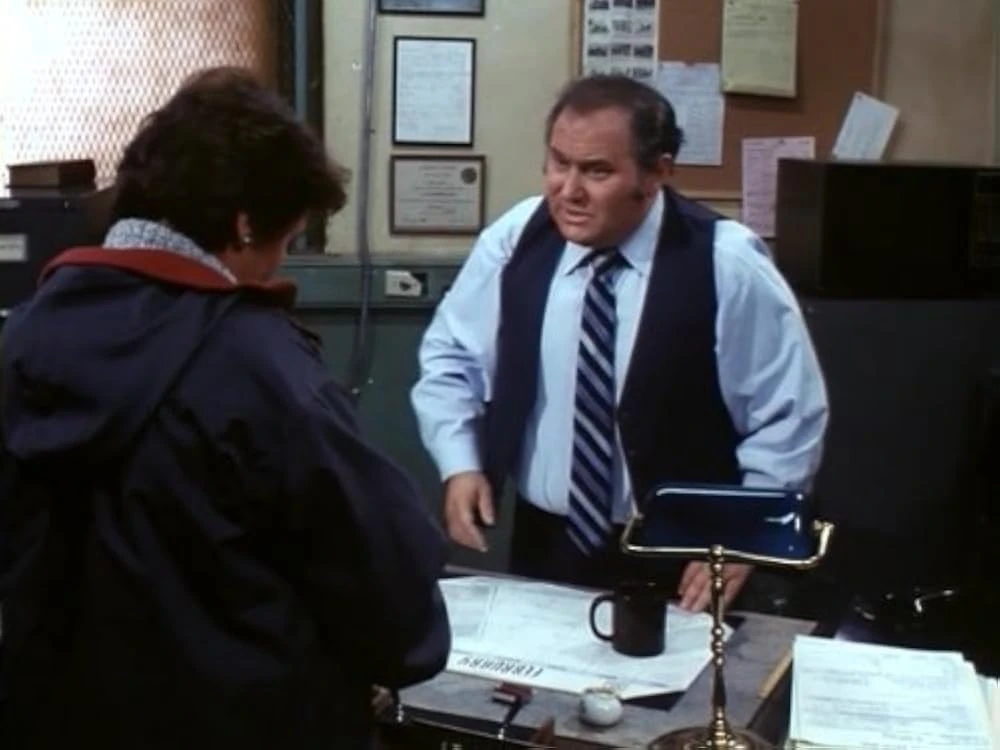
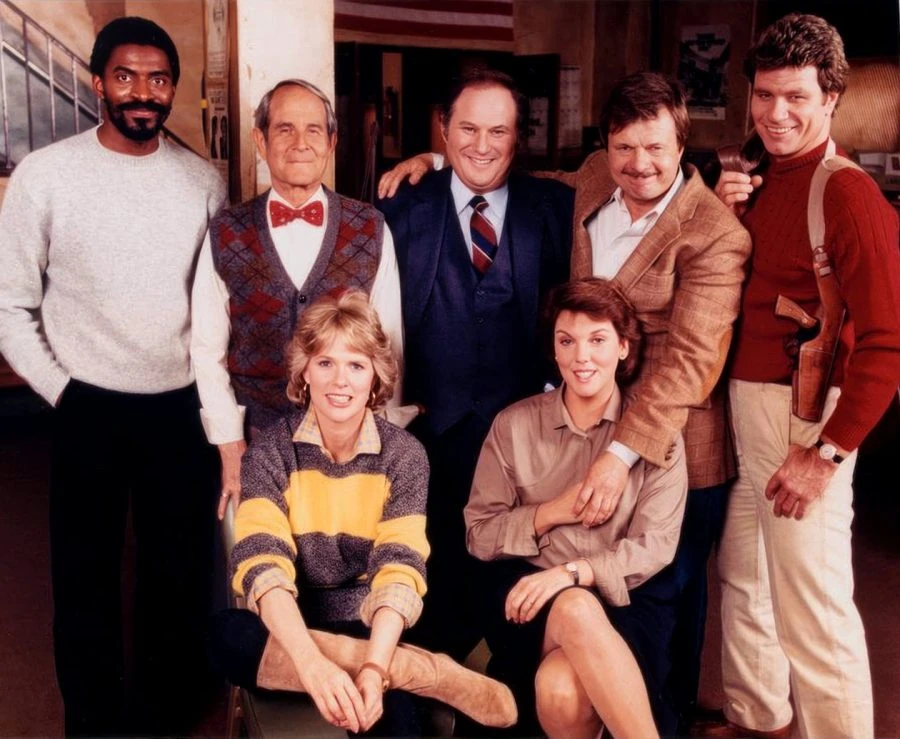
Martin Kove’s Victor Isbecki did not need much encouragement to think well of himself. His swagger gave the squad room a useful supply of irritation, particularly when he treated the presence of women as something that required his continuing commentary. Kove made the vanity entertaining without turning every encounter into an identical exchange.
Beside him, Carl Lumbly’s Petrie brought a quieter authority. Their partnership had its own frictions, including the difference between knowing a colleague well and having the right to spread his private business. The men were not simply an audience arranged behind Gless and Daly. Their loyalties and misunderstandings supplied stories too.
Harvey Atkin’s desk sergeant Coleman had the practical power of the person through whom the building’s business passed. Sidney Clute’s La Guardia contributed to the earlier ensemble; Robert Hegyes’s Esposito and Paul Mantee’s Corassa became part of the later squad. The faces changed, and with them the room’s balance of noise, patience, and experience.
The best scenes let a case travel through that room rather than appearing fully formed in the leads’ hands. Someone knew something, someone made an unhelpful comment, someone needed an assignment explained again. A busy workplace is full of people interrupting each other’s ideas while believing they are improving them.
There was comedy in that friction. The series did not need to call a recess from seriousness to let Isbecki overestimate his appeal or Coleman make a small bureaucratic matter feel important. Humor belonged to the environment. The job was difficult; the people doing it were not prohibited from being ridiculous.
That everyday company is one reason the show pairs so well with a look back at the precinct comedy of Barney Miller. The styles differ substantially, but both understand the appeal of a room where professional knowledge and personal eccentricity refuse to keep separate desks.
The Cost of Refusing a Captain
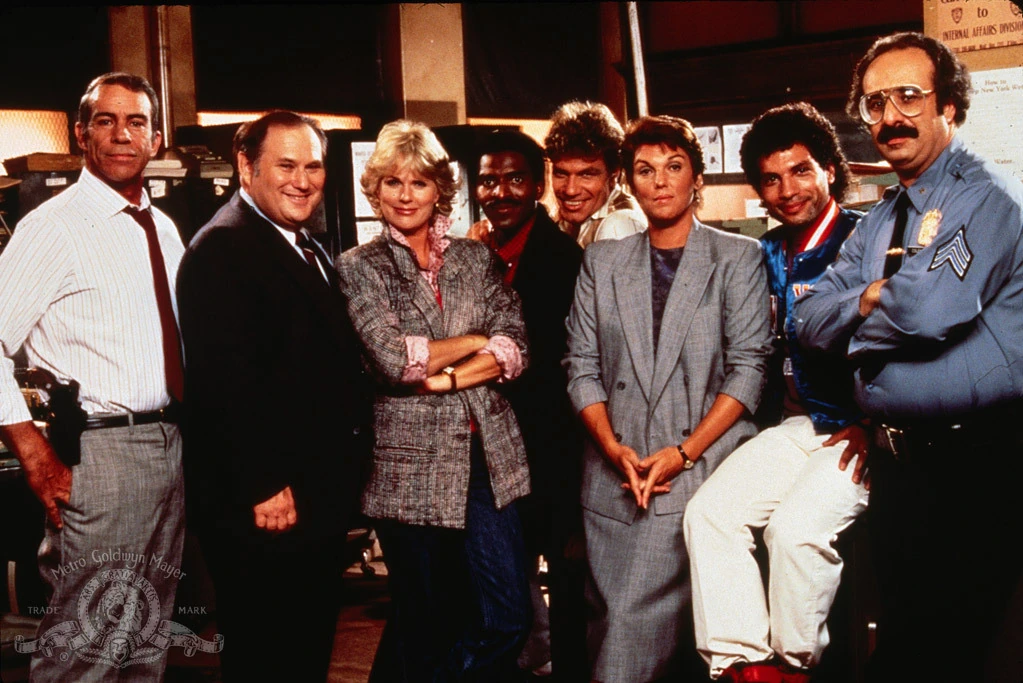
“Rules of the Game,” in 1985, turns Christine’s ambition into a point of vulnerability. An important assignment under Captain Hennessey looks like a professional opportunity. His interest in her comes with conditions that have nothing to do with her ability to solve the case.
The threat of a poor evaluation makes the harassment concrete. Christine cannot dismiss the encounter as an unpleasant man who can simply be avoided next time. He has power over the record through which the department judges her work. She wants advancement on the strength of that work, and he wants to make the price something else.
Mary Beth’s position is different. Put on desk duty while Christine receives the attention, she has reason to resent the arrangement before she understands the full problem. The story lets that professional slight coexist with her support for her partner. Being overlooked does not prevent her from recognizing what is happening.
The complaint carries into “Con Games,” where Christine faces the difficulties of pursuing it. This is not the satisfying little scene in which a bully is exposed and everyone else immediately behaves honorably. Professional pressure, reluctant witnesses, and concern about the department’s reputation make the process part of the ordeal.
It is one of the clearest examples of the show earning its reputation through a particular predicament. Christine’s desire to belong in the profession does not protect her from one of its powerful men. Speaking up requires her to risk something she has worked to obtain. That is a much harder choice than demonstrating courage when courage carries no price.
“Entrapment” Asks Too Much of a Partner
In the 1985 episode “Entrapment,” Christine’s determination to put a drug dealer away leads her across a line. The problem is not merely that she has taken a risk. She wants Mary Beth to support an account that would conceal what she has done.
That is a tougher test of the partnership than an outside threat. It turns the familiar promise that the women will back each other into something potentially corrupting. Mary Beth must decide whether loyalty means protecting Christine from the consequences of her conduct, and Christine treats the answer as a test of the friendship.
Gless’s willingness to make Christine unreasonable is essential. The scene would lose its force if she seemed obviously manipulated by a villain or privately aware that Mary Beth was right from the start. Her conviction creates the pressure. She believes she is pursuing a worthwhile result and resents an objection that prevents her from reaching it. Daly has to make hesitation active. Mary Beth is not simply standing still while Christine advances the plot. She is weighing her partner’s demand against her own integrity and the likely damage to their working life. In a series built around trust, that calculation is uncomfortable to watch in exactly the right way.
The eventual turn, with Christine acknowledging the attempted false account rather than allowing Mary Beth to bear it, does not erase the demand she made. It leaves a reminder that the partnership needs limits as well as affection. A friend who cannot say no is a very convenient friend, which is not necessarily the same as a good one.
The case also prevents the series’ feminism from becoming an assumption that women in authority will automatically behave better. These detectives are capable of the same rationalizations as other cops. The show is stronger when it gives them agency without treating that agency as a permanent certificate of virtue.
“Heat” Remembers That the Job Is Dangerous
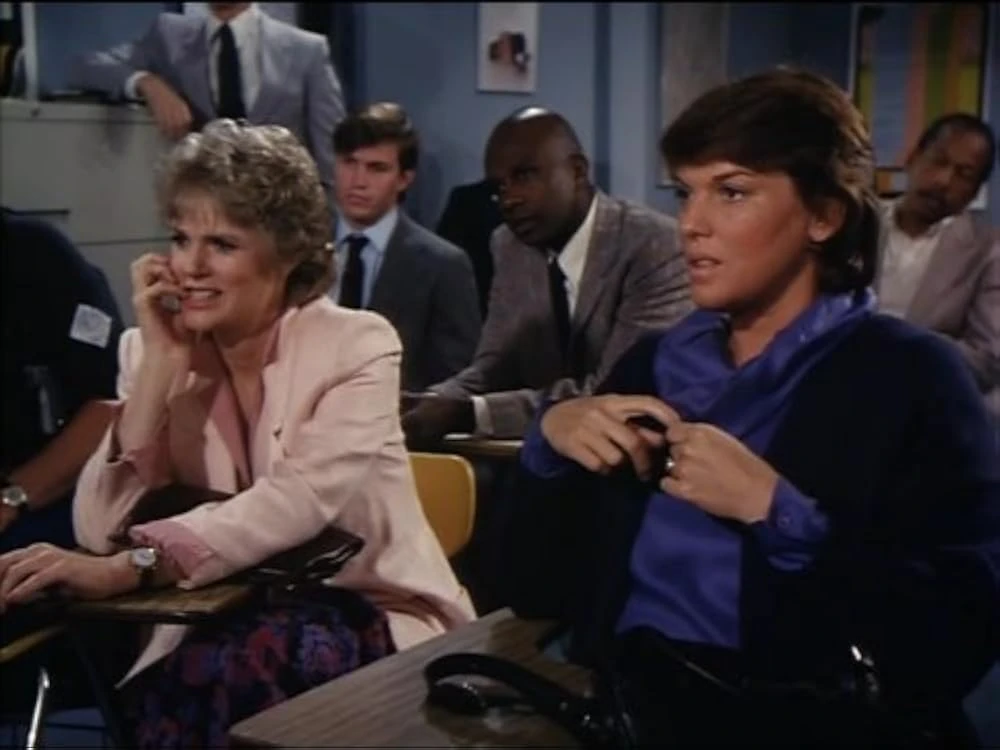
A sweltering boxcar is an exceptionally bad place to discover how long an afternoon can be. In “Heat,” from 1984, Mary Beth is taken hostage by an armed criminal, leaving Christine outside the immediate danger and desperate to recover her partner.
The story uses the women’s different positions effectively. Mary Beth must keep herself alive in a confined, worsening situation. Christine has motion, colleagues, and resources available, but not the information or control she wants. One woman is trapped; the other has to live with being unable to end the waiting.
It is an action episode, and a reminder that the series did not dispense with the machinery of a police thriller in order to explore its characters. The machinery becomes more involving because those characters are already familiar. Mary Beth is not a guest who arrived to demonstrate that hostage situations are frightening. We know who expects her home.
Karen Arthur directed the episode and won the 1985 drama-directing Emmy. It is a useful recognition to place beside the more frequently recalled acting awards: the strength of the series depended on how scenes were built, paced, and framed as well as on the performers inside them.
“Heat” does not need an argument about who is the tougher partner. Daly makes survival demanding; Gless makes the effort to reach her urgent. The suspense turns on their dependence on each other rather than presenting competence as a contest with only one winner.
For all its family conversations and personal storylines, this remained a show in which the badge carried a risk. Remembering that makes the ordinary homecoming afterward more valuable. Getting back through your own front door is not always the uninteresting bit after the episode’s excitement.
The Medical Appointment Mary Beth Does Not Want
Mary Beth’s 1985 breast-cancer story begins with a very ordinary defense against frightening news: reluctance to find out. A woman accustomed to dealing with other people’s emergencies is not eager to turn herself into the person everyone else is worried about.
Daly makes the avoidance believable because it is not presented as a sudden collapse of intelligence. Mary Beth knows that the possibility matters. Knowing is part of why she does not want to go. The frightening thing is waiting on the other side of an appointment, and postponement offers the illusion of another day before her life changes.
Harvey and Christine cannot do the appointment for her. Their concern creates pressure that is loving and sometimes difficult to receive. Mary Beth has spent so much time being necessary to other people that allowing herself to need something from them becomes a struggle in its own right. After the diagnosis, the story allows a second medical opinion and a less extensive operation than the mastectomy initially recommended. Those are events in Mary Beth’s particular fictional case, not instructions for someone else’s care. Their dramatic importance is that she has to ask questions and make decisions while frightened, rather than arriving as the fully composed model patient.
The illness also collides with career timing. The sergeant’s exam does not wait conveniently until every detective is ready for it. Mary Beth misses the opportunity while undergoing treatment. A life-changing personal problem has professional costs even when the workplace contains people who care.
Christine’s concern is revealing too. She needs Mary Beth, not only as a friend but as the person beside whom she has built her working life. Helping is partly an act of love and partly an encounter with her own fear of losing that arrangement. Gless lets those motives exist together.
The story’s aftermath matters as much as the immediate crisis. Returning to work is not automatically the obvious happy ending when an illness has made time with family seem newly fragile. Mary Beth’s recovery includes reconsidering what she wants, and Daly is compelling precisely because she does not make the answer sound effortless.
The recognition that followed was substantial: Daly won the lead-actress Emmy in 1985, and the series won Outstanding Drama Series. In the broader 1984–85 TV season, this was a different kind of distinction from a top-ten audience rank. The biggest crowd and the most affecting work were not always found at the same address.
Charlie Cagney Is More Than Christine’s Backstory
Dick O’Neill’s Charlie gave Christine a father she wanted to impress and a set of problems she did not always want to examine. A retired officer, he represented a connection to the job that went beyond her own career. His approval had weight. So did his failings.
The relationship made Christine’s toughness less simple. Wanting to be a good cop was not an ambition developed in isolation. Charlie’s world had helped define what being a cop meant to her, including the habits and assumptions she sometimes accepted more readily than she should.
Learning things about a parent that complicate an admired picture is a different kind of investigation. A detective can demand answers from a suspect and still avoid the question she ought to ask at home. Gless was especially good at showing Christine’s determination falter when the subject became personal.
Charlie’s drinking placed that difficulty in the middle of their relationship. Christine wanted him to stop harming himself. She was much less comfortable recognizing the significance of her own reliance on alcohol. The series let that contradiction accumulate instead of introducing it as a completely new problem one week.
O’Neill also made Charlie a person rather than a diagnosis. There was affection and history in his connection with his daughter, which meant that confronting him threatened more than an evening’s peace. Christine risked upsetting one of the relationships through which she understood herself.
His death in 1987 broke that arrangement open. The loss was not an isolated tragedy that could be completed with a funeral and an unusually solemn final scene. It triggered a crisis the show had been preparing in smaller moments, when Christine reached for a drink and still thought of herself as the person in control.
“Turn, Turn, Turn” Takes Away Christine’s Defenses
Gless did some of her strongest work when Christine’s usual resources failed her. In the two-part “Turn, Turn, Turn,” grief after Charlie’s death brings her drinking to a point she can no longer explain away as ordinary coping.
The performance is difficult to watch because it does not protect the character’s charm. Christine becomes defensive, unreliable, and hurtful. The familiar wit cannot keep the situation tidy. A woman who prizes competence is losing the ability to present herself as competent, and she does not greet that discovery gracefully.
Mary Beth cannot fix it by being a better friend in the easy television sense: making the right speech, arranging a restorative meal, and waiting for the old Christine to reappear. Love has to coexist with recognizing the scale of the problem. Daly gives that recognition grief of its own.
The story also looks backward. Earlier drinks after a hard day no longer sit comfortably as character atmosphere. A repeated habit has consequences, and the series asks us to reconsider the things both Christine and the people around her treated as unremarkable.
That is more powerful than giving a guest character a drinking problem for a week. The audience has a history with Christine’s defenses. We have enjoyed some of them. Watching those same defenses obstruct help makes the crisis feel attached to the woman we know.
Gless won the 1987 lead-actress Emmy. But the episode’s importance is not confined to the award-winning intensity of the collapse. The series carried sobriety forward, with Alcoholics Anonymous, support, discomfort, and the work of changing habits becoming part of Christine’s continuing life.
It would have been much easier to let the next case restore everything. Instead, the show made room for a version of Christine who remained funny, ambitious, and difficult while learning that control was not something she could recover simply by insisting she had it.
When Christine Needed Someone to Believe Her
The show had investigated acquaintance rape in 1983, putting the squad’s assumptions about a victim under scrutiny. In January 1988, it brought that scrutiny much closer to home when Christine herself was assaulted by a man she knew.
The distinction between the two stories is important. Christine was not the victim in the earlier episode titled “Date Rape.” The later case makes her face the kind of doubts that the police are capable of placing on somebody else: questions about her choices, her response, and what she should supposedly have done differently.
Gless’s performance does not turn strength into a simple defense against trauma. Christine’s confidence has been part of the audience’s relationship with her for years. Here, being a police officer does not exempt her from fear or prevent other people from questioning her account. Knowing how an investigation works does not make undergoing one painless.
Mary Beth’s support is crucial because she refuses to treat Christine’s decision not to fight her attacker as evidence against her. The friendship provides something the institution fails to offer consistently: belief that does not depend on a victim meeting somebody else’s fantasy of how she should behave.
UPI’s contemporary review praised the restraint in Gless’s performance. That is a perceptive emphasis. The force comes from the alteration in Christine’s usual manner, not a requirement that every moment advertise how dramatic the subject is. A subdued response from a familiar, forceful character can be more upsetting than a scene performed at maximum volume.
The case continues into the later trial story, “Friendly Skies,” rather than vanishing after its first hour. Mary Beth then faces a family emergency involving Harvey Jr.’s military training, complicating her wish to be present for Christine. The series does not treat a friend’s crisis as a convenient moment for the rest of life to clear its schedule.
This is not an easy run of episodes, and nostalgia should not try to make it one. They matter because the partnership can carry more than banter. The women know how to be funny together. They also know when a friend needs something laughter cannot provide.
The Microwave, the Elevator, and the Parts Between Crises
A description built entirely from illness, assault, and alcoholism would make the series sound like a weekly endurance test. That is not how it plays. The everyday absurdity matters: people competing for attention, making dubious purchases, trying to get through a workday without being cornered by someone else’s enthusiasm.
“Sorry, Right Number” traps Mary Beth in an elevator with Isbecki, whose bravado is not much use against claustrophobia. A confined space becomes a place to talk, and the conversation connects their separate investigations. It is a small, pleasing reversal of the squad-room hierarchy: the man most equipped with swagger is not necessarily the one most comfortable when the doors stop opening.
At home, a microwave becomes another object Harvey and Mary Beth have to negotiate into their life. The show understood that modern convenience did not arrive with an automatic guarantee of domestic peace. Someone still had to figure out how the thing worked, and somebody else still had an opinion.
Those details help the serious stories because they give the characters lives worth returning to. Mary Beth does not exist only to become ill in an important episode. She is the woman trying to manage a family, make a purchase useful, keep an appointment, and decide how much patience she has left for Victor.
Likewise, Christine’s humor survives the stories that expose her vulnerabilities. Sobriety does not require her to become a solemn instructor standing beside a lesson. Her wit and appetite for work are still there, occasionally running ahead of her better judgment. The character has changed; she has not been replaced by a more educational person.
That Theme Put Them Straight Back on the Street
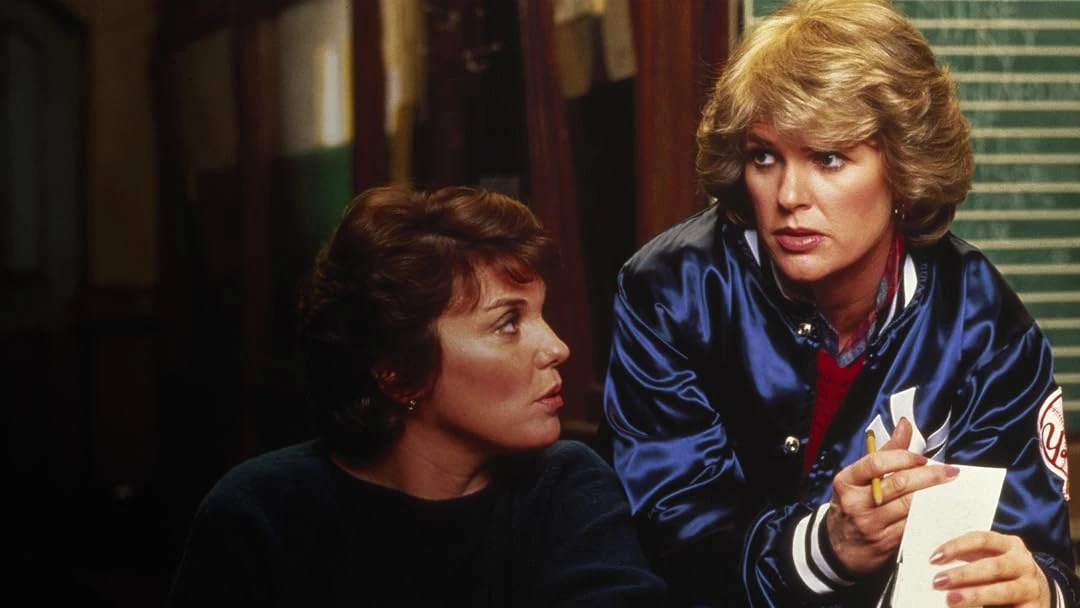
Bill Conti’s familiar instrumental theme has forward motion built into it. It sounds busy, alert, and determined to get somewhere. That is an excellent musical description of a partnership whose day rarely ends exactly when either woman expects it to. The main-title sequence supplies a compact little adventure of its own: movement through the city, a hot dog, a chase through the subway, an unwanted encounter on the way out, and the discovery that being done for the day is not quite the same thing as being allowed to leave.
There is a lovely answer to the rewatcher’s temptation to identify every clip. Rosenzweig explained on the official site that most of those moments were shot specifically for the titles, with additional material from early episodes. If the subway chase feels like a story you cannot locate, you have not necessarily missed an episode. You may simply be looking for an episode that does not contain it.
The sequence is particularly good at showing the women as working partners rather than treating them as two separate star introductions. They move through the same day, encounter the same nuisance, and have to return to the same boss. Mary Beth’s practical wardrobe and Christine’s more extravagant touches remain distinct without pulling them into different shows.
Among the 80s TV themes that instantly summon a program, this one earns its place by fitting the work. It does not promise a weekly vacation from ordinary life. It promises that ordinary life is about to get very busy, and that the two women dealing with it are worth following.
Six Years in a Row, One of Them Won
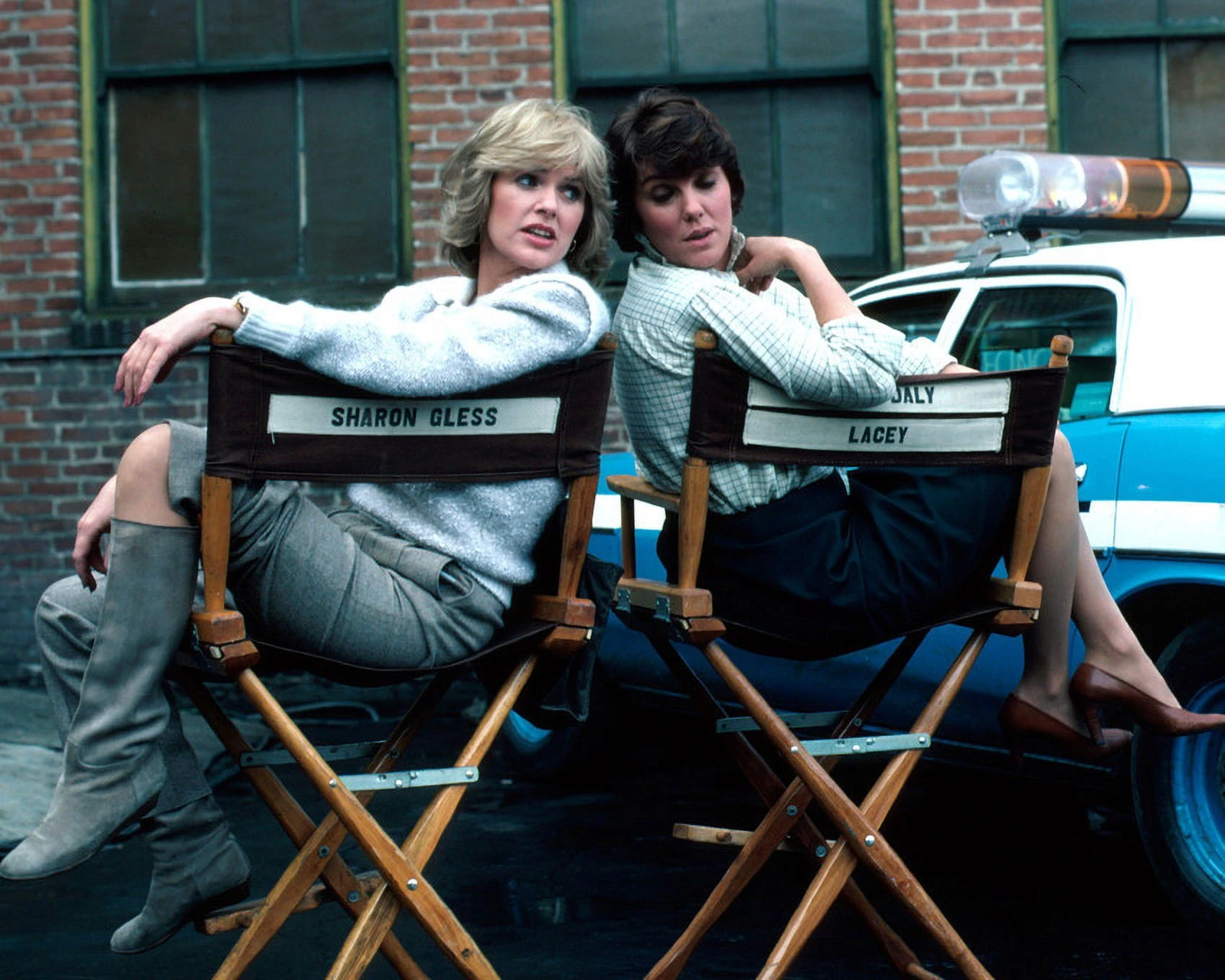
From 1983 through 1988, the drama lead-actress Emmy went to one of the two women in this partnership every year. Daly won in 1983, 1984, 1985, and 1988. Gless won in 1986 and 1987.
That is a remarkable record, and it tells a more interesting story than a simple tally of trophies. The series had two central performances strong enough to command attention without one being reduced to the other’s support. Their different methods were the point.
The show also won Outstanding Drama Series in 1985 and 1986. John Karlen’s supporting-actor win in 1986 recognized a home life that was indispensable to the drama, while directing and writing awards acknowledged work beyond the stars’ names on the poster.
The 1985–86 television season puts those honors in a lively setting. Network audiences had glamorous detectives, family comedies, wealthy schemers, and several very different ideas of what a hit ought to look like. An Emmy victory did not mean Cagney and Lacey had suddenly become the biggest audience attraction of the lot.
Nor did their peers invent the chemistry on awards night. UPI’s year-end assessment for 1985 had singled out Gless and Daly as its best television team. The contemporary praise fits what still works on a rewatch: the performance you notice is often a response to what the other actress has just done.
Award records can become an efficient way to stop talking about acting. This one is more useful as an invitation to look closely. Watch Daly listen while Gless pushes an argument too far. Watch Gless notice that Mary Beth’s ordinary composure has changed. The partnership is doing something more intricate than taking turns delivering impressive scenes.

Neither Charlie’s Angels nor a Trip to Miami
The women did not arrive in a television world without female investigators. Charlie’s Angels had made its own enormous impression in the 1970s, and pretending otherwise does both shows a disservice. The interesting difference is what Cagney & Lacey wanted to spend time on.
These women had bodies that became tired, homes that required money, and relationships that did not conclude neatly when an assignment ended. Their clothes belonged to their daily lives. Mary Beth’s status as a mother was not a disguise discarded on the way to the action; it changed the stakes of taking part in it.
Beside Miami Vice‘s music and nighttime glamour, the 14th Precinct might initially look less exciting. Stay with it. The show found its own pressure in an unanswered question between partners, a husband’s expression, or Christine insisting that she had matters under control when she plainly did not.
It also shared the decade with Hill Street Blues‘ crowded, continuing precinct life. The two series are worth discussing together without pretending they are interchangeable. Cagney and Lacey provided a more concentrated central relationship, with the family and personal stories repeatedly changing what happened between those two desks. The comparison should not become a contest in seriousness. There is room for a stylish cop fantasy, an expansive ensemble, and this intimate, argumentative partnership. Television was more interesting because a badge did not require every show to have the same personality.
It Was Not Subtle Every Week
The series sometimes made its point before the scene had finished making it again. An issue arrived, positions were taken, and the conversation sounded a little more organized than an actual argument between tired people ought to sound. The combination of crime story and social concern did not always land with equal force. There were conventional thriller turns, convenient encounters, and moments when the detectives’ personal crises accumulated with an efficiency that would make a real workplace consider hiring temporary help. A long-running drama needs stories. Sometimes you can see it needing one.
Its strongest defense against that machinery was the cast. Gless and Daly gave even a pointed exchange reactions that did not feel preapproved. Karlen brought a marriage back down to the level of two people trying to live together. Waxman made another difficult day seem connected to the one before it.
The show was also a product of its own police-drama assumptions. Sympathy for the leads did not guarantee that every institutional response or neatly solved case deserved the same sympathy. Rewatching with affection leaves room to question those shortcuts. “Entrapment” is stronger because it exposes one; not every episode is equally searching.
That does not make the achievement smaller. It makes it less embalmed. A program can have changed what television allowed its heroines to do and still contain a speech that runs long or a plot that relies on convenience. Being important did not exempt it from occasionally behaving like a network series with another hour to fill by Monday.
The Shift Ended. The Partnership Did Not.
The weekly series finished its original run of new episodes in May 1988, after seven seasons and 125 episodes. The 1981 television movie came before those episodes; four reunion movies arrived in the 1990s. Those later films are a continuation, not additional 1980s seasons.
The final story, “A Fair Shake,” took the detectives into an unusually expansive political-intrigue case. After so much time invested in their ordinary lives, the move outward has a different flavor from the kitchen conversations and private conferences that best explain the show’s appeal. The ending did not make the partnership itself feel exhausted.
For viewers who found the series later in reruns, the off-duty details often became the attachment: the familiar faces at the precinct, Harvey’s presence, the women’s willingness to stay in a difficult conversation. You did not need to have followed the original cancellation campaign to understand why somebody had wanted these people back.
The series belongs to the broader story of the 1980s, but its appeal survives the decade’s wardrobe. A promotion still changes a friendship. A parent still complicates an adult child’s sense of herself. A family still has to find room for the work that supports it. Gless and Daly made those pressures worth spending time with.
Later 1990s dramas such as NYPD Blue would push police television in different directions. Cagney and Lacey’s place in 80s TV does not depend on claiming every later achievement as their inheritance. Their own work is enough: two memorable women, a substantial friendship, and the understanding that getting through the case is only part of getting through the day.
A Few Precinct Questions
Who played Christine Cagney before Sharon Gless?
Loretta Swit played Cagney in the 1981 television movie. Meg Foster played her in the first six weekly episodes in spring 1982. Gless took over in fall 1982 and remained through the end of the series in 1988. Tyne Daly played Mary Beth Lacey throughout those versions.
Did viewers really save Cagney & Lacey?
Organized viewer support helped reverse the 1983 cancellation, alongside publicity, improving summer-repeat ratings, and critical and awards recognition. The series returned with seven episodes in spring 1984. Letters were a major part of the effort, but the comeback had several contributing factors rather than a single miraculous cause.
How many seasons and episodes were there?
The weekly series ran for seven seasons, with 125 episodes, from 1982 to 1988. The short Meg Foster run is season one; the seven-episode spring 1984 return is season three. The original 1981 movie and four 1990s reunion movies sit outside that weekly episode count.
How many Emmys did Gless and Daly win for the show?
Daly won four lead-actress Emmys for Mary Beth, in 1983, 1984, 1985, and 1988. Gless won two for Christine, in 1986 and 1987. Together, those performances won the category for six consecutive years. The series also won Outstanding Drama Series in 1985 and 1986.
Was the famous opening assembled entirely from episodes?
No. Producer Barney Rosenzweig explained that much of the familiar day-on-the-beat sequence was filmed for the titles, with some early episode material added. That includes the subway chase. Trying to locate every opening moment in the episodes themselves will therefore send a rewatcher on a fairly frustrating investigation.
Sources & Further Reading
- Official production history and early casting
- Barbara Corday: creating the series and its characters
- Sharon Gless on developing Christine Cagney
- Original production guide: characters and season synopses
- Contemporary report: canceled show gains summer viewers
- 1983–84 seasonal ratings: Classic TV Archive
- 1985 contemporary assessment of Gless and Daly
- 1988 contemporary review of Christine’s assault story
- Emmy winners and nominations: Television Academy
- The opening titles: producer Barney Rosenzweig explains
- Composer Bill Conti: Television Academy interview