NYPD Blue: How Network Television Got Grittier in the 90s
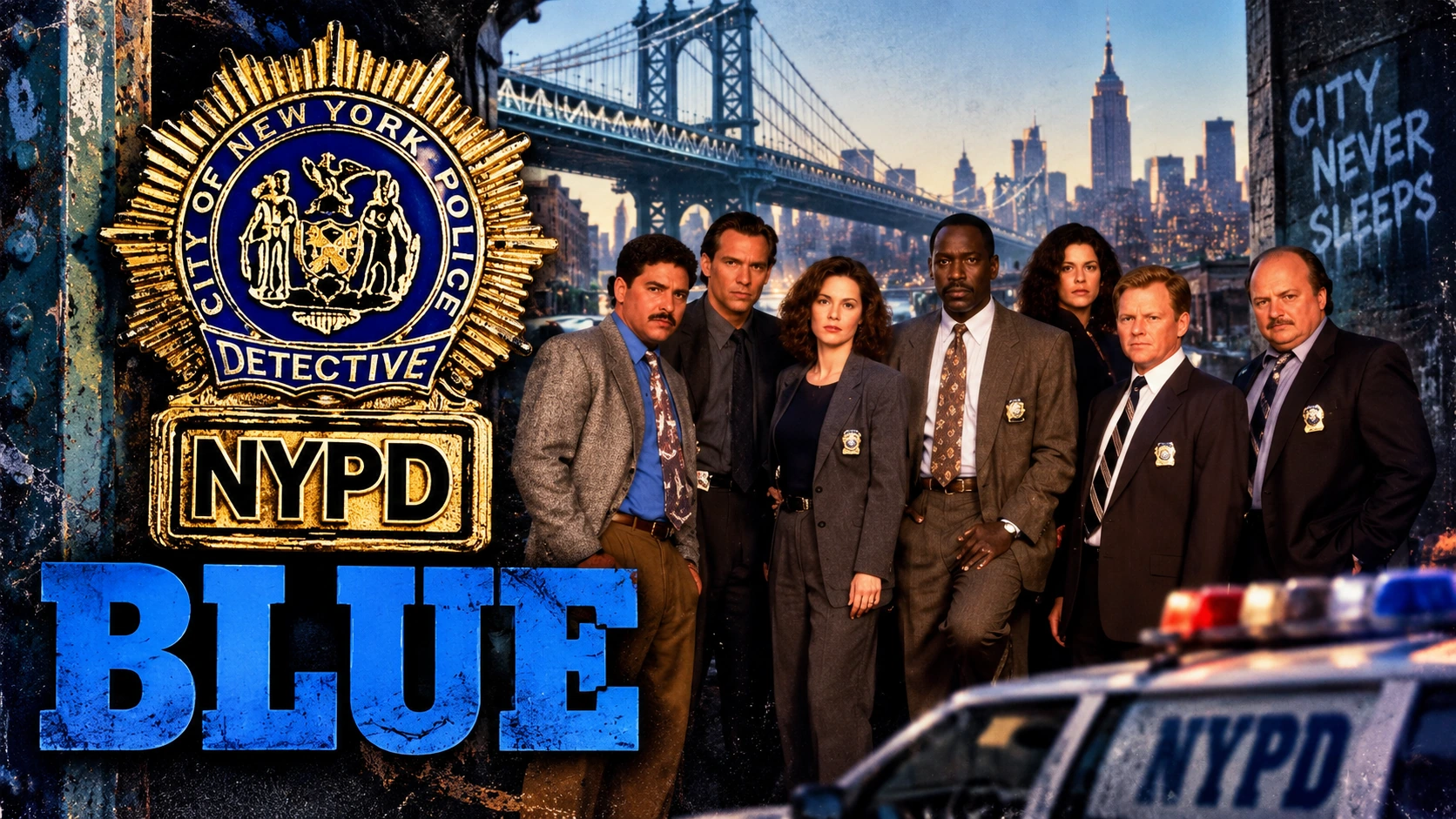
NYPD BLUE How Network Television Got Grittier in the 90s
NYPD Blue did not arrive politely. Before ABC aired the first episode, affiliates were already refusing to carry it. Advertisers were nervous. Protest groups were warning that network television had crossed a line. Then the show went on anyway—full of bruised detectives, clipped street language, nervous cameras, moral compromise and an alcoholic cop named Andy Sipowicz who was almost designed to make audiences uncomfortable. The surprise was not that people argued about it. The surprise was how many people watched.
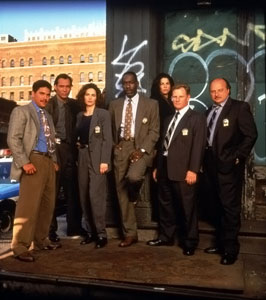
Why was NYPD Blue so important to 90s television?
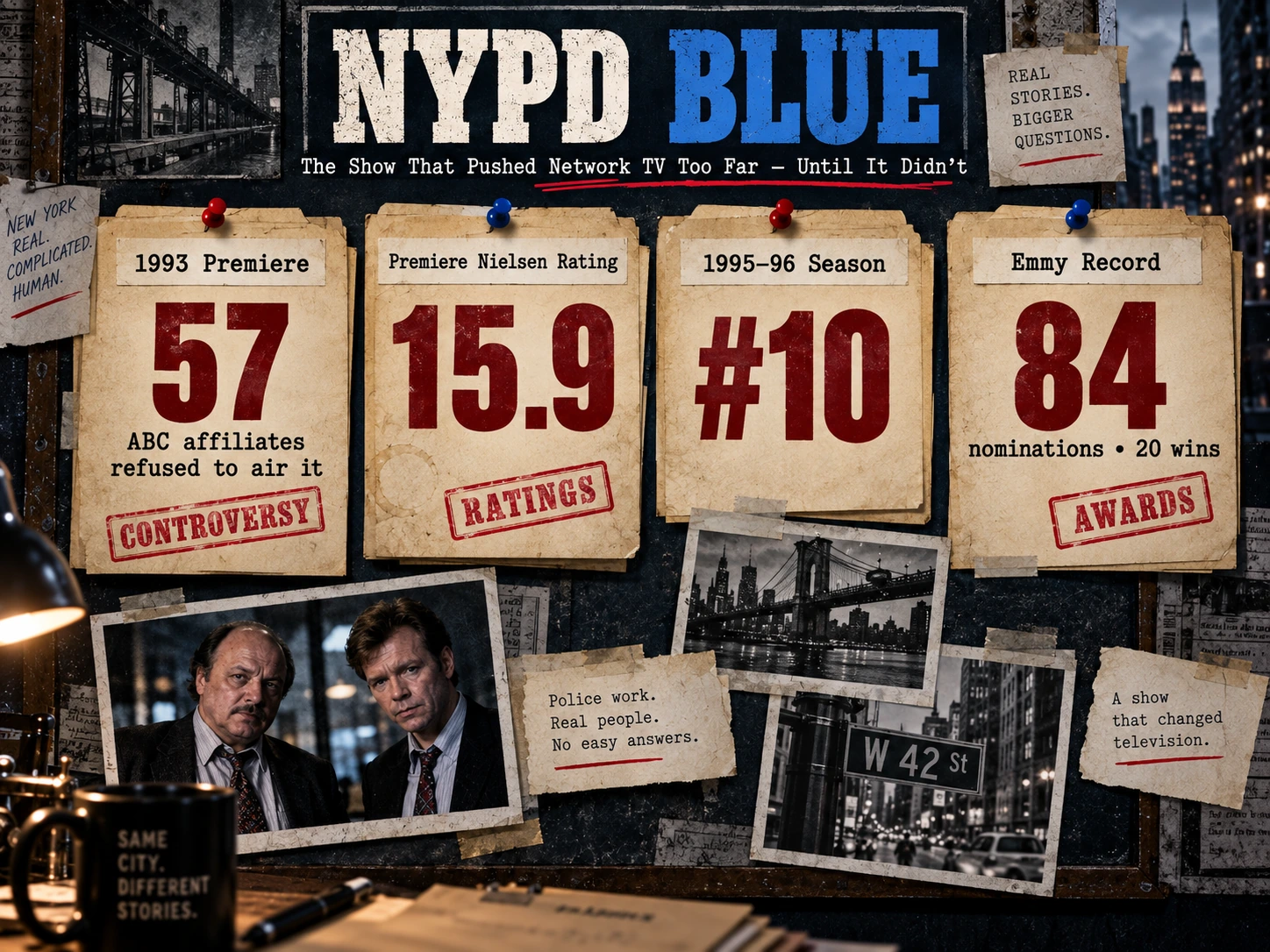
NYPD Blue changed 90s network television because it proved a broadcast police drama could be rougher, more adult and more morally complicated without losing a mass audience. The 1993 premiere was preempted by 57 ABC affiliates yet still won its time period with a 15.9 Nielsen rating. By 1995–96, it was a top-10 hit, and its handheld look, street-level dialogue and deeply flawed detectives had become part of the language of modern network drama.
NYPD Blue in the 90s: How Network Drama Got Rougher
Looking back at NYPD Blue in the 90s, the real change was not simply that a cop show became more explicit. It was that network drama began allowing people, institutions and consequences to stay rough around the edges.
The precinct was noisy. The camera did not always sit still. People interrupted each other. Detectives carried grudges into the squad room and private damage into interrogations. The cops were not cleanly divided into good ones and bad ones. They lied.
They pushed suspects. They manipulated witnesses. They brought prejudice, addiction, ambition, anger and loyalty into the job. Sometimes the procedure worked because they bent it. Sometimes the bending was the problem. That was the unsettling part.
The show did not ask us to admire every tactic just because the detective using it wore a badge. Instead, it made the station house a place where competence and damage could occupy the same body. Andy Sipowicz could be a gifted detective and a racist. He could be brave and petty. He could love people and hurt them.
He could get sober, relapse, apologize and still remain recognizably himself. That kind of contradiction became one of the defining signatures of 90s drama.
You can see that wider shift across our guide to 1990s TV shows, sitcoms, dramas and prime-time classics. Sitcoms were becoming sharper, medical drama was becoming faster, and cable was beginning to offer a different idea of what adult television could be. NYPD Blue brought that pressure directly into the broadcast mainstream, making a major network hit feel less protected and more unpredictable.
The NYPD Blue Controversy: Why 57 ABC Affiliates Refused the Premiere
It is hard to recreate how strange the rollout felt if you only know the show as an old prestige drama sitting in a streaming menu.
In the summer of 1993, NYPD Blue was already a problem. ABC affiliates had screened the pilot and some station managers were alarmed by the language, sexuality and brief nudity. The concern was not that the show looked cheap or exploitative. Many of the same station managers reportedly praised the quality. The issue was whether this material belonged on a mainstream broadcast network at all.
That distinction matters. The argument was not really about whether Steven Bochco and David Milch knew how to make television. Everybody knew they did. Bochco had already helped reinvent police drama with Hill Street Blues. Milch had written there too. The argument was whether ABC was willing to let them move the line again.
By June, affiliate anxiety was serious enough that Bochco publicly said he would discuss changes to the pilot. By August, the American Family Association was pressuring stations and advertisers while claiming that more affiliates would refuse the episode. ABC disputed some of those early numbers. Then premiere night arrived and the resistance was larger than the network had predicted.
Fifty-seven of ABC’s 225 affiliated stations did not air the first episode. That left roughly 11% of the country unable to watch the premiere through its local ABC station. Imagine a new network drama launching today with more than fifty stations simply saying no. That is how visible the boundary fight was. And because this was 1993, the controversy itself became free promotion.
Every article about whether the show had gone too far told viewers there was something on Tuesday night they might not normally be allowed to see. The show needed the audience to decide whether all that noise matched what was actually on screen.
NYPD Blue Premiere Ratings: A 15.9 Nielsen Rating Despite 57 Preemptions
The premiere did not merely survive the controversy. It turned the controversy into proof that the audience was willing to follow network television somewhere rougher.
The national Nielsen rating was 15.9. That represented about 15 million television homes at the time. The episode won the 10 p.m. time period. And it did that while a significant portion of ABC’s affiliate map refused to carry it. That result changed the conversation immediately.
Before premiere night, the central question was whether NYPD Blue was too controversial to succeed. After premiere night, the question became how long affiliates could stay away from something viewers clearly wanted. Within the first several weeks, the drama repeatedly placed among the week’s top 15 programs and beat its normal competition at 10 p.m. Tuesday.
Some affiliates began coming back. The outrage did not vanish. Advertiser caution did not vanish. But the show had demonstrated the thing that matters most in network television: people were watching. That gave ABC leverage. It gave Bochco leverage.
And it gave every network executive watching from somewhere else a new piece of information. The audience boundary was farther out than television had been pretending.
Steven Bochco and David Milch Built NYPD Blue to Break Network Rules
The reason the series could take risks without collapsing into noise was that its creators had already spent years learning exactly how network television worked.
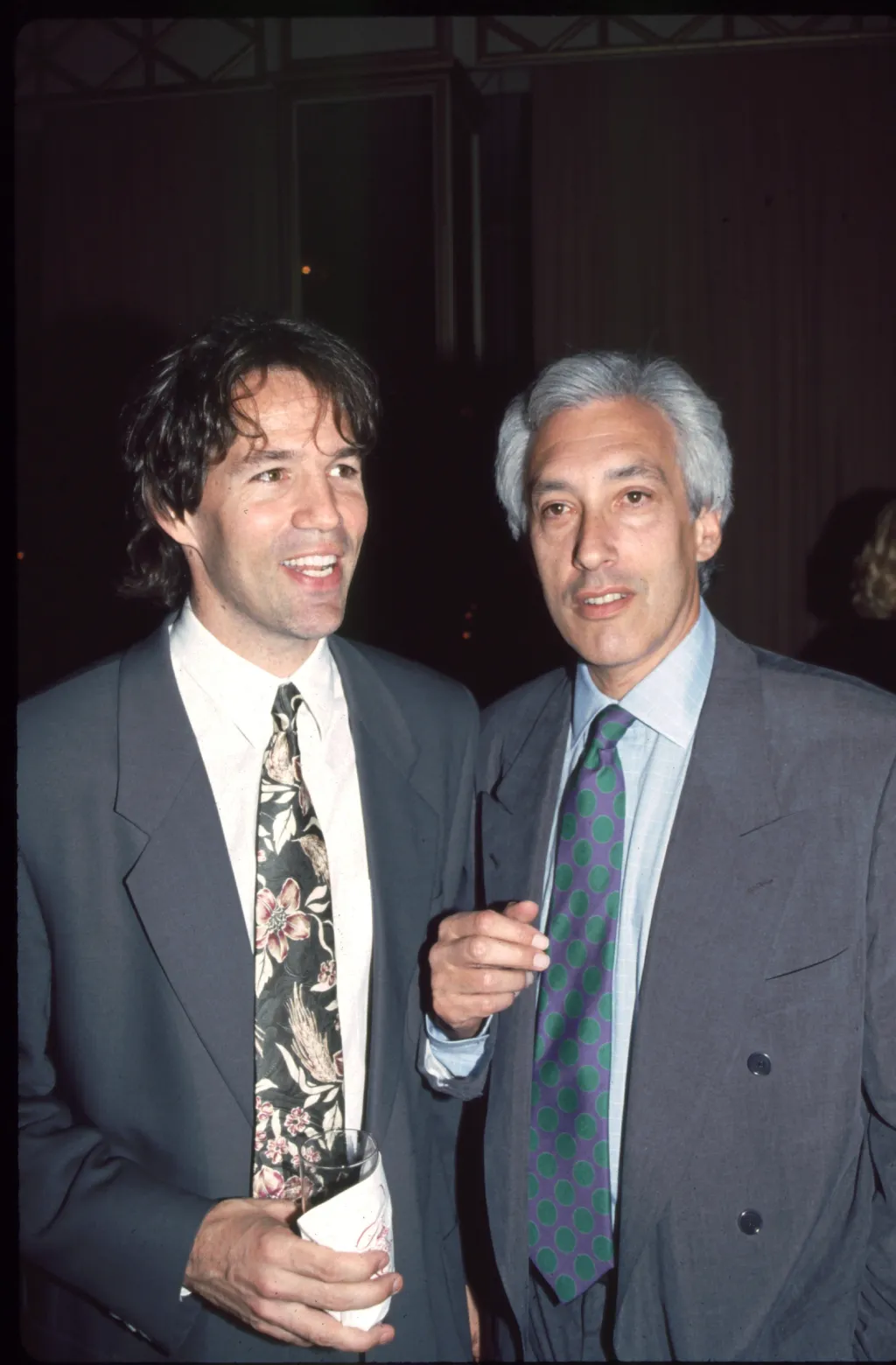
Steven Bochco had helped create Hill Street Blues, the 1980s police drama that made ensemble storytelling, overlapping personal lives and messy institutions feel possible on network television. David Milch joined that show as a writer and producer. So NYPD Blue did not come from outsiders who hated television. It came from people who understood the machinery well enough to know where it could be forced.
Bochco understood networks. He understood affiliates. He understood the difference between a creative argument and a business argument. Milch brought a different kind of pressure. His dialogue was elliptical, rhythmic and often deliberately strange. Characters did not explain themselves cleanly.
They circled. They deflected. They used street grammar and cop grammar. They said the wrong word when the wrong word revealed more than the right one would have. That partnership gave the show two kinds of authority. Bochco knew how to get a difficult series onto a broadcast network.
Milch knew how to make the people inside it sound like they had lived before the camera arrived. And crucially, neither man treated the police department as an automatic moral center. It was an institution full of people. Some competent. Some compromised. Most both.
How NYPD Blue’s Handheld Camera Changed the Look of 90s Police Drama
You could recognize NYPD Blue before anyone said a word.
The image did not feel planted. The camera searched. It moved into conversations instead of politely observing them. It could wobble, reframe, catch a shoulder, find another face. Editing could arrive hard and fast. The precinct felt crowded because the photography treated it like a place where everybody was already in motion.
Television Academy histories of the show describe the look as a mix of realism and stylization: New York location work gave the streets weight, while nervous handheld movement and jumpy cutting increased tension inside the squad room. Gregory Hoblit was central to establishing that visual grammar. The trick is that the style rarely swallowed the acting.
This was not music-video cutting for its own sake. The camera might feel unsettled, but when Sipowicz was breaking apart emotionally, the scene still belonged to Dennis Franz. When Jimmy Smits entered as Bobby Simone, the camera could register his composure against Sipowicz’s volatility. When Lt. Fancy stared down a bad decision, the movement could stop feeling decorative and become pressure.
That balance became enormously influential. Later network dramas could move faster and look less polished because NYPD Blue had already shown that roughness could read as seriousness rather than incompetence.
David Milch’s Dialogue Gave NYPD Blue Its Own Language
The show’s speech was nearly as distinctive as the camera.
Milch’s characters often talked sideways. They used odd syntax. They repeated a word because the repetition carried emotion. They avoided a direct statement until avoiding it became more revealing than saying it. That style eventually became famous enough to get its own shorthand: “MilchSpeak.” The important thing is that it did not make every character sound identical.
Sipowicz had his own rhythms. Simone sounded different. Fancy sounded different. Medavoy could turn a simple explanation into an anxious maze. Suspects brought different class, neighborhood and emotional rhythms into the room. The result was dialogue that felt authored without sounding polished.
That is harder than it sounds. Most “gritty” television fails when characters are merely given more profanity. NYPD Blue understood that adult language is not the same thing as adult writing. What made the conversations feel adult was that people lied badly, withheld things, protected themselves, judged one another and occasionally stumbled into honesty. The raw vocabulary was only one layer.
Andy Sipowicz: The Flawed Cop at the Center of NYPD Blue
If you wrote Andy Sipowicz as a list of traits before casting Dennis Franz, somebody might reasonably ask why a network audience would want to spend an hour with him.
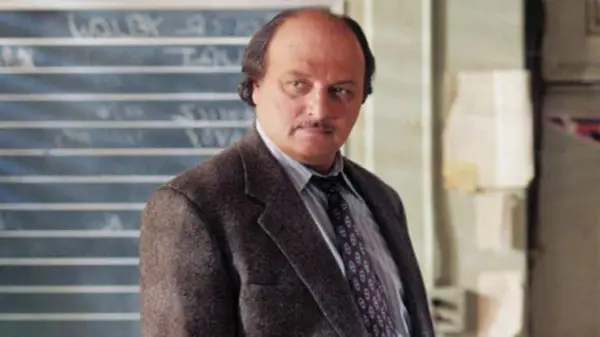
He is abrasive. He is prejudiced. He is an alcoholic. He can be cruel. He is defensive even when he knows he is wrong. He often uses the authority of the badge in ways that should make the viewer uneasy.
He is also one of the best detectives in the room. He sees details. He understands guilt. He recognizes weakness because he has spent so much time living with his own. And when the series lets him love somebody, the affection does not magically cure the damage. That is what makes him feel real.
Franz never asks us to confuse pain with innocence. Sipowicz’s past explains him. It does not excuse him. The character can grow and still carry the evidence of what he has been. That is a much harder form of television redemption than a single speech and a clean slate. The industry noticed.
Dennis Franz won the lead-drama-actor Emmy for the role in 1994, then again in 1996, 1997 and 1999. Four wins for a character this abrasive tells you something about how completely he changed expectations for a network lead.
David Caruso’s John Kelly and the First Version of NYPD Blue
The first-season version of the show is built around a tension that disappears quickly enough that it can be easy to forget how important it was.
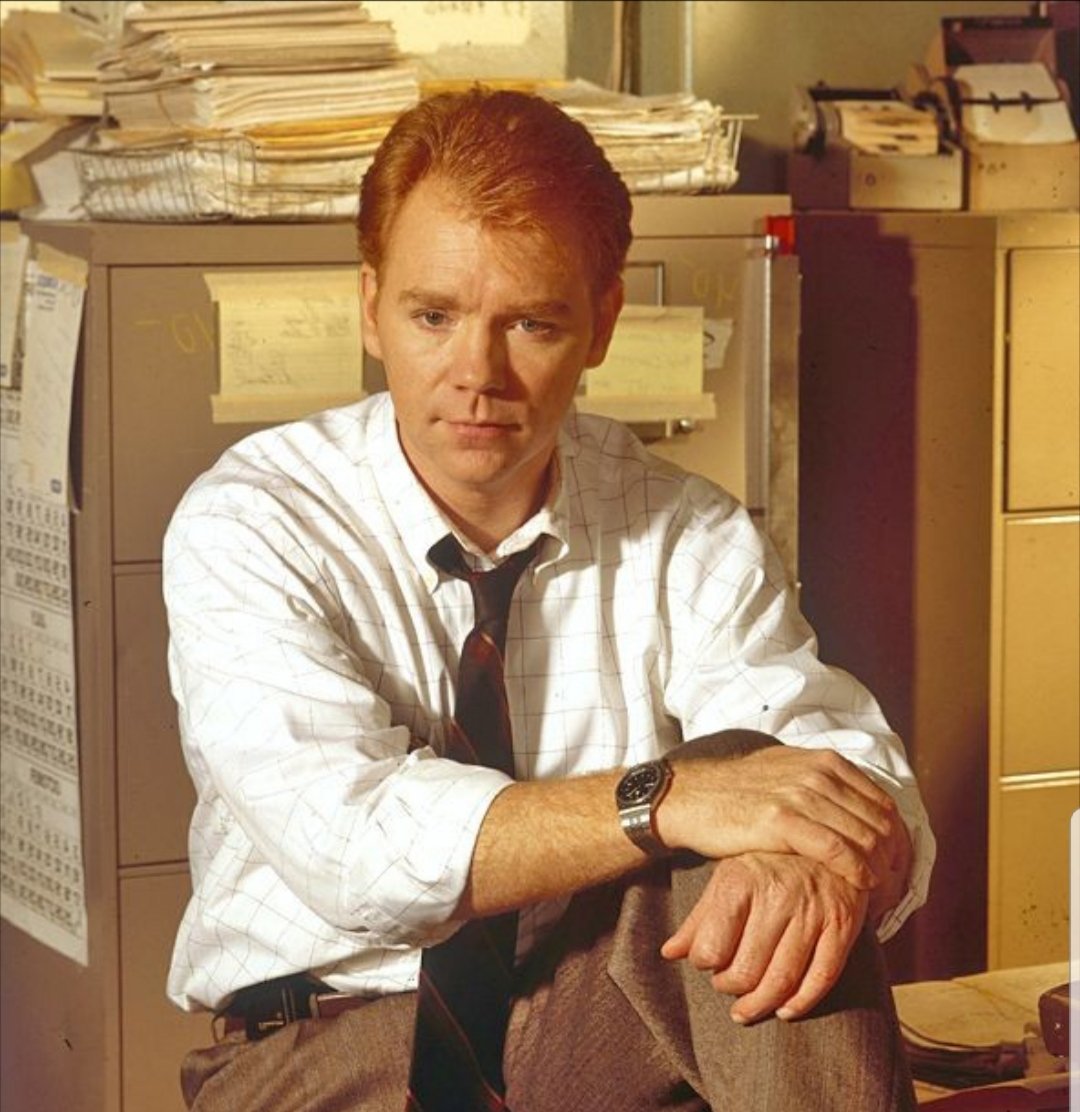
John Kelly is controlled where Sipowicz is combustible. He is younger. More polished. More obviously positioned as a conventional television lead. David Caruso’s restraint gave the early series a center viewers could enter before they understood what Sipowicz would become. Caruso also became the breakout star.
That created its own problem. By the beginning of season two, he was gone. “Dead and Gone” closes Kelly’s time with the department, and one episode later Jimmy Smits arrives as Bobby Simone. On a lesser show, losing the young male lead after one season could have killed the entire experiment. Instead, the transition exposed something NYPD Blue had not fully proven yet.
The series was larger than one star. That is a defining trait of the great 90s ensemble dramas.
Jimmy Smits as Bobby Simone: The Partner Who Changed NYPD Blue
The smartest thing NYPD Blue did after Caruso left was refuse to pretend Bobby Simone was the same man with a different face.
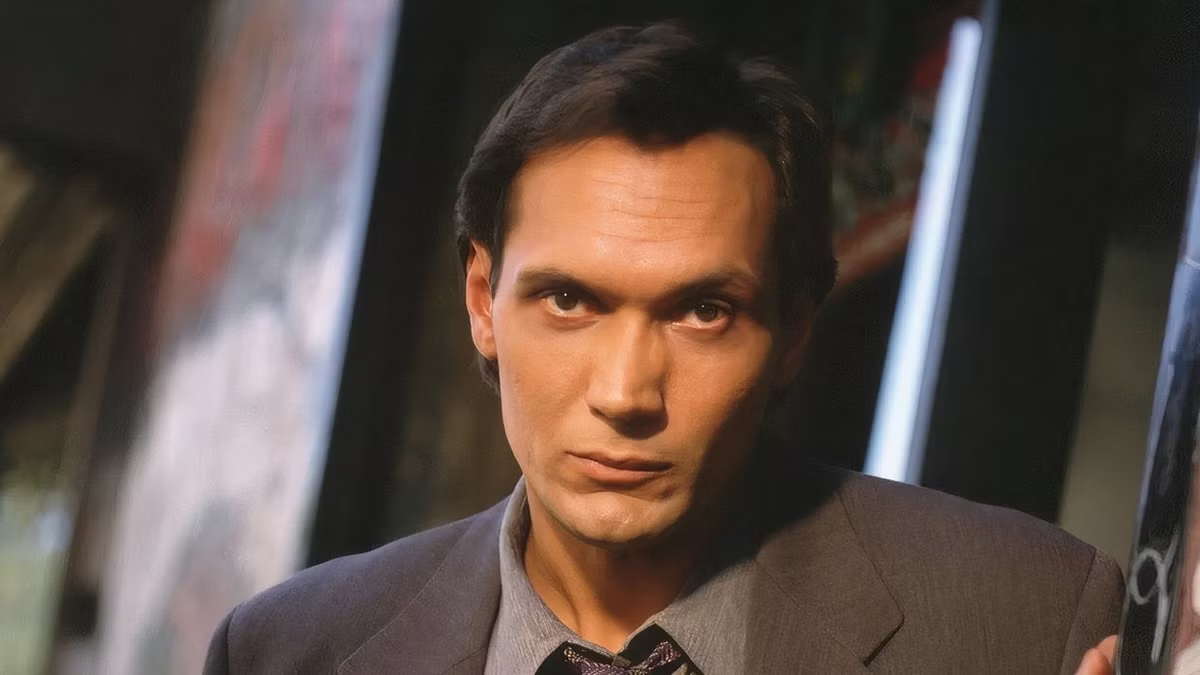
Jimmy Smits brings a quieter confidence. Simone is observant. Patient. Less interested in announcing his authority. He has his own history, his own relationships and his own capacity for violence. That last part is important.
Simone can appear more emotionally settled than Sipowicz without becoming morally clean. He can manipulate. He can make a questionable choice because loyalty or anger has narrowed his vision. He can cross a line and then live with what crossing it means. That makes the partnership richer than “calm cop, angry cop.” Smits also widened the show’s emotional range.
His relationship with Diane Russell is adult, complicated and damaged by her alcoholism. His connection to informants and old friends gives the series another route into the city. And by season three, the show no longer feels like it survived a cast change. It feels like the cast change revealed the version it was meant to become.
Sipowicz and Simone: One of 90s TV’s Great Uneasy Partnerships
By the third season, the relationship between Andy Sipowicz and Bobby Simone is the engine.
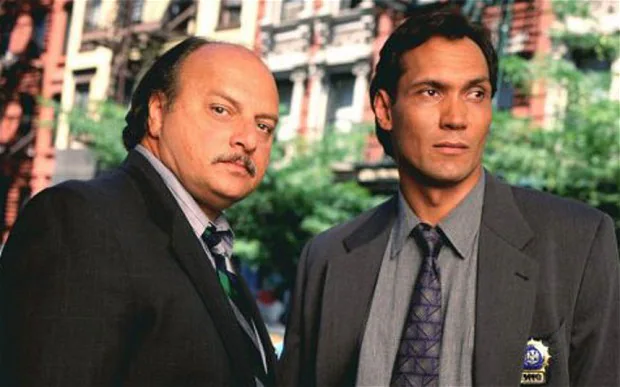
They trust each other professionally. They do not always trust each other personally. They know what the other man is capable of. That knowledge can become reassurance or threat depending on the case. Simone can pull Sipowicz back when anger is driving him. Sipowicz can see when Simone’s calm is covering a decision that may be just as reckless.
The partnership works because the show does not make one man the conscience of the other. They trade the role. Sometimes both are wrong. Sometimes both understand that the legal answer and the humane answer are not sitting in the same chair. That tension becomes especially powerful in season three as Diane Russell struggles with alcoholism, Andy’s family life changes and cases increasingly intersect with the detectives’ private worlds.
When Andy Jr. is killed, the partnership stops being a workplace relationship and becomes the place Sipowicz puts grief he cannot manage anywhere else. That story is one of the clearest examples of why the series was more than a procedural. The case matters. But what the case does to the detectives matters more.
The 15th Precinct Ensemble Made NYPD Blue Feel Like a Real Workplace
A great precinct drama needs the room to feel like it keeps working when the stars walk out.
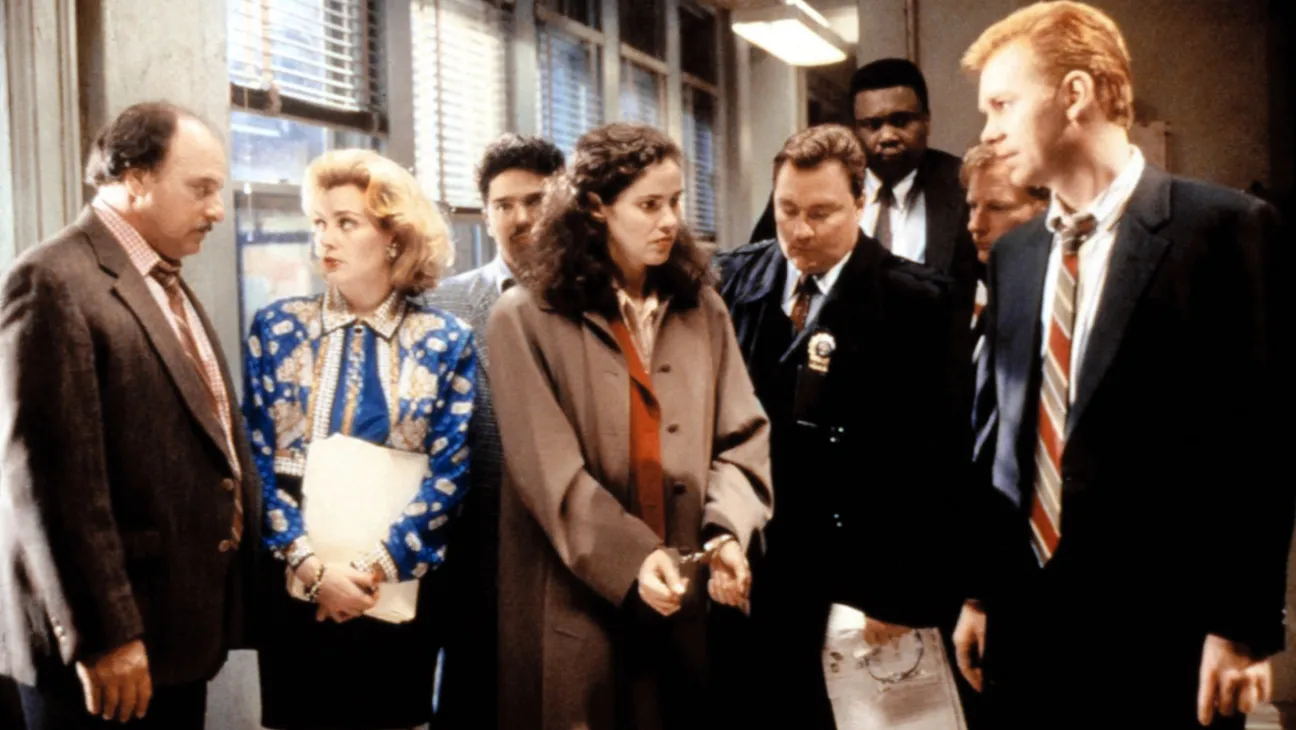
NYPD Blue has that quality. Greg Medavoy is nervous, decent, sometimes ridiculous and often a much better detective than his manner suggests. James Martinez grows from a younger cop into someone with more confidence and judgment. Donna Abandando is not treated as furniture just because she sits at a desk. Her relationships, decisions and eventual departure matter to the emotional temperature of the squad.
Adrienne Lesniak arrives with enough private complication to create friction inside a workplace that is already full of it. John Irvin can walk into the precinct and immediately shift the energy. And these people are not simply waiting for Sipowicz to enter their story. They have cases. They have humiliations. They have office politics.
They have romantic mistakes. They have bad mornings. That density is part of what made the series feel more adult. Adult workplaces are rarely arranged around the main character. Everybody thinks they are the center of their own day.
Sylvia Costas, Diane Russell and the Women of NYPD Blue
A series this focused on troubled men could easily have used women only as evidence that those men were secretly lovable. NYPD Blue was usually more interesting than that.

Sylvia Costas sees something in Sipowicz that does not erase what is difficult about him. Her relationship with Andy has standards. She can love him and still expect him to behave like a grown man. That makes the relationship meaningful because affection is not a pardon. Diane Russell is even less interested in being somebody else’s emotional repair kit.
Her alcoholism gives the series a parallel addiction story that prevents Sipowicz from owning all the damage in the room. Her relationship with Simone is complicated by recovery, family trauma, professional identity and the fact that being loved does not make sobriety easy. Donna’s story is quieter but important. She is observant enough to know what the detectives look like from the outside.
Lesniak brings another kind of conflict, especially as her personal life becomes precinct gossip and pressure. The writing can absolutely show its era. Not every gender story has aged cleanly. But the women are allowed to be professionally competent, emotionally contradictory and occasionally wrong in ways that belong to them rather than to the male lead’s development.
Lt. Arthur Fancy: Race, Authority and Power Inside the 15th Precinct
James McDaniel’s Lt. Arthur Fancy is one of the reasons the show’s treatment of Sipowicz works as well as it does.

Fancy knows Andy is a good detective. He also knows Andy can be racist. The show does not pretend those facts cancel each other out. That creates a relationship built on professional usefulness, distrust, anger, grudging respect and boundaries. Season three’s “The Backboard Jungle” makes the conflict explicit when Sipowicz’s racial assumptions become part of a case and Fancy removes him from it.
What matters is that Fancy is not written as a moral speech delivered in a suit. He has institutional pressure of his own. He makes choices. He manages the squad, superiors, politics and officers who can become liabilities without ceasing to be useful. That is what adult authority looks like in the series. Not perfect control.
Management of imperfect people.
How Bill Clark Helped Make NYPD Blue Feel Like Real Police Work
The show’s realism was not just a camera filter.
Bill Clark, a former New York City police detective, became a technical adviser and producer on the series. His experience gave the writers access to procedure, slang, interrogation habits, case stories and the ordinary details that make a fictional workplace feel inhabited. That does not mean the show is a documentary. It is aggressively dramatic.
Cases are shaped for television. Scenes land where scenes need to land. But the behavioral details matter. How detectives approach a witness. How they lean on a suspect without immediately announcing what they know. How a small lie can be more useful than a dramatic confession at first.
How a squad room feels when several unrelated investigations are moving at once. Milch also drew on real-life stories. The Television Academy’s interviews with him repeatedly return to that habit. The goal was not merely factual accuracy. It was emotional plausibility. Real people do things that screenwriters sometimes reject as too strange.
NYPD Blue understood that strangeness is often where authenticity lives.
Why NYPD Blue Interrogations Felt Like Psychological Street Fighting
The interrogation scenes are one of the clearest places where the show’s realism, writing and moral ambiguity all meet.
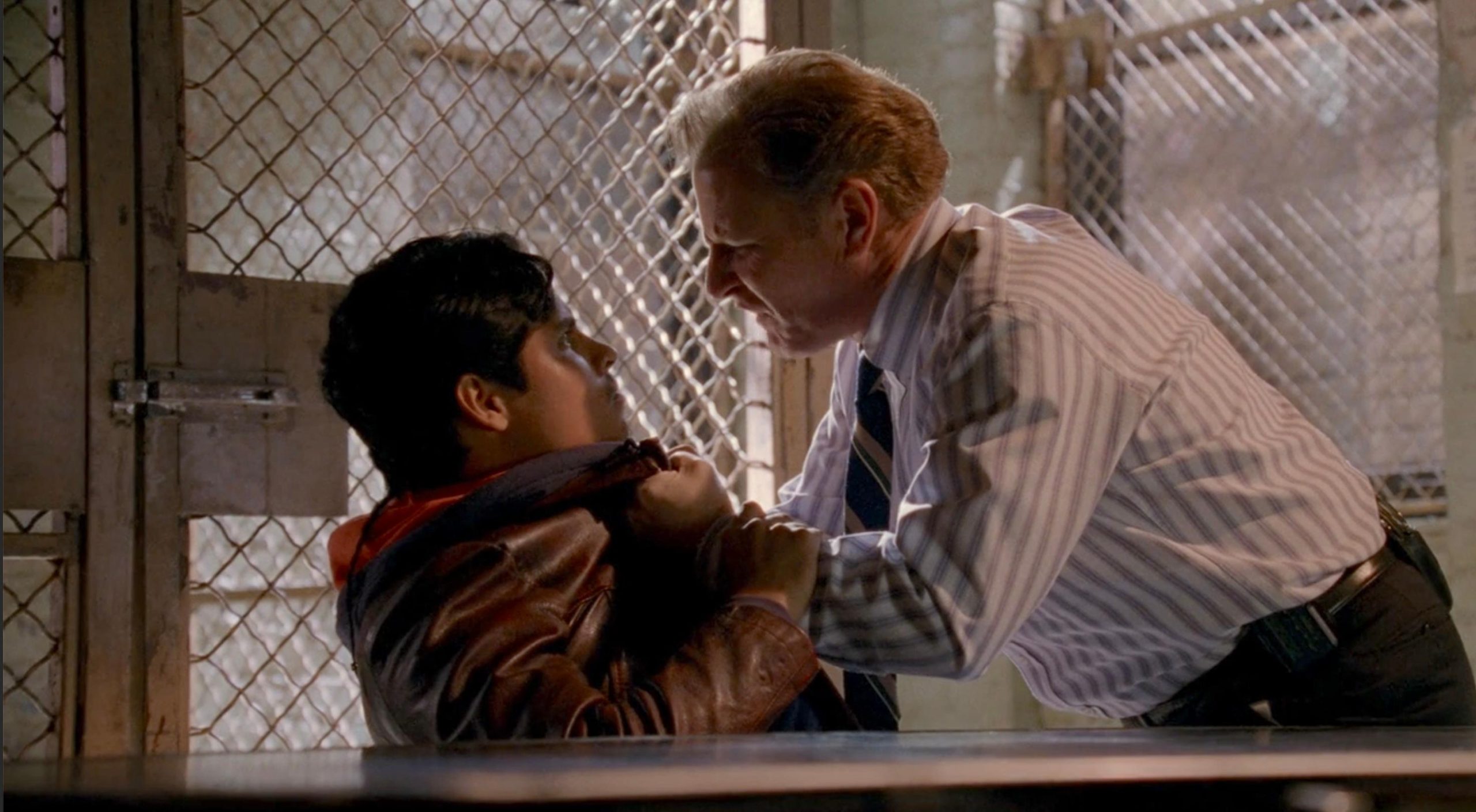
On a more conventional procedural, the suspect enters, the detective presents evidence, pressure rises and the confession arrives as the scene’s prize. NYPD Blue is more interested in the maneuvering. The detective may know less than he claims. The suspect may know the detective is bluffing. Silence becomes information. A badly chosen phrase becomes information.
The fact that somebody is too eager to help becomes information. Sipowicz is especially good in these rooms because the qualities that make him difficult socially can become useful professionally. He is willing to be unpleasant. He is willing to let a suspect dislike him. He can appear dumber, angrier or less informed than he actually is if that creates an opening.
Simone works differently. He can lower the temperature. He can let somebody believe a conversation is becoming safer while quietly narrowing the exit. Medavoy’s awkwardness can become its own kind of disarming presence. The best scenes often work because different detectives can attack the same lie from opposite angles. That is where Bill Clark’s influence and Milch’s dialogue meet most visibly.
The techniques feel grounded in actual police behavior, but the writing understands that an interrogation is also theater. Everybody in the room is performing a version of themselves. The detective is deciding what to reveal. The suspect is deciding what to hide. The viewer is trying to determine who has realized what. That makes a two-person conversation as suspenseful as a chase scene.
NYPD Blue Made Police Work Morally Messy Instead of Morally Simple
The series is often remembered for what it showed. Its deeper legacy is what it refused to simplify.
Suspects can be guilty and still be treated badly. Detectives can get the right answer for the wrong reason. A confession can solve a case without making the interrogation comfortable to watch. Loyalty can be admirable until loyalty becomes obstruction. Revenge can feel emotionally understandable and legally indefensible at the same time. That is the moral atmosphere of NYPD Blue.
The show does not operate from the fantasy that rules never matter. It also does not operate from the fantasy that people under pressure always follow them. Season three is loaded with that tension. Internal Affairs is never simply wrong because cops resent it. Federal agencies can be obstructionist without making the local detectives automatically righteous.
Simone’s loyalty to informants can produce admirable compassion and dangerous tunnel vision. Sipowicz’s instincts can solve a case while his prejudice poisons another. By refusing to make every choice clean, the series created the kind of morally complicated protagonist network television would lean on much more heavily in the years that followed.
NYPD Blue Treated Alcoholism and Recovery as Ongoing Stories
One of the most adult things about the series is its refusal to treat sobriety as a plot that ends when a character decides to stop drinking.
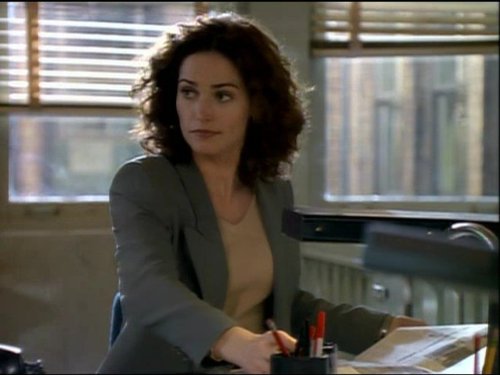
Sipowicz’s alcoholism is woven into who he is. It affects his work. It affects intimacy. It affects the way other people evaluate his promises. And even when he is sober, the history does not disappear. That is important because television had a long habit of using addiction as a special episode.
Somebody has a problem. The problem is discovered. A confrontation happens. The episode ends with hope. Next week, the machine resets. NYPD Blue does not reset.
Season three is especially brutal about that. Diane Russell is trying to stay sober while family chaos keeps finding the exact places where sobriety is weakest. Simone wants to help her, but love cannot do the work for her. Then Sipowicz loses Andy Jr. and grief pushes him back toward drinking. “Closing Time” is painful because relapse is not treated like a surprise twist.
It feels like a danger the character has been carrying the whole time. That is a deeper kind of continuity. A character’s past remains active even when the current episode is about something else. Modern serialized drama uses that idea constantly. In the mid-90s, seeing it sustained on a major broadcast network still felt unusually uncompromising.
New York Gave NYPD Blue Its Heat, Noise and Street-Level Texture
The title says New York before the first scene begins, and the series works hard to make the city feel like more than an establishing shot.
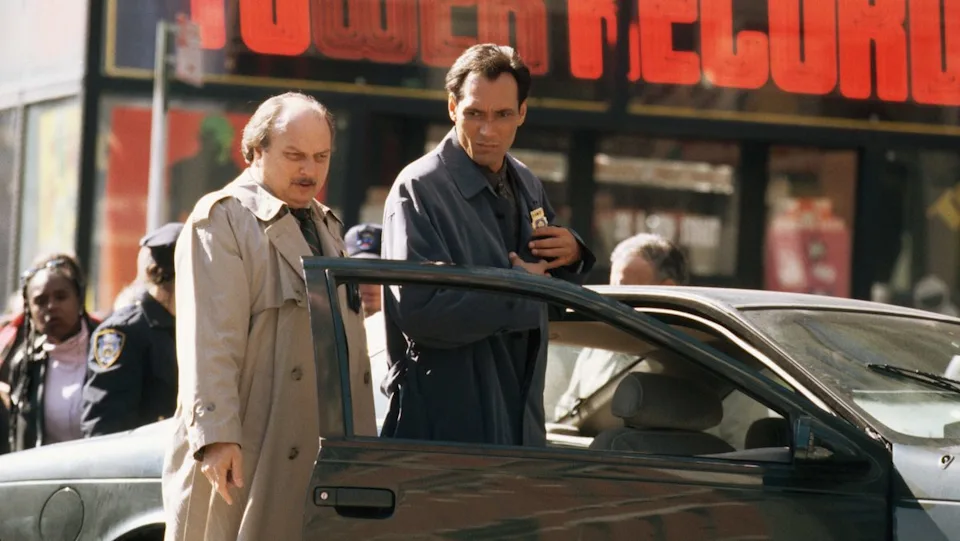
Street corners matter. Bars matter. Apartment hallways matter. Neighborhood loyalties matter. Race, class and ethnicity shape the way people enter the precinct and the way detectives read them. The series used New York location work to give exteriors a weight that studio-bound police drama could lose.
Inside the station, the photography creates another version of the same city. Crowded. Interrupted. Always carrying somebody else’s problem past the edge of the frame. That texture is important because the show is not interested in New York as glamour. This is not the skyline as aspiration.
It is the city as pressure. The detectives know neighborhoods differently because police work teaches a very specific map. Informants know another map. Victims know another. Criminals know another. Those overlapping versions of the same city make the cases feel less interchangeable.
Even when the series is physically shooting interiors somewhere else, the behavioral geography keeps pulling the story back toward Manhattan. That is one reason the show belongs so clearly in the lineage of 90s police drama rather than feeling like a generic procedural with a New York label attached.
How NYPD Blue Changed Broadcast Standards in the 1990s
The most visible legacy is the standards fight because it produced headlines before the first episode aired.
Language was rougher. Sexuality was more direct. Brief nudity appeared in a mainstream network drama. ABC used viewer advisories. Affiliates objected. Advertisers worried.
And then the show became a hit. That last part is what moves standards. A network can defend one controversial episode as an experiment. It is harder to pretend the experiment failed when the audience keeps returning and the Emmys keep arriving. The Television Academy counts 84 nominations and 20 wins over the series’ run.
NYPD Blue won Outstanding Drama Series in 1995. Dennis Franz was repeatedly rewarded. Writers, directors, casting, cinematography and production departments were recognized too. The show was not merely tolerated because it got ratings. It was validated as serious craft. That combination—audience plus awards—made it difficult to move the line back to where it had been in 1992.
Future network dramas did not all copy the nudity. They inherited the permission to be less tidy.
NYPD Blue Emmys: How Controversy Became Television Prestige
The ratings proved viewers would watch. The awards proved the industry did not see the show as a cheap provocation.
The Television Academy lists 84 Emmy nominations and 20 wins across the run. That is not one breakthrough season being rewarded for novelty. It is sustained recognition. The series was nominated for Outstanding Drama Series in its first season. It won the category in 1995. Dennis Franz won four lead-actor Emmys as Sipowicz.
Jimmy Smits was repeatedly nominated as Bobby Simone. Writers, directors, casting teams, cinematographers, sound crews and editors were all recognized. That range matters because the show’s impact was not one performance or one controversial creative decision. It was a system. Writing, acting, photography, editing and sound were all pushing in the same direction. The industry validation also changed the way the controversy looked in retrospect.
In June 1993, affiliates were discussing whether the pilot was too much to broadcast. By 1995, the show was holding the Emmy for Outstanding Drama Series. That is a remarkably short trip from “Can ABC air this?” to “This is the best drama on television.”
Tuesday at 10 Made NYPD Blue Appointment Television for Adults
The time slot mattered because the series was not hidden in some obscure corner where a network could claim bravery without risking much.
Tuesday at 10 p.m. was a real network hour. And ABC built a strong Tuesday around it. By the middle of the decade, Home Improvement was one of television’s largest comedies earlier in the night. Coach remained part of ABC’s Tuesday identity. Then NYPD Blue closed the evening with a completely different temperature.
That progression says something about how broad network television still was. The same network night could move from Tim Taylor blowing up a household object to Andy Sipowicz interrogating a murder suspect. And the audience was expected to understand both. The show’s regular Tuesday position also helped transform controversy into habit. At first, viewers talked about whether local stations would carry it.
Eventually, Tuesday at 10 simply meant NYPD Blue. That is how boundary-pushing television becomes mainstream television. Not when the argument disappears overnight. When the program becomes part of the week. The broader story of appointment television is intentionally not linked here because this article’s frozen route does not require it; the point is simply that scheduled viewing gave the show repetition and cultural weight.
NYPD Blue Ratings in 1995–96: A Top-10 Network Drama
The ratings are what keep the story from becoming one of those neat histories where an acclaimed show matters only because critics loved it.
In 1995–96, television’s top ten was heavily shaped by NBC comedy. ER finished first. Seinfeld second. Friends third. Caroline in the City fourth. The Single Guy sixth.
ABC had Monday Night Football at #5 and Home Improvement at #7. NYPD Blue finished #10 with a 14.1 average audience percentage. That makes the position more impressive than the number alone. The NYPD Blue ratings story matters because this was adult, late-night network drama competing at the same scale as much broader hits.
This was not a broad family comedy designed to work for every age. It aired at 10 p.m. It had spent its launch teaching some affiliates that they were going to be uncomfortable. It centered an alcoholic, prejudiced detective. And three seasons in, it was still one of the ten biggest programs in America.
Earlier in the season, the show had been even higher. Through late December 1995, it was sitting at #8 in the season-to-date table with a 15.4 average audience percentage. The final #10 finish makes more sense in context alongside our ranking of the biggest TV shows of 1996, where the season’s enormous NBC comedies and dramas show just how competitive that top ten really was.
NYPD Blue and ER: Two Ways 90s Network Drama Changed
It is useful that the 1995–96 ratings table begins with ER and ends its top ten with NYPD Blue.
They were both helping modernize broadcast drama. They did it differently. ER accelerated television. It used movement, medical density, ensemble pressure and production scale to make network drama feel immediate. NYPD Blue roughened television. It used moral ambiguity, street language, bruised characters and visual nervousness to make network drama feel less protected.
For the medical side of that transformation, revisit how ER redefined 90s medical drama. For the direct comparison between the two shows, see how ER and NYPD Blue changed network drama in the 1990s. Here, the focus stays on what NYPD Blue contributed specifically: a rougher visual language, morally compromised detectives and an adult tone that proved mainstream audiences would follow network drama into much less comfortable territory.
People could be sweaty, petty, prejudiced, horny, grieving, manipulative and still worth following for years. That opened a door network television would walk through repeatedly.
Why NYPD Blue Season 3 Was the Show at Full Strength
By season three, the show no longer had to prove it could survive a standards fight or a lead-actor departure. It could simply be itself.
The premiere, “E.R.,” immediately destabilizes the squad when Martinez is shot. Diane Russell is trying to recover from alcoholism. Sylvia is pregnant. Simone’s old relationships continue to complicate the present. That is a lot of private life inside one procedural hour, but the show rarely feels like the cases have become decorative. The cases keep pressure on the people.
“The Backboard Jungle” forces Sipowicz’s racial prejudice into the open during an investigation. “These Old Bones” mixes an old disappearance with Diane Russell’s family trauma. “Hollie and the Blowfish” uses an HIV-positive informant, federal arrogance and drug violence without pretending any institution in the story has clean hands. Then the final stretch tears into Sipowicz personally.
Andy Jr. is killed in “A Death in the Family.” “Closing Time” follows Sipowicz into relapse and the consequences of grief. The season finale has him reaching for some form of recovery rather than pretending one episode can repair the damage. That run is the mature version of NYPD Blue. The controversy is no longer the subject.
The characters are.
Essential NYPD Blue Episodes From Its 90s Breakthrough
This is not a ranking of the “best episodes ever.” These are episodes that help explain how the series moved from controversial experiment to durable network institution.
“Pilot”
The episode that triggered the entire argument. It establishes the rough language, sexuality, visual agitation and—more importantly—the damaged relationship between Kelly and Sipowicz that makes the controversy feel attached to a real drama rather than a stunt.
“Dead and Gone”
John Kelly leaves the force, ending David Caruso’s brief but essential run. The episode matters because the show survives a change that would have broken many first-year hits.
“Simone Says”
Jimmy Smits arrives as Bobby Simone. The writers wisely introduce a new center instead of recreating Kelly, opening the partnership that will define the show’s strongest middle years.
“E.R.”
Martinez is shot while Diane Russell struggles with sobriety and Sylvia learns she is pregnant. The season opens with exactly the mix of case pressure and private instability that made the series different.
“The Backboard Jungle”
A violent basketball-game case forces Sipowicz’s racism into the center of his working relationship with Lt. Fancy. The show does not let detective skill excuse prejudice.
“These Old Bones”
An old missing-person case collides with Diane Russell’s family crisis, demonstrating how the series could place domestic trauma beside procedural investigation without turning either into filler.
“Hollie and the Blowfish”
Simone works with an HIV-positive informant while a federal officer’s tactics threaten the case. It is classic NYPD Blue: loyalty, exploitation, street knowledge and official authority all pulling in different directions.
“A Death in the Family”
Andy Jr. is killed in the line of duty days after Sylvia gives birth. The episode takes the character most associated with anger and strips away the protective usefulness of that anger.
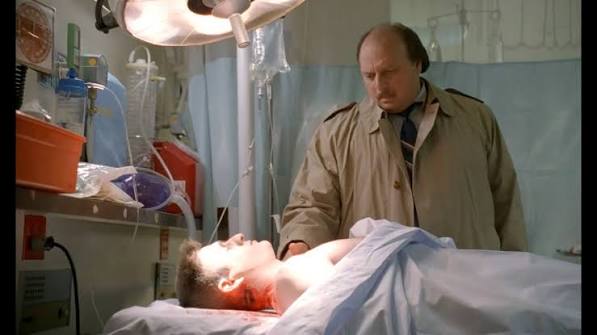
“Closing Time”
Grief pushes Sipowicz back toward alcohol while Simone pursues the men responsible for Andy Jr.’s death. The episode refuses the clean line between justice and vengeance.
“He’s Not Guilty, He’s My Brother”
The finale does not claim Sipowicz is fixed. It gives him one step toward recovery, a priest, a case and the baptism of baby Theo. That restraint is exactly why the character arc works.
Watching NYPD Blue in the 90s: When Network TV Felt Dangerous
What I remember is not thinking, “This is prestige television.” We did not use the phrase that way yet.
I remember that it felt late. Not just 10 p.m. late. Adult late. The kind of show where the network put the warning up front and you immediately paid more attention. That warning had almost the opposite effect of what a warning was supposed to do.
It told you the next hour was not going to be another soft-edged procedural. The camera moved differently. The people looked tired. Sipowicz did not behave like the sort of television cop adults had spent years telling kids to respect. And there was a strange feeling that ABC itself was testing how much television could get away with.
That was part of the fun. But the show would not have lasted if the fun were only “look what they let them say.” The shock wears off. The characters did not. By the time Jimmy Smits was settled in as Simone, the thing you came back for was the relationship between these people and the knowledge that nobody was going to get reset to factory settings before the next episode.
That continuity mattered. Damage stayed. Sobriety stayed difficult. Grief stayed ugly. And the 15th Precinct began to feel like one of those television places you knew how to enter before the opening credits were over.
What Has Aged Unevenly About NYPD Blue
A series this rooted in 1990s policing, masculinity, sexuality and broadcast standards is going to carry its era with it.
Some of the gender material feels dated. Some attitudes toward sexuality are very obviously of their moment. The series’ sympathy for detectives can occasionally make conduct look more forgivable than a modern viewer may be willing to accept. And the camera style that once felt radical has been imitated often enough that parts of it no longer register as new.
That does not erase the achievement. In some ways it clarifies it. When a visual language stops looking radical because everybody absorbed pieces of it, that is evidence of influence. The same is true of morally compromised leads. Television is so comfortable with damaged protagonists now that it can be hard to remember how disruptive Sipowicz looked on ABC.
Watching the show today means holding two ideas at once. Some pieces belong to the 90s. And some pieces helped build the television that came after them.
Why Was NYPD Blue So Popular in the 90s?
Because the controversy got people through the door, but character gave them a reason to stay.
The cases were strong enough for procedural viewers. The ensemble was dense enough for people who wanted serialized drama. The visual style made the hour feel urgent. The language gave the series a texture other network shows were still avoiding. And Sipowicz supplied a long-term character problem television could keep working on without solving. That last part is central to NYPD Blue popularity.
A hit drama needs more than crimes. Crimes end. Characters have to continue. Andy’s sobriety continues. His prejudice continues. His grief continues.
Simone’s relationships continue. Diane’s recovery continues. Fancy’s management of the room continues. That continuity turned a controversial show into habit.
NYPD Blue Legacy: How It Changed Network Television
The deepest part of the NYPD Blue television legacy is that the series made its own controversy look ordinary through repetition.
That sounds backward. But television changes when the thing that once caused panic becomes Tuesday night. The nudity that generated affiliate rebellion became one element of a long-running drama. The language stopped being the only story. The handheld camera stopped being the only visual talking point. Sipowicz stopped being “that offensive cop” and became one of television’s defining long-form characters.
That normalization is influence. It is the core of the NYPD Blue television legacy. Not because every later drama copied the exact content. Because they inherited a wider playing field. A network protagonist could be harder to like. A scene could be less polished.
A police department could be an institution worth interrogating rather than a source of automatic moral authority. An adult relationship could be sexual without becoming a special-event episode. Addiction could be a continuing condition rather than a one-week lesson. The show also proved that all of this could coexist with mass ratings. That is why the #10 finish in 1995–96 matters.
NYPD Blue was not changing television from the margins. It was doing it from inside the top ten.
The controversy established that audiences would accept more adult language, sexuality and moral discomfort on network television.
Sipowicz helped make contradiction, relapse, prejudice and incremental change usable as long-form protagonist material.
Handheld visual tension, street texture and messy institutions stopped belonging only to niche or cable storytelling.
That is why NYPD Blue still matters even when the specific things that once shocked people no longer look shocking. The shock was temporary. The permission lasted.
NYPD Blue FAQ: Controversy, Ratings, Cast and Legacy
Why was NYPD Blue controversial when it premiered?
The series pushed mainstream broadcast standards with rawer language, adult sexual situations and brief nudity. Conservative groups protested, advertisers were cautious and many ABC affiliates initially refused to air it.
How many ABC affiliates refused to air the NYPD Blue premiere?
ABC ultimately confirmed that 57 of its 225 affiliated stations preempted the September 21, 1993 premiere, leaving about 11% of the country without local access to the episode.
How did the NYPD Blue premiere perform in the ratings?
The premiere earned a 15.9 national Nielsen rating, representing roughly 15 million television homes, and won its Tuesday 10 p.m. time period despite the affiliate preemptions.
What did NYPD Blue rank in the 1995–96 season?
NYPD Blue finished #10 nationally in the 1995–96 season with a 14.1 average audience percentage in Nielsen’s season-end top-ten table.
Who created NYPD Blue?
The series was created by Steven Bochco and David Milch, both veterans of Hill Street Blues.
Why did David Caruso leave NYPD Blue?
Caruso left early in the second season to pursue a movie career. His character, John Kelly, exited and Jimmy Smits joined the cast as Bobby Simone.
Who was Andy Sipowicz?
Dennis Franz played Detective Andy Sipowicz, a talented but deeply flawed detective whose alcoholism, prejudice, anger, grief and gradual change became the series’ longest-running character story.
How many Emmys did NYPD Blue win?
The Television Academy lists 84 nominations and 20 Emmy wins for the series across its run.
Did NYPD Blue win Outstanding Drama Series?
Yes. NYPD Blue won the Emmy for Outstanding Drama Series in 1995.
How long did NYPD Blue run?
The ABC series ran for 12 seasons, from 1993 through 2005.
Why is NYPD Blue important to television history?
It demonstrated that a mainstream broadcast drama could combine strong ratings with adult language, moral ambiguity, flawed protagonists and a rougher visual style, helping widen what later network dramas could attempt.
NYPD Blue history, ratings, controversy and awards sources
- Los Angeles Times — September 23, 1993 premiere ratings report, for the 57 affiliate preemptions, 11% unavailable coverage and 15.9 Nielsen premiere rating.
- Los Angeles Times — September 21, 1993 premiere controversy, for affiliate resistance, nudity/language concerns and the launch environment.
- Los Angeles Times — October 26, 1993 follow-up, for the show’s early top-15 performance and continued affiliate holdouts.
- Los Angeles Times — 1995–96 TV Facts, for the final Nielsen top ten and NYPD Blue at #10 with a 14.1 average audience percentage.
- Los Angeles Times — December 1995 season-to-date rankings, for the show’s #8 position and 15.4 average audience percentage at that point in the season.
- Television Academy Foundation Interviews — NYPD Blue, for creator interviews, visual style, network censorship, real-life case inspiration and series legacy.
- Television Academy — NYPD Blue, for the series’ 84 Emmy nominations and 20 wins.
- Television Academy — 1995 Outstanding Drama Series, for the show’s Emmy win.
- TV Guide — NYPD Blue Season 3 episode guide, for 1995–96 episode dates and story summaries.