Cheers in the 80s: From Slow Start to Sitcom Institution
Sam and Diane supplied the sparks. The people around them made the bar somewhere worth coming back to.
By Gizmo
THE STOOLS.
THE SECOND CHANCES.

Inside This Article
- One flight down, everybody had an opinion
- Diane arrived with luggage and considerably too much faith in Sumner
- The theme song knew the job before the audience did
- Sam Malone was more interesting after the applause ended
- Diane could improve an evening right up to the moment she ruined it
- Sam and Diane found a way to make a kiss feel like a season finale
- Carla had a shift to finish and very little sympathy
- Norm’s stool was the most stable job he had
- Cliff Clavin had information nobody had requested
- Coach could miss the point and find the person
- Woody brought his own kind of wrong answer
- Frasier came to treat somebody and stayed to need a drink
- Lilith made repression look like a contact sport
- The audience took its time finding the stairs
- The bar was built for listening, not just punch lines
- Diane’s goodbye left the wedding unfinished
- Rebecca arrived with authority. The bar had questions.
- Harry the Hat was not the customer to trust with your wallet
- A bowling trophy was sufficient cause for war
- The late eighties kept finding new combinations
- Not every old joke has aged into a classic
- The eighties built the institution; the next decade inherited it
- Questions Readers Ask
One flight down, everybody had an opinion
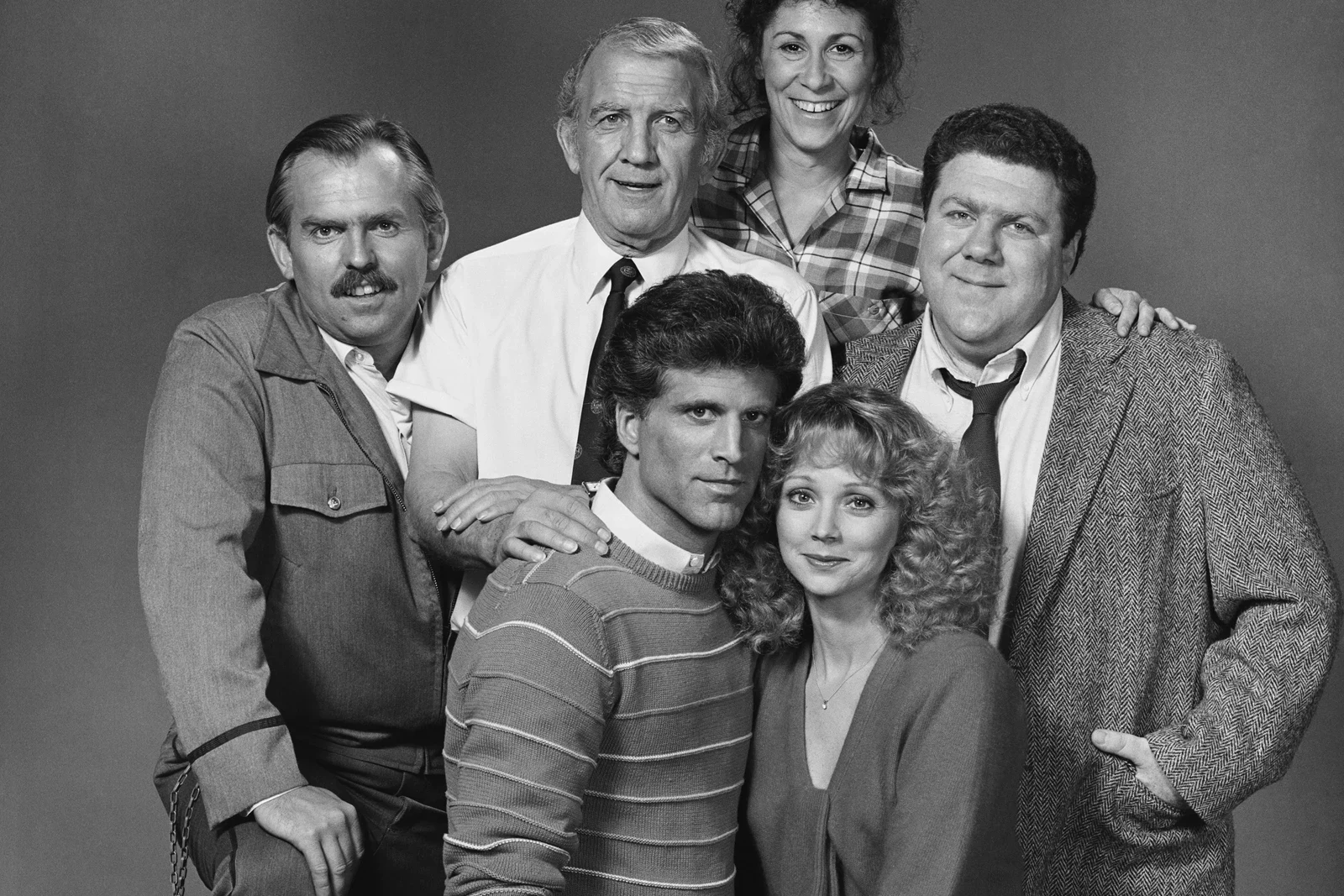
Norm Peterson walked into Cheers and received the sort of welcome most people reserve for someone arriving with good news. Norm usually arrived with a problem, an unpaid bill, or a workday he hoped to forget. The room greeted him anyway. An entire social life, established before he reached his stool.
That was the invitation. Come downstairs. Get out of the weather. Somebody will know who you are, and at least three people will be delighted to tell you what you are doing wrong. The beer cost money. The unsolicited advice appeared to be complimentary.
Cheers premiered on NBC on September 30, 1982, with a former Red Sox pitcher behind the bar and an abandoned bride-to-be about to discover that her education had not prepared her for carrying drinks past Carla Tortelli. It looked comfortable almost immediately. Finding a large audience took considerably longer.
The eighties story is the interesting climb: Ted Danson and Shelley Long turning attraction into a contact sport, Nicholas Colasanto giving the room its gentlest heart, Woody Harrelson finding his place after a terrible loss, and Kirstie Alley arriving to prove the show could survive a major change without becoming a tribute to itself.
By the end of the decade, the little basement bar was a cornerstone of NBC’s comedy empire. Getting there required better writing than a premise about people drinking might suggest. It also required the confidence to make losing your way look funny, painful, and occasionally like an excellent excuse to stay for another half-hour.
Diane arrived with luggage and considerably too much faith in Sumner
“Give Me a Ring Sometime” introduces Diane Chambers on what should be an entirely different day. She is traveling with Sumner Sloane, her fiancé and a man whose academic distinction has apparently done nothing for his reliability. A stop at the bar leaves her waiting. The waiting becomes the beginning of a new life.
Shelley Long lets Diane maintain her composure beyond the point where composure is doing any useful work. She explains, reasons, and waits for events to return to the shape she expected. The audience can see the trouble before she is prepared to accept it. Her intelligence has not protected her from placing confidence in the wrong person.
Sam Malone offers practical help with the mixture of kindness and opportunism that will define him. Diane needs work. The bar needs a waitress. The arrangement is simple until she begins commenting on the quality of the establishment and the people inside it. New employees rarely improve workplace relations by establishing that they are above the workplace.
Yet Long makes Diane more than a snob arriving to be corrected. She notices things. She has standards, curiosity, and enough pride to make a difficult afternoon worse. She is vulnerable without wanting anyone to know how vulnerable she feels. That combination gives the room a person to resist and, eventually, someone to protect.
The premiere introduces the other characters through business already underway. Carla does not pause her life to deliver a welcoming speech. Coach is there with his own generous understanding of events. Norm occupies the bar as though his place was established by local ordinance. Cliff has information available, whether requested or not.
Creators Glen Charles, Les Charles, and James Burrows build the invitation around that contrast. Diane is new, so viewers can enter with her. Everybody else seems to have been arguing there for years. The place has a history before the first episode has finished.
The pilot’s elegance is easy to miss because it is so entertaining. A character loses the future she expected and finds a room full of people who will interfere with the next one. That supplies the series with an immediate problem and a remarkably durable reason to return.
The theme song knew the job before the audience did
Gary Portnoy and Judy Hart Angelo’s “Where Everybody Knows Your Name” made a promise the series spent eleven seasons complicating. Recognition is comforting. Being recognized by this particular group also means your mistakes will be remembered, discussed, and probably worked into a joke before you order.
Portnoy’s voice and the piano give the opening a warmth that the script does not need to manufacture every week. The old photographs suggest a social world stretching back before the cast, full of people who worked, drank, performed, and gathered. The credits locate the bar inside a tradition of places where ordinary lives become public stories.
That visual choice was unusually shrewd. A montage of the actors grinning at the camera would have advertised a comedy. The photographs advertised a place. By the time Sam appeared, viewers had already been invited to imagine what a bar like this meant to the people using it.
The song also makes room for a feeling the characters rarely state directly. These people need one another. Announcing that need in every episode would have been unbearable. Letting the music carry it allows Carla to remain rude, Norm to remain evasive, and Cliff to keep talking long after any reasonable person would have stopped him.
The best television themes do more than provide something to hum. They establish the emotional temperature. Here, the opening tells you that disappointment belongs in the room alongside the jokes. A customer need not have had an impressive day to deserve a welcome.
The comedy then refuses to become as sentimental as the song might permit. The regulars insult one another, undermine romantic plans, and turn minor disputes into full civic emergencies. The welcome is real. So is the nuisance.
That blend makes the theme an unusually good entry in the decade’s memorable television music. It promises belonging without requiring the characters to become pleasant. A useful distinction, particularly if Cliff is already halfway through an explanation of a subject he has just invented.
Sam Malone was more interesting after the applause ended
Ted Danson’s Sam looked like a man who had been rewarded for entering rooms. He knew how to smile, how to lean across the bar, and how to make an ordinary exchange feel like the beginning of an opportunity. He also knew that his best-known achievements were behind him.
The former Red Sox pitcher had a public past and a private struggle with alcohol. Running a bar gave him a livelihood and a place in the world, but it also placed that struggle inside the daily setting. The series did not need to mention it constantly for the contradiction to remain there.
“Sam at Eleven” finds comedy in a television reporter’s interest in the man Sam used to be. An interview promises attention, then exposes the difference between being remembered and remaining important. Danson lets vanity carry the first part of the story and embarrassment complicate the rest.
“Endless Slumper” uses a lucky baseball cap to probe another insecurity. Superstition offers Sam a small piece of control over a past he cannot restore. The object is comic, but the attachment underneath it belongs to a person who has lost more than a job.
Danson’s physical ease kept those vulnerabilities from becoming a weekly appeal for sympathy. Sam could look ridiculous, behave selfishly, and still give the audience a reason to care about what happened to him. The performance had vanity without complete blindness. He often knew when he was being foolish, which did not reliably stop him.
His recovery also gave the early show an adult seriousness beneath the flirtation. The third season’s “Rebound” deals with his relapse after the breakup with Diane. Coach’s concern and Diane’s return make the bar’s affection practical: people notice when he is in trouble and try to help.
That history matters when assessing the later image of Sam as a cheerful womanizer. The early man has loneliness, shame, and a fairly uncertain relationship with life beyond the bar. His charm is enjoyable; it is also armor. The series becomes richer whenever it remembers there is someone underneath it.
A less subtle performance would have demanded a solemn scene every time the past appeared. Danson often needed only a brief pause. The smile returned, the room resumed its noise, and the audience had seen enough to know that an easy manner did not always come from an easy life.
Diane could improve an evening right up to the moment she ruined it
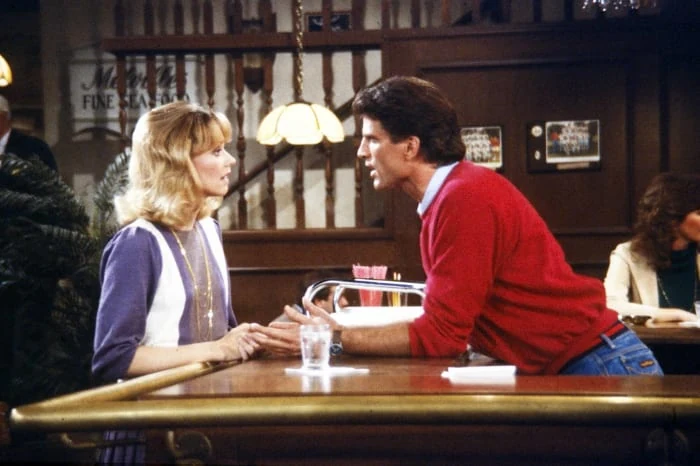
Diane believed experiences should be enriching. Unfortunately, she also believed she was unusually qualified to decide which experiences everyone else required. A quiet drink might become a discussion of literature. A casual remark might become an opportunity for correction. The room’s resistance rarely discouraged her for long.
Shelley Long gave that confidence an extraordinary comic precision. Diane’s posture, careful diction, and little moments of self-satisfaction made the character recognizable before the argument had even begun. Her certainty often arrived a second before the evidence that it was misplaced.
The performance also needed warmth, or the bar’s tolerance would have become inexplicable. Long showed Diane’s desire to belong even when she was insulting the available company. The people at Cheers were not the audience she had imagined for her life. They were the people still there after another imagined audience had failed to materialize.
In “Homicidal Ham,” her determination to nurture an ex-convict’s theatrical ambitions takes an alarming turn. The joke is rooted in her belief that talent, properly encouraged, can be brought under civilized management. She has mistaken her interest in someone for control over the situation.
Other episodes find the hurt underneath her elaborate self-presentation. When her cat dies in “Let Me Count the Ways,” Sam has to respond to grief that he initially understands poorly. Diane’s feelings are not ridiculous simply because her manner can be. Long makes the distinction clear without asking the rest of the cast to become solemn attendants.
She and Danson also understood the comedy of mutual observation. Diane sees through parts of Sam’s performance that other people are happy to enjoy. Sam recognizes desires she has dressed in more respectable vocabulary. Each has found a person who can interrupt the story they prefer to tell about themselves.
That is why Diane remains more than the intellectual woman placed opposite a practical man. Her intelligence is real. So are her pretensions and her appetite for being admired. The scripts are funniest when those qualities coexist rather than when they treat education itself as the problem.
Diane can be exhausting. That is an assessment the show often invites. Long makes the exhaustion worth having: a familiar routine becomes unpredictable when somebody insists it ought to be better, deeper, or more cultured. Even the person rolling his eyes has to admit she has changed the room.
Sam and Diane found a way to make a kiss feel like a season finale
The first season’s “Show Down” brings Sam’s successful brother into the bar and pushes an existing irritation into the open. Diane can admire someone Sam has spent years measuring himself against. Sam can pretend the admiration does not bother him. Neither performance is especially convincing.
The eventual kiss works because the show has spent a season making conversation feel physical. The pair compete for the last word, invade each other’s space, retreat, and return. Desire is not waiting politely behind the dialogue. It has been interrupting the dialogue all along.
Putting them together in the second season did not solve the problem. “Power Play” begins exploring what happens when two people who enjoy defeating each other try to call the arrangement a relationship. Attraction supplies energy; it does not automatically produce compatible habits.
The show understood that getting a couple together can create stories rather than end them. Sam and Diane could be jealous, tender, petty, proud, or genuinely cruel. The audience was allowed to enjoy the chemistry while recognizing that an evening with them might require an escape plan.
Summer breaks gave the uncertainty a different force from watching several episodes in an afternoon. An argument or proposal could remain unresolved while the next season was months away. Viewers had time to decide what they wanted, disagree with other viewers, and discover that the writers had prepared another complication.
The romantic machinery was occasionally overworked. A relationship built on repeated misunderstanding eventually risks becoming an administrative failure. There were stretches when Sam and Diane’s inability to complete an uncomplicated conversation was less charming than either performer deserved.
Yet Danson and Long kept finding changes in the balance. An insult could cover embarrassment. A joke could give way to a moment neither character had intended to reveal. The series needed those shifts. Without them, the couple would have become two attractive people assigned to argue near the same beer taps.
Their influence belongs beside the decade’s other great argumentative pairing, Maddie and David on Moonlighting. The settings and ambitions differed, but both shows understood that an audience might return for the way two people looked at each other after a line as much as for the line itself.
Carla had a shift to finish and very little sympathy
Rhea Perlman’s Carla Tortelli supplied the bar with a working person’s impatience for everyone else’s performance. Sam flirted. Diane interpreted. Frasier diagnosed. Carla had tables. The distinction gave her insults somewhere solid to stand.
Perlman made Carla’s small stature part of a wonderfully misleading first impression. The room was full of larger people who soon learned that height did not determine who controlled an exchange. She could wait for the exact opening and deliver a response with the force of somebody closing a cash drawer.
Her hostility toward Diane was particularly productive because it mixed class resentment, professional annoyance, and the pleasure of recognizing an easy target. Diane’s elaborate vocabulary did not impress a woman who suspected that the drinks were still taking too long to arrive.
The show also gave Carla more than a supply of put-downs. Her children, ex-husband Nick, romantic disappointments, and financial pressures made her life seem crowded beyond the hours shown at the bar. Dan Hedaya’s Nick was an especially convincing explanation for some of her distrust of mankind.
When Carla was vulnerable, Perlman did not smooth away the abrasiveness to indicate that a serious moment had begun. The same woman who could demolish someone verbally might want a reliable partner, a better home, or a little less trouble from her family. Need did not make her polite.
Her relationship with hockey player Eddie LeBec, played by Jay Thomas, gave the later eighties another emotional thread. A marriage brought new complications rather than a transformation into settled domestic bliss. Carla’s superstitions and the practical demands around the wedding gave the series plenty to disturb before the ceremony could proceed.
The character’s anger sometimes became an easy reflex in the writing. A scene could use her insult as punctuation instead of giving her a real position. Perlman usually made even the quick line feel attached to someone with a history of reasons for being annoyed.
That history helped keep Cheers from becoming too cozy. The room welcomed people, but it also employed them. Somebody had to carry the drinks while the regulars solved the world’s problems at extraordinary length. Carla’s presence suggested that the solutions might improve if the philosophers occasionally moved their feet.
Norm’s stool was the most stable job he had
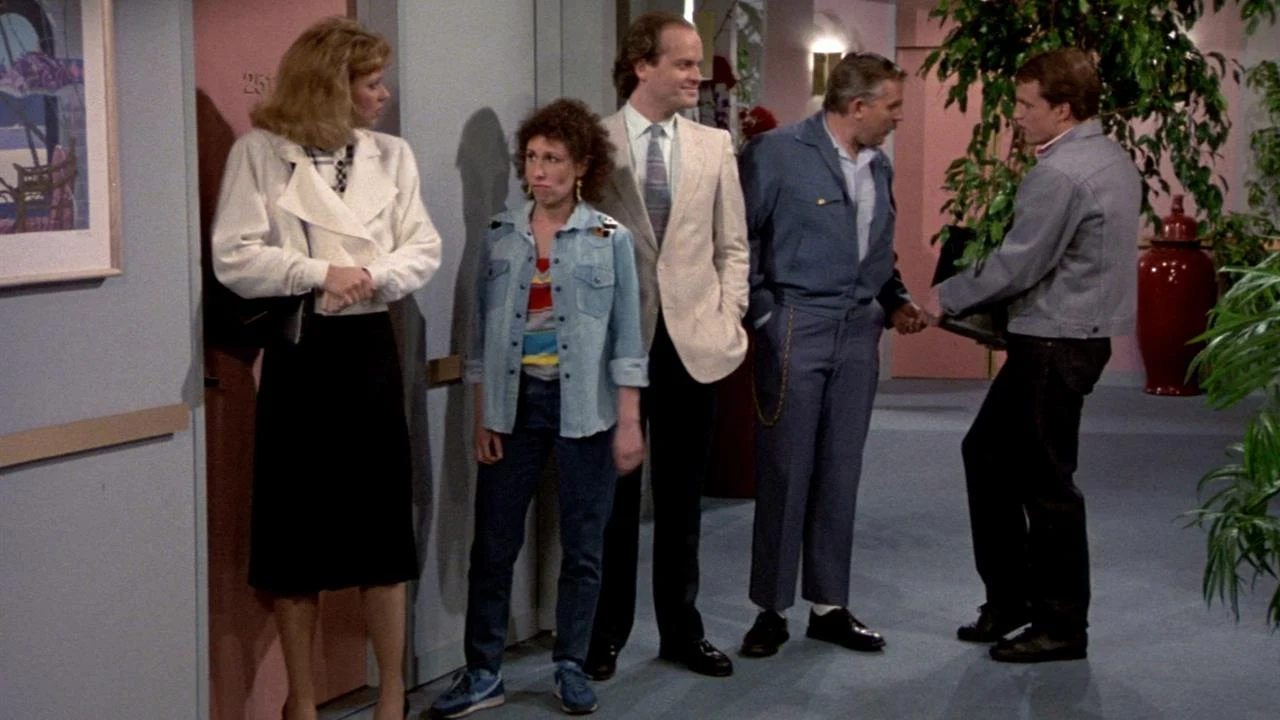
George Wendt made sitting down look like a major character choice. Norm reached the bar, found his place, and settled into an arrangement the rest of his life rarely matched. Outside, he had work, money, and responsibilities. Inside, somebody was ready to ask a question he could answer with a joke.
The entrance lines became a ritual, but Wendt kept the character from sounding as though he had arrived solely to deliver one. Norm often seemed tired before he spoke. The joke was a small act of recovery, an economical way to turn a disappointing day into something the room would enjoy.
The famous greetings also placed the audience inside the group. Viewers knew when to expect the welcome and could enjoy the variations. Repetition becomes lazy when it merely fills time. Here it established a social rule: this man belongs, whatever else is going badly.
Vera, Norm’s wife, remained largely outside the camera’s view, which allowed his account of married life to become an ongoing performance. The audience did not have to believe every complaint as a complete domestic report. Norm was speaking in a bar, where self-portraiture is not traditionally subject to an especially rigorous audit.
His work stories made the gap between status and reality equally funny. “Norm’s First Hurrah” gives him a new position that sounds more impressive when he describes it than when his friends arrive to investigate. Pride creates the problem; the gang’s attempt to celebrate him makes concealment impossible.
Wendt was particularly good at embarrassment that did not demand an immediate escape. Norm often remained in place while the situation became worse. His dignity was bruised, but the room was still his room. That confidence let the character endure jokes without becoming merely an object of them.
The painting work he takes on later also supplies a useful relationship with Rebecca. She can glimpse someone more capable than the permanent stool occupancy suggests. Norm is not incapable of doing things. He is highly selective about which things he wishes to do, a distinction many employers find regrettably unhelpful.
The character’s comfort depends on Wendt’s lack of strain. Norm can be selfish, evasive, or surprisingly generous without announcing a change of personality. The familiar man remains visible. For a series built around return visits, that steadiness was as valuable as any cliffhanger.
Cliff Clavin had information nobody had requested
John Ratzenberger’s Cliff was the bar’s answer to the question of what happens when confidence develops independently of accuracy. He could hear a topic, recognize a chance to contribute, and manufacture a lecture before anybody had time to object.
The postal uniform gave him an institutional dignity his explanations rarely deserved. Cliff looked as though he had been authorized to tell you something. The trouble was determining which agency had approved the content.
Ratzenberger’s rhythm did much of the work. A small preparatory noise, a turn toward the available audience, and the implication that an important fact was about to arrive. The audience learned to enjoy the warning signs. Norm learned to live beside them, which is not quite the same thing.
The actor’s account of his audition makes the character’s function beautifully clear. After trying out, Ratzenberger suggested that a bar like this ought to have a know-it-all. It is one of those observations that seems obvious only after someone has made it. Put people in a room long enough and somebody will appoint himself its encyclopedia.
Cliff’s life with his mother and his awkward romantic hopes gave the certainty a less secure foundation. He wanted respect and connection. The speeches were one way of demanding attention without admitting that attention was what he wanted.
“Fairy Tales Can Come True” puts him in a costume that makes romance feel briefly easier. The difficulty comes when the disguise must give way to the actual man. The premise allows Ratzenberger to show the nervousness behind a character who usually seems protected by his own volume of information.
“The Mail Goes to Jail” tests his friendship with Norm through a postal misunderstanding. The friendship can look effortless when the two merely occupy neighboring stools. Asking one of them to accept consequences on behalf of the other reveals how uneven that arrangement can become.
Cliff’s jokes have a surprisingly modern afterlife because the basic performance remains everywhere: an unsupported claim delivered with the air of professional inconvenience that anyone has asked for evidence. The difference is that Cheers generally gave the rest of the room permission to laugh. Cliff rarely interpreted that response as a reason to stop.
Coach could miss the point and find the person
Nicholas Colasanto’s Ernie “Coach” Pantusso was not simply the man who misunderstood a sentence. He was the man whose misunderstanding might reveal something kinder than the sentence had intended. His confusion did not prevent him from noticing distress.
“Coach’s Daughter” gives that quality a remarkable early showcase. Lisa, played by Allyce Beasley, arrives with a fiancé who treats her badly. Coach can see the problem. Lisa’s fear is that she cannot expect better, because she does not consider herself beautiful.
The conversation turns toward Lisa’s mother and the resemblance Coach sees. Colasanto lets the recognition arrive with the immediacy of memory. He is looking at his daughter and seeing someone he loved. The scene changes the meaning of beauty without requiring the character to deliver an impressive speech about it.
That is the secret of the performance. Coach might be unreliable on geography, wordplay, or the precise mechanics of a conversation. He is not unreliable about affection. The audience can laugh at his literal-mindedness while trusting his intentions.
His place beside Sam carried a history from baseball into the bar. He knew a version of Sam older than the smooth bartender and treated him with a concern that did not need much explanation. When Sam struggled, Coach’s worry could quiet the room without feeling imported from another show.
The series also found delight in giving him an unexpected method. “Teacher’s Pet” places Coach and Sam in a night-school geography class. Coach studies with a song; Sam relies on a more familiar approach involving the teacher. The apparently confused man has found a sensible way to learn, while the confident one is trying to avoid the work.
Colasanto died in 1985. The loss changed the show and the atmosphere viewers had come to recognize. A sitcom can replace a job function. Replacing the particular warmth an actor gives a room is another matter.
The series did not solve that problem by pretending it was small. Coach’s absence belonged to the bar’s history, and the new bartender would arrive through a connection to him. The room kept going, as rooms do after a loss, but the early episodes retain a gentleness that belongs especially to Colasanto. Watch his reactions rather than waiting for the next joke. There is usually something worth seeing.
Woody brought his own kind of wrong answer
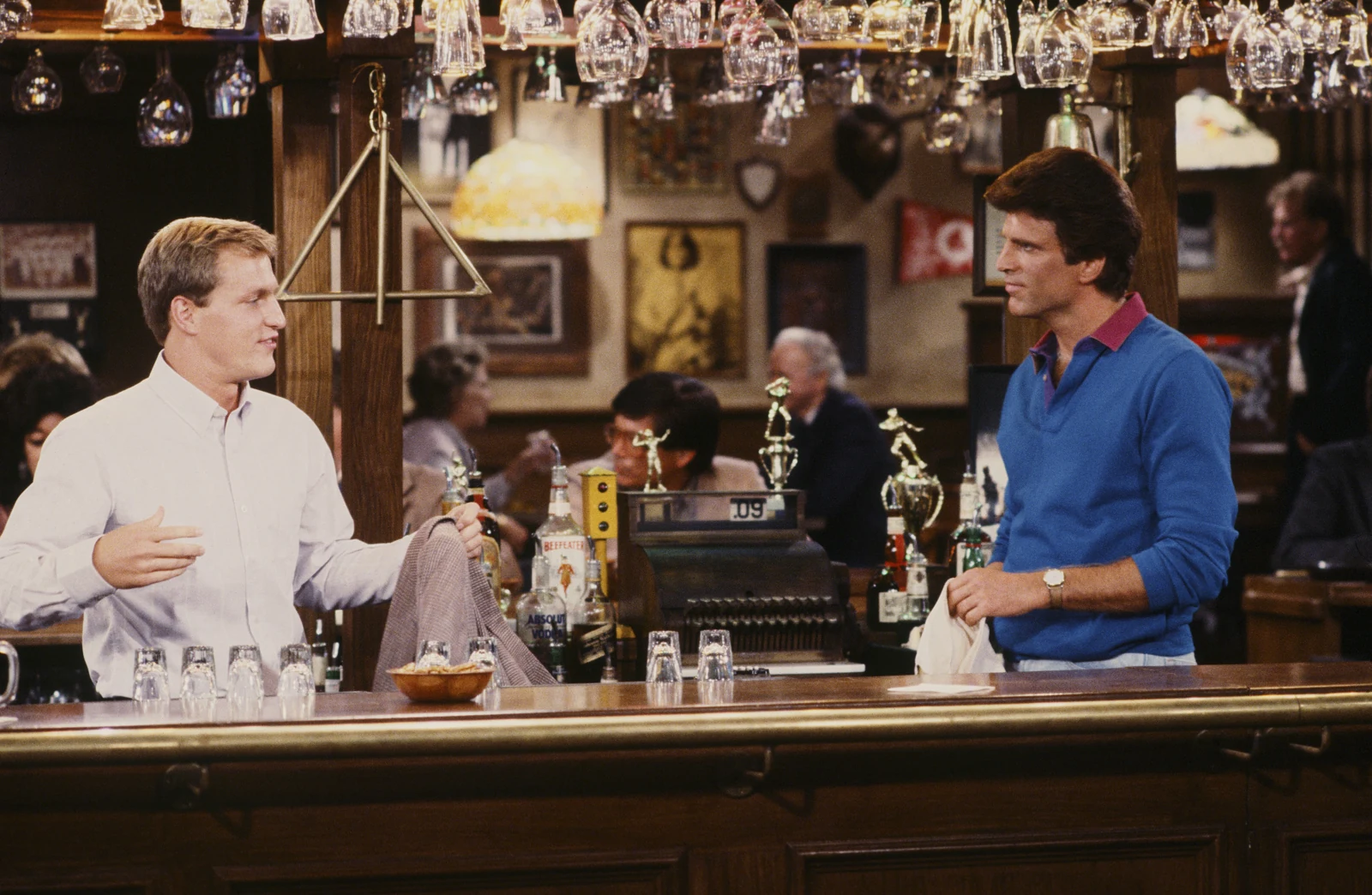
Woody Boyd arrived from Indiana in the fourth-season opener, “Birth, Death, Love and Rice,” expecting to meet Coach. He had been a pen pal. The explanation that they had exchanged actual pens told the audience, very quickly, what sort of conversation had just entered the bar.
Woody Harrelson faced an unusually difficult assignment. A beloved performer had died, the role carried obvious similarities, and viewers had every reason to resist somebody presented as a replacement. Harrelson succeeded by giving Woody a different energy.
Coach’s confusion often seemed to come from a lifetime of experience reaching the wrong conclusion. Woody’s came with youthful confidence and an entirely different set of assumptions about how the world worked. He was innocent, but he could also be stubborn. A clear explanation did not always defeat the rules he had brought from home.
Harrelson also supplied physical lightness. Woody could seem eager to take part before he understood what was being asked. That willingness made him useful in the bar’s schemes and dangerous in any situation requiring careful interpretation.
The relationship with Sam brought a different kind of mentorship. Sam now had a younger bartender to encourage, exploit, or occasionally learn from. “Relief Bartender” threatens Woody’s confidence by introducing someone with a more obvious gift for entertaining customers. The new boy’s place in the room is not something he can take entirely for granted.
The show’s affection for him becomes clear in “Cheers: The Motion Picture,” when the gang tries to make a film reassuring his parents that Boston is treating him well. The resulting footage offers the sort of reassurance that may cause a family to start checking train schedules.
By 1989, his relationship with Kelly Gaines, played by Jackie Swanson, had opened another comic world. Kelly’s wealth did not make her wiser than Woody. Their shared sweetness could make the people trying to explain money or status look needlessly complicated.
Harrelson’s achievement was to make the audience stop comparing job descriptions. Woody became somebody whose next response viewers wanted to hear. The bar had lost Coach and gained a different person, rather than a less convincing version of the same one. A long-running ensemble needs that sort of change if it is going to remain alive.
Frasier came to treat somebody and stayed to need a drink
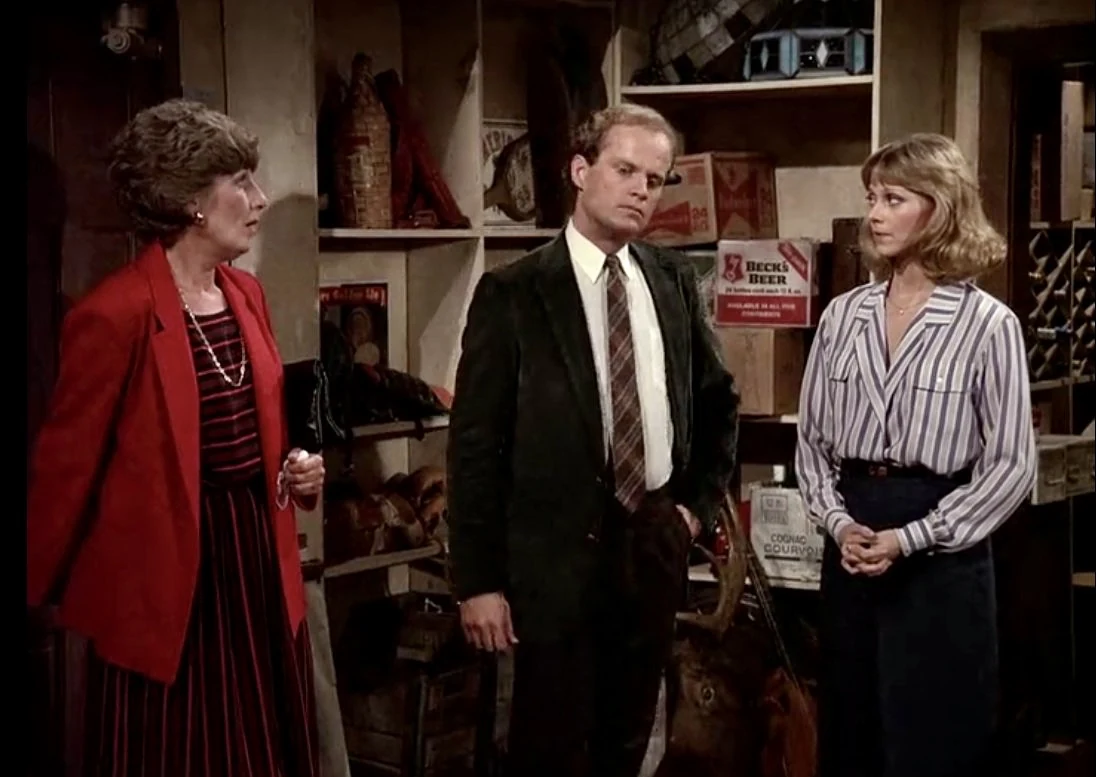
Kelsey Grammer’s Frasier Crane enters the third season as Diane’s psychiatrist and romantic partner, which gives Sam several reasons to dislike him before he has finished introducing himself. He is educated, self-assured, and apparently better suited to Diane’s preferred description of her life.
The first joke is the mismatch between Frasier’s dignity and the room. The better joke is how quickly that dignity becomes unstable. Grammer could give a line the weight of a public address, then let an emotional need reduce the speaker to an ordinary, unhappy man.
Frasier was an ideal complication for Sam and Diane because he was more than an obstacle placed between them. He had his own vanity, genuine feelings, and a belief that professional insight should provide some protection from foolish behavior. The series offered a fairly sustained rebuttal.
“Diane Meets Mom” adds Nancy Marchand as Hester Crane, a mother whose view of the relationship is considerably less encouraging than Frasier would like. Her threat to Diane turns a family introduction into a dark little comedy of manners. Frasier’s confidence that the situation can be discussed sensibly receives another discouraging test.
The trip to Europe and Diane’s departure from their wedding plans in Italy push him further into the bar’s emotional life. He has suffered a humiliation the regulars can understand, even if he would prefer to describe it in more specialized language. Academic qualifications do not prevent romantic disaster. They may simply make the account longer.
Grammer’s ability to remain funny while wounded let the character grow beyond his original function. The other people at Cheers could mock him without making his presence feel inexplicable. He was proud, absurd, often kind, and much less detached than he wished to appear.
The contrast between this Frasier and the later Seattle character is part of the pleasure of revisiting the eighties episodes. Here he is still finding his place among people who will interrupt a sophisticated analysis with a request to move a glass. The interruption is usually good for him.
He also broadens the show’s range. Diane no longer owns every educated sentence, and Sam has another man against whom to measure himself. A bar whose original regulars seemed fully established discovers another person who can become necessary. Frasier’s arrival is one of the series’ best arguments against treating an ensemble as a finished seating chart.
Lilith made repression look like a contact sport
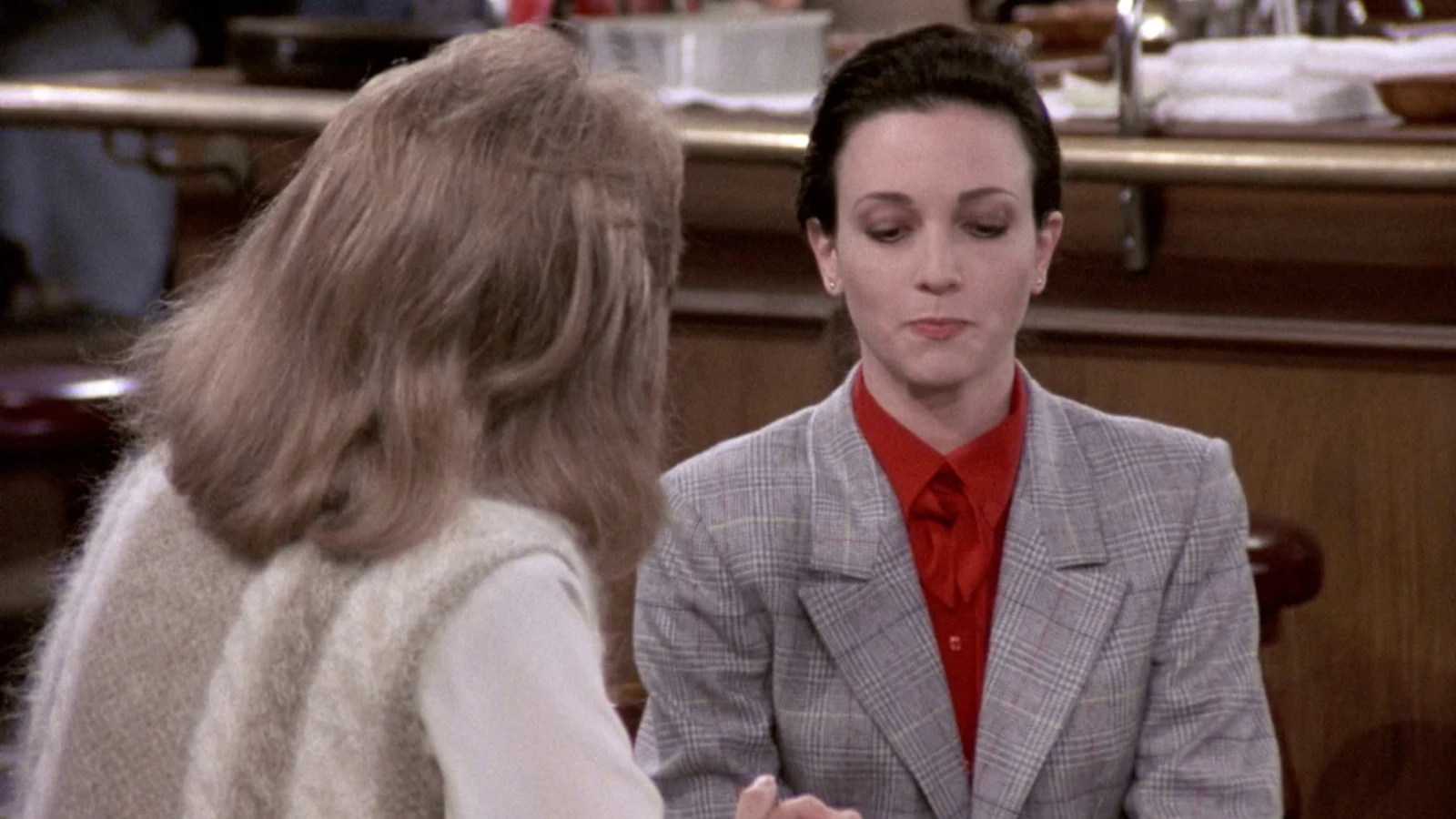
Bebe Neuwirth’s Lilith Sternin did not need a large entrance. The straight posture, level gaze, and measured delivery suggested somebody who had already identified several weaknesses in the room and was deciding whether professional courtesy required her to mention them.
The joke might have stopped at a stern psychiatrist with very little social warmth. Neuwirth supplied much more: appetite, competitive pride, physical precision, and an intensity that became funnier the harder Lilith worked to contain it.
“Abnormal Psychology” uses a television debate to bring that intensity into view. Diane helps Lilith alter her presentation, and Frasier’s supposedly intellectual response becomes considerably less abstract. Two professionals who ought to know what is happening begin demonstrating it instead.
Grammer and Neuwirth were an excellent match because both could make formality sound intensely personal. Their characters reached for professional vocabulary when another couple might simply argue. The vocabulary did not make the argument calmer. It gave them more elaborate weapons.
“Dinner at Eight-ish” moves the comedy into a more intimate setting, where information that should have remained carefully managed starts circulating. The apartment removes the bar’s protective interruptions. People have to remain at the table and hear what has just been said.
Lilith also gave the women in the ensemble another kind of presence. She did not respond to Sam as Diane had, nor compete through Carla’s insults. Her certainty came from a different source, and Neuwirth’s stillness could dominate an exchange without any need to raise her voice.
The character’s severity works because the audience can sense the effort beneath it. When control slips, the change is visible in the smallest movement. A line that would seem ordinary from another performer becomes an event because Lilith has allowed it to escape.
By the later eighties, Frasier and Lilith had become a couple the show could use for both farce and uncomfortable intimacy. They were not a duplicate of Sam and Diane. Their mutual attraction included recognition: each had found someone equally capable of turning an emotion into an argument with supporting terminology. There are easier routes to a pleasant dinner. Few offer this much entertainment to everybody watching.
The audience took its time finding the stairs
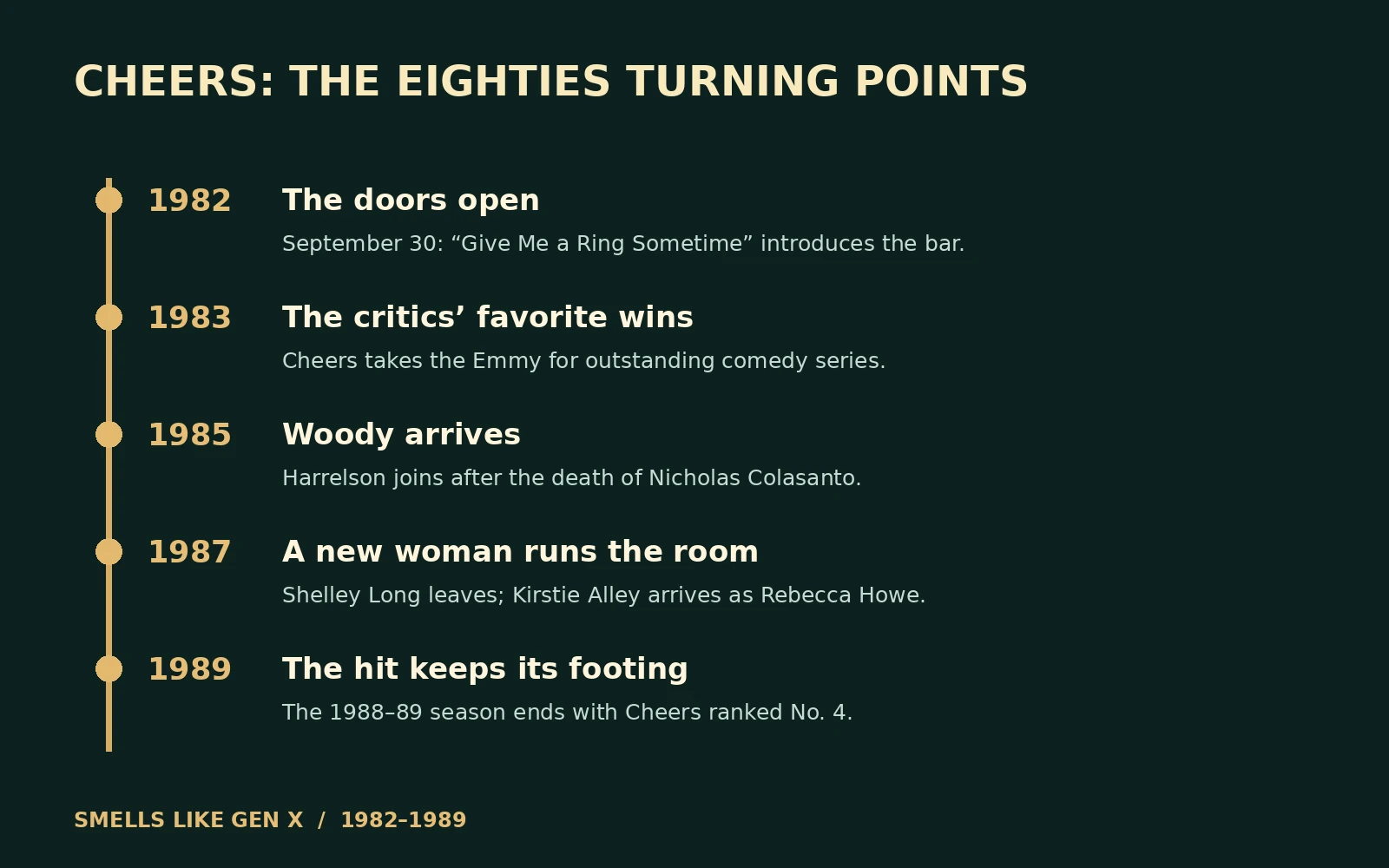
The familiar account of Cheers begins with bad ratings and ends with a beloved institution, which can make the first season sound like a misunderstanding quickly corrected. It was more precarious than that. Critics could admire the writing while the weekly audience remained small.
NBC kept the program alive. That decision gave viewers time to discover a series whose pleasures depended partly on familiarity. A car chase can announce its appeal in seconds. Coach responding to Diane may become funnier once the audience understands what each of them expects from a conversation.
Tom Shales praised the new comedy when it premiered in 1982. The early welcome establishes that the show’s quality was visible before its popularity caught up. Good reviews did not instantly summon enough viewers. They did help make the case that there was something worth protecting.
The first season won the Emmy for outstanding comedy series in 1983, and Shelley Long won lead actress. The awards gave a struggling show a very public endorsement. Viewers who had missed it were offered a reason to look again; NBC’s patience received some useful evidence.
The growth took place as the network strengthened its Thursday lineup. Family Ties supplied a compatible neighbor. Then The Cosby Show became the enormous opening attraction in 1984. A larger crowd reached the evening, and Cheers was ready to entertain it.
By the 1985–86 season, the series ranked fifth. In the seasons ending in 1987 and 1988, it ranked third; in the 1989 rankings, fourth. The program had become a major hit without having to abandon the bar that initially attracted too few customers.
The story is satisfying partly because it resists the idea that every important audience response happens immediately. Some shows arrive with an obvious hook. Others teach viewers how to enjoy their company. Cheers needed enough time for the second process to work.
That does not mean every low-rated comedy deserves years of patience. It means the people deciding this one’s future had to recognize a difference between a weak idea and a strong idea still searching for its audience. An executive who can reliably make that distinction has earned the expensive chair.
The bar was built for listening, not just punch lines
James Burrows understood that the person receiving a joke can be as important as the person delivering it. Cheers offered him a room full of listeners, each with a reason to react differently. Sam might be amused. Diane might object. Carla might recognize an opening for a better insult.
The set encouraged that traffic. People entered down the stairs, moved around the counter, passed into the office or pool room, and returned carrying information somebody else should not have heard. The bar gave the scene a public center; the smaller spaces supplied places to attempt privacy.
Norm’s position mattered because it made him available. He could remain in the room without needing a new explanation for why he was there. Cliff beside him created a ready-made exchange, while other characters could approach or escape as the story required.
Burrows kept movement alive without making the room look busy for its own sake. Someone cleaning, pouring, carrying a tray, or waiting for service gave the talk a practical surface. The actors did not always seem to have assembled solely because the script had scheduled a conversation.
The writers’ skill was equally visible in how a small premise spread. A customer’s remark could expose Sam’s vanity, provoke Diane’s judgment, and give Carla an opportunity. One incident produced several different stories because the people wanted different things from it.
The Charles brothers’ dialogue could be polished without making everyone sound alike. Diane’s elaborate phrasing, Norm’s economy, Cliff’s inflation, and Woody’s literal logic gave the audience distinct rhythms. A joke rewritten for the wrong character would lose more than a familiar voice; it would lose the reason it was funny.
The lineage connects to the character comedy of The Mary Tyler Moore Show and the workplace ensemble of Taxi. Cheers made its own version warmer in setting and frequently sharper in judgment. The people belonged together without being improved into permanent harmony.
The result was a sitcom comfortable with a pause. A person could hear the line, consider it, and reveal something before answering. In a room where everyone wants the last word, the fraction of a second before somebody speaks can be the most revealing part of the evening.
Diane’s goodbye left the wedding unfinished
Shelley Long left the regular cast in 1987, and “I Do, Adieu” gave Diane an exit that made use of her oldest conflict. She wanted a life of artistic achievement and a life with Sam. The wedding day brought a chance to pursue the first just as she was about to commit to the second.
Sumner returned with news of interest in her writing. The man who had helped strand her at Cheers in the pilot now offered a way out. That return gave the departure an uncomfortable symmetry without requiring the audience to believe he had suddenly become the ideal guide to her future.
Sam’s response is the important part. Danson lets him recognize that asking her to stay would not settle the ambition. He can imagine a marriage and understand why it will not happen now. The scene asks the actor who so often plays avoidance to face something directly.
The imagined older Sam and Diane briefly offer the domestic future the series has been circling. It is moving because it looks possible and because the present does not grant it. The show allows tenderness without claiming that tenderness can solve the conflict.
Long keeps Diane’s hope alive even as the audience understands the cost. She is not leaving because the last five years meant nothing. She is leaving because another version of her life still has a claim on her, and she has never been especially good at putting that claim aside.
The ending also acknowledges a limit in the relationship’s machinery. Another round of misunderstandings would have been easier to manufacture. A departure required the show to accept that the pair’s great chemistry did not oblige the characters to remain trapped inside it forever.
Viewers had reason to wonder whether Cheers could continue. Diane had been its point of entry, its intellectual irritant, and half its most famous relationship. Removing her changed how nearly everyone else behaved. A simple replacement would have made the absence more obvious.
The episode does not need the later reunion or the series finale to justify its place in the eighties story. It gives the first version of Cheers a real ending. The doors would open again in the fall, but an important conversation had finally stopped. For once, neither Sam nor Diane could win it by finding a sharper line.
Rebecca arrived with authority. The bar had questions.
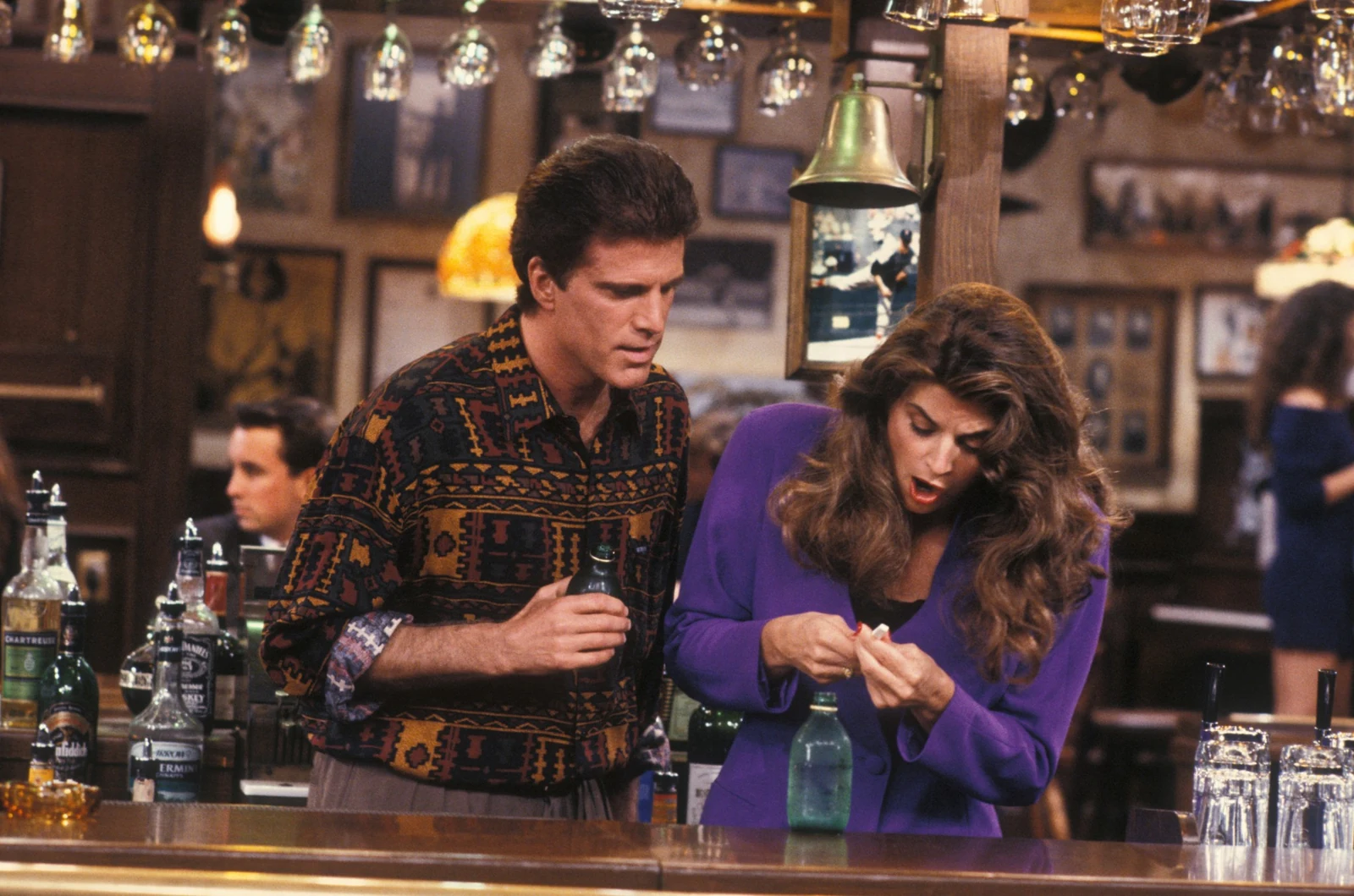
“Home Is the Sailor” returns Sam to a place he no longer owns. He has sold the bar, pursued a sailing dream, and come back needing work. Cheers belongs to a corporation, and Rebecca Howe is in charge. His old smile has met a new organizational chart.
Kirstie Alley’s Rebecca initially presents herself as a controlled professional. The staff wear uniforms. The business has expectations. Sam’s assumption that charm will restore the old arrangement is not shared by the woman responsible for managing him.
The new balance matters. Diane had arrived without power and challenged the room through personality. Rebecca enters with a job title and corporate backing. Sam is now the employee trying to recover advantages he once took for granted. That is a different comedy before either of them begins flirting.
Alley’s great discovery, as the character developed, was how funny Rebecca became when the polished exterior failed. Anxiety, ambition, tears, appetite, and self-pity could all burst through the professional presentation. The character wanted to look in control and could make losing control look spectacular.
Her fixation on executive Evan Drake, played by Tom Skerritt, gave the first Rebecca season a particularly painful line of pursuit. She hoped success in business and romance might arrive through the same man. The audience watched the effort become more elaborate while the result remained discouragingly distant.
The writing did sometimes reduce Rebecca’s ambition to a rich-man fixation, and that limitation deserves criticism. Alley’s performance was more varied than a simple joke about a career woman secretly wanting rescue. She made the character’s hunger for security visible, absurd, and occasionally sympathetic.
Her exchanges with Norm, Woody, Carla, and Frasier also helped the show rebuild. Rebecca did not exist only to provide Sam with a new target. The office became a place where someone attempting adult authority could be quietly, steadily undone by the people outside the door.
Cheers survived because the new version did not ask Alley to impersonate Shelley Long. Rebecca had her own vanity and her own style of collapse. The room was familiar, but the woman trying to run it had brought different problems. The regulars, displaying their usual community spirit, were happy to make those worse.
Harry the Hat was not the customer to trust with your wallet
Harry Anderson’s Harry the Hat moved through Cheers with a smile suggesting that something profitable might already have happened to someone else. His tricks fitted the room unusually well. A bar full of people convinced they understood human nature was an excellent place to demonstrate the limits of that confidence.
In “Pick a Con…Any Con,” Sam discovers that Coach has been cheated out of a substantial sum. The proposed solution is to recruit Harry, whose qualifications consist of being exactly the sort of person they would ordinarily prefer to keep away from the money. A reassuring professional referral, by Cheers standards.
The episode turns a poker game into a contest over who understands the situation. Coach appears vulnerable, Sam wants to protect him, and Harry offers expertise with the inconvenient complication that expertise is what makes him dangerous. The audience has to watch the people watching the cards.
Anderson’s ease gives the story much of its pleasure. A performer comfortable with sleight of hand can make a small movement interesting before the result is clear. He does not need the loud announcement of a villain. The possibility of a trick is already sitting there in the way he handles an exchange.
Colasanto is an ideal partner because Coach’s innocence invites assumptions from everyone around him. The regulars want to protect him, but protection can slide into underestimating him. The story lets that tension work without abandoning the affection that makes the group’s intervention believable.
The episode also offers a different use for Sam’s competitive streak. He is not trying to impress Diane or recover an old piece of sporting glory. He wants to help a friend, and helping requires him to enter a contest in which his familiar advantages may not be enough. Charm does not identify a marked deck.
Harry’s visits widen the bar’s population without making every visitor a candidate for permanent membership. Some people belong because they return and take a stool. Others arrive, disrupt the local confidence, and leave before anyone has completed an accurate count of the cash.
That variety kept the early series from feeling sealed off. The doors could admit a con artist, a reporter, a former teammate, or someone from a character’s past. Each visitor revealed something different about the regulars. Harry’s particular contribution was to remind a room full of self-appointed experts that being certain you understand the joke does not guarantee you are the one telling it.
A bowling trophy was sufficient cause for war
The rivalry with Gary’s Old Towne Tavern gave the bar’s residents a shared enemy, which was helpful whenever they had temporarily exhausted the available arguments with one another. Pride in a small establishment can produce a surprising appetite for retaliation.
In 1988’s “Bar Wars,” the theft of a bowling trophy reignites the contest. The trophy represents a rare sporting triumph, so the insult lands with an importance wildly disproportionate to the object. That disproportion is the point. These people need something to defend, and the bar provides it.
The pranks make everyone suspicious. When Wade Boggs turns up, the group’s determination not to be fooled becomes a fresh opportunity to make fools of themselves. A real baseball star has entered a room so committed to cleverness that recognizing reality becomes difficult.
The episode uses the ensemble differently from the romances. Nobody has to remain sensible for long. Rebecca’s managerial concerns meet the regulars’ tribal loyalty, and Sam’s competitive instincts find a project. A room full of adults discovers a collective excuse to behave like children with a budget.
That group foolishness was one of the later eighties show’s strengths. As the cast expanded, the bar could generate a comedy of shared belief: everyone accepts that the current contest is terribly important, and the audience gets to enjoy the consequences.
“Cheers: The Motion Picture” plays with the same gap between self-image and evidence. The gang wants Woody’s parents to see a reassuring picture of his new life. The attempt to manufacture that picture exposes precisely the behavior they would prefer to explain away.
These stories give the familiar room a larger personality. Cheers becomes a place with pride, customs, grudges, and a highly questionable internal standard of competence. The regulars disagree about plenty. They can still unite around the conviction that somebody across town has gone too far.
The comedy works best when the writers keep the scale small enough to remain ridiculous. A trophy, a film, an office visit, a misunderstood invitation: the objects do not need to be extraordinary. The people’s investment does the work. This was part of the wider appeal of the decade’s best sitcoms—ordinary stakes pursued with entirely unreasonable determination.
The late eighties kept finding new combinations
By 1989, Cheers had lived through a death, a major departure, a change of ownership, and several changes in who considered whom marriage material. The series’ continued strength depended on making those changes useful rather than treating them as interruptions to the original plan.
Woody and Kelly offered an especially fresh kind of innocence. In “The Gift of the Woodi,” his inexpensive birthday gift collides with a world in which affection is expected to arrive with a much larger receipt. Harrelson lets Woody be sincere without recognizing every social implication surrounding him.
Kelly’s sweetness gives the rich-girl story a less obvious shape. She is not simply a calculating heiress brought in to teach the bartender about class. Her understanding of money has been formed in a different universe, and the two can misunderstand each other while remaining genuinely pleased to be together.
Cliff’s relationship with postal worker Margaret O’Keefe, played by Annie Golden, lets the show test whether his profession can provide a connection instead of a lecture topic. The man who knows how everything supposedly works becomes much less certain when something personal is at stake.
Frasier and Lilith’s increasing commitment supplies another form of adulthood, one they are both professionally qualified to discuss and personally inclined to complicate. The contrast with Sam’s efforts to avoid commitment gives the ensemble more than one answer to what a relationship should look like.
Rebecca’s working life continues to produce reversals. A new superior, an opportunity, or a corporate party can rearrange her confidence in an instant. The season’s workplace stories make the bar feel connected to an organization whose decisions rarely account for the emotional weather downstairs.
Those combinations show why the series had grown beyond a single romantic question. Sam and Diane had supplied an extraordinary center. The ensemble now supported several smaller centers, any of which could take over an episode without making the rest of the room unnecessary.
The eighties close with a show secure enough to let its characters remain imperfect. Nobody needs to achieve permanent wisdom to justify another season. They need interesting ways to misunderstand one another, enough affection to recover, and a reason to come back down the stairs. Cheers had become very good at supplying all three.
Not every old joke has aged into a classic
Revisiting Cheers means enjoying extraordinary performances while occasionally encountering material that now lands with a thud. Sam’s sexual pursuit is not automatically charming because Ted Danson delivers it. Cliff’s ignorance does not become harmless merely because it has a familiar rhythm.
The series sometimes knows exactly what is wrong with its men. “The Boys in the Bar” exposes homophobia among the regulars after one of Sam’s former teammates comes out. Fear and foolish assumptions become the targets, and the room’s confidence in its own judgment looks appropriately shabby.
Elsewhere, the writing is less searching. A woman’s appearance may become a quick insult. Carla’s hostility can travel past sharpness into cruelty. A premise involving a kiss or an unwanted advance can lean on the assumption that persistence is amusing because the audience already likes the man trying it.
It is possible to distinguish a character behaving badly from a script treating bad behavior as an uncomplicated reward. The distinction is part of watching closely, not an obligation to excuse every scene or reject the entire series. Cheers is usually better when it allows the character’s vanity to be the joke.
The same judgment applies to its treatment of intelligence. Diane and Frasier are funny because their learning coexists with vanity and need. When the script merely suggests that knowing things is ridiculous, it settles for less than Long and Grammer can do.
The later show can also become broader than its best early episodes. Characters’ habits harden into convenient switches: Cliff talks, Rebecca collapses, Sam pursues. Familiarity makes the switches useful, but an episode needs something more than repeatedly turning them on.
What keeps the strongest material alive is the actors’ ability to make the habits personal. Wendt can find hurt underneath a joke. Alley can make a collapse embarrassingly specific. Perlman can suggest that the insult is covering a problem Carla has no intention of discussing.
An honest affection for the series should have room for these differences. A beloved bar does not serve an equally good drink every evening. The writing reaches a very high standard often enough that the weaker choices are worth identifying. Recognizing them makes the praise more useful than another announcement that the whole thing was timeless.
The eighties built the institution; the next decade inherited it
The 1991 ratings triumph and later-run story belong to the next chapter. This one ends with the foundation firmly in place: a hit that had learned how to grow, lose people, add people, and change the balance without losing the room.
That achievement looks especially clear beside the early uncertainty. The first season’s bar already contained the ingredients viewers would later recognize instantly. What it lacked was a large enough public willing to make a return visit. NBC’s patience let the audience catch up with the work.
The broader 1980s television story includes plenty of programs built around conspicuous attractions: a vehicle, a mansion, a costume, a mystery that had to be solved. Cheers offered people who talked. The attraction grew as the audience learned how each person heard the others.
Its part in the decade’s popular culture came from making that recognition portable. A greeting, an argumentative couple, a know-it-all, a barstool philosopher, a tiny waitress with devastating aim: viewers could identify the types without reducing the performances to types.
For younger audiences discovering the show in reruns, the adult disappointments might initially sit behind the jokes. Watching later can reverse the balance. Sam’s faded career, Diane’s stalled ambitions, Norm’s work anxiety, and Carla’s exhaustion become more visible once adulthood has supplied its own reference material.
The surprising warmth survives that change. Cheers does not offer a room where life has worked out. It offers a room where people keep arriving after it has not. They are often ridiculous, rarely as impressive as they hope, and still capable of noticing when someone else needs help.
The neighboring Night Court ensemble took Thursday’s workplace absurdity in a louder, stranger direction. Cheers kept its arguments close to the counter. Both benefited from people whose company viewers wanted before anyone knew the week’s plot.
The stairs remained the invitation. Somebody would arrive, someone would look up, and the familiar room would rearrange itself around another problem. The series made that small return feel worth waiting for. A sitcom institution, it turned out, could be built one ordinary entrance at a time.
Questions Readers Ask
When did Cheers start?
Cheers premiered on NBC in September 1982. It took time to build a large audience, eventually becoming one of the decade’s defining sitcoms.
Why did Diane leave Cheers?
Shelley Long’s departure after the fifth season ended the central Sam-and-Diane pairing as the weekly engine, while the sitcom carried on with new dynamics.
Who replaced Diane in the bar?
Kirstie Alley joined as Rebecca Howe in 1987. Rebecca was a new character with a different relationship to Sam and the bar, not simply another Diane.