Little House on the Prairie and the Power of Family Television

Little House on the Prairie and the Power of Family Television
FAMILY HOUR CHANNEL 70s PRAIRIE GUIDE WALNUT GROVE • NBC • COMFORT WITH CONSEQUENCES
Smells Like Gen X • Life on Plum Creek

Little House on the Prairie and the Power of Family Television

Little House on the Prairie looked wholesome enough for parents to trust and hit hard enough to leave children staring at the credits. Walnut Grove offered prairie sunsets, Pa’s fiddle and a secure family center—but it never promised that goodness could prevent poverty, illness, cruelty or loss.

That combination made the series unusually durable. The Ingalls family gave viewers a place to return, while Michael Landon built stories willing to test that safety with emotional force few family dramas attempted.

Quick Answer • Walnut Grove Desk

Why did Little House on the Prairie become such powerful family television?

The show paired a dependable family bond with stories that refused to pretend life was easy. Poverty, disability, prejudice, addiction, abuse, disaster and grief entered Walnut Grove regularly. The promise was not protection from suffering; it was that compassion, work and family could still matter after suffering arrived.

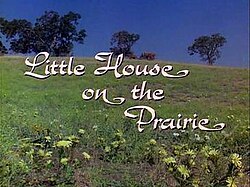
Little House on the Prairie television opening title over a green prairie hillside
Home was never immunity.The Ingalls family gave viewers safety, then Walnut Grove tested exactly how much that safety could carry.
Comfort With Consequences

Why Walnut Grove never felt as safe as it looked

The family center remained dependable, but the stories surrounding it could be severe, unfair and impossible to forget.

The opening credits sold freedom; the episodes delivered consequence

The wagon, tall grass and girls running down the hill created an image of open possibility. Then the series introduced crop failure, blindness, blizzards, addiction, prejudice, fires, illness and grief with a frequency that made every peaceful breakfast feel temporary.

That contrast was not a betrayal of the show’s warmth. It was the source of it. The Ingalls family mattered because viewers saw what the household had to survive. Charles, Caroline, Mary, Laura and Carrie did not live inside a fantasy where decency prevented pain. They lived inside a story where decency shaped the response.

For Gen X, the show became a strange emotional ritual. Parents saw respectable family programming. Children discovered that respectable family programming could leave tire tracks across the living-room carpet.

Michael Landon Production File

Beloved books became a 1970s family melodrama with its own identity

The NBC series borrowed Wilder’s frontier world, then reshaped chronology, character and emotion for continuing television.

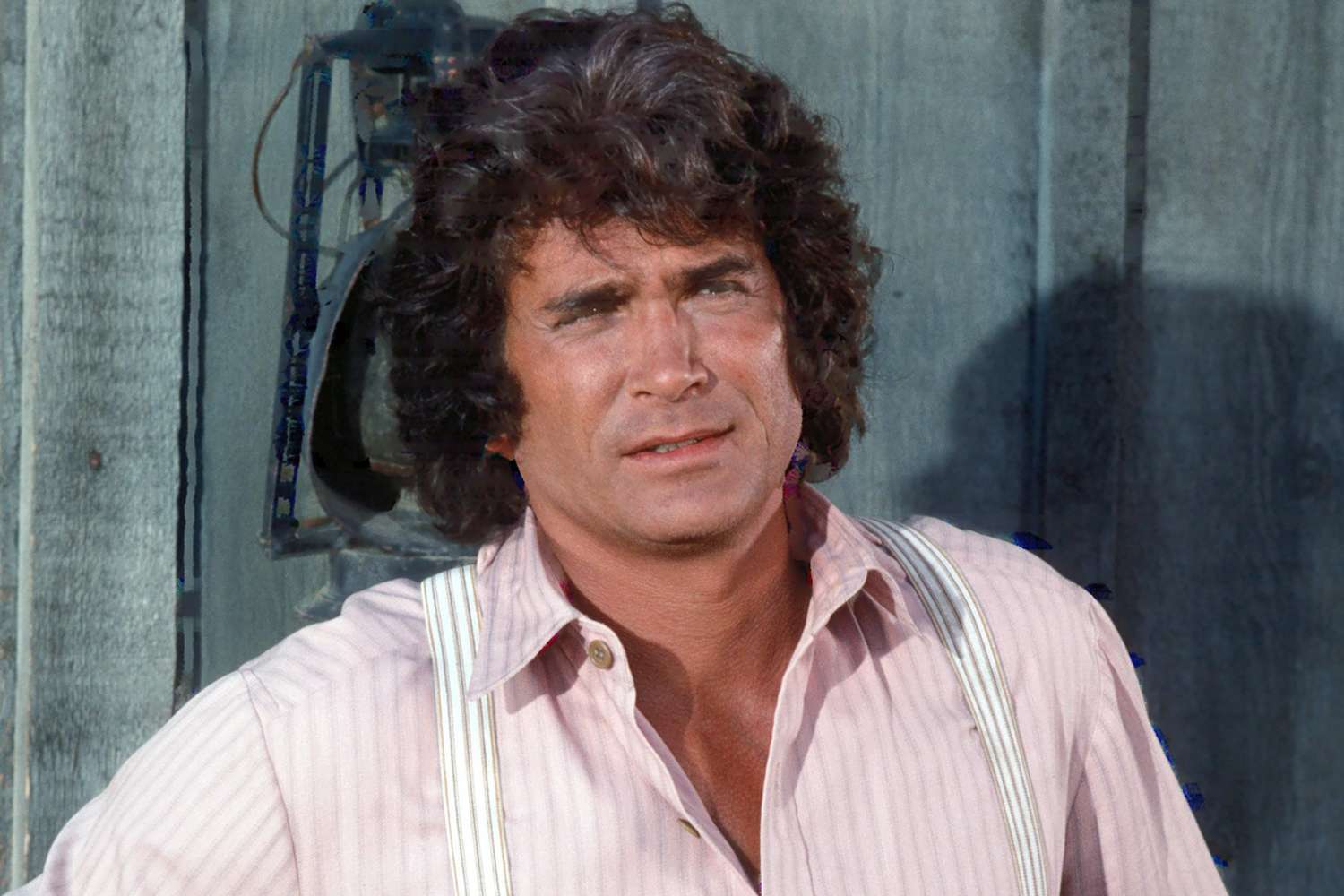
Michael Landon as Charles Ingalls in Little House on the Prairie
Michael Landon shaped the series on both sides of the camera, turning Charles Ingalls into its emotional and moral center.
The adaptation

Inspired by the books, not confined by them

The series used Laura Ingalls Wilder’s characters and memories as a foundation, but combined people, moved events and invented weekly stories. It works best when understood as an adaptation rather than a documentary record.

The creative force

Michael Landon shaped the emotional language

As star, executive producer, frequent writer and director, Landon made Charles Ingalls the moral and emotional center of a show built around tests, sacrifice and large releases of feeling.

The continuing world

Walnut Grove supplied a permanent stage

The schoolhouse, church, mill, doctor and Oleson mercantile gave the family recurring institutions and neighbors. A frontier settlement became a complete television ecosystem.

The practical stakes

Ordinary trouble could threaten survival

A crop failure, injury or debt mattered immediately. The historical setting made consequences visible and gave family decisions a physical weight modern suburban sitcoms rarely carried.
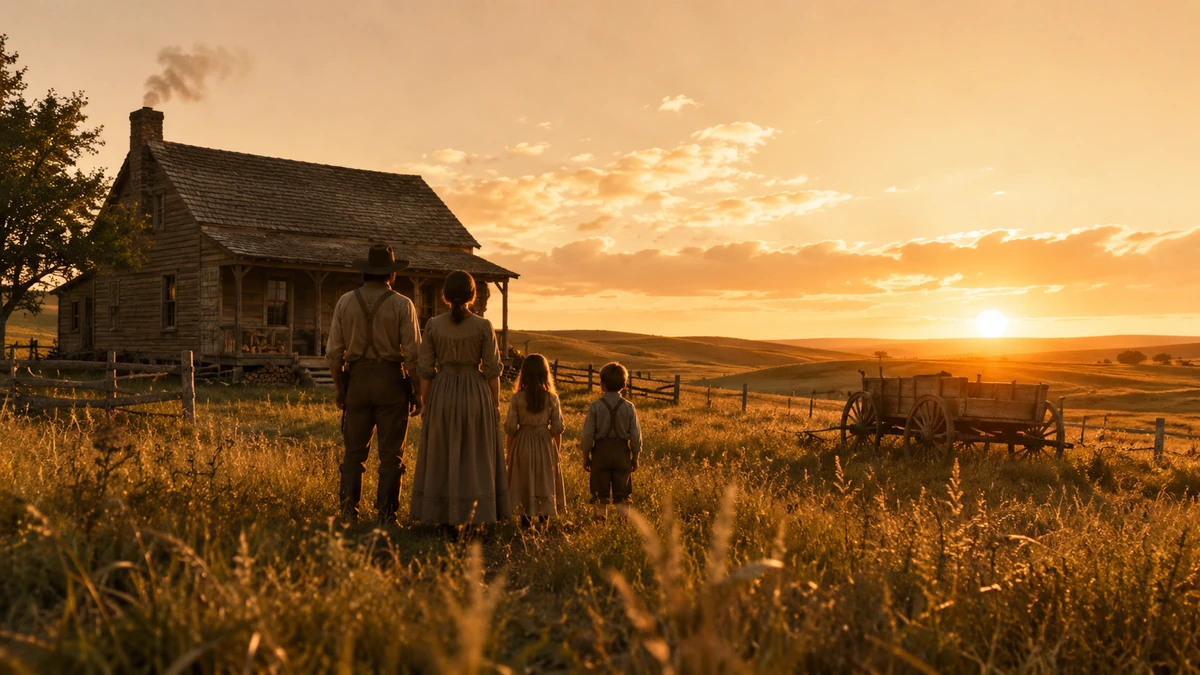
From Pilot Movie to Television Memory

How Little House built a lasting world

The series grew from one family’s arrival into a long-running community drama, then continued through a renamed final season and television movies.

1974

The pilot movie introduces the Ingalls family

The feature-length adaptation establishes Charles, Caroline, Mary, Laura and Carrie as a traveling family whose security comes from one another rather than any permanent address.

1974

The weekly series settles in Walnut Grove

The town adds school, church, commerce and neighbors, creating a recurring setting capable of supporting childhood stories, community crises and historical melodrama.

1976

The series proves how dark family television can become

Episodes involving blizzards, poverty, illness and moral failure establish that the show’s wholesome reputation will never mean emotional safety.

1978

Mary’s blindness changes the family permanently

“I’ll Be Waving as You Drive Away” moves one of the show’s central characters into a new life rather than restoring the old one at the closing credits.

1982

The final regular season becomes A New Beginning

The focus shifts toward Laura and Almanzo while Walnut Grove remains the emotional geography connecting the evolving cast.

1983–84

Television movies close the original era

Later films return to the town and characters, giving the franchise an ending as dramatic and emotionally committed as the weekly series that preceded them.

Walnut Grove Directory

The characters gave the prairie its emotional machinery

The series could survive enormous plots because viewers understood who each person was before the trouble arrived.

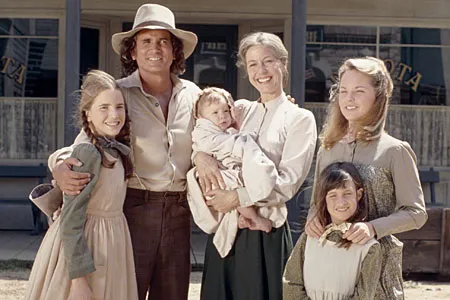
The Ingalls family cast from Little House on the Prairie standing together in Walnut Grove
The Ingalls family supplied the secure emotional center that allowed Walnut Grove’s stories to become so difficult.
The storyteller

Laura Ingalls

Melissa Gilbert makes Laura curious, jealous, impulsive, loyal and impossible not to follow. Her point of view gives the series youthful energy, while her mistakes keep the lessons from feeling prepared in advance.

The father

Charles Ingalls

Michael Landon’s Pa is hardworking, affectionate and emotionally open. He is also stubborn, proud and occasionally convinced that one more speech or heroic sacrifice can fix what the frontier has broken.

The mother

Caroline Ingalls

Karen Grassle gives Ma a quiet authority the writing sometimes underestimates. Caroline manages labor, faith, childbirth, grief and the consequences of Charles’s decisions while preserving her own moral judgment.

The older sister

Mary Ingalls

Melissa Sue Anderson gives Mary discipline, ambition and anger. Her blindness becomes a major turning point, but the strongest stories allow education, work and relationships to continue beyond the diagnosis.

The rival

Nellie Oleson

Alison Arngrim turns a spoiled bully into essential television. Nellie’s cruelty is broad enough for comedy, specific enough to wound and flexible enough to permit genuine growth later in the series.

The comic adversary

Harriet Oleson

Katherine MacGregor makes gossip, status and outrage into a weather system. Harriet can be ridiculous, prejudiced and unexpectedly human, ensuring the mercantile is never merely a store.

The exhausted conscience

Nels Oleson

Richard Bull gives Nels weary decency and the patience of a man who knows every peaceful sentence may be interrupted by Harriet. His kindness prevents the Oleson family from becoming simple villains.

The community

Doc Baker, Reverend Alden and the schoolhouse

Medicine, faith and education are embodied by people the audience knows. Institutions carry history, fatigue and consequences because Walnut Grove never lets them remain abstract.

Childhood at Full Scale

The show treated a child’s emotions as real drama

Jealousy, shame, friendship and school failure filled the entire horizon because that is how childhood feels from inside it.

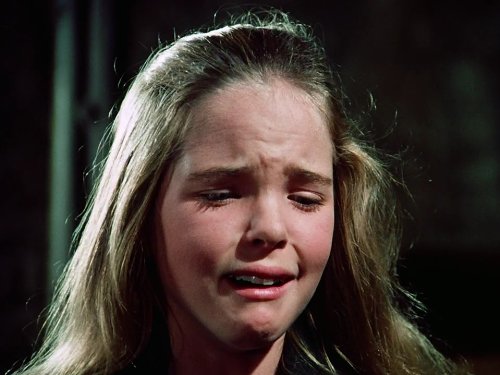
Laura Ingalls in an emotional scene from Little House on the Prairie
Melissa Gilbert gave Laura’s fear, guilt and heartbreak enough weight to carry the full hour from a child’s point of view.

Laura’s limited understanding creates suspense

The audience often sees an adult reality approaching before Laura does. She may believe a prayer, lie, promise or brave gesture can control the outcome. The episode allows that belief to matter while showing that life will not always cooperate.

This perspective is why the lessons rarely feel abstract. Viewers experience the embarrassment before the wisdom. The camera stays with the child who must absorb the correction rather than moving immediately to the adult who already understands it.

Town Meeting

Walnut Grove was rescue system and pressure cooker

The same neighbors who rebuilt a barn could gossip, exclude or turn one family’s private trouble into the whole town’s business.

Mutual aid

Neighbors turn compassion into action

Search parties, barn raisings, shared food and emergency labor make community visible. Help is not a feeling; it is somebody arriving before the storm gets worse.

Social pressure

Everyone knows when you fail

Debt, gossip and school conflict become public quickly. The town’s closeness creates accountability, but it can also magnify shame and prejudice.

Recurring institutions

Every building has a human face

The mercantile is Nels and Harriet. Medicine is Doc Baker arriving tired. Education is the teacher standing before a room full of families who will discuss every decision.

Historical disguise

The past creates distance for modern questions

Economic insecurity, disability, prejudice and women’s expectations enter in period clothing. The setting makes difficult issues approachable; the emotions make them contemporary.

The Walnut Grove Story Engine

How a classic Little House episode builds emotional force

The program could vary tone wildly, but its strongest stories repeatedly moved from ordinary routine toward consequence, community and release.

01

A practical problem appears

Money, weather, school, health, work or social judgment creates a threat grounded in daily life rather than abstract villainy.

02

Pride or misunderstanding deepens it

Charles refuses help, Laura hides the truth, a neighbor judges too quickly or the town accepts the easiest explanation.

03

The prairie removes easy options

Distance, limited medicine, debt or weather prevents a modern shortcut. Characters must live inside the consequence.

04

Emotion reaches maximum volume

Music rises, close-ups tighten and somebody cries without apology. The series never mistakes restraint for truth.

05

Compassion becomes practical

A family member confesses, neighbors arrive, a teacher adapts or a person previously dismissed receives meaningful help.

06

The ending restores meaning, not innocence

The family may survive without returning to the exact life it had before. Loss can remain while love and work continue.

Books, History and Television

The three Little House stories should not be collapsed into one

Wilder’s books, the documented Ingalls family and Michael Landon’s NBC series overlap, but each has its own chronology, priorities and blind spots.

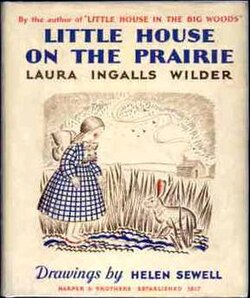
Vintage Little House on the Prairie book cover by Laura Ingalls Wilder
The television series began with Wilder’s books, then built a separate continuing world designed for weekly NBC drama.

Television built a stable town for continuing drama

The historical family moved repeatedly, while the series needed recurring neighbors and institutions. Walnut Grove therefore becomes more permanent and socially complete than the books or history alone would suggest.

Characters are combined, events relocated and many stories invented. Charles becomes a highly idealized television father, and the adaptation often turns complicated history into a moral conflict the household can resolve within an hour.

Recognizing those changes improves the viewing experience. It allows the series to be discussed as a product of 1970s family television rather than used as an unquestioned record of nineteenth-century life.

First-Watch Program Guide

10 essential Little House episodes

These ten episodes form a guided introduction to the family, community, childhood perspective and emotional range of the series.

EPISODE01
The weekly series finds its shape

A Harvest of Friends

Charles accepts dangerous work to repay a debt after an accident leaves him injured. His pride tells him to finish the job alone, while the people of Walnut Grove must decide whether friendship means sympathy or showing up with tools and muscle.

The first regular episode establishes the series’ most dependable moral tension: self-reliance matters, but isolation can become its own form of pride. The resolution does not erase the debt or the injury. It proves that community is strongest when compassion becomes practical labor.

EPISODE02
Laura and Mary enter the public world

Country Girls

Laura and Mary begin school, meet Miss Beadle and encounter Nellie Oleson’s talent for turning clothing, money and manners into weapons. Laura’s anxiety over reading an essay aloud gives the schoolhouse immediate emotional stakes.

This episode matters because it builds the social map the series will use for years. Home offers security; school exposes difference. Laura’s humiliation is painful, but the final classroom moment shows why education and self-expression will remain central to her growth.

EPISODE03
Grief becomes a spiritual ordeal

The Lord Is My Shepherd

After the death of her baby brother, Laura believes her jealousy caused the tragedy and runs away to a mountain, hoping sacrifice will persuade God to restore the child. The two-part story pushes guilt, faith and parental terror to the edge of what family television could hold.

Its scale can feel overwhelming, yet that emotional excess is the point. Melissa Gilbert is asked to carry a child’s impossible logic without irony, while Michael Landon turns the search into a portrait of a father who cannot protect his daughter from grief by working harder.

EPISODE04
Pastoral charm turns into childhood terror

The Raccoon

Laura adopts a raccoon, and a bite creates fear that she or Jack may have contracted rabies. A sweet pet story becomes a suspense episode in which every strange movement looks like evidence of the worst possible outcome.

The episode captures the show’s hidden machinery. Walnut Grove can look gentle and still contain disease, danger and uncertainty. Young viewers recognize Laura’s attachment to the animal; adults understand why Charles cannot offer reassurance until the facts are clear.

EPISODE05
The Ingalls family defines wealth

The Richest Man in Walnut Grove

A failed crop leaves the family unable to pay its account at the mercantile, so Charles, Caroline, Mary and Laura take every available job. Work exhausts them, and Harriet’s contempt makes the debt feel like public judgment rather than a private financial problem.

The ending celebrates family effort without claiming affection magically pays bills. What makes Charles “rich” is the household’s willingness to carry the burden together, but the episode also respects the physical cost of poverty and the humiliation of owing money in a town where everybody knows.

EPISODE06
The prairie becomes the antagonist

The Blizzard

A sudden storm arrives after the schoolchildren are dismissed, trapping them across the open countryside while parents and neighbors organize a desperate search. Familiar roads vanish, and the landscape that usually signifies freedom becomes deadly.

Weather episodes work because the threat cannot be persuaded, shamed or defeated by a speech. The adults can only prepare, search and endure. The story turns Walnut Grove into a rescue network while refusing to guarantee that every family will receive the ending it wants.

EPISODE07
Laura and Nellie reach the breaking point

Bunny

Laura gives her horse Bunny to Nellie, then discovers that Nellie treats the animal cruelly. An accident and Nellie’s performance of helplessness push Laura beyond ordinary rivalry into one of the series’ most satisfying acts of rebellion.

The episode is remembered for Laura sending Nellie’s wheelchair down a hill, but it lasts because the anger feels earned. Alison Arngrim makes Nellie funny and infuriating, while Melissa Gilbert lets Laura’s sense of justice become reckless enough to need its own lesson.

EPISODE08
A child’s conscience becomes a suspense device

The Music Box

Laura steals a music box and then becomes trapped by Nellie’s blackmail. The object’s delicate melody begins to function like an alarm, reminding Laura that the secret is waiting even when nobody else appears to know.

The plot proves that Little House did not need a fire or blizzard to create danger. Shame can close in just as effectively. Laura’s fear of disappointing her parents becomes more powerful than punishment, which gives the eventual confession genuine emotional release.

EPISODE09
Mary’s life changes permanently

I’ll Be Waving as You Drive Away

Mary’s vision deteriorates until the family learns she will become blind. Anger, denial and grief follow before she travels to a school for blind students and begins rebuilding her confidence through education and a new community.

Melissa Sue Anderson gives Mary ambition as well as despair, preventing the story from ending at diagnosis. The two-part episode became a defining chapter because it treats adaptation as continuing life rather than a sentimental cure, even as the show’s music and close-ups push every emotion to maximum volume.

EPISODE10
Caroline carries the episode alone

A Matter of Faith

While the family is away, Caroline develops a severe infection from a cut and realizes she may die before help returns. The episode strips away the town, the children and Charles’s rescue instinct, leaving Ma to confront pain, fear and faith by herself.

Karen Grassle’s performance reveals how much strength the series usually asks Caroline to provide quietly in the background. Centering her turns domestic endurance into survival drama and corrects, for one hour, the assumption that Pa is the only Ingalls capable of heroic suffering.

Behind the Bonnet

Michael Landon built emotional television without an embarrassment filter

The music, close-ups, landscape and performances were arranged to make viewers feel first and evaluate subtlety later.

Performance

The actors commit completely

Landon, Gilbert, Anderson and Grassle do not wink at suffering. Their seriousness allows enormous plots to remain emotionally legible even when the storytelling becomes openly manipulative.

Landscape

The setting can comfort or threaten

Wide skies and open fields create beauty, but the same distance means weather, illness and isolation carry practical danger. The prairie is never merely background.

Music

The score knows where the tears are stored

The series announces feeling with confidence. Violins and swelling themes guide the household toward release rather than asking viewers to remain detached.

1970s concerns

The frontier discusses the present

Economic insecurity, women’s roles, disability, institutional distrust and community responsibility enter through historical stories that families could watch together.

The emotional contract: Little House can be sentimental, overextended and occasionally impossible to resist in the same scene. Its lack of embarrassment about caring is not separate from the craft. It is the craft.
Rewatch Report

What aged well, what did not and what deserves discussion

Adult viewers can admire the emotional intelligence while recognizing the historical simplifications and limitations of 1970s network television.

4The adult rewatch fileStrengths and blind spots
01Aged wellChildren’s emotions receive real weightSTILL POWERFUL
02Needs contextRace, disability and Indigenous history are filtered through the eraDISCUSS IT
03More visible nowCaroline’s labor and limited authorityWATCH MA
04Feature, not bugEmotional maximalism remains the identityBRING TISSUES
Gen X Memory File

Why we remember the emotional impact before the airdate

Reruns made Walnut Grove coexist with cereal commercials, plastic action figures and ordinary afternoons.

The comforting opening music was a trapdoor

Gen X kids learned that practically any visit could include blindness, fire, a blizzard, a dying child or Michael Landon crying hard enough to alter local weather patterns. “A very special episode” was unnecessary because the entire town operated under permanent emotional warning.

Nellie Oleson became a universal unit of schoolyard villainy. Every class contained somebody capable of producing the Nellie smile before children had the vocabulary to explain why it was dangerous.

Pa’s fiddle, Laura’s bonnet and the Oleson mercantile became objects of comfort even when the plots were brutal. Walnut Grove was history, melodrama and after-school routine at the same time.

The Prairie Afterlife

The series became a template for family drama with consequences

A stable emotional home surrounded by serious external pressure remains one of television’s most reliable structures.

The specificity traveled

Viewers did not need a frontier childhood to understand sibling rivalry, debt, parental sacrifice, disability, school humiliation or fear of losing home. The setting was specific; the family pressures were portable.

The series also became a gateway into Wilder’s books and broader debates about frontier memory. Television is not the final word, but for many people it was the first invitation to ask what the books, history and adaptation shared—and where they diverged.

Later family dramas changed the century, location and level of sentiment while keeping the same architecture: viewers return to a dependable household because they know the outside world will test it.

The Gen X verdict: Little House on the Prairie looked wholesome, hit like a truck and taught us that Pa could cry harder than any man on television. Walnut Grove was comfort with consequences.
Questions From Walnut Grove

Frequently asked questions about Little House on the Prairie

The quick facts behind the NBC run, books, production, awards, filming location and first-watch episodes.

When did Little House on the Prairie originally air?

The weekly NBC series premiered September 11, 1974. It ran for nine seasons, with the final season titled Little House: A New Beginning, followed by television movies.

Was Little House on the Prairie accurate to the books?

The series was inspired by Laura Ingalls Wilder’s books but changed timelines, locations, characters and events extensively to create a continuing television drama.

Who developed the Little House television series?

Michael Landon developed the adaptation and served as its star, executive producer and a frequent writer and director.

How many Emmy Awards did Little House on the Prairie win?

The Television Academy record cited for this article lists 16 nominations and four Emmy wins, including recognition for cinematography and music.

Where was the television series filmed?

Much of the series was filmed at Big Sky Ranch in Simi Valley, California, with additional studio and location work.

Why was Nellie Oleson so memorable?

Alison Arngrim combined broad comedy, cruelty, vulnerability and later growth, making Nellie far more durable than a simple weekly bully.

Why was Little House so emotional?

The show paired high-stakes stories with committed performances, swelling music and close-up direction. Michael Landon treated emotional release as a central part of family television rather than something to hide.

What are good Little House episodes for a first-time viewer?

Start with Country Girls, A Harvest of Friends, The Lord Is My Shepherd, The Richest Man in Walnut Grove, The Blizzard, The Music Box and I’ll Be Waving as You Drive Away.

Sources

Where the series and production history comes from

These references cover the series’ production history, awards and relationship to Laura Ingalls Wilder’s books.

First-watch guide: These ten episodes introduce Walnut Grove, the Ingalls family and the emotional range that made the series endure.

Get the Weekly Gen X Drop

New videos, rewinds, and savage nostalgia — first.

SUBSCRIBE WATCH VIDEOS

MORE REWINDS