The Waltons and the Comfort of Walton’s Mountain

The Waltons and the Comfort of Walton’s Mountain
FAMILY HOUR CHANNEL 70s MOUNTAIN GUIDE CBS • DEPRESSION-ERA DRAMA • GOOD NIGHT, JOHN-BOY
Smells Like Gen X • Good night, everybody

The Waltons and the Comfort of Walton’s Mountain

The Waltons made a crowded farmhouse during the Great Depression feel like one of television’s safest places without pretending the people inside it were protected from hardship. Money stayed tight, history kept moving and every child eventually had to decide what part of the mountain could travel with them.

The comfort came from response rather than escape: another chair at the table, another job taken, another neighbor helped and another voice answering from a dark bedroom before the house finally went quiet.

Quick Answer • Walton’s Mountain Desk

Why did The Waltons become such enduring comfort television?

The series acknowledged poverty, grief, injustice and war while insisting that family strength was practical. The Waltons argued and failed, then returned to the work of feeding people, repairing what broke and helping neighbors. Its warmth was earned because the hardship was never merely decorative.

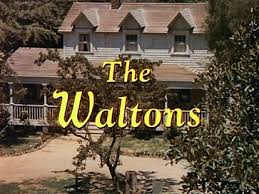
Opening title image from The Waltons television series
Good night, everybody.The familiar opening image places Walton’s Mountain inside the television before the first memory begins.
Comfort With Work Boots On

Why Walton’s Mountain felt safe without ever feeling easy

The series found reassurance in a family’s response to trouble, not in pretending the trouble stayed beyond the porch.

The good nights mattered because the day had been difficult

Some comfort television protects its characters from consequences. The Waltons built comfort by showing consequences clearly. A crop failed, a job disappeared, a neighbor faced prejudice or one of the children realized that growing up would require leaving the mountain.

Then the family cooked, repaired, apologized, argued and tried again. The final voices from the bedrooms did not erase the episode. They confirmed that the household still existed after it. The ritual became famous because the hour had earned the right to end quietly.

For Gen X viewers, the mountain occupied several eras at once: a memory of the 1930s and 1940s, a major drama from the 1970s and an after-school rerun playing in homes that looked nothing like the farmhouse. The emotional logic traveled easily.

Earl Hamner’s Memory File

A Christmas movie opened the road to one of the decade’s defining dramas

The Homecoming proved that a rural family story could compete in prime time when the people and memories felt specific.

The source

Earl Hamner Jr. transformed autobiography into family mythology

The mountain world grew from Hamner’s Virginia childhood and autobiographical fiction. Names and events were adapted, but the texture of work, siblings, memory and departure gave the series its authority.

The doorway

The Homecoming established the emotional house

The 1971 Christmas television movie introduced Richard Thomas as John-Boy and demonstrated that viewers would stay with a poor family whose largest drama was whether a father could get home.

The risk

CBS scheduled an old-fashioned premise in a changing decade

A Depression-era family with no crime, fantasy or glamorous workplace looked risky beside louder programming. The show survived because aspiration and moral conflict supplied the engine.

The world

The mountain expanded beyond one farmhouse

Ike’s store, the sawmill, school, church, the Baldwin sisters and neighboring families created a social map where kindness, gossip and resentment traveled the same roads.
The Homecoming television movie poster that introduced the Walton family before the weekly series
The Homecoming: A Christmas Story established John-Boy, the family’s waiting ritual and the emotional world that became the weekly series.
From The Homecoming to Reunion Television

How Walton’s Mountain became a television institution

The series moved from a Christmas memory into nine seasons, wartime stories and a long reunion afterlife.

1971

The Homecoming brings John-Boy to television

The holiday movie establishes the family, mountain and adult narration, proving that waiting for a father in bad weather can carry an entire evening.

1972

The weekly series begins on CBS

The farmhouse becomes a permanent dramatic center, while school, work, neighbors and John-Boy’s writing ambitions supply stories beyond the original Christmas.

1973

The show becomes an awards and audience success

Recognition for the series, writing and performances confirms that domestic memory can carry the scale and seriousness of prestige drama.

1978

The Empty Nest turns real loss into family history

Will Geer’s death is addressed through Grandpa’s absence, changing the sound and balance of the household without pretending grief ends in one episode.

1981

The weekly run closes after nine seasons

The family has moved from Depression survival into wartime adulthood, with the children’s departures becoming as important as the home they leave.

Later

Reunion movies keep the mountain open

Television films across later years return to the family at new stages of life, reinforcing the idea that Walton’s Mountain is a memory people continue carrying.

Walton Family Directory

The characters made a crowded farmhouse feel infinite

The series could sustain years of domestic stories because every family member wanted something different from the same home.

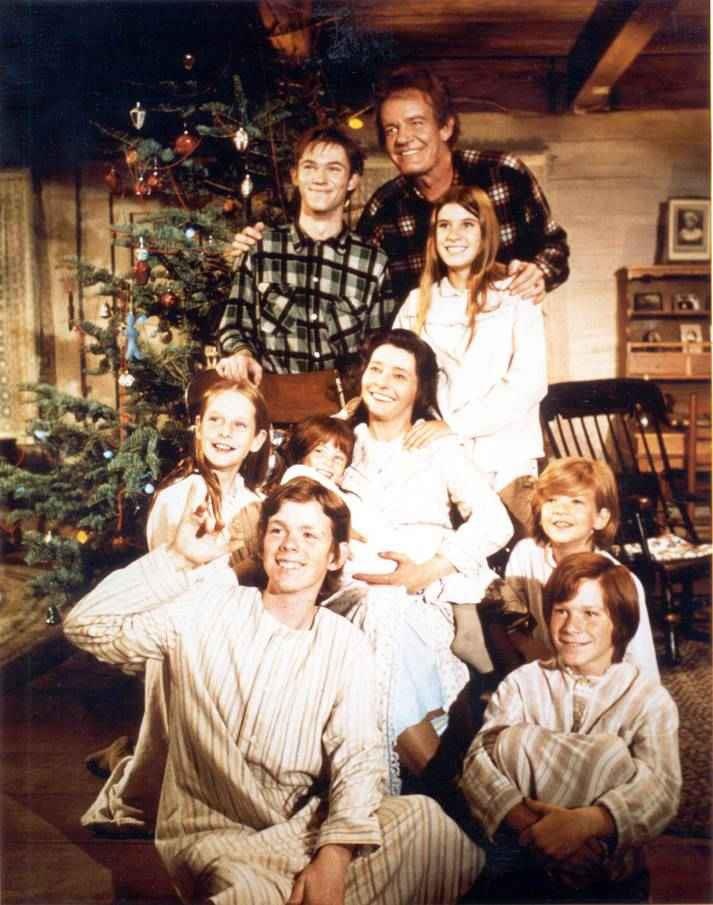
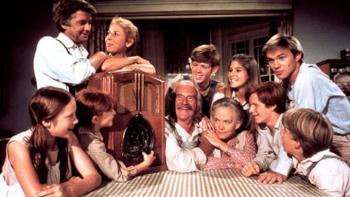
The cast of The Waltons gathered together for a family portrait
The ensemble made the farmhouse feel crowded in the best way: every face carried a different history, responsibility and route away from the mountain.
The writer

John-Boy Walton

Richard Thomas gives John-Boy the restlessness of someone who loves home and knows he must eventually leave it. His narration turns daily life into memory, while his mistakes keep him from becoming a saint with a notebook.

The father

John Walton Sr.

Ralph Waite plays John as practical, skeptical of ceremony and committed to decency through work. His pride can isolate him, but his strongest moral choices appear in what he builds, repairs and quietly permits others to become.

The mother

Olivia Walton

Michael Learned makes Olivia the spiritual and emotional architecture of the house. Faith does not remove fatigue, doubt or anger; it gives her a language for protecting the family without pretending protection means control.

The grandfather

Zeb Walton

Will Geer gives Grandpa poetry, mischief and knowledge rooted in land and experience. He can turn a chore into a story and a story into a reminder that the family existed before the current crisis.

The grandmother

Esther Walton

Ellen Corby’s Grandma carries dry humor, discipline and the authority of someone who has survived several versions of hard times. Her affection is rarely soft, which makes every unguarded moment matter.

The independent daughter

Mary Ellen Walton

Mary Ellen pushes against the boundaries assigned to girls and women, sometimes with enough force to knock over everybody nearby. Her ambition gives the series another route off the mountain besides John-Boy’s writing.

The musician

Jason Walton

Jason’s musical gift and quieter temperament distinguish him from his older brother. He wants a larger life without needing to narrate every step, and his path shows how several kinds of ambition can grow inside one family.

The growing household

Erin, Ben, Jim-Bob, Elizabeth and the mountain

The younger siblings develop different relationships to work, romance, machines, independence and belonging. Around them, Ike, Corabeth, the Baldwins and the neighbors make community feel like an extended, imperfect family.

Depression-Era Economics

Money was never background scenery

Poverty changed time, choices and pride, giving ordinary objects and jobs the weight of major plot turns.

A broken tool could rearrange the week

The show repeatedly returns to debt, wages and scarcity because the family cannot solve practical problems by reaching for money that does not exist. College requires sacrifice. A machine must be repaired. A stranger at dinner changes how far the meal can stretch.

The Waltons are never reduced to noble poverty. They can be vain, impatient, artistic, jealous and wrong. Economic pressure explains behavior without replacing personality, which is why the household feels lived in rather than arranged for a lesson.

That honesty connected the 1930s setting to viewers living through the inflation and uncertainty of the 1970s. Historical distance made the story comfortable enough to enter; the fear of not having enough remained current.

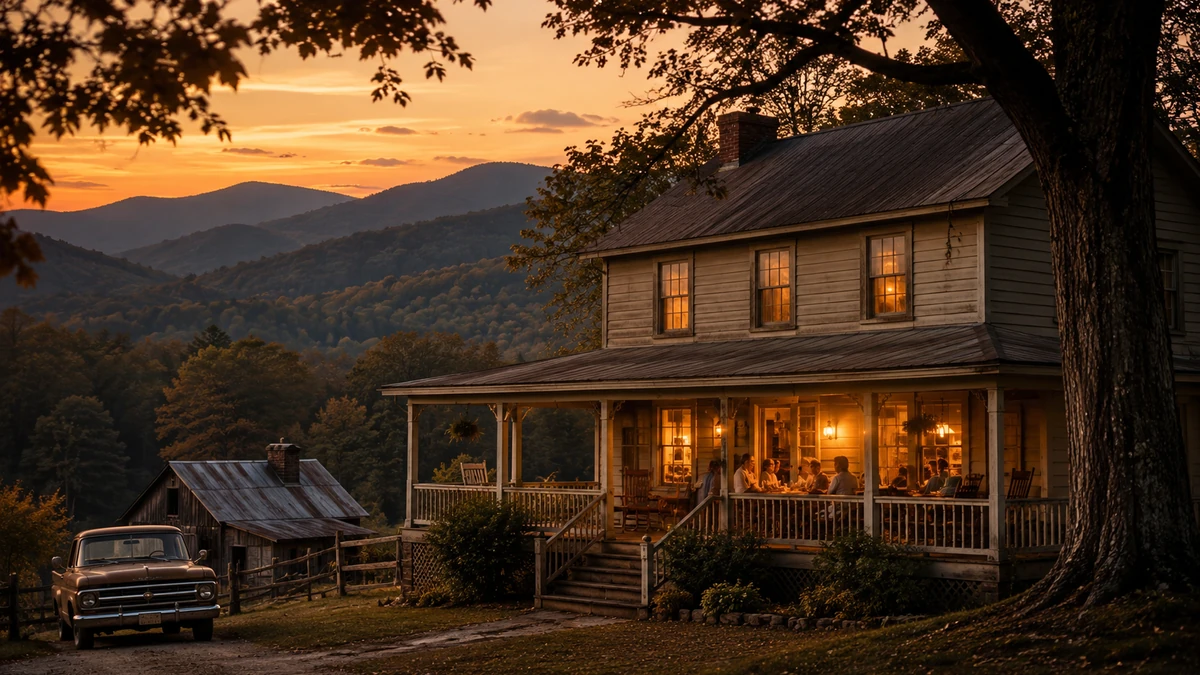
The Walton family farmhouse and outdoor set used for The Waltons television series
The familiar Walton farmhouse set gave the family’s work, departures and homecomings a physical center viewers could recognize immediately.
John-Boy’s Notebook

Memory became the series’ central adventure

A young writer learning how to describe home gave ordinary events the weight of a life already survived.

Observation

Listening becomes action

John-Boy notices the stories carried by relatives, visitors and neighbors. The show treats attention as work, especially when the person speaking has been ignored elsewhere.

Ambition

Success creates distance

The family wants John-Boy to become a writer, yet every opportunity confirms that his future may not fit inside the farmhouse. Encouragement and loss develop together.

Authority

Who has the right to tell a story?

Writing can honor people or turn them into material. John-Boy repeatedly learns that talent does not excuse vanity, carelessness or using somebody else’s pain without understanding it.

Narration

The adult voice changes the scale

Opening and closing memories tell viewers that a bicycle, a meal or a stranger at supper survived inside a larger life. The ordinary event becomes family history.

The Walton’s Mountain Story Engine

How a classic episode turns daily life into family history

The details changed, but the strongest stories repeatedly moved through six dependable stages.

01

A practical need appears

A debt, job, school decision, illness, visitor or broken object creates pressure the family cannot ignore.

02

Pride complicates the solution

Someone tries to carry the problem alone, protect a secret or preserve dignity after help has become necessary.

03

The community reveals its fault lines

Neighbors offer labor, judgment, gossip or prejudice, showing that closeness can rescue and suffocate at the same time.

04

Work makes the stakes visible

Sawing, cooking, walking, teaching and repairing turn morality into physical effort rather than abstract conversation.

05

A choice costs something

Decency requires time, money, reputation, comfort or the surrender of a future somebody thought was guaranteed.

06

Memory reframes the day

The adult narration places the event inside a life, and the final good nights confirm that the household endured without pretending nothing changed.

Faith, Community and History

The mountain was shelter, not isolation

Belief, doubt, prejudice and war kept entering the household, changing what home meant without eliminating its pull.

Decency mattered because it had a price

Olivia’s faith and John’s skepticism share the house, allowing the series to treat morality as behavior rather than agreement on doctrine. The best stories ask whether people will forgive, help an unpopular neighbor or risk status when the crowd chooses fear.

As the timeline moves toward World War II, departure becomes unavoidable. The older children grow up, service and danger enter the family, and the mountain can no longer appear separate from national history.

Home therefore changes from a place where everyone remains to a set of obligations and memories people carry when remaining is impossible.

First-Watch Program Guide

10 essential episodes of The Waltons

These ten episodes form a guided introduction to the family, writing ambition, community and historical reach.

EPISODE01
The weekly series announces its values

The Foundling

A deaf girl abandoned by her family arrives on Walton’s Mountain, and the household must learn how to communicate with her while the larger community confronts its own fear and ignorance. The first regular episode makes compassion an active responsibility rather than a pleasant sentiment.

The story establishes the show’s central method. A guest enters with a practical need, every Walton responds according to age and temperament, and the family’s warmth is tested by work. The episode does not ask viewers merely to feel sorry for the child; it asks whether the adults around her will change their behavior.

EPISODE02
John-Boy meets the romance and cost of writing

The Literary Man

A visiting author recognizes John-Boy’s talent and gives him a glimpse of the larger literary life he imagines. The encounter also exposes vanity, disappointment and the difference between wanting to be a writer and developing the discipline to become one.

Richard Thomas makes John-Boy’s excitement visible without turning ambition into arrogance. The episode matters because the series never treats his notebook as a cute hobby. Writing is a vocation that may carry him away from the mountain, and every encouragement therefore contains the first hint of separation.

EPISODE03
Education becomes an act of dignity

The Scholar

An adult Black woman’s determination to learn to read becomes a story about shame, courage and the freedom created by literacy. John-Boy helps her, but the episode allows her desire and persistence to remain the center of the drama rather than reducing her to somebody else’s lesson.

The episode is one of the show’s strongest examples of moral television grounded in a specific person. Learning to read does not erase prejudice or poverty. It gives a woman another tool to claim authority over her own life, which is precisely why the effort threatens people invested in keeping the social order unchanged.

EPISODE04
A holiday story places John-Boy’s future at risk

The Thanksgiving Story

John-Boy faces a serious injury while preparing for the next stage of his education, and the family’s holiday gathering becomes inseparable from fear about his future. The extended story gives every family member room to respond while gratitude becomes something tested rather than announced.

Thanksgiving works here because the table is not automatically comforting. The audience has watched the family labor toward the meal while uncertainty hangs over the oldest son’s dream. When the household finally gathers, the ritual feels earned by anxiety, caregiving and the possibility that life may not return to its previous shape.

EPISODE05
One ordinary object becomes independence

The Bicycle

John-Boy’s desire for a bicycle appears modest beside the family’s larger struggles, yet the object represents speed, privacy and a world beyond walking distance. Earning it forces him to measure desire against the amount of labor and sacrifice hidden inside a purchase.

The episode captures why The Waltons could build drama from everyday wants. The bicycle matters because money is scarce and because growing up requires movement. John-Boy is not simply asking for transportation; he is asking for a little more control over where his life can take him.

EPISODE06
The mountain confronts hatred before the war

The Fire Storm

A German immigrant family becomes the target of suspicion as international conflict moves closer, and a public book burning forces Walton’s Mountain to choose between fear, conformity and principle. The historical setting gives the episode distance without making the prejudice feel safely remote.

The story remains powerful because it shows intolerance spreading through ordinary institutions and conversations rather than arriving only through an obvious villain. The Waltons must decide whether decency costs enough to be inconvenient. Books, neighbors and reputation all become part of the same moral emergency.

EPISODE07
Christmas comfort depends on getting home

The Best Christmas

Bad weather and travel problems scatter the family when Olivia hopes to gather everyone for what may be the last Christmas before adulthood and war pull them in different directions. Every delayed arrival turns the familiar house into a place waiting to become complete.

The episode understands that holiday television needs uncertainty. The decorations and meal carry emotional force because reunion is not guaranteed. Olivia’s wish is loving and impossible: she wants time to pause before the children’s lives expand beyond the mountain. The weather merely makes that truth visible.

EPISODE08
Achievement and departure enter the same room

The Graduation

John-Boy reaches a milestone made possible by years of family sacrifice, schoolwork and private determination. The celebration opens a future, but it also confirms that the household’s first great dream will eventually require one of its members to leave.

The episode gives graduation the full weight of the series’ accumulated history. Pride is not separated from loss. John and Olivia want their son to succeed, yet success changes the daily shape of the family. The story makes education both a community victory and the beginning of distance.

EPISODE09
The house learns how absence sounds

The Empty Nest

After Grandpa’s death, familiar routines reveal how much space he occupied through jokes, songs, work and argument. The family does not process grief through one speech; it discovers him missing from the porch, the table and the rhythm of ordinary days.

Created after the death of Will Geer, the episode respects both actor and character by refusing an easy reset. Ellen Corby, Ralph Waite and the ensemble play grief as a change in household weather. The mountain remains beautiful, but the family now understands that home can survive while never becoming the same home again.

EPISODE10
The central dream becomes a goodbye

The Valediction

John-Boy prepares to leave Walton’s Mountain for the larger life his writing has always promised. The family has encouraged his ambition from the beginning, but the reality of departure makes every proud sentence carry the weight of an ending.

The episode completes the show’s deepest contradiction: home succeeds when it prepares a child to go. Richard Thomas plays excitement and sorrow together, while the household tries to celebrate without denying what the empty place will mean. The mountain becomes portable memory rather than a boundary.

Behind the Screen Door

The production made ordinary work cinematic

Labor, used spaces, narration and patient performances turned domestic routine into the visual language of an epic.

Work

Chores reveal character

Sawing timber, cooking, repairing equipment and teaching lessons are not filler. They show pride, exhaustion, cooperation and the physical system keeping the household alive.

Design

The house looks inhabited

Clothing repeats, furniture appears used and shared rooms remain crowded. Warm lighting does not hide how little private space a family of that size possesses.

Performance

Affection feels worn in

Michael Learned, Ralph Waite, Richard Thomas, Ellen Corby and Will Geer build relationships through interruption, silence and familiarity rather than constant declarations.

Narration

Memory gives patience a destination

The adult John-Boy’s voice tells viewers that the quiet scene matters because somebody carried it forward. A screen door and a pause can contain an entire future.

The emotional contract: The show does not soothe by removing labor. It dignifies labor and insists that family survival depends on meals, wages, repairs, apologies and people who keep showing up.
Rewatch Report

What aged well, what did not and what deserves discussion

Adult viewers can admire the performances and patient storytelling while recognizing the selective nostalgia of network television.

4The adult rewatch fileStrengths and blind spots
01Aged wellFamily affection feels specific rather than genericSTILL TRUE
02Needs contextRural community is selective and sometimes idealizedDISCUSS IT
03More visible nowWomen’s labor supports nearly every moral victoryWATCH THE WORK
04Unexpected strengthThe patient pacing lets weather and silence matterLET IT BREATHE
Gen X Memory File

Why the good nights became bigger than the original schedule

Reruns allowed the final bedroom chorus to blend with real dinners, homework and parents telling children to turn the television down.

The ending was corny, dependable and completely earned

Gen X viewers could joke about the endless exchange of good nights because everybody already knew it. The parody worked only because the ritual had become cultural furniture.

The crowded bedroom also looked different with age. As children, seven siblings and grandparents in one house suggested noise and the complete absence of privacy. As adults, the abundance of voices can look like the family’s real wealth.

The series taught us that old-fashioned television did not have to mean empty nostalgia. One episode offered a warm holiday; another confronted illiteracy, antisemitism, disability, alcoholism or death. The porch felt peaceful because the world beyond it was not.

The Mountain Afterlife

The series made domestic memory feel epic

Later family dramas inherited its belief that history, work and growth can accumulate inside one household for years.

Specific memories became portable comfort

Viewers did not need a Virginia mountain childhood to understand sibling rivalry, debt, parental sacrifice, creative ambition or the fear that success might carry somebody away from home.

The series also shaped modern comfort viewing. Audiences return not because the episodes promise easy lives, but because they promise recognizable moral effort. Somebody will make a mistake. Somebody else will leave a lamp on.

Earl Hamner’s version of family memory became a place viewers could attach their own households to: the table, the work, the arguments and the voices after dark.

The Gen X verdict: The Waltons could be wholesome without being weightless. It made a family saying good night feel like a small victory over history.
Questions From the Mountain

Frequently asked questions about The Waltons

The quick facts behind the CBS run, real-life inspiration, narration, awards, setting and first-watch episodes.

When did The Waltons originally air?

The weekly CBS series premiered September 14, 1972, and ran for nine seasons through 1981. Reunion television movies followed.

Was The Waltons based on a real family?

The series was inspired by creator Earl Hamner Jr.’s childhood in rural Virginia and his autobiographical fiction, though names, characters and events were adapted for television.

Who narrated The Waltons?

Earl Hamner Jr. provided the voice of the adult John-Boy, framing the episodes as memories from a later point in his life.

How many Emmy Awards did The Waltons win?

The Television Academy record cited for this article lists 37 nominations and 13 Emmy wins for the series.

Why was John-Boy called John-Boy?

The nickname distinguishes John Walton Jr., the oldest son, from his father John Walton Sr.

Where was Walton’s Mountain supposed to be?

The fictional community was located in rural Virginia and was inspired by Hamner’s hometown of Schuyler.

Why did the good-night ending become so famous?

The closing bedroom voices compressed the show’s central promise into one ritual: the family could argue, suffer and change during the hour, but the house still held together at night.

What are good episodes of The Waltons for a first-time viewer?

Start with The Foundling, The Literary Man, The Scholar, The Thanksgiving Story, The Fire Storm, The Best Christmas and The Empty Nest.

Sources

Where the series and production history comes from

These references cover the series’ history, awards and Earl Hamner Jr.’s connection to Walton’s Mountain.

First-watch guide: These ten episodes introduce the family, the mountain and the blend of hardship and comfort that defined the series.

Get the Weekly Gen X Drop

New videos, rewinds, and savage nostalgia — first.

SUBSCRIBE WATCH VIDEOS

MORE REWINDS