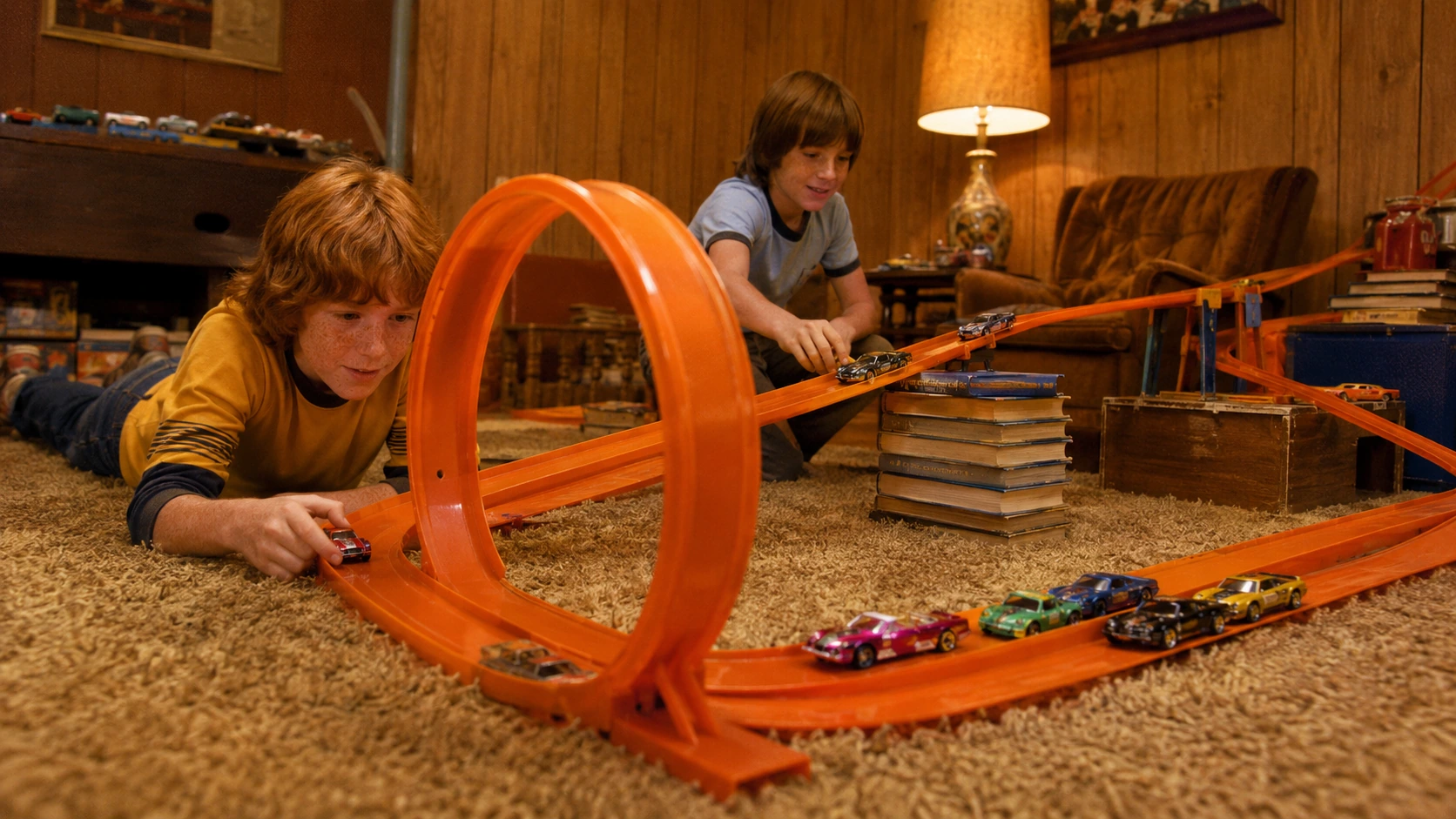
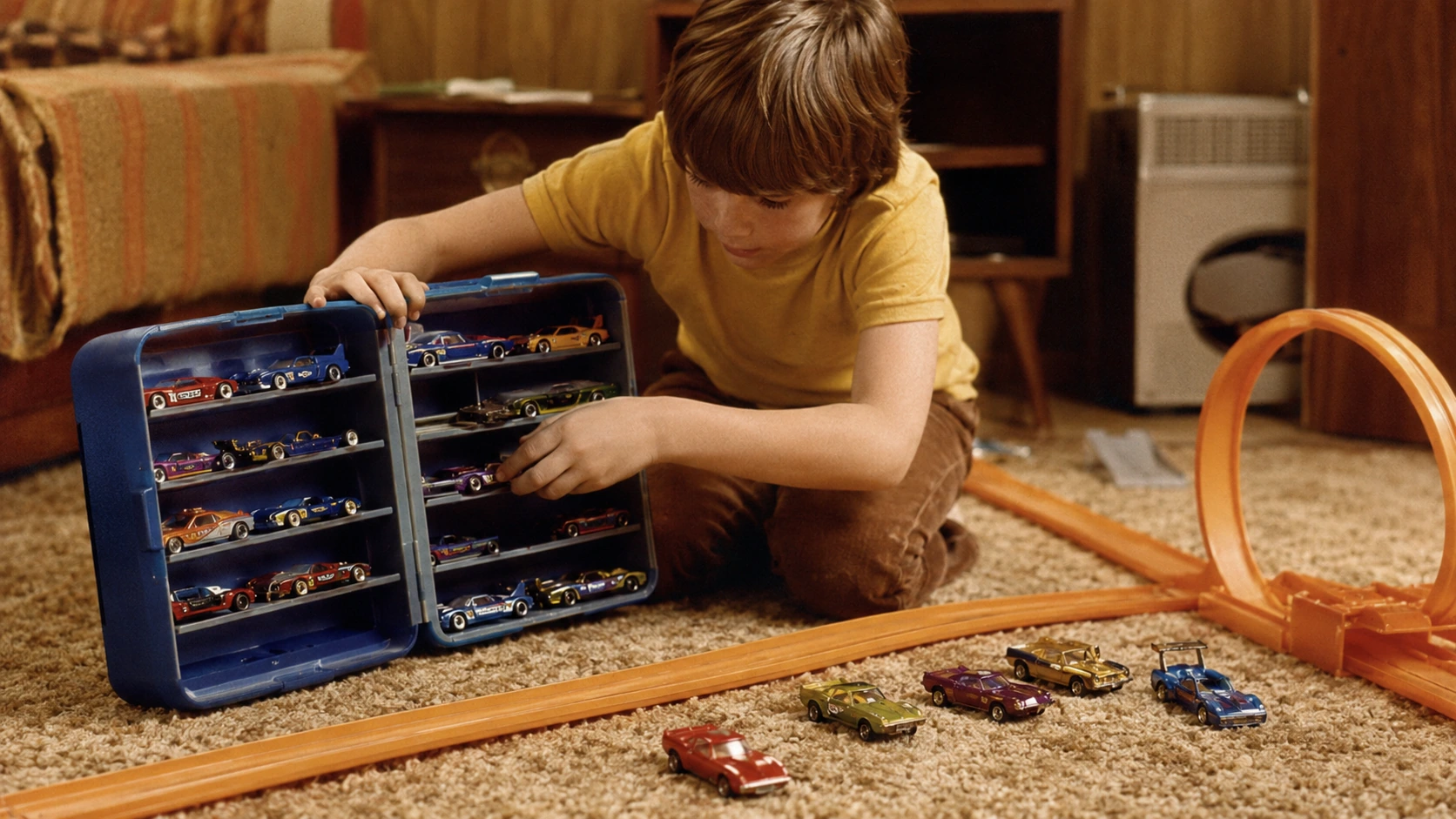
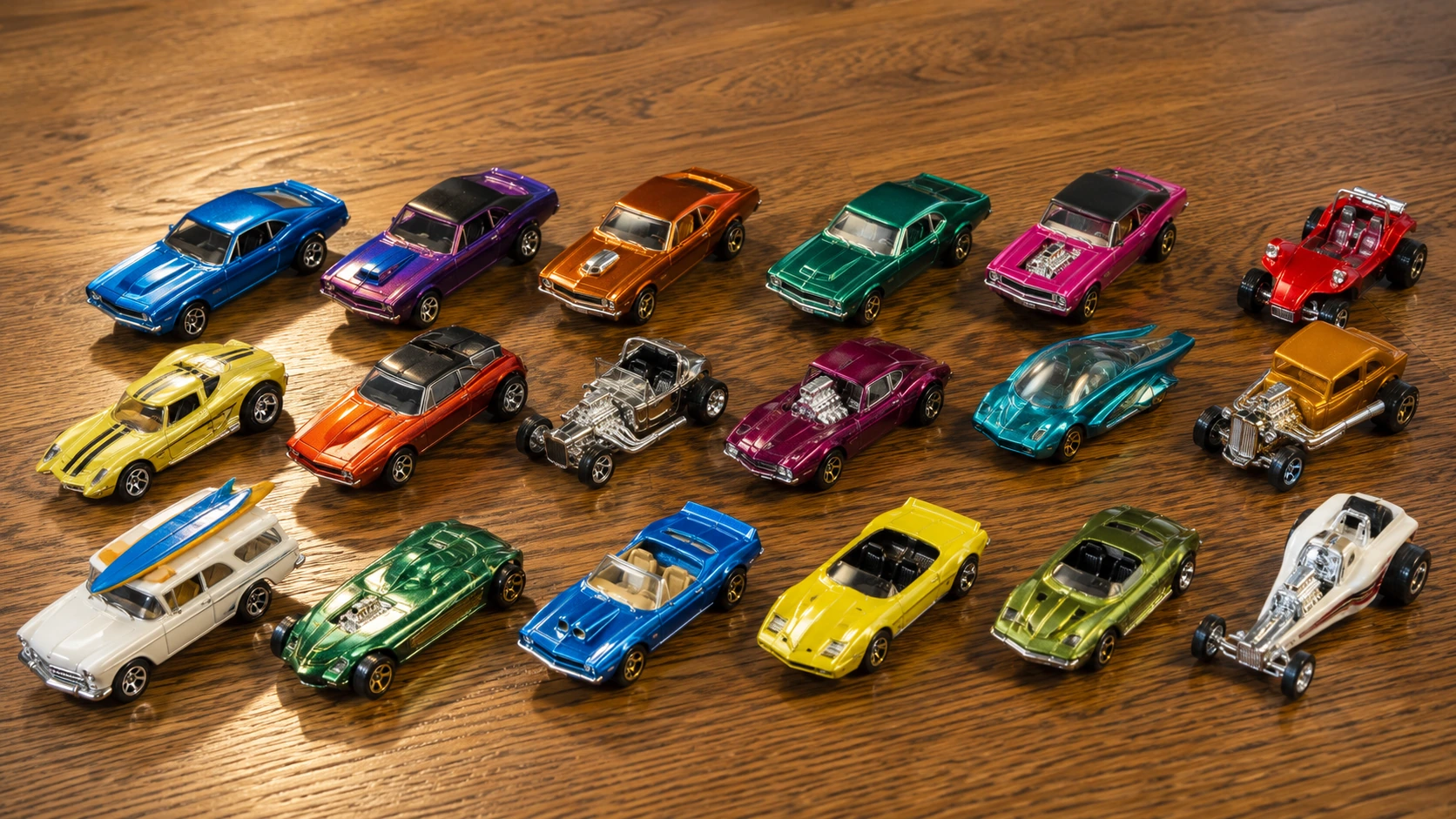
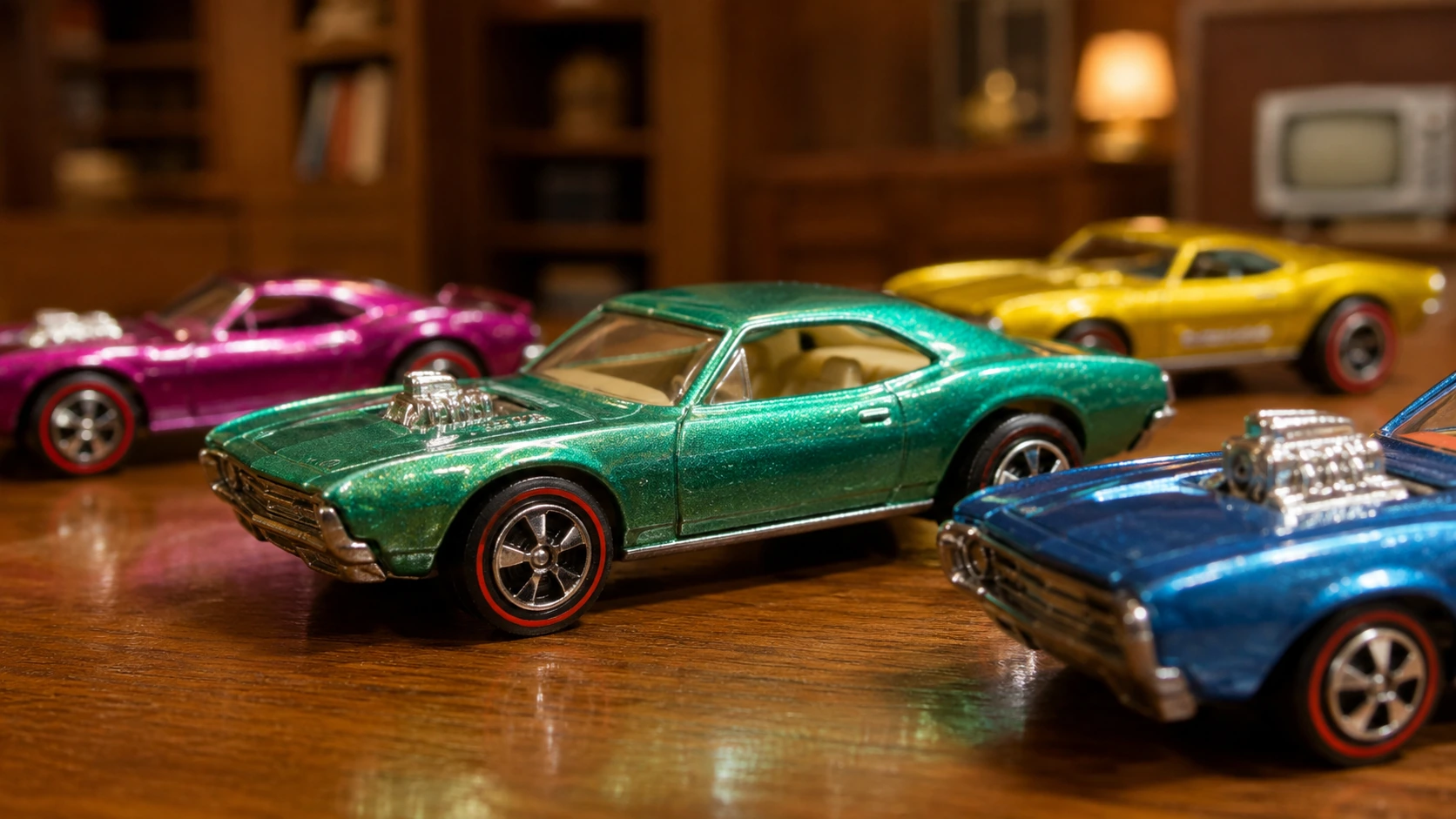
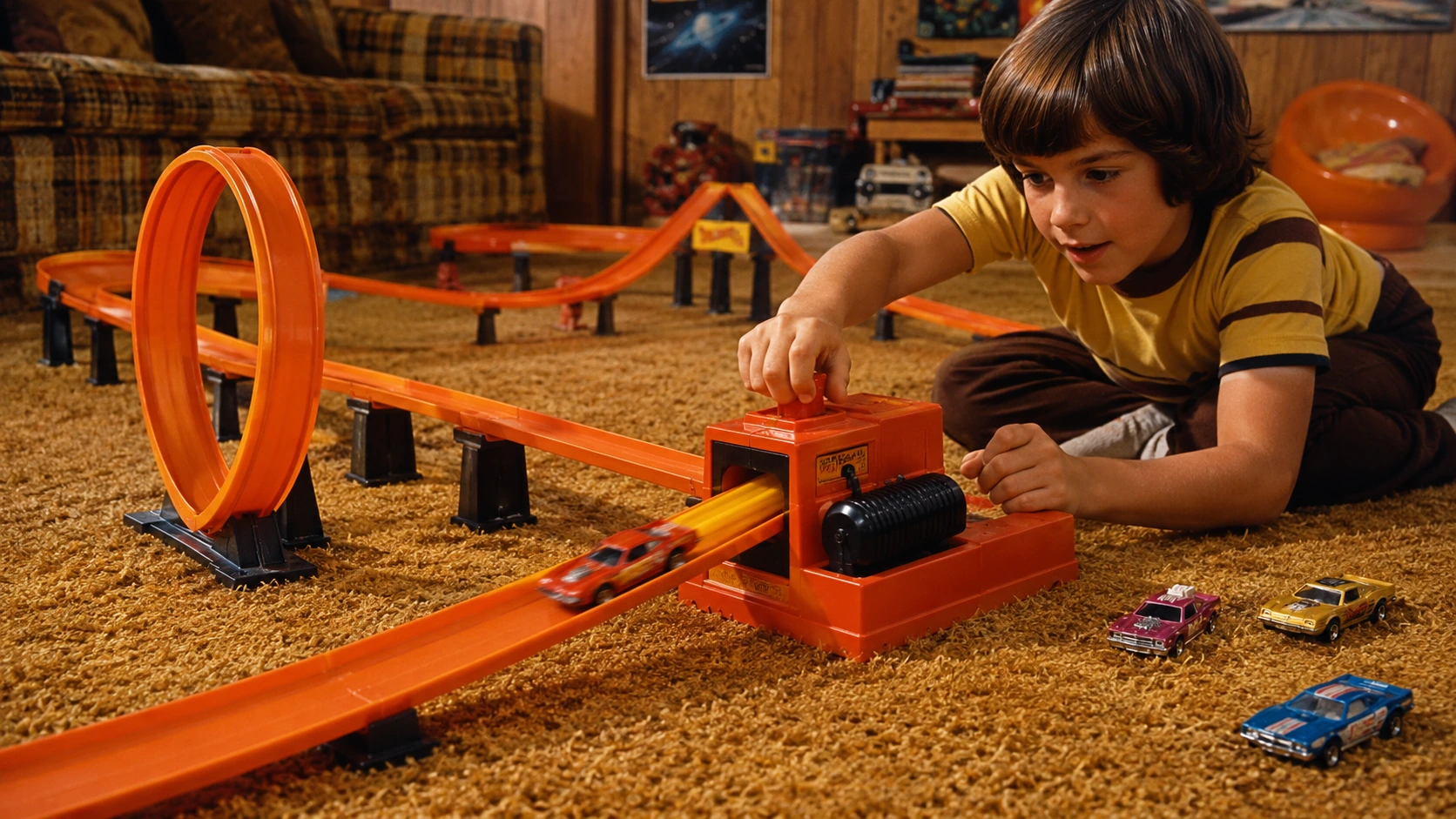
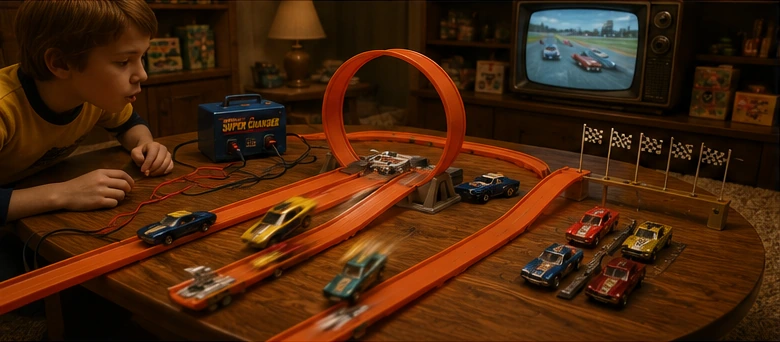
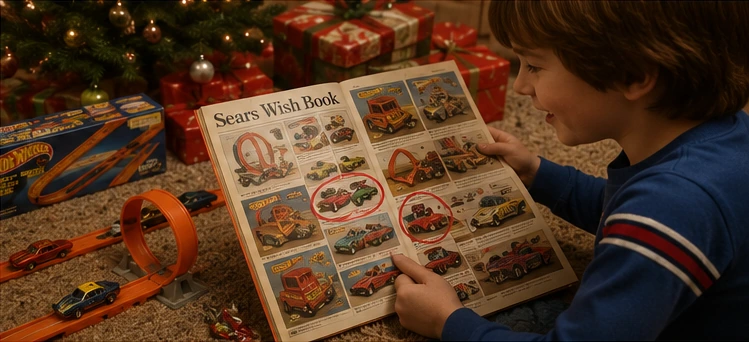
At the start of the 70s, Hot Wheels stopped waiting for gravity.
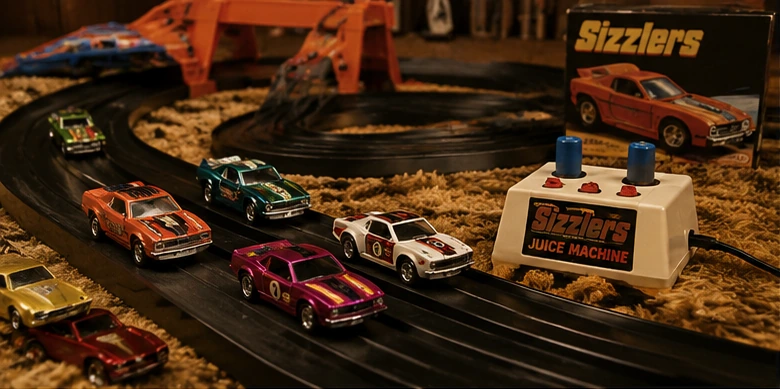
Sizzlers were one of the boldest branches of the 1970s Hot Wheels family. Introduced in 1970, the cars carried a small motor and rechargeable battery. Charge the car, switch it on and it moved under its own power. The hand that usually pushed or released the vehicle could step away.
This made Sizzlers feel different from ordinary die-cast cars even before the race began. They were lighter, mechanically more complex and built around an energy ritual. The car had to be charged. The wait mattered. The switch had to be found. The track had to contain a vehicle that was not planning to stop on its own.
The Juice Machine Turned Charging Into Pretend Pit Work
The Juice Machine looked like equipment rather than a battery holder. A child connected the car and waited while the internal battery received its charge. The process was short by adult standards and extremely long when the track was ready.
Charging made the car feel maintained. It was not only selected from a case and placed on a track. It had to be prepared. The toy introduced a version of pit-lane procedure into the family room.
Powered Cars Changed the Meaning of the Track
A gravity car uses the track as a path downward. A Sizzler could climb gentle grades, continue around circuits and return to where it started. The layout became a course rather than a one-way chute.
Early Sizzlers could use orange track, but powered cars exposed the limitations of narrow lanes. They caught one another, bounced in curves and needed room to pass. Mattel answered with wider racing systems.
Fat Track Let the Cars Choose Their Own Trouble
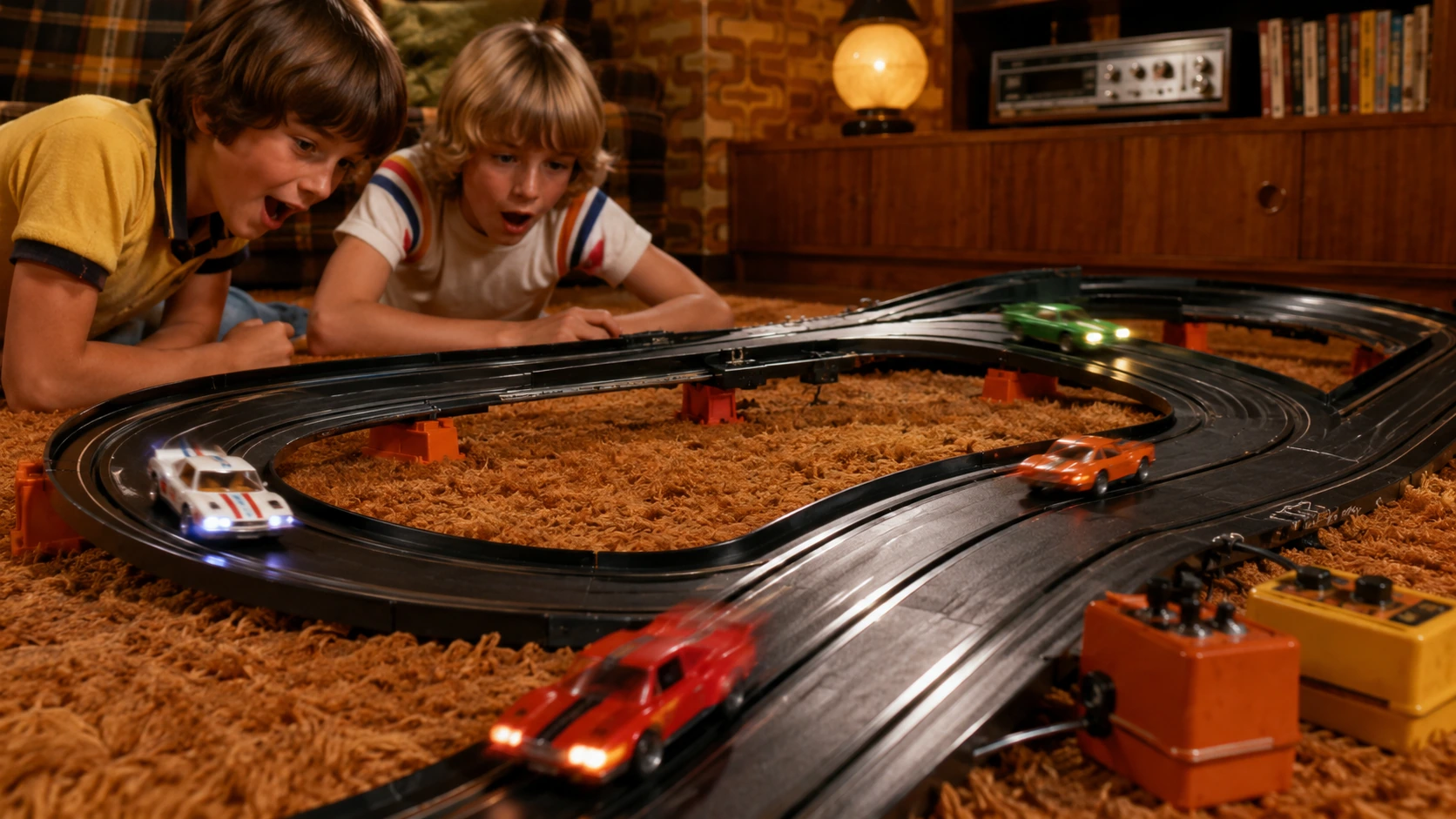
Fat Track used wide black lanes and banked curves, giving multiple Sizzlers room to move around one another. The cars did not follow fixed slots. They wandered within the lane, bumped, passed and created the appearance of independent drivers making bad decisions.
This passing action was unpredictable enough to feel alive. A faster car could approach, move around another car and then crash in the next turn. No two races unfolded exactly the same way.
The Big O Made Continuous Racing the Main Event
Wide oval layouts emphasized endurance. Cars circled until the charge faded, a collision occurred or one left the racing surface. A race could be judged by laps, survival or whichever car remained moving after the others had stopped.
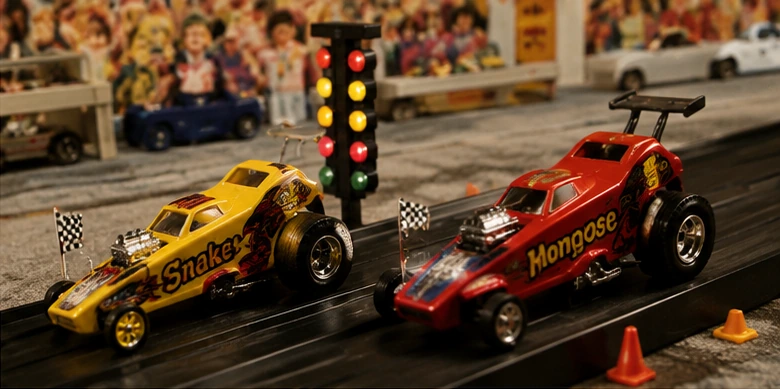
Accessories such as starting gates, lap-counting ideas and timing equipment pushed Sizzlers toward organized competition. The bedroom became a speedway with officials whose rules changed between races.
Sizzlers Were Hot Wheels With Their Own Pulse
Rechargeable cars were not some unrelated side experiment. They extended the same Hot Wheels promise: make a tiny vehicle move faster, longer and with less help from the child.
Regular cars, orange track, boosters, Sizzlers and Fat Track all belonged to the same 70s racing world. The biggest difference was that a Sizzler could keep moving after gravity had finished its shift.