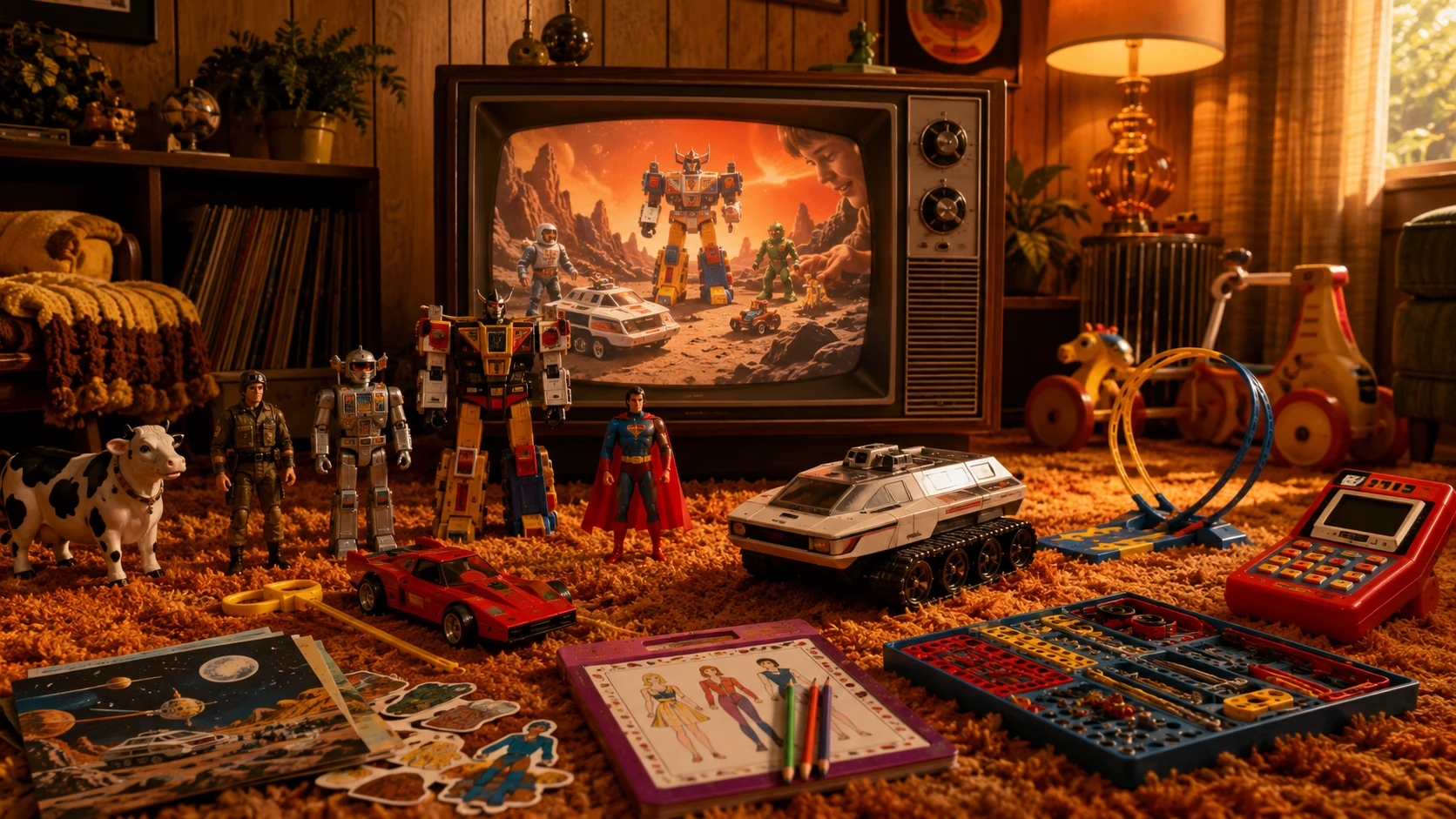
The Commercial Sold the Best Possible Afternoon
A toy commercial had to show what the product did, explain why it was different and make a child imagine owning it before the next advertisement arrived. Cars flew farther, figures faced larger threats, building sets became skylines and every electronic beep sounded like evidence that the future had entered the family room.
The advertisements also supplied the social scene. Children were already gathered, already understood the rules and were already having the exact level of fun the viewer had been promised. The ad demonstrated who should be there, what should happen and how impressed everybody was expected to look.
Television did not work alone. After an ad created movement and sound, a Sears Wish Book or department-store toy catalog gave the toy a permanent page. The commercial was the spark; the catalog kept the campaign alive through repeated viewing, careful circling and strategic placement near adults.
Holiday pressure made the system even stronger. The hottest Christmas toys of the 70s became events because television, catalogs, store displays and word of mouth kept reinforcing the same desire.