Scarecrow and Mrs. King in the 80s: Spy TV With a Suburban Twist
Kate Jackson and Bruce Boxleitner made an unlikely partnership feel like the most enjoyable interruption in the neighborhood.
Amanda King had a life before the Agency called. That is what made the adventure work.
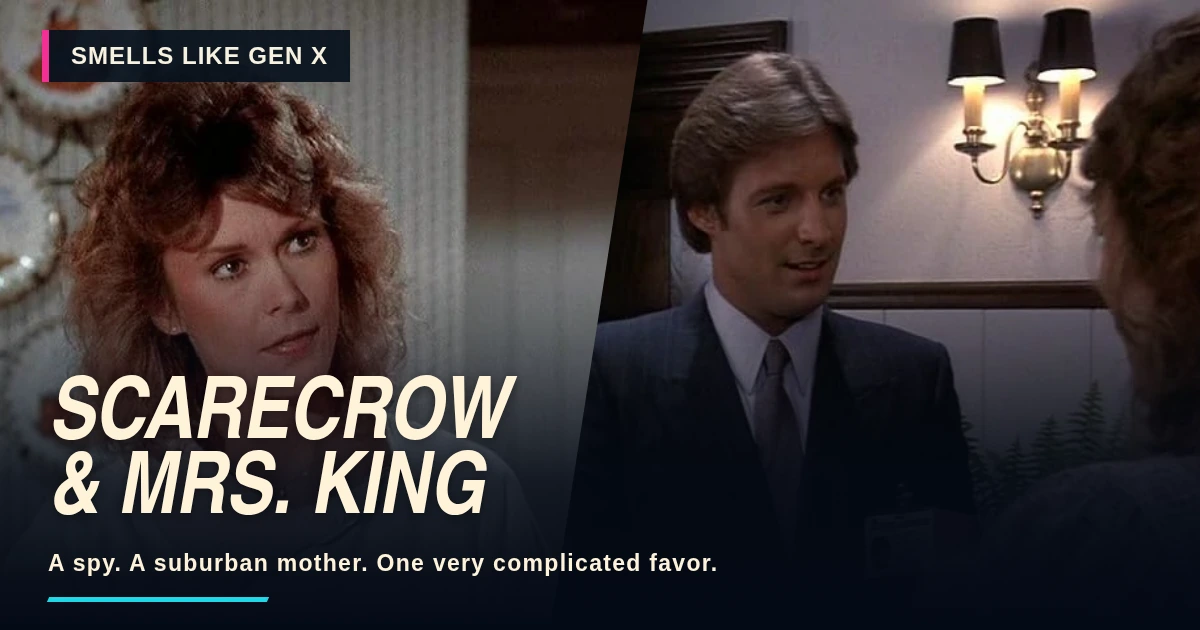
Lee Stetson had training, contacts and the sort of working day you could not explain at the neighborhood cookout. Amanda King had children, errands, a mother with questions and an alarming ability to notice what everyone else had missed. Put those two together and you had Scarecrow and Mrs. King, a spy show that understood the entertainment value of somebody saying, in effect, hang on, I still have to get home.
I liked that collision. Eighties television had plenty of men who could draw a gun, climb into a nice car and leave the boring parts of life to somebody off camera. Amanda brought the boring parts with her. Except they were not boring once Kate Jackson got hold of them. Keeping people calm, reading an awkward room and knowing when an explanation sounded wrong became useful skills in a business full of professionals who sometimes could have used a little common sense.
The CBS series ran from 1983 to 1987, with Jackson as Amanda and Bruce Boxleitner as Lee, the operative called Scarecrow. Its creators, Brad Buckner and Eugenie Ross-Leming, built the fun around an unlikely working partnership. There were assignments, enemy agents and perilous misunderstandings, but the question under all that activity was wonderfully simple: what happens when the expert has to listen to the civilian?
That makes it a distinctive stop in our eighties TV collection. The 1983–84 TV ratings put its first season in familiar company, when prime time had room for both the shoulder pads of Dynasty and the Saturday-night warmth of The Love Boat. This was not a grim briefing on international affairs. It was a weekly escape with people you wanted to spend time around, even when you would have declined their invitation to help carry a mysterious package.
The appeal still makes sense. Two attractive adults, two incompatible routines and a growing suspicion that each might be exactly what the other needed. Add Beverly Garland looking as though she had already spotted the hole in somebody’s story, and you had enough trouble before the villains even arrived.
Inside This Article
- The hook was hiding in Amanda’s ordinary day
- Kate Jackson makes Amanda worth following
- Bruce Boxleitner supplies the polished complication
- The First Time gives the partnership a push
- A home life that refuses to stay off camera
- Beverly Garland keeps Dotty one question ahead
- Philip and Jamie keep Amanda’s stakes personal
- Billy Melrose makes the Agency feel inhabited
- Francine is more than the woman rolling her eyes
- There Goes the Neighborhood makes the disguise familiar
- The A.C.M. Kid turns protection into a people problem
- Service Above and Beyond lets the social world turn dangerous
- Saved by the Bells makes the mistaken identity matter
- The Long Christmas Eve makes room for a quieter feeling
- A telephone can do a surprising amount of work
- The clothes tell you which world has taken over
- Washington gives the fantasy a recognizable address
- The romance grows out of having to work together
- A later development, for readers who want the spoiler
- The secret is funny because someone else has a point
- Where the light touch helps, and where it shows its age
- How it sits among the decade’s detective partnerships
- When helping becomes the dangerous part
- The workplace can be the source of the threat
- Losing the answer Amanda cannot remember
- A good way to settle back into the show
- The reason I still want Amanda to answer the phone
- Questions people still ask about Scarecrow and Mrs. King
The hook was hiding in Amanda’s ordinary day
The premise works because Amanda is already somebody before Lee encounters her. She is a divorced mother with a household to run, not an empty space waiting for an adventure to supply a personality. Her responsibilities are inconvenient to the spy story, which is precisely what makes them valuable. A person with obligations cannot simply disappear into the next assignment without leaving a trail of questions at home.
Lots of adventure shows ask a civilian to step into extraordinary danger. Scarecrow and Mrs. King gets an extra laugh and an extra worry from the life that continues outside that danger. Amanda can be frightened by an assignment and irritated by the way it has rearranged her day. Those responses can exist together. Jackson makes room for both without turning the character into a running joke about a woman who cannot cope.
The initial encounter involves a package and a train station. That is enough to open a door between two worlds. The series does not need Amanda to wake up announcing that suburban life has bored her and she would like an international incident before lunch. She helps, becomes involved and discovers that her help is harder to do without than the professionals expected.
I find that much more inviting than the fantasy of instant mastery. Amanda has something to learn, and the show has somewhere to go. At the same time, the audience can see why she might be worth teaching. Her observations do not arrive wrapped in technical vocabulary. Sometimes she is simply the person paying attention to the human being everyone else has reduced to a problem.
Kate Jackson makes Amanda worth following
Jackson gives Amanda a useful combination of hesitation and resolve. She can make the character look briefly out of her depth without making her look empty-headed. That distinction carries a tremendous amount of the series. If Amanda were only there to misunderstand an instruction or require rescue, the novelty would have worn off long before the relationship had a chance to develop.
Watch how much depends on the pause before Amanda agrees to something. The pause contains calculation: danger, curiosity, family, responsibility, and the suspicion that Lee has left out a significant detail. Jackson can suggest that calculation without stopping the story for a lecture. Her Amanda often seems to know that she should have more questions. She also knows somebody needs help before there is time to ask all of them.
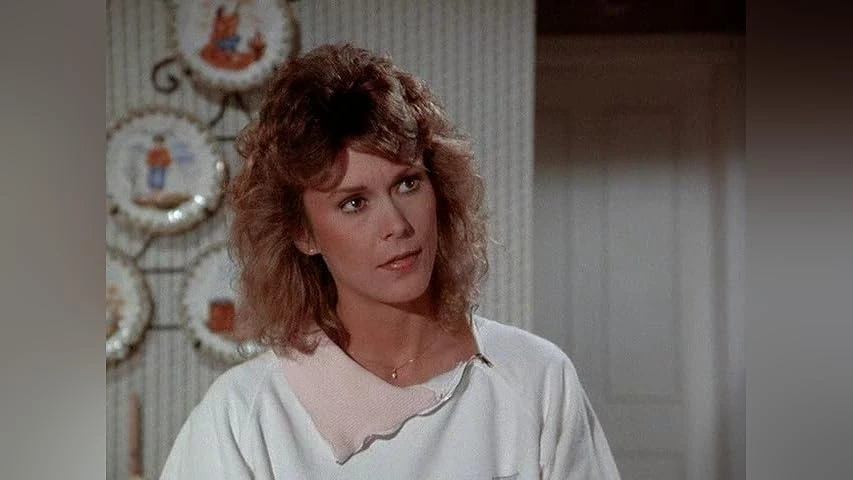
There is an everyday courage in that performance. It is different from the confidence of a person trained to expect danger. Amanda has to choose to proceed with a much clearer view of what she could lose. The series is light enough to remain enjoyable, but that difference stops her involvement from feeling entirely weightless. She has a home to return to, and the viewer wants her to get there.
Jackson was already a familiar television presence through Charlie’s Angels, but Amanda gives that familiarity a different use. Instead of presenting a polished operative from the start, the show lets her intelligence emerge through ordinary conduct. Listening, remembering and refusing to accept a tidy dismissal become action in their own right. I will take that over a character who is repeatedly described as smart and then spends the whole episode waiting for instructions.
Bruce Boxleitner supplies the polished complication
Boxleitner understands that Lee needs enough confidence to be convincing and enough irritation to be funny. A flawless secret agent would have flattened the partnership. Lee’s assurance becomes entertaining when Amanda interrupts it with a question he does not consider relevant, until it turns out to be relevant after all. His job is not merely to look capable. It is to react when capability fails to settle the matter.
The visual contrast does some of the work before either character speaks. Lee looks as though he belongs in the expensive part of an assignment. Amanda can look as though she has been diverted on the way to something entirely different. That mismatch lets the series move between elegance and awkwardness quickly. It can put them in the same room and let the audience enjoy the problem before the plot adds a threat.
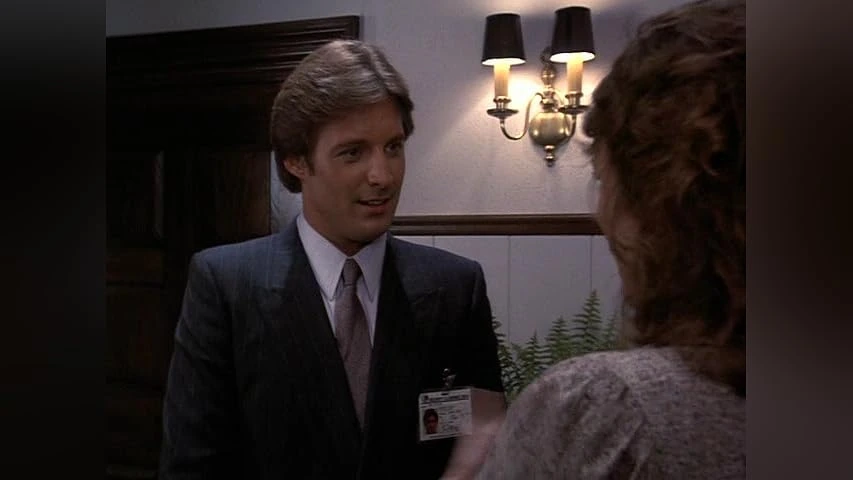
I like Lee most when the performance lets the professional manner slip just enough. Frustration can become concern; concern can become something he is not prepared to name. Boxleitner makes those changes readable without requiring every scene to announce that the relationship has advanced. An expression can do a little work that a speech would have made cumbersome.
He also has to sell why Amanda keeps encountering this world. Lee may resist her involvement, but the show cannot continually demonstrate that she is useless and expect us to believe he returns. Their different strengths need to show up in the assignments. The pleasure is watching him realize that the person disrupting his preferred method may also be the person preventing that method from failing.
The First Time gives the partnership a push
The opening setup is so efficient that it remains easy to remember: Amanda accepts something she does not fully understand and finds herself connected to a man whose work cannot be explained honestly to the people around her. A normal gesture has extraordinary consequences. There is no need for a long speech establishing why an ordinary person might do a decent thing under pressure.
What matters is the chain of responsibility. Once Amanda has helped, walking away becomes harder. She is not involved because a writer has simply declared her adventurous. She has touched a problem with actual people attached to it. That gives Jackson a better starting point than wide-eyed excitement and gives Lee a civilian whose participation means more than curiosity about a handsome stranger.
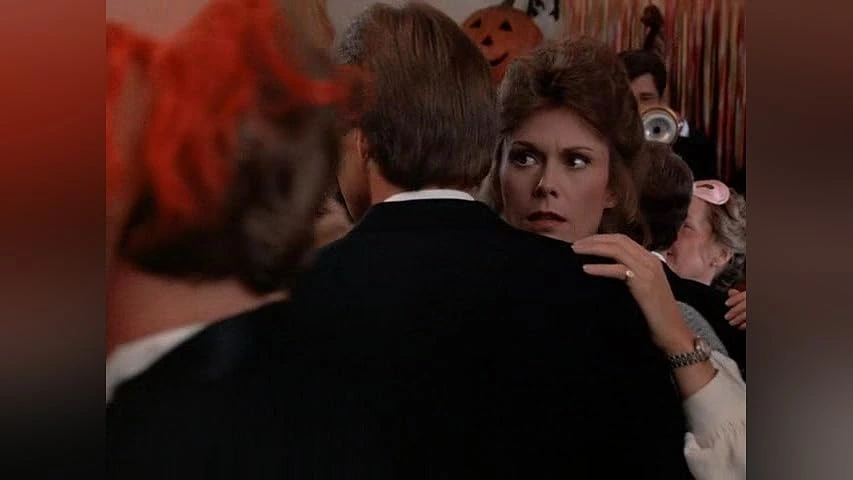
The title also describes the beginning of a habit. Lee’s world will keep intruding, and Amanda’s response will keep exposing the limits of his assumptions. The first encounter plants a rhythm the series can vary: he needs something done, she needs information, the available explanation is inadequate, and both discover that the situation is less manageable than it initially sounded.
For a viewer coming back after decades, I would start here instead of jumping directly to a famous romantic development. The early awkwardness is part of the reward. You can watch the partnership acquire its own language. Later familiarity has more flavor when you have seen the two of them trying to establish who is supposed to be in charge and why that answer keeps becoming less useful.
A home life that refuses to stay off camera
Amanda’s house is not just somewhere to deliver a recap before the next chase. It gives the spy business a competing set of claims. Dotty and the boys do not automatically understand the urgency of a call from Lee. They have their own reasons to want Amanda present, and those reasons do not become foolish just because the audience knows there is a secret assignment in progress.
That is a clever source of tension for a light series. Keeping a secret can be exciting from one angle and inconsiderate from another. Amanda has to manage both. The audience gets to enjoy the cover story while recognizing why a family member might reasonably find it unconvincing. A thin excuse is more amusing when the person hearing it has spent years knowing the speaker.
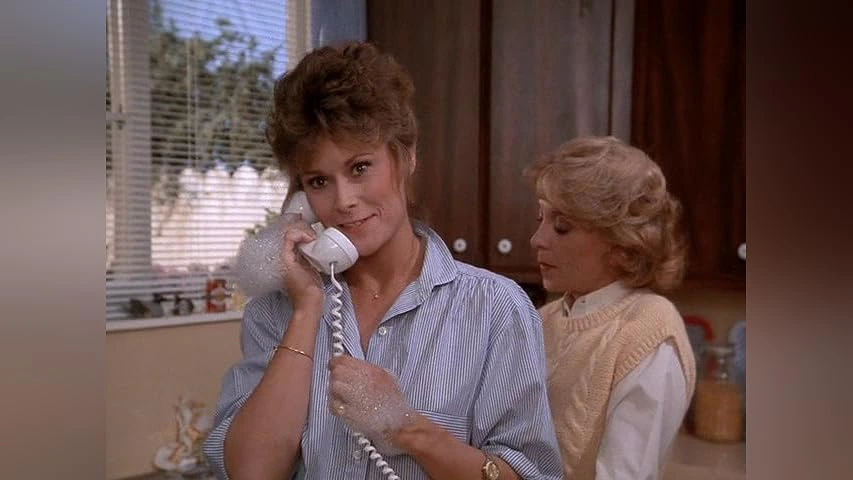
The domestic scenes also change the scale of an episode. An assignment may involve a threat large enough to sound remote. Home brings the concern back to a familiar size: somebody is late, somebody needs an answer, somebody is making a decision without all the information. Those are readable pressures even when the details of the international intrigue have become a tangle.
This is one reason the show belongs beside our look at what watching TV in the eighties actually felt like. You could settle into an adventure without entering a world that had entirely discarded the household watching it. Amanda carried recognizable interruptions into the fantasy. The show let ordinary life be a source of resourcefulness instead of merely a reason to envy the person with the exciting job.
Beverly Garland keeps Dotty one question ahead
Beverly Garland’s Dotty West is an enormous part of the show’s warmth. A mother who exists only to be deceived would become tiresome. Garland gives Dotty an active presence. She has curiosity, timing and the authority of someone who has heard a questionable explanation before. The comedy comes from the gap between what she can know and what she is perfectly capable of noticing.
Dotty also prevents Amanda from being reduced to her relationship with Lee. Amanda is a daughter as well as a mother and a developing colleague. Those roles can pull in different directions. With Garland in the room, a scene can remind us that Amanda’s independence does not erase the close observation that comes with family. There is history behind the questions, even when the immediate problem is played for a laugh.
A smaller performance might have pushed every reaction toward exaggerated suspicion. Garland can make a simple look carry enough. That leaves room for affection. You believe these people share a house and care about each other, rather than merely occupying the set where the script stores its jokes between assignments.
The episode title Fearless Dotty promises a pleasing variation on that arrangement. More broadly, it captures why Garland matters: the older woman is not just furniture beside the telephone. She can be curious, determined and inconveniently involved. I enjoy a series that knows a supporting character has enough life to become part of the trouble, especially when everyone else would prefer that she remain safely uninformed.
Philip and Jamie keep Amanda’s stakes personal
Paul Stout and Greg Morton play Amanda’s sons, Philip and Jamie. Their presence gives a practical meaning to the word mother. It is easy for a television show to give a lead children in a character description and then make them vanish whenever the adventure needs an uninterrupted adult. Here, the family arrangement is part of the premise viewers are asked to enjoy.
The boys do not have to dominate an assignment to affect it. Knowing they exist changes the way Amanda’s choices feel. When she takes a risk, there is a household beyond the immediate scene. When an excuse is needed, she is explaining an absence to people who have a reasonable claim on her time. That background can work quietly without turning every episode into a speech about responsibility.
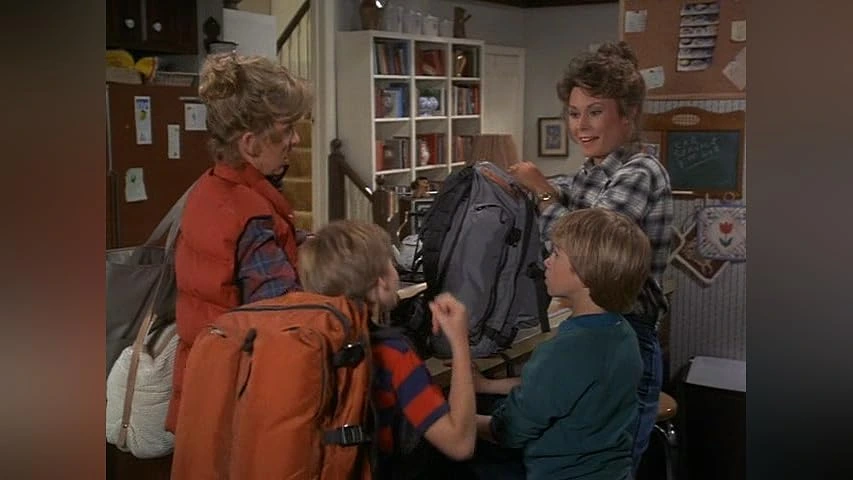
I also like the way children can puncture the glamorous version of a secret life. An operative might be impressive to another operative. At home, an adult can still be the person who has failed to answer a very plain question. The show gets mileage from that difference without needing the boys to become miniature agents or extraordinarily perceptive plot-solving machines.
That balance is easy to undervalue because it looks comfortable. It takes discipline to keep a household present without allowing it to swallow the adventure. The family material works best when it changes Amanda’s decisions and the audience’s feelings about them. Her life matters before the Agency calls. Preserving that idea is more important than giving every family scene a dramatic revelation.
Billy Melrose makes the Agency feel inhabited
Mel Stewart’s Billy Melrose gives the secret organization a human center. A spy series can treat headquarters as an anonymous room where a superior provides instructions and disapproval. Billy offers something more useful to this show: a recurring personality who can see the friction between Lee’s preferred methods and Amanda’s unexpected value.
Stewart has the sort of screen authority that does not need to be continuously reintroduced. That helps a series built around an unusual arrangement. The audience needs to believe someone is responsible for deciding how this civilian involvement is being handled. Billy’s presence supplies a recognizable point of responsibility without forcing the show to imitate a procedural manual.
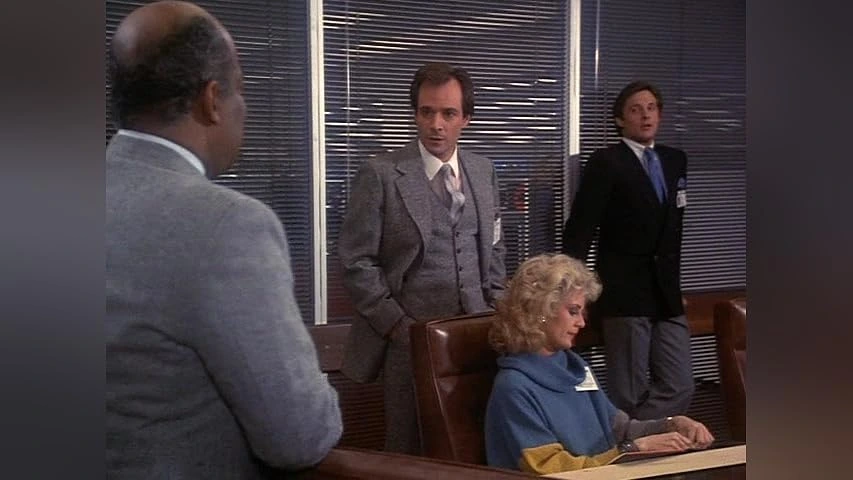
He also adds a third rhythm to scenes that might otherwise settle into a predictable exchange between Amanda and Lee. An outsider’s assessment can alter the argument. What Lee considers an inconvenience may look different from the boss’s chair, and what Amanda considers a reasonable contribution can encounter the limits of an organization she has not grown up inside.
I enjoy the Agency more when it feels like a workplace full of people who have dealt with one another for years. The assignments can be outlandish, but familiar office behavior helps make them playable. Someone has to make a decision, someone resents the decision, and someone else can see exactly why this combination keeps producing trouble. Billy helps hold that everyday structure beneath the spy-show decoration.
Francine is more than the woman rolling her eyes
Martha Smith’s Francine Desmond gives Amanda a professional counterpart whose priorities do not automatically match hers. That is useful. If every person at the Agency immediately recognized Amanda as an extraordinary asset, the series would lose an important source of resistance. An experienced colleague has reasons to question an arrangement that looks peculiar from inside the job.
The temptation is to remember Francine only as the skeptical expression across the room. That reduces the value of having her there. She represents a working world with its own standards and habits. Amanda has stepped into it without the usual background. Their differences can be funny while still making sense from both sides, particularly when social ease and professional polish are being mistaken for the same thing.
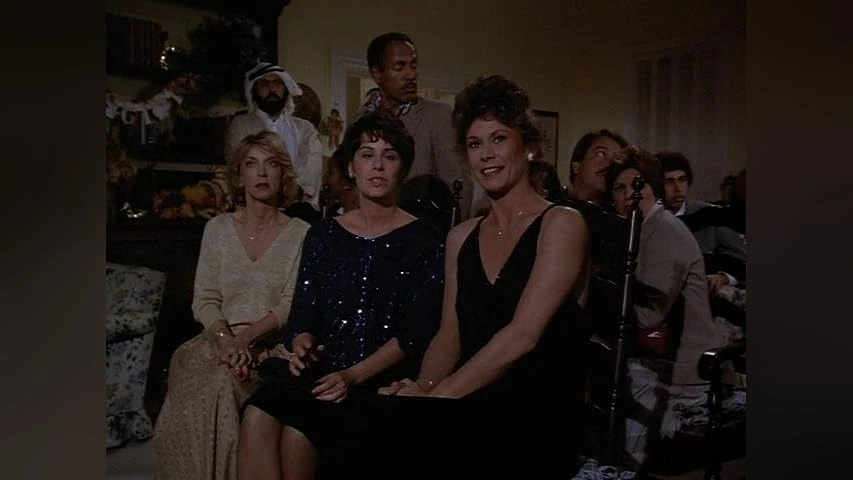
Smith’s presence also stops the female side of the cast from speaking in a single voice. Amanda, Dotty and Francine have different kinds of confidence. The show becomes livelier when those differences remain visible. One woman’s success does not require all the others to behave as though they have never encountered a capable person before.
Dead Ringer plays with Francine’s resemblance to another woman, putting identity itself into the plot. Without giving away its turns, the premise is a reminder that this supporting character can carry intrigue of her own. That matters to the feel of the workplace. A regular deserves the possibility of becoming the center of an episode, rather than appearing only when the lead needs someone to disagree with.
There Goes the Neighborhood makes the disguise familiar
A neighborhood assignment is particularly well suited to this series because the disguise is not some distant fantasy. Amanda and Lee posing as a married couple places them inside a version of ordinary life that Amanda understands better than he does. That immediately unsettles the expected balance. Professional tradecraft cannot answer every question raised by living convincingly among people who are watching.
In There Goes the Neighborhood, the suburban setting is part of the intrigue. The pleasures go beyond pretending to be married. A community has routines, assumptions and ways of noticing when something does not quite fit. Those are useful materials for a story about an operative who may be trained to evade surveillance but still has to pass an ordinary social inspection.
It is also an early opportunity to enjoy the difference between a cover relationship and a developing real one. The audience knows the pose is temporary. The performance can let small moments suggest why the arrangement might not be entirely unpleasant. That is romantic storytelling with an assignment to keep it moving, rather than a plot that pauses until the leads finish looking at one another.
I have a soft spot for this kind of episode because it brings the show’s basic joke into focus. The supposedly safe environment is not safe, and the supposedly inexperienced partner is not useless. You can enjoy the danger while watching Lee discover that Amanda’s everyday knowledge is not a decorative extra. In the right room, it is the skill the assignment needs.
The A.C.M. Kid turns protection into a people problem
A story involving a young computer prodigy gives the series an especially eighties doorway into trouble. Computers could be presented as nearly magical objects, and a child who understood them could become valuable enough to attract adult danger. The A.C.M. Kid uses that territory to put a different kind of vulnerable person at the center of the assignment.
For Amanda, a child is not merely a piece of sensitive equipment with a school schedule. That difference is the interesting part. The trained organization may need to think about information and threats. Amanda’s instincts direct attention toward the person living inside the situation. The series is at its most appealing when both concerns matter instead of allowing kindness to substitute for all practical precautions.
The episode is a useful example of how the show can acknowledge new technology without making Amanda win by suddenly becoming a technical expert. Her contribution does not have to duplicate the child’s or Lee’s. A team becomes interesting when its members notice different things. The civilian can understand fear or stubbornness while somebody else handles a specialized question.
Looking back, I enjoy the period flavor without expecting the machinery to resemble anything on a current desk. That is part of the bargain with an eighties spy adventure. The technology can date dramatically while the human problem remains legible. Adults want something from a child; a decent person notices that the child might also need something from the adults. You do not need an obsolete keyboard to understand the imbalance.
Service Above and Beyond lets the social world turn dangerous
One of the show’s reliable tricks is to place intrigue behind an apparently respectable meeting. Business manners, formal clothing and pleasant conversation can make a dangerous arrangement harder to read. That gives Amanda a useful arena. She may be unfamiliar with espionage, but she is not unfamiliar with listening to what people say and noticing when the explanation fails to match their behavior.
Service Above and Beyond brings that kind of respectable surface into the adventure. The title itself suits a series in which doing a little more than expected can become a very complicated commitment. Amanda’s willingness to help is an asset, but it can also put her closer to a threat than anyone intended.
The larger pleasure is watching social confidence and actual safety pull apart. A person can be perfectly comfortable at a gathering and badly wrong about the business being conducted there. Conversely, someone who feels awkward can be the first to sense that the room deserves closer attention. The show has room for both kinds of mistake, which is more entertaining than treating polish as proof of competence.
This is the territory where Jackson’s reactions are especially useful. Amanda can register the strain of maintaining an appearance while processing new information. The viewer is invited to read her reading the room. That gives a scene movement even before anybody runs, and it is one reason the series can remain engaging when the visible action consists mainly of people making conversation they do not entirely mean.
Saved by the Bells makes the mistaken identity matter
Amanda being mistaken for Scarecrow is a neat reversal of the usual imbalance. The people creating the danger assume they have captured the expert. The audience knows they have taken the person who did not sign up for that professional identity. Suddenly the codename that makes Lee sound intriguing becomes a problem attached to the wrong human being.
It is a premise that puts pressure on both leads. Amanda has to cope with the consequences of somebody else’s reputation, while Lee cannot simply rely on her staying at the edge of the assignment. The misunderstanding changes the shape of the rescue problem and tests what each has learned about the other. That is more satisfying than danger that could have happened to any interchangeable guest character.
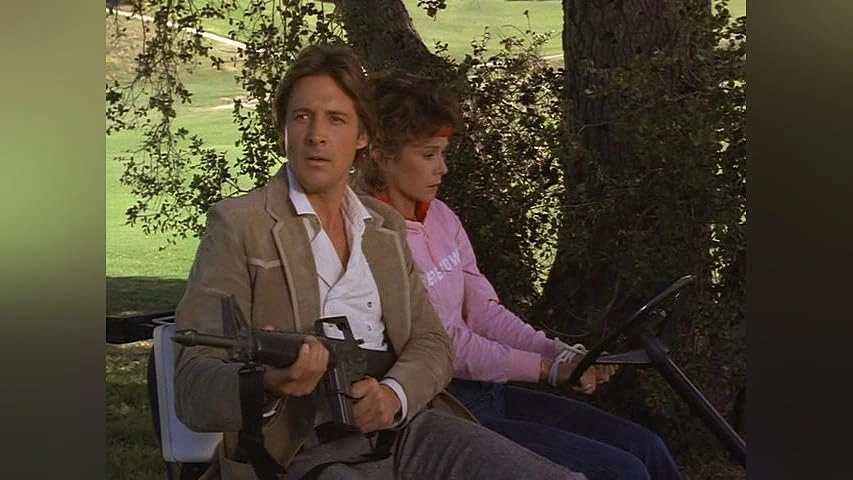
The episode also draws attention to a pleasure running through the whole show: other people do not always recognize who is useful. A captor may value the wrong person for the wrong reason; the Agency may undervalue the right person because she lacks the expected credentials. The series can play these mismatches lightly without losing the basic tension of someone being in real trouble.
I would not turn that into a grand theory of spy fiction. Sometimes a mistaken identity is simply a very good way to get an entertaining hour started. What gives this one extra flavor is our investment in the pair. Lee and Amanda have different resources, but neither is an incidental passenger in the other’s story. An assignment that misnames one of them helps show how much that has come to matter.
The Long Christmas Eve makes room for a quieter feeling
Holiday television could be relentless about demanding that everyone feel something before the final commercial. A Christmas setting works better when it presses on the existing characters instead of merely decorating the set. In this series, the conflict is built in: an assignment can carry people away from precisely the ordinary comforts Amanda usually tries to preserve.
The Long Christmas Eve puts an older spy and the holiday into the same story. That combination gives the adventure a different emotional temperature. A professional life built around secrecy looks different when the season is supposed to be about connection. The premise does not need a body count to make the possibility of being far from home feel consequential.
I like the opportunity it gives the show to slow its pulse. Amanda’s warmth is more useful when it is allowed to affect a person, rather than functioning only as a trait that makes Lee impatient. Holiday episodes can provide that room. A concern that would be rushed through in a chase story can become the thing that lets the audience understand why this partnership is worth returning to.
It also helps separate the show’s charm from the idea that charm means nothing serious is ever present. Loneliness, duty and the cost of a secret life can appear without changing the program into a bleak drama. The series can acknowledge the ache and still send the viewer away feeling that human company matters. That was a perfectly respectable thing for a weekly adventure to offer.
A telephone can do a surprising amount of work
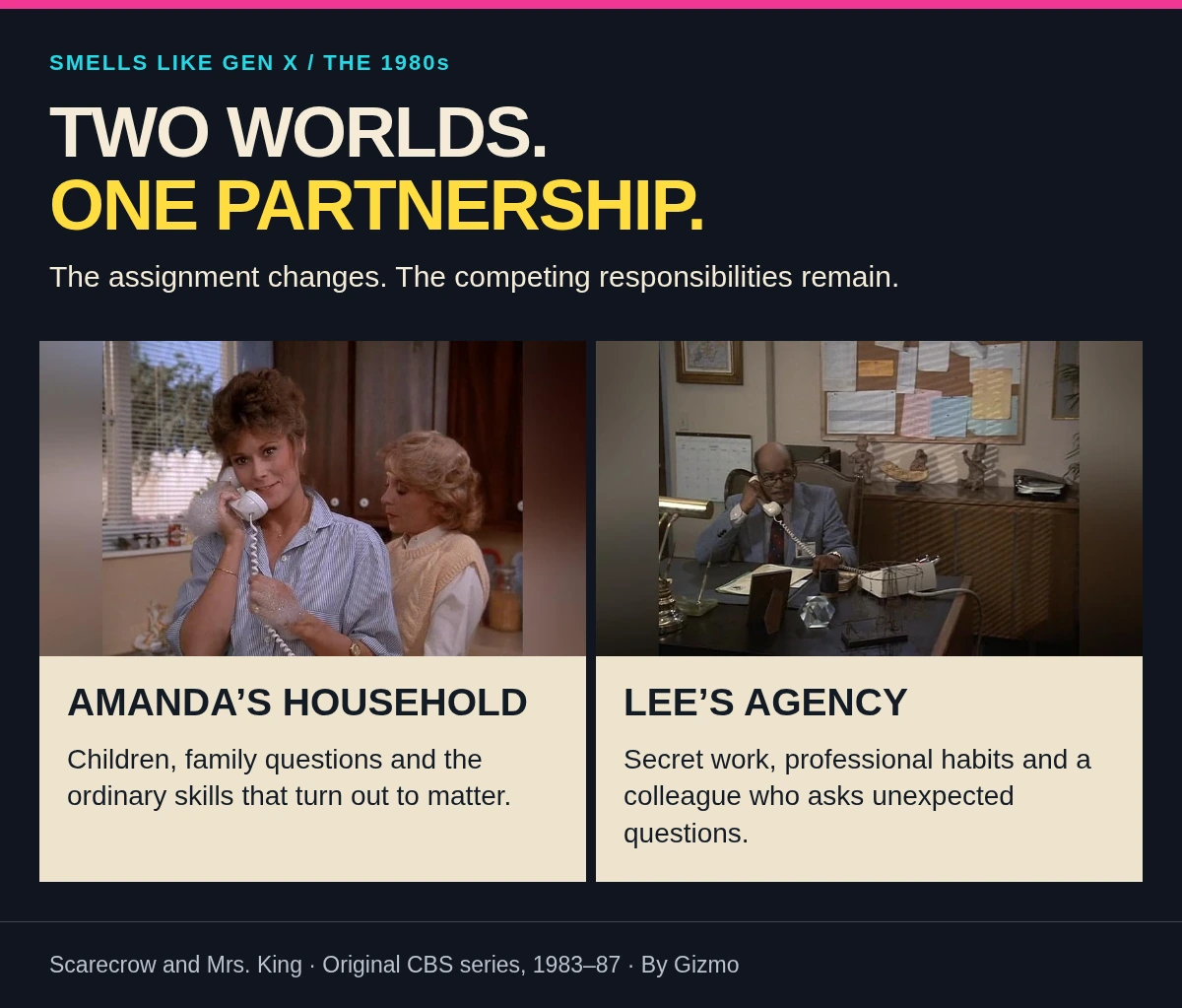
The household telephone is practically a border crossing in Scarecrow and Mrs. King. One ring can connect Amanda’s familiar day to a situation that cannot be described in front of the people standing nearby. The instrument is ordinary; the conversation is not. That simple contrast does a great deal for the show without requiring an expensive gadget to explain it.
A shared telephone also creates a kind of exposure that a modern private screen does not. Someone can be close enough to hear, waiting for the line or wondering why the caller matters. The series belongs to a communications world in which reaching a person often involved reaching a place. Home, office and public location each carried a different set of risks and interruptions.
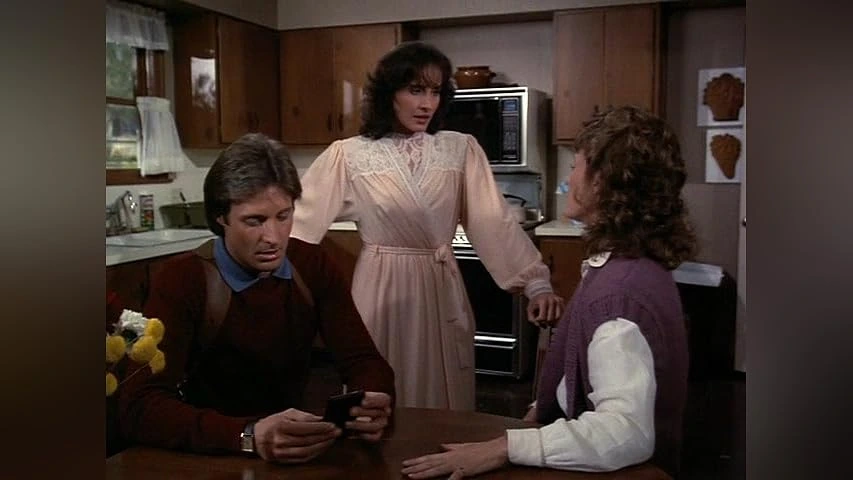
For me, those details are part of the show’s texture. They influence timing. A character cannot assume an update is silently waiting in a pocket. Explanations have to be spoken, and spoken explanations invite witnesses. A call can make a scene funny, change who has information or force Amanda to choose between an honest answer and a workable excuse.
You do not have to pretend the old arrangement was convenient to enjoy what it did for storytelling. Inconvenience is useful when people have secrets. The series turns everyday limits into opportunities for character. Amanda’s life is full of people with perfectly reasonable reasons to ask who called. Lee’s life is full of reasons she cannot give them a perfectly reasonable answer. Somewhere between the two, the next complication arrives.
The clothes tell you which world has taken over
The pleasure of an eighties adventure is partly visual, and this show gets mileage from switching environments without needing every scene to look equally glamorous. An evening assignment and an ordinary room at Amanda’s house should not feel identical. The contrast helps the viewer experience the distance she has crossed, even when the episode moves between those places quickly.
Lee’s polish fits the fantasy. He can look as though a formal gathering is an extension of his office. Amanda’s clothes are more variable because her role is more variable. Sometimes she needs to pass unnoticed; sometimes she has to be someone she does not feel entirely comfortable playing. Jackson can let the character’s self-consciousness show without making the audience doubt the actress.
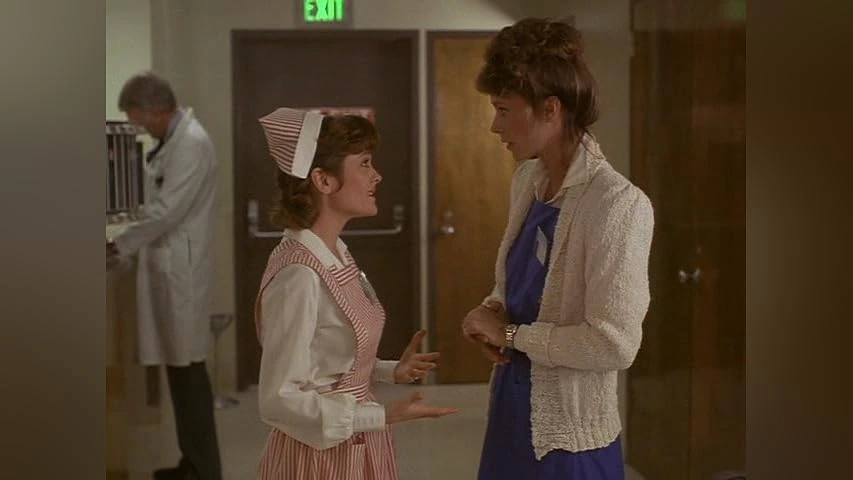
I enjoy those wardrobe changes as part of the assignment rather than a fashion parade detached from it. A disguise is a promise that the wearer can sustain an appearance. The funny part is the possibility that a very ordinary question will expose the gap. The tense part is the possibility that the wrong person will ask that question at exactly the wrong time.
The home scenes make the dressier material more effective. If every room were a grand ballroom, Amanda’s excursion into one would mean less. Familiar surroundings reset the scale. They remind us that the person in the elegant outfit still has another version of herself waiting at home, along with people who might be curious about where the outfit was required. Glamour becomes an interruption with consequences.
Washington gives the fantasy a recognizable address
The Washington-area setting makes sense for a story about an organization with secrets. The presence of official business gives the imagination somewhere to put Lee’s assignments. Amanda’s Arlington home life sits close enough to that world for the collision to feel inviting, while remaining different enough to create a contrast between the public machinery and the private household.
The show does not require the viewer to understand the actual structure of intelligence work. Its Agency belongs to the program’s adventure world. That distinction is worth remembering on a rewatch, especially if you arrive expecting the detail of a modern espionage procedural. The point is not to learn how a real office approves an operation. The point is to see what this improbable pair will do when the operation becomes awkward.
A recognizable address can still give a light series useful weight. It suggests a larger world beyond the immediate villain and the current guest cast. There are people with titles, interests and professional habits that Amanda has to navigate. She is not simply wandering through a succession of unrelated costume parties. Her life has become entangled with a continuing workplace.
I think that continuity matters more than technical accuracy to the pleasure of this particular show. You want to recognize the people she will encounter when she goes back to the Agency. You want the house to feel like home when she returns. Between those two places, the adventure has a shape. The details can be fanciful while the movement between competing obligations remains familiar.
The romance grows out of having to work together
The attraction between Amanda and Lee is a reason to watch, but it works best because the series gives them things to do. Admiration can develop from competence. Concern can emerge from an assignment that has gone wrong. Irritation can linger after a dangerous moment because the person who frightened you is also the person who ignored your advice five minutes earlier.
That combination keeps the relationship from becoming a set of interchangeable meaningful looks. The looks have a job behind them. Lee has to revise his idea of Amanda; Amanda has to decide how much faith to place in Lee. A viewer can enjoy the flirtation and still have an opinion about how they handled the practical problem. That is a sturdy foundation for a weekly romantic adventure.
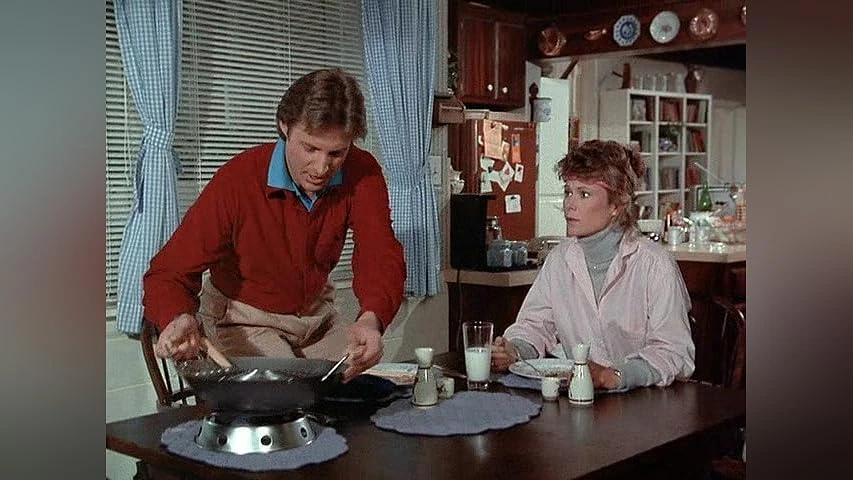
The comparison with Remington Steele is useful because the two shows put competence and attraction into different arrangements. Laura Holt begins as the professional whose invented boss becomes inconveniently real. Amanda begins outside the profession and earns a place through the contribution others failed to anticipate. Both setups let the audience enjoy a man discovering that charm does not settle the question of who is right.
My preference is for the moments when affection is visible in conduct. Listening instead of dismissing, adjusting a plan or registering that someone is missing can say more than a polished speech. The series has room for overt romance, but its more everyday exchanges help sell why these two would keep returning to one another even if the current assignment did not require it.
A later development, for readers who want the spoiler
The relationship does move beyond the initial will-they-or-won’t-they arrangement. In the fourth season, Lee and Amanda marry in Do You Take This Spy? If you are watching the series fresh and prefer to experience that development without preparation, this is the point to skip ahead to the next section. The basic appeal of the early episodes does not require knowing the destination.
What interests me about that destination is how it changes the question. Once a romance has been acknowledged, the show cannot rely on uncertainty alone to generate feeling. It has to draw on what the viewer already knows about the people involved. Amanda’s family, Lee’s work and the history of their partnership make commitment more complicated than a decorative final kiss.
I am not convinced a television couple becomes less interesting simply because they stop postponing a decision. The difficult part is giving them a life after the postponement. With these characters, there is material already present. They have competing obligations, different instincts and an established way of making each other’s professional day less straightforward. Those things do not automatically vanish because a relationship has acquired a name.
Looking back, I value the early development more when I remember that it was allowed to go somewhere. There is pleasure in the delay, certainly, but there is also pleasure in a show acknowledging that trust and affection have accumulated. The journey remains the larger reason to watch. Knowing the eventual milestone should not reduce four seasons to a checklist with a wedding at the bottom.
The secret is funny because someone else has a point
A cover story is most entertaining when the person questioning it is not an idiot. That is a valuable rule for this series. Dotty does not need the audience’s information to recognize an odd absence. A colleague does not need to dislike Amanda to wonder why she has been included. The tension improves when the objection is reasonable and the secret prevents a complete answer.
The same goes for Lee’s impatience. He can be wrong about Amanda without being wrong that an assignment is dangerous. Amanda can be right to help without being right about every choice she makes while helping. Letting both positions contain some truth gives the banter a little resistance. Otherwise, the show would settle into a lecture delivered to a man who never learns.
I enjoy that kind of television disagreement because it invites the viewer to shift allegiance inside a scene. You can laugh at the excuse and sympathize with the person forced to invent it. You can want Amanda to insist on being heard while wishing she had asked one more question before becoming involved. The characters remain pleasant company without needing to be permanently correct.
That is also why the secret has more life than a single running gag. It changes depending on who is present and what Amanda owes them. An Agency colleague and a family member do not have the same claim to an explanation. The show keeps moving across that difference. The information is the same; the human obligation attached to it is not.
Where the light touch helps, and where it shows its age
The series makes a clear bargain with its audience. It will provide danger, but it usually wants you to enjoy the company through the danger. That helps the romantic comedy and the home life sit beside espionage. You do not need to spend the evening bracing for the program to punish you for liking a supporting character.
The cost is that some threats can feel tidier than the setup deserves. A weekly adventure has limited time to introduce a problem, complicate the partnership and restore enough order for the household to continue. When the machinery becomes visible, you can feel a story hurrying to clear the table. A fond rewatch does not require pretending that every plot is equally elegant.
Some attitudes and villain shorthand also belong unmistakably to the period. The Cold War supplied convenient suspicion, and television often used national identity as a faster clue than a well-developed motive. I find the show more rewarding when I notice that limitation instead of treating every old convention as automatically charming. Affection and discernment can share a couch.
What survives best is specific behavior. Jackson listening, Garland measuring an answer, Stewart taking charge, Smith registering doubt and Boxleitner trying to recover control do not depend entirely on the current threat feeling plausible. Those are the pieces that turn a dated premise into enjoyable company. The show has an era stamped across it, but the actors keep the stamp from becoming the only interesting thing in the picture.
How it sits among the decade’s detective partnerships
Scarecrow and Mrs. King shares a family resemblance with the detective and private-eye shows of the eighties, even though its assignments belong to espionage. The central pleasure is still people solving a problem together while negotiating how they feel about one another. The threat gives the hour movement; the partnership gives viewers a reason to choose this hour over another one.
Set it beside Hart to Hart and the difference is immediate. Jonathan and Jennifer begin with an established marriage and the resources to wander into trouble together. Amanda and Lee begin with separate lives and a working arrangement that keeps challenging its own logic. One show offers the pleasure of a confident team; the other gets mileage from the team taking shape.
The comparison with Moonlighting points in another direction. That series would make verbal combat and formal mischief part of its signature. Scarecrow and Mrs. King tends to protect a gentler center. Its humor often depends on an ordinary person trying to handle an extraordinary interruption without dropping every other obligation in her life.
None of those approaches cancels the others. The decade had room for different kinds of company. I would not choose this show when I wanted the bleakest investigation or the most elaborate puzzle. I would choose it when I wanted adventure with warmth, an attractive partnership and a home life that made the return from danger feel like part of the reward.
When helping becomes the dangerous part
Savior gives the series a particularly direct version of its favorite problem: an apparently helpful act can carry a danger the helper has not been told about. Amanda’s involvement in transporting a live bomb makes the gap between intention and knowledge concrete. It is one thing to agree that a secret job is risky. It is another to discover that the risk was sitting much closer than the explanation suggested.
That premise interests me because it puts the audience in an uncomfortable position. We want Amanda to keep helping; her willingness is part of why we like her. We also want the people around her to take that willingness seriously enough to protect it. A kind character should not become an inexhaustible supply of convenient favors. The danger exposes what is wrong with treating somebody’s good nature as though it were consent to every possible consequence.
The light adventure format can make that concern entertaining without turning it into a courtroom argument. You can enjoy the suspense of the object, the movement and the narrowing time while noticing the strain on the partnership. The threat has a practical shape. So does the question of trust. What did Amanda understand, and what would she reasonably have wanted to know before agreeing?
I find stories like this useful on a rewatch because they complicate the cozy version of the series. Amanda’s warmth does not make her bulletproof, and Lee’s affection does not make every decision wise. The show needs the possibility that their arrangement can go wrong in ways that matter. Otherwise the repeated claim that this is dangerous work would become background music with no effect on how anybody behaves.
The workplace can be the source of the threat
The Mole moves suspicion inside the Agency. That changes the atmosphere in a useful way. A recurring headquarters is normally a place where the viewer can relax a little: the leads are back among familiar people, information is being gathered and somebody with authority is taking an interest. A possible traitor makes that familiar setting harder to read.
For a show with such a strong home-and-work contrast, an internal threat also shifts Amanda’s position. Being outside the professional circle can be a disadvantage, but it means she does not share every established assumption. The interesting question is not whether an amateur automatically sees what experts cannot. It is whether a different point of view can notice something that familiarity has made easier to overlook.
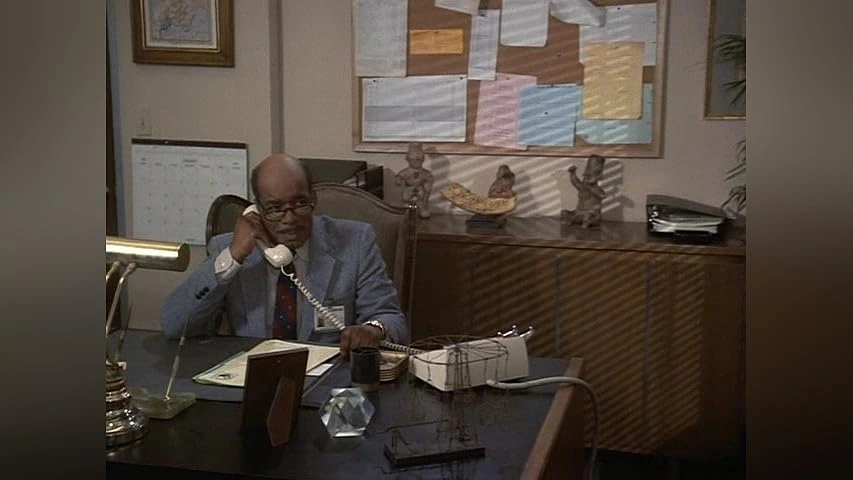
That is a more satisfying possibility than giving the civilian a miraculous answer. Suspicion works when it changes how ordinary behavior looks. A private conversation, an omitted explanation or an unusual request can acquire a new meaning once the group knows there may be a leak. The series already spends a good deal of time on people saying less than they know. An internal mystery gives that habit a sharper edge.
It also reminds us that the supporting office is worth caring about. Billy and Francine are not useful only as familiar faces waiting between adventures. The organization around them can become part of the problem. I like an established setting that can occasionally lose its reassuring quality. You appreciate the return to normal more when normal has been made uncertain, even in a program whose usual aim is to send everyone home in one piece.
Losing the answer Amanda cannot remember
The first-season title I Am Not Now, Nor Have I Ever Been…a Spy leans into the absurdity of Amanda’s position. Its amnesia premise creates a cruel variation on the information problem: the person who matters to the investigation cannot simply provide what is needed. The usual difficulty of explaining her involvement becomes the difficulty of recovering it.
Amnesia is one of television’s well-used tools, and I would not pretend otherwise. The device can become a shortcut that allows a writer to withhold something without building a more convincing obstacle. What gives it potential here is the character attached to it. Amanda’s identity has been stretched between a household that knows one version of her and a workplace discovering another. Interrupting her access to that experience makes the split more than a clever excuse.
It is also a chance to consider how much the partnership now relies on her. Early in the series, Amanda can be treated as an unexpected complication. Put essential information in her keeping and the balance changes. The professionals cannot complete the task merely by asking her to step aside. Her experience is part of the case, and recovering it requires attention to the person carrying it.
For me, that is the test of a familiar television premise. I do not need the basic device to be new if it reveals something particular about these characters. A lost memory can be generic. A lost memory inside this divided life has a more specific emotional use. The hour becomes interesting to the extent that it makes the regular relationship matter, rather than borrowing a temporary problem that could have been dropped into any show with a telephone and a guest villain.
A good way to settle back into the show
Begin with the first meeting, then give the early episodes enough room to establish the house and the Agency. The premise is easy to summarize, but the supporting cast is a large part of why it becomes comfortable. Jumping straight to a major relationship episode can deliver a milestone while skipping the ordinary exchanges that made people care about reaching it.
For an early sampling, I would pair the opening with There Goes the Neighborhood. The contrast puts the central arrangement into focus: a civilian drawn into the professional world, then a professional asked to function inside a familiar-looking domestic cover. The settings differ, but the interesting question remains who understands the current situation best.
The Long Christmas Eve offers a different taste of the show’s range. It is useful to see the warmth doing more than making a chase pleasant. After that, follow whichever supporting character has caught your attention. A series with a household and a workplace gives you several ways to enjoy a return visit. Not every night has to revolve around the exact point at which the leads’ relationship stands.
I would also resist grading every old episode against a memory polished by forty years. Memory edits out the routine scenes and keeps the spark. A rewatch restores the routine, and that can be pleasurable in its own way. The pause before an explanation, the familiar room and the face waiting at the other end of a telephone are part of what made the spark feel like it belonged to an ongoing life.

The reason I still want Amanda to answer the phone
Scarecrow and Mrs. King is built around a flattering idea, but not the most obvious one. It does not merely suggest that an ordinary person might be invited into a glamorous world. It suggests that the glamorous world could need something the ordinary person already knows. Amanda is not valuable only after she becomes less like herself.
That is why the home scenes matter so much to me. They preserve the qualities the adventure depends on. A character who spends time managing a household, listening to people and noticing small inconsistencies has resources that do not arrive with a professional badge. The show is at its best when it recognizes those resources without pretending they make training unnecessary.
Lee gets something out of that arrangement beyond a helpful civilian. His competence becomes more interesting when he has to share the frame with another kind of competence. Amanda gets more than an exciting interruption. She gains a place where her observations can change what happens. The romance grows in that exchange, which gives it a stronger foundation than attraction alone.
And then Garland has a question, the boys need something, Billy expects an answer, Francine has an expression ready and the telephone rings again. That is the show I remember with affection: not just secret agents and a developing romance, but the comic difficulty of keeping an entire life running while somebody with excellent hair insists that this next favor will be simple.
Questions people still ask about Scarecrow and Mrs. King
When did the original series air?
Scarecrow and Mrs. King ran on CBS from 1983 to 1987. It belongs squarely to the decade’s network adventure television, with an ongoing romantic partnership inside largely self-contained assignments. If you are returning after a long gap, the first season is the clearest introduction to Amanda’s home, Lee’s workplace and the friction between them.
Who played Amanda King and Lee Stetson?
Kate Jackson played Amanda King, and Bruce Boxleitner played Lee Stetson, whose operative name was Scarecrow. Beverly Garland played Amanda’s mother, Dotty West. Mel Stewart was Billy Melrose, and Martha Smith was Francine Desmond. The supporting characters are a large part of the series’ personality, so it is worth watching beyond the scenes centered on the leads.
Was Amanda already a trained spy when the show began?
No. Amanda begins as a civilian mother whose unexpected involvement brings her into contact with Lee’s work. Her value comes partly from skills she already possesses, including observation and dealing with people. The series develops her place in the work over time; it does not begin with two equally experienced professional operatives pretending otherwise.
Do Lee and Amanda eventually marry?
Yes. The fourth-season episode Do You Take This Spy? brings that development. Viewers who want to avoid relationship spoilers can simply start at the beginning and let the partnership unfold. The early appeal includes the process of earning trust, revising first impressions and discovering that the other person offers something more useful than an attractive distraction.
Is Scarecrow the character’s real name?
No. Scarecrow is Lee Stetson’s operative name. Bruce Boxleitner plays Lee; the title pairs his secret identity with Amanda’s everyday one. That contrast is a compact version of the whole premise: an established spy and a woman whose ordinary life keeps accompanying her into the extraordinary business.