Quantum Leap's 1989 Debut: The Sci-Fi Show With a Human Heart
A physicist lost in other people’s lives. One gloriously inconvenient friend. A new reason to care every week.
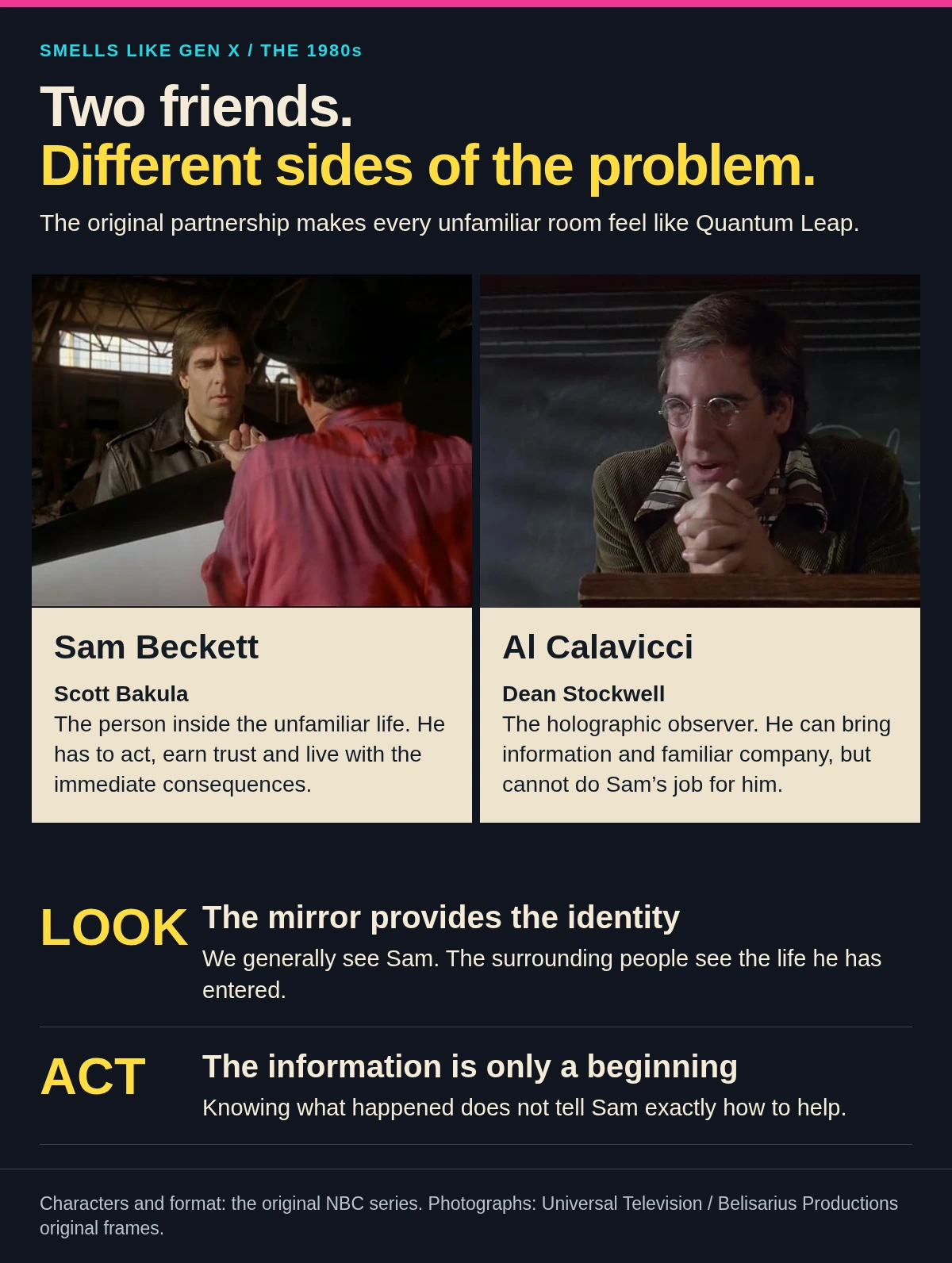
Sam had to live inside the problem. Al could visit, argue and disappear through the wall.
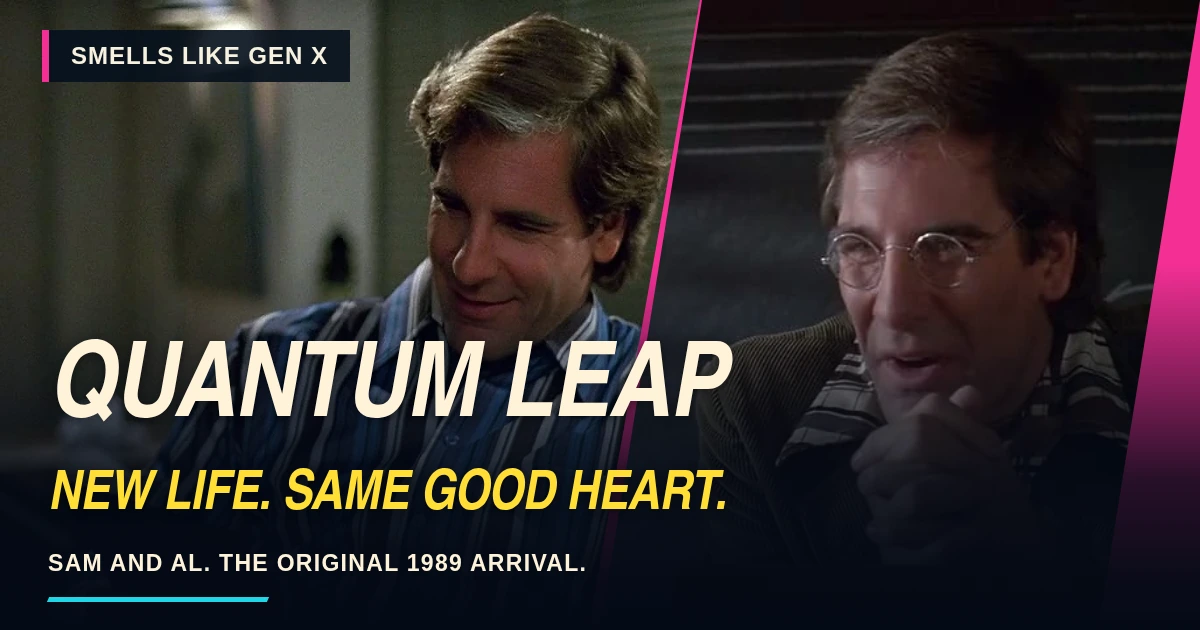
A man looked into a mirror and somebody else’s face looked back. That was enough to make you put down whatever you were doing. The real trick came afterward: Quantum Leap could take that wonderfully ridiculous situation and make you care about a person whose name you had only learned ten minutes earlier.
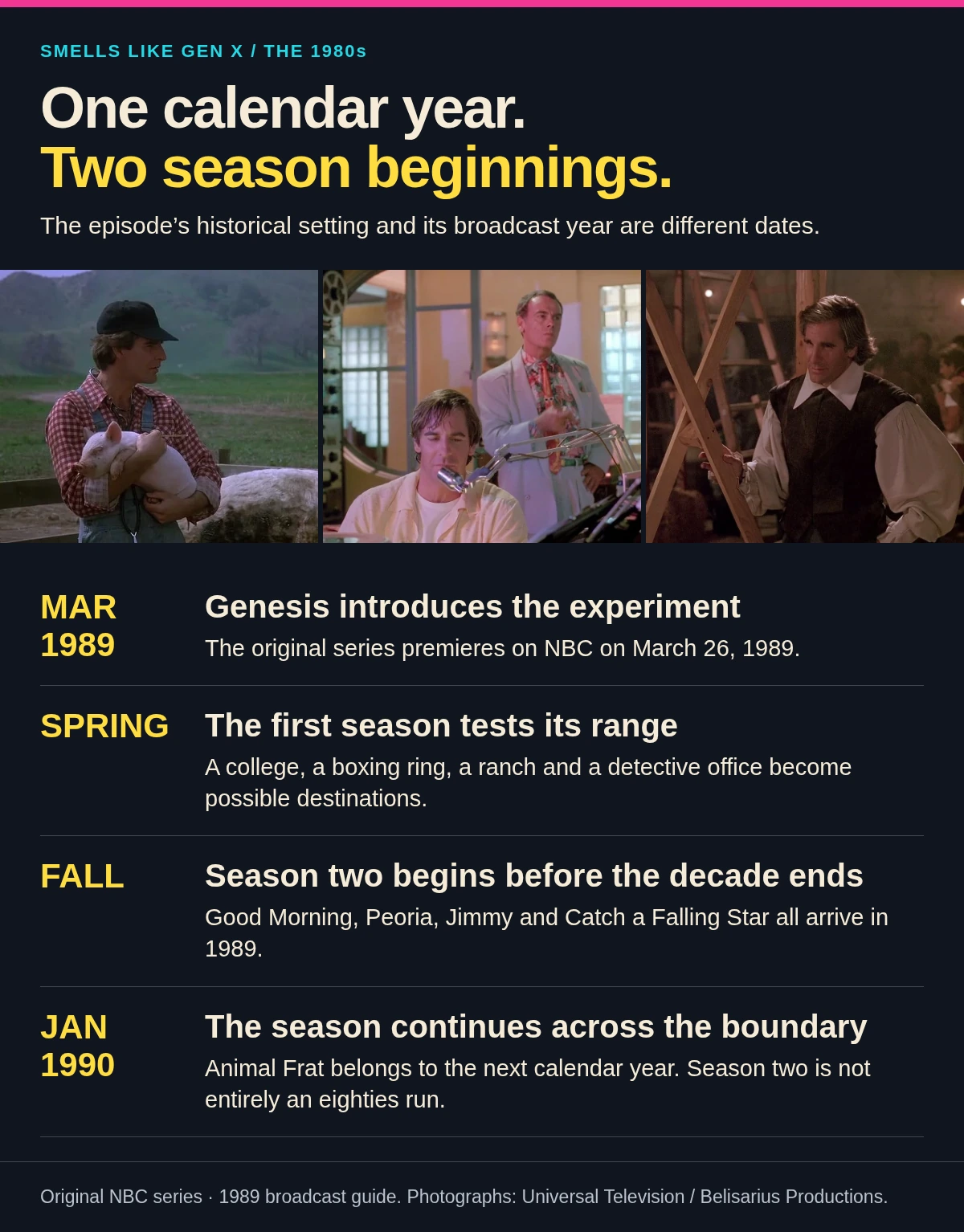
When the original series arrived on NBC in 1989, Scott Bakula’s Sam Beckett wasn’t captaining a spaceship or patrolling a future city. He was lost. Dean Stockwell’s Al could visit, provide some information, deliver a questionable observation about a woman and then disappear through a door nobody else could see. Sam still had to deal with the room he was standing in.
I love that arrangement. The extraordinary machinery stayed mostly out of reach, while the immediate problem could involve a family, a job, a marriage or somebody being treated like they didn’t count. You came for time travel. You stayed because leaving the person in trouble felt impossible.
This is a return to that first calendar year: the spring debut and the episodes that followed in the fall of 1989. There are more famous adventures ahead in the show’s later seasons. Before all that history accumulated, Quantum Leap had already found its most useful question: what could change if one person, arriving at exactly the wrong moment, decided to help?
Inside This Article
- A March Arrival With an Unusual Invitation
- Genesis Starts With Confusion Before It Offers an Explanation
- Scott Bakula Makes an Impossible Job Look Like Work
- Dean Stockwell Brings the Necessary Interruption
- The Mirror Explains What a Lecture Would Ruin
- The Rules Leave Sam With Something He Cannot Delegate
- Star-Crossed Lets the Mission Become Personal Immediately
- The Right Hand of God Puts the Body in the Problem
- How the Tess Was Won Gives Romance Mud on Its Boots
- The Color of Truth Makes the Social Rules Dangerous
- Camikazi Kid Finds the Threat Under the Car Culture
- Play It Again, Seymour Lets Sam Borrow a Detective Story
- Blind Faith Gives the Audience Information the Room Cannot Use
- The People Writing the Leaps Deserve a Place in the Memory
- The Fall of 1989 Expands the Available Lives
- Good Morning, Peoria Understands Why a Radio Station Matters
- Jimmy Makes an Ordinary Job the Thing at Stake
- Catch a Falling Star Lets Bakula Use the Whole Stage
- Clothes, Rooms and Music Make the Dates Feel Occupied
- The Show Could Be Corny, and Sometimes It Earned It
- History Is the Setting, Not a Permission Slip
- NBC Had Found a Way to Change the Entire Set Without Losing the Friends
- Waiting a Week Was Part of the Contraption
- A Useful First-Year Route Back Into the Series
- The Person Who Has to Live With the Change
- Why the First Year Still Has a Human Heart
- Questions About Quantum Leap's 1989 Debut
A March Arrival With an Unusual Invitation
The original Quantum Leap premiered on NBC on March 26, 1989. Donald P. Bellisario created the series, and Bakula and Stockwell supplied the partnership that made its unusual rules feel worth learning. The original run would continue into 1993, but the beginning belongs to the last year of the eighties.
That matters because memory tends to compress a television show into one big pile. An episode first broadcast in 1992 sits beside something from the pilot, and suddenly the whole thing feels like it was there from day one. In 1989 we were meeting the idea before years of mythology, returning characters and arguments about the ending had gathered around it.
The opening offer was accessible even if you weren’t usually a science-fiction viewer. Sam had participated in a time-travel experiment and wound up in another person’s life. He didn’t know enough about his situation. A visitor named Al knew more, although never quite as much as Sam needed. Getting something right in this unfamiliar life might allow Sam to move on. Getting home remained the hope.
That’s a television premise you can explain across a couch during a commercial. It also leaves enough unanswered to support a series. Who decides where he goes? What exactly must change? How much should he trust the information? The show didn’t need to settle every question before giving Sam somebody worth worrying about.
Look at the wider television world of 1989 and the arrival feels particularly welcome. Prime time already offered plenty of familiar homes and workplaces. Quantum Leap could borrow almost any of them, arrive in a different decade and ask what the place looked like from the least comfortable seat.
Genesis Starts With Confusion Before It Offers an Explanation
The premiere places Sam in 1956, occupying the life of an Air Force test pilot. The title’s date belongs to the story he enters; the broadcast belongs to 1989. It’s a useful distinction with a show whose episode listings are full of dates that can look like release information when they aren’t.
Sam’s first problem is basic: other people expect him to know who he is. They recognize a husband, a father and a pilot. He recognizes almost none of the obligations attached to those identities. Even ordinary conversation becomes a test. An answer that seems harmless to him may sound bizarre to somebody who has known this man for years.
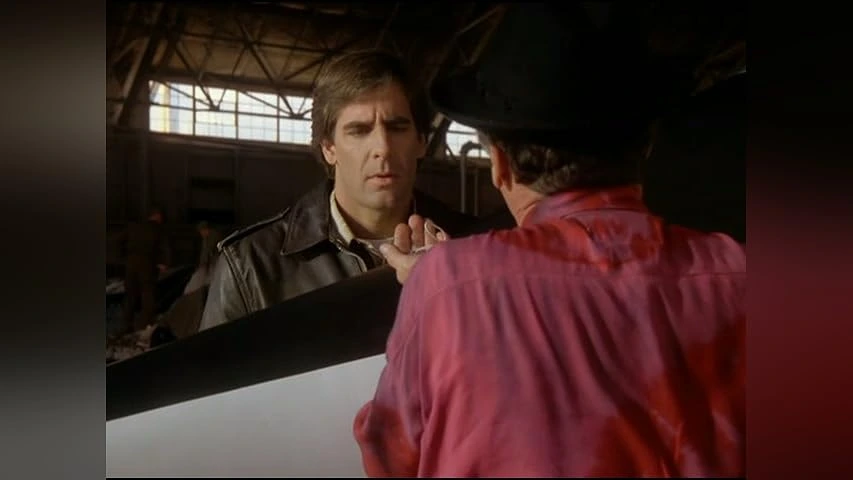
That is a clever way to introduce a complicated premise. Instead of sitting us in a laboratory for an hour of explanation, Genesis makes confusion something we experience alongside the leading man. Bakula has to convey intelligence without competence in the specific situation. Sam can be a brilliant scientist and still be dangerously unprepared for the aircraft people expect him to fly.
The family setting matters as much as the flying. A pregnant wife and a child are attached to this life. The mystery isn’t merely a puzzle about how Sam arrived. People with expectations and vulnerabilities already exist on the other side of it. His escape cannot be the only thing that counts.
The premiere also establishes a contrast the series will keep using: an enormous scientific mistake creates an intimate human obligation. The experiment has gone spectacularly wrong, yet the next necessary action may be listening carefully to somebody in a house. That change in scale is the show’s secret weapon. The universe can be confusing. The person directly in front of Sam is harder to dismiss.
Scott Bakula Makes an Impossible Job Look Like Work
A different lead actor might have made Sam a clever tourist collecting costumes. Bakula plays the inconvenience. Sam has to answer to unfamiliar names, accept somebody else’s circumstances and figure out what his new situation requires while people are watching him do it. He seldom gets the luxury of preparing privately.
The performance needs several things at once. Sam must remain recognizable enough to carry the series, yet the weekly setting has to affect him. He can be funny without treating the guest characters as props. He can become angry without losing the fundamental decency that makes us trust him. He can admit fear without seeming incapable of acting.
Bakula’s physical adaptability helps. A boxer cannot move through a room exactly like a radio announcer, and a teenager’s social predicament isn’t the same as an adult professional’s. The show asks us to accept a large imaginative jump; small differences in posture, rhythm and confidence help make the landing.
The most useful quality is his willingness to look embarrassed. Sam regularly doesn’t know the expected behavior, and Bakula allows us to see the instant when he realizes it. That expression makes the science-fiction machinery approachable. Plenty of us understood being handed a responsibility before we’d figured out how to handle it. We just didn’t usually discover the assignment in a mirror.
This was a leading role built around responsiveness. The hero couldn’t rely on an established reputation to win every room, because the reputation often belonged to the person he was replacing. He had to earn trust inside the hour. That’s why the concern works for me: Bakula lets us watch Sam build a relationship instead of simply arrive with the moral authority of a star.
Dean Stockwell Brings the Necessary Interruption
Al Calavicci is the person who can enter Sam’s predicament without quite belonging to it. Stockwell makes that privilege wonderfully untidy. Al can supply information, complain about the situation, interrupt at an awkward moment and look as if he dressed for an entirely different program. He is support, disruption and familiar company in one visitor.
His relationship to the scene is a built-in joke. Sam has to respond to somebody other people generally can’t see. Al can comment with a freedom Sam doesn’t have, because Sam is the one who must explain the resulting behavior to the room. A conversation between two friends becomes, to everybody else, a man apparently talking to himself.
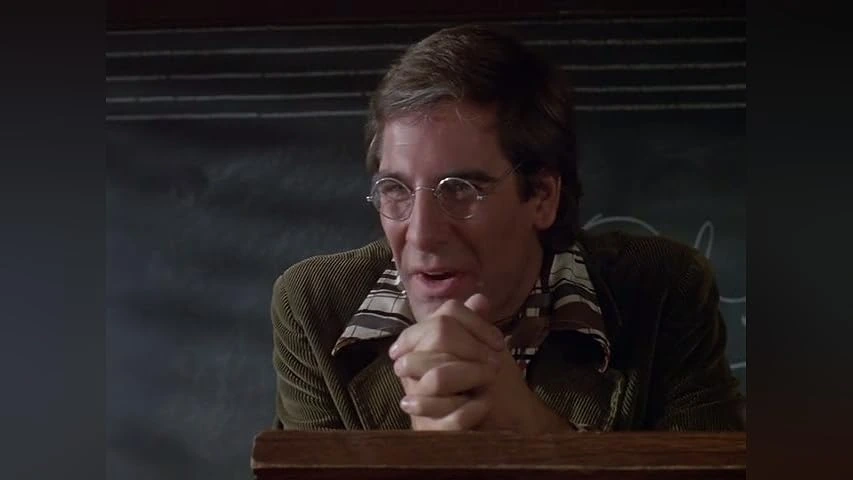
But Stockwell doesn’t play Al as a disposable gag delivery system. There’s wear in the personality. The confidence and appetites coexist with concern, and the show can lower the volume on his jokes when the situation requires it. We believe he wants Sam back. We also believe he has a whole life Sam can only catch in fragments.
That makes their disagreement useful. Al’s practical reading of an assignment and Sam’s emotional reading aren’t always identical. The friend with the information isn’t automatically the friend with the right answer. A computer can supply an outcome; it can’t necessarily explain the person standing in front of Sam.
The pairing has some of the appeal of the mismatched friendships running through eighties television, but its logistics are uniquely inconvenient. One friend can leave through a glowing opening. The other remains in somebody else’s clothes, responsible for whatever happens next. Stockwell understands exactly how funny that is, and when it stops being funny.
The Mirror Explains What a Lecture Would Ruin
The reflection is one of the simplest and strongest pieces of television storytelling in the series. We usually see Bakula. The people around Sam see the person whose life he has entered. A mirror gives the audience a brief view of that other identity, then the story keeps moving.
You don’t need a diagram to understand the difference. The shot supplies it. Afterward, a familiar face can carry our investment while the surrounding reactions remind us that Sam isn’t being received as himself. The visual economy is excellent: one look can do the work of several paragraphs of explanation.
It also creates an interesting discomfort. Sam’s sense of himself doesn’t match the social position he’s been given. A room that would welcome one person may threaten another. A gesture Sam thinks is ordinary may carry consequences he hasn’t anticipated. The mirror turns identity into something more consequential than a wardrobe change.
The trick has limits, and the series is worth discussing honestly about them. Seeing Bakula through most of a story means the perspective remains attached to its continuing white male protagonist, even when he enters a life very different from his own. A sympathetic premise doesn’t automatically give a television episode complete access to somebody else’s experience.
Still, the device asks a useful question of the viewer. How much of the treatment a person receives depends on something other than what they intend? Sam can enter with decent intentions and immediately discover that intentions don’t control the rules of the room. That is a much richer use of the mirror than simply letting us admire a special effect.
The Rules Leave Sam With Something He Cannot Delegate
Al’s hand-held device, the information associated with Ziggy and the language of probabilities give Quantum Leap its recognizable equipment. They’re useful because they establish a problem without doing the job. Sam can receive a warning about what happened in the original course of events. He still has to decide how to intervene.
The distinction prevents the show from becoming a weekly delivery service for computer answers. Information can be incomplete. Sam can misunderstand its meaning. An apparent objective can sit inside a larger situation that deserves attention. The machinery points; it doesn’t take responsibility for the people involved.
Sam’s impaired memory adds another restriction. He isn’t carrying a neatly organized encyclopedia of his own life into every setting. That uncertainty creates vulnerability rather than merely an excuse for exposition. He may recognize a feeling before he can fully explain the history behind it, and a guest story can disturb something personal he thought was out of reach.
The viewer doesn’t have to reconcile every rule as if preparing a physics examination. The important weekly arrangement is clear: Sam is present, Al can advise, and there is a consequence to doing nothing. Once that arrangement is understood, the episode can spend its time on a marriage, a workplace or a threatened life.
I think that is why the show could attract people who wouldn’t volunteer for a densely technical science-fiction series. You could enjoy the impossible idea without being assigned homework. The interesting uncertainty concerned judgment. Sam knew he needed to help, but the show could make deciding what help meant considerably harder than operating the equipment.
Star-Crossed Lets the Mission Become Personal Immediately
Star-Crossed puts Sam in a college setting in 1972 and gives him an English professor’s complicated romantic surroundings. The expected assignment involves a student and the relationship her future depends on. Sam, meanwhile, sees a chance to reach Donna, the woman tied to a painful memory from his own life.
That is an early and useful complication. Sam’s decency does not make him free of self-interest. Presented with a chance to repair something personal, he doesn’t become an impersonal instrument of the experiment. He wants. The show is more interesting because it lets that desire interfere with his attention.
The university setting supplies a different kind of pressure from the premiere’s air base. His authority now comes from a professional role he didn’t earn in this life. Students expect one sort of man; Sam is trying to discover another set of obligations while his own emotional history pushes into the room.
Teri Hatcher’s appearance as Donna gives the personal thread a face. It is tempting, knowing how much series mythology will eventually accumulate, to read every later answer back into this encounter. The first-year experience works better when we allow its uncertainty to remain. Sam recognizes an opportunity without possessing a complete guide to what changing it will do.
The episode also makes a point the premise needs: having advance information doesn’t turn relationships into machinery. You can’t simply replace one sentence, turn a handle and expect the desired person to emerge at the other end. Feelings have their own history. Even a time traveler has to contend with the fact that another person gets to choose.
The Right Hand of God Puts the Body in the Problem
The boxing story gives Sam a very practical difficulty. The man whose life he’s entered has a fight to face, and good intentions aren’t sufficient protection against somebody who knows how to throw a punch. A premise that can become abstract gets an immediate physical deadline.
The religious setting adds the episode’s unusual company. The boxer’s contract has passed to a church, and the people supporting him have a charitable stake in the result. The contrast supplies comedy, but it also gives the contest consequences beyond a conventional sports triumph.
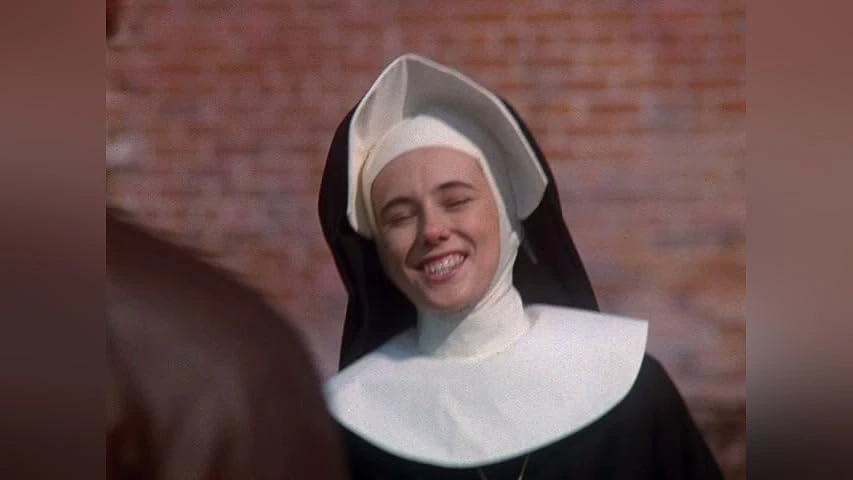
I like the way this kind of story tests the flexibility of the series. A boxing episode can borrow the rhythm of a sports movie: preparation, nerves, pressure and the knowledge that somebody else is waiting in the ring. Quantum Leap doesn’t need to become a different series to enter that tradition. Sam’s confusion and Al’s commentary travel with it.
There is also something appealingly undignified about making a scientist solve a problem through a skill he cannot simply explain. Sam’s intelligence matters, but the assignment doesn’t politely select the form in which he would prefer to demonstrate it. He has to learn what this life demands instead of announcing what he was good at somewhere else.
The story’s broadness belongs to its charm. Nuns and a prizefight aren’t a subtle combination, and the show doesn’t pretend otherwise. What matters is that the people around the contest give Sam a reason to commit. The leap places him in the ring; their investment makes running away feel like more than a personal decision.
How the Tess Was Won Gives Romance Mud on Its Boots
A ranch is a useful place to send a man who has just begun accepting the idea that he can wake up almost anywhere. In How the Tess Was Won, Sam enters a veterinarian’s life in 1956 and encounters a marriage challenge organized around keeping up with Tess. The setting offers a very different kind of competence from the laboratory.
The episode can enjoy the comedy of an outsider attempting practical work. Animals have no reason to respect a degree in physics, and ranch routines don’t pause while Sam reconstructs the rules. The piglet is a particularly good corrective to any heroic self-importance the premise might have encouraged.
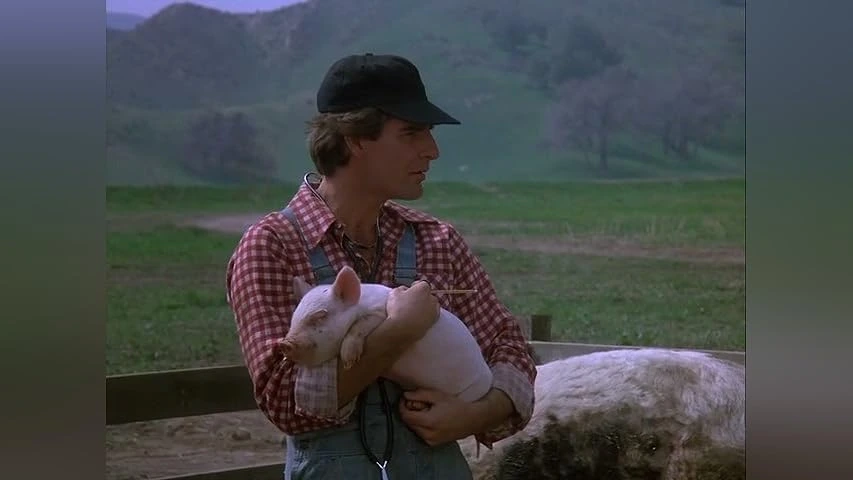
The courtship setup is openly old-fashioned. Watching it now, it’s reasonable to notice how the marriage bargain frames Tess’s choices and turns compatibility into a test. Nostalgia doesn’t require us to pretend that every convention arrived without baggage. The episode is more enjoyable when we can recognize the romantic machinery as machinery.
Bakula’s contribution is to keep the awkwardness warm. Sam doesn’t enter as a swaggering master of the environment. He has to work, ask and improvise. That leaves room for attraction to grow out of behavior instead of the automatic privilege of being the series lead.
It also shows how wide the early invitation was. In a few weeks the same program could move from experimental aircraft to a campus, a boxing ring and a ranch. There wasn’t a permanent office to return to, but there was a familiar emotional arrangement: Sam was in over his head, Al was nearby and somebody else’s future had become impossible to ignore.
The Color of Truth Makes the Social Rules Dangerous
The Color of Truth places Sam in 1955 Alabama in the life of Jesse Tyler, a Black chauffeur. The change isn’t simply age, clothing or occupation. The treatment he receives is governed by segregation and racist power, and behavior Sam considers ordinary can bring danger to Jesse’s family.
That is where the premise’s moral ambition becomes much more visible. Sam cannot assume the freedom he associates with being himself. The episode asks him to confront restrictions that exist before he enters the story and will exist after a single emergency has passed.
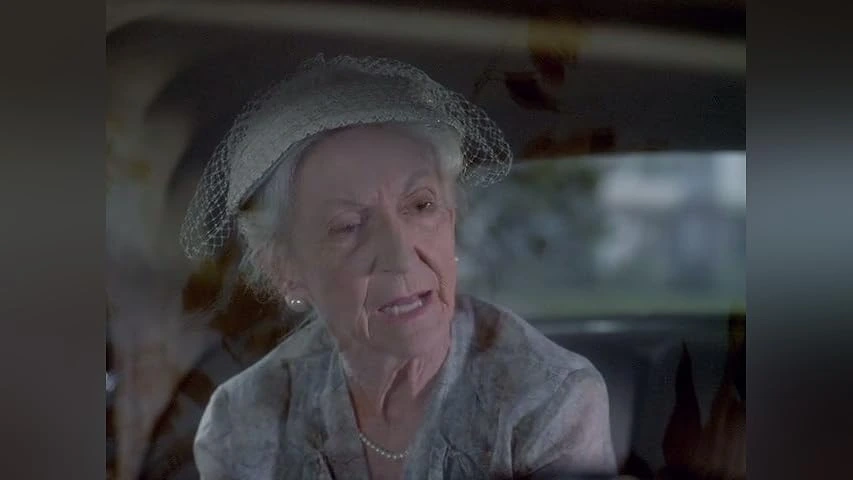
The relationship with Miz Melny, the elderly woman Jesse drives, supplies a personal route through the setting. Their contact matters because habits of dependence and affection can coexist with a social order that denies equality. A person can be valued for what they provide while still being expected to accept humiliating limits.
It is also an episode where the show’s viewpoint deserves scrutiny. A white continuing hero entering a Black man’s life can make a difficult subject accessible to the program’s broad audience, but that arrangement does not substitute for centering Black characters in their own stories. Sam’s temporary discovery should never be mistaken for the beginning of anybody else’s awareness of racism.
The strongest way to return to the episode is to hold both responses. Its willingness to make prejudice part of an early story mattered. Its perspective remains limited. The historical setting isn’t a claim that one visitor fixes a system; it is a situation in which the familiar leading man discovers that a decent impulse must contend with power, danger and consequences for people who can’t leap away.
Camikazi Kid Finds the Threat Under the Car Culture
Camikazi Kid arrives wearing the approachable clothes of early-sixties teenage life. Sam becomes Cameron Wilson, a high-school student with an awkward position among the supposedly cooler people around him. Cars, attraction and the familiar business of belonging give the hour an inviting surface.
The central family danger is more serious. Cameron’s sister is preparing to marry a man whose future includes abuse. Sam’s objective is to prevent that outcome. The episode can enjoy its youth-culture details while asking us to look past the charm of a relationship other people are prepared to celebrate.
That combination is important to the show’s first-year identity. The past isn’t only a collection of desirable objects. A good-looking car and a familiar musical atmosphere don’t make everybody inside the frame safe. The pleasurable recognition has to coexist with the problem Sam has arrived to address.
There is tension in his assigned social position, too. A younger brother doesn’t automatically command an adult conversation about an engagement. Sam may have information, but he has to find a way to make concern audible from a role people can easily dismiss. The obstacle isn’t merely knowing the truth; it’s getting anyone to take it seriously.
For me, that is the useful part of the episode beneath the hot-rod packaging. Looking backward can be enjoyable without becoming an agreement to leave every old arrangement unquestioned. The show lets the familiar scenery draw us in, then makes one person’s future more important than keeping the pretty picture undisturbed.
Play It Again, Seymour Lets Sam Borrow a Detective Story
Play It Again, Seymour sends Sam into a private investigator’s life in 1953. There is a dead partner, an attractive widow and the strong sensation that he recognizes the shape of the story. The episode can borrow the pleasures of old detective fiction without making Sam permanently responsible for an office full of case files.
The opening situation is nicely unfair. Finding yourself beside a body while holding a gun leaves very little time to ask courteous questions about your new identity. The hero’s first task is managing what the scene already appears to mean to everybody else. His arrival doesn’t reset the evidence.
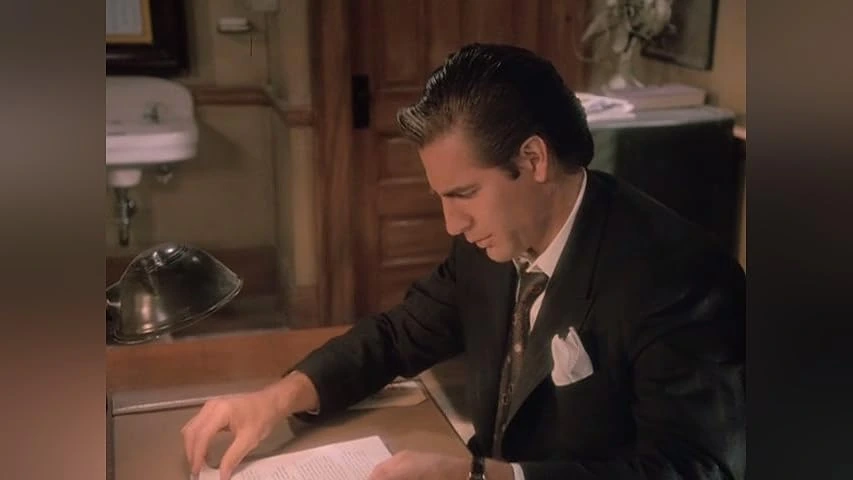
Claudia Christian’s Allison and Willie Garson’s Seymour help give the borrowed genre its company. Characters can enjoy the world of the hard-boiled detective even as Sam struggles with the practical business of surviving inside it. The title promises an affectionate game with familiar movie associations, and the hour is happy to play.
It is an interesting companion to the permanent investigators in eighties detective television. A continuing detective usually owns a method, a history and a relationship with the town. Sam has inherited the suspicion and the danger without the years of experience that would explain them.
The difference changes the humor. An established private eye can make a dry remark because he has seen this kind of trouble before. Sam may look suitable for the part while hoping someone will supply the missing instructions. Al becomes an especially valuable interruption in a world where almost any friendly person could be withholding something.
This is one reason the first season is worth revisiting as a set rather than as a list of its most serious subjects. The show could be concerned about human consequences and still enjoy playing with a genre. A detective adventure was another door the premise could open, and Sam didn’t have to become less recognizable to walk through it.
Blind Faith Gives the Audience Information the Room Cannot Use
Blind Faith places Sam in the life of a blind concert pianist in 1964, with a young woman’s death to prevent. The story belongs to the fall 1989 run. Its setting returns to the question the mirror has been raising: what happens when the person inside the situation has abilities or information the surrounding people don’t expect?
A performance setting intensifies that problem because professional competence has a public deadline. People don’t simply expect the identity Sam occupies to behave a certain way at breakfast. They expect work that has required practice and experience. The assignment arrives with obligations already on the calendar.
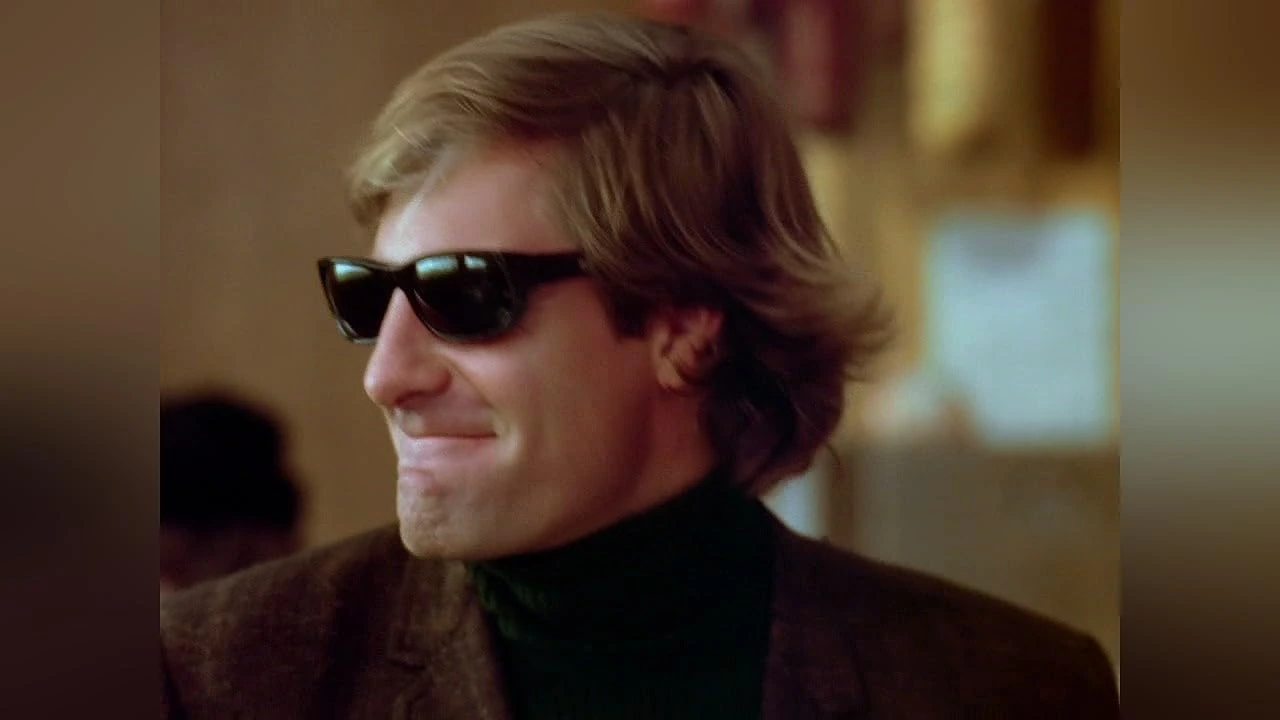
The audience occupies a privileged position. We know Sam is improvising an identity, and that knowledge makes ordinary reactions harder to read innocently. A question, an assumption or a moment of misplaced confidence can create tension without anyone announcing a new threat.
There is a representational caution here similar to the one in Jimmy. The episode’s unusual visitor is not an all-purpose explanation of living with a disability. Its dramatic mechanism creates a specific situation for Sam. Keeping that distinction visible makes it easier to discuss what the hour does well without asking its premise to carry a claim it cannot support.
The early series is particularly good at placing incompatible demands in the same room. Sam needs to protect a person, maintain a role and avoid revealing more than the situation can accommodate. Al can offer advice, but he can’t attend the performance or conduct the relationship for him. The work keeps returning to the person who has to remain visible.
I appreciate this quieter pressure beside the more obvious dangers of a boxing ring or a damaged aircraft. A series can generate suspense from somebody expecting you to know how to behave. Quantum Leap kept finding ways to make that everyday anxiety strange enough to notice again.
The People Writing the Leaps Deserve a Place in the Memory
The recurring faces make it easy to remember Quantum Leap as the Bakula and Stockwell show. The changing guest worlds also required writers who could establish a life quickly, make the danger understandable and leave Sam enough uncertainty to keep the story moving. That’s a substantial weekly assignment of its own.
Deborah Pratt was an important creative presence as a writer and producer on the original series. In a later first-person interview with SYFY, she described its freedom to move among comedy, drama and suspense while keeping its concern with people. Her account is useful because it identifies that range as part of the intention, rather than an accidental by-product of changing costumes.
The results are visible in the first year’s variety. The requirements of a college romance are different from those of a workplace story about exclusion. A script cannot simply replace the occupation in the previous week’s outline and expect the same emotional mechanics to work. Different characters need different reasons to trust, resist or misunderstand Sam.
Guest performers carry a great deal of that burden. They have to make the life feel established before the audience arrived, often while the continuing lead is asking questions that would seem strange inside it. The supporting cast sells the history Sam hasn’t experienced. Without that conviction, the setting becomes a collection of clues arranged for his benefit.
That is worth remembering when we talk about the show’s heart. The feeling isn’t manufactured by a premise alone. It comes from the specific brother, student, colleague or partner who has enough personality to make the outcome matter. An impossible visitor may start the hour, but the people who were already there have to give us a reason to stay.
The Fall of 1989 Expands the Available Lives
Quantum Leap returned for its second season in the fall of 1989. A first-season-only retrospective can accidentally leave out a substantial piece of its eighties identity. The calendar year includes both the spring introduction and the early second-season run, ending with December’s A Portrait for Troian.
The fall stories widened the places Sam could go and the kinds of assumptions he would have to confront. A stuntman’s family, a marriage shaped by cultural prejudice, a workplace organized around sexism, a radio station and a dock job all fit inside the same basic arrangement. The weekly setting could change without sacrificing the continuing friendship.
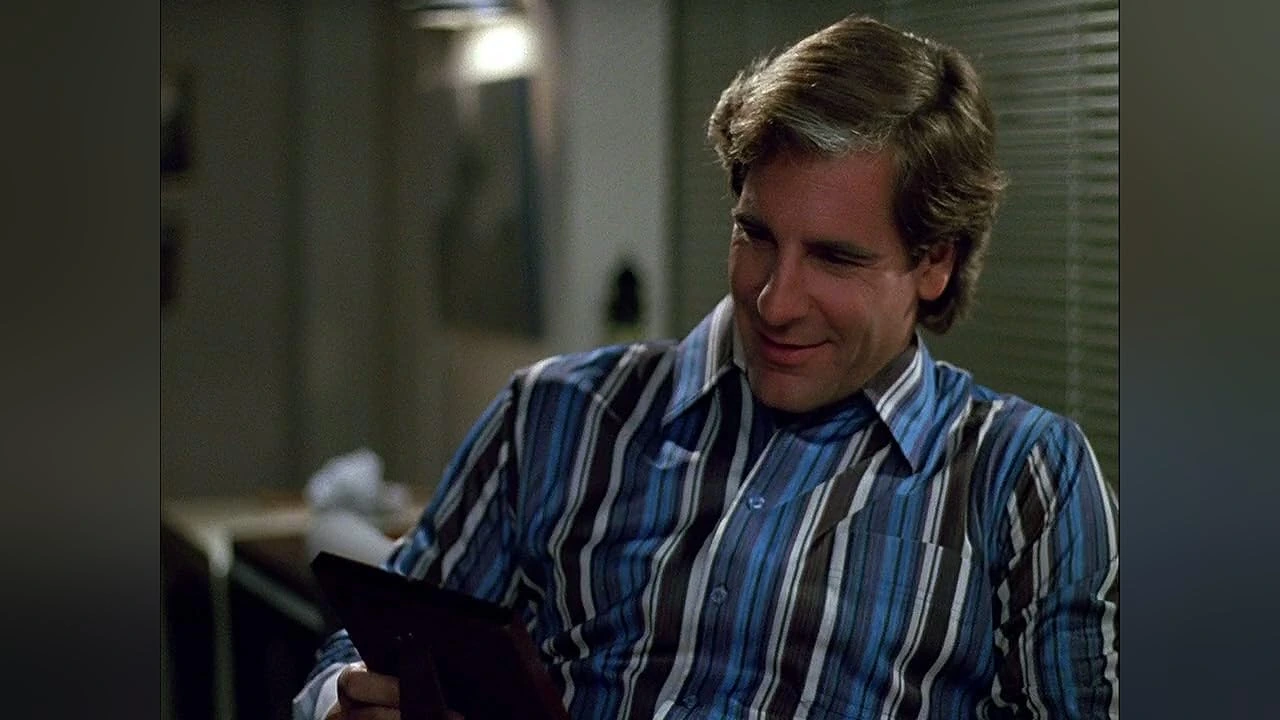
Disco Inferno connects a dangerous film-production environment to Sam’s memories of his own brother. The assignment’s family relationship can reach into the hero’s partially available past. That is a useful development: Sam doesn’t have to stand outside every story as the person who understands everyone else’s problem.
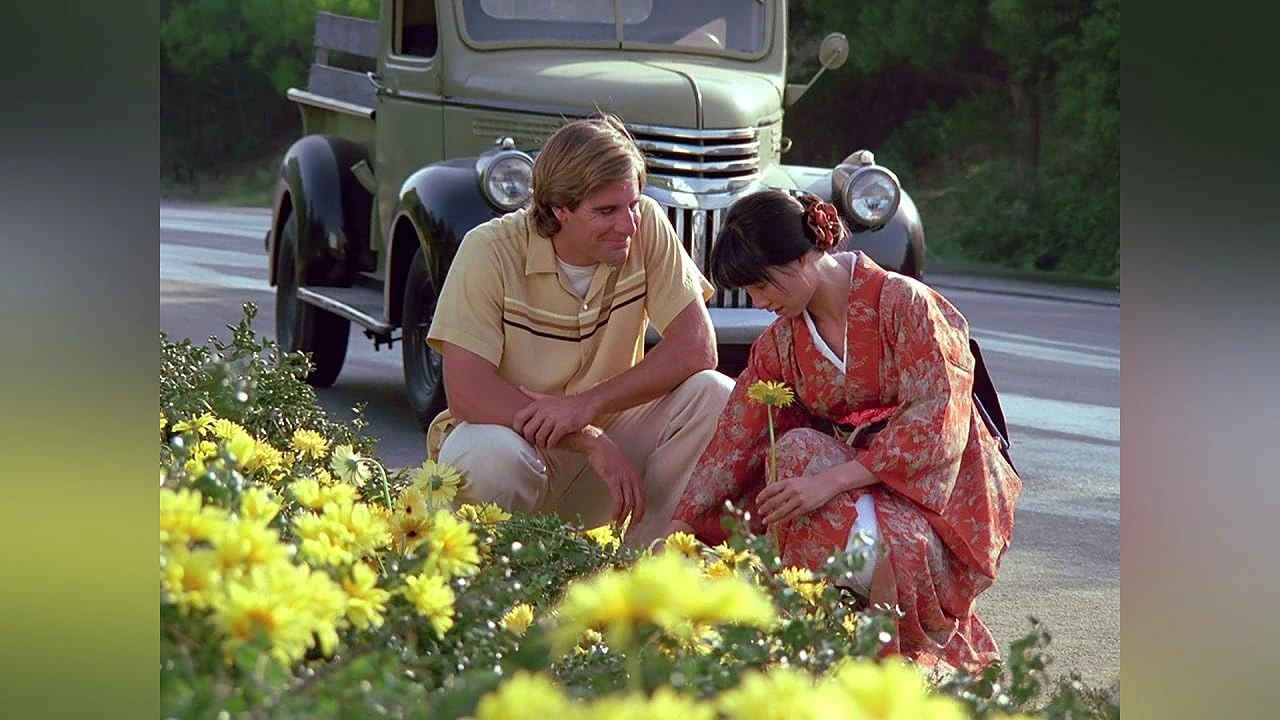
The Americanization of Machiko brings a Japanese bride into an American family setting where acceptance is conditional and prejudice has consequences. What Price Gloria? places Sam in a woman’s life and turns the reactions of a sexist workplace into immediate obstacles. These stories make explicit what the mirror device has been promising all along: other people’s assumptions can organize your entire day.
The expansion shouldn’t be confused with a claim that the show had achieved an unlimited or perfectly informed perspective. It remained a network drama built around Sam. Still, by the end of 1989 it had demonstrated how much more the premise could hold than a man visiting interesting dates. Different lives required different kinds of listening, and the series was getting bolder about making that requirement uncomfortable.
Good Morning, Peoria Understands Why a Radio Station Matters
Good Morning, Peoria sends Sam into a radio DJ’s life in 1959, with rock and roll under pressure from people who want it off the air. It first aired in November 1989, which makes it part of the show’s original eighties story even though the world inside the episode belongs to an earlier generation.
Of course this one gets my attention. A radio studio is a marvelous dramatic trap: the microphone creates an audience you can’t see, the equipment demands decisions in real time and the person talking has to sound as if the room is under control. Sam’s usual uncertainty becomes particularly entertaining when silence itself is a problem.
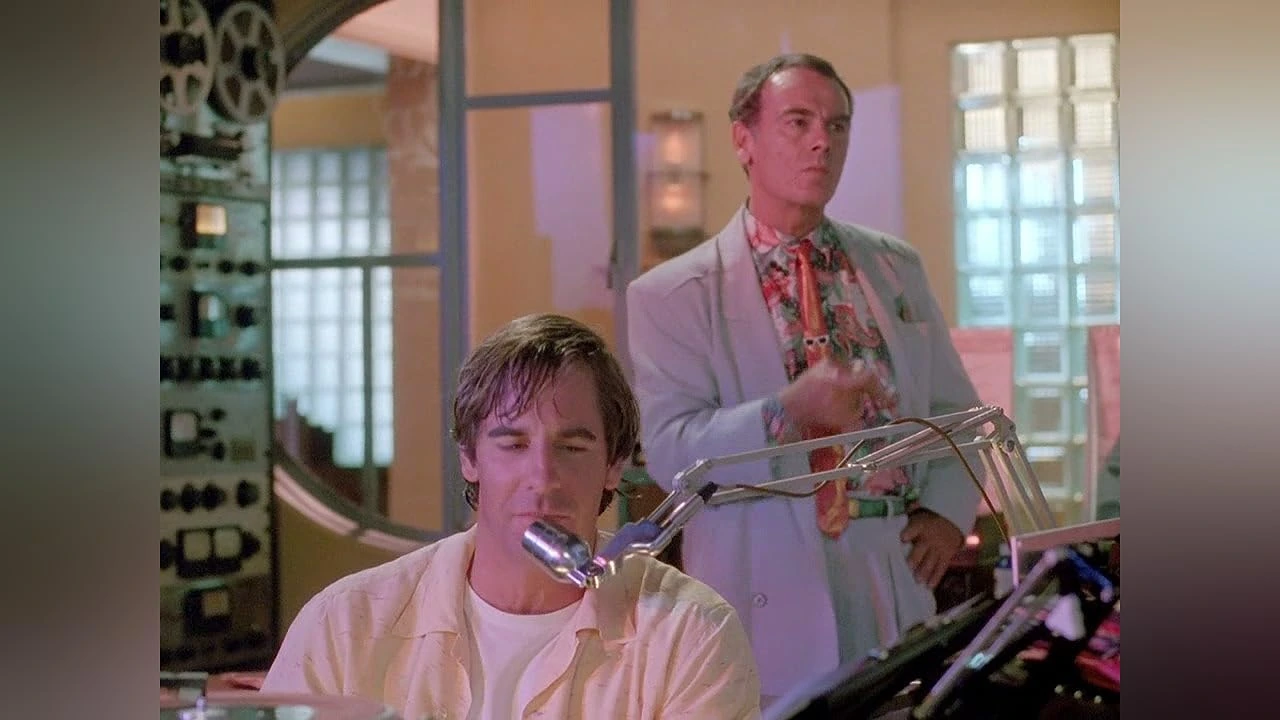
Patricia Richardson’s Rachel Porter gives the station another personality to contend with, and Chubby Checker’s guest appearance supplies a direct connection to the music the story celebrates. The setup doesn’t need us to mistake its playful visit to rock-and-roll history for a documentary to enjoy the energy.
What makes the station worth defending is the relationship between a voice and its listeners. A format can look frivolous to somebody outside it while providing recognition, company and a sense of ownership to the people tuning in. The controversy is about who gets to choose what the audience hears, and whose enjoyment is allowed to count.
The episode also gives the series a different sort of stage. Sam can’t solve every problem in a private conversation; the medium lets a personal decision travel. That’s a good use of the weekly change in occupation. Being a disc jockey isn’t merely a funny costume for the hero. It changes the tools available to him and the consequences of using them.
Jimmy Makes an Ordinary Job the Thing at Stake
Jimmy, first broadcast in November 1989, puts Sam in the life of Jimmy LaMotta, a dockworker with Down syndrome. The workplace is hostile, and acceptance is fragile. A job that other people might regard as routine becomes tied to dignity, independence and whether the surrounding community will make room for him.
The episode works best when we pay attention to that scale. Sam isn’t trying to secure a spectacular achievement that will persuade everybody a disabled person deserves respect. The ordinary opportunity matters. Being allowed to work without humiliation should not require a weekly television miracle.
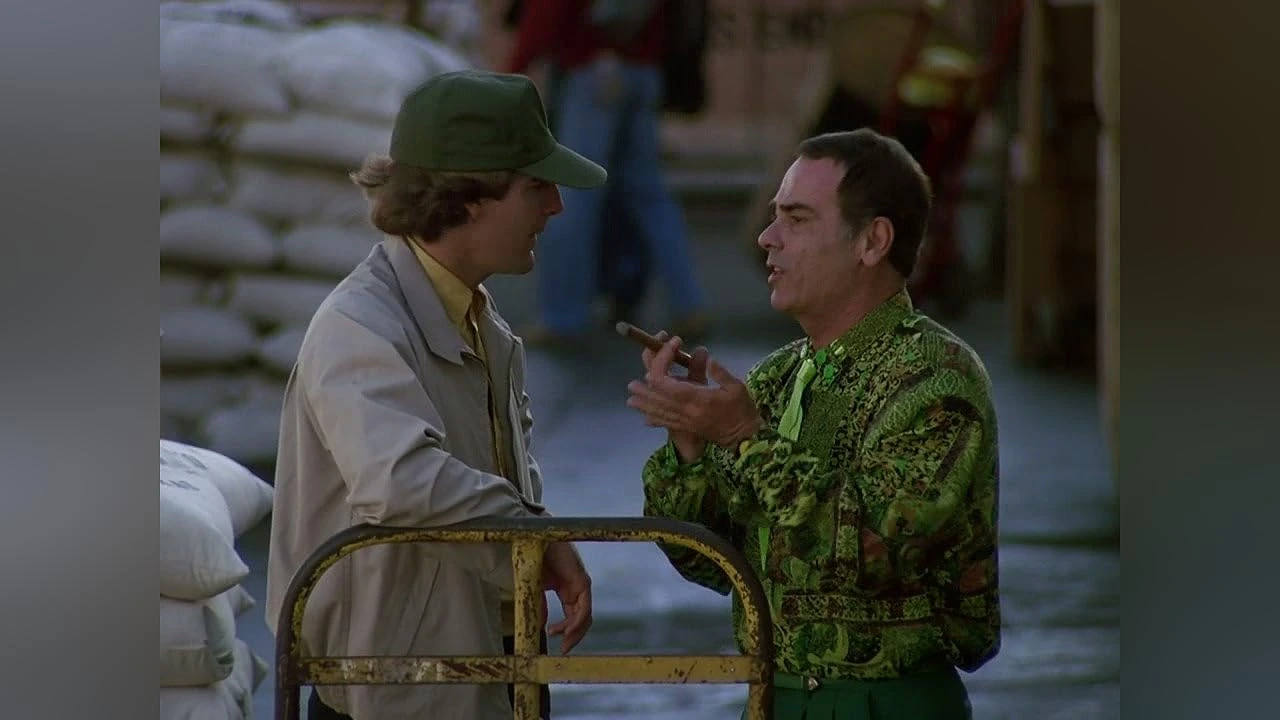
Jimmy’s brother Frank, played by John D’Aquino, is part of the pressure surrounding that opportunity. Family concern can be protective while also carrying fear about what will happen outside the home. The story has to deal with the people whose decisions determine how much freedom Jimmy receives.
The show’s representational method also needs the same honesty we bring to other leaps. Bakula remains our principal point of view, while Brad Silverman appears as Jimmy’s reflected identity. A continuing actor’s temporary entry into a disabled person’s circumstances isn’t equivalent to giving that person an ongoing central role. The episode’s concern and the limits of its construction can both be visible.
For a first-year story, though, its choice of stakes is telling. A dock job is enough. A coworker’s cruelty is enough. Somebody being denied an ordinary place in the world is enough to justify the impossible trip. Quantum Leap could make a small social boundary feel as consequential as the much larger historical events the genre usually chased.
Catch a Falling Star Lets Bakula Use the Whole Stage
By December 1989, the show could put Sam into a theatrical production and make that feel like a natural extension of its premise. Catch a Falling Star places performance, responsibility and personal feeling in the same space. The stage offers opportunity, but it also comes with schedules, other performers and consequences when somebody isn’t ready.
Bakula’s ability to sing makes the setting particularly satisfying. A series that changes the hero’s circumstances can reveal different parts of its lead’s skill without inventing an implausible permanent job description. The audience already understands why Sam might suddenly be required to perform.
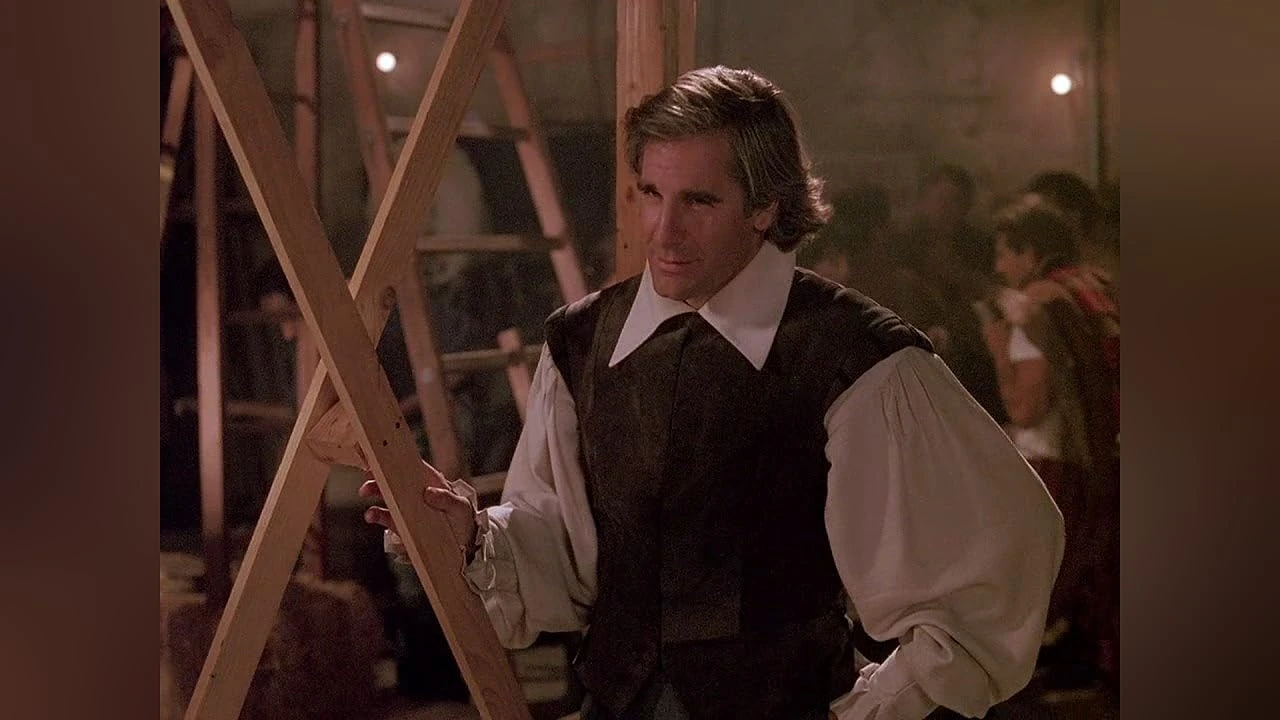
The theater also makes the problem of playing another person’s part unusually visible. Sam is an actor within the story in one sense before he ever steps onto the stage: people are expecting the identity he occupies. A production adds a second set of expectations, with an audience waiting for the result.
What I enjoy is how the episode can make ambition look both attractive and insufficient. Wanting the moment, wanting the person or wanting a chance to put something right does not free Sam from the obligations around him. Other people’s work and vulnerability still matter. The guest setting isn’t a private playground for the hero’s wishes.
The later reputation of Quantum Leap can make it sound primarily like a mythology machine. An hour like this is a useful reminder of its original range. Music, romantic discomfort and professional backstage life all fit. The series could build a substantial evening around a production’s human pressures and still leave us eager to discover where the next leap would land.
Clothes, Rooms and Music Make the Dates Feel Occupied
The dates in the episode titles are an invitation, but a date alone doesn’t make a setting convincing. The weekly world needs surfaces people can use: a desk somebody works at, a jacket that belongs in the weather, an object that tells us how a job is performed. Quantum Leap depends on those details because Sam usually has to act before he understands them.
Costume also performs a neat double job. It helps establish the period and advertises the identity other characters think they’re seeing. Sam might look perfectly appropriate to the room while feeling completely unprepared inside the clothes. The mismatch lets the audience experience the setting from both sides.
Al’s wardrobe supplies a different pleasure. His presence isn’t confined to the historical room in the same way, so his clothing can register as an interruption. The visual joke doesn’t require a line of dialogue. One look tells us that this visitor belongs to another set of rules.
The craft received recognition early. In 1989, the Television Academy awarded Roy H. Wagner an Emmy for the pilot’s cinematography and Virginia Kearns an Emmy for the series’ hairstyling. Those awards don’t explain why every episode works, but they are a useful reminder that the changing worlds needed skilled people making the details cohere.
That work helps the sentiment avoid floating free of a place. A family argument in an anonymous room is one kind of scene; the same argument inside a specific social world carries additional pressure. The show asks us to accept an impossible visitor. The surrounding material has to look as if people lived in it before he arrived and will keep living there when he disappears.
The Show Could Be Corny, and Sometimes It Earned It
Quantum Leap wasn’t embarrassed by a generous feeling. It could arrange a coincidence, reach for an obvious injustice and let the music tell you that the emotional landing had arrived. If your tolerance for television sincerity is low, the first year will find it quickly.
I don’t think the sensible response is to deny the corn. The useful question is whether an episode gives the feeling enough people and resistance to support it. A sentimental ending feels stronger when someone has had to make a difficult choice, or when Sam has learned that his first understanding was incomplete.
The danger comes when the guest characters become a row of positions waiting for the hero to correct them. A cruel person who exists only to receive a lesson can make the hour too easy. A vulnerable character who exists only to be helped can lose the personality that made the situation worth caring about.
At its best, the first year resists that flattening through performance and friction. Sam can be wrong. Al can be irritating. A sympathetic person can still frustrate them. The need to work through those reactions gives the warmth something to attach to beyond a general announcement that kindness is good.
There is a family resemblance to Highway to Heaven’s traveling partnership, although the means of arrival are very different. Both shows can use a changing guest story to make concern an active job. Quantum Leap adds a particularly awkward restriction: the visitor has to conduct that job inside the life everyone else thinks he already understands.
History Is the Setting, Not a Permission Slip
The show’s visits to earlier decades can be inviting. Cars, clothes, radio equipment and familiar cultural references give the viewer plenty to recognize. But recognizing a surface isn’t the same as understanding the whole period, and the series becomes less interesting if we treat every leap as a sentimental holiday.
Sam usually arrives because something needs to change. That basic fact keeps interrupting the pretty picture. An appealing home can contain abuse. A workplace can exclude somebody. A cheerful public space can be dangerous for the person Sam is being taken for. The past is occupied by people whose experience isn’t equally comfortable.
At the same time, an hour of network television cannot stand in for the full history of segregation, disability, sexism or immigration. Its characters and deadlines compress the subject. A personal intervention can produce an emotionally complete ending while leaving the larger system largely outside the frame.
That isn’t a reason to discard the episodes. It’s a reason to keep the scale clear. We can value the show for directing attention toward a problem without claiming it has finished explaining the problem. The most productive response is curiosity about the people who remain when the visitor moves on.
This also gives the show an interesting relationship with the decade in which we watched it. Its earlier settings are being selected and interpreted by a late-eighties television production. Every leap has two dates: the year on the screen and the year the audience received it. Remembering both lets us enjoy the period details while noticing what 1989 wanted to say about them.
NBC Had Found a Way to Change the Entire Set Without Losing the Friends
A permanent location is one of television’s great conveniences. You know where the desk is, who is likely to enter and what sort of disagreement the room can hold. Quantum Leap gave much of that comfort up. The familiar people had to travel without a familiar workplace supporting them.
Bakula and Stockwell became the room. Once Al arrived, the new location acquired a recognizable rhythm: Sam trying to understand, Al reporting and interrupting, the two friends disagreeing about what to do. Their exchanges could make a setting feel like part of the same series even when almost everything visible had changed.
That arrangement belongs inside NBC’s larger eighties story. The network’s identity wasn’t confined to a single kind of success. A time-travel drama could sit in the same institutional history as broad family comedy, crime shows and intimate relationship stories without resembling any of them very closely.
Bellisario’s name also links the show to the earlier pleasures of Magnum, P.I.. The formats differ substantially, but both understand that a lead’s competence becomes more appealing when friendship, frustration and humor complicate it. The person doing the helping benefits from somebody who refuses to be impressed every minute.
The flexibility of Quantum Leap could have turned into a lack of identity. Instead, the partnership provided a stable way to enter change. You weren’t promised the same place next week. You were promised familiar company trying to behave decently in another place that hadn’t prepared for them.
Waiting a Week Was Part of the Contraption
The leap at the edge of an episode is an unusually effective invitation to come back. Sam’s current situation may have reached a resolution, but a new one can arrive before the evening is over. Suddenly he is somewhere else, expected to do something else, and the audience knows just enough to want the explanation.
That mattered in the world of watching television in the eighties. The next installment wasn’t sitting behind a button waiting for you to remove the suspense. A glimpse could spend days in your head, joining the mental collection of things you meant to be home for.
The device balances closure and curiosity. The guest story can reward the hour you’ve spent, while the last change in circumstances keeps the continuing journey open. You don’t have to abandon the new characters emotionally in order to wonder where Sam has gone.
It also makes the show’s tone recognizable in seconds. Bakula registering an unexpected situation, a piece of clothing or a reaction from a stranger can establish the next predicament before anybody explains it. The series has trained us to read his confusion as a promise: this will become a story.
The effect survives when episodes can be watched together, but the texture changes. Immediate access makes it easier to concentrate on the continuing mechanics. The weekly experience gave the new image time to become an object of speculation. That’s one bit of the old television arrangement I can appreciate without wanting every inconvenience back. The machine couldn’t take Sam home on command, and the schedule wouldn’t give us the next answer on command either.
A Useful First-Year Route Back Into the Series
Genesis remains the natural starting place because it establishes Sam’s disorientation before the rules have become familiar. Let the premiere take its time with uncertainty. The later pleasures depend partly on remembering that this intelligent man began without the confidence a viewer can acquire after a handful of episodes.
Star-Crossed then shows how quickly the assignment can collide with Sam’s own desires. The Right Hand of God and How the Tess Was Won demonstrate the early range of environments and physical demands. They also remind you that the series was willing to be playful before its more serious reputation had fully formed.
The Color of Truth and Camikazi Kid make a useful next pairing. Both place a recognizable period surface around a threat the hero cannot responsibly ignore. They ask different things of him, and they make clear that looking backward isn’t the same as declaring everything back there worth preserving.
For the fall of 1989, Good Morning, Peoria, Jimmy and Catch a Falling Star show how widely the second season could reach before the decade ended. A broadcast studio, a dock and a theater require different behavior, which is exactly why they make good companions in a return visit.
That selection isn’t an attempt to announce a definitive ranking. It is a way to hear the first year’s range. If one setting doesn’t immediately catch you, another may reveal the reason the partnership works. The point of this show was always that an unfamiliar doorway could lead to a person you hadn’t expected to care about.
The Person Who Has to Live With the Change
There is a quietly unsettling question beneath every successful assignment: what happens to the person whose life Sam has borrowed? The continuing series follows Sam onward, but the guest world has to absorb whatever he has done. A repaired relationship or a new opportunity will require ordinary effort after the extraordinary visitor has gone.
That gives the endings an interesting second life in the viewer’s imagination. The rescued job still has a next morning. The family still has habits. A person who has reconsidered a prejudice doesn’t become incapable of doing harm again simply because the credits are approaching. The show’s shape offers completion while the situation itself suggests continuing work.
The premise can occasionally make that handover too easy. Sam possesses knowledge, skills and confidence the person whose identity he occupies may not share. A dramatic intervention needs to leave a sustainable possibility rather than an impossible standard everybody will expect the returning person to maintain. The best outcomes are ones other characters can help keep alive.
For me, that makes the supporting relationships particularly important. A brother who is willing to stand alongside someone, a colleague who changes their behavior or a partner who has finally listened can carry a change beyond the visitor’s departure. The story is stronger when the future doesn’t depend entirely on Sam continuing to be there.
It is a useful thought to take into a return viewing. Enjoy the leap and the immediate satisfaction, then consider the people the camera won’t follow next week. The premise treats their lives as worth entering. The ending asks us to believe those lives remain worth thinking about after our familiar hero has left the frame.
Why the First Year Still Has a Human Heart
The technology is the part people can summarize. Sam leaps. Al appears. A mirror provides the identity. Some new information complicates the assignment. The explanation fits neatly enough, but it doesn’t account for why a particular guest character can remain in your memory long after the equipment’s noises have faded.
The answer is the attention. Quantum Leap organized an entire impossible journey around the proposition that an ordinary life could justify the trouble. A job, a family relationship or a chance to avoid harm didn’t have to become a matter of national history before the series would treat it as important.
Sam’s desire to get home gives that generosity a cost. Helping isn’t always a cheerful stop on a trip he chose. He is separated from his own life, and each new arrival asks him to commit to somebody else’s. The show can be warm because it acknowledges loneliness underneath the willingness.
Al keeps that loneliness from becoming the only note. He is the familiar voice, the irritation, the badly timed joke and the person who cares whether Sam makes it through. Their friendship is a reason the open-ended journey feels bearable, even when neither of them can supply the answer the other most wants.
That’s the 1989 show I enjoy returning to: still discovering the reach of its premise, occasionally too tidy, often funny and willing to make a stranger’s future the center of the evening. The next reflection could be anybody. The work would still begin with taking that person seriously.
Questions About Quantum Leap's 1989 Debut
When did the original Quantum Leap premiere?
The original series premiered on NBC on March 26, 1989. Scott Bakula played Dr. Sam Beckett and Dean Stockwell played Al Calavicci. Its first calendar year includes the spring first season and the opening portion of season two in the fall.
What is the difference between an episode’s date and its broadcast year?
Many titles include the historical date of Sam’s leap. Good Morning, Peoria, for example, takes place in 1959 but was first broadcast in November 1989. The date inside a title describes the story’s setting rather than the show’s original release.
Why do mirrors show a different person?
The audience generally sees Bakula as Sam, while the people in the story see the identity he has entered. A reflection lets us briefly see that identity. The contrast is central to both the visual storytelling and the misunderstandings around Sam.
Is the whole second season part of eighties television?
No. Season two began in 1989 and continued into 1990. Episodes such as Jimmy and Catch a Falling Star belong to the 1989 run; Animal Frat belongs to January 1990. A season label alone doesn’t establish which decade an episode first aired in.
Was Quantum Leap only a science-fiction adventure?
Time travel supplies the continuing premise, but the early episodes also work as family stories, social dramas, romances, comedies and performance stories. The changing setting is part of the appeal. Sam and Al provide the continuity while the human problem changes.
Sources & Further Reading
- The Television Academy’s Quantum Leap production interviews include material with Donald P. Bellisario and other participants.
- Quantum Leap’s Television Academy awards record distinguishes the 1989 craft wins from later nominations and awards.
- Apple TV’s original-series catalog identifies the original cast, creator and first-season stories.
- The Color of Truth and Camikazi Kid have separate licensed episode records.
- Jimmy and Good Morning, Peoria document their November 1989 broadcasts and guest casts.
- Prime Video’s second-season catalog helps separate the fall 1989 run from the season’s 1990 episodes.
- Deborah Pratt’s first-person production reflections discuss the original show’s creative range.
- Play It Again, Seymour and Blind Faith have individual licensed story records.