G.I. Joe in the 80s: The Cartoon, the Toys and the After-School Ritual
The specialists, the Cobra schemes and the daily mission between school and dinner. A return to the original animated team.
Cobra had another impossible machine. We had half an hour and a favorite member of the team.
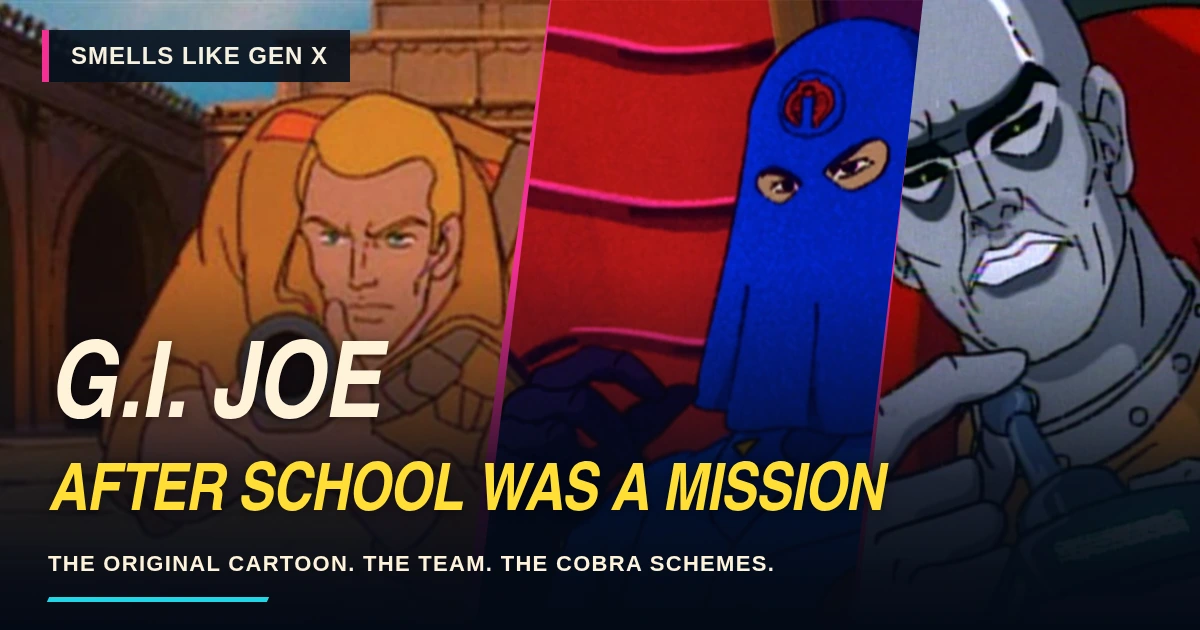
Cobra could build an underground base, launch a machine that threatened the planet and put an alarming number of people in matching uniforms. It still had trouble getting through a management meeting without an argument. For an organization determined to rule the world, the internal communication was a mess.
That was part of the fun. G.I. Joe: A Real American Hero gave us an enormous action team, an equally memorable enemy and a new catastrophe that could be understood before the snack was finished. There were specialists, secret weapons, narrow escapes and vehicles that seemed designed by people who had never been told a budget was final.
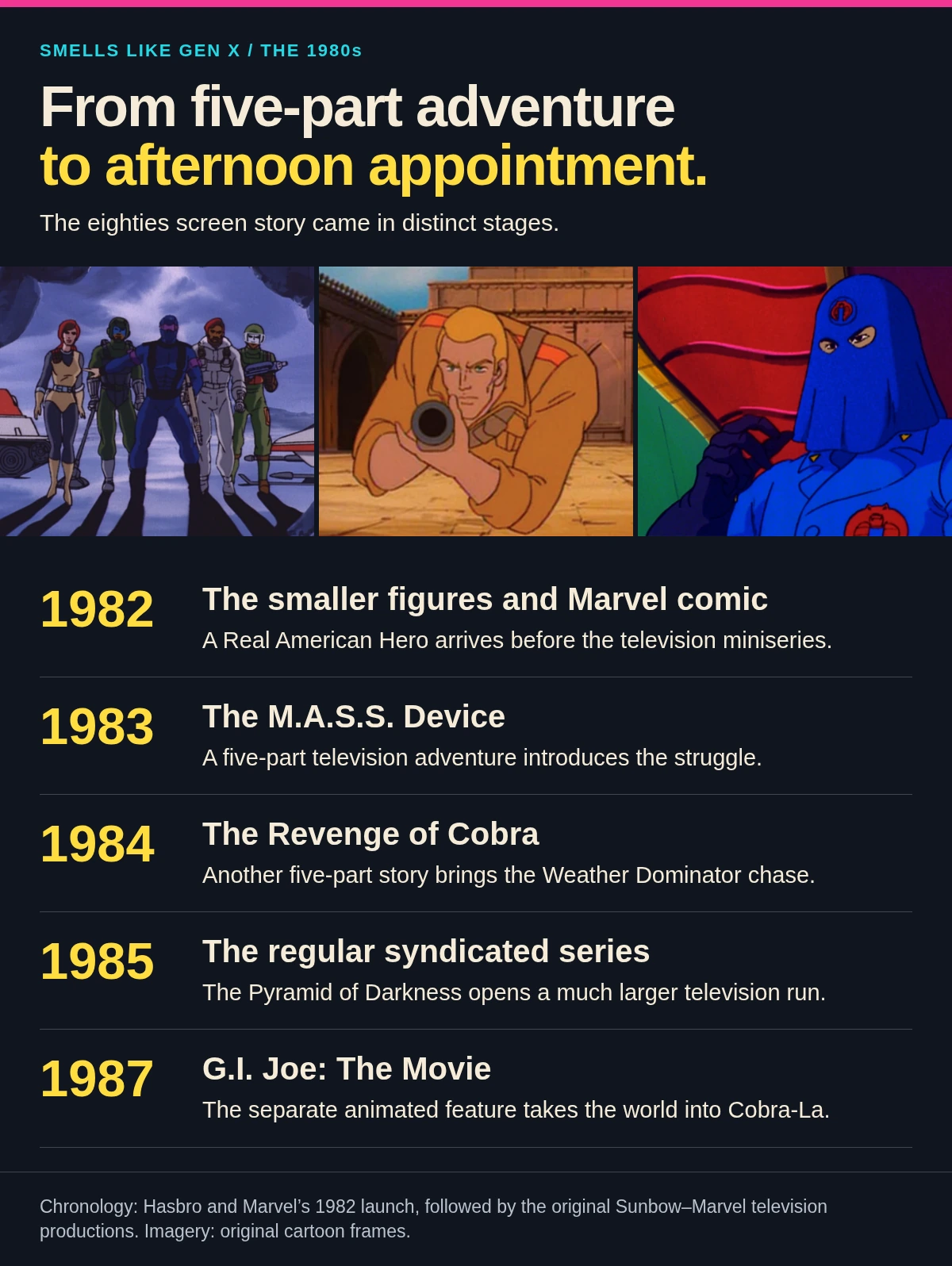
The television story began with a five-part miniseries in 1983, followed by another in 1984. The regular syndicated series arrived in 1985, turning the Joe–Cobra struggle into a dependable part of many local stations’ weekday lineups. The 1987 animated movie carried that world into stranger territory. Those are connected stages, not one undifferentiated stretch of episodes.
The toys mattered, of course. You could see the commercial machinery without needing to dismantle it. But the cartoon also gave the figures voices, loyalties and reasons to be your favorite. A sailor with a parrot could compete for attention with a silent masked commando. Somehow, in this world, both belonged on the same assignment.
Of all the cartoons that filled the eighties, G.I. Joe understood the pleasure of assembling a team. The adventure began on television. Deciding who you wanted on your own mission could occupy the rest of the afternoon.
Inside This Article
- First, Put the Cartoon Years in the Right Order
- A Weekday Mission Was Different From a Saturday Block
- The Opening Knew How to Mobilize a Living Room
- Duke and Scarlett Gave the Team a Human Center
- Flint and Lady Jaye Could Make a Briefing Interesting
- Snake Eyes, Shipwreck and the Pleasure of Having a Favorite
- Cobra Was an Organization Built for Personality Clashes
- Zartan and the Dreadnoks Brought Trouble From Another Direction
- Three Big Cobra Plans, Three Different Kinds of Adventure
- A Team of Specialists Made Play Feel Like Planning
- The War Was Spectacular, and Its Consequences Were Carefully Managed
- When G.I. Joe Wandered Into a Nightmare
- Smaller Stories Could Reveal the People Under the Uniforms
- The Voices Made the Organization Sound Inhabited
- The Safety Message Survived the Mission
- The Toys Were Part of the Story, but the Story Had Its Own Life
- Serpentor, the Movie and the Point Where the World Changed
- What Makes a Return Visit Worthwhile
- Questions About G.I. Joe in the Eighties
First, Put the Cartoon Years in the Right Order
The eighties G.I. Joe cartoon did not arrive as a fully populated daily series on its first day. The M.A.S.S. Device introduced the television conflict in 1983. The Revenge of Cobra followed in 1984, with its Weather Dominator adventure. Each was a five-part story, giving children a reason to return for the next installment rather than treating the first encounter as a complete meal.
The regular Sunbow–Marvel syndicated series began in 1985. The Pyramid of Darkness supplied another large opening adventure before the program settled into its wider run of missions. A further season followed in 1986, expanding the cast and changing the struggle inside Cobra as well as the one between the two teams.
G.I. Joe: The Movie belongs to 1987. It is an animated feature, not the original five-part miniseries and not the same film as the 1986 Transformers movie. That distinction sounds obvious until decades of reruns, video editions and streaming packages begin putting everything on adjacent shelves.
The DiC-produced Operation Dragonfire miniseries belongs to the late-decade continuation, in 1989, with the subsequent DiC series mainly a nineties story. If you remember a different visual feel or a changed group of voices, you may be remembering that later phase. Loving one period does not require folding all the others into it.
Modern services also divide the material differently. An episode presented as the start of one season in a digital catalog may have originally been part of an earlier miniseries. The title and production phase are more useful guides than assuming every service’s numbering is an original broadcast instruction.
For this trip, the center is the Sunbow–Marvel television world: Duke, Scarlett, Snake Eyes, Flint, Lady Jaye, Shipwreck and the rest, up against Cobra Commander’s spectacularly unreliable organization. The larger eighties TV collection contains plenty of appointment viewing. This one made the appointment feel like a briefing.
A Weekday Mission Was Different From a Saturday Block
G.I. Joe’s syndicated arrangement allowed local stations to place it in their own schedules. It was not a single, uniform national after-school hour delivered identically to every child. One town’s familiar slot could be another town’s inconvenience. The shared memory is the ritual, not a universal number on the clock.
A weekday adventure occupied useful territory in a child’s day. School had supplied rules, tasks and a great deal of sitting still. The cartoon supplied movement, bright places and people with extremely specific abilities. Even the briefing scenes seemed designed to reassure us that this group, unlike a classroom project, had members who were going to contribute something.
The scale was generous. A story could begin at headquarters and move to an Arctic landscape, a jungle, a city or a strange installation whose builders had taken secrecy as an architectural challenge. You did not need travel experience to understand the attraction. The afternoon could go almost anywhere without requiring permission to leave the house.
The continuing miniseries format made that invitation stronger. A machine might be partly assembled, a component might be missing, or a member of the team might be stranded. The unfinished business gave tomorrow a small extra attraction. Somewhere inside an ordinary school day, a child could be aware that an entirely separate emergency remained unresolved on television.
The shorter stories had another advantage: they let the show use different combinations of people. A favorite character might have a major assignment one day and a small part on another. That unpredictability gave the enormous cast a practical purpose. We were not just following one hero with an unusually large collection of acquaintances.
The way we watched television then helped make those appearances feel valuable. You could not assume an episode would wait indefinitely for a convenient moment. If the person you liked had a good story that afternoon, you wanted to be in the room for it. A toy could stay on the shelf. Its television counterpart had a schedule.
The Opening Knew How to Mobilize a Living Room
The opening was not interested in a gentle introduction. The music, the movement and the direct identification of the conflict made the show’s purpose unmistakable. Here was a team, here was an enemy and here was the scale on which they expected to operate. The details could wait until the main episode. First, everyone needed to look ready.
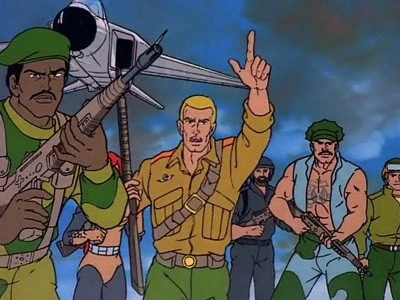
An ensemble cartoon has a special problem: it cannot explain every member of a large cast before each story begins. G.I. Joe solved much of that through instantly readable designs. A sailor looked like a sailor. A masked commando looked like someone whose personal information would not be available at the front desk. A man with a flamethrower made his likely contribution reasonably clear.
The opening assembled those impressions into a common identity. However strange the individual costumes became, the characters belonged to one team. A child could enjoy the difference between them without losing track of which side they were on. The repeated insignia, music and rallying energy did some of the work that a long explanation otherwise would have required.
Cobra benefited from the same clarity. The emblem, the blue uniforms, the striking leaders and the exaggerated machinery established a recognizable enemy force. Even when the plot moved into fantasy, we rarely needed to ask who had organized the trouble. If an enormous weapon had been placed somewhere deeply impractical, Cobra was a sensible first suspect.
The sequence also made the vehicles feel active before any particular episode had used them. They were not inert objects waiting for a product demonstration. They arrived as part of an ongoing world of movement. For anyone who owned a version in plastic, the connection between the screen and the bedroom floor was immediate.
But the real accomplishment was emotional. The introduction offered confidence before the episode introduced uncertainty. We entered with the sense that a capable group existed, and that the next impossible problem would at least meet some resistance. As childhood television promises go, that one was hard to improve with a more elaborate explanation.
Duke and Scarlett Gave the Team a Human Center
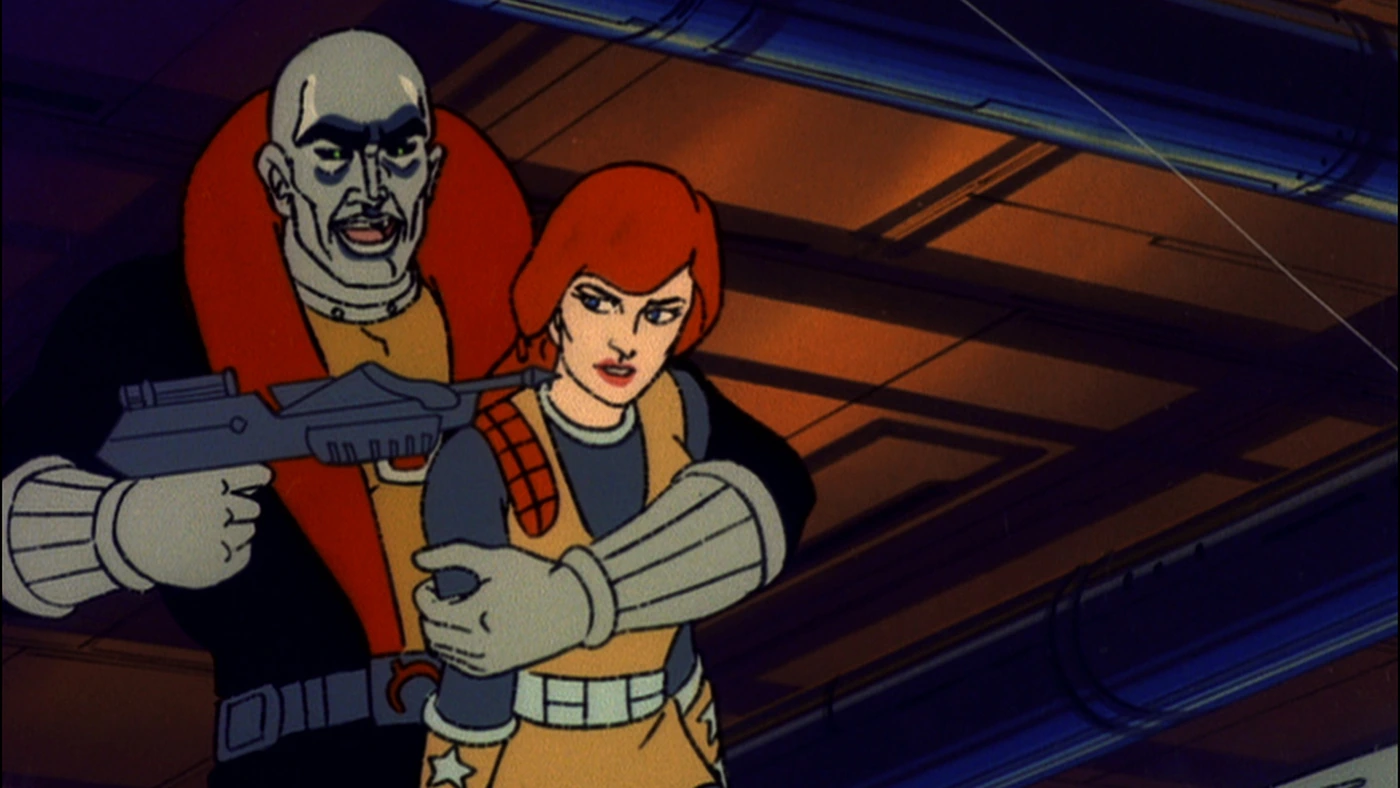
Duke’s authority is easy to recognize. He has the clear voice, the forward movement and the air of somebody who expects the next dangerous situation to be manageable once everyone stops making unnecessary noise. The design is comparatively straightforward, which is useful in a show where several colleagues appear to have dressed for entirely different kinds of entertainment.
He supplies a dependable point of entry. You can follow the immediate mission through him even if the wider roster is still unfamiliar. When he is captured during the M.A.S.S. Device adventure, the threat becomes personal as well as global. Cobra has not merely obtained an impressive piece of technology. It has taken someone whose presence has already helped the team feel organized.
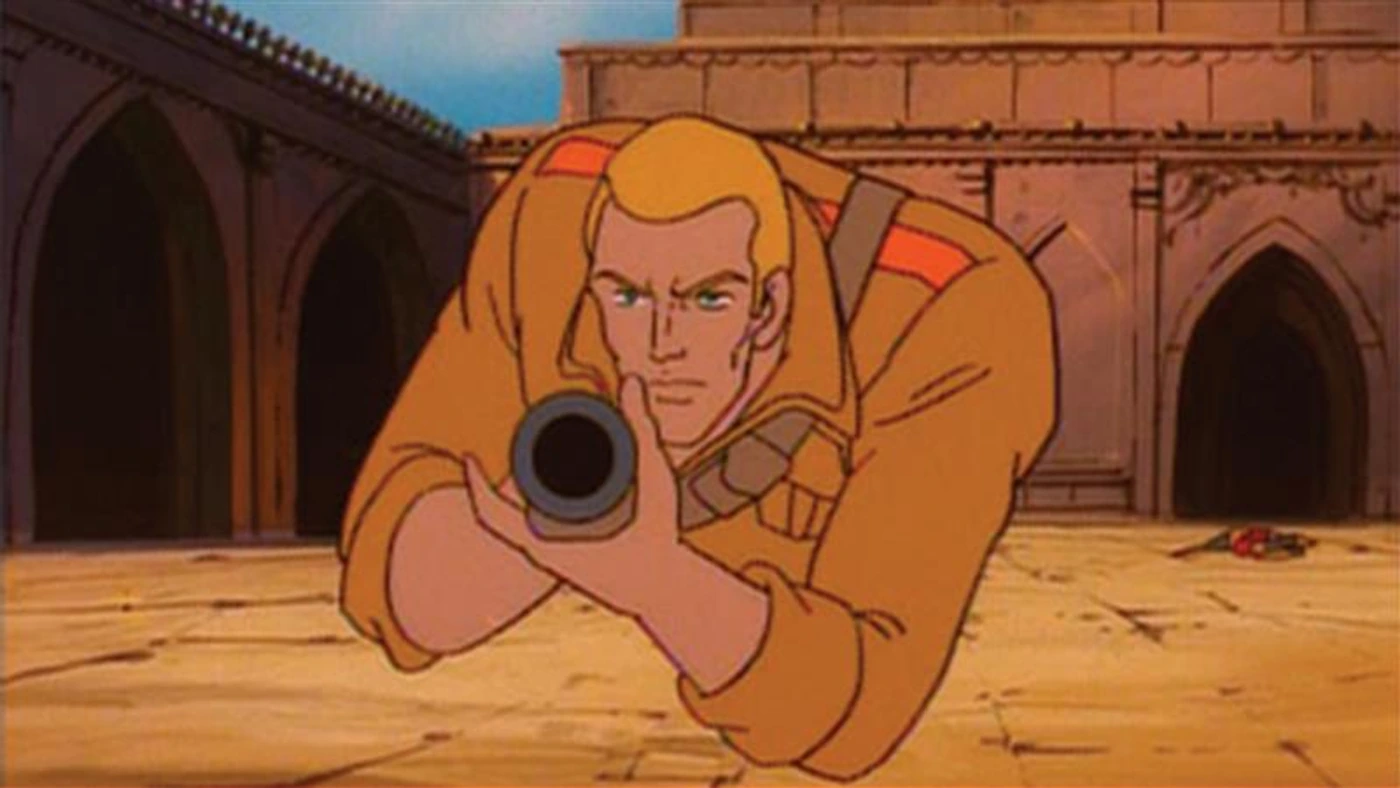
The simplicity can be a limitation too. A character defined by competence risks becoming less vivid than the people allowed to complain, joke or behave unpredictably. Duke works best when the story gives that competence pressure to respond to, rather than assuming that being the person in charge is enough to make every scene interesting.
Scarlett contributes a different kind of steadiness. She belongs in the mission, with training and a willingness to act, and the show frequently uses her as more than a person reacting to what the men have decided. Her costume and weapon make her easy to identify, but her usefulness comes from behavior: alertness, initiative and an understanding of the people around her.
In a cast this large, those qualities are especially valuable. She can take part in the broad action without disappearing into it, and she can give a conversation a personal edge when the plot threatens to become a procession of equipment. A plan involving unfamiliar machinery is easier to follow when someone in the room seems to be paying attention to the right things.
The television version should also be allowed to have its own relationships. Fans who knew the Marvel comics encountered a different emphasis in several character connections. The cartoon is not an animated transcript of every comic-book development. Treating its choices as deliberate features of this version makes the experience clearer than importing an entire separate continuity into every scene.
Together, Duke and Scarlett help the enormous operation remain accessible. The show can introduce another specialist, send everyone across the globe or unveil a weapon with an unreasonable name. These central figures provide something human to follow through the noise. A team full of memorable costumes still needs people who make its immediate business understandable.
Flint and Lady Jaye Could Make a Briefing Interesting
Flint’s beret did a remarkable amount of work. Before the dialogue had fully established his attitude, the silhouette suggested confidence, training and a willingness to take charge. Then Bill Ratner’s voice gave that image a personality: capable, direct and not entirely without a sense of his own appeal.
He is especially effective when paired with Lady Jaye. Their exchanges make the military organization feel inhabited rather than simply staffed. There can be teasing, disagreement, concern and the sense that two people know how the other thinks. A relationship gives the scene another current underneath the obvious question of who needs to stop Cobra this week.
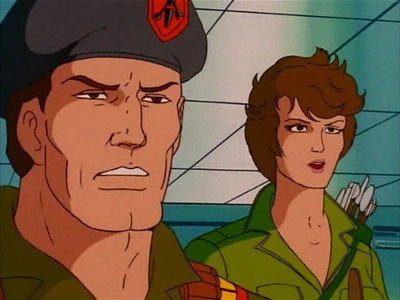
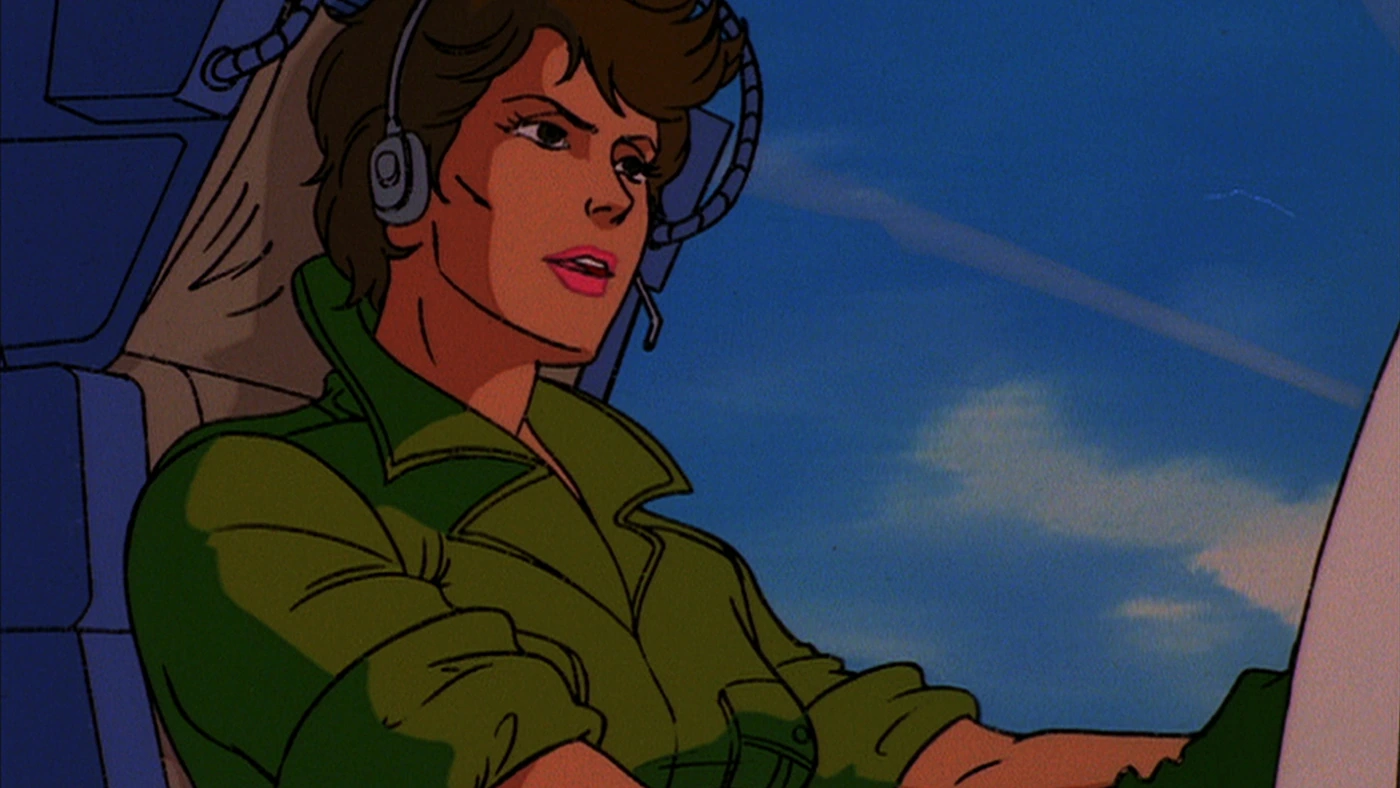
Lady Jaye’s own abilities remain important. She is not merely there to make Flint more likable. Her training, disguise work and readiness to act allow a story to move through her decisions. The equipment may be spectacular, but the program often gets better when the useful resource is someone thinking quickly.
Mary McDonald-Lewis’s performance gives her an identifiable presence beside the bigger voices. There is room for authority without making every line sound identical to the surrounding command language. In a team cartoon, that distinction is more than a pleasant extra. It is how the audience keeps recognizing people when an episode has not given them a long personal introduction.
Flint and Lady Jaye also illustrate why the large cast did not have to be a weakness. When the writers found a productive pairing, a relatively small exchange could suggest a continuing life beyond the mission. We did not need to see every previous conversation to believe the familiarity. The television world could grow sideways through relationships instead of only upward through larger weapons.
The result is different from the royal-family secret in He-Man’s Eternia. G.I. Joe’s people are colleagues before they are anything else, and their closeness develops inside work that is supposedly organized, urgent and highly professional. That makes the personal interruptions particularly enjoyable. Even saving the world occasionally leaves room for someone to notice who is standing beside them.
Snake Eyes, Shipwreck and the Pleasure of Having a Favorite
Snake Eyes could dominate a child’s attention without supplying a running commentary. The mask, the stillness and the specialist mystique made him immediately different from the characters who announced every feeling at full volume. In a noisy series, silence itself became a form of presence.
The cartoon’s Snake Eyes should not be flattened into the complete story later told across comics and other adaptations. His television role has its own balance. He can be a formidable operative and also become part of a strange adventure with a wounded animal, an unlikely ally or a companion whose approach to trouble is much less restrained.
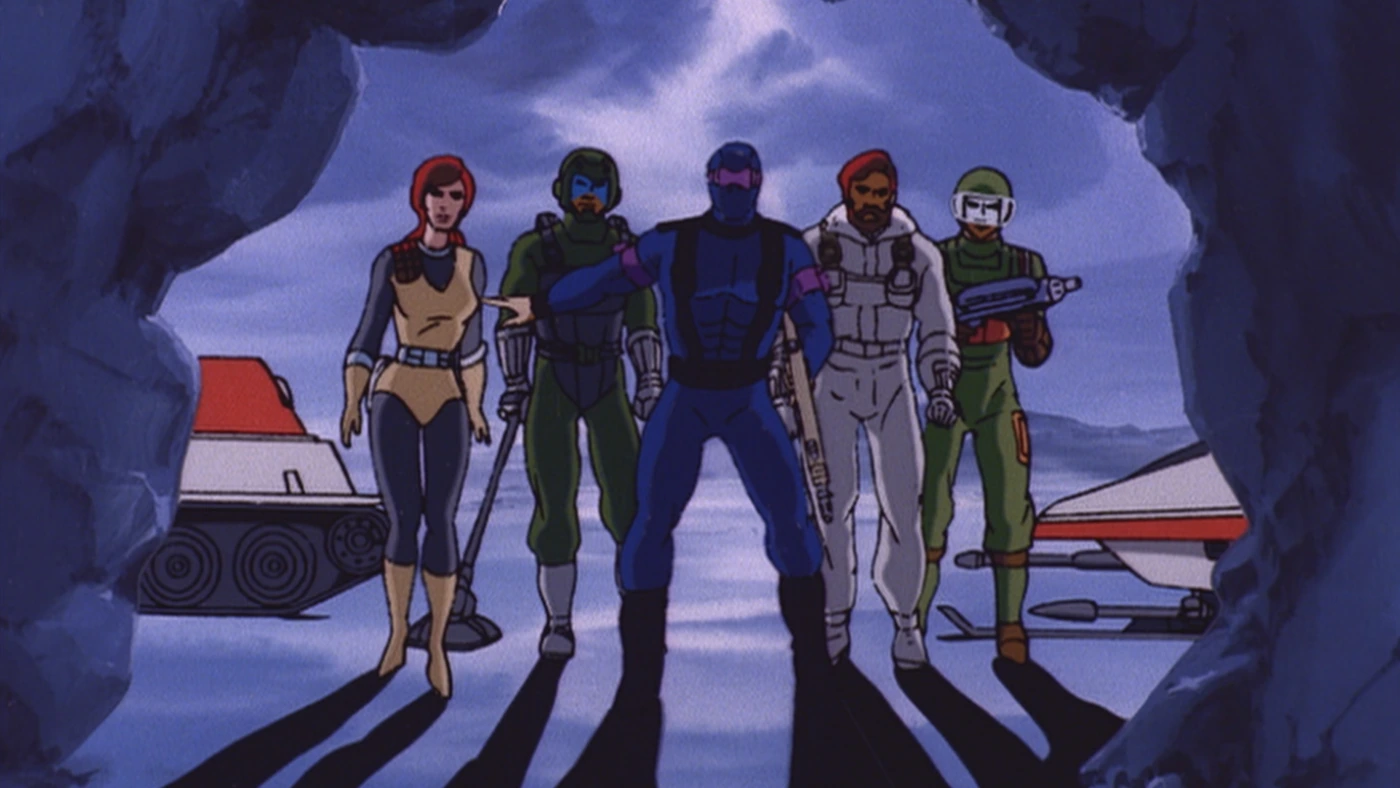
The M.A.S.S. Device story gives him danger that does not depend on a long speech explaining his importance. The Joes’ Arctic mission goes badly, and Snake Eyes is left in circumstances that make his survival uncertain to the others. Concern replaces explanation. We understand that this quiet member of the group is somebody his friends need to recover, not just an attractive design.
Shipwreck approaches television visibility from the other direction. He has a sailor’s clothes, a parrot and a personality that suggests he did not enter the room intending to make himself less noticeable. Neil Ross gives him a voice with space for grumbling, bravado and comic self-preservation. You can imagine him having an opinion about the assignment before the briefing has reached its second sentence.
That makes him useful beyond comic relief. A character with a clear appetite for an easier life can become especially vulnerable when a story offers him one. The later Springfield adventure exploits that possibility. The man who supplies a joke can also supply emotional stakes, precisely because the audience has begun to understand what he might want when the shooting stops.
Put Snake Eyes and Shipwreck near each other and the differences do much of the work. One is visually controlled and quiet; the other is expressive and difficult to overlook. The team does not need them to behave the same way to make them believable partners. The contrast can generate a scene before the plot adds anything new.
This is the great advantage of the roster. A viewer could choose someone for a reason that had little to do with rank or screen time. Perhaps you liked the sailor, the silent commando, the medic, the climber or the person who seemed best equipped for a desert. The cartoon gave children multiple ways to imagine being useful.
The toys of the eighties made those preferences tangible, but the attachment did not begin and end with an accessory list. A voice, a joke or one unusually good episode could promote a figure in a child’s imagination. The file card might describe a specialty. Television made it possible to feel that you knew the person doing the job.
Cobra Was an Organization Built for Personality Clashes
Cobra Commander’s voice is one of the great sounds of eighties animation: sharp, forceful and capable of turning frustration into a room-filling event. Credited as Christopher Collins and widely remembered as Chris Latta, the performer gives the villain a presence that makes even a discussion of logistics feel unstable.
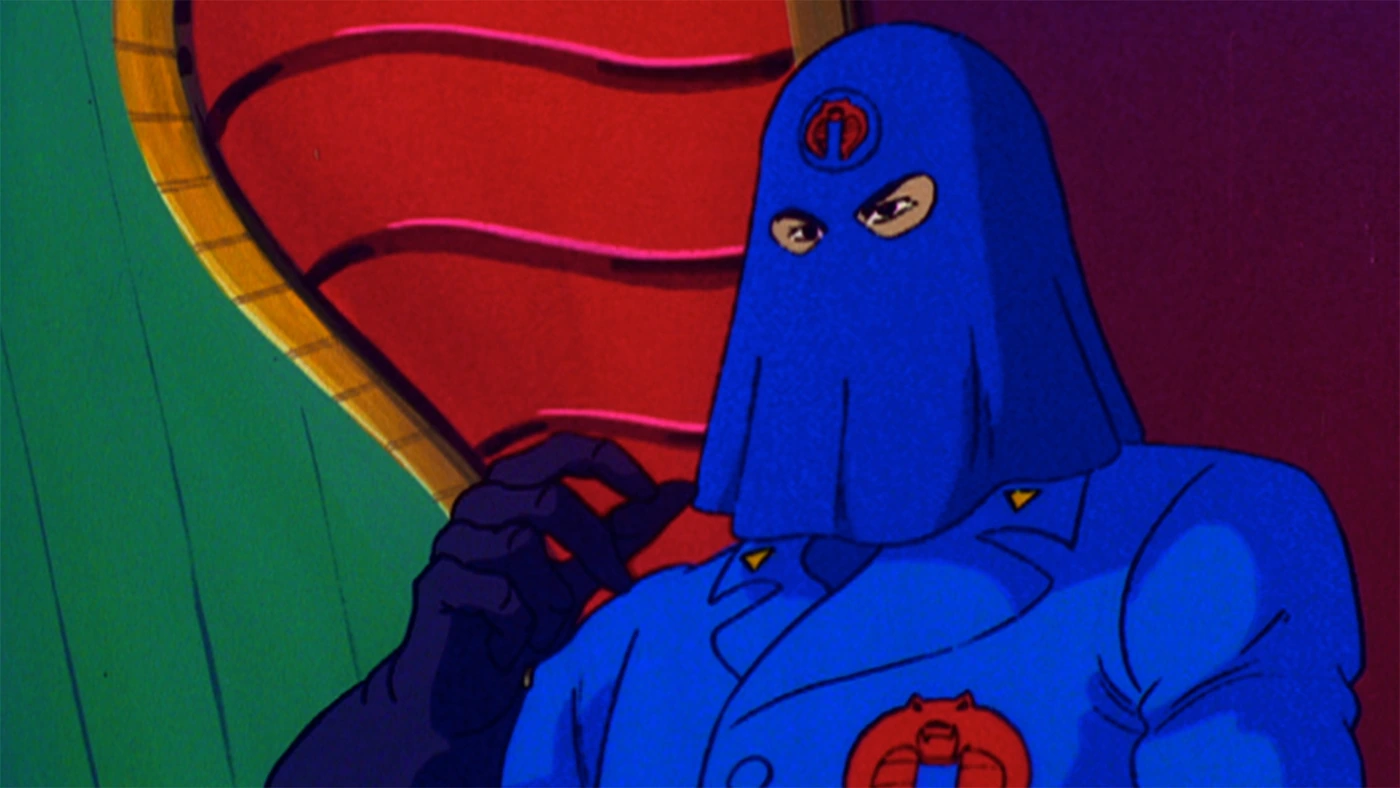
The hood and the battle helmet offer different visual versions of the same advantage: a concealed face. The audience has to read the character through posture, gesture and voice. That makes the outbursts especially important. We do not need a visible expression to recognize that the latest development has failed to meet his expectations.
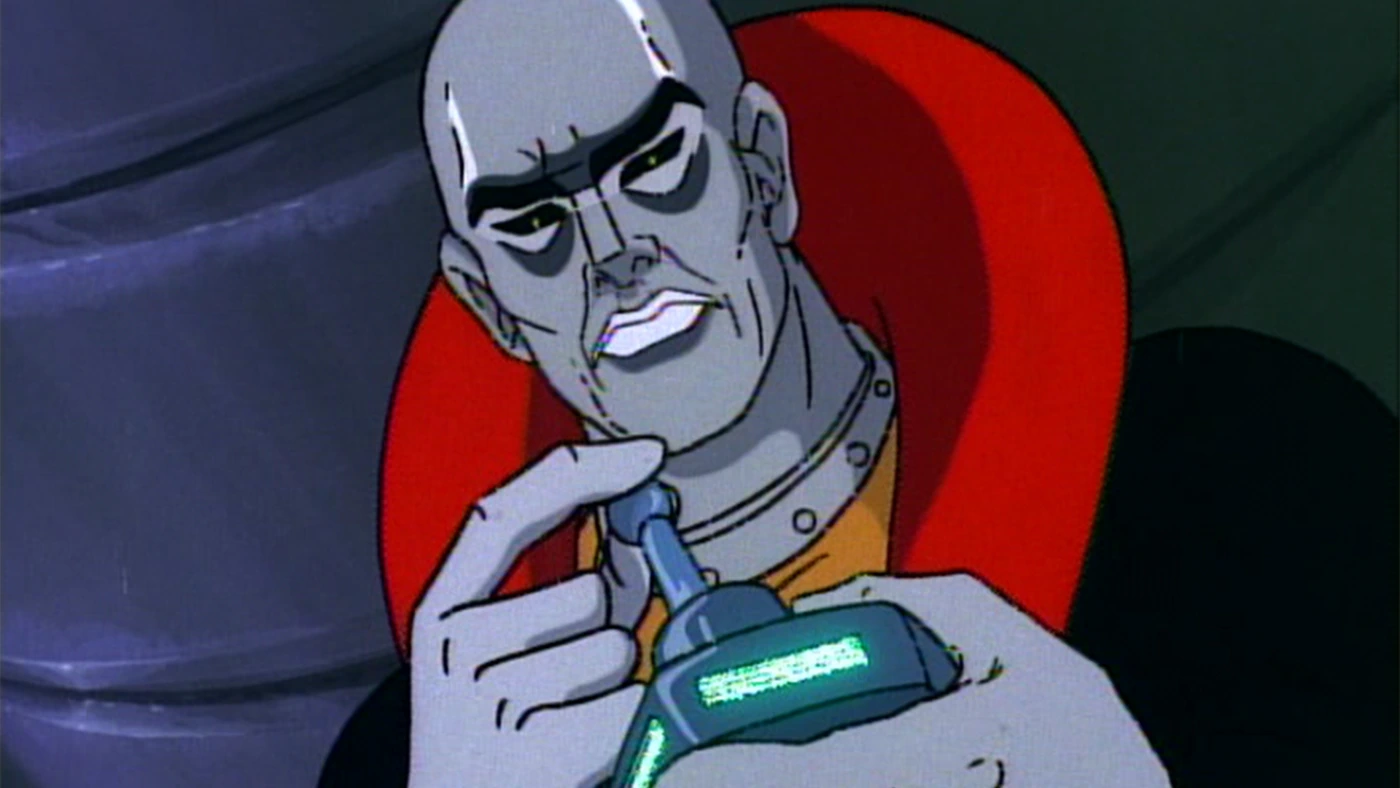
Destro is a splendid contrast. The metal face and the lower, more deliberate presence suggest someone who has considered the transaction before entering the room. Arthur Burghardt’s performance gives him a weight that makes Cobra Commander’s agitation even more apparent. A scene between them can feel like a negotiation in which one participant would prefer to be conducting an opera.
Destro’s relationship with Cobra is also more interesting than simple obedience. He has interests, pride and an identity that do not dissolve into the organization’s uniform. The show gets useful friction from a villainous coalition whose members are not always pursuing the same immediate reward. Agreeing that the Joes should lose does not automatically settle who deserves the credit.
The Baroness adds another form of authority. Her intelligence, poise and capacity for manipulation make her more than a recognizable pair of glasses. Morgan Lofting’s voice supplies an elegance that can remain dangerous without becoming noisy. In a room where people are competing for dominance, restraint can be its own way of taking up space.
That range keeps the enemy side lively. The Joes have to cooperate to solve problems; Cobra frequently has to survive its own personalities long enough to create one. A child can follow the obvious conflict while also enjoying the rivalries happening underneath it. The main plan may involve controlling the world’s energy. The immediate argument may involve who has been making whose job more difficult.
The comedy does not eliminate the threat. A device that can move matter, disrupt weather or interfere with electricity remains dangerous even if its owners are unpleasant colleagues. The series often works by letting those two scales coexist: enormous public danger and an extremely personal argument in the control room.
And the villains’ designs remain wonderfully efficient. The mask, the hood, the glasses and the metal face give the cast different ways to be unreadable. You can recognize them instantly without feeling that you have been given complete access to them. G.I. Joe had plenty of equipment. Some of its best machinery was the relationship between two people standing beside a console.
Zartan and the Dreadnoks Brought Trouble From Another Direction
Zartan does not have the tidy visual relationship to Cobra that a uniformed soldier does. The hood, the face markings and the disguise skills suggest someone whose usefulness depends partly on being difficult to place. Cobra can employ him without making him feel like a person who has enthusiastically completed the organization’s training manual.
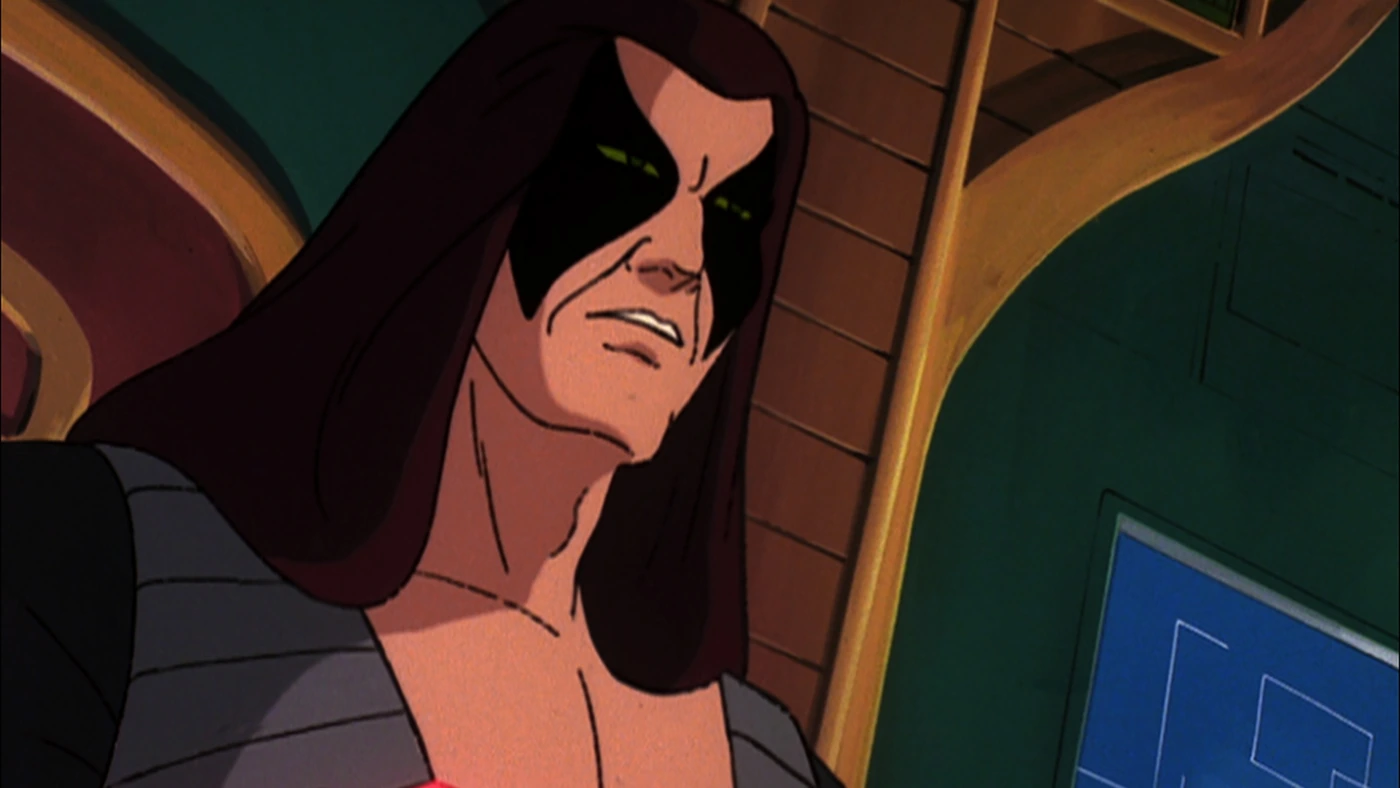
That uncertainty gives the writers another kind of danger. An enemy who can impersonate someone changes the problem from stopping an attack to deciding whom to trust. The machinery may remain spectacular, but the tension can move into a room: a familiar face is speaking, and something about the situation is wrong.
The Dreadnoks widen the contrast. Their biker identities and unruly energy stand apart from Cobra’s military spectacle. They can look like a separate source of bad decisions that has been invited to participate in an even larger one. The difference helps the enemy force feel assembled from competing interests rather than grown in one enormous uniform factory.
This also makes their role in The Pyramid of Darkness effective. The threat involves a vast plan, but the opening has practical acts of infiltration and sabotage. Zartan and his associates are useful because they can get inside an arrangement the Joes believe they control. A huge organization can still be vulnerable to someone getting through the wrong door.
For a child, the disguise concept was especially easy to borrow for play. You did not need the exact screen equipment to invent the moment when a trusted visitor turned out to be somebody else. The tension came from what the characters knew. Even a mission conducted with mismatched figures could suddenly acquire a convincing surprise.
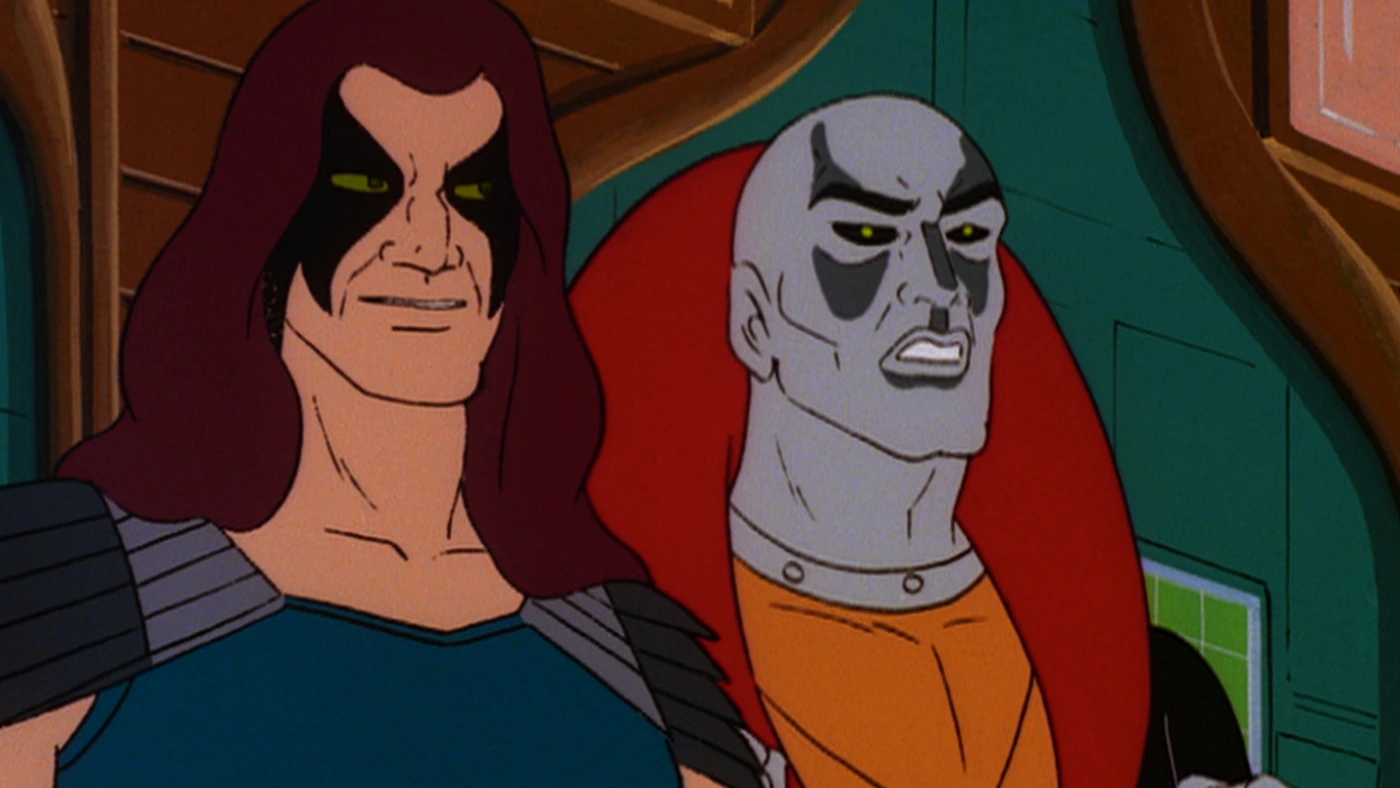
The limitation is that the device can become a convenient answer to almost any security question. When disguise solves every access problem, the audience starts wondering whether anyone at headquarters has considered a second form of identification. The better stories use Zartan’s abilities to complicate a specific relationship or assignment, rather than treating them as an all-purpose key.
Still, his presence changes the flavor of the conflict. Cobra Commander can threaten the world in public. Zartan can make the Joes doubt what is standing directly in front of them. The show has room for both forms of villainy, plus a group of bikers who appear unlikely to improve either situation by exercising restraint.
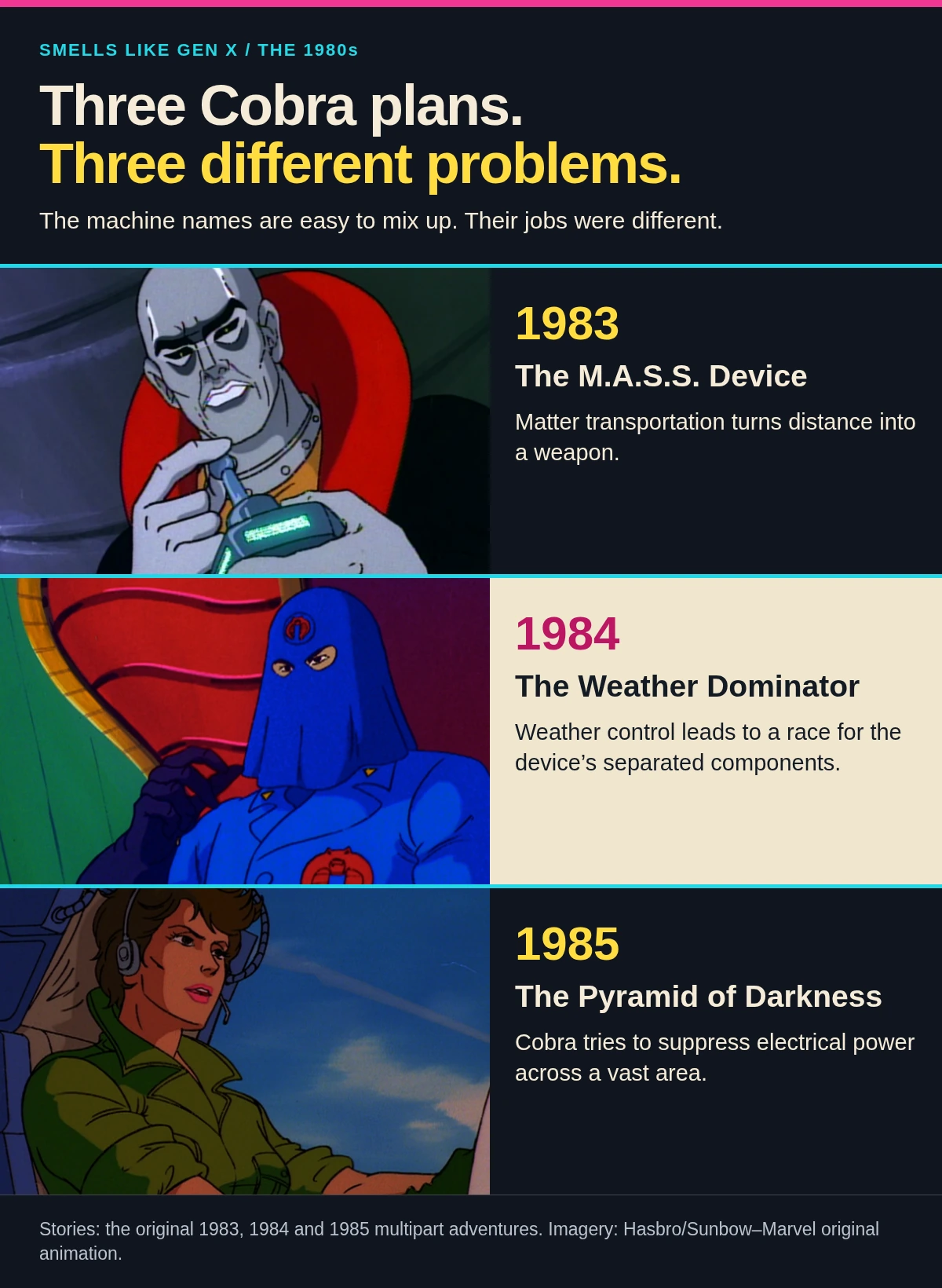
Three Big Cobra Plans, Three Different Kinds of Adventure
The early multipart stories gave the television world its foundations. Each built an adventure around a powerful device, but the devices did not all do the same thing. Remembering their differences helps restore the particular texture of those first encounters. Cobra was not simply pressing the same large red button in a different headquarters every year.
The M.A.S.S. Device: The World Becomes Reachable
The 1983 miniseries makes transportation itself frightening. A machine capable of moving people and material over great distances can turn security into a temporary inconvenience. The Joes need their own answer to it, and the search for the necessary elements sends the story into distinct environments. The premise naturally creates multiple missions instead of confining everyone to one control room.
Duke’s capture gives the large technological threat a human point. Snake Eyes’s danger during the Arctic search supplies another. The adventure can move from a grand announcement about what Cobra can do to a smaller question about who is coming home. Those changes of scale help the miniseries feel like more than an extended demonstration of a new machine.
The variety is part of its appeal. A team built from specialists should encounter problems that reward different skills, and the search structure creates those opportunities. Different places require different decisions. The show’s enormous roster begins to feel like a resource the story can actually use, rather than decoration assembled for the opening.
It is also a useful introduction to G.I. Joe’s willingness to become strange. The mission framework may look military, but the adventure is perfectly happy to include giant creatures and unlikely temporary alliances. The uniforms establish the teams. They do not oblige the world around them to follow the rules of a realistic combat drama.
The Revenge of Cobra: Weather Is Now a Weapon
The 1984 story turns the Weather Dominator into a reason for a global chase. Once its separated components must be recovered, the adventure gains a clear repeating question: who will reach the next piece first? It is an old, dependable story shape, and the series dresses it in enough changing locations and personalities to keep it moving.
The arrival of additional characters matters because a multipart story has time to make a new face feel useful. Someone can join the action, demonstrate an ability and establish a relationship before the installment ends. The roster grows through participation, which is more satisfying than a briefing officer simply reading out another name.
Shipwreck is particularly well suited to that kind of entrance. His personality immediately changes a conversation. A story already full of equipment and urgent objectives gains someone who can make the journey sound like a personal inconvenience. The contrast makes the serious machinery more fun without requiring that the machinery stop being dangerous.
The Spirit and Storm Shadow encounters also belong to the cartoon’s own emphasis. Viewers who knew Snake Eyes and Storm Shadow’s relationship from other versions should not assume the television series stages the same rivalry in the same way. The cartoon uses its cast according to the needs and connections of this particular screen world.
The Pyramid of Darkness: The Team Gets Scattered
The 1985 opening adventure broadens the scale again, with Cobra trying to deny electrical power across a vast area. It is a wonderfully excessive plan for an organization already dependent on a great deal of complicated equipment. Practical questions are not always invited to the Cobra presentation.
The story’s movement comes from dividing attention among different situations. A space-station takeover, the damage to Joe headquarters, stranded characters and attempts to position the equipment create multiple fronts. The audience has reasons to care about people in separate places, rather than simply waiting for the hero to arrive at one final door.
Shipwreck and Snake Eyes are an especially productive combination because their responses are so different. The quiet operative and the conspicuous sailor do not need lengthy explanations of their contrast. Placing them in a difficult situation lets the character designs and behavior begin generating entertainment immediately.
The contest inside Cobra adds another complication. Tomax and Xamot are not merely standing nearby to make the room look expensive. Rival interests can interfere with the original chain of command. The Joes are trying to stop the plan while its owners are also fighting over who gets to control it. That is a reliable recipe for a long afternoon on both sides.
A Team of Specialists Made Play Feel Like Planning
Part of G.I. Joe’s appeal was organizational. A child could arrange the characters into a mission and feel that the choices had a purpose. You needed someone who could fly, someone who could repair something, someone who understood the terrain and somebody willing to investigate the ominous opening in the wall. The team supplied a ready vocabulary for those decisions.
That pleasure is different from simply choosing the strongest character. The ideal person for one problem may be less useful for another. The program did not always honor specialization consistently, but the basic idea encouraged children to think in combinations. A medic, a climber or a communications expert could matter without having the most dramatic weapon.
The large cast also allowed several kinds of confidence. Some characters were reassuringly professional. Others were funny, eccentric or unusually enthusiastic about their specialty. A favorite could be someone whose working style appealed to you, not just someone whose name appeared most prominently. The series made competence look varied.
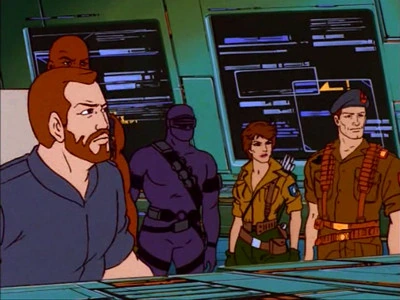
There was room for characters such as Roadblock to have interests that extended beyond combat. His cooking is an obvious example: a personal skill that makes him feel less like a weapon platform. Gung-Ho’s physical presence, Alpine’s climbing and Bazooka’s different rhythm likewise contribute to the sense that the organization contains people rather than a single repeated personality.
The roster was not equally well served. Some characters received more definition than others, and a new arrival could fade into the background once the immediate introduction was over. It is fair to remember the favorites without pretending every member of the team received a fully developed dramatic life. Sometimes the accessory was doing more work than the script.
Even so, the basic arrangement was generous to imagination. A child could promote a background figure to the center of a new story. Television had established enough of the organization that the invention felt plausible. The episode ended, but the team did not have to stand down. There were still extremely important assignments available behind the couch.
The War Was Spectacular, and Its Consequences Were Carefully Managed
G.I. Joe presented a great deal of military imagery in a form designed for children. Weapons, uniforms, aircraft and organized conflict supplied the excitement. Bright energy fire, extraordinary machines and repeated escapes helped keep the consequences within a particular television world. The result is not an accurate account of what combat does to people.
The famous ease with which a pilot could escape a destroyed aircraft is part of that memory. It becomes funny when viewed through adult eyes because the spectacle and the danger do not always seem to belong to the same set of physical rules. A vehicle can suffer a spectacular end while the story finds a way to preserve the person inside it.
That convention gave the writers permission to stage enormous action without making every episode a story of bereavement. It also put distance between the fantasy and the real equipment it borrowed from. A child could receive a thrilling image of organized force while being shielded from much of the human cost associated with it.
Both parts deserve acknowledgment. The cartoon was exciting, and it simplified the moral picture. Cobra supplied a clearly identified enemy, while the Joes were authorized to act. Real conflicts do not arrive with emblems that settle every ethical question, and a return visit does not require us to mistake the show’s clarity for a complete picture of the world.
Its portrayals of places and peoples also vary in quality. The globetrotting format sometimes leans on quick visual shorthand or stereotypes instead of allowing a setting to feel lived in. Certain characters and stories make more room for individual dignity than others. The correct response is not to insist that every childhood image was harmless simply because we remember enjoying it.
At the same time, criticism is more useful when it looks at the actual episode. The show could offer cooperation, loyalty and a willingness to protect someone outside the team, alongside its simplified military fantasy. Those values do not erase the limits. They help explain why viewers might have taken more than one kind of feeling away from the same program.
For me, the most interesting question on a return visit is how the characters behave when the immediate mission stops being simple. An enemy may need help. A supposed victory may look frightening. A familiar person may not be trustworthy. In those moments, the show sometimes gets beyond the certainty promised by its opening, even while keeping the same uniforms.
When G.I. Joe Wandered Into a Nightmare
The show’s reputation for loud, reassuring action can obscure how strange some of its stories became. Two multipart adventures in particular are worth revisiting when the series is being remembered only as a parade of vehicles. Both use familiar characters to make the apparent safety of the television world feel less dependable. The discussion below includes their central premises and reveals part of the deception in Springfield.
Worlds Without End
The idea is immediately unsettling: some of the Joes reach a version of reality in which Cobra has won. A familiar enemy is no longer a weekly interruption that the team expects to remove. It has become the world’s governing condition. The characters have to move through the consequences of a result the regular series normally prevents.
That change makes the setting frightening in a different way from another powerful weapon. The audience is used to the Joes restoring order. Here the order itself is hostile. Recognizable places and relationships can no longer be treated as automatic sources of reassurance, and the characters cannot assume that behaving as they always have will produce the usual result.
The premise also gives defeat weight without requiring the main continuity to remain permanently transformed. An alternate world can show an outcome the ordinary series cannot keep. That freedom is part of the attraction and part of the limitation: the story can travel into darkness, but it still has a route back to the television arrangement we recognize.
What lingers is the temporary loss of certainty. The enemy’s victory is not an abstract possibility discussed at a briefing. It is the environment the characters must now navigate. A child who expected another mission could suddenly find the show asking a larger question about what the world would feel like if the familiar rescuers had not succeeded.
There’s No Place Like Springfield
Shipwreck wakes into an apparently different life. Years seem to have passed. The struggle with Cobra is supposedly over, and the story offers him a home and relationships that suggest an ordinary future. The sailor we know has been placed inside an answer to what he might want beyond the mission.
The deception works because it targets a person rather than a vehicle. Cobra is not simply trying to overpower him. It is trying to make him accept a constructed reality and respond to the feelings that reality creates. The threat has moved into memory, intimacy and the difficulty of deciding whether your own experience can be trusted.
The artificial Springfield and its synthoid inhabitants turn domestic reassurance into something deeply unpleasant. What looks like safety has been arranged for an enemy’s purpose. That is a remarkably uncomfortable idea to bring into a cartoon whose normal rhythm depends on the audience knowing which group is dependable.
Shipwreck’s comic identity makes the turn more effective. A character established through jokes and complaints is allowed to carry genuine distress. The audience already recognizes his personality, so seeing it placed under this kind of pressure matters. He does not have to become a different, solemn hero for the story to treat him seriously.
These episodes are not proof that every G.I. Joe installment was a hidden psychological masterpiece. Plenty are much more ordinary. They are evidence that the format had room for a particular kind of unnerving adventure, and that the cast could support it. A show built to keep returning to normal could still spend a disturbing amount of time making normal look unsafe.
Smaller Stories Could Reveal the People Under the Uniforms
The giant plots are easy to remember because they arrive with giant objects. Some of the more useful character moments come from stories that attach Cobra’s plans to something personal. A relative, an old relationship or a family business can make the same broad conflict feel closer to the people doing the work.
“Red Rocket’s Glare” is a good example of the series’ peculiar combination of ordinary and absurd. Cobra-linked business interests pressure diners, while the restaurants’ decorative rocket shapes become part of an actual weapons scheme. Roadblock’s family connection gives the situation a stake beyond the equipment. The villainous plan is enormous; the initial pressure can still look like somebody trying to keep a business open.
“Captives of Cobra” goes directly after the team’s families. Kidnapping and mind control turn people the Joes care about into part of the threat. The episode gets tension from a conflict the usual identification system cannot settle: recognizing a loved one does not tell you whether that person is acting freely.
“The Gamesmaster” puts enemies in a shared predicament under another person’s control. That kind of setup is useful because it interrupts the assumption that the existing sides determine every immediate choice. If a third party has turned everyone into pieces in a game, cooperation and distrust have to be reconsidered in the same scene.
The show is not always subtle about these pressures, but it does not need exquisite realism to make the situations readable. A child understands why protecting a family member is different from protecting an anonymous installation. They can understand why an enemy might temporarily become a necessary partner. The story has a useful emotional shape before the machinery gets involved.
Those are good episodes to place beside the early miniseries when returning to the program. They reveal how a familiar cast could carry different kinds of jeopardy. The next threat did not have to become larger to become more interesting. Sometimes the better move was to bring it closer to somebody’s front door.
The Voices Made the Organization Sound Inhabited
The broad designs needed performances that could be recognized quickly, and the series had them. Michael Bell’s Duke and Bill Ratner’s Flint supply different versions of command confidence. Mary McDonald-Lewis’s Lady Jaye and B.J. Ward’s Scarlett give the team distinct female presences. The differences help a large scene remain understandable without requiring every line to begin with a name.
On Cobra’s side, the range is just as important. Collins’s Cobra Commander can fill the room with agitation; Burghardt’s Destro can make a slower delivery feel more imposing. Lofting’s Baroness does not need to compete on volume. An argument becomes entertaining because the participants sound as different as they look.
The performers could give a character a life beyond the immediate instruction in the script. A complaint can suggest habits. A confident response can become slightly amused rather than simply forceful. A moment of alarm can reveal that the person who usually supplies a joke is taking the danger seriously. Those are small choices, but a daily cartoon accumulates them.
The sound effects and music work at another level. A recognizable cue can push a scene toward urgency before the animation has completed its next movement. The action needs that support, especially when multiple characters and machines are sharing a short stretch of screen time. Sound helps organize the spectacle as well as enlarge it.
It is one reason a modern imitation rarely recreates the whole feeling by copying a costume. The old voice belongs to the memory of the person. A line delivered in the wrong rhythm can make an otherwise familiar design feel oddly unoccupied. We were attached to performances, even when we were too young to think much about the people at the microphones.
The Safety Message Survived the Mission
Then came the part where a Joe appeared in an ordinary childhood situation and explained what someone needed to know. After an episode involving global catastrophe, the show could suddenly narrow its attention to a much smaller problem. The public-service segments were a separate little television form, with their own setup, intervention and final reassurance.
The contrast is part of why they stayed memorable. The main story might involve a technologically extravagant attempt to control the world. The short ending would place a recognizable member of the team in a situation close to the audience’s own scale. The hero did not need an aircraft carrier to be useful. Sometimes the useful resource was information.
The closing phrase “Knowing is half the battle” became portable in a way that few individual plot details could match. It was short, repeatable and attached to a familiar figure. A child could remember the line even after forgetting the exact problem that prompted it. That is effective television construction, whether or not every segment was equally persuasive.
There is a commercially convenient side to the arrangement. A trusted character delivering a practical lesson strengthens the audience’s sense that the character is on their side. It gives the franchise a reassuring everyday presence beyond the action. The message and the marketing relationship occupy the same small piece of screen time.
But it is too easy to become smug about that from a distance. A useful idea does not automatically become useless because a commercial character delivers it. Children could take the message seriously. The segment could make the character feel approachable. The arrangement can be examined honestly without pretending its only possible effect was manipulation.
Later internet parodies are a different layer of memory. They borrowed the familiar form and changed the experience, sometimes so successfully that the altered version became the first thing adults remembered. They should not be used as evidence for what the original segments said. The oddness of the internet belongs to a later chapter, even when it is wearing an eighties uniform.
The Saturday-morning cartoon ritual had its own mixtures of entertainment, advertising and direct addresses to children. G.I. Joe’s syndicated world shared that wider television environment without being one identical national Saturday lineup. Whatever the local schedule, it had worked out how to get one final sentence into the room.
The Toys Were Part of the Story, but the Story Had Its Own Life
The smaller G.I. Joe: A Real American Hero toy line and Marvel comic began in 1982, before the first television miniseries. The animation was one part of a wider arrangement in which characters could move between packaging, comics, advertising and screen adventures. A child could meet the same name in several places and receive a slightly different amount of information each time.
The cross-promotion is impossible to miss. A new vehicle can be an exciting story element and an invitation to want a new object. A new specialist can solve a problem while also expanding the available roster. We do not need to pretend the commercial interests were invisible in order to explain why the show was enjoyable.
The important distinction is between the reason the property existed and the work a particular episode did. A commercially motivated program still needs scenes, performances and enough variety to make the next installment welcome. Cobra’s devices may sell the scale of the fantasy, but a character’s fear, joke or unexpected loyalty can become the part a viewer keeps.
The comics also deserve their own space. Larry Hama’s work and the file-card background helped make the property unusually rich, but the cartoon does not reproduce all that material unchanged. Importing a comic-book relationship or a later revelation into every television scene can obscure the version actually on screen.
That is especially important with a character such as Snake Eyes, whose wider history can dominate retrospective discussion. The television stories have their own use for him. They are worth watching for that use, even when they do not deliver every detail a collector or comics reader associates with the name.
The same screen-and-toy conversation helps connect the Joes with Transformers’ original television run. Both offered a large population of distinctive characters and objects, but the storytelling pleasures differed. G.I. Joe invited us to assemble specialists. Transformers invited us to discover another identity inside a familiar machine. The toy aisle contained related business ideas and quite different imaginative games.
Serpentor, the Movie and the Point Where the World Changed
The 1986 “Arise, Serpentor, Arise!” story changes Cobra from within. Doctor Mindbender’s attempt to create an extraordinary ruler does not simply give the Joes another enemy to recognize. It challenges the position of the enemy leader they already know. Cobra’s internal conflict becomes a more central part of the ongoing arrangement.
Serpentor’s arrival is flamboyant enough to suit the organization, but the shift has a cost in tone. Cobra Commander’s fallibility had made him entertaining. Introducing a new figure who is supposed to embody superior leadership changes the balance between threat, comic failure and the personalities already in the room. Different viewers will prefer different parts of that change.
The historical-DNA premise is also a useful reminder of how far the cartoon had traveled from realistic military adventure. It could borrow the language of science and then send the result directly into fantasy. The audience did not need to mistake it for a biology lesson. The attraction was an escalating theatrical idea, with Cobra once again convinced that the next spectacular solution would finally settle everything.
The 1987 movie pushes the strange material further through Cobra-La. Its biological imagery and expanded mythology feel different from simply chasing components of a machine. Some viewers enjoy the larger, weirder world. Others miss the more immediately recognizable Joe–Cobra contest that had made the earlier episodes comfortable company.
There is no need to turn that difference in taste into a test of whether someone remembers the franchise correctly. The movie is a genuine part of the eighties screen story, and it changes how that story feels. It can be appreciated as an ambitious turn without insisting that it preserves every pleasure of the earlier television format.
The DiC continuation, beginning with Operation Dragonfire in 1989, is another distinct phase. Its later episodes mostly belong to the next decade. For an eighties return visit, it is enough to identify that boundary clearly and recognize that the original television memory contains changes, not one long freeze-frame of the same cast and style.
What Makes a Return Visit Worthwhile
Start with the early multipart stories if you want to feel the television world assembling around you. The M.A.S.S. Device and Revenge of Cobra adventures make the basic attractions clear: distinctive specialists, a theatrical enemy, unusual places and problems large enough to require several people. They also show how the roster could expand without stopping the story for a catalog presentation.
Then try a character-centered or stranger episode. Springfield and Worlds Without End reveal the darker possibilities. Red Rocket’s Glare and Captives of Cobra bring the conflict closer to ordinary relationships. A small selection gives a better sense of the show than choosing only its loudest scenes or its most ridiculous mistakes.
Do not expect every installment to hold up equally. The animation, assumptions, shortcuts and repeated escapes are visible. Some characters are better served than others. The series is more enjoyable when you allow yourself to notice those things instead of defending every decision as an essential part of childhood.
And keep the local television experience in mind. The sense of an afternoon appointment was part of the attachment, even though the hour varied. TV Guide and the week’s listings helped organize a world in which the next episode might arrive whether or not the household was ready. That practical urgency is difficult to reproduce on demand, but it helps explain the strength of the memory.
What I still like is the room the show gave us to choose. There was more than one kind of hero, more than one useful skill and more than one personality worth following. The organization was impossibly large and the missions were often ridiculous. The invitation underneath was simple: find your people, work out what you can contribute, and show up when somebody needs help.
That feeling could outlast a particular vehicle or plot. The half-remembered cartoons of the decade remind us how easily a name can disappear while an image remains. G.I. Joe supplied enough memorable people that many of us kept both. Cobra’s latest plan was temporary. Picking a favorite could become a very long-term commitment.
Questions About G.I. Joe in the Eighties
Did the G.I. Joe cartoon begin in 1983 or 1985?
Both years mark different stages. The M.A.S.S. Device five-part miniseries began the television story in 1983, followed by The Revenge of Cobra in 1984. The regular Sunbow–Marvel syndicated series began in 1985. Digital services may package those earlier miniseries inside a season listing.
Was G.I. Joe a Saturday-morning network cartoon?
The classic eighties series was syndicated to local stations rather than carried as one standard national network Saturday block. Local scheduling varied. Its after-school identity reflects how many viewers encountered it, not a single broadcast hour shared by the entire country.
Are the cartoon and Marvel comics the same continuity?
They share characters and the larger property, but their stories and relationship emphases differ. A detail from Larry Hama’s comics should not automatically be treated as something established in the Sunbow cartoon. Each version has its own storytelling choices.
When did G.I. Joe: The Movie come out?
The animated G.I. Joe: The Movie belongs to 1987. It is separate from the early television miniseries and from The Transformers: The Movie, released in 1986. Cobra-La and the movie’s larger mythology mark a distinctive turn within the Joe screen story.
What was Operation Dragonfire?
Operation Dragonfire was the 1989 miniseries associated with the DiC-produced continuation. It came after the main Sunbow period. Most of the subsequent DiC series is a nineties chapter, so it should not be confused with the original mid-eighties run.
Sources & Further Reading
- Original Sunbow–Marvel production documents, scripts and miniseries history
- Prime Video: original early miniseries and Pyramid of Darkness episode descriptions
- Plex: original-series episode and performer catalog
- Worlds Without End: original-series episode information
- There’s No Place Like Springfield: original-series episode information
- Red Rocket’s Glare: family-business premise and original episode
- 1989 Operation Dragonfire production script
- 1982 Hasbro Toy Fair material preserved in the Sunbow–Marvel archive