The Transformers in the 80s: Robots, Toys and Appointment Cartoons
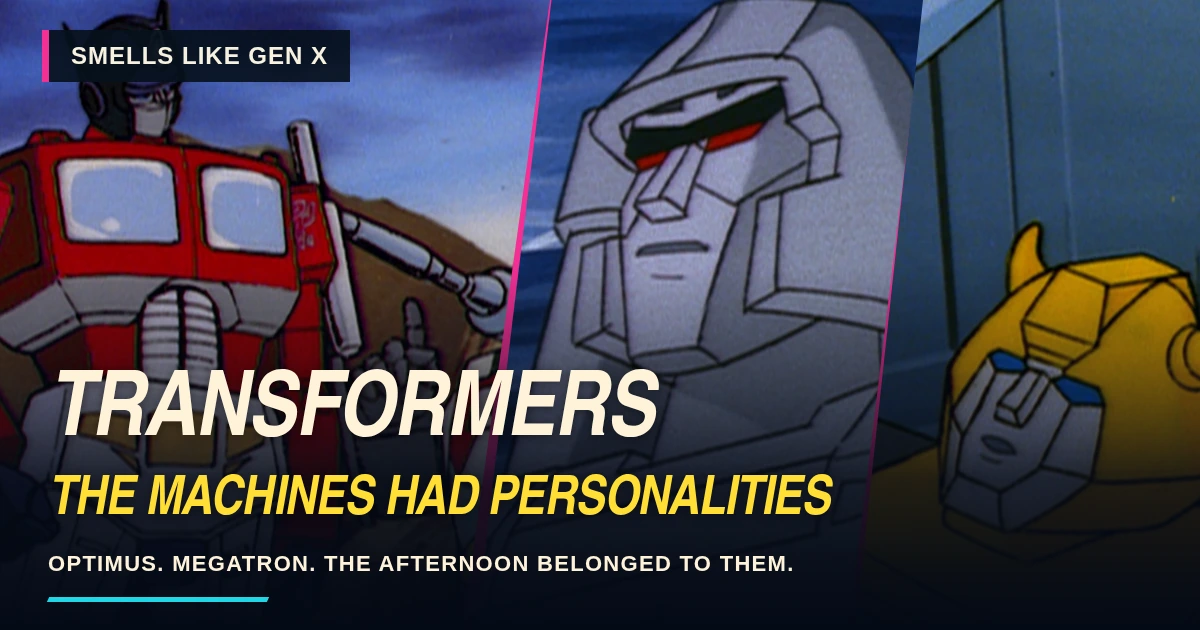
A red truck, a yellow car and a silver tyrant. The transformations caught our eye; the personalities kept the appointment.
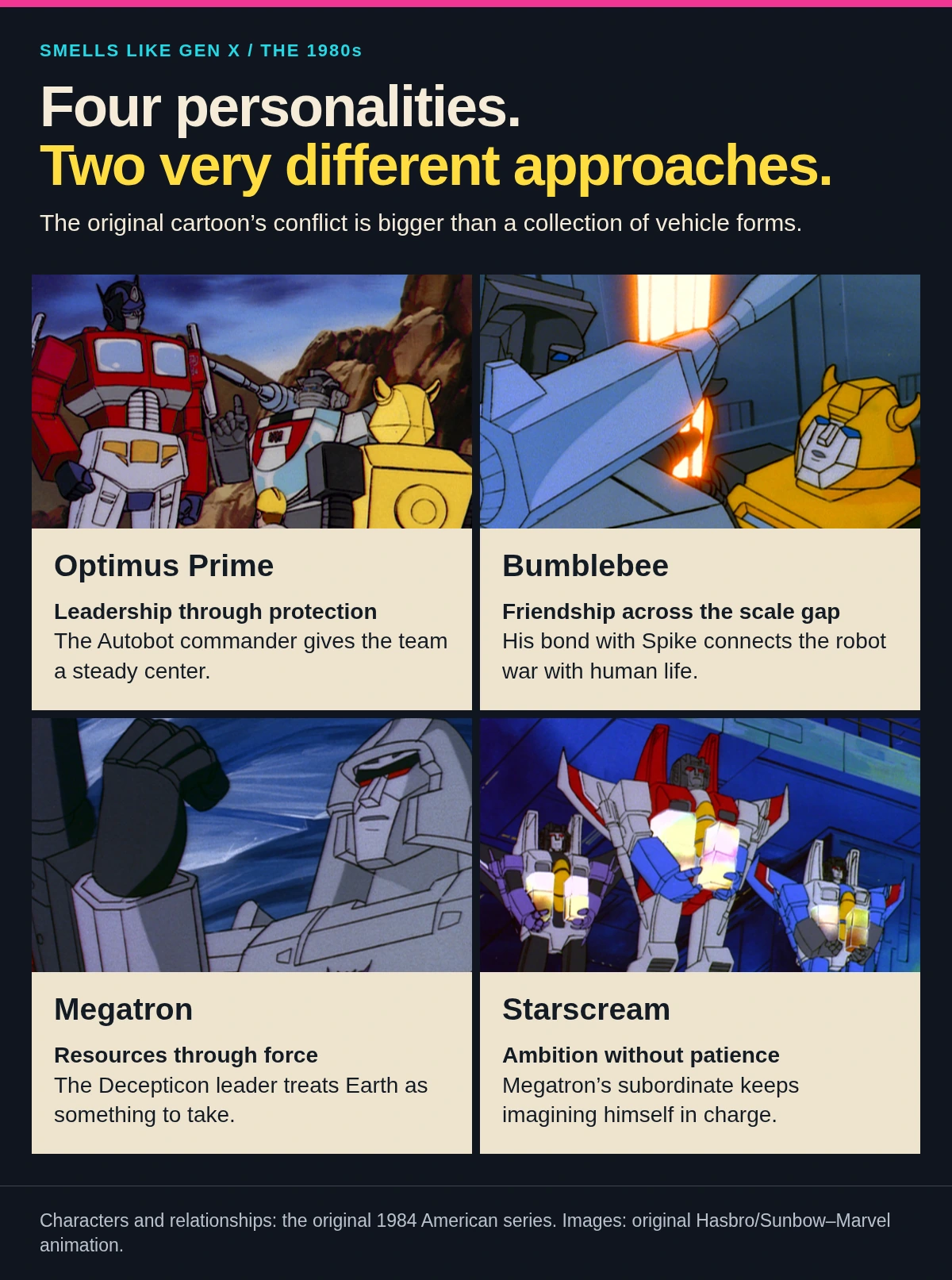
Prime brought reassurance. Bumblebee brought friendship. Starscream brought another problem.
A truck cab could be a decent toy. A truck cab that unfolded into a robot was a better proposition. Give that robot a steady voice, a sense of responsibility and a collection of friends who needed him, and suddenly putting the toy away felt a little like ending a conversation.
That was the trick of the original Transformers cartoon. The mechanical change got our attention. The personalities made us argue about who mattered. Optimus Prime was dependable. Megatron was furious. Starscream was already interviewing for Megatron’s job, usually while Megatron was standing right there. Bumblebee seemed like someone you could actually spend an afternoon with, assuming your afternoon could accommodate a Decepticon attack.
I still like that mix of enormous stakes and very recognizable behavior. These were refugees from another planet fighting over Earth’s energy, yet a good portion of the conflict involved bad managers, impatient colleagues and somebody touching equipment he had been expressly told to leave alone. The robots were extraordinary. Their aggravations were familiar.
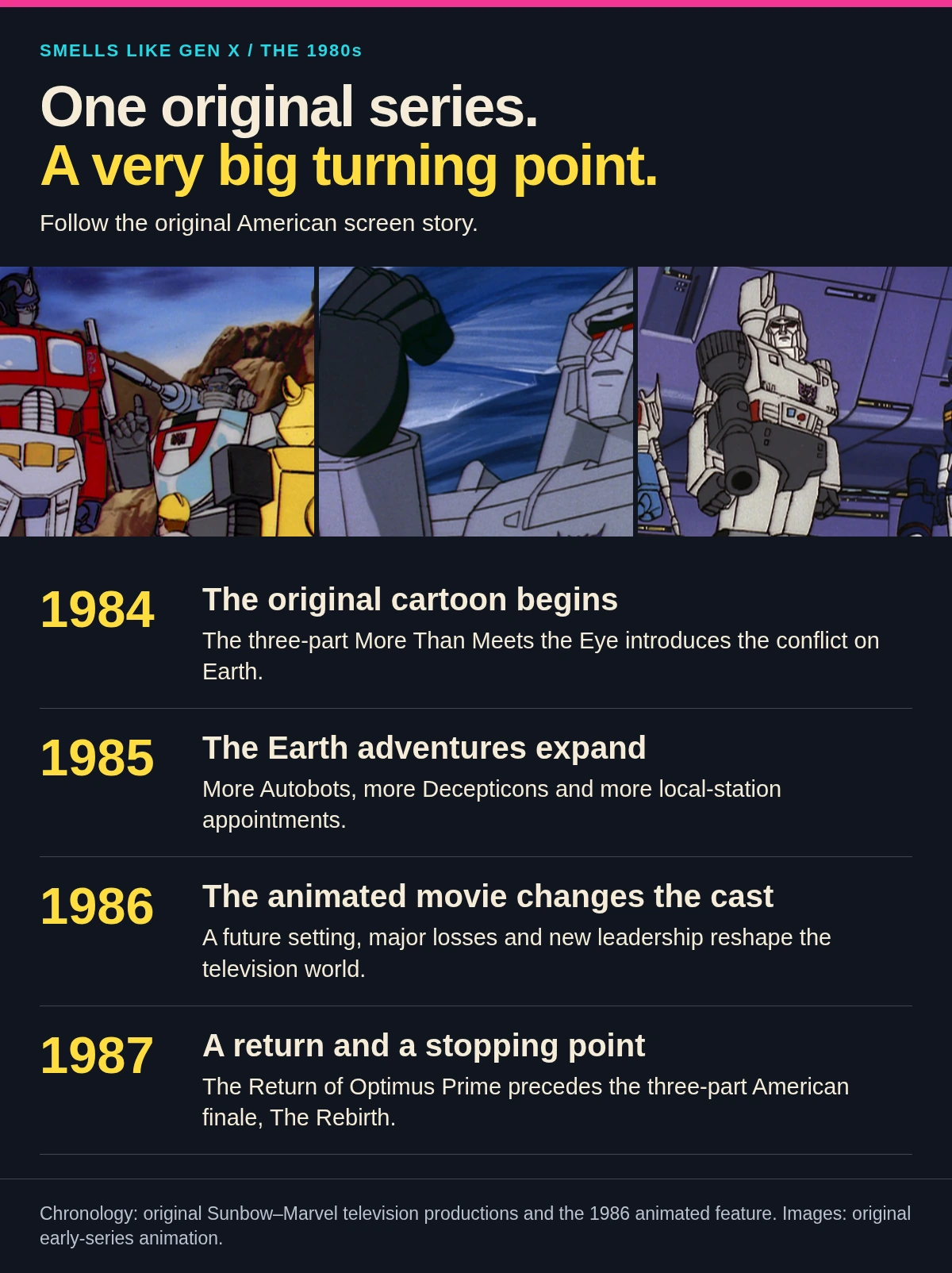
The series began in 1984, and the original American television run continued through 1987. The animated movie arrived in 1986 and changed the cast and setting in ways that deserve their own warning before we get there. This is that original screen story: the early Earth adventures, the friendships, the cardboard boxes we wanted under the tree and the moment the cartoon stopped promising that everybody would always come home.
Inside This Article
- First, Find the Original Series on the Shelf
- How Several Toy Ideas Became One Robot War
- The Appointment Was Local, and Missing It Was Annoying
- The Opening Made the Change Feel Like an Event
- Optimus Prime Was the Voice You Wanted in Charge
- Bumblebee Made the Alien World Feel Reachable
- The Autobots Needed More Than One Kind of Competence
- Megatron Wanted Power, and Starscream Wanted Megatron’s Chair
- Soundwave and the Strange Intimacy of a Cassette Deck
- The Dinobots Were a Very Persuasive Argument
- Three Early Adventures That Show What the Series Could Do
- Energon Was the Fuel, but the Argument Was About Taking
- A Duel Could Reveal More Than a Bigger Explosion
- The Animation Had Personality, Along With Some Loose Bolts
- The 1986 Movie Changed the Terms of the Appointment
- Rodimus Prime Inherited a Job, Not a Comfortable Chair
- Prime’s Return and the Original American Stopping Point
- The Cartoon and the Toy Never Fit Together Perfectly
- A Rewatch That Leaves Room for Discovery
- Questions About the Original Transformers Cartoon
First, Find the Original Series on the Shelf
“Transformers” is now a label attached to enough different television series, films and comics to make a returning viewer feel as though somebody reorganized the entire garage. For this visit, the useful starting point is simple: The Transformers, the American animated series that premiered in 1984. Fans commonly group that original era under Generation 1, or G1. That later shorthand helps identify it; it was not a subtitle we needed to understand the first episode.
The early cartoon introduces the Autobots and Decepticons as opposing groups from Cybertron. Their conflict reaches Earth, where familiar vehicles and machines become disguises for alien beings. The immediate stakes involve energy, survival and Megatron’s appetite for domination. You can understand that without knowing a single later film, reading a continuity guide or memorizing a family tree of robots.
The original American run comprises 98 episodes. There are important changes within those episodes, especially around the 1986 animated feature. Watching the first Earth adventures and then dropping into a later space adventure can feel like walking into a classroom after everyone else has changed teachers. The connection is there, but the movie provides a major piece of the explanation.
The Marvel comic that began in 1984 is a related creation with its own storytelling continuity. A character’s experiences in those issues do not automatically describe what happened on television. The same caution applies to the Japanese continuation and to later shows carrying familiar names. Loving the property does not require pretending all its versions occupy one tidy sequence.
Even the numbering on an early episode can vary between catalogs. Broadcast order, production order and a platform’s current arrangement are not always identical. An episode title is a safer starting point than announcing that a particular adventure must be number seven everywhere. The opening three-part “More Than Meets the Eye” is the clearest entrance because it establishes the world rather than assuming we have already been living in it.
That helps explain why the series remains such a natural stop in our eighties cartoon collection. It has a manageable original doorway, even though the franchise beyond that doorway has become enormous. Start with the red truck, the yellow car and the very unhappy silver tyrant. The rest can wait.
How Several Toy Ideas Became One Robot War
The toys did not materialize fully formed from an American television studio. Hasbro’s 1984 Transformers launch drew on Japanese transforming toys associated with Takara, including designs from the Diaclone and Microman families. Those earlier toys brought the central engineering pleasure: a recognizable object could be rearranged into a robot. The American property gave those different designs a shared conflict, identities and a reason to stand on the same shelf.
That distinction matters. Diaclone was a toy line, not the name of a separate animation company. The Transformers story emerged through a collaboration of toy design, Hasbro’s new presentation and character development connected with Marvel. Editor and writer Bob Budiansky’s names and profiles were a substantial part of making individual machines feel like people. The resulting personalities could travel between packaging, comics and animation, even when the actual stories diverged.
A transforming toy already contained a little drama. Here was a car that concealed a second shape. Here were hinges, panels and a puzzle your hands had to learn. Put a name and temperament beside it and the transformation acquired purpose. A cautious character did not move through your imagination quite like a reckless one, even if both toys spent most of their time parked on the same carpet.
The cartoon turned that possibility into a regular demonstration. It showed how the characters spoke, who trusted whom and what happened when a brilliant plan encountered Starscream. A specification on a package could tell you that someone was strong. An episode could make strength funny, admirable, frightening or insufficient. That was a substantial addition to the object, even though selling objects was plainly part of the arrangement.
I do not need to pretend the commercial connection was invisible. It was sitting right there in the room, often with a weapons accessory waiting to disappear beneath the furniture. But recognizing the sales machinery does not erase the work of the writers, performers, designers and animators. A character conceived for a product can still be a character. Whether we care is settled by what the story does with him.
That is why Transformers belongs beside the other big names in eighties toys, while also deserving a separate television discussion. The toy explains the transformation. The television performance explains why two children could both want a robot and disagree fiercely about which one was the best.
The Appointment Was Local, and Missing It Was Annoying
The original cartoon was syndicated. It reached viewers through local station schedules rather than one uniform national Saturday-morning network slot. Your exact day, time and neighboring programs depended on where you lived and which station carried it. A weekday showing became part of many viewers’ routine, but one person’s afternoon lineup is not proof of everybody else’s.
That local arrangement gave a cartoon an oddly personal location. A program might sit between the end of school and the time somebody started asking about homework. The station’s announcer, the surrounding commercials and the show immediately afterward all became part of how it felt. Years later, those details can be as sticky as the official theme music, even though they were not produced by the cartoon’s creators.
The practical limitations helped build the appointment. There was no instant assumption that you could open an app and find the episode waiting. You could consult a listing, remember a recurring slot or try to record the broadcast if the household’s equipment and permissions cooperated. Getting there halfway through meant accepting that Megatron’s latest machine had already been explained and hoping the dialogue would catch you up.
That is a particular pleasure of what watching television in the eighties actually felt like: the schedule had some authority. It could be irritating, especially when an adult needed the set, but it gave small programs large claims on our attention. The episode was happening. If you wanted to be there, you had to arrive.
A syndicated cartoon’s importance should also be described in its own terms. The network prime-time programs in the 1984 television rankings describe a different part of the day and a different ratings comparison. That chart is useful for seeing what the household might watch later. It does not place Optimus Prime in a national prime-time Top Ten that the cartoon was never being measured against.
We do not need a fabricated ranking to explain the appeal. A program can organize your afternoon without organizing your parents’ evening. The cartoons and the dramas shared a television set, which made them neighbors in the larger eighties TV week. They did not need to share the same audience table.
The Opening Made the Change Feel Like an Event
The basic promise of Transformers is unusually easy to show. Put a vehicle on screen, give it motion, then unfold it into a character who is suddenly looking back at us. The early opening turns that promise into a sequence of confident reveals. Machines are not background equipment. They are the cast.
The music and the transformation effects reinforce that idea from different directions. The theme announces a large, ongoing battle; the mechanical sound tells us that a change is happening now, inside this particular body. Neither needs a long explanation. Together they make the act of transforming feel like a decision rather than a camera trick.
I especially like the contrast between the vehicles’ everyday familiarity and the robots’ theatrical presence. A truck belongs on a road. A jet belongs above it. Put those forms in conflict and the real world starts to look as though it has been withholding information. The next car passing the house might be ordinary, but the cartoon had made ordinary machinery briefly suspicious.
The opening also benefits from knowing what to leave out. It does not need to explain the full history of Cybertron or every character’s engineering limitations. It offers opposing teams, motion, danger and a transformation. That gives a new viewer enough orientation to join an episode while giving an established viewer the pleasant feeling that the meeting has officially begun.
The individual versions of the opening changed over the run, as the cast and setting changed. It is easy to blend them into one perfect remembered sequence. Looking again reveals a program updating its sales pitch and its dramatic promise. The changing imagery is part of the original series’ history, rather than evidence that the earliest version has somehow been replaced in our memories.
That is an interesting comparison with ThunderCats and its remarkable intro. Both openings make an elaborate fictional world seem immediately usable. ThunderCats leans into athletic fantasy and heroic silhouettes. Transformers makes the world’s machines stand up and introduce themselves. Either way, the music had already done its job before anybody asked us to pay attention.
Optimus Prime Was the Voice You Wanted in Charge
Optimus Prime could have been a difficult character to make interesting. He was the central good leader, visually substantial, morally reliable and surrounded by people whose mistakes he frequently had to address. In the wrong hands, that can become a walking safety notice. Peter Cullen’s original performance gave him warmth, gravity and a sense that he understood the cost of the decisions he was making.
The voice has authority without constant impatience. Optimus can give an order and make it sound like a responsibility he shares, rather than an inconvenience he is handing down. That matters because so many cartoon plots depend on someone needing rescue. A leader who spends every episode complaining about his team would make loyalty harder to believe. Prime’s steadiness lets the smaller characters retain their dignity.
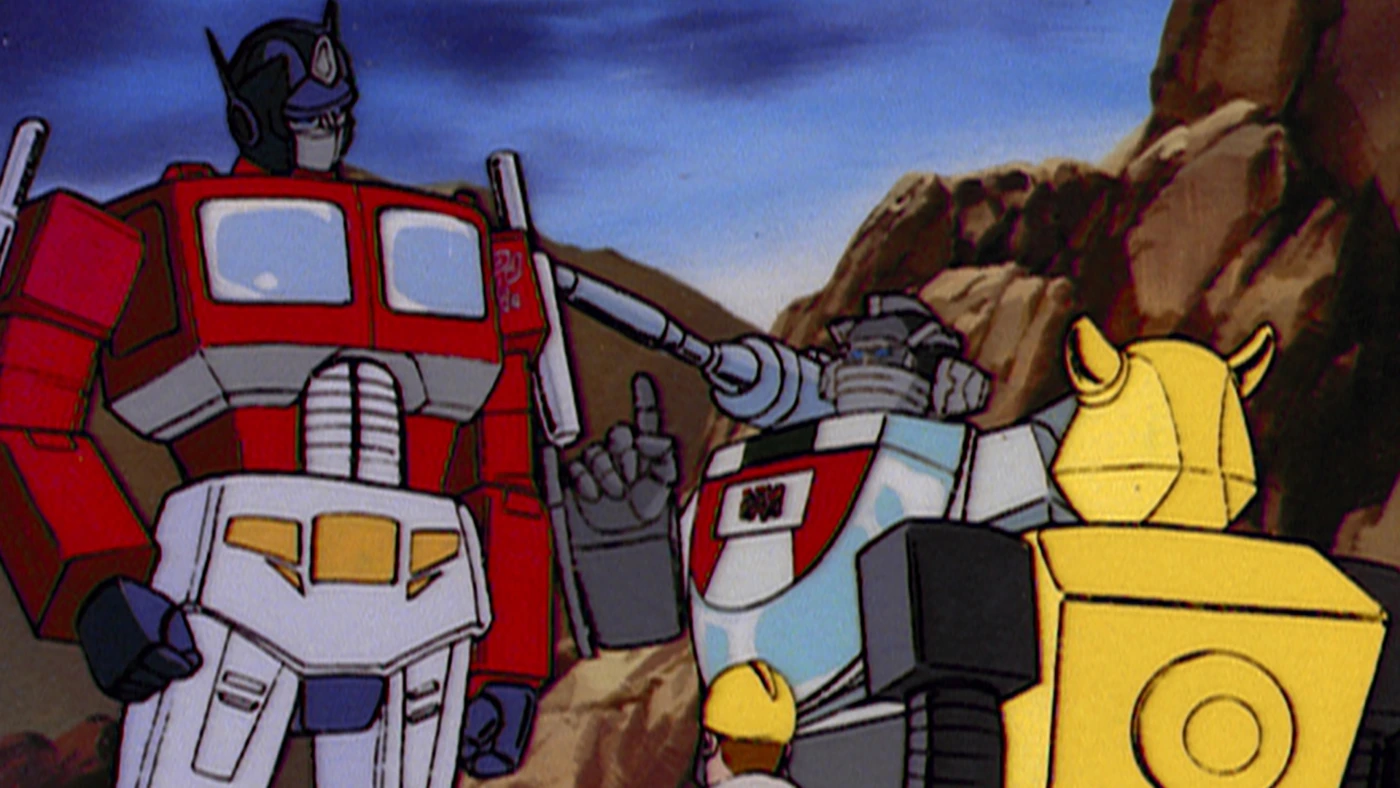
His vehicle form helps. A large truck suggests work, weight and the ability to carry something important. The cartoon does not have to translate every mechanical detail into a symbol for the design to feel appropriate. When he stands among smaller Autobots, he looks like someone who could absorb pressure. His behavior usually makes that first impression seem justified.
He is still an action hero. The original series lets him charge into a fight, make a strategic choice and occasionally show a lighter side. Dependability is not the same as passivity. The attraction lies in seeing that he has the power to dominate a situation and generally chooses to protect people with it. That is a clear moral arrangement, and clear does not have to mean dull.
Returning as an adult, I notice how much of the show’s emotional security sits in that voice. A ridiculous device can threaten the planet, and a fight can scatter the Autobots, but Optimus gives the story a center. The viewer has somebody to listen for. We may not know how the current disaster will end, but we know what kind of person is trying to solve it.
That becomes essential when the larger story tests his place in the cast. The character matters before the famous movie event because the television series repeatedly earns our trust in him. You cannot understand the size of that later response by looking only at one dramatic scene. You have to remember all the ordinary episodes in which having Optimus present made the afternoon feel secure.
Bumblebee Made the Alien World Feel Reachable
Bumblebee occupies a different kind of space. He is small beside many of his allies, visually approachable and closely connected with the human side of the series. The yellow Volkswagen Beetle form is part of that friendliness. It is a recognizable little car, almost the opposite of an imposing military machine. You can imagine standing beside it without feeling as though you have wandered onto a restricted base.
His relationship with Spike gives the action a useful scale. A battle among giant robots can become a row of abstract explosions. A young human nearby reminds us how large the combatants are and how vulnerable the surrounding world is. Bumblebee helps the series move between the giant conflict and an ordinary person’s experience of it.
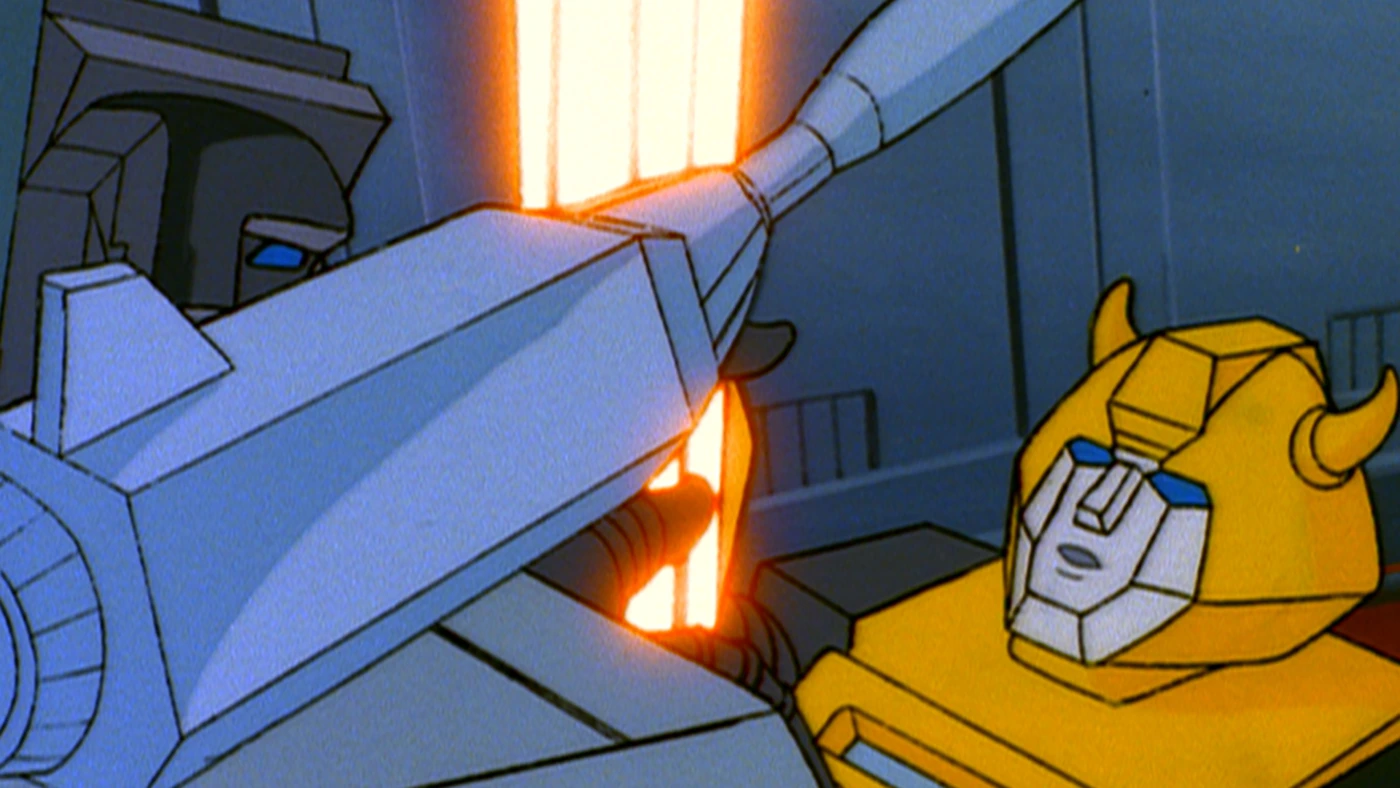
The human characters are not simply there to gape. Spike and his father, Sparkplug, bring curiosity, practical knowledge and a stake in what happens to Earth. Sometimes the plots use their vulnerability as a rescue problem, but the relationship also permits conversation. The Autobots have people to explain themselves to, learn from and care about beyond their own ranks.
I like Bumblebee best when the show allows his size to be a circumstance rather than a running verdict. Being less physically imposing does not make him less loyal or less valuable. He can take a risk, help a friend and bring information back to the team. Those are meaningful contributions in a cartoon that also contains robots capable of turning into aircraft.
For a child choosing a favorite, that leaves an important opening. You do not have to identify with the commander or the strongest fighter. You can like the character who seems easiest to know. The original Bumblebee’s appeal is different from his later screen incarnations, and it is worth letting this talkative, friendly television version have his own personality.
The friendship also gives the show something to lose. Protecting humanity is a noble phrase; protecting a person you have spent time with is a dramatic relationship. Bumblebee and Spike help translate the slogan into an attachment. The world stops being a resource map and becomes somewhere with friends on it.
The Autobots Needed More Than One Kind of Competence
A large ensemble works best when the characters do different things. The original Autobots have fighters, scouts, specialists, skeptics and inventors. Ratchet’s medical role and Wheeljack’s engineering give the team problems that cannot be settled entirely by shooting. Damage has to be repaired. Equipment has to be built. Somebody has to understand what a machine is doing before another somebody knocks it over.
That practical division of labor makes their headquarters feel inhabited. An adventure can begin at a workbench, with an experiment or a repair, rather than always starting with a declaration from the villain. The cast has occupations inside the story. We can imagine them having an ordinary day, even though the program is unlikely to permit one for more than a few minutes.
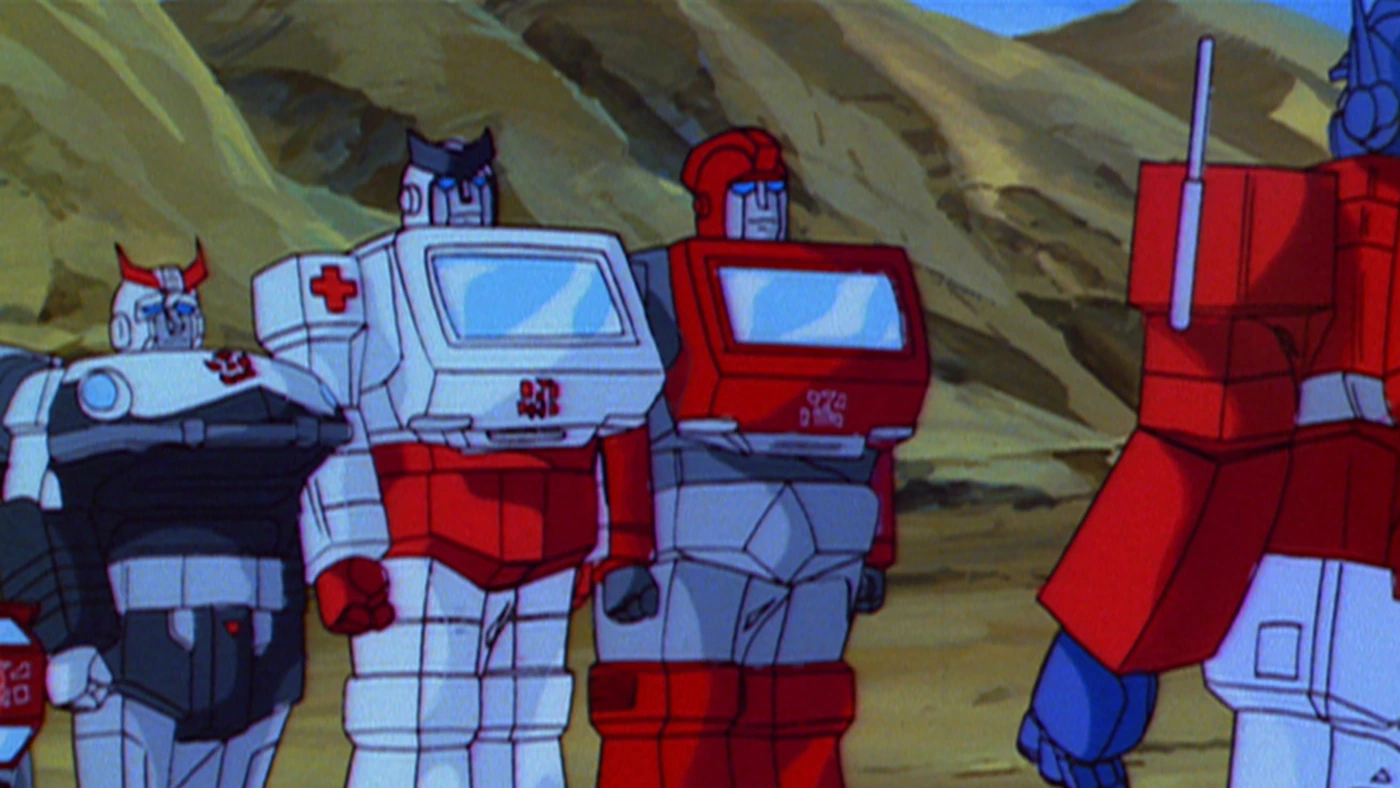
Jazz adds another kind of connection. Scatman Crothers gives him a relaxed musicality that stands apart from Cullen’s command voice and the sharper edges elsewhere in the cast. His interest in Earth’s culture makes the planet feel worth experiencing, rather than merely defending. The Autobots are not all waiting impatiently to leave. Some are finding things to enjoy here.
Ironhide’s toughness offers a different flavor again. The point is not that every member gets an equally deep biography in every episode. The voices and designs give the writers useful shortcuts. Put a particular group together and the conversation already has a rhythm. A viewer can anticipate a complaint, a practical suggestion or a burst of enthusiasm before the next crisis interrupts.
The specialists also improve the toys’ imaginative possibilities. A child can stage repairs after a battle or invent a technical problem before one. That is a different form of play from merely lining two armies up across the floor. A cast with jobs offers more ways to begin a story, which is helpful when the available scenery consists of a couch and whatever has accumulated underneath it.
There are limits to the character work. Some Autobots have far more opportunity than others, and an expanding cast can leave familiar faces waiting for attention. Yet the best ensemble scenes make the group feel larger than the current plot. Prime is the center, but he is not supposed to be the entire civilization.
Megatron Wanted Power, and Starscream Wanted Megatron’s Chair
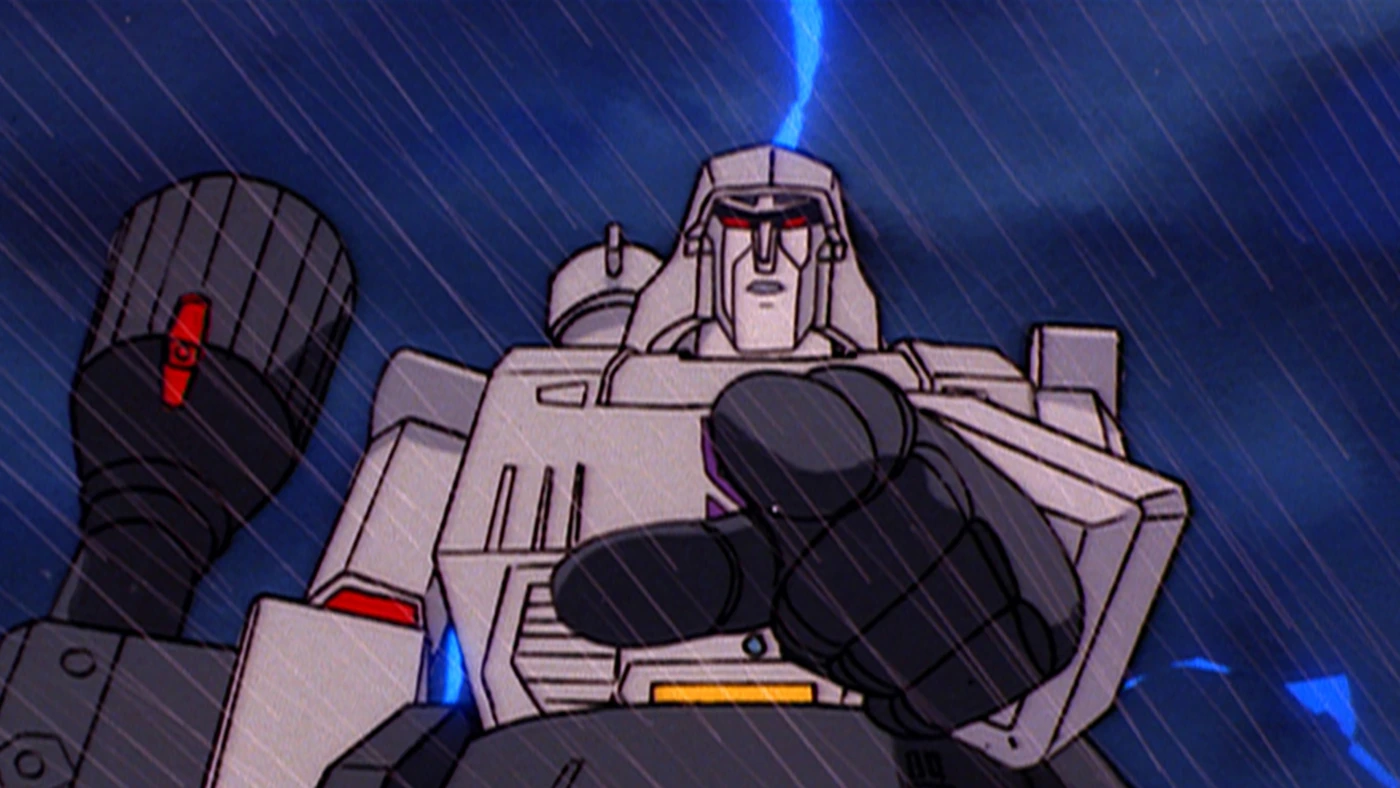
Frank Welker’s Megatron sounds as though every interruption confirms an already terrible opinion of the universe. He is forceful, contemptuous and fully convinced that his next energy scheme will establish the order he deserves. His face does a great deal with a heavy brow and a narrowing look. He can make disappointment seem like an accusation directed at everyone within range.
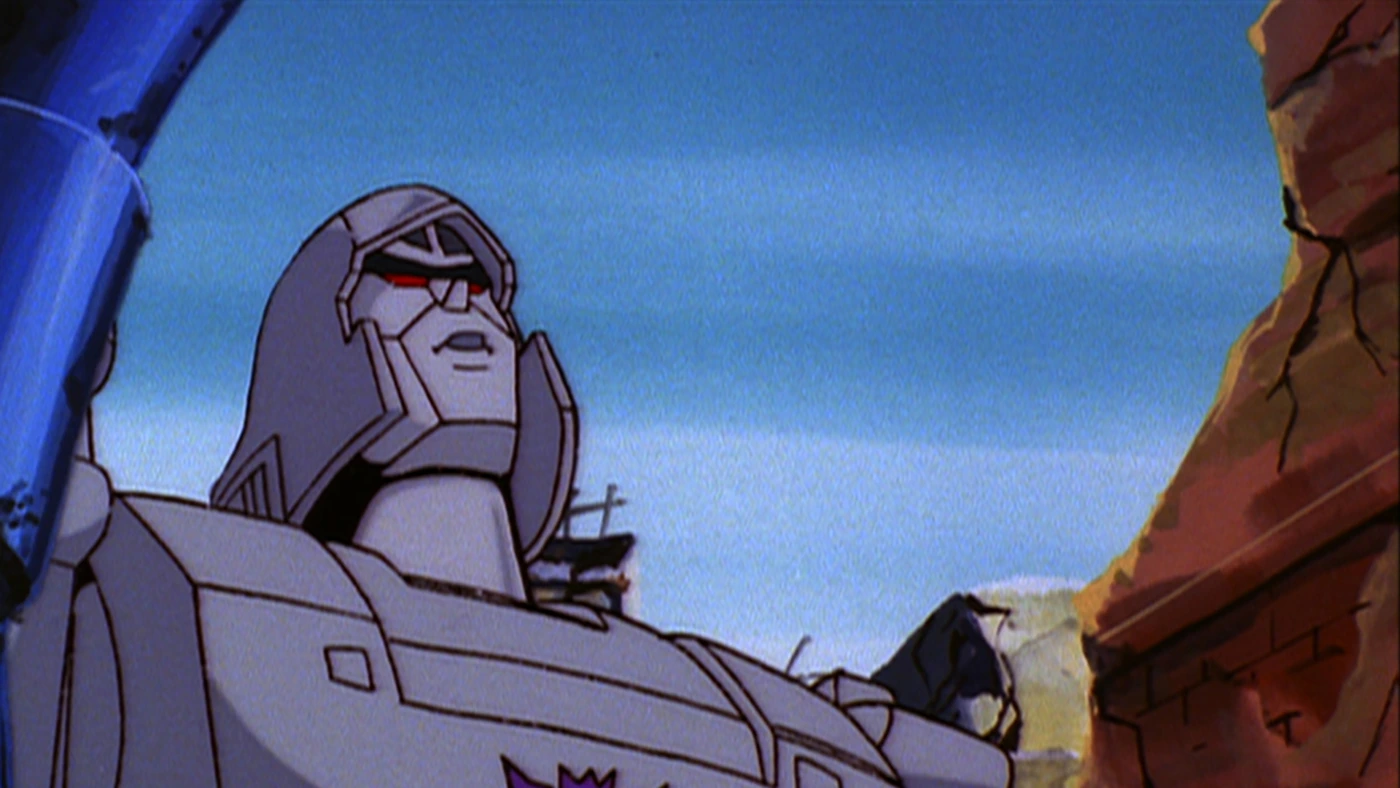
That gives the Decepticons a clear source of pressure. Megatron wants resources and victory, but he also wants acknowledgment. He does not merely intend to win an argument; he wants the other party to understand that challenging him was offensive. It is an extravagantly unpleasant management style, and the series gets considerable entertainment out of it.
Then Starscream makes the workplace worse. Chris Latta’s sharp, urgent performance turns ambition into a sound you can recognize from another room. Starscream does not hide his desire for command with much patience or sophistication. The pleasure is watching him treat a temporary opening as the long-awaited proof that the universe has selected its rightful leader.
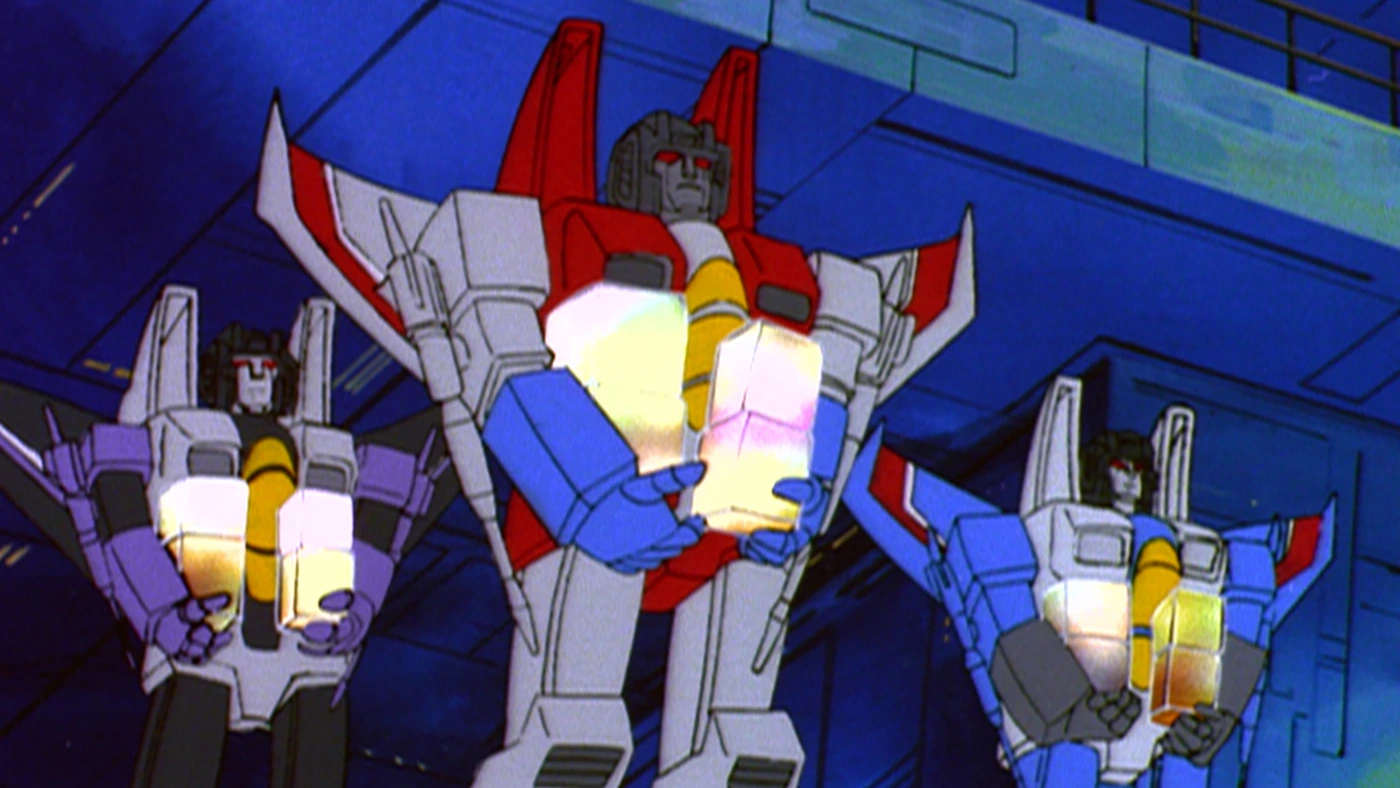
Their relationship keeps the villains active between battles. A simple good-versus-evil story can go flat whenever the heroes leave the frame. Megatron and Starscream give the Decepticon side an argument that never really finishes. Even a successful operation may produce a complaint about credit or an opportunity to undermine the boss. The organization is dangerous partly in spite of its personnel arrangements.
The cartoon sometimes makes that disloyalty broadly comic, but the underlying idea is sharp. A faction built around domination has difficulty producing mutual trust. Starscream is following the same principle as Megatron and merely disagreeing about who should benefit. They are not philosophical opposites. They are competing applicants for the same miserable job.
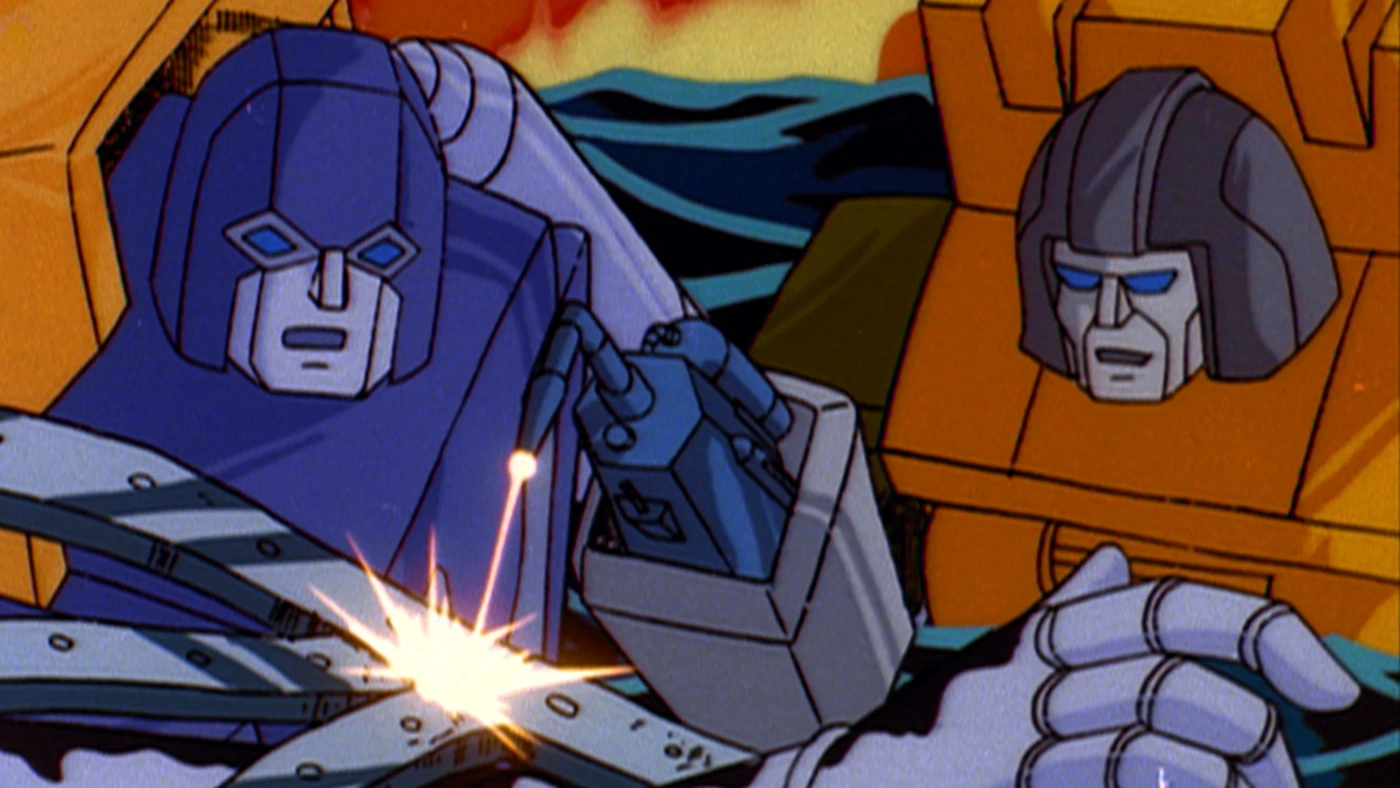
I find their scenes funnier now because the ambition is so recognizable. Most of us have encountered somebody who hears “the supervisor is out today” as a personal prophecy. Starscream gives that person wings and a weapons system. Megatron supplies the response of a manager who knows the problem perfectly well and continues to keep him on the payroll.
Soundwave and the Strange Intimacy of a Cassette Deck
Soundwave turns a different everyday object into a source of unease. The original character’s cassette-player form belongs to a period when recorded music and portable electronics were tangible household things. A deck could be carried, set down, borrowed or left somewhere. Making one of those devices a Decepticon gives an ordinary object a secret intention.
His processed voice reinforces the distance. Where Starscream advertises every feeling, Soundwave often sounds controlled and remote. That restraint is useful in a noisy group. He does not have to outshout Megatron to hold a scene. The design, voice and function all suggest someone who is collecting information rather than volunteering an opinion about it.
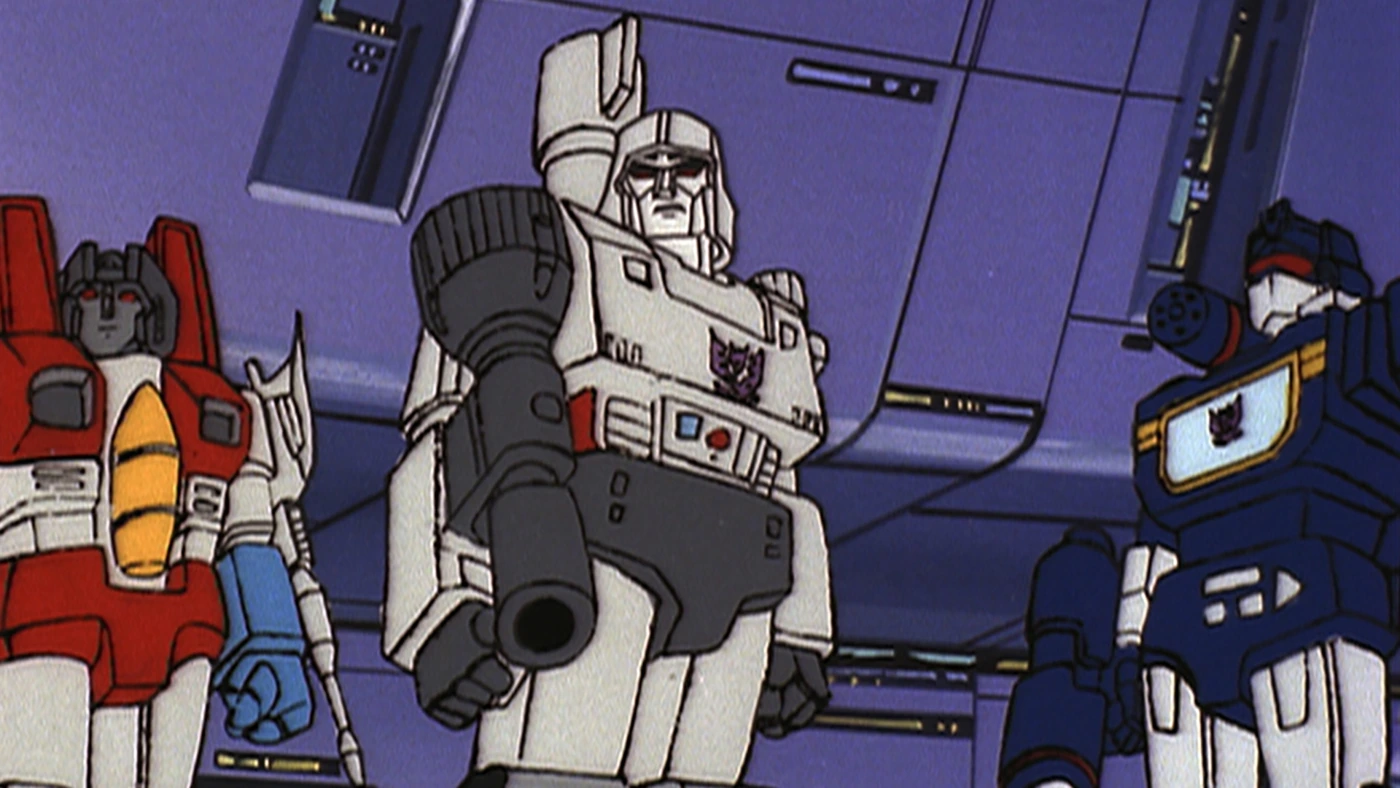
The smaller cassette characters make the idea even better. Laserbeak and Ravage can emerge from something that appeared to be one compact machine, bringing reconnaissance, pursuit and surprise into a story built around much larger bodies. The scale change is imaginative even by the program’s flexible standards. The little object has another little object inside it, and that one is watching you.
Of course, the transformations do not obey a consistent engineering textbook. A device that fits a human hand can become a large robot, and accessories can change apparent size as the action requires. The original cartoon asks us to accept the change as part of its visual language. The point is the reveal, not a demonstration of conserved volume.
That does not mean every inconsistency becomes charming simply because it is old. Some moments are confusing, and some shots make the rules feel unusually elastic. But the basic invention is strong enough to survive those problems. A cassette deck as a spy is a concise, period-specific idea. You do not need a technical explanation to understand why a child might start looking at the stereo differently.
Soundwave also represents a kind of cool that depends on withholding. Optimus offers reassurance, Bumblebee offers friendship, Starscream offers an argument. Soundwave offers the possibility that he knows something you do not. In a cast designed to be instantly legible, a little reserve goes a long way.
The Dinobots Were a Very Persuasive Argument
Robots that turned into cars were already an excellent offer. Robots that turned into dinosaurs suggested that somebody had taken the assignment home and done extra work. The Dinobots combined two strong childhood interests without requiring either one to apologize for being excessive. Their arrival made the team look bigger, stranger and much less likely to follow instructions.
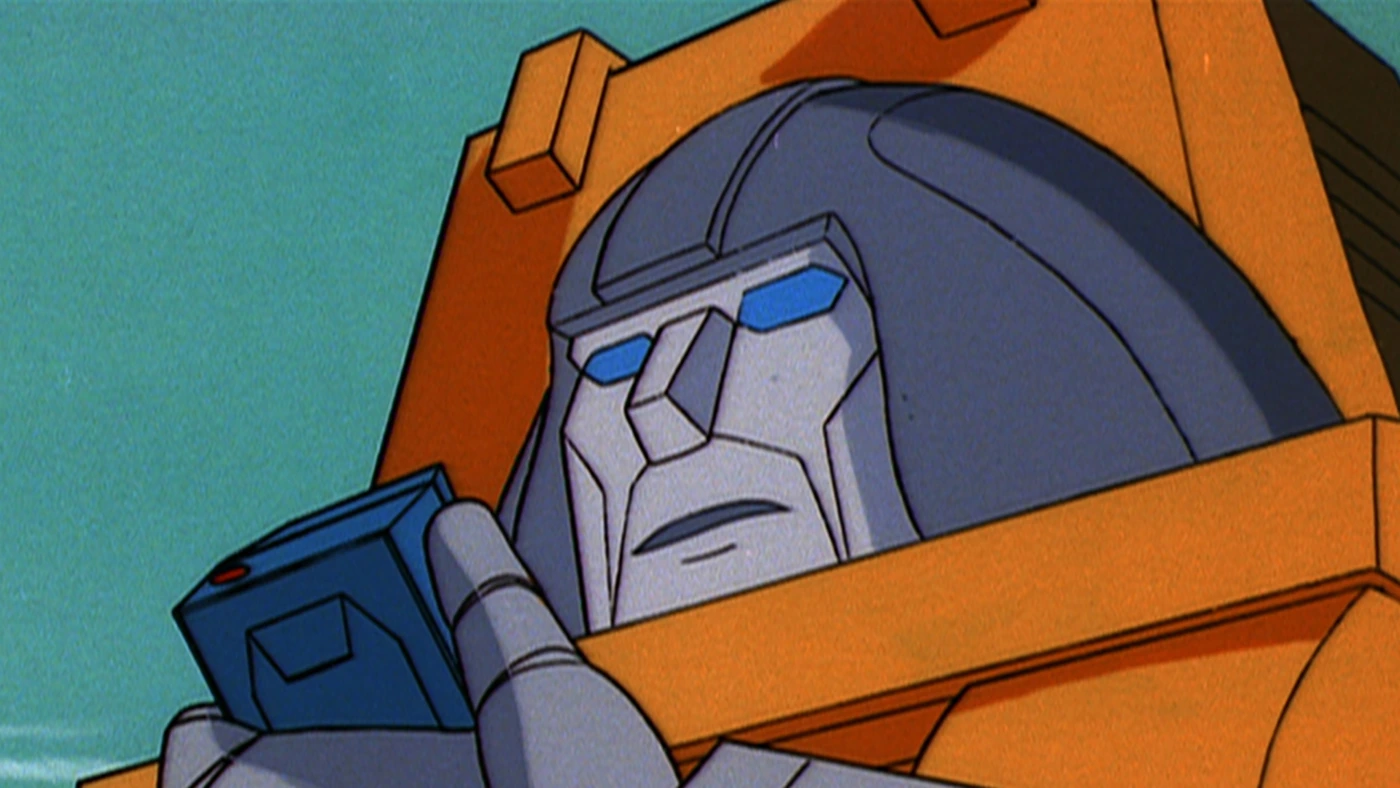
In “S.O.S. Dinobots,” Ratchet and Wheeljack create Grimlock, Slag and Sludge after encountering dinosaur remains. These are the names used in the original episode; later versions and products can use different naming. The important dramatic development is that the new allies are powerful and difficult to manage. An invention that ought to solve a problem promptly becomes another problem the Autobots have to understand.
Grimlock’s attitude is a major part of the appeal. He does not automatically accept that the established commander deserves obedience. The Dinobots’ physical confidence gives that resistance weight, while their speech and behavior make room for broad comedy. You can see why Prime might want their help and why he might also appreciate a few quiet minutes before requesting it.
“War of the Dinobots” pushes that tension further by giving Megatron an opportunity to exploit their dissatisfaction. That is more interesting than treating them as a new weapon in a cabinet. They have pride and can be manipulated through it. Their belonging has to become a relationship, rather than remaining a technical feature of the heroes’ equipment.
The series later expands the Dinobot group, but those first stories establish its appeal. A dinosaur robot is impressive in a still picture. A dinosaur robot with an opinion about the boss can sustain a scene. The difference is the difference between a display and an ensemble.
On a return visit, the Dinobots also expose the program’s happy disregard for keeping its disguise premise tidy. A sports car can hide in traffic. A mechanical dinosaur has fewer subtle options. The cartoon knows the excitement of its new idea and largely proceeds from there. Sometimes a very large creature stomping into the story is the explanation the afternoon requires.
Three Early Adventures That Show What the Series Could Do
A useful rewatch should offer more than a list of famous faces. The original series tried several kinds of adventure inside its basic conflict. These early stories show how it could move from a clear introduction to a loyalty problem and then to a threat that connected the humans’ lives with the robots’ war. Moderate episode spoilers follow in this section.
More Than Meets the Eye
The opening three-parter gives us Cybertron, the journey to Earth and the opposing groups’ reawakening after a vast passage of time. It is doing quite a bit of work, but the central conflict is immediate. The Decepticons need energy and intend to take it. The Autobots have to stop them while finding their own footing on a planet that did not invite either army.
That premise gives the early action a practical setting. Earth’s resources are part of the conflict, rather than a painted backdrop for it. Industrial equipment, roads and energy facilities become places where the alien struggle touches human life. The transformations make visual sense in those environments, even when the larger physics are cheerfully negotiable.
The introduction of Spike and Sparkplug helps keep that scale understandable. The audience meets the new world through people who can be surprised by it. Their presence gives the Autobots an opportunity to show concern through behavior, which is more effective than simply declaring that one group has been assigned the heroic logo.
For a returning viewer, this is where the original cast gets to establish itself before the weight of later history arrives. Watch how quickly a voice or a gesture suggests personality. The series is not asking us to memorize twenty biographies before enjoying an adventure. It lets the group begin talking, and the distinctions start to emerge.
Fire in the Sky
The discovery of Skyfire complicates the clean faction labels. He has a past connection with Starscream, which gives the Decepticon side an apparent claim on his loyalty. The drama comes from whether an old relationship should determine his present choices when the behavior around him becomes impossible to ignore.
That is a strong problem for this particular series. The character designs and symbols tell us which team people usually belong to. Skyfire makes the story ask what belonging means. An emblem can announce a decision, but the decision still requires judgment. He has to look at what the two sides actually do.
The episode also gives Starscream something beyond a fresh attempt at promotion. A relationship from before the present conflict briefly opens another dimension in him. It does not excuse his behavior or turn him into a misunderstood innocent. It shows that the robot who makes every meeting worse has a past, which is a useful reminder that this world extends beyond the current energy raid.
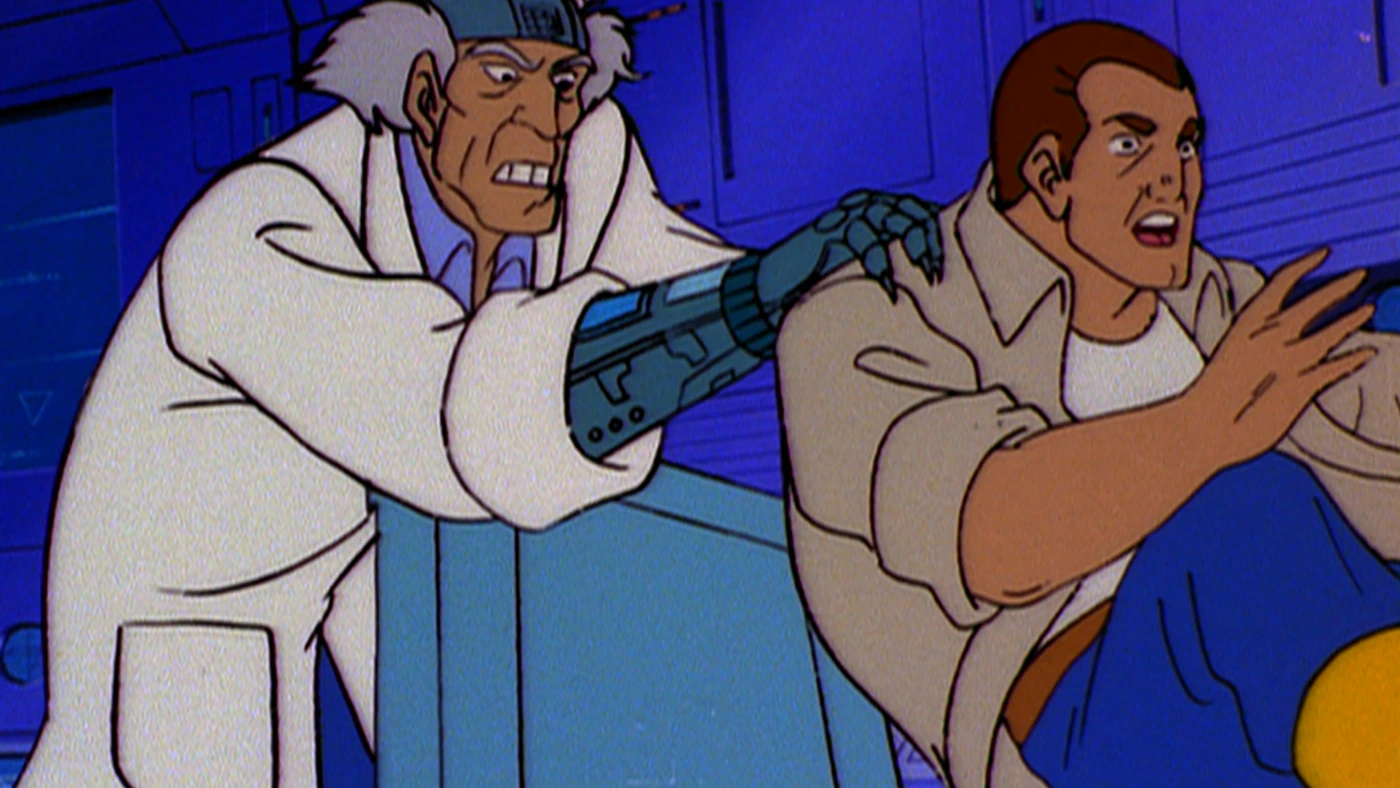
Skyfire’s cartoon identity is worth keeping distinct from the Jetfire name associated with the original toy and other versions. That difference has its own product history, but it does not need to derail the episode. On television here, follow Skyfire’s choice. The moral turn is clearer than the packaging history.
The Ultimate Doom
“The Ultimate Doom” takes the scale upward through a multipart story involving human mind control and the threat surrounding Cybertron’s arrival near Earth. Its combination of planetary danger and compromised people makes the conflict harder to dismiss as robots simply borrowing a vacant battlefield. Humanity is inside the plan.
Sparkplug’s involvement gives the danger a personal dimension for Spike. It is one thing to know that Megatron is bad for the planet. It is another to see somebody you love placed under outside control. The story uses the established human connection to make an enormous mechanical scheme matter at the scale of a family.
Dr. Arkeville’s involvement also complicates any comfortable assumption that all humans belong on the same moral side. A human can cooperate with the Decepticons. The Autobots’ allegiance to Earth is therefore not based on the idea that its population is uniformly wise. They are protecting a world that contains bad decisions as well as innocent people.
The result is a useful example of the series at full adventurous volume. The plan is extravagant, the science is accommodating and the cast has to keep moving. Yet the strongest reason to care is still a relationship established before the spectacle began. A planet in peril is an image. A father and son caught inside that peril give the image a pulse.
Energon Was the Fuel, but the Argument Was About Taking
The energy plots can look repetitive if reduced to one sentence. Megatron wants a resource, the Autobots intervene and a large amount of equipment becomes scrap. The specific machines and locations change. The underlying appetite remains. That repetition is a limitation, but it also gives the original series a clear recurring concern: what happens when a powerful visitor treats a living world as a supply cabinet?
Energon makes the robots’ needs visible and portable. It turns energy into something the story can steal, transport, lose or fight over. The exact conversion rules are not the point of the cartoon. Dramatically, the glowing cubes allow an abstract need to sit in a warehouse where somebody can make a bad decision about it.
The Autobots also require energy, which keeps the difference between the groups from being a matter of one side having needs and the other having none. The issue is how those needs are pursued. Cooperation, restraint and concern for the people already living on Earth distinguish the heroes’ approach. Megatron’s entitlement makes the contrast explicit.
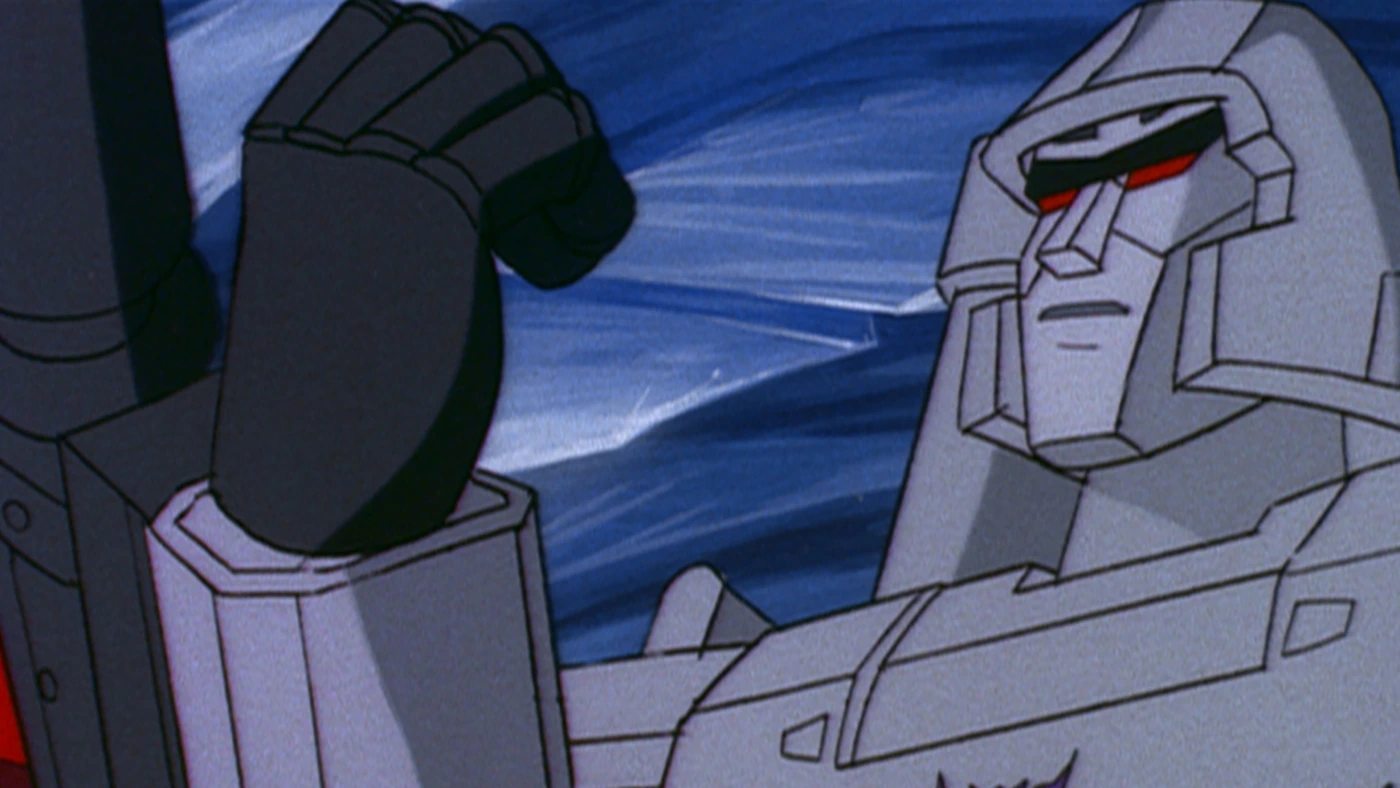
That leaves room for adventure beyond a lesson about turning off lights. The story is interested in force, dependency and the temptation to take an easier route at someone else’s expense. Those concerns can exist inside a brightly colored robot fight without turning the episode into a lecture. The best plots make the choice concrete and let the consequences carry it.
I would not claim that every energy scheme is a sophisticated environmental statement. Sometimes it is a device that gets everybody to the same dam before the commercial break. But the recurring structure gives the conflict an intelligible moral shape. The Decepticons are not merely rude visitors. They are visitors who believe their requirements outrank the continued existence of the people who live here.
That is a useful distinction when revisiting the toy connection. The program could advertise a vehicle and still give its audience a reason to dislike exploitation. Commercial origins do not make every idea inside a story disappear. They give us another part of the story’s circumstances to keep in view.
A Duel Could Reveal More Than a Bigger Explosion
“Heavy Metal War” turns the faction conflict into a challenge between leaders. Megatron and Optimus Prime agree to a contest with consequences for the losing side, but Megatron does not approach the agreement in good faith. The Decepticon leader secretly acquires the abilities of his fellow Decepticons, giving himself an advantage that the terms of the duel do not honestly represent.
The device is extravagant. The behavior is easy to understand. A bully wants the prestige of a fair victory without accepting the possibility of a fair defeat. That gives the action a different interest from a random exchange of fire. We are watching the difference between an announced rule and the private arrangement designed to defeat it.
It also uses the leaders’ established personalities efficiently. Prime’s willingness to accept an agreement depends on the possibility that an opponent will honor it. Megatron treats that willingness as something to exploit. Neither character needs a new biography for the plot to work. The contest puts their familiar values under pressure and lets the difference become visible in action.
The Constructicons and their combined form, Devastator, bring another memorable element into the same adventure. A group of construction vehicles assembling into one enormous robot is a fresh kind of transformation, and a very effective way to make an already large conflict look suddenly small. The idea expands the toy-and-cartoon vocabulary from changing an individual body to joining several bodies together.
For a rewatch, that combination is useful: a clear moral dispute and a bold visual invention. The episode is not subtle about cheating, but it gives the issue a dramatic shape. It also demonstrates how the original series could introduce a major new attraction while still building the main conflict around personalities we already understood. The new robot gets our attention; the dishonest bargain gives us a reason to choose a side.
The Animation Had Personality, Along With Some Loose Bolts
The original cartoon’s designs are wonderfully readable. Bright color blocks, recognizable vehicle parts and distinct heads help separate a large cast in motion. Optimus Prime’s silhouette does not require a close-up to announce itself. Bumblebee remains visually small and friendly beside the larger machines. A jet’s wings can continue to identify its robot form even after the transformation is complete.
Those choices matter because a weekly or daily cartoon cannot assume every viewer has a pristine screen or full concentration. The character needs to register quickly. The original designs give the eye a few reliable handles: a color, a shape, a faceplate, a set of wings. They make a complicated scene easier to follow, especially for someone still learning the names.
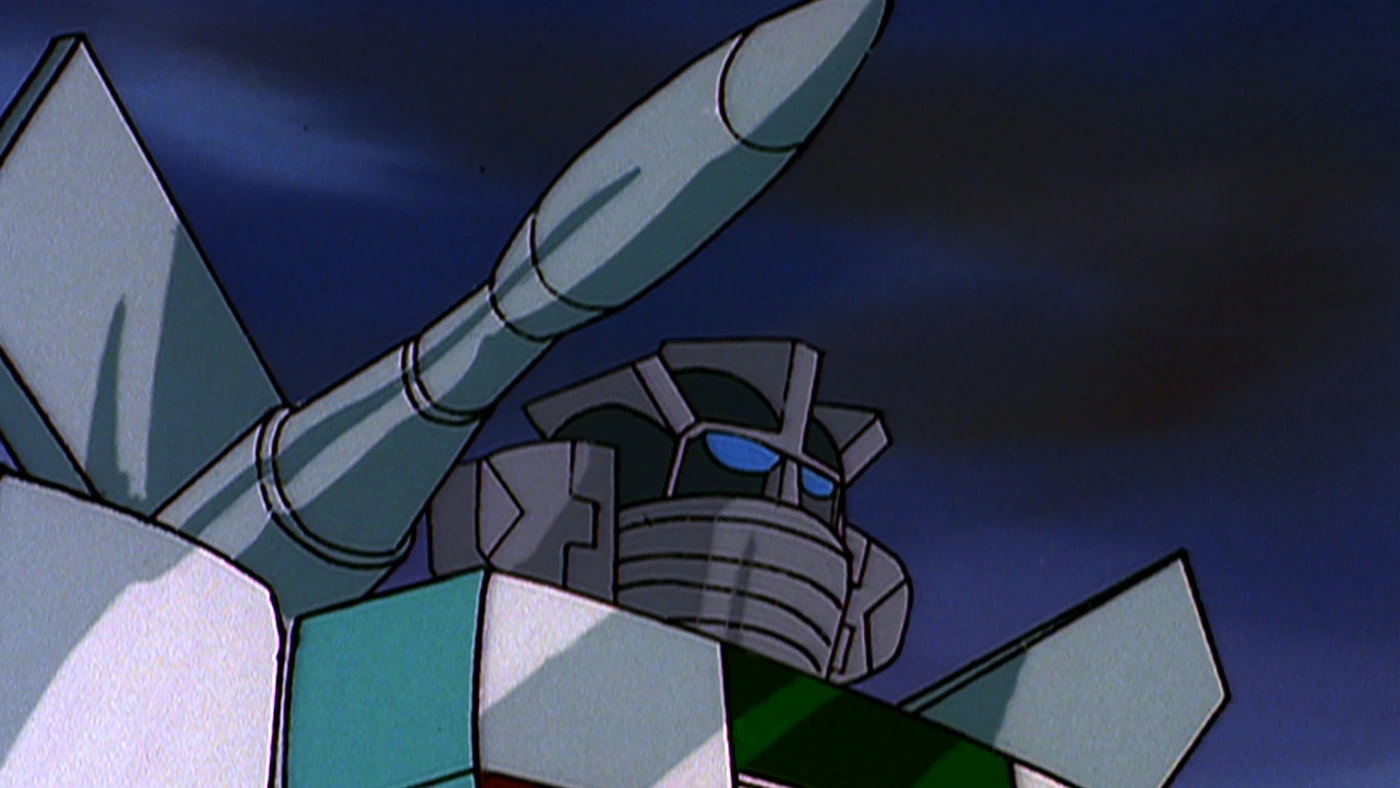
The production also has visible inconsistencies. Characters can appear in the wrong colors, proportions can wander and a transformation can take a generous shortcut. Sometimes the size of a robot seems to depend on who needs to fit in the frame. Watching now, those things are easy to spot, particularly if you are pausing a high-quality copy instead of seeing a broadcast once.
They should be acknowledged without turning the entire experience into a hunt for mistakes. A stray coloring error can be funny. It does not explain why a scene works or why a voice performance survives the error. Likewise, affection does not require calling every awkward shot an intentional flourish. The cartoon is more interesting when we can see both its imagination and its uneven execution.
The sound does a considerable amount of stabilizing work. The transformation effect, the voices and the musical cues help maintain identity even when the drawings become less consistent. A character can briefly look a little wrong and still sound unmistakably like himself. That continuity is one reason the original cast remains so easy to recognize.
The program’s limitations also make the 1986 movie’s larger visual presentation feel consequential. The difference is apparent before the major story turns. A bigger screen adventure can spend its attention differently, and the familiar characters occupy a world with a different visual density. That change makes the film feel like an event. What the story does with that event is another matter.
The 1986 Movie Changed the Terms of the Appointment
Major spoilers for The Transformers: The Movie and its aftermath follow. If you have somehow kept the original animated feature unspoiled, this is a good place to pause. The film is part of the original screen story, but it is also a deliberate break in its emotional arrangements.
The movie is set in the future year 2005, as imagined from the mid-eighties. Its opening conflict puts familiar Autobots in immediate, severe danger. Then Optimus Prime dies. For a series that had taught viewers to rely on his presence, that is a much bigger development than replacing one vehicle in the lineup. The calm center of the television world is removed.
The death matters because of the earlier relationship. A child who had spent episode after episode listening to Prime make difficult situations manageable was being asked to watch the character become unavailable. The scene has generated plenty of retrospective jokes and arguments, but its basic dramatic force is straightforward. Someone the story had made dependable could no longer promise to be there.
The film also introduces a larger cosmic threat through Unicron, a planet-devouring being whose scale changes the terms of the conflict. Megatron’s fate leads to Galvatron, while Hot Rod’s path leads toward Rodimus Prime and the Matrix of Leadership. New figures move into positions that had belonged to familiar ones. The story is both an adventure and a transfer of dramatic responsibility.
It is fair to see the toy-business implications in that turnover. A property tied to merchandise has reasons to introduce new characters. Yet the film’s emotional problem is not solved by identifying a business reason. The audience had been encouraged to care about the old cast. The response to removing them was evidence that the earlier storytelling had worked, even if the replacement plan expected children to move on more efficiently.
I think the movie is strongest when it treats leadership as something a character has to grow into. It is less comfortable when the pace of replacement seems to outrun the audience’s willingness to say goodbye. Both reactions can coexist. You can enjoy the ambition, music and enormous images while still feeling that the afternoon’s most reliable adult has been taken away with very little notice.
Rodimus Prime Inherited a Job, Not a Comfortable Chair
The television stories after the movie operate in a changed world. The setting ranges farther from the early Earth routine, the cast includes new central figures and Rodimus Prime occupies a position that comes with an impossible comparison. Being the next leader is difficult enough. Being the next leader after Optimus Prime means every hesitation can sound like evidence for the previous administration.
That insecurity gives Rodimus a different dramatic shape. Optimus often provides stability; Rodimus has to work toward it while being watched. His uncertainty can be frustrating when a viewer wants the old reassurance, but it also creates a recognizable problem. A person can be chosen for responsibility without immediately feeling adequate to it. The title does not automatically install confidence.
The later adventures also expand the sense of Cybertron’s history and the surrounding universe. Some viewers enjoy the wider science-fiction canvas; others miss the early arrangement of roads, factories, Spike and an Autobot base on Earth. Neither preference requires pretending the change is small. The post-movie series really does ask us to enjoy a different balance of people and places.
This is where a return visit benefits from patience. If you jump straight from the first episodes to the later ones, the new cast can feel like a crowd of substitutes. Seen with the movie between them, the transition becomes more intelligible, even if it never becomes your favorite part of the run. Context is useful without obliging affection.
There is also more variety in tone than a single memory of the later years suggests. The show can become stranger, more cosmic and more openly interested in the burden of its new leadership. Some of those choices land better than others. The broad point is that the original series did not remain the same Earthbound routine for all 98 episodes.
I like allowing that difference to stand. Early Transformers offers the discovery of extraordinary beings hidden among familiar machines. Later Transformers often offers a larger fictional civilization working through its own history and upheaval. They are connected pleasures, but they are not interchangeable ones.
Prime’s Return and the Original American Stopping Point
Optimus Prime’s later appearances need a little care because a partial memory can combine different stories. “Dark Awakening” is an unsettling post-movie encounter with the fallen leader. It is not the same event as the two-part “The Return of Optimus Prime,” which brings him back in 1987 amid the spreading hate plague. Those titles describe distinct turns, not alternate names for one straightforward comeback.
The difference matters emotionally. Recognizing a familiar face is not necessarily the same as recovering the person the audience trusted. A story can use that recognition to create unease before a later story offers a more direct restoration. Viewers remembering only that Prime “came back” can reasonably recall very different feelings because the show gave them more than one kind of return.
The original American series then ends with the three-part “The Rebirth” in 1987. Its new arrangements introduce another wave of characters and partnerships rather than closing every existing relationship with the solemnity of a modern planned finale. The toy-connected world is visibly continuing to generate ideas even as this particular American television run reaches its stopping point.
The Japanese continuation takes a different route. Transformers: The Headmasters is not simply the next three American episodes after “The Rebirth,” and trying to force the two into one uninterrupted sequence creates confusion. For this article’s original U.S. television story, the useful endpoint is the 1987 three-parter. A separate continuation can be interesting without becoming required homework.
That endpoint also helps keep late-decade nostalgia accurate. Reruns, toys and comics could keep Transformers present after the original American series stopped producing new episodes. A viewer’s memory of watching in 1988 or 1989 can be completely sound without implying that a new original American cartoon season premiered in each of those years.
Television stays in our lives through repetition as much as through premieres. The distinction is a matter of describing what we watched correctly, not reducing what it meant. An old episode seen after school is still an actual afternoon. Its production date does not cancel the memory.
The Cartoon and the Toy Never Fit Together Perfectly
One of the original era’s pleasures was also a source of mild confusion: the object in your hand and the character on screen were recognizably connected without being identical in every detail. Animation could give a face and a flexible body to a toy whose engineering required a more awkward shape. A smooth transformation on television might correspond to several careful operations at home.
That gap invited imagination. A toy did not need to reproduce every pose to represent the character in a new adventure. Your hands supplied the movement, the voices and the transitions the plastic could not manage. The screen provided a cast; play could alter the casting, ignore an inconvenient plot development or let a favorite return after the movie had made a different decision.
The practical limits were part of the experience too. Transforming something correctly took attention, and small accessories were capable of disappearing with remarkable speed. The catalog image promised a complete, clean arrangement. Real play involved missing pieces, mixed teams and whatever furniture could function as Cybertron before somebody needed to sit down.
The packaging’s character information offered another route into the world. A profile could suggest a temperament that an episode had not yet explored, giving a child material for an adventure outside the broadcast. That is one reason the toy-and-story relationship worked in both directions. Television animated the object; the object allowed the viewer to keep working with the story after television moved on.
The comparison with G.I. Joe’s cartoon and toy world is useful here. Both properties assigned names, jobs and relationships to a growing range of products. Transformers added the physical puzzle of changing forms. The resulting attachment involved imagination and a little mechanical competence, which made correctly completing a transformation feel like a small achievement.
None of that requires turning this return visit into a collector-price guide. The object’s present monetary value is a separate question. The television value was that a small thing could represent a large personality. A yellow car on the carpet could stand for a friend in an alien war, and the program had helped us make that connection.
A Rewatch That Leaves Room for Discovery
I would begin with “More Than Meets the Eye” and let the original voices establish the world again. It is tempting to jump straight to a famous death or a favorite transformation montage, but those moments work better after the cast has had a chance to become familiar. A beginning gives the later surprises something to disturb.
Then choose a story that complicates the teams, such as “Fire in the Sky,” and one that shows the ensemble handling a difficult addition, such as “S.O.S. Dinobots.” Those episodes reveal more than a succession of Megatron’s machines. They ask what loyalty means and how a group accommodates strength that does not arrive with an instruction manual for cooperation.
“The Ultimate Doom” is a good next step when you want the early series at a larger scale. It uses the humans rather than forgetting them as soon as the robots begin fighting. The family connection helps hold the multipart spectacle together. After that, the movie and post-movie stories will show how deliberately the original screen world changes.
You can also enjoy a smaller visit. Listen to a Megatron–Starscream exchange, follow Bumblebee and Spike for an episode or watch how Ratchet handles the aftermath of somebody else’s excellent plan. The program’s personality often lives in the space between the advertised confrontations. Not every rewarding scene has to involve the most famous robot.
If you want the fantasy contrast, Filmation’s original He-Man offers another toy-connected world built around a reassuring central hero. Eternia’s transformations are magical and its moral circle is arranged differently, but the audience attachment raises a similar question. What makes a figure with an extraordinary body feel like somebody we know?
For Transformers, the answer remains a mixture of voice, behavior, design and repetition. The machines gave us an immediate visual thrill. The repeated company gave them personalities. That is why the original series can survive a loose joint, an odd scale change and a villain’s plan that would make an engineer leave the room. We are still listening for the people inside the machinery.
Questions About the Original Transformers Cartoon
When did the original Transformers cartoon begin and end?
The original American animated series began in 1984 and ran through 1987, with 98 episodes. Reruns continued to introduce viewers to it afterward. Later American and Japanese Transformers series are separate productions or continuations with their own arrangements, so a familiar character name alone does not identify an episode as part of the original run.
Was Transformers originally a Saturday-morning network cartoon?
The original series was syndicated, with local stations determining its placement. Many viewers associate it with after-school television. That memory should not be turned into a claim that every market used the same weekday slot or that the show belonged to a single nationwide Saturday network block. Check the local listing if reconstructing a particular childhood lineup.
Where does the 1986 animated movie fit?
The Transformers: The Movie belongs between the early television adventures and the changed world of the post-movie episodes. It is set in the then-future year 2005 and contains major cast changes. Watching it before the later television stories makes their leadership and setting much easier to understand. It is distinct from the later live-action films.
Are the original cartoon and Marvel comic telling the same story?
They share the property and many character foundations, but they have different continuities. An event in the Marvel comic does not automatically happen the same way on television. Names and personalities can overlap while origins, relationships and outcomes differ. Read the comic as its own version rather than using it to fill every gap in the cartoon.
Is Bumblebee the same character we know from the later movies?
The original cartoon’s Bumblebee is a talkative, friendly Autobot closely connected with Spike. Later films and series reinterpret the name and design in their own ways. Those versions can be enjoyed separately. Returning to the 1984 series is a chance to hear the original television personality without expecting it to reproduce a later performance or premise.
Sources & Further Reading
- Hasbro’s fortieth-anniversary history and original-series celebration
- Takara Tomy’s account of the Japanese toy origins and 1984 American launch
- Original season-one episode descriptions and animation imagery
- The Sunbow Marvel Archive: original scripts, model sheets and production material
- GRUV’s licensed complete-original-series edition and 98-episode specification
- Apple TV’s original Fire in the Sky episode listing
- The 1986 animated feature’s film listing