Saturday Morning Cartoons of the 80s
Breakfast, three competing invitations, and the important business of choosing what came next.
The morning had a running order. The household had opinions. Somewhere between them, a weekly ritual took shape.
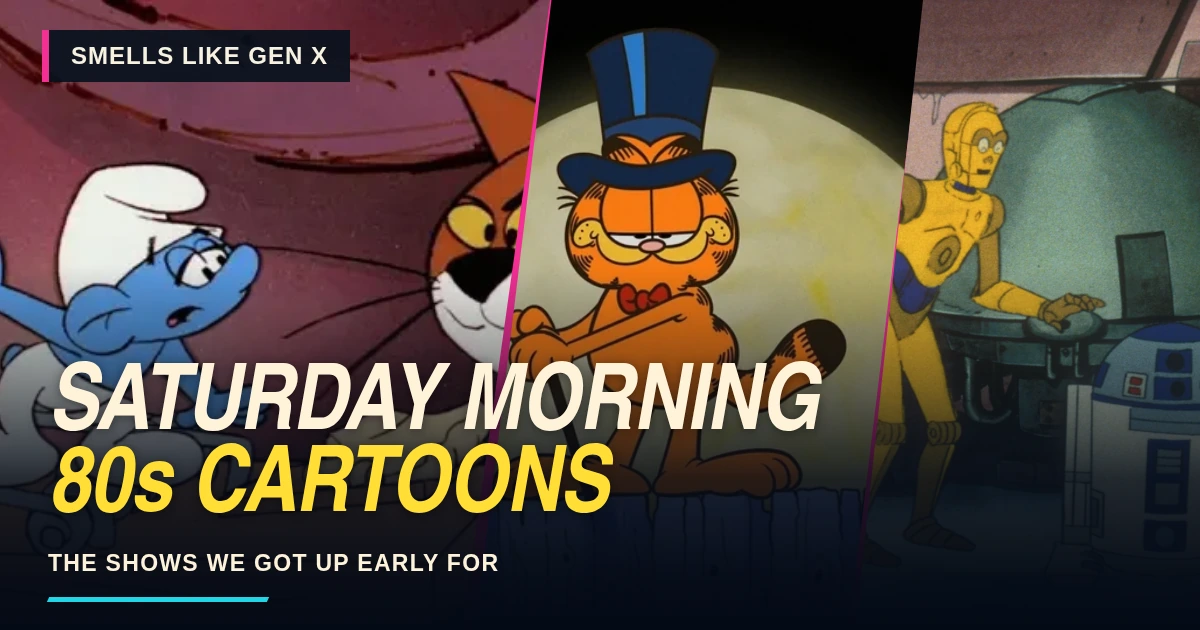
The spoon was louder than it needed to be. Everything else in the house seemed to understand that people were sleeping, but a cereal bowl had apparently signed a separate agreement. On the television, an announcer had no such reservations. A whole morning of cartoons was arriving, and he wanted the neighborhood informed.
Saturday morning cartoons in the eighties offered a peculiar kind of freedom: hours with a schedule. You chose what to watch, but you chose from programs already moving toward you. Stay on this channel, try another, get breakfast now, or risk missing an opening. The decisions were small. At the time, they felt like managing an important operation from the floor.
Some of us had hours; some had until an adult said it was time to leave. Chores, practice, errands and family rules could all overrule a perfectly good cartoon. Local stations offered different menus too. That variety belongs in the story of eighties television, alongside the shared picture so many of us recognize: breakfast, pajamas and a room where the day hadn’t quite caught up with us.
This is the story of that morning: how the networks packaged it, how children navigated it, and why a string of separate programs became one continuous memory. The broader 1980s cartoon landscape also includes weekday syndication and after-school adventures. Saturday had its own pace, its own negotiations, and a surprisingly efficient way of making a week feel complete.
Inside This Article
- Before Anyone Else Wanted the Television
- A Menu That Kept Moving
- The Guide Was a Map, Not a Promise From the Universe
- Three Networks Were Three Invitations
- One Announced NBC Morning, Carefully Dated
- The Smurfs: A Village Worth Spending Saturday In
- Muppet Babies and Garfield: CBS’s Saturday Company
- When Star Wars Arrived Without a Movie Ticket
- A New Decade Didn’t Mean Every Cartoon Was New
- The Announcer Was Part of the Cast
- Commercial Time Was Still Part of Your Time
- A Small Lesson Between the Adventures
- The Affiliate Lived in Your Town
- Why a Long Block Felt Different From One Favorite
- The Other Channel Was a Person
- When Saturday Had Somewhere Else to Be
- Saving the Morning on Tape, Sometimes
- The Morning Changed While You Were Growing
- Rebuilding a Memory Without Inventing a Schedule
- What the Whole Block Gave You
- Questions From the Breakfast Table
Before Anyone Else Wanted the Television
On a school day, being awake meant entering somebody else’s timetable. On Saturday, early waking occasionally felt like getting ahead of the adults. The set was available. The room was quiet. No one had yet announced a destination that required shoes. A cartoon wasn’t simply entertainment; it was something you had found before the rest of the household began making claims on the day.
The furniture helped establish the territory. A place near the screen, a cushion, a blanket, or a particular end of the couch became part of the arrangement. These were ordinary objects doing ordinary jobs, but repetition made them ceremonial. You didn’t need an elaborate home theater. You needed a picture you could see and a position from which nobody was likely to ask you to move immediately.
Breakfast introduced the first logistical challenge. Make something quickly and return, carry it carefully, or enlist someone already in the kitchen? The food itself varied by home, despite nostalgia’s tendency to issue everyone the same brightly colored cereal box. The more durable memory is the compromise: eating while watching and hoping the part requiring your hands didn’t coincide with the part requiring your eyes.
Some viewers arrived at the start of a block. Others turned on the television halfway through a program and began there. There was no single correct entrance. A familiar character could make the room feel occupied within seconds. Even an unfamiliar cartoon gave the newly awake viewer a problem to understand, which was a more attractive morning assignment than locating yesterday’s missing sock.
The atmosphere didn’t depend on the whole house being asleep. A parent reading, somebody making breakfast, or a sibling already complaining could belong to it just as strongly. What made the morning distinct was the temporary priority given to children’s television. For a while, the schedule seemed to address the youngest people in the room directly.
A Menu That Kept Moving
The central skill was choosing between things that were happening at the same time. Watching one program meant leaving another unwatched. A favorite starting later might require waiting through a less interesting show or remembering to switch back. These were scheduling decisions, even if the scheduler was wearing a nightshirt and had milk on a sleeve.
Changing channels wasn’t always effortless. A remote helped when one existed and could be found. A knob required a trip to the set. Reception might make the theoretical choice less appealing than the practical one. An available station with a poor picture was still available, but a child had to decide how much visual interference an adventure was worth.
That made program loyalty physical. You settled into a channel, learned its announcements, and recognized the rhythm of its breaks. Switching away risked missing the restart. Staying put risked discovering that something more interesting had begun elsewhere. The choice was never an entirely clean comparison between isolated shows. It included the effort of moving and the uncertainty of returning at the right moment.
A morning also encouraged experimentation. A program you hadn’t chosen might follow one you loved, catching you before you left the room. A strange-looking character got a few minutes to make an impression. Some discoveries came from intention; others came from the fact that you were already sitting there and the television continued to offer things.
This was a different skill from selecting an episode in a modern menu. You navigated flow, timing, and incomplete information. Children became good at recognizing a closing sequence, estimating the length of a break, and knowing which sound meant they should stop investigating the refrigerator. The schedule supplied constraints, and viewers developed practical ways of working inside them.
The Guide Was a Map, Not a Promise From the Universe
A printed listing gave the morning shape before it happened. Titles, times, channel numbers, and compact descriptions translated a crowded set of possibilities into something a reader could plan. For children learning to use it, the guide was a useful little code: find the day, locate the hour, follow the channel, decide whether the name sounded promising.
Descriptions had to work in very little space. A few words about a spell, an invention, a contest, or a visitor might be enough to make one episode seem especially worth catching. Children supplied the rest from their knowledge of the characters. The listing didn’t need to explain an entire village if you already knew who lived there and which wizard was likely to cause trouble.
The guide also exposed conflicts. Two favorites occupied the same time. A program had shifted. Something else was scheduled where a familiar cartoon ought to be. A page of tiny type suddenly became evidence in a family discussion. Nobody had to call it media literacy; the child comparing columns was already learning how television organized time.
Printed information wasn’t infallible. Schedule changes, preemptions, regional editions, and local decisions existed. A guide was a practical aid tied to a place and date, not proof that a particular program played identically everywhere. Remembering the listing beside the bowl is a strong personal detail. Turning it into a universal eighties timetable would make the history less accurate.
The story of TV Guide’s place in the household extends beyond Saturday. On this particular morning, its value was wonderfully direct: it helped you decide where to be and when. The television kept moving, but for a moment the page held the whole set of choices still.
Three Networks Were Three Invitations
ABC, CBS, and NBC each had reasons to make Saturday feel like a destination. A single appealing program was useful; a stretch of appealing programs gave a viewer reasons to remain. Titles, announcements, promos, and transitions helped a block feel coherent even when the cartoons themselves came from different worlds.

The differences weren’t simply a permanent set of personalities—one network forever adventurous, another forever cute, a third forever funny. Lineups changed. A network tried additions, retained familiar programs, and adjusted the arrangement. The years mattered. What looked like a dependable house style from one child’s position might have been a particular season’s combination.
Familiar properties offered one route to recognition. A child might already know a comic-strip character, a movie world, a live-action television personality, or an earlier cartoon incarnation. A new series then had something to build on. Recognition didn’t guarantee affection, but it reduced the work required to attract a first look.
New worlds offered another route. A name, a premise, or an unusually memorable design might persuade a viewer to try something without knowing anything else about it. A network needed the familiar and the unfamiliar to coexist: enough recognition to reassure the audience, enough novelty to make a new season feel like an event rather than a reshuffled shelf.
It is tempting to reconstruct the decade as one giant competition with a single winner. Children’s actual experiences were less tidy. You might be loyal to a show on one channel and another show elsewhere, crossing between networks without feeling obliged to support a corporate strategy. The executives wanted a block. The viewer wanted the good part.
One Announced NBC Morning, Carefully Dated
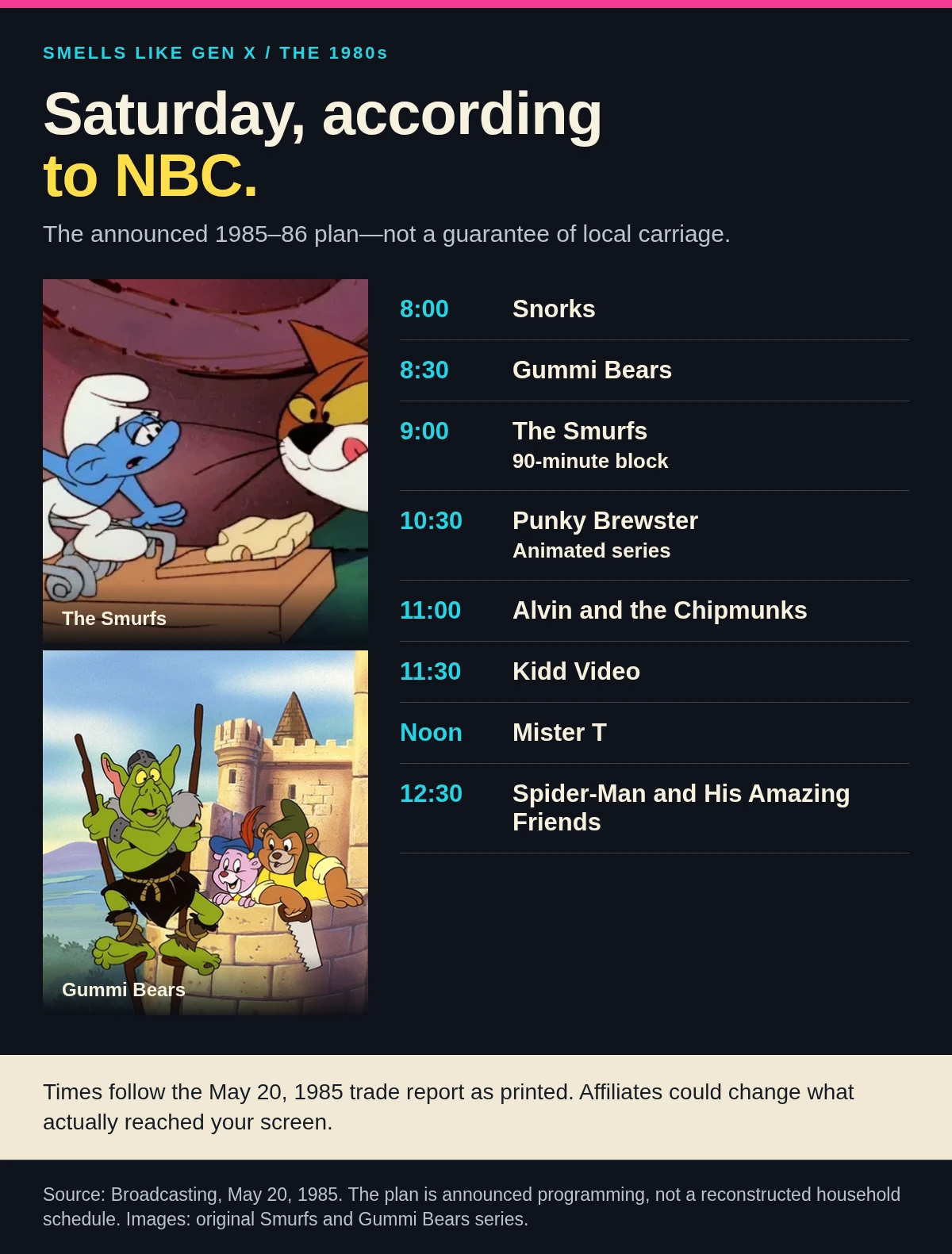
A contemporary trade report lets us look at a real planning moment without pretending it describes every Saturday in America. Broadcasting’s May 20, 1985 issue discussed NBC’s announced children’s lineup for the coming 1985–86 season. It was a proposal presented to affiliates, published before that fall’s regular viewing experience had unfolded.
The reported sequence began with Snorks, followed by the new Adventures of the Gummi Bears. Smurfs occupied an extended block, then came an animated Punky Brewster, Alvin and the Chipmunks, Kidd Video, Mister T, and Spider-Man and His Amazing Friends. The accompanying graphic retains the announced order and time labels. It is an example with a source, not a replacement for a dated local listing.
The mixture is more revealing than a generic collection of eighties favorites. It includes tiny fantasy communities, familiar music performers, a sitcom adapted into animation, action, and a show mixing musical and cartoon identities. NBC wasn’t offering one uniform kind of child. It was trying to hold attention through a morning with changes in tone.
The planned Gummi Bears addition also shows how an enduring memory begins as a new proposition. Before the characters became familiar, the network had to introduce them between things viewers already recognized. From a child’s perspective, a new show appeared. From the network’s perspective, a new show had to persuade somebody to remain in the room.
Phyllis Tucker Vincent, NBC’s children’s-program executive, explained the need to give young viewers new shows to discuss with friends. That is a particularly useful bridge between industry planning and the schoolyard. The network wasn’t only filling minutes. It wanted the program to generate interest after the television had been switched off.
That was NBC’s announced plan for one particular season, not a promise about your local station. But look at the shape of it: a familiar village, new faces, another adventure waiting after the break. The network wanted the next program to feel easier to watch than another channel was to try. Saturday’s great business strategy was partly the same one operating in the kitchen: keep putting something appealing in front of the kids.
The Smurfs: A Village Worth Spending Saturday In
The Smurfs had an excellent arrangement for Saturday television: a whole village full of people who could create a problem without leaving home. Someone was vain, someone was grouchy, someone had brought a present you should probably decline. Papa Smurf had the beard and the responsibility. Outside the village, Gargamel was still taking the existence of small blue people far too personally.
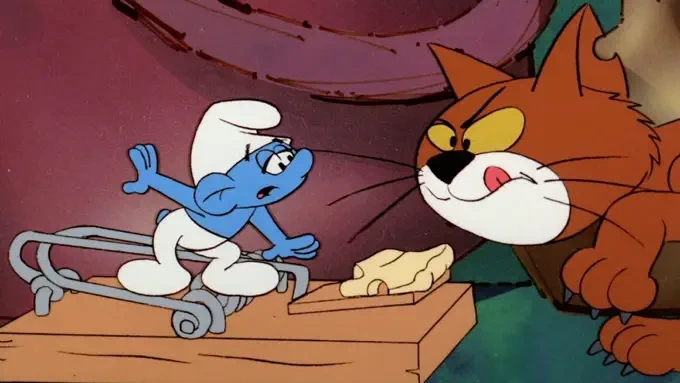
The Hanna-Barbera television incarnation began in 1981 and became part of NBC’s children’s programming. It drew on Peyo’s existing characters rather than inventing the Smurfs from nothing for an American television slot. That background matters because the village already had a strong visual identity: blue inhabitants, white hats, forest spaces, and houses whose architecture was very obviously mushroom-based.
The inhabitants’ named traits make social friction immediately readable. Vanity, clumsiness, self-importance, and practical competence aren’t remote fantasy concepts. They appear in classrooms, sibling relationships, and adult conversations overheard from the floor. A magical setting gives those familiar tensions more colorful consequences without making them impossible for a child to understand.
Gargamel provides both danger and a useful change of emotional scale. The village has its daily concerns; he has an obsession. His anger is theatrical enough to be funny, but it also puts the small community at risk. That combination allows a story to move from domestic annoyance to an adventure without abandoning the world that made the viewer comfortable in the first place.
A long network block reinforced the sense that this was somewhere you could remain. The village didn’t feel like a single gag offered between other attractions. Its familiar cast supported return trips. That doesn’t mean every episode deserves reverence or every viewer loved it. It explains why a dependable setting was such useful Saturday company.
Muppet Babies and Garfield: CBS’s Saturday Company
Muppet Babies gave CBS a recognizable group in an unexpected form. When the original animated series premiered on September 15, 1984, the Muppet personalities became nursery companions. Their wants, rivalries, and comic instincts remained legible, but childhood imagination replaced the need for a large physical stage.
The premise suited a morning when the viewer was also staying in one room while visiting other places. An object or an idea set the characters going, and the nursery expanded into a fantasy. The program didn’t have to remove the children from childhood to give them an adventure. The process of inventing one was already enough.
That is a different Saturday pleasure from watching an all-powerful hero defeat an opponent. A nursery problem might be an emotion, a misunderstanding, or the friction between several strong personalities. The adventure gave the group ways to work through it. A child watching didn’t need to own an elaborate collection of equipment to imitate the activity; making things up remained comparatively inexpensive.
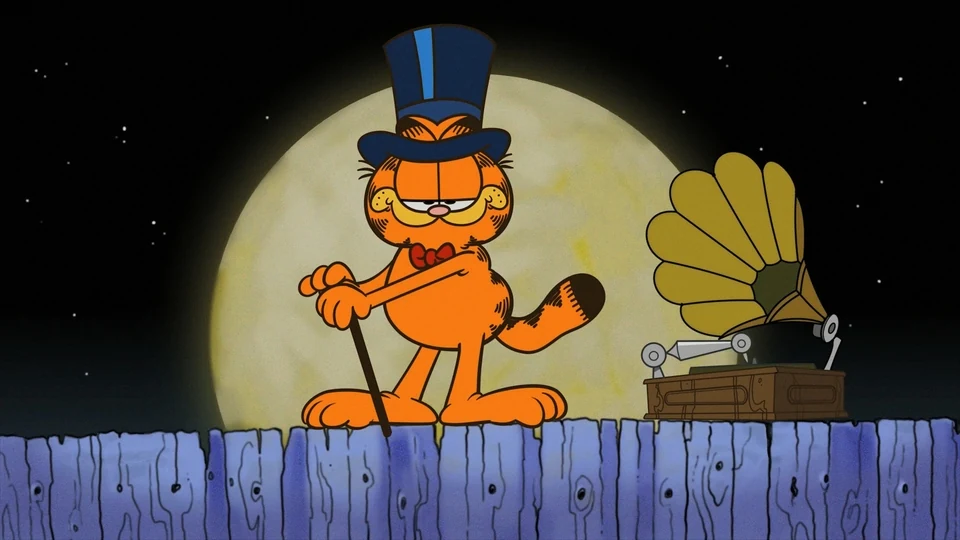
By the late decade, Garfield and Friends supplied another kind of familiar company. Its 1988 beginning brought the comic-strip cat into a recurring series alongside the farm-animal world drawn from Jim Davis’s other work. Garfield’s appetite, irritation, and confidence made a strong contrast to the earnestness of many adventure heroes. Saturday had room for someone whose main ambition was not saving the planet.
That range is part of why a network label alone doesn’t describe the experience. A child might stay for a nursery’s flights of imagination, then enjoy a cat’s refusal to make much effort. The programs asked for different kinds of attention. A morning assembled from those changes in energy had a texture that a list of premiere dates cannot quite reproduce.
When Star Wars Arrived Without a Movie Ticket
ABC’s 1985 pairing of Droids and Ewoks brought a famous movie universe into a smaller weekly appointment. Lucasfilm identifies the two animated series as companions in an hour of Saturday programming. The attraction was immediate: familiar kinds of beings and places, with room to explore beyond the films that had introduced them.
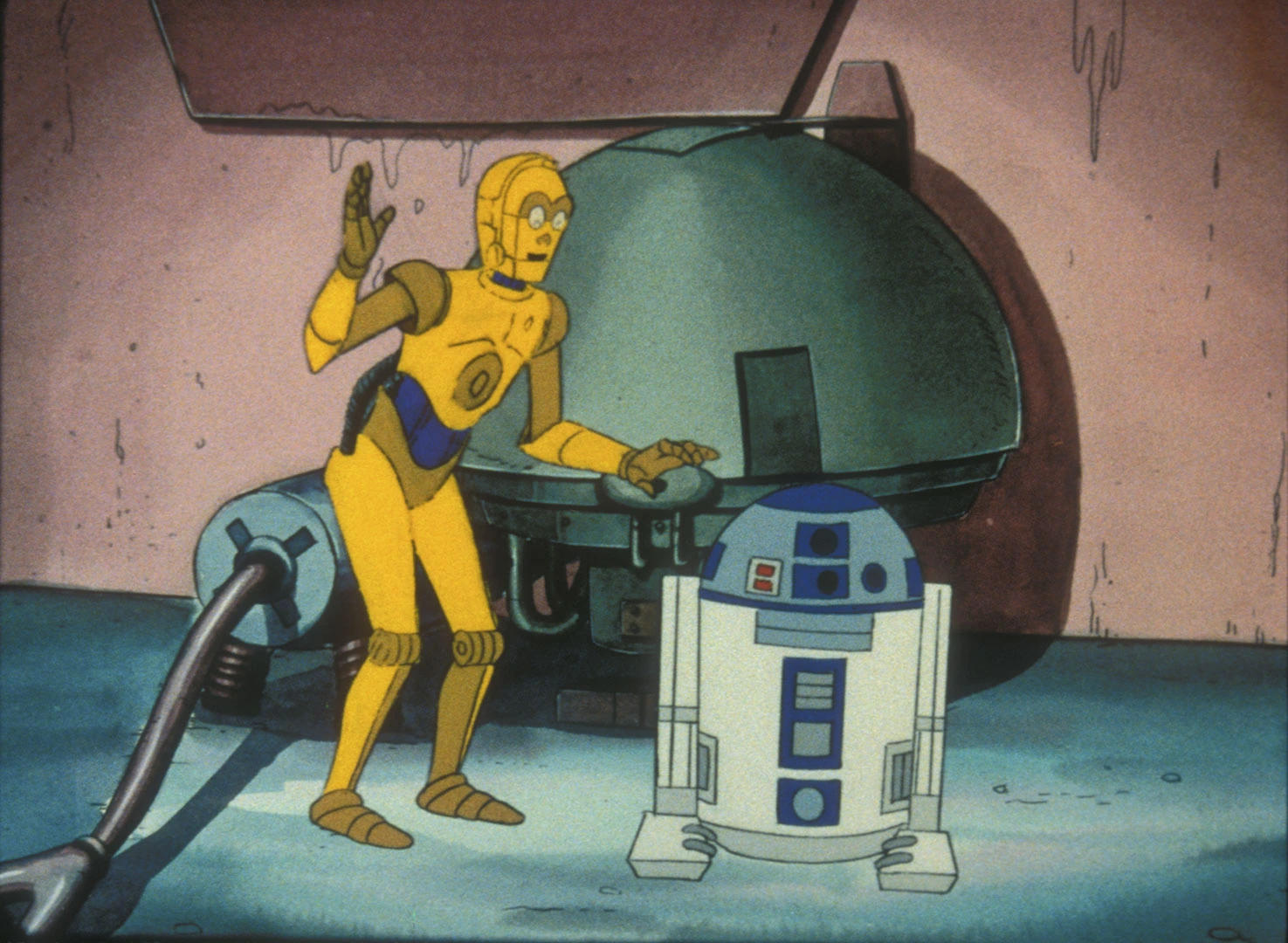
Droids followed R2-D2 and C-3PO through adventures in a period before their encounter with Luke Skywalker. Giving the two robots the center of a series changed the perspective. A sprawling galactic story became something experienced by characters who were often caught up in decisions made by other people. C-3PO’s concern about danger didn’t require much translation for an audience that knew what it was like to be carried along by somebody else’s plan.
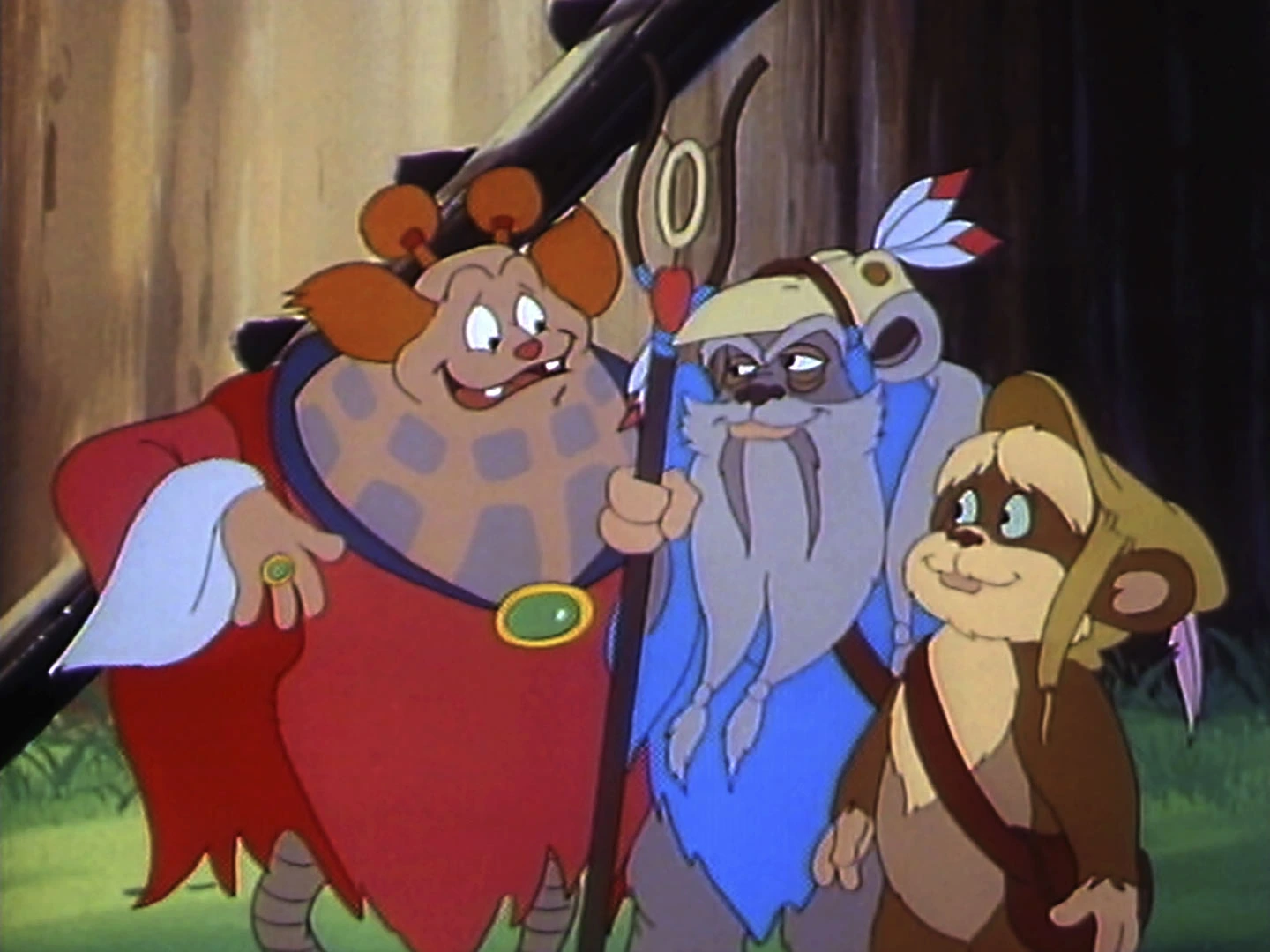
Ewoks made a community on Endor the basis for adventures before the events of Return of the Jedi. Animation allowed the series to expand its forest environment and its inhabitants’ relationships. The setting offered the pleasure of knowing there was more life in a movie location than the camera had time to show.

The programs also demonstrate the difference between a franchise and one specific version of it. Animated characters, television pacing, and a Saturday audience generated a different experience from watching a feature film. A child might embrace both without expecting them to feel identical. The series had to work as morning television as well as carry a famous name.
Their place in the 1985 landscape makes the competition especially interesting. NBC was introducing Gummi Bears; CBS had Muppet Babies and its other attractions; ABC had an hour reaching into Star Wars. None of that produces a single objective best morning. It produces a recognizable problem for a child with one screen: several invitations, and no ability to accept all of them at once.
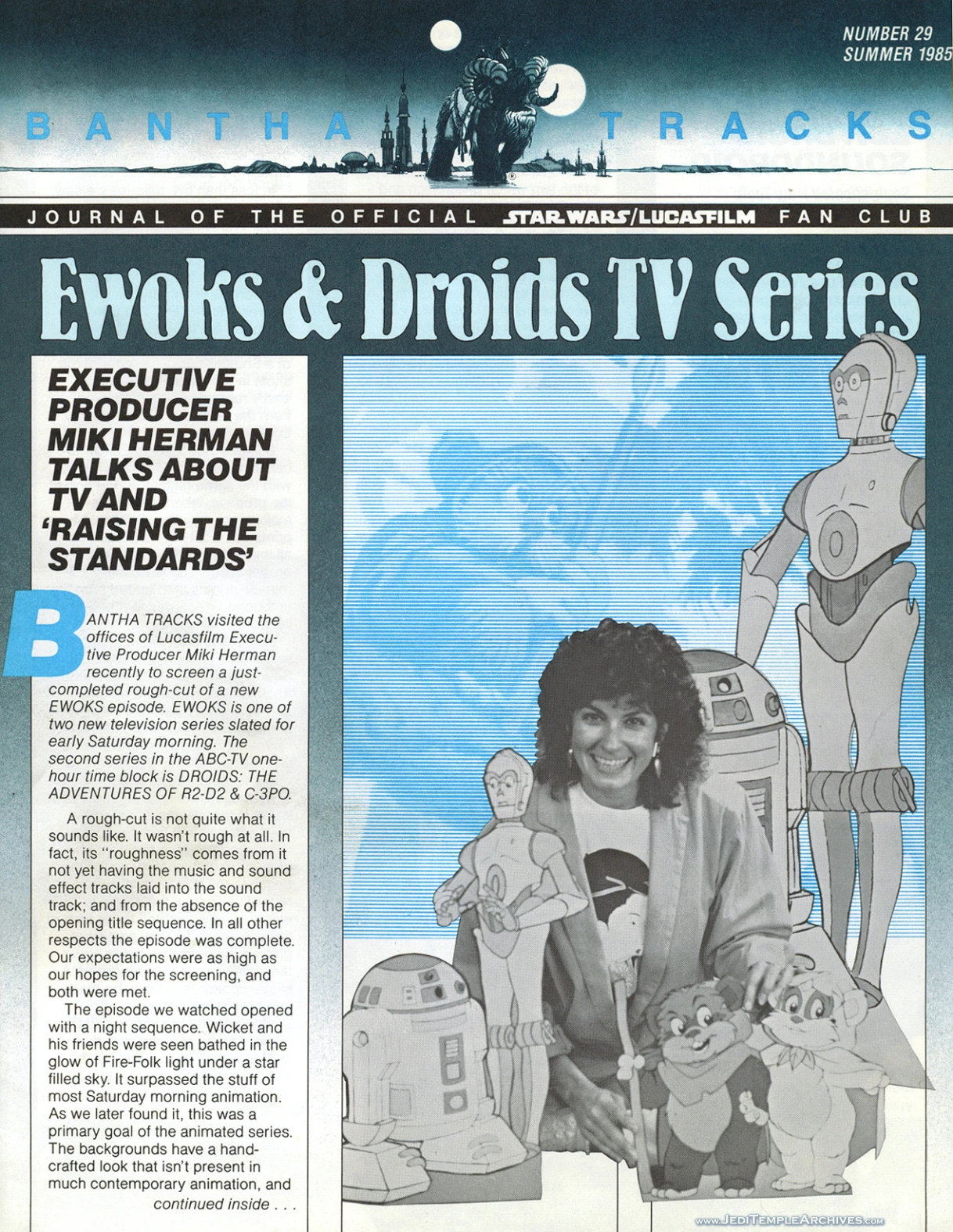
The official Star Wars fan-club newsletter made the coming television series a cover story in summer 1985. Bantha Tracks number 29 put the animated characters beside an interview with executive producer Miki Herman. The surviving issue is useful evidence of how the shows were introduced before they became familiar Saturday company. Its promise belongs to the moment of anticipation, rather than a later account remembering everything as an established hit.
Inside, character drawings and production material make the translation into animation visible. The movie world’s familiar shapes had to become designs that worked through drawn movement, repeated appearances, and television stories. The pages let a fan study the new versions at leisure, something a quick broadcast promo didn’t permit. Looking was part of the preparation for watching.
The newsletter also reminds us that Saturday television didn’t begin and end with the screen. Print, friends, familiar movie characters, and a network’s announcements all helped a child decide whether a new program deserved an appointment. The cartoon was one part of a larger encounter with the property. For viewers who arrived already interested in Star Wars, that encounter had begun before the first animated scene appeared in the living room.
A New Decade Didn’t Mean Every Cartoon Was New
Saturday television wasn’t a museum with each decade in a separate room. Older characters and material continued to circulate, and children encountered them alongside newer productions. Bugs Bunny didn’t need an eighties birthday to belong to an eighties viewer’s morning. The date on the original work and the date of a childhood encounter were doing different jobs.
Older theatrical shorts also brought a different rhythm into television. A compact chase or a confrontation built around a strong comic personality didn’t behave like a longer adventure series. The speed of a gag, the timing of a reaction, and the escalation of a bad idea could carry the whole experience. A child watched without needing to identify the medium for which the cartoon had first been made.
That coexistence gave the morning a wider visual and comic range than the phrase eighties cartoons sometimes suggests. A newer fantasy world might invite a viewer to learn its characters and rules. A short with an immediately readable conflict could get to work almost at once. The same audience was capable of enjoying both, without pausing to arrange a historical argument about which was more sophisticated.
Family recognition added another layer. An adult might identify a character from an earlier part of their own life, briefly sharing a reference with the child watching now. That didn’t guarantee identical tastes or a peaceful agreement about the volume. It did mean the television occasionally supplied something familiar across an age difference, which was useful in a room otherwise full of competing priorities.
New versions of familiar properties created a more complicated kind of recognition. The name remained, but the designs, setting, cast, or format changed. A viewer needed to notice which version was actually on, particularly when later memories gathered several incarnations together. Being precise about the production makes the comparison more interesting than treating every appearance of a character as one continuous program.
The morning’s appeal came partly from those layers. New arrivals lived beside inherited favorites; parents recognized something while children discovered it for the first time. Television made old material newly available to a new audience. Calling the experience an eighties Saturday describes where the viewer stood, not a claim that every drawing on the screen had been created that year.
The Announcer Was Part of the Cast
A Saturday block contained more voices than the characters inside its programs. Announcers told viewers what was coming next, what was new, and why they should remain nearby. A brief promo turned a later show into a promise. The morning acquired direction: stay here, something else worth seeing is on its way.

Those transitions gave separate programs a sense of belonging together. A forest village and a cartoon detective didn’t need a shared fictional universe to occupy the same remembered stretch. The network or station supplied the connecting tissue. The child experienced a flow rather than a stack of unrelated files.
Packaging also taught viewers to anticipate. A new season was advertised before it became routine. A few energetic shots and an enthusiastic voice made an unfamiliar title feel like something to investigate. Children carried those hints into conversations, predicting favorites on the basis of far less information than a modern trailer analysis would consider adequate.
Station identification added a local layer to a national offering. A channel number, an announcer, or the visual style of a local promo belonged to the room’s particular version of Saturday. Two viewers who loved the same cartoon might remember different material around it. Their common program arrived through different doors.
The surrounding material is one reason a later compilation of episodes doesn’t fully recreate the morning. Removing the transitions can make the individual cartoons easier to watch, but it changes the rhythm. The old experience included invitations, interruptions, and reminders that television was unfolding in time, with other things waiting just beyond the current program.
Commercial Time Was Still Part of Your Time
A commercial break was an interruption and an opportunity. It interrupted the program, but it also created a moment to get food, use the bathroom, retrieve something, or negotiate with a sibling. Children learned the difference between leaving the room carelessly and leaving it with a plan. The best plan included someone willing to call when the cartoon returned.
The advertisements brought another world of claims into the morning. Products were demonstrated, desires were proposed, and a child compared the image on television with the possibilities of home. A toy might seem especially appealing when it belonged to a world already familiar from a program. A breakfast product had the advantage of appearing while viewers were already thinking about breakfast.
Households responded differently. Some adults discussed advertising, some limited products or viewing time, and some encountered the ads mainly through subsequent requests. Children weren’t uniformly credulous or uniformly resistant. The same viewer could recognize that a demonstration was exaggerated and still want the object. Adults have occasionally been known to manage that combination as well.
Commercial repetition also made the surrounding material memorable. A viewer might forget an episode while retaining the shape of an advertisement, a mascot, or a particular demonstration. That doesn’t make the ad the most important part of the morning. It means the memory was formed from the whole broadcast, including pieces no child had deliberately selected.
The commercial culture belongs beside the cartoons rather than being used to explain away every pleasure they offered. Recognizing the sales purpose doesn’t require pretending that a funny character was never funny. The useful adult perspective can hold both facts: this was a business, and people made things within it that children found worth watching.
A Small Lesson Between the Adventures
Saturday television sometimes changed tone abruptly. One moment involved an animated danger; another addressed a practical matter, a fact, or a way to behave. The short material between programs could carry a different voice from the surrounding entertainment, asking a child to bring the lesson back into an ordinary room rather than an imaginary world.
Schoolhouse Rock is a strong example of how well a compact educational idea can travel. The musical shorts began in the seventies and remained part of the experience for viewers encountering them later. Grammar, arithmetic, and civic processes acquired characters, images, and rhythms. Remembering something didn’t always feel like remembering a classroom assignment.
The basic technique was efficient: give an abstract idea something a viewer can see and hear. A relationship between words becomes a visual action; a government process becomes a little narrative. The lesson occupies a brief slot, but it leaves a structure the child can retrieve later. A tune can be an exceptionally persistent filing system.
That success shouldn’t turn every short message into a masterpiece. Some were more memorable, convincing, or naturally connected to the audience than others. A viewer also had the right to be impatient when a lesson appeared at a moment they had expected another adventure. Children could appreciate learning something and still notice the interruption.
Looking back, these pieces broaden the definition of the Saturday block. The morning wasn’t uninterrupted fiction. It included selling, teaching, promoting, identifying the station, and moving the viewer toward another program. The cartoons held the center, but the surrounding minutes helped give the experience its distinctive shape.
The Affiliate Lived in Your Town
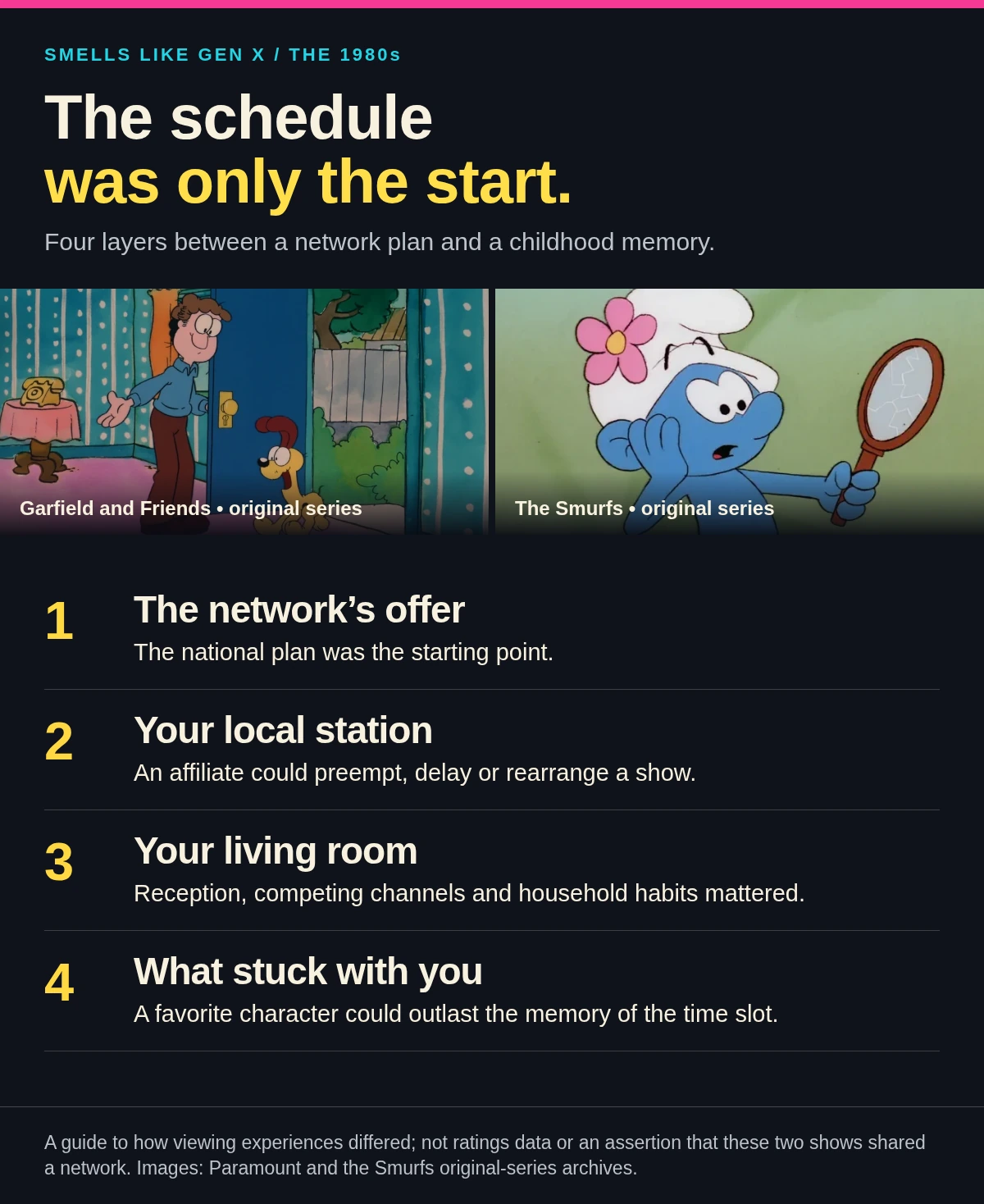
A national network offered a schedule through affiliated stations. The local station still mattered. Clearance, local commitments, special coverage, and regional circumstances affected what reached a particular screen. That is why the most accurate Saturday reconstruction names a date and place rather than announcing that every child in the country watched the same thing at the same hour.
Time zones complicate memory before any other change is considered. A printed time without its context may look precise while telling a later reader too little. A network announcement and a local listing answer different questions. One describes what was being offered; the other helps show what a station planned to carry for its own viewers.
Actual viewing adds another layer. A listing doesn’t establish that a household received the station clearly, owned the equipment, or had permission to watch. A child might know a show through a friend long before seeing it. The map of popular culture was wider than the set of programs any one viewer had personally encountered.
These differences produced the wonderfully confusing conversations adults now have about their childhood schedules. Someone remembers a title at a time that doesn’t fit another person’s recollection. Both may be right. They may be remembering different years, markets, versions, or later repeats. The productive response is to look for the missing context rather than award one memory a national broadcasting license.
Local variation also gives the ritual its texture. The same program was watched in different rooms with different station voices and different constraints. A shared cultural experience doesn’t require identical delivery. In fact, part of the pleasure is discovering the peculiar route by which someone else reached a cartoon you assumed had always been waiting where you found it.
Why a Long Block Felt Different From One Favorite
A beloved half hour is an appointment. A succession of programs can become an environment. That was the advantage of a long children’s block: it gave viewers reasons to remain even when one story ended. The beginning and ending of an individual cartoon were internal events within something larger, a morning that continued to address the same broad audience.

The NBC plan offers a concrete example. Its announced ninety-minute Smurfs stretch occupied the length of three half-hour slots. Whatever a particular household chose to do with it, the arrangement made the village a substantial presence in the proposed morning. That is a different scheduling proposition from introducing a short new program between several others.
Length also affected the effort of choosing. Staying with familiar company was easy. Moving away required deciding what to try and whether to return. A child didn’t need to be passionately committed to every minute for the block to retain attention. Sometimes the next thing was interesting enough; sometimes the viewer simply hadn’t found a reason to leave yet.
Changes of tone helped the sequence breathe. An adventure, a comedy, a musical element, and a familiar personality didn’t ask for exactly the same response. A morning full of identical energy would have been a different experience. The mixture created opportunities for one program to catch a viewer who wasn’t especially devoted to the one before it.
There was a practical audience advantage in being present when a household’s circumstances changed. A sibling joined the room. Someone finished breakfast. A child returned from helping with something. A block that continued for hours offered several entrances, not just one opening moment that everyone had to catch. The flow accommodated an untidy family morning more easily than a single isolated premiere.
The network’s interest in retaining viewers and the child’s interest in company overlapped without becoming the same thing. An executive might assess the arrangement as programming. The viewer experienced a sequence of choices, tolerances, discoveries, and favorites. Explaining the business shouldn’t erase the lived experience; explaining the affection shouldn’t make the business disappear.
That is also why an episode library and an old broadcast block feel different even when they contain the same cartoon. One presents a collection to select from. The other has already put things in an order and asks what you will do with it. Saturday viewers were participating in that order, including the moments when they rejected it and turned the knob.
The Other Channel Was a Person
The competition on Saturday wasn’t confined to broadcasters. A sibling with a different favorite was another scheduling force, and unlike a network, that person could stand directly in front of the screen. The resulting negotiations were often conducted without the benefit of a neutral regulator or a particularly generous attitude toward compromise.
Age changed the argument. An older child might consider a program beneath them while a younger one regarded it as the best thing currently available on earth. The older child might also develop a suspiciously detailed knowledge of that supposedly unwatchable show. Living with another viewer had a way of producing involuntary expertise.
Trading was one practical solution: your program now, mine afterward. So was dividing the morning, sharing a preference, or taking advantage of someone’s temporary absence. Some households had an adult settle it. Others left the children to develop a system whose fairness depended heavily on who had developed it first.
The disagreements didn’t erase the companionship. A funny scene became more enjoyable when somebody nearby laughed at the same part. A strange plot invited comment. Recognizing an approaching rerun together gave the room a small sense of collective knowledge. Even a complaint was a form of shared attention.
These people remain attached to the memory long after a schedule has blurred. A favorite cartoon brings back a couch, but it may also bring back the person who occupied the other end. The show supplied characters you could watch. The household supplied characters who answered back, which made the experience considerably less predictable.
When Saturday Had Somewhere Else to Be
Cartoon time existed inside family time. An errand, a practice, chores, a visitor, or a plan made by someone else might end the morning before the block ended. The television continued without you, an arrangement that children were perfectly capable of considering unreasonable. A station had not consulted the household’s plans, and the household had not consulted the station.
That boundary gave some viewings a particular intensity. You knew you had time for one program and perhaps part of another. The closing moments of the first became a calculation. Would there be enough time? Could shoes wait until the next break? Adults often failed to appreciate how carefully the situation had been analyzed.
There were also voluntary departures. A good day outside, a friend arriving, or a more appealing activity drew children away. Nostalgia sometimes turns the whole generation into an audience that never moved. Actual childhood included plenty of exits. Loving a cartoon didn’t require wanting to watch television for every available minute.
The interruption may even be part of what made a program stick. An unfinished adventure generated questions. Missing something made its eventual reappearance more welcome. A show wasn’t necessarily available on demand, so another chance carried a small, real pleasure. The rerun could be a rescue rather than an annoyance.
The point isn’t that inconvenience was inherently better. It is that the constraint shaped attention. Saturday television was woven through a day with other claims on it. Remembering the cartoons accurately means remembering both the time spent in front of the set and the person who eventually appeared to announce that everybody needed to get going.
Saving the Morning on Tape, Sometimes
A VCR introduced a possibility that changed the relationship with a schedule: perhaps the program could wait. In a home with the equipment, a suitable tape, and permission to use it, recording offered another chance at an episode or a way to preserve something especially liked. The broadcast no longer had to disappear entirely when it ended.
The possibility came with practical conditions. Someone had to operate the machine correctly. The right channel and time mattered. A tape needed enough space, and another person might already have plans for it. An apparently simple recording involved an entire small chain of things that had to go right before a child pressed play later.
Preserving the whole broadcast also preserved the surroundings. Commercials and announcements that seemed disposable at the time became historical details later. The recorded cartoon carried evidence of what had been advertised, how the station identified itself, and what else was being promoted. A household tape could accidentally become a record of the morning’s texture.
Not every family recorded cartoons, and not every tape survived. Reuse was part of the medium’s ordinary life. Storage, equipment, changing interests, and the simple fact that people didn’t expect every possession to become an archive all played a part. It would be misleading to describe a complete personal collection as the normal eighties experience.
The history of recording television on VHS includes those freedoms and frustrations. For Saturday viewers, the machine offered a partial escape from the moving menu. It was useful, occasionally wonderful, and perfectly capable of turning a straightforward plan into a lesson about why the wrong tape was in the machine.
The Morning Changed While You Were Growing
The decade did not hold one lineup in place while children grew older. New shows arrived, familiar ones moved or ended, and viewers’ tastes changed. A program that had once seemed essential became something a younger sibling watched. Another suddenly made more sense. The change belonged to the audience as much as the schedule.
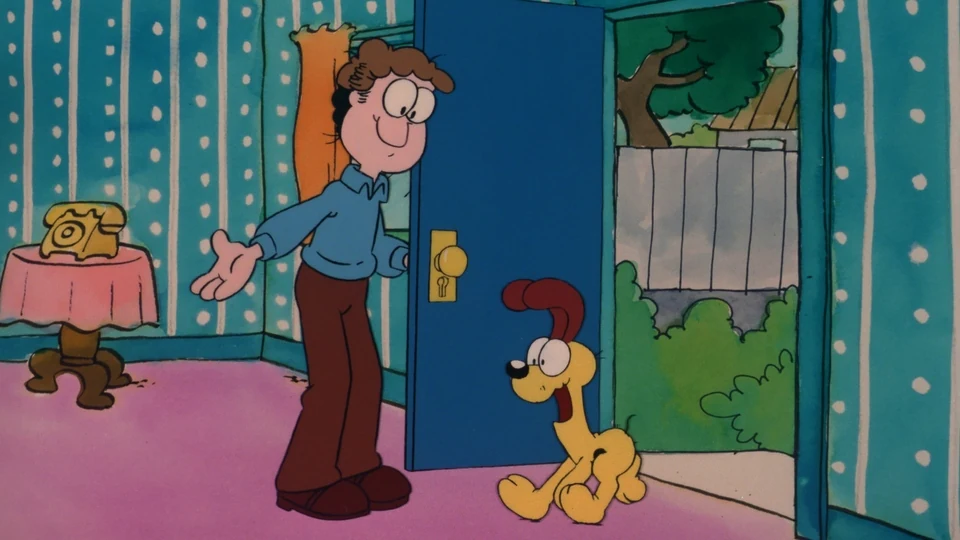
The late eighties contained television that children now remember across a decade boundary. Garfield and Friends began in 1988 and continued afterward. Programs introduced on Saturdays might find later homes in other packages. Gummi Bears’ place in the 1990 Disney Afternoon doesn’t rewrite its earlier network life; it adds another chapter to the same show’s route through viewers’ homes.
Cable and recording also widened some households’ choices. Their availability was uneven, so they shouldn’t be treated as a switch thrown for the whole country at once. But for viewers who gained them, a favorite cartoon no longer had to exist only within one network morning. The set of possible appointments expanded.
Growing older supplied its own alternative channels: friends, work, sports, music, sleeping later, or simply interests that didn’t fit the old routine. A child didn’t need a broadcaster to announce the end of an era. One Saturday, getting up for the television stopped being the first thing they wanted to do.
The larger story of cable entering eighties homes helps explain part of the change, but no technology accounts for all of it. A ritual depends on a time of life as well as a distribution system. The programs continued to exist after a particular viewer moved on. The morning they had made together was harder to reproduce.
Rebuilding a Memory Without Inventing a Schedule
If you want to recover your own Saturday, begin with a place and a period. Where were you living? Which stations reached the house? Roughly how old were you? Those questions are more useful than starting with every cartoon you have ever liked and trying to fit them all between breakfast and noon.
A dated local listing is especially helpful. Compare it with a network announcement, a recording, or a contemporary advertisement when those are available. Each piece answers a slightly different question. The listing describes a plan for local viewers; a surviving off-air recording shows what was actually captured on that occasion. Neither has to prove an entire decade by itself. The evidence often survives in material once treated as disposable: a local listing, a newsletter, an unlabeled tape.
Be alert to later repeats. You may have met an older series during the eighties or an eighties series during the nineties. That doesn’t make the recollection less real. It changes the historical claim attached to it. The first time a program entered your life is worth preserving even when it isn’t the program’s premiere date.
Leave room for gaps. A remembered theme without an episode, a character without a name, or a show whose channel refuses to come back can still belong to the experience. The overlooked cartoons of the era may help with some of those half-recognitions. Not every uncertainty requires a confident answer manufactured to finish a chart.
The Saturday worth recovering is yours. The local channel, the cartoon you waited for, the one a sibling made you endure, the adult who called time just as something good started. Nobody else needs to remember the identical lineup for that morning to count. Start with those particulars and the room comes back more clearly than it does in a supposedly universal list of everything every kid watched.
What the Whole Block Gave You
An individual cartoon offered characters and a story. A Saturday block offered a way to inhabit time. One program led into another, with food, arguments, advertisements, and small trips away from the set filling the spaces. The morning became a container for several kinds of attention, from fascination to half-listening while looking for something under the couch.
That is why the memory can feel warmer than any single episode justifies. You aren’t necessarily remembering a flawless piece of animation. You are remembering a temporary arrangement of the world: familiar company on the television, a day without school, and enough freedom to make some choices that felt like your own.
A modern playlist can give you every favorite and spare you every dud. Useful, certainly. It also lets you skip the strange show you only tried because the remote was across the room, the promo that made you wait, and the cartoon your brother liked more than you did. Saturday had accidental discoveries built into it. We didn’t call that a feature. It was simply what was on.
There is no need to make the old limitations virtuous. Poor reception was poor reception. Missing a favorite was disappointing. Some programming was forgettable, and some advertising was relentless. Affection can survive admitting all of that. In fact, it usually becomes more believable once the actual room is allowed back into the picture.
Within the larger world of eighties television, Saturday remains a remarkably clear example of a schedule becoming a ritual. The networks supplied programs. Stations carried them. Households made room, or didn’t. Children assembled those conditions into something they still recognize. Somewhere in that process, an ordinary bowl and spoon acquired a place in television history.
Questions From the Breakfast Table
Did every child watch the same Saturday lineup?
No. Network schedules changed by season, and local affiliates, time zones, reception, preemptions, and household rules affected viewing. A dated listing or network plan should retain its place and context. One remembered morning cannot establish a universal schedule for the entire country or decade.
Were He-Man and Transformers part of the same network Saturday blocks?
Their original television histories are strongly associated with syndication and local station schedules. Don’t automatically insert a favorite weekday syndicated program into an ABC, CBS, or NBC Saturday grid. A particular station’s later carriage needs its own evidence. The broad cartoon hub covers the larger weekday-and-weekend picture.
Was the Disney Afternoon an eighties Saturday morning block?
No. The named syndicated Disney Afternoon began in 1990. Several associated programs began earlier, and Gummi Bears had a network Saturday history. Keep the title’s original life separate from a later package and from a different daypart. Familiar characters do not make the distribution arrangements interchangeable.
Do prime-time Top TV Shows lists measure these Saturday cartoons?
No. A prime-time season ranking describes a different television setting. Saturday children’s audience claims need sources for their actual time period, market, audience definition, and measurement. This article uses a dated network planning example and verified program histories, without inventing a combined Saturday popularity chart.
Sources & Further Reading
- Broadcasting, May 20, 1985, p. 87: NBC’s announced 1985–86 children’s plan; times retain the source’s limits
- Official Smurfs television catalog: the 1981–1989 Hanna-Barbera series and NBC history
- Jim Henson Company Archives: the original Muppet Babies premiere on CBS
- Lucasfilm: original Droids, ABC pairing and archival animation gallery
- Lucasfilm: original Ewoks television series and production gallery
- Bantha Tracks no. 29, summer 1985: official fan-club introduction and Miki Herman interview; archival scan
- Original Garfield and Friends program catalog and 1988 episodes
- Library of Congress: Schoolhouse Rock history and musical approach
- Disney A to Z: the syndicated Disney Afternoon began in 1990