ER: How the Medical Drama Redefined 90s Television
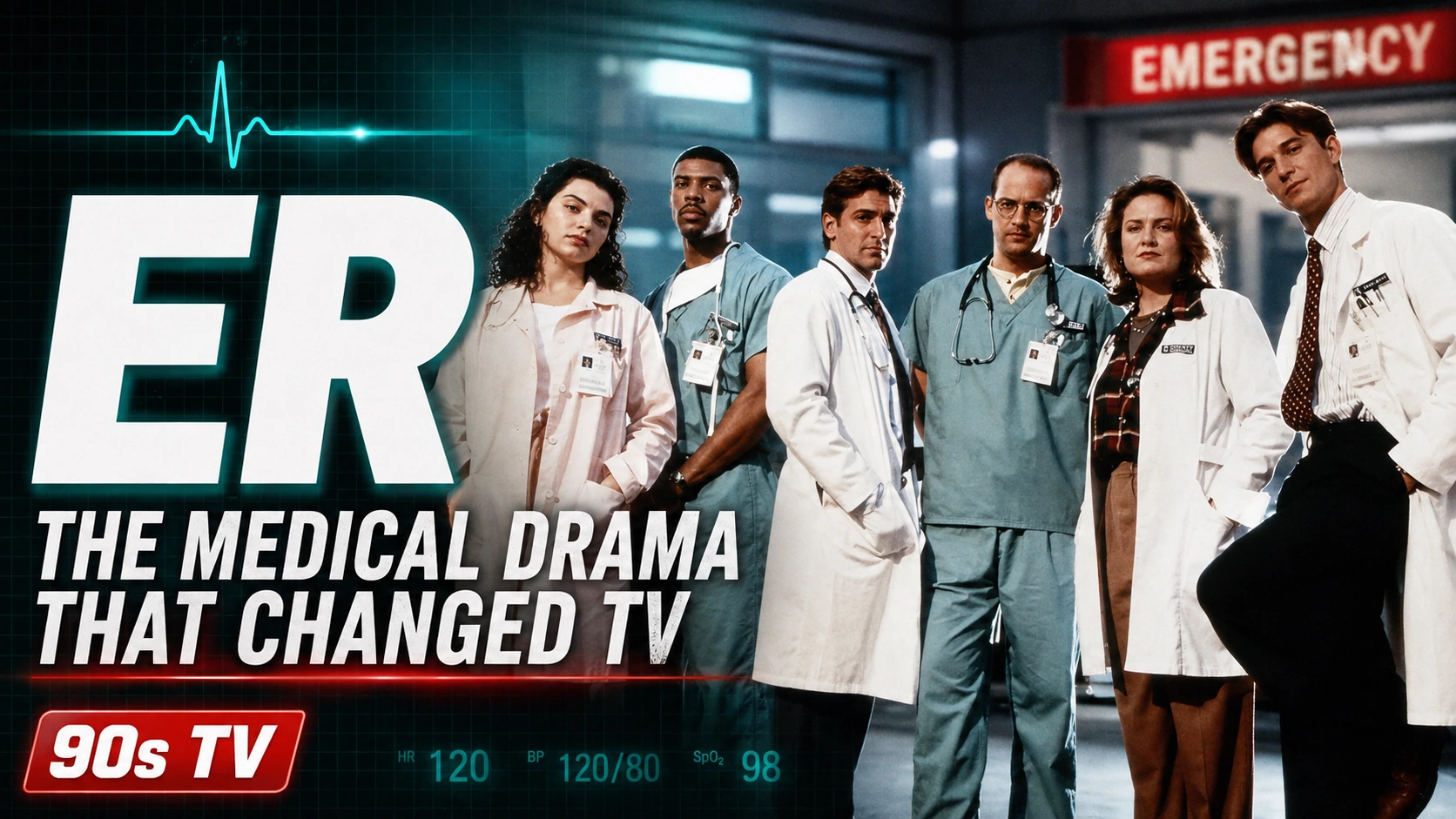
ERHow the Medical Drama Redefined 90s Television
It moved like an action show, sounded like a real workplace and somehow made tens of millions of us care about exhausted doctors, impossible patients and one more ambulance coming through the doors.
Why ER Changed 90s Television
If you watched ER in the 90s, you remember the feeling before you remember any one storyline: the doors flew open, somebody shouted an order, the camera started moving and County General swallowed the room. ER changed 90s television by making a network medical drama feel fast, crowded, technically convincing and emotionally dangerous. And this was not some critics-only favorite we discovered years later—ER finished #1 in the 1995–96, 1996–97 and 1998–99 television seasons.
Why ER Felt Different From Every Other 90s Medical Drama
What I remember first is the speed. Not the blood, not George Clooney, not even that pounding opening theme—the speed. People moved while they talked. Doctors barked orders without translating every word for us. Nurses were already halfway across the room before somebody finished the sentence. A patient could arrive, crash, stabilize, disappear upstairs and be replaced by another emergency before we had fully processed the first one.
For those of us who grew up when prime-time drama usually announced itself with a deliberate establishing shot, a clean conversation and a nice musical cue telling us how to feel, ER could be almost rude. It did not wait for us. That was the point. County General was supposed to exist whether we were ready or not.
The show premiered on NBC on September 19, 1994, with the two-hour pilot “24 Hours.” According to the Television Academy’s oral history of the pilot, 23.8 million viewers watched that first night. Three days later, the series slid into the Thursday 10 p.m. slot it would occupy for its entire 15-season run. What looked at first like an unusually frantic medical drama quickly became one of the defining engines of 90s TV.
And the strange part is that ER did this while still being recognizably network TV. It had commercials. It had standards departments. It lived inside NBC’s enormous Thursday-night machine. It was not a cable experiment hiding at midnight. This was mainstream television, watched by tens of millions of people, moving at a pace that made the rest of the dial suddenly look older.
How Michael Crichton and John Wells Built ER
One reason ER never felt like a medical show designed by committee is that its roots went back to somebody who had actually been inside the machine.

Michael Crichton was not simply the novelist behind Jurassic Park. He had trained as a physician at Harvard Medical School, and years before ER reached NBC he had written a screenplay drawn from hospital experience. In the Television Academy’s 30th-anniversary oral history, John Wells recalled being handed Crichton’s old feature script when Steven Spielberg’s Amblin was looking to move into television. The script was long, crowded and packed with characters. In other words, it already contained the problem that would become the show’s greatest strength: an emergency room does not organize itself around a neat television protagonist.
NBC did not instantly recognize a sure thing. Wells has remembered that every broadcast network turned the project down—twice—and that the fallback was essentially a two-hour television movie if the series failed. That detail matters because ER now looks inevitable. It was not. In the early 1990s, its speed and density made executives nervous. Wells recalled hearing the objection that nobody wanted to watch “speed” every week, especially in a medical drama.
That fear makes sense if you remember what the network-drama landscape looked like. Medical television already had distinguished ancestors, from Dr. Kildare to St. Elsewhere. But ER was proposing a different kind of viewing experience. The emergency department itself would create the structure. Cases would interrupt conversations. A doctor could be dealing with a personal crisis, get called into trauma, disappear into procedure and return to the personal crisis half an hour later—if there was time.
John Wells became the person who turned that unwieldy screenplay into a repeatable television system. He also brought experience from China Beach, a series that already understood how professional competence, trauma and character could coexist without every emotional beat being underlined. With Crichton’s medical instincts, Wells’ production discipline and Amblin’s backing, the project stopped looking like an impossible two-hour medical stampede and started looking like a weekly world.
Crichton develops the original emergency-room screenplay from his medical background.
The old script resurfaces through the Crichton/Spielberg relationship and Amblin’s television ambitions.
John Wells and the creative team reshape the material for NBC. “24 Hours” becomes the two-hour pilot.
The pilot premieres to 23.8 million viewers, then the series moves into Thursday at 10.
ER Season 1: The Pilot Already Had the Formula
Watch the opening of “24 Hours” now and what stands out is how little ceremonial buildup there is. Mark Greene is asleep. He gets awakened. Work is waiting. Welcome to ER.
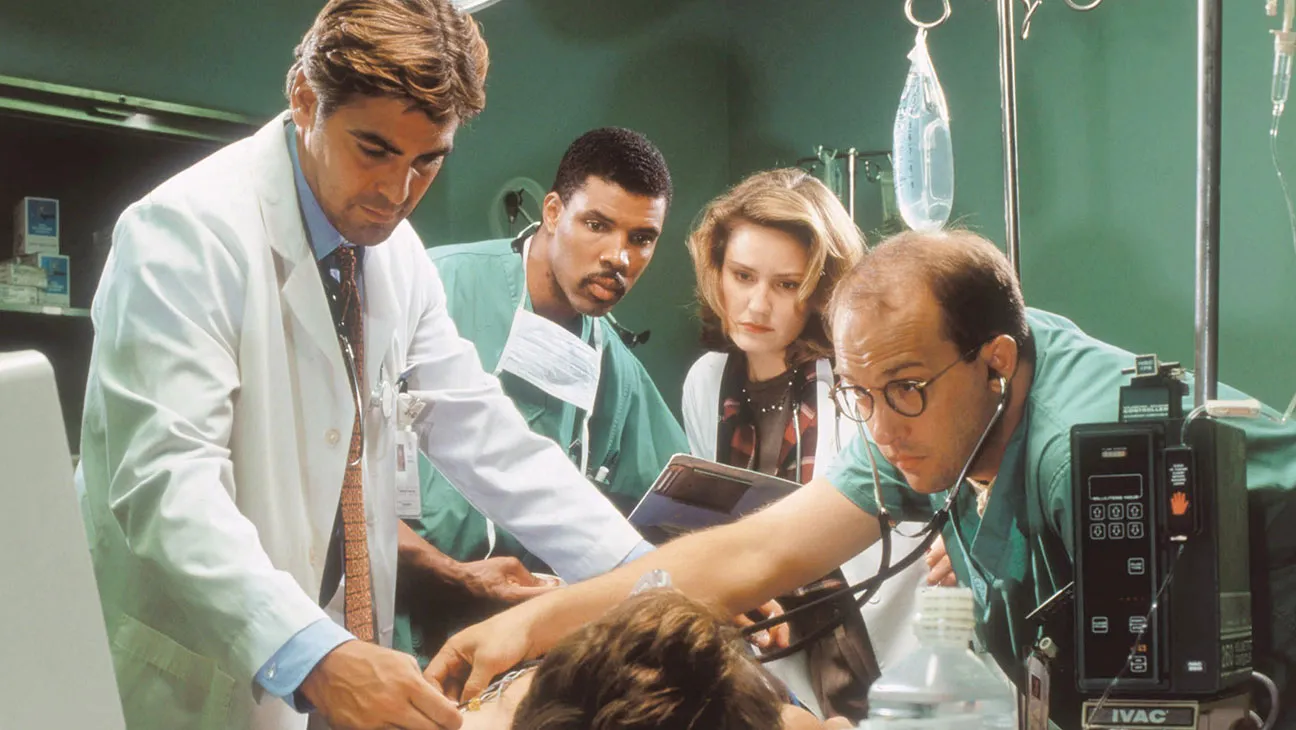
There is a confidence in that choice. The show does not begin with a helicopter shot of Chicago and a solemn voice explaining the mission of emergency medicine. It begins with exhaustion. Greene is competent, decent and already tired. That sets the moral temperature better than a speech could have. These people are going to do difficult work while hungry, distracted, irritated, frightened and carrying whatever happened at home into the next room.
The pilot introduces an ensemble rather than a chosen one. Peter Benton is ambitious and impatient. John Carter is new enough that every hallway seems slightly too fast for him. Susan Lewis is smart and grounded. Doug Ross is gifted, reckless and carrying enough charm to get away with more than he should. Carol Hathaway enters the story not as a romantic accessory but as a nurse whose crisis immediately makes clear that the people caring for everyone else are not protected from collapse themselves.
That last part was not originally meant to unfold the way it did. The Television Academy’s oral history notes that Hathaway was not expected to survive beyond the pilot. Julianna Margulies did such strong work, and the character generated such immediate emotional gravity, that Carol stayed. The decision helped shape one of the series’ defining strengths: nurses were not wallpaper. They knew the department, knew the patients and knew the doctors—often better than the doctors knew themselves.
The pilot also establishes the show’s basic visual grammar. The camera moves through crowded spaces. Background action is not really background. A nurse crossing the frame may be setting up the next beat. Somebody shouting from a doorway may turn the scene. The result is the illusion that County General keeps operating beyond the rectangle of the television set.
That illusion mattered. Plenty of television workplaces feel like sets where employees appear only when the script needs them. County General felt like the overnight shift was still going when NBC cut to a commercial.
How ER’s Camera Work Made County General Feel Real
The most influential part of ER may be the thing viewers learned to stop noticing: motion.
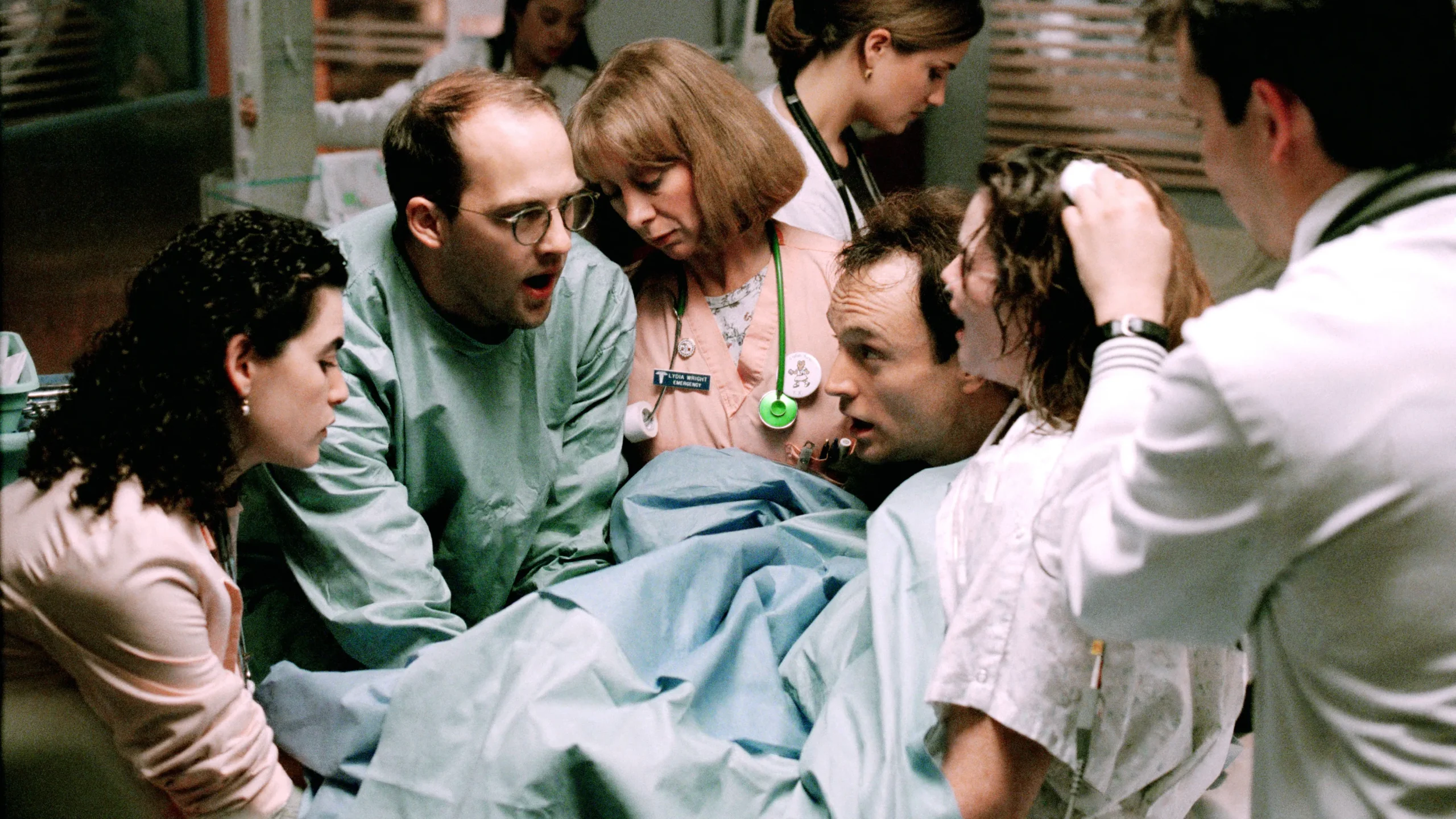
Long tracking shots, Steadicam movement, actors hitting marks while handling props, dialogue overlapping with medical action, doors opening into new problems—none of that was simply decoration. It made the audience experience information the way a busy department experiences it: in motion, under pressure, with no guarantee that the current problem is the only problem.
John Wells has described how the series used real medical terminology and had writers observe real emergency departments. That did not make the show a documentary, and later academic research has found meaningful differences between the patients and outcomes depicted on ER and real emergency medicine. But the show’s commitment to professional texture was powerful. It trusted that viewers did not need to understand every abbreviation to understand urgency, hierarchy and competence.
That was a fairly radical form of respect. Network television had spent decades making sure nobody at home got lost. ER occasionally let us get lost. Carter could be our way in during the early years because he was learning too, but even then the show rarely stopped dead to define the room.
The camera style also made competence exciting. A trauma sequence could function almost like an action scene without anybody throwing a punch. The action was getting the airway, finding the bleed, ordering the labs, getting another unit of blood, making the call and realizing that the patient’s condition had changed while you were still solving the previous problem.
That rhythm spread far beyond medical television. Later procedurals, workplace dramas and prestige series increasingly assumed that audiences could process dense environments, fast jargon and multiple simultaneous story tracks. ER did not invent every piece of that language, but it proved—at gigantic network scale—that viewers would follow.
The Original ER Cast: Why the Ensemble Worked
A show can have the slickest camera moves on television and still be an empty exercise. ER worked because we cared who was running down the hallway.
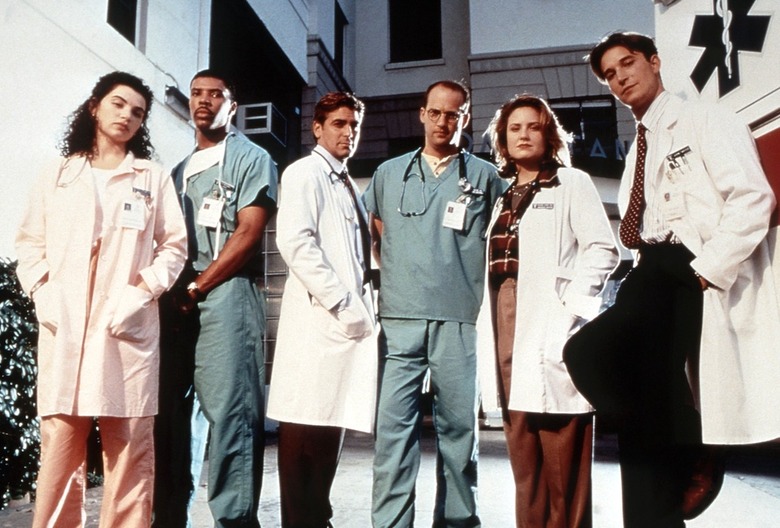
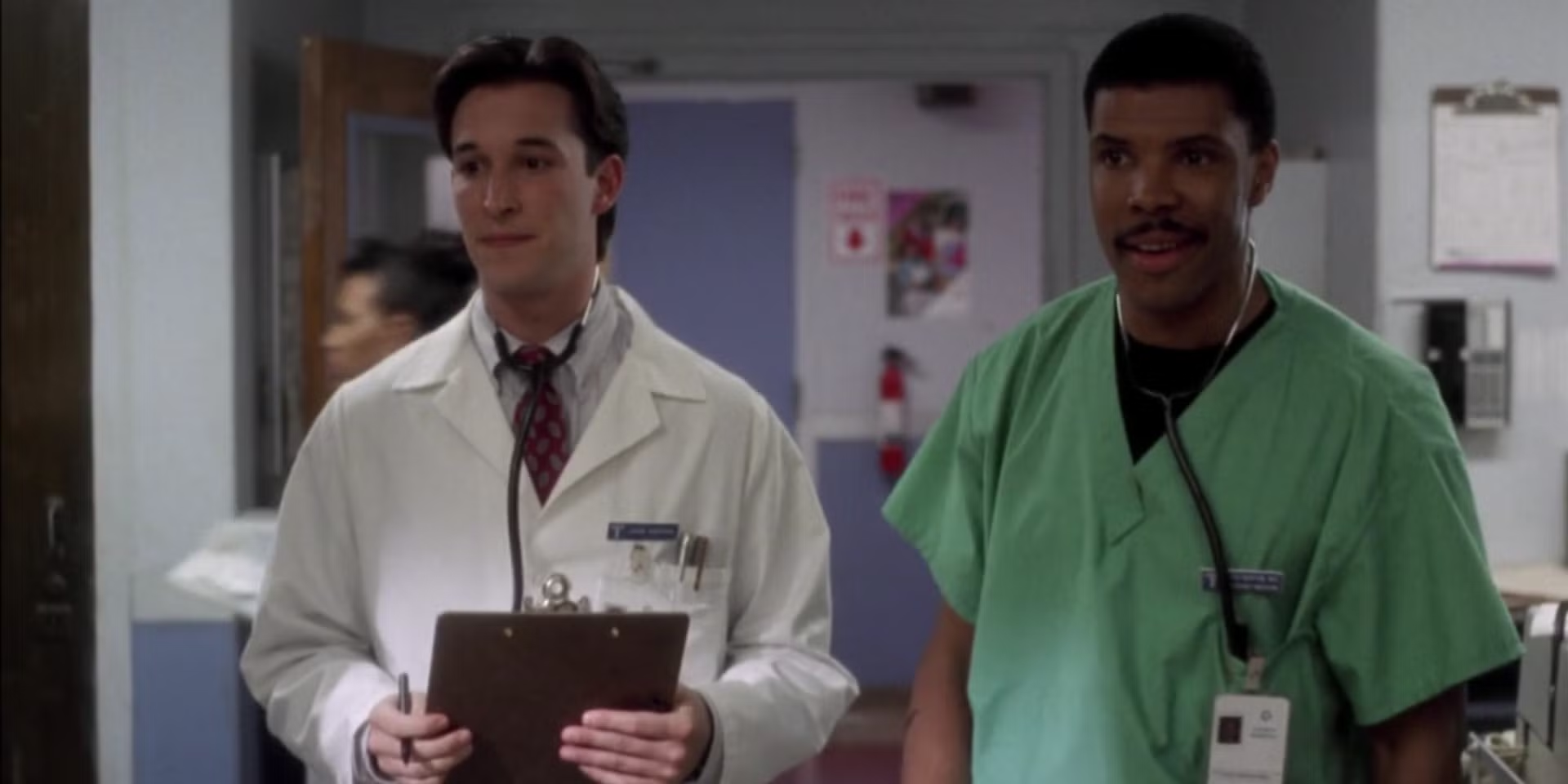
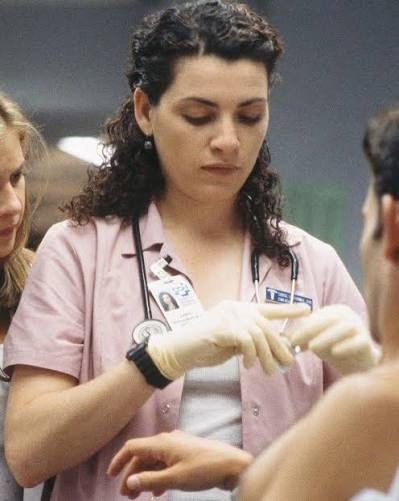
The ensemble design also protected the series from becoming “the George Clooney show” once Clooney’s fame exploded. Doug Ross became a genuine pop-culture event, but ER remained bigger than any one performer. That mattered later, when major cast members left. The series could absorb loss because County General had always been the permanent character.
Laura Innes’ Kerry Weaver, Alex Kingston’s Elizabeth Corday and other later arrivals proved the model could renew itself. The faces changed, but the pressure stayed. That is one reason ER managed 15 seasons and 331 episodes: the institution had a story engine built into the front door.
Why ER Could Hit So Hard Emotionally
ER could make your heart pound for forty minutes and then break it with somebody sitting quietly on a curb.
The series understood that emergency medicine creates terrible asymmetry. For the staff, a patient may be one case in a punishing night. For the family waiting outside, that case may be the only thing in the universe. ER kept moving between those scales.
That allowed small moments to hit unusually hard. A doctor could lose a patient, take one breath, and be told another ambulance was two minutes out. Grief had to be postponed because the waiting room did not care. When the show finally created space for a character to react, the emotion felt earned by everything that had been suppressed.
Mark Greene’s personal life was especially important to this. He was not written as a superhero who left the hospital and became invulnerable. His marriage strained under the work. His confidence could crack. His identity as a physician did not solve the rest of his life. The show’s later treatment of his illness pushed that idea to its limit, but even in the 1990s the groundwork was there: the person who stabilizes everybody else can still be falling apart.
Carter’s evolution gave the series another kind of emotional continuity. In 1994, he was the young student trying to survive Benton. By the end of the decade, the accumulated experience showed on him. ER was very good at making professional growth look less like a motivational montage and more like scar tissue.
And because the show was willing to let patients be funny, irritating, dishonest, generous, scared or simply unlucky, the tragedies did not feel like a weekly stack of “issues.” They felt like people colliding with a system at the worst possible moment.
George Clooney on ER: How Doug Ross Became a 90s Star
There is a temptation, looking backward, to imagine George Clooney arriving on ER already glowing with movie-star certainty. That is not how 1994 worked.
Clooney had been around television for years. He had credits, near-misses and enough failed pilots to make “overnight success” a joke. Doug Ross was the role that finally concentrated all the pieces: charm, impatience, humor, danger and a face NBC could put on every magazine rack in America.
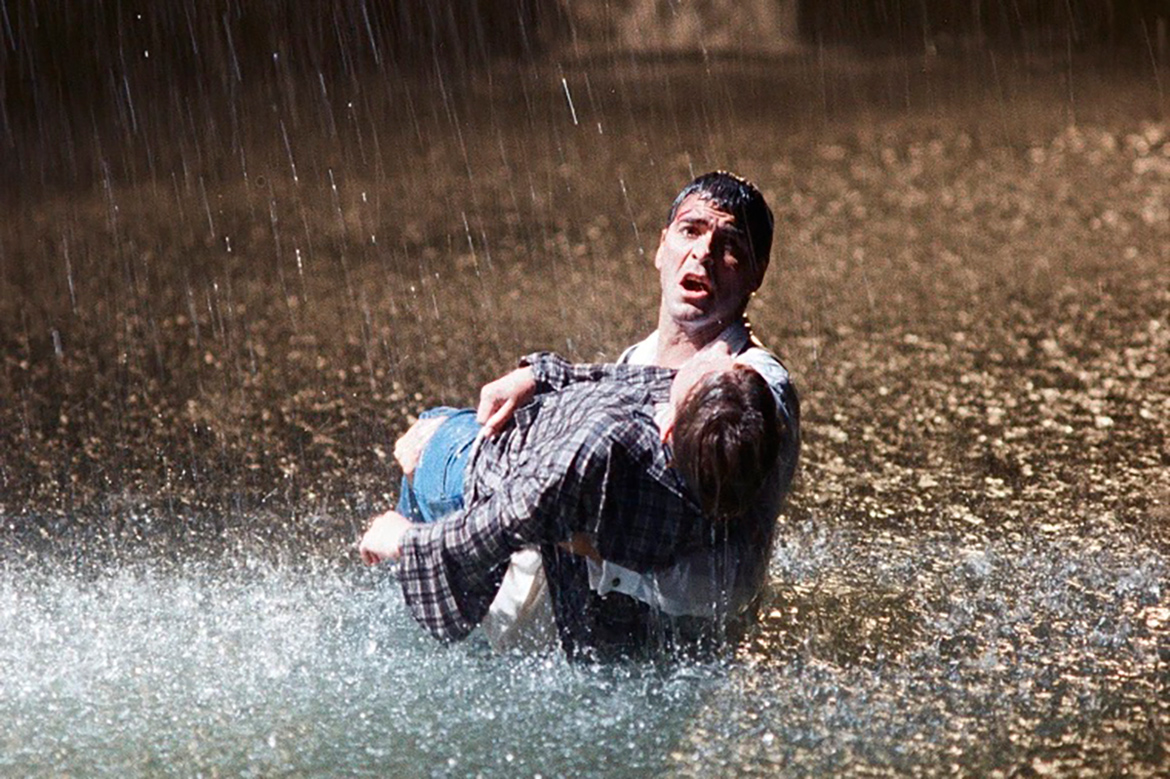
The great decision was not making Ross too easy. He was terrific with children, instinctive in emergencies and capable of real courage. He was also reckless, arrogant and often convinced that being morally right excused ignoring everybody else in the building. That friction kept the character from becoming a poster.
The 1995 episode “Hell and High Water” is the moment most people point to when talking about Clooney’s breakout. Ross leaves the hospital story and becomes the center of a rescue involving a child trapped in a storm drain. The episode drew more than 48 million viewers, according to contemporary Nielsen reporting in the Los Angeles Times. Those are numbers that sound fictional now.
But what made the episode work was the foundation ER had already built. We believed Ross would ignore procedure if he thought a child needed him. We believed that instinct could be both heroic and infuriating. The rescue was not a random attempt to turn a doctor into an action star. It was character.
Clooney eventually left after five seasons and became exactly the film star everyone expected. ER survived. That may be the greatest proof that the show’s ensemble architecture worked.
ER Ratings: How the Medical Drama Became the #1 Show on TV
Those ratings are hard to explain if you did not live through network television at full strength. We are not talking about a show that everybody claimed to watch later. On Thursday nights, tens of millions of us were actually there at the same time.
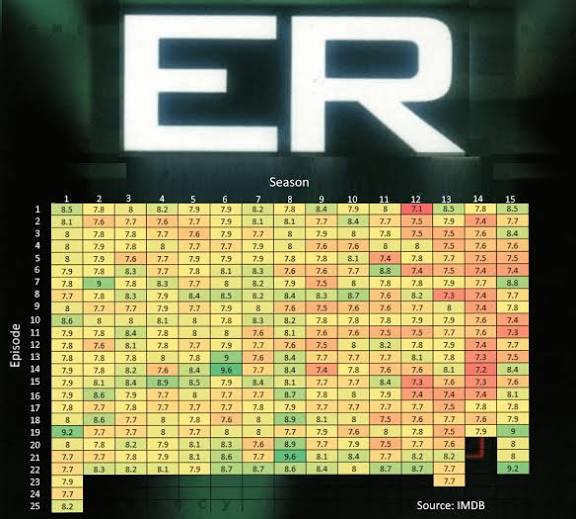
Those three seasons make more sense when you see what else America was watching. Our rankings of the top TV shows of 1996, top TV shows of 1997 and top TV shows of 1999 put County General back on the same dial with the sitcoms, news shows, sports and other giants it was beating.
The more interesting point here is what those rankings say about ER. A dense, often grim, technically aggressive hospital drama was not a prestige side dish. It was the main course. If those audience numbers look almost impossible now, our guide to why 90s TV ratings were so much bigger than today’s puts that network-era scale in perspective. In 1996–97, it averaged just over 30 million viewers while NBC stacked the rest of the top of the chart with Seinfeld, Friends and a remarkable bench of comedies. In 1998–99, even after network audiences had started shrinking and Seinfeld was gone, ER still averaged 25.4 million viewers and finished first. That makes it a perfect marker for the end of the great network-TV monoculture in 1999: the old system was starting to crack, but County General could still pull a crowd the size of a city.
That dominance made the series a crucial anchor for NBC’s Must See TV Thursday machine. Comedy got much of the branding glory, but at 10 p.m. ER was the closer. It held a giant audience late enough to feed local news and gave Thursday night a dramatic finale after the sitcom blocks.
It also meant that experimentation happened in front of an audience most shows today could not dream of reaching. When ER changed its visual language, tried an unusually demanding story or performed live, it was not doing so in a niche. America was watching.
ER and Must See TV: Why Thursday Night Belonged to NBC
NBC Thursday night in the mid-90s was not just a schedule. It was a habit.
We remember the comedy brands because they were so quotable: Seinfeld, Friends, Frasier, plus the rotating bench of shows NBC could launch behind them. But the night needed somewhere to go. At 10 p.m., the tone changed. The laugh track disappeared. Somebody was coming through the ambulance bay doors.
ER benefited from the strength of NBC Thursday, absolutely. Pretending otherwise would be silly. A powerful lead-in helped. Promotion helped. The network’s ability to make one night feel culturally mandatory helped. But the relationship ran both ways. ER became one of the reasons Thursday was mandatory.
It gave the network a different kind of prestige from the comedies. There was the chatter the next morning about Ross and Hathaway, the patient nobody could save, the cliffhanger we could not stop thinking about. A whole night of programming became a relay race from comedy to drama, and ER carried the baton across the finish line.
That ecosystem is one reason the 1990s feel so alien now. We did not binge ER; we arranged Thursday around it. Thursday at 10 was Thursday at 10. If you missed it, you hoped somebody had set the VCR correctly—or you accepted that everyone at work or school might know what happened before you did. That whole ritual is why appointment TV in the 90s felt less like a viewing option and more like somewhere you were supposed to be.
ER’s Live Episode “Ambush”: Network TV Without a Safety Net
By 1997, ER was so confident in its machinery that it decided to remove the machinery’s biggest safety net: editing.
The fourth-season premiere, “Ambush,” was performed live. And because John Wells wanted West Coast viewers to have the same live experience as the East Coast, the cast performed the episode a second time two hours later. Contemporary reporting in the Los Angeles Times noted that the production deliberately chose two live performances rather than simply delaying the East Coast feed.
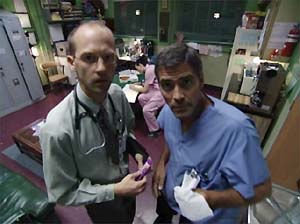
This was more than a stunt, although NBC certainly enjoyed the promotional value. A live ER episode tested the very skills the series had spent three seasons developing: timing, movement, long scenes, handoffs, choreography and an ensemble able to keep going when something went wrong.
It also fit the show philosophically. Emergency medicine is built around imperfect information and no reset button. Live television recreated a tiny piece of that pressure for the performers and crew.
The idea sounds almost perverse now. A number-one network drama, with an elaborate hospital set and a huge ensemble, voluntarily giving up editing for a night? That was 90s television confidence in one sentence.
How ER Changed Medical Drama Realism
You did not need to know what every medication did. You just needed to believe these people did.
The series used medical consultants, real terminology and observation of actual emergency departments to build its texture. John Wells has spoken about writers watching real emergency rooms and about the decision to leave technical language in the scripts. The result was a show that often sounded more like a workplace than a lecture written for television.
That realism had consequences beyond style. Research published years later found that medical television can affect health knowledge and expectations. One study comparing ER with real emergency-department data noted earlier findings that viewers reported using information from the series in their own healthcare decisions, and that knowledge about emergency contraception increased after a relevant episode.
The same research also warns against treating television medicine as reality. Patients on ER did not perfectly match real emergency-department demographics, and dramatic outcomes can distort expectations. That is the right way to think about the show’s realism: ER was extraordinarily persuasive, not infallible.
Its influence on the public image of emergency medicine was still enormous. The phrase “emergency room” stopped sounding like a static place where a television doctor walked in, diagnosed something and walked out. ER made it feel like a team sport conducted at sprint speed.
ER Storytelling: Patients, Ethics and the Cases That Stayed With Us
The show’s best stories usually worked on two tracks at once: what is happening to the patient, and what this particular crisis reveals about the person treating them.
Benton’s cases could expose the cost of his ambition. Carter’s could expose what he did not know yet. Greene’s could force the decent, responsible doctor into choices where decency did not produce a clean result. Ross’ pediatric cases kept testing whether compassion justified insubordination. Hathaway’s work repeatedly reminded the show that nursing meant its own expertise, burdens and moral authority.
This is why the series could handle issue-heavy stories without always feeling like an after-school special. The problem arrived through the door first. The politics, ethics and social questions emerged because a human being needed care. HIV and AIDS, addiction, violence, poverty, racism, reproductive decisions, mental illness and the failures of the healthcare system were not separate from the job. They were the job.
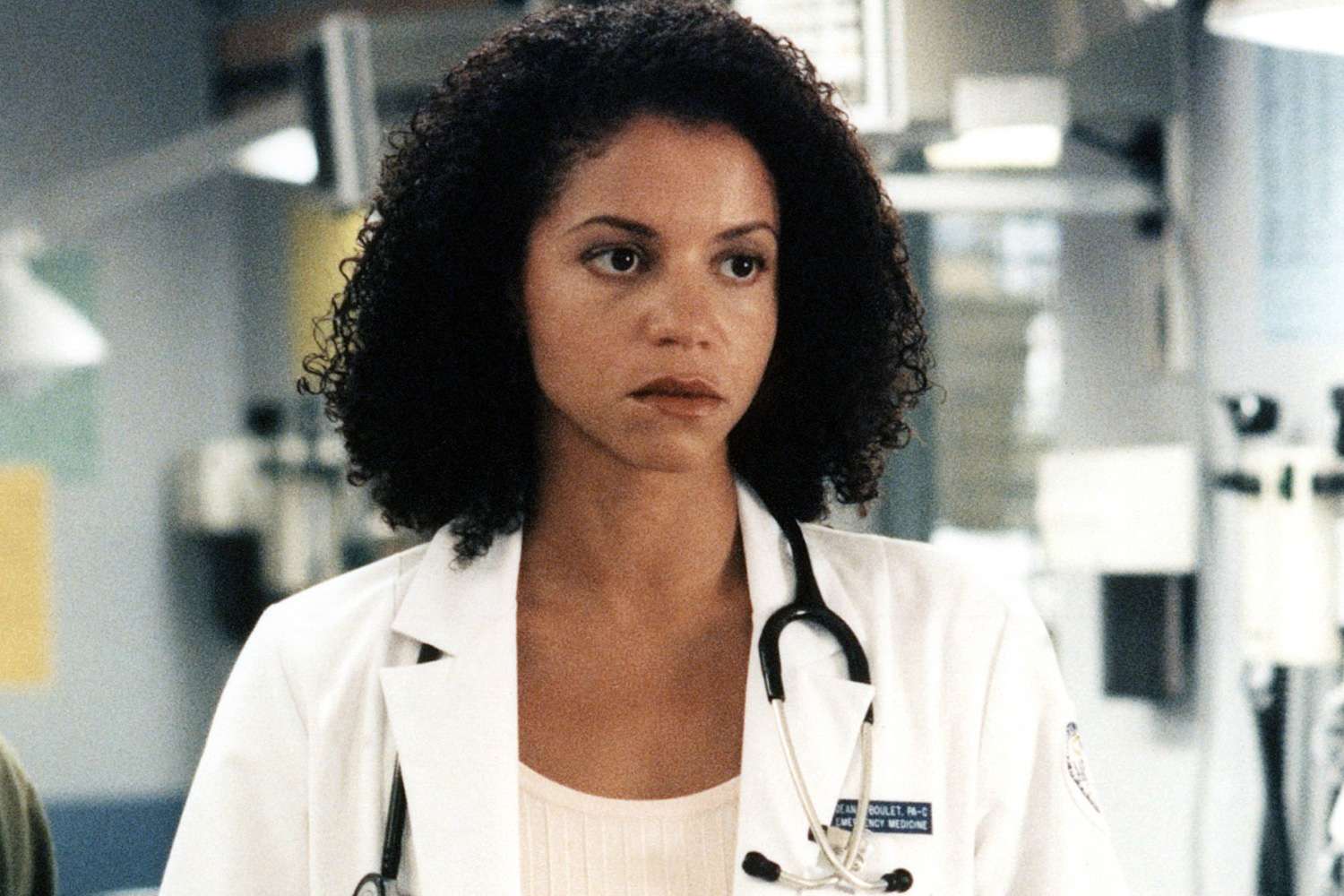
The Gloria Reuben character Jeanie Boulet was especially important. Her HIV-positive storyline placed a long-running character’s diagnosis inside ordinary professional and personal life rather than treating HIV only as a one-episode tragedy. Television Academy retrospectives have highlighted the significance of the role. For 1990s network television, that visibility mattered.
ER also let ethical certainty collapse. The doctors were often right about medicine and wrong about people—or the reverse. A patient could refuse the treatment the viewer desperately wanted them to take. Family members could make maddening decisions for understandable reasons. The hospital had protocols because people are messy, and then people were messy enough to defeat the protocols anyway.
Essential ER Episodes That Show Why the Series Mattered
This is not a “best episodes” ranking. These are simply useful doors into what the series did unusually well.
“24 Hours”
The pilot establishes the entire operating system: Greene’s exhaustion, Carter’s initiation, Benton’s drive, Ross’ charm, Hathaway’s crisis and the sense that the department never stops.
“Hell and High Water”
Doug Ross becomes a full-scale television event in a rescue story that pushed George Clooney’s star power into another gear while remaining perfectly consistent with Ross’ character.
“The Healers”
A devastating reminder that the people who arrive at County General are connected to lives outside the hospital—and that emergency work can destroy the emotional distance caregivers depend on.
“Ambush”
The famous live premiere turns the show’s choreography into the story. Performed twice for the two coasts, it is a flex that only works because the ensemble already knows how to move as one machine.
“Exodus”
A chemical spill pushes the emergency department into disaster mode and lets Carter demonstrate how far he has come. Chaos becomes a test of leadership rather than simply spectacle.
“Be Still My Heart” / “All in the Family”
The turn into 2000 technically sits just beyond the decade, but it cashes in years of character investment and shows how brutally the series could convert routine workplace rhythm into personal catastrophe.
How ER Changed Network Television in the 1990s
The easiest way to measure ER’s influence is to imagine modern television without the things it made ordinary.
1. It made professional density accessible
Viewers could handle jargon. We could follow a procedure without a character turning to the camera and saying, “In plain English, doctor?” The emotional meaning of the scene was enough to carry us through the details.
2. It proved speed could deepen character instead of flattening it
Fast television often gets accused of being shallow. ER showed the opposite. Pressure reveals people. Who freezes? Who gets sharper? Who cuts corners? Who quietly notices the frightened family member everybody else missed?
3. It made the ensemble genuinely structural
Many shows advertise an ensemble but orbit one star. County General could shift the center of gravity from Greene to Benton to Carter to Hathaway to Ross and back again. The format was resilient enough to survive major departures because the workplace created stories for whoever walked through it.
4. It raised the production bar for network drama
The moving camera, elaborate blocking, large sets, background action and medical choreography gave the show scale. This was expensive-looking television before “prestige TV” became a marketing category.
5. It brought messier bodies and messier systems into prime time
Medicine was not simply a wise doctor identifying the hidden clue. It was staffing, insurance, bureaucracy, burnout, hierarchy, public health, family conflict and people arriving too late. The show did not solve the American healthcare system, but it made the system visible.
6. It made emotional restraint feel modern
The score did not need to announce every tragedy. A patient could die and the room could keep moving. The show trusted silence, exhaustion and delayed reaction. That restraint made the big emotional releases stronger.
The broader shift is explored from another angle in how ER and NYPD Blue changed network drama in the 1990s. NYPD Blue pushed adult grit and standards; ER pushed velocity, ensemble scale and procedural immersion. Together they helped make older network drama conventions feel suddenly less inevitable.
Watching ER in the 90s: When Thursday Night Was an Event
This is the part the Nielsen numbers cannot capture, and it is the part I remember best.
If you were watching in the 90s, ER was the thing after the sitcoms—the show that made you look at the clock and realize you were going to be tired Friday morning. It was also the conversation somebody started before you had a chance to say, “I taped it, don’t tell me.”
That opening theme still works on me. You heard those drums and whatever else you were doing was over. The phone could ring and you would stare at it like the caller had personally betrayed you. Answering machines existed for a reason.
And this was before every medical show had inherited ER’s DNA. The first time you saw that camera race through County General, it really did feel new. The show made exhaustion look heroic without pretending exhaustion was healthy. It made competence sexy. It made a pediatrician jumping a fence seem completely plausible because, well, Doug Ross.
More important, it made adulthood look complicated in a very Gen X way. These were accomplished professionals who still screwed up relationships, disappointed their parents, got scared, made bad choices and occasionally looked like they wanted to crawl under the desk. The white coats did not grant wisdom.
That may be why the show has aged better than a lot of “important” television from the same era. Beneath the 90s hairstyles, pagers and giant hospital phones, the central idea is still recognizable: everybody is trying to be competent while life keeps interrupting.
ER vs. Chicago Hope: The 1994 Medical Drama Battle
One of the strangest pieces of the ER story is that television did not get one major new hospital drama in 1994. It got two.
CBS launched Chicago Hope the same season, with David E. Kelley behind it and a prestigious cast led by Mandy Patinkin, Adam Arkin and Héctor Elizondo. On paper, this looked like the heavyweight medical drama. It had the pedigree, the serious actors and the kind of literate writing television critics were already trained to respect.
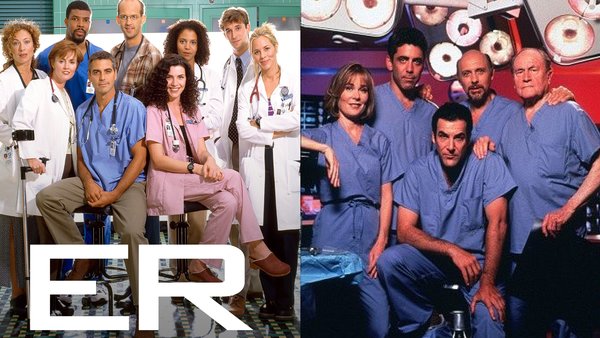
ER came in from another direction. It was younger, rougher around the edges and obsessed with movement. Its doctors did not seem to enter scenes so much as collide with them. The hospital hierarchy felt less like a stage for speeches and more like a traffic pattern. The camera made County General seem too crowded to contain a conventional television drama.
The competition became one of those revealing moments when two good shows point toward different futures. Chicago Hope was more comfortable stopping for an argument. ER wanted the argument to happen while somebody was putting on gloves and pushing a gurney through a door.
That does not mean ER “beat” the other show by being smarter. Chicago Hope had excellent writing and lasted six seasons. But the audience response to ER was immediate and enormous. Once viewers experienced the sensation of being pulled through County General rather than seated politely outside an operating room, the tempo of network drama had changed.
The show also had the advantage of making the emergency department naturally democratic. Surgeons might have prestige, but an emergency room receives everybody. Rich, poor, young, old, insured, uninsured, careful, reckless, violent, frightened—the ambulance doors do not screen for dramatic elegance. That gave ER a nearly unlimited supply of collisions between people who would never otherwise occupy the same television scene.
And because the department was not built around one brilliant specialist solving one impossible mystery, the show could tell stories about failure without feeling like the hero had broken the format. Sometimes a patient died because the injury was unsurvivable. Sometimes because the right answer came too late. Sometimes because medicine could only do so much. That made the victories feel less automatic.
How ER Filmed Its Famous Long Takes and Trauma-Room Chaos
The great trick of the show is that County General appears to be barely under control while the production itself had to be almost obsessively controlled.
A long moving shot through the emergency department is not simply an actor memorizing a page of dialogue. The actor has to hit the right doorway at the right second. Another performer has to cross behind them without stealing focus. A gurney has to enter frame. Medical equipment has to be in the right hand. An extra has to clear a path. A line from somewhere off camera has to cue the next turn. Then the camera has to keep all of it readable without looking like it is proudly showing off.
Directors including Rod Holcomb, Mimi Leder and Christopher Chulack helped establish that visual discipline. The Television Academy’s awards record reflects how seriously the industry took the craft: the series collected directing, editing, sound and other production Emmys along with its acting and drama-series recognition.
Mimi Leder’s work in the first season was especially important because she understood that movement could carry emotion. The camera did not have to stop for a scene to become intimate. A character could receive devastating news while walking. A look exchanged across a trauma bay could matter more than a monologue. A cut was not the only way to shift attention; the room itself could reorganize around the camera.
The production style became distinctive enough that directors coming into the series had to learn ER as a system. Television Academy interviews with directors and producers repeatedly return to the unusual preparation required by the sets and the choreography. That makes sense. A normal coverage-heavy drama can protect itself with close-ups and alternate angles. ER often committed to the geography of the whole scene.
Even Quentin Tarantino’s first-season episode “Motherhood” is revealing in this regard. Tarantino was already one of the hottest directors in the country after Pulp Fiction, yet he was stepping into a television show whose visual identity was already strong enough to absorb a celebrity director. The episode has his fingerprints, but it still feels like ER. County General wins.
That consistency is part of why the show felt real. Viewers learned the department almost subconsciously. We understood where the desk was, where trauma rooms opened, where people disappeared when a case moved upstairs. Repeated geography gave the moving camera meaning. We were not spinning through an abstract set. We were learning a workplace.
ER Nurses and Staff: Why County General Felt Like a Real Hospital
Medical dramas love doctors because doctors get the big decisions. ER was smarter than that about how a department develops memory.
Carol Hathaway is the obvious example because Julianna Margulies became one of the stars of the series. But the show’s world was filled with nurses and staff who kept appearing year after year: Haleh Adams, Lydia Wright, Chuny Marquez, Malik McGrath and others. They were not all given giant arcs, but their continued presence did something just as important. They made County General feel staffed.
That sounds like a small thing until you compare a television workplace where every background face changes depending on the week. In a real hospital, the people who have been there forever know which attending is in a mood, which resident is overconfident, which family member has asked the same question six times and where the missing equipment probably ended up. ER used recurring staff to create that institutional memory.
Hathaway’s role also challenged the lazy idea that nurses exist on medical television mainly to hand instruments to doctors or become romantic partners. Her relationship with Ross mattered, obviously, but Carol had professional authority and a point of view that did not disappear when Doug left the room. The show gave her clinic work, ethical conflicts, management problems and storylines where her nursing perspective was the center rather than support.
Jeanie Boulet, played by Gloria Reuben, added another professional perspective as a physician assistant. Her HIV-positive storyline became one of the series’ most important long-term arcs, not because the character was reduced to a diagnosis but because she continued working, loving, arguing and building a life while dealing with it. Television Academy retrospectives have specifically revisited the significance of Reuben’s role.
The practical result was a richer hierarchy. Benton could have surgical power and still need the emergency staff. Greene could be the attending and still depend on nurses who had already seen the patient change. Carter could be the eager student and discover that the person explaining how the department actually functions does not necessarily have “doctor” on the badge.
That helped ER avoid turning medicine into lone-genius fantasy. County General worked because teams worked. And when teams failed, the consequences were visible.
How County General Brought Chicago Into the Story
The fictional hospital was not a glamorous private institution where every patient looked like they had wandered in from a network casting call.
County General was a public-hospital idea. That let the series tell stories about the city through who arrived needing care. Poverty, violence, child welfare, addiction, immigration, racism, homelessness, domestic conflict and gaps in access to healthcare could enter naturally because an urban emergency department encounters the consequences of all of them.
The show did not handle every subject perfectly. No long-running network drama did, and later research comparing ER patients with real emergency-department populations found meaningful representation gaps. But the ambition mattered. The hospital was not sealed off from the world.
Peter Benton’s presence was central to that ambition. Eriq La Salle played Benton as a Black surgeon whose identity was never reducible to a lesson for white characters. He was brilliant, demanding, proud, difficult, funny in ways he would never admit, and often forced to navigate systems that treated his ambition differently. His family relationships and later experiences as a father widened the character beyond the single-minded surgeon introduced in the pilot.
The series also allowed conflict among Black characters rather than asking one character to represent an entire experience. Benton and Jeanie Boulet could disagree. Benton’s family could challenge him. Patients could distrust the hospital for reasons the doctors did not immediately understand. That complexity was still uneven, but it was more alive than the old television habit of introducing “the issue” for forty-eight minutes and resetting next week.
The Chicago setting reinforced the sense that the hospital sat inside a real civic ecosystem. Winter mattered. Neighborhoods mattered. Trains, streets, apartments and public spaces could pull the staff outside the fluorescent corridors. Doug Ross’ storm-drain rescue in “Hell and High Water” works partly because the series suddenly takes a doctor whose identity was built inside County General and throws him physically into the city.
For a Gen X viewer, the effect was subtle but cumulative. You did not finish an episode thinking, “That was a thoughtful urban-policy narrative.” You thought County General had been slammed again. But over seasons, the show trained you to see medicine as inseparable from whatever people carried through the doors.
ER Cast Changes: Why the Show Survived Major Departures
Most hit shows eventually face the same terrifying question: what happens when the people who made the hit possible decide they are done?
ER faced that question repeatedly. Sherry Stringfield left early in the run. George Clooney departed in 1999. Julianna Margulies followed. Eriq La Salle, Anthony Edwards and others eventually moved on. In another series, losing that much of the original chemistry might have been a death sentence.
John Wells has discussed the challenge of cast turnover in his Television Academy interview, and the show’s answer was built into its premise from the beginning. Hospitals turn over staff. Residents become attendings or leave. Doctors transfer. Nurses move on. New students arrive scared and overconfident. The institution gives departures a logic that a family sitcom or small-friend-group comedy does not have.
That does not mean the losses were painless. Clooney leaving changed the temperature. Stringfield’s departure removed a stabilizing presence. When Margulies left, one of the show’s deepest relationships went with her. And Mark Greene was so important to the emotional architecture that the series could never simply replace him with “the new Greene.”
Instead, the show let new characters alter the balance. Kerry Weaver brought administrative conflict and a harder managerial perspective. Elizabeth Corday brought a different surgical confidence. Luka Kovac arrived with a history and emotional weight unlike the original doctors. Abby Lockhart would become central in the 2000s. County General did not reset; it accumulated.
That is an underappreciated part of the show’s legacy. We complained when people left—of course we did—but County General kept proving it was bigger than any one locker. ER showed that a workplace drama could survive enormous cast changes if the place itself had enough dramatic identity.
There is also something fitting about it. The show’s basic argument was always that nobody gets to stop the emergency room. Patients keep coming. Shifts end. Careers change. People leave. The doors open again.
How Accurate Was ER? Realism, Drama and the Limits of TV Medicine
Loving the show does not require pretending County General was a neutral camera pointed at reality.
The series heightened everything. Interesting cases appeared at a rate real emergency physicians would probably consider evidence of a curse. Dramatic resuscitations happened because television needs visible stakes. Relationships between staff became tangled because nobody tunes in for fourteen seasons of emotionally healthy boundary maintenance.
Academic comparisons have also found that the demographic mix of patients on ER did not perfectly resemble real emergency-department populations. Television compresses reality, chooses faces and stories, and inevitably reflects the blind spots of the people making it.
Even the famous medical jargon can create an illusion of total accuracy. A scene that sounds authentic can still simplify timelines, outcomes or treatment choices. The show employed medical expertise and cared deeply about plausibility, but drama has different obligations from clinical care.
And by the later seasons, like most long-running dramas, ER sometimes escalated. Helicopters, disasters, spectacular accidents and personal catastrophes could make County General feel less like an unlucky hospital and more like the place where the universe was testing new insurance claims.
None of that cancels the achievement. In fact, separating “realistic” from “real” helps explain why the series worked. ER did not need to reproduce an average emergency shift. It needed to reproduce the sensation of uncertainty, responsibility and interruption strongly enough that viewers believed in the world.
That is a harder trick than simply getting the terminology right.
ER’s Legacy: What County General Changed About Television
ER eventually ran from 1994 to 2009, producing 331 episodes. The Television Academy lists 124 Emmy nominations and 23 wins, including Outstanding Drama Series in 1996.
Numbers like that tell you the show lasted. They do not fully explain why the first half of the run mattered so much.
By the time later medical dramas arrived, many of ER’s innovations no longer looked like innovations. Fast walk-and-talks, dense jargon, large ensembles, personal stories colliding with professional crises and traumatic cases shot with action-movie urgency had become part of the grammar.
That is the fate of a genuinely influential show: eventually its descendants make the original look less radical because everybody steals the furniture.
But go back to 1994. Put the pilot next to a lot of network drama from only a few years earlier. The difference comes back immediately. The show is busier, less polite, more physical and more trusting of the audience. The medical staff do not stop working so the story can happen. Work is the story.
And then remember that this was not a cult favorite. It was number one. Again and again.
That is why ER belongs near the center of any serious look at the decade. It did not merely survive the 1990s television machine. For long stretches, it was the machine.
ER FAQ: The 90s Run, Ratings, Cast and Legacy
When did ER premiere?
ER premiered on NBC on September 19, 1994, with the two-hour pilot “24 Hours.” The regular series then aired Thursdays at 10 p.m.
Who created ER?
Michael Crichton created ER from a screenplay rooted in his medical background. John Wells became the key showrunner and executive producer who shaped the material into a long-running weekly series.
Why was ER so popular in the 1990s?
It combined unusual speed, medical texture, a strong ensemble, emotional stories and NBC’s powerful Thursday-night schedule. It was both technically exciting and easy to care about.
Was ER the number-one show on television?
Yes. It finished #1 in the 1995–96, 1996–97 and 1998–99 seasons, among other elite ratings finishes during the decade.
How many people watched ER at its peak?
Some individual episodes reached extraordinary audiences. “Hell and High Water” in 1995 drew more than 48 million viewers, while the 1996–97 season averaged roughly 30.79 million viewers.
How many seasons and episodes did ER have?
The series ran 15 seasons, from 1994 to 2009, and produced 331 episodes.
Did ER really broadcast a live episode?
Yes. The 1997 season premiere “Ambush” was performed live twice—once for the East Coast and again for the West Coast.
How many Emmys did ER win?
The Television Academy lists 124 Emmy nominations and 23 wins for the series, including Outstanding Drama Series in 1996.
ER Sources and Further Reading
- Television Academy — “ER at 30: The Oral History of Making the Pilot”, for development history, the pilot, premiere audience and production recollections.
- Television Academy — ER awards and nominations, for Emmy totals and award history.
- Television Academy Interviews — John Wells, for the show’s writing, medical terminology, real-ER observation and production approach.
- Los Angeles Times — 1995–96 season ratings, sourced to Nielsen Media Research.
- Los Angeles Times — 1996–97 season ratings, sourced to Nielsen Media Research.
- Los Angeles Times — 1998–99 season ratings, sourced to Nielsen Media Research.
- Los Angeles Times — “ER” live episode on both coasts, for the two-performance plan behind “Ambush.”
- Primack et al. — “ER vs. ED: A Comparison of Televised and Real-Life Emergency Medicine”, for research on medical portrayals and viewer influence.