China Beach in the 80s: War, Memory and One of TV's Boldest Dramas
The nurses, the friendships, the jokes between emergencies—and the memories that refused to stay in the past.
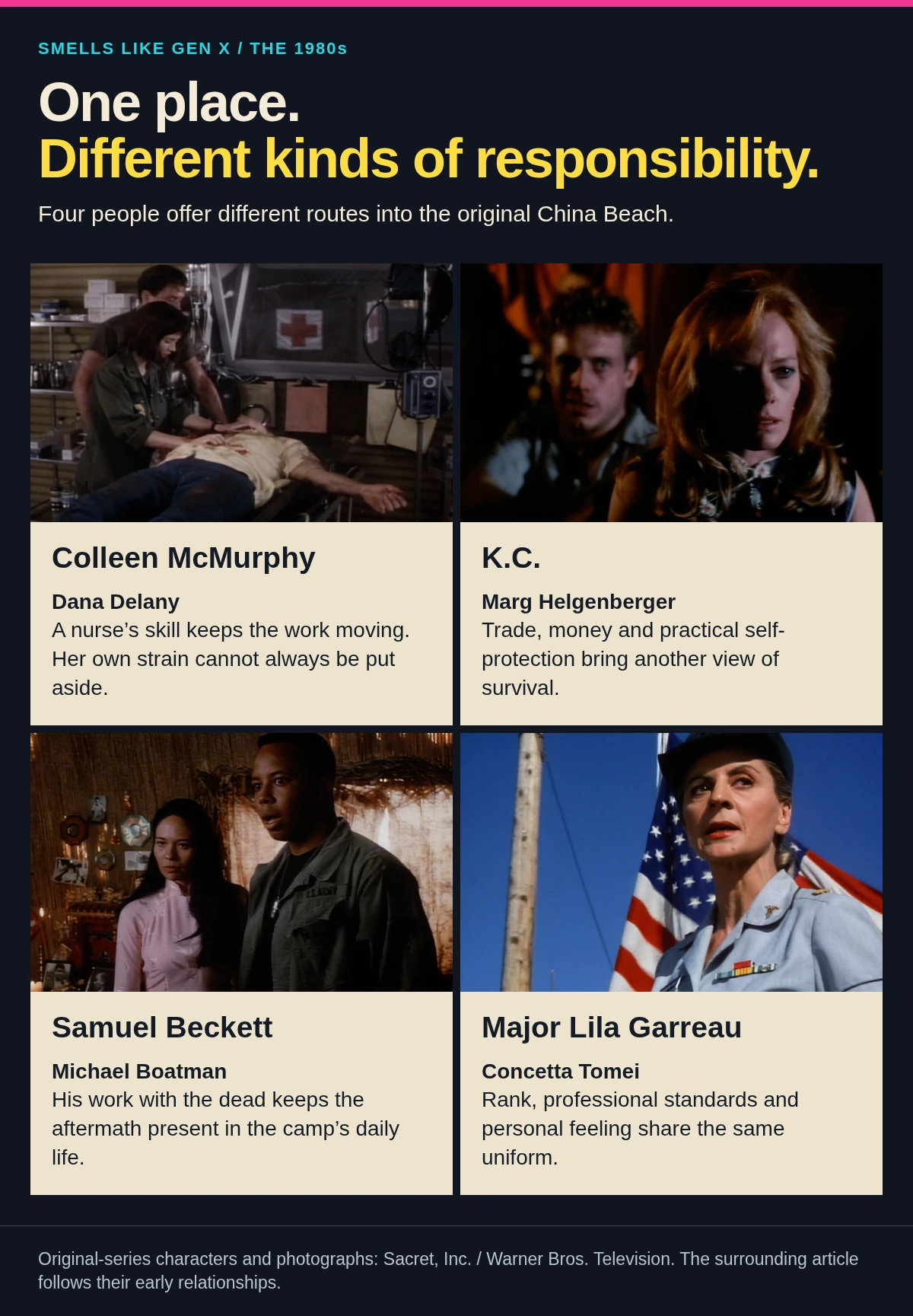
McMurphy could do the job. That did not mean the job left her unchanged.

Some television themes invite you back into a comfortable room. Reflections did something different for China Beach. That familiar Supremes sound could pull you toward a memory, and then the show would make the memory difficult to hold. A beautiful song did not promise a beautiful evening for the people inside the story.
The original ABC drama arrived in 1988 with Dana Delany as nurse Colleen McMurphy. Its Vietnam setting contained a hospital, an entertainment world and people trying to keep functioning near a war. The show could be funny, romantic and casually abrasive. It could also remind you, very quickly, that a person you had come to like was not protected by your affection.
I still find that combination more unsettling than an uninterrupted hour of solemnity. People make jokes at work. They want a decent drink, somebody to talk to and a reason to think tomorrow might be manageable. China Beach allowed those ordinary wants to remain visible inside extraordinary circumstances.
This return concentrates on the episodes viewers received in 1988 and 1989. The series continued into 1991 and developed an even more extensive conversation with the years after Vietnam. Those later choices matter, but the early China Beach had already made its essential move: it asked us to stay with the people who received the wounded, managed the aftermath and still had to get through the rest of the day.
Inside This Article
- A Vietnam Drama With a Different Center of Attention
- Dana Delany Makes McMurphy's Competence Look Expensive
- K.C. Keeps the Show From Making Care Too Easy to Categorize
- McMurphy and K.C. Are More Than an Argument Waiting to Happen
- Cherry and Laurette Bring Different Expectations Into the Same Place
- Lila Garreau Gives Authority a Human Face
- The Hospital Is a Workplace That Cannot Promise a Reset
- Robert Picardo's Dr. Richard Adds Friction to the Medical Team
- Beckett's Work Puts Another Part of the Aftermath in View
- Dodger and Boonie Carry the Fighting Back Into the Ensemble
- Frankie and Wayloo Marie Widen the Ways a Person Can Be Seen
- Home Challenges McMurphy's Confidence in Her Own Judgment
- Somewhere Over the Radio Takes the Entertainment World Outside Its Shelter
- Tet '68 Removes the Comfort of a Familiar Boundary
- Vets Lets the People Who Were There Speak
- Promised Land Refuses the Idea That the Camp Is Outside America
- The World Makes Going Home Its Own Story
- The Unquiet Earth Keeps the Fall of 1989 Inside the Picture
- Reflections Is More Than a Label on the Opening
- The Humor Makes the Serious Material Harder to Escape
- Romance Has to Compete With Everything the Place Is Asking
- The Show's Real Influences Don't Make It a Documentary
- A Different View Still Has Limits
- Acclaim Arrived Before the Eighties Ended
- The Television Around It Was Part of the Experience
- China Beach and Tour of Duty Make a Useful Pair Without Becoming the Same Show
- A Good Way Back Begins With the People
- Why the Series Still Feels Difficult in the Right Way
- Questions About China Beach in the Eighties
A Vietnam Drama With a Different Center of Attention
China Beach premiered on ABC in 1988, created by John Sacret Young and William Broyles Jr. Its original run lasted through 1991. The setting initially places us in Vietnam in 1967, around a military evacuation hospital and the nearby lives of service personnel and civilians.
That description can sound tidy until you meet the people. A hospital brings together competence and helplessness. An entertainment venue promises temporary release while depending on the very circumstances everybody wants relief from. The beach can look inviting while the war remains close enough to change an afternoon without asking permission.
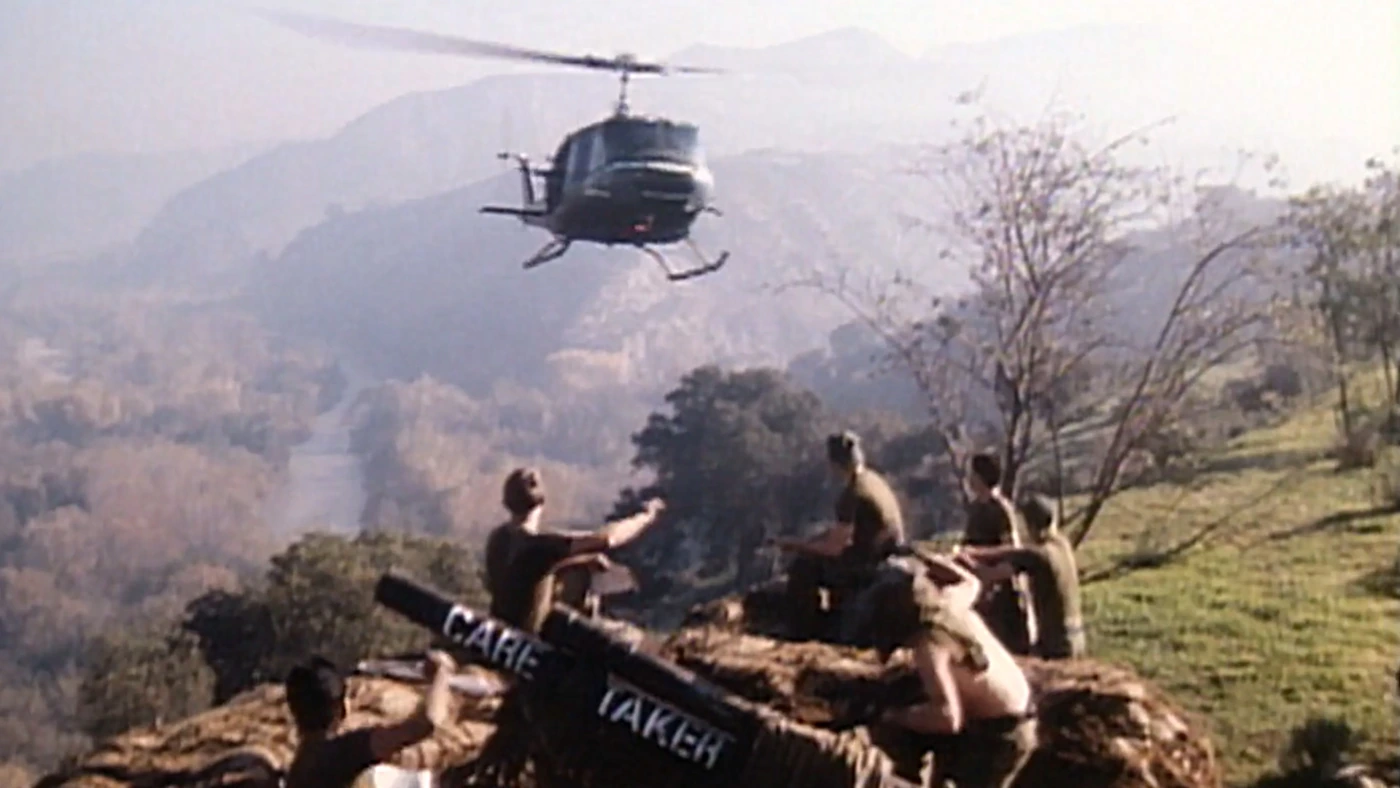
A medical setting also changes what we are waiting to see. In a patrol story, arrival can mean reaching an objective. Here, an arrival can be the beginning of another urgent demand. The people bringing someone in may be able to leave again; the staff have to prepare for whoever comes next. That difference in movement gives the series a practical rhythm before it asks us to think about any larger idea. A helicopter is a vehicle, a sound and a possible interruption of whatever the characters thought they would be doing.
The women are central to how that world is understood. McMurphy’s nursing work is one route into it, but the show also follows people with different jobs, levels of authority, defenses and ideas about survival. There isn’t a single female experience quietly standing in for everybody else.
That shift in attention matters. A conventional account of a war can organize itself around the movement of soldiers and treat what happens after an injury as a brief stop on the way to the next mission. China Beach makes that supposed stop a place people inhabit. Receiving the consequences is the work, and the people doing it have continuing lives.
The result belongs among the eighties television dramas that expanded what a recurring ensemble could carry. Its subject wasn’t only the emergency of the week. It was what happened when the emergency became part of the atmosphere, while everyone still wanted friendship, recognition and something resembling a life of their own.
Dana Delany Makes McMurphy's Competence Look Expensive
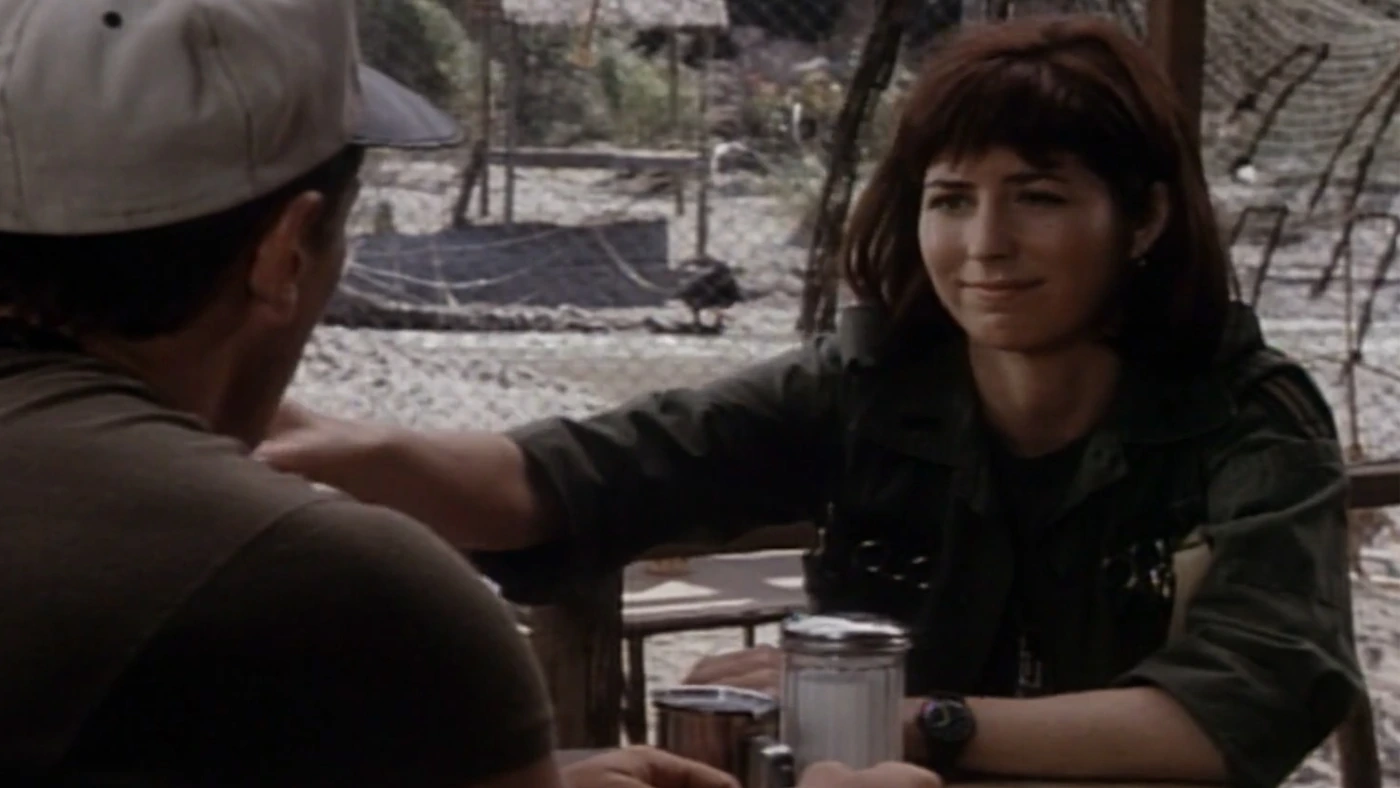
Colleen McMurphy is good at her job, which doesn’t mean the job is good for her. Dana Delany’s performance makes that difference visible. The nurse can enter a crisis with a practical focus that tells you people need her, then leave you wondering where the accumulated strain is supposed to go.
The role benefits from Delany’s ability to withhold an easy emotional explanation. A look can suggest irritation, judgment or a refusal to admit that something has hurt. McMurphy doesn’t have to deliver a speech every time her confidence becomes a defense. The performance lets the viewer notice the difference between control and ease.
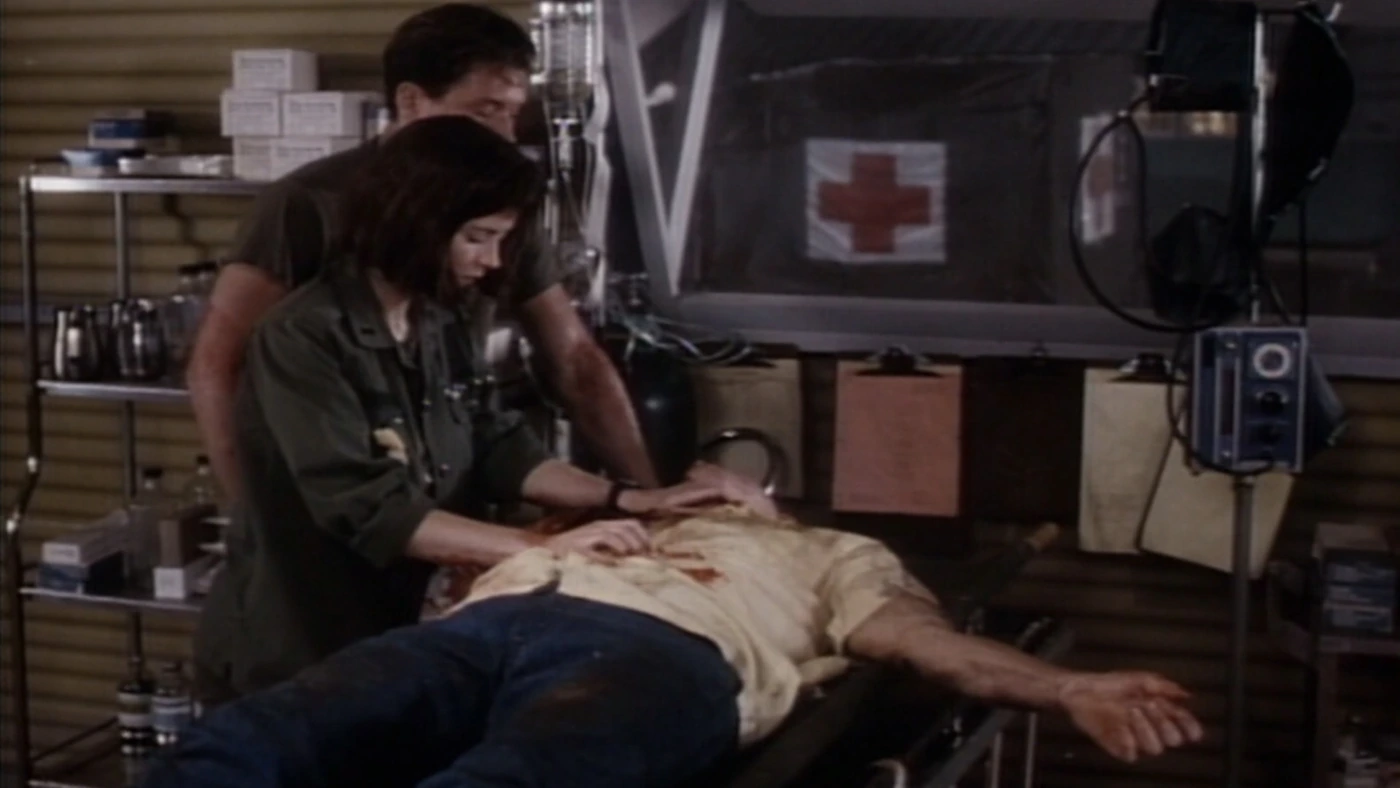
That is essential in a series built around people who cannot simply stop working when they’ve reached the end of their resources. The next patient does not arrive according to an employee’s emotional readiness. McMurphy’s professional usefulness can become part of the reason her own needs are postponed.
Delany also gives her opinions some edge. The character isn’t a floating emblem of compassion. She can be difficult, protective of her judgments and less clear about her own entanglements than she is about somebody else’s. Those qualities let the drama challenge her without having to invent a completely different person for the episode.
I think that’s why the performance holds up so well. You can admire the work without being required to approve every choice. A person who cares for others can still be proud, confused and occasionally wrong. McMurphy’s strength becomes interesting because Delany allows us to see how hard she is holding it together, and how much of that effort everybody around her has learned to take for granted.
K.C. Keeps the Show From Making Care Too Easy to Categorize
Marg Helgenberger’s K.C. occupies a different part of the same world. Money, commerce, sex and practical arrangements are more openly visible around her. Where McMurphy can regard moral standards as something to defend, K.C. has reasons to ask what those standards cost and who can afford them.
The character could have remained a convenient opposite: the calculating woman positioned beside the caring nurse. Helgenberger supplies far more complication than that. K.C.’s hardness can be a working method, a shield and occasionally a way of avoiding what she cannot comfortably admit she needs.

Her relationship with McMurphy is therefore more useful than a simple argument between virtue and cynicism. Each can see something the other would prefer to keep outside the conversation. Each also has blind spots. Their disagreement gives the series a way to question whether somebody’s preferred account of herself is complete.
I like the fact that K.C. can make an arrangement look efficient without making it look free of consequence. The ability to identify what people want is a form of intelligence. It doesn’t make the surrounding conditions fair, and it doesn’t protect the person conducting the transaction from becoming vulnerable herself.
The character is also a warning against remembering the show solely through a soft-focus image of nurses offering comfort. China Beach has a harsher understanding of how people survive around power. K.C. brings that understanding into the continuing ensemble, where it can’t be dismissed as the lesson delivered by one guest character who disappears next week.
McMurphy and K.C. Are More Than an Argument Waiting to Happen
Put the two women together and the show gains a productive discomfort. They don’t have to become interchangeable friends for their connection to matter. A disagreement can carry knowledge, envy, suspicion and the recognition that the other woman has been paying attention.
The contrast is particularly effective because neither position is entirely safe. Professional service can contain pride and a desire to control. Practical self-protection can become a habit that makes closeness difficult. The series can expose those weaknesses without announcing that one woman has finally won the right philosophy.
Their encounters also keep the audience from settling too comfortably into a single response. If you’ve accepted McMurphy’s judgment without examining it, K.C. can interrupt. If you’ve admired K.C.’s toughness as the only sensible answer, the consequences can make that admiration less easy. Both characters bring necessary information into the room.
That is a richer arrangement than assigning one woman the job of being respectable and the other the job of being interesting. The acting lets respectability contain anger and toughness contain need. The women remain distinct, but neither has a monopoly on insight or feeling.
For a viewer returning after a long gap, their relationship is one of the strongest reasons to begin again. You may remember a scene’s general emotional shape while having forgotten the small change in a look that complicates it. The show isn’t asking only whether these women like each other. It is asking what they know about each other that nobody else is positioned to say.
Cherry and Laurette Bring Different Expectations Into the Same Place
The first season’s newcomers help establish how misleading a first impression of China Beach can be. Nan Woods plays Cherry White, whose search for her brother brings personal hope into the setting. Chloe Webb’s Laurette Barber arrives with ambitions connected to singing and entertainment.
Those motives are important because the women don’t enter as interchangeable representatives of innocence. Each wants something specific, and that desire shapes what she notices. The war will complicate both routes, but the series lets us see the attraction of the possibilities before it shows the costs.
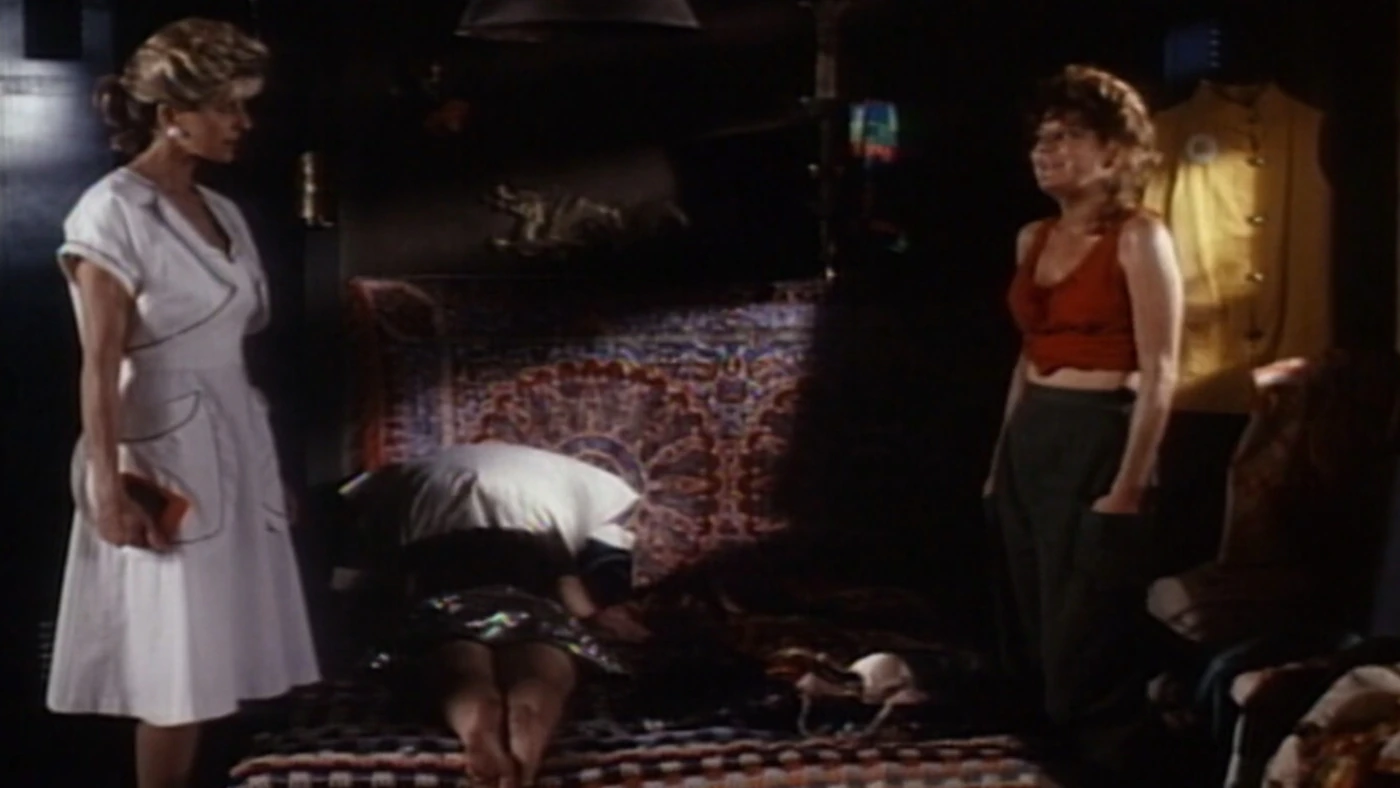
Cherry’s search makes the setting a place where an unanswered family question might finally be resolved. That isn’t the same as understanding everything the place can require of her. Her concern gives the viewer an immediate emotional direction while leaving room for experience to change the person doing the searching.
Laurette’s performance ambitions bring another kind of visibility into the ensemble. Entertainment is work, and the people providing it have expectations that don’t disappear because the audience is at war. A chance to sing can be meaningful without becoming a guarantee that the surrounding world is safe or manageable.
The contrast helps the early series feel inhabited. Not everyone has arrived by the same route, with the same authority or the same private explanation for staying. A nurse, a volunteer and a performer may stand near the same emergency while understanding its demands differently. China Beach gets much of its energy from allowing those differences to remain awkward.
Lila Garreau Gives Authority a Human Face
Major Lila Garreau, played by Concetta Tomei, brings rank and a particular professional bearing into the group. In an ensemble where informality can become a way of coping, authority is an especially difficult thing to make credible. It has to mean more than arriving to tell the interesting characters to stop enjoying themselves.
Tomei gives Lila enough personality to prevent that reduction. The character can enforce an expectation while remaining visibly part of the place. Rules may be necessary, frustrating or inadequate depending on the situation, and somebody has to occupy the uncomfortable position of representing them.
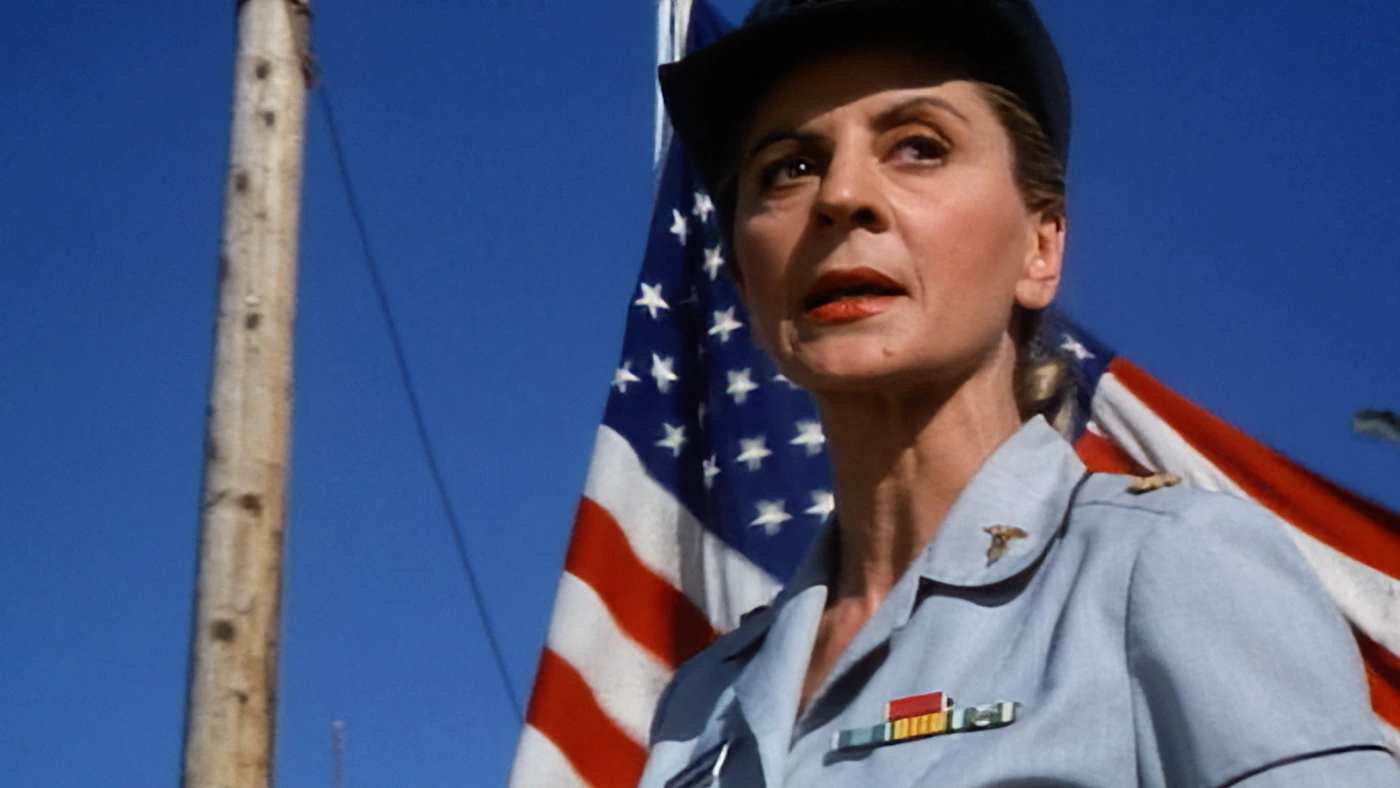
That creates useful tension with the more intimate loyalties around her. A friend can respond to the person directly in front of them. An officer may also have obligations to people outside the conversation, including those who won’t appreciate why an exception felt urgent. The series can let us understand that tension without resolving it into a slogan about bureaucracy.
The presence of an older woman in authority also changes the social picture. This isn’t an environment in which every woman has been assigned the same age, temperament or route to being noticed. Lila has a professional history even when an episode isn’t stopping to explain it.
I appreciate the character most when the formality and the person underneath it share the scene. A uniform is a job description, not a complete account of a life. China Beach can make that obvious about a doctor or a wounded soldier; Lila keeps the same question alive for somebody whose work includes maintaining the structure everyone else pushes against.
The Hospital Is a Workplace That Cannot Promise a Reset
A medical drama usually gives us a reason to admire professional skill. China Beach can do that, but it places skill inside a supply of harm that doesn’t politely stop when the hour’s main case has been addressed. A successful intervention is real without making the overall situation feel repaired.
That distinction gives the routine its weight. People must prepare, receive, assess and act. The necessary habits can become reassuring because they allow work to continue. They can also become disturbing because the need for them is so constant. Competence is not the same thing as becoming comfortable with what you’re competent at.
The show shares a broad television language with St. Elsewhere: a hospital can hold sharply different personalities, dark humor and decisions whose human consequences extend beyond a procedure. China Beach adds a war that changes the scale and rhythm of the incoming need.
There is an especially hard tension between caring about a person and needing to keep moving. The staff cannot treat every injury as the only injury in the world. That professional necessity can look cold from outside and cost a great deal from within. An ensemble lets us watch people disagree about where the line belongs.
For me, the workplace is one of the show’s strongest anchors. Its larger ideas about memory are more affecting because they begin with people doing tangible work. The series doesn’t ask us to care about an abstraction called sacrifice before it has shown us a person expected to be useful again, even when the previous demand hasn’t finished with them.
Robert Picardo's Dr. Richard Adds Friction to the Medical Team
Dr. Dick Richard, played by Robert Picardo, brings a different temperament to the hospital. The name itself has a television neatness, but the character’s value isn’t confined to a joke. A doctor can possess expertise and still be a complicated colleague, romantic partner or person to spend the end of a shift around.
Picardo has the ability to let intelligence sound impatient. That’s useful in a group where people share an urgent task without automatically sharing a pleasant manner. Professional relationships don’t require everyone to enjoy one another, and the show gets texture from that distinction.
Richard also helps keep the medical setting from becoming a one-person demonstration of McMurphy’s insight. A nurse and a doctor may agree on the importance of a patient while disagreeing about a decision, a boundary or the way authority is being used. Their different responsibilities can sharpen a scene without either role becoming a simple villain.
The character’s personal life reminds us that the hospital staff don’t stop being ordinary people when they acquire a necessary skill. Loneliness, attraction and wounded pride can coexist with an ability other people urgently need. The two parts of the life don’t always cooperate.
That is part of what makes the ensemble worth revisiting rather than remembering only as a serious show with a serious subject. The personalities rub against one another. Somebody can be indispensable at work and exhausting afterward. China Beach understands that the strain of a place is also carried in the conversations of people who have to keep seeing each other.
Beckett's Work Puts Another Part of the Aftermath in View
Michael Boatman’s Samuel Beckett handles the dead. That responsibility gives the series a point of view that cannot be absorbed into the hope attached to treatment. Whatever the hospital accomplishes, some of the people who arrive will not return to their lives. Somebody must conduct the work that follows.
The character’s presence resists a familiar dramatic shortcut. A death can’t exist only as the emotional peak of another person’s scene and then vanish once the surviving cast has reacted. There are practical obligations, names, bodies and people who will have to receive the news elsewhere.
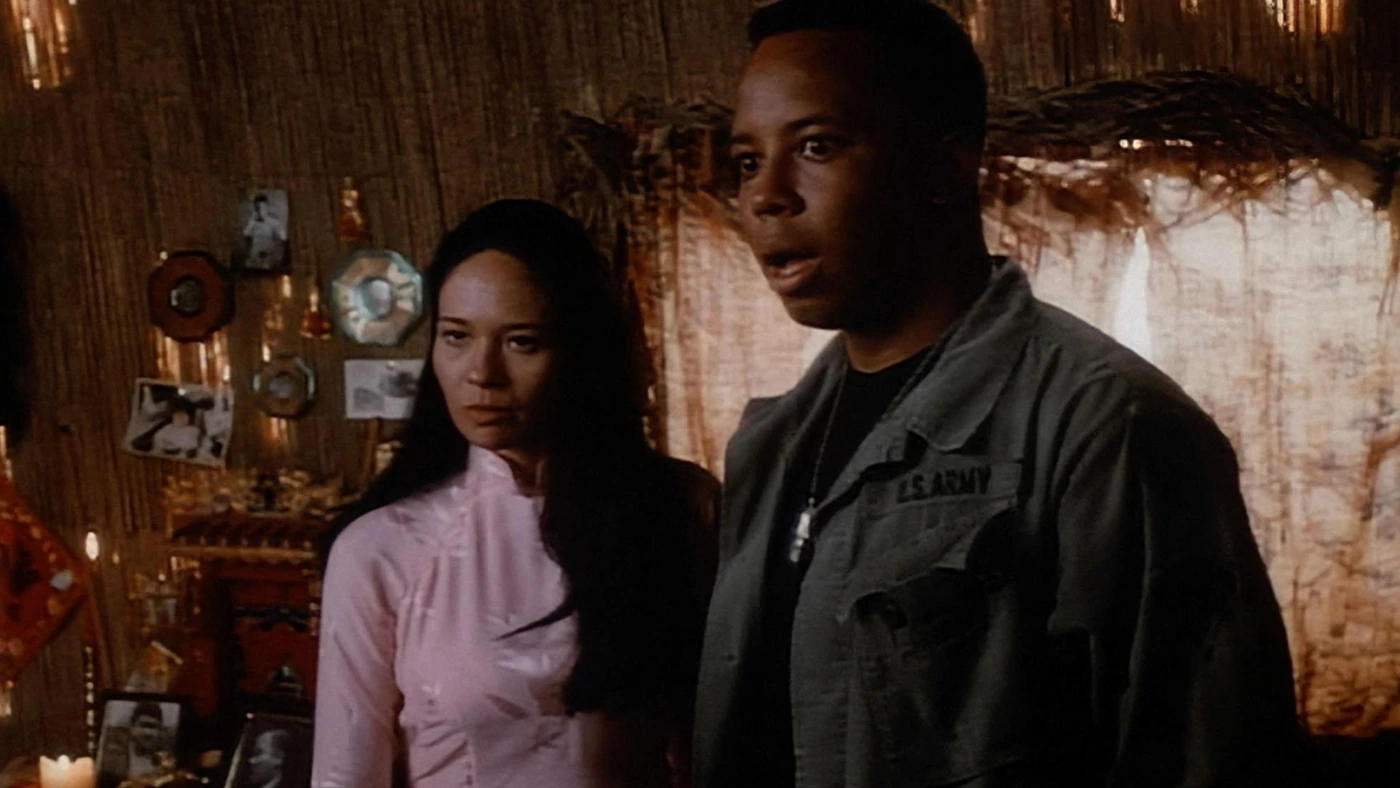
Beckett also has a life outside that task. That matters because reducing him to a solemn symbol would repeat a different kind of erasure. The ensemble gives him relationships, opinions and reasons to think about where he belongs, rather than requiring every appearance to provide the same note of gravity.
As a Black serviceman, his experience also complicates any idea that shared service removes racial divisions. The country and the military world around him contain pressures that cannot be solved by a general statement that everybody is in this together. The show develops that tension directly in its 1989 stories.
Boatman’s contribution is a reminder of how much a continuing supporting role can change the center of a series. McMurphy may be the person most viewers first associate with China Beach, but Beckett makes another necessary part of the place impossible to leave outside the picture. The aftermath has a daily schedule, and a person has to live inside it.
Dodger and Boonie Carry the Fighting Back Into the Ensemble
Jeff Kober’s Dodger and Brian Wimmer’s Boonie keep combat experience connected to the hospital and entertainment settings. They aren’t simply visitors who arrive wounded, provide a lesson and disappear. Their relationships continue, bringing the consequences of service into the group’s ordinary conversations.
Dodger’s physical presence can suggest readiness and danger at the same time. The qualities that make a person capable in one setting may make closeness difficult in another. A recurring character lets that contradiction develop beyond the duration of a single medical case.
Boonie provides another route between the fighting and the place where people try to find relief. The social world around entertainment isn’t detached from what has happened outside it. A party, a business arrangement or a relationship can carry knowledge people don’t want to explain in public.
The series benefits from not treating every man as the same kind of damaged soldier. Different temperaments create different defenses. Silence, charm, anger and practical usefulness can all conceal something without meaning the same thing. The women around them are also allowed different responses, rather than serving as a uniform audience for male pain.
If the show sometimes compresses a character’s history into a particularly pointed revelation, the continuing relationships help the revelation have consequences. Somebody will still be there tomorrow, remembering what was said. That is one advantage of making the camp a recurring home: a difficult truth doesn’t have to evaporate when the guest star’s name leaves the credits.
Frankie and Wayloo Marie Widen the Ways a Person Can Be Seen
Nancy Giles’s Frankie Bunsen and Megan Gallagher’s Wayloo Marie Holmes add important energies to the second-season ensemble. One character’s presence and response to the group cannot simply be exchanged for the other’s. The camp contains competing ways of being noticed, performing a role and understanding what the place expects.
Wayloo Marie’s relationship to reporting and presentation makes the question of visibility particularly direct. A version of events prepared for an audience may be orderly in ways the people living through it cannot recognize. Deciding what belongs in the picture is already a form of power.
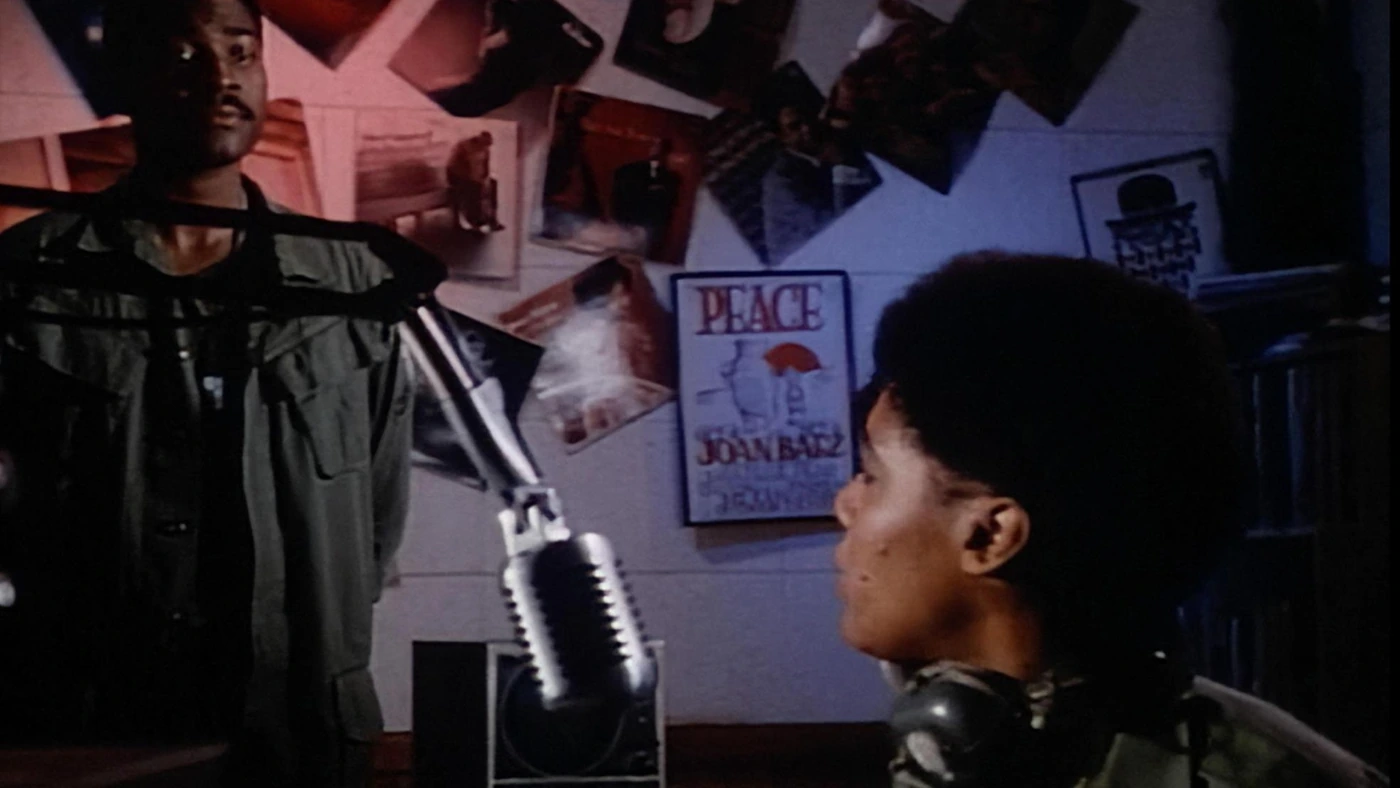
Frankie brings another continuing Black perspective into the ensemble, which becomes especially important when the show addresses racial divisions. Her place in the group is not adequately described by assuming that a shared location means a shared experience. The friendships must contend with circumstances the other characters do not all meet in the same way.
The different performances also help the show avoid an unbroken emotional register. A person can be lively, funny or concerned with how an appearance lands while still existing inside a dangerous place. The war does not reduce everybody to a single appropriate tone.
That is worth remembering if your memory of China Beach has become a collection of its heaviest moments. The series could be socially busy. People pursued attention, formed opinions and irritated one another. The ordinary activity matters because it gives a difficult event a world to interrupt, instead of presenting a row of characters who appear to have been waiting all day for tragedy to enter.
Home Challenges McMurphy's Confidence in Her Own Judgment
The first-season episode Home puts McMurphy’s hostility toward a Vietnamese nurse under pressure. The other woman saves an American life and later goes into labor. A professional and personal situation makes it harder for McMurphy to keep her judgment at a comfortable distance.
The setup is valuable because it refuses to let nursing competence stand in for complete moral understanding. Being dedicated to care doesn’t prevent a person from carrying fear, prejudice or anger into an encounter. The demands of the job can reveal the limitation instead of automatically excusing it.
There is also a difference between recognizing somebody’s usefulness and recognizing their humanity. Saving an American life may disrupt an assumption, but the Vietnamese woman should not have to earn basic regard by first becoming valuable to the Americans around her. That tension is part of what makes the story worth discussing.
A drama centered on American personnel needs these interruptions. Otherwise the surrounding Vietnamese population risks becoming only scenery, danger or a source of lessons for the continuing cast. An individual episode cannot correct the entire imbalance, but it can expose how narrow a supposedly sympathetic viewpoint has become.
I find the episode useful on a return visit because it makes the leading character answerable to something outside her preferred self-image. McMurphy can be a good nurse and still have something important to confront. The series becomes stronger when its concern for her doesn’t require the audience to pretend she already understands every person she encounters.
Somewhere Over the Radio Takes the Entertainment World Outside Its Shelter
Somewhere Over the Radio strands Laurette, Lila and Cherry after a helicopter crash. The first-season story puts people associated with different roles into a situation where their usual place in the camp offers little protection. A performer, a volunteer and an officer have to contend with circumstances none of them has selected.
The arrangement changes the meaning of proximity. Being near a war is not a single stable condition. A person can know danger exists while still having routines that make it feel geographically or professionally separate. A sudden change in location removes those routines.
Putting these women together is especially useful because their differences remain. Rank, ambition and personal motive do not disappear when a crisis begins, but the immediate demands can expose strengths that ordinary camp life has not required anyone else to notice.
The episode also tests the idea of entertainment as a safe room within the setting. A song or a performance can offer real release. The people providing it are still people whose bodies must travel through the same dangerous world. Their role doesn’t exempt them from its consequences.
A return viewing can appreciate the adventure construction while noticing what it does for the ensemble. The women aren’t there only to hear about somebody else’s ordeal afterward. The story gives them an experience that changes the information they bring back into the continuing relationships. That is one way the first season begins making the camp feel like a place where histories accumulate.
Tet '68 Removes the Comfort of a Familiar Boundary
Tet ’68 first aired in January 1989. Its title refers to the historical setting, not the year viewers received it. The episode brings the Tet Offensive into the show’s world and puts several members of the ensemble under immediate pressure, including people away from the hospital’s familiar routines.
The effect depends partly on the relationships already established. A camp can become recognizable to a weekly viewer: this is where someone works, where another person might be found, where a conversation usually takes place. An assault makes that familiarity vulnerable.
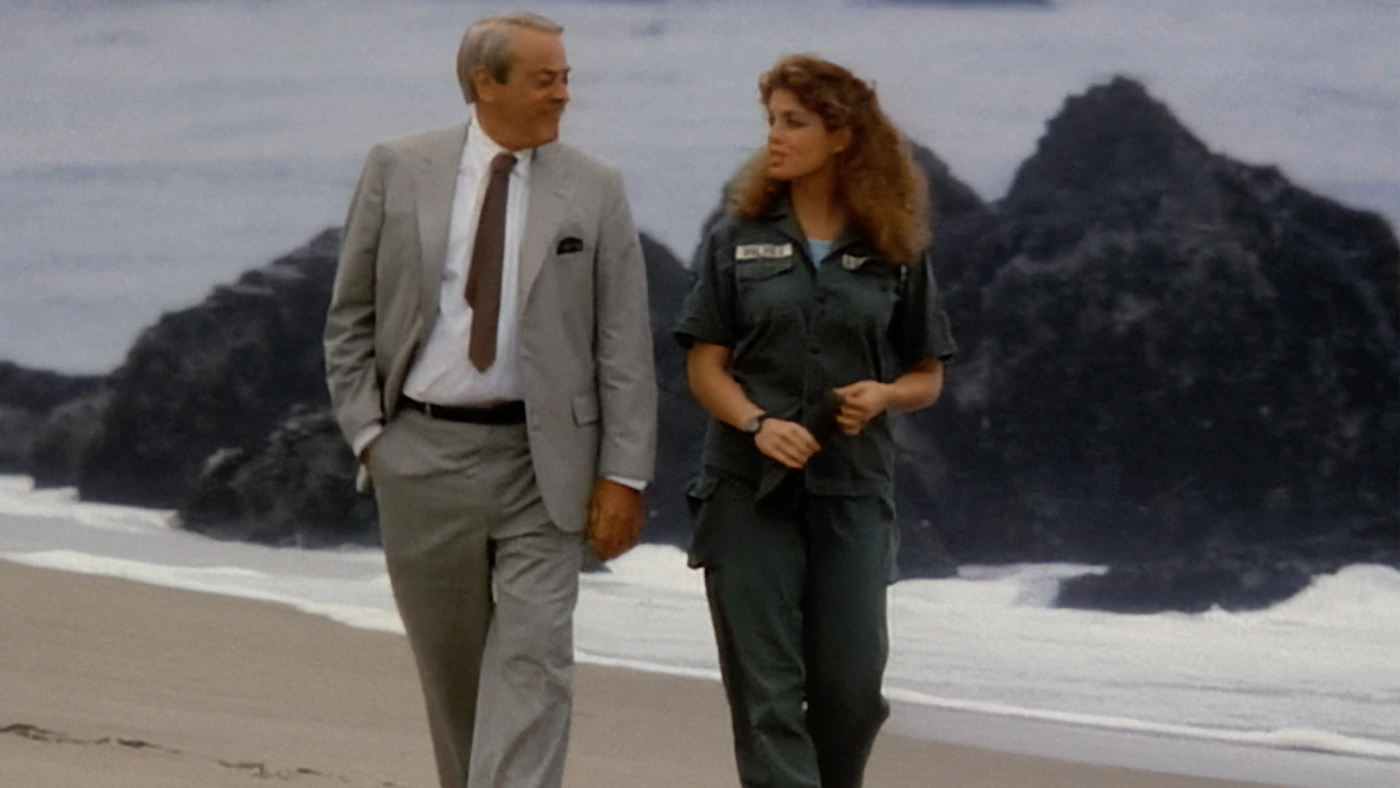
The story doesn’t need the audience to possess a complete military history to understand the immediate change. A place treated as a center of receiving and recovering can itself become threatened. The roles people have practiced do not guarantee control over what the next hour will require.
The episode also carries consequences into the following story, Cherry. A viewer considering that pair should expect major character developments and loss. I would rather preserve the first encounter with those turns than reduce them to a casual list of things that happened to a cast.
What matters for this return is the structural choice. The series allows events to alter the ensemble instead of using danger only to create temporary suspense. A frightening hour is not followed by a universal reset. The people who remain have to live with the change, and the audience’s growing familiarity becomes part of what makes that continuation hurt.
Vets Lets the People Who Were There Speak
Vets aired on ABC on March 15, 1989. It intercuts real Vietnam veterans describing their experiences with material from the fictional series. That choice interrupts the usual agreement between a drama and its audience: the people we’ve been following are suddenly placed beside people for whom the underlying experience was not a television role.
The difference matters even when a recalled situation resembles something the series has dramatized. An actor’s performance and a veteran’s account do not become the same kind of evidence because they have been edited together. The episode asks us to hear the relationship between them while remaining aware of the distinction.
It is a bold thing for a continuing drama to admit another sort of authority into its own space. The familiar characters no longer control the entire route into the subject. A viewer can listen to somebody whose experience doesn’t need to fit neatly into the ensemble’s next plot.
The Peabody Awards recognized Vets for 1989. Its award record credits writers John Sacret Young and John Wells, along with the production team. The recognition belongs to this particular experiment, rather than to a vague memory that the series was respected.
I think the episode remains one of the clearest reasons to return to China Beach with more attention than nostalgia alone provides. The show is willing to make its own storytelling visible as a construction. We can value what fiction allows us to feel, then stop and listen when a person with a different claim on the subject begins to speak.
Promised Land Refuses the Idea That the Camp Is Outside America
Promised Land, a 1989 second-season story, places news of Martin Luther King Jr.’s assassination inside the camp’s racial tensions. The historical moment belongs to 1968. Beckett and Frankie have to respond within relationships that cannot be described adequately by the general claim that everyone is serving in the same war.
The episode is important because distance from the United States does not remove the divisions of the United States. A shared uniform or workplace can create obligations without producing equal treatment. Events at home can change the meaning of a conversation thousands of miles away.
For Beckett, the prospect of leaving also carries personal attachments. Going home is not simply the opposite of being in danger; it can involve abandoning something or someone who matters. The series keeps return from becoming an entirely abstract destination called safety.
A story like this needs room for different reactions among the continuing characters. Anger is not automatically a misunderstanding waiting for a calmer person to correct it. A character who has been insulated from a particular harm may need to recognize that someone else’s response is based on knowledge they do not share.
The ensemble format makes that demand more consequential. These people have been working and socializing together. The episode can expose the assumptions beneath that familiarity. The camp isn’t a separate moral universe where the country’s conflicts have been suspended; it is another place where those conflicts are being lived, by people who still have tomorrow’s work to do together.
The World Makes Going Home Its Own Story
The two-part second-season story The World sends McMurphy home on emergency leave because her father is critically ill. It offers the series a different kind of disorientation. The continuing character leaves the setting in which we understand her competence and enters relationships that have their own expectations of who she is.
That reversal is useful. At China Beach, McMurphy’s role is legible. People may argue with her, but they know the work she does. Home can require her to translate an experience she is still living through for people who haven’t been there. Familiar surroundings don’t guarantee a familiar self.
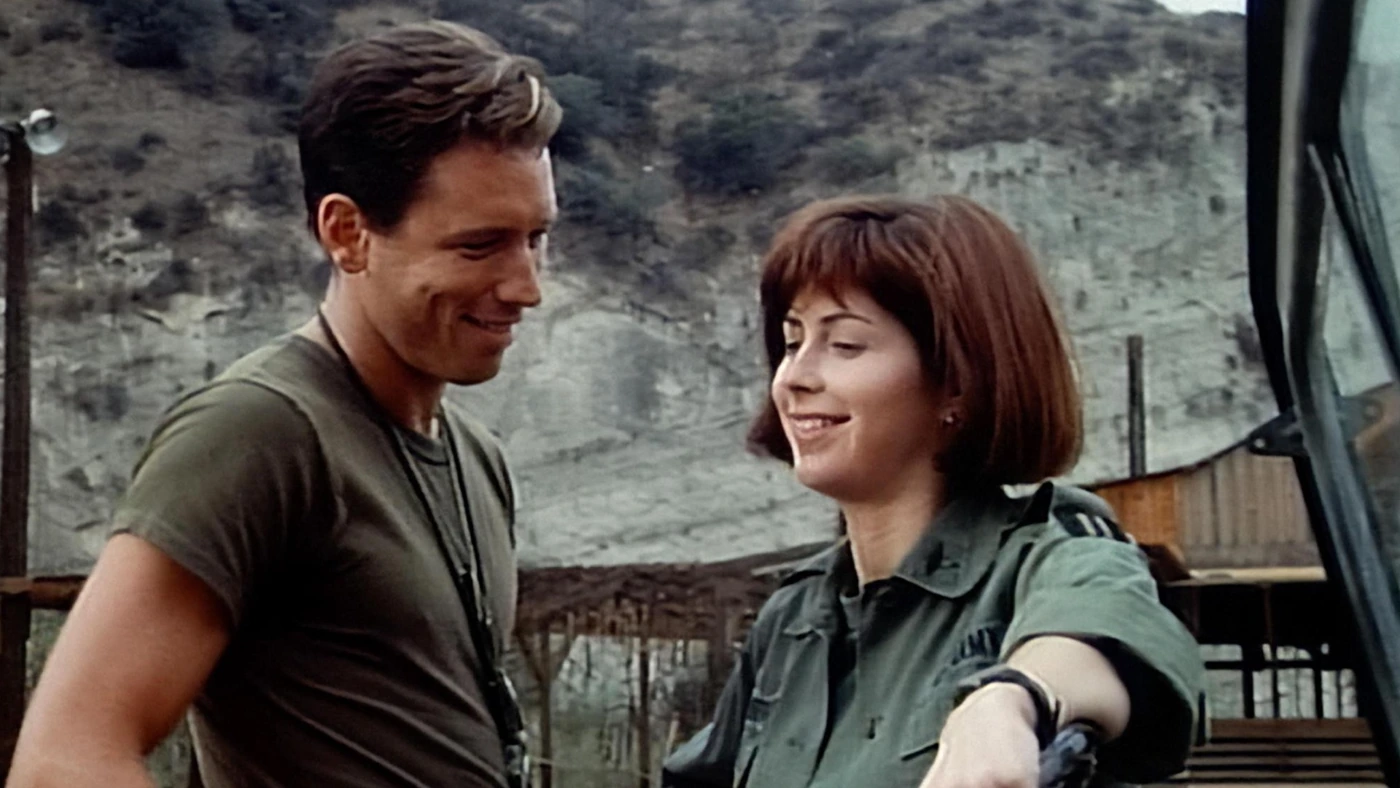
The personal emergency also complicates any fantasy that home is a place where the consequences of war politely stop at the door. A family has its own history, needs and unfinished arguments. The person returning may have neither the energy nor the language to make those demands cooperate with what she has brought back.
Donald Moffat and Penny Fuller are among the guest performers associated with the home story, giving the family more weight than a brief telephone call could carry. The episode can place McMurphy in an established emotional world where her professional authority is not the deciding fact.
This is one reason the early show already deserves the word memory, even before its later formal experiments. The distance between the life being lived and the life other people imagine is part of the drama. Returning doesn’t erase that distance. It can make it painfully visible in the rooms that are supposed to feel easiest.
The Unquiet Earth Keeps the Fall of 1989 Inside the Picture
The third season began with The Unquiet Earth on September 20, 1989. It’s easy to lose that fact when a series crosses a decade boundary: the first two seasons feel like the eighties, and everything with a higher number gets mentally filed somewhere else.
The distinction is worth keeping clear. China Beach still had new episodes reaching viewers in the fall of 1989. Its broader experimentation with life after the war would become especially prominent later, but the show’s relationship to memory did not suddenly begin on January 1, 1990.
A continuing ensemble has already become an exercise in remembering by this point. The audience knows things about relationships that a new arrival doesn’t. A return of a person, an attitude or a familiar image can carry earlier experience into the current scene without stopping to summarize it.
The third-season setting also asks returning viewers to accept that change isn’t a temporary inconvenience to be repaired by restoring the first episode’s group. New people and changed circumstances have to become part of the place. The series’ identity rests on an approach to experience as much as on a fixed arrangement of characters.
For this article, the fall return is a boundary marker rather than an invitation to retell the entire final two years. The original show continues beyond the eighties. Remembering where we are lets the early work receive its own attention and prevents later, famous choices from being casually described as something every 1988 viewer had already seen.

Reflections Is More Than a Label on the Opening
The use of Reflections, the Diana Ross and the Supremes recording, gives the series an immediate emotional texture. The song belongs to the period the show visits, but it also carries the familiarity of a record that existed outside this particular television story.
That familiarity can be disarming. We recognize the sound before we have fully entered the episode’s circumstances. Then the images and the story ask the music to share space with material that doesn’t remain comfortably nostalgic. An attractive surface becomes a route into unease.

The title itself is almost too appropriate, but the effect doesn’t depend on treating the song as a written explanation of the show. The recorded performance has its own life. Its association with the series adds another memory to a sound listeners may already know from elsewhere.
Music elsewhere in a period drama can perform similar work: locating an era, connecting a room to the outside world or letting a character briefly inhabit a mood that the next event will disrupt. None of that requires quoting a lyric or pretending every viewer brings the same musical history to the moment.
I appreciate the choice because it helps explain why the show could be remembered through feeling as well as plot. You might not be able to recite an episode’s sequence of events, but a few seconds of the opening can restore the expectation that pleasure and pain are about to occupy the same space. The music welcomes recognition, then the series complicates what recognition feels like.
The Humor Makes the Serious Material Harder to Escape
China Beach can be funny in ways that aren’t especially polite. People flirt, complain, make a bad situation socially manageable and occasionally use a joke to avoid the conversation they ought to be having. That isn’t an interruption of the drama’s seriousness. It’s part of how the characters conduct their lives.
An unbroken grave tone can create its own distance. If everybody speaks as if they know they are in an important television program, the viewer may admire the subject without believing in the afternoon. Humor gives the place ordinary activity, including moments that aren’t morally impressive.

It also makes abrupt change more affecting. A group that has been teasing one another isn’t assembled only to receive bad news. We have seen what their company provides before the event takes it away or alters its meaning. The earlier laughter doesn’t become inappropriate; it becomes part of what can be lost.
The comparison with M*A*S*H is understandable, but it should not flatten the differences. China Beach’s women, relationships and approach to popular memory give it another center. A shared ability to place humor near injury doesn’t make two series the same experience.
For me, the best jokes in this kind of setting don’t ask us to find the harm amusing. They show people insisting on a usable moment in its vicinity. The laugh is real, but its limits are real too. The next demand can arrive before anybody has decided whether the joke was a sufficient defense.
Romance Has to Compete With Everything the Place Is Asking
Romantic entanglements are a major part of China Beach, and that has sometimes made it easy to describe the show as a soap opera with military scenery. The description catches a continuing interest in relationships while missing why the setting changes what those relationships can mean.
Closeness can offer relief, recognition and the chance to feel like something other than a useful pair of hands. It can also become a way of postponing a problem or making a promise the circumstances won’t allow anyone to keep. The same gesture may be generous and desperate.
The relationships have practical complications beyond ordinary incompatibility. A person may leave, return changed or become unreachable. The demands of work can interrupt an intimate moment with little respect for its importance to the people involved. Time together can feel precious without producing stability.
The contrast with thirtysomething’s domestic relationships is revealing. Both series can make adult uncertainty the continuing subject, but their rooms ask different things of the people in them. A kitchen in a familiar home and a place built around wartime need don’t offer the same assumptions about tomorrow.
That is why I wouldn’t remove the romance in order to make China Beach sound more respectable. Wanting someone is part of the life the war interrupts. The show becomes interesting when it allows desire to coexist with professional responsibility, self-deception and a circumstance that refuses to wait until the relationship has sorted itself out.
The Show's Real Influences Don't Make It a Documentary
Lynda Van Devanter’s memoir Home Before Morning is part of the real-world background associated with China Beach. Her account of Army nursing in Vietnam helped bring women’s experiences into public attention. The television series drew on a wider field of material and created its own characters and dramatic arrangements.
That distinction protects both kinds of work. McMurphy is a fictional character performed by Dana Delany. A veteran’s memoir is an account with a different relationship to lived experience. The existence of an influence doesn’t turn every plot point into something that happened to the author.
It also matters because women’s wartime experiences weren’t uniform. One memorable narrative can’t be asked to represent everybody who served. A television production’s choices about intensity, romance or conflict may be effective drama while remaining choices about what to include and how to shape it.
Vets is especially useful in that context because it makes the relationship between dramatization and testimony part of the program itself. The series can place a fictional scene beside a remembered experience without making the two identical. Listening becomes part of watching.
A return to China Beach can therefore lead outward as well as backward. The show may be the familiar doorway, but the people whose work and memories helped make that doorway imaginable deserve attention in their own right. Their experiences do not exist merely to certify that a favorite television program was serious.
A Different View Still Has Limits
Centering women around a Vietnam hospital changes what a network war drama can show. It does not automatically provide a complete account of the war. China Beach remains substantially organized around Americans, their relationships and their memories. Vietnamese lives do not always receive comparable room.
That limitation is important to notice without using it as an excuse to ignore the shift the show did make. A drama can expand one part of the picture while leaving another underdeveloped. Both observations can be true at the same time.
The same caution applies to the types assigned within an ensemble. The idealistic newcomer, the hard practical woman, the formidable officer and the competent nurse are recognizable dramatic starting points. Performance and continuing relationships can complicate them, but a familiar type doesn’t stop carrying expectations simply because the subject is serious.
The question on a return viewing is what the series lets a person become beyond the initial shorthand. Are they allowed a judgment the leading character doesn’t share? Can they want something inconvenient? Do their relationships keep developing when they aren’t needed to deliver the main emotional lesson?
For me, the strongest China Beach answers those questions through friction. The characters resist being arranged into one agreeable moral picture. The show earns more attention when we can recognize its ambition and still look at the edge of the frame, asking who hasn’t been given the same opportunity to speak.
Acclaim Arrived Before the Eighties Ended
Dana Delany won the 1989 Emmy for Outstanding Lead Actress in a Drama Series for playing McMurphy. China Beach also received a drama-series nomination that year. Those are concrete parts of its original reception, not awards borrowed from the later run to make the debut look more immediately decorated.
The dates are worth keeping straight. Marg Helgenberger’s supporting-actress Emmy came in 1990, and Delany’s second lead-actress win came in 1992. Both belong to the show’s larger history. Neither should be quietly moved backward into an account of what had happened by the end of 1989.
The recognition makes sense beside the work visible on screen. Delany has to hold professional composure and personal strain in the same performance. Helgenberger has to let K.C.’s defenses remain useful and damaging without making the character a simple warning label. The ensemble needs enough individuality for an argument to feel like a collision between people.
Still, acclaim isn’t an instruction to enjoy every episode equally. A respected drama can overstate a connection or make an image feel too deliberately meaningful. Returning viewers are allowed to notice the effort, especially when the series is trying hard to make memory visible.
The awards are most useful as a dated reminder that this work was being noticed while it was new. In the wider television year of 1989, China Beach was part of the conversation about what a network drama could attempt, even if its particular demands didn’t make it everybody’s preferred evening.
The Television Around It Was Part of the Experience
A difficult drama in the eighties still arrived through an ordinary household television. It shared the set with game shows, sitcoms, advertisements and whatever someone else wanted to watch next. That everyday delivery system could make an hour like China Beach feel especially strange.
You didn’t have to enter a separate cultural space to encounter it. The same screen that had been selling a bright solution to an uncomplicated problem could return to people whose problem had no bright solution. A commercial break might interrupt the emotional rhythm without having any interest in what the characters had just endured.
The surviving broadcast records preserve some of that environment. The Paley archive’s record for Vets includes ordinary consumer advertising and ABC promotions alongside the program. The contrast isn’t a hidden message placed there by the writers. It is the practical texture of the medium through which the work reached its audience.
That texture belongs to the memory of watching television in the eighties. An episode could leave a feeling in the room while the set immediately moved on to something else. The schedule didn’t pause to let the household decide what to do with it.
I don’t miss every interruption, but I think the context helps explain the impact. China Beach wasn’t waiting for an audience that had selected a whole evening of difficult historical reflection. It arrived inside the week, on a familiar screen, and asked for a different quality of attention.
China Beach and Tour of Duty Make a Useful Pair Without Becoming the Same Show
China Beach and Tour of Duty both brought Vietnam into late-eighties network drama. Pairing them makes sense, provided we don’t pretend their points of entry are interchangeable. Tour of Duty organizes much of its attention around soldiers in the field. China Beach gives the receiving and surrounding world a different weight.
The distinction changes the shape of an hour. A mission supplies one kind of objective and deadline. A hospital shift or an ongoing relationship can organize time another way. An event may be finished in one setting while its consequences are only beginning in the other.
The two series also ask different things of their ensembles. A platoon has a particular structure of rank, duty and physical dependence. China Beach brings people with more varied professional and civilian roles into continuing contact. The relationships can be necessary without fitting one uniform chain of command.
Neither show should be treated as the complete television version of the war. They are dramatic selections, made for audiences at a particular moment in American memory. Their differences are useful because they make those selections easier to see.
For a return viewing, I would let each establish its own pace. Don’t ask China Beach to become a patrol story because another series made that compelling, or ask Tour of Duty to organize every conflict around the hospital’s emotional life. The conversation between them is most interesting when we allow each to show the part of the experience it has chosen to follow.
A Good Way Back Begins With the People
The pilot is the sensible starting point, because the early relationships matter before their later consequences can have their full weight. Let Cherry and Laurette arrive with their particular hopes. Let McMurphy and K.C. make their first impressions without forcing every scene into the shape of what you remember happening later.
Home and Somewhere Over the Radio then offer useful examples of the first season’s range. One challenges a central character’s judgment inside a medical situation. The other changes the physical setting and the women’s immediate dependence on one another.
The second-season sequence around Tet ’68 and Cherry deserves continuity and a little space. These aren’t episodes I would casually reduce to isolated emotional highlights. The relationships leading into them are part of the experience, and the developments afterward matter too.
Vets is a particularly important return whether or not every detail of the fictional story is still fresh. Its change in form gives the viewer a different kind of listening to do. Promised Land and The World then show how the series can move between the camp, events in America and the difficulty of bringing one life back into another.
That route isn’t a ranking or a claim that the rest is disposable. It’s a way to recover the early show’s different kinds of attention. The strongest reason to revisit a series this emotionally demanding is the people, not the satisfaction of checking famous scenes off a list.
Why the Series Still Feels Difficult in the Right Way
China Beach doesn’t need us to pretend it invented serious television. Its place in the decade is specific enough: a network ensemble centered substantially on women near the medical and social aftermath of Vietnam, willing to mix humor, desire, professional work and remembered pain.
The boldness comes partly from refusing to keep those subjects in separate rooms. A person can be flirtatious and exhausted, skillful and unfair, funny and unable to explain what has happened. The show lets those combinations remain uncomfortable instead of polishing everyone into a lesson about service.
It also makes familiarity costly. Once you know the rooms and the people, you begin wanting the program to protect them. The setting can’t responsibly promise that protection. The continuing relationships become a reason the consequences matter, rather than a guarantee that consequences will be temporary.
I think that’s what remains after the opening music has done its immediate work on the memory. There is pleasure in recognizing these faces, but recognition brings us back to people doing work that doesn’t leave them unchanged. A return visit has to be willing to stay with that.
The series’ later years will take the conversation with memory further. The 1988 and 1989 episodes already supply a powerful beginning. They ask who receives the harm, who is expected to keep functioning and who will be heard when the account of what happened is finally told.
Questions About China Beach in the Eighties
When did the original China Beach air?
China Beach aired on ABC from 1988 to 1991. This article concentrates on its first two calendar years, including the early seasons and the third-season premiere in September 1989. Later postwar storytelling belongs to the broader run.
Who played Colleen McMurphy and K.C.?
Dana Delany played nurse Colleen McMurphy, and Marg Helgenberger played K.C. Their contrasting judgments, defenses and relationships are central to the ensemble. Delany’s first Emmy for the role came in 1989; Helgenberger’s supporting-actress win followed in 1990.
Was China Beach a true story?
It was a fictional drama informed by experiences associated with the Vietnam War, including women’s nursing accounts. Lynda Van Devanter’s Home Before Morning is an important influence. The fictional characters and plots should not be treated as a documentary record of one person’s life.
What made Vets different from a regular episode?
Vets combines actual Vietnam veterans’ on-camera accounts with scenes from the fictional series. It aired on ABC on March 15, 1989, and received a Peabody Award for that year. The episode makes the connection between testimony and dramatization part of its form.
What is the China Beach opening song?
The series uses Reflections by Diana Ross and the Supremes. The familiar period recording gives the opening an inviting surface while the surrounding images and stories complicate any easy feeling of nostalgia.
Sources & Further Reading
- The Television Academy’s China Beach material collects production interviews and historical context.
- China Beach’s Television Academy awards record separates the 1989 recognition from the later wins.
- The Peabody Awards’ record for Vets credits the episode’s writers and production team.
- The Paley archive’s Vets record documents its March 15, 1989 broadcast; the licensed episode description identifies its mixture of testimony and series scenes.
- The Unquiet Earth’s Paley record documents the September 20, 1989 third-season premiere and its cast.
- The original first-season catalog and second-season catalog provide licensed story descriptions.
- The National Veterans Memorial and Museum’s account of Lynda Van Devanter describes her service and writing. Her publisher’s book record notes Home Before Morning’s connection to China Beach.