Highway to Heaven in the 80s: Michael Landon's Comfort-TV Return
An angel in ordinary clothes, an ex-cop with objections and a road full of people who needed somebody to notice.
Jonathan had the assignment. Mark had questions. Somebody at the destination needed both of them.
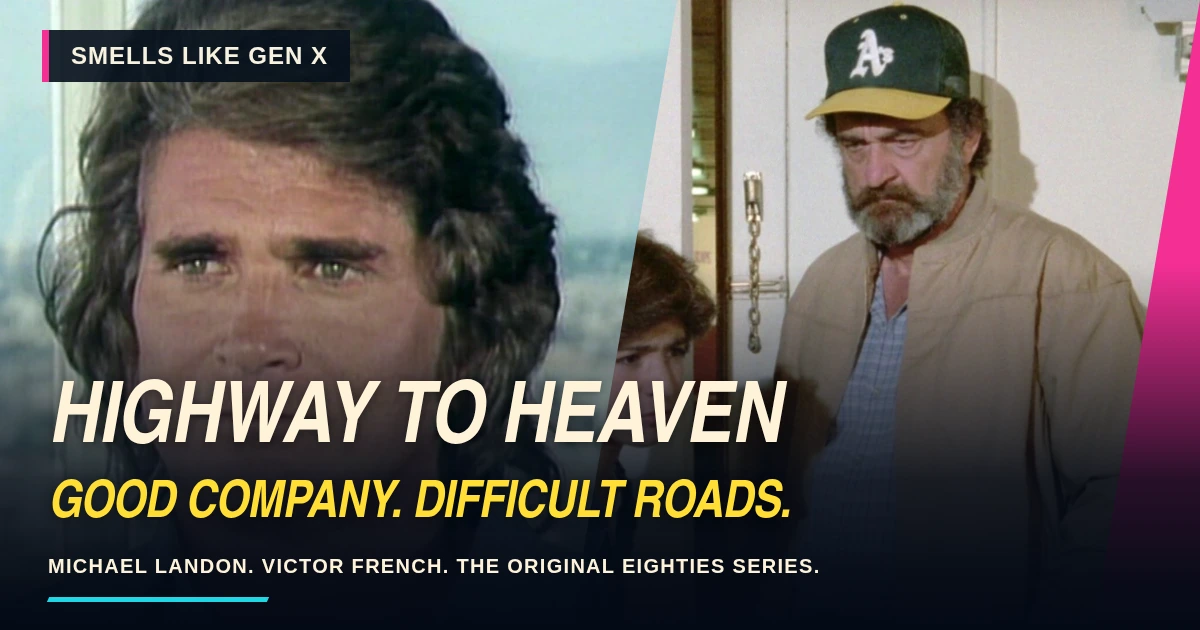
Michael Landon did not need a halo. By 1984, television had spent years teaching us to trust that face. Put him beside a road in ordinary clothes, give him somebody else’s problem and let Victor French look suspicious, and the evening already had a recognizable direction.
Highway to Heaven made a remarkably modest visual proposition for a series about an angel. No celestial command center. No weekly parade of creatures escaping from another dimension. Jonathan Smith could look like the fellow you might ask to help carry something. That was useful, because carrying things, taking jobs and sticking around long enough to listen were central to his particular line of supernatural work.
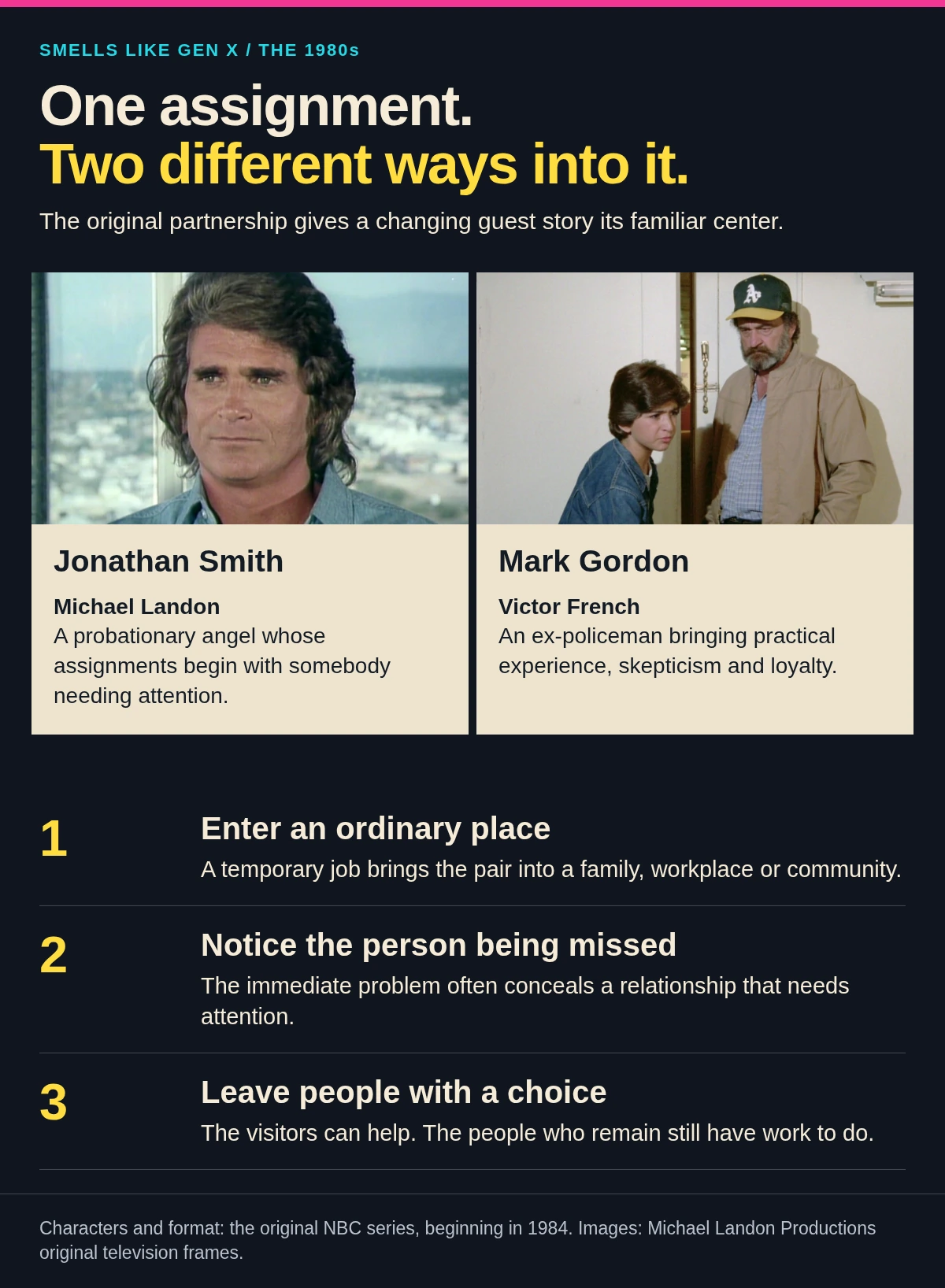
The original NBC series ran from 1984 through 1989. Landon played Jonathan, a probationary angel sent to help people on Earth; French played Mark Gordon, an ex-policeman whose own troubles made him a less polished, more recognizably human partner. They traveled together, found temporary work and got involved with people whose lives needed more attention than they were receiving.
I still find the combination appealing. Not every episode earns all the emotion it requests, and a few lessons arrive carrying their own spotlight. But the show understood something durable: an audience can want reassurance without wanting an hour in which nothing hurts. Its better stories did not promise that pain was imaginary. They promised that somebody would notice.
Inside This Article
- Landon Brought an Entire Television History Through the Door
- Jonathan Smith Was an Angel Who Took the Available Job
- Mark Gordon Kept Heaven in Contact With the Ground
- Their Friendship Was the Continuing Story
- The Pilot Chooses a Nursing Home, Which Tells You Plenty
- A Weekly Arrival Could Turn Into Many Different Kinds of Story
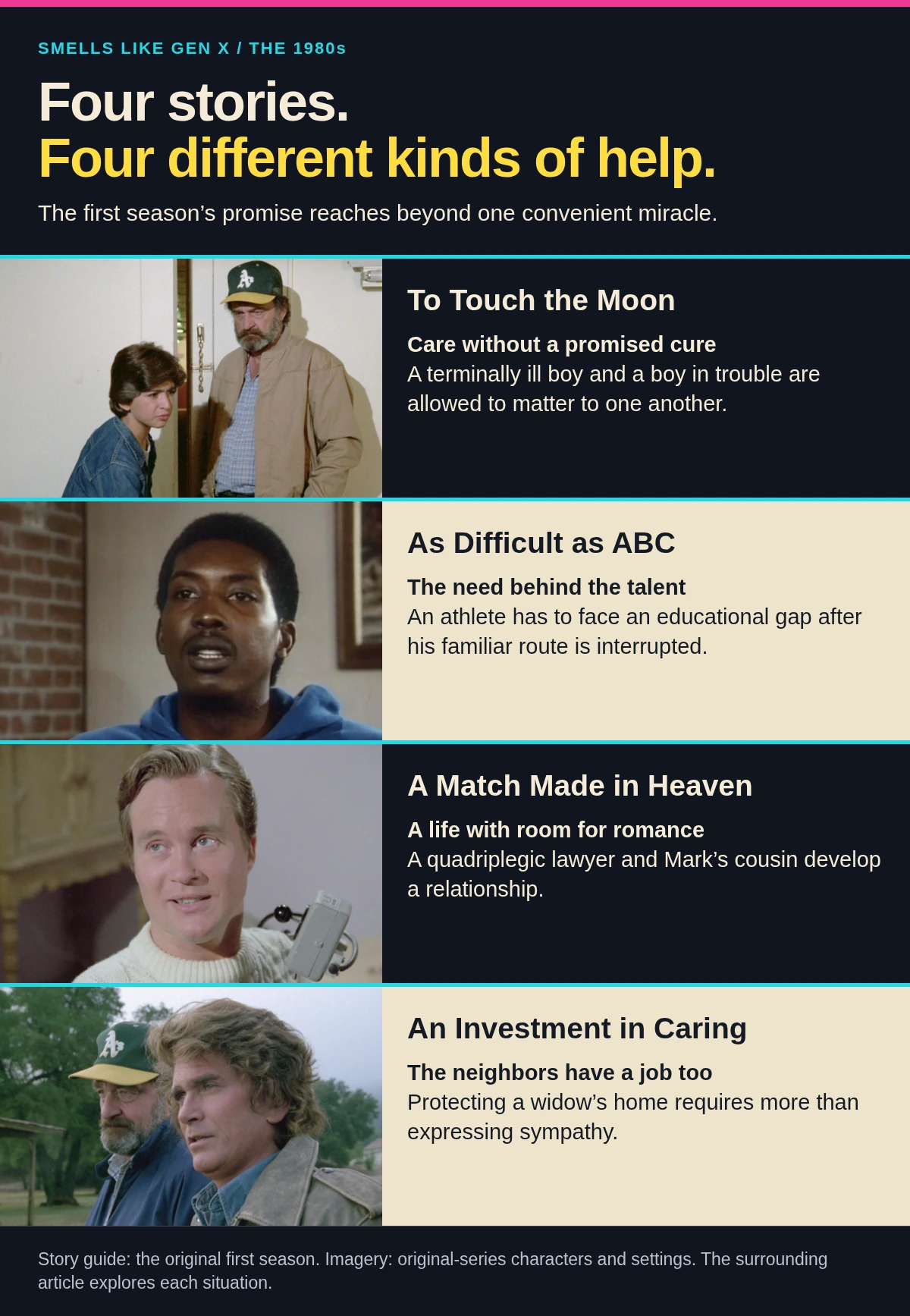
- To Touch the Moon Refuses the Easiest Miracle
- One Fresh Batch of Lemonade Is About the Life After the Accident
- A Match Made in Heaven Lets Disability Share Space With Romance
- Dust Child Brings the War Into an American Family
- As Difficult as ABC Takes Away the Easy Answer
- A Child of God Asks What Forgiveness Costs the Person Withholding It
- The Show-Business Stories Know That Success Can Be a Distraction
- The Comedy Was Not Just a Break Between Tears
- Caring Was Sometimes a Neighborhood Job
- Faith Gives the Premise Its Shape Without Answering Every Question
- Family Television Could Contain Subjects That Were Not Easy
- NBC Had Room for Several Different Versions of the Eighties
- The Familiar Surface Had a Lot of Craft Underneath It
- The Show Can Be Too Neat, and It Is Better to Admit It
- Why the Road Still Makes a Good Return Visit
- Questions About Highway to Heaven in the Eighties
Landon Brought an Entire Television History Through the Door
The first thing Highway to Heaven had going for it was familiarity. Michael Landon had been Little Joe Cartwright in Bonanza and Charles Ingalls in Little House on the Prairie. Those roles were different people in different settings, but they had helped establish a powerful association between the performer and a certain kind of television company. He could be strong, emotional, funny and determined to take responsibility for someone besides himself.
That history did not make Jonathan an extension of Charles Ingalls. The new series was set in a contemporary world with cars, nursing homes, film sets and modern workplaces. The important connection was the audience’s recognition of Landon as someone capable of carrying an emotional story. Viewers did not have to begin the relationship from zero while the pilot explained why they should trust its leading man.
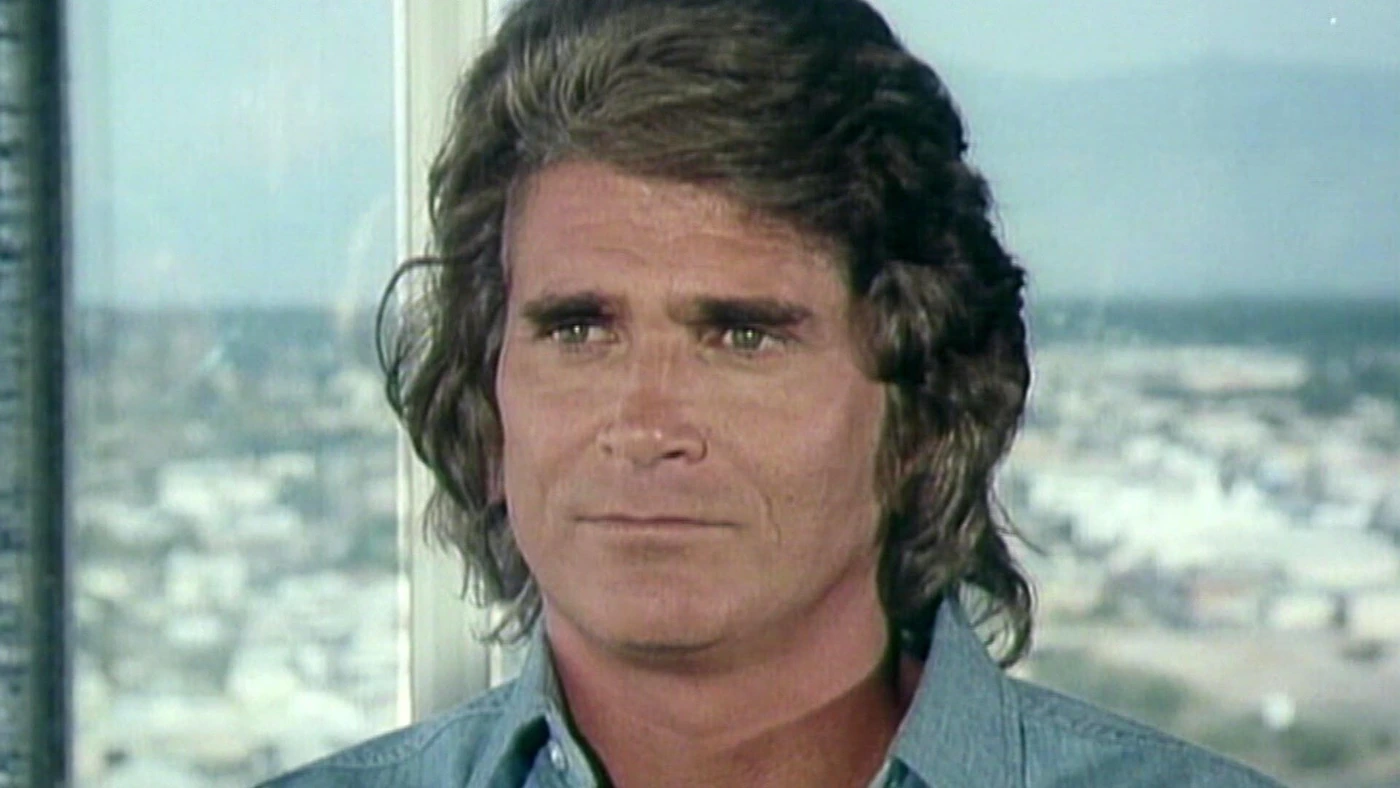
Landon also had authority behind the camera. He created Highway to Heaven and worked as its star, writer, director and executive producer. That concentration of responsibility helps explain why the program has such a recognizable emotional temperament. The choices about who deserves attention, how directly a lesson should be stated and when a scene should ask us to feel something are part of an authorial approach, not merely a pleasant face inserted into someone else’s format.
The timing matters too. The new series arrived after the long television life of Little House, with Landon moving into another continuing role rather than disappearing for a generation and making an unexpected comeback. The “return” in its appeal was the return of familiar company in a new weekly arrangement. The wardrobe changed; the expectation of an emotionally involved leading man traveled with him.
That places the show in a useful corner of the eighties television landscape. The decade could be loud about newness, whether through music-video style, expensive-looking action or increasingly complicated prime-time families. Highway to Heaven made familiarity an attraction. It did not have to resemble the newest thing in order to offer something people might choose again next week.
There is an obvious risk in that much trust. A performer with an established emotional connection can ask the audience to follow a weak story farther than the story has earned. Landon’s presence sometimes does exactly that. But the advantage is real too: when a scene is well observed, the history behind the face gives it weight before a speech has to do all the work.
Jonathan Smith Was an Angel Who Took the Available Job
Jonathan’s probationary status is a useful detail. He is not presented as the entire management structure of the universe dropping in to resolve a complaint. He has assignments, limits and obligations of his own. That gives the central figure a position inside the story rather than placing him above every possible question about why a difficult thing has been allowed to happen.
His most productive disguise is ordinary usefulness. A handyman, a worker on a film set, an employee in a hotel: these jobs put him close enough to people to notice how they treat one another when they are not formally requesting help. He can see a parent avoid a child, a manager overlook a worker or a neighbor decide that someone else’s distress is none of the neighborhood’s business.
The work also gives him a reason to stay. A stranger who arrives solely to deliver moral advice is easy to ignore. A person who has helped with a practical task has already entered the life of the place. Jonathan’s attention can become a relationship before anybody realizes that the relationship is the assignment.
That is the part of the fantasy I like most. The supernatural premise permits extraordinary knowledge and occasional intervention, but much of the immediate action involves making himself useful. The series keeps finding a way to put kindness into a work shirt. It is harder to dismiss concern as a decorative feeling when the concerned person is also doing something that needs doing.
Jonathan is not without frustration or personal feeling. The program can let attachment interfere with his judgment, as “One Winged Angel” makes especially clear. That possibility keeps him from functioning only as a device that tells everyone else what they have misunderstood. A helper can become involved enough to need a reminder of his own limits.
The character’s calm is therefore most effective when it leaves room for effort. He does not have to look overwhelmed to recognize that a situation is difficult. Landon can make him patient without always making him passive, and that distinction matters. Listening is one part of the job. Eventually, somebody has to make a choice.
Mark Gordon Kept Heaven in Contact With the Ground
Victor French’s Mark is essential to the arrangement. If Jonathan traveled alone, the series would lose a large portion of its warmth and its resistance. Mark can question an assignment, misunderstand a situation or become impatient with the route Jonathan has chosen. The conversation gains a human point of friction before a guest character has even appeared.
His background as an ex-policeman gives that friction a particular shape. Mark has seen enough trouble to distrust easy explanations. He is not starting from the belief that everyone will behave well if the opportunity is described nicely enough. His skepticism can be limiting, but it also gives the audience a recognizable response to the more optimistic partner beside him.
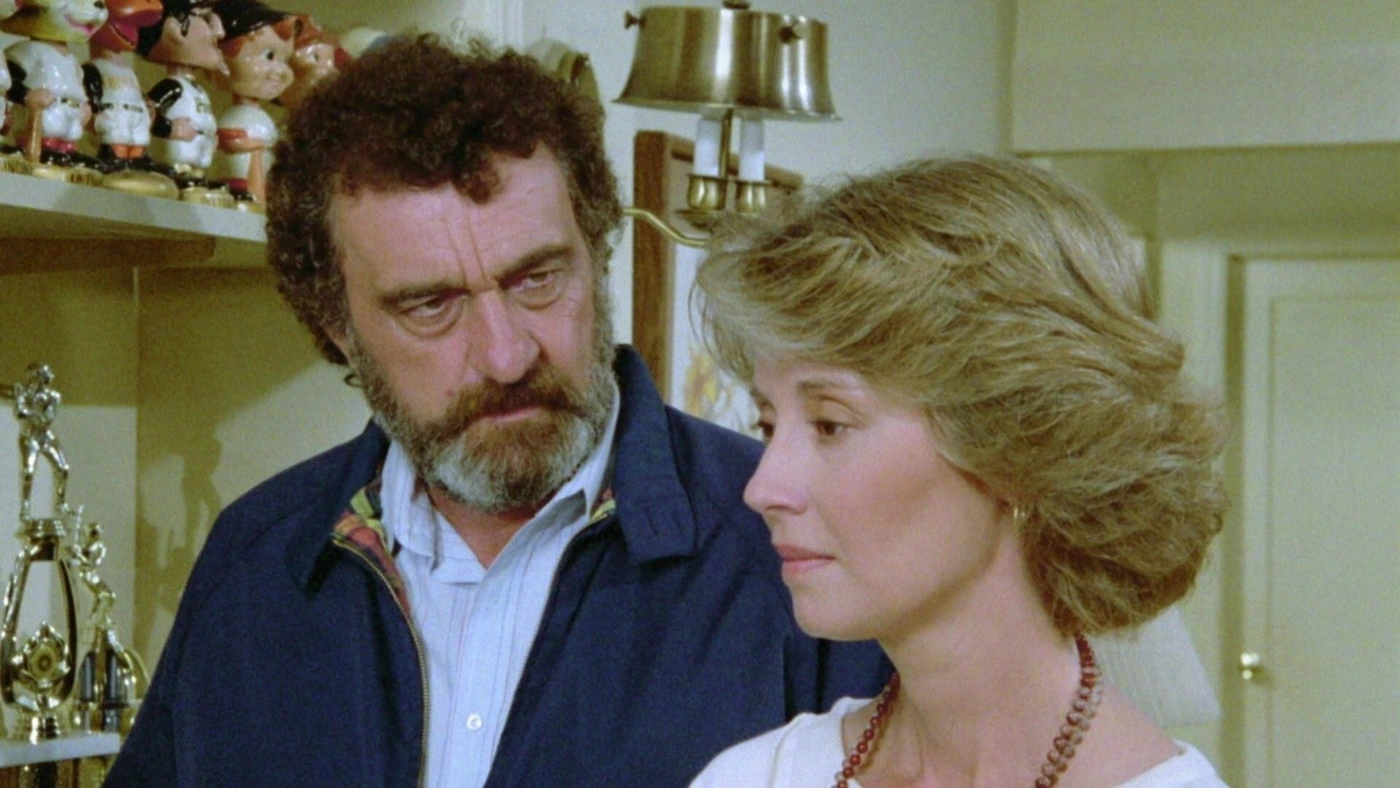
The pilot does not introduce Mark as somebody who has already solved his own life and is now volunteering to supervise everybody else’s. He has trouble, grief and anger in his own history. That makes the partnership reciprocal. Jonathan helps him, and Mark then brings his experience, loyalty and practical presence into the work they share.
French makes that development convincing because he can look aggravated without becoming emotionally unavailable. A complaint does not mean he has stopped caring. His face and timing can suggest that a man would very much like to finish objecting before he goes ahead and helps anyway. That is a useful kind of humanity to have beside a patient angel.
The humor often comes from the difference in expectations. Jonathan can recognize a purpose that Mark cannot yet see, leaving Mark to cope with the immediate inconvenience. The situation does not require him to be stupid. He is operating with less information and a more ordinary tolerance for being sent into someone else’s complicated afternoon.
I think that protects the show from floating away. The fantasy supplies the assignment; Mark supplies the reminder that assignments occupy time, cost effort and do not always arrive with an explanation a reasonable person would find satisfactory. A series about compassion needs that reminder if compassion is going to look like work rather than a permanent pleasant expression.
Their Friendship Was the Continuing Story
The guest situations change, but Jonathan and Mark provide the continuity. A nursing home can give way to a school, a hotel or a film production. The audience still has two familiar people to arrive with. That is one reason the format can handle a broad range of subjects without having to rebuild its whole identity each week.
Their friendship is not arranged as a competition for the correct answer. Jonathan generally has a larger view of the assignment, but Mark’s emotional responses matter. A skeptical question can expose an issue the story needs to address, and a practical act can carry more value than another explanation of the lesson. The partner who needs guidance is still a partner.
That balance separates the show from an hour built entirely around a saintly visitor and a succession of mistaken strangers. The pair can disagree, laugh and carry history from one assignment into the next. The audience is not merely waiting for the next problem to be solved. It is also spending time with a relationship it recognizes.
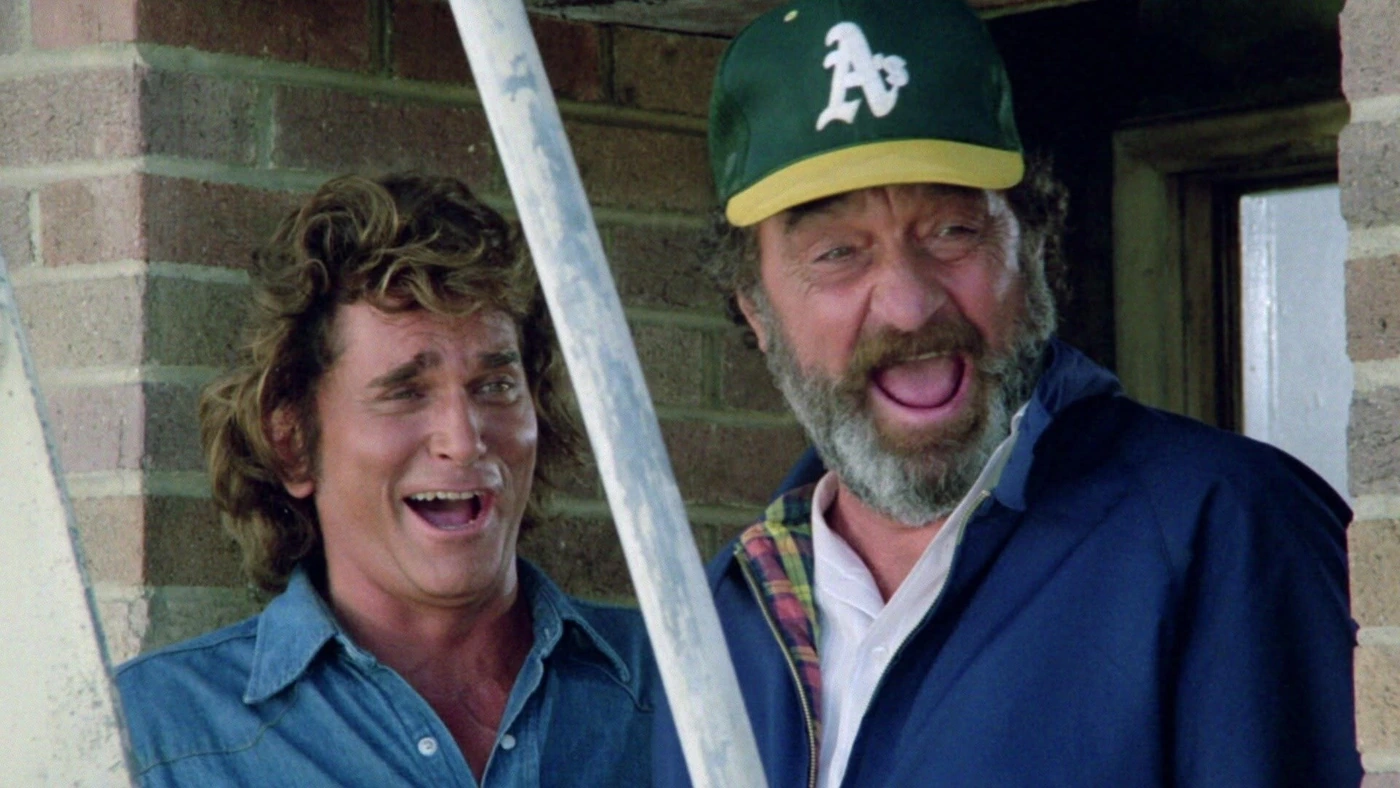
French’s presence helps Landon use a lighter register. Jonathan can tease, wait through an objection or enjoy a moment of shared amusement. Those scenes make the serious ones easier to accept because the men have not been holding the same solemn expression since the opening credits. Even people engaged in good work occasionally appreciate a joke.
The partnership also gives Mark a kind of belonging that his earlier isolation has made valuable. He does not have to become an angel to be needed. His ordinary humanity is part of why the arrangement works. That is a generous premise for a show whose most famous performer is playing the supernatural half of the duo.
For a returning viewer, I would pay attention to those exchanges between assignments. The emotional guest story may be what a particular episode is remembered for, but the friendship is what makes arriving at another one comfortable. The road changes. The company is the continuing invitation.
The Pilot Chooses a Nursing Home, Which Tells You Plenty
The original opening story places Jonathan in a nursing home as a handyman. It is an unusually clear declaration of interest. The program is beginning with older people whose daily lives can be overlooked, in a place where care, companionship and money have immediate consequences. Its first important world is not glamorous.
That setting gives Jonathan useful work and access to people who need more than a visitor’s cheerful greeting. A repair can improve a room. A conversation can acknowledge a person. The two acts are connected because the people living there are not simply a collection of sad stories waiting to make the leading man look kind.
Mark’s relationship with the situation helps bring his own difficulties into the premise. He does not initially share Jonathan’s understanding of what is happening, and suspicion is a reasonable response to a stranger who seems to know rather more than he explains. The partnership has to emerge from a story rather than being handed to us as a settled professional arrangement.
The threat to the home’s future also makes the problem collective. An individual can need encouragement while the institution itself faces a practical danger. That combination is important. If the show only asked residents to adjust their attitudes, it would leave the circumstances producing their distress conveniently untouched. Here, the place they depend on matters.
Helen Hayes is among the pilot’s guest performers, adding another layer of familiar screen authority. The casting gives the older residents more presence than a row of anonymous people arranged around an uplifting speech. They are allowed to occupy the frame with histories and personalities of their own.
The story also establishes the scale of the series’ fantasy. Jonathan’s identity is significant, but the nursing home does not become a backdrop for an expensive demonstration of celestial equipment. The emotional point remains what happens to the people in it. That is the contract the series is offering: extraordinary help, ordinary lives and a practical problem that cannot be wished away merely by smiling at it.
A Weekly Arrival Could Turn Into Many Different Kinds of Story
The traveling format is flexible because Jonathan and Mark do not carry one fixed professional jurisdiction. They can enter a workplace, a family or a community under a temporary arrangement. The show can therefore ask what care looks like in different circumstances without explaining why the same town happens to produce an entirely new moral crisis every Wednesday.
The jobs provide more than camouflage. On a film set, the pressure concerns performance, status and the distance between public success and private behavior. In a hotel, money and service can make it easier for one person to treat another as invisible. Around a school or athletic program, the question may be what happens when a young person’s accepted identity stops providing a future.
This is a useful companion to the fantasy television of the eighties. Fantasy does not always need to open a portal into an unfamiliar kingdom. It can introduce one exceptional person into an otherwise recognizable setting and use that difference to disturb what everybody else has accepted as normal.
The arrangement also has limits. A visiting hero can create the impression that a deep problem needs only one properly timed intervention. The episode has an ending to reach, while poverty, prejudice or family estrangement rarely agrees to a schedule. The stronger stories leave some work for the people who will remain after the visitors have driven away.
That is where the format earns its feeling of reassurance. Jonathan and Mark do not have to become permanent residents to make a difference, but the people they help need more than a brief rescue from their own lives. A changed relationship or a practical commitment can continue after the guest stars have completed their part of the hour.
It is not the only eighties series built around capable visitors making a bad situation more manageable. MacGyver’s resourcefulness offers an action-oriented version of the pleasure. Highway to Heaven makes its most important tool sustained attention, with the occasional advantage of having a supervisor who knows rather more than the local authorities.
To Touch the Moon Refuses the Easiest Miracle
“To Touch the Moon” introduces a terminally ill boy and another boy who has repeatedly been in trouble. The pairing has an obvious emotional design, but the subject is stronger than a simple instruction that the troubled child should learn gratitude. One person is facing the loss of a future; another has difficulty finding a future worth behaving for.
The illness matters because the show cannot honestly make it disappear just by having Jonathan enter the room. The assignment concerns what the boys can mean to one another and to the adults around them. That gives the story a different kind of hope from a promise that every person we like will be medically rescued before the credits.
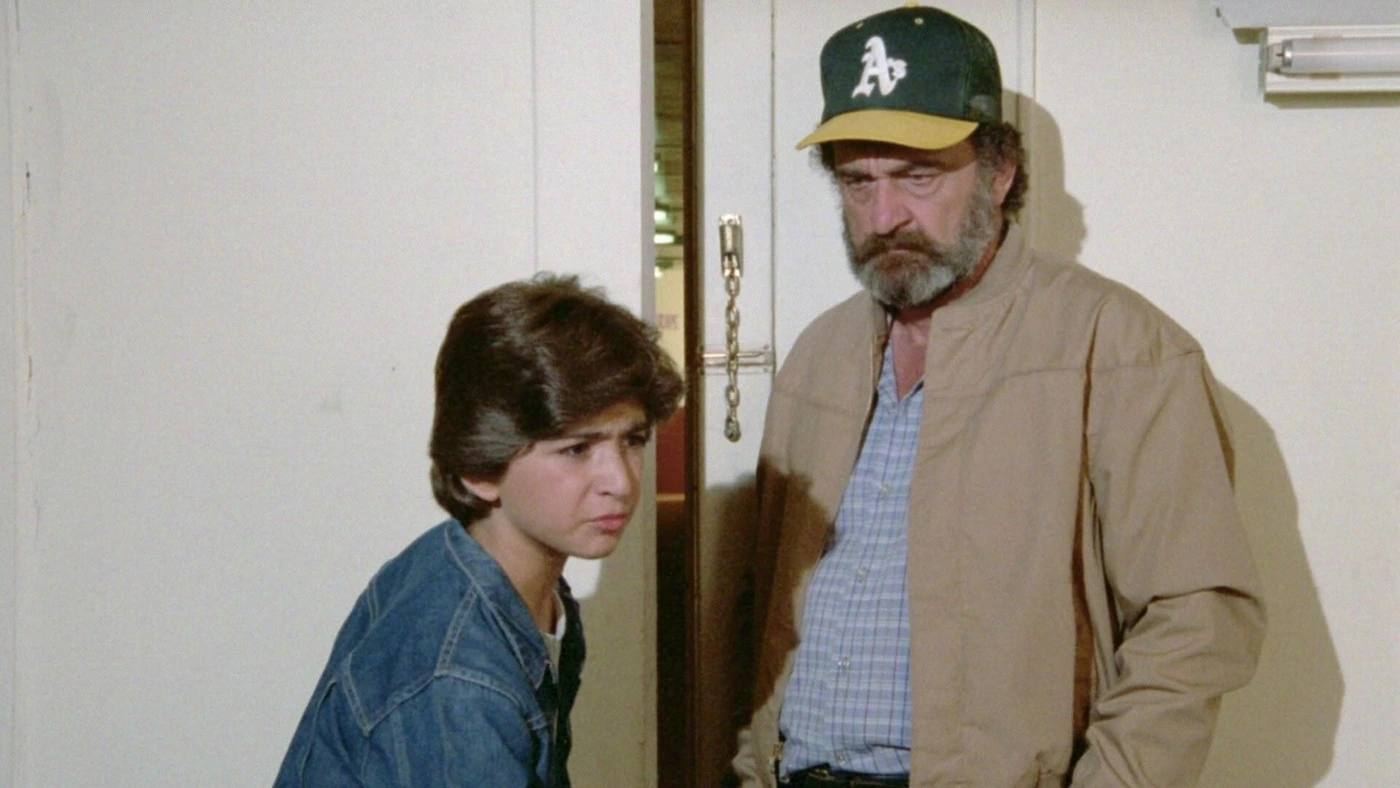
I appreciate that distinction. A fantasy series can use supernatural power to avoid the hardest part of its subject. This episode’s basic situation asks the audience to remain with the fact that someone can be worth helping even when the help will not restore all the years he should have had. Care is not reduced to a successful cure.
The troubled boy is important for another reason. The story does not begin with him already presenting the kind of polite behavior that makes adults eager to reward him. He needs someone to see a possibility beyond the record of his mistakes. That is a recurring concern in the series: who gets attention before becoming the person everyone would find convenient to care about?
There is room to question how neatly the emotional education is arranged. Illness can become a storytelling instrument used primarily to improve someone else, and a viewer should notice that danger. The episode is more rewarding when the sick child’s own relationships and wishes remain part of the story, rather than turning him into a lesson with a diagnosis attached.
That is also why I would include it in a return visit without recommending it as a pleasant, undemanding hour. The show may be comforting, but comfort here involves company in a painful situation. It is not an agreement to remove the situation from view.
One Fresh Batch of Lemonade Is About the Life After the Accident
The two-part “One Fresh Batch of Lemonade” follows Deke, a young athlete whose life changes after a motorcycle accident. The important movement is from the identity he expected to possess toward a future he cannot yet imagine. Jonathan and Mark are helping someone who has good reasons to be angry, rather than someone who can be fixed by being told to brighten up.
The athletic setting makes that loss concrete. Sport can organize a teenager’s time, social position and expectations. When the familiar route is interrupted, the practical questions arrive alongside the emotional ones. How will other people behave? What kind of help is welcome? What remains possible when the previous picture of success no longer fits?
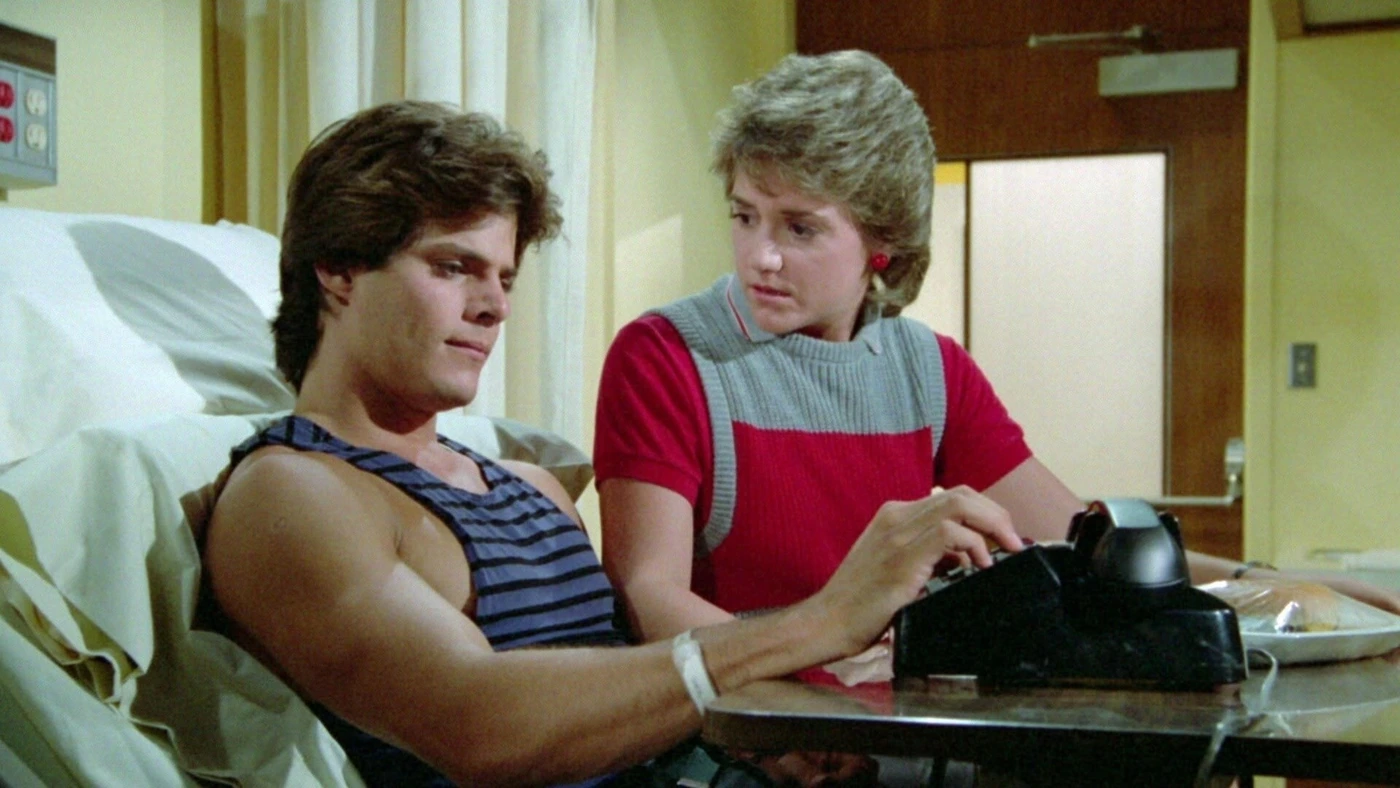
The story brings gymnastics into the rehabilitation setting and includes gymnast Bart Conner. That choice gives the episode actions to stage as well as feelings to explain. A body learning a different task, a difficult attempt and the presence of someone who understands training can communicate effort in ways a speech alone cannot.
The danger is the familiar television shortcut in which disabled life becomes an inspirational display for other people’s benefit. A useful return should notice when the episode approaches that arrangement. Deke’s value should not depend on becoming sufficiently impressive that the nondisabled people around him feel reassured.
What works better is the insistence that he has a life after the initial catastrophe. The story’s time is not confined to the moment of injury or to the people who find the injury upsetting. It has to make room for learning, anger, relationships and a changed understanding of the future. That is a more substantial use of two parts than simply delaying an emotional reveal.
The parents’ relationship is also part of the situation. A young person does not go through a life-altering event in a vacuum, and the people trying to help can bring their own conflicts into the room. Jonathan and Mark have more than one person to listen to. The athlete’s struggle remains central, but it occurs inside a family that has work of its own to do.
A Match Made in Heaven Lets Disability Share Space With Romance
“A Match Made in Heaven” returns to disability through a different kind of story. A lawyer who is quadriplegic and Mark’s cousin develop a relationship. The premise matters because it gives a disabled adult desires and possibilities beyond recovery, endurance or the task of motivating someone else to appreciate life.
The lawyer is played by James Troesh. The episode does not need a miraculous change in his body to make the relationship worth considering. It needs the people around him to recognize an adult with a profession, humor and an interest in someone else.
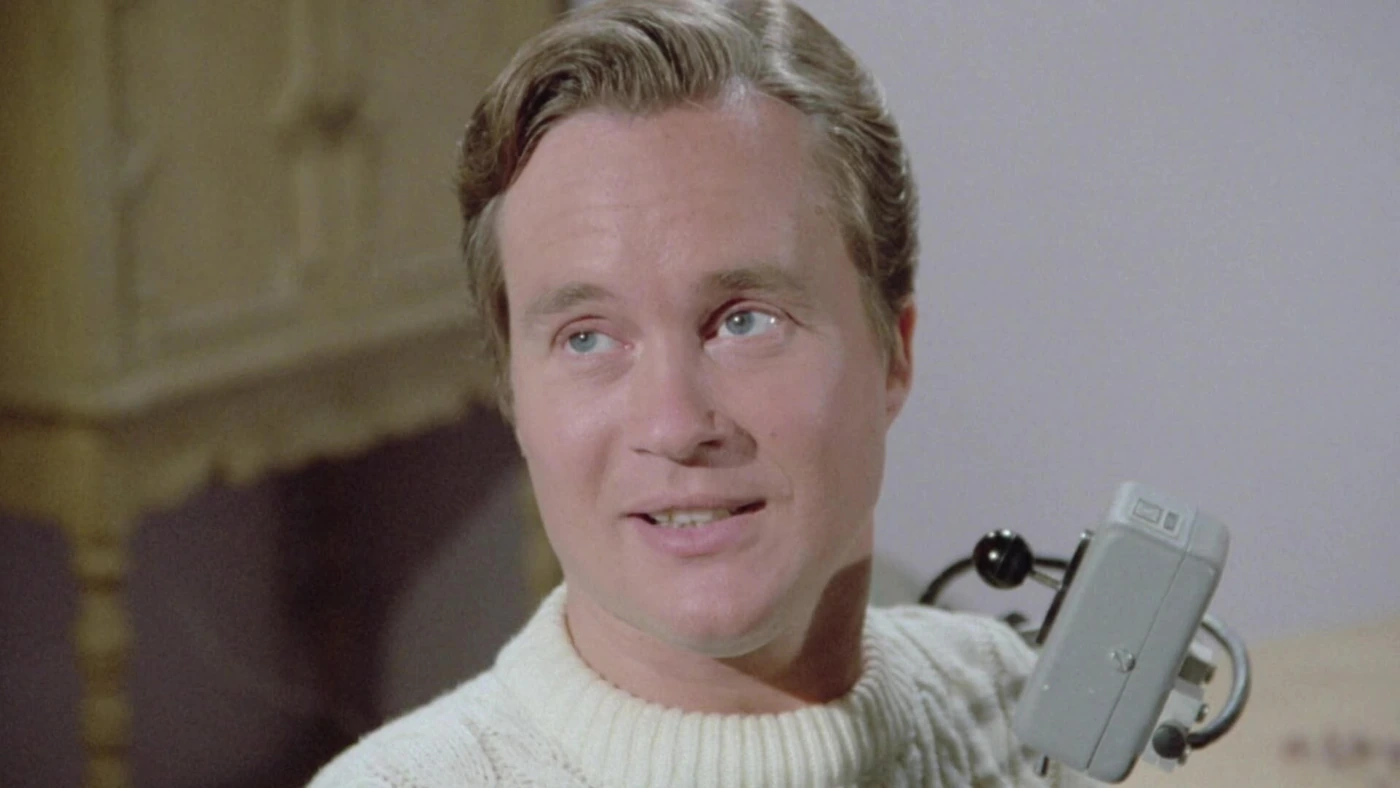
Mark’s involvement makes the subject personal for the regular cast. Abstract generosity is relatively easy when nobody you love is making a choice that unsettles you. A relative’s relationship can bring assumptions closer to the surface. The man who has been traveling around helping other people may discover that being supportive is harder when his own expectations are involved.
That is a useful test of the character. The series would be less convincing if Mark and Jonathan only encountered prejudice in strangers who could be corrected and left behind. Mark’s discomfort gives the program a chance to ask whether a basically decent person is prepared to reconsider a feeling he has mistaken for protection.
I also like the change in emotional register. Disability is not restricted to the solemn part of the schedule. Romance can be funny, awkward and hopeful. Those ordinary feelings enlarge a character more effectively than repeatedly assuring the audience that he is admirable.
The episode’s period language and dramatic shortcuts can still deserve scrutiny. A return does not require declaring that an eighties television treatment has become the final word on a lived experience. It is enough to recognize the value of allowing the person a life with more than one subject in it—and to notice whether the scenes actually keep that promise.
Dust Child Brings the War Into an American Family
“Dust Child” concerns a Vietnam veteran whose Amerasian daughter is not accepted by the people around him. The conflict makes the war’s aftermath personal without requiring Highway to Heaven to become a combat series. A past relationship has produced a child who now needs belonging, while adults are tempted to treat her presence as an inconvenience they did not agree to discuss.
The useful focus is on the daughter as a person. She is not responsible for the adults’ history or for the discomfort her arrival produces. A family that makes her carry those feelings is turning its own unfinished business into a child’s exclusion. That gives Jonathan and Mark a problem more specific than a general announcement that prejudice is wrong.
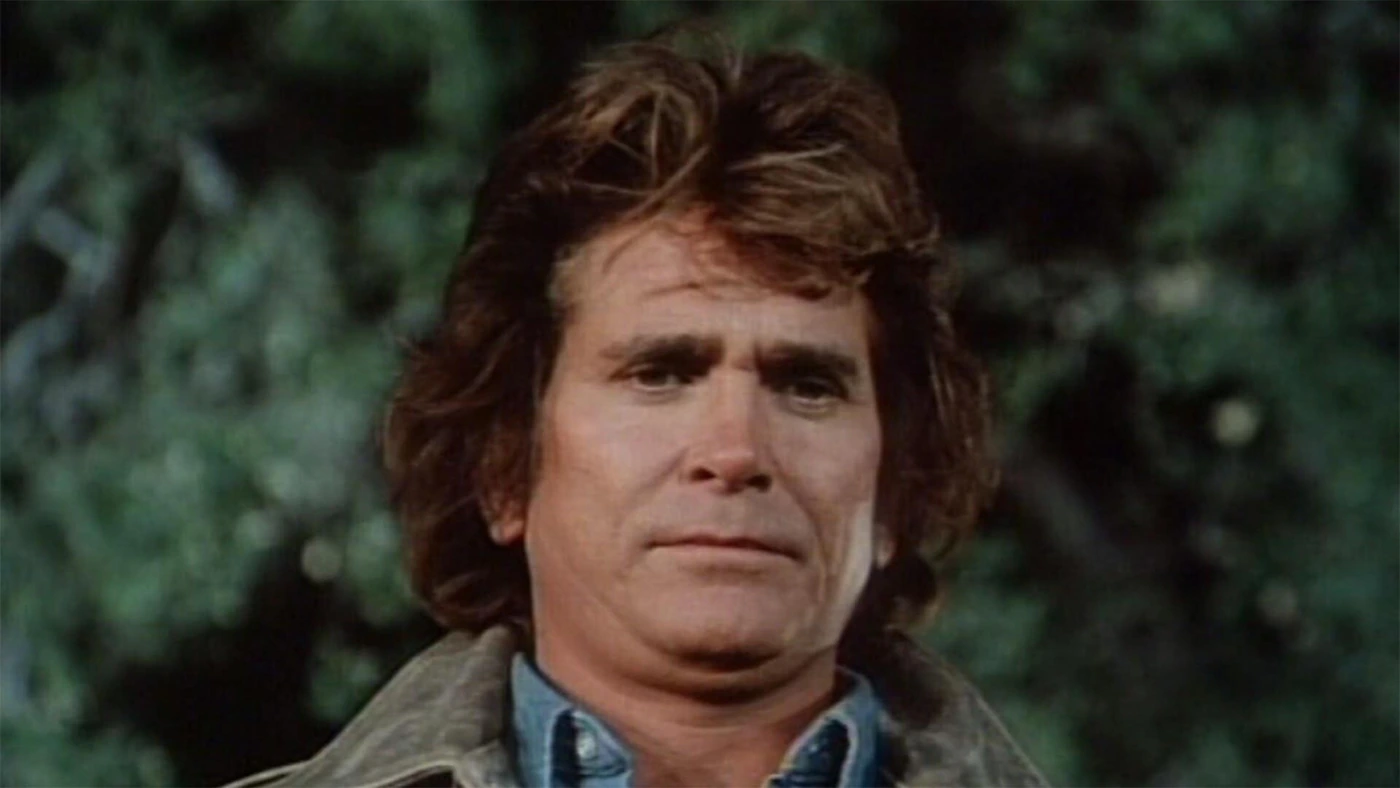
It also tests the distinction between accepting a fact and accepting a person. An adult can acknowledge that the child exists while keeping her outside the emotional arrangements of the household. Real welcome requires behavior: a place, attention and a willingness to confront the reactions of other people. The story needs those ordinary acts if its good intentions are going to have substance.
That is a meaningful bridge to China Beach’s view of the Vietnam War. The programs have very different settings and temperaments, but both can ask who gets overlooked when the public account of a war concentrates on only one group of participants. Highway to Heaven brings one consequence into the domestic space of the mid-eighties.
The episode also deserves a careful return because the period’s language and assumptions are part of what is on screen. A sympathetic intention does not make every treatment of identity complete. The important question is whether the child is allowed feelings and needs beyond the job of demonstrating that the surrounding adults ought to improve.
For me, that makes the story a stronger example of the series than a plot in which a selfish person merely requires an entertaining supernatural inconvenience. Here, belonging has practical stakes. The people who claim to care have to decide what kind of family their behavior is actually building.
As Difficult as ABC Takes Away the Easy Answer
“As Difficult as ABC” follows a college basketball player whose illiteracy becomes impossible to avoid when a heart condition interrupts his athletic path. The premise connects an individual difficulty with the adults and institutions that have allowed it to remain hidden. A talent has been useful enough that other important needs could be postponed.
That gives the story a useful question: what happens when the admired ability is no longer available to carry the person? The young man still has a future, but the arrangements around him may have been built around his performance rather than his education. A scholarship and public approval can look like support while leaving a dangerous gap underneath.
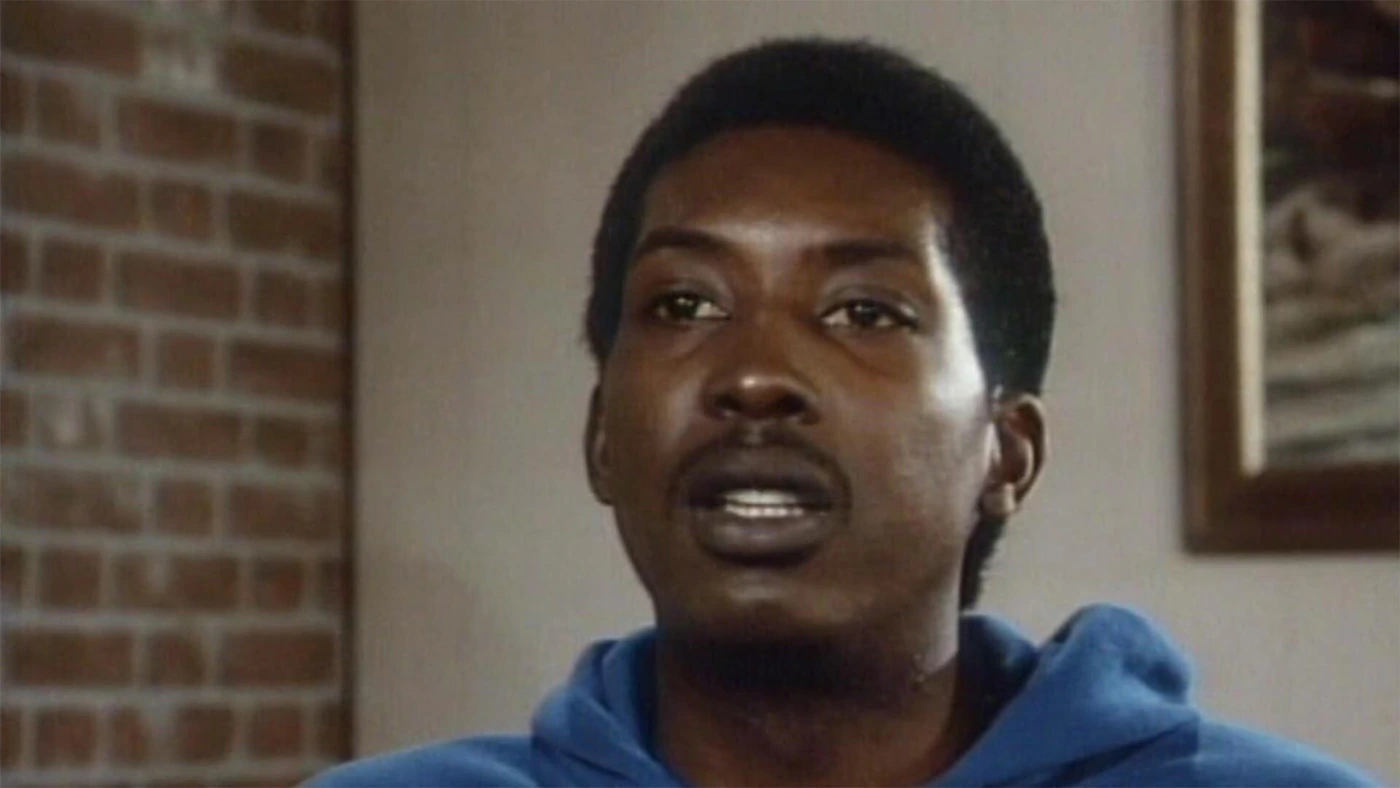
The show is at its strongest when shame is treated as an obstacle to help rather than evidence that help is undeserved. Someone who has spent years concealing a difficulty may have become very good at avoiding situations that would expose it. Telling him to admit the problem does not erase the fear of what people will think once he does.
Jonathan and Mark can enter that pattern because they are not solely invested in the athletic result. The assignment concerns the person who must live after the current arrangement fails. That is a practical form of care: paying attention to a need that is less entertaining than a good performance on a court.
The subject can also expose the limits of an individual-rescue story. One helpful visitor cannot stand in for a functioning educational system. Yet the episode does not have to repair every institution to identify a particular failure and make one person less alone inside it. The drama becomes useful when it recognizes both the immediate need and the circumstances that helped create it.
I would pair this with one of the more openly sentimental episodes on a return visit. It shows that the series’ concern with compassion could include a pointed question about what adults are willing to overlook when a young person’s talent benefits them.
A Child of God Asks What Forgiveness Costs the Person Withholding It
“A Child of God” brings a dying woman into conflict with her stern father as she tries to secure a future for her daughter. The setup is direct and emotionally loaded. The older man’s judgment has consequences beyond the original disagreement, because a child now depends on his willingness to reconsider what he has been protecting.
The episode is not interesting merely because forgiveness has been assigned the sympathetic side. Its pressure comes from time. A person can put off a reconciliation while imagining that the option will remain available indefinitely. Illness removes that comfortable assumption. The father has to decide whether preserving his grievance matters more than the people the grievance is keeping away.
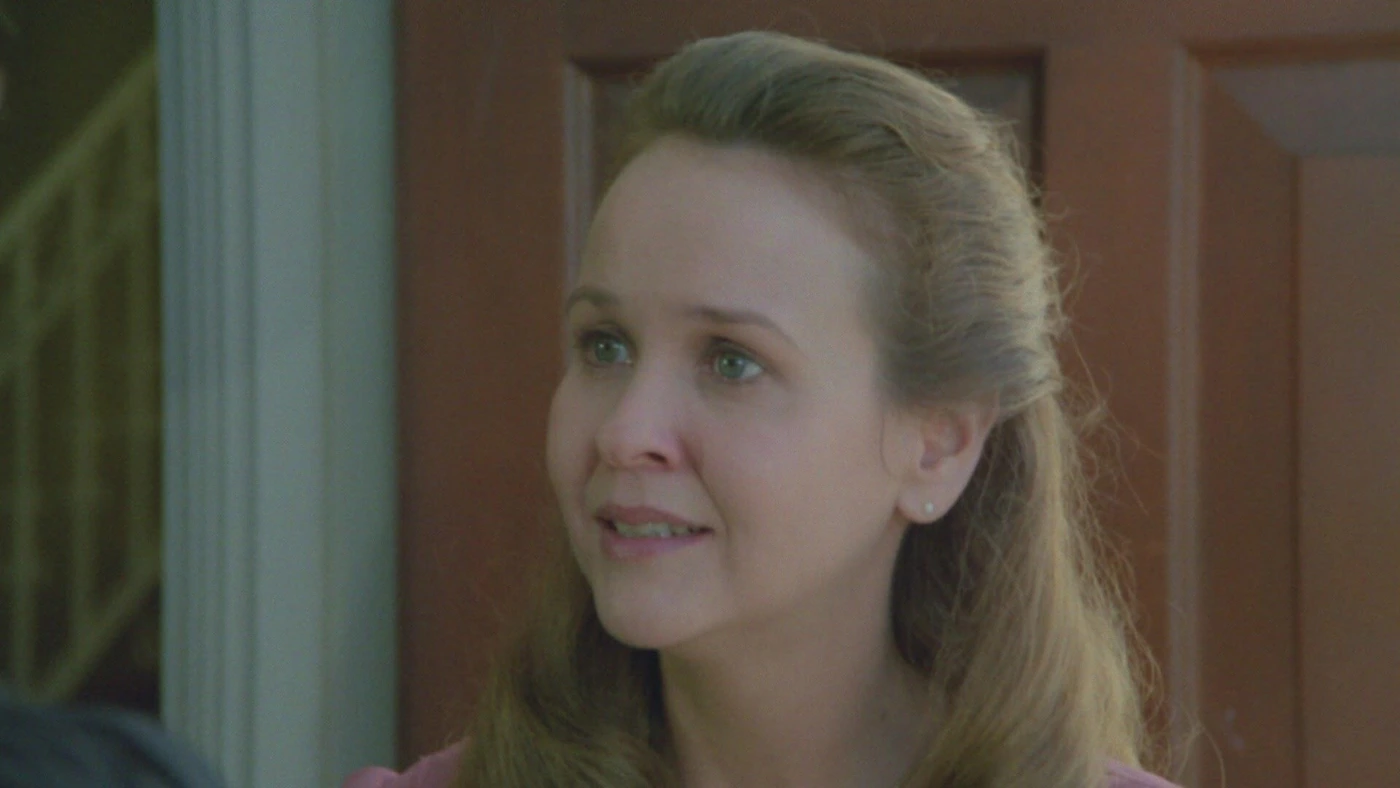
William Windom gives the older generation a substantial presence in the story. A hard position needs a believable holder if changing it is going to mean anything. The viewer should understand that the man has lived inside his judgment, not simply been waiting off screen for an angel to explain a more fashionable attitude.
That does not excuse the harm. The daughter and granddaughter are not obliged to become grateful teaching materials for him. The story’s better possibility is that he recognizes an obligation he has refused, rather than receiving applause merely for relaxing a rule that has injured other people.
The religious language of the title helps frame that argument. A program about an angel can ask whether a person claiming moral seriousness has confused judgment with care. It is a useful test for the series’ own tone as well. The lesson should not consist only of giving the sympathetic people a more attractive speech about virtue.
I find this type of episode more persuasive when the changed mind leads toward a changed relationship. A confession is a beginning. Somebody still has to welcome the child, face the past and accept the work of being present. Highway to Heaven can be very fond of an emotional declaration, but its most durable subject is what the declaration makes possible afterward.
The Show-Business Stories Know That Success Can Be a Distraction
“Catch a Falling Star” places Jonathan and Mark near an actor whose relationship with his children needs attention. It is an efficient setting for a series starring a familiar television personality. A person can be warmly recognized by strangers and remain difficult to reach for the people who need him at home.
The idea does not require treating all ambition as selfish. Work can be meaningful and demanding, and a performer may genuinely care about doing it well. The problem begins when professional success becomes an explanation for every private absence. The public result is visible and praised; the family cost can be easier for the successful person to ignore.
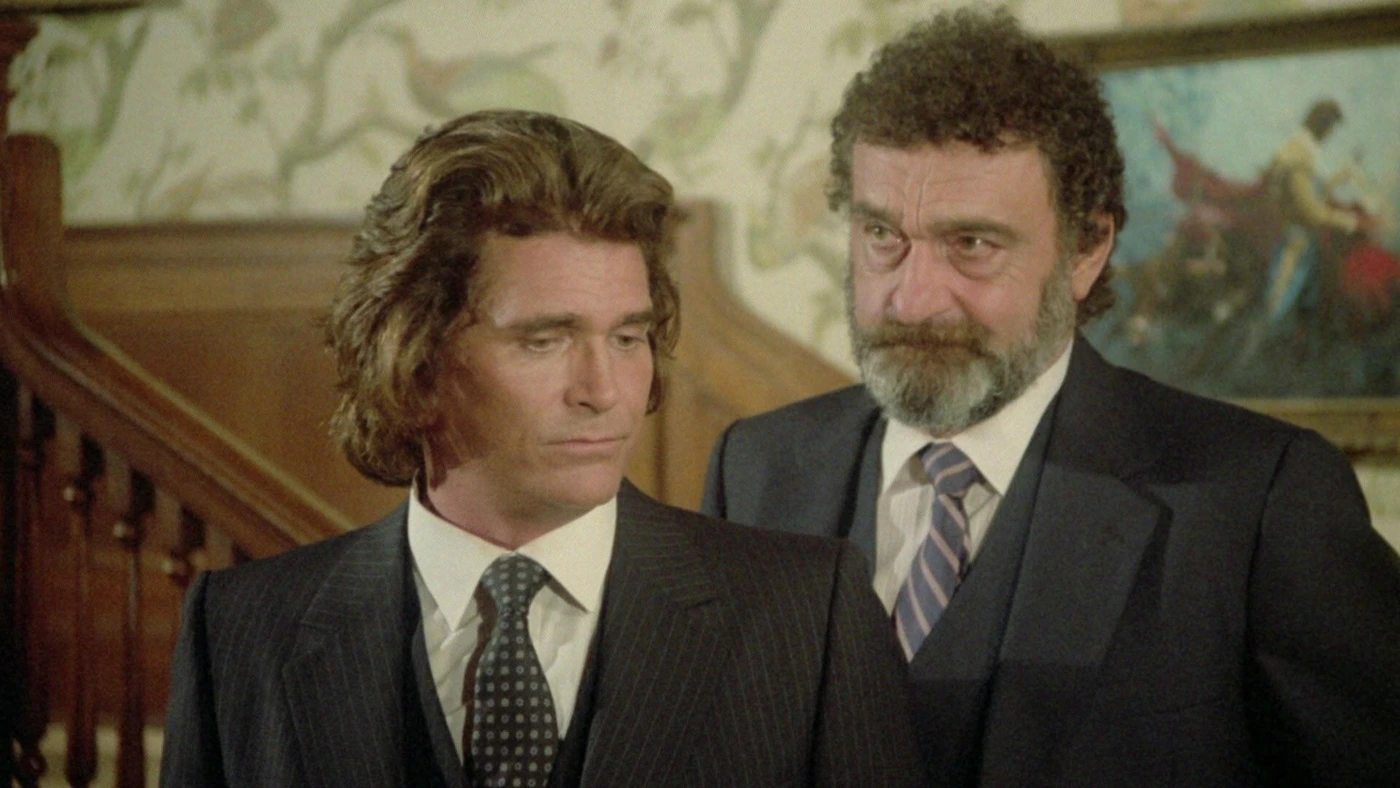
“The Brightest Star,” involving a young actress who manipulates the adults around her, approaches the same world from another angle. Here, a child has learned how useful her position can be. The surrounding adults have to consider their own part in an arrangement that rewards difficult behavior while pretending they are merely coping with it.
Those stories benefit from the temporary-job format. Jonathan and Mark can observe the relationship between the performance and the people maintaining it. They see the work that has to happen around the celebrated person, which helps the episode ask whether attention and affection are being distributed fairly.
There is humor available in that environment too. A film set contains enough competing priorities to make a patient angel useful and a skeptical ex-cop entertainingly busy. The program does not have to abandon its main concern in order to let the machinery of producing a flattering image become mildly ridiculous.
I like these episodes as a counterweight to the assumption that Highway to Heaven exists only in nursing homes and hospital rooms. Its recurring question can travel into a glamorous workplace: who is being overlooked, and what story has the important person been telling himself that makes the overlooking seem reasonable?
The Comedy Was Not Just a Break Between Tears
The regular partnership gives the show a supply of humor, but some guest stories make the moral arrangement comic in its own right. “The Banker and the Bum” uses a wealthy man and a poor man to disturb the assumptions attached to their positions. Ned Beatty’s dual role gives the premise a performer capable of making the difference in treatment visible.
An exchange story is an old device because it makes a useful question immediate. Does someone deserve different consideration because he appears to occupy a more important place? A lecture can ask that question abstractly. A comic reversal can make a person encounter the answer through an inconvenience he cannot dismiss as belonging to somebody else.
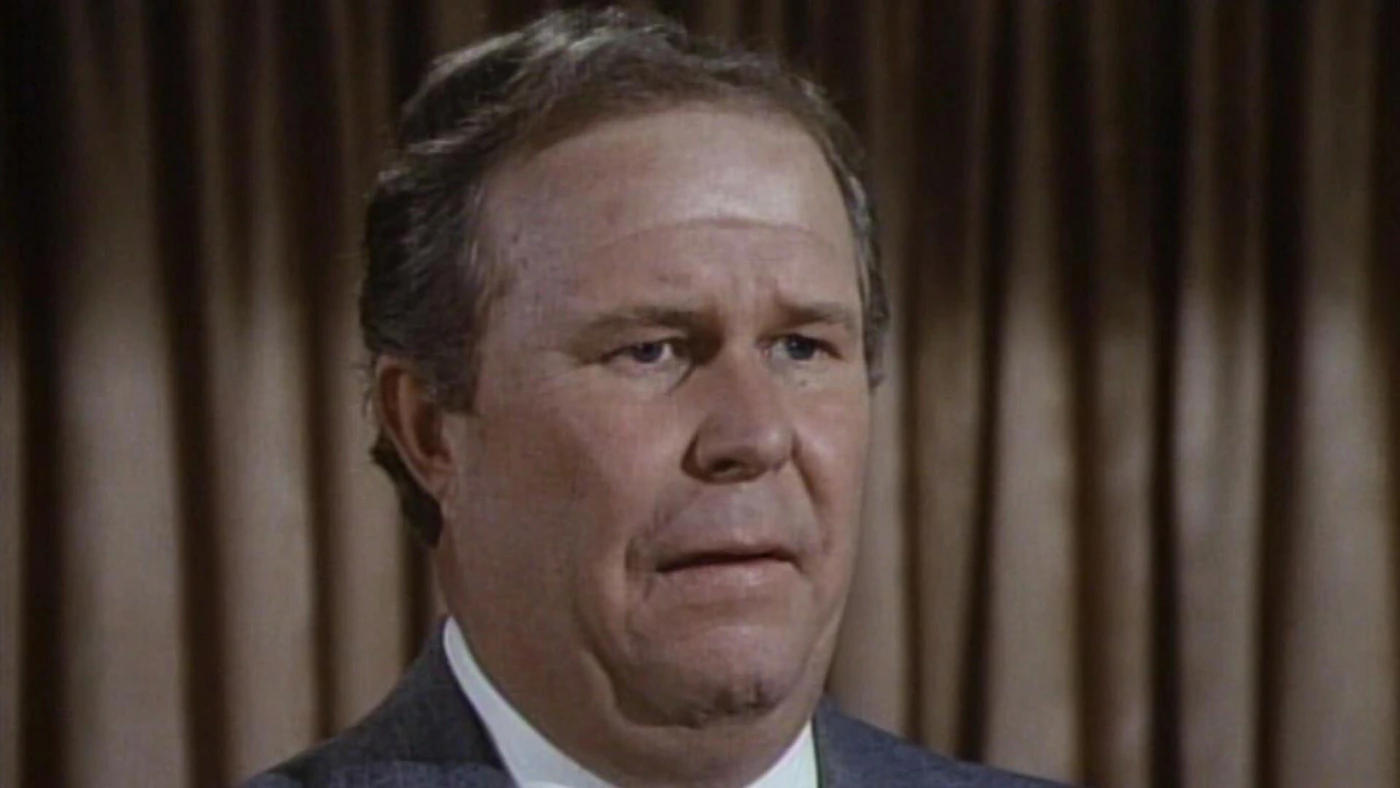
“A Divine Madness” takes another route by giving an eccentric older man a greedy son who wants control of the situation. Ron Moody and Jonathan Frakes help make the family conflict distinct. The issue is not simply whether unusual behavior should be laughed at. It is who benefits from declaring the person inconvenient and what that declaration permits them to take.
The series can also borrow familiar holiday machinery. “Another Song for Christmas” gives a businessman a reason to reconsider his priorities at a time of year when audiences already recognize the tradition of an unwelcome moral visit. The pleasure lies partly in the arrangement: a person expects an ordinary transaction and discovers that the transaction has acquired a much larger supervisor.
Not every comic reversal is subtle. The program can draw its selfish person in broad lines and let the remedy arrive with equal clarity. But broad comedy can still make room for an accurate observation about status or greed. A joke does not become worthless because its target is easy to identify.
The humor matters to the emotional balance of the hour. If everyone had to look chastened from beginning to end, even Jonathan might have preferred a different assignment. The ability to laugh gives the characters more than one response to trouble, and it gives the audience a little room to breathe before the next serious request.
Caring Was Sometimes a Neighborhood Job
The pilot’s concern with the nursing home returns in other forms through the series. “An Investment in Caring” places a widow’s home under threat from corporate development and asks what the neighbors are willing to do. The situation is practical: sympathy alone will not protect the place where she lives.
That makes collective action part of the show’s idea of goodness. A neighbor may be perfectly willing to say that something is unfortunate while remaining unwilling to change an afternoon’s plans. Jonathan’s work is more useful if it helps turn that feeling into participation, rather than allowing everyone to enjoy the idea that they would have helped if only the circumstances were more convenient.
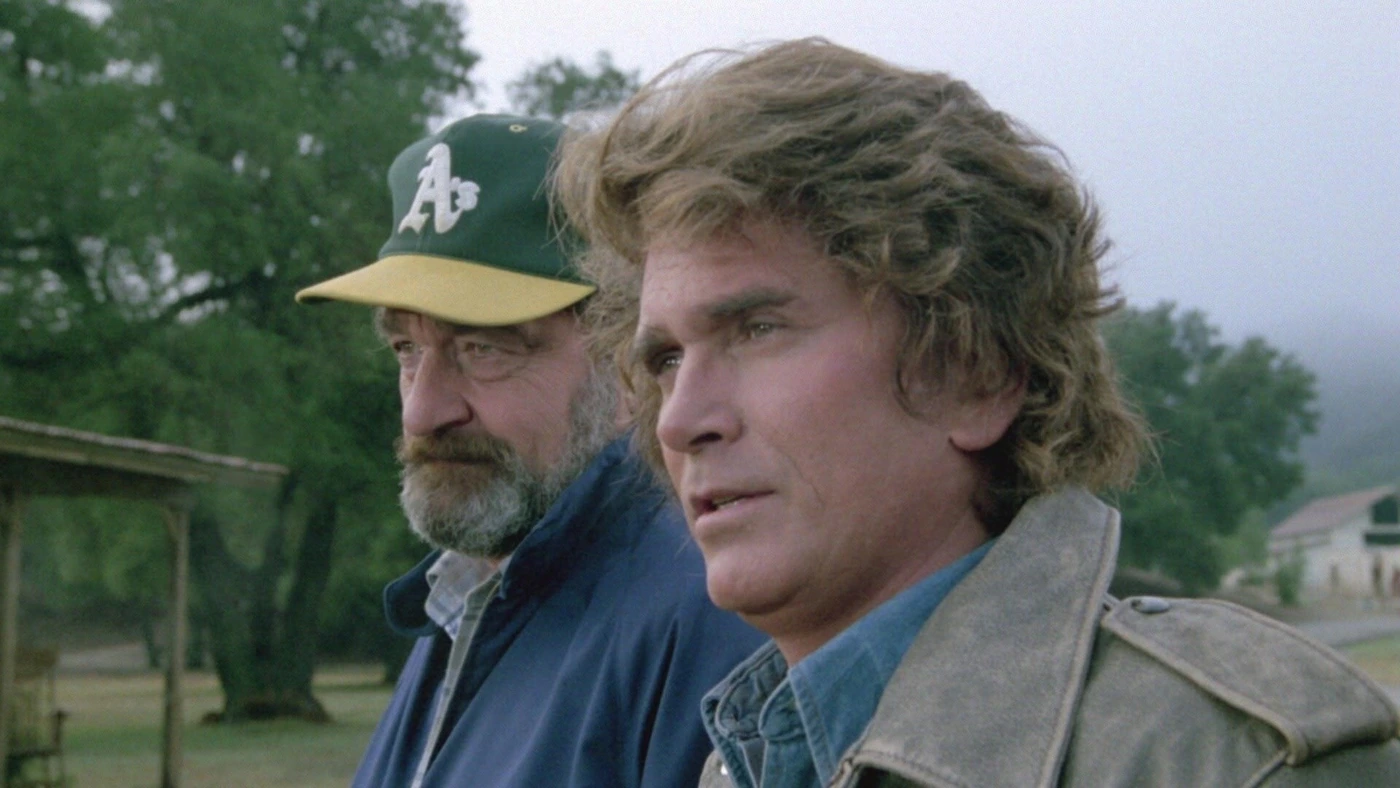
The story also exposes the distance between a business description and an inhabited place. To one party, a property may be a component in a larger project. To the person living there, it contains routines, attachments and the possibility of remaining independent. The moral conflict comes partly from which account is being allowed to count.
The program’s solution may be tidier than the situation would be outside television. That is a fair limitation to notice. A single episode cannot give a complete account of housing insecurity, money and development. But it can refuse the assumption that the person with less institutional power is merely an obstacle to a more important plan.
This is where I think the traveling helpers can do their best work. If the neighbors act, the improvement belongs to people who will remain in the community. Jonathan and Mark may prompt the change, but they do not have to become the permanent explanation for every future decent act on the street.
That is a stronger ending than a visitor performing goodness while everybody else watches admiringly. The neighborhood has to discover that care is a shared job. Once the visitors leave, the job has not disappeared; more people have agreed that it belongs to them.
Faith Gives the Premise Its Shape Without Answering Every Question
Highway to Heaven is plainly a spiritual fantasy. Jonathan is an angel, his assignments have a divine source and the program is interested in moral responsibility. Removing that framework would remove something central to the show. At the same time, many of its immediate situations concern behavior that an audience can recognize without sharing one precise account of the supernatural.
A parent has neglected a child. A family has excluded someone. An admired athlete has not been taught something he needs. A neighbor requires practical assistance. The religious premise supplies a reason for the visitors to arrive, but the person being helped still needs an actual response inside the ordinary world.
That arrangement makes the show accessible across some differences of belief without making it a neutral representation of every tradition. It has a particular moral temperament and a vocabulary shaped by its angelic premise. A viewer can appreciate its attention to care while recognizing that the framework does not speak equally for everyone.
The hardest question is why an angel can intervene here and not prevent every comparable tragedy elsewhere. A continuing series cannot solve that philosophical problem simply by giving its hero another assignment. The better episodes are careful about the scale of what is being promised. Help in a painful situation is not the same as a guarantee that suffering will never occur.
That is especially important in stories involving illness, disability or death. If every ending implies that the correct attitude will produce the desired outcome, the comfort becomes cruel to people whose lives do not comply. The show is more humane when it allows value, belonging and hope to exist without requiring a reversal of every loss.
I do not watch it as a working manual for the universe. I watch the encounters and the choices. The fantasy is most persuasive when it gives people a reason to pay attention to one another, rather than pretending that a weekly drama has completed the argument about why difficult things happen.
Family Television Could Contain Subjects That Were Not Easy
The phrase “family television” can sound like a promise that the hour will avoid every difficult feeling. Highway to Heaven does not fit that definition particularly well. Its stories can involve estrangement, prejudice, illness, disappointment, loneliness and people whose behavior has caused real harm. The gentleness is in the way the program asks us to stay with them, not in an absence of serious subjects.
That distinction helps explain the show’s place in a household. A younger viewer might follow the broad emotional direction while an adult recognizes a more specific problem. Mark’s impatience, a parent’s defensiveness or an older person’s fear of being discarded can register at different levels without requiring two entirely separate programs.
It does not follow that every family watched together or discussed the lesson afterward. The eighties television set had plenty of ordinary competition around it: homework, noise, another preferred show and somebody who wanted the remote. What the series offered was an hour that several ages could enter, even if they did not take away the same detail.
The network environment also matters. The programs represented in the 1985 television season show a schedule with several different kinds of household attraction. Highway to Heaven’s place in the era should not be reduced to a claim that it led that annual Top Ten. Its appeal was a particular combination of familiar stars, accessible stories and an emotionally direct promise.
On the same set, a viewer might enjoy Matlock’s reassuring courtroom routine or a detective’s return to order for related reasons. The subjects differ, but the recurring company matters. Familiar television can make a difficult week feel slightly more arranged without pretending that the week itself has been repaired.
That is one reason comfort television should be judged by more than how little it disturbs us. Sometimes the useful comfort is knowing what kind of attention a story will give a difficult situation. Highway to Heaven generally tells us that the overlooked person will be allowed to matter. Whether the particular episode earns that promise is the interesting question.
NBC Had Room for Several Different Versions of the Eighties
The original series belongs to NBC’s mid-decade rebuilding and success, but it does not look or sound like every other part of that story. A network can cultivate several kinds of audience loyalty at once. A comedy block, a stylish police drama and an emotional fantasy about two travelers do not have to share one temperament in order to occupy the same schedule.
That variety is part of the appeal of looking back at NBC television in the eighties. It is easy to remember a network through its largest later hits and flatten the rest of the week around them. Highway to Heaven is a reminder that familiarity and gentleness were also deliberate programming attractions.
The series’ 1984 arrival gave viewers a continuing Landon role in a contemporary setting. Its later original episodes remained within the decade, ending in 1989. Reruns then gave the pair another life in other arrangements, which can blur someone’s memory of which station originally carried the show. A later local or cable encounter does not change the original NBC identity.
The 1989 television rankings provide another useful period marker, especially for seeing how much the network landscape had changed by the time the series reached its end. Again, the annual chart and one person’s attachment answer different questions. We do not need to inflate the show’s ranking to explain why the characters remained recognizable.
The complete original run is the 1984–89 series with Landon and French. Later adaptations are separate productions, and a new actor in an angelic role should not be mistaken for a rediscovered episode from the original. That seems obvious until a search result or streaming catalog places several similarly named items close together.
For the return we are making here, the useful boundary is the original partnership. It is that combination of performers, tone and weekly arrival that gives the article its subject. The property can have another life without replacing the one we came back to see.
The Familiar Surface Had a Lot of Craft Underneath It
Landon’s multiple roles behind the scenes help explain the consistency of the program, but he did not create the finished hour alone. Writers, directors, cinematographers, editors, composers, performers and crews gave the temporary settings enough substance to function. A new guest situation still had to feel like a place inhabited by people rather than an empty platform waiting for a lesson.
The regular pair made that work easier by providing a familiar center. A guest performer could spend an episode developing a particular conflict while Landon and French supplied the audience’s point of arrival. The structure can seem simple because its supporting machinery is doing its job. Simplicity is not the same as an absence of decisions.
David Rose’s music belongs to the emotional identity of the original series. The score can support a scene’s tenderness or tell us that the episode is preparing a more direct appeal. Sometimes the cue feels welcome; sometimes it can appear a little too eager to make certain our eyes are watering on schedule.
The visual approach generally serves the people and the situation rather than asking the viewer to admire elaborate supernatural display. That makes sense for the premise. If Jonathan’s most interesting contribution is paying attention, the camera has to let us see the person receiving it. A spectacular effect would not necessarily improve that exchange.
The guest casting adds variety as well as recognition. An experienced performer can make an older person’s stubbornness, a parent’s disappointment or a comic reversal specific enough to outlast the outline of the plot. The episode may still contain a plainly stated lesson, but it also contains someone giving the lesson a human difficulty to work through.
On a return visit, I would look for those details rather than judging the whole series from a remembered swell of music. An expression, a pause or French’s response to a particularly inconvenient request can give the hour a texture that a summary of “angel helps troubled people” entirely misses.
The Show Can Be Too Neat, and It Is Better to Admit It
The obvious criticism is that the series can arrange human problems too conveniently. A person explains a wound, another person finally listens and the closing scene produces more agreement than the previous forty minutes seemed likely to permit. Emotional directness can become emotional efficiency, with the story tidying up faster than the people would.
Some villains and selfish relatives are also drawn in broad lines. A developer, a greedy son or an arrogant employer may arrive with very little ambiguity about which side of the lesson he occupies. That can be dramatically satisfying, but it reduces the space for understanding how an ordinary person becomes comfortable doing harm.
Landon’s own screen authority can intensify the problem. When the audience already trusts the speaker, the episode may not always work hard enough to earn the argument. A carefully timed look and a sincere speech can feel like evidence even when a difficult practical question has been left unanswered beside them.
I do not think affection requires pretending those weaknesses are secretly strengths. A sentimental moment can be moving and manipulative at the same time. A viewer can appreciate the care being offered while wishing that the person receiving it had been allowed a less convenient response.
But the opposite dismissal is too easy as well. Calling the program corny does not explain why a specific scene works. It can be embarrassing to be asked directly to care, especially by television that has made its intentions quite clear. That embarrassment is not proof that the feeling has no value.
The useful return stays open to both possibilities. Notice where the episode has built a relationship and where it is relying on a familiar cue. Give an earned moment its due. Let an unearned one pass without demanding that the entire original series become either a masterpiece or a punch line.
Why the Road Still Makes a Good Return Visit
Highway to Heaven offers the pleasure of arrival without requiring conquest. The visitors do not need to become the richest, toughest or most admired people in the place. They need to understand what is wrong well enough to help. For an eighties series, that is a distinctive way of letting a leading man be capable.
The stories also make usefulness available to people who have no supernatural advantage. A neighbor can act. A father can reconsider. A friend can stay. Jonathan’s extraordinary knowledge opens the situation, but the ordinary people still have decisions to make. That is where the fantasy can hand part of its promise back to the audience.
The partnership remains a major reason to return. French gives Landon’s calm a human counterweight, and Landon gives French’s skepticism a direction other than permanent disappointment. Neither performance needs to erase the difference. The warmth comes from traveling together despite it.
There is an interesting family resemblance to Quantum Leap’s later traveling helper. The mechanisms are very different, but both shows can make a temporary visit matter through a particular person’s life. A large premise becomes useful when it gives the hero a reason to care about a small situation.
I would start with the pilot, then choose an episode that tests the comfort rather than merely confirming it. “To Touch the Moon,” “As Difficult as ABC” and “A Match Made in Heaven” show different sides of the program’s concern with being seen accurately. The comic episodes can then remind you that the pair were permitted to enjoy the trip occasionally.
The road is not leading to a television world in which nothing bad happens. It is leading to another place where somebody may need help. The familiar company makes that prospect bearable, and the better stories make the person at the destination worth meeting. That remains a decent reason to spend an evening with Jonathan and Mark.
Questions About Highway to Heaven in the Eighties
When did the original Highway to Heaven air?
The original series aired on NBC from 1984 through 1989. It began in September 1984 and lasted five seasons. Later reruns and adaptations are separate from that original production history. This article follows Michael Landon and Victor French’s version rather than treating every use of the title as one continuing series.
Who are Jonathan Smith and Mark Gordon?
Michael Landon plays Jonathan Smith, a probationary angel assigned to help people on Earth. Victor French plays Mark Gordon, an ex-policeman who becomes his traveling partner. Their different temperaments supply the continuing friendship and much of the humor while the workplaces, families and guest situations change around them.
Is Highway to Heaven connected to Little House on the Prairie?
The series share important creative and performing history, particularly Landon and French, but their characters and fictional worlds are different. Landon is Jonathan rather than Charles Ingalls, and French is Mark rather than Mr. Edwards. The connection explains some of the audience’s familiarity; it does not make the new series a continuation of the Ingalls family story.
Does Jonathan solve every problem with a miracle?
No. The supernatural premise allows unusual knowledge and intervention, but many stories depend on people changing a relationship or providing practical help. Illness, grief and disability are not always removed. The show’s more persuasive hope comes from care and belonging within difficult circumstances rather than a promise that every loss will be reversed.
Which episodes make a useful starting point?
Begin with the two-part pilot for the nursing-home story and the formation of the partnership. “To Touch the Moon,” “As Difficult as ABC” and “A Match Made in Heaven” show different serious concerns. “The Banker and the Bum” offers a more comic reversal. Choose by title because catalogs can divide multipart episodes and season packages differently.
Sources & Further Reading
- American Film Institute: original-series credits and September 1984 debut
- The Television Academy’s Michael Landon biography
- Original first-season episode descriptions and period stills
- Peacock’s original-series episode guide
- To Touch the Moon: original episode listing
- Dust Child: original episode listing
- The Television Academy’s original production interviews