Ann Romano
A divorced mother rebuilding her work, love life and authority while raising two daughters in Indianapolis.
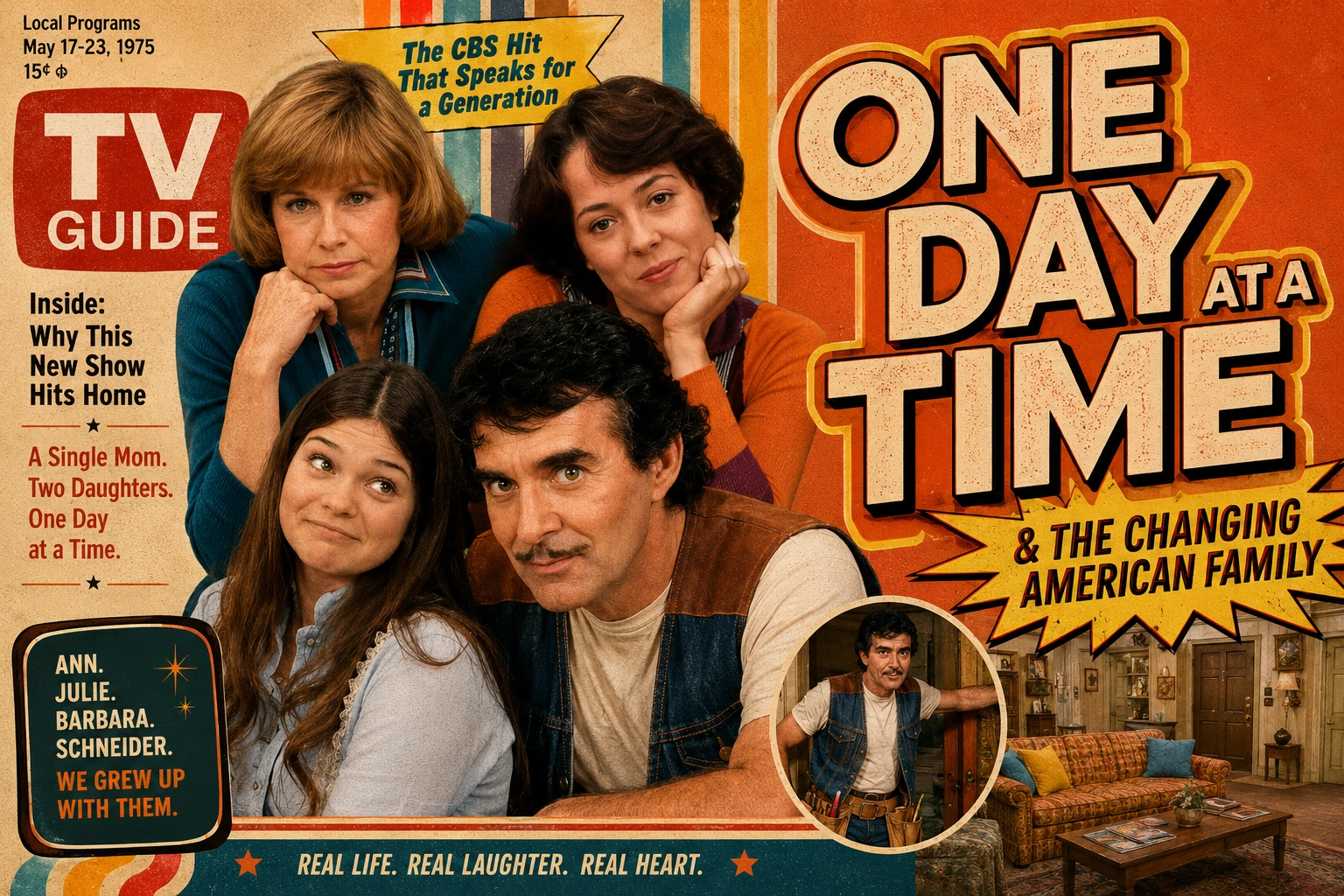
There was nothing tidy about Ann Romano’s fresh start. Divorce had happened. The girls were teenagers, not adorable little sitcom children. Money mattered. Jobs mattered. Men complicated things. And the apartment door apparently came with a special exemption allowing Schneider to enter whenever he felt like it.
For Gen X kids who caught One Day at a Time in first run or in the rerun years that followed, the show did not feel like a sociology lecture about the changing American family. It felt like noise from somebody else’s apartment: a mother trying to set rules, daughters pushing back, a superintendent offering advice nobody requested, and everybody loving each other even when the conversation had gone completely off the rails.
The original One Day at a Time TV show was a CBS family sitcom that began in December 1975 and ran for nine seasons into 1984. Bonnie Franklin starred as Ann Romano, a divorced mother rebuilding her life in Indianapolis while raising teenage daughters Julie and Barbara, played by Mackenzie Phillips and Valerie Bertinelli. Pat Harrington Jr. played building superintendent Dwayne Schneider, the swaggering comic intruder who gradually became part of the family. Developed from an idea by Whitney Blake and Allan Manings and shaped for television under Norman Lear, the series mixed ordinary family comedy with divorce, money, work, sex, adolescence, grief and the constant negotiation of what a single-parent household could look like on American television.
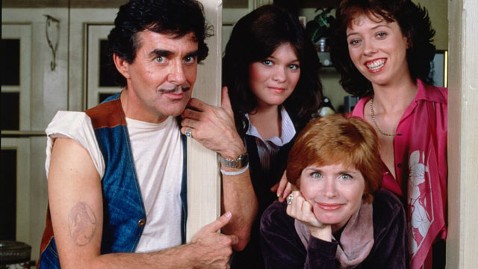
Ann Romano was not trying to make a statement. She was trying to make rent, raise two daughters and build a life that belonged to her.
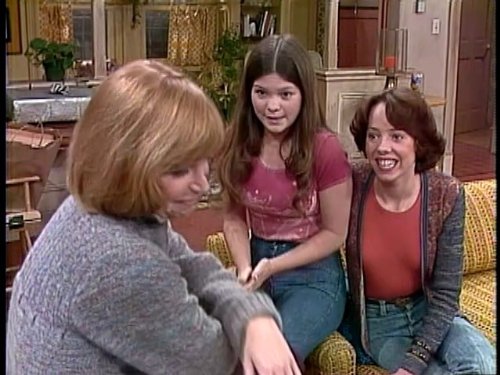
One Day at a Time was a 1970s sitcom about Ann Romano, a newly divorced mother who moved to Indianapolis with her teenage daughters, Julie and Barbara, and started rebuilding a life that television usually treated as the aftermath of a tragedy rather than the beginning of a story.
Ann had married young. Now she was trying to work, pay bills, collect the child support she was owed, date without surrendering her independence and parent two daughters who had inherited enough of her stubbornness to make every house rule negotiable.
Julie was the combustible older daughter. Barbara was younger, sunnier and initially easier to underestimate. Neither girl existed simply to teach Ann a weekly parenting lesson. They wanted privacy, romance, sex, freedom, adulthood and the right to make decisions before they had earned enough experience to make good ones.
And then there was Schneider, the apartment superintendent in his tool belt and trademark denim, wandering into the Romano household with confidence wildly disproportionate to the usefulness of his advice.
The setup sounds almost ordinary now, which is part of the legacy. In 1975, a divorced mother raising teenage daughters while trying to reclaim an adult identity was still unusual enough to serve as the entire premise of a network sitcom.
The series premiered at the very end of 1975, making it a natural companion to our 1975 television rewind. American television was changing fast, and the Romano apartment arrived just as sitcoms were becoming much more interested in what happened after the picture-perfect family stopped pretending everything was fine.
That is also why the show belongs in our best sitcoms of the 1970s. It did not invent divorce, single mothers or teenage rebellion. It made them part of the weekly furniture.
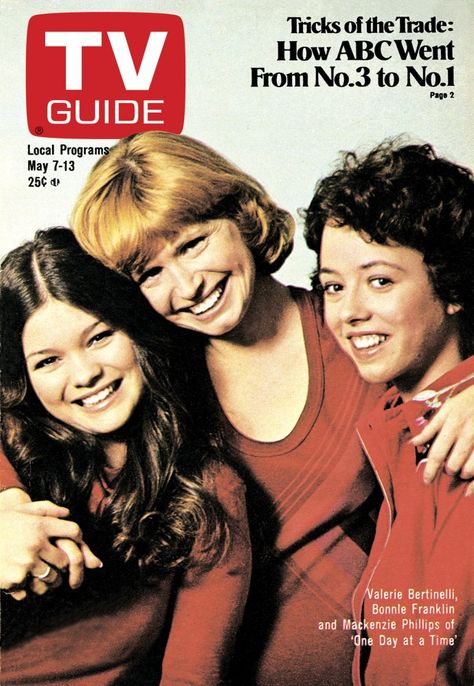
The show did not begin as a network exercise in relevance. Its central idea came out of a woman’s lived experience after divorce.

The origin story matters because One Day at a Time was unusually close to real life before the first argument ever reached the Romano apartment.
Actress Whitney Blake and writer-producer Allan Manings developed the concept from Blake’s own experience as a divorced parent. The Television Academy later described the idea plainly: a divorcée living on her own with two teenage daughters.
Blake had been known to television audiences as Dorothy Baxter on Hazel, but this was not a glossy star vehicle built around the old television-family template. The point was the opposite. A woman could leave a marriage, struggle financially, enter the workforce and remain the center of her own family story.
They brought the premise its grounding. Blake’s experience meant the divorce was not a one-line explanation for why a father happened to be missing. It had practical consequences: money, work, parenting authority, dating and the uncomfortable fact that independence can be both liberating and exhausting at the same time.
Norman Lear’s company turned that premise into a network series. Lear’s influence is obvious in the show’s willingness to mix big subjects with ordinary comedy, but this was never just Maude moved to Indianapolis.
Lear’s own Television Academy interview discusses the creation of One Day at a Time and the casting of Bonnie Franklin and Pat Harrington Jr. The series carried the Lear-era confidence that an audience would stay with a sitcom even after the jokes stopped for a few minutes and a family had to say something difficult.
The broader story of Lear’s influence belongs in How Norman Lear Changed Television. Here, the important thing is what his production machine gave Blake and Manings’ premise: the freedom to let Ann Romano’s life be complicated without treating her divorce as a moral verdict.
That was exactly why she worked. Ann could be brave, scared, stubborn, broke, angry and wrong before the next commercial.
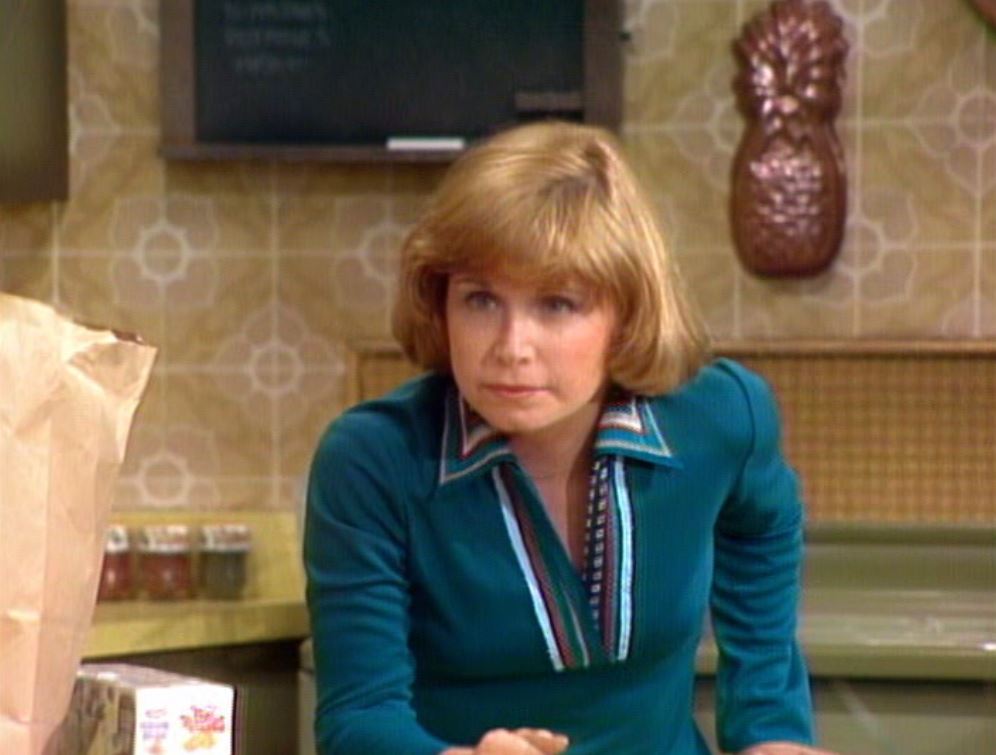
Ann Romano was television’s fresh-start fantasy with the fantasy removed.
She had left a marriage, taken back her maiden name and preferred “Ms.” She wanted authority over her own life, but the series did not hand that authority to her because the premise demanded it. She had to build it while her daughters watched every wobble.
Money was not decorative realism. The Television Academy’s history of the series emphasizes Ann fighting for child support, finding work and learning how to carry responsibilities that had previously been divided inside a marriage.
That made her independence feel different from television characters whose freedom existed because the script never showed a bill. Ann could be strong and still worry about the checkbook.
She also wanted an adult life beyond motherhood. Dating did not disappear because Julie and Barbara were uncomfortable with it. Work did not become optional because the girls were having a crisis. Being a mother was central to Ann, but it was not the only identity the show allowed her.
That distinction is where the series becomes part of the larger story told in How the Television Family Changed During the 1970s. Divorce became a premise instead of a shameful secret, and women’s work changed who held authority inside the television home.
One Day at a Time owns the exact version of that history: one mother, two daughters and an apartment where the arguments were allowed to stay personal.
Franklin could turn a kitchen-table argument from funny to furious to wounded without making the gears show.
Bonnie Franklin had Broadway muscle before she became Ann Romano. That mattered on a multi-camera sitcom where the living room could turn into a stage and an argument had to land in real time.
Bonnie Franklin played Ann for the entire run. The Television Academy later noted that she received a Primetime Emmy nomination for the role.
Franklin’s performance was physical in a way that is easy to forget until you watch again. Ann did not simply deliver speeches. She paced. She pointed. She dropped into a chair like the entire day had finally landed on her shoulders. She tried to start one calm sentence while somebody else was already beginning the next argument.
That speed kept the topical material from turning into a sermon. Ann could be morally serious and still look like a woman who desperately needed everybody in the apartment to stop talking for thirty seconds.
Franklin also gave Ann uncertainty. The character’s great strength was not that she always knew the modern answer. It was that she was willing to keep asking what the right answer might be after the old family rulebook stopped fitting.
That makes Ann a useful contrast with Maude. Bea Arthur’s Maude could enter an argument already convinced she knew where history was headed. Ann Romano often entered the same kind of argument trying to keep her daughters safe while admitting history had moved the furniture.
Julie was the daughter most likely to turn a disagreement into a four-part story.
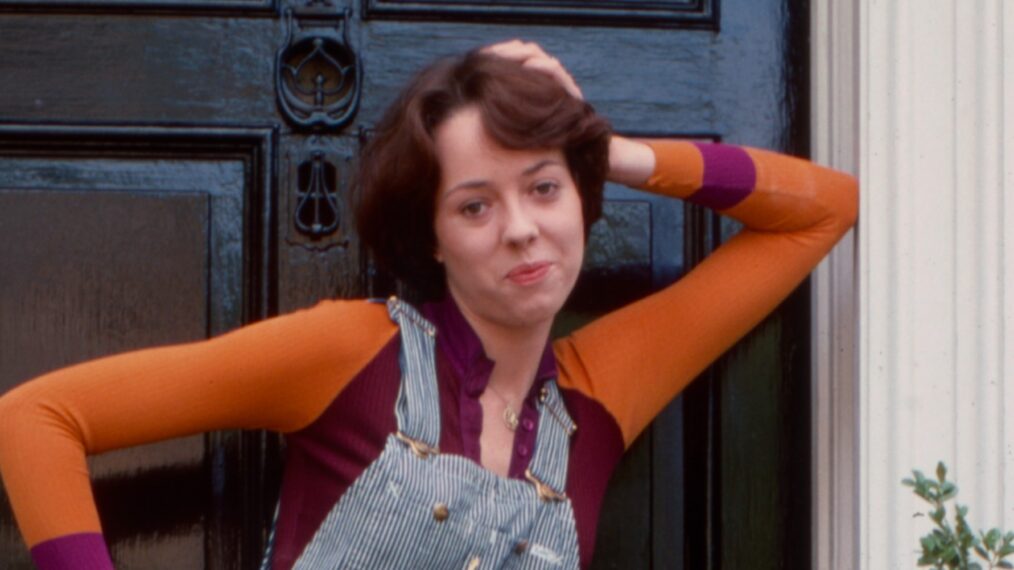
Julie Cooper arrived with the fuse already lit.
Mackenzie Phillips played her as smart, restless, suspicious of adult authority and convinced that experience was something other people used to stop her from living.
Mackenzie Phillips played Julie, Ann’s older daughter. The character’s volatility gave the early seasons much of their emotional pressure.
Julie could make Ann look conservative simply by choosing the next hill to die on. Sex, independence, older men, leaving home, marriage—she kept forcing the household to confront adulthood before anybody felt ready.
The show understood something many earlier family sitcoms softened: teenagers can be loving and still make decisions that terrify their parents.
“The Runaways,” a four-part story that opened the second season, is the purest example. Instead of resetting the argument after twenty-two minutes, the series let fear and consequence stretch across multiple weeks.
Julie’s later story moved into marriage and motherhood, and the series sometimes became messier as the character’s path collided with cast changes behind the scenes. That mess is part of the history rather than something to edit out.
What survives most clearly is the early dynamic: Ann trying to protect a daughter who heard protection as control, and Julie trying to become an adult before understanding how expensive adulthood could be.
Barbara started as the easier daughter. Nine seasons gave her time to become something much more interesting.
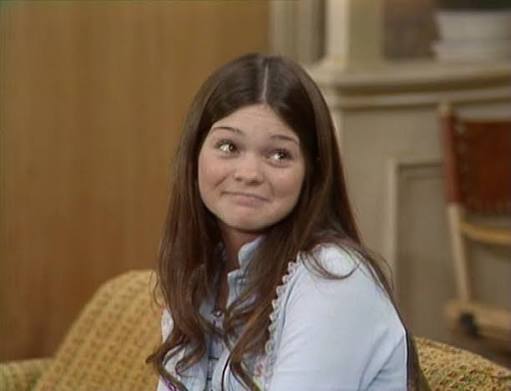
Barbara Cooper could have been trapped forever as Julie’s agreeable younger sister.
Valerie Bertinelli was fifteen when the show began, and the series gradually allowed Barbara to grow with her rather than freezing the character in the role she played in season one.
Valerie Bertinelli played Barbara throughout the series. Decades later, she still remembered standing at the apartment door before her first scene and feeling that the show was going to change her life.
Barbara’s stories moved from school and sibling contrast into romance, sexuality, work and marriage. She was not simply “the good one.” The show gradually gave her interior life enough room to stop existing as Julie’s opposite.
That growth mattered because One Day at a Time lasted long enough to watch a teenager become an adult without changing actresses or pretending the family remained in the same year forever.
By the later seasons, Barbara’s relationship with Mark Royer gave the show another way to revisit marriage from inside a family whose original premise had been divorce.
The symmetry is easy to miss. Ann began the series proving that the end of a marriage did not end a woman’s story. Barbara eventually entered marriage having grown up watching exactly how complicated the institution could be.
He entered as comic relief with a tool belt and enough swagger to power the elevator. He stayed because the family needed him.
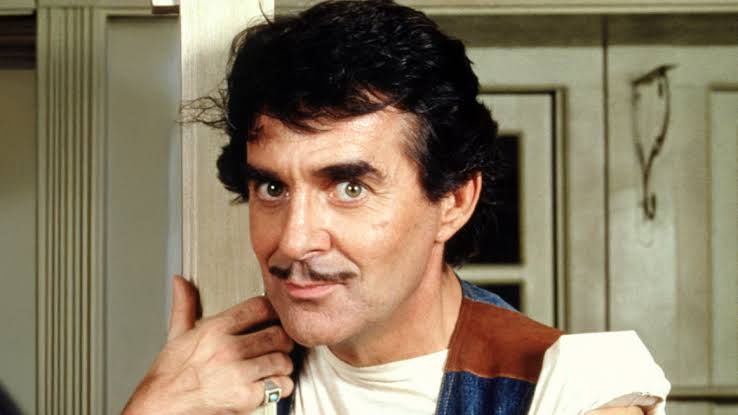
Dwayne Schneider should have been unbearable.
He was the building superintendent, a self-styled ladies’ man and an expert in entering the Romano apartment as though privacy were a new municipal regulation he had not yet read.
Pat Harrington Jr. played Schneider, and the performance eventually earned him the 1984 Emmy for supporting actor in a comedy series. The Television Academy also notes that Harrington wrote seven episodes of the show.
The early Schneider is broad: denim vest, tool belt, mustache, macho confidence. But a character built only from that joke would not survive nine seasons.
Harrington gradually revealed the loyalty underneath the strut. Schneider became the man Ann could call, the adult who showed up for Julie and Barbara and the neighbor whose relationship with the family mattered even after the joke about why he was in the apartment had run a thousand times.
That shift is one of the show’s best examples of chosen family. Schneider was not replacing the girls’ father, and the series did not need to pretend he was. He occupied his own strange category: superintendent, friend, uncle, nuisance, emergency contact.
By the end, taking Schneider away from the Romanos would have felt less like removing comic relief than removing a relative.
The Romano apartment started with three women and one superintendent. Nine seasons gave the family plenty of time to collect exes, spouses, parents, coworkers and teenagers.
A divorced mother rebuilding her work, love life and authority while raising two daughters in Indianapolis.
Ann’s older daughter: impulsive, confrontational and frequently the first person in the apartment to test a new boundary.
The younger daughter who grows from sunny teenager into an adult with work, relationships and a marriage of her own.
The building superintendent whose comic swagger gradually gives way to real loyalty and chosen-family status.
Ann’s early romantic interest and lawyer, present during the show’s first attempt to balance independence with a serious relationship.
Ann’s mother, a recurring reminder that every generation thinks the next one is making family life unnecessarily complicated.
Julie’s husband and later a father, part of the family’s move from teenage rebellion into the harder logistics of adulthood.
Barbara’s husband, central to the later seasons as the younger daughter builds a household of her own.
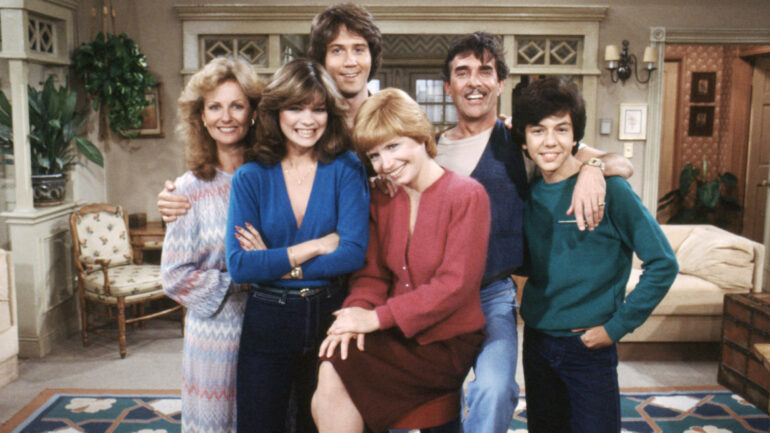
The cast changed a lot because the family changed a lot.
Richard Masur’s David Kane was important early because he represented one possible future for Ann: a decent man, serious commitment and the uncomfortable question of whether independence had to end where romance began.
Nanette Fabray’s Katherine added another generation to the apartment. The mother-daughter arguments simply moved up one level, proving Ann had not invented the habit of pushing back against parental advice.
Later additions including Michael Lembeck, Boyd Gaines, Glenn Scarpelli, Shelley Fabares and Howard Hesseman kept altering the household map. The show that began with a divorced woman and two teenage daughters eventually contained marriages, a baby, guardianship, grandparents and in-laws.
That expansion is why the series could last nine seasons without abandoning its original idea. The “changing American family” was not one fixed alternative to the old sitcom household. It kept changing.
The Romano apartment was not glamorous. That helped. It looked like a place where a fresh start still came with rent.
Setting the series in Indianapolis gave One Day at a Time a useful distance from the New York and Los Angeles worlds that dominated so much television comedy.
Ann was not reinventing herself in a fantasy city where everybody worked in entertainment. She was trying to construct an ordinary middle-class life in the Midwest.
The apartment did most of the storytelling. The door was the show’s traffic pattern. Daughters stormed through it. Dates arrived through it. Schneider treated it as a suggestion. Family members entered carrying the next version of the week’s problem.
That domestic focus gave the serious stories pressure. A political argument in a television studio can remain abstract. An argument about birth control or child support at the kitchen table has nowhere to hide.
The apartment also made Ann’s independence visible. This was her place. Not her husband’s house with him temporarily absent. Not her parents’ house. Not a transitional room waiting for the next marriage.
For a show built around a woman beginning again, the front door mattered. Ann had chosen which side of it was home.
Divorce was not the special episode. Divorce was Tuesday night.
Earlier television had divorced characters, separated characters and single mothers. What One Day at a Time did differently was make the practical life after divorce the renewable center of a long-running family sitcom.
Ann’s former marriage never disappeared simply because she had moved. Her daughters had a father. Child support mattered. Old loyalties mattered. New relationships had to exist beside the history that came before them.
That is more honest than the television habit of erasing a missing parent so a new household can function cleanly.
Ann also refused the idea that divorce had made her a failed wife waiting for another man to restore the proper picture. She could date, fall in love, reject marriage, reconsider marriage and still remain the protagonist.
The distinction is important because the broad social history belongs to How the Television Family Changed During the 1970s. One Day at a Time makes that change specific. We know the names, the apartment, the arguments and the bills.
The contrast with The Brady Bunch and the Family That Never Really Left Television is almost the whole decade in miniature. The Brady Bunch made a blended family feel cheerful and possible; One Day at a Time stayed with the paperwork, money, anger and uncertainty that could come after the marriage itself ended.
The show did not suggest divorce was easy. It suggested a woman could survive it without disappearing from the center of television.
A lot of sitcom freedom gets easier when the script forgets rent. One Day at a Time kept remembering.
The Television Academy’s history of the series singles out money and employment as core parts of Ann’s struggle. She fought for child support. She had to enter the job market. She had to carry expenses while still being the parent on call when either daughter’s life detonated.
That made work part of the family story instead of a separate set.
Ann could not simply choose independence as an attitude. She needed income.
The series eventually let her professional life grow. She worked in advertising and later developed her own business, giving the character an arc that moved beyond survival.
But the early money pressure is what gives the show its credibility. The choice to leave a marriage had economic consequences, and the series was willing to let those consequences sit beside the applause line about freedom.
That tension also links Ann to other women changing television in the decade. The Mary Tyler Moore Show built an independent adult life through work, while Ann had to build one while two teenagers were already depending on her.
Same decade. Different load.
Julie and Barbara were allowed to want things Ann did not want for them. That sounds obvious now. It was the whole engine.
The series treated adolescence as more than a delivery system for slang and prom episodes.
The Television Academy’s history notes that Julie and Barbara dealt with sexuality, birth control, virginity, alcohol and other issues with a frankness earlier television teens rarely received.
More important, the girls were not interchangeable examples of “the youth problem.”
Julie pushed because pushing was part of her personality. Barbara often looked easier until the story moved close enough to reveal her own convictions.
Ann’s parenting problem was therefore not simply how to control teenagers. It was how to raise two different people while inventing a family structure she had never seen modeled for her.
The show understood the contradiction at the center of almost every parent-teenager argument. Ann wanted the girls to become independent women. She just did not want independence to begin tonight.
Julie and Barbara heard every rule through the filter of that contradiction.
That makes the series a natural neighbor to What’s Happening!!, another 1970s comedy that got lasting mileage from teenagers being ordinary, funny, frustrating human beings rather than miniature adults waiting for the plot.
The apartment could be funny at 8:33 and emotionally brutal at 8:47. The show trusted viewers to survive the turn.
One Day at a Time lived in the same Norman Lear television universe where comedy did not have to protect the audience from discomfort.
The Television Academy describes the series as topical, progressive and sometimes controversial, and its historical essay goes so far as to place it among television’s early comedy-drama hybrids.
That label makes sense. The show could spend half an episode building comic frustration and then let one sentence change the temperature of the room.
Multi-part stories helped. “The Runaways” stretched across four episodes. “The Older Man” also ran four parts. Julie’s moves, marriages and other family milestones were allowed to take more than one week.
That structure told the audience that some problems were too large for the old sitcom reset button.
The series dealt with sexual harassment, rape, menopause, teen sexuality, substance use, suicide and grief over its long run. Not every episode has aged equally, and the show sometimes wore its seriousness on its sleeve.
But the willingness mattered. The Romano family could have a genuinely ugly week and still return the next Tuesday. That is much closer to family life than television’s older belief that a meaningful problem arrives once, teaches the lesson and politely leaves.
The broader history of 1970s sitcoms tackling subjects like divorce, work and parenting belongs in How 1970s Sitcoms Started Talking About Real Life. This page stays with the Romanos, where those issues had names and consequences.
Start with Ann choosing her new life, then follow the stories where the family’s arguments got too big for one week.
The premiere puts Ann’s independence on the table immediately and establishes that this family’s new beginning is not waiting for anybody’s permission.
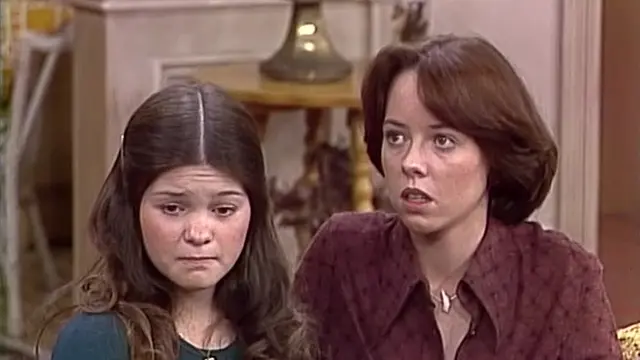
An early example of the series talking about teenage sexuality directly instead of hiding the subject behind a euphemism and a closing joke.
The opening chapter of a four-part story that lets teenage rebellion become frightening, exhausting and too large for a single sitcom reset.

The start of another four-part story, showing how the series could turn a family disagreement into an extended argument about sexuality, judgment and control.
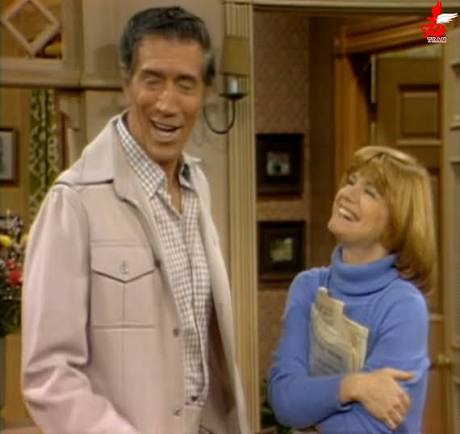
Julie pushes the central question of the show to its limit: how independent can a daughter become before a mother has to let go?
The rebellious daughter reaches a milestone that forces Ann to reconsider what letting go actually means once the decision is real.
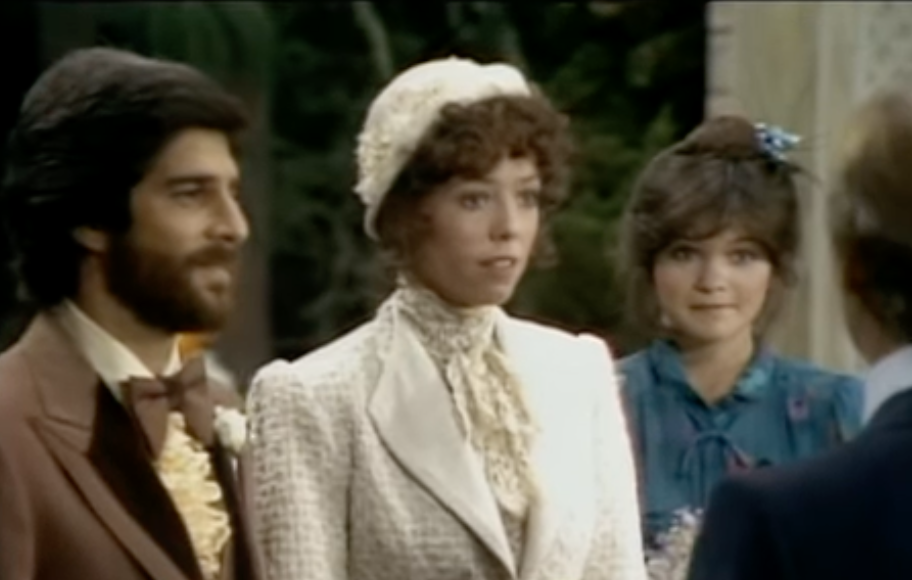
A later-season reminder that Barbara’s adult story could carry heavy material without turning her back into the sheltered younger sister.
The final produced episode closes a nine-season run in a show whose family had expanded far beyond the original three-woman apartment.
This is a viewing route, not a claim that eight half-hours can summarize nine seasons.
Some of the show’s best-remembered stories are multi-parters, which is why several entries here point to the first chapter of a longer arc rather than pretending every major story fits neatly into one episode.
The route also shows how the series changed. Early episodes are about Ann’s authority and the girls’ adolescence. Later stories have to deal with adult children, marriage and a family that no longer fits the original opening-credit picture.
If the first season feels louder and more direct than later sitcoms you remember, stay with it. The series learns how to let the characters carry the issues instead of letting the issue carry the characters.
Before Ann could finish a single argument, the opening theme had already explained the philosophy: keep moving.
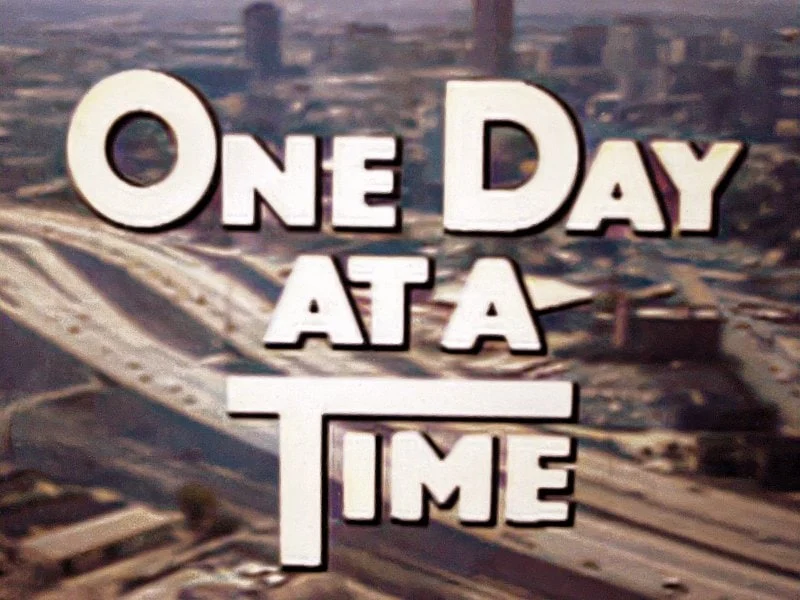
The theme song was “This Is It,” written by Jeff Barry and Nancy Barry.
The Paley Center’s catalog for the series premiere credits both writers with the theme music, while the song itself became one of those 1970s openings that can place you in a room faster than a production logo.
The title and theme fit the show unusually well. One Day at a Time was not promising that Ann would solve divorce, parenting, work and romance. It was promising that she would get through today.
That is a different emotional contract from the old family sitcom where stability is the default condition.
Ann’s life was stable because she kept rebuilding it.
The theme belongs with the decade’s other instantly recognizable 1970s TV theme songs, but its real power is how completely it matches the show. The title is not decoration. It is Ann Romano’s operating system.
The series carried Lear’s belief that sitcoms could discuss real life, but Ann Romano was never Archie Bunker in a different apartment.

Norman Lear’s name is inseparable from the show, but the useful question is not whether One Day at a Time was “a Norman Lear sitcom.” It obviously was.
The useful question is what that meant on this particular series.
It meant a live-audience comedy could stay topical. It meant an argument about family rules could become an argument about women’s independence without somebody stepping out to announce the theme.
It meant the show did not have to choose between Schneider’s entrance joke and Ann’s fear that she was failing her daughters.
But the tone was different from All in the Family or Maude. Ann was not designed to turn every dinner into a national debate. She was closer to the viewer who had to absorb social change while also getting everybody to school on time.
That middle-ground quality helped the show last. The Television Academy’s historical essay describes Ann as easier to relate to than Lear’s more politically explicit heroines.
The exact creator-level story belongs on How Norman Lear Changed Television. Here, his legacy is visible in the confidence to let a family sitcom contain arguments the old network family would have politely postponed.
The show’s family kept changing on screen because the production kept changing off screen.
A nine-season sitcom almost never reaches the end with the same household it had in the pilot.
One Day at a Time changed more than most.
Phillips’ struggles with addiction repeatedly affected production. The Television Academy’s series history says she was fired in 1980 because of her ongoing drug addiction, later returned, and was ultimately written out again after additional health problems.
For the show, that meant Julie’s absences were not a tidy creative choice. The writers had to keep rebuilding the family around a character whose place in the household had once seemed permanent.
Mackenzie Phillips’ struggles with addiction affected production and led to departures from the series. The Television Academy’s history and Pat Harrington Jr.’s oral-history material both acknowledge that the problem became part of the show’s behind-the-scenes reality.
Julie’s absences forced the writers to keep rebalancing the family. Barbara became more central. New younger characters entered. Marriages created new branches. Katherine moved closer to the weekly center.
Sometimes the changes feel organic. Sometimes you can feel the writers solving a production problem in public.
That is part of watching long-running network television from this era. The show could not freeze and wait for a clean version of reality.
The strange result is that the instability reinforces the premise. Ann’s family keeps becoming something other than what she expected.
She adapts. The show adapts. Then everybody tries again next week.
A show about raising teenagers eventually had to face the obvious problem: teenagers become adults.
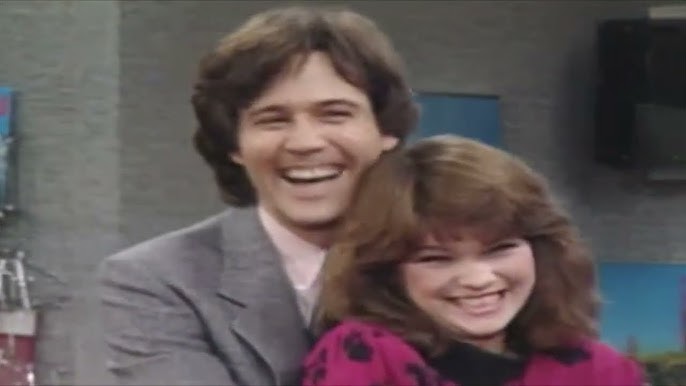
By the later seasons, One Day at a Time could no longer survive by repeating the season-one family argument.
Julie and Barbara had relationships, marriages and adult responsibilities. Ann’s professional life expanded. Katherine became more prominent. New characters created family connections that would have been impossible to imagine in 1975.
Max Horvath brought Julie’s marriage and parenthood into the household. Mark Royer became Barbara’s husband. Sam Royer, played by Howard Hesseman, eventually became part of Ann’s own later-life romantic story.
Nick Handris and his son Alex briefly created another version of the household, with Ann taking on legal guardianship after Nick’s death.
On paper, that can sound like soap-opera accumulation. Sometimes it was.
But the accumulation also allowed the show to test its premise honestly. If Ann’s new family was genuinely alive, it could not remain a divorced mother plus two teenage daughters forever.
The later seasons are therefore less iconic than the original trio-and-Schneider setup but more revealing about the show’s durability.
Yes. After years of insisting that her independence was not a waiting room for another marriage, Ann eventually married Sam Royer, Barbara’s father-in-law.
The ending works because the remarriage does not erase the premise. Ann had already built a career, raised her daughters and made an adult life on her own terms before choosing what came next.
Family was no longer a fixed cast list. It was whoever had stayed, married in, been taken in or kept showing up.
Some of Lear’s louder landmarks ended sooner. The Romano family just kept showing up.
The Television Academy calls One Day at a Time one of the most successful series of the 1970s and 1980s, noting that it outlasted several Lear shows that received more critical attention.
Nine seasons is the evidence.
Part of the durability came from Bonnie Franklin, Pat Harrington Jr. and Valerie Bertinelli, who gave the series recognizable anchors even as the supporting cast shifted.
Part came from the premise. A family built around change has more room to change than a family built around restoring the same order every week.
And part came from tone. The show could be progressive without requiring viewers to agree with a political monologue before they were allowed to laugh at Schneider.
That made Ann Romano accessible to people who might have resisted a character announcing the exact same idea more loudly.
The show was also useful scheduling material for CBS because the basic relationship remained legible through time-slot moves and cast changes. Tune in after missing a month and you still understood the emotional map.
Ann was trying to keep the family moving forward. Everybody else was making forward more complicated.
By 1984, the show had become almost unrecognizable from its first apartment photo—and that was the point.
The original series ended in 1984 after nine seasons.
Episode guides list “Another Man’s Shoes” as the final produced episode, closing a run of more than 200 half-hours.
By then, the show had traveled far beyond the original image of Ann raising two teenage daughters in a new Indianapolis apartment.
Barbara was married. Julie’s path had taken her in and out of the series. Ann had built a career, experienced love and loss, taken responsibility for other children and eventually remarried.
The Television Academy’s series history describes Ann ultimately moving to London with her new husband for an exciting job—an ending that would have been almost impossible for the woman we met in season one to imagine.
That gives the series a satisfying long-form shape even though no nine-season sitcom lands every transition cleanly.
Ann’s original goal was not to construct another perfect family.
It was to build a life she could choose.
By the end, she could choose the next one.
The title turned out to be portable. Different family, different decade, same truth: nobody gets the whole future at once.

The easiest way to understand the original show’s legacy is that its central idea stopped seeming radical enough to notice.
A single mother can be the center of a family sitcom. Teenage daughters can have sexual and emotional lives. Divorce can be history rather than moral failure. A woman can remarry without proving that her years of independence were a mistake.
Television absorbed those permissions.
The 2017 reimagining of One Day at a Time used a Cuban American family and different contemporary pressures, but it kept the original title and the basic idea of a mother trying to carry more than one person can reasonably carry.
That revival does not replace the 1975 series. It demonstrates how strong the original frame was.
The Gen X memory remains more specific: Bonnie Franklin’s red hair moving as fast as the argument, Valerie Bertinelli growing up on the screen, Mackenzie Phillips bringing danger into teenage stories, Schneider arriving like the hallway belonged to him.
The show also belongs beside The Odd Couple in the great rerun lesson that an apartment can hold an entire worldview if the people inside it are distinct enough.
And it belongs beside Laverne & Shirley in another way: ordinary working people did not need mansions, fantasy jobs or perfect relationships to make a television world worth returning to.
It is also why the Romanos belong in 40 Best Family TV Shows of the 1970s, Ranked. Not because the apartment was “wholesome” in the old network sense. Because family television finally had room for a household that was loving, loud, unfinished and still completely legitimate.
Keep moving through our 1970s television archive and you can watch the whole decade slowly give up the idea that one kind of household had the exclusive right to call itself family.
Nine seasons turned one divorced mother’s apartment into a family that kept rewriting itself.
Blake and Allan Manings develop the idea around a divorced mother raising children, drawing from Blake’s own life.
The series premieres on CBS in December with Bonnie Franklin, Mackenzie Phillips, Valerie Bertinelli and Pat Harrington Jr.
Season two opens with a four-part Julie story, showing the series is willing to let a family crisis last longer than one episode.
Multi-part stories such as “The Older Man” make sexuality and parental control part of the family’s weekly vocabulary.
The series begins moving from teenage rebellion into adult family consequences.
Julie’s presence becomes unstable, while new relationships and younger characters force the series to rebalance.
Barbara, Mark, Katherine, Francine, Max and others make the cast increasingly different from the original apartment lineup.
The original series closes after more than 200 episodes, with Ann’s life far larger than the fresh start she imagined in 1975.
That is what comes back after all these years. Not a single issue episode. Not Schneider’s tool belt. Not even the theme song, though good luck getting it out of your head once it starts. Ann Romano built a family by refusing to believe that change automatically meant failure. The marriage ended. The daughters grew up. People left, married in, came back, needed help and moved on. The household kept becoming something new. Somehow, that was the stability.
Ann, Julie, Barbara, Schneider, the creators, the theme, the episode-count conflict and the end of the original series.
The CBS series began in December 1975 and ran for nine seasons, ending in 1984.
Bonnie Franklin played divorced mother Ann Romano throughout the original series.
Mackenzie Phillips played Ann’s older daughter, Julie Cooper Horvath.
Valerie Bertinelli played younger daughter Barbara Cooper Royer throughout the series.
Pat Harrington Jr. played building superintendent Dwayne Schneider and won an Emmy for the role in 1984.
Whitney Blake and Allan Manings developed the original concept from Blake’s experience as a divorced parent; Norman Lear developed and produced the network series through his company.
The Romano family lived in Indianapolis, Indiana.
The original series ran nine seasons.
Sources disagree on the exact total: the Television Academy’s older series history lists 205, while current episode guides list 209. The series unquestionably produced more than 200 episodes.
The theme was “This Is It,” with theme-music credits to Jeff Barry and Nancy Barry.
Yes. Lear developed and produced the television series, although the underlying concept was developed by Whitney Blake and Allan Manings from Blake’s experience after divorce.
Current episode guides list “Another Man’s Shoes” as the final produced episode of the original series in 1984.
Television Academy histories and oral histories, Paley Center catalog records and the current episode chronology.
From Ann Romano into the sitcoms that changed work, family, friendship and what adulthood was allowed to look like on television.