The studio forms
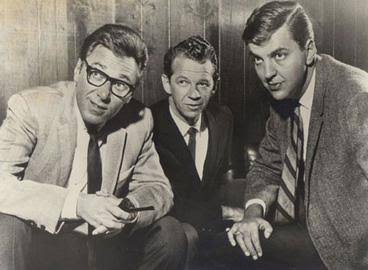
Lou Scheimer, Norm Prescott and Hal Sutherland establish Filmation and begin building a television-animation company that must survive without feature-film money.
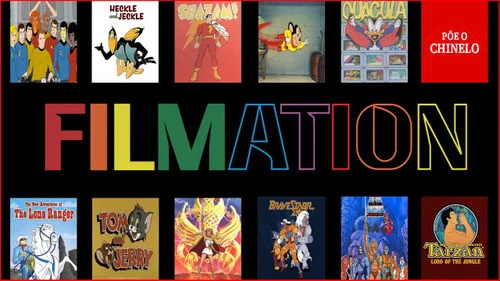
Filmation could make one heroic pose carry an entire morning. Archie records, Fat Albert lessons, Star Trek aliens, DC heroes, jungle kingdoms and live-action spaceships all came through the same unmistakable studio signal.
We noticed the reused animation. We also heard the theme from the kitchen and came running anyway.
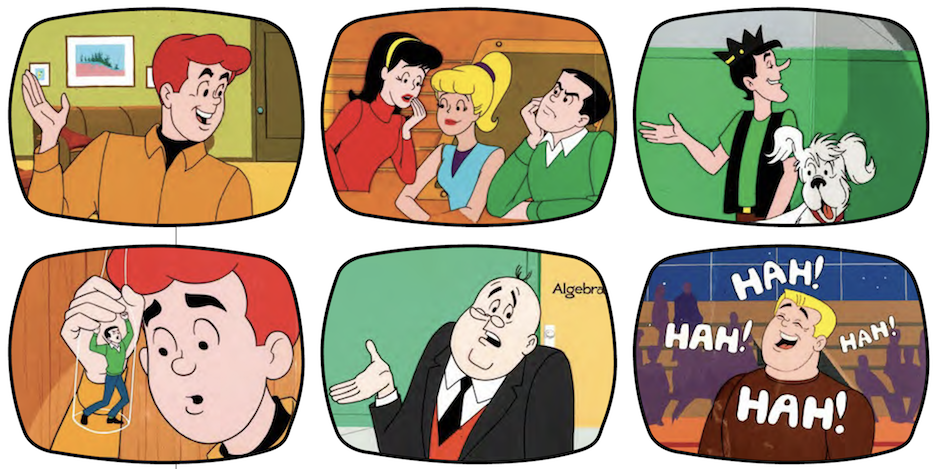
Filmation became one of the defining children’s studios of the 1970s by building a catalog around Archie, Fat Albert, Star Trek, DC heroes, Tarzan, Flash Gordon and live-action adventure. Its economical animation, powerful voices, music, moral lessons and commitment to domestic production created a studio identity viewers could recognize almost immediately.
Filmation’s shortcuts are obvious. So are the worlds, themes and characters that remained in memory long after the Saturday schedule disappeared.
For Gen X kids, Filmation was not a studio name we studied. It was a signal. The hero held a pose. The narrator sounded as if civilization depended on the next sentence. A background glowed with that polished, painted shine. Then the music did the running the character could not afford to do.
We noticed the repeated movement. Of course we did. Children are ruthless continuity editors. We knew when the same run cycle came back, when a mouth moved under an otherwise frozen face and when the camera slid across a drawing because nobody was about to animate a crowd. We also kept watching.
That is the part a sneering summary misses. Filmation cartoons of the 1970s were economical, but they were rarely embarrassed by their own ambition. The studio wanted comic-book scale, pop songs, moral certainty, alien worlds, jungle kingdoms, neighborhood problems and live-action spaceships before lunch.
The studio’s real history lives in that contradiction. The movement could be limited while the idea was enormous. One strong voice, one heroic chord and one painting of a distant city could turn a modest half-hour into a complete Saturday universe.
This was not Hanna-Barbera with a different logo. Filmation’s timing, sound, design and earnestness created a separate visual language. The shortcuts were visible. So was the personality.
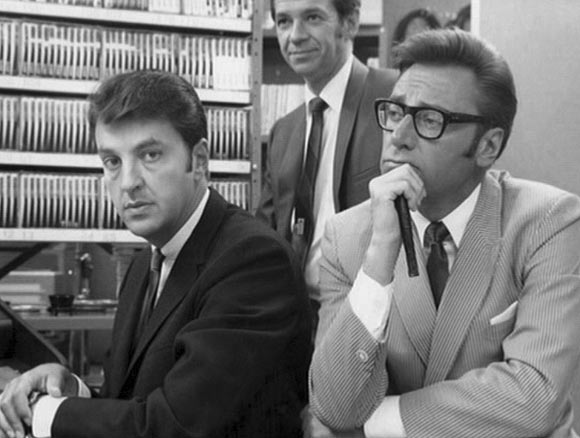
Filmation began in 1963 with Lou Scheimer, Norm Prescott and Hal Sutherland. The Television Academy identifies all three as the studio’s founders, and each brought a different part of the machine: production, business judgment and animation direction.
The company entered a television market that wanted a constant flow of children’s programming without paying feature-animation prices. That meant every artistic decision was also a survival decision. How many drawings could an episode afford? Which movements could return? Could the voice track make a still image feel active? Could a recognizable property make the network less nervous?
Scheimer became the studio’s most public personality because he could move between production, performance and promotion. He voiced characters, supervised work and defended the company’s approach. Prescott helped turn the operation into a reliable supplier. Sutherland directed a huge share of the catalog and brought experience that reached back to feature animation.
Their achievement was not that they defeated television economics. Nobody did. The achievement was building a repeatable system that kept producing under those economics while developing a recognizable studio voice.
That voice became especially clear in the 1970s. Archie supplied music and mass recognition. Fat Albert supplied an original neighborhood world. Star Trek supplied serious science fiction. DC heroes supplied iconography. Tarzan and Flash Gordon supplied pulp scale. The live-action programs proved the Filmation name could mean more than animation.
The easiest way to flatten 1970s Saturday morning is to treat every limited-animation studio as the same factory with different characters. Children watching the shows knew better. Filmation and Hanna-Barbera could work under similar network restrictions and still produce completely different signals.
Hanna-Barbera often leaned into ensemble comedy, mystery teams, talking animals and a huge library of reusable television formats. Filmation leaned harder on narration, heroic framing, music, explicit lessons and a polished comic-book stillness.
The difference was audible before it was technical. A Hanna-Barbera chase might accelerate through sound effects, jokes and fast exchanges. A Filmation threat often arrived with a serious voice, a held close-up and music announcing that the morning had become important.
The studios also handled licensed characters differently. Filmation frequently treated superheroes, Tarzan, Flash Gordon and Star Trek with direct sincerity. That earnestness could become stiff, but it also protected the scale of the property.
Neither company had a monopoly on quality or corner cutting. The useful comparison is not which studio moved more drawings. It is how each studio turned television limits into a recognizable personality.
The broader rival-studio story continues in Hanna-Barbera Cartoons of the 1970s, while The Complete History of Saturday Morning Cartoons in the 1970s places both companies inside the network system.
Filmation did not spend the decade repeating one successful formula. The catalog changed as networks, licensed properties and children’s television expectations changed.
The timeline shows the studio moving from music-driven comedy into neighborhood education, serious franchise animation, live-action superheroes and continuing science-fiction adventure.
Lou Scheimer, Norm Prescott and Hal Sutherland establish Filmation and begin building a television-animation company that must survive without feature-film money.
The Archie Show gives Filmation its first major Saturday identity and creates a bridge between cartoons, records and youth marketing.
Filmation learns how far one familiar comic-book world can stretch across music, monsters and comedy.
The junkyard gang gives the studio an original neighborhood ensemble built around music, friendship and explicit lessons. See the full television year in Top TV Shows of 1972.
Filmation reunites most of the original cast and proves a children’s time slot can carry serious science-fiction ideas. See the full television year in Top TV Shows of 1973.
Shazam! joins the schedule as Filmation begins treating Saturday morning as a place for actors, vehicles and moral adventure as well as animation. See the full television year in Top TV Shows of 1974.
The studio adds a woman superhero lead and a supernatural comedy while continuing its educational instincts.
A serious animated adventure hero and an ambitious live-action future show Filmation reaching for more scale. See the full television year in Top TV Shows of 1976.
Adam West and Burt Ward voice Batman and Robin while Space Academy pushes the live-action catalog farther into space. See the full television year in Top TV Shows of 1977.
Jason of Star Command and The New Adventures of Flash Gordon point toward the heroic-fantasy identity Filmation would own in the next decade.
Saturday morning was not a collection of isolated classics. It was a schedule assembled by network programmers, advertisers, affiliates and standards departments. A Filmation show had to survive beside cartoons from rival studios, live-action programs, public-service material and an avalanche of commercials.
The network wanted instant recognition. Archie brought a familiar comic property. Batman and Star Trek brought established fan bases. Fat Albert brought a clear educational purpose. Shazam and Isis offered live-action spectacle that broke up a morning dominated by drawings.
The program also had to communicate quickly. Children could join late, leave for another room or switch channels during a commercial. Strong themes, repeated transformations, narrators and familiar moral structures helped viewers understand the show almost immediately.
Filmation properties were frequently repackaged into changing blocks and combined lineups. Tarzan and Flash Gordon could become parts of larger adventure packages. Older superhero material could return under new banners. The packaging extended the life of footage and made the library useful beyond its first season.
That strategy can make the catalog confusing today because a package title may look like an entirely new series. The revised catalog counts original programs rather than treating every later combination as another production.
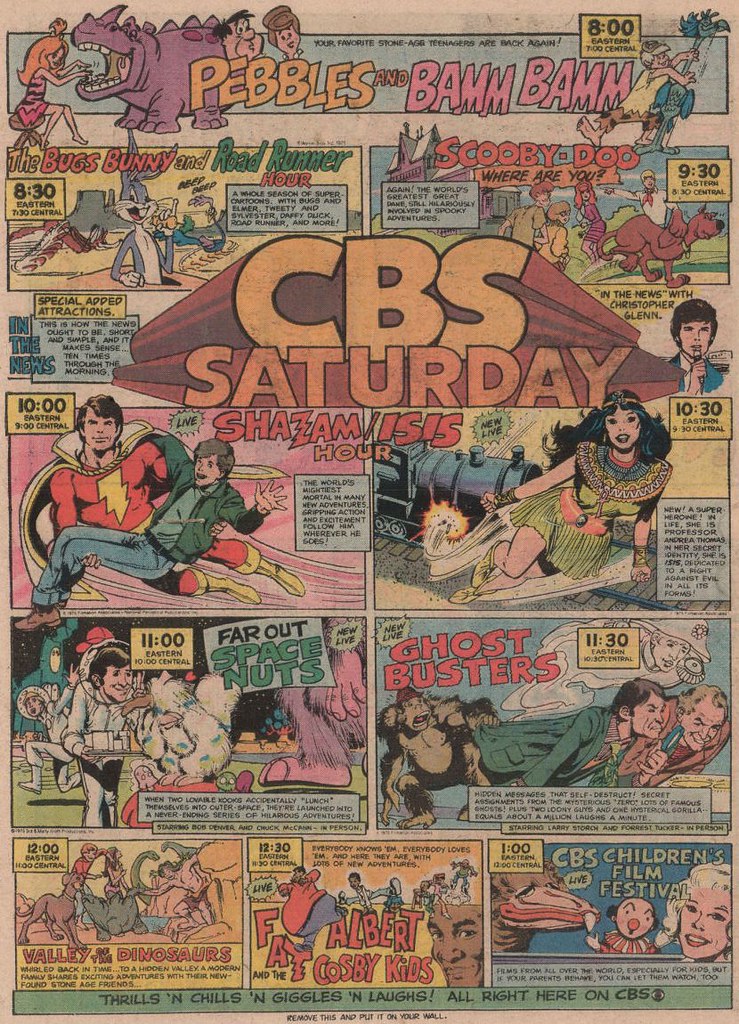
The advertisement below is useful precisely because it is not a Filmation-only page. It shows Shazam, Isis, The Ghost Busters and Fat Albert competing for attention inside a CBS morning filled with programs from several suppliers.
For the complete weekly ritual—networks, educational pressure, commercials and the fight for the shared television—see 50 Best Saturday Morning Cartoons of the 1970s, Ranked.
The phrase limited animation describes an economic method, not one single look. Television studios reduced movement, reused cycles and separated moving parts so episodes could be produced on schedules and budgets that theatrical animation could not survive.
Filmation’s version was unusually easy to recognize. A character might hold a heroic stance while only the mouth moved. A run cycle returned over a different background. A camera pan created urgency across a still painting. Close-ups and reaction shots stretched a scene without demanding a completely new performance from every drawing.
The company did not hide the method particularly well, and children became experts at reading it. We knew that the hero’s second sprint looked a lot like the first. We also knew the theme music was about to make that sprint feel important again.
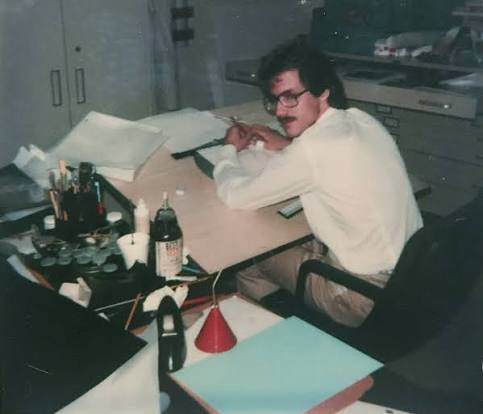
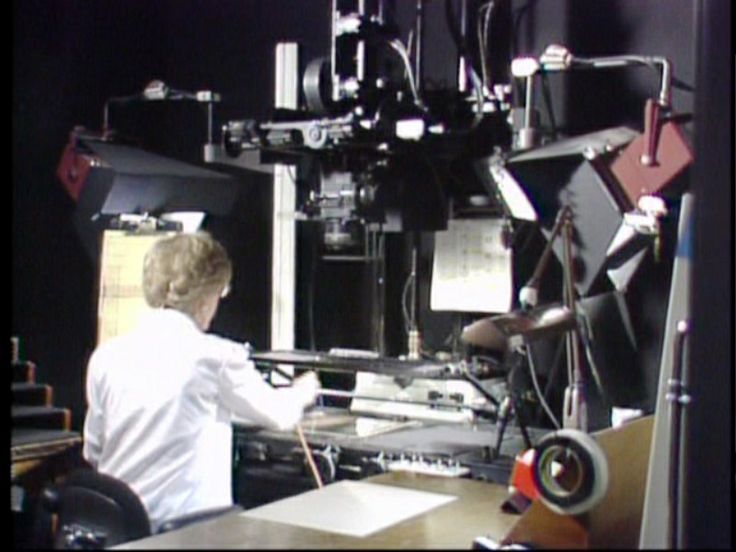
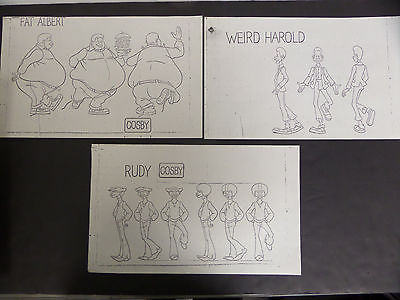
The production system depended on coordination. Model sheets kept designs consistent. Exposure sheets timed dialogue, movement and camera work. The animation camera photographed the layers. Editors, musicians and voice actors supplied energy that was not always present in the drawing count.
Filmation also kept much of its work in the United States longer than many competitors. That commitment became part of the studio’s identity, but it increased the pressure to reuse material and control cost. The visible economy was connected to the survival of the workplace.
The easiest criticism of Filmation is also the most obvious: the animation repeated itself. The more useful question is how the studio kept those repetitions from collapsing the entire show.
Filmation spread motion across the full soundtrack and composition. Voices supplied personality. Music supplied velocity. Layout supplied scale. Narration supplied information that another studio might have animated.
The system was at its best when the material fit it. A superhero holding a pose could look iconic. A starship gliding through space could feel deliberate. A moral confrontation could depend more on voices than body movement.
The system struggled when a scene needed loose comedy or subtle physical acting. Then the stiffness became harder to ignore. Filmation’s catalog is uneven partly because the production method fit some genres better than others.
A character could remain still while dialogue, camera movement and music kept the scene alive.
Walking, running and transformation footage returned because every new drawing cost time and money.
Pans, zooms and close-ups created motion across art that did not need to be redrawn.
Narrators and performers supplied speed, menace, comedy and emotion beyond the movement on screen.
A strong opening and dramatic score convinced the room that the world was bigger than the frame.
Network expectations and Filmation’s own earnestness turned moral summaries into a studio trademark.
Filmation understood that television animation was heard from another room as often as it was watched closely. A strong theme could pull a child back from the kitchen before the cereal turned soft.
Lou Scheimer performed many voices himself, sometimes under variations of his name. That was practical, but it also made him part of the sound of the studio. Narrators, villains and side characters often had the same broad confidence as the visuals.
The music did emotional and physical labor. A heroic fanfare could make a held pose feel monumental. A danger cue could turn a slow pan into a threat. A pop song could carry an Archie segment that did not contain much complex movement.
This is why Filmation memory is often musical before it is visual. The themes remain attached to the characters because the soundtrack had to announce exactly how large the story wanted to be.
The best voice performances also protected the moral material. A lesson delivered by a character we liked could feel earned. The same sentence from an anonymous narrator could feel attached after the adventure was already over.
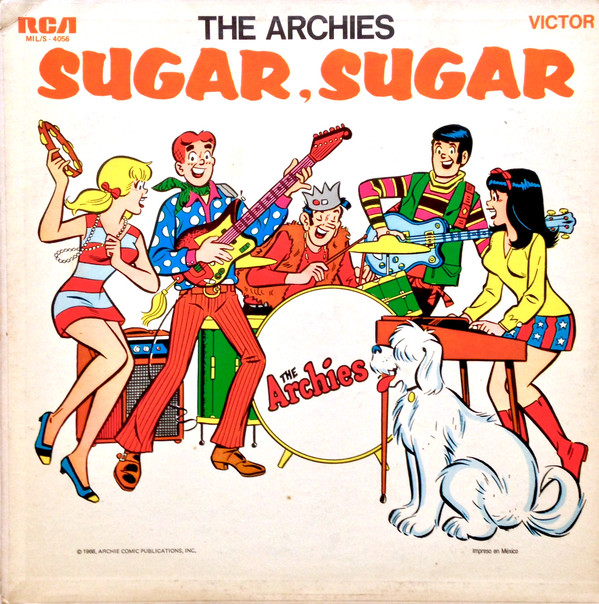
The Archie Show began before the 1970s, but its success created the scale Filmation carried into the decade. Riverdale gave the company familiar characters, easy comedy relationships and a built-in world that could support music.
“Sugar, Sugar” turned the Archies into a genuine chart force. That success mattered beyond one song. It demonstrated that an animated property could move through television, records, magazines and merchandising as one coordinated youth product.
The music also solved production problems. A song provided structure, energy and repeatable visual material. Characters could perform inside a format the audience already understood.
Filmation kept extending the Archie world because it was commercially safe and creatively flexible. Sabrina, the Groovie Goolies and history-oriented Archie programs showed how one comic-book universe could be repackaged for different network needs.
That strategy anticipated the modern children’s franchise without needing a corporate presentation to explain it. The characters appeared on television. The songs appeared on records. The audience carried the connection from one medium to the next.
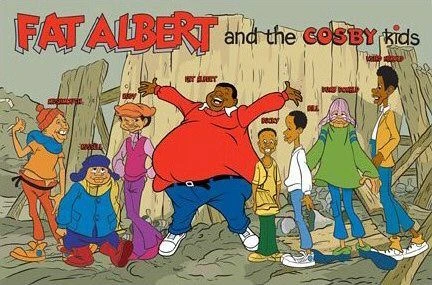
Fat Albert and the Cosby Kids became one of Filmation’s most important original programs because it was built around a group rather than a licensed hero. The junkyard gang had distinct voices, habits, insecurities and ways of getting into trouble.
The educational purpose was explicit. Episodes addressed friendship, responsibility, bullying, family problems, health and other subjects children might recognize. A closing message often made the intended lesson impossible to miss.
That directness could feel heavy, especially when watched several episodes in a row. On a weekly schedule, the lesson had more room. The story spent time with the characters before explaining what the morning had been about.
The improvised-instrument band gave the program a visual and musical identity that belonged to the neighborhood. Music was not simply decoration; it connected the group and allowed the episode to turn its energy into performance.
The series’ history now requires context because of Bill Cosby’s later criminal conviction and public disgrace. That context should not erase the work of the writers, artists, performers and educators who built the program, but it changes how contemporary viewers approach it.
The show’s larger place in children’s television belongs beside Best Educational TV Shows and Cartoons of the 1970s, where Filmation’s explicit lessons can be compared with the decade’s other educational forms.
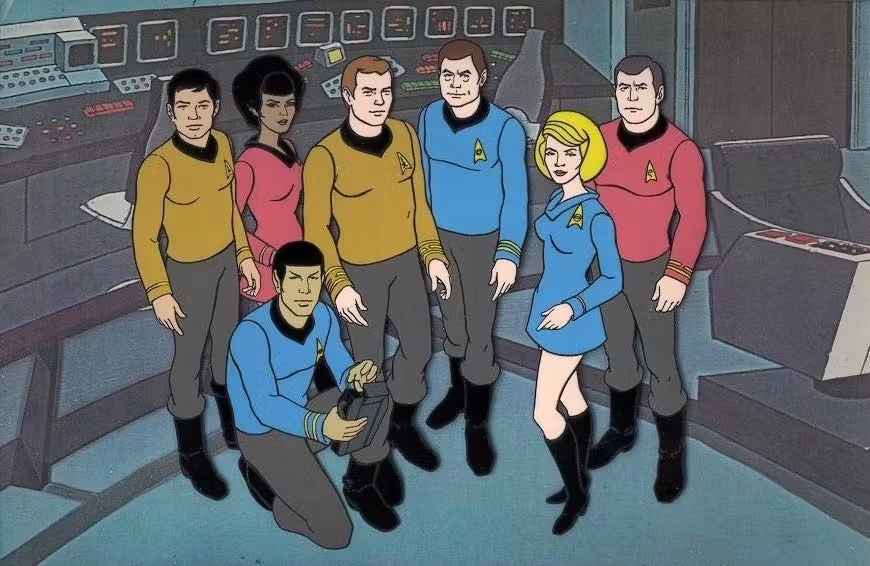
Star Trek: The Animated Series arrived in 1973 with most of the original cast returning to voice their characters. The Television Academy’s interview archive documents how Leonard Nimoy helped ensure the ensemble remained connected to the animated continuation.
Animation gave the writers access to aliens, environments and physical transformations that would have been expensive in live action. The production remained economical, but the imagination did not have to remain inside a standing set.
D. C. Fontana’s role helped protect the tone and ideas of the franchise. The series treated younger viewers as capable of following science-fiction concepts instead of reducing every episode to a simple chase.
The result remains one of Filmation’s strongest arguments for its own method. A starship, alien landscape and measured voice performance could work beautifully inside held poses and controlled movement.
According to the Television Academy’s Lou Scheimer biography, he received a 1974 Daytime Emmy for the animated Star Trek. The award confirmed that a Saturday-morning continuation could matter beyond the children’s schedule.
The show also demonstrates the importance of source material. Filmation was strongest when it understood what the existing audience loved and adapted the production method around that appeal rather than simply borrowing the title.
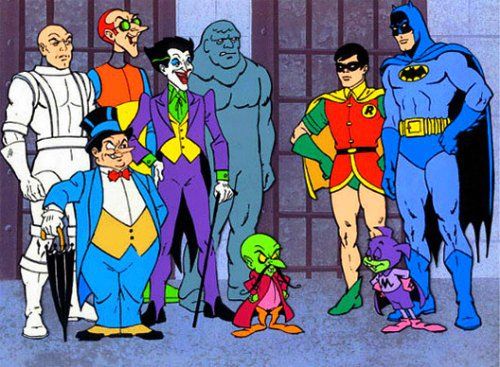
Filmation’s limited movement could become a weakness in loose physical comedy. With superheroes, the same stillness could read as iconography. A chest-forward pose, dramatic narration and a hard musical sting looked less like inactivity and more like a comic-book panel holding for emphasis.
The studio’s DC history reached back before the 1970s, but those versions continued through reruns and packages while later programs refreshed the connection. The New Adventures of Batman brought Adam West and Burt Ward back as the voices of Batman and Robin.
Bat-Mite added a more child-oriented form of chaos, but the returning stars connected the cartoon to the famous live-action series. For many younger viewers, the Filmation version became a first regular encounter with the characters.
Shazam! and The Secrets of Isis widened the superhero identity through live action. The programs used modest effects, outdoor locations and clear moral choices. Their earnestness was not an accidental byproduct; it was the format.
Isis also gave Saturday morning a woman superhero lead at a time when that image remained unusual. The program’s importance is not that every episode aged perfectly. It is that children could watch a woman occupy the center of a weekly heroic adventure.
The larger superhero field is explored in Best 1970s Superhero Cartoons. Filmation’s contribution was making comic-book directness compatible with both animation and live action.
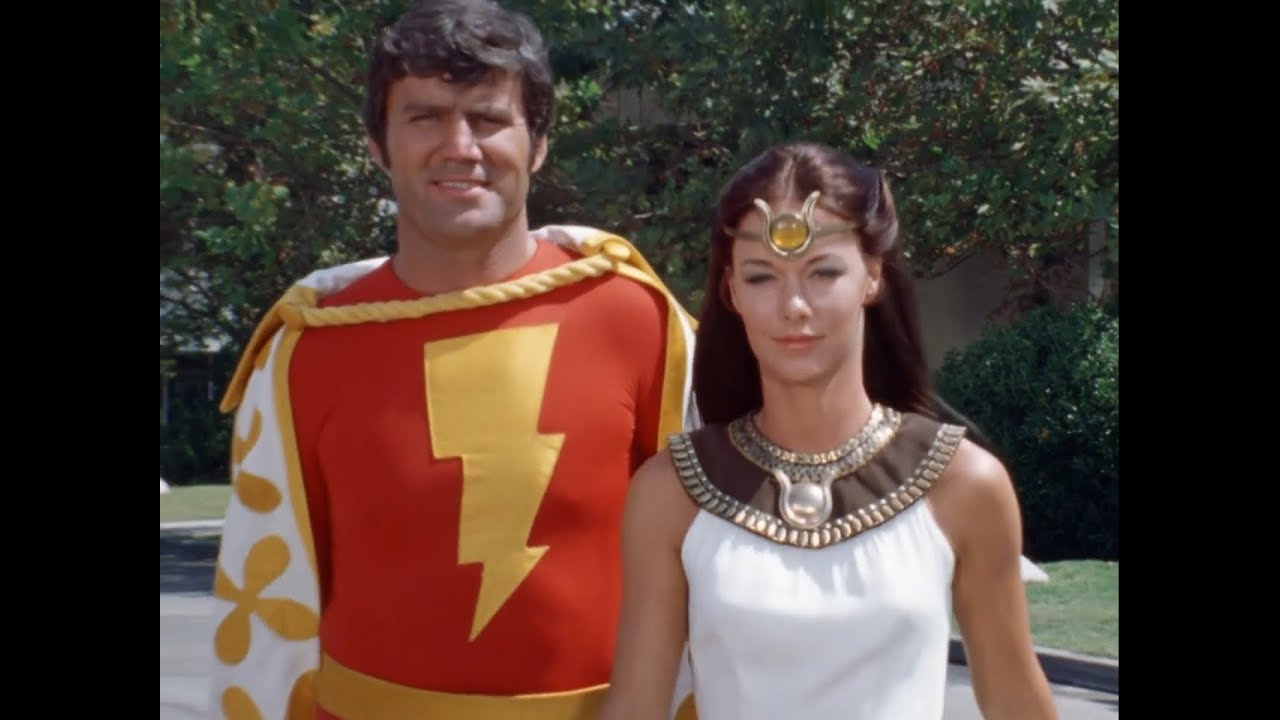
Tarzan, Lord of the Jungle suited Filmation because the character could be defined through silhouette, voice and environment. The show treated Tarzan as a serious adventure hero rather than a broad parody.
Painted jungles, fantasy civilizations and dramatic narration expanded the world beyond the number of drawings. The series became one of the clearest examples of the studio’s art direction outrunning its motion.
The New Adventures of Flash Gordon pushed even further into serial fantasy. Alien kingdoms, continuing conflict and pulp atmosphere gave Filmation a chance to build an ongoing world rather than completely reset every week.
The continuing-story impulse anticipated later action cartoons that expected children to remember larger arcs. It also pointed directly toward the heroic-fantasy programs that would define Filmation in the 1980s.
Both shows reward a selective rewatch because the method fits the material. The characters are supposed to look larger than ordinary life. A held pose with the right background and score can feel like a cover illustration coming alive.
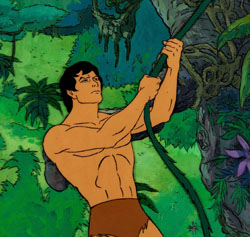

Filmation’s 1970s identity cannot be understood through cartoons alone. The live-action programs used the same moral confidence, educational instinct and attraction to heroic design.
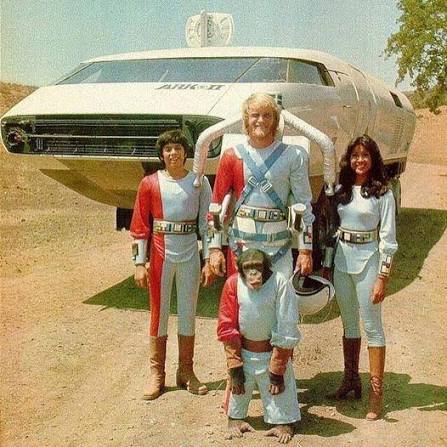
Ark II placed a futuristic team inside one of the decade’s most memorable television vehicles. The crew traveled through a damaged world and tried to solve problems with science, diplomacy and restraint rather than simply defeating a weekly villain.
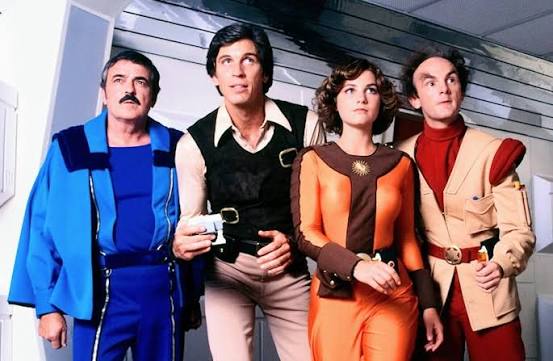
Space Academy created a training institution for young science-fiction characters, while Jason of Star Command used cliffhangers and continuing threats to push the format toward serial adventure.
The sets and effects look modest now because they were modest then. That did not make the concepts small to a child watching before noon. A control panel, uniform and miniature spacecraft could open the same imaginative door as a fully animated alien world.
These programs also reveal the studio’s broad definition of educational value. The lesson might involve cooperation, environmental responsibility, honesty or leadership. Filmation wanted adventure to leave something behind after the threat ended.
The live-action catalog deserves to remain inside this studio history because it was produced for the same audience, promoted in the same Saturday blocks and shaped by the same belief that entertainment and instruction could share the hour.
A studio history needs the full shelf, but the programs make more sense when grouped by purpose instead of stacked into one endless wall of equal cards.
The catalog below covers the major Filmation productions active during the decade. It includes live action because those programs were part of the same children’s-programming operation and Saturday identity.
The combined Tarzan and Flash Gordon network packages are discussed as scheduling strategy rather than counted as a separate original series.
Riverdale became a television-pop machine, and the Archies proved an animated band could produce a real chart phenomenon.
Sabrina’s magic and the monster-band residents of Horrible Hall shared a bright supernatural comedy world.
The live-action sitcom’s children moved into animated adventures with magical animals and musical fantasy.
A teacher and her students traveled through fantasy worlds with Rick Springfield providing music and celebrity appeal.
The older live-action sitcom became an animated family adventure with expanded alien characters and powers.
Archie characters reenacted stories inspired by American history in an explicitly educational format.
Most of the original cast returned to voice island stories that animation could make stranger and larger.
A timid cat imagined himself inside adventure parodies drawn from famous stories and screen heroes.
Larry Storch and Forrest Tucker starred in the live-action supernatural comedy that later gave Filmation a valuable title to revive.
Newspaper comic-strip characters were collected into an anthology package for Saturday morning.
Filmation revived theatrical cartoon characters inside its late-decade television production system.
The junkyard gang combined comedy, music and direct lessons about problems children might actually face.
Lassie led a team protecting animals and the environment through weekly adventure stories.
The familiar neighborhood characters carried a longer holiday story beyond the regular Saturday format.
Most of the original cast returned for stories that treated the franchise with unusual seriousness.
Billy Batson traveled in a motor home and transformed into Captain Marvel to confront weekly choices.
JoAnna Cameron’s teacher-heroine became one of Saturday morning’s most memorable live-action female leads.
Tarzan became a serious animated adventure hero inside a large fantasy world.
Adam West and Burt Ward returned as Batman and Robin, with Bat-Mite adding Saturday-morning chaos.
Serialized fantasy, alien kingdoms and rich production design pointed directly toward Filmation’s 1980s strengths.
A futuristic team traveled through a damaged world using science, negotiation and a remarkable vehicle.
Young cadets trained inside a live-action science-fiction institution led by Jonathan Harris.
A serialized space hero faced cliffhangers and villains in a production connected to the Space Academy world.
Filmation programs often ended by stating the lesson directly. The hero or group explained what had been learned, sometimes facing the audience with the confidence of somebody closing a school assembly.
The device reflected network expectations and the long public debate over what children’s television should provide. Broadcasters wanted evidence that programs offered more than commercial excitement.
Filmation’s earnestness went beyond compliance. The company repeatedly built stories around responsibility, prejudice, health, environmental danger, cooperation and personal choices. The studio wanted the adventure to produce a usable conclusion.
At its best, the lesson grew from the conflict and gave the episode a clean emotional landing. At its weakest, the moral sounded like it had been stapled to the end after the villain was already gone.
Modern binge viewing exaggerates the repetition. Children originally met these tags one week at a time, with cereal, commercials and six days between lessons. The rhythm mattered.
A fair rewatch recognizes both sides. The conclusions could flatten ambiguity, but the desire to give children something beyond noise was genuine.
Filmation’s domestic-production commitment is central to its reputation. Keeping more of the work in the United States supported artists and created a stable studio culture, but domestic labor costs intensified the need for efficiency.
That connection matters because it changes the meaning of the visible shortcuts. Reuse was not simply carelessness. It was part of an economic equation involving weekly output, network budgets, schedules and employment.
The achievement should not be romanticized. Tight schedules could be punishing, and the work still shows the strain. A domestic studio was not automatically a comfortable studio.
Yet Filmation became an important training ground. The Television Academy notes that Sam Simon began at Filmation as a storyboard artist and writer before becoming a major force in later television animation and comedy.
The studio’s influence therefore traveled through people as well as shows. Artists and writers carried lessons about television production, visual economy and character work into later careers.
When we see a repeated cycle, we are seeing a compromise. We are also seeing the trace of a workplace that managed to remain active under conditions pushing much television animation elsewhere.
Filmation’s best work still succeeds where the production method matches the material. Star Trek benefits from ideas and voices. Tarzan and Flash Gordon benefit from bold design and serious narration. Fat Albert benefits when the neighborhood ensemble reaches the lesson through character.
The themes remain powerful because the music was asked to do so much. A strong opening could define the world before the first scene moved.
The live-action programs retain a handmade charm. The vehicles, sets and effects look like television artifacts rather than anonymous digital surfaces. Children were not fooled into thinking the spaceship was real. We accepted the invitation.
What needs context is the moral certainty. Complex social problems could be compressed into one correct conclusion. Representation could be significant and still limited by the assumptions of the period.
Fat Albert now carries unavoidable context around Bill Cosby. The program cannot be viewed as though its star’s later crimes do not exist, but those crimes should not erase the contributions of every other person who worked on the series.
The animation itself varies sharply. Some episodes use the method with confidence; others feel stretched. Nostalgia does not require pretending every reused shot was secretly beautiful.
A selective rewatch is the honest route. Keep the programs where Filmation’s design, music, voices and ambition work together. Let the weaker packages remain evidence of a studio producing an enormous amount of television.
The studio’s later reputation for heroic fantasy did not appear from nowhere. Tarzan, Flash Gordon, Batman, Shazam, Ark II and Jason of Star Command had already taught Filmation how to sell power, moral clarity and continuing worlds.
The 1970s catalog also demonstrated that a studio could move among animation, live action, music, licensed properties and original concepts without losing its basic identity.
The studio also helped preserve the idea that a strong television property could live through reruns, records, toys, lunch boxes and new versions. The production was economical; the afterlife was expansive.
For Gen X viewers, that afterlife is part of the memory. We often encountered the programs out of order, through reruns and local scheduling, with no concern for which season had technically ended.
Filmation lasted in memory because the signal was unmistakable. The heroic pose, the narrator, the theme and the final lesson formed a complete grammar.
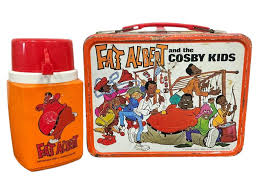
The television episode lasted half an hour. The object lasted for years. Records, lunch boxes, toys, comics and character art carried Filmation into school, bedrooms and toy boxes long after Saturday morning ended.
The Archies record strategy made that connection unusually clear. A fictional animated group produced music children could hear on radio and own at home. The property moved from television into the ordinary routines of listening and collecting.
Fat Albert merchandise performed a different kind of extension. The junkyard gang became part of the school day through lunch boxes and thermoses. A program built around neighborhood problems and lessons became an object sitting beside a sandwich.
Merchandise also preserved shows that did not remain constantly visible in reruns. A child could keep a character image after the network had changed the schedule. Collectors later kept those objects after the entire Saturday-morning institution had disappeared.
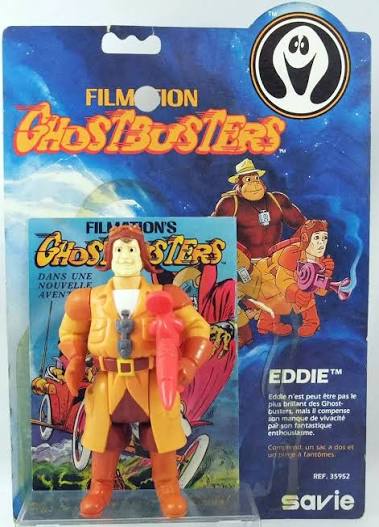
Filmation’s later Ghostbusters toy line belongs to the 1980s, but it demonstrates how the studio reused its own 1975 live-action title and carried the brand into another generation of products.
This is one reason Filmation cartoons of the 1970s remain vivid even for viewers who cannot reconstruct a complete episode. The theme, the logo and the physical object stayed when the plot did not.
The larger decade of characters, toys and shared-screen memories returns through 1970s TV: Shows, Sitcoms, Cartoons & Prime-Time Classics.
The studio is easier to appreciate when the program suits its bold designs, serious voices and economical movement.
Do not begin by watching every moral tag and every franchise package in production order. Begin with the work where Filmation’s method becomes a strength.
The returning cast and imaginative scripts show how good writing and voices can outrun limited movement.
Watch the group dynamics, improvised instruments and neighborhood stories before judging the closing lesson.
The songs explain how animation, records and Saturday marketing became one machine.
Bold figures, painted worlds and serious narration fit the studio’s visual economy.
The live-action programs reveal that Filmation’s identity was bigger than cels and model sheets.
A weekly lesson lands differently from six in a row. Sampling restores the rhythm children originally experienced.
Saturday morning did not exist in isolation. Filmation competed with Hanna-Barbera, DePatie–Freleng, network reruns, live-action adventures and whatever adults were already planning to watch later that day.
These year guides place the studio’s major arrivals back inside the larger television schedule.
See what Filmation shared the Saturday and prime-time schedules with that year.
See what Filmation shared the Saturday and prime-time schedules with that year.
See what Filmation shared the Saturday and prime-time schedules with that year.
See what Filmation shared the Saturday and prime-time schedules with that year.
See what Filmation shared the Saturday and prime-time schedules with that year.
See what Filmation shared the Saturday and prime-time schedules with that year.
The quick answers cover the founders, production method, major shows, live-action programs and the awards language that often gets repeated incorrectly.
Lou Scheimer, Norm Prescott and Hal Sutherland founded Filmation in 1963.
Major titles included the Archie programs, Fat Albert and the Cosby Kids, Star Trek: The Animated Series, Tarzan, Lord of the Jungle, The New Adventures of Batman and The New Adventures of Flash Gordon.
Television budgets, weekly schedules and the cost of keeping production in the United States encouraged held poses, stock cycles and reusable footage. Voices, music and design carried much of the energy.
Yes. Its Saturday-morning live-action catalog included Shazam!, The Secrets of Isis, Ark II, Space Academy, Jason of Star Command and The Ghost Busters.
The Television Academy’s Lou Scheimer biography credits him with a 1974 Daytime Emmy for the animated Star Trek. The series was the first Star Trek television production to receive an Emmy.
The Television Academy lists the special as a 1978 nominee for Outstanding Children’s Special. It should not be described as the winner of that category.
No. Live action was a major part of the studio’s 1970s Saturday identity, especially in superhero and science-fiction adventure.
No. Huckleberry Hound belongs to Hanna-Barbera, so Huckleberry merchandise does not belong in a Filmation asset gallery.
Begin with Star Trek: The Animated Series, Fat Albert, Tarzan or Flash Gordon, then sample the live-action programs to understand the full studio identity.
These institutional biographies, awards records and oral histories document Filmation’s founders, productions, performers and place in children’s television.