Good Times premieres
Florida and James Evans begin raising J.J., Thelma and Michael in a Chicago housing project, with family pressure and humor sharing the same small apartment.
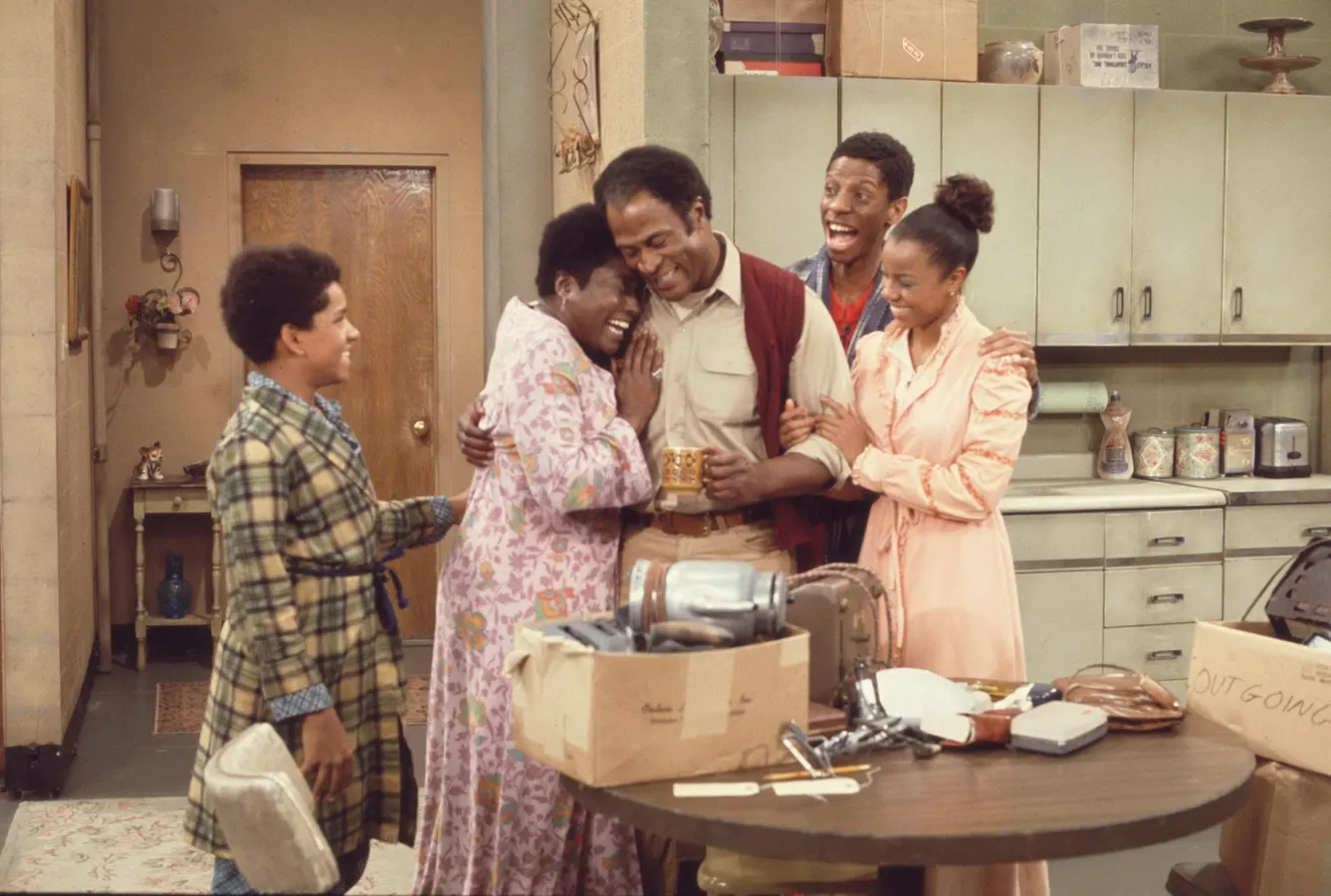
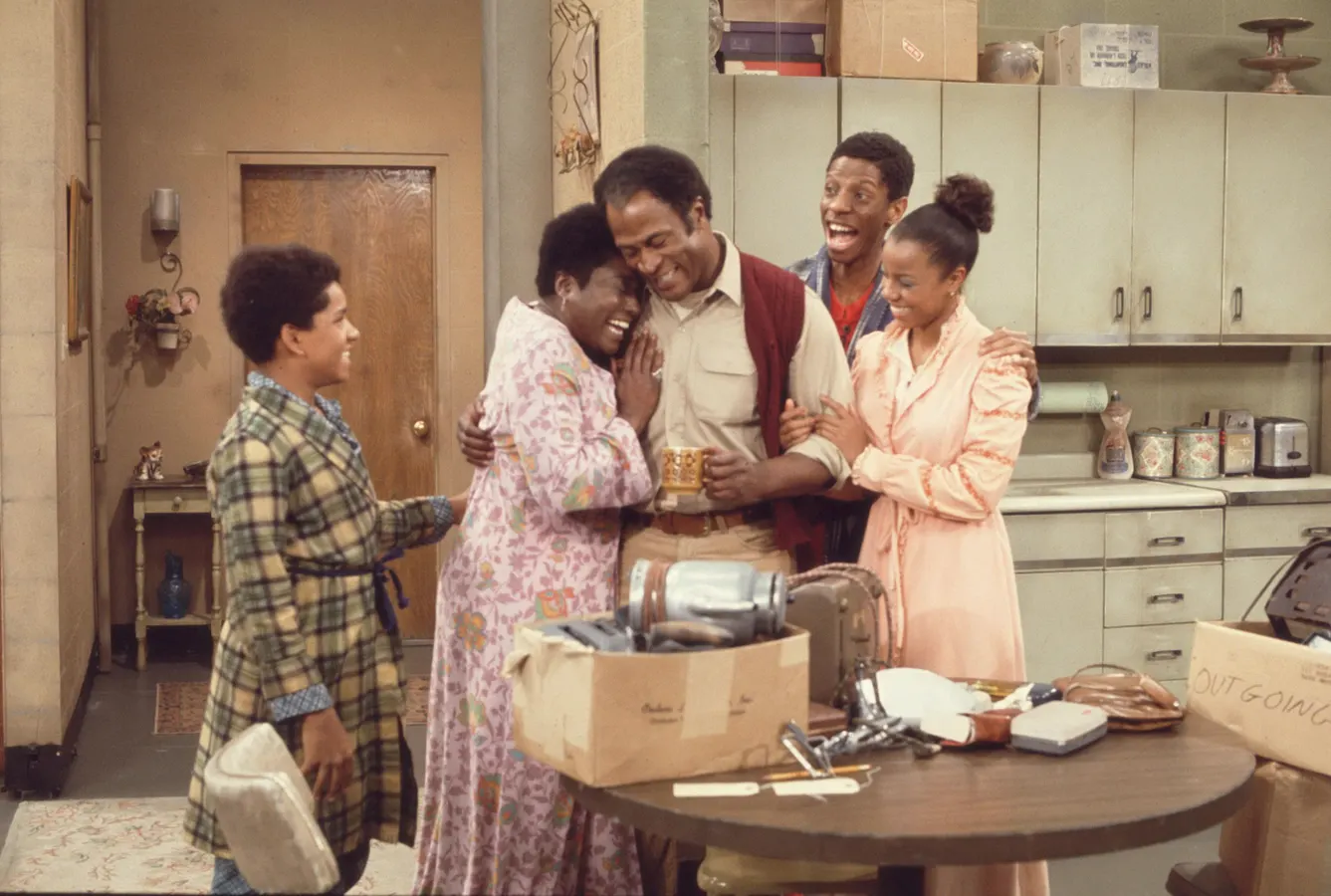
The Evans family made room for love, rent, layoffs, art, anger and one breakout character whose success changed the balance of the entire show.
The laugh might have arrived with J.J., but the feeling lived in Florida’s face, James’s pride, Thelma’s future, Michael’s questions and Willona walking through the door.
Good Times was groundbreaking because it placed a Black family living under sustained economic pressure at the center of a popular network sitcom. Jimmie Walker’s J.J. became a breakout star, but Esther Rolle and John Amos believed the broadest version of the character was crowding out the family’s dignity and original balance. The legacy includes both the joy of J.J. and the cost of allowing one character to redefine the whole series.
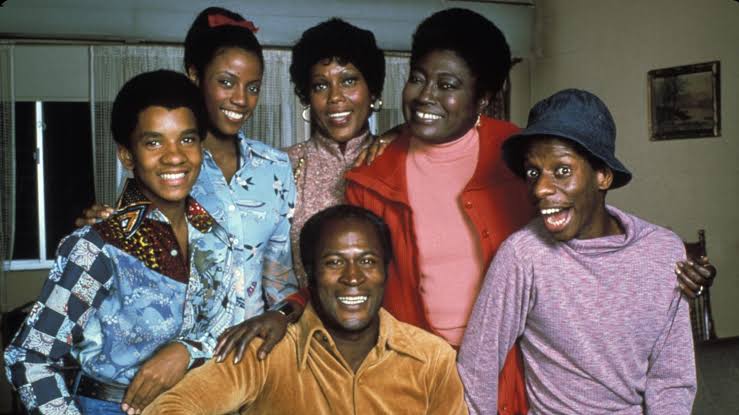
For Gen X rerun viewers, Good Times in the 1970s often arrived as sound before picture. The theme came through the kitchen, and by the time we reached the television, J.J. Evans, Florida, James, Thelma or Michael was already arguing about rent, work, school, pride or a plan that had become more complicated than it needed to be.
The apartment was small enough that no problem could stay private. A lost job altered groceries and rent. A good report card or art-school possibility became family news because success for one person could change the future for everybody.
That closeness also made the room warm. Florida could cook while the children argued. James could return from work and immediately feel the emotional weather. Willona could come through the hallway and become part of the response before she had taken off her coat.
The title was never a denial of hardship. Good times were the jokes, parties, flirting, music and little victories the family claimed before the next bill arrived.
Then J.J. became bigger than the apartment. The hat, the body language and “Dyn-o-mite!” escaped the story and entered popular culture. The network saw a breakout star. Esther Rolle and John Amos saw the family balance beginning to disappear.
What happened next is why the reruns can still start an argument in the room.
Florida Evans first appeared as Maude Findlay’s housekeeper, but Esther Rolle played her with enough authority to make clear that employment did not define the character.
The new series placed Florida in Chicago with husband James and their children J.J., Thelma and Michael. Eric Monte and Mike Evans are credited with creating the program, which developed inside the Norman Lear and Bud Yorkin production world.
That setup opened a big door, but it also created a familiar television problem: once one part of a show caught fire, the network wanted more of that part and less of everything else.
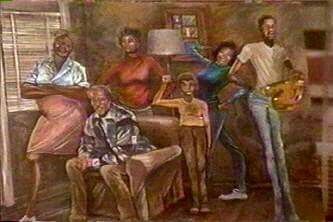
The Evans family was designed as a unit. James’s determination, Florida’s moral authority, J.J.’s comic imagination, Thelma’s ambition and Michael’s political certainty produced different reactions to the same economic world.
The apartment forced those reactions into contact. Nobody could retreat into a private wing or an office. Family life, money and public pressure shared one room.
That complete household is what made the series different from a comedy built around one performer.
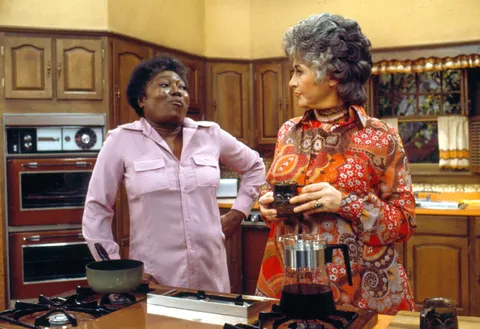
Esther Rolle played Florida as loving without sentimentality. She could comfort the children, challenge James and recognize when optimism was becoming denial.
Florida’s faith and dignity were active choices made under pressure. The performance often revealed the cost after the reassuring speech ended and the children had left the room.
John Amos gave James a pride that could be inspiring and dangerous. He wanted to provide, and repeated instability struck directly at his idea of himself.
The best stories did not treat that frustration as personal failure alone. They placed James inside a labor and housing environment with limited choices.
Together, Rolle and Amos kept the series from becoming a collection of jokes about poverty. The laughs occurred inside a family whose members mattered to one another.
That emotional credibility made every job loss, rent crisis and opportunity land harder because the audience understood what the family was trying to protect.
Florida and James also gave the children two different forms of authority. Florida usually stabilized the room through judgment and restraint. James often entered with urgency, carrying the outside world in his posture before anybody explained what had happened.
That contrast made the marriage feel lived in. They could disagree over discipline, money or what the children needed without turning affection into a speech. The audience understood the bond through the way they kept returning to the same side when the family was threatened.
The early balance belongs beside Sanford and Son and the Rise of Redd Foxx, another Black family comedy where performance, economic pressure and network expectations could not be separated.
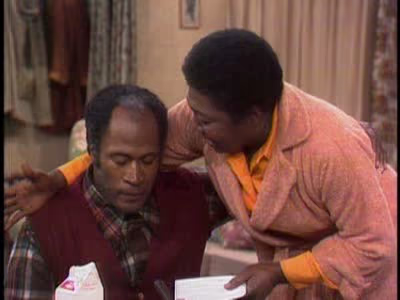
The apartment gave Good Times physical honesty. There was no elegant room where money trouble could become a distant conversation.
Bills, school problems, job news and neighborhood danger entered the same space where the family ate, joked and celebrated.
That design made the series visually modest but emotionally crowded. The audience could see how one problem changed everyone’s posture.
The set also allowed the show to move quickly between humor and weight. A broad entrance could fill the room, then one piece of news could silence it.
The household belonged to the larger change explored in How the Television Family Changed During the 1970s, when sitcom homes began carrying economic and social pressure more openly.
For rerun viewers, the room became familiar enough to feel permanent even when the episodes arrived out of order.

Jimmie Walker built J.J. from movement, rhythm and confidence. The character’s art, flirting and jokes were ways of refusing to appear defeated.
“Dyn-o-mite!” worked because Walker delivered it with his whole body and because viewers could feel the release coming.
The popularity was not manufactured from nothing. Jimmie Walker was a skilled comic performer, and J.J. Evans on Good Times could turn one entrance, one pose or one perfectly delayed catchphrase into the whole room’s attention.
Success changed the writing. J.J. received more attention, broader setups and a stronger promotional identity.
For audiences, this could feel like the discovery of a star. For Esther Rolle and John Amos, it threatened to turn a family sitcom into a vehicle for a character they believed repeated damaging images of Black adolescence.
Both realities can be true. Walker’s performance was talented and culturally powerful. The network’s response to that popularity could still narrow the show.
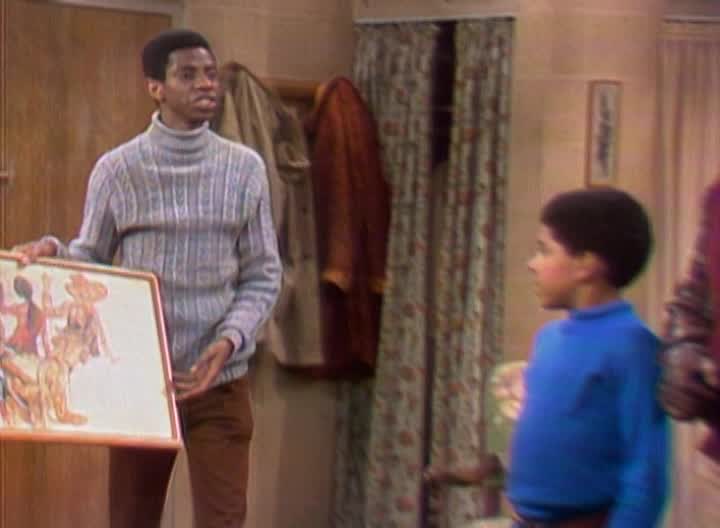
J.J.’s artwork is the strongest evidence that the character was never only a catchphrase. Painting gave him discipline, perception and a future the broadest scripts sometimes ignored.
When the series remembered the artist, Walker could shift from showman to young man. The pose became protection rather than the entire personality.
Once the catchphrase took off, the network did what networks do: put it in the ads, wait for the audience to ask for it and then ask the writers to serve it again.
That process did not erase Walker’s achievement. It explains why the argument belongs inside The Best Black Sitcoms of the 1970s, where breakthrough and compromise often arrived together.
John Amos left after the third season following conflict over the character direction and writing. James Evans was killed off-screen, a decision that permanently altered the family balance.
Esther Rolle later left and eventually returned. These were not ordinary cast changes.
The departures reflected a disagreement about the program’s responsibility and who had authority to define its Black family.
The production had Black stars at the center while much of the writing and executive power remained outside their experience.
The network wanted the biggest laugh on repeat. Rolle and Amos wanted the parents to keep their weight and the Evans family to keep feeling like a family.
You can laugh at Walker’s performance and still notice what got pushed aside when the network kept asking for more of the same.
The disagreement was bigger than ordinary screen time because viewers did not have a long list of Black television families to compare with the Evanses. That is why the argument belongs beside The Best Black Sitcoms of the 1970s, where every breakthrough carried more weight than a normal casting or ratings story.
They were not asking the show to become humorless. They were asking that the parents, children and household remain recognizable beyond the broadest commercial laugh.
The cast could carry the ratings and still have too little say in what happened to the family they were bringing to life.
That question runs through How Norman Lear Changed Television: the people making the show opened doors while still containing arguments over who decided what viewers saw after the door opened.
Thelma carried intelligence, ambition and the right to imagine a life beyond the apartment.
Her stories about education, relationships and independence gave the series a young woman whose future mattered on its own terms.
Michael brought political language and historical questions into family arguments. His certainty could be comic, but it also forced the adults to explain choices they might otherwise leave unspoken.
Together with J.J., the siblings represented three different responses to the same household.
J.J. used performance and hustle. Thelma used discipline and aspiration. Michael used ideas.
The family felt larger because the children did not process poverty, race or possibility in the same way.
Thelma’s stories mattered because ambition could easily have been treated as a joke in a household struggling to meet immediate needs. Instead, her education and relationships repeatedly asked whether loyalty required shrinking the future.
BernNadette Stanis gave Thelma enough impatience to resist being the endlessly grateful daughter. She loved the family and still wanted room to become somebody beyond it.
Michael’s politics performed a different function. He could state the uncomfortable principle before the adults had decided how much of it they were prepared to discuss.
The children therefore kept the apartment pointed toward the future even when the week’s plot was about surviving the present.
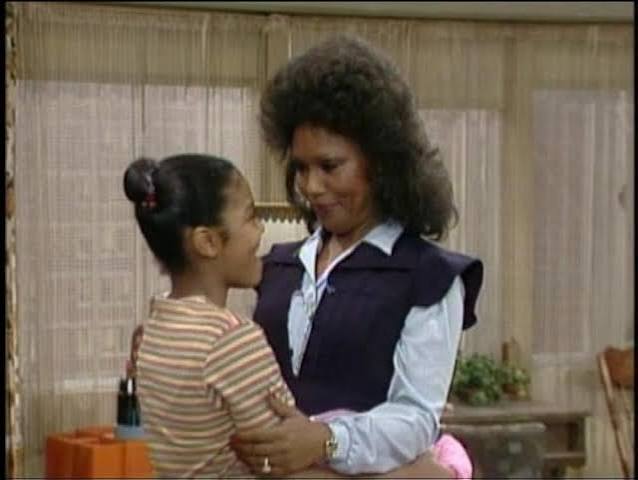
Ja’net DuBois made Willona more than the funny neighbor. She entered with style, independence and an adult life that did not mirror Florida’s.
Her friendship gave Florida a place to speak outside the parent-child structure.
Willona could change the visual energy of the apartment simply by walking through the door.
Later, her relationship with Penny expanded the program’s idea of caregiving, protection and home.
The Penny story gave DuBois material far beyond the entrance line and helped the later seasons recover emotional weight after major cast changes.
Willona carried the neighborhood inside while proving that family could be chosen as well as inherited.
Willona’s independence also gave the series another image of adulthood. She was not defined by the same marriage, parenting or economic arrangement as Florida, yet the friendship between them was treated as substantial rather than decorative.
When Florida was absent, the burden placed on Willona showed how valuable DuBois had become. The series needed somebody who could carry humor, protection and emotional continuity without pretending the original family structure had not changed.
Penny’s arrival allowed that strength to become action. Willona did not simply offer advice from the hallway; she created a home.
A show about hardship becomes exhausting if every pleasure feels borrowed. Good Times understood the importance of parties, jokes, neighborhood friendships and small victories.
The title was sincere and defiant. Celebration did not prove the system was fair. It proved the family was more than the pressure applied to them.
J.J.’s artwork gave the character a life beyond clowning. His talent represented a possible exit and a way to turn observation into identity.
Thelma’s ambition created forward movement. Michael’s questions made the adults answer what they wanted to postpone.
Willona’s entrance could change the temperature. Florida and James could argue, flirt and protect each other inside the same episode.
The theme song acknowledged hardship without surrendering humor, pride or hope.
The famous grief scene survives because Esther Rolle rejects easy comfort.
Florida had spent years containing fear, anger and exhaustion so the family could continue.
After James’s death, that control collapses. The broken punch bowl is not only grief at one loss; it is the release of every burden she had kept inside.
The scene also proves why the early family structure mattered. James’s absence changed more than the cast list.
Reruns often placed that grief beside an earlier episode where James was alive and arguing in the kitchen. The disorder could be confusing for young viewers, but it preserved the full family history at once.
The series remained capable of good stories, yet the emotional architecture had changed permanently.
The off-screen nature of James’s death made the rupture feel abrupt. Viewers returned to the apartment and found the family processing a loss the audience had not witnessed.
That choice placed extraordinary weight on Rolle’s performance. Florida had to make the unseen event real enough to reorganize the entire series.
The grief also changed the meaning of earlier episodes. James’s anger, pride and tenderness became part of the family memory rather than an ongoing argument.
Later stories could move forward, but they could not restore the exact balance of two parents absorbing pressure together.
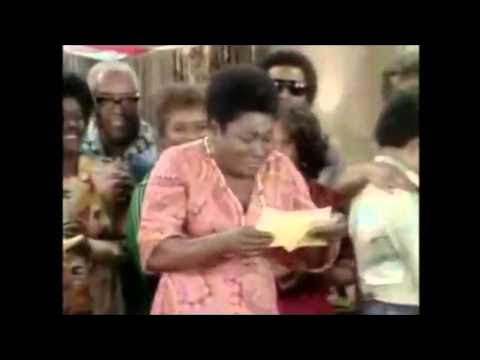
The departures of James and Florida changed the chemistry, but the series did not stop producing meaningful work.
Willona’s expanded role and the arrival of Penny gave the program a new family structure. The story of abuse, protection and chosen parenthood brought seriousness back into a run sometimes remembered only for tonal drift.
J.J. carried more of the comedy and household responsibility. That increased attention could repeat the problem Rolle and Amos had identified, but it also gave Walker opportunities to reveal maturity when the writing allowed it.
Thelma and Michael continued to represent futures beyond the apartment. Their growth reminded viewers that the children were not frozen in the premise simply because the network needed another season.
Florida’s return restored moral authority and continuity, yet the program could not pretend James had never left. The household had learned to reorganize around absence.
A complete rewatch benefits from treating the series in phases: the original two-parent family balance, the period after James’s death, the Florida-less household and the final-season return.
That is why somebody can love the whole run and still feel the room change. The characters stayed familiar, but the balance did not.
The show moved quickly from breakthrough family sitcom to a national argument about representation.
The timeline makes the cast changes and creative conflict part of the viewing history rather than an afterthought.
Florida and James Evans begin raising J.J., Thelma and Michael in a Chicago housing project, with family pressure and humor sharing the same small apartment.
Jimmie Walker’s physical comedy and “Dyn-o-mite!” become national pop-culture phenomena almost immediately.
The show’s popularity grows while Esther Rolle and John Amos object to J.J.’s increasing dominance and the broadest direction of the writing.
After John Amos leaves, the character’s off-screen death permanently changes the structure and emotional tone of the series.
Esther Rolle departs, leaving Willona and the younger Evanses to carry more of the household story.
Janet Jackson arrives as Penny, giving Willona one of the show’s most serious and important parenting stories.
Rolle comes back for the sixth and final season, restoring the family matriarch to the center.
Good Times concludes after 120 episodes, leaving a legacy still debated every time the reruns begin.
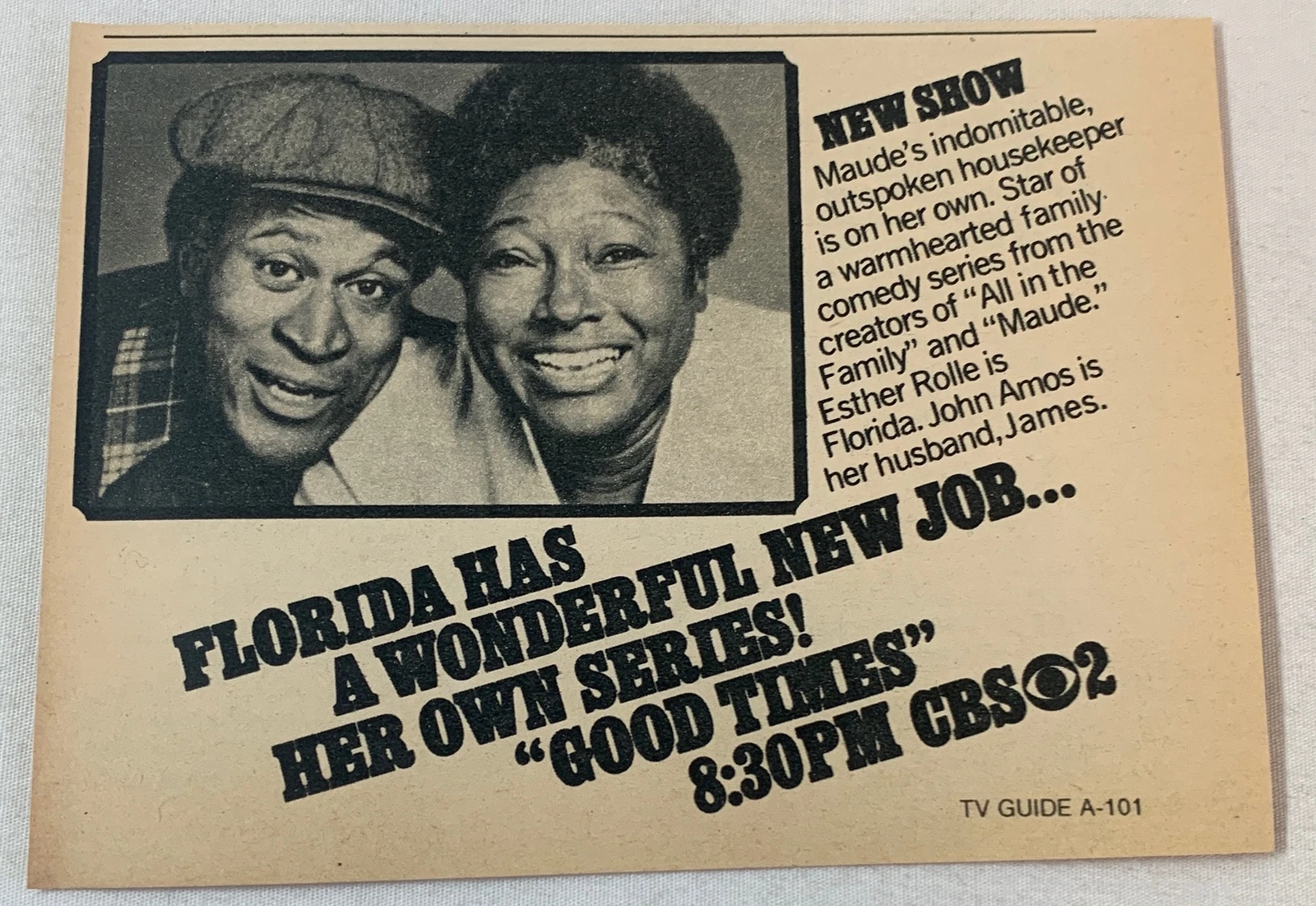
The strongest episodes depend on the whole apartment, not a single breakout performer.
Each character introduces a different kind of authority, ambition or survival.
The family’s moral and emotional center. Esther Rolle could make a pause or disapproving look feel like the true ending of a scene.
Proud, loving and repeatedly cornered by economic reality. John Amos made the pressure of providing visible in the character’s body.
A talented artist and comic performer whose popularity became both the show’s greatest commercial asset and its central creative dispute.
Intelligent, ambitious and unwilling to let her brothers define the household’s future. Her life beyond the apartment always mattered.
The youngest child and the most politically direct, often forcing the adults to explain the systems shaping the family’s life.
Ja’net DuBois brought style, humor and dependable friendship, then carried major family responsibility through the Penny storyline.
Begin with stories that reveal the family’s humor, economic pressure and tonal range beyond the famous catchphrase.
The list is a doorway, not a ranking of every episode.
The scramble to meet rent shows how money can drive a complete comic plot without becoming a disposable obstacle.
J.J.’s painting becomes the center of a story about belief, luck and the family’s need for hope.
A political visit gives the series room to connect family frustration with public power.
The children’s world and neighborhood pressure collide in a story with consequences beyond a joke.
The episodes surrounding James’s death are essential for understanding the series’ tonal and structural break.
The character faces adult emotional responsibility and shows why Walker could do more than broad comedy.
A difficult multi-part story expands Willona’s role and brings Penny into the family circle.
The finale offers long-delayed movement for several characters and a release from the apartment’s economic trap.
The catchphrase is unavoidable. The fuller experience comes from watching how each family member answers the same pressure differently.
These six viewing cues make familiar reruns feel less automatic.
Rolle often reveals the cost of optimism in the quiet beat after she has reassured everybody else.
A lost job or insult strikes his idea of himself as a provider before the dialogue explains anything.
Look for J.J.’s art, insecurity and responsibility whenever the script gives him room beyond the pose.
Her education, relationships and ambition keep the family story from being only about the men.
His certainty forces the family to discuss race, history and justice in language television rarely gave children.
Her friendship with Florida and later relationship with Penny show that protection and home can be chosen.
Rolle’s control, Amos’s pressure and DuBois’s warmth remain among the strongest reasons to return.
Walker’s timing also deserves attention even when the writing leans too hard on the pose.
The J.J. argument does not need a winner.
J.J. could be joyful, talented and unforgettable while the network’s hunger for the biggest laugh still squeezed the rest of the family.
The show’s representation breakthrough does not make every joke timeless. Period assumptions about race, gender and class remain visible.
Watching now, the question is not whether every joke aged perfectly. It is whether the people in the room still feel like a family instead of a setup for the next line.
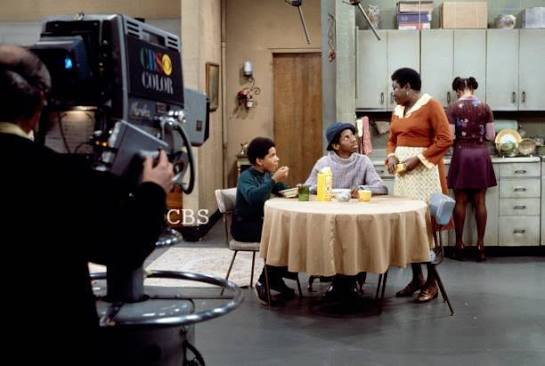
Watching it now, it helps to separate Walker’s performance from what the network did with it. He did not create the appetite for repetition. He was simply good enough to make the network chase it.
Rolle and Amos were not asking the show to stop being funny. They were asking that the laughs not make the parents disposable or flatten the children into whatever fit best on a promo.
That same complexity appears in The Jeffersons and the Sitcom That Moved On Up, where Black family representation carried a different class position but still had to negotiate broad comedy and social meaning.
A lot of us did not know any of this when we watched after school. We just knew the theme, the apartment, the orange furniture, Willona’s entrance and the exact second J.J. was winding up for the line. That lived-in memory is part of the wider 1970s TV story: one shared screen, one familiar room and a rerun that could stop the whole house for half an hour.
Gen X often inherited Good Times through daily reruns rather than the original CBS schedule.
Episodes arrived out of order. James could be alive one afternoon and gone the next. Florida could disappear and return without the station explaining the production history.
That syndication pattern magnified J.J.’s catchphrase but also kept the entire Evans family in circulation.
The apartment became familiar enough that viewers could feel the shifts even without knowing why they happened.
Knowing the backstage fight does not make the reruns less lovable. It explains why the show sometimes feels like two different programs sharing the same apartment.
Good Times J.J. Evans 70s TV may be the search phrase, but most of us remember the show in sounds and faces: “Dyn-o-mite!,” Florida’s look, James walking through the door and Willona arriving like the hallway belonged to her.
Syndication also flattened chronology. Young viewers could learn J.J.’s catchphrase before understanding why James disappeared or why Florida later returned.
The repetition made individual moments permanent while the production conflict remained invisible.
That is why revisiting the show now can feel like discovering a second program underneath the familiar one. The comedy is still there, but so are the decisions that redistributed authority inside the apartment.
There is no reason to force one clean verdict. Good Times was groundbreaking, funny, uneven and heartfelt, and the fact that people still argue about it proves how much it mattered.
Good Times also belongs near the top of our 50 Best Sitcoms of the 1970s, Ranked, although no short ranking entry can hold everything that happened inside the Evans apartment.
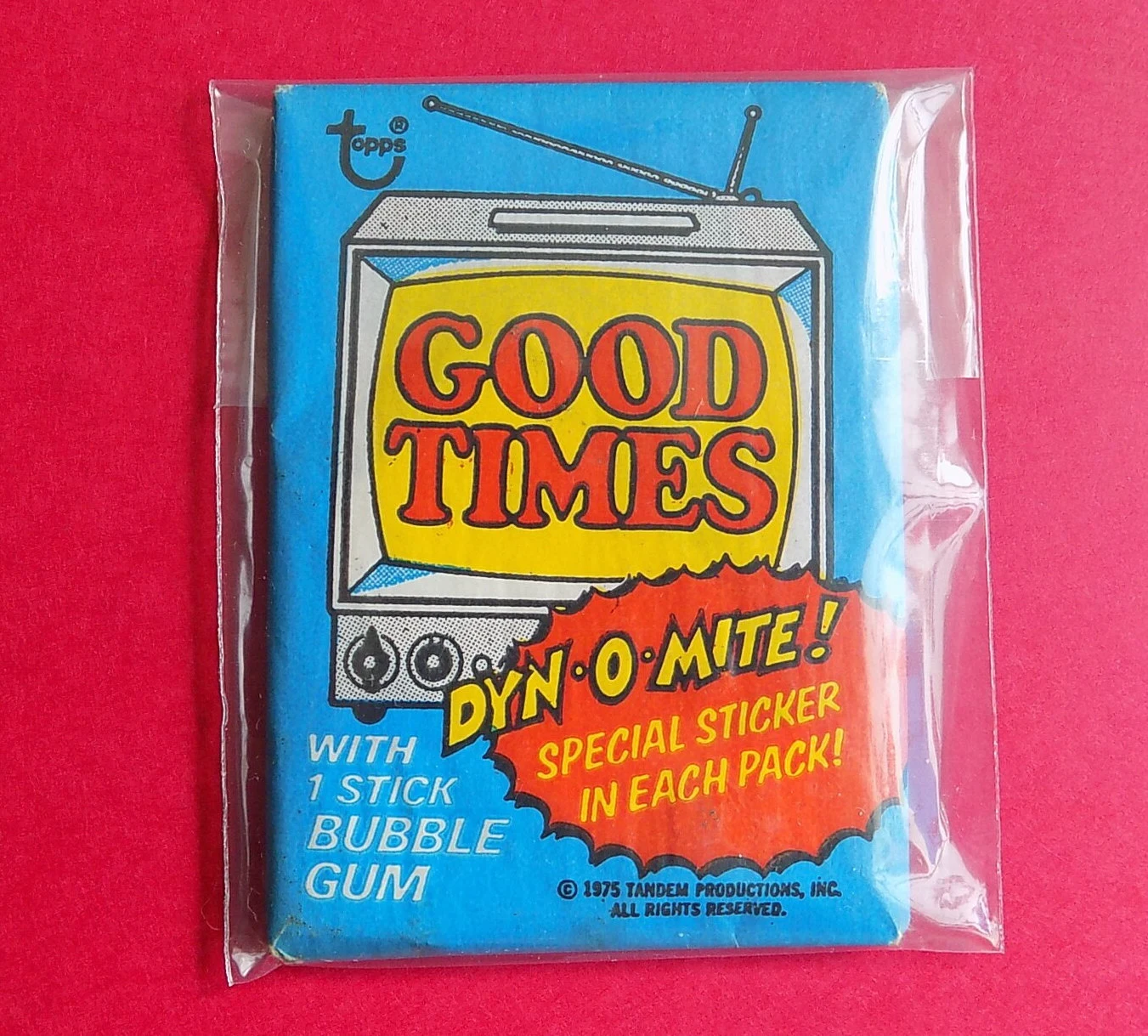
The physical memorabilia was limited, but the trading cards were real—and that is enough to make the point. The Evans family had become recognizable enough to leave the television and land in a kid’s collection.
The Evans family shared the decade with changing sitcoms, crime dramas, variety shows and network strategies.
These year guides place every phase of the series back beside the rest of television.
Put the Evans family back beside the rest of that television year.
Put the Evans family back beside the rest of that television year.
Put the Evans family back beside the rest of that television year.
Put the Evans family back beside the rest of that television year.
Put the Evans family back beside the rest of that television year.
Put the Evans family back beside the rest of that television year.
The quick answers cover the spin-off connection, creators, cast departures, J.J. controversy and where to begin.
Yes. Florida Evans had been Maude Findlay’s housekeeper, although the family details were reworked for the new series.
Eric Monte and Mike Evans are credited as creators. The series was developed within the Norman Lear and Bud Yorkin production world.
Amos objected to the direction of the writing and the increasing emphasis on J.J.’s broad comedy. Production conflict led to his departure after the third season.
Yes. Rolle left after the fourth season and returned for the sixth and final season.
No. Jimmie Walker gave J.J. talent, energy and vulnerability, and the character was an artist. The controversy concerns how the writing increasingly emphasized his broadest traits at the expense of the family balance.
The original CBS series ran for six seasons and produced 120 episodes.
The scene works because viewers had watched Florida hold the family together for years. Her control finally collapses after James’s death.
Start with one early family-pressure story, one J.J.-centered episode, one strong James-and-Florida episode and the episodes surrounding the family’s major cast changes.
These oral-history collections document the series, production world and creative conflict.