
20 Best 90s Grunge Albums: Ranked and Rewound
The best 90s grunge albums were more than collections of songs. They were full-length worlds that lived in CD binders, car stereos, bedroom towers, used record-store bins and scratched jewel cases. The singles opened the door, but the albums supplied the distortion, dread, melody, darkness and strange emotional weather that made the era last.
This ranking moves from Nirvana’s Nevermind, Pearl Jam’s Ten, Alice in Chains’ Dirt and Soundgarden’s Superunknown into the wider scene: Screaming Trees, Mudhoney, Mother Love Bone, Hole, L7, Melvins and Stone Temple Pilots. Together, these records show why 90s alternative and grunge became an album-era culture instead of a short-lived radio trend.
What Are the Best 90s Grunge Albums?
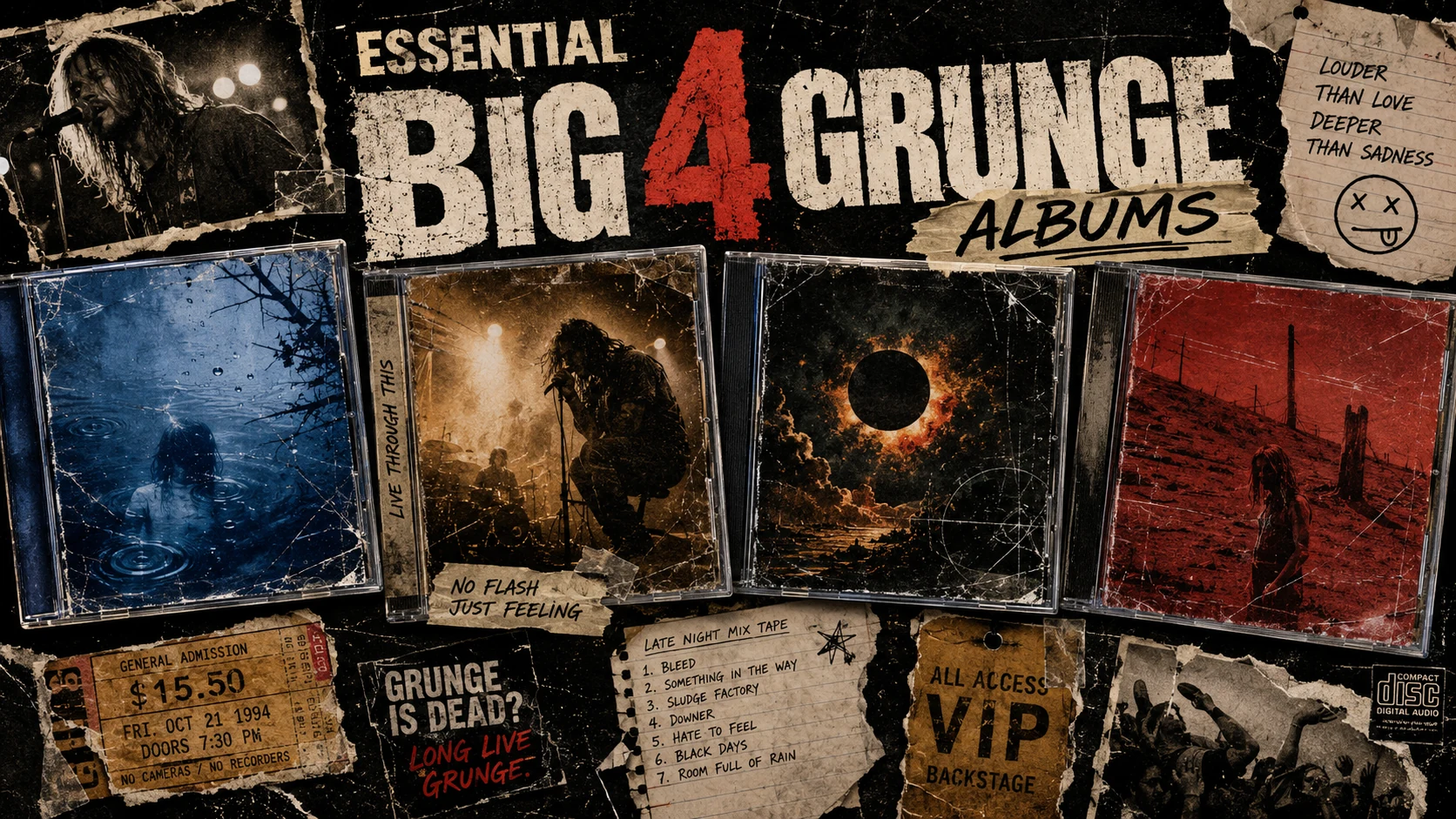
The five essential starting points are Nevermind, Ten, Dirt, Superunknown and Badmotorfinger. Those records cover grunge’s main branches: Nirvana’s punk-pop rupture, Pearl Jam’s arena-sized catharsis, Alice in Chains’ metallic darkness and Soundgarden’s heavy, psychedelic weirdness.
The complete story extends well beyond the Big 4. Jar of Flies, In Utero, Temple of the Dog, Sweet Oblivion, Live Through This, Bricks Are Heavy and the rest of this top 20 show how wide the era really was. The 90s alternative music guide connects these records to the bands, songs, MTV moments and scenes around them.
The 20 Best 90s Grunge Albums at a Glance
Here is the full album rewind before we start arguing like it is 1994 and someone just claimed their older cousin had a better bootleg.
- Nevermind — Nirvana
- Ten — Pearl Jam
- Dirt — Alice in Chains
- Superunknown — Soundgarden
- Badmotorfinger — Soundgarden
- Jar of Flies — Alice in Chains
- Vs. — Pearl Jam
- In Utero — Nirvana
- Vitalogy — Pearl Jam
- Temple of the Dog — Temple of the Dog
- Sweet Oblivion — Screaming Trees
- Every Good Boy Deserves Fudge — Mudhoney
- Apple — Mother Love Bone
- Live Through This — Hole
- Bricks Are Heavy — L7
- Facelift — Alice in Chains
- Houdini — Melvins
- Core — Stone Temple Pilots
- Down on the Upside — Soundgarden
- Dust — Screaming Trees
Why Grunge Was Built for the Album Era
The singles made the explosion visible. The albums made it permanent. A song like “Smells Like Teen Spirit” could kick the door in, but Nevermind made people stay. “Alive” could introduce Pearl Jam, but Ten made listeners build an emotional apartment inside the record. “Man in the Box” could announce Alice in Chains, but Dirt created the full haunted house. “Black Hole Sun” could own MTV, but Superunknown proved Soundgarden had more dimensions than one surreal video.
The 90s album experience was physical and slow. You had to own the thing or know someone who did. You opened the jewel case. You hoped the little plastic teeth were not already broken, which they were, because jewel cases were engineered by people who hated teenagers. You put the disc in. You read the booklet. You let the album sequence tell you where to go.
That matters because grunge’s deepest power was not always in the radio hits. It was in the album tracks, the sequencing, the hidden emotional turns, the closing songs, the weird experiments, the songs you skipped at first and later realized were the reason the whole record worked. The singles were the entry points. The albums were the rooms behind them. And if you want the song-by-song version of the rabbit hole, start with 25 Essential Grunge Songs That Defined the 90s.
Your albums said who you were before the internet gave everyone a profile and immediately made everything worse.
You learned credits, lyrics, artwork, studios and band connections because staring at paper was somehow normal and healthy.
You sat with records until deep cuts became favorites, which is how actual taste developed before shuffle turned everyone into a raccoon.
Every Gen X friend group had someone who insisted the difficult album was better. Sometimes that person was right. Often they owned a trench coat.
The 10 Best 90s Grunge Albums: Ranked and Rewound
This expanded ranking balances cultural impact, album quality, grunge identity, Gen X memory, influence, deep cuts, essential songs and how much the record still feels like it is glaring at you from the used-CD bin.
Nevermind — Nirvana
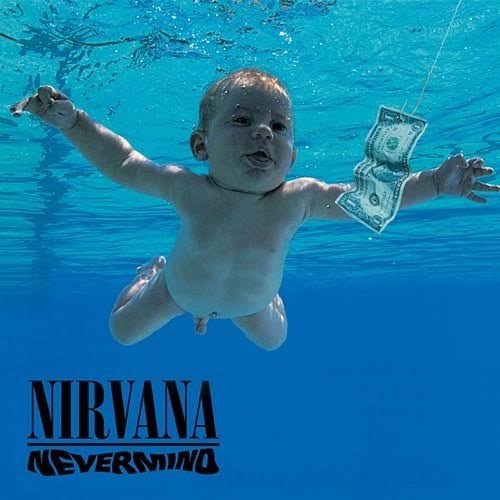
Nevermind sits at #1 because it did the thing every movement claims to do but almost never actually does: it changed the room. Before Nevermind, alternative rock had underground credibility, college-radio momentum and scenes full of bands that mattered deeply to the people who found them. After Nevermind, the mainstream had to admit that the weird kids, record-store lifers, punk-adjacent misfits and flannel-clad emotional saboteurs might be the new center of rock culture.
The album’s power came from contradiction. It was noisy but melodic. Punk-rooted but huge. Underground-flavored but radio-ready. Angry but catchy. Sarcastic but emotionally direct. Kurt Cobain wrote songs that sounded simple until you realized how hard they were to forget. Krist Novoselic gave the songs their rubbery low-end shape, Dave Grohl’s drums made everything hit harder, and Butch Vig’s production made the record big enough for the world without fully sanding away the band’s unease.
“Smells Like Teen Spirit” became the cultural detonation, but the album did not survive on one song. “Come As You Are” pulled listeners into Nirvana’s more hypnotic side. “Lithium” turned mood swings into structure. “In Bloom” mocked the wrong kind of fan before the wrong kind of fan even knew he was being mocked. “Drain You” and “Breed” made the album feel restless and alive. “Polly” reminded everyone that Nirvana’s darkness did not need volume to be disturbing.
In the bigger grunge timeline, Nevermind is the mainstream rupture. It is not the first grunge record, and it is not the only important one, but it is the album that made major labels, MTV, radio programmers and every mall music store realize something had shifted. The whole old rock order got shoved sideways, which is why Nirvana’s impact on 90s music still feels bigger than one band, one album or one ripped cardigan.
The side effect, of course, was that every record label suddenly wanted its own Nirvana. That gave alternative rock a wider platform, but it also created the copycat chase that helped flatten the scene later. Nevermind opened the door. The industry immediately tried to turn the door into a franchise. Very corporate. Very predictable. Very “we discovered authenticity and would like to sell it in three colors.”
Ten — Pearl Jam
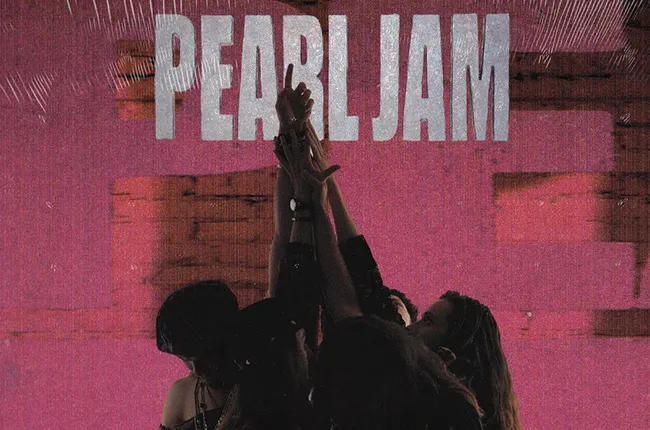
Ten is the album that made Pearl Jam feel like the emotional other side of grunge. If Nevermind sounded like the system being kicked in the teeth, Ten sounded like a crowd trying to survive the aftermath together. Pearl Jam’s debut was huge, earnest, wounded, muscular and built for communal release. It did not have Nirvana’s sarcastic detonation. It had something else: emotional scale.
The album did not explode instantly in the same way Nevermind did, but it kept growing. That slow-burn quality became part of its legend. “Alive,” “Even Flow,” “Jeremy,” “Black,” “Once,” “Porch,” “Garden” and “Release” gave listeners an entire emotional landscape. Eddie Vedder’s voice became one of the defining sounds of the decade, but the band’s chemistry mattered just as much. Mike McCready brought guitar heroics without hair-metal cheese. Stone Gossard and Jeff Ament carried the Mother Love Bone/Pearl Jam family tree forward. The whole thing felt like a band turning personal pain into something crowds could shout back.
Ten also gave grunge its arena future. That can sound like a criticism, but it is not. Pearl Jam proved that grunge could become massive without becoming empty. The album’s songs felt private and huge at the same time, which is why so many people connected with it so intensely. It was music for driving nowhere, staring out windows, surviving heartbreak and pretending you were not absolutely invested in every lyric.
Pearl Jam became the band that made grunge feel communal instead of purely combustible. Nirvana cracked the wall, but Pearl Jam gave a lot of Gen X listeners somewhere to stand after the dust settled. That is why Pearl Jam’s place as the other side of grunge still matters: the band turned pain into something massive, stubborn and weirdly survivable.
The album’s emotional openness also made Pearl Jam different from Nirvana, Soundgarden and Alice in Chains. All four bands carried pain, but Pearl Jam made that pain feel like something an audience could gather around. That helped the band survive the 90s better than almost anyone else from the Seattle explosion.
Dirt — Alice in Chains
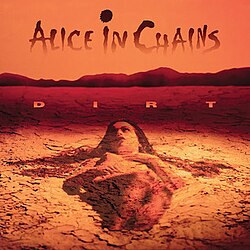
Dirt is the darkest major grunge album, and it still feels like something you do not casually put on unless the room is emotionally insured. Alice in Chains made a record about addiction, shame, anger, trauma, isolation and collapse that somehow became a mainstream rock landmark. That alone tells you everything about how strange the early 90s were. Commercial radio was suddenly making room for songs that sounded like they had crawled out of a locked basement.
The sound of Dirt is heavy, dry, metallic and haunted. Jerry Cantrell’s riffs are crushing without feeling flashy. Layne Staley’s voice is one of the most distinctive and wounded instruments of the decade. Their harmonies do not sound sweet; they sound like two ghosts trapped in the same wall. That harmony style became the band’s signature and one of the main reasons Alice in Chains stood apart from the rest of the Big 4.
The album’s essential tracks are brutal in different ways. “Them Bones” opens like a panic attack with a riff. “Dam That River” and “Rain When I Die” grind and spiral. “Rooster” turns family and war memory into one of the era’s most powerful slow-burn anthems. “Down in a Hole” proves quiet can be heavier than volume. “Would?” became a soundtrack-era classic through Singles while still fitting perfectly inside the album’s shadow.
Dirt represents grunge’s shadow side better than almost any other record. Nirvana cracked the mainstream. Pearl Jam made catharsis communal. Soundgarden made heavy weirdness artful. Alice in Chains made the darkness unavoidable. Their whole catalog feels like the basement level of the genre, and Alice in Chains’ darkest grunge sound still has a gravity that most bands never came close to matching.
The album is also important because it complicates the definition of grunge. It is not punky in the same way Nirvana can be. It is not emotionally arena-sized like Pearl Jam. It is not odd-time psychedelic metal like Soundgarden. It is its own thing: metallic, melodic, claustrophobic and devastating.
Superunknown — Soundgarden
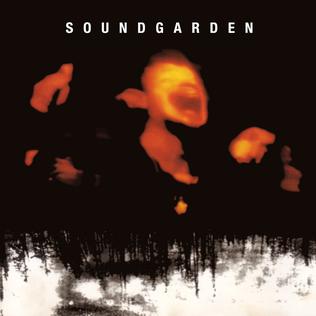
Superunknown is where Soundgarden became enormous without becoming simple. By 1994, grunge was already famous, wounded, over-analyzed and halfway to being sold back to teenagers in mall displays. Soundgarden responded by making a record that was bigger, stranger, heavier and more psychedelic than a mainstream rock album had any obligation to be.
“Black Hole Sun” became the unavoidable hit, helped by one of the most surreal MTV videos of the decade, but Superunknown is much more than that song. “Spoonman” brought rhythmic weirdness and street-percussion energy into rock radio. “Fell on Black Days” gave the album one of its darkest emotional centers. “The Day I Tried to Live” turned existential dread into a massive hook. “My Wave” gave the record movement and swagger. “4th of July” sounded like the sun had burned out and left everyone to deal with the fumes.
The album works because Soundgarden never fully separates heaviness from intelligence. Chris Cornell’s voice is huge, but the band’s arrangements are just as important. Kim Thayil’s guitar tone remains strange and thick. Ben Shepherd and Matt Cameron give the record groove, precision and muscle. The songs feel accessible without becoming predictable.
Superunknown proved grunge could evolve beyond the first explosion. Soundgarden were never the easy version of Seattle, and that is what made them so good. Their heavy, weird side gave the genre depth, danger and a little “what time signature is this and why does my neck hurt?” confusion. The band’s full story gets even stranger and heavier in Soundgarden: The Heavy, Weird Side of Grunge.
It also captures a key 1994 mood. The early thrill of grunge had darkened. Nirvana’s story was turning tragic. Pearl Jam were resisting the machine. Alice in Chains were becoming more haunted. Soundgarden made an album that felt massive enough for the moment and strange enough to outlive it.
Badmotorfinger — Soundgarden
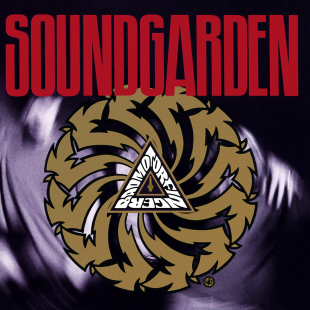
Badmotorfinger is Soundgarden’s heavy machinery record. It arrived in 1991, the same year Nevermind and Ten helped shove Seattle into the national conversation, but it represented a completely different branch of the grunge explosion. This was not punk-pop rupture or arena catharsis. This was heavy, odd-time, riff-driven, art-metal grunge with enough power to make drywall nervous.
The album’s sound is dense, muscular and strange. “Outshined” gave the record its most accessible heavy hook. “Rusty Cage” sounded like a machine trying to escape itself. “Jesus Christ Pose” was confrontational, rhythmic and almost ritualistic. “Searching with My Good Eye Closed” and “Room a Thousand Years Wide” showed how much atmosphere Soundgarden could build without losing heaviness.
What makes Badmotorfinger essential is that it prevents grunge from being reduced to three chords and sad shirts. Soundgarden were technically sharp, rhythmically unusual and sonically huge. They brought Black Sabbath weight, psychedelic edges and progressive instincts into a scene that outsiders kept trying to simplify.
The timing matters too. In 1991, Seattle stopped feeling like a local rumor and started feeling like the future. Badmotorfinger was part of that shift, but it did not sound like anyone else in the pile. It is one of the records that makes the Seattle grunge scene feel like a real ecosystem instead of one tidy marketing label.
In the Big 4 mythology, Badmotorfinger is the record that proves Soundgarden were not simply another Seattle band. They were the heavy, weird side of the entire movement, and this is the album where that identity became impossible to ignore.
Jar of Flies — Alice in Chains
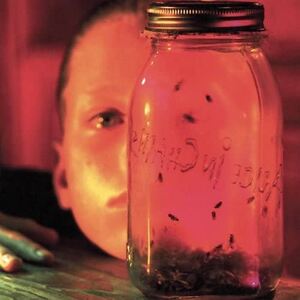
Jar of Flies is technically an EP, but leaving it off a best grunge albums page would be a crime against every late-night bedroom stereo that ever had to process feelings with no adult supervision. Alice in Chains stripped back the volume and somehow made the room heavier. That is the magic of this record. It changes the texture without changing the emotional weight.
Coming after Dirt, the record feels like the aftermath. It is quieter, more acoustic, more reflective and still deeply haunted. “Nutshell” is one of the most devastating songs in the entire grunge catalog. “No Excuses” gave the band a more accessible acoustic hit without losing their identity. “I Stay Away” brought strings and weird beauty into the mix. “Don’t Follow” and “Rotten Apple” deepened the mood, making the EP feel like a dim room where nobody is pretending things are okay.
What makes Jar of Flies so important is how it connects to the softer side of grunge without making that softness comfortable. Acoustic did not mean safe. Unplugged did not mean healed. Alice in Chains understood that quiet can be terrifying when the song has nowhere to hide.
That is why the softer side of grunge still hits so hard. The stripped-down moments were not coffeehouse decoration. They were damage with fewer amps. From Alice in Chains to Nirvana to Pearl Jam, MTV Unplugged and the softer side of grunge proved that acoustic guitars could still leave a mark.
Jar of Flies also deepens the Alice in Chains story because it shows how much of the band’s darkness lived in melody, atmosphere and harmony. The volume changed. The ghosts stayed.
Vs. — Pearl Jam
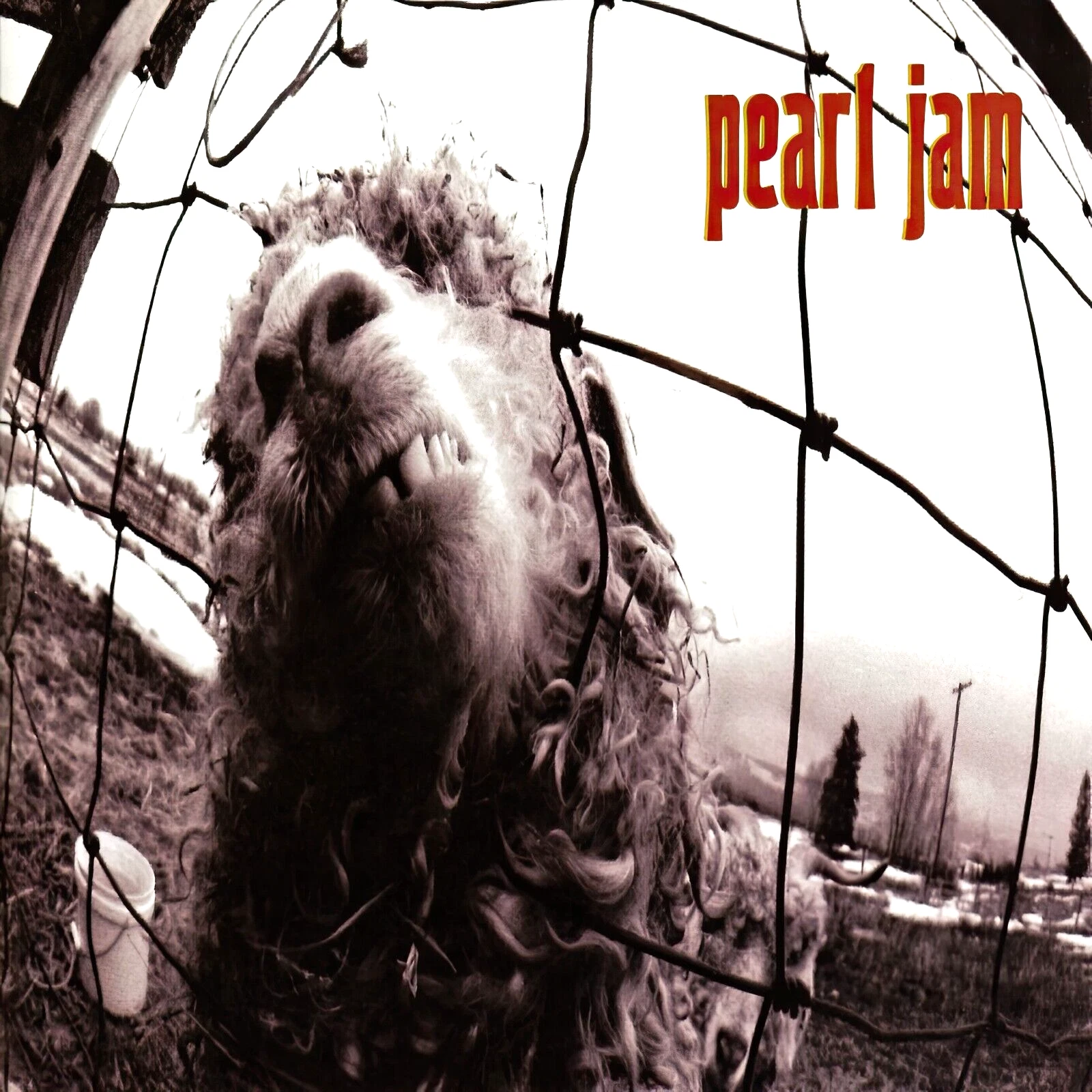
Vs. is Pearl Jam reacting to becoming huge. Ten turned the band into one of the defining names of the decade, and Vs. sounds like a band looking at that machine and deciding to kick the tires until something falls off. It is rawer, angrier, more immediate and less polished than the debut.
The album opens with “Go,” which immediately tells you Pearl Jam are not simply trying to remake Ten. “Animal” keeps the pressure up. “Daughter” gives the record one of its most emotionally direct and radio-friendly moments. “Elderly Woman Behind the Counter in a Small Town” expands the band’s storytelling and acoustic side. “Rearviewmirror” is one of their greatest driving songs, full of escape, motion and release. “Leash” captures the band’s tension with audience, youth, anger and expectation.
What makes Vs. essential is that it is a follow-up album with a spine. Pearl Jam could have chosen the safest possible path after Ten. Instead, they made something sharper and more resistant. The album carries the sound of success becoming uncomfortable, which is very much part of the larger grunge story.
By the time Vs. hit, Pearl Jam were already learning that fame came with a bill, and the band seemed deeply uninterested in paying quietly. That tension became part of their identity. The group’s fights with the machine, its fans, its own momentum and the expectations around grunge are a huge reason Pearl Jam became more than a 90s moment.
In Gen X terms, Vs. is the album that made Pearl Jam feel less like a debut phenomenon and more like a long argument with the industry, the audience and themselves. That argument became one of the reasons they lasted.
In Utero — Nirvana
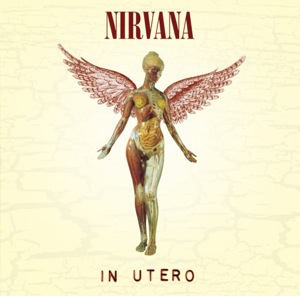
In Utero is Nirvana refusing to become the clean version of itself. After Nevermind became a cultural earthquake, the easiest move would have been to make Nevermind Part II: More Plaid, Same Problems. Instead, Nirvana made a record that was rougher, sharper, stranger and more hostile to easy consumption.
The album still has undeniable songs. “Heart-Shaped Box” is unsettling and memorable. “All Apologies” is one of Nirvana’s most enduring moments. “Pennyroyal Tea” carries exhaustion and bleak melody. “Serve the Servants” opens the album with a shrug that somehow feels like a thesis statement. “Frances Farmer Will Have Her Revenge on Seattle” and “Milk It” push into harsher territory, while “Rape Me” and “Scentless Apprentice” show the band refusing to be turned into something comfortable.
The sound of In Utero matters. It is abrasive on purpose. It rejects some of the polish that helped Nevermind travel so far. That does not make it anti-song; it makes it anti-surrender. The album captures the pressure of being turned into a symbol and the impossibility of returning to the underground once everyone has found the basement.
In Utero is the uncomfortable second half of Nirvana’s mainstream story. Nevermind kicked open the door, but this album looked at the crowd rushing in and said, basically, “You sure you wanted the real version?” It is the kind of record that makes Nirvana’s 90s impact feel complicated instead of clean.
In the larger grunge narrative, In Utero represents the point where fame became part of the music’s subject matter. It is not the sound of a band trying to win. It is the sound of a band trying not to be swallowed by winning.
Vitalogy — Pearl Jam
Vitalogy is Pearl Jam getting stranger, spikier and more resistant. It is not as instantly accessible as Ten and not as direct as Vs., but that is exactly why it matters. The album sounds like a band refusing to become too easy to package. In the middle of grunge’s mainstream peak, Pearl Jam made a record that challenged its own audience.
“Better Man” became the obvious classic, but the album’s identity is bigger than one song. “Corduroy” is one of Pearl Jam’s best statements on fame, ownership and resistance. “Not for You” practically snarls at the machine. “Nothingman” and “Immortality” bring emotional weight and quiet devastation. “Spin the Black Circle” throws punk energy into the mix. The odd fragments and strange tracks make the record feel less polished, but they also make it feel more alive.
Vitalogy matters because it shows Pearl Jam choosing difficulty at a moment when the safer path was sitting right there with a major-label marketing budget and a stack of expectations. The band’s refusal to simply become a hit-making machine helped turn their career into something longer and deeper.
Vitalogy feels like Pearl Jam drawing a line in the dirt. The band could have turned itself into a smooth radio machine, but instead it made something jagged, strange and occasionally difficult just to remind everyone this was not a customer-service experience. That stubbornness is why Pearl Jam’s grunge story still feels different from everyone else’s.
In the album-era memory, Vitalogy also mattered as an object. It felt like a weird old medical book, a physical artifact, not just a disc. That was part of the charm. Grunge album art could feel like a clue, a warning label or something found in a box at a thrift store.
Temple of the Dog — Temple of the Dog
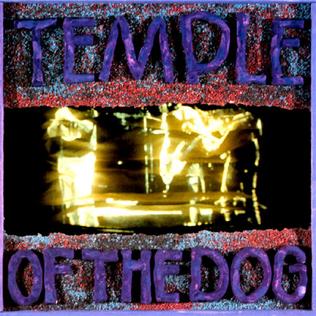
Temple of the Dog is essential because it sits at the emotional crossroads of Seattle grunge. The album was created as a tribute to Andrew Wood of Mother Love Bone, and it connects Chris Cornell, Soundgarden, Mother Love Bone and the future Pearl Jam story. It is not just a side project. It is a grief document, a bridge and a snapshot of the Seattle family tree before the gold rush fully hit.
“Hunger Strike” became the track everyone knows because Chris Cornell and Eddie Vedder’s voices together feel like two Seattle futures sharing the same microphone. Cornell brings huge soulful mourning. Vedder enters with raw urgency, sounding like the next chapter before the chapter even has a title. “Say Hello 2 Heaven” is the album’s most direct tribute. “Reach Down” stretches into long-form grief and release. “Call Me a Dog” and “Times of Trouble” deepen the record’s emotional palette.
The album’s importance grew after the fact, as Soundgarden and Pearl Jam became massive. That delayed recognition makes it feel even more powerful. This was not calculated superstar branding. It was grief before the scene became a national myth.
To really understand why this record matters, you have to go back to the messy, emotional family tree of the Seattle scene, where Mother Love Bone, Soundgarden, Pearl Jam and Temple of the Dog were all tangled together before grunge became a national mythology. The rise and fall of the Seattle grunge scene was not just a business story. It was grief, friendship, timing, noise and a lot of people suddenly trying to explain something they had not actually built.
In the full grunge album story, Temple of the Dog reminds readers that Seattle was human before it was iconic. These were not just band logos and mythic album covers. These were friends, losses, tributes and songs written before the world showed up with cameras and a flannel budget.
Essential Grunge Albums Ranked 11–20
The next ten records expand the story beyond the obvious Big 4 core. This is where the scene gets more interesting: Northwest side roads, Sub Pop fuzz, lost Seattle roots, women of 90s alternative, sludge influence and the grunge-adjacent radio wave that followed Seattle’s explosion.
Sweet Oblivion — Screaming Trees
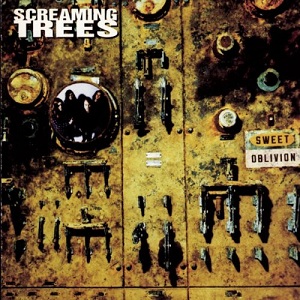
Sweet Oblivion proves the grunge story was never only four bands. Screaming Trees brought a psychedelic, rootsy, rough-edged Northwest sound that did not fit neatly into the standard flannel shorthand. Mark Lanegan’s voice sounded weathered, deep and lived-in, giving the band a gravity that felt older than the MTV moment around them.
“Nearly Lost You” is the obvious gateway, especially because of its connection to the Singles soundtrack, but the album has far more going on. “Shadow of the Season” opens with a dark sweep. “Dollar Bill” is one of the band’s best melodies. “More or Less” and “Julie Paradise” show how the Trees could sound psychedelic without floating away from the heavy 90s mood.
The Singles era helped turn Seattle into a soundtrack as much as a scene, and Screaming Trees fit that mood perfectly. They were not the most obvious grunge band for casual listeners, but that was part of the appeal. Their sound belonged to the back roads of the Northwest — less magazine-cover mythology, more rainy highway, cracked windshield and one very intense voice coming through the speakers.
Every Good Boy Deserves Fudge — Mudhoney
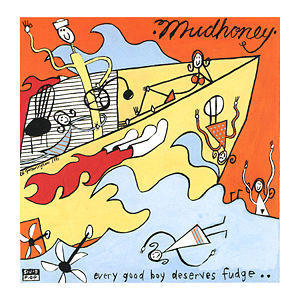
Mudhoney are essential because they capture grunge before it became a national lifestyle package. Every Good Boy Deserves Fudge is messy, funny, fuzzy, loose and deeply connected to the Sub Pop version of Seattle’s mythology. It is not the album that sold the most. It is the album that reminds you what the scene sounded like before everybody started explaining it on television.
Where later grunge mythology became heavy with tragedy and generational importance, Mudhoney kept the garage-punk filth and sarcasm alive. Their music had attitude without becoming heroic. It sounded like the joke and the threat at the same time. That makes them crucial to understanding the movement’s roots.
Mudhoney are the antidote to the cleaned-up version of grunge history. Before the fashion spreads, before the label bidding wars, before every department store pretended flannel was a bold lifestyle choice, there was fuzz, sarcasm, local noise and a scene that did not care whether the mainstream approved. That early Seattle chaos is what made the later explosion feel dangerous in the first place.
Apple — Mother Love Bone
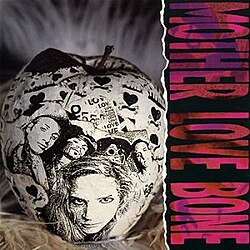
Apple matters because Mother Love Bone represent one of the great “what if” branches of the Seattle story. Andrew Wood brought glam, personality, melody and theatrical vulnerability into a scene that would later be remembered more narrowly as flannel and distortion. The band’s sound does not fit the simplest grunge stereotype, and that is exactly why it is important.
The album points toward several futures at once. It carries glam rock’s color, hard rock’s ambition and Seattle’s underground connections. After Wood’s death, the emotional weight around Mother Love Bone helped lead to Temple of the Dog and Pearl Jam. That makes Apple less like a side note and more like a missing chapter in the grunge family tree.
Apple is where the Seattle story feels less like a genre and more like a family tree with broken branches. You can hear a version of the future that never fully happened, and you can feel the roots of what came after. Without Mother Love Bone, the Pearl Jam and Temple of the Dog stories do not hit the same way.
Live Through This — Hole
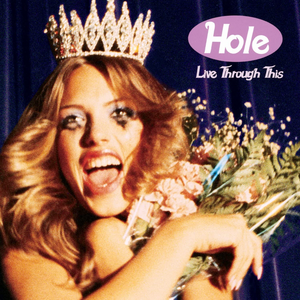
Live Through This belongs here because any serious 90s grunge and alternative album map needs the women who made the decade sharper, angrier and more complicated. Hole were not a Seattle grunge band, but this album lived inside the same heavy-guitar, post-Nirvana, emotionally exposed alternative moment. It brought rage, vulnerability, sarcasm, beauty, ugliness and confrontation into one of the decade’s most important records.
The album is melodic but dangerous. “Violet” opens with quiet tension before exploding into one of the decade’s great release valves. “Doll Parts” turns insecurity and exposure into a classic. “Miss World” is both beauty-pageant satire and personal unraveling. “Softer, Softest” and “Jennifer’s Body” deepen the record’s bruised atmosphere.
That is why this record belongs next to the bigger story of women in 90s alternative rock — the artists who made the decade louder, sharper, angrier and a lot less one-note than the magazine-cover version of grunge history. The 90s guitar boom was not just a bunch of sad dudes in flannel, no matter how many VH1 specials tried to edit it that way.
Bricks Are Heavy — L7
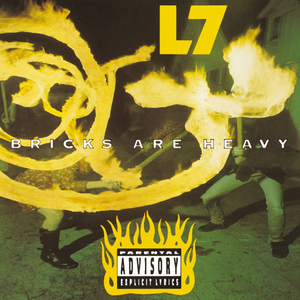
L7 brought punk bite, heavy riffs, humor and feminist force into the grunge-era alternative explosion. Bricks Are Heavy is catchy without becoming polite, loud without becoming dumb and sarcastic without becoming empty. It is the sound of a band with zero interest in being packaged as anyone’s acceptable version of angry.
“Pretend We’re Dead” is the famous track, but the whole album has teeth. “Everglade,” “Monster,” “Wargasm” and “Shitlist” all carry the band’s mix of riff-heavy force and sneering humor. L7 did not sound like Seattle grunge, but they absolutely belonged to the same 90s shift away from glossy rock fantasy.
Bricks Are Heavy belongs in the same messy neighborhood as the best 90s alternative rock songs that defined the decade. It was loud, funny, confrontational and allergic to being polished into something safe. Basically, exactly what the decade needed before everything got focus-grouped into a radio format with cargo shorts.
Facelift — Alice in Chains
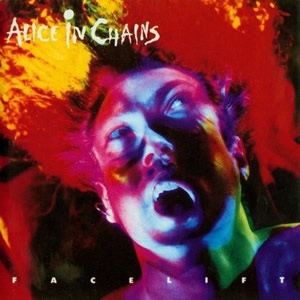
Facelift arrived before the full grunge explosion and helped prove that Alice in Chains were not waiting for Seattle to become fashionable. “Man in the Box” became the signature track, but the album’s importance is bigger than one song. It introduced the band’s heavy, metallic, shadowy sound before the wider mainstream had fully figured out what it wanted from grunge.
The record still carries traces of late-80s hard rock and metal, but Alice in Chains already sounded colder, darker and more distinctive than most of the surrounding scene. Layne Staley’s voice and Jerry Cantrell’s songwriting gave the band an identity that would become fully devastating on Dirt.
Facelift is the first major doorway into the band’s haunted world. Before Dirt made everything darker, this album already had the weight, the harmonies and the sense that Alice in Chains were dragging something heavier than fashion into the room. It is the beginning of the long, shadowy walk through one of grunge’s most powerful catalogs.
Houdini — Melvins
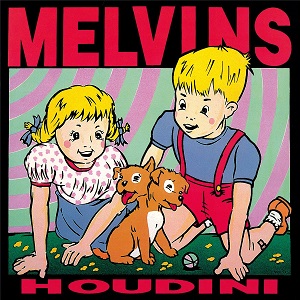
The Melvins are crucial because they helped shape the heavy underground vocabulary around grunge even though they were never built for mainstream acceptance. Houdini is slow, sludgy, weird, abrasive and essential if you want to understand the heavier DNA that fed the Seattle and Northwest scene.
This is not the album for someone who only wants the big MTV hits. This is the album for understanding why grunge’s heaviness did not appear from nowhere. The Melvins influenced the environment around Nirvana and the broader underground, adding sludge, weight and refusal into the mix.
Houdini is where the deeper roots get ugly in the best way. Not every essential grunge-era album is easy, and not every influence record comes with a radio-friendly handshake. The Melvins help explain why the Northwest sound had so much weight in its bones before the mainstream showed up asking if the distortion could be a little more marketable.
Core — Stone Temple Pilots
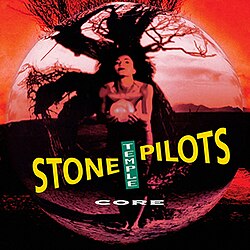
Stone Temple Pilots were not part of the Seattle scene, and yes, people will argue about this until the last used CD store closes. But Core belongs on a 90s grunge-era album list because it became one of the biggest grunge-adjacent records of the early 90s radio moment.
“Plush” became the obvious classic, but “Sex Type Thing,” “Wicked Garden,” “Creep” and “Dead & Bloated” helped define how far the grunge-era sound had spread beyond Seattle. The album carried heavy guitars, brooding vocals and dark melodies that fit the post-Seattle radio landscape, even if purists kept reaching for the complaint box.
Core is where the grunge mood starts turning national, commercial and messy. It was not Seattle, but it lived in the world Seattle cracked open. That makes it part of the argument around post-grunge and alternative becoming radio rock — the moment the sound spread, mutated and started making purists sigh into their import CDs.
Down on the Upside — Soundgarden
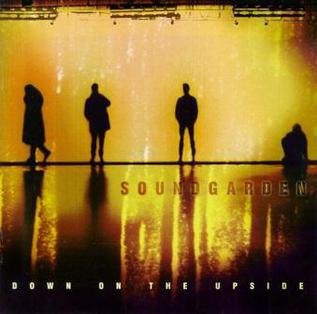
Down on the Upside is the sound of Soundgarden after the biggest wave had already crashed. It is looser, moodier and less immediately monumental than Superunknown, but that makes it interesting. The album feels like a band stretching, fraying and refusing to simply remake its biggest moment.
“Pretty Noose,” “Burden in My Hand,” “Blow Up the Outside World” and “Ty Cobb” show different versions of late-period Soundgarden: heavy, strange, acoustic, aggressive, weary and still unmistakable. The record arrived when the grunge center was already shifting, which gives it a bittersweet place in the timeline.
By the time this album landed, the first grunge explosion had already started to sag under its own mythology. That makes it feel less like the beginning of the boom and more like the sound of the aftermath. Soundgarden were still powerful, still strange and still heavy, but the air around the genre had changed.
Dust — Screaming Trees
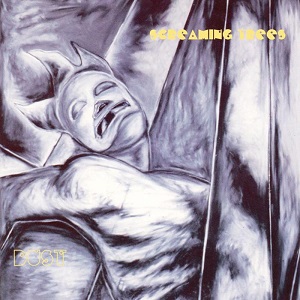
Dust is one of the great late grunge-era records, and it deserves more credit than it usually gets. Screaming Trees leaned into their psychedelic, rootsy, weathered sound, with Mark Lanegan’s voice giving the album a deep, shadowy pull. It does not sound like a band chasing the first wave. It sounds like a band aging into its own atmosphere.
“All I Know,” “Sworn and Broken,” “Look at You” and “Dying Days” show a group that belonged to the Northwest story but never fit neatly into the most marketable version of grunge. That is part of why Dust lasts. It is not a costume. It is a mood.
As a closing pick, Dust reminds us that grunge did not vanish the second the mainstream moved on. The best bands kept making records that complicated the mythology. The Trees sounded less like a trend and more like weather, which is probably why their best work still feels underappreciated and weirdly timeless.
Keep Rewinding the 90s Alternative and Grunge Story
The album list is the record shelf. The full grunge rabbit hole keeps going through the songs, band stories, Seattle scene history, MTV moments, fashion fallout, unplugged performances, movie soundtracks, women of alternative and the post-grunge aftermath. Basically, the whole emotional storage unit.
Questions About the Best 90s Grunge Albums
What is the best 90s grunge album?
Nevermind by Nirvana is usually considered the most important 90s grunge album because it pushed grunge and alternative rock into the mainstream and changed the direction of the decade.
What are the Big 4 grunge albums?
The Big 4 grunge album conversation usually starts with Nirvana’s Nevermind, Pearl Jam’s Ten, Soundgarden’s Superunknown or Badmotorfinger, and Alice in Chains’ Dirt.
Is Alice in Chains’ Dirt a grunge album?
Yes. Dirt is one of the defining grunge albums, though it also has strong metal influences. Its dark harmonies, heavy riffs and emotional weight make it central to the genre.
Is Jar of Flies an album or an EP?
Jar of Flies is technically an EP, but it is often included in grunge album discussions because of its huge impact, quality and importance to Alice in Chains’ catalog.
Why is Ten by Pearl Jam so important?
Ten gave grunge a more emotional, arena-sized and cathartic side through songs like “Alive,” “Even Flow,” “Jeremy,” “Black” and “Release.”
Why is Superunknown by Soundgarden important?
Superunknown proved grunge could be heavy, weird, psychedelic, melodic and commercially massive at the same time, with songs like “Black Hole Sun,” “Spoonman” and “Fell on Black Days.”
Was grunge only a Seattle genre?
Grunge is most closely tied to Seattle and the Pacific Northwest, but the 90s grunge era also included grunge-adjacent alternative albums from outside Seattle.
Why are Hole and L7 included in grunge album lists?
Hole and L7 are often included because they were central to the wider 90s alternative and heavy guitar movement that overlapped with grunge, even though they were not Seattle grunge bands.
What is the darkest grunge album?
Dirt by Alice in Chains is often considered the darkest major grunge album because of its themes of addiction, shame, trauma, isolation and emotional collapse.
What grunge album should beginners start with?
Beginners should start with Nevermind, Ten, Dirt, Superunknown and Badmotorfinger. Those five records cover the main branches of the genre.
Why do 90s grunge albums still matter?
They still matter because they changed mainstream rock, elevated alternative music, challenged glossy rock imagery and produced songs and albums that remain emotionally powerful decades later.
What is the connection between grunge albums and Gen X culture?
Grunge albums matched Gen X culture through sarcasm, emotional restraint, thrift-store style, MTV habits, record-store discovery, CD collecting and suspicion of polished mainstream narratives.
Keep the Grunge Rewind Going
Get more 70s, 80s and 90s nostalgia, music rabbit holes, TV memories, toy chaos and Gen X cultural therapy from Smells Like Gen X.