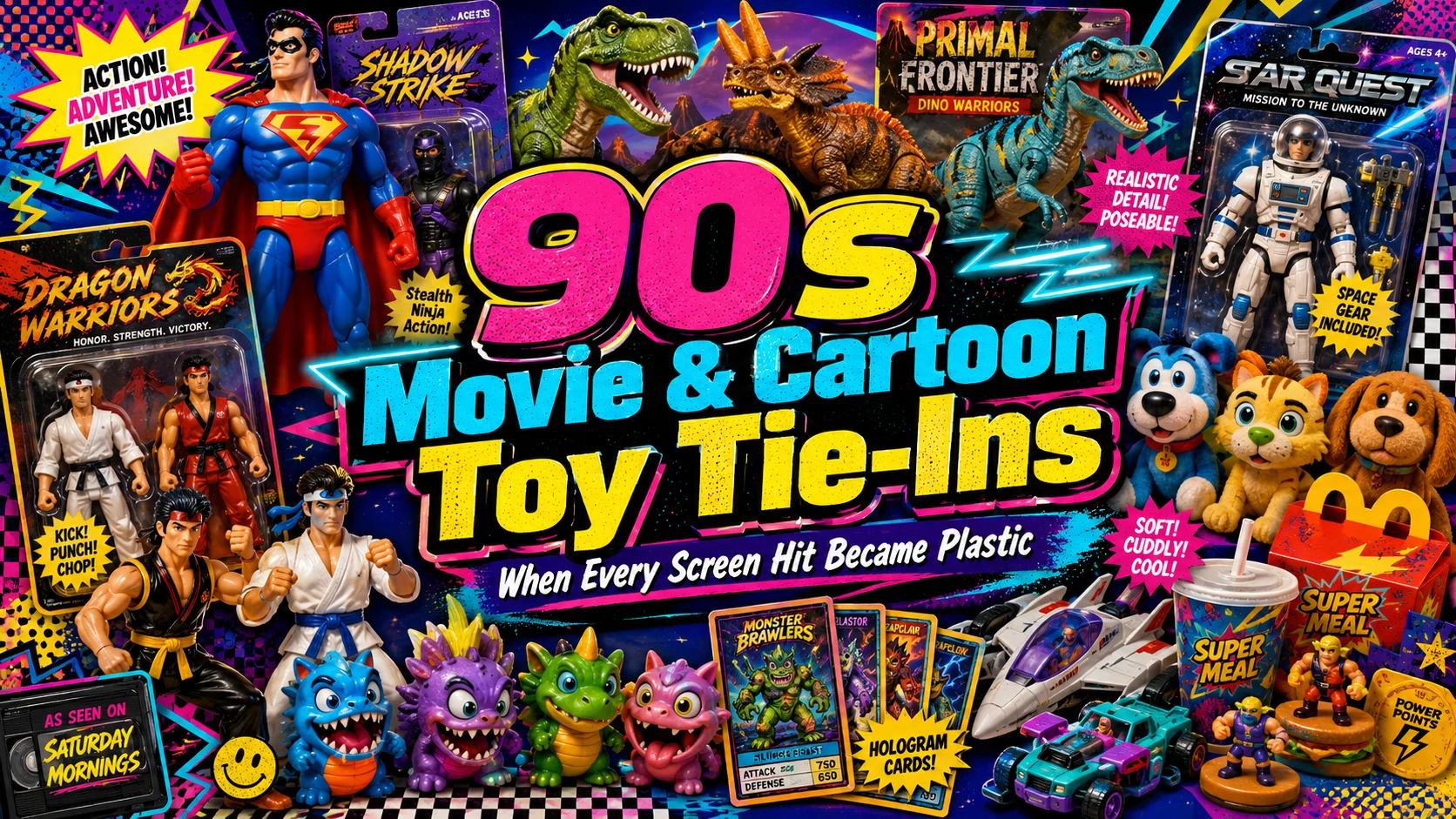
90s Movie & Cartoon Toy Tie-Ins: When Every Screen Hit Became Plastic
The 90s toy aisle did not wait around. If a movie blew up, a cartoon hit Saturday morning, or a character started appearing on lunchboxes, the plastic version was already on a shelf somewhere staring at your allowance. Batman, Jurassic Park, Power Rangers, X-Men, Spider-Man, and Ninja Turtles helped turn screens into shelves, while Pokémon, Toy Story, Star Wars Episode I, Space Jam, The Lion King, and Aladdin proved the toy aisle could follow almost any pop-culture explosion before the popcorn was cold.
This is the rewind for 90s movie toys, cartoon toys, and toy tie-ins: the action figures, vehicles, dinosaurs, plush, Happy Meal prizes, playsets, trading cards, fast-food promos, collector packaging, and cartoon-to-toy feedback loop that made kids feel like every TV show and movie came with a shopping list.
90s Toys
Head back to the full 90s Toys hub for action figures, collectibles, electronic pets, handheld games, dolls, plush, board games, backyard toys, commercials, and the rest of the decade’s plastic chaos.
Plastic Combat90s Action Figure Wars
TMNT, Power Rangers, Toy Biz X-Men, Kenner Batman, Jurassic Park, Spawn, WWF Hasbro, Street Sharks, Star Wars, and the action-figure aisle arms race.
Cards, Rarity & PanicCollectible Toy Crazes
So What Were the Big 90s Movie and Cartoon Toy Tie-Ins?
The big 90s movie and cartoon toy tie-ins were the lines that made kids feel like every screen obsession had to be recreated on the floor: Batman, Jurassic Park, Toy Story, Star Wars Episode I, Space Jam, Disney Renaissance toys like The Lion King and Aladdin, Mighty Morphin Power Rangers, Pokémon, X-Men, Spider-Man, and Teenage Mutant Ninja Turtles.
What made the 90s tie-in machine so powerful was timing. A kid saw the movie, watched the cartoon, heard the commercial, ate the Happy Meal, carried the backpack, and then walked into a toy store where the characters were waiting in plastic form. The toy was not separate from the entertainment. It was the next chapter.
This was also the decade when tie-ins started feeling bigger than simple merchandise. The best lines had figures, vehicles, playsets, plush, trading cards, role-play gear, fast-food toys, collector packaging, and enough variants to turn one character into an entire shelf. “I already have Batman” was not a valid argument if this Batman had a different suit and a grappling accessory. Obviously.
Why the 90s Were Built for Toy Tie-Ins
The 90s were perfect for toy tie-ins because kids were surrounded by entertainment, but not buried in endless on-demand options. A movie could dominate the summer. A Saturday morning cartoon could define a year. A fast-food promo could become a school lunch conversation. A toy commercial could make a figure seem essential even if the character had six seconds of screen time.
The decade still had the 80s cartoon-to-toy machine, but it added bigger movies, stronger licensing, video-game connections, collectible culture, and fast-food promotions. The result was a toy aisle where almost everything felt connected to something else. Characters did not just live in one place. They moved from theater to cartoon to lunchbox to cereal box to action figure to trading card to birthday cake.
That is why 90s tie-ins hit differently. The toy did not need to explain itself. Kids already knew who Batman was. They already knew Jurassic Park dinosaurs were cool. They already knew Woody and Buzz. They already knew Power Rangers morphing poses, Pokémon names, X-Men costumes, and Spider-Man villains. The screen had already done half the selling, and 90s toy stores finished the job with endcaps, glass cases, mall shelves, catalogs, and Saturday-afternoon aisle pressure.
The 90s tie-in formula
- Screen recognition: kids saw the character first, then wanted the toy because the story already mattered.
- Commercial amplification: ads made the toy version look like an extension of the movie or cartoon.
- Fast-food reach: Happy Meal and promo toys put tiny versions of big franchises into everyone’s hands.
- Variant overload: new suits, weapons, vehicles, dinosaurs, villains, and themed figures kept shelves refreshed.
- Playset logic: one figure was never enough if the vehicle, headquarters, villain, or dinosaur cage was right there.
The best 90s tie-in toys worked because they let kids keep playing after the screen went black. The movie ended. The cartoon episode ended. The commercial ended. But the toy stayed on the floor, ready to continue the story with worse dialogue and better sound effects.
90s Movie and Cartoon Toy Tie-In Timeline
A fast visual map of the screen-to-shelf machine
The 90s tie-in wave moved from Batman and TMNT carrying early-decade action shelves to Jurassic Park turning dinosaurs into blockbuster plastic, Power Rangers turning TV into a toy emergency, Disney and Toy Story flooding plush and figure aisles, Space Jam mixing movies and sports merch, Pokémon converting cartoons, games, cards, and toys into one giant playground system, and Star Wars Episode I proving that a movie could completely invade the toy aisle before release day.
TMNT keeps the aisle loud
Cartoons, movies, figures, vehicles, playsets, and pizza-fueled kid obsession keep the early 90s moving.
Batman returns again and again
Movie suits, animated designs, vehicles, villains, and endless costume variants keep Batman stocked.
Jurassic Park turns fear into toys
Dinosaurs, vehicles, humans, cages, fences, and damage-action features make the movie playable.
Power Rangers becomes a toy emergency
TV episodes, martial arts, robots, role-play gear, Megazords, and figures create instant shelf panic.
The Lion King and Disney Renaissance rule
Plush, figures, fast-food toys, soundtracks, backpacks, and bedroom decor make Disney unavoidable.
Toy Story bends reality
Woody, Buzz, aliens, Mr. Potato Head, and a movie literally about toys make the toy aisle feel meta.
Space Jam makes basketball plastic
Michael Jordan, Looney Tunes, Monstars, fast-food toys, and sports merch become one giant promo wave.
Pokémon connects everything
TV, Game Boy, cards, figures, plush, toys, binders, and recess become one giant ecosystem.
Star Wars Episode I takes over
Figures, vehicles, role-play gear, fast-food promos, packaging, and hype fill the aisle before the movie lands.
The 90s Movie and Cartoon Toy Tie-Ins We Actually Remember
Batman suits, dinosaur cages, Buzz Lightyear wings, Monstars, Megazords, mutants, and Pokémon panic
These toy lines worked because they did not feel random. Kids already knew the characters, worlds, catchphrases, theme songs, and big moments. The toy aisle was basically asking, “Want to keep playing the thing you already care about?” A dangerous question for anyone near a birthday list.
The best 90s tie-ins were not just single figures. They were ecosystems: heroes, villains, vehicles, playsets, side characters, role-play gear, fast-food promos, trading cards, and collector packaging. One screen obsession could take over a bedroom floor, a lunchbox, a backpack, and half a toy-store aisle.
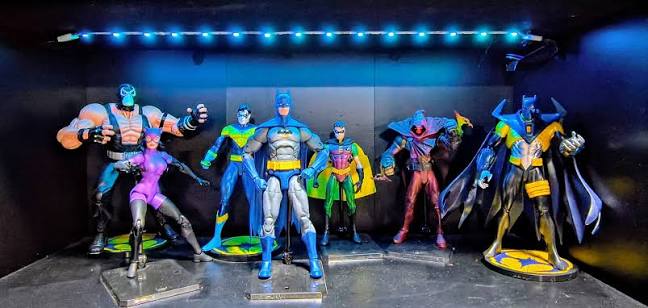
Batman Toys: Movie Suits, Animated Shadows, Vehicles, Villains, and Endless Variants
Batman toys were one of the great 90s toy tie-in machines because Batman could be sold again and again without anyone feeling cheated. Movie Batman, animated Batman, arctic Batman, sonar Batman, scuba Batman, missile-launching Batman, cape-glider Batman — the logic was simple: if the suit changed, it counted.
The line had everything a kid needed: heroes, villains, vehicles, gadgets, and a built-in excuse for dark colors and dramatic packaging. Batman toys felt cooler than normal superhero toys because the whole world looked moody, dangerous, and slightly too adult for the toy aisle, which obviously made kids want it more.
Why Batman variants worked
Batman was the perfect variant character because gadgets were already part of the fantasy. A new suit did not feel random; it felt tactical. If Batman needed a neon snow suit to fight crime in a climate situation nobody asked about, fine. Kids could accept that. The toy aisle did not need courtroom-level logic.
The vehicles were just as important. The Batmobile, Batwing, Batboat, and themed vehicles gave the figures a world to move through. A lone Batman figure was cool. Batman with a vehicle was an event.
Movie Batman vs. animated Batman
The 90s were lucky because Batman existed in multiple toy-friendly forms. The movies gave him blockbuster scale and toy-store urgency. The animated series gave him a stylized world, iconic villains, and weekly visibility. Together, they kept Batman stocked in a way few characters could match.
Villains mattered too. Joker, Penguin, Catwoman, Riddler, Two-Face, Mr. Freeze, and the rest made the line feel complete. Batman needed someone to punch, chase, trap, or throw into a dramatic bedroom-floor scenario.
- Core appeal: suits, gadgets, capes, villains, vehicles, movie branding, and animated-series cool.
- Kid behavior: justifying every variant, losing tiny accessories, launching missiles under furniture, and making Batman fight everyone.
- Most 90s detail: Batman having more outfit changes than a pop star and all of them somehow being “mission gear.”
Batman mattered because he showed how a 90s character could live across movies, cartoons, vehicles, villains, and endless toy variants without losing shelf power.
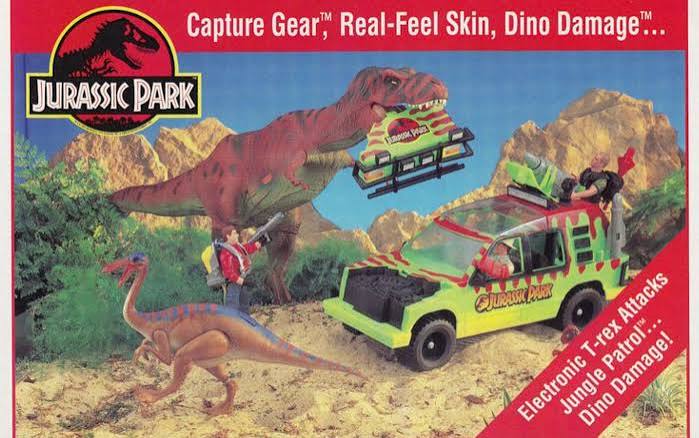
Jurassic Park Toys: Dinosaurs, Damage Features, Vehicles, and One Very Nervous Toy Aisle
Jurassic Park toys had the easiest sales pitch in the world: dinosaurs. Not just generic dinosaurs either. Movie dinosaurs. The logo alone made the toys feel official, dangerous, and more important than whatever plastic T. rex had been sitting in a bin before 1993.
The line worked because the dinosaurs were the main event. Kids liked Alan Grant, Ellie Sattler, vehicles, fences, and capture gear, sure. But the real shelf gravity came from the creatures. A T. rex, raptor, triceratops, dilophosaurus, or any dinosaur with bite, roar, or damage features could dominate a bedroom floor instantly.
Why dinosaurs were perfect tie-in toys
Dinosaurs did not need complex backstory. Kids already understood scale, teeth, danger, and roaring. Jurassic Park added movie excitement, branding, and a modern adventure world around them. Suddenly dinosaurs were not just prehistoric animals. They were blockbuster characters.
The toys also fit multiple play styles. You could recreate movie scenes, stage escapes, attack vehicles, build fences, capture dinosaurs, or just have a T. rex destroy every other toy line you owned. Dinosaurs were excellent at cross-franchise diplomacy, meaning they ate everyone.
The damage-feature genius
Many Jurassic Park toys understood that kids liked visible action. Bite marks, removable panels, capture gear, snapping jaws, and dinosaur damage turned play into little dramatic moments. The toy did not just stand there. It attacked, escaped, broke something, or looked like it had survived something.
That tactile, physical action made the toys feel more alive. A dinosaur with a moving jaw or wound panel was automatically more interesting than a static figure, because kids could repeat the “attack” forever.
- Core appeal: dinosaurs, movie branding, biting action, vehicles, fences, capture gear, and creature scale.
- Kid behavior: making raptors attack everything, losing tiny weapons, staging escapes, and letting the T. rex win.
- Most 90s detail: a movie toy line where the scariest thing on screen became the best thing under the Christmas tree.
Jurassic Park mattered because it showed that a movie tie-in could turn creatures into the heroes of the toy aisle. The dinosaurs were not side merch. They were the whole reason kids showed up.
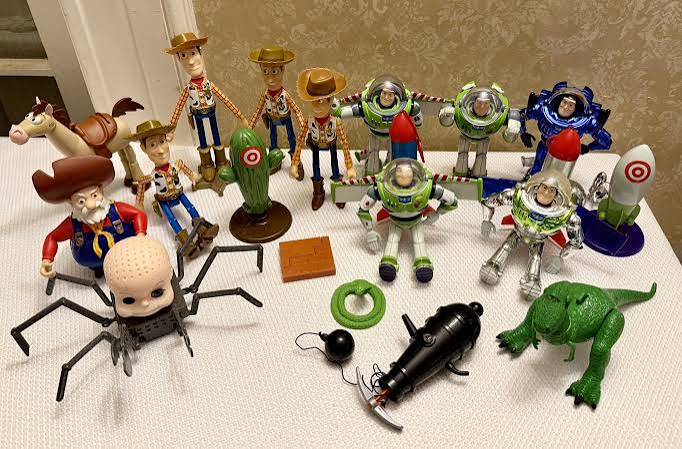
Toy Story Toys: When a Movie About Toys Made the Toy Aisle Feel Weirdly Meta
Toy Story toys had an unfair advantage because the movie was already about toys. Kids watched Woody and Buzz come alive, then walked into a store and saw Woody and Buzz sitting there like the movie had leaked into real life. That is not normal marketing. That is emotional blackmail with pull strings.
Buzz Lightyear was the obvious star for toy shelves. He had wings, buttons, space-ranger branding, a helmet, and the exact kind of plastic confidence that makes a kid instantly understand the appeal. Woody had the cowboy warmth, the pull-string charm, and the weird feeling that maybe he would judge your other toys when you left the room.
Why Toy Story toy tie-ins felt different
Most tie-in toys ask kids to recreate a story. Toy Story asked kids to think about the toys themselves. That made owning the characters feel stranger and more personal. A Buzz figure was not just Buzz from the movie. He was also a toy like the Buzz in the movie. The loop was perfect.
It also made older toy concepts feel new. Mr. Potato Head, Slinky Dog, toy soldiers, aliens, cowboy dolls, space figures — the movie took familiar toy categories and gave them personalities. Suddenly the toy box itself felt like a cast.
The Buzz Lightyear effect
Buzz had everything a 90s kid wanted: sci-fi design, buttons, wings, phrases, armor, and a catchphrase-ready identity. He looked modern while Woody looked classic, which made the pair work. One was old-school toy nostalgia. The other was shiny 90s space plastic.
The toys also benefited from the movie’s emotional hook. Kids were not just buying characters; they were buying the idea that toys mattered. That is a very dangerous message to send to children already building Christmas lists.
- Core appeal: Buzz, Woody, talking features, movie accuracy, secret toy-life fantasy, and emotional attachment.
- Kid behavior: making toys talk to each other, staging rescue missions, yelling catchphrases, and treating Buzz like premium shelf royalty.
- Most 90s detail: a CGI movie making old-school physical toys feel urgent again.
Toy Story mattered because it turned the toy aisle into part of the story. It was not just a movie tie-in. It was a movie about why tie-ins work.
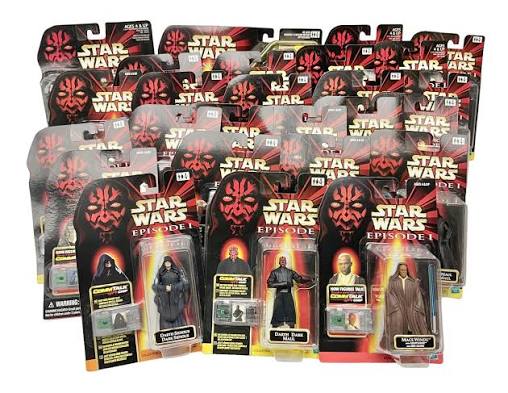
Star Wars Episode I Toys: The Prequel Hype Machine Invaded the Aisle
Star Wars Episode I toys were not just released. They arrived like a retail weather system. By 1999, the hype around the prequels was so huge that toys, packaging, fast-food promotions, displays, role-play gear, figures, vehicles, and collector energy seemed to hit all at once.
The toy aisle looked like Star Wars had taken over a government building. Darth Maul, Qui-Gon Jinn, Obi-Wan Kenobi, Anakin, battle droids, aliens, ships, lightsabers, and accessory-heavy figures filled shelves with the promise that this was not just a movie. This was an event you could purchase in installments.
Why Episode I toys felt enormous
Star Wars already had toy history. The 90s prequel wave tapped into adult nostalgia, kid curiosity, collector culture, and blockbuster hype at the same time. That made the toys feel bigger than ordinary movie merch.
Kids wanted characters and lightsabers. Collectors wanted packaging and completeness. Retailers wanted displays. Everyone wanted to be part of the moment, even before anyone knew how they actually felt about the movie.
Darth Maul and the visual hook
Darth Maul was built for toy shelves: red-and-black face, double-bladed lightsaber, villain energy, and instant visual recognition. Even kids who could not explain the politics of Naboo knew Darth Maul looked cool.
That visual power mattered. 90s toys sold fast when a character could be understood in two seconds from across the aisle. Darth Maul did not need a lecture. He had a double lightsaber. Case closed.
- Core appeal: Star Wars return, lightsabers, vehicles, villains, aliens, packaging, and event-scale hype.
- Kid behavior: wanting Darth Maul, swinging plastic lightsabers indoors, collecting figures, and begging for one more vehicle.
- Most 90s detail: a movie launch so big the toy aisle felt like it needed crowd control.
Episode I mattered because it turned a movie release into a toy-store takeover. Love it, hate it, or still argue about it, the shelf impact was massive.
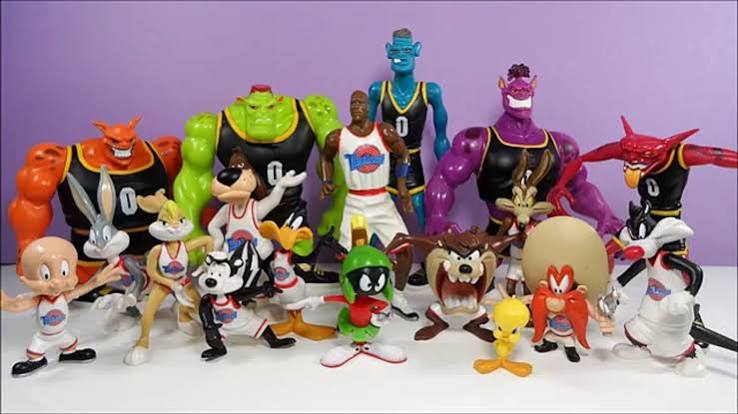
Space Jam Toys: Michael Jordan, Looney Tunes, Monstars, and Basketball Merch Overload
Space Jam toys came from one of the most 90s premises imaginable: Michael Jordan, Looney Tunes, aliens, basketball, fast-food promos, soundtrack energy, and merch everywhere. It was not subtle. It did not need to be. Kids understood the equation instantly.
The toy appeal came from the mashup. Looney Tunes characters already had recognition. Jordan had superhero-level sports status. The Monstars gave the line villains. Basketball gave the toys action. The movie gave everything a reason to exist together, even if the logic felt like it was assembled during a sugar rush.
Why Space Jam was toy-friendly
The characters were bright, expressive, and instantly recognizable. Bugs, Daffy, Taz, Lola, the Monstars, and Jordan all worked as figures, plush, fast-food toys, and sports-adjacent gear. There was no need for a complex playset mythology. The game itself was the premise.
It also came with a built-in activity: basketball. Kids could watch the movie, buy the toys, wear the gear, shoot hoops, and pretend the driveway had higher stakes than it did. The tie-in escaped the bedroom and moved onto the court.
The fast-food promo effect
Space Jam was exactly the kind of movie that fast-food promotions could amplify. Small toys, cups, boxes, posters, and meal tie-ins made the movie feel unavoidable. For kids, that meant the merch was not only in toy stores. It was in the car on the way home with fries.
That mattered because 90s tie-ins often worked through repetition. The more places a kid saw a property, the bigger it felt. Space Jam showed up everywhere, and that made even small toys feel like part of a huge cultural moment.
- Core appeal: Jordan, Looney Tunes, Monstars, basketball, fast-food promos, and colorful character merch.
- Kid behavior: shooting driveway hoops, quoting cartoons, collecting promo toys, and pretending every layup had alien consequences.
- Most 90s detail: sports celebrity, animation, soundtrack, toys, and fast food becoming one giant kid-marketing smoothie.
Space Jam mattered because it captured the 90s tie-in machine at full blast: sports, cartoons, movies, music, merch, and food promos all working together.
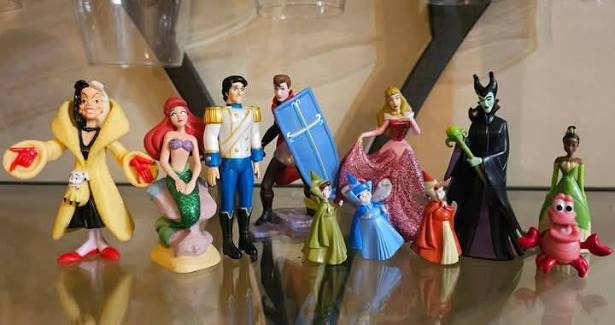
Disney Renaissance Toys: The Lion King, Aladdin, Plush, Figures, and Happy Meal Royalty
Disney Renaissance toys were everywhere in the 90s because Disney’s animated movies were everywhere. The Little Mermaid carried into the decade, Beauty and the Beast, Aladdin, The Lion King, Pocahontas, Hercules, Mulan, and Tarzan all created waves of plush, dolls, figures, playsets, fast-food toys, books, tapes, backpacks, bedding, and school supplies.
The tie-ins worked because Disney characters crossed categories. Simba could be plush. Aladdin could be an action figure. Jasmine could be a doll. Genie could be a fast-food toy. Scar could be a villain figure. The movie worlds were colorful, musical, emotional, and easy to merchandise without needing to explain anything to kids.
Why plush mattered
Disney toys did not have to win the action-figure aisle to matter. Plush was a huge part of the appeal, especially with animal characters. Simba, Nala, Timon, Pumbaa, Abu, Flounder, Sebastian, and other sidekicks turned movie attachment into bedroom comfort.
Plush also made Disney toys feel younger and warmer than the superhero and action-figure shelves. They were not just for battles or vehicles. They were for beds, shelves, car rides, and emotional ownership. Very powerful stuff for a kid who had just cried during an animated lion movie.
Fast-food and Disney were a perfect match
Disney promotions made movie toys feel accessible. Not every kid got the big doll, plush, or playset, but a fast-food toy could bring the character home. Those little figures, cups, boxes, and promo sets helped make each movie feel like a full cultural event.
The repetition mattered: theater posters, trailers, soundtrack songs, Disney Store displays, cereal boxes, Happy Meals, VHS releases, school supplies. By the time the toy aisle got involved, the characters already felt like they lived everywhere.
- Core appeal: plush, dolls, figures, sidekicks, villains, fast-food toys, songs, and emotional movie attachment.
- Kid behavior: collecting side characters, replaying songs, sleeping with plush, and treating Happy Meal toys like sacred artifacts.
- Most 90s detail: a movie soundtrack, VHS tape, plush toy, and Happy Meal promo all working the same household at once.
Disney Renaissance toys mattered because they turned animated movie moments into everyday kid objects. They were softer than the action aisle, but just as powerful.
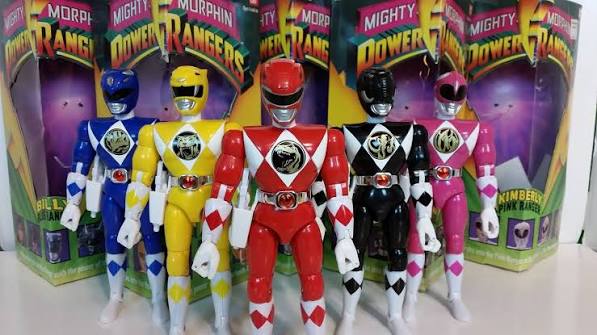
Power Rangers Toys: Morphers, Megazords, Figures, Role-Play Gear, and Retail Panic
Mighty Morphin Power Rangers toys hit like a siren. The show was loud, colorful, fast, weird, and perfectly built for toys. You had heroes, colors, dinosaurs, weapons, villains, monsters, martial arts, giant robots, transformation devices, and a theme song that basically worked as a shopping trigger.
The toy appeal was instant. Kids could pick a Ranger by color, collect the team, want the Morpher, want the weapons, want the Zords, and then want the Megazord because the individual pieces clearly demanded to become one massive robot. This was not a toy line. This was a ladder.
Why the Megazord mattered
The Megazord was the centerpiece because it turned collecting into transformation. Separate vehicles or Zords could combine into something bigger. That gave the toy a ritual and a goal. Kids did not just own pieces; they assembled power.
It also gave the line scale. Figures were great, but giant robots made the whole thing feel larger. A Power Rangers setup with figures and a Megazord could dominate a bedroom floor the way the show dominated after-school conversation.
Role-play gear made kids part of the show
Morphers and weapons were crucial because they let kids perform the fantasy. You did not just play with a Ranger; you could become one for three minutes in a living room until someone told you to stop kicking near the coffee table.
That physical role-play is why Power Rangers stuck so hard. The toys did not only recreate the show. They gave kids gestures, poses, sounds, and phrases to act out themselves. Very few toy lines made playground choreography feel that important.
- Core appeal: team colors, morphers, Megazords, figures, monsters, weapons, role-play, and transformation.
- Kid behavior: picking favorite Rangers, fighting over colors, combining Zords, posing dramatically, and kicking furniture.
- Most 90s detail: an after-school show creating a toy shortage-level panic with foam weapons and giant robots.
Power Rangers mattered because it compressed TV, action figures, role-play, vehicles, monsters, and robot toys into one unstoppable kid-demand machine.
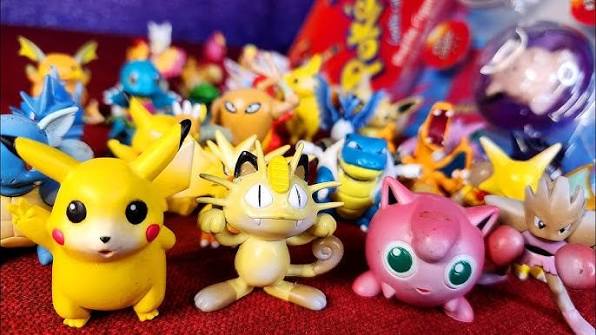
Pokémon Toys: Cards, Plush, Figures, Game Boy, TV, and Playground Currency
Pokémon toys were not just tie-ins. They were part of a whole operating system. The Game Boy games fed the cartoon. The cartoon fed the cards. The cards fed the playground economy. The plush and figures gave kids physical favorites. The binders, link cables, booster packs, and school rumors turned the whole thing into daily life.
By the late 90s, Pokémon was everywhere. Kids did not just like Pikachu. They knew types, evolutions, card rarity, trades, moves, versions, and which kid at school supposedly had a Charizard. This was not casual fandom. This was recess infrastructure.
Why Pokémon was more than a cartoon toy line
Most cartoon toy lines started with the show. Pokémon worked because it had multiple entry points. Some kids came through Game Boy. Some came through cards. Some came through TV. Some came through plush. Some came through a friend who would not stop talking about it.
That made the toys feel connected. A figure was not just a figure. It represented a creature from the show, a card, a game, a trade, a favorite, and possibly an argument on the bus. Everything reinforced everything else.
The card-and-toy overlap
Pokémon cards were the biggest playground currency piece, but the toys mattered because they made the creatures tangible. Plush Pikachu, small figures, battle toys, school supplies, binders, and accessories extended the world into every corner of kid life.
The genius was that collecting never felt finished. There were always more creatures, more cards, more evolutions, more favorites, more trades, and more reasons to ask for one more pack. The toy tie-in was not a single purchase. It was a lifestyle with allowance consequences.
- Core appeal: collecting, trading, battling, favorite creatures, cards, Game Boy, plush, figures, and rarity.
- Kid behavior: carrying binders, negotiating bad trades, begging for booster packs, and treating holographic cards like government documents.
- Most 90s detail: a handheld game, cartoon, card game, toy line, and playground economy becoming one giant kid universe.
Pokémon mattered because it showed what the future of tie-ins looked like: not a toy line attached to a show, but a full system where every format pushed every other format.
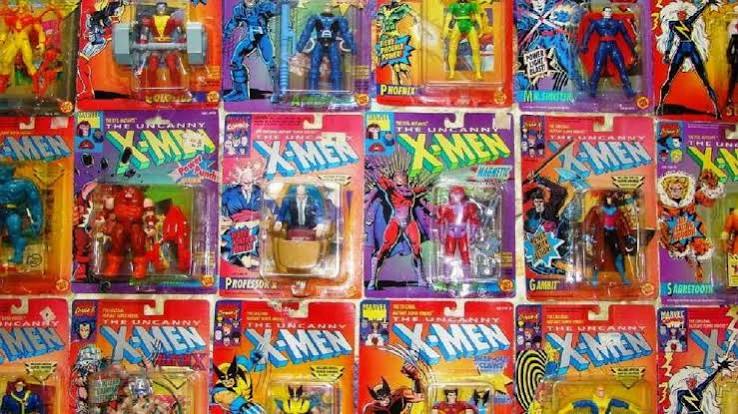
X-Men and Spider-Man Toys: Saturday Morning Marvel Took Over the Pegs
X-Men and Spider-Man toys were powered by Saturday morning Marvel. Before superhero movies became the center of the universe, the 90s cartoons made these characters feel essential. Kids knew Wolverine, Cyclops, Storm, Rogue, Gambit, Beast, Magneto, Venom, Green Goblin, Doctor Octopus, and Spider-Man villains from TV, comics, trading cards, and toy shelves.
Toy Biz figures had a particular 90s magic: bright cards, comic-style art, action features, weird accessories, and deep rosters. The lines rewarded kids who wanted teams, villains, variants, and powers represented physically. One hero was not enough. The team had to assemble. The villains had to show up. The crossover fights had to happen.
Why X-Men worked as toys
X-Men had variety. Every character looked different, had different powers, and felt like a separate play idea. Wolverine had claws. Cyclops had visor energy. Storm controlled weather. Gambit threw cards. Beast looked powerful. Magneto looked like a boss fight. That variety made collecting the team feel satisfying.
The cartoon helped make the roster understandable. Kids did not need to read decades of comics to care. The show gave them voices, drama, costumes, and conflicts. The toy aisle turned that into figures.
Why Spider-Man had staying power
Spider-Man had the best toy advantage: webs. Web accessories, wall-crawling poses, villain fights, and city-based action made him instantly playable. His villains were visually strong too, which made the line more than just Spider-Man variants.
Venom especially had massive 90s energy: bigger, darker, toothier, and cooler in the way kids instantly understood. Spider-Man toys benefited from that villain bench, where every bad guy looked like they could carry a toy card by themselves.
- Core appeal: teams, powers, villains, claws, webs, bright packaging, comic art, and cartoon recognition.
- Kid behavior: building teams, making Wolverine fight everyone, losing web accessories, and turning every crossover into chaos.
- Most 90s detail: understanding Marvel continuity mostly through cartoons, action figures, and trading cards.
X-Men and Spider-Man mattered because they made Marvel a major 90s toy presence before the modern superhero movie machine took over.
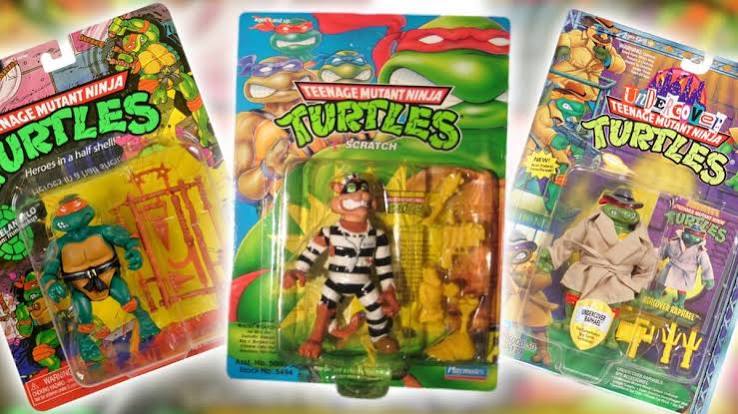
TMNT Tie-Ins: Cartoon, Movie, Vehicles, Playsets, and Pizza-Powered Shelf Chaos
Teenage Mutant Ninja Turtles toys were the perfect bridge into the 90s because they already had the cartoon-to-toy formula down cold, then added movie visibility, vehicles, playsets, villains, role-play gear, and enough variants to make the whole line feel endless.
TMNT worked because the core idea was absurd and instantly kid-friendly: four mutant turtles, ninja weapons, pizza, a rat mentor, sewer headquarters, monsters, mutants, and villains who looked like they had been designed during a dare. The toy aisle did not need to make the concept normal. The weirdness was the product.
Why the four-turtle setup worked
Leonardo, Donatello, Michelangelo, and Raphael gave kids an immediate team structure. Everyone had a favorite. Everyone had a weapon preference. Everyone could argue about which turtle was best with completely unearned confidence.
That team structure made collecting feel natural. You could own one turtle, but the line quietly told you that you needed all four. Then you needed Splinter. Then Shredder. Then Bebop and Rocksteady. Then the Party Wagon. Then the sewer playset. This is how toy shelves got you.
Movie tie-ins kept the momentum going
The TMNT movies gave the franchise another layer of reality. The suits, live-action feel, and darker city vibe made the turtles seem bigger than Saturday morning. For kids, that meant the toy versions had even more power.
TMNT also thrived on variants. Sports turtles, disguise turtles, storage shell turtles, movie turtles, weird-theme turtles — the line understood that kids would accept almost any new version if it looked fun enough and still came with weapons.
- Core appeal: four heroes, weapons, pizza, sewer playsets, vehicles, mutants, villains, movies, and wild variants.
- Kid behavior: picking favorite turtles, losing weapons, making sewer battles, and accepting every new costume as canon enough.
- Most 90s detail: a cartoon, movie, food joke, action-figure line, and vehicle universe all running at once.
TMNT mattered because it carried the 80s toy-cartoon machine into the 90s and proved weird characters could stay powerful across screens, shelves, and lunchroom arguments.
Fast-Food Toys: The Side Quest With Fries
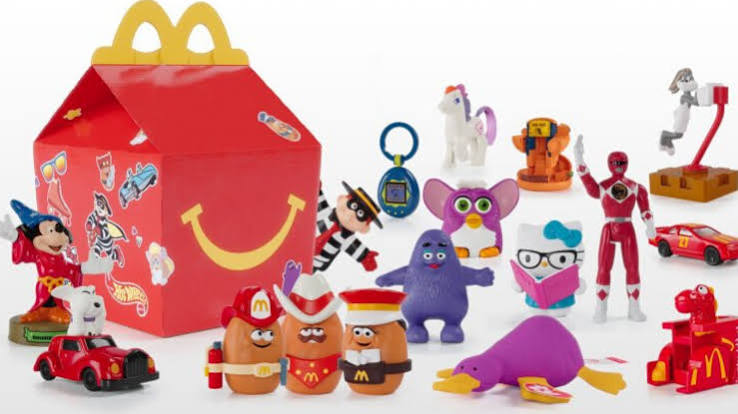
Fast-food tie-ins were one of the most powerful parts of the 90s screen-to-shelf machine because they made movie and cartoon toys feel reachable. Not every kid got the big playset, the vehicle, or the full action-figure wave. But a Happy Meal or promo toy could put a tiny piece of the franchise in your hand before you even got home.
These toys mattered because they were everywhere at once. A movie would hit theaters, the TV ads would run, the toy aisle would fill up, and fast-food chains would add a mini version to the meal. Suddenly the franchise was not just entertainment. It was lunch.
Why fast-food promos worked so well
- Low barrier: kids could get a small toy without needing a full toy-store trip.
- Collectible sets: promos often came in waves, making kids want the whole group.
- Movie timing: the toys usually arrived when the hype was hottest.
- Parent convenience: a meal plus a toy was an easier yes than a full action figure.
- Schoolyard visibility: kids brought the toys, compared them, traded them, and argued over which one was best.
Fast-food toys were not always high quality, but that was not the point. They were small, immediate, promotional, and deeply 90s. A cheap plastic Simba, Batman, Monstar, Star Wars character, or Pokémon promo could still feel like treasure if it came in the right box at the right time.
The Commercial Machine: The Ad Was Half the Toy
90s tie-in toy commercials had a very specific job: make the toy version feel as exciting as the screen version. That meant fast cuts, dramatic narration, kids yelling, close-ups of action features, vehicles launching, villains attacking, dinosaurs roaring, figures posing, and the sacred phrase “each sold separately” doing Olympic-level work in the background.
The ads mattered because they taught kids how to play. A commercial showed what the figure could do, what accessory mattered, what vehicle it belonged in, which villain it needed, and why the playset was suddenly essential. The toy on the shelf was one thing. The commercial version was an entire cinematic universe built in 28 seconds.
Why 90s Movie and Cartoon Toy Tie-Ins Still Hit
These toys still hit because they were attached to big kid memories. You remember the movie theater. You remember Saturday morning. You remember the theme song. You remember the fast-food box. You remember the commercial. You remember the toy aisle. The plastic object is only part of the memory; the whole campaign comes with it.
90s tie-in toys also feel nostalgic because they were physical proof that a story had crossed into your world. A Jurassic Park dinosaur was not just a dinosaur. It was the movie on your floor. A Batman figure was not just a superhero. It was the suit, the vehicle, the villain, the ad, and the whole dark Gotham vibe in your hand.
And maybe the biggest reason they still matter is that they taught kids to expect worlds, not just toys. One figure led to another. One movie led to a line. One cartoon led to vehicles, villains, weapons, trading cards, and fast-food toys. The 90s did not invent media ecosystems, but it absolutely trained a generation to live inside them.
90s Movie and Cartoon Toy Tie-Ins FAQ
What were the biggest 90s movie toy tie-ins?
Some of the biggest 90s movie toy tie-ins included Batman, Jurassic Park, Toy Story, Star Wars Episode I, Space Jam, The Lion King, Aladdin, and other Disney Renaissance movies.
What were the biggest 90s cartoon toy tie-ins?
Major 90s cartoon toy tie-ins included Teenage Mutant Ninja Turtles, Mighty Morphin Power Rangers, Pokémon, X-Men, Spider-Man, Batman: The Animated Series, and other Saturday morning or after-school franchises.
Why were 90s toy tie-ins so successful?
They worked because kids already knew the characters from movies, cartoons, video games, fast-food promos, commercials, trading cards, and schoolyard conversation. The toy aisle extended stories kids were already invested in.
Were fast-food toys important to 90s movie marketing?
Yes. Fast-food toys made movie and cartoon tie-ins more accessible and more visible. They turned major releases into collectible meal promos and helped make franchises feel unavoidable during their hype windows.
Which 90s tie-in toy line had the biggest impact?
It depends on the lane. Jurassic Park dominated movie creature toys, Power Rangers created a TV-to-toy frenzy, Pokémon built a full game-card-cartoon-toy ecosystem, and Star Wars Episode I showed how massive pre-release movie merchandising could become.