Suddenly Susan: How a Forgotten Sitcom Became the #3 Show on TV in 1997

Suddenly Susan:How a Forgotten Sitcom Became the #3 Show on TV in 1997
Suddenly Susan is one of those ratings facts that sounds made up until you see the chart. Brooke Shields’ NBC sitcom launched behind Seinfeld, drew more than 30 million viewers for its premiere, and finished its first season near the very top of television.
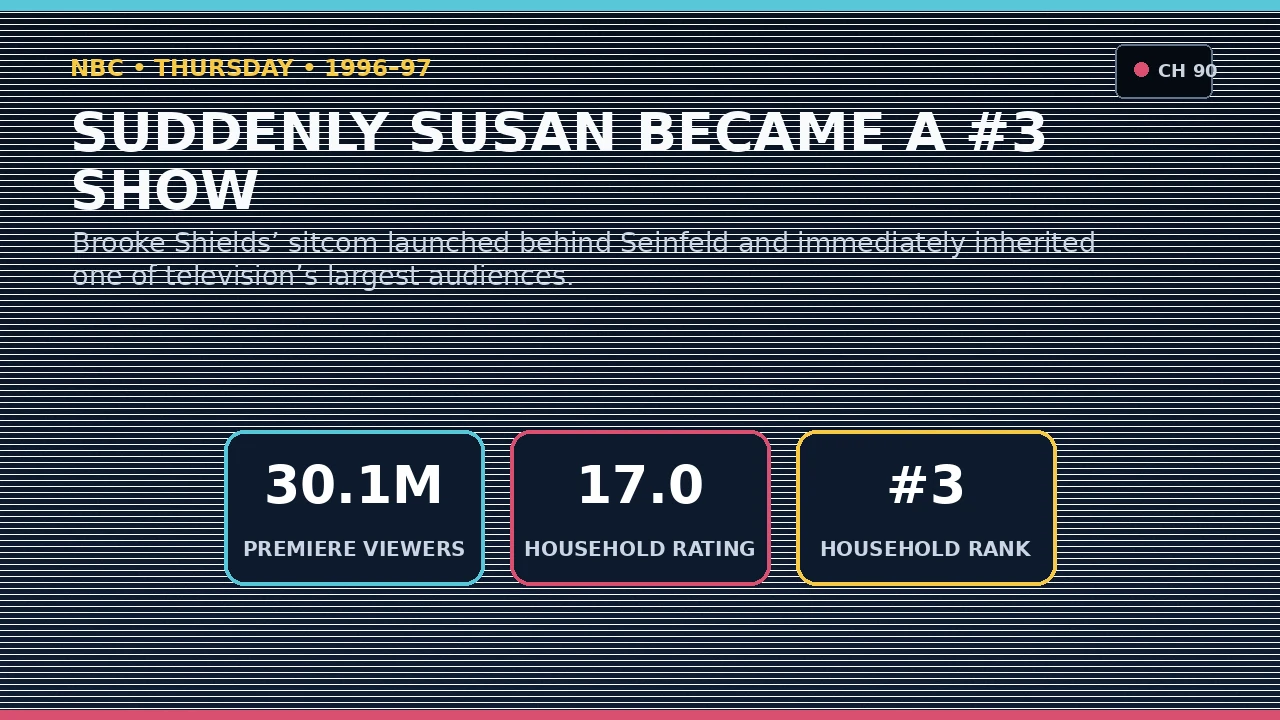
Was Suddenly Susan really the #3 show on television?
By Nielsen household rating, yes. Suddenly Susan finished the 1996–97 season with a 17.0 rating, behind only ER and Seinfeld. Viewer-total summaries can place Friends slightly ahead, so some historical tables list Susan at #4. The household-rating ranking is the basis for this frozen article title.
Suddenly Susan Put Brooke Shields in a San Francisco Magazine Office
The premise was almost perfectly tuned to the broader 1990s television moment: attractive single adults, a stylish workplace, romantic complications and a lead viewers already knew before the first episode aired.
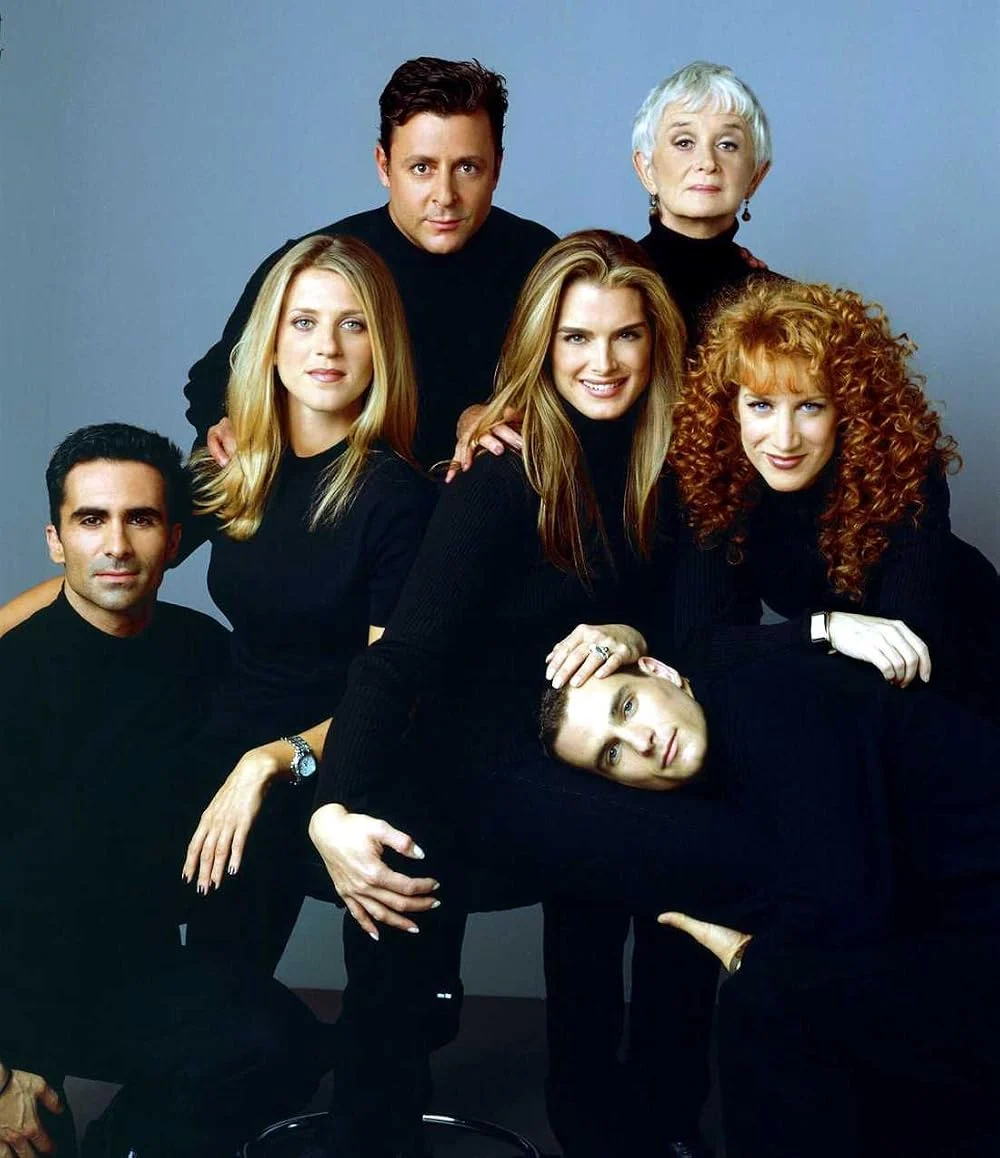
Brooke Shields played Susan Keane, a San Francisco magazine employee who walked away from her wedding and tried to rebuild her life as an independent single woman. Her workplace at The Gate gave the sitcom a ready-made ensemble and a reason to mix dating stories with office comedy.
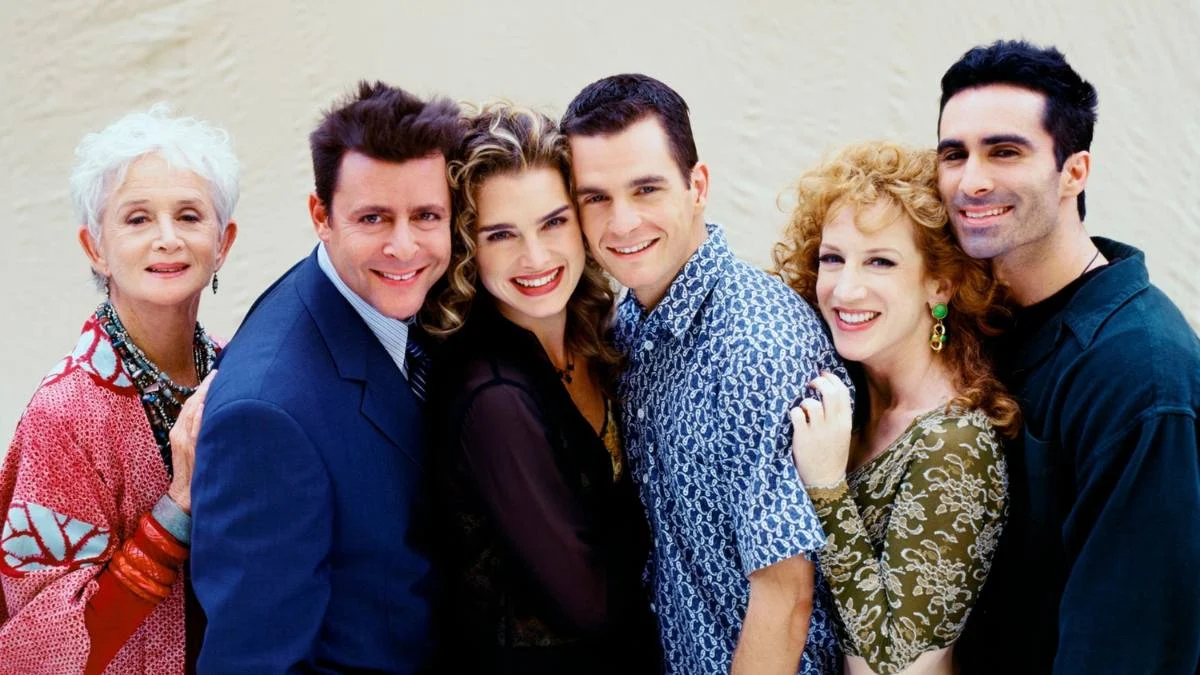
Judd Nelson played Jack Richmond, Susan’s boss and the brother of the man she left at the altar. Kathy Griffin played Vicki Groener, Nestor Carbonell was photographer Luis Rivera, David Strickland played music critic Todd Stites, and Barbara Barrie brought a different generation into the mix as Susan’s grandmother.
The setup was not revolutionary. That was part of the point. NBC had become extremely good at building comedies around single adults, urban workplaces and chosen social circles. Suddenly Susan fit that ecosystem immediately.
What made the show historically unusual was not the premise. It was the scale of the launch.
Suddenly Susan Debuted to More Than 30 Million Viewers
NBC did not ask Suddenly Susan to find an audience from scratch.
The network gave the series the kind of launch position almost every new comedy would have wanted: Thursday night, directly behind Seinfeld. The Los Angeles Times reported that the premiere retained 92 percent of Seinfeld’s rating and drew about 30.1 million viewers.
That is an enormous first sampling. It did not guarantee that viewers would return, but it meant awareness was solved instantly. The show did not have to spend half a season hoping America would discover Brooke Shields had a sitcom. America discovered it on night one because NBC put it in front of an audience already assembled for one of television’s biggest hits.
The launch is the clearest reason Must See TV needs to be understood as a scheduling machine rather than merely a collection of famous titles.
A strong time slot cannot write jokes or create chemistry. It can do something almost as valuable in the short term: make sure everybody gets a chance to see the show.

The 9:30 Thursday Slot Was Almost Designed to Create a Hit
At 9:30, Suddenly Susan sat between two monsters.
Seinfeld delivered the audience at nine. ER was coming at ten. A viewer who stayed through the new sitcom did not have to make another channel decision before the biggest drama on television began.
That created an unusually forgiving environment for a freshman comedy. Even viewers who were lukewarm could remain because the whole night felt continuous. NBC promoted the block as an event, and the habit of staying on the network was part of the product.
The larger roundup on forgotten Must See TV sitcoms shows that Susan was not unique. Caroline in the City, The Single Guy, Boston Common, The Naked Truth, Fired Up, Veronica’s Closet and Jesse all posted startling ratings when placed near NBC’s anchors.
What makes Susan special is how dramatically the numbers changed when that protection disappeared.

Suddenly Susan Was Sold as Brooke Shields’ Big Television Return
A great time slot mattered, but NBC also had something else new sitcoms rarely get: a lead actor who was already a household name.
Shields had been famous since childhood through modeling, film and advertising. Suddenly Susan was her first regular television series, which gave NBC an easy promotional story before viewers knew anything about the character.
The show leaned into a lighter, more physical side of Shields than some viewers expected. Contemporary coverage described a production trying to turn her polished public image into sitcom energy: bar stools, karaoke, romantic embarrassment and workplace chaos.
The ensemble mattered because the premise could not survive on celebrity alone. Griffin’s Vicki supplied acid commentary. Carbonell’s Luis added charm. Strickland’s Todd brought a looser Gen X presence. Barrie’s Nana let the series step outside the office and give Susan a family relationship that did not feel like another date plot.
The chemistry was enough to keep a large first-season audience. The harder question is whether the show ever developed an identity strong enough to survive the loss of its perfect time slot.

Suddenly Susan Finished 1996–97 With a 17.0 Household Rating
This is where the article earns its title.
Season tables based on Nielsen household rating list ER at #1 with 21.2, Seinfeld at #2 with 20.5 and Suddenly Susan at #3 with 17.0. Friends and The Naked Truth follow at 16.8.
The 1997 television ranking owns the full annual answer. Susan’s show-level story is what that ranking means: a freshman sitcom many people now barely remember sat, by one standard Nielsen measure, behind only two of the biggest programs of the decade.
It is tempting to use that fact as a punchline. It is more useful as evidence of how television worked. Ratings were shaped by the show, the star, the promotion, the network, the night and the programs immediately before and after it.
NBC had mastered all of those variables. Suddenly Susan was one of the purest beneficiaries.

The #3 Suddenly Susan Claim Depends on Which Nielsen Measure You Mean
Old television ratings are messy enough that two accurate lists can appear to disagree.
Household-rating tables place Suddenly Susan at #3 with a 17.0 rating and Friends at 16.8. Contemporary Los Angeles Times reporting based on average viewers listed Friends at about 24.88 million and Susan at about 24.61 million, putting Friends slightly ahead by that measure.
Neither result needs to be treated as a scandal or an error. A rating measures the percentage of television households. Average viewers count people. Historical sources sometimes rank programs using one and sometimes the other.
The frozen title on Smells Like Gen X uses the household-rating convention, which is also the convention used by many standard season tables. The important thing is to say what the number represents instead of flattening different measurements into one.
Either way, the conclusion barely changes: Suddenly Susan was one of the biggest shows on television in its first season.
When Suddenly Susan Moved to Monday, the Ratings Fell Off a Cliff
The second season is what turns Susan from a curiosity into a case study.
NBC moved the series from Thursday to Monday for 1997–98. The show’s rank fell from the top of television to roughly the mid-60s in season summaries. The exact audience measure varies by source, but the direction does not: the decline was enormous.
That does not prove the series had no fans. It proves the Thursday environment had been doing substantial work. On Monday, Susan no longer inherited Seinfeld viewers and no longer sat one half-hour away from ER.
The contrast is one of the strongest examples of why scheduling should be treated as part of television history. A show does not exist in a vacuum. In the network era, where it aired could matter almost as much as what was in the episode.
The data companion on NBC’s seven top-ten shows in 1997 owns the network-wide pattern. Susan gives that pattern a face.

Why Suddenly Susan Does Not Feel Like a #3 Show Anymore
The show lasted four seasons, but its cultural afterlife never matched the size of its launch.
Part of that is simple competition. The 90s produced an absurd number of workplace and single-adult sitcoms. A magazine office, romantic tension and attractive thirtysomethings did not create the same instantly recognizable identity as Central Perk, Jerry’s apartment or Frasier’s living room.
Part of it is distribution. Shows become durable through reruns, syndication, home video, streaming and recommendation loops that introduce them to new generations. Suddenly Susan never developed the same afterlife infrastructure as the decade’s most famous comedies.
And part of it is the first-season ratings themselves. A giant launch can make a series visible without necessarily making it beloved. The audience sampled Susan because NBC made sampling almost effortless.
That does not diminish the accomplishment. It makes the show more historically interesting. Suddenly Susan is proof that “popular” and “remembered” are related ideas, not identical ones.
For Gen X, Suddenly Susan Often Lives as Part of Thursday Night
Ask someone whether they watched Suddenly Susan and you may get a shrug. Remind them it was the Brooke Shields show on NBC Thursday and the picture gets clearer.
That is the Must See TV effect on memory. The schedule itself became a container. You remember what came before, what came after, the commercials, the NBC promos and the fact that the television stayed on the same channel for hours.
Susan occupied one of those half-hours that lived between the shows people built their night around. It was sampled because the network had already won the evening.
That is why the show makes more sense when remembered as part of a television habit than when judged only as a standalone sitcom.
Suddenly Susan’s Legacy Is the Story of What a Time Slot Could Do
The most important thing about Suddenly Susan’s 1997 ratings is not whether it deserves to be called the third- or fourth-biggest show by every possible metric.
The important thing is that it was close enough for the distinction to matter. A new comedy could launch behind Seinfeld, inherit tens of millions of viewers and spend its first season near the top of American television.
Then the network could move it to another night and watch the scale change dramatically.
That rise and fall is almost a diagram of the old broadcast system. Scarcity created powerful nights. Powerful nights created sampling. Sampling created hits. And when the conditions changed, some of those hits turned out to be much more fragile than the rankings suggested.
Suddenly Susan may be forgotten, but the numbers are exactly why it should not be ignored.
NBC Shifted Suddenly Susan From 9:30 to 8:30 and Kept It Inside the Thursday Machine
The famous Seinfeld-to-Susan-to-ER sequence tells the launch story, but it was not the entire first season.
Suddenly Susan began at 9:30 on Thursday, directly after Seinfeld. Later in the season NBC moved it to 8:30, the slot immediately following Friends. That detail matters because it shows how protected the series remained even when the exact hour changed. It traded one enormous lead-in for another without leaving the most powerful comedy night on television.
From the network’s point of view, that was an extraordinary luxury. NBC could rearrange a freshman sitcom and still place it behind a top-five anchor. From the viewer’s point of view, very little changed. Thursday was still Thursday. The network had already trained millions of households to start the night on NBC and stay there.
It also makes the later Monday move more revealing. The first-season success was not tied to one magical half-hour so much as to the larger Thursday environment. Susan lived inside an audience river that flowed from one hit to the next. Once the series left that river, it had to generate much more of its own traffic.
The Monday Move Put Suddenly Susan in a Whole New Comedy Block
NBC did not simply throw Susan onto an empty night and hope for the best. The network tried to build another comedy destination.
For fall 1997, NBC announced a Monday lineup built around Suddenly Susan, Fired Up, Caroline in the City and The Naked Truth, followed by Dateline NBC. On paper, that was a remarkable collection of shows that had recently benefited from Thursday exposure. The idea was obvious: take recognizable comedies, group them together and see whether the Must See TV habit could be reproduced somewhere else.
The results showed how hard that was. Thursday’s power had accumulated over years through specific anchors, audience expectations and the knowledge that a giant show was always coming next. Monday had the programs but not the same habit. Susan’s season rank fell to roughly #65 in 1997–98, a dramatic reversal from its household-rating #3 finish a year earlier.
That is one reason the show is so useful as a television-history case study. It isolates the part of success that is easy to ignore when we talk only about scripts and stars. Brooke Shields did not suddenly become unknown. The magazine-office premise did not vanish. What changed most visibly was context: night, neighbors and audience flow.
Suddenly Susan Lasted Four Seasons After Its Giant First-Year Ratings
The show did not disappear the moment the Thursday advantage vanished, which is another reason the simple “time-slot hit” label is too easy.
Suddenly Susan continued through four seasons and more than ninety episodes. NBC kept reshuffling its comedy schedule as the late 90s wore on, trying to rebuild strength on nights outside Thursday while the network’s older sitcom bench aged and new competitors fought for attention.
By 1998 and 1999, the series was no longer operating at anything close to its first-season scale. That was true of several former Thursday beneficiaries. The broader lesson is not that viewers had been tricked into watching them. It is that first-run television audiences were unusually sensitive to scheduling. A series could lose millions of casual viewers without losing every loyal viewer.
That distinction helps explain why Susan could remain on NBC for years and still be remembered primarily for the one astonishing season when it sat near the top of the Nielsen chart. Its longevity was respectable. Its first-year position was the historical outlier.
A season ranking is a snapshot, not a permanent label. In 1996–97, Suddenly Susan genuinely belonged in television’s biggest tier. A year later it was operating in a completely different ratings neighborhood. Both facts matter because the swing exposes just how much night, lead-in and network habit could shape the scale of a 90s sitcom.
It also explains why the show still sparks disbelief when the old rankings surface. Modern memory tends to sort the decade into permanent classics and everything else. First-run television was messier than that. Some shows were gigantic for a season because star power, promotion, scheduling and audience habit aligned at exactly the right moment. Suddenly Susan is one of the clearest examples of how powerful that system could be.
Frequently asked questions
Was Suddenly Susan really #3 in 1997?
By Nielsen household rating, yes. It posted a 17.0 rating for 1996–97, behind ER and Seinfeld.
Why do some lists rank Friends ahead of Suddenly Susan?
Some sources rank by average viewers rather than household rating. Contemporary viewer totals put Friends slightly ahead, while household-rating tables put Susan ahead.
How many viewers watched the Suddenly Susan premiere?
The Los Angeles Times reported about 30.1 million viewers for the September 1996 premiere.
What time slot did Suddenly Susan have?
It launched on NBC Thursday at 9:30 p.m. behind Seinfeld, later moving to 8:30 p.m. during the season.
Who starred in Suddenly Susan?
Brooke Shields led a cast that included Judd Nelson, Kathy Griffin, Nestor Carbonell, David Strickland and Barbara Barrie.
Why did Suddenly Susan’s ratings fall?
The show moved away from the powerful NBC Thursday lineup to Monday, losing the lead-in and audience flow that helped drive its first-season scale.