Roseanne: The Working-Class Sitcom That Changed American TV
ROSEANNE The Working-Class Sitcom That Changed American TV
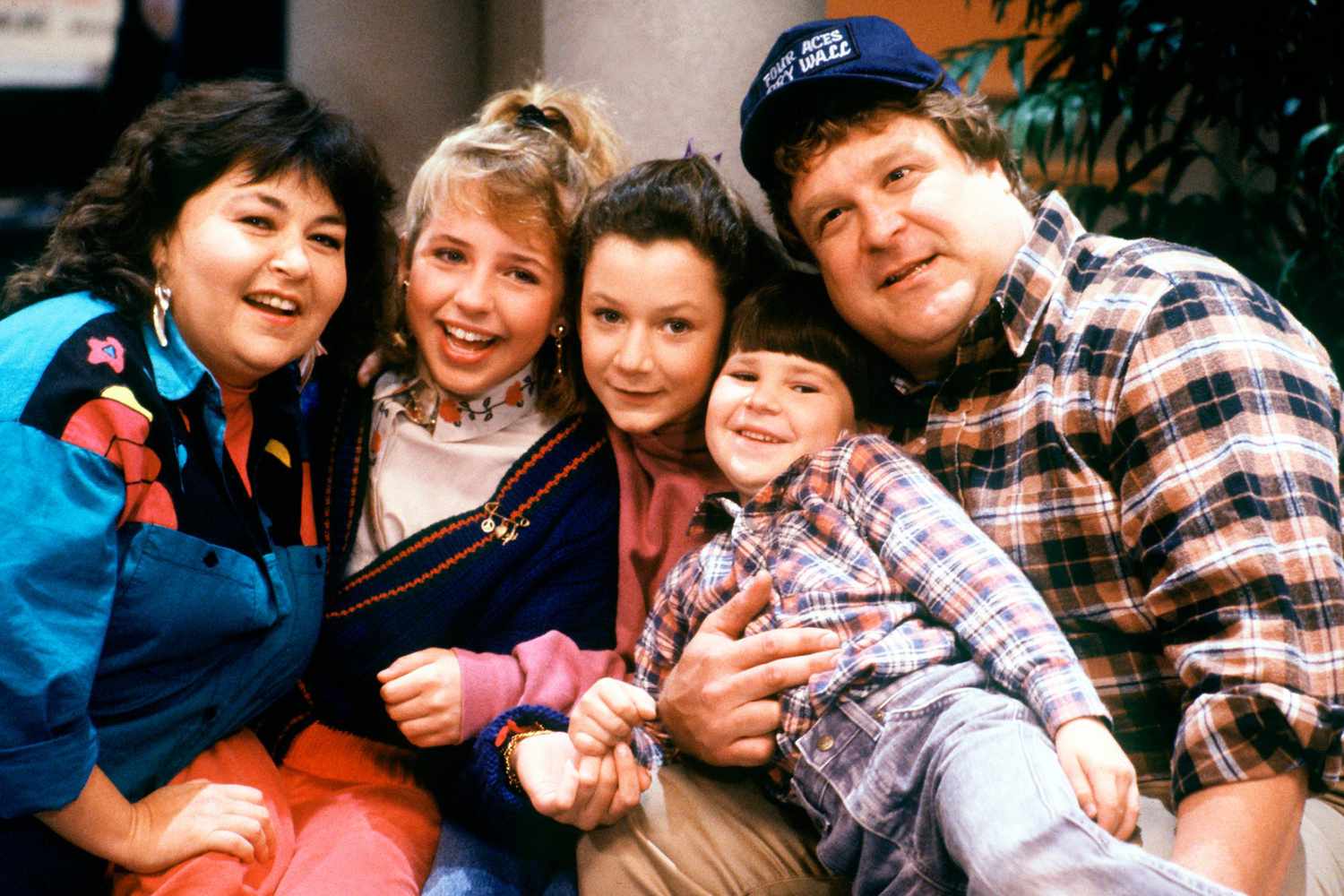
As a 90s sitcom, Roseanne felt different because it never cleaned up the Conners for company. They were exhausted, behind on bills, sarcastic before breakfast and genuinely worried about losing a job—and America kept coming back to their kitchen table.
Why did Roseanne change American television?
Roseanne changed television by making a working-class family feel like the center of America instead of a side trip from it. The Conners worried about paychecks, layoffs, factory work, medical bills, teenage trouble, exhausted marriage and the thousand small humiliations of not having enough money. The show was brutally funny about all of it without treating the family as a joke.
Why Roseanne Changed the Family Sitcom
The first shock of Roseanne was not that the Conners were poor. It was that television stopped cleaning up after them.
The couch sagged. The kitchen was crowded. Somebody was always eating. Laundry existed. The kids talked back. Roseanne came home from work tired and irritated instead of grateful to have learned a lesson by 8:29. Dan loved his family without becoming a wise father who magically knew what everybody needed. The bills did not vanish because the episode needed a happy ending.
That sounds ordinary now. In 1988, on a network sitcom built for a mass audience, it felt like somebody had kicked open the front door and let actual domestic life onto the set.
The Conners were not presented as a social problem for more comfortable characters to encounter. They were the protagonists. Their tastes, jokes, fights, bodies, jobs, clutter and frustrations did not need to be translated for a nicer neighborhood. The camera came to Lanford and stayed there.
By the time the 1990s arrived, Roseanne was no longer merely a disruptive new comedy. It had become one of the biggest shows on American television. That is why its place in our larger guide to 1990s TV shows, sitcoms and prime-time classics matters so much: the show proved that mass-audience comfort did not have to mean polished comfort.
It could mean the familiar comfort of people arguing over money, trading insults over the sink, getting mad enough to leave the room and then coming back because there was nowhere else they would rather be.
How Roseanne Barr’s Stand-Up Became a Prime-Time Sitcom
The show began with a comic persona network television did not have much experience building around: a woman who was funny because she was already tired of everybody’s nonsense.
Roseanne Barr had built her stand-up around the idea of the “domestic goddess,” a working wife and mother who did not speak about home life with sitcom gratitude. She spoke about it like somebody who had been cleaning, working, parenting and listening to excuses all day and had finally decided the rest of the house could hear her review.

Producers Marcy Carsey and Tom Werner saw the potential. Their Television Academy interviews describe wanting Barr for a new family sitcom and developing the project around what made her voice distinctive. Matt Williams developed the series for television and received creator credit, while Barr’s perspective became increasingly central to the show’s tone and creative direction.
The collaboration was volatile almost immediately. Contemporary reporting from the Los Angeles Times documented a first-season battle between Barr and Williams over control, tone and authorship that ended with Williams leaving the series. It is messy history, but it is also revealing history: the fight was partly about who got to define the family on screen.
That mattered because Roseanne was not successful merely because it had jokes about bills. Its authority came from the feeling that somebody who knew this life was refusing to let network television sand it smooth.
The pilot, “Life and Stuff,” aired October 18, 1988. The first reviews already noticed what was different. The Los Angeles Times described the Conners as a rare comedy about “real people,” and that phrase gets closer to the show’s appeal than any complicated theory ever could.
Roseanne premieres on ABC and quickly becomes the breakout sitcom of the season.
The show’s creative battles become public, even as its ratings climb into television’s top tier.
Roseanne reaches the very top of the Nielsen standings, tied for #1 in the 1989–90 season.
The Conners remain enormous, finishing #3 in the 1990–91 season.
The original nine-season run ends with a finale that reframes the entire final season.
Lanford Made Working-Class America the Center of the Story
Lanford was fictional, but almost nothing about the Conners’ economic life felt imaginary.
The town gave the series just enough distance from any one real place while preserving the feeling of a Midwestern factory community where people knew what other people made, where they worked, who got laid off and whose truck was going to need another repair before winter.
This was not television poverty staged for misery. The Conners owned a house. They had a television. They bought groceries, went out sometimes, joked about sex, celebrated birthdays and took small pleasures wherever they could get them. That normality was essential.
Working class on Roseanne meant living close to the edge of the budget, not living outside normal American life. A broken appliance mattered because replacing it meant something else had to wait. A bad job mattered because quitting could feel great for five minutes and terrifying the next morning. A raise was not a plot decoration. It could change the emotional temperature of the house.
Lanford also gave the show a network of people who felt connected by work as much as friendship. Coworkers, bosses, contractors, relatives, old classmates and neighbors created the sense that economic life was social life.
The Conners did not come home from jobs and leave that world at the door. Work followed them into the kitchen in sore feet, anger, gossip, layoffs, bad schedules and worries about whether the next check would cover everything.
Roseanne Conner Was Allowed to Be Angry, Funny and Completely in Charge
Roseanne Conner did not ask the audience for permission to like her.
That was one of the most radical things about the character. She could be petty. She could embarrass her kids. She could needle Dan because she knew exactly where to poke. She could complain about work without a speech about being grateful. She could make a joke in the middle of a crisis because that was sometimes the only thing left to do.
Television mothers had been sarcastic before, but Roseanne’s sarcasm was not a cute accessory attached to an otherwise ideal domestic manager. It was a survival mechanism and a form of authority.
She ran the emotional traffic of the house. She knew when the kids were lying, when Dan was hiding worry behind a joke, when Jackie was about to make a terrible decision and when she herself was being unreasonable. Knowing did not always mean behaving well.
That imperfection gave the character weight.
She also carried a physical presence that television rarely centered without apology. The show did not treat Roseanne and Dan as if attraction belonged only to thinner, richer or more polished people. They flirted, fought, touched, joked about sex and acted like a married couple with a history in their bodies.
For audiences used to sitcom mothers who seemed designed around neatness, patience and wardrobe coordination, Roseanne Conner felt almost confrontationally alive.
Dan Conner Made John Goodman the Heart of Roseanne
Dan worked because John Goodman never played him as a sitcom dad waiting for his weekly lesson.
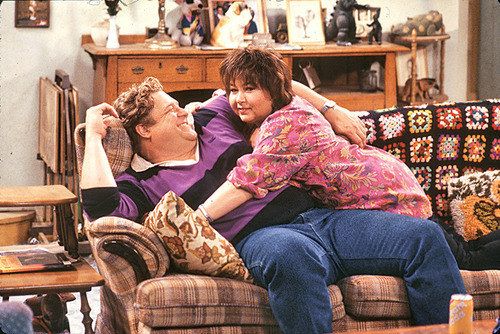
Dan was big, funny, horny, proud, worried about money and capable of disappearing into his own frustration. He loved Roseanne because he liked her, not because the script told us they were married.
That chemistry changed everything.
The marriage could survive sharp dialogue because there was warmth underneath it. Roseanne could insult Dan’s habits and Dan could roll his eyes at hers without making the relationship feel cruel. When the show wanted the marriage to hurt, it had earned the right to go there because we had watched them enjoy each other.
Dan’s work life mattered too. He was a contractor. He tried to build businesses. He took jobs that did not match the future he imagined. Failure embarrassed him because being able to provide was tangled up with how he understood himself.
The series did not solve that by making him secretly wealthy or suddenly brilliant. It let male pride be both funny and painful.
Goodman was repeatedly nominated for the Emmy for his work as Dan, and that makes sense. He could move from physical comedy to quiet fear without turning the character into two different men.
Roseanne and Dan Felt Like a Couple With a Past
The Conner marriage did not begin when the pilot started. That sounds obvious, but plenty of sitcom marriages somehow did.
Roseanne and Dan had shorthand. They knew each other’s stories. They remembered old friends, old mistakes and earlier versions of themselves. They could tell when the other person was performing confidence. They knew which argument they had already had twenty times.
That accumulated history gave small scenes unusual force.
A look across the kitchen could carry more than a paragraph of dialogue. A joke about money could contain an old resentment. A fight over a child could become a fight about who had been carrying more of the family for years.
The show also refused to pretend love eliminated boredom or irritation. Sometimes being married meant liking each other. Sometimes it meant being too tired to keep arguing. Sometimes it meant admitting fear only after making three jokes to avoid it.
That texture mattered because the series was fundamentally about endurance—not grim endurance, but the everyday version where affection is expressed through fixing something, bringing home food, making room on the couch or knowing when to stop talking.
Jackie Harris Gave Laurie Metcalf One of the Great Sitcom Roles
Jackie could enter a scene already halfway through an emotional emergency.
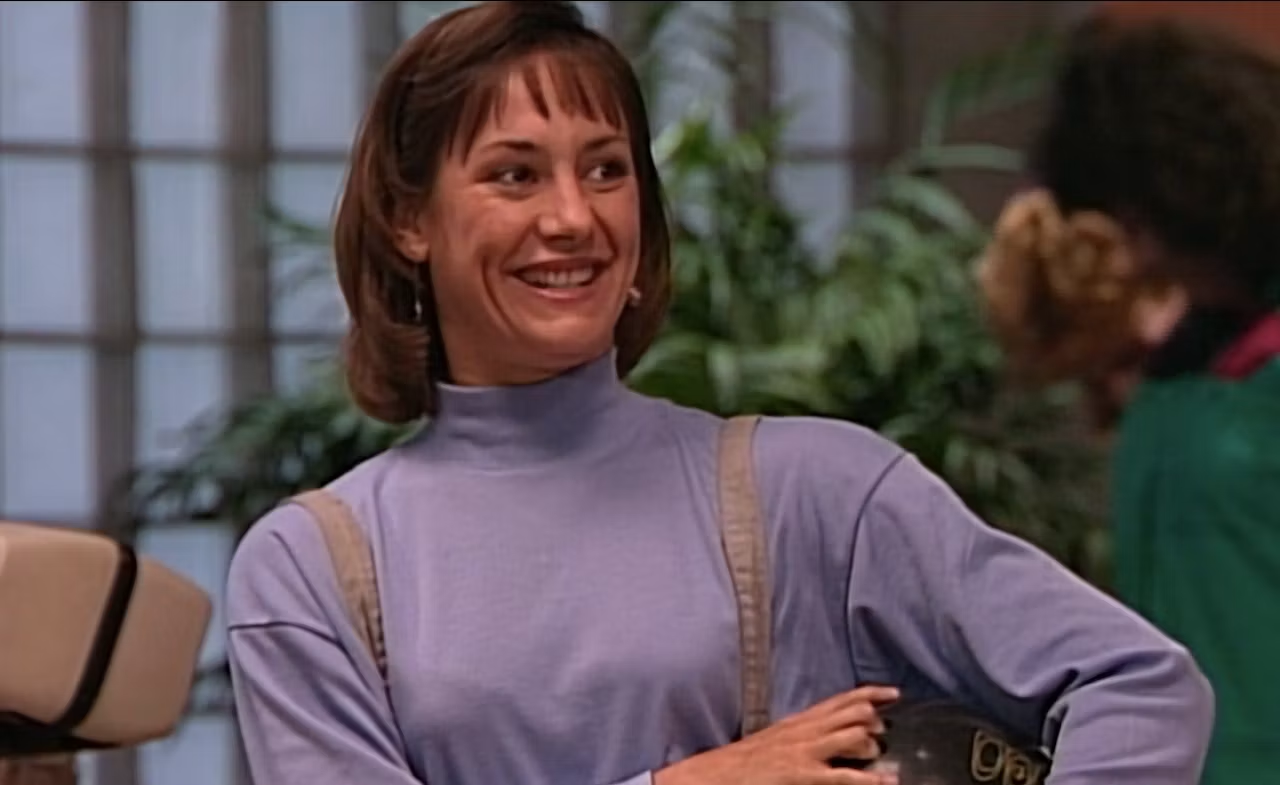
Laurie Metcalf made that energy precise. Jackie was impulsive, insecure, needy, capable, romantic, suspicious and constantly trying to become the person she thought she should have been by now.
She was also the perfect sister for Roseanne because the two could be vicious with the confidence of people who knew the relationship would still exist tomorrow.
Jackie’s jobs changed. Her relationships changed. Her confidence rose and collapsed. She could play the role of independent younger sister for one scene and revert to childhood around Roseanne or Bev in the next.
That instability made her more than a comic sidekick. Jackie represented another version of working adulthood: someone without the relative structure of Roseanne’s marriage and children, trying to build a life while watching everybody else act like they knew how.
The Television Academy records Metcalf winning three consecutive Emmys for Supporting Actress for Roseanne in 1992, 1993 and 1994. That run is not an accident. Jackie could turn a phone call, a panic attack or an overconfident entrance into the funniest moment of an episode and still make the character’s loneliness land.
Becky, Darlene and D.J. Made the Conners Feel Like a Real Family
The Conner kids were not built to rotate through “teen issue of the week” stories and reset by bedtime.
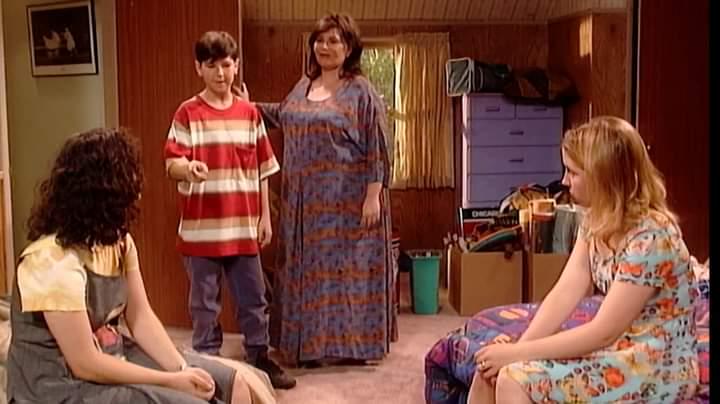
Becky and Darlene, especially, developed personalities strong enough to challenge the parents instead of simply reacting to them.
Becky Wanted Out
Becky often had the clearest sense that class could become a wall. She wanted things—college, independence, a life that felt bigger than the options immediately around her—and that made her choices both understandable and infuriating.
Her relationship with Mark could look like exactly the kind of decision parents fear because it mixed romance with an escape route. When Becky eloped, the story did not become a simple morality lesson. It exposed the gap between what Roseanne and Dan wanted for their daughter and what they could actually control.
Darlene Saw Through Everybody
Darlene’s deadpan made her feel unusually modern. Sara Gilbert played her as a teenager who often understood the absurdity of the adults before they did.
But the show did not make sarcasm equal strength. Darlene struggled with depression, ambition, intimacy and the fear of leaving home even while she was desperate to become a writer. Her relationship with David gave the series a long-running young relationship that could be tender and unhealthy, supportive and claustrophobic, sometimes in the same episode.
D.J. Grew Up in a House Full of Women
D.J. was younger and used differently, but that worked. He absorbed the chaos. His childhood let the show revisit school, fear, race, puberty and the experience of being the kid who still needed help while his sisters were already fighting toward adulthood.
Money Problems on Roseanne Were Never Just a One-Episode Plot
The smartest thing Roseanne did with money was refuse to treat being broke like a very special episode.
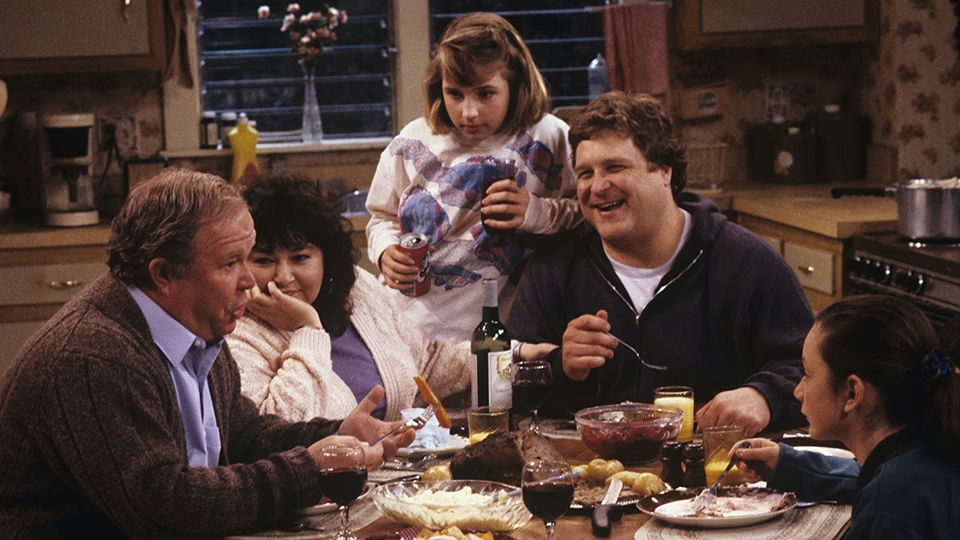
Money was atmosphere.
It shaped which jobs people tolerated, which dreams could wait, why the kids heard “no,” why Dan took failure personally and why a small financial surprise could make everybody in the kitchen tense.
The Conners were not destitute. That distinction matters. They were a household where income and expenses could collide hard enough that one bad month changed decisions.
Walking out on a bad boss could be emotionally right and financially terrifying.
A business, college, a motorcycle shop or a career change always came with risk.
Becky and Darlene understood enough about money to resent its limits, even when they did not understand every sacrifice behind them.
That was one reason the comedy felt honest. The family joked about money because people who worry about money often joke about money. You can only stare at a bill for so long before somebody says something terrible about it.
The show also understood the shame that can come with not being able to provide what you want to provide. Dan’s business failures and Roseanne’s employment problems hurt not just because of the lost income, but because they collided with identity.
Roseanne made that emotional math visible without pretending a paycheck was the same thing as character.
Factory Work and Bad Jobs Gave Roseanne Its Working-Class Authority
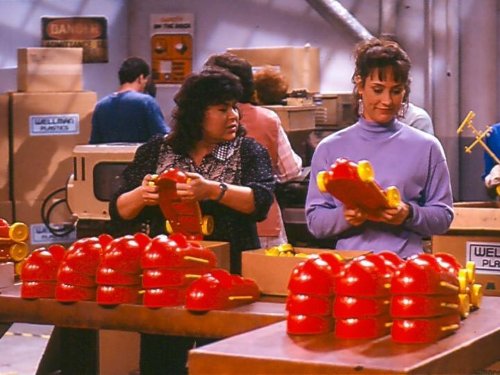
The Wellman Plastics factory did something most sitcom workplaces did not: it made work feel physically annoying.
Roseanne and her friends had quotas, supervisors, routines and the low-grade indignities of jobs that were not designed around anybody’s personal fulfillment. The first-season finale, “Let’s Call It Quits,” turns a supervisor’s impossible quotas into a story about the workers deciding how much disrespect they are willing to take.
The Paley Center’s catalog description gets at the engine of the episode: management raises the quotas, Roseanne is selected to push back, the supervisor breaks his word and the women have to decide what to do next.
That is class conflict inside a sitcom, but the episode never needs to call itself class conflict. It is simply a bad day at a bad job that reaches the point where people cannot swallow it anymore.
When Roseanne leaves Wellman, the show does not magically promote her into a television career. She moves through jobs. She has to learn new work. In “Guilt by Disassociation,” she loses a job opportunity because she cannot use a computer—a detail that feels almost quaint now but was a genuine economic fault line as workplaces changed.
Later, the Lunch Box becomes another kind of story: not escape from work, but taking the risk of owning the work.
Dan’s jobs and business plans run alongside Roseanne’s. Drywall, motorcycles, city work—his employment is tied to pride and the fear that one wrong move could leave the family exposed.
The result is a show where jobs are not sets characters visit between their “real” scenes. Work changes who they are when they get home.
The Lunch Box Turned Roseanne’s Work Story Into a Small-Business Story
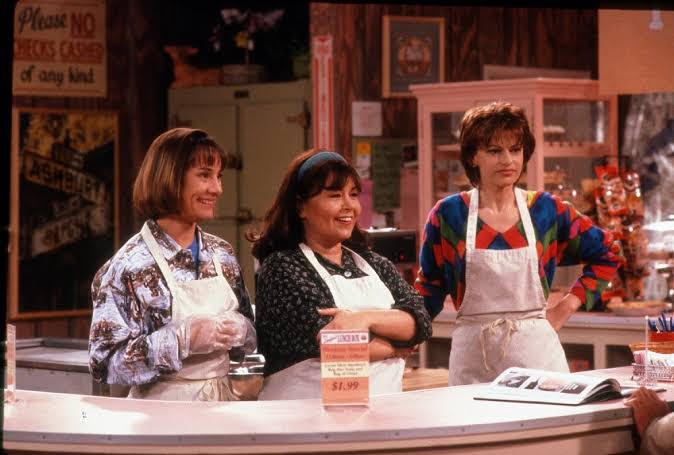
Opening the Lunch Box did not make Roseanne rich. That is exactly why it belonged in this show.
The loose-meat sandwich restaurant changes the form of the work story without abandoning the class story. Roseanne and Jackie are no longer simply taking orders from somebody else. They have ownership, which sounds like freedom until the rent, staffing, customers, inventory and family money all start arriving at the same time.
Nancy becomes part of the business. Bev’s money becomes part of the business. That means every disagreement can be both personal and financial, which is basically the most Roseanne arrangement imaginable.
The Lunch Box also represents aspiration at the right scale. The dream is not a mansion or an executive office. It is a place of their own where the work still involves standing on your feet all day.
That distinction keeps the show grounded. Economic progress does not mean escaping the working world. It means gaining some control over the work while taking on new kinds of risk.
For Roseanne, the restaurant also brings the public and private worlds together. Family members appear. Friends work there. Arguments from home can walk through the front door during lunch.
The business succeeds as a setting because it never feels like a fantasy reward. It feels like the next complicated thing these people decided to try.
Roseanne Let Parents Be Tired of Their Children
One of the show’s great freedoms was admitting that loving your kids does not mean enjoying every minute they are in the room.
Roseanne and Dan could be annoyed by Becky, baffled by Darlene and exhausted by D.J. without the series panicking that viewers would think they were bad parents.
They made mistakes. They overreacted. They snooped. They argued in front of the kids and argued about the kids after the kids left. Sometimes they were hypocrites because their own teenage histories were suddenly inconvenient.
That made the parenting feel recognizable.
The show was especially good at the moment when parents discover that the child in front of them has a private interior life they do not control. Darlene’s depression, Becky’s decisions and the kids’ sexual lives push Roseanne and Dan into situations where love cannot simply become authority.
Their strength is not perfect judgment. It is that they keep engaging. They can be furious and still care what happens next.
Bev Harris Made Roseanne’s Family History Impossible to Ignore
Estelle Parsons could make “Mother is here” sound like a weather warning.
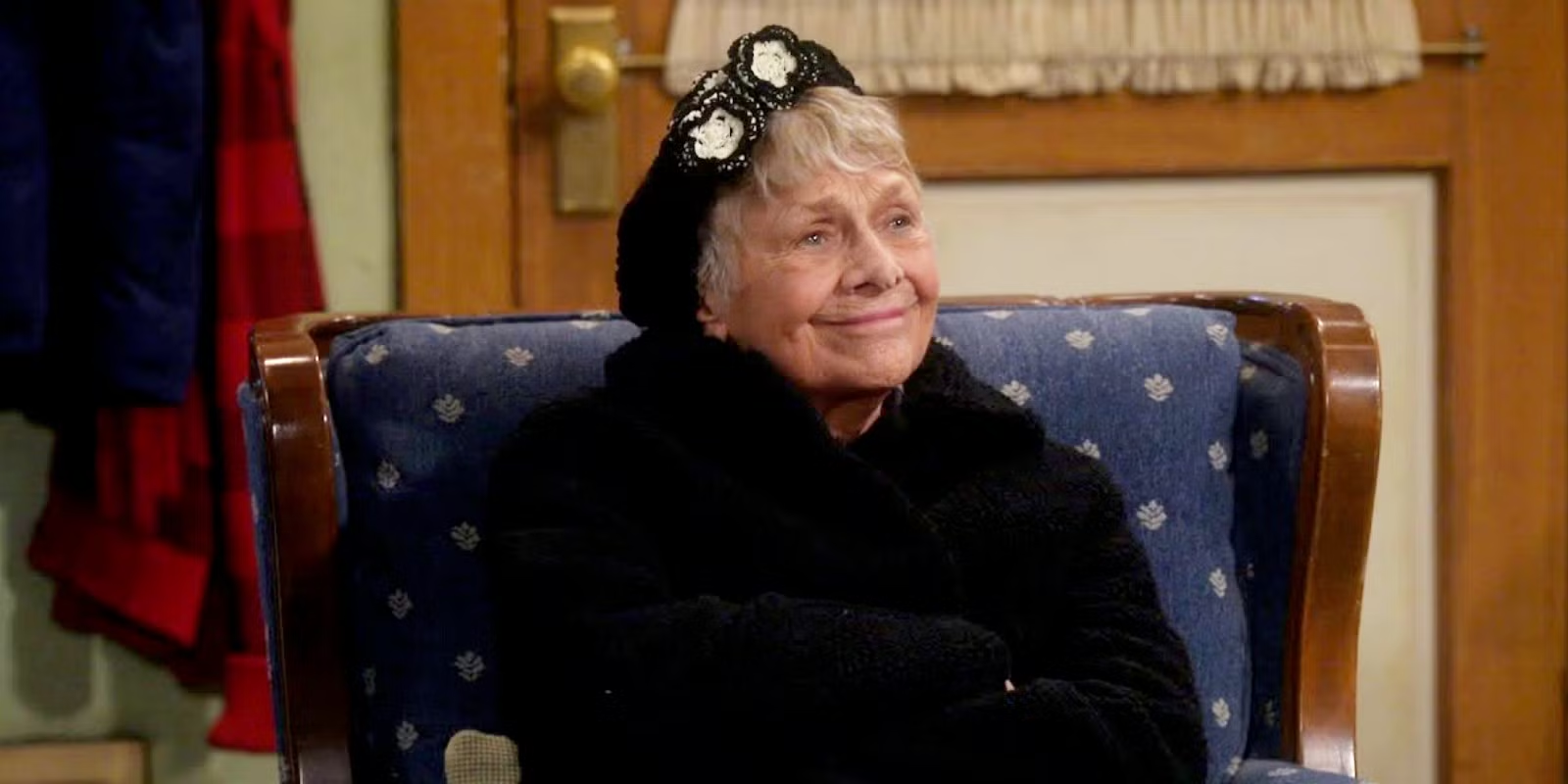
Bev works because the series understands that Roseanne did not invent her personality in a vacuum. The sharpness, defensiveness, guilt and family habits came from somewhere.
When Bev enters the house, Roseanne can instantly become both an adult mother of three and somebody’s irritated daughter. Jackie does the same thing in a different direction.
That regression is painfully accurate. Families have old versions of us stored in their heads, and they can restore the file without asking.
Bev is overbearing, judgmental and often exhausting, but the show gradually gives her more dimension than the stock interfering mother. Her own marriage, sexuality, loneliness, financial choices and relationships become part of the story.
That is important because Roseanne is ultimately interested in family patterns. Roseanne wants to parent differently from Bev and still hears Bev’s voice coming out of her own mouth. Jackie resists her mother and still needs her approval. The daughters push against Roseanne in ways Roseanne once pushed against the generation before her.
The Conners feel lived in partly because nobody arrives without history.
Roseanne Put Working Women, Anger and Female Authority in Prime Time
Roseanne, Jackie and the women around them were allowed to have opinions before the plot asked for one.
Their conversations did not exist only to discuss husbands. They talked about work, bosses, money, sex, bodies, mothers, kids, resentment and how badly other people were behaving.
That mattered because the show’s version of female power was not polished. Roseanne did not become authoritative by becoming calmer than everybody else. Jackie did not become independent by never needing help. Bev could be infuriating and still be more complicated than a mother-in-law joke.
The women’s anger was often funny, but it was not automatically dismissed as irrational.
That connected directly to Barr’s stand-up persona. The “domestic goddess” joke worked because it took the invisible labor of home and made the person doing it loud enough that everybody had to notice.
The sitcom kept that energy even as it widened beyond the original factory-and-family setup.
The Roseanne House Looked Lived In Because the Set Was Designed That Way
The Conner house may be one of the most important sitcom sets of its era because it refused to look aspirational.
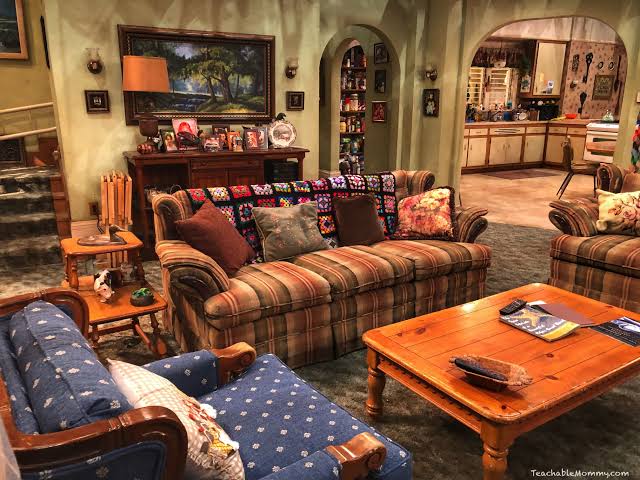
Production designer Garvin Eddy has spoken in Television Academy interviews about choosing the sofa, afghan and key pieces of the set, and about the role the environment may have played in the show’s success.
He is right to give the set that much credit.
The house told you who the Conners were before anybody spoke. Furniture looked chosen because it was available, affordable or already there. The kitchen table was functional. The walls carried history. Nothing seemed arranged for a catalog photograph.
That visual realism was not neutral. It told viewers that this family did not need to be upgraded before it deserved attention.
The house also made continuity feel physical. When you watched week after week, you knew where people would sit. You knew the route from the kitchen to the living room. You knew how the space compressed everybody into each other.
That is part of why the series could feel like a place instead of a premise.
Roseanne’s Sarcasm Changed the Sound of the Family Sitcom
The Conners did not sit down and communicate their feelings clearly. Thank God.
They joked around feelings. They insulted each other to test the temperature. They exaggerated. They did impressions. They answered questions with questions and made a punchline out of something because saying the serious version out loud would have been too much.
That rhythm made the series sound closer to families who use humor as emotional shorthand.
Roseanne and Darlene were especially dangerous together because both understood deadpan. Dan’s reactions often became the third beat of a joke before he had even spoken.
The sarcasm also prevented social-story episodes from becoming speeches. The show could discuss work, sexuality, abuse or class while still sounding like Roseanne because the characters never stopped being themselves.
That is harder than it looks. Many sitcoms can be topical or funny. Roseanne was often topical while preserving the feeling that the joke would have happened in this kitchen anyway.
Roseanne Understood Working-Class Pride Without Romanticizing It
The Conners did not want to be congratulated for having less.
That distinction separated the show from sentimental portraits of working people where hardship automatically makes everybody noble.
Roseanne could be jealous. Dan could be embarrassed. Becky could resent the limits of the household. People could make bad decisions because the better decision felt financially impossible or emotionally unbearable.
The show did not need poverty to purify anybody.
It also understood that class is partly about exposure. Somebody with more money can survive a mistake that becomes a crisis in a tighter household. A job can be unbearable and still necessary. A failed business can take more than a dream with it.
That awareness gives even broad jokes a different weight. The Conners can laugh about being broke because the show never forgets that the consequences are real.
Roseanne’s Supporting Cast Made the World Feel Populated
A sitcom family feels more real when the same people keep wandering back into their lives.
Roseanne had one of those benches where even characters who seemed built for a few jokes could accumulate history if they stayed long enough.
Natalie West gave Roseanne and Jackie a longtime friend whose sweetness and romantic choices could collide beautifully with Roseanne’s judgment.
Martin Mull’s dry irritation was a perfect counterweight to Roseanne. Leon could be boss, friend, foil and member of the wider Lanford family.
Sandra Bernhard brought a completely different rhythm—self-involved, restless, funny and eventually part of the show’s recurring LGBTQ world.
Glenn Quinn played the boyfriend Roseanne and Dan feared for Becky: rougher, older and easy to dismiss until the character gained more texture.
Johnny Galecki gave Darlene a softer partner whose need for family made his connection to the Conners as important as the romance.
Tom Arnold’s Arnie brought exactly the kind of exhausting friend energy that made you wonder why Dan ever answered the door.
The supporting cast matters because class and family are social systems. People borrow money. They share jobs. They date each other’s relatives. They know embarrassing stories from fifteen years ago.
Lanford feels small in the way real towns and long friendships can feel small: everybody is separated by about two bad decisions.
The Two Beckys Became Part of the Joke
Lecy Goranson originally played Becky. When Goranson left, Sarah Chalke took over the role. Later, when Goranson returned, the series did something very Roseanne: it acknowledged the weirdness instead of pretending nobody noticed.
The show joked openly about the recasting, including Roseanne’s famous reaction when the original Becky returned: “Where the hell have you been?”
That self-awareness could have shattered another sitcom. Here it fit because Roseanne had always been willing to look directly at the artificial machinery of television when the joke was good enough.
Essential Roseanne Episodes That Explain Why the Series Mattered
This is not a “best episodes” ranking. These are episodes that reveal the show’s range—work, money, marriage, parenting, sexuality, fear and the ability to make all of it funny without pretending none of it hurt.
“Life and Stuff”
The pilot establishes almost everything immediately: the house, the kids, the marriage, Roseanne’s factory job and a family rhythm that already feels older than the series.
“We’re in the Money”
A $500 advance becomes a family referendum on bills, small luxuries and the tiny lies people tell when there is never enough money for everybody to get what they want.
“Let’s Call It Quits”
The factory quota story turns bad management into comedy without losing the real stakes of workers deciding how much disrespect they can afford to reject.
“Guilt by Disassociation”
Roseanne thinks she has found a new job, then loses it because she lacks computer skills. It is funny, humiliating and brutally specific to a workplace economy that was changing.
“A Bitter Pill to Swallow”
Darlene and birth control force Roseanne and Dan to confront the fact that parenting teenagers means confronting realities they would rather delay.
“Crime and Punishment” / “War and Peace”
Jackie’s abusive relationship with Fisher pushes the family into anger, fear and retaliation while keeping the emotional focus on Jackie rather than turning her trauma into spectacle.
“A Stash from the Past”
The famous old-pot discovery is funny because the parents’ authority instantly collapses under evidence of who they used to be.
“Don’t Ask, Don’t Tell”
A same-sex kiss becomes a network controversy, but the episode itself is about Roseanne discovering that her self-image as completely unshockable has limits.
“Into That Good Night”
The original finale reframes the lottery season and turns the entire ending into a story about Roseanne using writing to survive loss.
Roseanne’s Halloween Episodes Became a Sitcom Tradition of Their Own
Long before every comedy had a branded holiday episode, the Conners treated Halloween like the family Super Bowl.
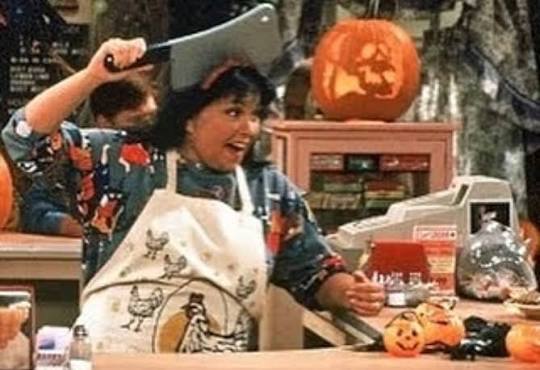
The annual Halloween shows let the series go bigger without betraying its characters because Roseanne and Dan were exactly the kind of people who would spend too much time trying to scare their own children.
Costumes, fake-outs, haunted-house setups and increasingly elaborate pranks gave the show permission to be theatrical for a week.
The tradition began early with “BOO!” and became one of the most recognizable recurring pieces of the series. What made the episodes work was not simply production design. The holiday fit the Conners’ personality.
This was a family that expressed affection through harassment. Halloween just made the rules official.
The episodes also captured something very Gen X about the holiday before it became as commercially polished as it is now: homemade costumes, neighborhood chaos, cheap props, fake blood and parents who were having at least as much fun as the kids.
Even viewers who cannot name the individual Halloween episodes often remember Roseanne as the sitcom where Halloween mattered.
“A Stash from the Past” Was Roseanne at Its Most Perfectly Embarrassing
The episode works because the Conners discover the one thing every parent hopes will stay buried forever: evidence.
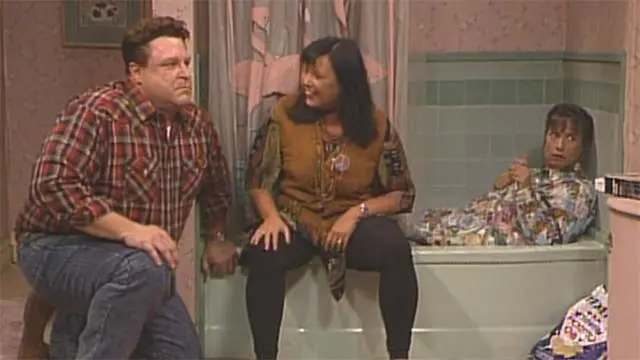
An old stash of marijuana turns the usual parent-child authority structure inside out. Roseanne and Dan have to process the fact that their past can no longer remain a vague story from before the kids were born.
The comedy is not simply “parents get high.” It is the panic of people realizing they have become exactly the adults they once laughed at.
Jackie’s presence makes everything worse in the best possible way. Nobody can maintain dignity, and the series understands that hypocrisy is funniest when the hypocrites know they are trapped.
This kind of episode is why Roseanne stayed grounded even when it got broad. The setup is sitcom-sized, but the embarrassment is completely recognizable.
Jackie’s Abuse Story Showed How Dark Roseanne Could Go Without Becoming a Different Series
The Fisher storyline works because the family’s anger is immediate, messy and personal.
When Roseanne realizes Jackie has been physically abused, the series does not treat it as an abstract social issue. This is her sister. Dan’s reaction is equally personal, and his retaliation creates consequences of its own.
The episodes are memorable because they refuse easy emotional choreography. Jackie is not turned into a passive symbol. Roseanne is not magically equipped with the correct response. Dan’s protective anger is understandable and still complicated.
The story also shows why the family’s roughness mattered. These characters had spent years teasing, yelling and intruding into one another’s business. When something genuinely dangerous happened, all of that accumulated intimacy became protection.
Roseanne could move into this territory because it had already established that the Conners’ home contained more than jokes. The laughter did not disappear. It simply knew when to get out of the way.
Roseanne’s Gay and Lesbian Characters Pushed a Mainstream Sitcom Further
By the mid-90s, Roseanne had enough audience power to make ABC nervous simply by letting a kiss air.
Nancy, played by Sandra Bernhard, and Leon, played by Martin Mull, were not one-off visitors brought in for a tolerance lesson. They became recurring parts of the show’s social world.
That distinction matters. Representation becomes more meaningful when characters get to be annoying, funny, selfish, affectionate and ordinary instead of existing only to educate the leads.
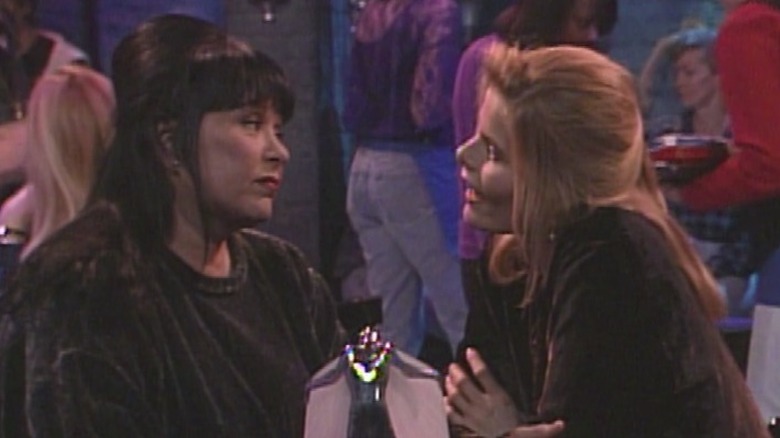
“Don’t Ask, Don’t Tell,” which aired in 1994, became a major network controversy because Roseanne is kissed by Sharon, played by Mariel Hemingway, in a gay bar. ABC initially resisted the scene and ultimately aired the episode with a parental-discretion advisory.
The reaction is a useful time capsule. According to the Los Angeles Times, only two ABC affiliates declined to air the episode, the network said most viewer calls were favorable, and the show drew an enormous audience.
What feels most Roseanne about the episode now is that the joke is partly on Roseanne. She thinks of herself as too worldly to be rattled, then discovers that self-image is easier to maintain before something unexpected happens to her.
The show could be progressive and still let its protagonist be uncomfortable. That tension made the story feel more honest than a simple sermon.
Roseanne Used Discomfort to Put Prejudice Inside the Family
The series did not always handle race or sexuality with perfect grace. Sometimes the rough edges are exactly what make its episodes worth discussing.
Stories involving D.J.’s discomfort around a Black classmate, Leon and Scott’s relationship, Nancy’s sexuality and Roseanne’s own assumptions put prejudice inside characters the audience already liked.
That choice matters because it denies viewers the easy comfort of locating bias only in obvious villains.
At its best, Roseanne let characters discover that being broadly tolerant in theory did not mean they were free of reflexive fear, ignorance or hypocrisy.
The show’s politics were often less about delivering the clean answer than forcing the kitchen-table argument to happen.
Roseanne Put Larger Bodies, Food and Physical Comfort in the Center of a Hit Sitcom
The Conners ate on television because people eat at home. That simple choice helped make the house feel different.
Food was everywhere: at the table, on the couch, in the kitchen, at the Lunch Box. The family did not exist in the strange sitcom universe where meals appeared only when a plot needed a family meeting.
The show also centered two larger adults as a married couple with an active sexual relationship. Roseanne and Dan were physically affectionate and openly attracted to each other without the series framing that attraction as a surprise.
There were fat jokes. Some have aged badly. The show could participate in the same body cruelty that surrounded 80s and 90s popular culture.
But there is still something significant about the visual fact of Roseanne and Dan occupying the middle of the frame. They were not the funny neighbors. They were not the cautionary before-picture. They were the romantic center and the parents whose bedroom life existed beyond implication.
That mattered because television constantly communicates who is allowed to be desired, comfortable and at home in their own body even when the script never says a word about it.
Roseanne was not perfectly enlightened about bodies. It was more disruptive than that: it made bodies television often marginalized impossible to remove from the story.
Roseanne’s Ratings Made Working-Class Realism Mass-Audience Television
It is easy to remember Roseanne as influential and forget just how enormous it was.
The series arrived in 1988 and moved into the upper reaches of the Nielsen ratings almost immediately. By the 1989–90 television season, it was tied at #1 with The Cosby Show.
That is a remarkable contrast. One of the defining polished family sitcoms of the 1980s and one of the roughest new domestic comedies on television were sharing the top of the chart.
The next season did not expose Roseanne as a novelty. It finished #3 in the 1990–91 Nielsen season, behind only Cheers and 60 Minutes. Our full ranking of the biggest TV shows of 1991 shows exactly how strong that position was in a year crowded with established network institutions.
Contemporary Los Angeles Times reporting also shows how frequently individual episodes could top or nearly top the weekly ratings. This was not a show praised by critics while ordinary viewers ignored it. Ordinary viewers were the reason the show had so much power.
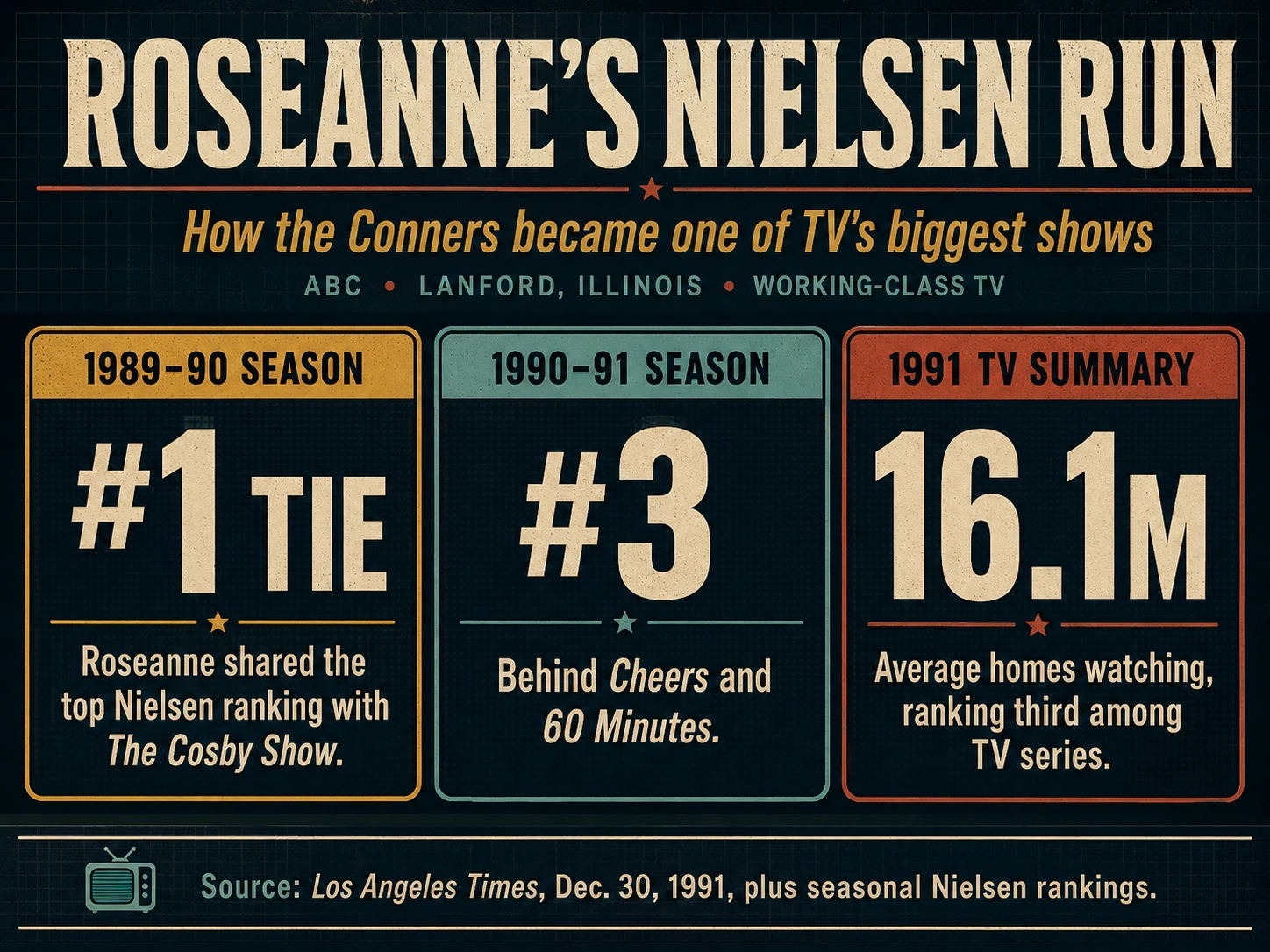
Those numbers are the proof behind the legacy. Roseanne did not widen the family sitcom from the margins. It did it while sitting in the middle of the American living room.
Roseanne in 1991 Proved the Show Was More Than a Disruptive New Hit
By 1991, the question was no longer whether audiences would accept the Conners. The rest of television had to live in a world where the answer was already yes.
That is the deeper meaning of the #3 finish.
When Roseanne first broke through, the contrast with shinier family sitcoms was part of the story. A few years later, the Conners no longer needed the comparison to justify their place. Viewers knew the house. They knew Jackie. They knew Darlene’s expression before she spoke. They knew Dan’s laugh.
The show had become comfort television without becoming polished television.
That is an important distinction in the early-90s story. If you want the wider picture of how several major sitcoms were changing the center of prime time at once, our companion on how Roseanne, Murphy Brown and A Different World changed early-90s television takes on that broader shift.
This page stays with the Conners because their particular contribution was class: the idea that a family could be financially strained, verbally rough and visibly tired while still being the audience’s home base.
Roseanne Sat Beside Other Sitcoms That Were Expanding What “Mainstream” Looked Like
The early 90s were not transformed by one show, and Roseanne does not need to steal everybody else’s story to make its own legacy larger.
Murphy Brown put work, politics and a fiercely independent woman at the center of a different kind of adult sitcom. It was sharper, more professional and more explicitly tied to public life than the Conners’ kitchen-table world.
A Different World made Black college life and HBCU-inspired campus culture part of the mainstream network center, bringing a younger social world and a different kind of specificity into the top of the ratings.
Roseanne owned another lane: wages, family strain, marriage, domestic labor and the pride of people television had too often asked to clean themselves up before appearing on screen.
Together those shows help explain why the early 90s feel less airbrushed than the television immediately before them. But the Conners’ influence is clearest when you stay inside their house and look at what television suddenly allowed to remain visible.
Roseanne’s Emmy Record Belongs to Laurie Metcalf and the Ensemble
The Television Academy lists 27 Emmy nominations and four wins for Roseanne, counting the original series and later revival-era nominations on the same show page.
The four wins from the original era tell a clear story about performance.
Laurie Metcalf won Supporting Actress three years in a row—1992, 1993 and 1994—for playing Jackie. Roseanne won Lead Actress in 1993.
John Goodman never won for Dan during the original run, but his repeated nominations are a reminder of how central the character was to the show’s credibility.
Awards never fully measure a sitcom like this. The bigger achievement was ensemble texture. You could pair Roseanne with Dan, Jackie, Darlene, Becky or Bev and get a completely different comic rhythm without losing the identity of the series.
Why Roseanne Season 9 Felt Like the Show Had Left Lanford
The ninth season is controversial because it removes the pressure that had powered the series from the beginning.
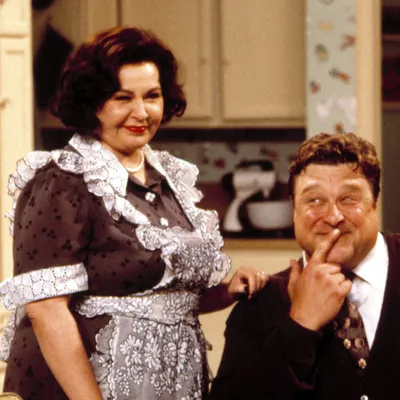
The Conners win the lottery.
On paper, giving a working-class family an absurd amount of money could be a satire engine. In practice, it changed the show’s center of gravity. Travel, fantasy, celebrity guest appearances and broader stories replaced much of the economic tension that had made the house feel so specific.
For viewers who loved Roseanne because a $500 advance could create an entire episode, the lottery was almost an anti-premise.
The family no longer had to ask the question that had shaped so much of the series: can we afford this?
Without that question, even the characters could feel untethered.
The season has defenders, especially when read as deliberate fantasy and setup for the finale. But there is no getting around how strange it felt to watch a show famous for economic gravity float away from it.
The Roseanne Finale Turned the Last Season Into a Story About Grief and Writing
“Into That Good Night” is one of those finales you can hate, admire and keep arguing about for decades.
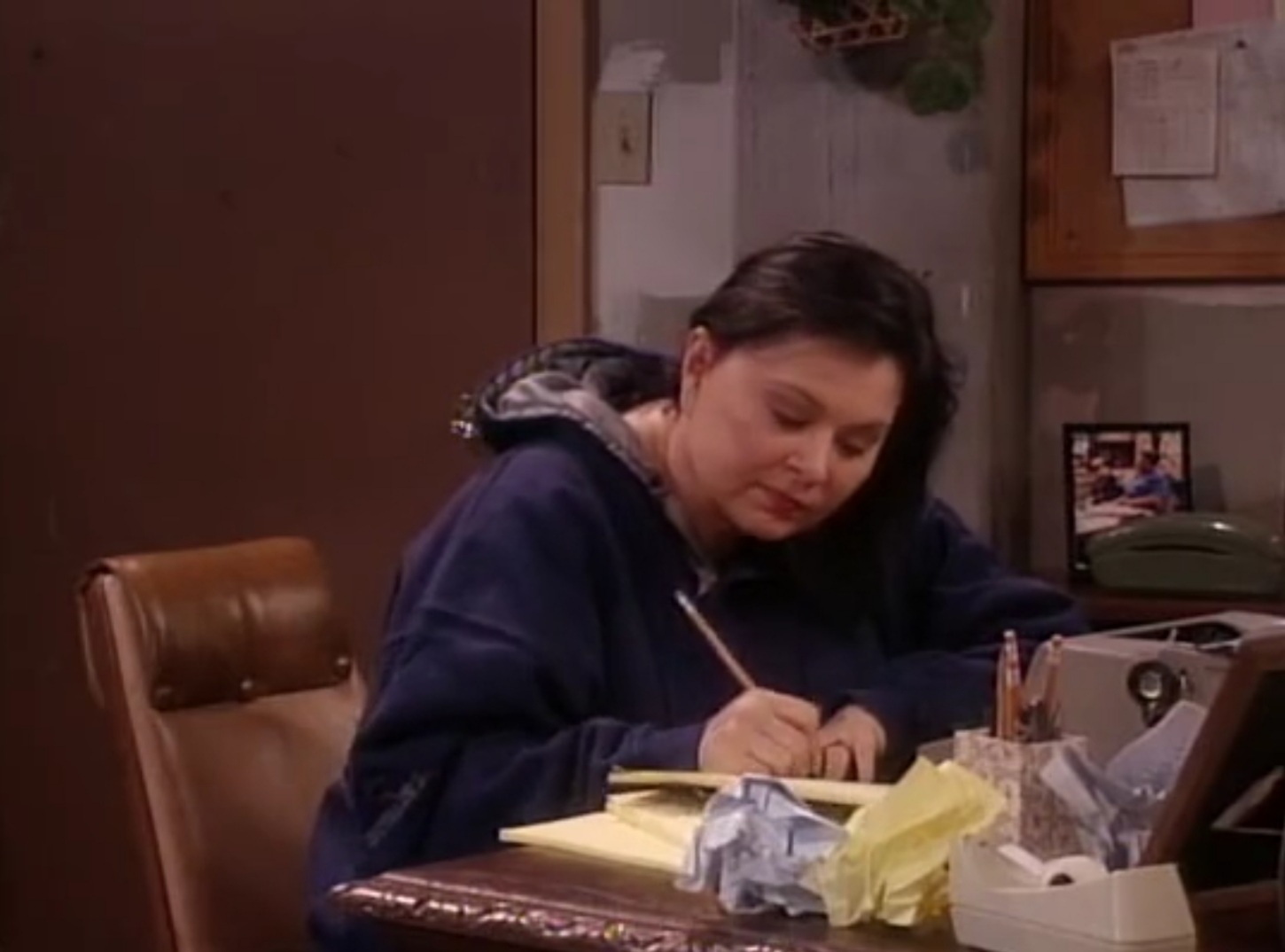
The episode reveals that much of what we have been watching has been filtered through a book Roseanne is writing.
The lottery was fiction.
Dan had actually died after his heart attack.
Roseanne changed relationships and details in the book because writing gave her the power to rearrange what real life would not let her fix.
It is a massive late reveal, and plenty of viewers understandably felt cheated by it. Sitcom audiences build trust through repetition. Telling them that major events were fictional even inside the fiction is a dangerous move.
But the ending also circles back to something the series had always understood: people without money still need ways to control the story of their lives.
Roseanne’s tool is writing.
The finale turns the abrasive working mother from the pilot into the author of the family we have been watching. Whatever you think of the twist, that final act belongs completely to her.
Watching Roseanne in the 90s Felt Different From Watching a Perfect TV Family
For a lot of Gen X viewers, Roseanne did not feel like a fantasy house. That was the point.
Maybe your family did not work in a plastics factory. Maybe your couch looked nothing like theirs. But the emotional acoustics could be familiar.
Parents complaining about money.
A sibling getting roasted at the table.
Somebody eating while everybody else argued.
A mother who could be loving and furious in the same sentence.
A father trying to fix something himself because paying somebody else was out of the question.
The show felt loud because many houses were loud. It felt intrusive because families are intrusive. It felt sarcastic because sarcasm was how a lot of people said “I know you too well to pretend.”
That familiarity is why the series could be comforting without being soft.
Why Was Roseanne So Popular in the 1990s?
Because the show offered recognition without giving up comedy.
Viewers could see money stress without being asked to pity the Conners. They could see a marriage with friction without assuming divorce was the inevitable dramatic destination. They could see teenagers who lied and parents who overreacted without needing the family to be declared dysfunctional.
The cast chemistry was exceptional. Roseanne Barr had a point of view. John Goodman supplied warmth and physical ease. Laurie Metcalf could detonate a scene. Sara Gilbert gave the series a younger voice sharp enough to challenge its star.
The house was repeatable. The conflicts were repeatable. The jokes came from character instead of elaborate premise machinery.
Most of all, Roseanne made viewers feel that television could look at ordinary frustration and find comedy without turning ordinary people into fools.
Roseanne’s Television Legacy Is the Permission It Gave Later Family Sitcoms
The legacy is not that every later working-class comedy copied the Conner couch.
The deeper legacy is permission.
Permission for family sitcoms to show financial pressure that could not be solved by the closing credits.
Permission for mothers to be angry and sexual and tired.
Permission for fathers to love their families while feeling humiliated by work.
Permission for teenagers to have private emotional lives instead of functioning as lesson-delivery systems.
Permission for the set itself to look used.
Later sitcoms about working families, imperfect parents and financially stressed households did not all descend directly from Roseanne. Television history is never that tidy. But after the Conners became one of the biggest families in America, nobody could convincingly argue that viewers required their sitcom homes to be polished.
Why Roseanne Still Matters to the Story of 90s Television
The most important thing Roseanne did was convince television that realism could be a form of mass entertainment.
Not documentary realism. Sitcom realism.
The kind where the joke is bigger than life but the reason it hurts is completely recognizable.
The Conners were not “real” because every plot could happen in every household. They were real because economics shaped choices, history shaped arguments and love did not erase irritation.
By the early 90s, that voice had moved from disruption to institution. Roseanne was not asking to be admitted to mainstream television. It was mainstream television.
That is what the #3 finish in 1991 really proves. Millions of households were not merely tolerating a working-class family that looked, sounded and fought differently from the glossy sitcom ideal. They were choosing it.
And once viewers had chosen the Conners at that scale, the family sitcom could never quite pretend that everybody lived in a showroom again.
The fact that the Conner family could later return to television in new forms is another measure of how strong the original household construction was. The specific industrial, political and cultural circumstances changed, but Lanford still made sense as a place where family love and economic pressure could occupy the same room.
Roseanne FAQ: cast, ratings, episodes and 90s legacy
When did the original Roseanne series air?
The original ABC run premiered October 18, 1988 and ended May 20, 1997. It ran nine seasons before a later revival in 2018.
Who created Roseanne?
Matt Williams is credited as creator. Marcy Carsey and Tom Werner developed and produced the series around Roseanne Barr’s stand-up voice and “domestic goddess” persona, and Barr became a central creative force on the show.
Where is Roseanne set?
The Conners live in the fictional town of Lanford, Illinois, a Midwestern working-class community that gives the series its economic and social identity.
How highly rated was Roseanne in 1991?
Roseanne finished #3 in the 1990–91 Nielsen season, behind Cheers and 60 Minutes.
Was Roseanne ever the #1 show on television?
Yes. In the 1989–90 television season, Roseanne tied The Cosby Show for the top Nielsen position.
Why was Roseanne considered a working-class sitcom?
Jobs, wages, layoffs, bills and the risk of small-business failure consistently shaped the Conners’ choices. The series treated financial strain as part of everyday family life rather than a temporary lesson.
How many Emmys did Roseanne win?
The Television Academy lists four Emmy wins on the show page. Laurie Metcalf won Supporting Actress in 1992, 1993 and 1994, while Roseanne won Lead Actress in 1993.
Why is Jackie such an important character?
Jackie gave the series another version of working adulthood outside Roseanne’s marriage. Laurie Metcalf turned her insecurity, impulsiveness and family dependence into one of the strongest supporting performances of the era.
Why was the Roseanne house so memorable?
The Conner home looked accumulated instead of decorated. The couch, afghan, kitchen and clutter made the set feel lived in, which reinforced the show’s larger commitment to working-class realism.
Why is the original Roseanne finale controversial?
The finale reveals that the lottery storyline and other parts of the final season were fictionalized inside a book Roseanne was writing, and that Dan had actually died. Some viewers found the twist powerful; others felt it undermined the season they had watched.
What is Roseanne’s biggest television legacy?
Its biggest legacy is proving at enormous scale that family sitcoms could center financial stress, imperfect parents, working women, messy homes and sharper class-conscious comedy without losing a mainstream audience.
Roseanne history, ratings and awards sources
- Television Academy Interviews — Roseanne, for cast, producers, broadcast history and interviews about the set, writing and production.
- Television Academy Interviews — Marcy Carsey, for the development and casting of Roseanne.
- Television Academy Interviews — Tom Werner, for Carsey-Werner’s development of the series and its evolution.
- Television Academy — Roseanne Emmy record, for nominations and wins.
- Los Angeles Times — original 1988 review, for the contemporary reaction to the show’s working-class family realism.
- Los Angeles Times — first-season creator dispute, for the documented creative conflict involving Roseanne Barr and Matt Williams.
- Los Angeles Times — 1991 television summary, for Nielsen figures showing Roseanne among the year’s largest series audiences.
- Los Angeles Times — “Roseanne’s Kiss: And Now the Aftermath”, for the network, affiliate and audience response to “Don’t Ask, Don’t Tell.”
- Paley Center — “Guilt by Disassociation”, for the episode’s employment storyline.
- Paley Center — “Let’s Call It Quits”, for the first-season factory quota storyline.