In the Heat of the Night in the 80s: A Late-Decade Crime Drama With Weight
Carroll O’Connor and Howard Rollins brought two kinds of authority to a town where the case never existed apart from the people.
The 1988–89 beginning made room for race, loyalty and the uneasy work of sharing responsibility.
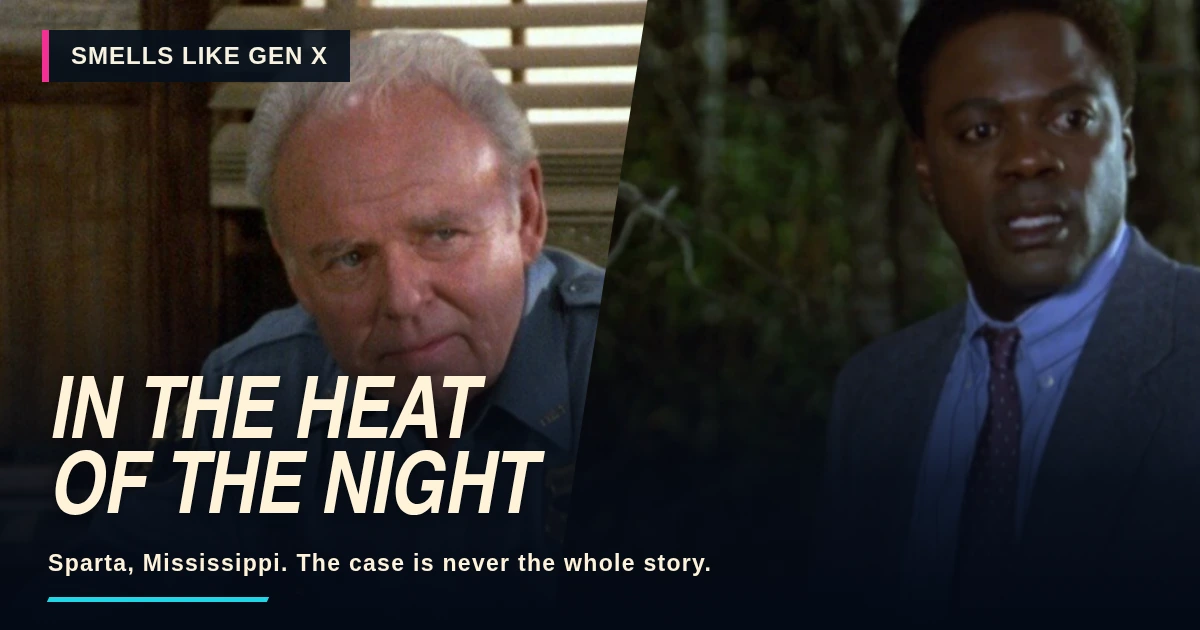
The first thing I hear when I think about In the Heat of the Night is that voice on the opening theme. The second thing is the way Carroll O’Connor could make a silence feel like a whole conversation. He’d look at Howard Rollins and you could almost hear Bill Gillespie deciding how much of what Virgil Tibbs had just said he was willing to admit was right. That was good television even before you found out who did it.
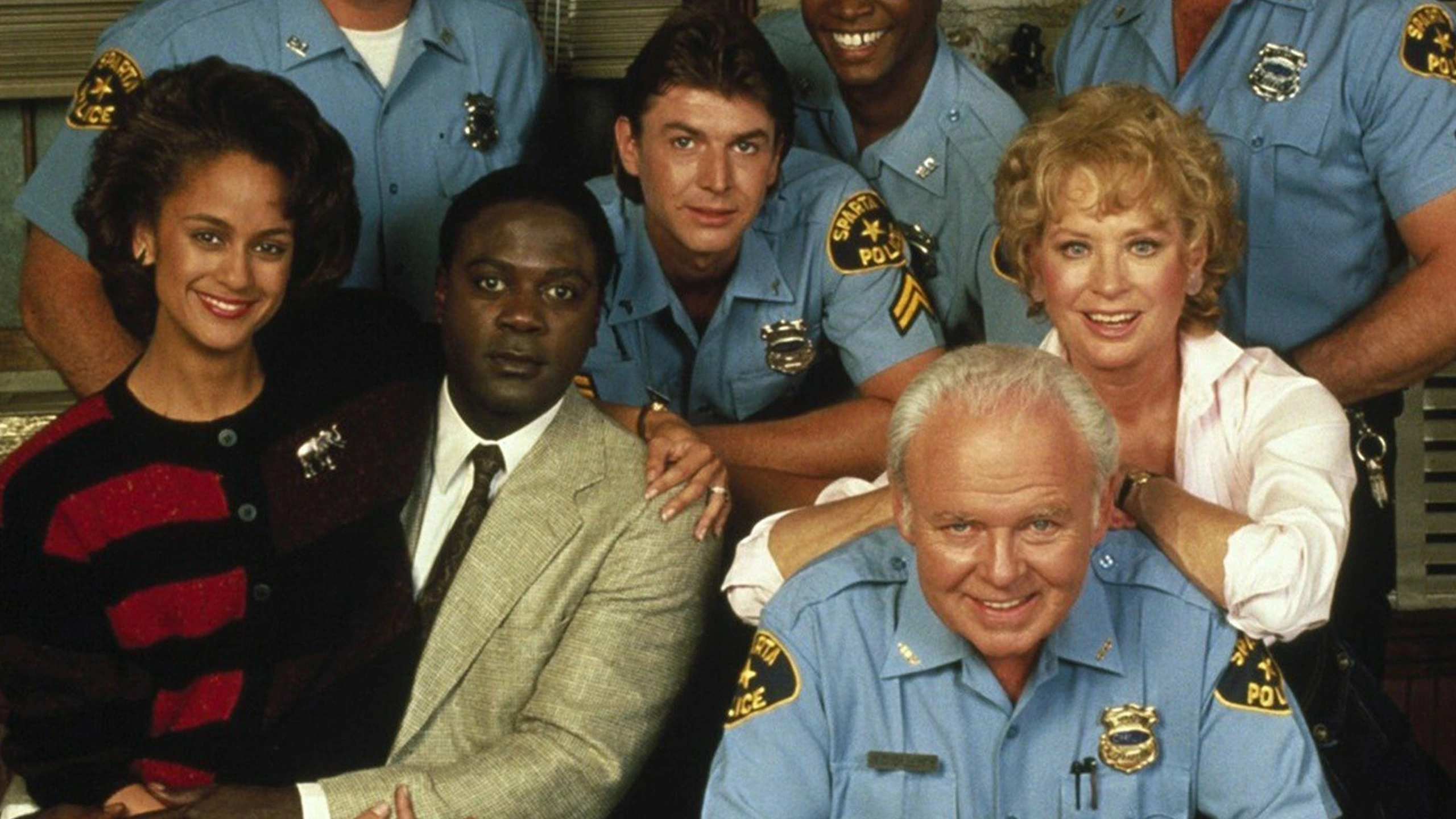
The series premiered on NBC on March 6, 1988. Rollins played Virgil Tibbs, a Philadelphia detective returning to his hometown of Sparta, Mississippi. O’Connor played the local police chief, Bill Gillespie. Anne-Marie Johnson was Althea Tibbs, who returned with Virgil and had her own reasons to care what kind of life they could make there. The book by John Ball and the Sidney Poitier–Rod Steiger movie came first. This was the version that had to find something for the people of Sparta to do after the two leads had solved the case.
There was plenty of rough-and-ready crime television in our eighties TV lineup. Here a murder could send you through an old friendship, a white congregation arguing about integration or a department wondering how much to believe one of its own. The case might be over by the time the station went to the news. The people who lived there still had to see each other the next morning.
Here’s where to start if your memories of the movie, the NBC years and the cable reruns have all settled into the same pile. The spring 1988 pilot sets up the town and the partnership. “Prisoners,” “Gunshot” and “A Trip Upstate” show what the second season could ask of the two leads. The fall of 1989 puts Althea at the center of an especially difficult hour. Watch those and you’ll see why this particular show needed the time it got.
Inside This Article
- The first night in Sparta
- The book, the movie and the weekly show
- Carroll O’Connor makes Bill Gillespie worth watching
- Howard Rollins gives Virgil time to think
- Two kinds of authority in one department
- Althea Tibbs has to live there, too
- Bubba and the officers people remember
- Joann and the people outside the station
- The town on the screen and the towns that played it
- Road Kill gives an old friendship a price
- Fate puts a newspaper in the middle
- Blind Spot tests a welcome home
- A Necessary Evil lets the first season get strange
- Don’t Look Back brings the past into the second season
- Prisoners puts the badge under scrutiny
- Gunshot gives Virgil an account to defend
- Tear Down the Walls makes a church visit matter
- A Trip Upstate puts Gillespie in a room he can’t run
- The Creek gives Virgil and Sweet the legwork
- Walkout takes the case to the plant
- Accused puts Bubba in the frame
- Fifteen Forever starts after a win
- Missing changes who has to keep the station going
- The fall of 1989 gives Althea a difficult hour
- The opening theme has a little weather in it
- Where Sparta sat in the last years of the decade
- A rewatch for three evenings
- Questions people still ask about In the Heat of the Night
The first night in Sparta
Virgil and Althea come to Sparta for his mother’s funeral. The local government offers him the chief of detectives job without first settling things with Gillespie. That’s a rough introduction to a new workplace under any circumstances. Here it means the chief can look at the hire as an insult to his authority while Virgil can look around and see plenty of reasons the job needs doing. The dispute is built right into the way the appointment happened.
Then a young woman is murdered. The police take a Black man named Willie Jones into custody on thin evidence, and he turns up dead in his cell. If the pilot had settled for a couple of snide remarks from the old guard, Gillespie and Virgil could have had a loud fight, shaken hands and started the series fresh. The death in custody leaves the department with something much harder to answer for. You understand why Virgil has to keep asking questions even when the men around him would prefer to move on.
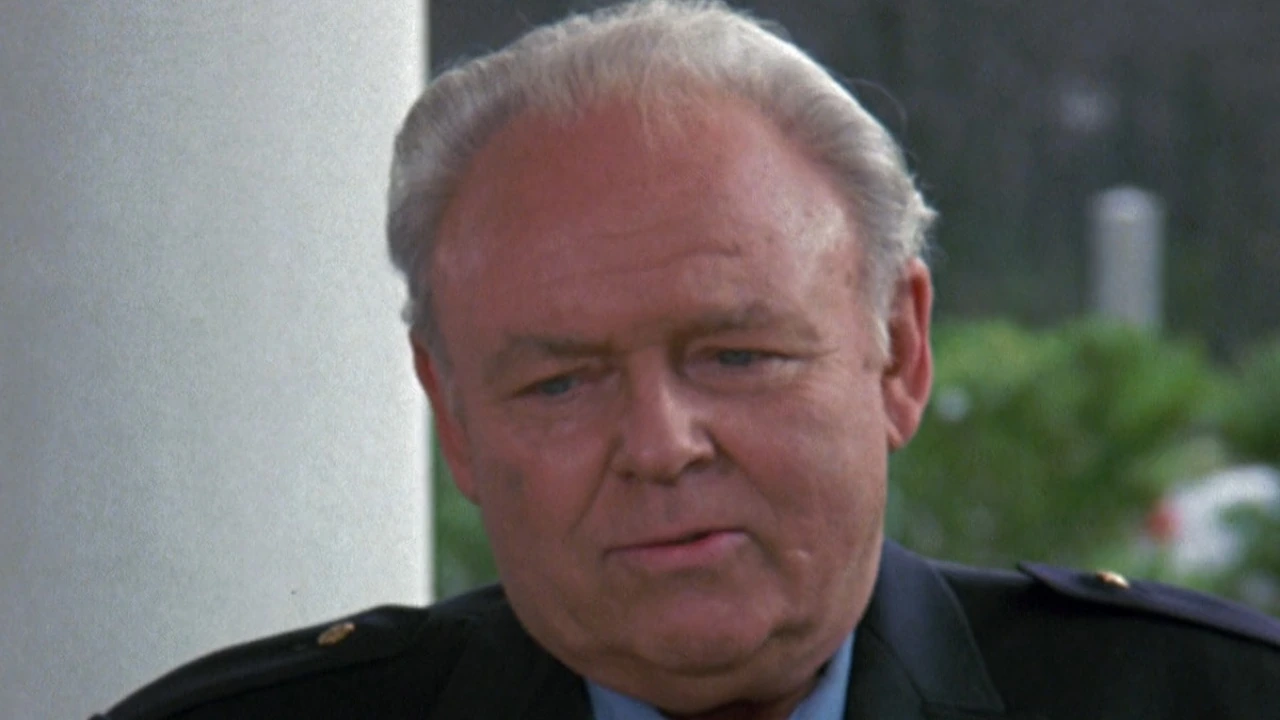
The second half lets both men surprise you. Virgil has reason to expect little help after he’s attacked. Gillespie backs him and takes on officers who resist working with him. O’Connor lets the chief be good at an investigation while leaving his pride and the department’s failings in full view. Rollins gives you a man who can accept a useful colleague without overlooking what it took to get the help. That’s enough common ground to work a case. There’s a whole series in what they have left to work out.
The pilot aired in two parts on the same March night. You’ll find listings that package them together, which explains why a streaming menu can count the early episodes differently from an original broadcast guide. Start with both parts. The second one is where the two men begin to find out what kind of help they can be to each other.
The book, the movie and the weekly show
John Ball’s novel was published in 1965. Norman Jewison’s film followed in 1967 with Sidney Poitier as Tibbs and Rod Steiger as Gillespie. The movie makes a stranger’s brief stop in town dangerous right away. Steiger can ask an ugly question and Poitier can hold his ground for what feels like an eternity, even when the scene is over in seconds. It’s an excellent movie to watch before the series, as long as you give the television actors room to play a different arrangement.
Rollins’s Tibbs has a history in Sparta. He has family to bury there and a family to think about if he stays. Where the movie can make a train out of town feel like a decisive exit, the show has to make staying plausible. What would the job offer him? Who would want him back? What would Althea have to give up, and what might she want for herself? The answers belong to the television series.
There’s a difference in how a supporting character works, too. A man in uniform who makes a bad impression in a movie may get one more scene. In a series he could be back next week with a legitimate lead, another mistake or a problem in his own family. The writers can take the time to show why somebody is useful to his colleagues and still difficult to deal with. That’s a richer proposition than simply finding a new villain every Tuesday.
The film is where I’d send somebody who wants Poitier and Steiger. The television pilot is where I’d send somebody who wants to understand why Rollins’s Virgil would take a job in this department. Put them side by side and notice what happens around the detectives once they get out of the office. You can see the kind of story each version has the time to tell.
Carroll O’Connor makes Bill Gillespie worth watching
O’Connor had spent a lot of television years as Archie Bunker. That alone makes his casting interesting. You come in knowing what this man can do with an objection. Gillespie has a different kind of weight. He can make an order sound almost casual because everybody in the room understands that he can carry it out. Even when he sits down, you know who’s in charge.
He’s also the one who has to listen when Virgil has evidence the town would rather leave alone. Watch O’Connor when Gillespie thinks the answer ought to be obvious and another person provides a reason to keep digging. He can let the idea register just long enough that you wonder if he’s going to change his mind, or if his next sentence will be a fresh excuse. The expression is small. The stakes are right there.
I like him best when the familiarity he has with Sparta is both a useful tool and a liability. He knows who’s been there for forty years, which man has the reputation for keeping his word and which bit of history a witness is skirting. He’s also capable of giving an old friend more room than that friend deserves. The same knowledge can solve one problem and keep him from seeing the next.
The Television Academy gave O’Connor the lead actor Emmy in 1989 for playing Gillespie. If you want to see what he could do with an hour without leaning on his badge, “A Trip Upstate” is an excellent place to go. A man has asked Gillespie to be present at his execution. It’s hard to imagine a premise farther from a cop chasing a car through a fence. O’Connor makes the decision to be there worth an evening.
Howard Rollins gives Virgil time to think
There’s an art to looking like you’re listening on television. Rollins had it. You can look at Virgil while somebody else talks and see him weighing the answer. He can let a person finish saying something foolish and then ask the one thing that makes the foolishness impossible to duck. Half the fun of watching him is waiting for that question.
His Virgil carries a professional history into the room. He knows what a department can do when it treats evidence seriously. He also knows some of the local ways people tell a story so that they never have to say outright what they mean. That combination gives him choices. Sometimes he can use the authority of his title. Sometimes the better opening is to let a witness talk a little longer.
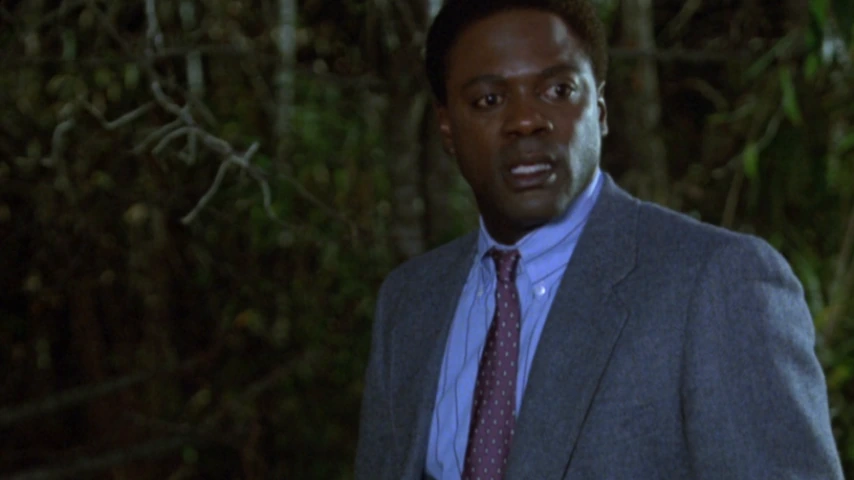
It matters that he can be wrong or get shaken. “Gunshot” depends on Virgil believing an armed threat was real while the physical evidence available afterward leaves room for doubt. Give the part to an actor who can only project untroubled confidence and that episode runs out of air fast. Rollins lets the viewer sit with the possibility that a person can be sincere and still need another person to check the account.
When I return to the show now, I catch more of the effort in those exchanges. There’s the question he asks as chief of detectives. There’s the way he keeps his temper through the answer. There’s also the point where it finally costs him too much to keep the peace and he says what’s bothering him. It’s a lot for an actor to convey in a suit, across a desk, with a commercial coming up. He could do it.
Two kinds of authority in one department
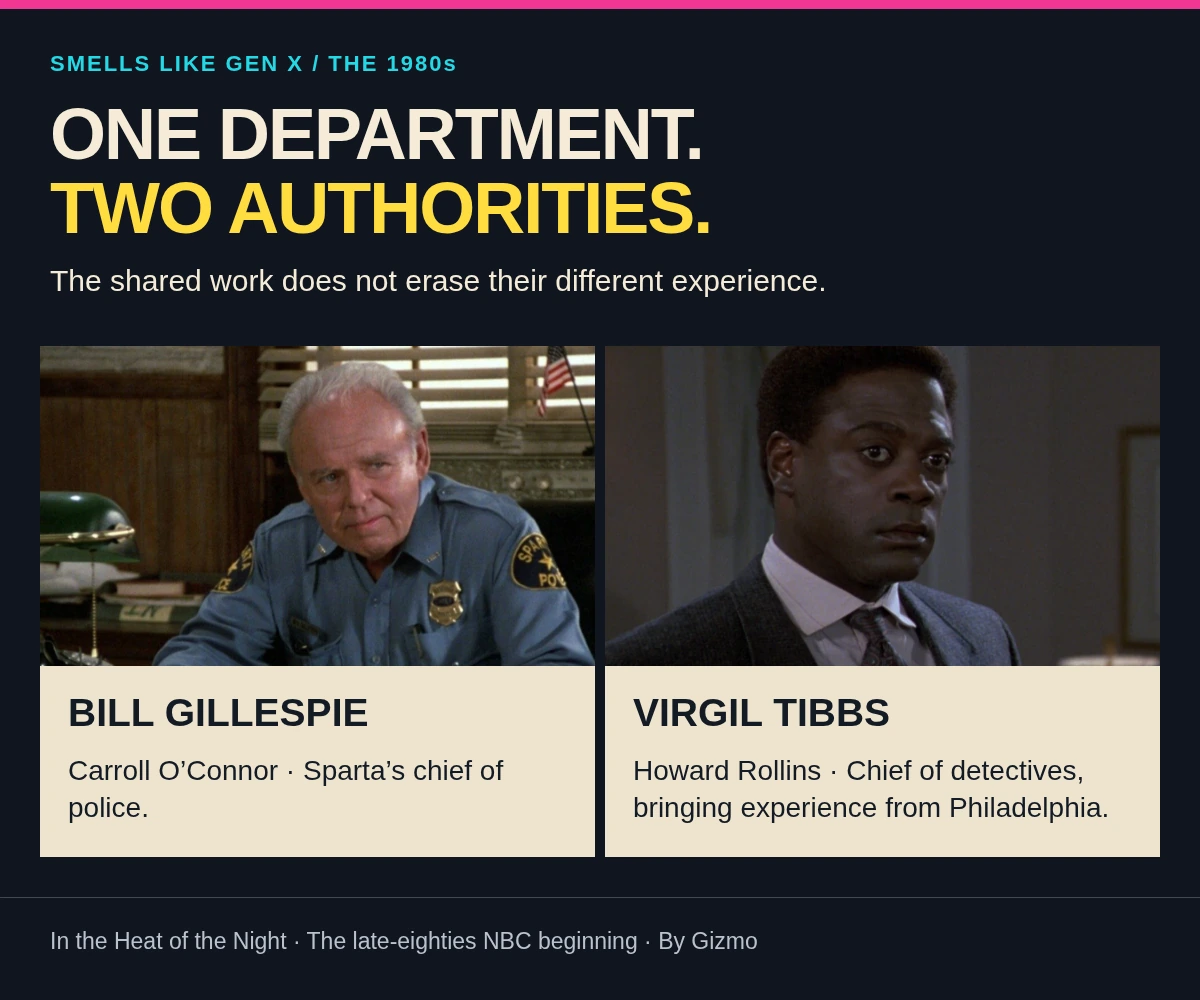
Gillespie can set the rules for the station. Tibbs can walk into the station with a better explanation for what just happened. A show can get through a remarkable number of Tuesdays on that arrangement, especially when the two men have to decide who’s going to call a relative, who can get a witness through the door and who’s willing to tell the mayor an answer he doesn’t want.
The fun changes when Gillespie’s local experience actually gets them somewhere. A show with Virgil permanently teaching the chief a lesson would get as predictable as one in which the chief was always right. Both men need room to recognize a useful bit of information the other one missed. Neither man would feel like much of a colleague if his function were to stand around and admire the other one.
One thing that’s particularly good in the first year is seeing how uncertain the agreement can be in public. You could imagine the two men coming to an understanding in an empty office. The minute they walk into a room with fellow officers or friends of Gillespie’s, there are people who think they know who’s entitled to speak first. That’s where an ordinary scene about who’s working the case starts to carry a little heat.
Compare that setup with the L.A. partnership in Hunter. Hunter and McCall can take different approaches out into the same city. Gillespie and Tibbs have to work out what happens when the man in the chief’s office has to work with a detective the town government hired over his head. The jobs make different demands on the actors. When O’Connor finally asks Rollins what he thinks, I want to see how much of the answer he can stand to hear.
Althea Tibbs has to live there, too
It’s easy for a cop show to use the person waiting at home as a measure of how late the detective got back. Anne-Marie Johnson brings something else into the picture. Althea has opinions about Sparta and about what it costs to put down roots there. When a case reaches the family, there’s already a person in that house whose life is bigger than what happened at the station.
“Intruders” gives you an easy example. Virgil is investigating attacks on older residents. Althea’s parents visit from Philadelphia and want the couple to return. Think about the pull of that offer if you’ve ever had to explain why you stayed in a place your family was happy to leave. Now imagine coming home to that conversation after spending the day taking statements from people who’ve been attacked. What looks like a career decision to everybody outside the house starts to look like a choice about where two people can feel at home.
“Tear Down the Walls” places the couple in church together. That shared decision changes what the visit means. A man can say where he stands about an integrated congregation and go back to his desk. A couple entering as worshippers has to find out who will greet them, who will move to make room and how welcome they’ll feel when there’s no immediate emergency to draw attention to them.
I appreciate that Johnson can let Althea be annoyed with Virgil, even when it would be easier for the show to ask her to understand him first. They can love each other and have very different ideas about what would help. That gets a much harder test in the third-season premiere. It’s worth going there after you’ve seen enough of Johnson’s other work on the show to appreciate the life Althea already has.
Bubba and the officers people remember
Alan Autry’s Bubba Skinner is the character you might recognize even if you couldn’t put the dates of the series in order. He has an easy physical presence, and the name fits a man you’d expect the whole town to know. That makes him useful in scenes where Virgil and Gillespie would have to work harder to get somebody talking. It also gives other people in Sparta a reason to expect favors he may be unable to give.
Bubba gets his own corner of the series in “Hot Nights,” with a novelist who comes to town and an estranged husband who complicates the relationship. I like the idea of giving somebody from the uniformed side of the department an hour where his private judgment has consequences. You find out more about what he wants than you could from a dozen scenes in which he’s asked to be ready at the car.
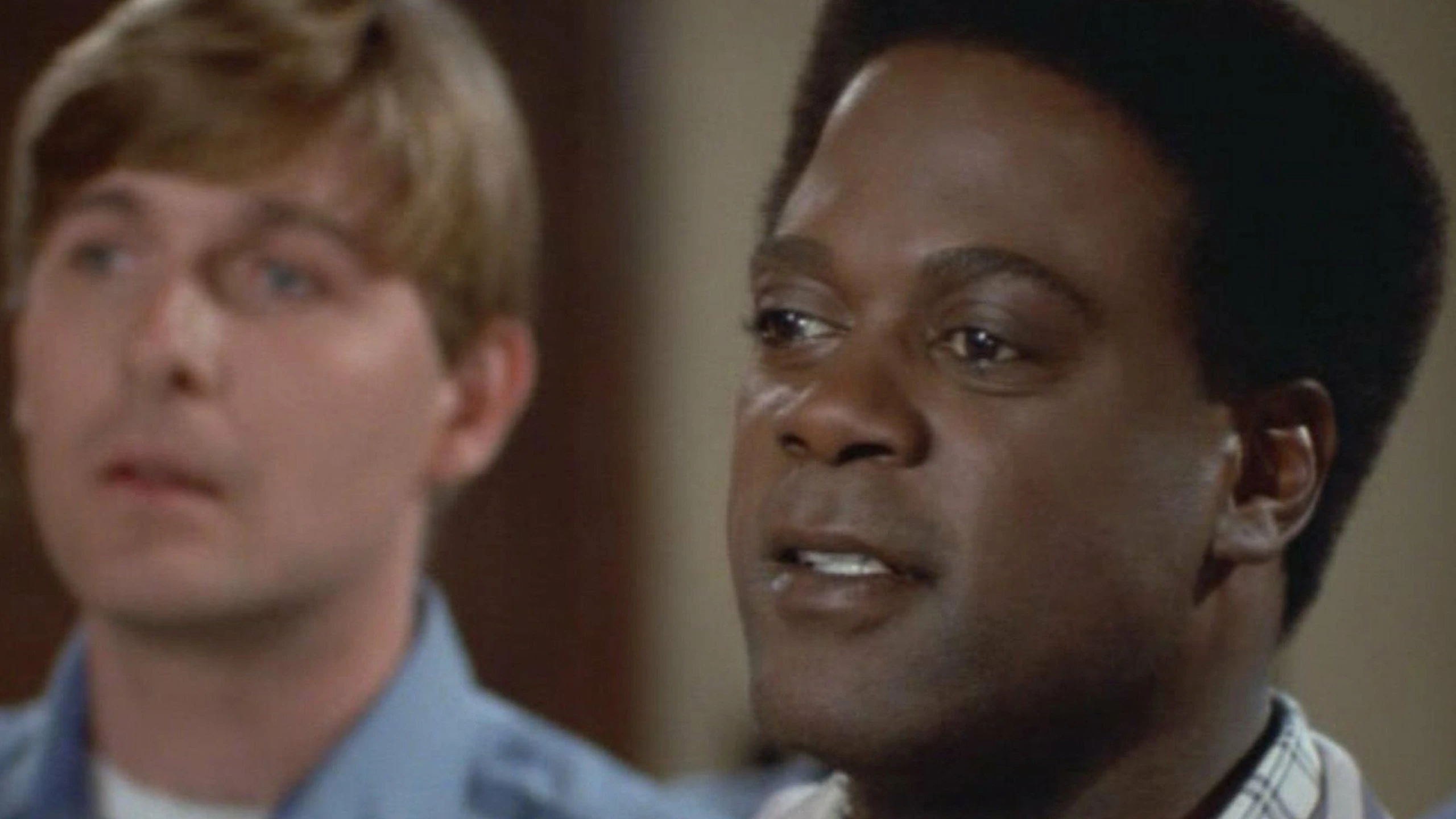
The Paley Center credits for “A Trip Upstate” are a good roll call of the late-eighties station. David Hart played Parker Williams, Geoffrey Thorne played Willson Sweet and Hugh O’Connor played Lonnie Jamison. Add Autry and the two leads and you begin to see why a scene at work could have an identity without needing the chief and the chief of detectives to do all the talking. A viewer can know what to expect when a particular officer gets the door.
“The Creek” sends Tibbs and Sweet to investigate after a woman is found badly beaten. It’s a good choice if you want to see another member of the department do more than walk in with a message. Their presence together also gives Virgil someone different to talk with as the case touches his own family history. Put it after an hour heavy on Gillespie and you get a feel for how much the show can change by changing who walks out of the station with Virgil.
Joann and the people outside the station
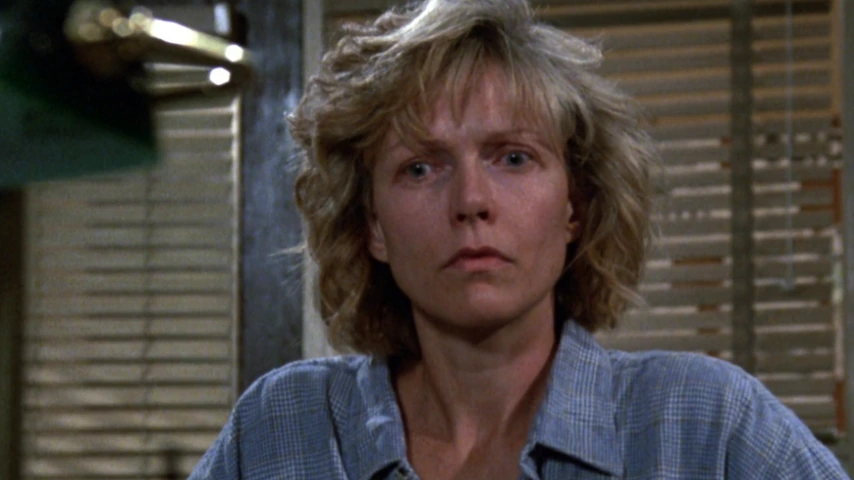
Lois Nettleton’s Joann St. John is one of the early characters worth looking for when you go back. The episode usually listed as “AKA Kelly Kay” gives her a history that returns to put people in danger. Years earlier she persuaded women to testify about a murder. Escaped prisoners bring that old decision back into her life. The tension works because there’s a person here to care about before the episode lays out what she did.
That’s a good use of a recurring character. It makes you reconsider a face you thought you knew. You could give the same plot to a guest, introduce everybody before the first ad break and get a sound hour out of it. Give it to someone who’s already part of the town and you have the extra pleasure of watching her decide what to tell people she’s been seeing all along. It’s a long way from a stranger showing up to deliver a piece of information.
One mark of a good Sparta hour is how often the investigation has to go through a place where the people involved do something other than talk to police. A church congregation has its own business. A newspaper has employees and readers. The local plants have shifts to fill and bills to pay. Set a scene there and the question “Who knows what?” can lead somewhere besides another file on a desk.
That also gives Nettleton and the other recurring performers a chance to change what the regulars expect from a scene. The station can order people in. Outside, people can decide how much of their story to volunteer, and which officer they’ll give it to. In Sparta that choice tells you a lot about how welcome a detective really is.
The town on the screen and the towns that played it
Sparta is in Mississippi in the story. Much of the series was filmed in Covington, Georgia, and a December 1988 Washington Post profile places the production there by the time season two reached the air. I like knowing that without needing to stop an episode to identify every brick. Location work matters even when you couldn’t point the street out on a map. A person can walk out of a building and you believe there’s a town continuing beyond the camera.
The useful comparison is what a city gives a show like Hunter. In L.A. a detective can cross a boulevard and meet a person he never has to see again. In Sparta the point of putting a familiar face in a public place is often that they’ll run into the detective again. A witness who trusts you at home may be harder to talk to outside a storefront when there are neighbors in sight. The size of the place gives those choices consequences.
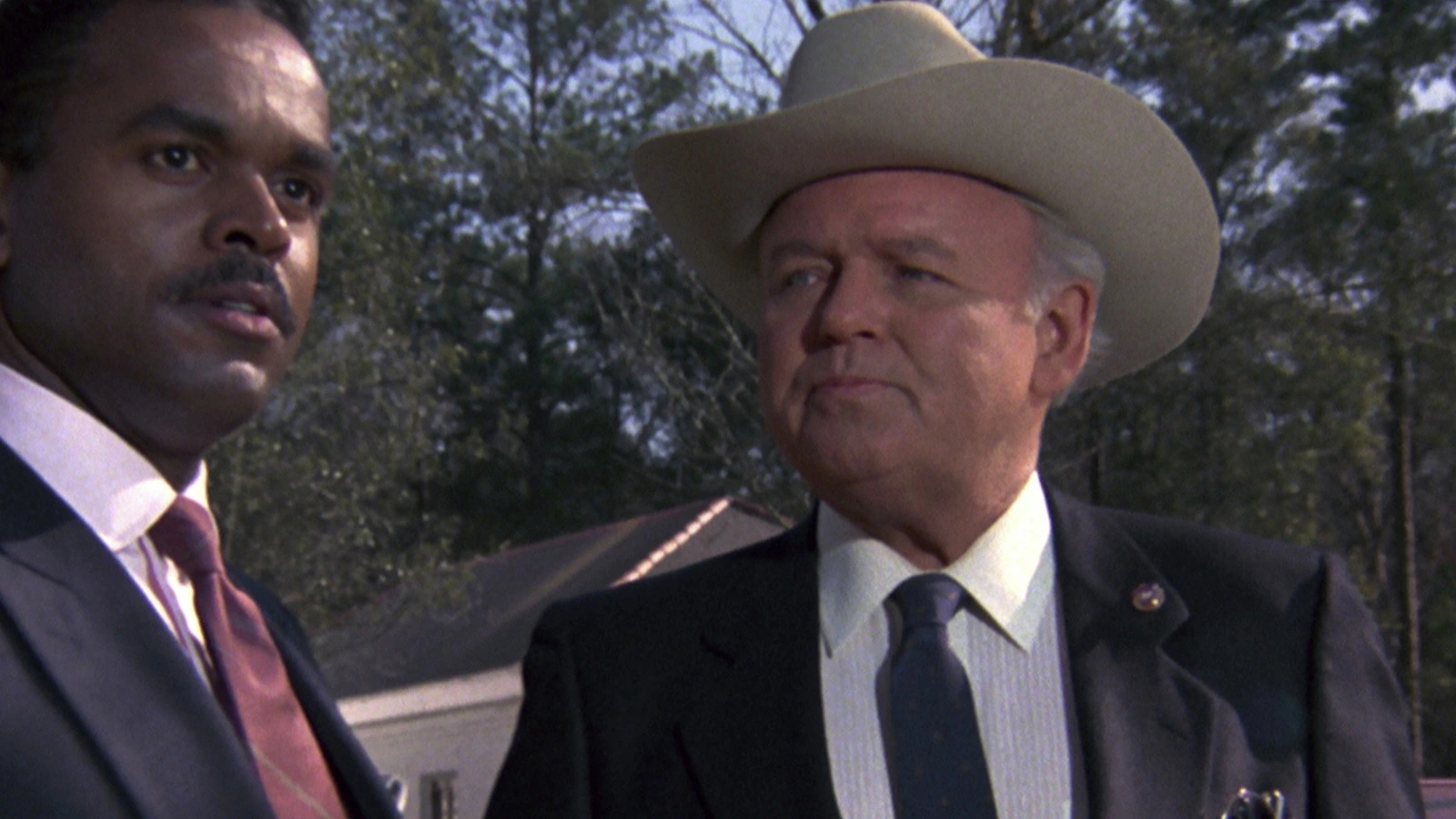
It also changes what a public gesture can mean. “The Family Secret” starts with a statue dedication for a prominent businessman. In a town that size, a public celebration gives the show a decent cross section of the people who think they know him. By the time the investigation turns back toward the family, the civic picture and the private one have had a chance to clash.
Those contrasts are part of the pleasure of exploring eighties TV detective shows. A mystery in a wealthy couple’s hotel has room for a new set of suspects every week. A murder in Sparta can make a man answer for the welcome he received the last time he came through town. The locations help you feel that difference without anybody having to make a speech about small towns.
Road Kill gives an old friendship a price
In “Road Kill,” Virgil suspects Sonny Mims, an old friend of Gillespie’s, in his wife’s death. The trouble begins with an easy explanation for the shooting. There’s a story people can tell about the violence that doesn’t require them to look too closely at Sonny. Virgil sees reasons to look closer anyway. For Gillespie, that takes the case somewhere personal before it’s settled anything.
I’d watch for the assumptions each man carries into the investigation. A detective who knows somebody well may know how to get a direct answer from him. That same detective can be slow to ask a question when the likely answer would make him reconsider all those years. By giving Sonny a tie to the chief, the episode puts that weakness in a person who ordinarily has useful local knowledge.
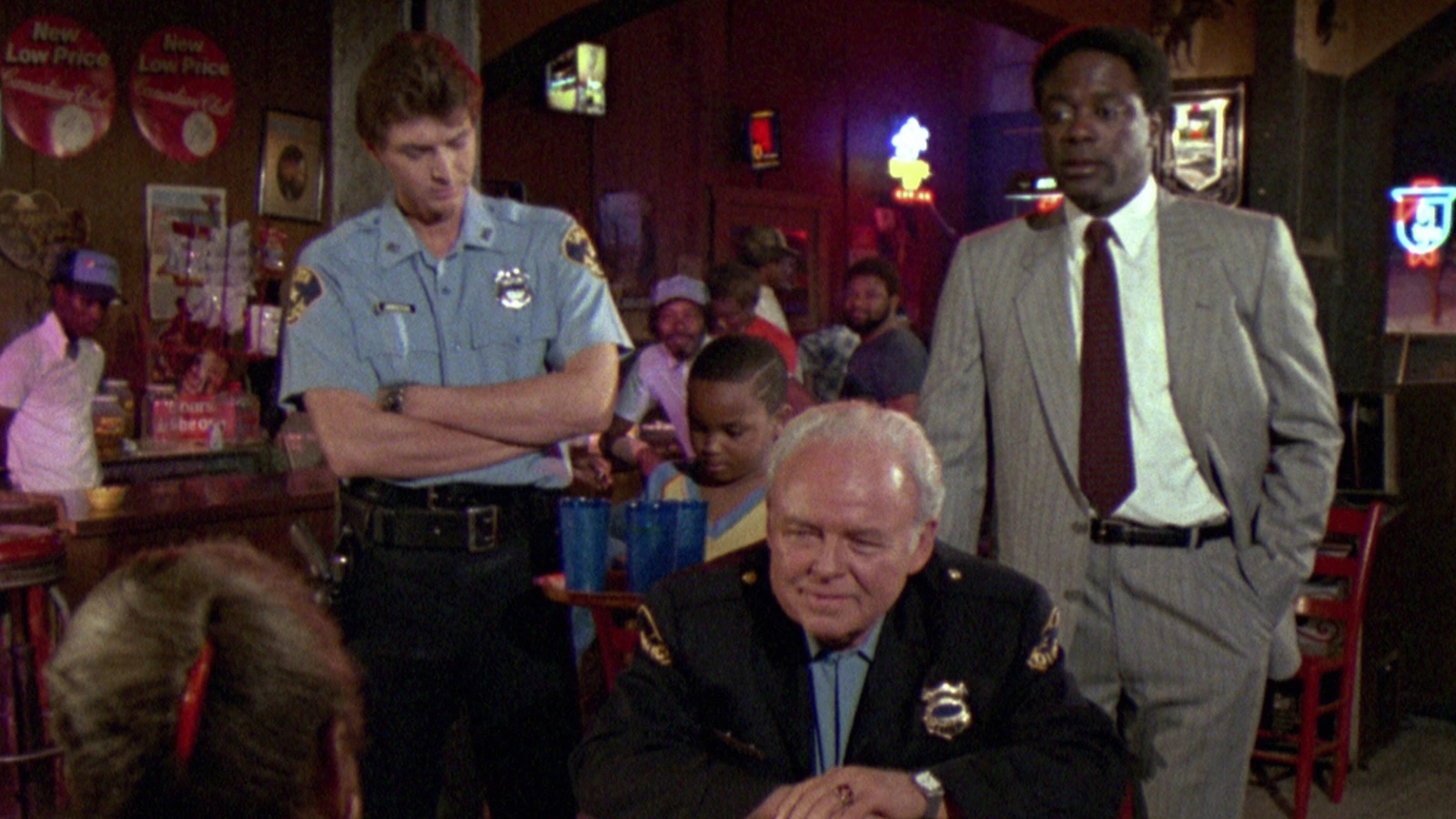
Virgil has a practical problem as well. He needs to make a case, and the person in charge of the department is somebody he could use in doing it. Being right early buys him very little if his reasoning can’t survive an argument with Gillespie. There’s a pleasure in watching the early series make him work through that step. The question is whether he can give the chief enough to work with when the chief would rather tell himself he already knows the man.
For a short rewatch, I’d put this right after the pilot. The first story sets up the way they were put in the same department. “Road Kill” shows the cost of having a chief who remembers the people involved before he remembers the details of the report. You get the ordinary working version of their problem almost immediately.
Fate puts a newspaper in the middle
“Fate” brings in a Black businessman who wants to buy the local paper. There’s talk about his relationship with the paper’s married white owner. A sale that could have been a straightforward story about a town business becomes a story about who gets to control what the town knows and whose company is considered respectable. The paper is an especially good place to put that fight because there’s something at stake for people well beyond its owners.
The premise makes room for a question about who supplied the information in the first place. A rumor gets repeated because somebody has an interest in repeating it, somebody thinks they’re helping and somebody is happy for an excuse to tell it again. Virgil can hear it three times and still have to find out whether he’s heard from three people who actually know anything. I like that kind of case because gossip can feel as urgent as a witness right up until you need to pin down a fact.
It’s also worth looking at who has the freedom to take an ordinary risk. A business deal can make one person seem ambitious and another seem threatening even when they want to sign the same contract. The show gives the viewer a town where race influences how those two people will be talked about before the facts of the sale are even clear.
A late-eighties series could have kept a local newspaper around for convenient headlines. Giving it a whole story lets the newspaper become a place where public language has a private cost. That’s the part that stayed with me, more than the precise sequence of the investigation. Sparta’s interested in who gets to tell the story, especially when it’s supposed to be a story about Sparta.
Blind Spot tests a welcome home
“Blind Spot” runs in two parts. Ritchie Epson is a former local boy who comes back with a promise of investment, employment and a better day for the town. That sounds like good news if you’re somebody who has watched people leave for work. Virgil has reasons to suspect there’s more to the business, and the people hoping to benefit have every reason to resent the suggestion.
What makes that premise hold together is the gap between what Virgil can see and what he can prove. If he warns people off before he has evidence, they can make the case about his attitude toward Epson. If he waits, the town has time to invest more than enthusiasm. The two parts give that dilemma space to get worse. Gillespie, who wants enough evidence to do something, has to deal with both the public excitement and what happens when the investigation gets dangerous.
Bill Sadler’s Epson is also a reminder that an early-season guest could give the regulars a different kind of work. The menace in the premise comes from a man promising to do the sort of thing a town would sincerely want somebody to do. It’s worth watching the reaction to his offer before looking for the things that go wrong. Somebody has to make the return home sound good or there’s no reason anybody would be sorry to see the plan fall apart.
If you watch in a streaming menu, keep the parts together. This one has time to move from the welcome to the price of challenging the person being welcomed. It’s a good example of how the spring run could vary a plain weekly case even before the longer second season arrived.
A Necessary Evil lets the first season get strange
A man played by Ted Lange winds up in custody and six women turn up claiming to be his wives. Before anyone can sort out the household arrangements, he’s killed in his cell. If you’ve watched enough solemn introductions to think every episode begins in exactly the same emotional key, I can recommend watching the early part of this one. The visits alone are worth the change of pace.
The point of letting a premise start as a farce is that the detectives have to keep up with the people involved. Every new visitor changes what they think they’re looking at. Somebody who walked into the building as a source of information can become a possible suspect before she’s had a chance to explain the whole relationship. The trick is to give those women a reason to be there beyond getting one quick laugh each.
There’s an uncomfortable resemblance to the pilot underneath the farce. Someone in the town’s custody is killed. Once a death has happened there, the department has to answer for who had access to the man and why nobody was able to keep him safe. The particular questions are different, but the setting is familiar. That gives the episode a solid reason to get serious after it has had some fun with the premise.
I like having this one in the early run because it gives a fuller picture of what you were getting when you tuned in. You could go from old friends and dangerous accusations to a line of married women bringing presents to the same man. The actors and the station are familiar enough by then to make the surprise feel like something that happened to people you already know.
Don’t Look Back brings the past into the second season
The December 1988 season opener links a new killing to a crime from two decades earlier. That means the original investigation is already part of the town’s history by the time Virgil gets a look at it. People have had years to settle on what they think happened. A case that suddenly resembles it gives them reason to remember more, or to defend the version they’ve been telling.
The best part of that setup is that a detective can know where to find a person without knowing what that person decided to forget. Gillespie can bring his years in town into the conversation. Virgil can look at the surviving facts and ask whether the passage of time has made anybody more certain than the evidence ever warranted. They can also disagree about how much the resemblance between the cases tells them. A pattern can be a lead worth following while leaving plenty unanswered.
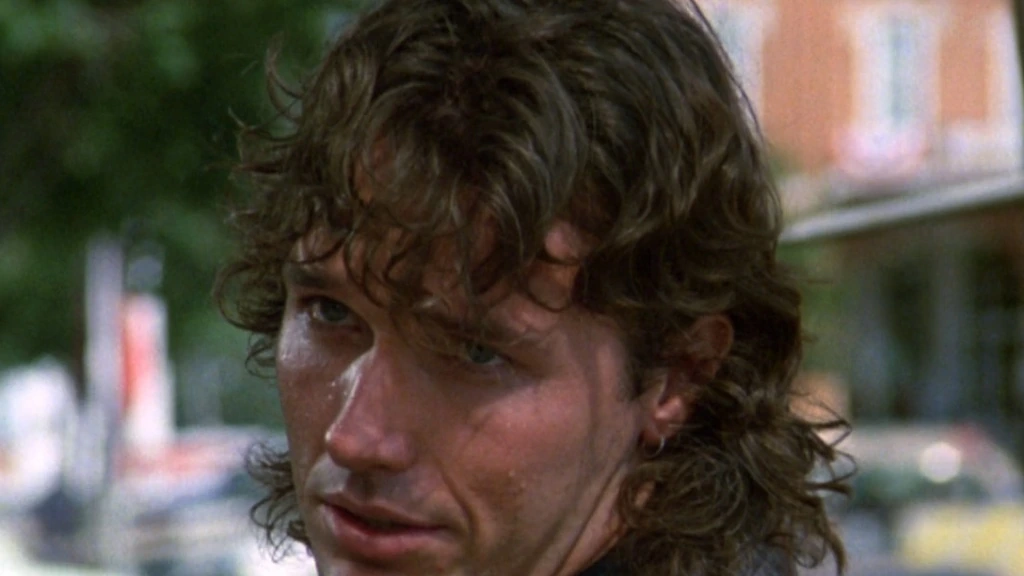
A longer opener helps. If you cut immediately from the earlier crime to two men agreeing on what the new one means, all you have is a striking similarity. Time gives the viewer a chance to understand why looking backward is an imposition. People can be afraid of an old crime turning into a new one and still refuse to talk about the piece of the old case they could clear up.
This is an excellent second-season starting point if your picture of the series comes mostly from reruns. You get the two leads doing sustained work together while the story reminds you that you are in a place with older problems than the partnership. That balance is where the show starts to feel like it can go for years.
Prisoners puts the badge under scrutiny
Gillespie has a longtime friend in the sheriff of a neighboring county. Black prisoners have died there, and Gillespie has to investigate. You can see what’s hard about that before anybody draws a weapon. He knows the man personally. He also knows how much weight two officers can give each other’s account simply by treating each other as colleagues. The episode asks him to use his position against someone who may have counted on that professional courtesy.
It’s a stronger test of Gillespie than a case in which the culprit is a stranger he dislikes. You have to watch him work out how much he never asked about his friend. The deaths give that discovery a cost borne by people who had much less power than either man. I like the episode most when it keeps the chief’s feelings in the room and leaves the pressure on him to find out what happened.
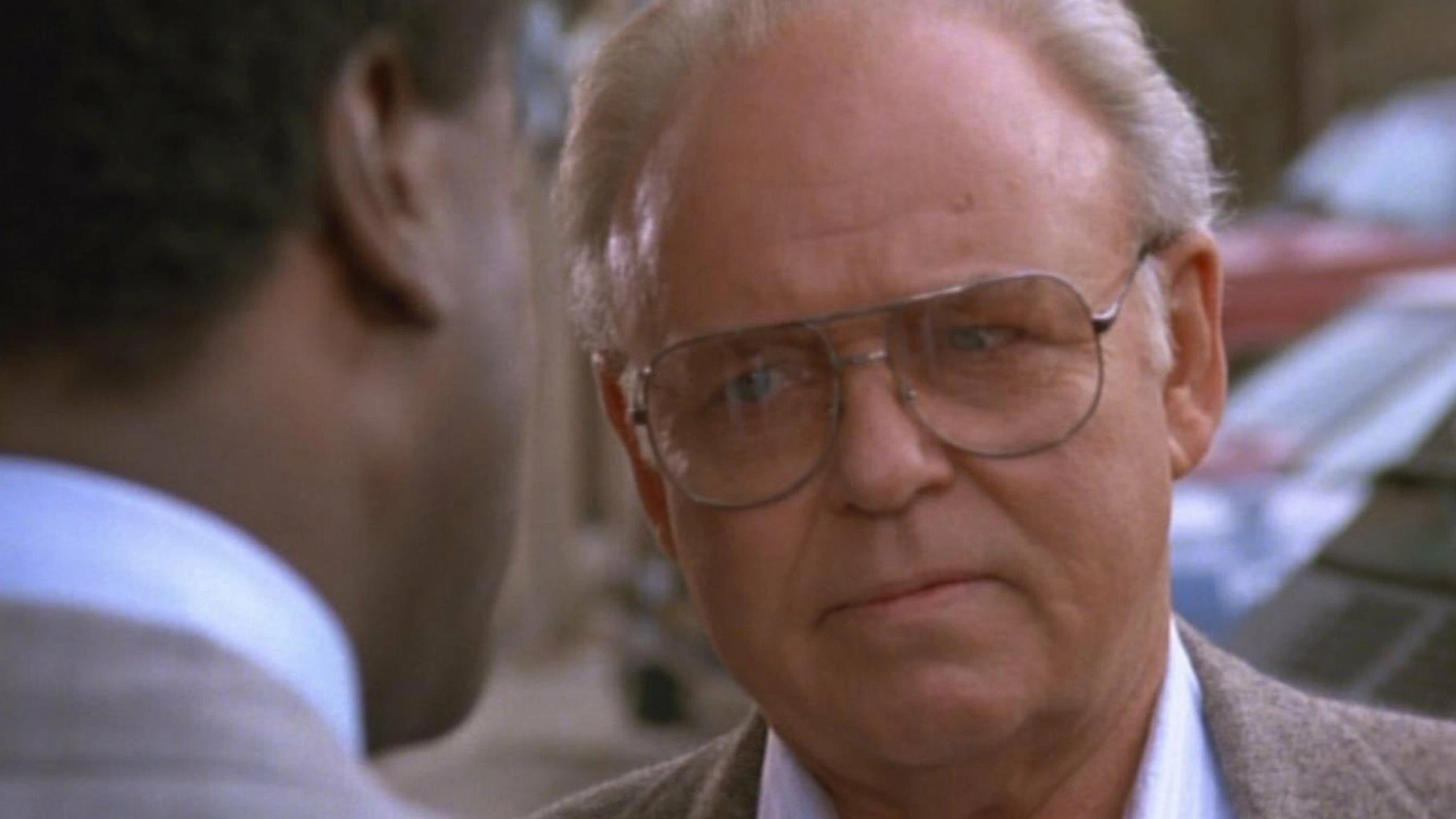
It also changes the geography in an interesting way. There’s a county line between the two departments. The men know one another across it, while the prisoners have had to depend on the officers who held them. That gap between who can make a private call and who has to wait for an outside investigation is where the story gets much of its anger. Somebody needs to do more than promise his friend a fair hearing.
If I were picking a few winter episodes for somebody who remembers little beyond the title, I’d start with this one from December 1988. Put it next to “Gunshot” and see how differently the show treats the act of investigating a fellow officer when the person under suspicion is Virgil himself.
Gunshot gives Virgil an account to defend
Virgil shoots a robbery suspect, believing she had a gun. The gun can’t be found. He goes from the person asking people to stand by their account to the person who has to stand by his own, with an important piece of physical evidence missing. Putting him there makes you watch differently. You’ve had time to trust the man. A proper investigation needs a reason to arrive at the same conclusion.
The episode also needs Gillespie to do something more demanding than simply offer reassurance. He can take Virgil seriously and still ask the hard question. When a partner claims to have seen a weapon, there’s a difference between trusting that he’s telling the truth as he remembers it and knowing that the memory matches what was there. O’Connor and Rollins can play both those things in one conversation.
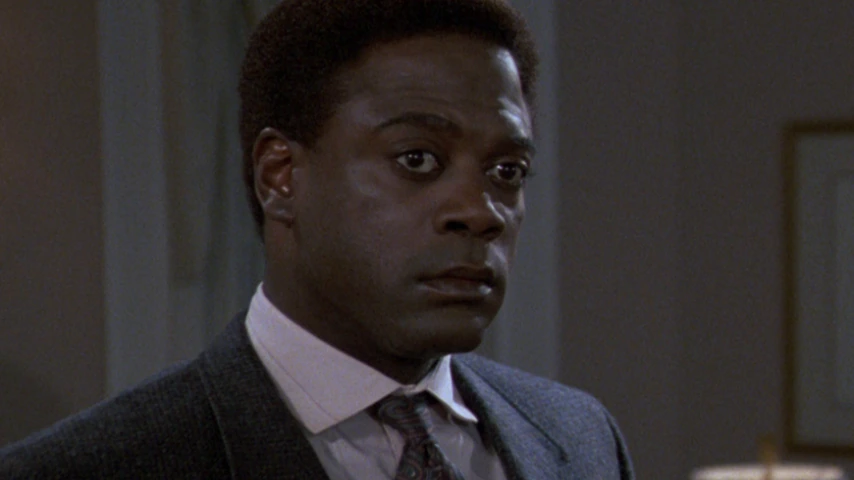
What makes it sting is that the viewer can want Virgil cleared and still recognize the value of the doubt. The series has already given you examples of departments making a judgment too quickly. The hero’s place in the title sequence is a poor reason to let his department do it again. It takes a confident show to put the audience’s loyalty under that much strain.
This one makes a fine companion to Cagney & Lacey if you like police stories about the costs of the job. Both shows can let you spend time with the people doing the work, then put a decision they made in a room where it has to be explained to someone else. That second room is often the more interesting one.
Tear Down the Walls makes a church visit matter
Virgil and Althea attend a white congregation where the minister wants to integrate the church. He collapses at the pulpit. The invitation has already told them something about the minister’s intentions. Now the detectives have to find out how much agreement there was behind him and how the people who worshipped there respond once he’s gone.
This is where the scale of the town helps. An argument about who gets to worship in a building can sound almost abstract if you only hear the sides of it laid out. Put two familiar people in the pews and it becomes a question of who turns to see them arrive. Give the congregation people with competing reasons to accept or reject the minister’s plans and suddenly a witness can answer a question about the death while telling you something about the place.
I like that Althea’s visit helps make the story more than an assignment. If Virgil showed up after the death with a notebook, he could work out what had happened and decide what it told him about the church. Because he and Althea came as guests, they had already taken a chance on the invitation. That gives the scenes afterward a different personal charge.
Look for this one in the winter of 1989, before “A Trip Upstate.” The episodes make good back-to-back viewing. The first spends time with an institution whose members have to decide whom they will welcome. The second sends Gillespie to an institution that has made a decision about a man’s life. You get two very different rooms and a clear idea of what the show was willing to put on network television.
A Trip Upstate puts Gillespie in a room he can’t run
The Paley Center has the original NBC date as February 7, 1989. A man on death row asks Gillespie to be there when he is executed. The chief has to decide what it means to accept the invitation. The process will go on either way. That strips the job of a power he usually has: the ability to walk into a case and change what happens next.
O’Connor is good with a character who has run out of practical ways to postpone a decision. He can ask questions and hear the answers and still have to sit with what the request means. Paul Benjamin plays the condemned man, George Brownlow. Giving that part a performer who can hold the room with O’Connor makes the visit a conversation the chief has to participate in, even if he can’t offer much comfort.
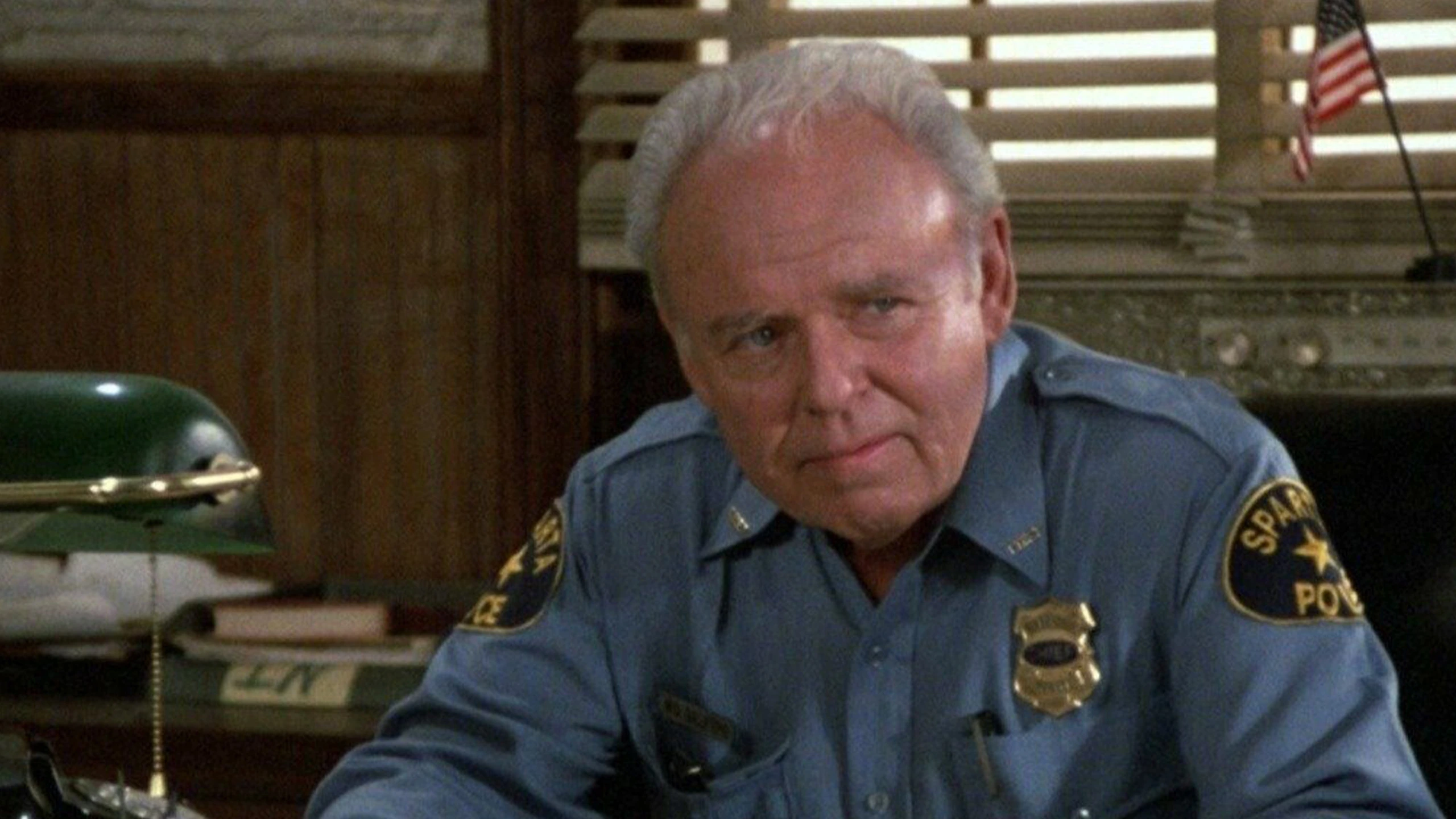
I wouldn’t use this as the very first episode for a new viewer. Watch one where Gillespie knows the town well enough to take charge and another where Virgil is there to challenge him. Then see what happens when the chief has to go somewhere where both of those familiar tools offer limited help. You can feel the absence of the usual things he would do when a case is headed in the wrong direction.
The episode also shows what can happen when an hour lets its guest subject govern its pace. A prison visit doesn’t need the rhythm of a chase. It needs enough time for the visit itself to become difficult. That’s where O’Connor pays back the time you gave him, without needing the whole show to agree on how you should feel about the decision.
The Creek gives Virgil and Sweet the legwork
A woman is found badly beaten at a creek. Virgil and Willson Sweet investigate, and the possibility of abuse at home brings Virgil back to part of his own past. That’s a substantial change from the spring pilot, where his return gives other people an excuse to tell him where he belongs. Now the show is willing to ask what he remembers and how the case changes when he has a personal reason to stay with it.
Putting Sweet in the investigation is a good choice. A scene between Tibbs and Gillespie can make a viewer wait for the inevitable disagreement or reluctant agreement. Here Virgil can talk through something with another officer without every exchange feeling like the department’s two competing centers of power have to settle the question. Sweet gets the work of being a colleague. It’s a role television often underestimates.
The creek itself also puts some distance between the public life of Sparta and what happens inside a house. An investigation can reach the site where a woman was found and still have to find somebody who knows what was happening before she got there. I like the way that simple question asks for a witness who may have kept quiet for reasons the police have to understand before they can get an answer.
Try this if you’re looking for more of Rollins after “Gunshot.” One story leaves Virgil uncertain how much another person can establish about what he saw. The other asks him to use the things he knows from outside the department while giving the woman’s case the attention it deserves. They’re different chances to see why the series needed Rollins.
Walkout takes the case to the plant
“Walkout” takes place around a strike at a Sparta plant. A councilman trying to intervene is killed. Work is already stopped and people have already picked sides before the police have a murder to investigate. You could have two people agree on exactly what they saw and disagree on what it means because their families depend on opposite outcomes in the dispute.
It’s worth considering how different the week would look to someone coming to the station for an interview. The detectives have a case with a set of questions. A worker has a shift he may never get back and a household waiting to know if there will be a paycheck. A councilman’s public role is important, but it’s easy to see why the people a detective wants to talk to might have other immediate concerns.
This is where an episode can make use of Gillespie’s local ties without replaying “Road Kill.” He knows something about the people whose livelihoods are involved. The town will also have plenty to say about which side they think he’s helping by treating one person as a witness or another as a suspect. The investigation needs room to proceed while both sides have reason to pay attention to who gets called in.
It’s a good reminder of what a little geography and a bit of work can do for a mystery. A public building, a home and a plant all give the police a different reception. Give the viewer a sense of what the place means to the people inside and the questions begin to feel specific to the hour. That’s one thing Sparta could deliver even when you already knew who would get called to the case.
Accused puts Bubba in the frame
Bubba is accused of attacking a Black woman. A second woman comes forward with an allegation from his past. Virgil becomes involved in the case. If your clearest memory of Bubba is of a big, familiar man in uniform arriving to help, the setup immediately asks how far you can take that memory. The answer has to come from an investigation with a reason to treat the claims seriously.
There’s a built-in risk in giving a story like this to a popular regular. The audience has had weeks to get to know him. The women have far less time on screen to make an impression, and that can push a viewer toward a judgment before the episode has given either of them a fair hearing. I’d keep that imbalance in mind on a rewatch. It tells you something about the power of a weekly cast, especially when the show puts a familiar face and a serious allegation in the same room.
The episode makes a good pairing with “Prisoners.” That story makes Gillespie investigate a man he knows from his own professional world. This one brings the question into the Sparta department and asks Virgil to do work involving an officer he sees all the time. Both need a detective who can get past the story colleagues would find easiest to accept.
Autry’s familiarity is the reason I remember the premise. You can watch the main character return week after week and develop an easy affection for him. Then the series asks you to sit through a case in which affection is one of the least useful things anybody can bring to the interview. That’s a tougher job for the audience, too.
Fifteen Forever starts after a win
A Sparta high school basketball victory gives the town a good reason to celebrate. A deadly hit-and-run afterward turns the evening into something completely different. Virgil has to identify the driver. The fact that it started with a game keeps the loss from feeling like a crime dropped into town just in time for the opening scene. You can picture the people who had every reason to expect a pleasant ride home.
What I remember about a school game in that era is how little you needed to explain your interest. Somebody in class was playing. Somebody’s brother was on the bench. Somebody who barely cared about the sport wanted a reason to go out. Put a public celebration around a private loss and you have a clear sense of why the town would have trouble leaving the case at the station. There’s a community already gathered by the time anybody has to ask it for help.
It also gives a detective a particular kind of job. You need people to recall the time and place of something they experienced as part of a much bigger night. A small detail can be more important than the part a person remembers telling everybody about later. That’s why this sort of episode can make the legwork feel satisfying. You’re watching somebody try to recover useful order from a night the town remembers emotionally.
It’s an accessible episode if you’re coming back for one hour and want to get beyond the title characters’ introduction. The people of Sparta start off with something good to do together. The police have to make their way through what happened to that shared evening. You get a sense of how much the setting can contribute to a case.
Missing changes who has to keep the station going
Gillespie’s disappearance in the second-season finale makes Tibbs and Bubba work together while Tom Dugan serves as acting chief. Joe Don Baker plays Dugan. The new man at the desk changes more than the face in a familiar room. Virgil has to decide what he can say to the person who has the authority to act while he and Bubba try to understand what happened to the person they usually report to.
That’s a useful late-season move because the audience knows how things ordinarily work by then. You can take Gillespie out of the department and feel a difference even in an exchange about who’s supposed to go where. A new acting chief can issue an order. The people hearing it have years of experience with another man’s habits and a very immediate reason to want him back.
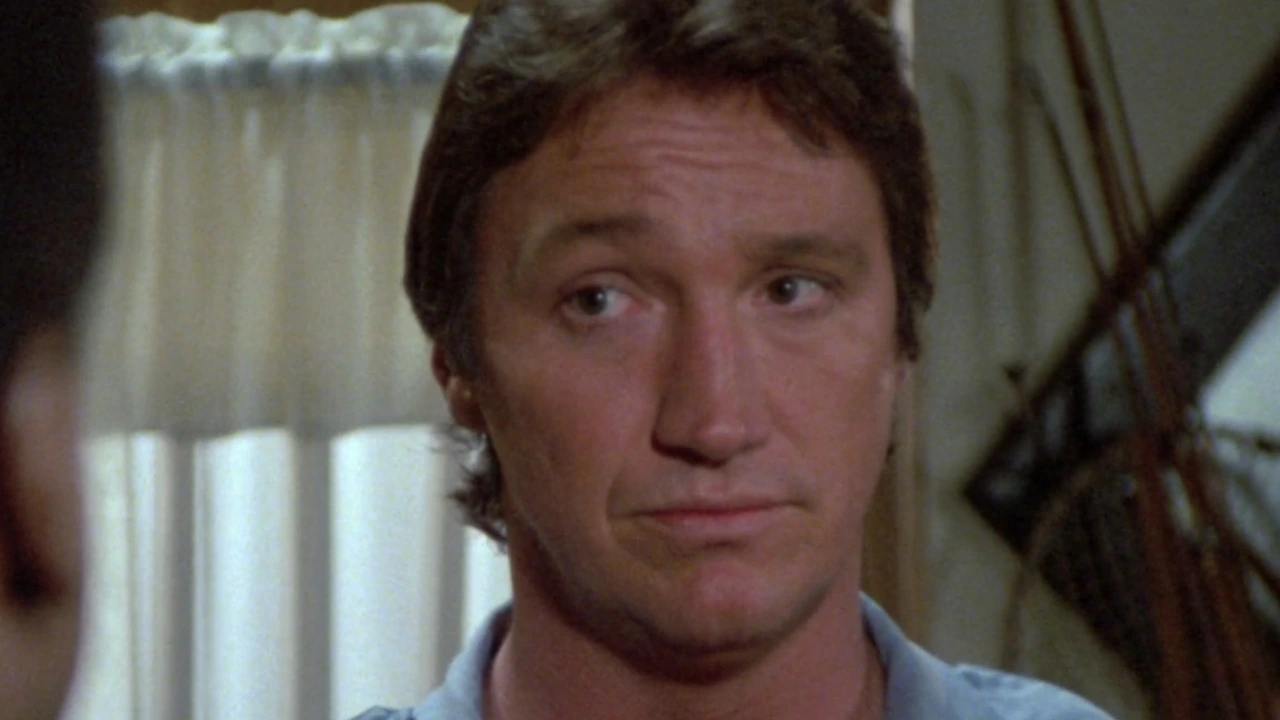
The story also gives Bubba and Virgil more space as a pair. Think back to the pilot, where the question was whether Gillespie would allow Virgil to work the case effectively. By now the two officers can share doubts about what the official explanation is missing. They have to decide how to act on those doubts inside a department whose usual point of reference is gone.
Watch it at the end of the second-season group if you’re trying several episodes in sequence. A viewer who drops in for Joe Don Baker will get a case. A viewer who has sat through the hard looks, the reluctant agreement and the way Gillespie slowly learned when to let Virgil ask his questions will have a reason to care that the office is missing its usual occupant.
The fall of 1989 gives Althea a difficult hour
The third season opens on October 24, 1989, with an episode titled “Rape.” Althea is sexually assaulted by a fellow teacher she identifies by voice. The case involves an alibi and pressure on her to stay quiet. It also gives Virgil some harsh and unfair reactions to work through, including blaming Althea for what happened. Anne-Marie Johnson has to make room for Althea’s anger at him while the detectives pursue the case.
That’s a difficult place to take a recurring marriage. A gentler version could have let Virgil respond perfectly, given the couple an uncomplicated alliance and sent him off to prove the case. Johnson gets to play a woman who has to ask for help and contend with a husband who initially makes a terrible situation worse. That’s the part I’d pay attention to if you’re going back to the episode today. The people closest to her have their own reactions. She still gets to have hers.
There’s a good reason to watch something like “Intruders” beforehand. You get Althea navigating family and place on an ordinary evening, which makes it easier to see the person she is beyond the case. The series had brought her into the picture from the pilot and let her make decisions about how she wanted to live in Sparta. Those earlier scenes matter here.
The third-season debut also marks how much ground the series covered in fewer than two calendar years. It began with a funeral and an awkward appointment in spring 1988. By fall 1989, the show could put a problem in the Tibbs home and ask its audience to sit with how hard that family found it to get through the evening.
The opening theme has a little weather in it
Bill Champlin sang the TV theme. The film had used a version sung by Ray Charles, and the two are easy to put together if you’re following the title through its different screen lives. The Paley Center credits Quincy Jones, Alan and Marilyn Bergman, Chris Page and Champlin on the television theme. You can get a lot of the show’s feeling just from hearing it start up.
Some theme songs sound like somebody calling the kids into the room for a good time. This one had an edge I associated with the hour getting later. The voice has some roughness and the tune has enough space to let the town feel still for a second. You know you’re headed for Sparta before a detective has asked the first question.
It’s one of those things that reruns reinforce. You could walk in after the credits were underway, recognize the music and know where you’d landed. For those of us who spent a fair amount of the decade trying to identify a show from across the house, that was a practical skill. A familiar opening could also make a difficult hour feel like part of a place you already knew.
For a quick change of mood, put the opening on after watching the start of a glossier mystery from the same decade. The contrast does as much work as a list of adjectives. Some series make you want to take the car out. This one makes you want to know who’s still awake and what they heard.
Where Sparta sat in the last years of the decade
In 1988 and 1989 you could find network drama going in several directions at once. China Beach made memory and a particular place part of its Vietnam stories. In the Heat of the Night could put a similar value on a location while staying with a weekly police investigation. A church, a plant or the station’s old relationships could be the thing you remembered more clearly than the crime itself.
Take a look at our 1988 TV rankings and 1989 TV rankings if you want to remember what else was vying for the living room. The familiar comedy, news and drama lineups help explain why the tone of a single hour could feel so different as you moved down the dial. Seeing a show in that company also helps keep the years straight when you know it primarily from later repeats.
A reason I enjoy revisiting the first two seasons is that they let you see the series settle into a town. The pilot has to spend time bringing Virgil and Althea there. Later cases can assume you understand some of the local arrangements and get started faster. By the time you’re in the middle of the second season, a familiar room can carry part of the story before a character says a word.
NBC aired the series in the eighties and continued it into 1992. The move to CBS came that fall. If what you remember is a later storyline with Harriet DeLong or a reshuffled group of regulars, it may belong to a different year from the one you have in your head. Start with the original dates and let the faces turn up in their own time. It’s a better way to appreciate how much the series changed.
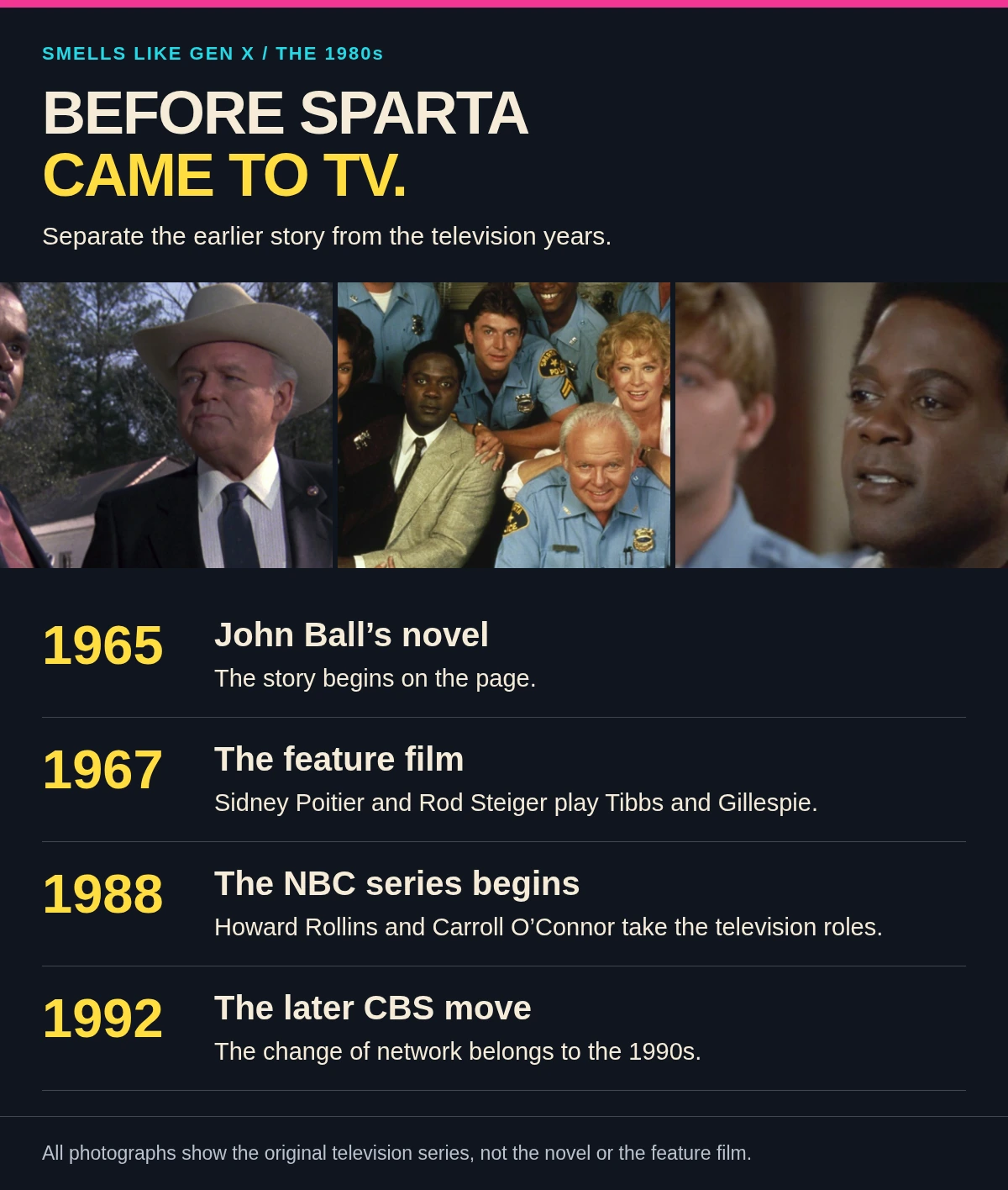
A rewatch for three evenings
Start with the two-part pilot. It has a case of its own and gives you the essential business about Virgil’s return, Althea’s place in it and why Gillespie resents the way the new detective arrived. Give yourself time for both parts so that you get from the bad first reception to the two men actually trying to solve something together.
For the second evening, take “Road Kill” and “Gunshot.” They’re in different seasons, but the swap in perspective works. First Gillespie has reason to give a man he knows a little more benefit of the doubt than Virgil can afford. Then Virgil has a story he needs his colleagues to hear without assuming that a missing gun answers every question. You’ll see both men try to manage a loyalty and an obligation at the same time.
For the third, choose “Tear Down the Walls” and “A Trip Upstate,” which aired a week apart in the winter of 1989. You’ll get an Althea and Virgil story that takes the work outside the station, followed by an O’Connor hour with a completely different pace. Those episodes give you some idea of how much room the early series found inside a crime show.
If you wind up wanting another, pick “The Creek” for Rollins and Thorne, or “AKA Kelly Kay” for Nettleton. They give people outside the central partnership room to matter. That’s what I most enjoy when I go back. By the time I’m two or three episodes into Sparta again, there’s usually somebody beyond the two stars I want to see walk through the door.
Questions people still ask about In the Heat of the Night
When did In the Heat of the Night first air on television?
NBC premiered the series on March 6, 1988. It remained on NBC into 1992 and moved to CBS that fall. Later television movies continued the run into 1995.
Who played Gillespie, Virgil Tibbs and Althea?
Carroll O’Connor played Chief Bill Gillespie, Howard Rollins played Chief of Detectives Virgil Tibbs and Anne-Marie Johnson played Althea Tibbs. Alan Autry played Bubba Skinner.
Was the show based on the movie or a book?
The television series draws on John Ball’s 1965 novel and the 1967 film starring Sidney Poitier and Rod Steiger. The TV version gives Tibbs a long-term job in Sparta and makes his marriage and the rest of the department part of the weekly story.
Where was Sparta?
Sparta is a fictional Mississippi town in the series. Covington, Georgia, stood in for it during much of the run.
Which In the Heat of the Night episodes should I watch first?
Watch both parts of the 1988 pilot first. Try “Road Kill” to see the early partnership at work, “Gunshot” for Rollins and “A Trip Upstate” for O’Connor.
Sources & Further Reading
- Television Academy Interviews — series history and cast interviews
- TV Guide — the spring 1988 episodes
- TV Guide — the 1988–89 season
- TV Guide — the fall 1989 episodes
- The Paley Center — A Trip Upstate, broadcast and credits
- Television Academy — Carroll O’Connor’s 1989 Emmy
- AFI Catalog — the 1967 film and its source novel
- New Georgia Encyclopedia — Covington and its television locations
- The Washington Post — December 1988 interview with Carroll O’Connor