He-Man and the Masters of the Universe: The Cartoon That Sold a Fantasy World
A secret identity, a worried tiger and a skull-faced neighbor with terrible plans. How Filmation made Eternia feel like a place we knew.
The toys opened the door. Adam, Teela, Orko and Skeletor gave us reasons to stay.
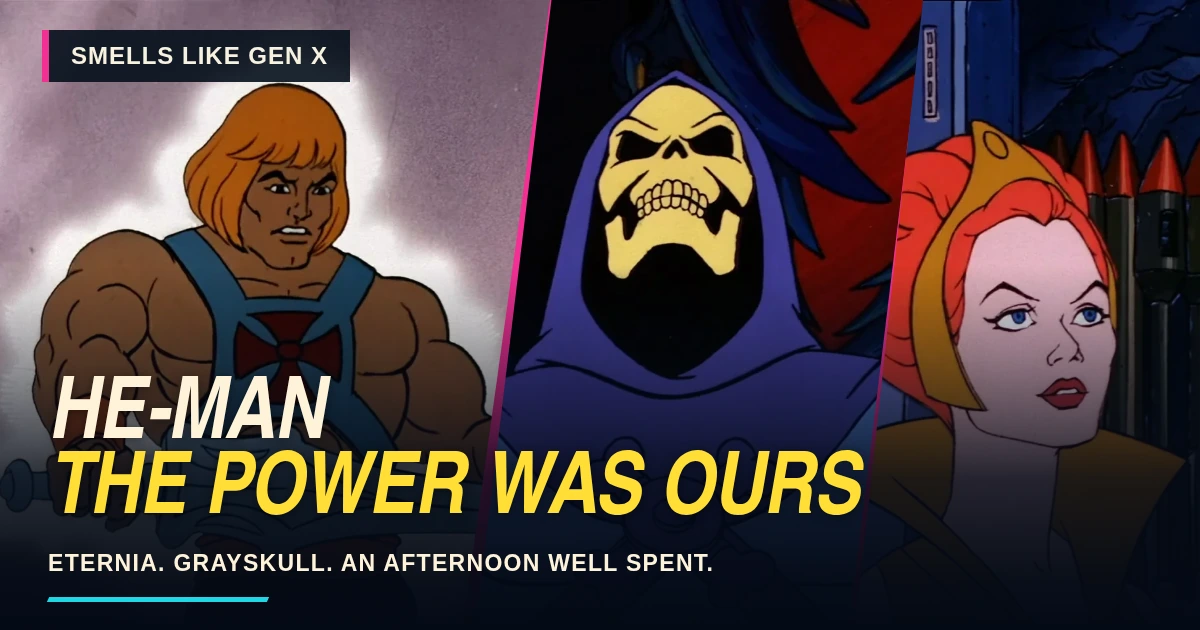
He-Man could lift a mountain, throw a machine into the distance, and handle a room full of monsters without calling for backup. Prince Adam still had trouble convincing his father he was doing anything useful. That was Eternia in a nutshell: unlimited physical power, surprisingly familiar problems at home.
The toys got our attention. The cartoon gave those figures something to do after we had exhausted the obvious business of knocking Skeletor over. Suddenly there were voices, friendships, secrets, a palace, a talking tiger with understandable reservations about danger, and a skull-shaped castle that apparently required better security than any building in the universe.
Filmation’s He-Man and the Masters of the Universe began in 1983 and became one of the defining syndicated cartoons of the decade. Its original run produced 130 episodes. It took Mattel’s fantasy figures and built a regular television world around them: Prince Adam became He-Man, Cringer became Battle Cat, and Skeletor kept finding new reasons to make the trip to Castle Grayskull.
What made it stick was more than the sales pitch. The show made its oversized hero patient, its frightening villain funny, and its strange world easy to enter. There was room for a sword, a spaceship, a family argument and a reminder to be decent to somebody. Sometimes there was room for all four before the next commercial.
Among the cartoons that owned the eighties, He-Man had a peculiar gift: a world that looked completely unreasonable could feel like a familiar place to spend the afternoon.
Inside This Article
- Which He-Man Are We Remembering?
- The Figures Came First. Television Made Them Neighbors.
- An Afternoon Show Had to Earn the Next Afternoon
- The Opening Was a Promise, Not a Plot Summary
- Adam’s Hardest Audience Was at Home
- Cringer and Battle Cat: Courage Had Two Settings
- Teela Was Not Waiting Around to Be Impressed
- Man-At-Arms, Orko and the People Who Kept Eternia Livable
- Skeletor Could Lose the Battle and Still Own the Scene
- Eternia Was a Place Where the Sword and the Spaceship Both Belonged
- Filmation’s Limits Are Visible. So Is Its Craft.
- The Voices Did More Than Fill the Silence
- Four Episodes That Show What the Series Could Do
- The Moral at the End Was Part of the Bargain
- She-Ra Made the World Larger Without Replacing This One
- What Still Works, and What Does Not Need Defending
- A Good Way Back to Eternia
- Questions About the Original He-Man Cartoon
Which He-Man Are We Remembering?
This is the Filmation cartoon, the original 1983–1985 He-Man and the Masters of the Universe. The blond hero, the pink-vested Prince Adam, Orko floating through the palace, Skeletor’s yellow skull and purple hood: that version. Later series have revisited the characters, changed the artwork and explored different parts of the mythology. They are their own trips to Eternia. The one here is the television show that put its feet up in our childhood.
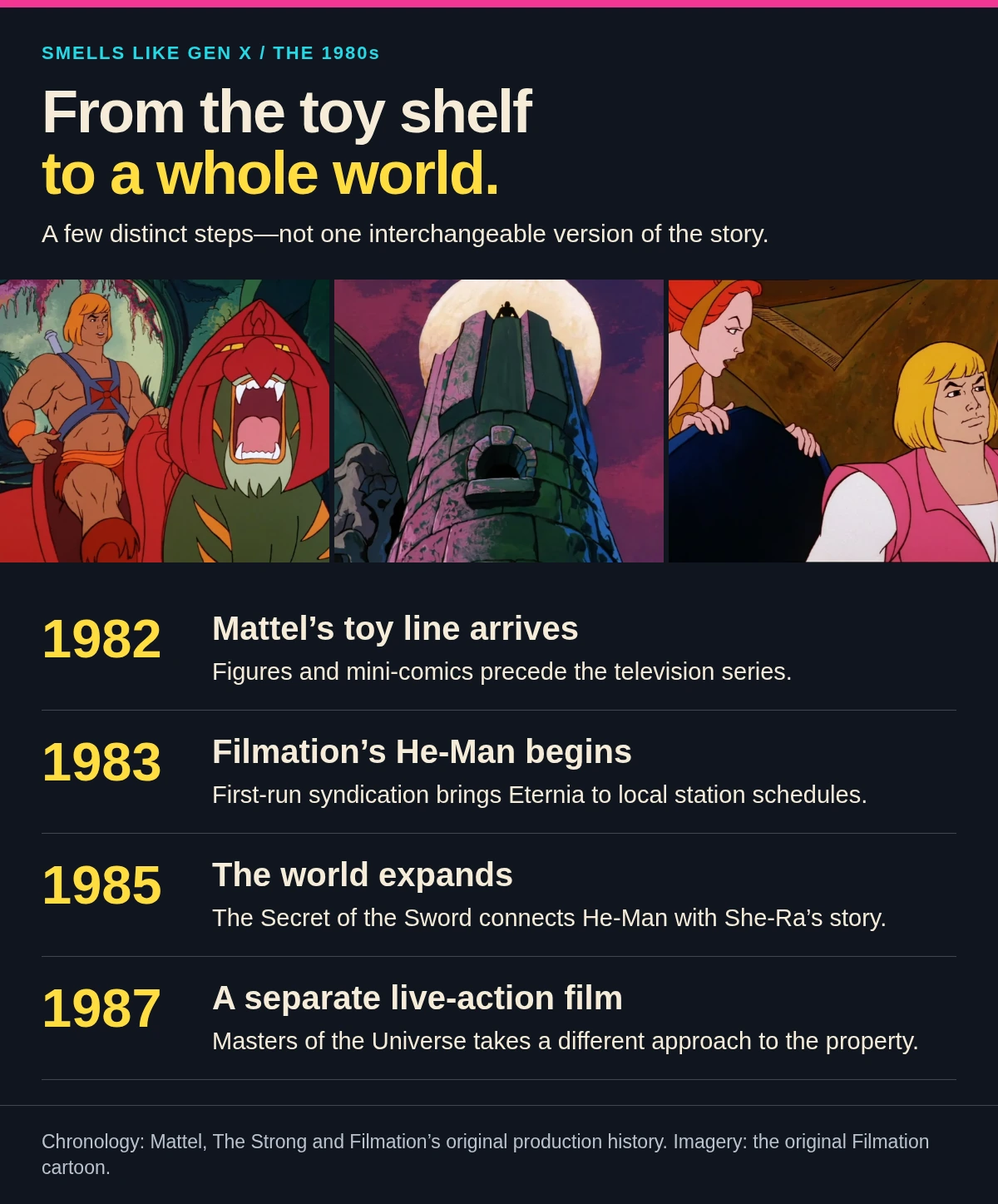
The distinction helps because Masters of the Universe did not begin as one perfectly coordinated story. Mattel’s action figures arrived before the series, with miniature comics supplying adventures and background. Filmation adapted the property for television, adding a particular household, a secret identity and an everyday rhythm. Remembering something from a toy package does not automatically make it a detail from the cartoon. The versions shared a world without sharing every rule.
The original show was distributed through first-run syndication. It was not one of the three networks’ standard national Saturday-morning offerings. Local stations could build it into their own schedules, which is why one person’s after-school He-Man memory may have a different time and channel from somebody else’s. You could love the same show without receiving the same afternoon.
That also explains its unusual sense of abundance. A large episode supply made the characters available repeatedly. We did not need a dramatic season premiere to remind us that Eternia existed. There was another visit, another predicament and another opportunity for Skeletor to make a grand announcement that would become less impressive within twenty minutes.
The official original-series collections identify 130 episodes across two seasons. That is a lot of palace emergencies, and it gave the cartoon room to wander. Some stories stayed close to the main cast. Others introduced distant settlements, old magic, troublesome visitors or a stranger whose personal problem immediately became everyone’s transportation problem.
For a child, the practical distinction was simple: this was not a world you visited once and put away. It kept turning up. The familiarity was part of the pleasure. You could miss an installment and still know where you stood when the sword went up. In the larger eighties television world, that repeated welcome mattered as much as a spectacular first impression.
The Figures Came First. Television Made Them Neighbors.
Mattel introduced Masters of the Universe in 1982. The figures had the sort of immediate visual logic that worked from the other side of a toy aisle: a powerful hero, a skeletal enemy, elaborate weapons, dramatic colors and a castle whose front door was a mouth. You did not need a seminar to recognize that something unpleasant probably lived behind the teeth.
But a toy supplies a pose more readily than a personality. A figure can look formidable on a package and still need a child to invent its social life. The miniature comics offered stories, and the television series supplied another kind of invitation. Characters moved, argued, made mistakes and developed recognizable habits. A name on a card became somebody you expected to hear.
Filmation’s family setting gave the fantasy an ordinary center. Prince Adam belonged to a palace household. He had parents, expectations and a job he could not explain in public. Man-At-Arms offered practical help. Teela expected him to take things seriously. Orko could turn a quiet moment into a small administrative disaster. You could imagine the room continuing after the episode stopped.
Lou Scheimer later described developing the television approach around Adam and his family, and pursuing syndication with financing through Westinghouse. That history is useful because the result was not simply a toy display photographed from a different angle. The producers had to make a repeatable program. Something had to happen when nobody was introducing a new weapon.
The family supplied those smaller pressures. Adam could be brave and look irresponsible. Teela could be capable and still be excluded from an important truth. Duncan could know more than he could say. Those are sturdy sources of tension, especially in stories that need to restore enough normality for the next afternoon’s adventure.
None of this erases the commercial purpose. The show helped sell an extraordinary amount of imaginary equipment to real households. But watching it only as a commercial misses what made the commercial arrangement work. The characters acquired enough life that children wanted to keep visiting, even when a particular episode was not showing the exact figure they hoped to own.
The eighties toy story is full of objects that became larger in the imagination than they were in the box. He-Man is an especially clear example of television doing the enlarging. A plastic castle stayed the same size on the bedroom floor. On screen, the possibilities behind its door kept expanding.
An Afternoon Show Had to Earn the Next Afternoon
There was a practical difference between discovering a show in a weekly network block and finding it woven into a local station’s weekday lineup. A syndicated adventure could become part of the transition between school and home: the point when the public day ended and your own small kingdom began. The backpack could remain where it landed for another half-hour.
That does not mean every child watched under identical conditions. Some stations placed the show differently; some homes had competing siblings, chores or reception problems. The memory worth keeping is the opportunity for routine. He-Man was built for return visits, with a clear opening, an accessible problem and characters whose broad outlines were already waiting for you.
The structure offered reassurance without requiring that every story look the same. You knew who would try to help. You knew which skull-faced man would respond badly to setbacks. A stranger could arrive with a magical object, a creature could need protection, or somebody could be tempted by a shortcut. The setting could change while the emotional geography stayed readable.
For a show with so much shouting and impossible machinery, He-Man was often surprisingly unhurried about introducing its problem. There might be a palace conversation, an outing or one of Orko’s mishaps before the danger became clear. That domestic breathing room made an attack feel like an interruption of an existing life, rather than the only activity anyone in Eternia had ever considered.
The repetition could also become part of childhood play. You did not have to remember an entire plot to borrow its shape: someone was missing, somebody had been deceived, a weapon had gone wrong, and the hero had to solve the situation without making it worse. Those are portable adventures. They fit in a yard, a bedroom or the gap between two couch cushions.
Watching TV in the eighties involved a lot of arrangements that were outside a child’s control. The station decided what appeared, and the household decided how much of it you got. Once the opening began, though, the show did a good job of making you feel expected. Eternia was strange. Arriving there rarely felt complicated.
The Opening Was a Promise, Not a Plot Summary
The opening understood its assignment. Introduce Adam, establish the secret, raise the sword and deliver the transformation. Within moments, a teenager-sized attention span had everything it needed. Here was the ordinary identity, here was the extraordinary one, and here were the few friends who understood the arrangement.
That sequence is so familiar that it is easy to overlook how much work it does. Adam does not begin as an anonymous warrior wandering into town. He has a name, a place and something to conceal. The introduction makes the audience part of his circle. We know something that people inside the story do not, which turns otherwise harmless conversations into little tests of concealment.
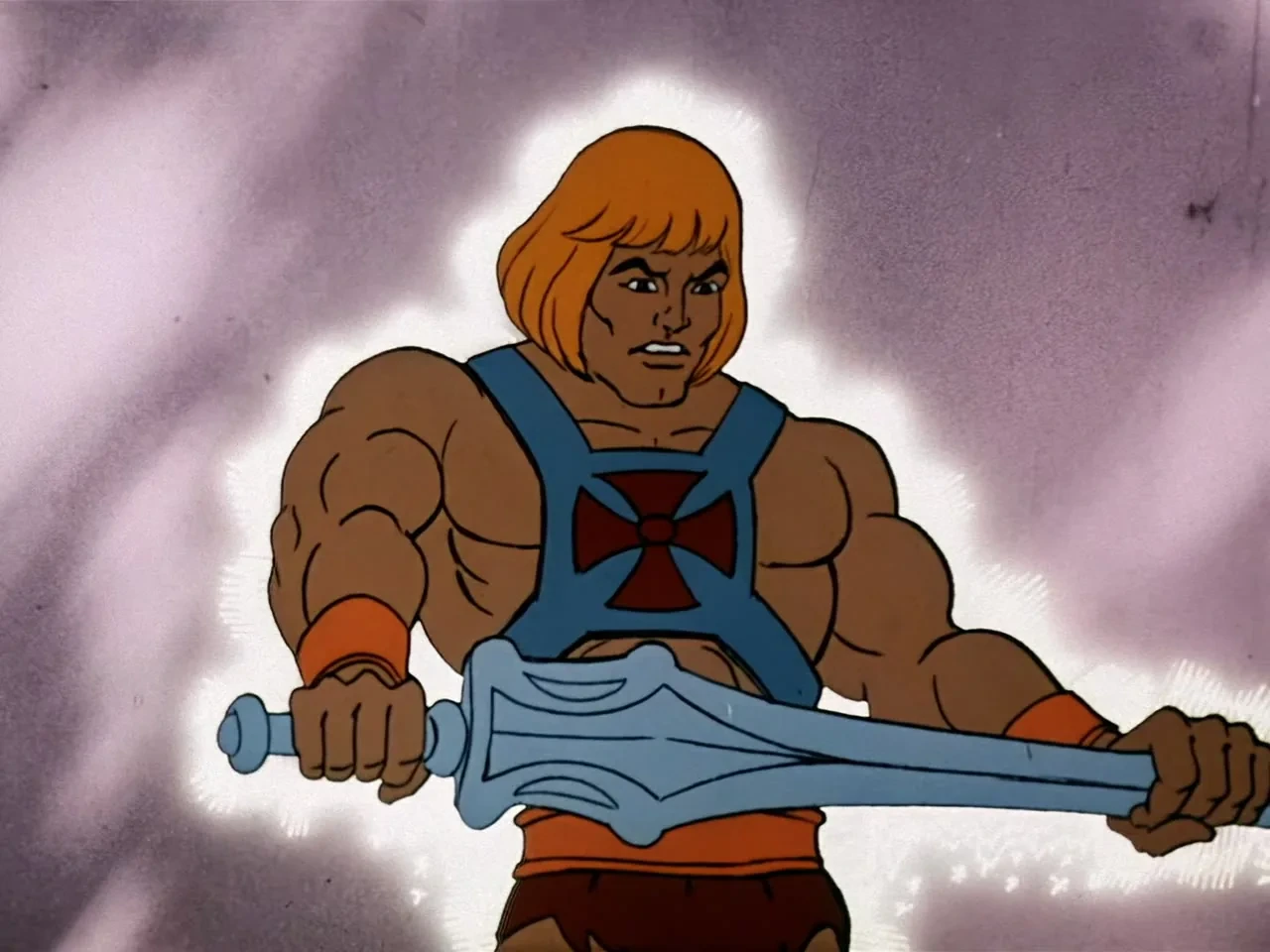
Then the sword changes the scale. The pose, the light, the music and the declaration make the transformation feel ceremonial. This is not a practical change of clothes behind a door. Adam calls on a power connected to a great, unsettling place, and the cartoon gives the moment enough weight that a child can reenact it with almost any object vaguely shaped like a sword.
Cringer’s transformation supplies a second version of the promise. The frightened cat becomes a formidable partner, but his earlier personality has already made him a character. Battle Cat is impressive because Cringer exists. Without the contrast, he would just be another large animal in a series already well supplied with large animals.
The opening also establishes a manageable amount of secrecy. A story can become exhausting if absolutely everyone is unaware of the hero’s identity. Here there are allies who understand what is happening. Adam has people who can help him navigate the practical difficulties. That gives the writers more possibilities than endlessly arranging for him to disappear behind a conveniently placed boulder.
Most importantly, the sequence offers a feeling the episodes can keep returning to: power is available, but someone has to choose how to use it. Even at its broadest, the show connects the transformation with responsibility. The muscles are the immediate attraction. What He-Man does after acquiring them is the series.
Adam’s Hardest Audience Was at Home
Prince Adam’s secret is a generous source of comedy, but it also leaves him in a frustrating position. He has to allow the people around him to underestimate him. He cannot simply produce a list of the afternoon’s rescues when somebody suggests he should be more useful. Saving Eternia apparently did not come with a convenient attendance slip.
That predicament gives the character a second kind of appeal. Children are accustomed to being assessed by adults who do not see every part of their lives. Adam’s problem is obviously exaggerated, but the feeling underneath it is recognizable: knowing you have done something worthwhile while being treated as though you have been wasting time.
His playful manner is not just decoration. It helps conceal what he is doing, and it also allows him a life beyond being a symbol. Adam can joke, retreat from pressure and look slightly ridiculous. He-Man is expected to arrive with confidence. Having both identities prevents the heroic image from using up all the character’s available expressions.
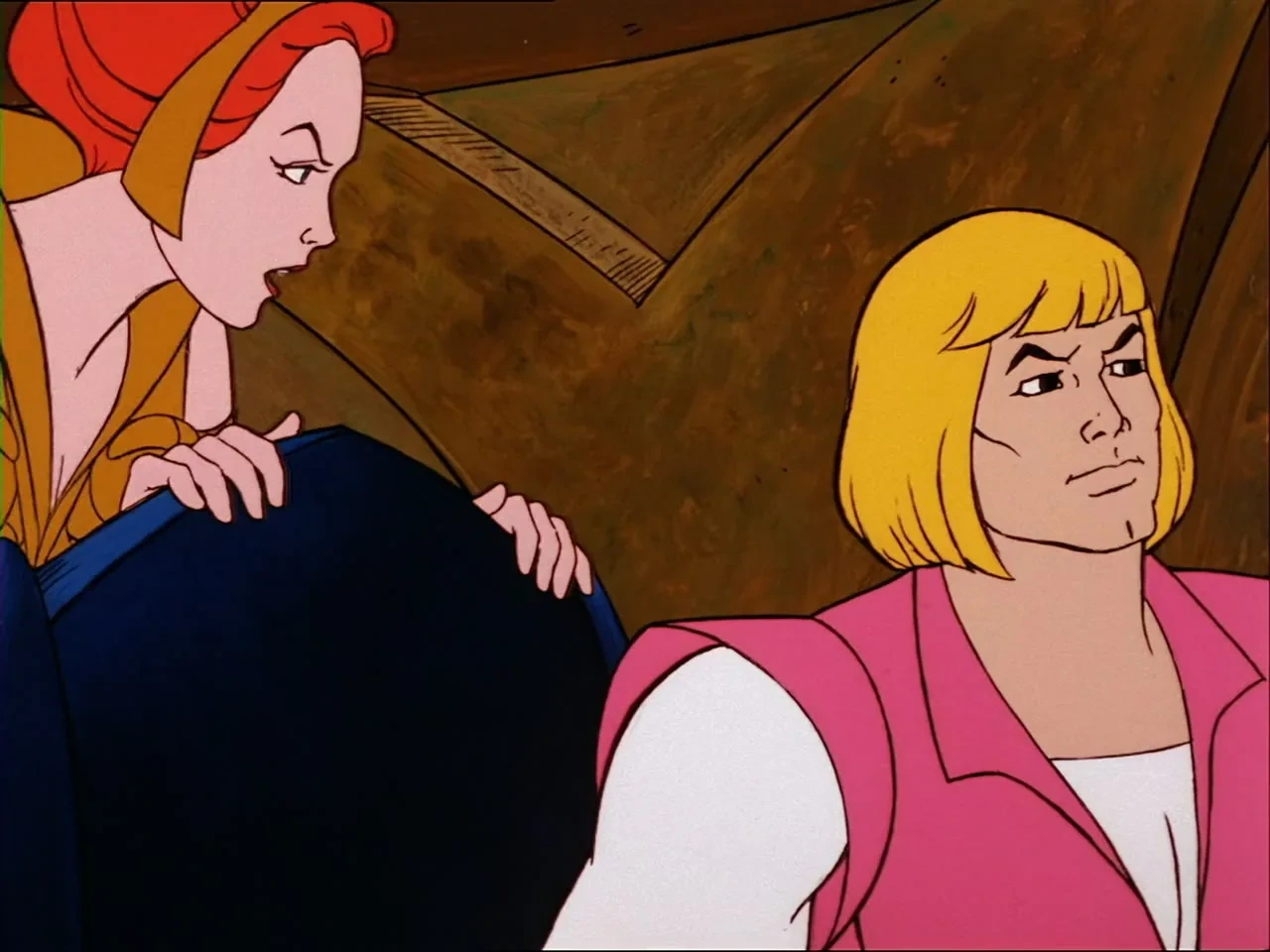
“Prince Adam No More” puts pressure directly on that arrangement. Adam wants his father to recognize his worth without needing He-Man to supply the evidence. The attraction is not a new superweapon. It is the possibility of being seen accurately by a parent. In a world of magical transport and impossible beasts, a family expectation remains an effective way to complicate the hero’s day.
The disguise is hardly airtight by adult standards. The show is not conducting a serious experiment in facial recognition. It asks the viewer to accept a theatrical convention and then enjoy the relationships that convention creates. Complaining that the two blond men have a resemblance is fair. It also bypasses the interesting part, which is what Adam gives up to keep the secret useful.
King Randor and Queen Marlena help ground that tension. Their presence means Adam is not simply performing for an abstract public. He belongs to people whose opinions matter to him. The palace is a home as well as a setting, and that makes his absence, excuses and occasional impatience more than mechanical plot necessities.
I like that the show lets its apparently invincible hero live with this small, persistent unfairness. Physical strength does not solve every misunderstanding. Sometimes Adam has to absorb a bad impression and carry on. It is an odd thing to find inside a cartoon sold with bulging arms, but it gives the arms something human to protect.
Cringer and Battle Cat: Courage Had Two Settings
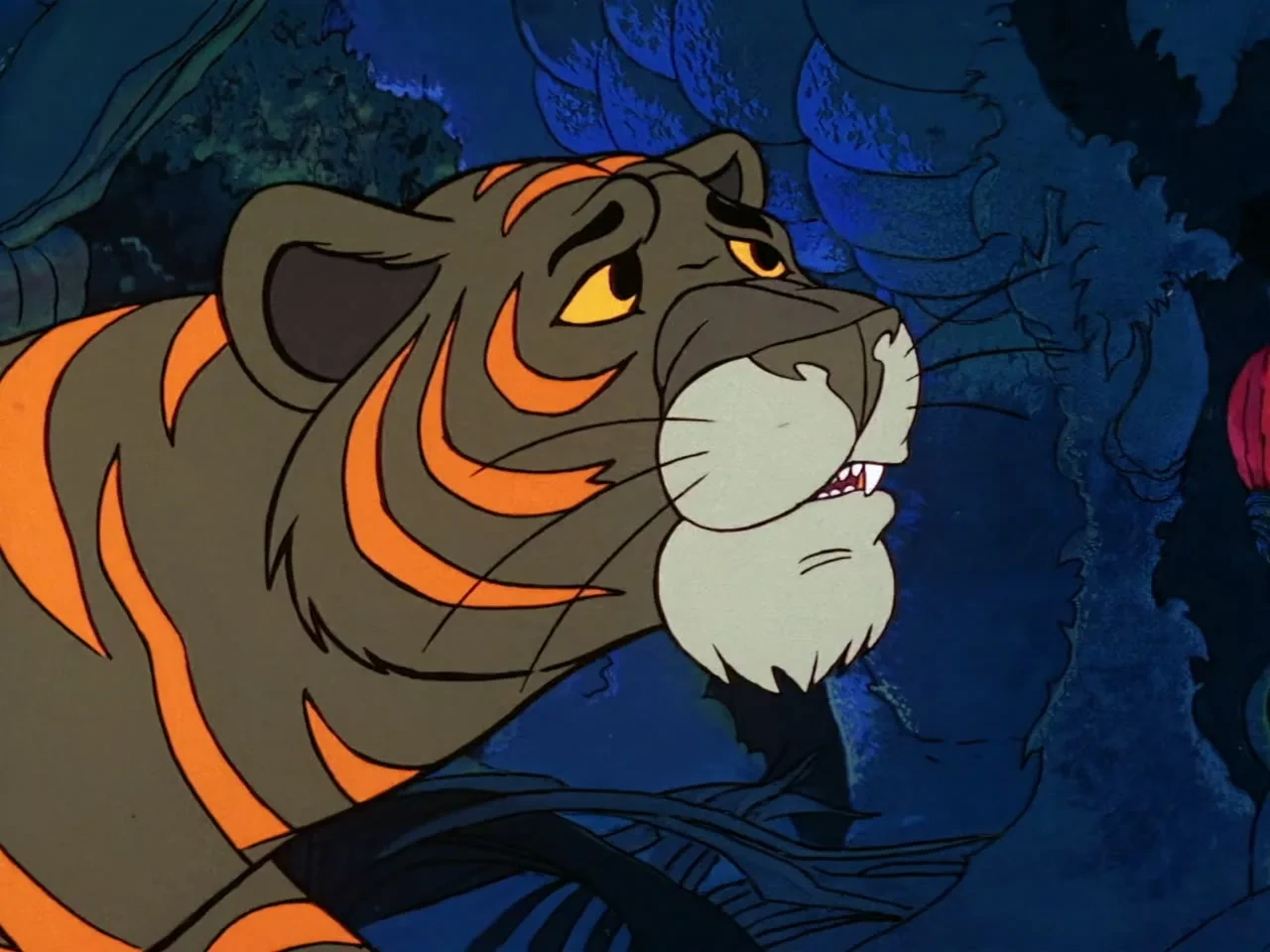
Cringer had a sound grasp of risk. If a journey involved a monster, a collapsing passage or Skeletor, his first instinct was generally to explore the benefits of remaining somewhere else. In a television universe where people often treated alarming noises as an invitation, his caution could seem positively advanced.
The joke works because he is not an interchangeable animal companion. Cringer is expressive, talkative and worried. He has opinions about what Adam is asking him to do. His presence gives the hero someone to reassure before the danger even begins, which tells us something about Adam’s temperament as well as the cat’s.
Battle Cat changes the silhouette, the sound and the balance of an action scene. The armor and saddle transform a household companion into an image that practically asks to be drawn on a notebook. A hero running toward danger is one thing. A hero riding a green tiger in red armor has made an additional commitment to being noticed.
But the two forms are more interesting together than separately. The transformation does not require that fear never existed. It lets a character associated with fear take part in the adventure. A child can enjoy Battle Cat’s power while retaining affection for Cringer’s thoroughly reasonable objections to the itinerary.
The pairing also softens the world. He-Man is not traveling solely with armed specialists who meet at a briefing table. There is a relationship here that begins with care. Adam speaks to Cringer, reads his reactions and takes him along as a companion. The fantasy can be enormous while the friendship remains small enough to recognize.
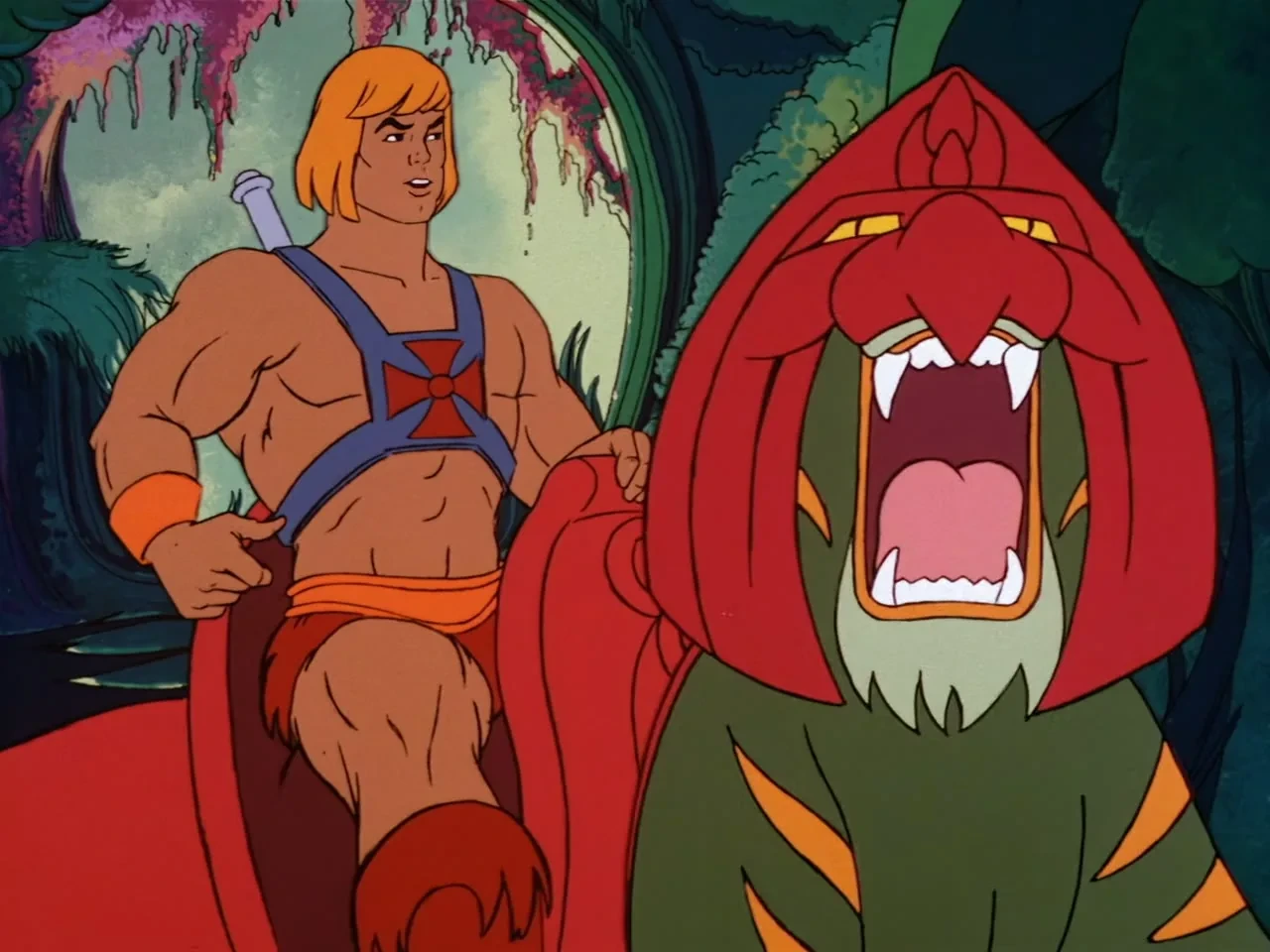
That is one reason the image survives beyond the toy. The figure supplied a spectacular riding animal. Television supplied the anxious individual underneath the equipment. Knowing both sides turns Battle Cat from a vehicle into somebody. Even the most enthusiastic child eventually ran out of ways to improve a tiger. Giving him a personality was an excellent start.
Teela Was Not Waiting Around to Be Impressed
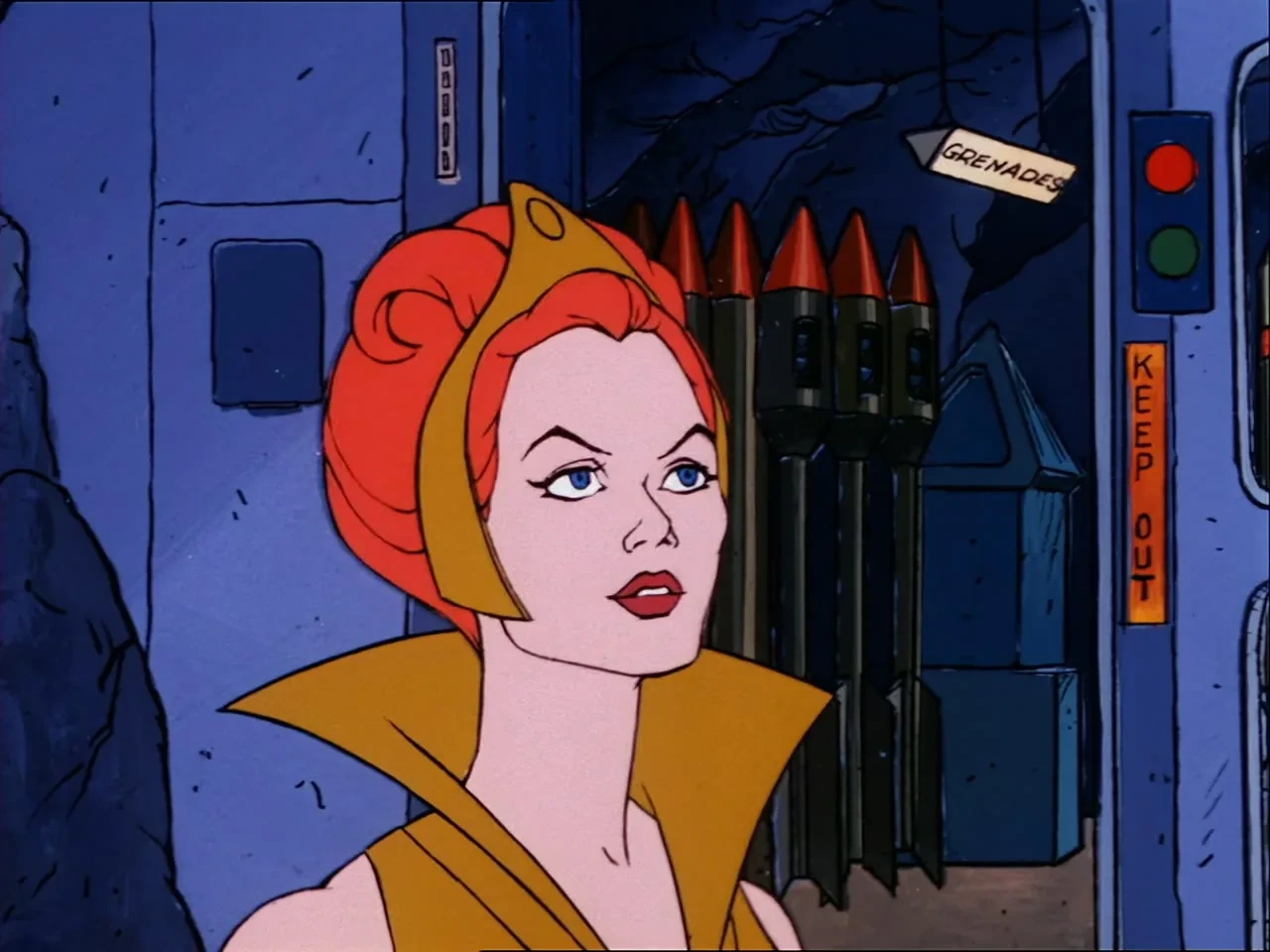
Teela gives the palace a different kind of energy. She is trained, direct and not inclined to regard Adam’s excuses as a valuable contribution. The audience may understand why he disappears, but she has to work with the version of events available to her. Her irritation makes sense inside the story, even when we are enjoying the secret she cannot see.
As captain of the Royal Guard, she belongs in the action. The title is not an ornamental favor. She can investigate, fight, lead and disagree. Stories sometimes put her in danger, as they do almost everyone in this kind of adventure, but treating her only as a person to be rescued would miss how often she is already trying to solve the problem.
Her relationship with Man-At-Arms gives that competence a family history. Duncan is her adoptive father as well as a practical adviser within the palace. That creates another household inside the larger household: affection, protection, expectations and secrets overlap. He is not just explaining a gadget to a colleague. He is sometimes deciding what to tell his daughter.
“Teela’s Quest” makes her desire to know her origins the central engine of an adventure. She wants an answer about herself, not merely an assignment from someone else. The emotional stakes are immediate even before the dangerous journey develops. A character who usually appears sure of her place is asking where that place began.
The Sorceress gives the story its deeper complication. Her connection to Teela brings family feeling into the mythology surrounding Grayskull. The episode’s revelation makes the guardian more than a remote magical authority and Teela more than a highly capable member of the supporting cast. The fantasy has a private cost, and the person paying it does not get a simple public celebration.
There is also something unsettling about the way the story handles knowledge. Teela’s search does not produce a permanent, uncomplicated new understanding that everyone can carry into the next episode. The adults and magical authorities retain control over information. For a viewer, that creates a tenderness mixed with frustration: you can see the affection while still wishing Teela had a clearer say in what she is allowed to know.
That is richer than the broad action-figure outline suggests. Her family story places duty beside intimacy, and protection beside withholding. The show does not explore every implication, but it gives a child enough to feel that the adults know more than they are saying. In an otherwise noisy adventure, that quiet distance can be the part that lingers.
Teela also provides a useful counterweight to He-Man’s public confidence. She is not obligated to spend every scene applauding him. When she challenges Adam, presses a question or continues into danger, the world feels less like a fan club organized around one powerful man. Eternia has other people with their own reasons to act.
Man-At-Arms, Orko and the People Who Kept Eternia Livable
Duncan looks like the sort of person a palace would want nearby when a machine begins making an expensive noise. The armor, the mustache and the practical focus establish him quickly. He can work on technology, advise the royal family and recognize that a problem may require more than putting a large hole through the nearest wall.
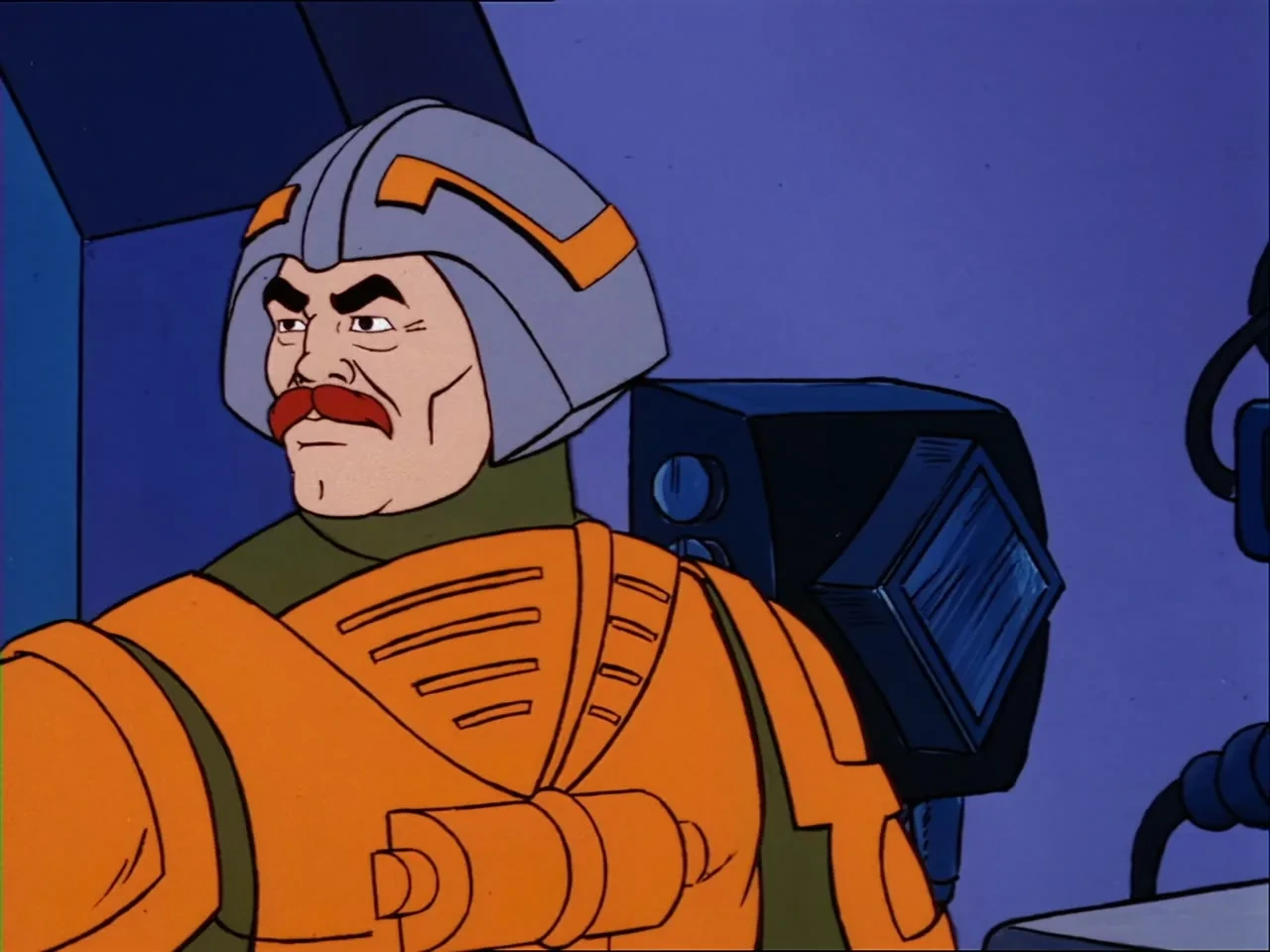
His knowledge of Adam’s identity makes him especially valuable. He can help the hero without needing a long explanation, and his place in the household gives the secret a stable human ally. The arrangement is reassuring. Someone experienced understands what Adam is trying to manage, even when other people are judging the visible results badly.
With Teela, his usefulness becomes more complicated. He is a parent, not a neutral supplier of equipment. That allows care and anxiety to share a scene. His technical competence does not remove the ordinary uncertainty of raising someone, and his ability to repair a machine does not mean he can repair every misunderstanding around it.
Orko occupies another corner of the household entirely. A floating red robe, a hat, bright eyes and a great deal of intention: the design is immediately readable, even before a spell goes wrong. He is visually small beside the warriors, but the show allows him to fill a room. Sometimes that is because the room now contains something it was not designed to contain.
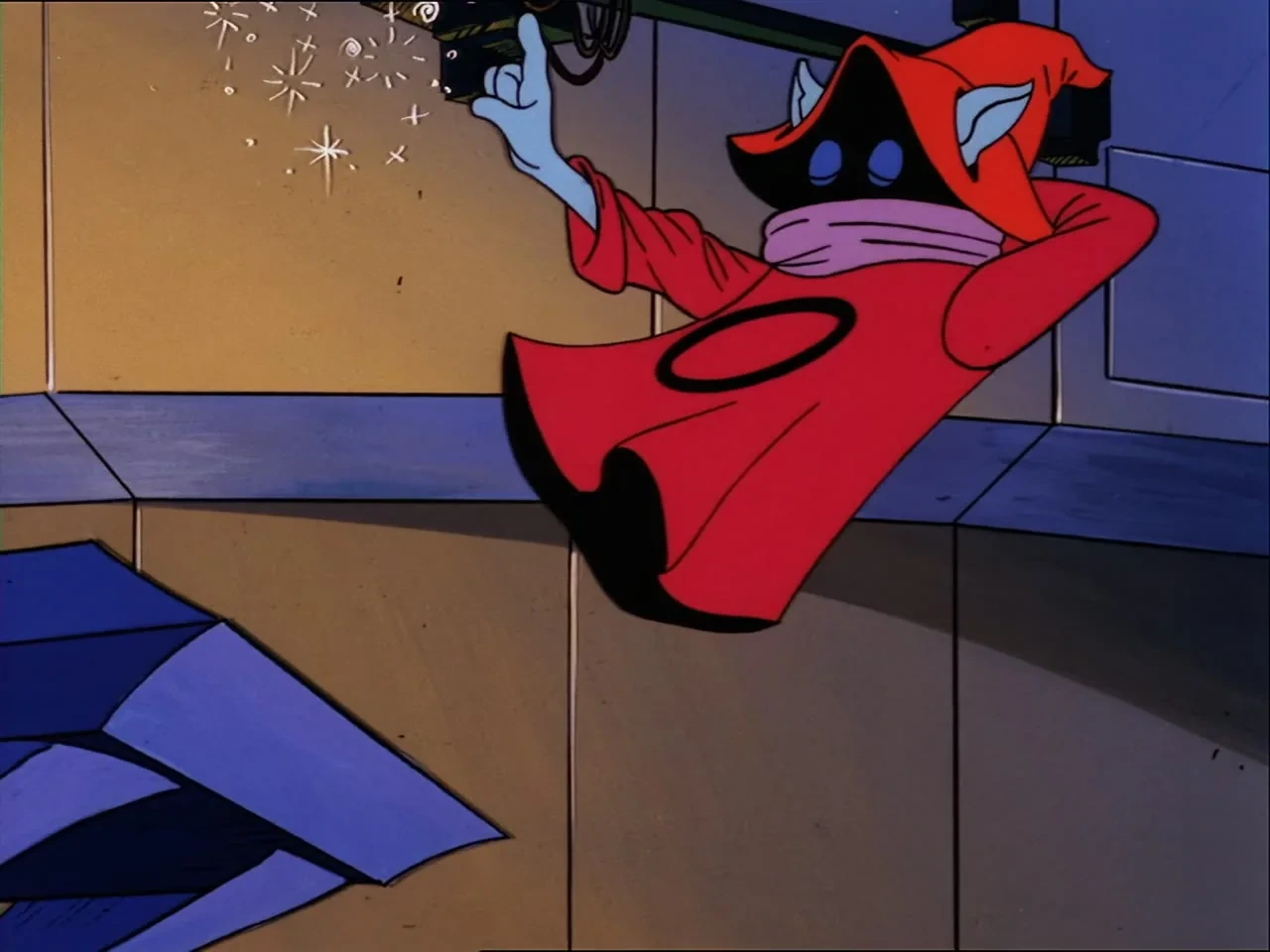
The mistakes are part of the comedy, but affection is the more durable ingredient. A household that keeps making space for Orko’s failures feels different from a military organization that would simply revoke his access to the workbench. He is allowed to be troublesome without becoming disposable. The show can tease him and still keep him within the circle.
That matters when his abilities do become useful. A character established through errors can surprise the audience without needing to become a completely different person. Orko’s magic belongs to his own background, and his experience on Eternia is not always a fair measure of everything he can do. He is more than a malfunction with a hat.
Together, Duncan and Orko give He-Man different kinds of support. One brings experience and practical judgment. The other brings unpredictability, loyalty and a willingness to try something that may go extremely sideways. Neither relationship needs to compete with He-Man physically to matter. Strength can be impressive while still depending on patience, information and somebody else spotting the trouble first.
That mixture is part of what distinguishes Eternia from the more organized battlefield in G.I. Joe’s afternoon adventures. The palace is a social space as much as a headquarters. People do not stop belonging there just because they have made the day less efficient.
Skeletor Could Lose the Battle and Still Own the Scene
Skeletor is one of television’s great arguments for giving a villain a personality as specific as his face. The skull supplies the menace before he says a word. Then the voice arrives, sharp and exasperated, and the figure becomes something more entertaining than a generic threat. He wants control of immense magical power, but he can also sound like a supervisor discovering that nobody has read the instructions.
Alan Oppenheimer’s performance finds comedy without removing the danger altogether. Skeletor can be grand, furious, sneering or delighted by his own cleverness. The laughter gives him pleasure in the work. He is not reluctantly filling the position of villain until a better opportunity comes along. He enjoys being Skeletor, particularly during the stretch when his latest plan still appears to be succeeding.
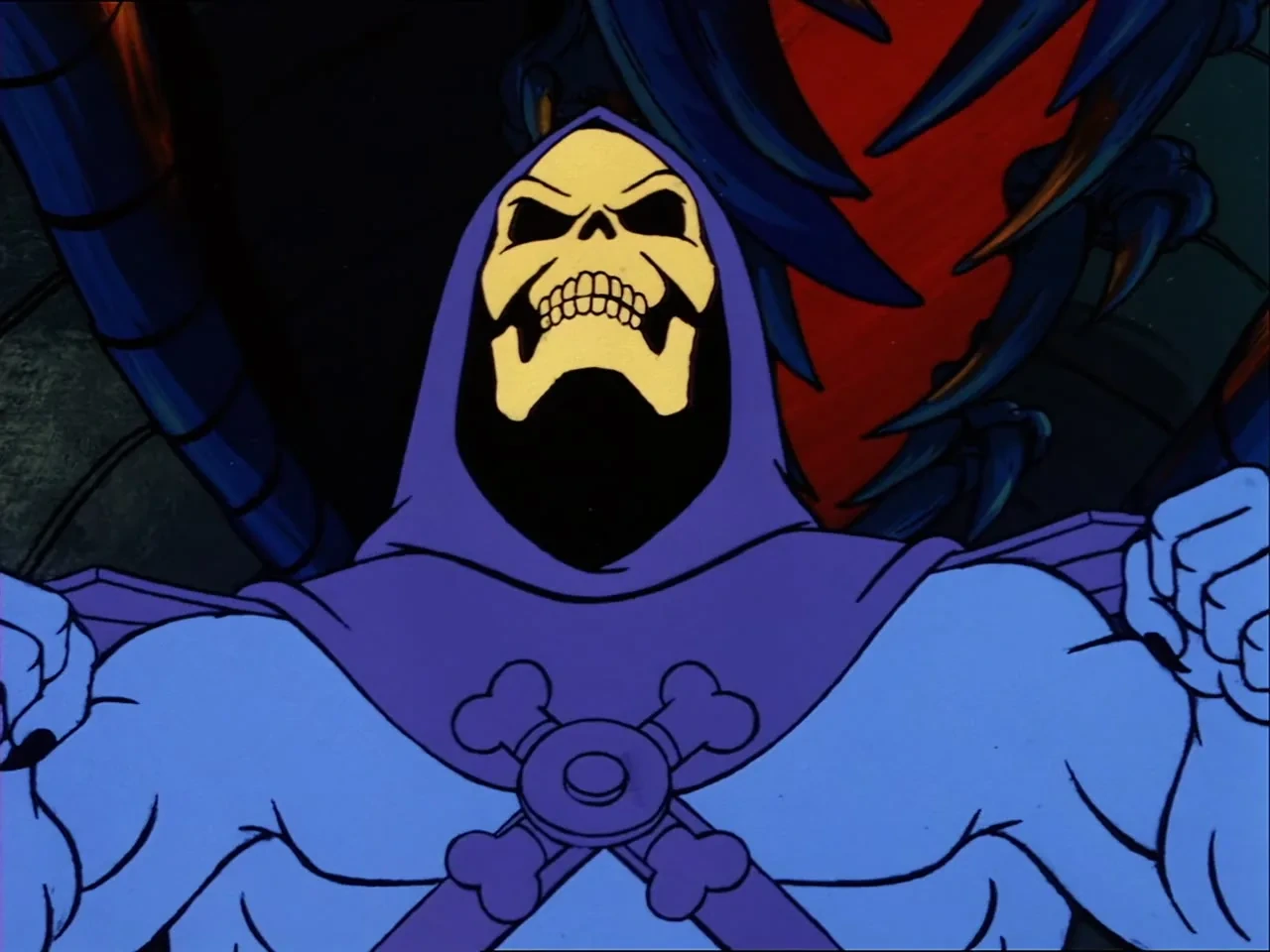
The gap between his ambitions and his patience is especially funny. A ruler of the universe would presumably need to delegate, yet almost every delegation seems to increase his contempt for the people receiving it. He needs his associates and resents the evidence. His organization has magic, monsters and excellent visual branding. The office culture could use attention.
Beast Man supplies brute force and a frequent target for that anger. Mer-Man brings a different territory and a particularly strange voice. Trap Jaw’s mechanical menace and the other distinctive designs give the villainous side more variety than a line of identical henchmen. A child could recognize an enemy quickly, even when the story gave that enemy only a modest amount to do.
Evil-Lyn is especially useful because she can make a scheme feel actively deceptive. She is not merely waiting behind Skeletor for permission to look threatening. Disguise, manipulation and magical ability let her exploit the people who live in this world. In “The Curse of the Spellstone,” deception helps turn someone else into the means of releasing danger. The problem is not solved simply by identifying which person has the biggest muscles.
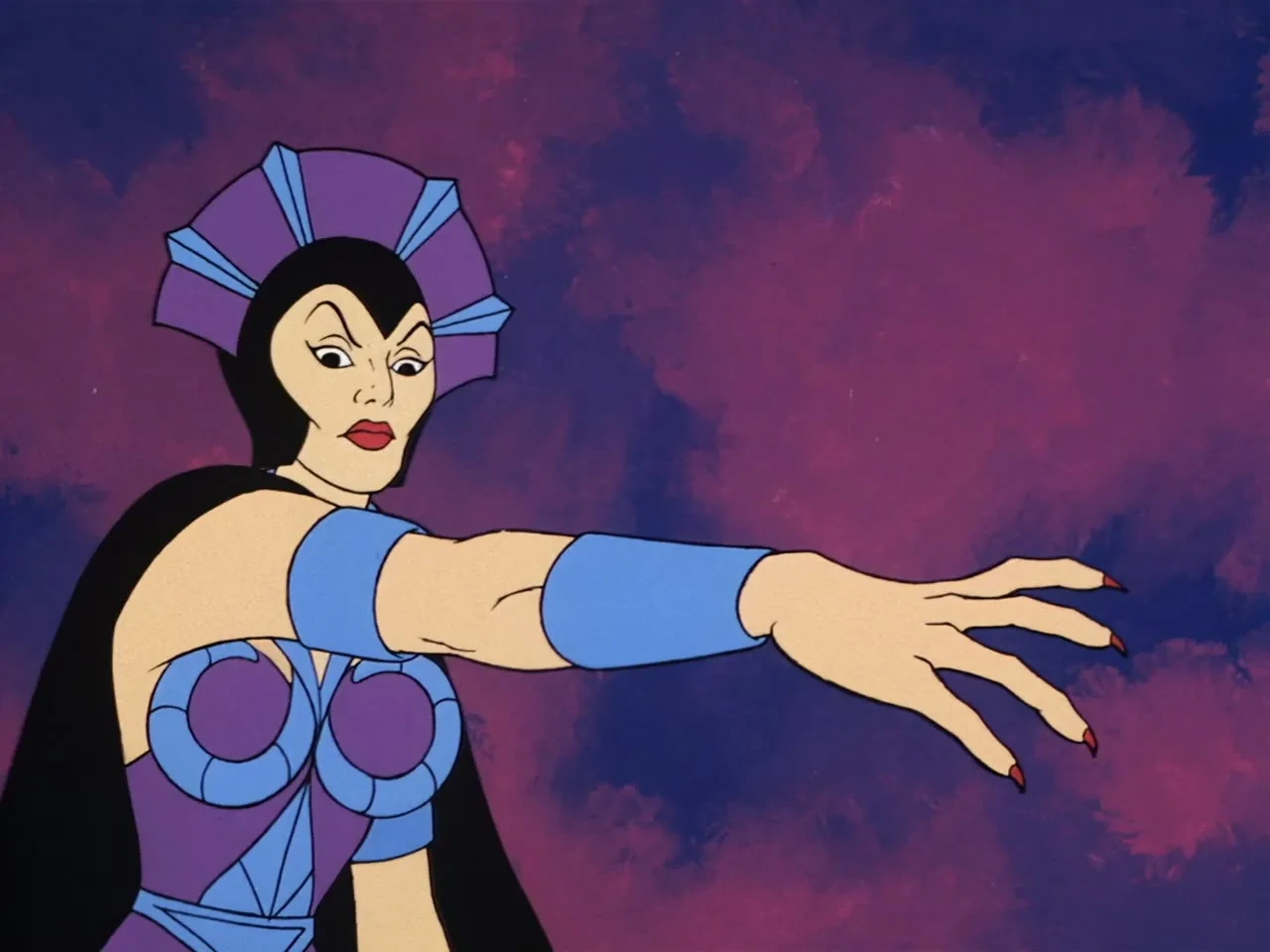
Her presence also creates a pleasing imbalance in the villains’ room. Skeletor may occupy the throne and supply most of the volume, but he is not surrounded by people who all respond to him in the same way. Some need direction, some pursue their own opportunities, and some seem capable of recognizing the weaknesses in his approach. The heroes have a household; the villains have a collection of difficult working relationships.
That keeps repeated failure entertaining. We are not only asking whether Skeletor will win. We are waiting to see how he reacts when he does not, and who will be standing close enough to receive the first complaint. Defeat rarely improves his management style. Fortunately, it does not diminish his enthusiasm for trying again.
Eternia Was a Place Where the Sword and the Spaceship Both Belonged
Eternia never seemed embarrassed by its own mixture. Ancient-looking architecture could stand near a highly capable vehicle. A creature out of a fantasy painting could share an adventure with machinery that appeared to have come from another program entirely. The world did not ask us to choose between magic and science fiction. It put both on the floor and let us get on with it.
For play, that freedom was priceless. The hero did not become invalid because a child’s story involved a spaceship instead of a dungeon. The screen had already established that unexpected combinations were normal. You could add another strange object and feel that you were extending the world rather than breaking it.
Castle Grayskull gave all that variety a fixed point. Its face is unmistakable, but its value is not merely architectural. It represents power that the villains want and knowledge the heroes cannot treat casually. The castle feels important before anyone explains its exact history. Its image does a great deal of the storytelling, which is one reason it remained so effective as a physical playset.
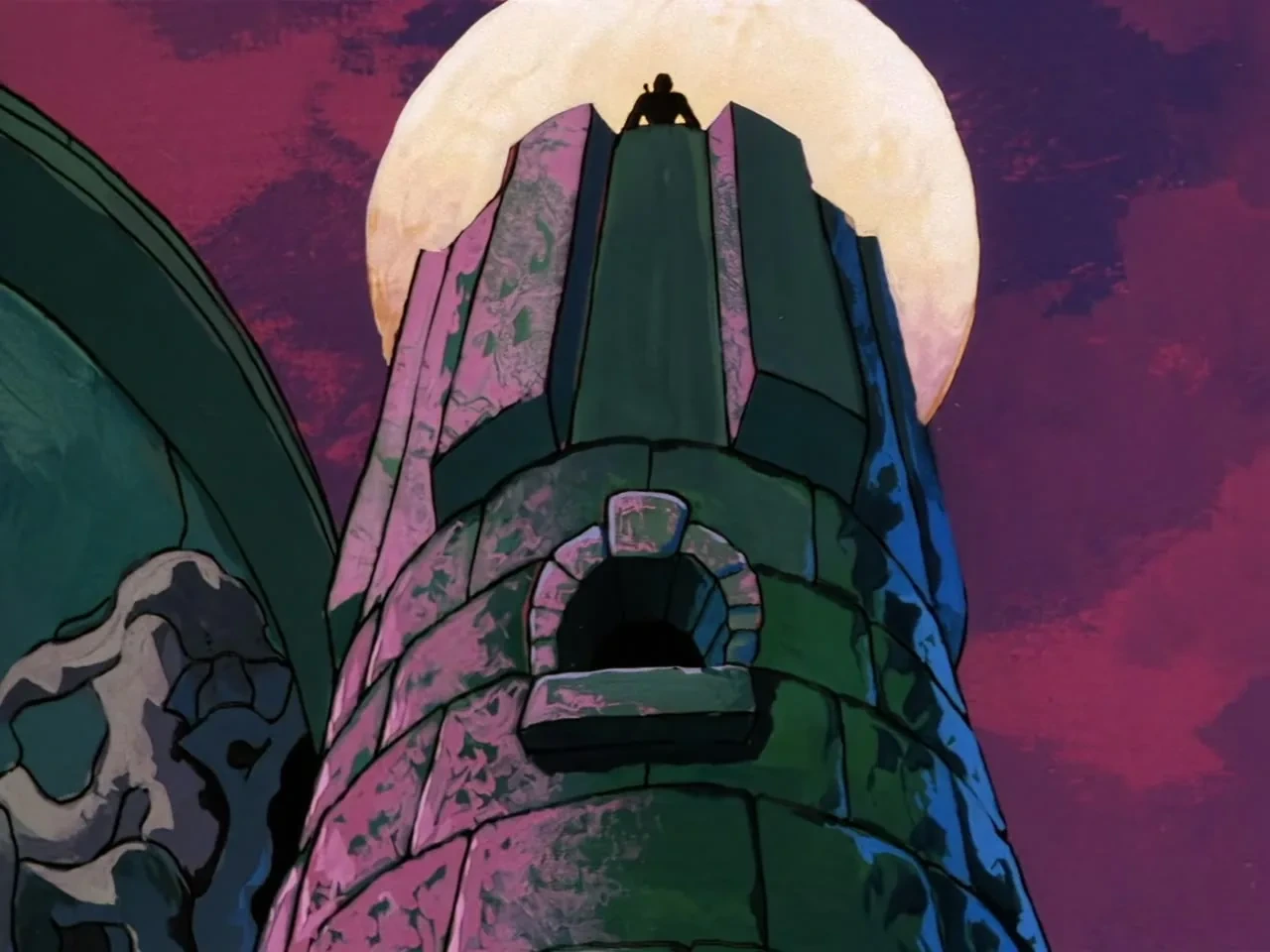
The Sorceress complicates the castle’s apparent emptiness. A building that looks like a forbidding skull is also the place where someone watches, advises and carries obligations. That tension is useful. It prevents a simple equation between frightening design and moral evil. Grayskull looks alarming. Its guardian is not there to frighten the people who need her.
Snake Mountain supplies a different sort of home. Skeletor’s surroundings suit him so openly that nobody would mistake a visit for a relaxing social call. The contrast with the palace makes the geography readable: family life, guarded mystery and active conspiracy have distinct visual addresses. You can follow the emotional movement of a story partly through the places it chooses.
Beyond those landmarks, the settings offer room for detours. There are forests, caves, villages, strange skies and regions where a character can plausibly encounter something nobody at the palace has had time to worry about yet. The variety lets a familiar cast carry stories of different sizes. Not every emergency needs to become an attempt to rule the entire planet.
This is where the fantasy differs from the mechanical fascination of the original Transformers. Transformers invites us to look at an object and imagine another form inside it. He-Man invites us to look beyond a doorway and imagine another kind of place. Both are excellent ways to keep a child mentally occupied after the television goes off.
Filmation’s Limits Are Visible. So Is Its Craft.
Watch the series now and the economy is easy to see. Movements recur. Characters hold a pose while their mouths do the work. A run, a turn or a transformation can become familiar enough that recognition arrives before the action has finished. You do not need to pretend those limitations are invisible to appreciate the show.
Some of the repeated animation became part of its visual language. He-Man’s posture is so clear that a few frames can establish what he intends. The transformation gains force from being ceremonial and recognizable rather than surprising every time. Reuse can be an economic decision and still acquire a dramatic function once the audience associates it with a feeling.
The weaker moments are visible too. A scene that needs urgency may pause for a static conversation. An action sequence can resolve with less fluid movement than the setup seems to promise. Occasionally the writing has to do a heroic amount of work while the picture waits for its next available gesture. Nostalgia does not require us to hand every frame an award.
The backgrounds, colors and character shapes help compensate. A striking setting can make a limited movement feel more substantial. A clear design can remain legible on a small household television. Skeletor’s hood, Teela’s profile, Orko’s hat and the Sorceress’s wings all carry information quickly. Nobody needs to stand beside them with a name card.
The people making the series understood the constraints. In the SYFY oral history, J. Michael Straczynski speaks openly about recycled sequences and uneven episodes. That honesty is useful. We do not have to defend the show more extravagantly than the people who worked on it. A large daily adventure series could contain both good work and afternoons when the machinery showed.
What still deserves attention is how often a scene remains readable despite the limitations. The camera position, a change of expression, a voice entering at the right moment or a particular background can guide our response without constant motion. This is television craft under pressure, with clever solutions sitting beside conspicuous shortcuts.
ThunderCats’ opening offers a useful comparison in sheer visual momentum. He-Man’s appeal is less dependent on sustaining that kind of movement. It has to make the household, the voices and the moral choices worth returning to even when the animation is not racing ahead. Its best episodes find that balance. Its lesser ones at least provide an extremely recognizable run cycle.
The Voices Did More Than Fill the Silence
John Erwin’s He-Man has a reassuring quality that a louder performance might have lost. The character can sound powerful without sounding permanently angry. That distinction matters in stories where he is often helping someone who is frightened, confused or behaving badly. He does not need to treat every conversation as the opening stage of a wrestling match.
Adam gives Erwin another register to work in. The prince can be lighter and less imposing, which helps the secret identity feel like a performance rather than a name change. We understand the contrast through attitude as much as appearance. One version must sometimes conceal his competence; the other is expected to make the situation feel manageable the moment he arrives.
Oppenheimer’s range is a substantial part of the world’s texture. Skeletor, Man-At-Arms, Mer-Man and Cringer do not feel like one character wearing different equipment. Their rhythms and physical suggestions differ. The wet, peculiar quality of Mer-Man belongs to his design, while Duncan’s steadier delivery belongs to someone accustomed to being useful.
Linda Gary gives the female characters their own distinctions as well. Teela’s directness and the Sorceress’s more measured authority serve different relationships. Evil-Lyn’s danger does not need to sound like either of them. In a series with a relatively small regular voice cast, those choices do a great deal to keep an enormous population from collapsing into a few familiar sounds.
Lou Scheimer’s Orko adds a comic voice that can also carry vulnerability. The character might look almost impossible to read on paper: no conventional visible face, a floating body and a costume doing much of the expressive work. Voice turns that design into someone whose eagerness or anxiety is easy to recognize. We understand him before a spell has produced anything at all.
The music supplies another kind of scale. It can tell us that a dangerous place is near, that action has begun, or that a moment deserves more wonder than its limited motion can provide alone. In the opening, the sound helps turn a repeated sequence into a ritual. In an episode, it gives small movements a larger emotional frame.
What I still enjoy is how approachable the result can be. These characters are loudly designed, but the sound does not keep every one of them at a distance. He-Man can reassure, Orko can worry, Teela can sound impatient and Duncan can offer advice. A child does not need to understand the recording process to recognize a room full of different personalities.
Four Episodes That Show What the Series Could Do
There is no need to turn a return visit into an obligation to watch 130 installments in order. A few well-chosen stories reveal the different sides of the series: a straightforward confrontation, a personal search, a family frustration and a genuine crisis of confidence. The following discussion includes story details, especially for “Teela’s Quest” and “The Problem with Power.”
Diamond Ray of Disappearance
Skeletor’s magical gem supplies a wonderfully direct threat: people can be removed from the action rather than merely knocked out of it. It is the kind of device a child can understand immediately, and it makes the familiar villain dangerous without requiring an elaborate political explanation. The world’s safety depends on a very unpleasant man holding a very small object.
The story is a useful starting point because it presents the show’s broad dramatic vocabulary. There is a family world to interrupt, a recognizable group of enemies and a problem that puts He-Man’s strength inside a larger adventure. A muscular hero still needs to understand what is happening. Lifting something impressive will not automatically answer every magical complication.
The episode also gives viewers an easy way into the theatrical contrast between Adam’s surroundings and Skeletor’s ambitions. Neither side needs an exhaustive introduction. We learn through behavior and design: who is comfortable with whom, who expects obedience and whose confidence depends on having the latest advantage. It is an efficient invitation into a very crowded toy-sized universe.
Teela’s Quest
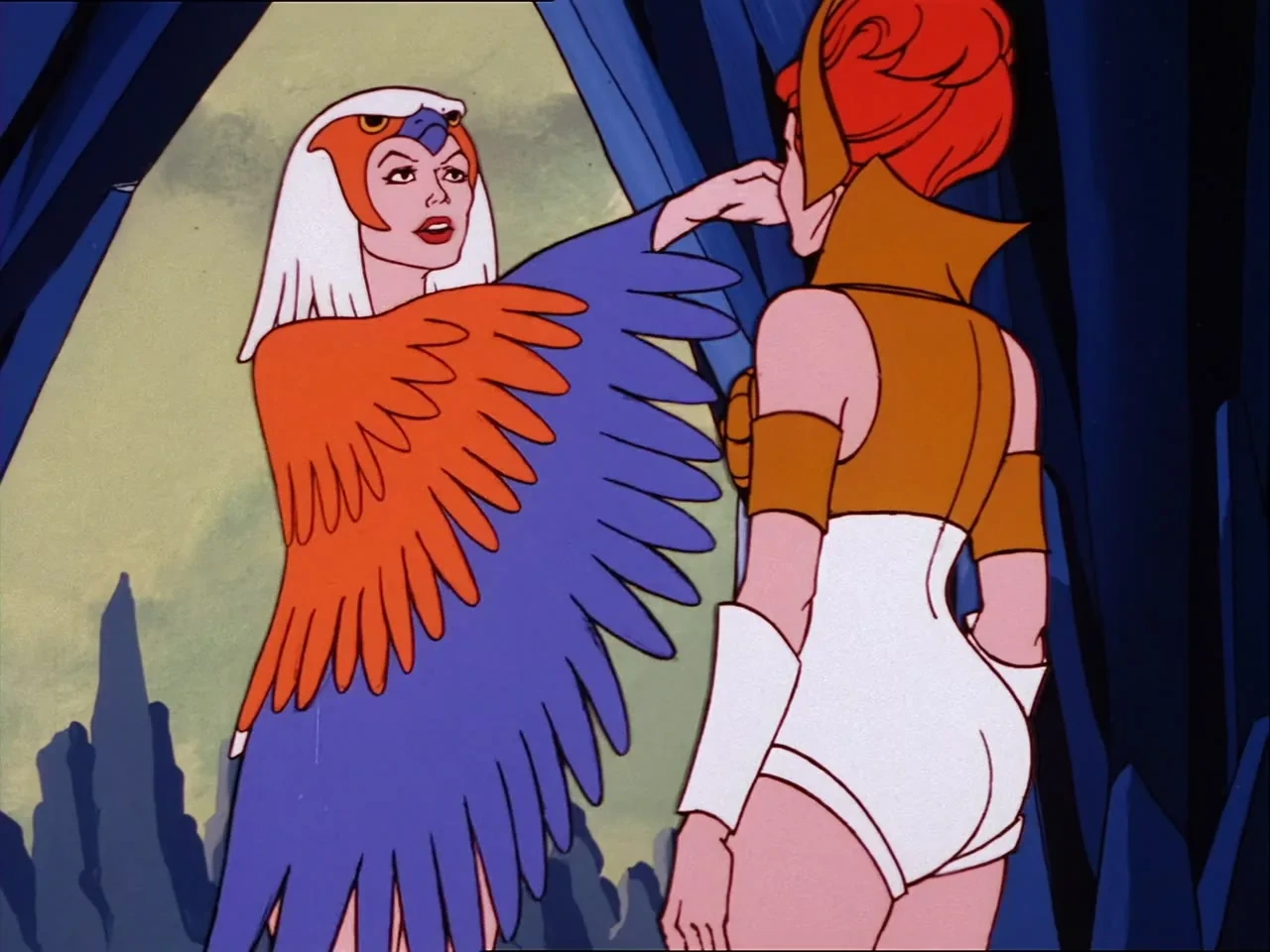
This is the episode to watch when someone insists the supporting cast existed only to fill space around He-Man. Teela drives the story through a question about her own life. Her search for her parents makes the dangers personal. The destination is not simply another object the villain wants to possess.
The connection between Teela and the Sorceress gives the episode its lasting emotional weight. The Sorceress’s responsibilities prevent the revelation from becoming an uncomplicated family reunion. Looking after someone and living openly with them are not the same thing here, and that difference brings a note of sadness into the fantasy.
The story also makes Duncan’s parenthood meaningful. His place in Teela’s life is not erased by a biological revelation. The man who has raised her continues to matter, and the episode allows that history to sit beside the magical one. For a show built around spectacular transformations, it can be moving when the most important relationship is the one that has already been doing its daily work.
Teela’s limited access to the truth remains uncomfortable. That is part of what makes the story worth discussing, rather than simply celebrating its reveal. The viewer is allowed to know more than the person whose identity is at stake. Affection and protection are present, but so is an imbalance of power that the episode cannot entirely smooth away.
Prince Adam No More
Adam’s wish to prove himself to his father makes the secret identity feel costly. It is easy to understand why being admired as He-Man might not satisfy someone who wants to be respected as himself. The prince has a private achievement and a public reputation that do not fit together, and the distance between them finally becomes painful enough to challenge the arrangement.
The episode turns that frustration into an adventure instead of leaving it as a palace conversation. Adam’s decisions matter because they affect what he is willing to risk and how he responds when danger arrives. He cannot make his father’s opinion change simply by wanting it more intensely. He has to act, with all the complications his two identities create.
This is also a useful reminder that He-Man’s attraction was not limited to being the strongest person nearby. The cartoon occasionally found a more ordinary insecurity inside the fantasy. A child did not need a secret sword to recognize the desire for a parent to stop seeing the least impressive version of them.
The Problem with Power
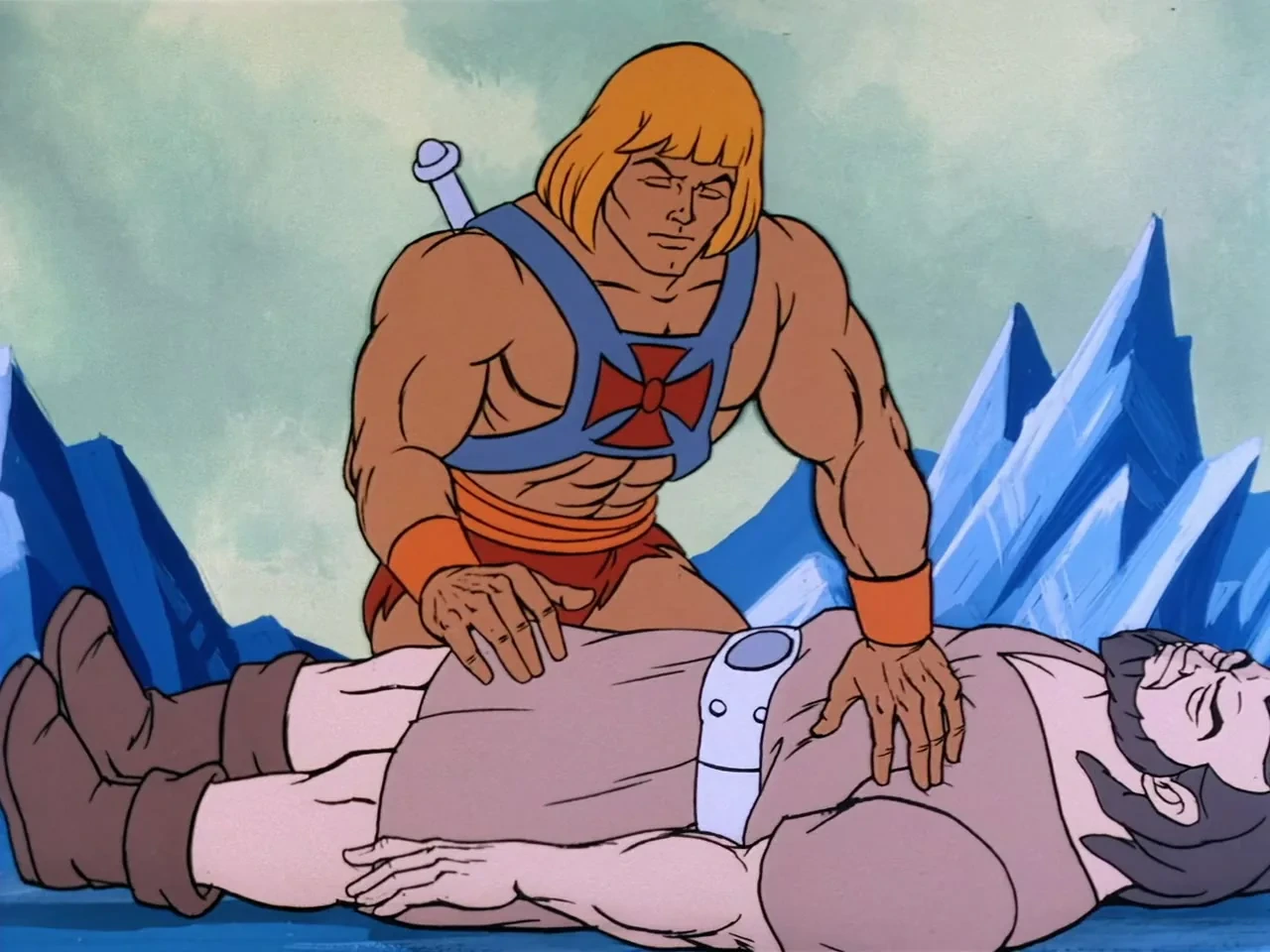
Here the show attacks its hero at a vulnerable point: his belief that he can use his strength responsibly. Skeletor tricks He-Man into thinking he has caused a death. The incident is staged, but the guilt is not. Adam’s response is to reject the power he believes he has abused, including abandoning the sword.
The premise is striking because it takes the series’ gentle heroism seriously. He-Man is not distressed merely because he has lost a fight or been outsmarted. He thinks he has done irreversible harm. If his defining advantage can produce that result, possessing it no longer feels like an uncomplicated good.
The audience has room to recognize the deception while still understanding why it works on him. Skeletor is exploiting conscience, not uncovering a sudden lack of courage. That makes the villain’s method uglier than another attempt to blast through a door. He has identified the quality that separates He-Man from a bully and tried to turn it into a weakness.
Teela’s actions help move the story beyond Adam’s withdrawal. She is not a spectator waiting for the hero to feel better. The episode gives her danger to face and decisions to make, bringing the supporting relationships back into a story about what the hero believes he must manage alone.
Of these four, it is the most direct challenge to the simple joy of having the power. The strength is still useful. The fantasy is still fun. But a hero worthy of that strength has to care about the damage it might do. That is a substantial idea to place behind a toy sword, and the story earns it through a specific deception rather than a lecture alone.
The Moral at the End Was Part of the Bargain
After the danger, a character would address the audience and make the lesson explicit. Sometimes the connection to the story was tidy. Sometimes the transition had the feeling of an adult arriving after the game to point out something everyone was now required to learn. Either way, those short endings became part of the show’s identity.
They are easy to mock because they are so earnest. A warrior can spend an episode dealing with impossible circumstances and then turn toward the viewer with advice suitable for a school noticeboard. The change in scale is funny. It does not follow that every message was worthless or that every child received it with the same adult irony we bring now.
Children’s television has a peculiar relationship with directness. Adults often prefer a lesson to remain implicit, woven into behavior and consequence. A young viewer may appreciate having the idea named. The question is whether the explanation adds something to the story or simply repeats what the story has already made painfully obvious.
He-Man could already demonstrate care by the way he treated others. He could protect someone, hesitate before using force, help an enemy in trouble or listen when a smaller character knew something important. Those actions carried the show’s values without needing an announcement. The concluding segment sometimes reinforced them and sometimes placed a second layer of explanation over them.
The production’s participants have not offered one tidy retrospective verdict. The SYFY oral history includes differing opinions about those endings and the pressure surrounding them. That disagreement is more believable than a single heroic account in which everyone always knew exactly what every child needed. A commercially successful cartoon was being made by people with different jobs and different instincts.
The tension is worth keeping in view. The series encouraged consumption while also encouraging kindness, restraint and confidence. A child could receive a moral and still want the playset. One did not cancel the other. Looking back honestly means allowing the show to be a business venture and a source of useful feelings at the same time.
That combination also separates He-Man’s endings from the safety-advice memory attached to G.I. Joe. The two can occupy the same nostalgic shelf without becoming the same device. Different shows found different ways to speak directly to children once the main adventure was over. We were a valuable audience, and apparently everyone had one final thing to tell us before the next program.
She-Ra Made the World Larger Without Replacing This One
By 1985, the larger Filmation universe had another major heroic identity: Adora, who becomes She-Ra. The Secret of the Sword connected her story with He-Man’s, and She-Ra: Princess of Power developed its own setting and relationships. The connection is part of the eighties story, but it is worth giving the second show room to be itself.
Adora’s place in Adam’s family expands the mythology beyond the palace arrangements we already know. A sibling changes the emotional possibilities. He-Man is no longer simply the young hero with parents and allies on Eternia; he has a connection to another struggle and another person carrying extraordinary power.
The change also demonstrates how much of the attraction lay in the idea of a world. A successful character could have been treated as a logo to reproduce endlessly. Instead, the television universe gained another lead, a different group of companions and a different situation to organize its adventures around. Familiarity supplied a bridge; it did not need to supply every story on the other side.
It would be misleading to turn She-Ra into a footnote whose only purpose was to prove how popular He-Man had become. Her series had its own audience and its own appeal. The connection helps explain the expansion of the property, but the screen experience belongs to the people and places in each show.
The 1987 live-action Masters of the Universe film is another nearby memory, with a different texture and a different set of practical possibilities. It is not an episode of the Filmation series with the animation switched off. Keeping those versions distinct makes it easier to enjoy what each attempted, including the choices that did not reproduce the cartoon household exactly.
For this return trip, the point is simpler. Filmation’s He-Man was substantial enough to support connections beyond its own regular episodes, but its original pleasures remain accessible without studying every later incarnation. Adam, Teela, Duncan, Orko and the Sorceress already form a world. You do not need forty years of additional mythology to feel the pull of its front door.
What Still Works, and What Does Not Need Defending
The series is uneven. Some adventures have a strong emotional problem or a clever use for the setting. Others feel as though a small misunderstanding has been stretched until it can support another journey through a cave. A large episode count gives us variety, but it also gives us plenty of evidence that not every idea arrived with equal force.
The limited animation is part of that unevenness, and so is the reset built into the format. Important relationships can feel as though they are returning to an agreed starting position. The audience remembers a revelation or a moment of growth; the next available episode may be more interested in a new visitor with an alarming object. That was part of the viewing arrangement, even when it leaves a modern viewer wanting more continuity.
Some assumptions about who knows best also deserve a second look. Adults and guardians can control information about younger characters, particularly when destiny enters the conversation. A story may frame concealment as protection while leaving the affected person with very little choice. Noticing that does not require rejecting the affection in the scene. It means taking the character’s situation seriously.
What holds up best is the way the hero’s power is tempered by his behavior. He-Man is often more interested in preventing harm than demonstrating superiority. The visual design promises force, and the better stories ask him to combine that force with judgment. He can be kind without becoming less impressive. For a child’s adventure hero, that remains a very good use of strength.
The supporting relationships also survive the dated machinery. Teela’s questions, Adam’s frustration, Orko’s desire to help and Duncan’s care give the world enough personal life to sustain a quiet scene. The villainous side has its own comic rhythm. These are not relationships of enormous subtlety, but they are distinct enough to recognize without a lengthy explanation.
And then there is the design. Grayskull, Skeletor, the transformation, Battle Cat: those images still communicate instantly. A show does not need to be flawless to produce a few nearly perfect invitations to play. He-Man did that repeatedly, in a form that made the fantastic feel available rather than remote.
The less-remembered cartoons of the decade offer plenty of other worlds worth revisiting. He-Man’s advantage was not that nobody else had a striking idea. It was that this particular mixture of clear images, dependable company and accessible adventure became so easy to return to. The series could be limited. The room it opened in the imagination was not.
A Good Way Back to Eternia
Start with the original Filmation series rather than whichever later title happens to appear first in a search. Choose a character story and an adventure story. “Teela’s Quest” and “The Problem with Power” show the emotional reach; “Diamond Ray of Disappearance” supplies the broad theatrical machinery. Watching a small group of episodes is a better introduction than treating the full run as an assignment.
Let the pace be the pace. The show was made for a different television routine, and its reused movements are easier to accept when you are not demanding the constant momentum of a modern action series. Notice the backgrounds, the voices and the household scenes. Some of its charm happens while nobody is lifting anything.
If you are sharing it with someone younger, leave space for an honest response. They may love Orko, object to the obvious disguise, or ask why the castle has so many opportunities for catastrophe. Those are perfectly respectable ways to enter the show. A childhood favorite becomes more interesting when it can survive a new viewer having their own opinion.
The VHS years taught us to treasure whatever version of an episode we could keep. Returning now offers a different pleasure: choosing a story for what it does, not just because the tape happens to have it. You can appreciate the affection without pretending the tracking lines were essential to the art.
My favorite thing about He-Man is still the contrast at its center. A hero who looks built for domination keeps being asked to use his strength with care. The show sold a fantasy world, certainly. It also offered the possibility that being powerful and being gentle did not have to be opposing ambitions. That part is worth bringing back into the room.
Questions About the Original He-Man Cartoon
When did the original He-Man cartoon air?
Filmation’s He-Man and the Masters of the Universe began in 1983, with its original run generally identified as 1983–1985. It was distributed through first-run syndication, so local stations determined where it appeared in their schedules. Later reruns are a separate part of many viewers’ memories.
How many episodes did Filmation make?
The original He-Man series contains 130 episodes across two seasons. That count does not include the separate She-Ra series, the animated feature The Secret of the Sword or the Christmas special. They are connected productions, rather than additional numbered He-Man episodes.
Did He-Man start as a toy or a television show?
The Mattel Masters of the Universe toy line came first, launching in 1982. The 1983 cartoon developed its own television approach to the property, including Prince Adam’s family life, his secret identity and the relationships around Castle Grayskull. The miniature comics and cartoon should not be assumed to share every detail.
Who knows that Prince Adam is He-Man?
The familiar opening identifies the Sorceress, Man-At-Arms and Orko as the friends who share Adam’s secret. The audience knows too, which makes the secret an important part of the fun when other characters misunderstand Adam’s behavior.
Is the 1987 Masters of the Universe movie the same story?
It is a separate live-action adaptation of the property, not a continuation that reproduces every feature of the Filmation series. The original cartoon, the live-action film and later animated versions have different approaches. This article focuses on the Filmation television world of the eighties.
Sources & Further Reading
- The Strong: Masters of the Universe toy history and the 1983–1985 cartoon
- Lou Scheimer interviewed by Filmation artist Dale Hendrickson
- SYFY’s oral history with original performers and creators
- Universal: original-series episode count and connected Filmation productions
- Apple TV: original Filmation series and episode descriptions
- Mattel: Masters of the Universe eras and original launch chronology