Smells Like Gen X • The 70s Toy Aisle Gets a Backstory
70s Action Figures and Character Toys Before Every Shelf Became a Franchise
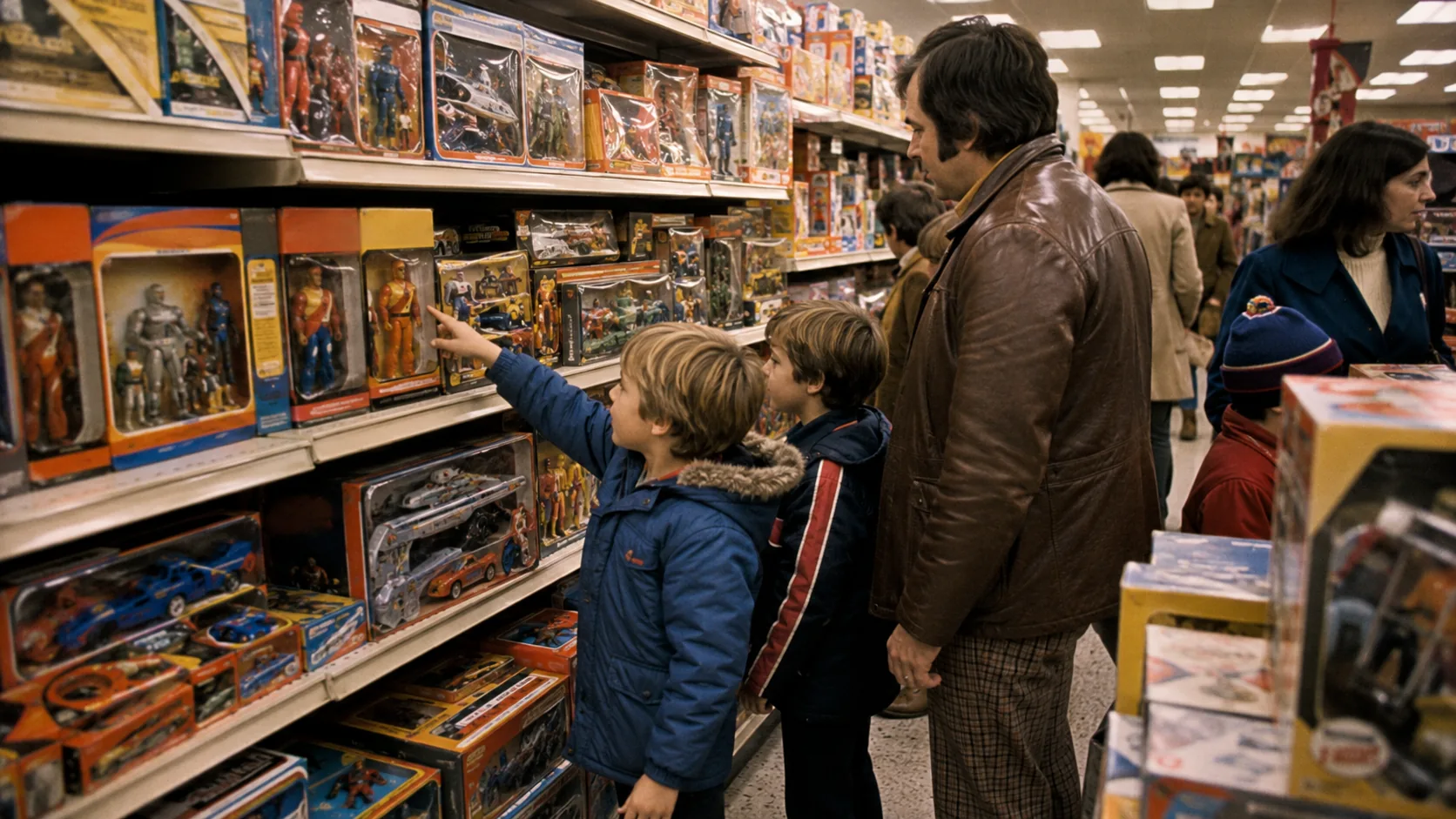
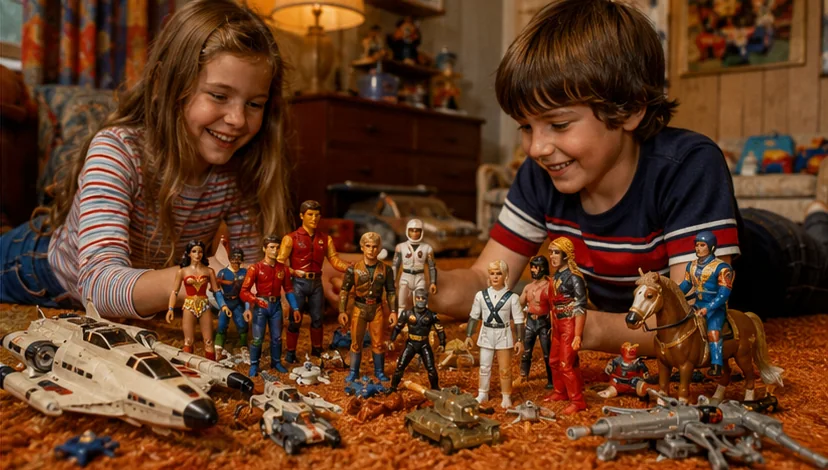
Before cartoons were built to sell an entire aisle, we had bearded adventurers, cloth-costumed superheroes, bionic TV stars, stuntmen who repeatedly met the coffee table, Japanese robots, modular space weirdos, and a late-decade galaxy that changed the size of everything. These were the 70s action figures that taught Gen X how to build a universe on the carpet.
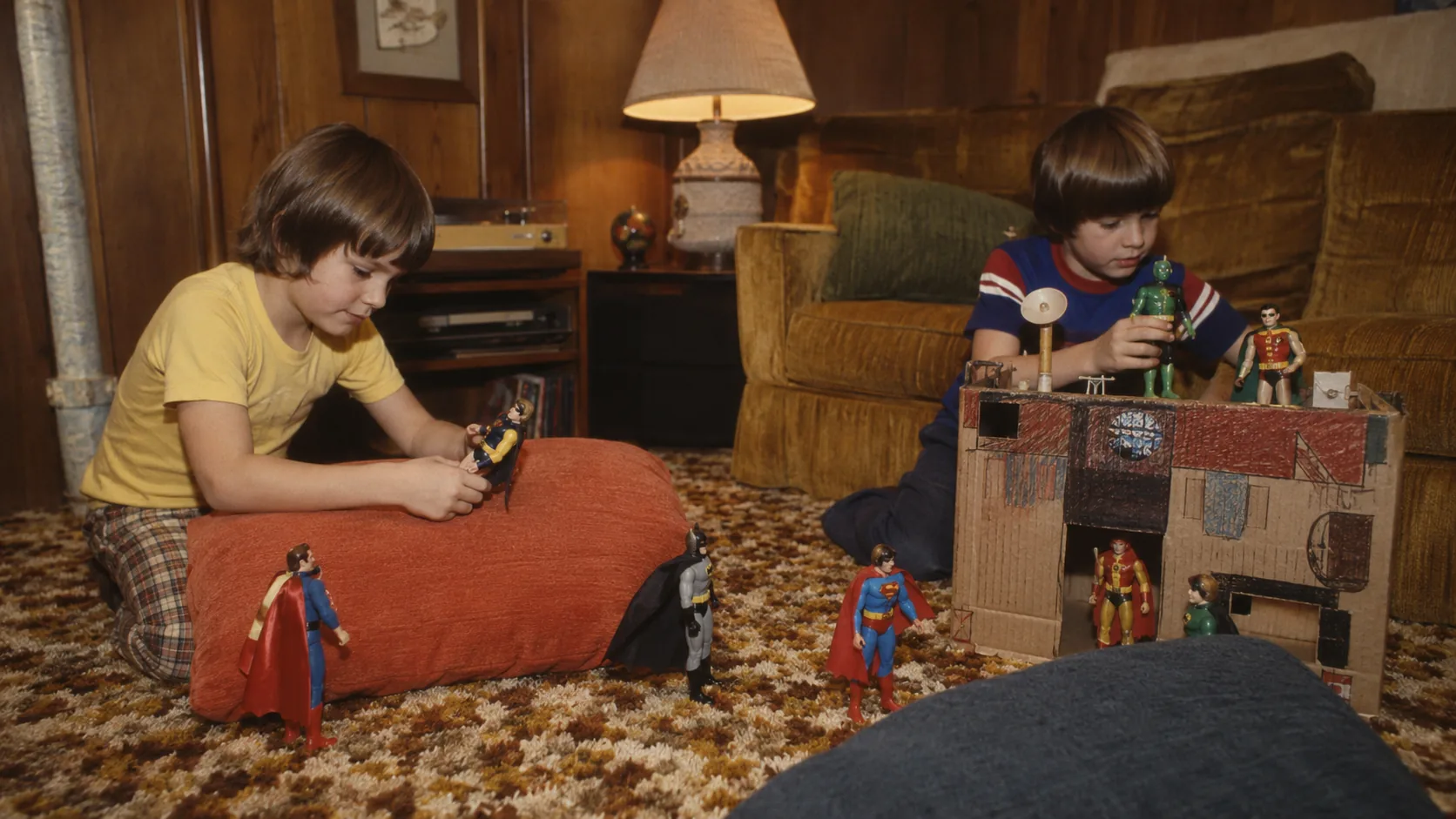
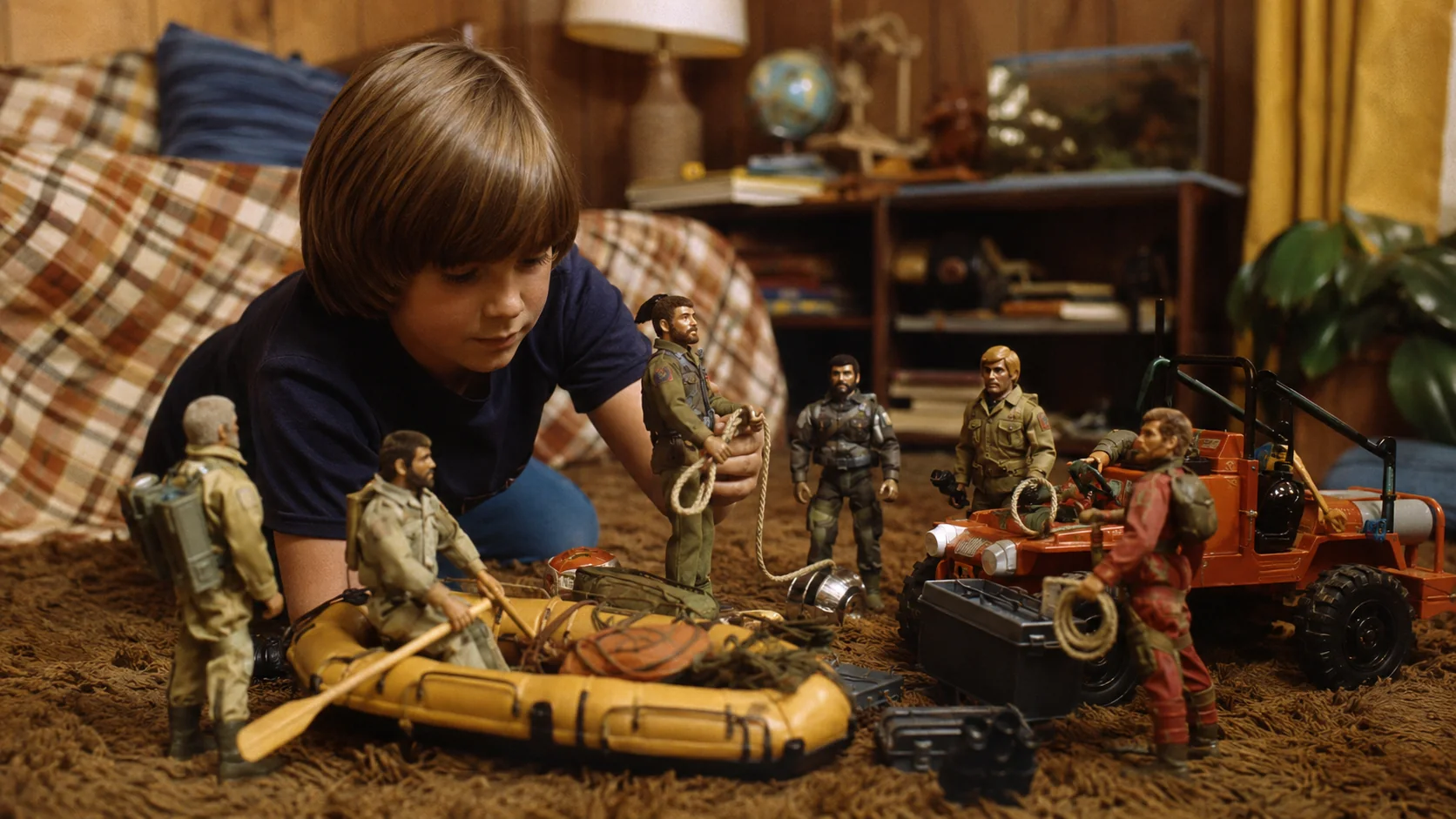
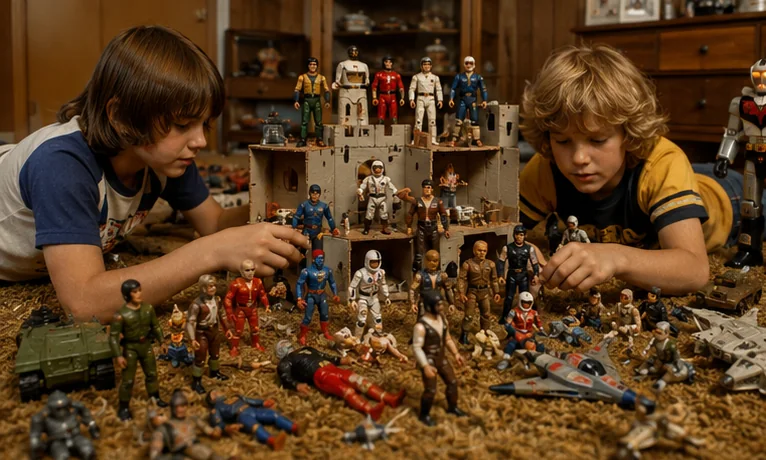
The headquarters was cardboard, the costumes were cloth, and the living-room floor handled the rest.
What Were the Most Popular 70s Action Figures?
The defining 70s action figures included G.I. Joe Adventure Team, Mego’s World’s Greatest Super-Heroes, Mego Star Trek, Evel Knievel, Six Million Dollar Man, Bionic Woman, Fisher-Price Adventure People, Stretch Armstrong, Micronauts, Shogun Warriors, and Kenner Star Wars figures. Together they moved the toy aisle from large stand-alone figures toward smaller characters, vehicles, playsets, licensed worlds, and collections that could keep expanding.
The decade did not begin with one neat formula. It began with 12-inch adventurers and eight-inch cloth costumes, then experimented with stunt gimmicks, TV features, giant robots, and smaller modular figures. By the end of the 70s, the 3¾-inch figure had become the perfect passenger for a whole fleet of vehicles and playsets. The toy was no longer only the character. The toy was the world around the character.
For the whole decade around them, start in the 70s Toys hub. For the all-category countdown, the 50 most iconic toys of the 70s puts the figures back beside the cars, games, dolls, riding toys, and electronics they shared the floor with.
The 70s Action Figure and Character-Toy Roll Call
This is not a ranking. Trying to rank a stretchy muscleman against a 24-inch missile-firing robot is how family arguments begin. These are the lines that explain how the decade changed.
G.I. Joe Adventure TeamThe military figure became a bearded civilian adventurer with dangerous jobs and excellent equipment.
Action JacksonMego’s early reusable eight-inch body helped set the stage for a licensed-character empire.
Big JimMattel brought sports, camping, rescue gear, and a less military style to the large-figure lane.
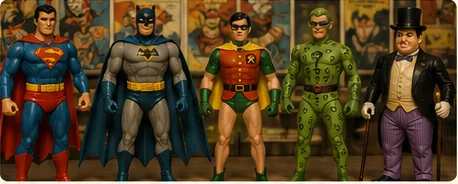
Mego World’s Greatest Super-HeroesDC and Marvel heroes finally shared one wonderfully chaotic cloth-costumed shelf.
Mego Star TrekTelevision characters, an Enterprise playset, aliens, and missions we happily invented after syndication.
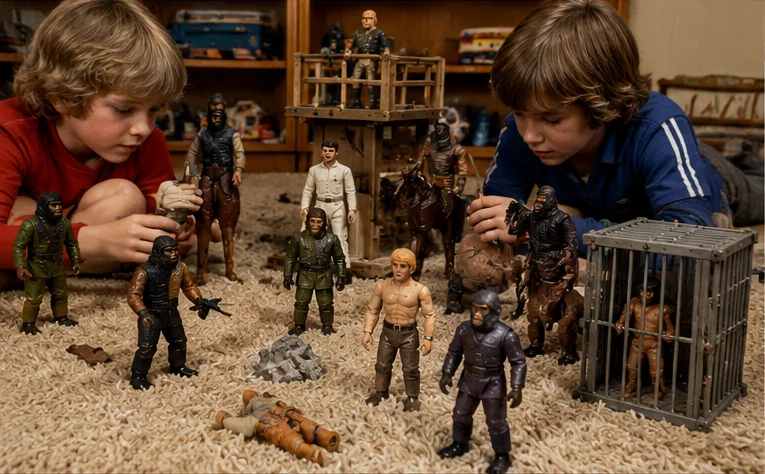
Mego Planet of the ApesA strange, serious movie world turned into one of the decade’s most unforgettable figure lines.
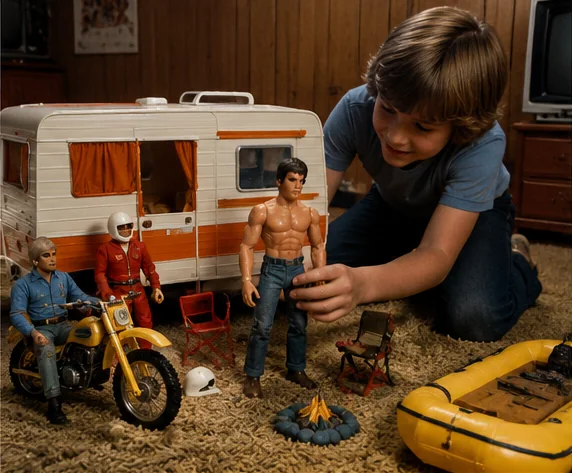
Evel KnievelThe figure mattered, but the launcher and motorcycle turned him into a repeatable household stunt disaster.
Six Million Dollar ManA television hero whose bionic features were built directly into the figure.
Bionic WomanJaime Sommers brought action features, mission play, and a rare female TV hero to the aisle.
Fisher-Price Adventure PeopleSmaller figures, practical gear, rescue jobs, vehicles, and a scale that invited a whole working world.
Stretch ArmstrongA figure whose entire purpose was to survive the sort of treatment that would destroy every other figure.
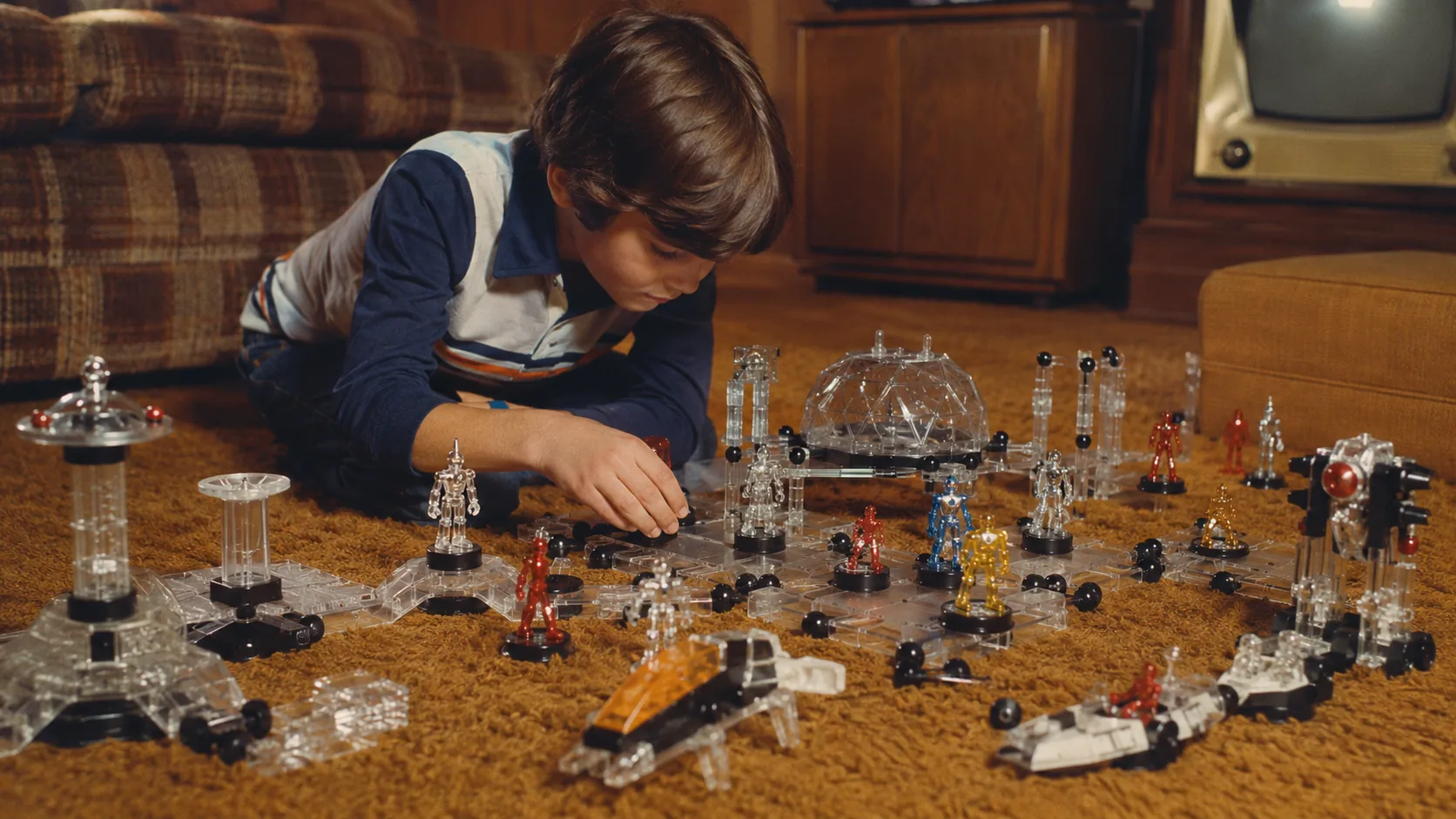
MicronautsInterchangeable science-fiction figures, robots, vehicles, and parts that made experimentation part of the story.
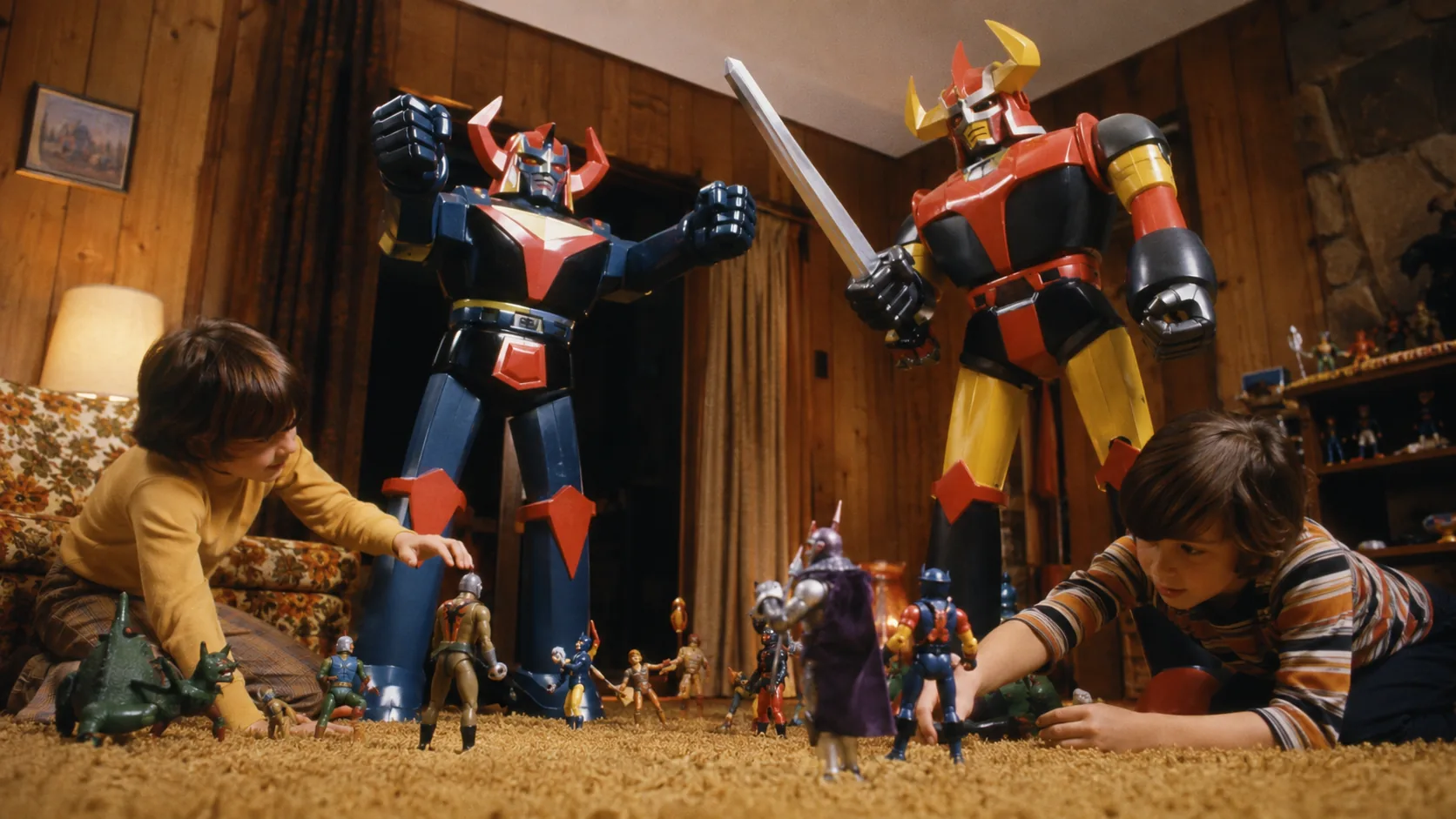
Shogun WarriorsJapanese super robots arrived in American rooms at sizes ranging from pocket figures to near-furniture.
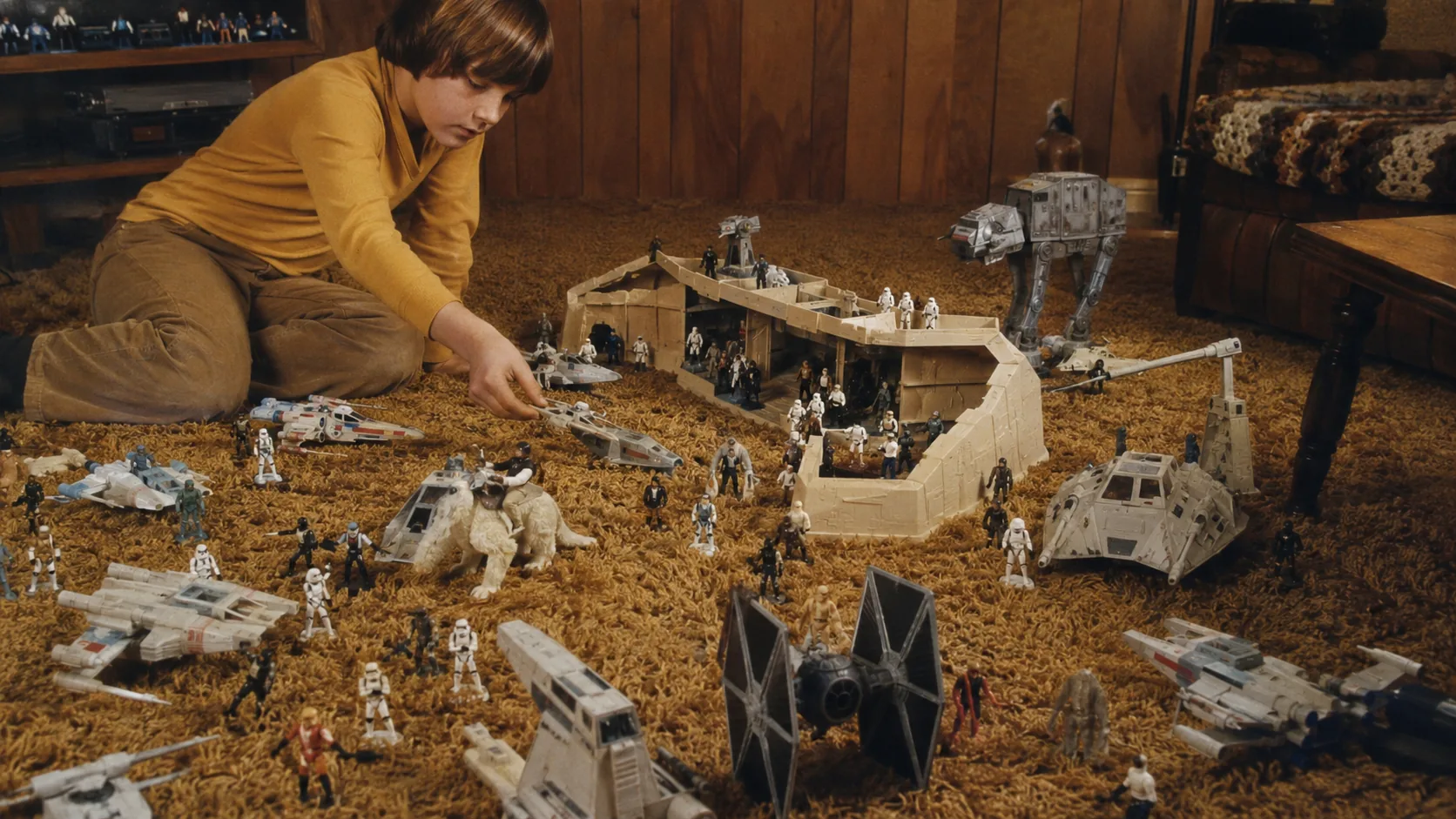
Kenner Star WarsThe smaller figure became the center of a vehicle-and-playset system that reset the entire business.
Before Every Movie and Cartoon Came With an Action-Figure Aisle
The 70s did not invent the action figure, but the decade taught the toy industry nearly every trick it would use afterward: reinvention, licensing, television tie-ins, reusable bodies, signature features, smaller scales, vehicles, playsets, collectible casts, and the powerful idea that the story could sell the toy before the toy was even ready.
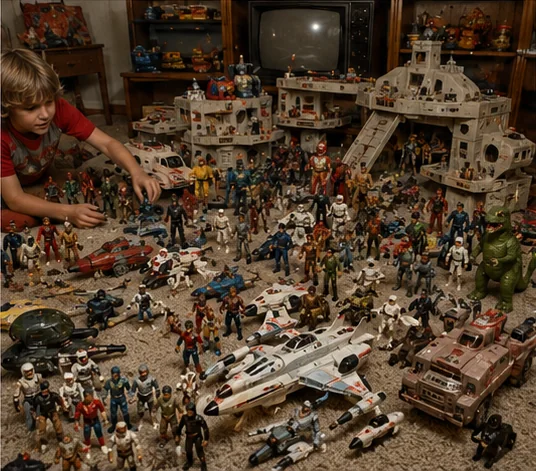
By the late 70s, one figure could lead to a cast, a vehicle, a headquarters, and a Christmas list that needed its own budget.
G.I. Joe Had Already Changed the Name of the Game
Hasbro’s original G.I. Joe arrived in 1964, and the term action figure gave boys—and more importantly, the adults buying for them—a way to describe a doll without using the word doll. By 1970, however, the straight military identity had become harder to carry. The country had changed, the Vietnam War was on television, and toy shelves had to adjust.
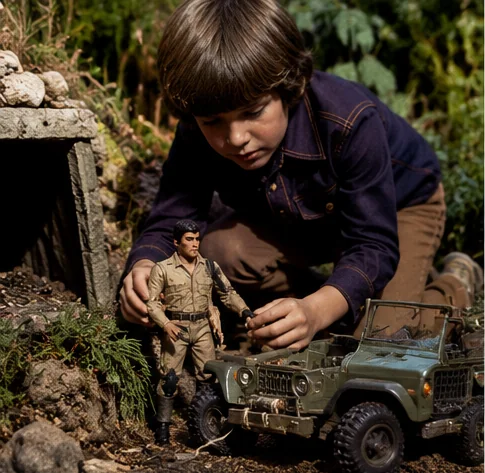
The answer was the G.I. Joe Adventure Team. The uniforms became civilian adventure gear. The missions involved rescue, exploration, wildlife, hidden treasure, environmental danger, and the sort of vaguely international emergency that required a beard, a shoulder holster, and a lot of orange plastic. The Smithsonian’s Land Adventurer from the 1970 line shows the shift clearly: flocked hair, civilian styling, and the round Adventure Team dog tag that looked suspiciously peace-sign adjacent.
That reinvention mattered because it proved a figure did not have to disappear when the culture around it changed. The character could be reworked. The mission could be rewritten. The same basic idea could move from battlefield play to pulp adventure without pretending the decade had stayed frozen in 1964.
The Gen X memory
Adventure Team Joe always looked like he had been awake for three straight days and was still willing to search a cave, rescue a tiger, and investigate whatever was making that noise behind the furnace.
The Figure Still Had to Carry Most of the Story
Early in the decade, the large figure was the main event. A 12-inch Joe or Big Jim had enough physical presence to dominate the floor. Clothes could be changed. Equipment could be strapped on. Hands could hold tools—at least until the fingers stiffened, split, or developed their own opinion. A single figure could be a diver, explorer, athlete, spy, medic, mountain rescuer, or unwilling test pilot depending on what accessories survived.
That style of play depended on imagination more than continuity. There was no expectation that every child had the complete cast, a correct vehicle, and a screen-accurate headquarters. We had one guy, some gear, and an emergency. The figure was adaptable because he had to be.
Then Licensing Started Filling the Shelf With Familiar Faces
The middle of the decade brought a different kind of power: recognition. A generic adventurer asked you to invent a character. A superhero, television star, astronaut, ape, or daredevil arrived with a character already installed. The clothes, face, logo, and story did half the imaginative setup before the package was open.
That did not make play less creative. It simply gave us a launching point. Batman could begin the afternoon in Gotham and finish it helping G.I. Joe escape from a cardboard volcano. Captain Kirk could command the Enterprise playset, then borrow a Tonka truck because the transporter was down. We respected the official story right up until the first missing accessory.
The 70s Action Figures That Changed the Toy Aisle
Each of these lines solved a different problem. Some made old characters feel new. Some made television features physical. Some changed the scale. Some made vehicles unavoidable. One made an empty Christmas package feel like admission to the biggest story in the country.
G.I. Joe Adventure Team
The Soldier Became an Adventurer
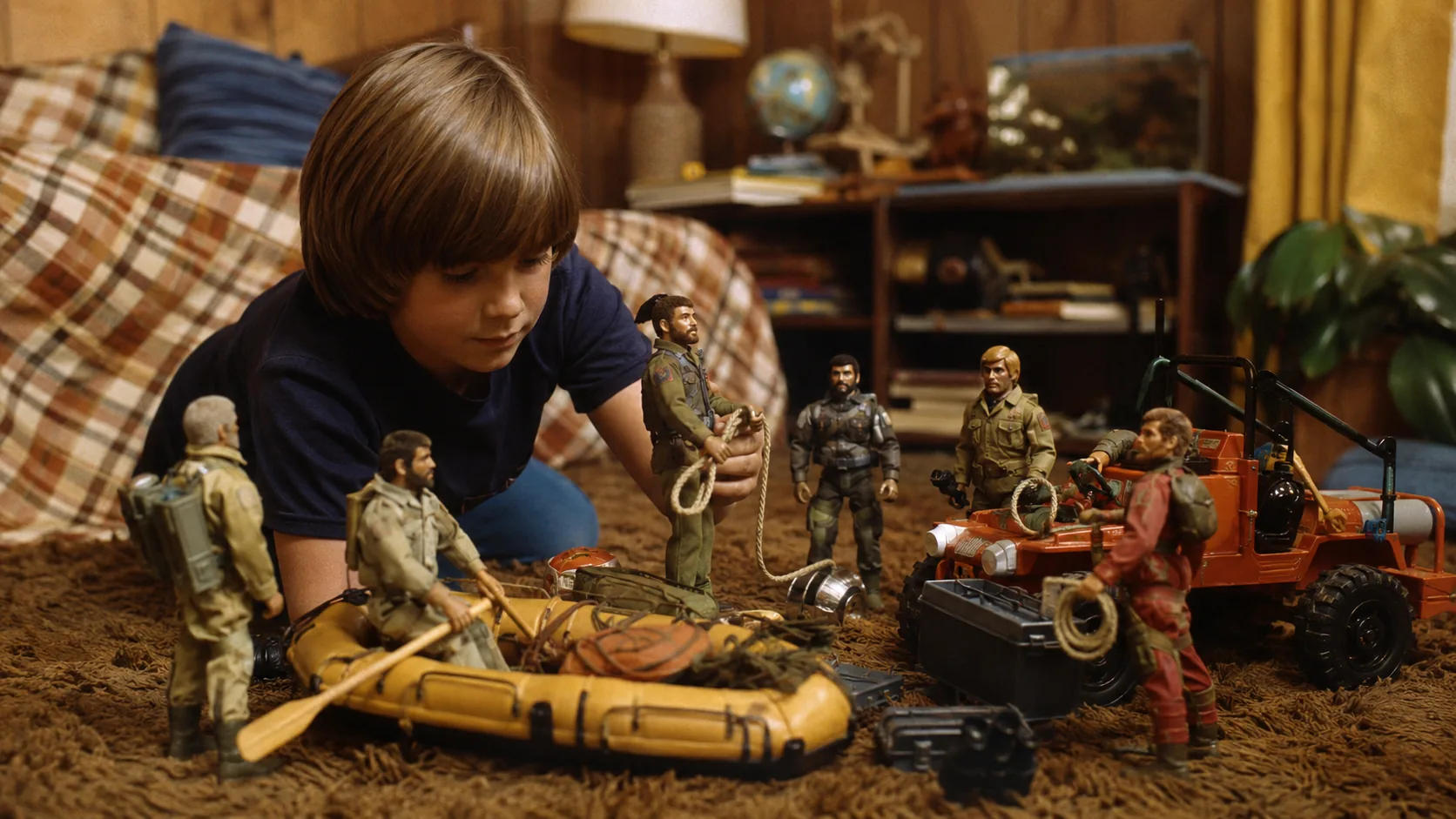
Joe’s real superpower was arriving with enough equipment to turn the sofa into hostile territory.
The Adventure Team was the decade’s first great action-figure pivot. Joe kept the size, articulation, gear, and seriousness of the original line but traded direct military identity for exploration and rescue. Land Adventurer, Sea Adventurer, Air Adventurer, Talking Commander, and the team’s mission sets made the world feel broad without requiring one licensed television story.
The appeal was competence. These were adults who knew what to do when a mummy disappeared, a helicopter went down, or a dangerous animal needed handling. The equipment cases, vehicles, ropes, rafts, uniforms, and mission hardware made preparation part of play. Before the mission started, there was always a lot of serious packing.
The figure itself felt substantial in a way smaller toys did not. The flocked hair, articulated body, cloth uniform, boots, belts, holsters, and equipment gave Joe the presence of a miniature adult rather than a brightly colored mascot. You did not simply stand him up and announce that the mission had started. You dressed him, checked the gear, decided which tools mattered, and usually discovered that one glove or boot had vanished since the last expedition.
The Adventure Team’s best sets turned ordinary household territory into hostile country. A couch cushion became a mountain ridge. The bathtub became a deep-sea assignment. A cardboard box became a mobile command post. The line encouraged slow preparation followed by sudden disaster, which is pretty close to how most 70s television adventure worked: five minutes of serious briefing, twenty minutes of danger, and somebody hanging from a rope before dinner.
Joe also proved that a toy line could evolve without throwing away everything kids already understood. The military roots remained in the discipline, uniforms, vehicles, and gear, but the new missions were broad enough to include exploration, rescue, wildlife, archaeology, and whatever strange crisis the commercial had planted in our heads. That flexibility helped the figure survive a changing decade.
Cloth Costumes, Shared Bodies and a Whole Comic Rack
A frayed cape and one missing boot did not cancel the crossover. They made it feel like issue number 147.
Mego’s great trick was not only licensing famous characters. It was building a flexible eight-inch format that could wear an enormous number of identities. Superman, Batman, Robin, Aquaman, Spider-Man, Captain America, the Hulk, Wonder Woman, and others could share the same shelf even when their comic-book companies usually did not share much of anything.
The cloth costumes made them feel closer to miniature actors than molded statues. Capes frayed. Boots disappeared. Elastic loosened. Gloves stained. A figure that survived several years often looked as if he had personally endured every crisis in the comic rack. That wear became part of the charm.
Mego also understood that recognizable characters multiplied one another’s value. One hero was good. Two heroes created a team-up. A hero and a villain created an afternoon. Add a Batmobile, playset, or extra costume and the room was booked.
The eight-inch scale was big enough for a character to have personality but small enough for a kid to own a team. That mattered. Superman could fly from the arm of the couch while Batman guarded a cardboard headquarters and Spider-Man hung from a shoelace tied to a lamp. The figures were not trapped inside separate corporate universes once they reached the bedroom. They were coworkers, rivals, substitutes, and occasionally cousins depending on what the afternoon required.
Those cloth costumes did more than make the figures look theatrical. They gave play a dressing-room element. Capes could be removed, belts shifted, boots traded, and civilian clothing borrowed from some entirely unrelated figure. A damaged costume did not necessarily retire the hero. It created a darker version, a captured version, or the version who had clearly been through something since the last issue.
Mego’s bodies were never invisible to us. Wrists loosened. Knees went soft. Rubber bands inside the torso eventually surrendered. But that shared construction also made the line feel like one giant repertory company. The face and costume changed, while the basic performer underneath kept showing up for another role.
Star Trek, Planet of the Apes and Syndicated Childhood
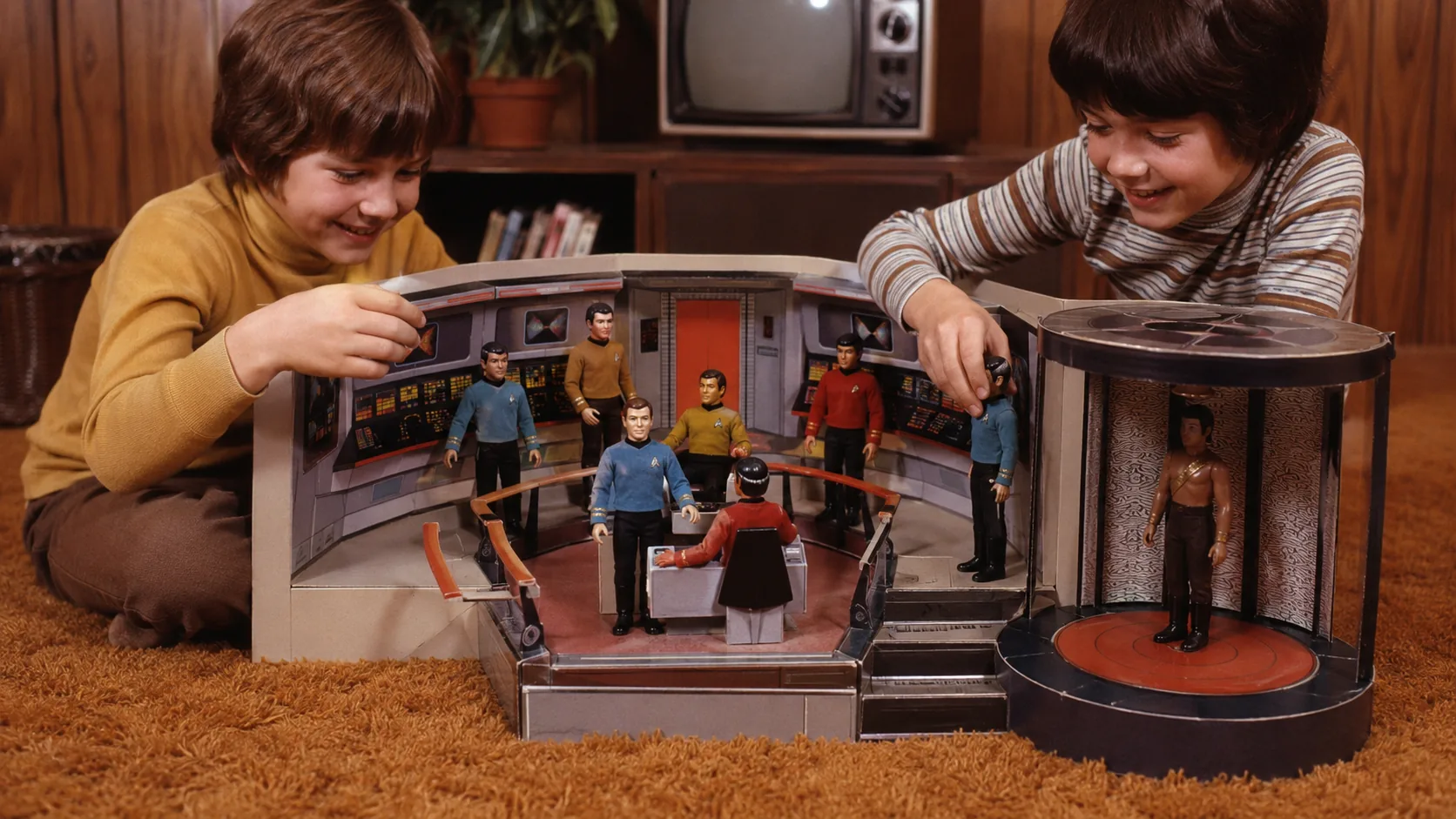
Printed cardboard gave the crew a bridge. The transporter supplied the trick everybody had to demonstrate first.
Mego’s television and movie lines showed how licensed figures could keep a story alive long after its original moment. Star Trek found a huge new audience in syndication, which meant Captain Kirk, Mr. Spock, Dr. McCoy, Scotty, Klingons, Cheron, and the Enterprise playset could feel current even if the series had ended before many Gen X kids were old enough to notice.
The Enterprise playset was peak 70s efficiency: printed cardboard, molded plastic, a spinning transporter, and just enough visual information to turn a corner of the room into the bridge. It did not need to look like a modern collector diorama. It needed places to stand figures and a feature that could make one disappear.
Planet of the Apes was an even stranger gift to childhood. A bleak science-fiction world became a figure line full of uniforms, rifles, horses, cages, and ape characters. Kids could absorb serious adult stories through toys without needing every philosophical detail. The figure’s face and outfit were enough to say, “This world is not normal. Figure it out.”
The Star Trek figures had a special advantage in a rerun-heavy childhood: the show kept coming back. You might see the same episode after school, on a rainy Saturday, or late at night on a station from another city. That repetition gave the toys a constant supply of plots. Kirk could negotiate until somebody threw a punch, Spock could investigate anything with a blinking light, and the Klingon usually had to represent every hostile force in the galaxy because villains were never stocked as heavily as heroes.
The Enterprise playset remains one of the great examples of cardboard doing heroic work. Printed walls suggested control panels, space windows, doors, and machinery without trying to become a museum replica. The transporter feature provided the big demonstration, but the rest of the set succeeded because it gave the figures a workplace. Once they had a bridge, arguments became command decisions and standing around became a briefing.
Planet of the Apes brought a different tone. The ape uniforms, boots, weapons, wagons, horses, and cages made the world feel rougher and more physical than the clean future of Star Trek. A kid did not need to understand the movies’ political ideas to understand that humans were in trouble, apes were in charge, and somebody was probably about to be marched across the carpet.
Evel Knievel
The Figure Was Only Half the Toy
The setup took longer than the jump. The crash only meant we had found a reason to launch him again.
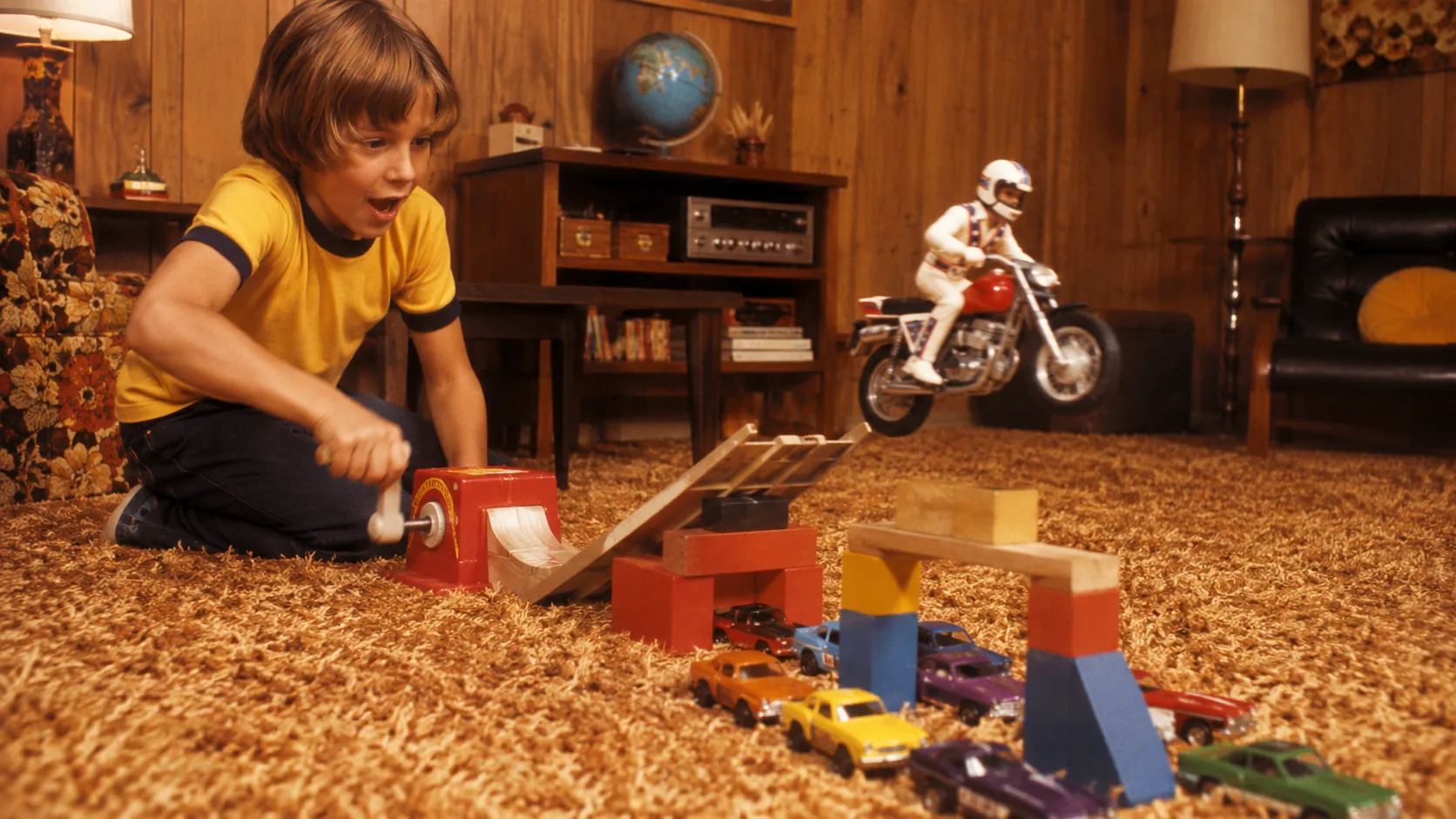
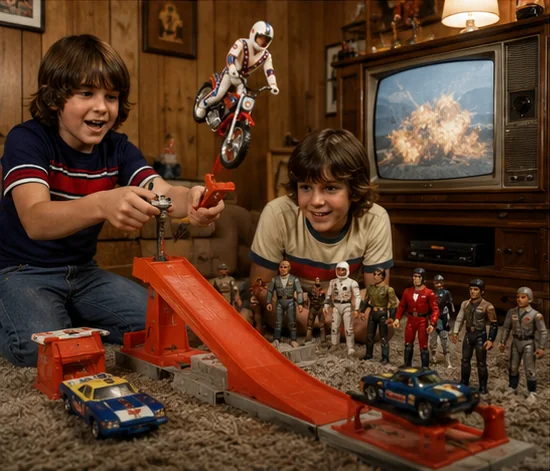
The Evel Knievel Stunt Cycle turned a real television daredevil into a repeatable household event. The figure clipped to the motorcycle. The crank launcher wound up. The bike shot forward. A ramp, a row of objects, and an audience completed the setup. Then gravity filed its report.
Evel was not a traditional action figure in the superhero sense. His power came from motion. He could be launched again and again, which made failure entertaining instead of final. Crashing into a chair leg was not the end of play. It was the reason to move the ramp and try again.
The toy also erased the border between figure play and vehicle play. The rider, motorcycle, launcher, ramp, stunt equipment, and crash were one system. Later franchises would build enormous worlds around vehicles, but Evel had already taught us that the machine could be just as important as the person.
The preparation was part of the show. You lined up plastic barrels, blocks, shoes, books, or anything else that looked jumpable. Somebody counted the obstacles. Somebody argued that the ramp was too close. Somebody else wanted the motorcycle wound tighter even though experience had already explained what happened next. By the time Evel launched, the living room had an audience and the coffee table had become a stadium.
The figure’s white jumpsuit, helmet, cape, and red-white-and-blue graphics made him instantly readable from across the room. He did not need a secret identity or a fictional origin. Television had already presented him as a human being willing to launch himself over things that sensible adults drove around. The toy let us repeat that spectacle without waiting for the next televised jump.
What made the Stunt Cycle last was the balance between control and chaos. You could change the angle, distance, speed, ramp, and landing surface, but once the bike left the launcher it belonged to physics. Sometimes Evel cleared the obstacle. Sometimes the motorcycle veered directly into furniture. Both outcomes felt like success because the crash was part of what everyone came to see.
The full lived-on-the-floor version is in the Evel Knievel Stunt Cycle entry, right where the furniture starts to look nervous.
Bionic Heroes
Television Powers Built Into Plastic
Television powers became plastic mechanisms, removable parts, and the official sound effect we made with our mouths.
Kenner’s Six Million Dollar Man figure made a brilliant decision: it did not merely resemble Steve Austin. It tried to turn his bionic abilities into toy features. The figure had a look-through eye, a powered arm mechanism, removable bionic modules, and mission accessories that made the television premise physical.
This was a different kind of licensed toy. A cloth costume told you who the figure was. A bionic feature let you perform the reason he was special. The show’s slow-motion strength and electronic sound effects lived mostly in our heads, but the figure gave us a button, a mechanism, and exposed machinery to support the fantasy.
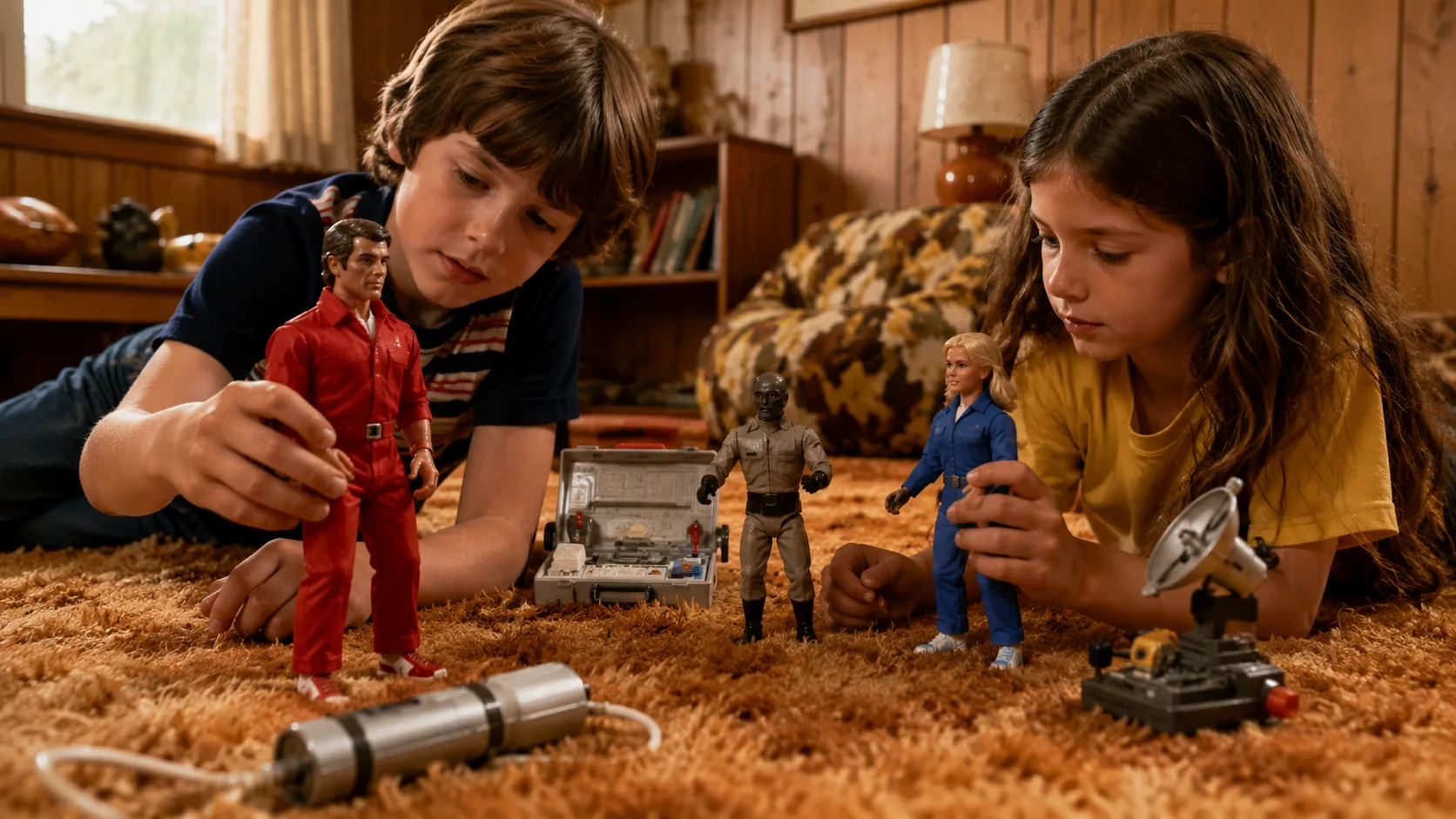
The Bionic Woman expanded the world and gave Jaime Sommers a rare place among the decade’s female action characters. She stood in the unstable territory between doll aisle and action aisle, which said more about the adults organizing stores than the kids doing the playing. In actual bedrooms, a television hero with missions and equipment was an action figure whether the box used the term or not.
Steve Austin’s red track suit was plain compared with a superhero cape, but the figure did not need a loud costume. The attraction was mechanical. Looking through the bionic eye, activating the arm, opening panels, and handling the mission gear turned the television mythology into a sequence of little demonstrations. Every new person who entered the room had to be shown what the figure could do, usually several times.
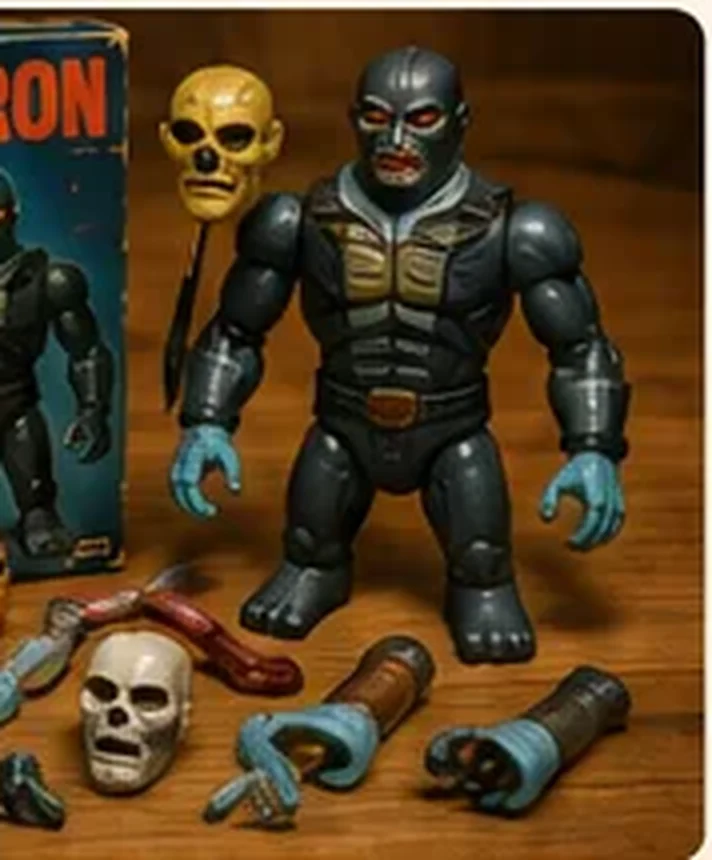
The line’s villains and supporting figures made the bionic idea even stronger. Maskatron’s interchangeable faces and removable parts gave Steve an enemy built around deception. Oscar Goldman provided authority and mission structure. Bigfoot turned a television creature into a large physical opponent. The world grew because each character brought a different kind of feature, not simply a new head on the same body.
Jaime Sommers mattered because she was not just a civilian companion added to someone else’s story. She had her own powers, missions, television audience, and equipment. Kids who watched both shows understood that Steve and Jaime occupied the same action world, even if the toy aisle insisted on sorting them by gender. Once the packages came home, store logic lost control.
These figures did not need secret identities. They had jobs, vehicles, and a problem somewhere across the carpet.
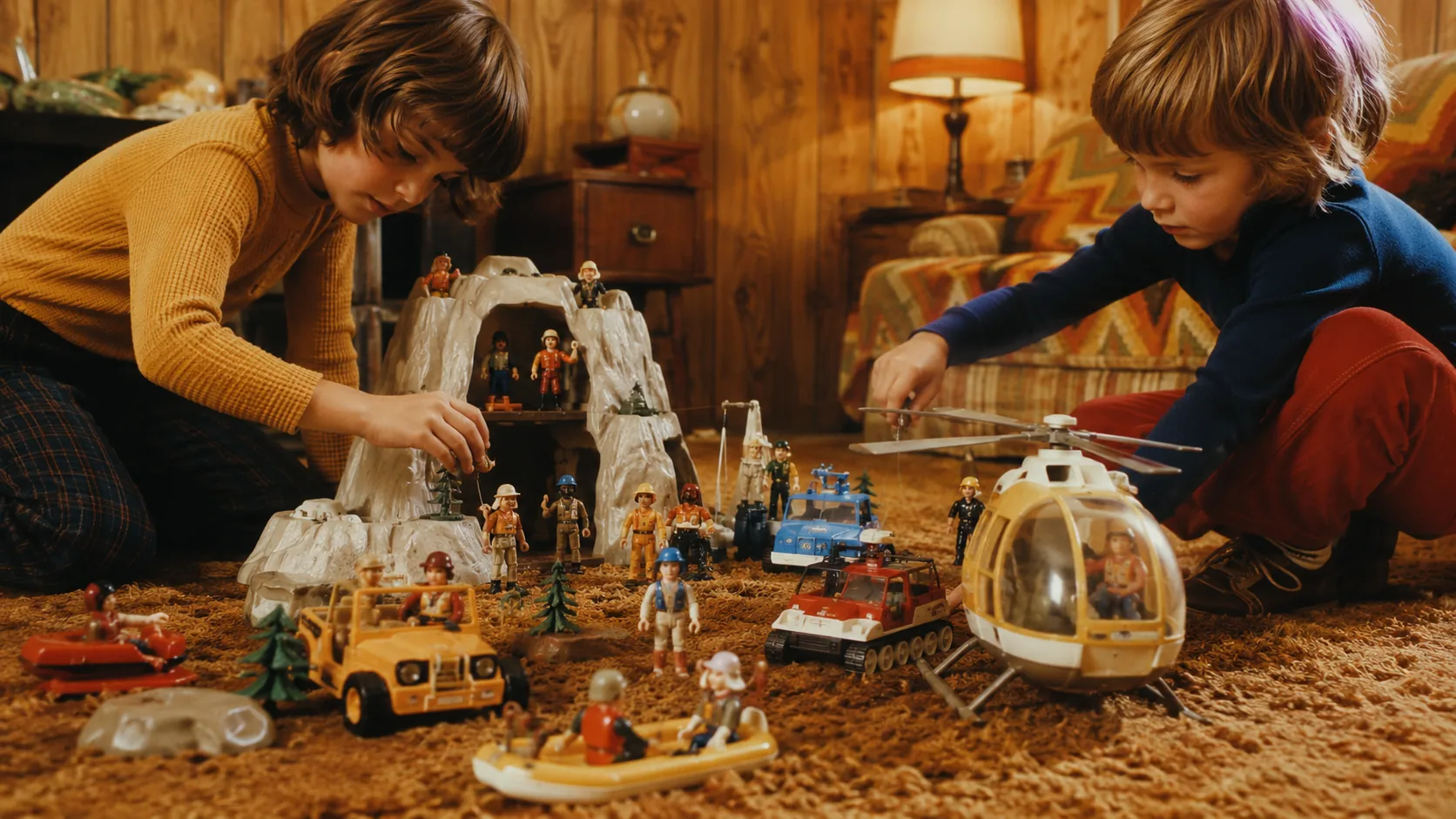
Fisher-Price Adventure People brought jointed 3½-inch characters into rescue, safari, wilderness, construction, sports, and transportation sets. The figures were smaller than Joe or Mego, but they were not weaker ideas. Their scale made vehicles, equipment, animals, boats, helicopters, vans, motorcycles, and entire working scenes practical.
Adventure People did not need celebrity faces. Their appeal was the situation. A rescue team, diver, pilot, ranger, camera crew, or mountain climber came with enough visual information to start a story. The figures felt like people who belonged in the equipment rather than stars who happened to own it.
This was an important bridge. The small figure was becoming useful because it fit the world. Vehicles could be large enough to feel substantial without becoming furniture. A playset could hold several characters without consuming the whole bedroom. The scale was ready for a franchise to exploit it.
The sets felt grounded in jobs and situations we recognized from television, school field trips, family vacations, and the emergency vehicles that occasionally raced past the house. A rescue helicopter, safari truck, diver, news crew, wilderness team, or construction vehicle did not require a complicated backstory. The uniforms and equipment explained the assignment before the first figure touched the carpet.
Fisher-Price built the toys for hands that were still learning how much pressure plastic could take. The figures were sturdy, the vehicles had broad shapes, and the sets invited repeated use instead of careful display. Doors opened. Boats floated. Wheels rolled. Equipment could be moved from one job to another. The play pattern was less about posing a celebrity and more about making a small world function.
Adventure People also blended easily with Little People, Matchbox cars, blocks, model scenery, and whatever else happened to be nearby. Scale was not exact, but childhood city planning has always been flexible. A construction worker could rescue a stranded astronaut, a diver could borrow a family car, and the entire operation could report to a headquarters built from encyclopedias.
Stretch Armstrong
The Gimmick Was the Entire Personality
Every kid performed the same scientific test: how far can we pull this thing before childhood becomes a cleanup operation?
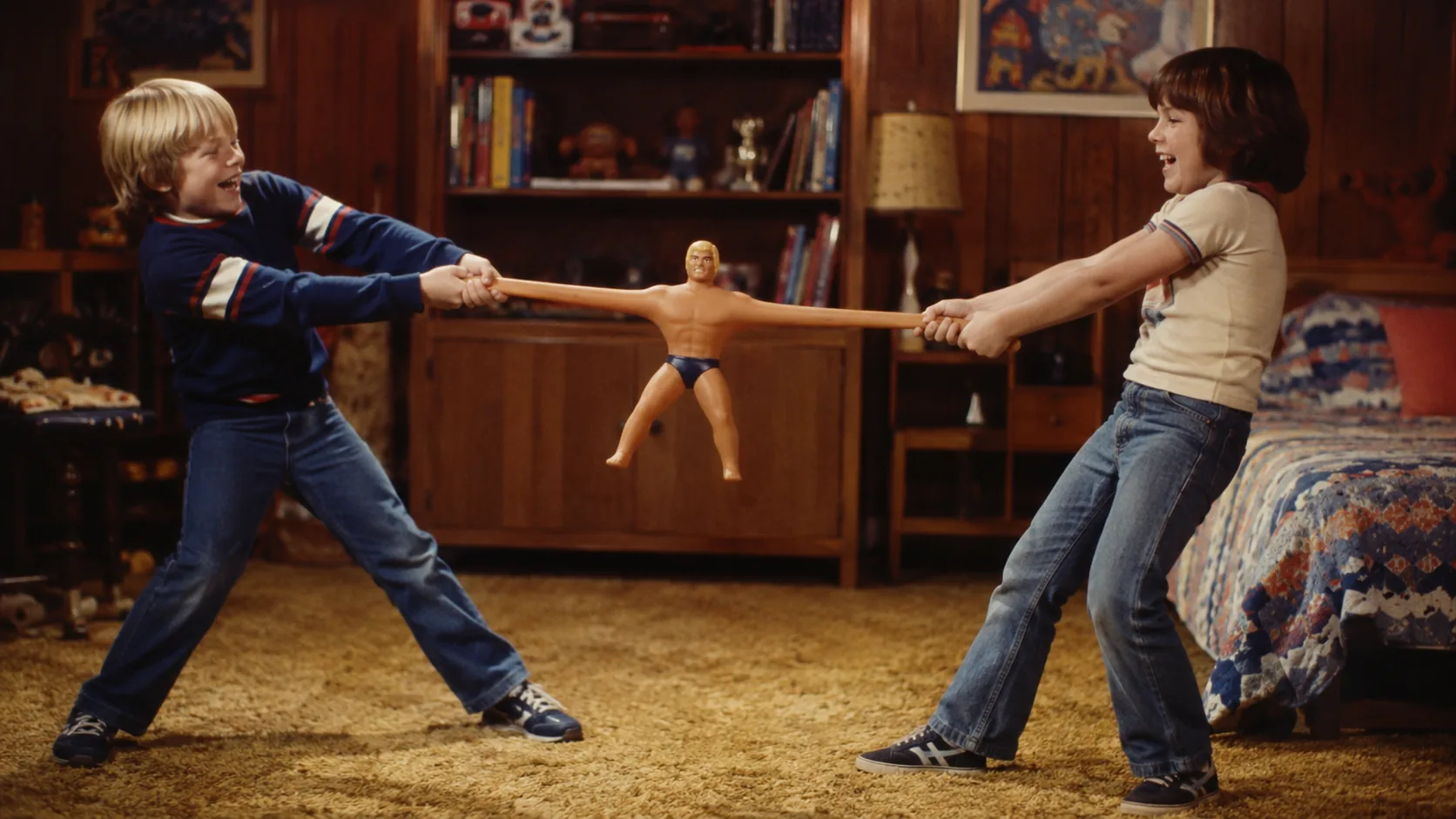
Stretch Armstrong was a muscular blond figure filled with a syrupy material and designed to be pulled to ridiculous lengths. He did not arrive with a deep mythology, a television show, or a carefully mapped world. The story was right there in the name: stretch him and see what happens.
That made him one of the purest 70s action toys. The figure existed to invite behavior that would have been considered abuse with anything else. Two kids could grab opposite limbs and test the material, the seams, and the limits of parental patience. The danger that something might go wrong was not a side effect. It was part of the atmosphere.
Stretch had a physical presence that photographs never fully explain. He was heavy, dense, rubbery, and slightly unsettling before anyone pulled an arm. Then the impossible happened: the body kept extending far beyond what a normal hollow toy should tolerate. The first stretch was usually cautious. The fifth involved two children backing away from one another while an adult said something from the next room.
The toy created its own social ritual. One kid held the torso. Another took the legs. Everyone watched the seams. The figure slowly returned toward his original shape afterward, which made him feel almost alive in the loose scientific sense available to children. He was less a character with adventures than a household experiment that happened to have muscles and blond hair.
Damage was always hovering over the fun. A puncture, leak, split, or strange change in texture could turn the miracle into a sticky family problem. That risk is part of why the memory remains so sharp. Stretch Armstrong was not merely played with. He was tested, and every test carried the possibility that this would be the one adults had warned us about.
Stretch showed that a character toy did not always need a licensed character. A strong silhouette and one impossible physical feature could create instant recognition. Our Stretch Armstrong entry remembers the exact moment curiosity became a stress test.
Micronauts
Interchangeable Space Weirdness Before We Had a Name for It
Micronauts looked like they had arrived with instructions from a future we were not yet qualified to understand.
Mego introduced Micronauts to the North American market in 1976, drawing on Japan’s Microman designs. The line combined small articulated figures, magnetic characters, robots, vehicles, transparent parts, modular connectors, stations, and aliens that looked as if they had arrived from a science-fiction paperback no adult had approved.
The magic was interchangeability. Parts could move between toys. Figures could ride machines, connect to components, swap pieces, and become something that had not appeared in the catalog. Micronauts rewarded experimentation instead of insisting on one correct setup.
They also made strangeness a selling point. Baron Karza, Force Commander, Biotron, Acroyear, Time Traveler, and the alien figures did not need mainstream television recognition. The designs themselves carried mystery. A kid could stare at the toy and assume there had to be a story because no normal world would produce that helmet.
Micronauts felt technical even when we had no idea what the technology was supposed to do. Clear plastic, chrome finishes, magnets, interchangeable hands, wheeled platforms, cockpits, hoses, and connectors suggested that every piece belonged to a larger system. The instruction sheet might show one arrangement, but the real invitation was to take the system apart and build something that did not have a name yet.
The line rewarded kids who liked fiddling as much as storytelling. A magnetic figure could cling to metal, parts could migrate between characters, and a vehicle could become the base of a larger machine. The play often paused while everyone examined a joint, connector, or mechanism and tried to determine what else could attach there. It was construction play wearing a space-opera helmet.
Because the characters were not tied to a familiar television cast, their personalities came from design. Baron Karza looked dangerous because black armor, horns, and horse-like machinery made the case. Acroyear looked severe and alien. Biotron looked like a walking computer before most homes had one. We supplied the plot because the toys had already supplied the mood.
When the Robot Was Large Enough to Become a Roommate
A Shogun Warrior did not join the toy box quietly. It changed the skyline.
Mattel’s Shogun Warriors brought Japanese super-robot designs into American toy aisles in the late 70s. The line appeared in several scales, but the giant versions are the ones that rearranged the room. A two-foot robot did not blend politely into a toy box. It stood in the corner like it knew something.
Spring-loaded missiles, launching fists, wheels, levers, bright colors, and bold mechanical shapes made the robots feel active even when they were standing still. They belonged to a different design language than cloth-costumed Mego figures or realistic Adventure Team gear. They looked like machines from a future that had been built with primary colors and complete confidence.
Shogun Warriors also helped American kids become comfortable with imported Japanese robot aesthetics before later waves of transforming and combining robots took over. The toy aisle was widening culturally as well as physically.
The Jumbo Machinder-sized figures were not simply large versions of ordinary action figures. Their size changed the relationship. A small figure belonged to the child’s constructed world. A giant Shogun Warrior entered the child’s actual room and occupied it. It could stand beside a dresser, loom over a city of smaller toys, and remain visible long after play ended because there was no reasonable place to put it.
The launch features made every demonstration feel slightly dangerous. Fists fired. Missiles flew. Wheels rolled the robot forward. Levers and buttons suggested machinery even when the underlying mechanism was beautifully simple. As with so many 70s toys, part of ownership was making visiting kids stand back while you showed them the feature everybody had already seen on television.
The designs were bold enough to survive imperfect familiarity. Many American kids did not know the full Japanese stories behind the robots. It did not matter. The colors, horns, chest emblems, fists, and mechanical faces announced that these were machines built for enormous conflict. A giant robot could fight Star Wars figures, Mego heroes, toy dinosaurs, or the family cat’s suspicion with equal authority.
The giant-robot memory lives in the Shogun Warriors entry, where one figure is basically tall enough to supervise the others.
Kenner Star Wars
The Small Figure Became the Key to an Entire Galaxy
The figures were small enough for a galaxy—and just collectible enough to make one character feel like the beginning of a problem.
Star Wars changed action figures because the movie created immediate demand for a large cast, multiple vehicles, creatures, locations, and playsets. Kenner’s 3¾-inch scale made that world possible at a size families could theoretically store. “Theoretically” is doing some work there, especially after the Millennium Falcon arrived.
The first Christmas created one of toy history’s strangest solutions: the figures were not ready, so the Early Bird package offered a display stand, certificate, and the promise that characters would come later. Kids received an IOU for plastic and somehow understood that they were joining the biggest thing happening anywhere.
When the figures arrived in 1978, the smaller scale changed buying behavior. A child could collect several characters instead of one large figure. Vehicles could hold them. Playsets could reproduce locations. Background characters became desirable because the goal was not merely to own Luke Skywalker. The goal was to populate the universe.
The first figures were simple by later standards, but the simplicity helped. Five basic points of articulation were enough to sit in a vehicle, stand in a playset, aim a blaster, or disappear into a pocket. The sculpted faces could be approximate because the costume, hair, helmet, cape, or droid shape did most of the identifying. From a few feet away on the carpet, Luke was Luke and Darth Vader was absolutely Darth Vader.
The card backs changed collecting even before kids used the word. They showed other characters in neat rows and quietly turned every purchase into evidence of what was missing. The checklist lived in the package. A child could own several figures and still feel the shape of the absent ones, especially the villain, alien, droid, or background character needed to finish a scene.
Vehicles transformed the line from a cast into a system. A landspeeder gave Luke somewhere to go. A TIE fighter gave the villain mobility. The X-wing turned the space battle into something physical. The Millennium Falcon was large enough to become the center of the room. Once figures fit inside vehicles and playsets, every new release expanded the usefulness of everything already owned.
Star Wars also changed the pace of desire. The movie arrived first and created a hunger the toy company had to chase. By the time the line filled stores, kids already knew the names, voices, alliances, and most important vehicles. Kenner did not have to teach us how to play. The film had done the briefing. The toys simply let the mission continue after the credits.
Action Jackson, Big Jim and the Bridge Years We Forget
History usually jumps from G.I. Joe to Mego superheroes because those names are easier to remember. The early 70s were messier. Companies were testing bodies, sizes, identities, clothes, vehicles, and marketing language before the licensed-character boom settled into place.
Action Jackson Was the Prototype Hiding in Plain Sight
Action Jackson was the rehearsal before Mego learned how powerful that eight-inch body could become with a famous costume.
Mego’s Action Jackson launched in 1971 as an original eight-inch adventurer with outfits, vehicles, playsets, and television advertising. He did not become the decade’s permanent household name, but his body and scale helped create the template Mego would soon dress as superheroes, television crews, monsters, cowboys, astronauts, and characters from nearly every corner of popular culture.
That makes Action Jackson more important than his current name recognition suggests. Toy history is full of hits that stand on the shoulders of a less famous experiment. The line helped Mego learn that an eight-inch figure could carry cloth outfits, fit manageable vehicles, and be reused economically. Once licensing entered the picture, the same basic format became much more powerful because the face and costume came with an audience already attached.
Action Jackson also represents a moment when a toy company could still launch a generic hero and expect television advertising to build the identity from scratch. He was an adventurer because the commercial, package, outfit, and gear said so. There was no movie to watch first. The toy had to create its own authority.
The outfits were the real engine. Action Jackson could become a rescue worker, sportsman, adventurer, soldier, or whatever role the latest gear suggested. That wardrobe-based identity made the figure flexible, but it also required the child to do more of the character work. Batman arrived as Batman. Action Jackson arrived as possibility, plus a small pile of clothing that would eventually lose one shoe.
The line’s vehicles and playsets showed Mego how an eight-inch body moved through a world. Seats, grips, clothing thickness, and vehicle proportions all mattered. These were practical lessons that became far more valuable once the company started dressing the same basic format as characters children already knew from comics and television.
Action Jackson is the kind of toy adults often overlook because the later success makes the prototype seem like a footnote. Kids did not experience him as research and development. He was a real figure with real commercials and real missions, standing there just before Mego figured out that licensing could turn the same body into half the pop-culture shelf.
Big Jim Offered Adventure Without the Military Weight
Big Jim could camp, climb, drive, and throw the same arm-chop at every emergency the backyard invented.
Mattel introduced Big Jim in 1972, giving the large-figure category a friendly, athletic, outdoors-oriented alternative. Big Jim and his companions could camp, hunt, fish, climb, rescue, explore, train, and operate vehicles without carrying the heavy military identity associated with the earliest G.I. Joe years.
Big Jim’s appeal was physical competence rather than celebrity. The figures had muscular bodies, action features, and equipment that suggested sports and adventure. The line felt like the toy version of the outdoorsman culture that lived in camping catalogs, television specials, station wagons, and every garage that contained a lantern nobody remembered buying.
He also showed that boys’ figure play did not need a war or a comic-book logo. The character could be aspirational in a broader way: strong, prepared, outdoorsy, and ready to solve whatever problem required a rope, a canoe, or a sleeveless shirt.
Big Jim was a little smaller and more compact than the classic Joe scale, but he still felt like a substantial figure. The body emphasized muscles and action, and many releases included a mechanism that let the arm perform a chopping or striking motion. It was the kind of feature that immediately became the official demonstration whenever another kid came over.
The line could move from camping and sports into spy missions, rescue stories, villains, and the later P.A.C.K. world without losing its basic identity. Big Jim was not tied to one television series, which meant the toys could chase whatever kind of adventure seemed interesting that year. The figure might be outdoorsman, athlete, agent, or action hero depending on the equipment within reach.
That freedom also made Big Jim a useful substitute. He could stand beside Joe, fight a Mego villain, drive an unrelated vehicle, or become the adult in charge of a group of smaller figures. Scale disagreements rarely stopped play. They merely established who was unusually tall.
The Generic Hero Was About to Lose Ground
Original characters did not disappear, but licensing changed the advantage. A child who recognized Batman, Spider-Man, Captain Kirk, Evel Knievel, Steve Austin, or Luke Skywalker did not need an introduction. The story had already been delivered by comics, television, movies, sports coverage, magazine photos, and syndicated reruns.
That recognition let toy companies spend less time explaining who the figure was and more time selling the special feature, vehicle, villain, headquarters, or larger cast. The generic hero still had flexibility. The licensed hero had momentum.
By the middle of the decade, the aisle was learning that a familiar face could turn plastic into an event. By the end, a movie could create demand so intense that the company could sell the promise of figures before the figures existed.
The Other 70s Character Toys Crowding the Shelf
The headline lines tell the broad story, but the aisle was crowded with experiments, villains, short-lived licenses, odd scales, and characters that now trigger a very specific kind of “Wait—I had that” reaction.
Planet of the Apes
Somehow a bleak adult science-fiction story became one of the strangest complete worlds in the toy aisle.
Mego’s 1974 line gave kids Cornelius, Zira, Dr. Zaius, soldiers, astronauts, horses, wagons, villages, cages, and a world that felt much stranger than the average superhero shelf. The figures proved that a movie property could support an expandable character system even when the source material was dark, complicated, and not remotely designed as a toy commercial.
The cloth uniforms and ape head sculpts gave the figures a strong identity even when the child knew the property mainly from television reruns. Cornelius and Zira could become sympathetic scientists, Dr. Zaius could become the authority figure nobody trusted, and a soldier ape could handle every security problem the toy box invented.
The playsets and accessories pushed the line beyond a few recognizable faces. Horses, wagons, cages, rifles, villages, and tree-house-style environments made captivity, escape, patrol, and rebellion easy stories to stage. It was a remarkably complete world for a property whose central idea was that humanity had made a terrible mess of everything.
Maskatron
Maskatron came with enough spare identities and removable pieces to guarantee that at least one vanished.
The Six Million Dollar Man line’s robot villain came with interchangeable faces and limbs that could pop off. It was one of those perfect 70s combinations: a television-related enemy, a mechanical feature, removable parts, and an invitation to lose at least one important face before the weekend ended.
The interchangeable faces were more than a gimmick because disguise was built into the character. Maskatron could imitate allies, fool the bionic heroes, lose a face during a fight, and reveal the mechanical threat underneath. The removable limbs made every battle look more severe than the usual knocked-over figure.
He was also a practical villain for a child who owned more heroes than enemies. With a face change, Maskatron could be several bad guys, an impostor, a damaged robot, or the suspicious new person who had arrived at headquarters. Losing one of the masks was annoying, but it also made the remaining identities work overtime.
Pulsar
Pulsar looked like a superhero, a medical diagram, and a late-night television experiment all at once.
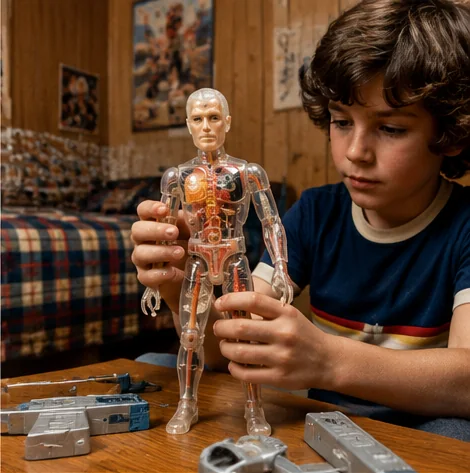
Mattel’s transparent-chested Pulsar let kids watch a visible “heartbeat” and internal action. The figure looked like a superhero created by a medical diagram, which was exactly the sort of feature-first weirdness the decade could sell with a straight face.
The transparent chest made Pulsar impossible to mistake for an ordinary muscular hero. The visible organs and pulsing effect turned his body into the play feature, somewhere between superhero, science exhibit, and the sort of medical television special that made everyone uncomfortable after dinner.
Pulsar did not need a large cast or famous license because the demonstration sold him. Press the mechanism, watch the chest move, and imagine some kind of superhuman internal power. The lack of a rigid story was an advantage: he could be hero, experiment, alien, patient, or the one figure nobody else wanted to stand too close to.
Comic Action Heroes
Mego was already testing smaller heroes before the three-and-three-quarter-inch world took over.
Mego also experimented with smaller molded superheroes in the mid-70s. The figures traded cloth costumes for compact size and action poses, another sign that the industry was searching for a scale that could make vehicles and playsets easier to build.
The smaller scale gave Mego access to a different kind of play. Molded poses, compact bodies, vehicles, and playsets could deliver action without the cloth-costume maintenance of the eight-inch line. The figures looked more like little comic-book illustrations that had stepped off the page already prepared to punch something.
They also show that the move toward smaller figures was not a single sudden Star Wars decision. Companies had been testing compact superheroes, pocket-size casts, and vehicle-friendly proportions throughout the decade. Kenner eventually found the combination that dominated, but the aisle had been circling the idea for years.
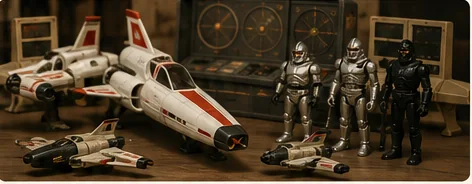
Battlestar Galactica
Space fleets were spreading across the carpet, one tiny pilot and easily lost missile at a time.
Mattel’s late-70s figures and ships tried to catch the new appetite for space fleets, aliens, heroes, and collectible casts. The line is also remembered for projectile toys that helped turn missile safety into a much more serious industry conversation.
The Colonial Vipers, Cylon Raiders, and small character figures gave kids another fleet to move across the carpet just as space toys were becoming the hottest language in the aisle. Cylons had the visual advantage: chrome armor, a narrow red eye, and a face that looked dangerous before anybody knew the plot.
The line’s spring-launched projectiles became part of toy-safety history after a widely publicized tragedy. For children, the immediate memory was often simpler: missiles vanished under furniture almost as quickly as they were fired. For the industry, the episode helped push projectile design and warnings into a more cautious era.
Buck Rogers and The Black Hole
After Star Wars, every new space property was expected to arrive with a cast, a robot, and something plastic that could fly.
By 1979, science-fiction licenses were arriving with smaller figures and vehicles because Star Wars had changed what retailers expected. Not every line became a permanent empire, but the format was no longer an experiment. It was the new language of the aisle.
Buck Rogers figures offered television heroes, robots, villains, starfighters, and bright futuristic hardware in the compact scale kids now expected. The Black Hole delivered a darker visual world, with robots such as V.I.N.CENT and Maximilian standing out even for children who found the movie itself slow, strange, or far more serious than the toys suggested.
These lines demonstrate how quickly the market had changed. A late-70s science-fiction release was expected to provide a cast and vehicles almost immediately. The movie or television show created the vocabulary, while the toy company raced to make enough plastic nouns for children to reconstruct the sentence.
Short-Lived Lines Could Still Leave Permanent Memories
A toy did not need ten years of releases to matter. Sometimes one strange figure, one vehicle, or one Christmas catalog photograph was enough. A character line could vanish from stores and remain lodged in memory because the design was unlike anything else around it.
That is especially true of 70s toys because information disappeared quickly. There was no online checklist waiting to explain the name of the robot you saw at a cousin’s house. If the package was gone and the commercial stopped airing, the toy could become a private mystery for decades.
That is why pages like Forgotten 70s Toys That Deserve a Comeback hit differently. Recognition often arrives before the name. The color, face, mechanism, or missing plastic missile returns first, and the product identity catches up a few seconds later.
Villains Were Often Harder to Find Than Heroes
Heroes were the safe purchase. Villains were the toy that made the hero useful. Yet many children owned several good guys and one exhausted enemy who had to represent every threat in the universe. A Klingon could become a supervillain. Dr. Zaius could run an alien army. Maskatron could be anyone, which was convenient because the toy literally came with faces.
The scarcity of villains changed play. The enemy was often a generic figure, an animal, a block construction, a sibling’s doll, or an invisible force described with complete confidence. Modern collectors may want complete casts. Kids wanted a conflict and would improvise the payroll.
How 70s Action Figures Shrunk—and the Toy Worlds Got Bigger
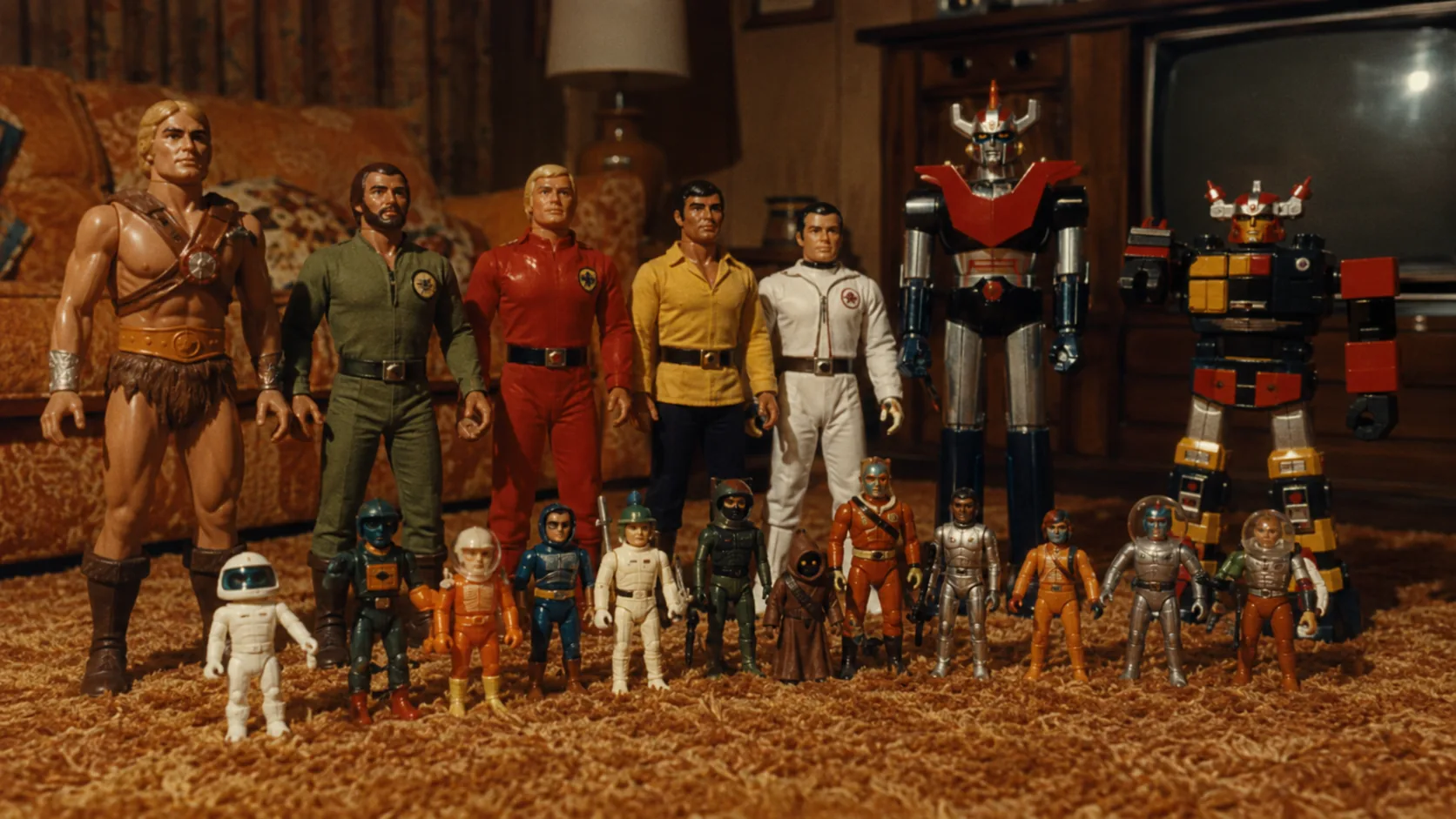
The decade’s biggest design battle was not hero versus villain. It was twelve inches versus eight inches versus roughly four inches versus a robot large enough to block the television.
Nobody on the carpet cared that one hero was twice the size of another. The mission had already started.
12 inches
G.I. Joe and Big Jim
Large enough for cloth uniforms, detailed gear, and a physical presence that could carry the whole adventure. Also large enough to make every vehicle an expensive engineering project.
8 inches
The Mego Sweet Spot
Big enough for fabric costumes and recognizable heads, small enough for teams, villains, vehicles, and playsets that did not require a garage.
3½–3¾ inches
Adventure People, Micronauts and Star Wars
The figure became the passenger. Smaller characters allowed the surrounding world—ships, bases, cars, creatures, stations—to become the real collecting engine.
24 inches
Shogun Warriors
Subtlety left the building. The robot was not part of the playset. The robot was the skyline.
Why Smaller Figures Won the Vehicle War
A large figure is impressive until someone has to build a spaceship around him. Twelve-inch scale makes a cockpit enormous, a headquarters unrealistic, and a complete vehicle line difficult to price or store. Smaller figures changed that equation. A fighter, van, boat, station, creature, or playset could feel substantial without becoming a household renovation.
The scale also encouraged casts. With Mego, eight inches made several superheroes manageable. With Micronauts and Star Wars, roughly four inches made dozens of characters imaginable. The character list could expand because the physical and financial footprint of each figure had shrunk.
Why Large Figures Never Stopped Feeling Special
Smaller did not automatically mean better. A large G.I. Joe had weight. A Big Jim figure could wear real cloth gear and fill the hand. A giant Shogun Warrior could loom over the room. Large figures created a one-to-one relationship that smaller collectibles sometimes replaced with armies.
That is why the 70s feel so varied. No single scale had won yet. Toy companies were trying everything, and kids were mixing all of it together without worrying about whether Batman was twice the height of Luke Skywalker.
The Anatomy of a Great 70s Action Figure
The best figures did not need every feature on this list, but they usually gave us several: a face we recognized, a body that could survive play, an outfit that established the job, one signature trick, and enough loose equipment to guarantee future archaeology.
The figure was only the beginning. The ropes, helmets, tools and mission gear were what disappeared first.
A Silhouette You Could Identify Across the Room
Batman’s cape and cowl, Evel’s red-white-and-blue suit, Steve Austin’s tracksuit, a Shogun robot’s blocky body, or Darth Vader’s helmet made recognition immediate. A strong toy design worked before the child could inspect the face.
Enough Articulation to Look Busy
Shoulders, hips, knees, elbows, wrists, and turning heads let a figure sit, drive, climb, fight, point, fall, and occasionally hold a pose that looked less human than intended. Articulation was not only technical. It was storytelling range.
A Costume That Explained the Character
Adventure gear said explorer. A cape said superhero. A flight suit said pilot. A metallic body said robot. Clothing and molded details gave kids the first sentence of the story before imagination wrote the rest.
One Feature Worth Demonstrating
A bionic arm, transporter, launcher, stretching body, firing fist, missile, gripping hand, removable face, magnetic joint, or look-through eye gave the toy an elevator pitch. The feature was what you showed a friend before the actual game started.
Accessories That Suggested a Mission
Gear did more than decorate. It answered what the figure was doing today. A rope, tool, radio, helmet, pack, weapon, camera, or map could turn standing around into a rescue operation.
Just Enough Fragility to Create Lore
The cape tore. The elastic loosened. The hand cracked. The mechanism stopped making the correct sound. The toy aged into a specific individual, and damage became part of the character biography.
The Face Did Not Have to Be Perfect
Modern figures can chase screen accuracy down to pores and actor likenesses. A 70s face often worked through broad signals: hair color, expression, helmet, mask, beard, costume, and package art. A child did not need museum-grade realism. We needed enough information to name the figure and get him into trouble.
Some likenesses were excellent for their time. Others looked like the celebrity’s cousin after a difficult bus ride. The gap rarely mattered once the story started. Recognition was cooperative. The box told us who the figure was, and imagination handled quality control.
Hands Were the Most Important and Most Vulnerable Parts
A figure could have a perfect costume and still fail the mission if the hand could not hold the accessory. Companies tried hard plastic fists, open grips, flexible fingers, gripping mechanisms, and softer materials. Each solution created a different failure point.
G.I. Joe’s later gripping hands improved equipment play but could split. Mego hands could lose shape or separate. Smaller figures sometimes held weapons through a simple molded grip that worked until the thumb broke. Every design was a negotiation between realism, strength, cost, and the certainty that a child would test it harder than the engineer expected.
Cloth Versus Molded Detail Was Really About the Kind of Play
Cloth outfits could be changed, repaired, borrowed, lost, and mixed. They made the figure feel dressed rather than manufactured. Molded clothing was tougher, faster to handle, and easier to scale down. As figures shrank, molded detail became more practical and the costume changed from a separate object into part of the body.
Neither approach was automatically better. Cloth supported transformation and dress-up. Molded detail supported instant action. The 70s let both styles compete in the same room, which is why the decade feels like a laboratory instead of one standardized shelf.
Vehicles, Playsets and the Pieces That Made One Figure Cost More
The figure got the name on the wish list. The surrounding hardware is what turned the line into a long-term financial arrangement.
The Vehicle Changed the Figure’s Job
A figure standing alone was a character. Put that figure on a motorcycle, in a helicopter, behind a control panel, inside a van, on a horse, or at the wheel of a spacecraft and the play immediately gained direction. Vehicles created destinations, rescues, chases, crashes, departures, arrivals, and the important question of who was allowed to sit in front.
Evel Knievel’s motorcycle was inseparable from the stunt. Adventure People were designed around working environments and transportation. Micronauts vehicles were part machine and part construction system. Star Wars ships did more than carry figures; they reproduced the emotional center of the movie and gave the smaller scale its reason to exist.
Vehicles also created hierarchy. The child with the large ship, van, headquarters, or playset controlled the geography. Everyone else brought figures into that world and negotiated access.
Cardboard Playsets Were Better Than Memory Gives Them Credit For
Modern collectors can look at a printed-cardboard headquarters and see something fragile. Kids saw walls, control panels, windows, transporter rooms, caves, cities, fortresses, and places where the figures could stand without falling over. Cardboard gave manufacturers size without the full cost of molded plastic, and it gave families a play environment that could theoretically fold away.
Theoretically is the important word. Once opened, a playset developed bends, tears, tape repairs, missing tabs, and a permanent claim on a corner of the room. The damage was evidence of use. A mint cardboard playset is beautiful now, but the one with bent doors probably hosted more adventures.
Accessories Were Tiny Story Starters
A helmet meant danger. A backpack meant a journey. A ray gun meant science fiction. A camera meant exploration. A rope meant somebody would be hanging from a dresser knob within minutes. Accessories communicated a mission faster than a paragraph could.
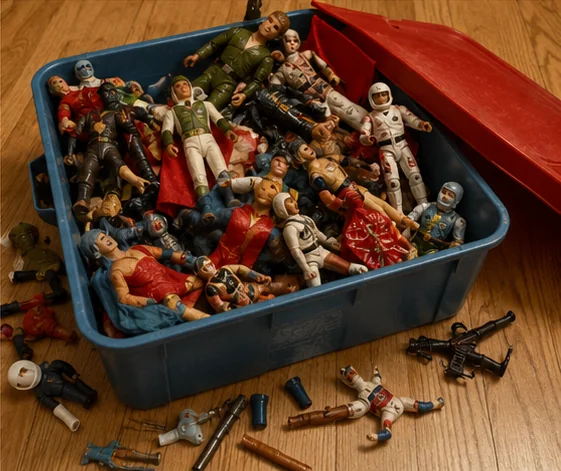
They also vanished with supernatural efficiency. Boots hid under radiators. Missiles entered heating vents. Masks went into pockets and never returned. A plastic communicator could disappear in a room containing no visible place large enough to conceal it. Every collection gradually became an archaeological site.
The Package Photograph Quietly Sold the Complete World
One of the smartest tricks in 70s toy catalogs and Wish Books was showing products together. The figure, vehicle, extra characters, accessories, and playset occupied one dramatic scene even when the caption explained that half of it was sold separately.
Kids did not read “sold separately” as a warning. We read it as a list of unfinished business. The photograph established the correct world; Christmas and birthdays were expected to close the gap.
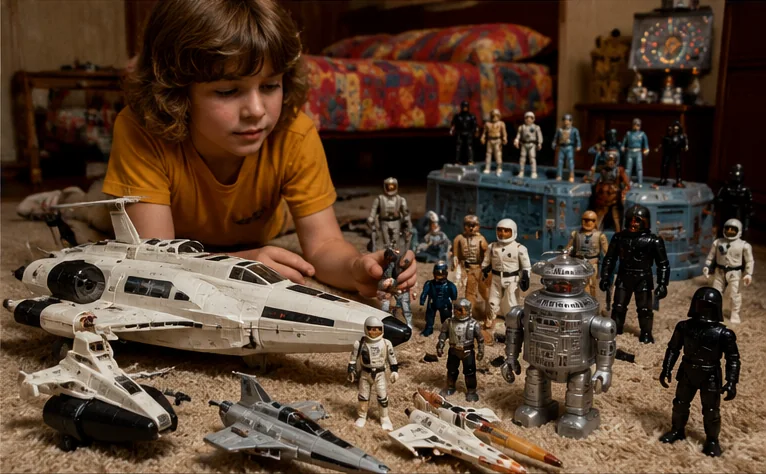
How Gen X Actually Played With 70s Character Toys
The catalog sold separate worlds. The carpet immediately merged them. Scale, company, comic-book rights, network schedules, and common sense had no legal authority once the bedroom door closed.
Corporate rights ended at the bedroom door. Everybody lived in the same universe once the toys hit the floor.
The Universe Was Shared
Mego Batman could work with Steve Austin. Evel Knievel could jump a Micronauts vehicle. A Star Wars creature could attack an Adventure People campsite. The crossover did not require a studio deal. It required both toys to be within reach.
Accessories Changed Careers
A scuba tank, rifle, backpack, helmet, rope, radio, or tool became community property after the original owner disappeared. The figure holding the gear was qualified because he was holding it.
Cardboard Solved Infrastructure
Headquarters, caves, prisons, control rooms, volcanoes, alien bases, ramps, and apartment buildings came from boxes. Printed playsets were great, but cardboard had unlimited zoning approval.
Furniture Became Geography
The sofa was a mountain range. The coffee table was a launch platform. The hallway was a speed trial. The underside of the bed was where villains operated because nobody wanted to reach all the way under there.
Damage Became Continuity
A torn cape, scratched face, loose hip, missing hand, or cracked helmet became a battle injury. We did not always throw damaged figures away. We promoted them into grizzled veterans.
One Figure Could Carry a Summer
Collections were wonderful, but scarcity created focus. The figure you owned became the star because he was available. Background characters were played by whatever else was in the room.
The Clothes Were Part of the Performance
Mego’s cloth costumes and G.I. Joe’s uniforms made dressing and equipment setup part of the play. Boots had to go on. Belts had to close. Capes had to sit correctly. Holsters had to hold the tiny object that would be missing by dinner. The preparation slowed the opening of the story in a way molded figures later reduced.
Cloth also aged visibly. A superhero’s costume could fade, snag, stretch, or gather lint until he looked less like a mint-condition icon and more like a man who had worked every weekend since 1974. For kids, that often improved him.
The Feature Had to Work—At Least Once
Action figures increasingly came with a signature trick: a bionic arm, a look-through eye, a launching motorcycle, a stretchy body, a firing fist, a missile, a magnetic joint, a transporter, a gripping hand. The commercial made the trick look effortless. The real toy sometimes needed careful setup, a hard push, the correct angle, and a parent pretending not to be concerned.
When it worked, the feature became the figure’s identity. When it broke, imagination took over again. Steve Austin could still be bionic after the mechanism weakened. Evel could still jump after the launcher lost some enthusiasm. The story did not have a warranty period.
What a Typical 70s Action-Figure Mission Actually Looked Like
No adult wrote the plot, no franchise manager approved the crossover, and no camera preserved it. The whole production lived on the floor for an afternoon and was dismantled before dinner.
First, the Room Had to Become Somewhere Else
The mission usually began with geography. The sofa cushions became cliffs. A blanket became desert, ocean, lava, or snow depending on its color and how aggressively it was wrinkled. A cardboard box became a base because it had walls. A shoebox became a vehicle because it moved when pushed. The coffee table became the dangerous elevated location adults had specifically asked us not to use.
Nothing was labeled, but everybody understood the map after one explanation. The line between safe territory and enemy territory might be the edge of the rug. The hallway was a road. The bathroom was another planet. The closet was forbidden space because something lived there and because opening the door risked an avalanche of unrelated household property.
Then the Cast Was Assembled From Whoever Still Had Both Legs
The main hero was usually the newest figure or the one with the best surviving feature. Supporting characters came from older toys, siblings’ rooms, cereal premiums, model kits, plastic animals, little soldiers, and whatever figure was willing to stand. Scale differences were explained through rank, alien biology, superpowers, or not discussed at all.
A missing villain created no real delay. The darkest-looking figure got the role. If every available figure looked heroic, one of them was secretly evil. If only one figure was available, the enemy remained offscreen and communicated through a voice coming from behind furniture. Childhood had an unlimited special-effects budget because none of the effects had to be visible to anyone else.
The Signature Feature Had to Be Demonstrated Before the Plot Could Settle Down
Evel had to launch. Stretch had to stretch. Steve Austin had to lift something. The transporter had to spin. Shogun missiles had to fire. A Micronauts component had to connect to something that did not technically need it. The new feature interrupted the story because the feature was the reason the toy had been selected.
Eventually the novelty became part of the mission. Evel was no longer performing a demonstration; he was jumping the enemy wall. The bionic arm was lifting wreckage. The firing fist was opening a door. Imagination absorbed the mechanism and gave it a reason.
Every Adventure Became a Rescue, Escape or Siege
Simple plots survived because they created movement. Someone was captured. A base was under attack. A vehicle had crashed. A dangerous creature was loose. A scientist had disappeared. A shipment had to cross enemy territory. The objective did not need originality. It needed a clear reason to move figures from one side of the room to the other.
Along the way, the story gathered complications from accidents. A figure fell behind the sofa and was now trapped underground. A vehicle wheel came off and became sabotage. A missile vanished and became stolen technology. A parent moved through the room and became a natural disaster that forced immediate evacuation.
Dinner Ended More Universes Than Any Villain
The mission rarely reached a clean ending. Cleanup instructions arrived during the final battle. Figures were placed in a box, drawer, shelf, or pile with the promise that everything would resume later. Sometimes it did. Sometimes the next session began with an entirely different crisis because nobody remembered the original plot.
That temporary quality is part of why the memories feel so strong and so incomplete. We remember the figure, room, light, carpet, sound of a launcher, feel of a cloth cape, and the voice we used for the villain. The exact story disappeared because it was never meant to last. The play was the event, not the record.
How Toy Commercials and Wish Books Made the Figures Feel Alive
Television supplied movement, sound, and urgency. The catalog supplied time. One made us want the toy immediately; the other let us study every accessory until we could identify the set from three rooms away.
The commercial supplied the impossible jump. The carpet supplied the landing nobody planned.
The Commercial Gave Us the Correct Noise
Evel’s cycle roared. Bionic action came with electronic sound effects. Shogun missiles launched with authority. Micronauts machinery looked as if it were powered by something more advanced than a child’s hand. The commercial demonstrated not only what to do, but how excited we were supposed to sound while doing it.
Those ads compressed a complete adventure into half a minute. The villain was established, the equipment was ready, the mission happened, and every child on screen seemed to own the entire line. Our living-room version usually had one figure, one accessory, and a less cooperative dog.
The 70s toy catalogs and Sears Wish Books turned action-figure lines into diagrams of desire. The page could show the figure, vehicle, headquarters, accessories, alternate outfits, and the expensive version all in one place.
Catalog photography also created relationships. A group shot suggested a team. A villain positioned across the page became a conflict. A vehicle placed behind a figure looked necessary even if the box was sold separately. The layout quietly taught us that the line was incomplete until the surrounding world came home too.
Kids circled the hero, but we also memorized the item number, price, accessory list, and everything else on the page. The wish book was not passive reading. It was reconnaissance.
Christmas Was Where the Franchise Math Became Obvious
A single figure fit into a stocking or small box. A vehicle became a major gift. A playset became a negotiation. The line naturally created price levels, which meant every relative could participate in building the world. One person bought the hero, another bought the villain, and someone with a better year bought the vehicle.
The hottest Christmas toys of the 70s show that transition year by year. Early in the decade, the big gift could still be a stand-alone toy. By the end, the big gift increasingly opened a system that wanted more characters, more equipment, and more shelf space.
The Box Became a Story Before It Was Trash
Window boxes, card art, photographs, painted scenes, character portraits, and action copy gave the toy context before the first twist tie came loose. Mego’s comic-book heroes looked ready for a crossover. Adventure Team sets promised danger. Micronauts packaging suggested a technological mythology. Star Wars cards made even background aliens feel like people worth knowing.
Most boxes did not survive because kids were not planning a retirement portfolio. We were trying to reach the figure. The packaging’s job was to create urgency, and it succeeded.
Why Reruns, Saturday Afternoons and One Big Movie Mattered So Much
The media schedule of the 70s was not the synchronized marketing machine that arrived later. Character toys often lived beside reruns, old movies, live stunts, comic books, syndicated television, and whatever happened to be on the local station that afternoon.
Syndication Made Old Shows New to Us
Many Gen X kids discovered Star Trek after the original network run. The show appeared in local schedules, afternoon slots, and weekend reruns, which meant Mego figures and the Enterprise playset could feel connected to a current personal obsession even if adults considered the series old.
Reruns flattened time. Batman, Superman, Planet of the Apes, Star Trek, and other properties could share childhood attention regardless of the year the original program or movie appeared. The toy aisle reflected what kids recognized, not only what had premiered that season.
Evel Knievel Was a Real Person Who Felt Like a Superhero
Knievel’s televised jumps turned live-event risk into character mythology. The toy did not need to invent the costume, motorcycle, danger, or public persona. Television had already done it. The launcher simply let kids restage the part where everything might go wrong.
That blend of sports celebrity, stunt performance, costume, merchandise, and repeatable toy action was unusually modern. Evel was not born in a cartoon, but he understood visual branding better than many fictional heroes.
Comics Filled the Gaps Television Left Open
Mego superheroes came with names and costumes that were already known, but a child’s depth of knowledge varied wildly. Some kids read the comics. Some knew Batman from television. Some recognized Spider-Man from cartoons or merchandise. Some simply understood from the costume that this person was important.
The toys did not require perfect knowledge. They invited it. Owning the figure could make a child seek out the comic, show, or movie. The relationship worked in both directions: media sold toys, and toys sent kids back toward media.
Star Wars Compressed the Whole Process
Star Wars did not slowly become a toy property through years of reruns. The movie hit, demand exploded, and Kenner had to catch up. The Early Bird package became famous precisely because the cultural event was moving faster than manufacturing.
That speed previewed the future. The toy company, retailer, studio, catalog, commercial, and child’s wish list were becoming parts of the same launch. The 80s would build entire schedules around that relationship. Star Wars proved how powerful it could be.
The 1970–1979 Action-Figure Timeline
The category did not flip from Joe to Star Wars overnight. The decade was a chain of experiments, each solving part of the larger puzzle.
By the end of the decade, one figure could lead to a cast, a vehicle, a base and another Christmas list.
1970
G.I. Joe Joins the Adventure Team
The military identity is softened into exploration, rescue, wildlife, treasure, and international mystery. Flocked hair and beards make Joe look like he has been living near a helicopter for months.
Familiar comic-book characters begin turning the eight-inch cloth-costumed figure into a shared licensed universe. Big Jim also gives the large-figure market another adventure-and-sports direction.
Mego superheroes grow, Star Trek and Planet of the Apes strengthen the television-and-movie lane, and character recognition becomes an increasingly powerful shortcut to play.
Adventure People, Micronauts, Stretch Armstrong, and Bionic Woman show how many directions the category can move at once: practical small worlds, imported science fiction, physical gimmicks, and television heroes.
Robots Get Huge and Star Wars Demand Arrives Early
Shogun Warriors bring Japanese super robots into the room. Star Wars creates a figure demand so immediate that a promise package becomes a Christmas gift.
Science-fiction characters, television licenses, vehicles, playsets, and small-scale collecting are now standard parts of the aisle. The 80s will not invent this system. They will turn the volume up.
The Action Figure Aisle Was More Mixed Than the Signs Admitted
Toy-store departments tried to draw hard lines between action figures, dolls, superheroes, fashion dolls, domestic play, and adventure. Kids were much less interested in maintaining the filing system.
The store separated the aisles. Kids put everybody into the same story.
The Bionic Woman Problem Was Really a Store Problem
Jaime Sommers was a television action hero with missions, powers, equipment, and danger. Yet a female character of similar size and construction could be described and shelved differently because the toy business had trained itself to sort play by gender before sorting it by what the toy actually did.
Wonder Woman, Batgirl, Isis, female Star Trek characters, Bionic Woman, and other women in character-toy lines created openings, but the casts were still heavily male. The imbalance affected what stories were offered on the shelf, not necessarily what stories happened at home.
Bedrooms Were Not Retail Planograms
A dollhouse could become headquarters. Barbie’s vehicle could transport superheroes. A Bionic Woman figure could work with Steve Austin, Mego characters, Adventure People, or whichever plastic citizen had survived the week. The actual play pattern was flexible because kids did not receive a memo explaining which aisle boundaries were legally binding.
That is worth remembering when nostalgia gets too neat. The toy industry marketed separate worlds, but childhood was full of borrowed accessories, mixed scales, siblings, cousins, hand-me-downs, and toys that crossed the hall without permission.
Why We Called Them Action Figures Instead of Dolls
The difference was partly design, partly marketing, and partly a cultural rule adults enforced much more aggressively than children did.
The Name Made the Purchase Easier for Adults
G.I. Joe’s “action figure” label separated the product from the doll category in stores and in the minds of parents. The figure could wear clothes, have rooted or flocked hair, and support role-play while still being described through movement, equipment, mission, and action.
The distinction was commercially useful because mid-century gender expectations made some adults uncomfortable with boys requesting dolls. Calling the toy an action figure did not change the basic human impulse—using a small person-shaped object to act out stories—but it changed the social permission around the purchase.
Features and Equipment Reinforced the Difference
Action figures were marketed through articulation, weapons, tools, vehicles, powers, uniforms, villains, missions, and mechanical features. Packaging used verbs. Commercials showed crashes, rescues, fights, launches, escapes, and transformations. The toy was defined by what happened next.
Doll marketing often emphasized fashion, care, home life, beauty, companionship, or family roles, though many dolls had action features and many action figures involved dressing, caretaking, and domestic storytelling. The categories were never as clean as the signs above the aisle suggested.
Kids Borrowed Whatever Worked
At home, the language mattered less. The character who fit the vehicle got the seat. The figure with the right clothing became the scientist. The dollhouse became a command center because it had rooms. The fashion doll became a giant alien because the scale demanded it.
That flexibility is part of the real Gen X memory. Adults marketed separate play patterns. Children built one shared universe and ignored the paperwork.
Every Toy Company Brought a Different Kind of Chaos
The decade’s action figures did not come from one unified philosophy. Hasbro, Mego, Mattel, Kenner, Ideal, and Fisher-Price each approached the category from a different angle, which is why the shelf looked so wonderfully inconsistent.
Hasbro: Equipment and Mission
G.I. Joe’s strength was preparation. Uniforms, gear, cases, vehicles, tools, and mission sets made the figure feel like a professional. The Adventure Team shift kept that seriousness while changing the destination from battlefield to expedition.
Mego: Format and Licensing
Mego treated the articulated body as a stage where many characters could perform. Change the head, costume, hands, and accessories, and the same basic engineering could become a superhero, astronaut, ape, cowboy, monster, celebrity, or television character.
Mattel: Physical Presence and Spectacle
Big Jim, Pulsar, and Shogun Warriors reflected Mattel’s comfort with bold bodies and obvious features. The toy needed to register immediately, whether through muscles, visible internals, giant size, bright robot design, or a fist that could cross the room.
Ideal: Motion and the Big Demonstration
The Evel Knievel line made the launch itself the product. Ideal understood that a toy commercial becomes unforgettable when the viewer can instantly imagine repeating the same stunt at home with fewer safety professionals.
Kenner: Features First, Then Worlds
Six Million Dollar Man translated television powers into mechanisms. Star Wars then took the smaller figure and built vehicles, creatures, playsets, and a cast around it. Kenner moved from making the character perform to making the entire universe collectible.
Fisher-Price: A Working World
Adventure People focused less on celebrity and more on occupation, environment, vehicles, and equipment. The figures were compact citizens of a practical world where somebody always had a job and the helicopter was rarely just decorative.
Competition Made the Category More Inventive
One company’s success immediately exposed a new possibility to the others. If cloth-costumed licenses worked, more licenses followed. If a television feature could be built into plastic, every hero needed a demonstration. If smaller figures made vehicles affordable, scales started shrinking. If imported robots looked exciting, more Japanese designs found American packaging.
That copying did not always produce clones. Often it produced mutations. Stretch toys answered one kind of physical gimmick with another. Mego explored both eight-inch cloth figures and smaller molded heroes. Mattel sold giant robots while Kenner miniaturized a galaxy. The category expanded in several directions because nobody yet knew which direction would own the future.
The Winners Were Not Always the Most Interesting Toys
Star Wars became the dominant historical turning point, but dominance is not the only reason to remember a line. Micronauts may have encouraged more construction and experimentation. Mego may have offered a broader cross-company superhero dream. Adventure People may have created more grounded stories. Shogun Warriors may have made the strongest visual impression in the room.
The toy aisle is not a tournament bracket. A line can lose the market and still win a permanent place in one child’s memory. That is why Gen X nostalgia is full of products that lasted a few seasons but somehow stayed in our heads for half a century.
What 70s Action Figures Changed Before the 80s Took Over
The 80s made the action-figure machine louder, faster, and more coordinated. But nearly every major idea was already visible on a 70s shelf.
Characters Could Be Rebuilt
Adventure Team showed that a figure line could change identity with the culture instead of disappearing.
One Body Could Wear Many Licenses
Mego proved that a flexible format could turn comic books, television, movies, and public figures into a broad character library.
The Feature Could Sell the Figure
Bionic mechanisms, stretching bodies, firing fists, launchers, transporters, and magnets made what the toy did as important as who it represented.
Imported Design Could Reshape the Aisle
Micronauts and Shogun Warriors brought Japanese toy thinking, modularity, and robot aesthetics into American childhood.
Scale Could Build the World
Smaller figures made vehicles and playsets practical, setting up the system that would dominate the next decade.
The Story Could Create Demand First
Star Wars proved that screen excitement could outrun manufacturing and still turn anticipation itself into a product.
The 70s Aisle Was Messier—and That Was the Fun
The decade did not have one dominant model from start to finish. Large figures, eight-inch heroes, small workers, stretchy bodies, stunt riders, modular aliens, giant robots, and movie figures all competed for space. That variety made the shelf feel less standardized than what came later.
It also meant the toy did not always arrive with a complete media schedule. Some characters came from old television reruns. Some came from comic books. Some came from real-life celebrity. Some came from Japan with very little explanation. Some were simply strange enough to create their own mythology.
Then the 80s Industrialized the Relationship
In the next decade, cartoons, comics, movies, commercials, action figures, vehicles, playsets, and seasonal product waves would increasingly launch as one coordinated machine. The 70s had demonstrated the components separately. The 80s learned to connect all the wires.
That is why these figures matter beyond nostalgia. They are the missing middle between the original large action figure and the franchise walls that followed. They show the toy business thinking out loud—and sometimes firing a plastic missile across the room while doing it.
Why Complete 70s Action Figures Are So Hard to Find
The toys were built around removable things, wearable things, launchable things, and tiny things. We responded by removing, wearing out, launching, and losing them.
The figures that survived childhood rarely kept every cape, helmet, boot, weapon or matching piece.
The Figure Usually Survived Better Than the World
Loose figures can outlast capes, boots, gloves, belts, helmets, guns, radios, hoses, stickers, missiles, fists, masks, tools, inserts, cardboard playsets, and instruction sheets. That is why “complete” matters so much with 70s lines. The character is only the largest surviving piece of a much more fragile system.
Cloth outfits stain and stretch. Rubber hardens or splits. Elastic gives up. Stickers peel. Chrome wears. Soft plastic discolors. Mechanisms weaken. A figure can look presentable while several original features have quietly retired.
Condition Is Not the Same as Childhood Importance
A collector may value clean paint, tight joints, original accessories, intact mechanisms, and packaging. A childhood memory may value the exact opposite: the loose figure with a chewed hand, marker on the face, and a cape repaired with tape because that was the one that went everywhere.
This page is not a price guide because values change with condition, completeness, demand, and timing. The useful first step is identification: manufacturer, line, character, scale, original accessories, and whether the feature still works. After that, recent verified sold listings matter more than somebody’s optimistic asking price.
Keep Digging Through the 70s Toy Box
The figures make more sense when you see the whole decade around them—the wish books, Christmas mornings, commercials, year-by-year toy lists, and all the unrelated stuff sharing the carpet.
Frequently Asked Questions About 70s Action Figures
A few answers for the details that get tangled after fifty years of missing accessories and revised memories.
What were the most popular action figures of the 1970s?
The decade’s best-known lines included G.I. Joe Adventure Team, Mego World’s Greatest Super-Heroes, Mego Star Trek, Evel Knievel, Six Million Dollar Man, Bionic Woman, Fisher-Price Adventure People, Stretch Armstrong, Micronauts, Shogun Warriors, and Kenner Star Wars figures. Popularity varied by year, but those lines capture the decade’s major shifts in licensing, scale, features, vehicles, and franchise play.
Did the 1970s invent the action figure?
No. Hasbro introduced G.I. Joe in 1964 and marketed it as an action figure. The 1970s transformed the category by moving Joe into the Adventure Team, expanding licensed superhero and television figures, adding mechanical gimmicks, experimenting with scale, and building the vehicle-and-playset model that became dominant later.
Why did G.I. Joe change from a soldier to the Adventure Team?
By the end of the 1960s, war-themed toys faced a changing cultural climate and declining sales. Hasbro shifted Joe toward civilian adventure, rescue, exploration, and environmental missions. The 1970 Adventure Team kept the figure’s equipment-heavy play while reducing the direct military emphasis.
Why were Mego action figures important?
Mego used an adaptable eight-inch body, cloth costumes, and broad licensing to create figures from DC Comics, Marvel, Star Trek, Planet of the Apes, and other properties. That system showed how one figure format could support a large library of recognizable characters, teams, villains, vehicles, and playsets.
When did 3¾-inch action figures become popular?
Small articulated figures appeared before Star Wars, including Fisher-Price Adventure People and Mego Micronauts in the mid-70s. Kenner’s Star Wars line made the roughly 3¾-inch scale a mass-market standard in 1978 because the smaller figures fit an expandable range of vehicles, creatures, and playsets.
Were Star Wars figures sold for Christmas 1977?
The finished Kenner action figures were not ready for Christmas 1977. The Early Bird package offered a display stand, certificate, and a promise that the first figures would be mailed later. The figures reached children in 1978, making the unusual promise package part of toy history.
Were the Six Million Dollar Man and Bionic Woman figures dolls or action figures?
They were character toys built around television action, powers, missions, mechanisms, and accessories. Retail marketing often used gendered labels and aisle placement, especially for Jaime Sommers, but the actual play comfortably fits the action-figure category.
Why are so many vintage 70s figures missing accessories?
The lines depended on removable boots, belts, capes, helmets, weapons, tools, missiles, fists, masks, clothing, stickers, and cardboard pieces. Those parts were smaller and more fragile than the figures, so complete examples are much harder to find than loose characters.
Where can I see more toys from each year of the 1970s?
Start with the 70s Toys hub, then use the timeline above to open the published toy lists from 1970 through 1979. The 50 most iconic toys of the 70s is the fastest all-decade overview.
What sizes were 70s action figures?
There was no single standard. G.I. Joe and similar adventurers lived around the 12-inch scale; Mego made eight-inch cloth-costumed figures; Fisher-Price Adventure People, Micronauts, and Kenner Star Wars pushed toward smaller vehicle-friendly figures; and Shogun Warriors towered over almost everything. That variety is why the decade’s toy-box crossovers looked gloriously out of proportion.
Are old 70s action figures valuable?
Some can be, but the character name alone does not determine value. Condition, working features, original clothing, accessories, rarity, packaging, and current collector demand all matter. Identify the exact manufacturer, line, scale, and included parts first, then compare recent verified sold listings rather than optimistic asking prices.