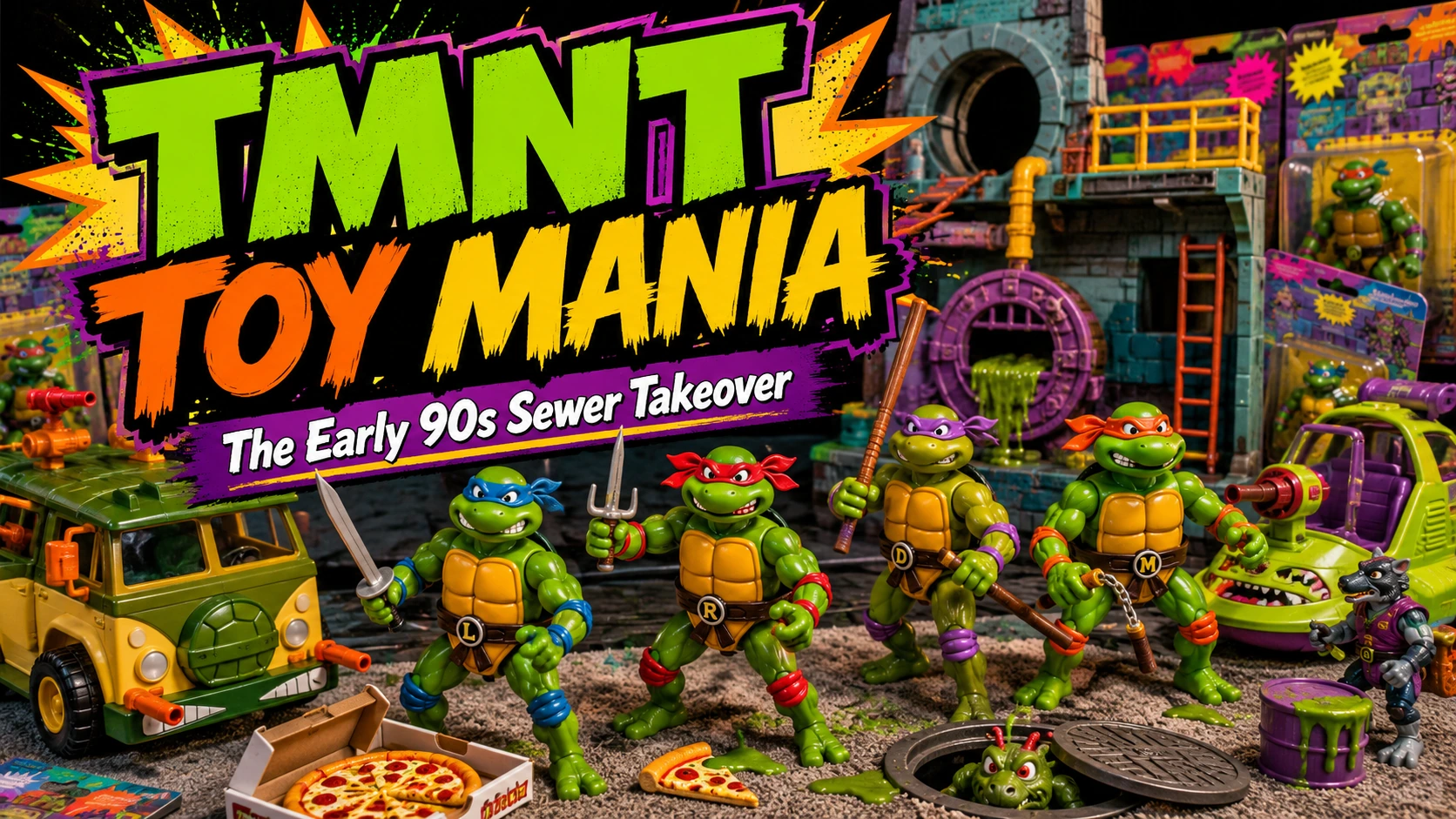
The Mutant Toy Empire That Turned the Early 90s Into One Long Sewer Battle
Teenage Mutant Ninja Turtles Toys in the Early 90s
Teenage Mutant Ninja Turtles toys entered the early 90s already moving like the Party Wagon had cut the brakes. Four green heroes became Playmates action figures, vehicles, playsets, movies, school supplies and enough bizarre costume variants to make the toy aisle look like the sewer had opened its own retail division.
That is why vintage TMNT figures still hit harder than a simple release-date list. The real memory is opening a blister card, snapping apart the weapons rack, losing one tiny ninja star before dinner and deciding a giant plastic sewer was a perfectly reasonable Christmas request.
Why Were TMNT Toys So Popular in the Early 90s?
Teenage Mutant Ninja Turtles toys dominated the early 90s because Playmates built a line that was easy to understand and almost impossible to finish. Kids could start with Leonardo, Michelangelo, Donatello or Raphael, then add Splinter, April, Shredder, Foot Soldiers, mutant villains, the Party Wagon, the Sewer Playset, the Technodrome and a growing mountain of Turtle variants.
The cartoon and movies gave every figure a personality. The toys added loud colors, expressive sculpts, strange accessories and vehicles that looked like New York sanitation equipment had been redesigned by a ten-year-old with unlimited pizza. The line launched in 1988, but 1990 and 1991 were the years Turtlemania became unavoidable.
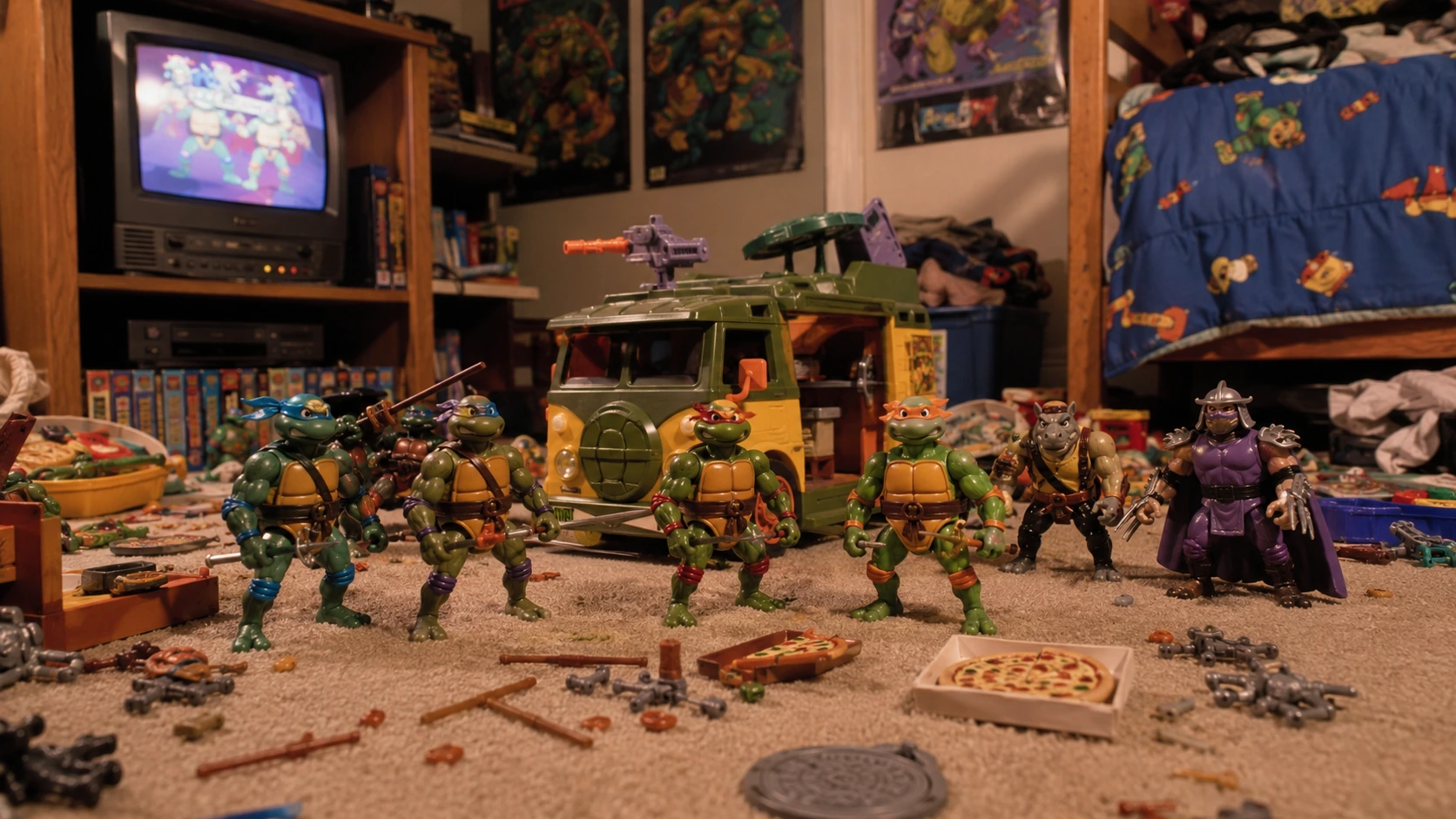
The Complete Plastic History of Turtlemania
The Full Story of TMNT Toys in the Early 90s
The story begins with the late-80s Playmates launch, then follows the figures, variants, vehicles, playsets and movie waves that turned Turtlemania into one of the defining toy memories of the early 90s.
Four Turtles, One Rat and an Entire Retail Ecosystem
Why the TMNT Toy Formula Worked So Well
The franchise combined clear heroes, bizarre villains, action play and comedy without making kids choose which part mattered most.
Instant Team Identity
Four heroes shared the same basic body but had different colors, personalities and weapons. Every kid could choose a Turtle in seconds.
Mutant Permission
Once the world included talking turtles and a ninja rat, any animal, robot or sewer creature could become a believable figure.
Cartoon Momentum
The animated series introduced characters, vehicles and catchphrases repeatedly, turning television into a daily toy demonstration.
Playmates Weirdness
The toy line embraced slime, pizzas, trash cans, toilets, eyeballs, sewer lids and gadgets that made no sense outside Turtle logic.
Before the Toy Aisle, There Was a Black-and-White Joke
Kevin Eastman, Peter Laird and the TMNT Origin
Teenage Mutant Ninja Turtles began as the kind of late-night sketch two comic artists make because the idea is ridiculous—and then cannot stop improving because the ridiculous idea somehow works.
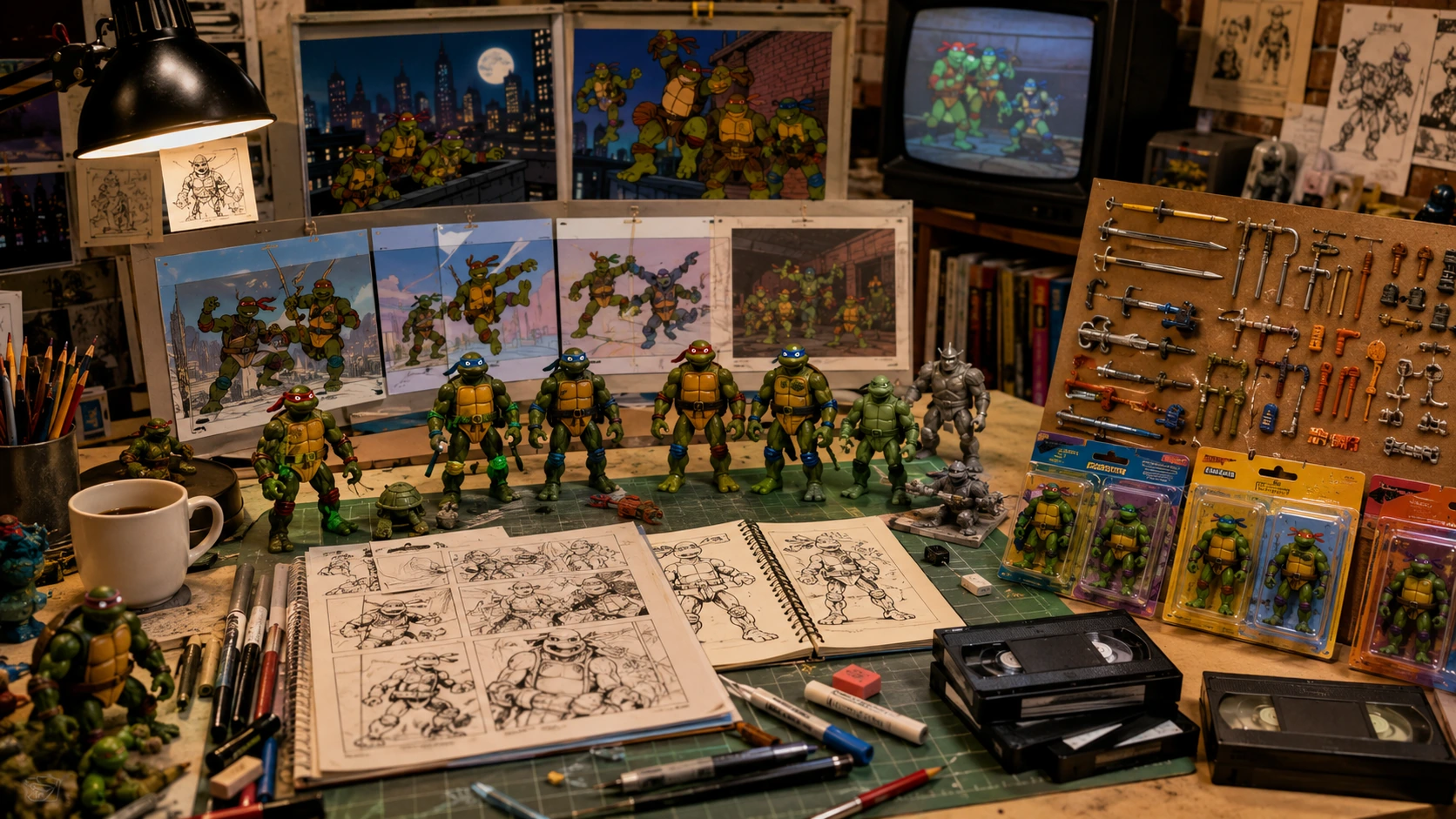
The First Turtle Sketch
Kevin Eastman drew a masked, weapon-carrying turtle to make Peter Laird laugh. Laird added to the concept, and the pair kept escalating until there were four turtles, a rat sensei, radioactive mutation and a title that sounded like every hot comic-book trend had collided in an alley.
The joke worked because the words fought each other. Turtles were slow. Ninjas were fast. Teenagers were chaotic. Mutants belonged in superhero comics. Put the four together and the name became impossible to forget.
The 1984 Mirage Comic
Eastman and Laird self-published the first oversized black-and-white issue in 1984 through Mirage Studios. The comic was darker and rougher than the cartoon most kids would later know.
That original version mattered because it created the bones of the franchise: Leonardo, Michelangelo, Donatello, Raphael, Splinter, Shredder, the Foot and a New York sewer world where martial arts and absurdity could live together.
The Characters Were Easy to Understand
The team borrowed the emotional logic of great comic groups. Leonardo was the leader. Donatello was the thinker. Raphael was the angry one. Michelangelo was the fun one.
Those personalities later became simplified and exaggerated for younger audiences, but the basic identity system was already strong enough to support four similar-looking action figures.
The Name Was a Marketing Miracle by Accident
“Teenage Mutant Ninja Turtles” sounded like a parody, a playground argument and a product description at the same time. The title explained the entire concept before anyone saw a picture.
From Comic Shops to Licensing Meetings
The independent comic’s success attracted licensing attention. Mark Freedman helped connect the property to Playmates Toys, which saw potential but needed a broader media engine to support a national toy line.
The Gen X translation: two guys made the weirdest superhero concept possible, then discovered the toy aisle had been waiting for exactly that level of nonsense.
Why the comic origin matters: the toy line did not begin with a generic focus-group team. It began with a concept strange enough to survive endless commercialization.
The Cartoon Was Not a Side Project. It Was the Launch System.
How Playmates and the 1987 Cartoon Built the Toy Line
Playmates understood that a strange independent comic needed a child-friendly television version before a national retail line could become a serious bet.
The Licensing Deal Needed Television
Playmates agreed to develop a Turtle toy line, but the company wanted animation to introduce the property to children. A five-part animated miniseries premiered in December 1987.
The Cartoon Changed the Tone
The series brightened the world, emphasized humor, gave the Turtles different mask colors and turned pizza into a full-time personality trait. Shredder became a recurring cartoon villain. Krang, Bebop and Rocksteady expanded the enemy side.
Different Mask Colors Solved a Toy Problem
In the original comics, the Turtles shared red masks. For television and toys, blue, purple, red and orange made the characters instantly distinguishable.
That one change became the franchise’s most effective visual system. The bodies could remain similar while each Turtle still looked like a separate must-have character.
Animation Created the Product Vocabulary
Children learned the names, voices, weapons and personalities before finding the figures. The cartoon made “bo staff,” “sai” and “nunchaku” ordinary toy-aisle language.
The Show and Toys Grew Together
Character concepts could move between Playmates designers, Mirage artists and animation. The toy line did not only copy a finished show. It helped expand the shared mutant universe.
The 80s Machine Reached the 90s
He-Man, G.I. Joe and Transformers had already proven animation could fuel toys. TMNT took that model into a stranger, louder and more character-driven direction—then carried it directly into the 90s action-figure wars.
The memory: watching the cartoon before ever seeing the full toy shelf, then recognizing every color and weapon like the figures had already belonged to us.
The Important Date Everybody Blurs Together
The Playmates TMNT Toy Line Launched in 1988
TMNT is one of the defining toy lines of the early 90s, but the first Playmates figures arrived in the summer of 1988.
The First Wave Had 10 Figures
Playmates released Leonardo, Donatello, Raphael, Michelangelo, Splinter, April O’Neil, Shredder, Bebop, Rocksteady and a Foot Soldier.
The lineup was small enough to understand and broad enough to create real stories. There were four heroes, two allies, one main villain, two memorable mutant henchmen and an army-builder enemy.
Five Vehicles Arrived With the Figures
The first year also included five vehicles and accessory packs. The line did not wait for children to become bored with the figures before introducing transportation and hardware.
The Early Sculpt Style Was Distinct
The original Turtle figures had crouched poses, expressive faces, muscular limbs and weapon-heavy accessories. They looked less like clean cartoon reproductions and more like sewer creatures that had wandered into a martial-arts movie.
The Packaging Looked Like an Event
Brick patterns, bright colors, illustrated characters and file-card information made every blister card feel connected to the same dirty, energetic New York world.
The Launch Was Late-80s; the Domination Was Early-90s
That distinction matters. The figures were born in 1988. Turtlemania grew through 1989. The 1990 movie, expanding toy range and massive cultural visibility turned the line into an early-90s empire.
The memory: those first thick, crouched figures looked ready to survive a fall down the stairs, which was useful because most of them eventually did.
The accurate timeline: 1988 launch, 1989 explosion, 1990–1991 total childhood occupation.
The Line Launched in the 80s and Owned the First Half of the 90s
Why TMNT Still Belongs at the Center of Early-90s Toy History
By 1990, the Turtles were no longer one hot figure line. They were the atmosphere.
The 1990 Movie
The first live-action film made Turtlemania feel bigger, darker and more cinematic without disconnecting from the cartoon toy audience.
Exploding Character Count
Playmates kept adding heroes, villains, mutants, aliens, robots and characters who appeared briefly enough for adults to wonder who approved them.
Vehicles Everywhere
The Party Wagon, Blimp, Pizza Thrower and bizarre sewer machines gave figures more ways to invade the house.
Playset Dreams
The Sewer Playset and Technodrome became centerpieces that made ordinary carpet look inadequate.
Variant Pressure
Storage Shell, Wacky Action, sports, military, disguise and mutation figures kept the four Turtles on pegs without looking identical.
Commercial Saturation
Cartoon clips, toy footage and announcer energy made every new release sound like a citywide emergency.
School Visibility
Lunch boxes, shirts, notebooks and figures made Turtle identity social even when the toys stayed home.
Pizza Culture
TMNT turned pizza into character shorthand, toy ammunition and a permanent part of 90s kid branding.
The Line Had Depth
Unlike a one-season fad, TMNT had enough characters and formats to survive after the first explosion cooled.
The timeline is simple: the line started in the late 80s, but the 1990 toy aisle and 1991 toy aisle were where TMNT became a full generational memory.
The line became one of the main gateways into the 90s toy aisle, where action figures, handheld games, dolls, collectibles and electronic pets were all competing for the same birthday money.
The First 10 Figures Built the Entire Sewer
The Original Playmates TMNT Action Figures
The original Playmates TMNT figures established the heroes, allies and villains that made the first collection feel complete before the variant machine even started.
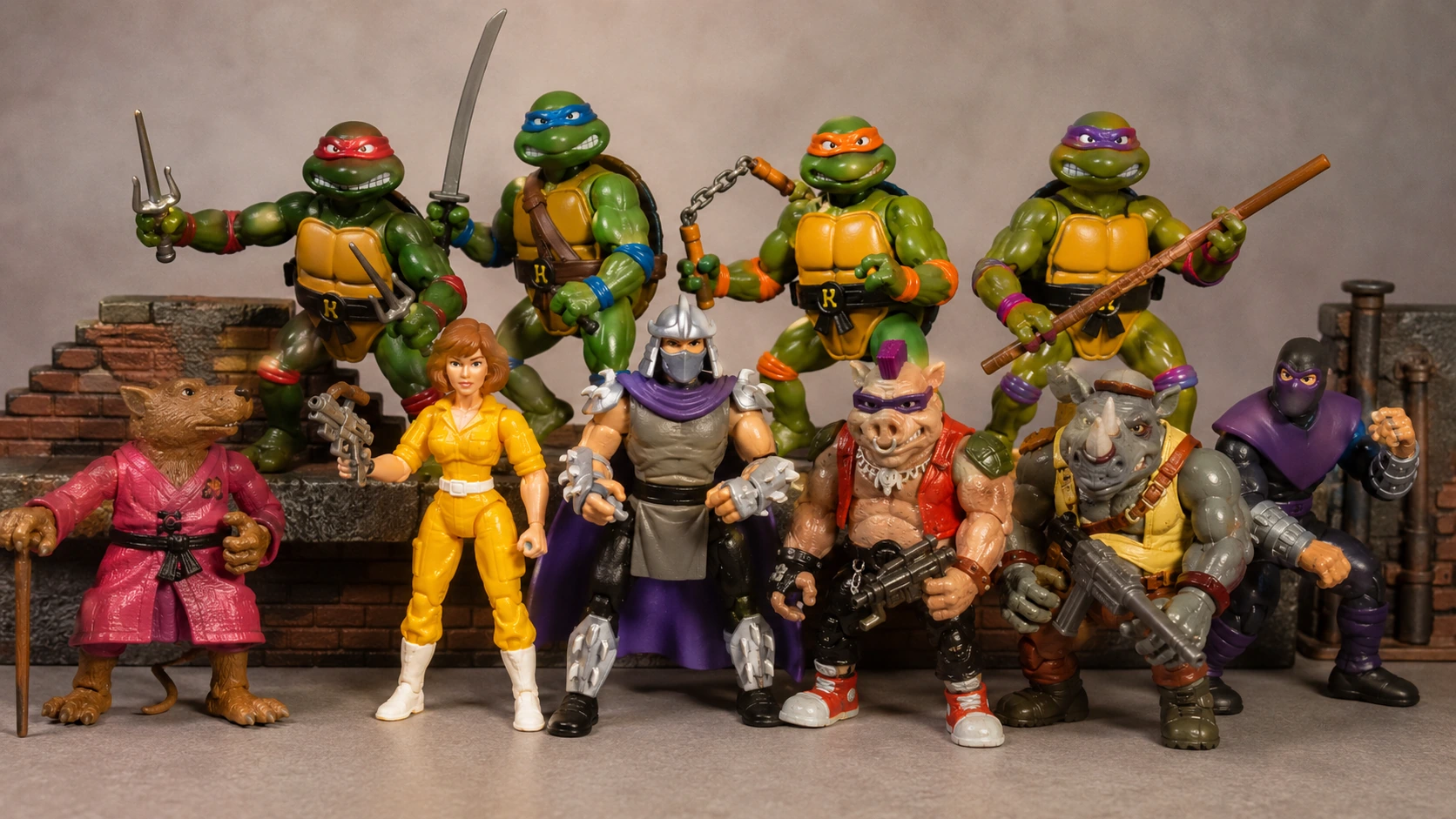
The blue-masked leader came with twin swords and enough authority to organize figures that had been thrown into a shoe box.
The purple-masked inventor carried a bo staff and became the default favorite for kids who liked gadgets and did not need to yell constantly.
The red-masked hothead brought twin sai, a grim expression and the strongest chance of being assigned to the kid who did not want to follow the plan.
The orange-masked party Turtle had nunchaku, a grin and enough cartoon personality to make “Cowabunga” a household noise complaint.
The rat sensei gave the Turtles a mentor and gave the toy line one of its strangest-looking heroic figures.
April brought a human ally, reporter accessories and someone who could theoretically explain why the city had so many mutants.
The Foot leader arrived crouched, armored and ready to lose his tiny sword before the first major battle.
The mutant warthog mixed punk style, weapons and the kind of sculpt detail that made villains more fun than generic bad guys.
The mutant rhino looked like a tank wearing camouflage pants and immediately justified every Turtle weapon in the package.
The army-builder figure existed to be kicked, captured, launched from vehicles and bought more than once.
Why the Original Lineup Was So Smart
Every figure served a purpose. The four Turtles created the team. Splinter created the home and training story. April connected the sewer to normal New York. Shredder led the enemy. Bebop and Rocksteady gave the villains personality. Foot Soldiers gave the battle scale.
Nothing in the first wave felt like filler. That made the card backs dangerous. The checklist did not show twenty random possibilities. It showed nine other figures that clearly belonged with the one already in your hand.
Same Species, Different Mask, Completely Different Kid
Leonardo, Donatello, Raphael and Michelangelo as Toys
The four-Turtle design solved one of action-figure history’s hardest problems: how to sell similar bodies without making them feel interchangeable.
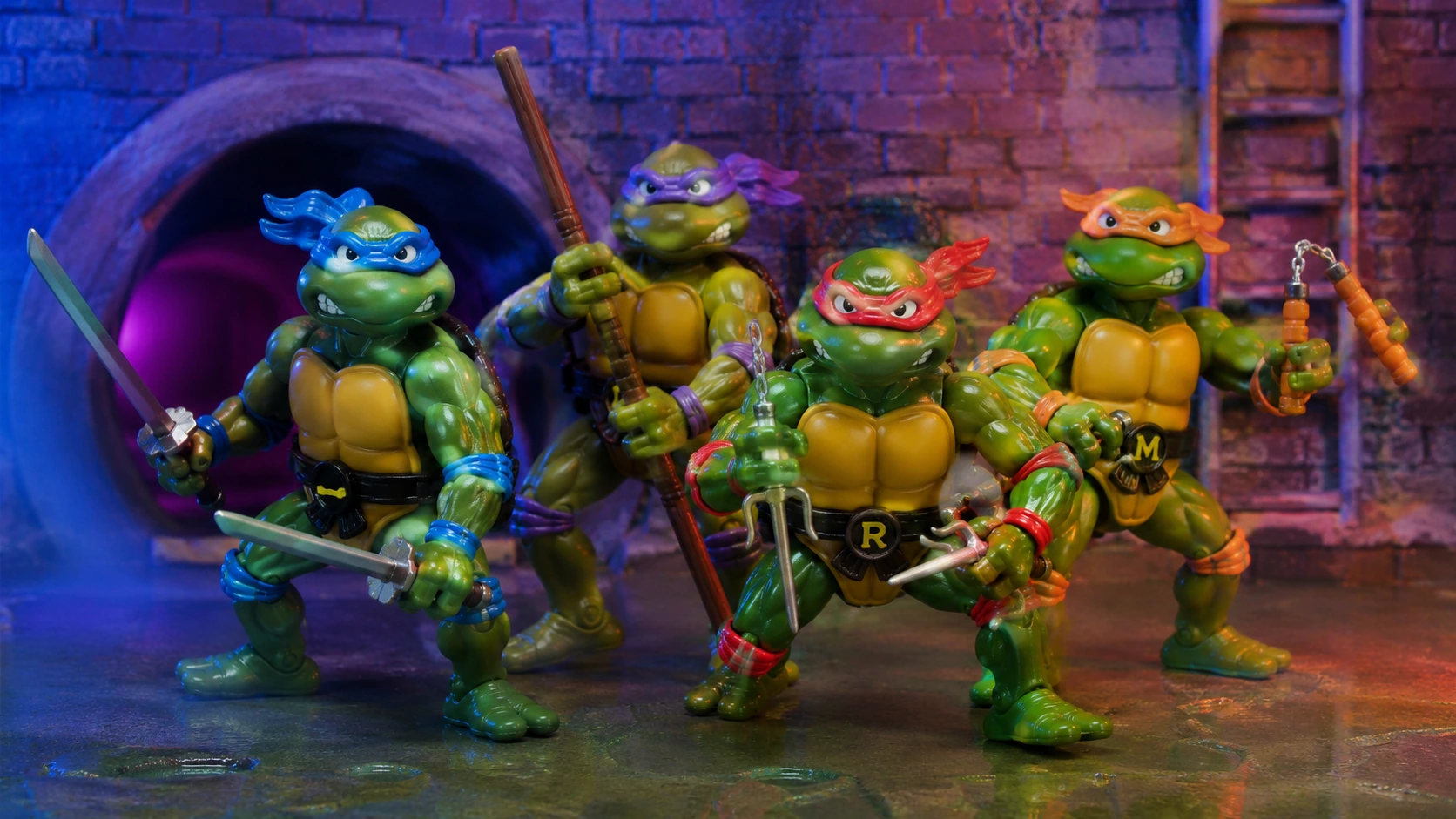
Leonardo
Blue mask, twin swords, leader posture. Leonardo was the responsible choice, which meant he was selected by children who intended to direct the entire carpet battle.
Donatello
Purple mask, bo staff, inventor identity. Donatello appealed to kids who liked the gadgets, vehicles and mechanical side of the franchise.
Raphael
Red mask, twin sai, anger. Raphael carried enough attitude to make a crouched plastic figure look personally offended by the toy box.
Michelangelo
Orange mask, nunchaku, pizza obsession. Michelangelo made the comedy side of TMNT impossible to separate from the action.
Weapon Identity Mattered
The swords, staff, sai and nunchaku made the figures recognizable even without color. Every Turtle offered a different play rhythm. Leonardo cut. Donatello reached. Raphael stabbed. Michelangelo spun his weapons until something fragile became involved.
The Poses Had Personality
The original figures did not stand like clean superheroes waiting for inspection. They crouched, leaned and looked ready to move. The poses made the team feel street-level and slightly feral.
Choosing a Favorite Became Identity
Favorite Turtle arguments were never only about plastic. Kids were choosing the leader, genius, rebel or comedian. The toy became a personality test conducted near the lunch table.
The memory: one friend group containing two Raphaels, no Leonardo and a rapidly collapsing chain of command.
The Sewer Needed Adults, Allies and One Guy With a Hockey Mask
Splinter, April O’Neil and Casey Jones Toys
The supporting heroes prevented the line from becoming four Turtles fighting the same Foot Soldier until bedtime.
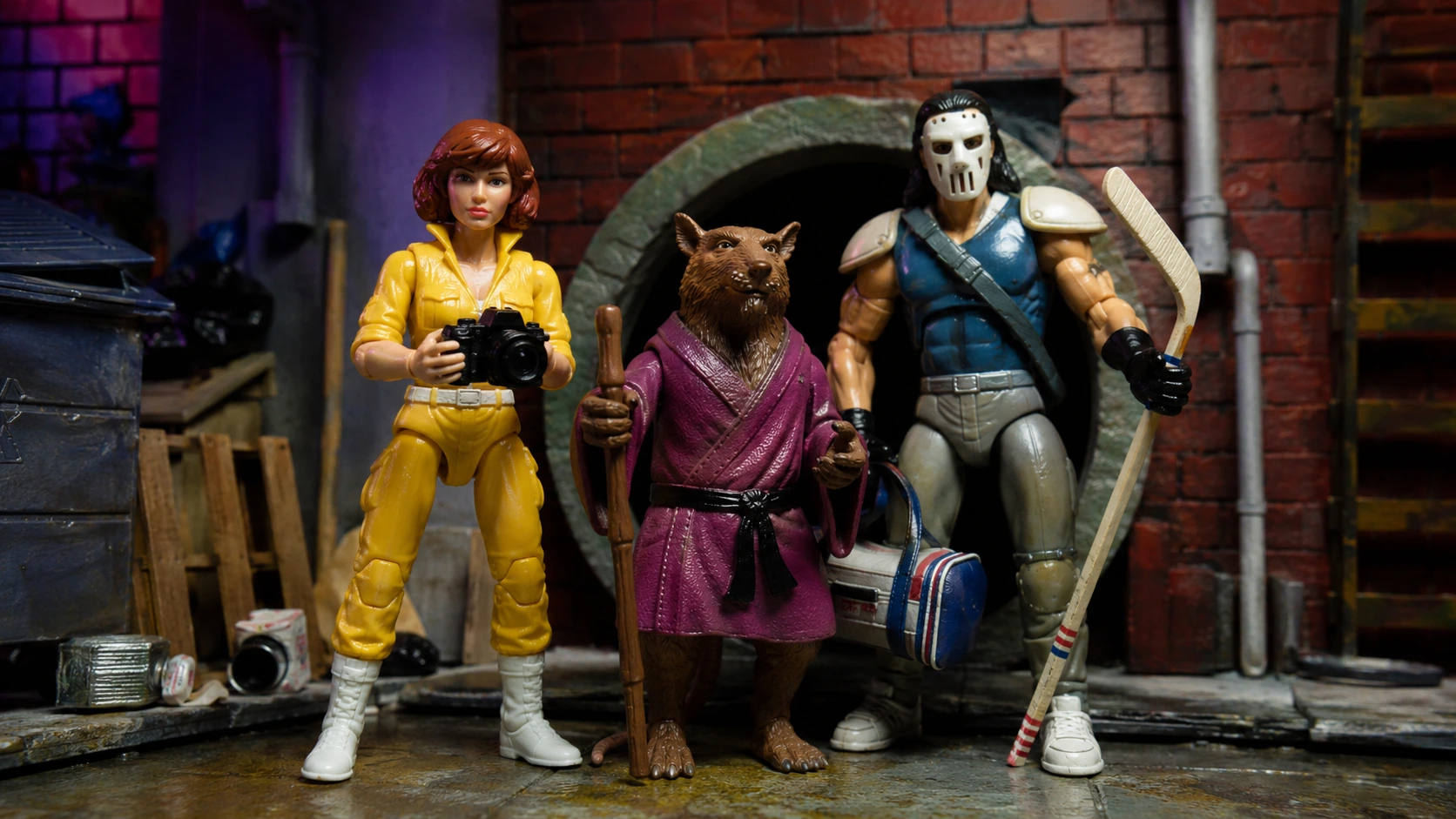
Splinter Made the Sewer a Home
Splinter connected the martial-arts fantasy to training, discipline and family. His figure looked fragile compared with the Turtles, but the character carried authority.
The robe, rat features and cane-like accessories gave him a silhouette unlike every other figure in the line.
April O’Neil Connected Two Worlds
April was the human bridge between ordinary New York and mutant chaos. Her reporter gear added microphones, cameras and technology to stories that otherwise involved a lot of hitting.
She also gave children a central female character who was part of the team rather than a random rescue objective.
Casey Jones Arrived in 1989
Casey Jones brought a hockey mask, sports equipment and the energy of somebody who had looked at ninja crime and decided the solution was a golf bag full of blunt objects.
The figure became a fan favorite because it looked dangerous, funny and completely at home in the TMNT universe.
Metalhead, Usagi and the Expanding Ally Bench
Playmates did not stop with obvious supporting characters. Metalhead, Usagi Yojimbo, Ace Duck, Genghis Frog and others expanded the heroic side into a mutant neighborhood.
Allies Made the Toy Line Feel Bigger Than the Cartoon
Some characters became more familiar through figures and card backs than through actual screen time. The toy shelf could give a minor character equal physical importance with Leonardo.
The memory: Casey Jones appearing in the toy box and immediately making every baseball bat, hockey stick and golf club look like ninja equipment.
The Foot Clan Had Management, Mutants and a Brain in a Stomach Robot
Shredder, Krang, Bebop, Rocksteady and the Villain Figures
TMNT understood that weird villains did not weaken the action. They made the entire line more collectible.
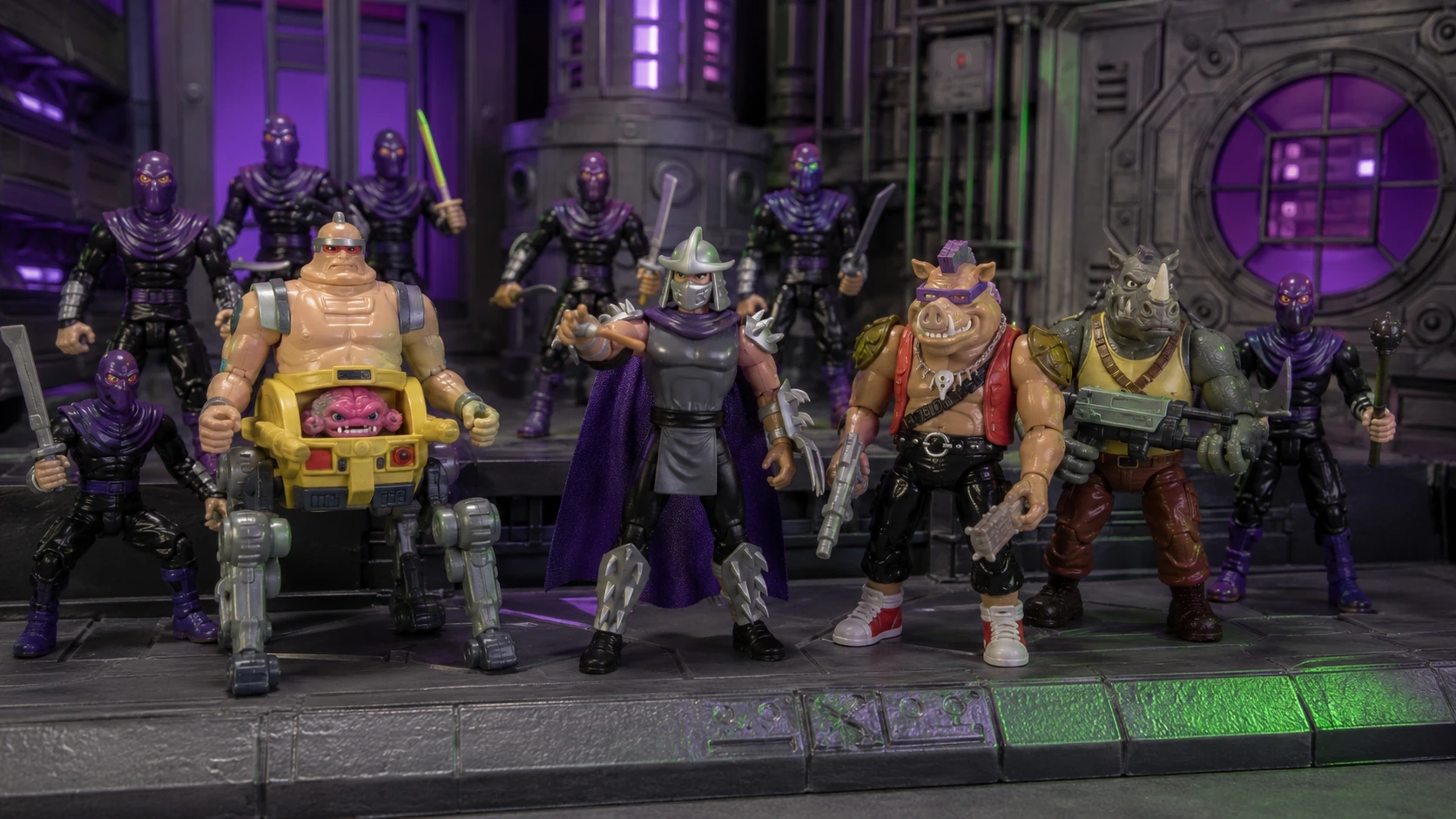
Shredder
Razor armor, helmet, cape and crouched pose made Shredder instantly recognizable, even when his tiny weapons had disappeared.
Krang
A removable pink brain inside a mechanical body was the kind of toy concept no responsible adult could have invented by thinking normally.
Bebop
The warthog mutant mixed punk fashion, glasses and heavy weapons into one of the line’s most memorable villain sculpts.
Rocksteady
The rhino mutant looked built for impact and made a strong visual pair with Bebop.
Foot Soldiers
The army-builder enemy gave every Turtle someone to defeat and every parent a reason to hear the phrase “I need another one.”
Baxter Stockman
The scientist-turned-fly gave Playmates wings, bug eyes and laboratory weirdness in one figure.
Rat King
Bandages, rats and sewer horror made Rat King feel dirtier and stranger than the cleaner cartoon villains.
Leatherhead
The mutant alligator fit the sewer world so naturally that he looked like he had been waiting below New York before the Turtles arrived.
General Traag
The rock soldier brought Dimension X scale and a body sculpt that looked ready to damage other figures during storage.
The villain side gave TMNT more shelf depth than many hero lines. A child could collect enemies for years without buying a second version of Shredder—which Playmates eventually solved by producing more Shredders.
If It Had Fur, Scales, Wings or a Bad Attitude, It Could Get a Blister Card
The Deep TMNT Mutant Character Bench
Mutation gave Playmates an almost unlimited figure generator.
Every Animal Could Become a Character
Frogs, alligators, flies, bats, cats, fish, rhinos, warthogs and insects could all enter the line without breaking the premise. The franchise had already made talking turtles normal.
Minor Screen Time Was Enough
A character did not need a season-long arc. One memorable episode, comic appearance or toy concept could justify a figure.
The Card Back Created Importance
Children often learned character biographies from packaging. A figure hanging on the same checklist as the four Turtles automatically felt official.
Playmates Designers Could Get Weird
Accessories amplified the absurdity: fly swatters, garbage-can shields, mutant food, egg grenades, fish weapons and sewer equipment.
Mutants Solved Repetition
The line could add new bodies, textures and silhouettes instead of producing only human ninjas in different colors.
Some Figures Became More Famous as Toys
Many Gen X kids remember the physical figure more clearly than the cartoon episode. The sculpt, accessories and card art became the character’s permanent version.
The memory: owning a mutant nobody could identify, inventing a completely false backstory and defending it with the confidence of an official licensing executive.
Chunky, Colorful and Built for Carpet Warfare
Why Playmates TMNT Figures Felt Different
The figures were not realistic, clean or perfectly articulated. They were expressive, durable and designed to look alive in a pile.
Four-Inch Scale
The basic figures were large enough for sculpt detail and small enough for vehicles, playsets and carrying several in one hand.
Low Crouched Poses
The Turtles looked ready to fight rather than stand at attention. The pose gave them personality but made clean shelf formations more interesting than stable.
Exaggerated Faces
Wide grins, clenched teeth, bug eyes and mutant features made each figure readable from a distance.
Textured Sculpting
Shells, skin bumps, fur, bandages, armor and clothing details made the figures tactile in a way simple animated designs did not require.
Limited Articulation, Strong Silhouette
Most figures had modest joint counts by modern standards. Playmates used sculpted poses to communicate movement instead.
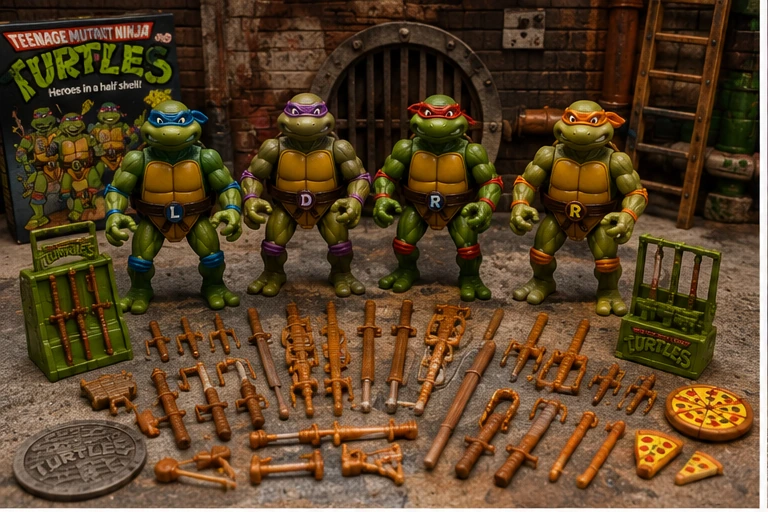
Weapons Racks
Many figures included a brown or colored plastic weapons rack that children snapped apart. The rack created an absurd amount of gear and several small pieces destined for permanent disappearance.
Color as Personality
Bright masks, belts and accessories separated similar characters and made the entire line look energetic on peg walls.
The memory: twisting a weapon off the rack, leaving a little plastic scar and immediately losing the smallest blade under the refrigerator.
Why the design worked: the figures looked fun before anyone knew the character, and recognizable after every accessory was gone.
The Card Back Was a Shopping List Disguised as World-Building
TMNT Blister Cards, File Cards and Packaging Art
The packaging made every figure feel like one part of a huge mutant universe.
Brick Walls and Sewer Energy
The classic card design used brick patterns, bright logos, illustrated Turtles and an urban feel that connected every figure to New York.
The Figure Was Easy to Inspect
Clear blisters showed the character, weapons and often a full accessory rack. Kids could compare paint, poses and gear before purchase.
File-Card Humor Expanded the Character
Biographies used puns, gross-out details and product-style language to explain who the mutant was and why the accessories mattered.
The Checklist Created Collection Anxiety
The card back showed figures already owned and figures suddenly required. One purchase transformed into visual evidence of everything missing.
Vehicle Boxes Sold Features
Large packages used illustrations and photos to show traps, missiles, ramps, launchers and figure capacity. The box had to justify why a toilet-shaped vehicle belonged in the same room as the Party Wagon.
Packaging Changed With Sub-Lines
Movie Star, Storage Shell, Wacky Action, Mutations and other ranges used visual cues to signal a new gimmick while retaining Turtle branding.
Mint Packaging Became a Collector Concern Later
Kids opened the cards because the point was the figure. Decades later, card condition, bubble clarity, punch holes and unbroken seals became part of value.
The memory: reading the biography in the back seat while trying not to bend the card before reaching home, then destroying the package within thirty seconds of arrival.
Wind Them Up and Watch Dignity Leave the Room
Wacky Action TMNT Figures
The Wacky Action sub-line added mechanical movement to familiar characters and made the toy perform one gloriously specific trick.
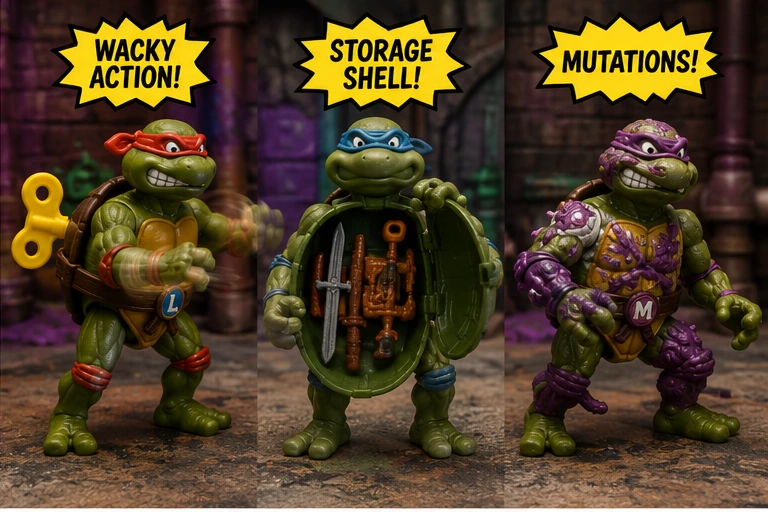
Breakfightin’ Raphael
A wind-up spinning feature turned Raphael into a rotating sewer hazard.
Rock ’N Roll Michelangelo
Rotating wrist action let Michelangelo swing weapons with more enthusiasm than accuracy.
Sewer Swimmin’ Donatello
Kicking legs gave Donatello underwater action, assuming the owner was willing to explain why the bathroom had become a testing facility.
Mouser
The robotic enemy gained movement that made army attacks feel less dependent on adult hand positioning.
One-Gimmick Appeal
Each figure offered a visible feature that commercials could demonstrate in seconds.
Mechanical Personality
The action function matched the character or theme closely enough to feel like more than a random spring.
Wacky Action figures proved the four Turtles could be sold again when the new version actually did something. The gimmick was not subtle, but neither was Turtlemania.
Finally, a Place to Lose the Weapons Inside the Figure
Storage Shell Turtles
Storage Shell figures solved the accessory problem by giving each Turtle a hinged compartment in the back of the shell.
The Shell Became Functional
The Turtles’ most recognizable body feature became storage. Opening the shell revealed room for weapons and accessories.
Built-In Organization
The idea was brilliant because every TMNT collection had loose weapons. Storage Shell offered an official place to put them.
New Sculpt, Familiar Character
The figures looked different enough to justify another purchase while preserving the mask colors and weapon identities.
The Feature Fit the Fiction
A Turtle carrying tools inside a shell felt more believable than many action gimmicks. Donatello especially looked like he had been waiting for compartments.
The Accessories Still Escaped
Storage helped during play. It did not defeat gravity, moving boxes or younger siblings.
Modern Collector Appeal
Complete Storage Shell figures remain satisfying because the feature, figure and accessory set form one compact package.
The memory: opening the shell to reveal three correct weapons, one random G.I. Joe knife and a small object nobody in the family could identify.
From Ordinary Turtle to Ninja Turtle in Several Complicated Steps
Mutations and Transforming TMNT Figures
Mutating figures turned the origin story into a physical transformation gimmick.
Pet Turtle to Mutant Hero
The main appeal was obvious: fold, rotate and rearrange the figure until a normal turtle became the full character.
Transformation Added Puzzle Play
The figure was not only posed. It had to be understood. Children memorized the sequence and corrected adults who attempted it incorrectly.
The Gimmick Reused Core Characters
Leonardo, Raphael, Donatello and Michelangelo could return in another format without relying on costumes or sports themes.
Villains Could Transform Too
Mutations expanded beyond the heroes, allowing human or animal origins to become mutant forms.
Parts Needed to Move and Hide
Transformation introduced hinges, panels and limbs that had to align. Decades later, wear and stress can make complete movement more fragile.
The Feature Made Mutation Understandable
Children could physically reenact the franchise’s central concept. The ooze did not only change the story. It changed the toy.
The memory: performing the transformation correctly, handing the figure to a friend and watching it return in a configuration never approved by Playmates engineering.
The Four Turtles Eventually Had More Jobs Than Barbie
Sports, Military, Disguise and Costume Variants
Playmates kept the core team on shelves by giving the Turtles every outfit, occupation and questionable assignment available.
Sports Turtles
Baseball, football, hockey, wrestling and other athletic versions turned personalities into uniforms and equipment.
Military Turtles
Camouflage, helmets and exaggerated hardware pushed the line toward G.I. Joe territory without losing the shells.
Undercover Turtles
Trench coats, hats and disguises recreated the classic idea that four giant turtles could move through New York unnoticed with the correct outerwear.
Rock ’N Roll Turtles
Music-themed figures connected the heroes to the franchise’s concert, cassette and stage-show energy.
Universal Monsters
Horror costumes allowed the Turtles to become mummies, vampires, werewolves and other classic monsters.
Historical and Fantasy Outfits
Samurai, knights and other themed versions let the same characters enter new play worlds.
Birthday and Party Versions
Celebration figures proved no event was too small for another Turtle costume.
Occupation Variants
Firefighters, astronauts and other job-based designs expanded the line beyond ninja logic.
Variant Fatigue
The same strategy that kept pegs fresh eventually made the collection feel impossible and occasionally ridiculous even by TMNT standards.
The variant machine became a major front in the 90s action-figure aisle. Batman changed armor. The Turtles changed careers.
The Same Mutant Universe at Several Incompatible Sizes
Giant TMNT Figures, Mini Mutants and Scale Changes
Playmates used scale to make familiar characters feel new and to reach different styles of play.
Giant Figures
Large Turtles emphasized character presence and simplified play. They did not fit the standard vehicles, but they looked substantial beside a bed or television.
Mini Mutants
Smaller figures allowed compact playsets, vehicles and pocket-sized collections. The scale changed the environment rather than only the character.
Scale Created Separate Collections
A child could own Leonardo in basic, giant and mini formats without any version working with the same accessories.
Display Versus World-Building
Giant figures worked as character objects. Mini figures supported environments and portability. The standard four-inch line sat between them as the main universe.
Why Parents Were Confused
All boxes said Ninja Turtles. Not every vehicle or playset accepted every Turtle. The difference became clear after the package opened.
The memory: trying to put a giant Michelangelo into the Party Wagon and briefly blaming the van.
New York Transportation Designed by a Sewer Mechanic With No Oversight
The Party Wagon, Turtle Blimp and TMNT Vehicles
The Party Wagon, Turtle Blimp, Cheapskate and stranger TMNT vehicles expanded the Playmates line from individual action figures into a rolling sewer-based transportation system.
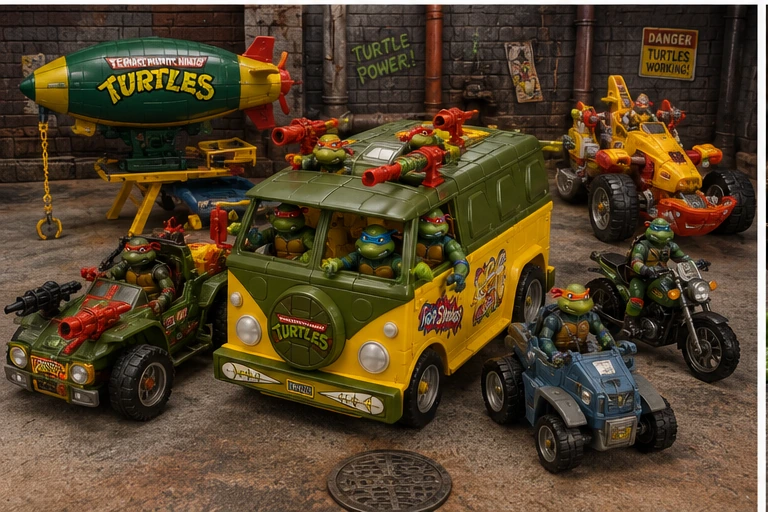
The team van became the essential vehicle: bright, bulky, heavily armed and large enough to carry several figures toward the next living-room incident.
The blimp brought air support and required enough physical space to make adults regret ceilings.
The sewer skateboard offered a lower-cost vehicle that fit the Turtles’ street-level energy.
The water vehicle expanded the battle beyond streets and sewers, because apparently the Foot Clan had maritime funding.
Giant grasping mechanisms and an aggressive shape turned one vehicle into a moving trap.
The Foot drilling vehicle looked like underground construction equipment had joined Shredder.
A toilet-shaped vehicle proved Playmates understood exactly how seriously children wanted this universe treated.
The line could move into military parody without losing its sewer-built personality.
Owning the figures made vehicles desirable. Owning the vehicle made more passengers and enemies feel necessary.
Why the Party Wagon Became the Icon
The Party Wagon connected the entire team. It offered seating, rolling action, weapons and a strong visual relationship to the cartoon’s Turtle Van. It was large enough to feel like a major gift and practical enough to carry figures from one side of the carpet to the other.
It also solved a child-level logistics problem. Four Turtles, Splinter, April and Casey Jones could not all arrive at a battle by Cheapskate.
A Motorized Weapon System Powered by Dinner
The TMNT Pizza Thrower
The Pizza Thrower was the exact moment the franchise stopped pretending pizza was only food and turned it into artillery.
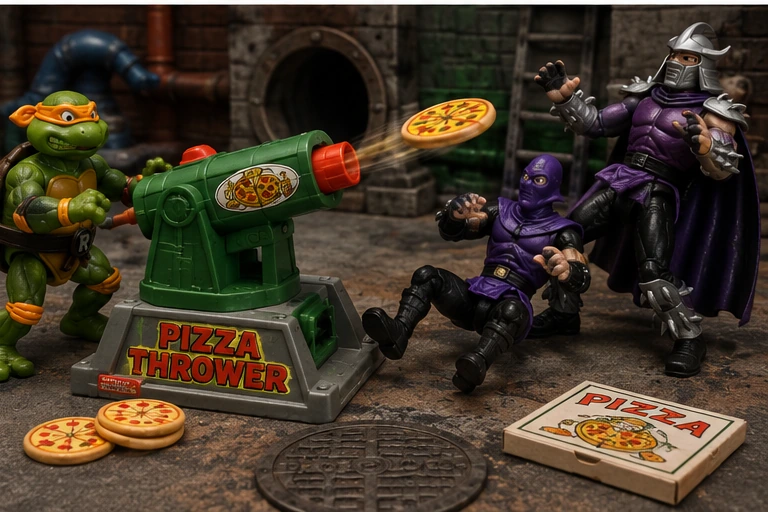
Battery-Powered Disc Launching
The vehicle used a motorized system to fire plastic pizza discs from a rotating launcher.
Eight Pizza Discs
The ammunition looked fun, stacked easily and disappeared under furniture with military efficiency.
Adjustable Trajectory
The launcher could aim higher or lower, giving children the ability to miss Shredder in several technically different ways.
Full 360-Degree Rotation
The firing mechanism could protect all sides, including the side where a lamp happened to be standing.
Vehicle and Gimmick in One
Turtle figures could ride while the launcher operated, combining transport with a clear action feature.
The 1990 Packaging Connection
Playmates’ modern classic release describes packaging inspired by the original 1990 art, reinforcing the Pizza Thrower’s place in peak early-90s Turtlemania.
The memory: finding one plastic pizza years later behind furniture and immediately knowing exactly which toy had launched it there.
Why it remains memorable: no other franchise could make a pizza cannon feel like a logical vehicle upgrade.
The Dream House, Except It Was a Sewer and Everyone Was Fine With That
The 1989 TMNT Sewer Playset
The Sewer Playset gave the Turtles a home, a battle arena and enough vertical plastic to redefine the bedroom floor.
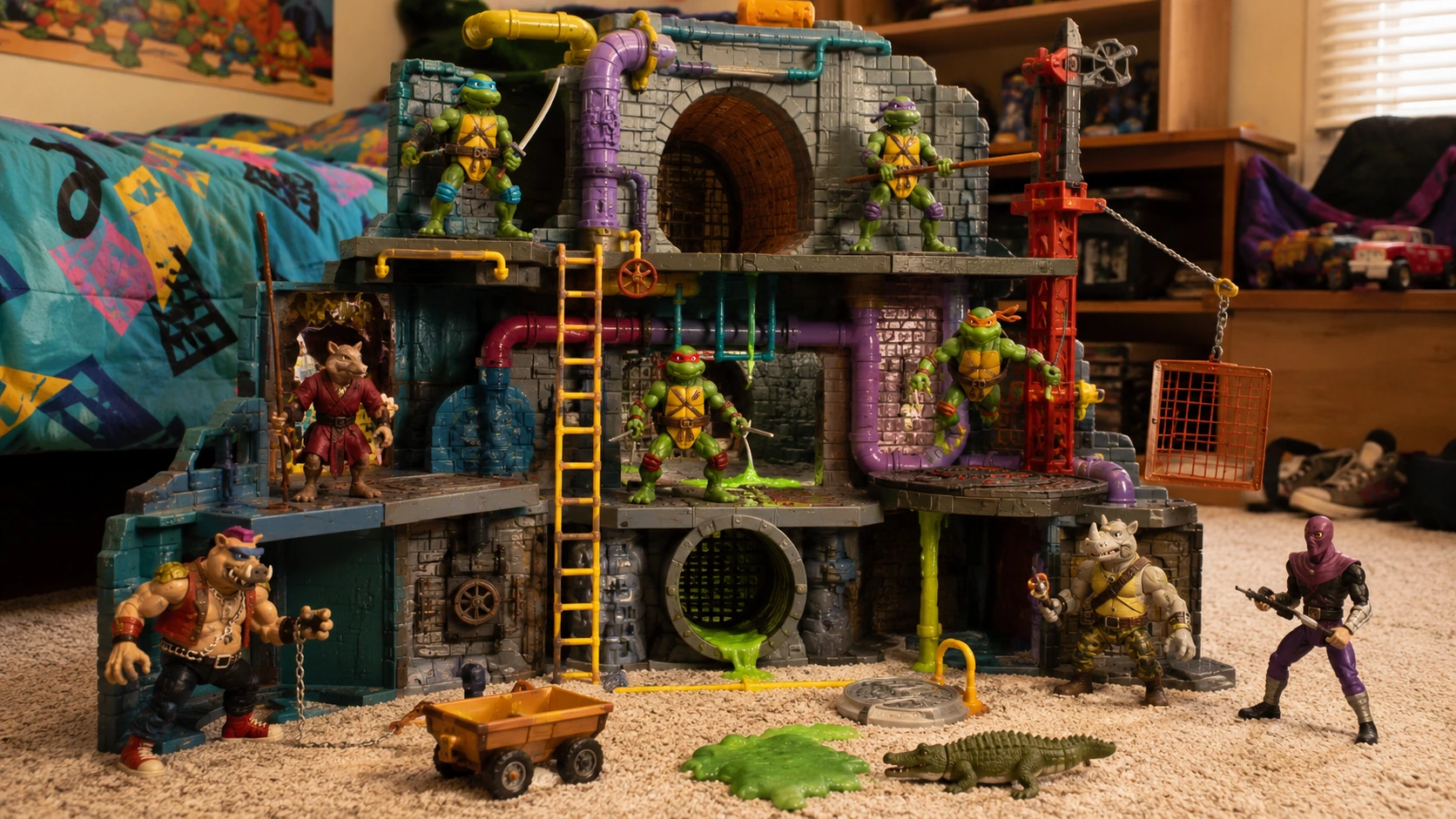
The First Major TMNT Playset
Playmates released the iconic Sewer Playset in 1989, just as the figure range and cartoon popularity were accelerating.
Street Level and Sewer Level
The playset connected New York above ground with the Turtles’ underground home. Figures could move between ordinary city scenes and mutant headquarters.
Traps and Action Features
Pipes, platforms, breakaway sections and interactive features turned the environment into part of the battle.
The Home Base Fantasy
Figures finally had a place to eat pizza, train, receive missions and store the collection between attacks.
Display Scale
The playset was large enough to organize many figures at once and large enough to require a family discussion about permanent floor space.
The Christmas-Gift Role
The Sewer Playset was a premium request—the kind of box that appeared under the tree as the clear main event.
Why Complete Examples Are Difficult
Playsets contain small pipes, signs, platforms, cardboard elements and accessories that disappear or break. A basic shell may survive while the details do not.
The memory: discovering that a giant plastic sewer could become the nicest piece of real estate in the entire toy room.
Shredder’s Giant Eyeball Fortress Finally Had a Mortgage Payment
The TMNT Technodrome Playset
The Technodrome was the villain-side dream playset: round, mechanical, trap-filled and visually unlike anything else in the aisle.
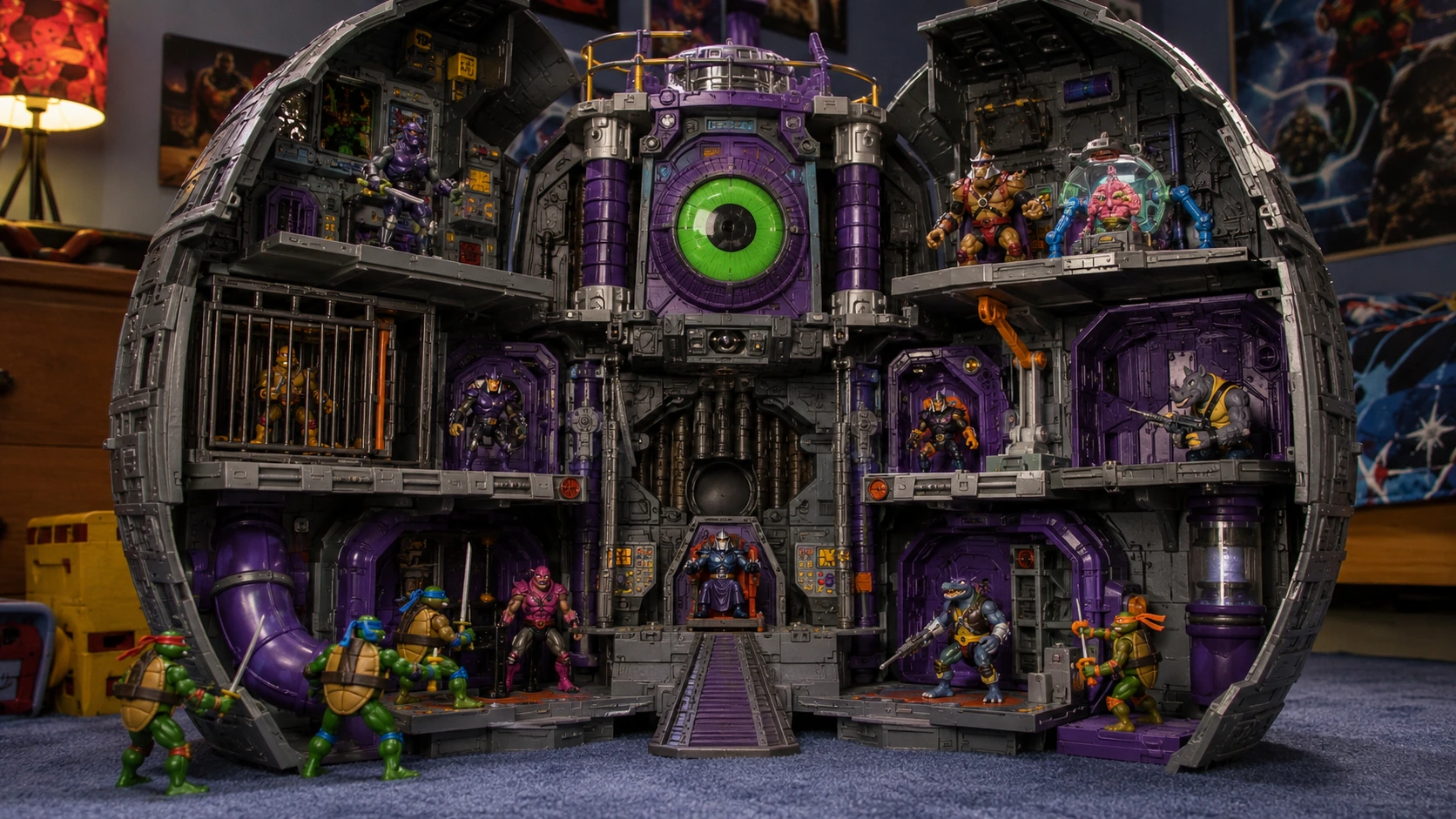
Two Levels of Foot-Clan Chaos
The playset offered multiple levels, control areas, jail space, weapons storage and enough traps to keep every hero figure occupied.
The Giant Eye
The rolling eye feature made the Technodrome instantly recognizable and added motion to the fortress itself.
Mutation and Ooze Features
Scanner, ooze-pit and mutation details connected the playset to the franchise’s central chemical mystery.
Krang’s Command Position
A rotating life-support throne gave Krang a place to supervise the kind of villain plan that required a brain to sit in a chair.
Traps Everywhere
Manacles, trick doors, jail cells and launch features allowed the environment to attack the Turtles directly.
The Villain Base Completed the World
The Sewer Playset gave the heroes a home. The Technodrome gave Shredder and Krang a headquarters. Owning both meant the entire carpet became New York and Dimension X.
Why It Became Legendary
The size, price and number of parts made the Technodrome less common than basic figures. Kids who never owned one still remember the commercials, catalogs and one friend whose parents had apparently won the lottery.
The memory: visiting a house with a Technodrome and briefly reevaluating the entire friendship hierarchy.
Why it endures: the Technodrome was not just a playset. It was physical proof that the villains had a budget.
Green Slime, Tiny Pre-Mutant and a Carpet Warranty Nobody Read
Retromutagen Ooze and Gross-Out TMNT Play
Ooze connected the origin story, playsets and the universal childhood desire to pour slime into something expensive.
The Jar of Green Gel
Retromutagen Ooze gave children a physical version of the substance responsible for mutation in the franchise.
Mini Pre-Mutant Figures
Ooze containers could include small turtle or rat figures, connecting the slime to the before-and-after transformation story.
Playset Compatibility
Ooze could be used with mutation features and traps, making the mess feel officially encouraged.
Gross-Out Humor Fit the Brand
TMNT already celebrated sewers, garbage, mutant food and weird bodily textures. Slime did not feel added for attention. It felt inevitable.
Parents Saw a Different Product
Children saw mutagen. Adults saw green material approaching upholstery.
Drying, Dirt and Disappearance
Ooze rarely stayed pristine. It collected hair, dust and small objects before drying into something no longer approved by science.
The memory: promising to keep the ooze on the playset and then discovering the laws of slime were not enforceable.
Thirty Seconds of Cartoon Clips, Toy Features and Allowance Destruction
TMNT Toy Commercials Made Every Release Feel Essential
The commercials understood the line’s greatest strength: there was always something to demonstrate.
Cartoon Footage Established the Story
Commercials could begin with familiar animation and move directly into toys, making the product feel like the episode had entered the room.
Voice-Over Sold the Joke
Puns, exaggerated names and fast descriptions matched the card-back humor and made bizarre vehicles sound completely reasonable.
Action Features Were Visible
Wacky Action movement, transforming Mutations, firing pizzas, opening shells and playset traps could all be shown quickly.
Toy-Scale Environments Added Drama
Smoke, lighting, miniature streets and sewer backdrops made figures look larger and more active than they did lying beside a sock.
Every Product Suggested Another Product
A vehicle commercial needed figures. A playset needed heroes and villains. An ooze commercial needed something to pour the ooze into.
The Archive Still Explains the Craze
The 90s toy-commercial archive shows how aggressively the line sold movement, humor and collection expansion.
The memory: hearing the commercial announcer describe a toilet vehicle with such confidence that questioning the purchase felt unreasonable.
The Peg Wall Looked Like a Mutant Population Census
TMNT Toy-Store Culture and the Christmas Hunt
Part of Turtlemania was the experience of seeing how much of the aisle had turned green.
Rows of bright cards made the line look enormous even when the most wanted character was gone.
Children wanted a specific Turtle, villain or weird mutant. “Any Ninja Turtle” was not always an acceptable shopping instruction.
Party Wagon, Blimp and Pizza Thrower packages created a second, larger visual zone below the figures.
Sewer and Technodrome boxes were large enough to announce themselves from across the department.
Kids learned about new figures by turning over the one already in hand and immediately expanding the wish list.
When the big retailer failed, KB Toys or another mall stop offered one more chance.
Playsets and major vehicles became holiday centerpieces, while figures filled stockings and smaller boxes.
A character common in one store could become legendary in another neighborhood.
The experience belongs to the larger world of 90s toy-store culture, where the aisle, catalog and hunt mattered as much as the eventual purchase.
Carpet New York Had Weak Zoning and Constant Foot-Clan Activity
How TMNT Toys Actually Lived in Gen X Bedrooms
This is where the line stops being product history and becomes memory.
The Bed Became the City
Blankets created rooftops. The floor became streets. The space under furniture became a sewer whether the family approved the designation or not.
The Figures Rarely Stayed Complete
Weapons moved between characters. Belts disappeared. A Foot Soldier carried accessories from three other franchises. The story continued anyway.
The Party Wagon Carried Everyone
Official capacity did not matter. Figures piled into the van, hung from doors and followed behind in whatever vehicle still had wheels.
Crossovers Were Normal
Batman, G.I. Joe, WWF wrestlers and random dinosaurs entered Turtle stories without licensing approval. Scale differences became power levels.
Pizza Boxes Became Props
Real pizza nights could turn immediately into Turtle events. The franchise had successfully placed product symbolism inside dinner.
Favorite Figures Became Worn
Paint rubbed from masks and belts. Weapons bent. The figures with the most damage were often the ones that mattered most.
The Cartoon Dictated Timing
Episodes created new stories before play. Commercial breaks expanded the wish list during the same half hour.
Schoolyard Identity Continued Without Toys
Kids debated favorite Turtles, movie scenes and game difficulty at school, then resumed the physical version at home.
The Gen X truth: the line was never arranged like a collector shelf. It was a green plastic ecosystem spread between the bed, the television and one dangerously full cardboard box.
The Turtles Left Saturday Morning and Took Over the Theater
The 1990, 1991 and 1993 TMNT Movie Toy Years
The live-action movies expanded Turtlemania while giving the toy line new costumes, visual tones and promotional waves.
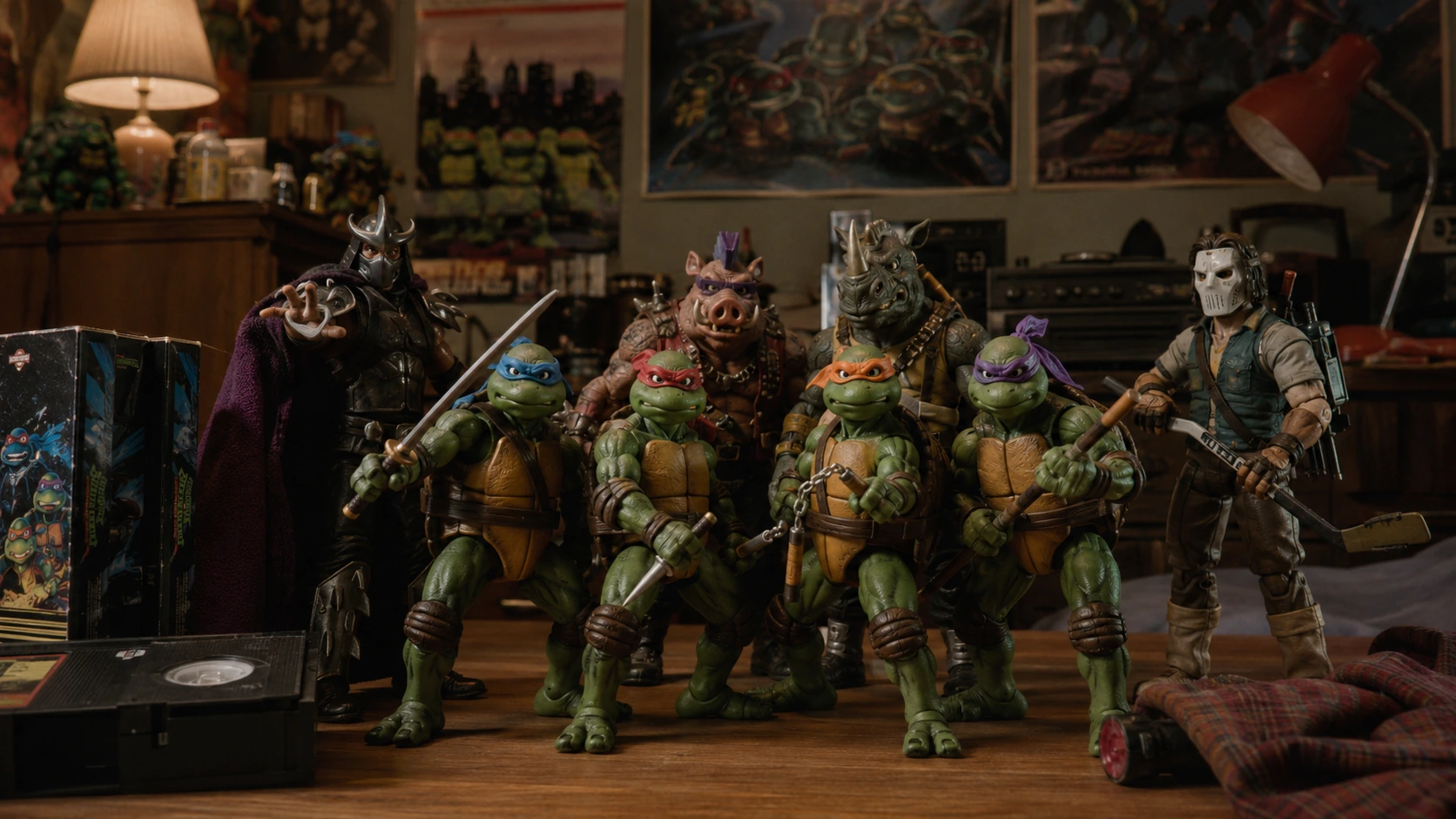
1990: Teenage Mutant Ninja Turtles
The first movie gave the franchise a darker live-action look and helped push TMNT to the top of the 1990 toy year.
Even when figures remained rooted in cartoon styling, movie visibility increased demand for the entire line.
1991: Secret of the Ooze
The sequel leaned into mutation, Tokka, Rahzar and a lighter tone. It arrived during another year when the Turtles remained major players among the top toys of 1991.
The movie also permanently attached “Ninja Rap” to the franchise, because the 90s did not believe in leaving any cultural surface unbranded.
1993: Turtles in Time
The third film moved the characters into samurai-era costumes and created another reason for armored or historical figure variants.
By then, Turtlemania had cooled from its peak, but the franchise still had enough shelf power to support another theatrical cycle.
Movie Star Figures
Movie Star Turtles used softer, more film-like textures and sculpts inspired by the live-action suits. The figures gave collectors a version clearly separated from the classic cartoon look.
TMNT was one of the decade’s clearest movie-and-cartoon toy systems. The cartoon sustained weekly familiarity. The films created event-level spikes. Playmates supplied plastic for both moods.
Peak Turtle Power
TMNT Toys in 1990
1990 was the year the toy line, cartoon, first movie and broader merchandise wave converged into total cultural occupation.
The Turtles Ranked at the Top
On Smells Like Gen X’s year ranking, Teenage Mutant Ninja Turtles hold the number-one spot among the top toys of 1990.
The Movie Expanded the Audience
Children who already watched the cartoon now had a theatrical event. Older kids could take the franchise slightly more seriously because the suits and fight scenes looked rougher.
The Vehicle Range Became Wilder
Pizza Thrower and other machines showed Playmates could turn any franchise joke into mechanical plastic.
Variants Multiplied
The line was now strong enough to sell alternate versions of the same four heroes without losing the basic figures.
TMNT Was Bigger Than Toys
Clothing, food, school supplies, games and music made the brand unavoidable. The toys benefited from every other category.
Why 1990 Feels Different
In 1988, the figures were a launch. In 1989, they were a breakout. In 1990, they were a childhood operating system.
The memory: entering almost any store and finding at least one Turtle staring back from a shirt, lunch box, cereal display or blister card.
The Craze Was No Longer New. It Was Still Everywhere.
TMNT Toys in 1991
1991 proved Turtlemania had enough depth to remain a major force after the first movie-year explosion.
Secret of the Ooze Renewed Attention
The second movie brought mutation back to the center and introduced Tokka and Rahzar as screen-ready monsters.
The Line Had Room to Experiment
Playmates could produce stranger figures and sub-lines because the core four no longer needed introduction.
The Toy Aisle Was Getting More Competitive
WWF figures, Nintendo, Game Boy, dolls and other licensed brands were fighting for the same attention. TMNT remained powerful because it covered figures, vehicles and playsets at once.
The Franchise Became Dependable
Retailers and parents recognized the name. A TMNT purchase did not require explaining what the child would do with it.
The Collection Was Already Too Large
By 1991, many kids owned multiple Turtles, villains and vehicles. New products had to offer a stronger gimmick or stranger design.
The Rest of the 1991 Toy Aisle
The 1991 toy ranking shows how crowded the aisle had become, while the Turtles kept expanding through figures, vehicles, movies and increasingly specific gimmicks.
The memory: insisting the new Turtle was different because this one had storage, a costume, a mechanical feature or a slightly more important facial expression.
From World-Devouring Craze to Durable Toy Institution
TMNT Toys in 1992 and 1993
The line was cooling from its highest peak, but it still had enough characters, sub-lines and brand recognition to remain important.
1992: Still a Major Force
By 1992, TMNT no longer felt like the only loud franchise in the room. It felt like one of the room’s permanent noise sources.
The figures survived through depth. A child could move from basics to Storage Shell, Wacky Action, sports, military, movie or mutations toys without leaving the brand.
The broader 1992 toy year shows how competition was shifting, but the Turtles still ranked through sheer universe size.
1993: The Aisle Changes
By 1993, Mighty Morphin Power Rangers and Jurassic Park brought new action-figure energy. TMNT had to compete with live-action color teams and realistic dinosaurs.
The third film provided another event, but the franchise no longer owned the conversation as completely as it had in 1990.
That transition matters. TMNT did not disappear. It moved from explosive fad to established property while the next generation of the action-figure war arrived.
The Retail Engineering Behind Turtle Power
Why the Playmates TMNT Line Kept Selling
The toy system made one figure satisfying and the complete line impossible.
Four Entry Points
A child could choose any Turtle and immediately own a main character.
Team Completion
Owning one Turtle made the other three visually necessary.
Deep Villain Bench
Mutants, robots and Foot soldiers prevented enemy repetition.
Vehicle Pressure
Figures naturally created demand for vans, blimps, skateboards and increasingly absurd transport.
Playset Aspiration
The Sewer and Technodrome gave the line premium holiday goals.
Variant Flexibility
The same four characters could return in new outfits and gimmicks.
Gross-Out Permission
Slime, toilets and garbage fit the universe instead of feeling attached by committee.
Media Reinforcement
Cartoon, movies, games and comics kept characters active between shopping trips.
Strong Packaging
Every card back advertised the rest of the mutant ecosystem.
The Sewer Stayed Open, but the Crowd Moved On
Why the Original TMNT Toy Craze Cooled
The line’s greatest strengths—depth and constant variation—eventually created exhaustion.
Variant Overload
Another costume could feel less urgent after several shelves of alternate Turtles.
Audience Aging
Kids who entered during the 1988 launch were moving toward games, comics and older-skewing interests.
New Action Lines
Power Rangers, X-Men, Batman, Jurassic Park and other brands crowded the early-90s aisle.
Movie Momentum Slowed
The 1993 film did not recreate the cultural force of the first movie.
Cartoon Longevity Became Familiarity
The animated series remained visible, but the shock of the concept had faded.
Too Much Product
A huge line gave collectors depth and gave casual families reasons to stop trying.
Video Games Took Time
Nintendo and arcade-style TMNT games kept the brand alive while shifting some attention away from physical figures.
Retail Cycles Changed
Toy stores needed new headlines, not only dependable old green ones.
The Franchise Became Permanent
TMNT no longer needed constant peak mania. It had become a property that could disappear, return and sell toys to another generation.
The original Playmates run continued through the 90s, but the center of gravity changed. Turtlemania faded as a national emergency and survived as one of the deepest toy universes of the decade.
Identify the Figure Before Declaring the Missing Weapon Rare
How to Collect Vintage TMNT Toys Today
Vintage TMNT collecting starts with exact identification: release year, sub-line, sculpt, action feature, accessories, packaging and whether the figure has been paired with parts from another mutant.
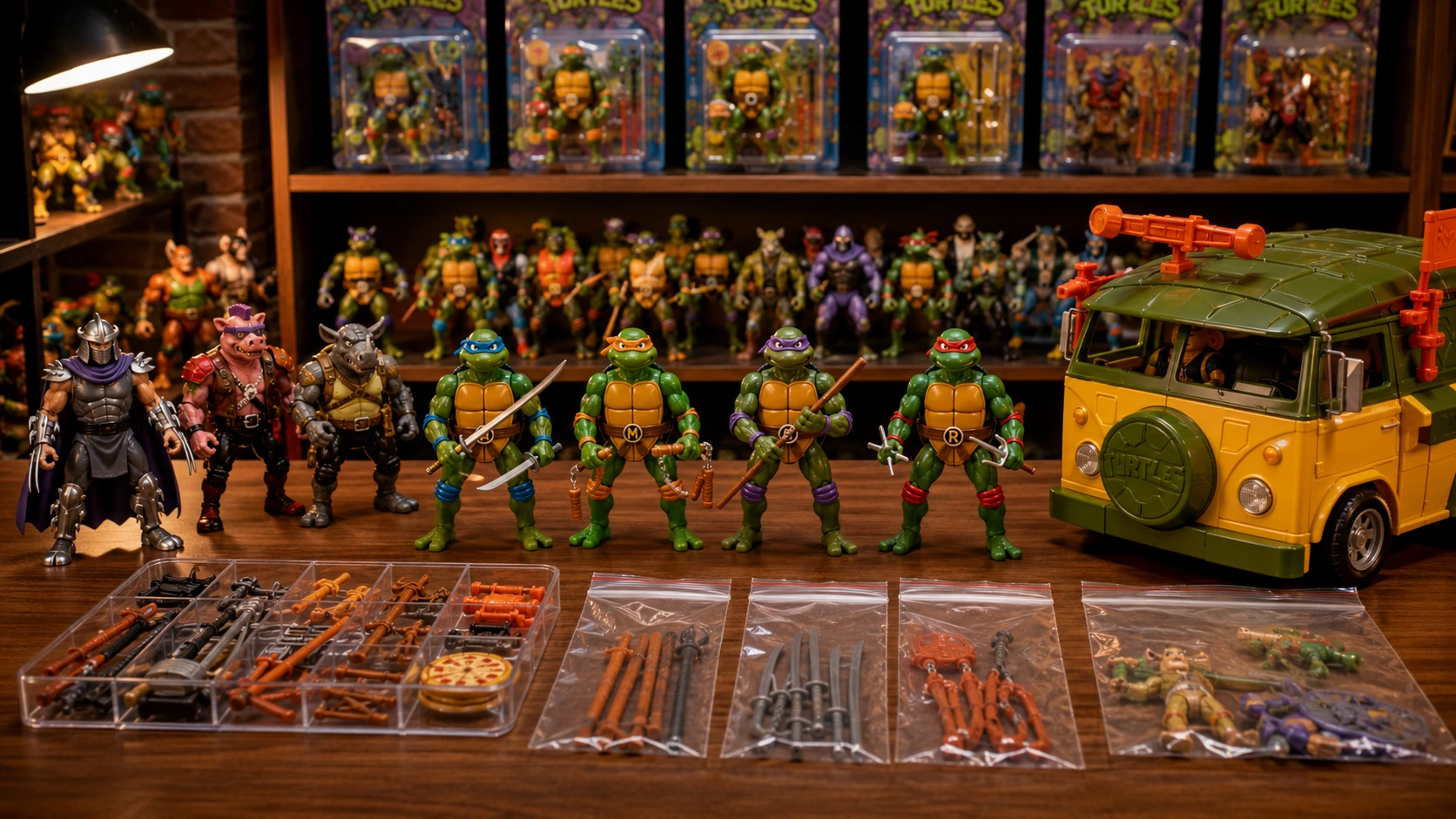
Start with original 1988 figures, early-90s basics, movie figures, Storage Shell, Mutations, vehicles or playsets.
Packaging, copyright marks, sculpt, accessory color and gimmick help separate releases.
Many figures came with several small pieces and a weapons rack. A figure can look complete while missing most of its set.
Belts, capes, fabric, rubber and flexible pieces may crack, stretch or disappear.
Wind-up, spring, storage and transformation mechanisms should be tested gently.
Small launchers, flags, doors, clips and projectiles are commonly missing.
Sewer and Technodrome shells can survive without the signs, pipes, traps and accessories that made them complete.
Current value depends on exact version, condition and completeness. Unsold asking prices are not evidence.
A loose complete favorite may deliver more nostalgia than a sealed card that can never enter the Party Wagon.
Collector reality: the history and identification details stay useful, but current prices change too quickly for a permanent list. Match the exact release, condition and completeness against recent completed sales.
Packaging condition also matters because the blister cards preserve the exact peg-wall look of 90s toy-store culture—the brick graphics, character checklists and card-back sales pitch kids studied before the package was demolished.
Not Every Green Figure With a Shell Came From the Same Sewer
TMNT Reissues, Reproduction Parts and Mixed Toy Lots
Playmates has revisited classic designs many times, and decades of loose accessories make identification more complicated than “looks old.”
Official Reissues Are Common
Playmates currently sells classic-style figures, vehicles and playsets inspired by original releases. A clean card with vintage graphics may be new, not sealed since 1988.
Copyright Marks Matter
Molded dates and manufacturer information help identify the base figure, though a copyright year may reflect the original sculpt rather than the exact retail release.
Weapons Can Be Reproduced
Replacement accessories allow collectors to complete displays. Color, flexibility and mold details may differ from originals.
Mixed Lots Create False Completeness
A seller may pair a Turtle with the wrong weapons, belt or sub-line accessory because the colors look close.
Soft Heads and Materials Can Vary
Early production differences and later reissues may use different plastics or paint. Variation needs documentation rather than rumor.
Packaging Can Be Reproduced or Resealed
A card and bubble should be evaluated together. Glue patterns, printing, punch area and accessory placement matter.
Japanese and International Releases Need Separate Research
Packaging and distribution differ by region. Unfamiliar does not automatically mean counterfeit or rare.
The safe rule: when the seller calls a figure “1988 original” but it has modern articulation and a base that snaps into three others, the sewer timeline has been compromised.
Keep the Ooze Away From the Card Backs
How to Store and Preserve Vintage TMNT Toys
Remove Old Batteries
Battery-powered vehicles and electronic toys should not remain stored with old cells. Leakage can destroy contacts and internal parts.
Do Not Force Gimmicks
Wind-up mechanisms, hinges and transforming parts become brittle. Stop when resistance feels wrong.
Bag Accessories by Figure
Label weapons, belts and parts together. One unsorted box can turn a complete collection into a research project.
Support Playset Plastic
Large shells can warp or crack under weight. Do not stack heavy bins on top of Sewer or Technodrome pieces.
Avoid Sunlight
UV exposure fades card art, paint and plastic. White and light-colored components may discolor.
Keep Moisture Away
Cardboard, stickers and metal screws dislike damp basements. Store in a climate-controlled area.
Separate Sticky Materials
Old rubber, slime residue and soft plastic can react with other surfaces. Clean and isolate questionable parts.
Photograph Complete Sets
Photos make it easier to verify accessories after moving or storage.
The practical rule: no batteries, no sunlight, no forced wind-up feature and absolutely no surviving ooze stored in the same container.
From 10 Figures to a Mutant Population Explosion
Playmates TMNT Toy Timeline: 1988–1997
The line launched before the decade, dominated its opening years and kept mutating long after the peak.
1988: First Wave
Ten core figures, five vehicles and accessory packs establish the classic Playmates style.
1989: Expansion
Ten more characters, Wacky Action figures, six vehicles, Retromutagen Ooze and the Sewer Playset turn a line into a world.
1990: Peak Turtlemania
The live-action movie, Pizza Thrower and massive merchandise visibility make TMNT one of the year’s defining toy brands.
1991: Ooze and Depth
The second film, expanding variants and an already enormous character bench keep the franchise near the top.
1992: Durable Institution
TMNT shifts from fresh mania to a deep, dependable line with sub-lines for nearly every play style.
1993: New Competition
The third film arrives as Power Rangers and Jurassic Park change the action aisle.
1994–1995: Variant Era
Disguises, monsters, jobs and specialty figures keep the core characters on shelves.
1996–1997: Original Run Winds Down
The cartoon ends and the classic Playmates era gives way to later reinventions.
The Toys Were Weird Enough to Stay Alive
Why 90s TMNT Toys Still Matter
The Playmates line remains powerful because it captured both the franchise and the unruly way kids actually played.
They Perfected Team Identity
Four colors, four weapons and four personalities gave every group an instant social structure.
They Made Weirdness Collectible
The line rewarded strange animals, gross accessories and designs no safer franchise would attempt.
They Built a Complete World
Heroes, villains, vehicles, bases, ooze and role play all belonged to the same sewer ecosystem.
They Bridged the 80s and 90s
The line launched through the 80s cartoon-to-toy machine and became the first giant action-figure empire of the 90s.
They Made Variants Normal
The Turtles could become athletes, soldiers, monsters, musicians and almost anything else.
They Were Built for Play
Chunky sculpts, bright accessories and action poses survived rough childhood better than delicate display pieces.
They Became Collector History
Packaging, soft-head variations, complete accessories and rare sub-lines now support a deep adult hobby.
They Keep Returning
Playmates still revisits classic figures, vehicles and playsets because the original designs remain instantly readable.
They Remain Peak Gen X
Independent comics, syndicated cartoons, pizza, ninjas, slime and action figures all collided before anybody thought that sounded excessive.
TMNT earned its place among the main 90s toy collection because it did not merely survive the decade. It taught the decade how loud an action-figure line could become.
Keep the Toy Aisle Mutating
More 90s Action Figures, Toy Years and Commercials
Because a Weapon Rack in a Yard-Sale Bag Is Not a Complete Release History
History, Toy-Line and Date Notes
The 1984 comic origin and licensing transition were checked against TIME’s TMNT history. The 1988 launch, original ten-figure assortment, first vehicles and 1989 expansion were checked against The Toy Collector’s Guide 1988 catalog and its 1989 catalog. Classic figure, vehicle and playset features were cross-checked against Playmates Toys’ Classic TMNT archive, including official pages for the Technodrome and Pizza Thrower. The 1988 launch is kept separate from the 1990–1991 peak because the toys began in the late 80s and became a full childhood takeover in the early 90s. Current prices are intentionally excluded because exact version, completeness, condition and recent completed sales change continuously.
Frequently Asked Sewer Questions
TMNT Toys in the 90s FAQ
When did the original Playmates TMNT toys come out?
The first Playmates Teenage Mutant Ninja Turtles figures reached stores in the summer of 1988.
Were TMNT toys an 80s or 90s toy line?
Both. The line launched in 1988 and expanded in 1989, but the 1990 movie and enormous early-90s retail presence made TMNT one of the defining toy brands of the 90s.
Who made the original Ninja Turtles toys?
Playmates Toys produced the classic Teenage Mutant Ninja Turtles action figures, vehicles and playsets.
What were the original 10 TMNT figures?
The original ten were Leonardo, Donatello, Raphael, Michelangelo, Splinter, April O’Neil, Shredder, Bebop, Rocksteady and a Foot Soldier.
Why did the Turtles have different mask colors?
The color system made Leonardo, Donatello, Raphael and Michelangelo easier to distinguish in animation and on toy shelves.
What size were the original Playmates TMNT figures?
The classic basic figures were roughly four inches tall, though poses and character bodies caused height differences.
Why did TMNT figures come with weapons racks?
The racks allowed Playmates to mold several accessories together. Kids snapped the weapons apart after opening the package.
What was the first TMNT playset?
Playmates released the large Sewer Playset in 1989.
What was the TMNT Technodrome?
The Technodrome was Shredder and Krang’s large Foot Clan fortress playset, filled with traps, jail areas, ooze features and a giant rolling eye.
What was the TMNT Party Wagon?
The Party Wagon, often called the Turtle Van, was the main team vehicle designed to carry several figures and provide rolling battle features.
What was the TMNT Pizza Thrower?
The Pizza Thrower was a battery-powered vehicle that launched plastic pizza discs from a rotating adjustable mechanism.
What were Wacky Action TMNT figures?
Wacky Action figures used wind-up mechanisms to create spinning, kicking, swimming or other repeated movement.
What were Storage Shell Turtles?
Storage Shell figures had hinged compartments in their back shells for carrying weapons and small accessories.
What were Mutations TMNT figures?
Mutations figures transformed between ordinary animals or humans and their mutant character forms.
Why were there so many TMNT variants?
Sports, military, disguise, monster and occupation variants kept the four main Turtles on shelves while offering new gimmicks and accessories.
What was Retromutagen Ooze?
Retromutagen Ooze was green toy slime based on the mutagen from the franchise. Containers could include small pre-mutant figures.
What were Movie Star TMNT figures?
Movie Star figures used softer textures and sculpts inspired by the live-action Turtle suits from the early-90s films.
Which year was peak Turtlemania?
1990 is the clearest peak because the first live-action movie, cartoon, toy expansion and broader merchandise wave all converged.
Were Ninja Turtles the top toy of 1990?
On Smells Like Gen X’s ranking of the top toys of 1990, Teenage Mutant Ninja Turtles hold the number-one position.
Did the TMNT movies have separate toys?
Yes. Playmates released movie-inspired figures and related characters, especially through the Movie Star sub-line.
How many classic TMNT figures were produced?
The original Playmates era grew to hundreds of figures across basics, variants, sub-lines and later releases.
Are old TMNT toys valuable?
Some complete figures, unusual variants, boxed vehicles and complete playsets attract strong collector demand, but value depends on exact release, condition and completeness.
What accessories are commonly missing from TMNT figures?
Small weapons, belts, capes, weapons-rack pieces, missiles and character-specific gear are frequently missing.
Are modern Playmates reissues the same as vintage figures?
No. They may recreate classic sculpts and packaging, but modern production, markings and articulation can distinguish them from original releases.
How can I identify an original TMNT figure?
Check molded copyright marks, sculpt details, paint, accessory matches, packaging and the exact sub-line against a reliable reference.
Should I wind up an old Wacky Action figure?
Only gently. Old mechanisms and plastic can become brittle, so stop if the feature resists or sounds damaged.
How should the Sewer Playset and Technodrome be stored?
Keep them dry, away from sunlight and supported so heavy objects do not warp or crack the shells. Store small parts in labeled bags.
What page compares TMNT with other 90s action figures?
Read 90s Action Figure Wars for comparisons with Power Rangers, X-Men, Batman, Jurassic Park, Spawn and other lines.
Where can I see the biggest toys of the peak TMNT years?
Visit Top Toys of 1990 and Top Toys of 1991.
Where can I watch old TMNT toy-commercial-style content?
Visit 90s Toy Commercials and Videos for the broader commercial archive.
Four Turtles, One Sewer and a Toy Line That Refused to Act Normal
TMNT Toys Made Weird Childhood Feel Completely Logical
Playmates did not win the early 90s by making the cleanest heroes or the most realistic vehicles. It won by understanding the franchise’s greatest advantage: once children accepted mutant ninja turtles, the toy line could go anywhere.
A sewer became a dream house. A toilet became a taxi. Pizza became ammunition. A warthog and rhino became essential villains. The four Turtles changed costumes every few months, and somehow the newest version still felt like it belonged in the same battered box under the bed.