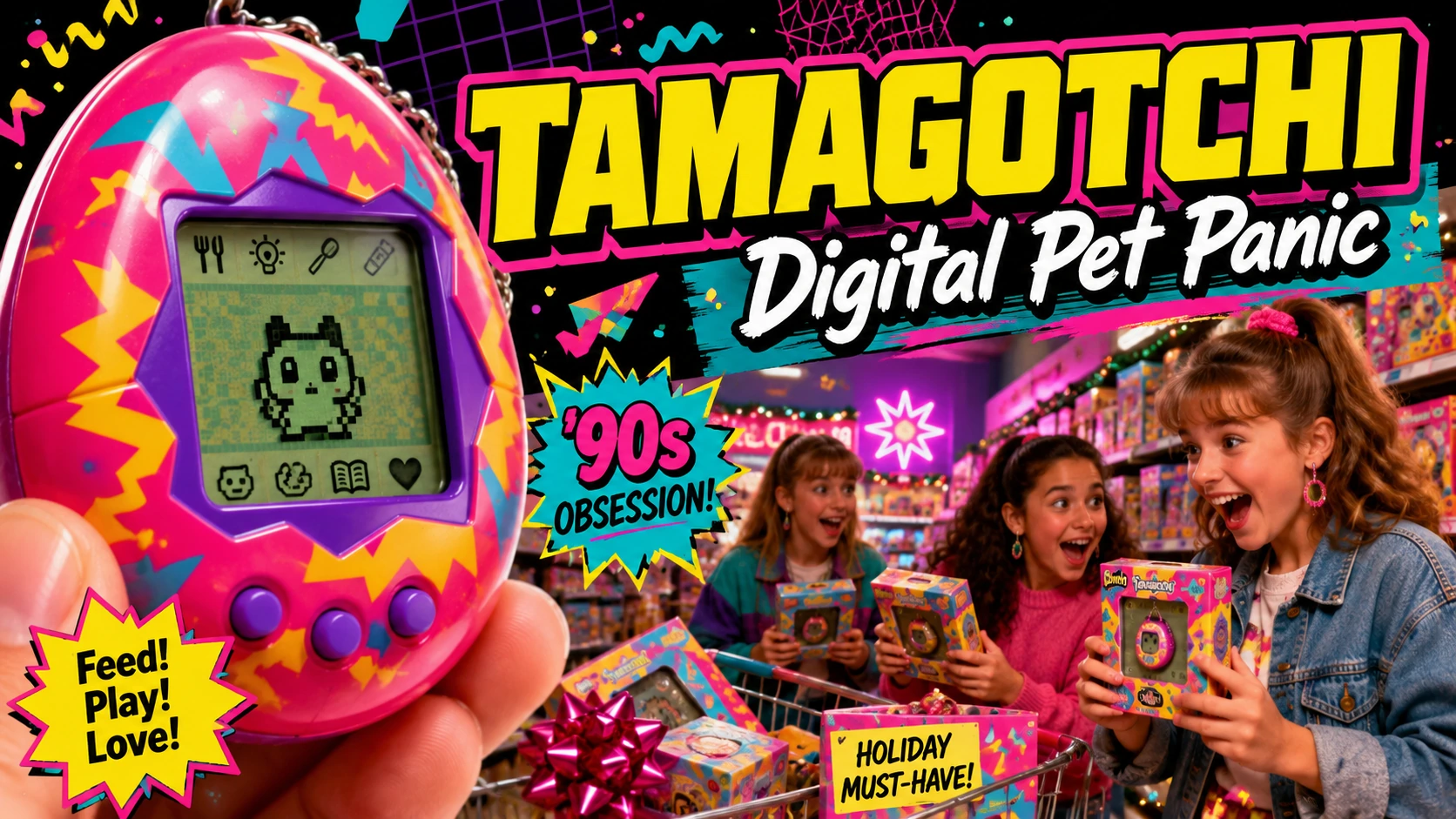
The Keychain Pet That Made Childhood Feel Like a 24-Hour On-Call Shift
Tamagotchi in the 90s: The Digital Pet Panic
The original Tamagotchi arrived in American toy aisles in 1997 looking like a tiny plastic egg with three buttons and a screen that could barely display a face. Then it hatched, beeped during math, demanded food, left pixel poop everywhere and died because somebody had soccer practice.
The 90s Tamagotchi craze turned a few black pixels into responsibility, status, guilt and school-policy chaos. We carried digital pets on backpacks, handed them to parents like emergency childcare and learned that technology did not need realistic graphics to make us emotionally responsible for it.
Why Did Tamagotchi Become Such a Huge 90s Digital Pet Craze?
The Tamagotchi craze exploded in 1997 because the toy was portable, affordable, social and emotionally demanding. The creature remembered how it had been treated, changed as it grew and could die from neglect. That made a few button presses feel more important than most full-size electronic games.
Tamagotchi also arrived at exactly the right moment. Kids were already carrying keychains, electronic games and portable toys. Schools had not yet developed rules for a device that demanded attention all day. Parents had not yet accepted that a child might hand them a screen and say, “Please keep this alive until three.”
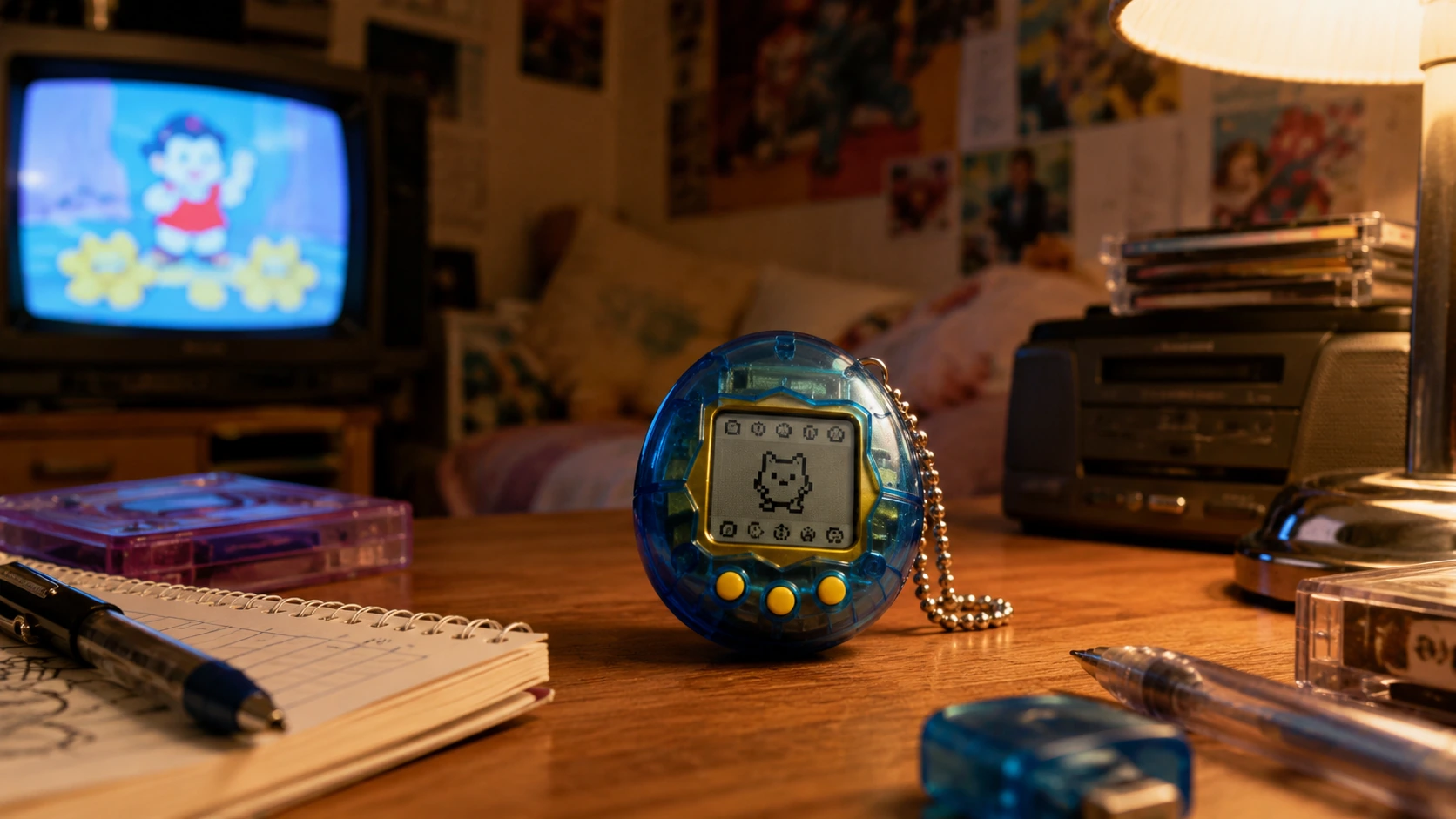
The Complete Egg-Shaped Emergency
The Full Story of Tamagotchi in the 90s
From its Japanese launch to school bans, dead batteries, rival digital pets and modern revivals, this is the whole keychain-sized saga.
Four Reasons a Few Pixels Became a Social Phenomenon
Why Tamagotchi Hit at Exactly the Right Time
The technology was simple. The emotional loop was years ahead of most toys sitting beside it.
It Remembered
The creature carried its health, age and care history forward. Play did not end when the device went back into a pocket.
It Interrupted
Beeps demanded attention on the toy’s schedule, not the owner’s. That made the relationship feel alive and made teachers absolutely delighted.
It Traveled
The egg-shaped keychain clipped to backpacks, belt loops and purses. The pet came to school, practice, the mall and anywhere else adults hoped for peace.
It Had Consequences
Neglect changed the outcome. Poor care could produce an unhealthy adult or an early death. The device made responsibility visible.
Before the Beeping Started
Who Invented Tamagotchi?
Tamagotchi grew from a deceptively simple idea: what if a pet could live inside a device small enough to carry everywhere?
Aki Maita and Bandai
Aki Maita worked at Bandai during the development of Tamagotchi and became closely associated with the product’s concept, target audience and launch. The idea centered on portable companionship rather than a traditional score-driven electronic game.
The toy was developed for young people who wanted the emotional experience of caring for a pet without the physical limits of carrying an animal around. That premise sounds obvious now because digital pets became a category. In the mid-90s, it was weird enough to be brilliant.
Akihiro Yokoi and WiZ
Akihiro Yokoi of the toy-planning company WiZ worked with Bandai on the product. The collaboration combined the portable-pet concept with a small LCD device, simple controls and a life cycle shaped by player care.
The development team did not need realistic animation. It needed recognizable behavior. Hunger, happiness, sickness, sleep and mess could all be represented through tiny icons and crude character sprites.
A Pet Instead of a Game
Most handheld electronic toys asked players to beat something: a score, a timer, an opponent or a level. Tamagotchi asked players to maintain a relationship.
There was still a performance system. Good care led to healthier characters. Poor care produced different results. But the scoring was hidden inside affection, guilt and curiosity.
The Teenage-Girl Audience
Bandai’s official history describes the original handheld care toy as becoming a major fad especially among high-school girls in Japan. That target mattered. The device was small, colorful, personal and designed to travel as an accessory as much as a game.
The audience quickly widened. Children, adults and collectors all found different reasons to carry one. Some wanted companionship. Some wanted the latest gadget. Some wanted to prove they could raise a better character than everybody else.
From Proposal to Product
The final design compressed an entire life simulation into an egg-shaped shell with three buttons. The owner could feed, clean, play, medicate, discipline and monitor the creature without navigating menus more complicated than a microwave clock.
That simplicity was essential. The creature felt mysterious, but the device remained understandable within minutes.
The Gen X translation: somebody put a needy roommate inside a keychain and gave it the confidence to interrupt algebra.
Why the origin matters: Tamagotchi was not simply a smaller video game. It was a portable relationship system disguised as a cheap plastic egg.
An Egg, a Watch and Three Buttons
The Tamagotchi Name and Original Design
The physical design communicated almost everything before the owner ever pulled the battery tab.
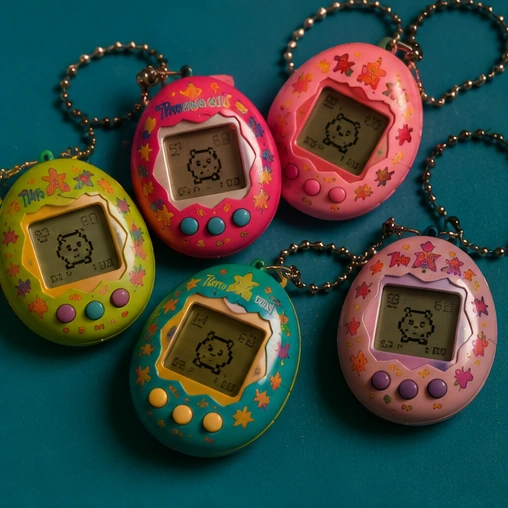
The Name
“Tamagotchi” combines the Japanese word tamago, meaning egg, with a form of the English word “watch.” The name captured both the shell shape and the idea of monitoring a creature over time.
The Egg Shape
The rounded shell looked friendly, organic and instantly recognizable. It also made the toy feel like something waiting to hatch instead of a generic electronic game.
The Keychain
The chain made portability part of the product. A Tamagotchi did not live in a toy box. It hung from a backpack where everyone could see the shell and hear the emergency.
The LCD Screen
The monochrome display used crude sprites, but the limited animation encouraged imagination. A few pixels could look hungry, sick, asleep or deeply disappointed.
The Three Buttons
The left button moved through icons, the middle button selected an action and the right button canceled or returned. The interface was small enough to memorize by recess.
The Icon Row
Food, light, game, medicine, toilet, status, discipline and attention icons turned care into a compact daily dashboard.
The Shell Colors
Different color combinations made the device a fashion choice. Two kids could own the same program and still argue that one shell was better.
The Beep
The sound was basic, sharp and impossible to mistake once a classroom had several devices. It communicated need without using words.
The Reset Button
A tiny recessed reset point offered a new beginning after death, mistakes or experimentation—assuming somebody could find a pen tip.
November 23, 1996
Tamagotchi Launches in Japan
Bandai released the original Tamagotchi in Japan on November 23, 1996, and the portable-care toy quickly became a major fad.
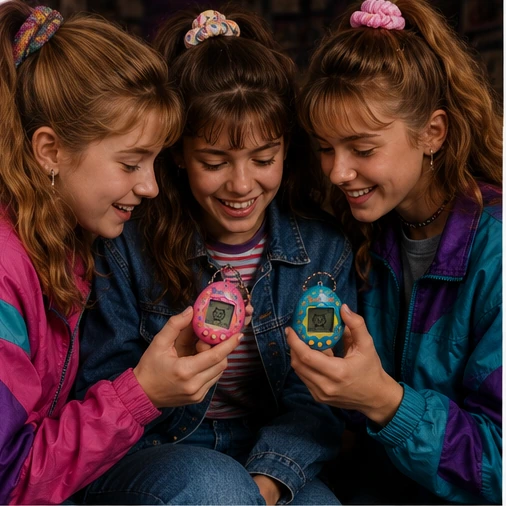
The First Audience
The original marketing emphasized teenage girls, who could carry the device as both pet and accessory. The shells were colorful, the characters were cute and the interaction fit into the gaps of everyday life.
Demand Outran Expectations
The device spread through schools, shops and media coverage. A toy that looked visually modest created enormous curiosity because owners could demonstrate its behavior in public.
One person feeding a digital creature was not much of a show. An entire group comparing ages, health and growth stages became a culture.
The Product Was Built for Demonstration
A Tamagotchi owner could explain the concept in seconds: it hatches, you care for it, it grows and it may die. The screen provided constant proof that the toy remembered what happened.
The Fad Becomes a System
As more people carried the devices, information became valuable. Owners compared routines, characters and mistakes. The product did not need a long rulebook because the community produced one through conversation.
The 1996 Toy Context
Japan’s launch belongs to the broader 1996 toy moment, when electronic play was becoming more portable, personal and persistent. Tamagotchi pushed all three traits into one tiny shell.
The key lesson from Japan: the toy became a phenomenon because it fit into daily life instead of asking daily life to stop for a game session.
America Gets a New Pocket-Sized Problem
The 1997 Tamagotchi Craze in the United States
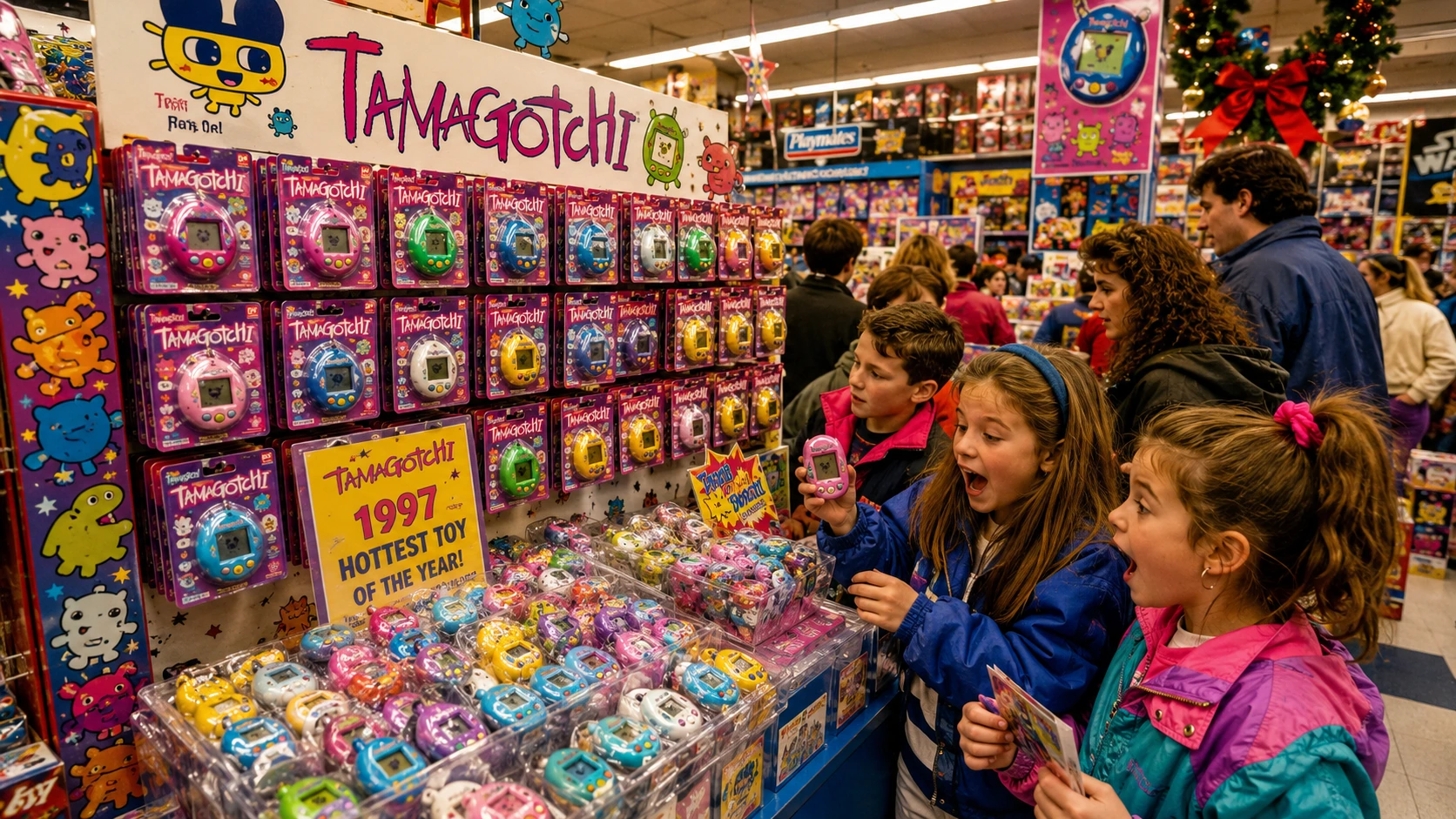
Bandai’s American release turned digital pet care into one of the defining toy stories of 1997.
The Toy Arrives With a Story Already Attached
Before many American kids saw the device in person, news coverage had already described the Japanese craze. That gave Tamagotchi the most effective possible introduction: a tiny imported toy supposedly everybody else already wanted.
The First Demonstration Sold the Idea
Retail packaging could show the egg and screen, but another kid explained the appeal better. The device had hatched. The creature had a name. It had been alive for a certain number of days. It had needs right now.
The owner did not merely possess the toy. The owner had a story in progress.
Stores Struggled With Demand
The early American rush created sellouts and waiting. Short supply made every sighting feel important, and the toy’s small size allowed stores to display a lot of urgency in very little space.
The Price Was Reachable
Tamagotchi cost far less than a game console or premium electronic toy. That helped the craze spread through birthday money, allowances and impulse purchases.
The Schoolyard Made It Visible
Backpacks became mobile displays. Shell colors identified owners from across a hallway. Beeps advertised the product during moments when advertising was absolutely not permitted.
1997 Was the Perfect Year
The biggest toys of 1997 included products built around collecting, interaction and portable identity. Tamagotchi combined all three while introducing a new idea: the toy could continue doing things while the owner was busy.
Adults Joined the Conversation
Parents debated whether the toy taught responsibility or manufactured anxiety. Teachers debated whether a pet with no pause button belonged in class. News outlets treated dead digital pets as evidence that the future had arrived and was already causing trouble.
The memory: seeing the first kid with one, hearing the explanation and realizing every existing keychain had suddenly become obsolete.
Why the American craze mattered: Tamagotchi made persistent virtual life mainstream before most households had reliable internet access.
Eight Icons, Three Buttons and Zero Respect for Your Schedule
How the Original Tamagotchi Worked
The original programming was simple enough for children to learn quickly and complicated enough to create real differences in outcomes.
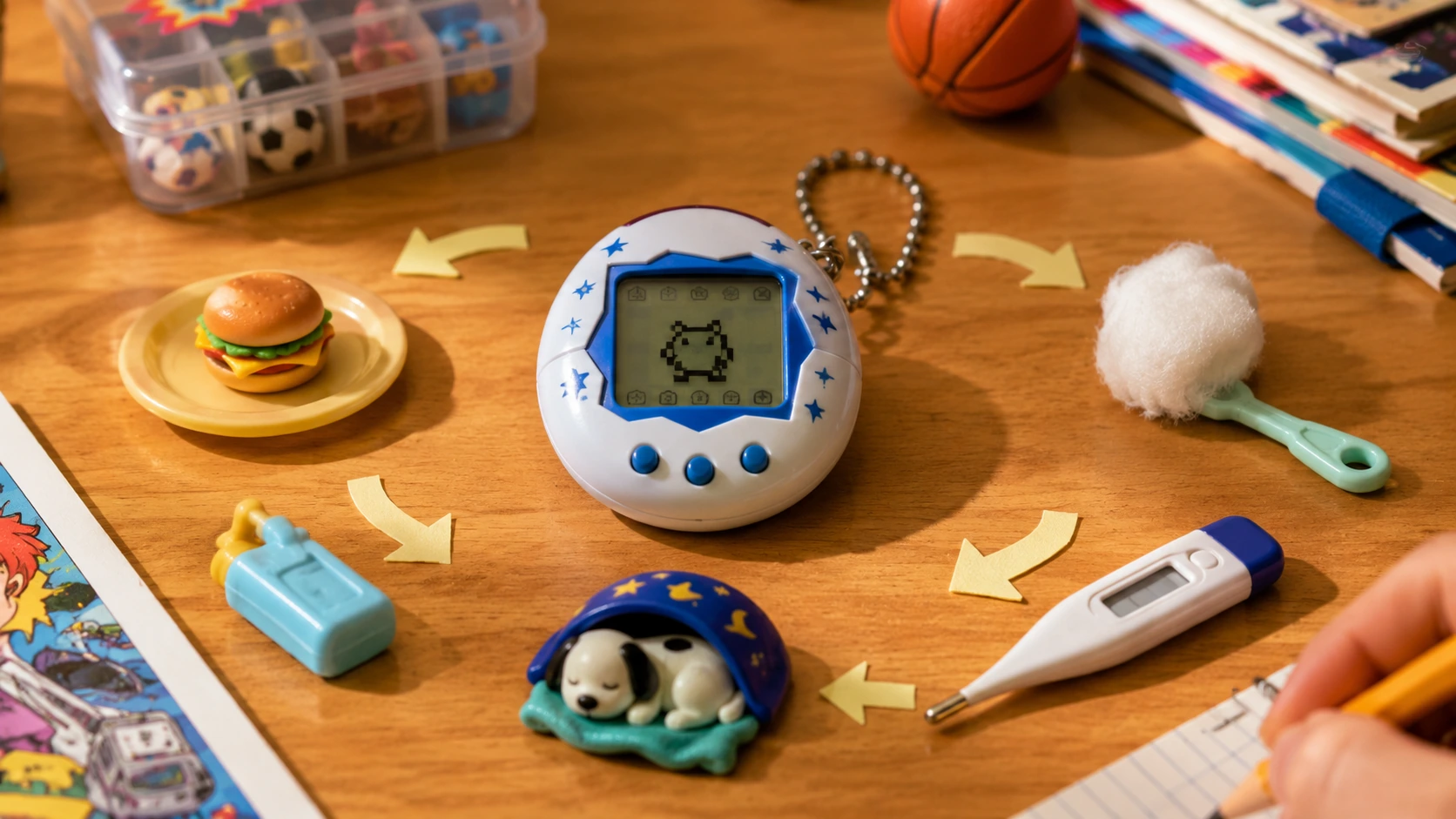
Owners checked age, weight, hunger, happiness, discipline and other condition information. The screen turned care into numbers and hearts.
Meals addressed hunger. Snacks could improve happiness, but overfeeding and careless routines could affect weight and health.
When the character slept, the owner turned the lights off. Forgetting made digital bedtime one more responsibility nobody expected from a keychain.
A simple guessing or movement game increased happiness and created brief active play between maintenance tasks.
Sickness required treatment. The creature might need more than one dose, teaching children that even virtual healthcare involved follow-up.
Owners cleaned waste after it appeared. Multiple unattended messes became the most visually efficient evidence of neglect.
If the pet called for attention without being hungry or unhappy, discipline could correct the behavior and affect development.
The attention icon signaled that something needed a response. The owner had to interpret the problem rather than press one universal rescue button.
The internal clock controlled sleeping and daily behavior. Setting it correctly mattered because the pet did not care about school schedules or daylight-saving confusion.
The genius of the interface: every action was easy, but the actions accumulated. Tamagotchi was not difficult because one task was hard. It was difficult because the pet kept existing.
Your Daily Pixel Shift
Feeding, Cleaning, Playing and Discipline
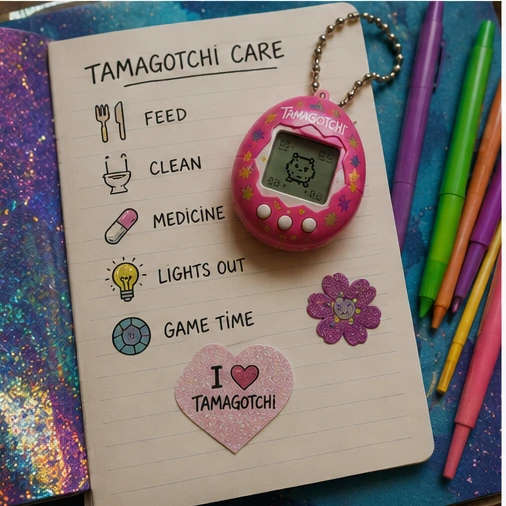
The original Tamagotchi converted ordinary maintenance into a constant emotional loop: notice, interpret, respond, worry and check again.
Hunger Was the Easy Problem
Empty hunger hearts had an obvious solution. Feed a meal until the meter improved. The challenge was remembering to check before the creature announced the problem.
Happiness Required Interaction
Games and snacks raised happiness. The game asked for attention, while snacks offered a faster shortcut with potential consequences. Even in primitive form, the device separated active care from convenient care.
Waste Made Neglect Public
Pixel poop was funny until several piles appeared on the screen. The mess communicated exactly how long the owner had been unavailable.
Cleaning was one button routine, but the device made the delay feel personal.
Sickness Created Urgency
A sick icon changed the mood immediately. Medicine might need to be given more than once. Owners learned to watch for recovery rather than assuming one response solved everything.
Discipline Was Confusing on Purpose
The pet sometimes called for attention while its hunger and happiness meters were full. That was the moment for discipline, not more food.
Many children responded to every beep with snacks because snacks seemed kinder. The resulting character politely documented the difference between affection and effective care.
Sleep Did Not Match Childhood
The creature followed its own schedule. Owners turned off the light when it went to bed and hoped it stayed quiet through the night.
Care Quality Shaped the Adult
The daily routine was not cosmetic. Neglect, discipline and attention influenced which adult character appeared. That gave every missed check long-term meaning.
The memory: pressing buttons in the dark because the pet woke up, while a parent in the hallway reconsidered every purchase decision since 1989.
A Life Cycle Small Enough to Fit Beside Your House Key
Tamagotchi Growth Stages and Characters
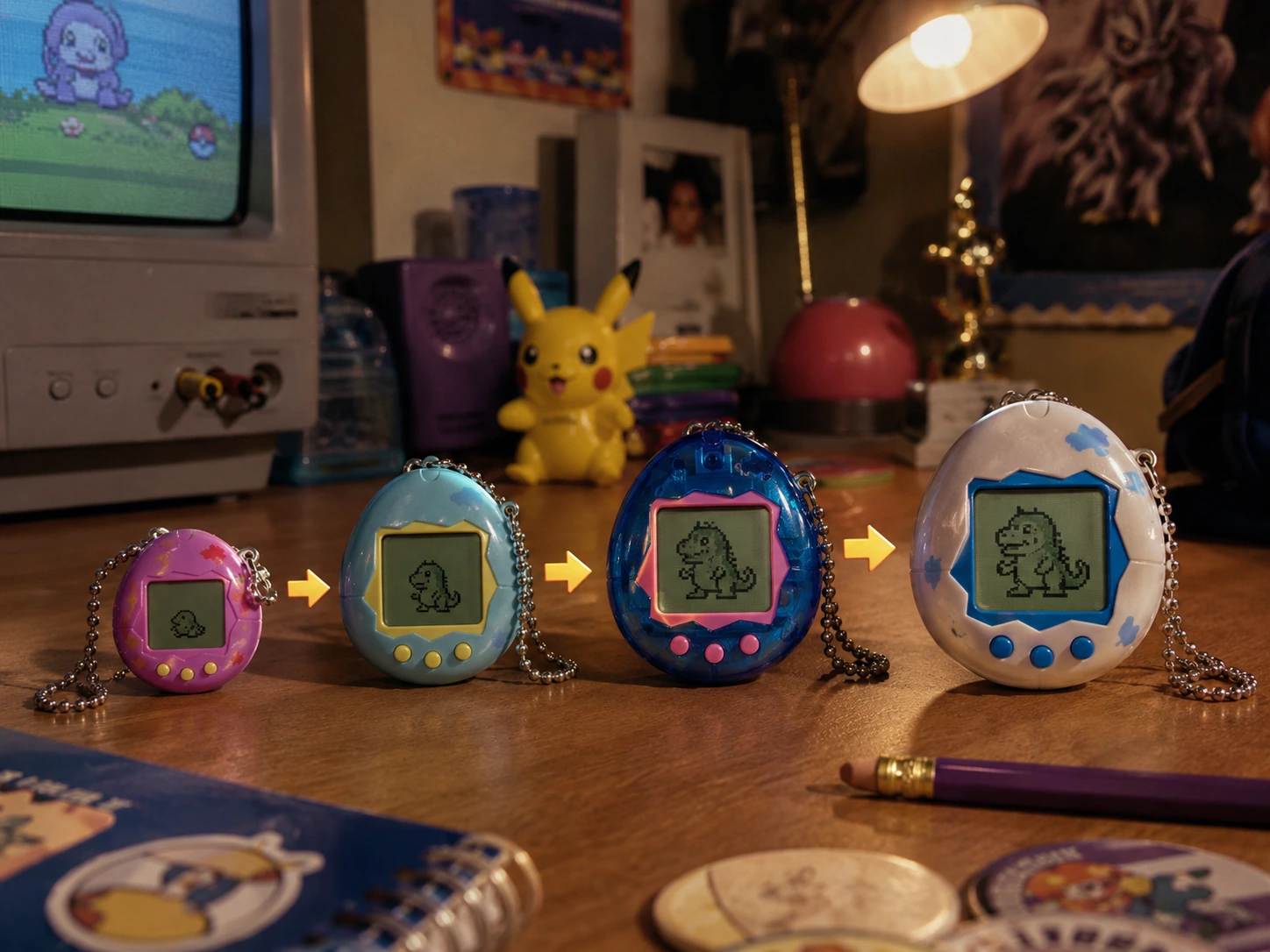
The creature’s appearance changed over time, turning every care decision into a possible explanation for what hatched next.
The Egg
The process began with an egg and a short wait. The anticipation made the device feel active before the owner had done anything.
Baby Stage
The newborn required frequent attention. Hunger and happiness changed quickly, introducing owners to the care loop at full volume.
Child Stage
The character became more recognizable and slightly more stable. Owners began comparing whether their pets looked the same.
Teen Stage
The next form hinted at the quality of care. A strange-looking teen generated hope, concern and immediate playground analysis.
Adult Stage
The adult character became the visible result of accumulated care, neglect, discipline and timing. Some outcomes carried more status than others.
Special Characters
Hidden or difficult characters created replay value and rumors. Every unusual adult became evidence that somebody had discovered a secret.
Age
The device counted days, giving survival a public score. A long-lived pet suggested competence even when a parent had handled half the shifts.
Weight
Meals, snacks and games affected weight. The number gave owners another metric to manage and another reason to distrust easy snacks.
Care Mistakes
Missed needs influenced development. Owners learned that small failures could accumulate even when the creature survived.
Why the Character System Worked
The original character graphics were crude, but the growth system made them meaningful. A desirable adult was not merely unlocked. It was raised.
That distinction encouraged replay. After death, an owner could reset and try a different routine. A disappointing character became a reason to improve rather than a reason to stop.
The device also created status without traditional competition. Kids did not fight one another through the original unit. They compared outcomes. The pet itself became the score.
Two Original Programs, a Thousand Playground Arguments
Generation 1 Versus Generation 2 Tamagotchi
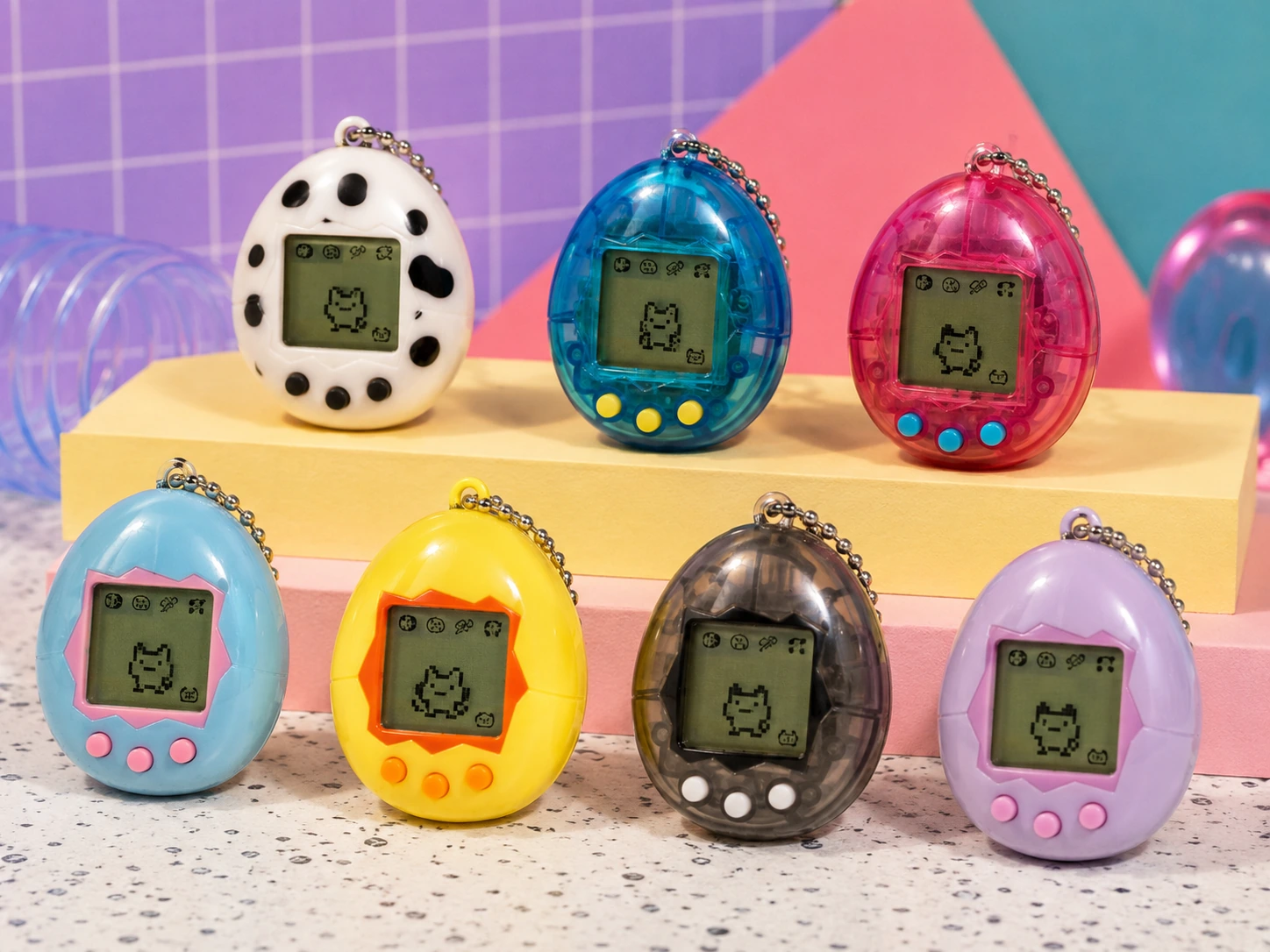
Bandai now describes the two classic programs as Generation 1 and Generation 2. They shared the same care concept but offered different characters and games.
Generation 1
The first program used the original character group and a simple character-direction guessing game. Mametchi became one of the most recognizable desirable adults associated with excellent care.
For many American owners, Generation 1 defined the basic Tamagotchi experience: egg, baby, growth, constant checking and eventual emotional damage.
Generation 2
The second program introduced a different character lineup and a number-guessing game. Mimitchi became the celebrated high-care adult in this version.
To a casual buyer, the units looked broadly similar. To a kid comparing pets at school, the character and game differences were enough to establish entire camps.
Collector note: shell graphics alone do not always explain the program to a modern buyer. Packaging, icon details and verified model information help separate Generation 1 from Generation 2 releases.
The First Device Teachers Wanted Turned Off Before Homeroom
Tamagotchi School Bans and Classroom Panic
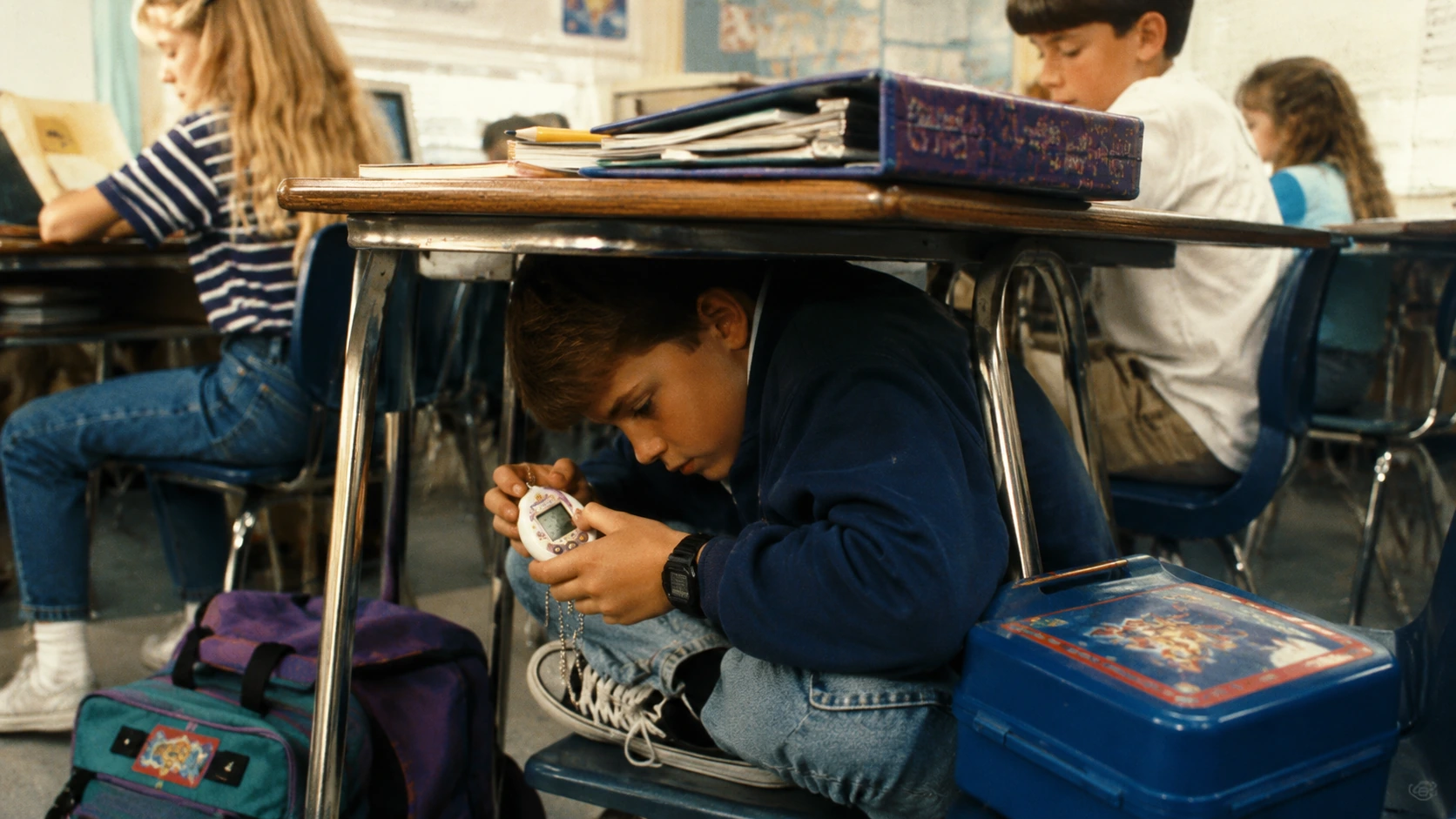
A Pog could sit quietly in a backpack. A Tamagotchi could create a medical emergency during a spelling test.
The No-Pause Problem
The original pet continued aging and developing while the owner was at school. Hunger, sickness and waste did not wait for recess.
That persistence gave children a practical reason to bring the device into class. Leaving it home was not neutral. Leaving it home could change the pet.
Beeps Made Private Play Public
A hidden toy could remain hidden until it made a sound. The attention beep told the room that somebody’s egg had needs.
Checking Became Compulsive
Even without a beep, owners wanted to inspect meters and make sure nothing had happened. The screen became a small uncertainty machine.
Schools Responded Quickly
Contemporary reports documented schools restricting or banning the devices because they distracted students. Some confiscated Tamagotchis until the end of the day. Others created local rules that sounded like early drafts of future cellphone policies.
Teachers Inherited the Consequences
Confiscating the toy could result in a dead pet, which transformed routine discipline into an emotional negotiation. A teacher did not merely take a gadget. The teacher supposedly endangered a dependent creature.
The Craze Spread Through the Ban
Restriction made the device more visible. A toy important enough to ban became even more interesting to students who did not own one.
Schoolyard Social Status
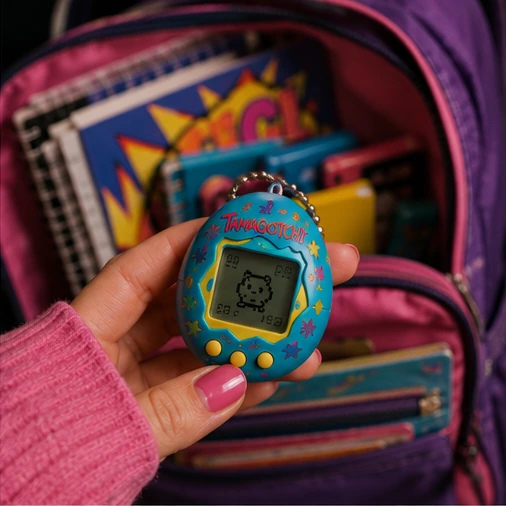
At recess, children compared shell colors, ages and adult characters. The exact school behavior belongs to the larger world of 90s schoolyard toys and recess crazes, where every portable object eventually developed rules, rumors and confiscation history.
The memory: a teacher placing three plastic eggs on the desk and an entire row of students silently calculating whether any would survive until the final bell.
Why schools pushed back: Tamagotchi did not merely compete for attention during playtime. It made neglect feel morally wrong during class.
Congratulations, Mom. You Have a New Job.
Parents Became Emergency Tamagotchi Caregivers
The device was marketed to children, but school, sports and bedtime made adults part of the care network almost immediately.

The Morning Handoff
Some children left the device with a parent before school to avoid confiscation or death. The instructions sounded simple: feed it, clean it and press medicine if it looks sick.
The emotional stakes were not simple. A wrong button could affect the character, and the child would return with questions.
Adults Learned the Interface Under Protest
Parents who had no interest in digital pets learned the icon row because nobody wanted to explain an avoidable death after school.
Three buttons looked easy until the creature beeped while the parent was on the phone, cooking dinner or trying to understand why discipline was different from food.
Workplaces Became Digital Daycare
Devices traveled to offices in purses and briefcases. A parent might check the pet during lunch, creating the surreal sight of adults managing pixel waste beside fax machines.
Older Siblings Became Unlicensed Sitters
Brothers and sisters inherited care shifts with uneven commitment. A successful day earned no recognition. A dead pet became permanent family evidence.
The Conflict Between Responsibility and Rescue
Adults could let the child experience the consequence of neglect or step in and preserve the creature. The toy created a parenting decision out of a blinking oval.
Battery Problems Belonged to Adults
When the screen faded or died, children saw catastrophe. Adults saw a tiny screw and a battery nobody remembered purchasing.
The classic sentence: “I kept it alive all day, but I am not doing this again tomorrow.”
It Was Not Real. The Routine Was.
Why Kids Became Emotionally Attached to Tamagotchi
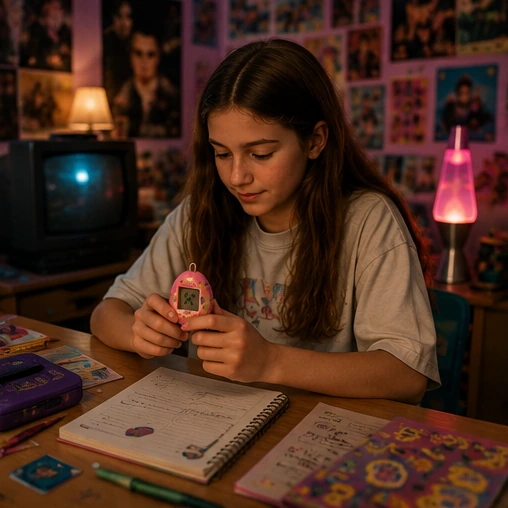
The attachment came less from graphical realism than from repeated care, memory and consequence.
It Needed You
The pet did not progress through automatic spectacle. It survived because the owner responded.
It Remembered
The device carried care forward. Yesterday’s neglect could shape tomorrow’s character.
It Grew
Physical change created the feeling of shared history. The adult represented time spent together.
It Interrupted
Unscheduled needs made the creature feel independent, even though every behavior came from simple programming.
It Could Be Lost
Death gave care emotional risk. The relationship had an ending the owner could blame on behavior.
It Was Public
Friends knew the pet’s age and form. Social recognition strengthened the attachment.
It Was Personal
Shell choice, nickname and routine turned a mass-produced device into one owner’s creature.
It Created Habit
Checking the screen became automatic. Habit can feel like affection when the object responds.
It Invited Projection
The pixels did not show much emotion, so owners supplied the personality themselves.
Tamagotchi predicted a central truth of later digital life: a screen does not need to look real when the routine around it becomes real.
The Screen Went Quiet and Childhood Learned Consequences
Tamagotchi Death, Resetting and Digital Guilt
Every original Tamagotchi story eventually reached the same screen: the creature was gone, and somebody began reconstructing the last several hours.
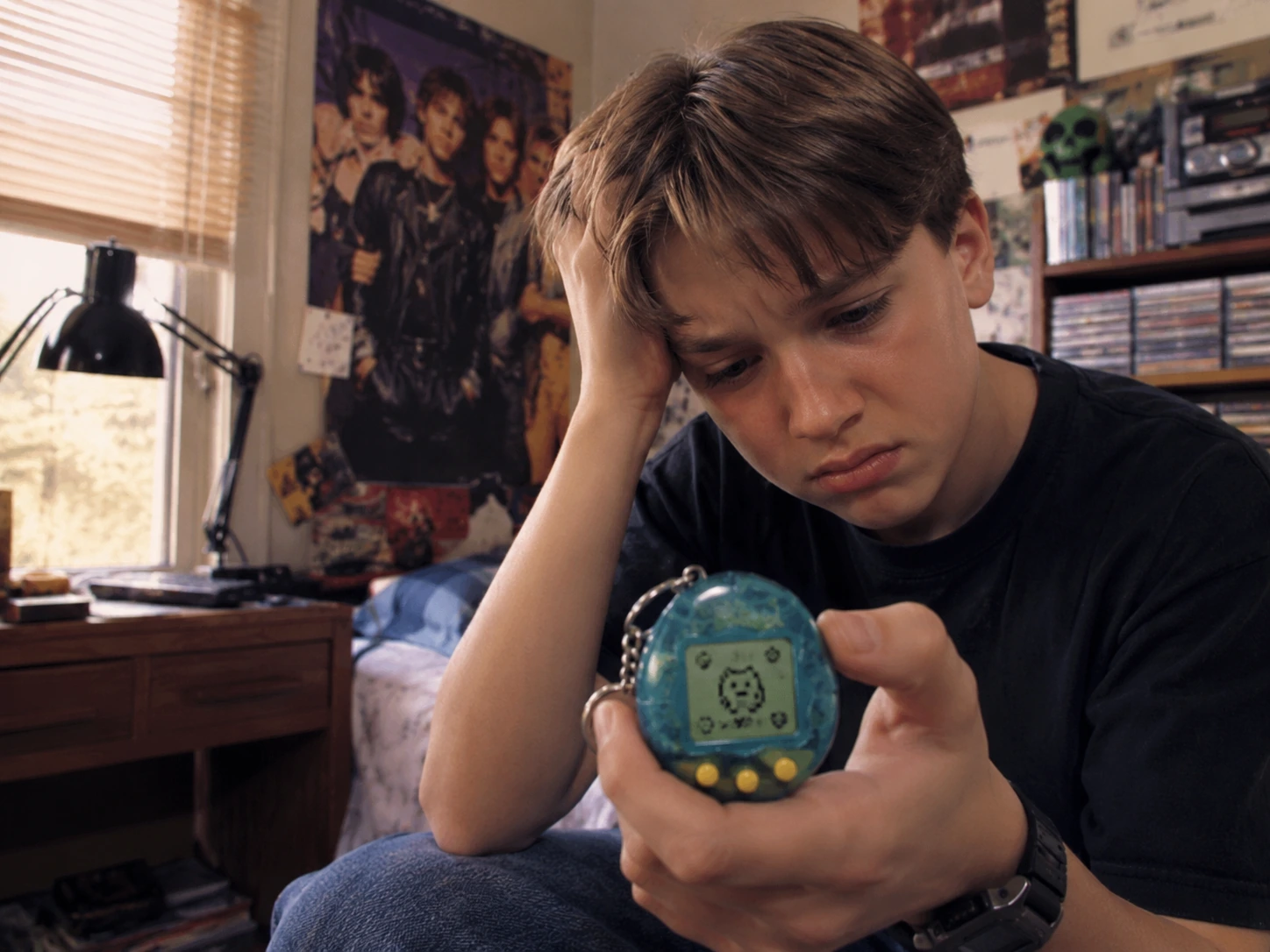
Death Was Part of the Design
The pet had a life span and could also die earlier from poor care. That made the experience finite even when the owner did everything well.
Owners Looked for a Cause
Was it hungry? Sick? Surrounded by waste? Overfed? Left alone too long? The device rarely offered a detailed postmortem, so guilt filled the information gap.
The Emotional Reaction Was Real
Children cried, became angry or blamed whoever had been responsible during the final hours. The pet was fictional, but the care routine and sense of failure were genuine.
Resetting Created Rebirth
A reset began a new egg and another attempt. The new pet did not erase the memory of the old one, but it turned failure into a strategy change.
Some Owners Used Time Tricks
Changing the clock could alter when the pet slept and help owners manage school or bedtime. The technique blurred the line between responsible scheduling and digital fraud.
Battery Failure Felt Different
A pet dying from neglect fit the rules. A screen disappearing because of a battery felt like the universe had violated the contract.
The Device Taught Impermanence
Most toys waited unchanged on a shelf. Tamagotchi made time visible. The creature aged whether the owner was ready or not.
The memory: staring at the final screen and insisting the death was caused by a defective battery, not the six hours spent at the mall.
Why death mattered: the possibility of loss transformed routine maintenance into emotional responsibility.
Every Playground Had an Expert With No Documentation
Tamagotchi Rumors, Secret Characters and Care Myths
The hidden care system encouraged experimentation, and the lack of clear information created perfect conditions for folklore.

The Perfect-Care Formula
Kids traded exact feeding and discipline routines supposedly guaranteed to produce the best adult. One missed step became the explanation for failure.
The Secret Character
Unusual adults inspired claims about hidden combinations, specific weights and impossible discipline percentages.
The Clock Trick
Owners changed time to force sleep or manage schedules. The technique worked for convenience but gained exaggerated powers in playground retellings.
The Button Combination
Every device craze produced a rumor about holding multiple buttons to unlock a hidden mode, revive a pet or reveal a special character.
The Snack Debate
Some owners treated snacks as harmless happiness. Others blamed them for weight, illness and every disappointing adult form.
The Discipline Confusion
Children often disciplined too little or at the wrong time because the device did not provide a moral explanation for misbehavior.
The Long-Life Story
Someone always knew a kid whose Tamagotchi had lived an implausibly long time, usually in another school district.
The Unkillable Pet
Rumors described versions or tricks that prevented death. The appeal was obvious: keep all the attachment and remove the consequence.
The Counterfeit Mystery
Knockoffs and rival devices were sometimes described as rare editions because nobody knew every shell and program.
The Program Was the Same. Your Egg Was Obviously Better.
Tamagotchi Shell Colors and Keychain Fashion
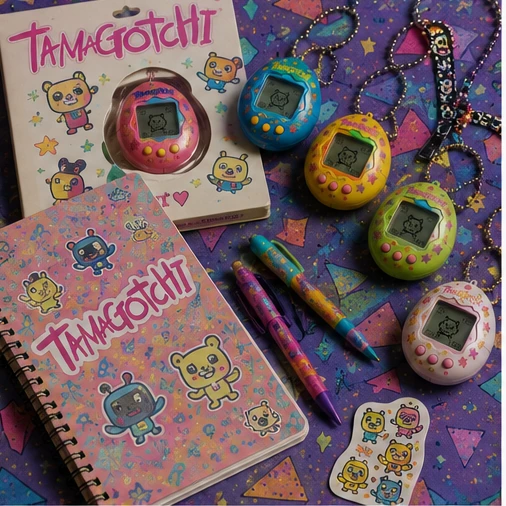
Shell design turned the virtual pet into a visible accessory. The outside mattered before the creature even hatched.
Color Created Identity
Bright solids, contrasting buttons, patterns and translucent plastics gave owners choices in a product category where the internal experience was similar.
The Keychain Display
Clipping the unit to a backpack advertised ownership. The shell became part of a larger collection of keychains, pins and zipper pulls.
Rare-Looking Did Not Always Mean Rare
A shell could look unusual because it was less familiar locally, not because few were produced. Modern collectors need exact model evidence rather than color-memory alone.
Wear Told the Story
Paint rub, scratches and a cloudy screen showed that a device had traveled through real childhood. Mint examples survived because somebody resisted using them, not because the plastic was indestructible.
The Fashion Accessory Angle
Bandai’s original audience and portable design made the shell a style object. Later reissues leaned into that history with new prints applied to classic programming.
The memory: identifying the owner from the shell hanging off the backpack before remembering the person’s name.
Once One Pixel Pet Worked, the Backpack Filled Up
Tamagotchi Versus Giga Pets, Nano Pets and Other Digital Pets
Tamagotchi created a market large enough for competing dogs, cats, dinosaurs, aliens and every other creature that could survive on a tiny LCD.
Tamagotchi
Core appeal: alien character growth, care quality and iconic egg-shaped design.
Social identity: the name that became shorthand for the whole digital-pet craze.
Giga Pets
Core appeal: recognizable animals and themed creatures in a competing keychain format.
Social identity: the major American rival that proved one brand would not contain the category.
Nano Pets
Core appeal: compact pet-care alternatives with different animals, shells and routines.
Social identity: another choice in a market where kids compared brands like sports teams.
Generic Virtual Pets
Core appeal: cheaper entry into the fad.
Social identity: sometimes fun, sometimes confusing and occasionally sold under a name that sounded legally adventurous.
How the Rivals Changed the Craze
Competing digital pets gave children species choices. One kid wanted the strange alien characters associated with Tamagotchi. Another wanted a dog or dinosaur that looked familiar from the first screen.
The rivals also created interface differences. Owners had to learn new icons, games and care timing. A child experienced in one device could still accidentally neglect another.
Most importantly, the competition transformed one hit into the larger 90s electronic-toy and digital-pet category. The exact Tamagotchi story belongs here; the broader wave includes every rival beeping from the same backpack.
The clean distinction: Tamagotchi is the exact-brand story—the creators, characters, care system and school panic. The broader electronic-toys page covers the entire category, including Giga Pets, Furby, Talkboy and the rest of the battery-draining neighborhood. Tamagotchi owns the exact brand, history and cultural panic. The broader electronic-toys page owns category discovery across Tamagotchi, Giga Pets, Furby, Talkboy and other devices.
Care Meets Competition
Tamagotchi and the Rise of Digimon
Bandai’s Digital Monster line took the virtual-pet concept toward raising, connecting and battling, eventually becoming the Digimon franchise.
A Different Audience and Tone
Tamagotchi centered care, cute characters and everyday responsibility. Digital Monster used training and combat to create a more competitive experience.
Connection Changed the Social Loop
Raising a creature was no longer only about comparing screens. Devices could interact, making the pet useful in direct competition.
The Shared Design DNA
Both lines used compact hardware, evolving creatures and player behavior to determine outcomes. The core idea remained persistent digital life.
Why the Difference Matters
Tamagotchi’s cultural identity comes from care and interruption. Digimon grew into games, animation and battles. Treating them as the same product misses what made each one powerful.
The Legacy of the Split
The two approaches anticipated later virtual-creature games: one path emphasized companionship and maintenance, while the other emphasized training and competition.
Why Digimon belongs in the story: it showed that the same tiny-device concept could support an entirely different emotional relationship with a digital creature.
The Commercial Showed the Fun. The School Day Revealed the Contract.
Tamagotchi Commercials, Toy Stores and Shortages
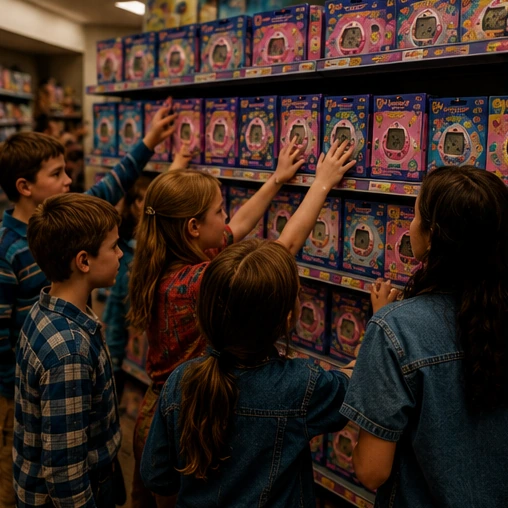
Commercials Explained the Life Cycle
Advertising emphasized hatching, feeding, growth and portability. The device looked cute, social and easy to understand.
The commercials did not need to explain how emotionally serious the owner would become after three days. The toy handled that after purchase.
Small Packaging Created Big Displays
Retailers could hang many units on pegs, but sellouts made even a large display disappear quickly. That hunt belongs to the larger world of 90s toy-store culture, when shipment days, mall stops and one empty hook could change the entire weekend.
Shell Choice Encouraged Browsing
Parents might find the toy but not the exact color requested. During a craze, compromise entered the shopping process: any authentic egg was better than no egg.
News Coverage Amplified Demand
Stories about Japanese popularity, school bans and emotional attachment made Tamagotchi more than a toy advertisement. Adults who had never seen a commercial still knew about the fad.
The 90s Toy-Commercial Ecosystem
Tamagotchi belongs in the larger archive of 90s toy commercials and vintage ads, but its real commercial ran every time a classmate checked the screen.
Fast-Food Recognition
The egg silhouette became so recognizable that later promotional versions could evoke the craze even without reproducing the full electronic experience. That connection appears in the history of 90s Happy Meal toys and fast-food giveaways.
The memory: a toy-store employee saying the next shipment might arrive Thursday and five parents silently reorganizing Thursday.
The Future Arrived as a Plastic Egg With Bathroom Needs
Tamagotchi in Late-90s Culture
The toy became a symbol of digital attachment before most people had language for digital attachment.
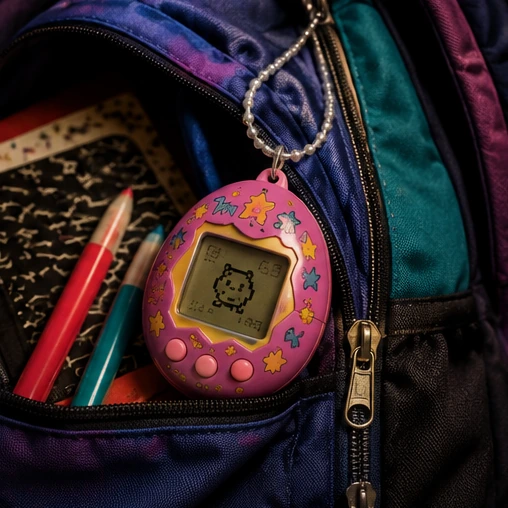
Portable Identity
The shell on a backpack communicated taste, trend awareness and ownership of the latest technology.
Digital Responsibility
Adults debated whether the toy taught care or simply trained children to respond to alarms.
School Policy
Teachers confronted a device whose program did not respect class periods, foreshadowing later conflicts over phones and notifications.
Media Curiosity
News stories treated virtual grief as both novelty and warning. A dead pixel pet became a debate about children and technology.
Japanese Pop Culture
Tamagotchi became one of the era’s most visible Japanese consumer exports, arriving alongside growing Western interest in anime, games and character culture.
Early Digital Companionship
The device showed that people could bond with a simple programmed entity through routine and response.
Accessory Technology
Tamagotchi was electronics worn openly, years before smart devices made screens part of personal style.
Always-On Play
The game continued outside a formal session. That persistent design now feels ordinary; in 1997 it felt slightly unfair.
Generational Memory
Anyone who owned one remembers not only the toy but the responsibility: the beep, the handoff, the death and the reset.
The device also crossed into the decade’s larger collectible-toy craze: different shells, character outcomes and competing brands gave kids one more reason to compare, trade information and insist that their version was obviously better.
The Pets Died. The Category Became Crowded. Recess Moved On.
Why the Original Tamagotchi Craze Faded
The first wave was enormous, but constant care and rapid competition made the market difficult to sustain at peak intensity.
Care Fatigue
The routine that created attachment also created exhaustion. Owners could become tired of feeding, cleaning and checking.
Repeated Death
Resetting offered another chance, but each new life repeated the same maintenance loop.
School Restrictions
Bans removed the device from the environment where the craze spread most visibly.
Market Saturation
Competitors and knockoffs filled stores with similar devices, reducing the original product’s novelty.
Overproduction
Once supply caught up, shortage urgency weakened. A device available everywhere looked less magical than one nobody could find.
Limited Original Gameplay
The original loop was elegant but narrow. Owners who had raised several pets knew most of the routine.
Battery and Hardware Wear
Fading screens, dead batteries and lost screws sent devices into drawers.
New Toy Crazes
Pokémon, Furby and other late-90s hits offered new collecting, interaction and media worlds.
Trend Velocity
Schoolyard culture moved quickly. The same network that made Tamagotchi unavoidable could make the next craze unavoidable months later.
The important distinction: the fad faded, but the design idea did not. Persistent virtual creatures became a permanent part of games, toys and digital culture.
By the time the biggest toys of 1999 arrived, Pokémon, Furby and newer electronic crazes had pushed the original pixel-pet emergency out of the center aisle.
The Egg Never Stayed Dead for Long
Tamagotchi Returns: Connection, Reissues and Modern Generations
Bandai repeatedly revived the concept with new communication features, screens, characters and ways to play.
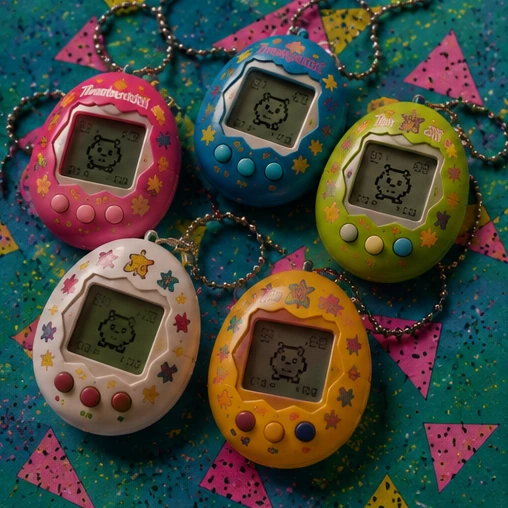
1998 Variations
The first era expanded through themed releases and different character programs, extending the basic care formula.
2004: Tamagotchi Plus and Connection
The brand returned with infrared communication, allowing devices to interact and giving the social experience a new hardware feature.
2017: Original Reissue Era
Anniversary releases brought classic programming and miniature or updated shells back to nostalgic adults and new owners.
Modern Tamagotchi
Later lines added color screens, cameras, wireless features, expanded worlds and branded character collaborations.
Why the 2004 Return Worked
The Connection era preserved the care relationship while adding interaction between devices. The pet could participate in a network instead of living entirely alone.
Nostalgia Became a Feature
Modern Original Tamagotchi products openly use classic programming and 90s-inspired shells. Adults can buy the experience they remember without hunting down fragile vintage hardware.
The Brand Expanded Beyond One Device
New generations introduced additional technology while retaining feeding, growth and character development. Licensed Nano devices applied the care format to major entertainment franchises.
Worldwide Longevity
Bandai’s official history reports more than 100 million Tamagotchi units shipped worldwide since 1996 as of July 2025. The number confirms that the brand outlived the original fad by becoming a platform rather than one frozen product.
Why the Original Still Matters
Modern features can be broader and more forgiving, but the original remains the purest version of the concept: three buttons, one screen and a creature that refuses to respect your schedule.
Why the revivals matter: Bandai kept changing the technology while preserving the emotional loop that made the first egg impossible to ignore.
Collect the Shell, Verify the Version, Respect the Battery Compartment
How to Collect Original Tamagotchi Today
Vintage value depends on exact version, shell, condition, packaging and buyer demand—not one dramatic online asking price.
Determine whether the unit uses Generation 1, Generation 2 or a later themed program. Character and game differences matter.
Compare logos, shell details, button placement, rear markings, screen icons and packaging with trusted references.
Look for dead segments, heavy scratches, dark bleeding, weak contrast or corrosion-related damage.
Old batteries can leak and damage contacts. Ask for clear photographs before buying an untested unit.
Battery-cover screws are often stripped, missing or replaced after decades of battery changes.
Paint rub, yellowing, scratches and missing graphics affect display quality and collector interest.
Use recent completed sales for the same model and condition. An unsold listing is not a market result.
Sealed or complete examples can command more interest, but packaging must match the device and region.
A working reissue may provide more enjoyment than an expensive vintage unit too fragile to use.
Value boundary: this page owns Tamagotchi history and the 90s craze. Current pricing changes constantly and should be checked through recent sold comparisons rather than permanent price tables.
Do Not Let a 1997 Battery Finish the Job
Tamagotchi Battery, Cleaning and Storage Care
Remove Old Batteries
Do not leave a vintage device stored for years with a battery installed. Leakage can corrode contacts and spread damage through the compartment.
Use the Correct Battery
Check the model’s official battery specification rather than assuming every egg uses the same cell.
Open the Cover Carefully
Use the correct screwdriver size and firm pressure. A stripped screw can make future service difficult and reduce collector appeal.
Keep Moisture Away
LCD electronics, battery contacts and printed shells do not benefit from damp basements, humid storage or aggressive liquid cleaning.
Avoid Heat and Sunlight
Heat can affect electronics and plastic. Sunlight can fade shell graphics and discolor materials.
Clean the Exterior Gently
Use a soft dry cloth first. Strong solvents may remove printing or damage the shell finish.
Store the Chain Without Scratching
Metal hardware can rub against the screen and shell. Wrap or position it separately during storage.
Photograph Markings
Document the front, back, battery compartment and packaging. Clear records help identify the exact model later.
The practical rule: remove the battery, keep it dry and do not clean 90s printing like you are stripping paint from a deck.
From One Egg to More Than 100 Million Shipments
Tamagotchi Timeline: 1996 to the Modern Era
The original craze burned fast, but the brand kept hatching new versions for new generations.
1996: Japan Launch
Bandai releases Tamagotchi on November 23. The handheld care toy becomes a major fad, especially among teenage girls.
1997: Global Craze
Tamagotchi reaches American and European markets, sells out, enters classrooms and triggers school restrictions.
1998: Variations and Competition
The first era expands while rival digital pets and new toy crazes crowd the category.
2004: Connection Era
Tamagotchi returns with infrared communication and new social play.
2017: Anniversary Reissues
Classic-style devices return for nostalgia buyers and a new generation.
Modern Generations
Color screens, cameras, connectivity and collaborations expand the brand while classic Originals remain available.
2025: 100 Million Milestone
Bandai reports more than 100 million units shipped worldwide since the 1996 debut.
The Original Keeps Beeping
The classic program survives because the basic care loop remains immediately understandable and emotionally effective.
How a Perfectly Good Pet Became a Questionable Adult
The Tamagotchi Care Mistakes That Changed Everything
The original program did not grade one dramatic decision. It quietly counted patterns, missed needs and badly timed kindness.
Ignoring Attention Calls
A beep meant the owner needed to investigate. Waiting too long could create a care mistake even if the problem seemed small when the screen was finally checked.
Feeding Instead of Disciplining
When hunger and happiness were full but the pet still called, the correct response could be discipline. More food solved the wrong problem and rewarded bad behavior.
Using Snacks as a Shortcut
Snacks could raise happiness quickly, which made them tempting during school or family chaos. Overuse could push weight and health in the wrong direction.
Leaving Waste on the Screen
One pixel pile looked funny. Repeated messes communicated neglect and could contribute to sickness.
Missing Sickness
A sick pet needed medicine and follow-up. Giving one dose without checking recovery could leave the owner feeling falsely heroic.
Forgetting the Lights
Sleep required the owner to turn out the light. The task was tiny, but it reinforced the idea that the pet’s routine continued after the owner wanted to stop.
Incorrect Clock Settings
A wrong time shifted sleeping and waking into inconvenient hours. The pet might seem unusually difficult when the real problem was the clock.
Care by Committee
Parents and siblings sometimes used different routines. The child returned to a pet shaped by several conflicting management philosophies.
Checking Too Late
The device created consequences through delay. By the time the screen looked obviously bad, several smaller needs might already have been missed.
The cruel brilliance: Tamagotchi never needed to tell you exactly which mistake ruined the run. Uncertainty guaranteed another reset and another attempt.
A Habit Loop Before We Knew the Phrase
The Psychology Behind the Tamagotchi Obsession
The toy combined uncertainty, responsibility and social comparison in a device small enough to check every few minutes.
Variable Reward
Most checks revealed nothing dramatic. Occasionally the pet evolved, became sick or needed immediate care, making repeated checking feel justified.
Loss Aversion
Owners did not only want a good character. They wanted to avoid losing the time already invested.
Commitment
Each feeding and cleaning action increased the sense that the creature mattered because effort had already been spent.
Uncertainty
The hidden growth formula made every decision feel meaningful and every unusual result worth discussing.
Social Comparison
Age, shell, character and survival time created status without direct competition.
Responsibility
The owner’s choices shaped the outcome, making success feel earned and failure feel personal.
Anthropomorphism
Owners supplied emotions and personality the crude graphics could not display.
Interruptions
The beep trained immediate response. The device’s schedule temporarily outranked homework, meals and adult conversation.
Identity
Carrying a Tamagotchi signaled participation in the craze. The pet and shell became part of the owner’s public image.
The original Tamagotchi was not addictive because the screen offered endless content. It was compelling because the owner feared missing the one moment that mattered.
The Original Egg Starts Producing Cousins
Tamagotchi Angel, Ocean and Other 90s Variations
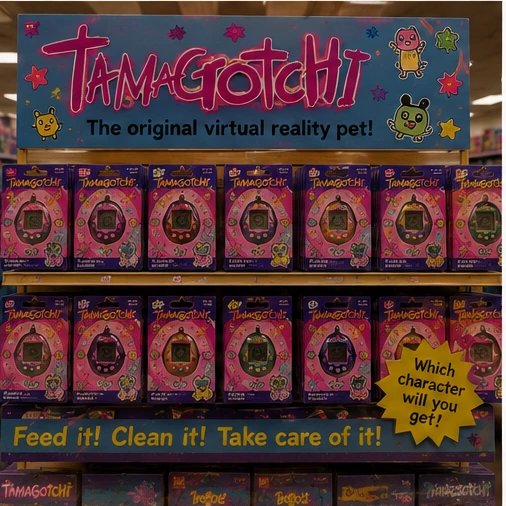
Once the care formula worked, Bandai could change the characters, setting and difficulty without rebuilding the entire relationship.
Tamagotchi Angel
The Angel version reframed the experience around caring for an angel character after death. The concept extended the original life-cycle idea into a themed afterlife with new icons and behaviors.
Tamagotchi Ocean
Ocean placed the creature underwater and developed a reputation among collectors for a demanding care routine. The version showed how changing timing and hazards could make familiar hardware feel much harder.
Character-Specific Programs
Japan received many themed releases with different creatures and mechanics. The basic egg-and-care design became a platform for experimentation.
Why Variations Helped and Hurt
New versions gave existing owners another reason to buy. They also made the market harder for casual families to understand. A child no longer wanted “a Tamagotchi.” The child wanted a specific shell and program.
Regional Differences
Not every Japanese release reached North America. Modern collectors often encounter versions they never saw in 90s stores, which can make ordinary regional releases appear mysterious.
Collector Confusion
Similar shells, renamed generations and decades of reissues require careful identification. A modern product using classic programming is not automatically an original 1997 unit.
The memory: finally understanding the first egg just in time for somebody to arrive with an angel, ocean creature or digital dinosaur governed by completely different rules.
The Toy Was Cheap. The Household Management Was Not.
How Tamagotchi Changed Family Routines
The device created a tiny economy of batteries, replacement units, negotiated care and emergency store trips.

The First Purchase Was Only the Beginning
A child who loved one shell quickly noticed other colors and versions. Competing digital pets expanded the wish list further.
Batteries Became Essential Supplies
A dead battery could erase progress or end play. Families began keeping replacement cells for a toy that had become emotionally important.
Replacement After Loss
The keychain made the device portable and easy to lose. A missing Tamagotchi created both emotional grief and the practical question of buying another.
Care Became Negotiable Labor
Children traded chores, favors and promises in exchange for daytime pet care. Parents discovered they had leverage over a creature made of pixels.
Multiple Pets Created Multiple Shifts
Owning more than one device sounded exciting until several creatures beeped with unrelated needs. The collection became a care department.
Sibling Conflict
Sharing one device could mean sharing credit for a good character and assigning blame for every care mistake.
The Drawer Full of Dead Electronics
When interest faded, units joined watches, keychain games and calculators in a drawer. Years later, the forgotten egg became a perfect nostalgia trigger.
The family reality: the device belonged to the child until it needed batteries, supervision, repair or an explanation.
A Rare Shell Is Not Every Shell You Do Not Recognize
Original Tamagotchi Collector Myths
Modern listings often mix original units, international versions, reissues and wishful pricing into one digital-pet soup.
Myth: Every 1990s Tamagotchi Is Expensive
Age alone does not create collector value. Condition, exact shell, program, packaging and demand all matter.
Many units were used heavily, but large numbers were also sold. A familiar shell in average condition may remain affordable.
Reality: Exact Identification Comes First
A rare or desirable model needs evidence. Compare logos, rear markings, program details, packaging and documented release information.
Recent completed sales for the same model provide better evidence than a dramatic listing with no buyer.
“Vintage” Can Be Vague
Some sellers use the word for later Connection units or modern reissues. Confirm the actual production era.
Unusual Color Is Not Proof
A shell unfamiliar in one country may be a normal regional release elsewhere.
Sealed Is Not Automatically Original
Modern Original Tamagotchi products also come in packaging. Read the branding and model details.
Untested Means Unknown
An untested device may need a battery—or may have corrosion, screen failure or damaged controls.
Counterfeits Exist
Bandai maintains anti-counterfeiting guidance because unauthorized products can imitate the egg format and branding.
Working Condition Has Layers
A unit may power on but still have weak pixels, poor sound, unreliable buttons or battery-contact issues.
We Practiced Notification Anxiety Before Owning Phones
Why Tamagotchi Still Matters
The original device was primitive hardware running a remarkably modern relationship loop.
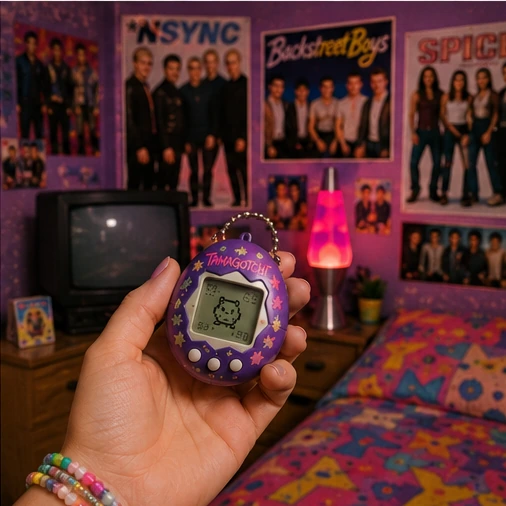
Persistent Play
The game continued between sessions. Modern mobile games, life simulations and connected toys now treat persistence as normal.
Notification Behavior
The beep trained owners to respond to a device’s needs immediately, years before phones claimed the same authority.
Digital Attachment
Tamagotchi proved emotional connection did not require realistic graphics or complex artificial intelligence.
Outcome Through Care
The creature reflected owner behavior, making the result feel personal rather than random.
Portable Identity
The shell and character became visible parts of the owner’s social identity.
School-Tech Conflict
The classroom ban anticipated later arguments over phones, notifications and always-on devices.
Virtual Pet Genre
Tamagotchi helped establish the digital-pet category and influenced later toys and games built around care.
Global Character Brand
The product grew from one device into a long-running world of characters, games and collaborations.
Perfect 90s Memory
It was optimistic, portable, Japanese, electronic, slightly stressful and guaranteed to disappear into a drawer with a dead battery.
Tamagotchi did not predict the smartphone because it had advanced technology. It predicted the smartphone because it taught us to feel responsible when a screen wanted attention.
Tamagotchi also sits beside the decade’s video-game toys and handhelds, the point where backpacks started carrying screens, save states, link cables and enough batteries to qualify as infrastructure.
Keep the Toy Aisle Rewinding
More 90s Electronic Toys and Giant Crazes
Because 1997 Playground Testimony Is Not Peer Review
History, Product and Source Notes
Launch dates, worldwide shipment history and revival milestones were checked against Tamagotchi’s official history, Bandai’s Original Tamagotchi product information, Bandai’s official anti-counterfeiting history, and Bandai Namco’s corporate timeline. Original care functions were cross-checked against Bandai’s current classic-program descriptions. Contemporary U.S. craze and school-ban context was checked against Wired’s April 1997 coverage and the Honolulu Star-Bulletin’s June 1997 school report. Long-term cultural context was checked against The Strong National Museum of Play. Current collector values are intentionally not listed because shell, version, condition and sold-market evidence change continuously.
Frequently Asked Pixel-Pet Questions
Tamagotchi in the 90s FAQ
When did Tamagotchi first come out?
Bandai released Tamagotchi in Japan on November 23, 1996. It reached the United States and other international markets in 1997.
Who invented Tamagotchi?
Tamagotchi was developed through a collaboration involving Aki Maita of Bandai and Akihiro Yokoi of WiZ.
What does Tamagotchi mean?
The name combines the Japanese word tamago, meaning egg, with a form of the English word “watch.”
Why was Tamagotchi shaped like an egg?
The egg shape supported the idea that a creature would hatch from the device and made the small shell friendly, portable and immediately recognizable.
Why were Tamagotchis so popular in the 90s?
They were portable, affordable and emotionally demanding. The creature grew based on care, remembered neglect and could die, making a simple electronic toy feel personal.
When did Tamagotchi become popular in America?
The major American craze began in 1997 after the toy’s international release and extensive coverage of its popularity in Japan.
How did the original Tamagotchi work?
Owners used three buttons and a row of icons to feed the pet, play a game, clean waste, give medicine, turn out lights, check health and apply discipline.
Could the original Tamagotchi be paused?
The original devices did not have a normal pause function. Owners sometimes changed the clock to put the pet into a more manageable sleep schedule.
Why did schools ban Tamagotchi?
The devices beeped, required repeated attention and could become sick or die during class. Many schools considered them a constant distraction.
Did parents really take care of Tamagotchis during school?
Yes. Many children left their devices with parents or relatives so the pets would survive while toys were restricted at school.
What happened if you neglected a Tamagotchi?
Hunger, unhappiness, waste and sickness could accumulate. Neglect affected growth and could lead to an early death.
Why did Tamagotchi death feel upsetting?
The owner had invested repeated care over several days and could connect the death to missed needs. The emotional routine was real even though the creature was digital.
Could you bring a dead Tamagotchi back?
The original program required a reset and a new egg. The new creature began another life rather than reviving the exact previous pet.
What were Tamagotchi care mistakes?
Care mistakes generally involved failing to respond promptly to hunger, unhappiness, sickness, waste or incorrect attention calls. They influenced development.
What were the Tamagotchi growth stages?
The classic life cycle moved from egg to baby, child, teen and adult, with the final character influenced by care.
What was the best original Tamagotchi character?
Collectors often treat Mametchi in Generation 1 and Mimitchi in Generation 2 as high-care outcomes, but personal favorites vary.
What is the difference between Tamagotchi Generation 1 and Generation 2?
They use different character lineups and different mini-games. Generation 1 uses a character-direction game, while Generation 2 uses a number-guessing game.
Were Giga Pets the same as Tamagotchi?
No. Giga Pets were a competing digital-pet line with their own hardware, characters and care programs.
What were Nano Pets?
Nano Pets were another competing family of handheld virtual pets that expanded the late-90s digital-pet category.
Is Digimon related to Tamagotchi?
Both were Bandai virtual-creature products built around raising and development. Digital Monster emphasized connection, training and battle and later became the Digimon franchise.
Why did the original Tamagotchi craze fade?
Care fatigue, school restrictions, market saturation, competitors, overproduction and newer toy crazes reduced the first wave’s momentum.
When did Tamagotchi come back?
Bandai launched a major revival in 2004 with Tamagotchi Plus and Tamagotchi Connection, which added infrared communication.
Are original-style Tamagotchis still made?
Yes. Bandai sells Original Tamagotchi products using classic programming with many newer shell designs.
How many Tamagotchis have been sold?
Bandai’s official history reports more than 100 million units shipped worldwide since 1996 as of July 2025.
Are old Tamagotchis valuable?
Some shells, versions and complete boxed examples attract collectors, but value depends on exact model, condition, authenticity and recent completed sales.
How can I identify an original Tamagotchi?
Compare the shell, logos, rear markings, button layout, screen icons, packaging and program with verified Bandai references.
Should batteries be left inside a vintage Tamagotchi?
No. Remove batteries before long-term storage because leakage can corrode contacts and damage the device.
How should a vintage Tamagotchi be cleaned?
Begin with a soft dry cloth. Avoid harsh solvents and excess moisture, which can damage shell printing and electronics.
Is a reissue better than a vintage Tamagotchi for playing?
A reissue often provides the classic experience with newer hardware and less concern about damaging a collectible original.
Where can I read about other 90s digital pets?
Visit 90s Electronic Toys and Digital Pets for Tamagotchi, Giga Pets, Furby, Talkboy, Bop It and the wider category.
Three Buttons. Eight Icons. One Completely Unreasonable Emotional Contract.
Tamagotchi Made a Tiny Screen Feel Alive
The original Tamagotchi did not impress us with realistic graphics. It impressed us by remembering. The creature stayed hungry while we were away, grew because of what we did and died with enough ambiguity to make us blame ourselves.
That was the real digital-pet panic. We were not addicted to a complicated game. We were attached to a routine. The egg beeped, we answered and childhood quietly practiced for a future in which every screen would expect us to check in.