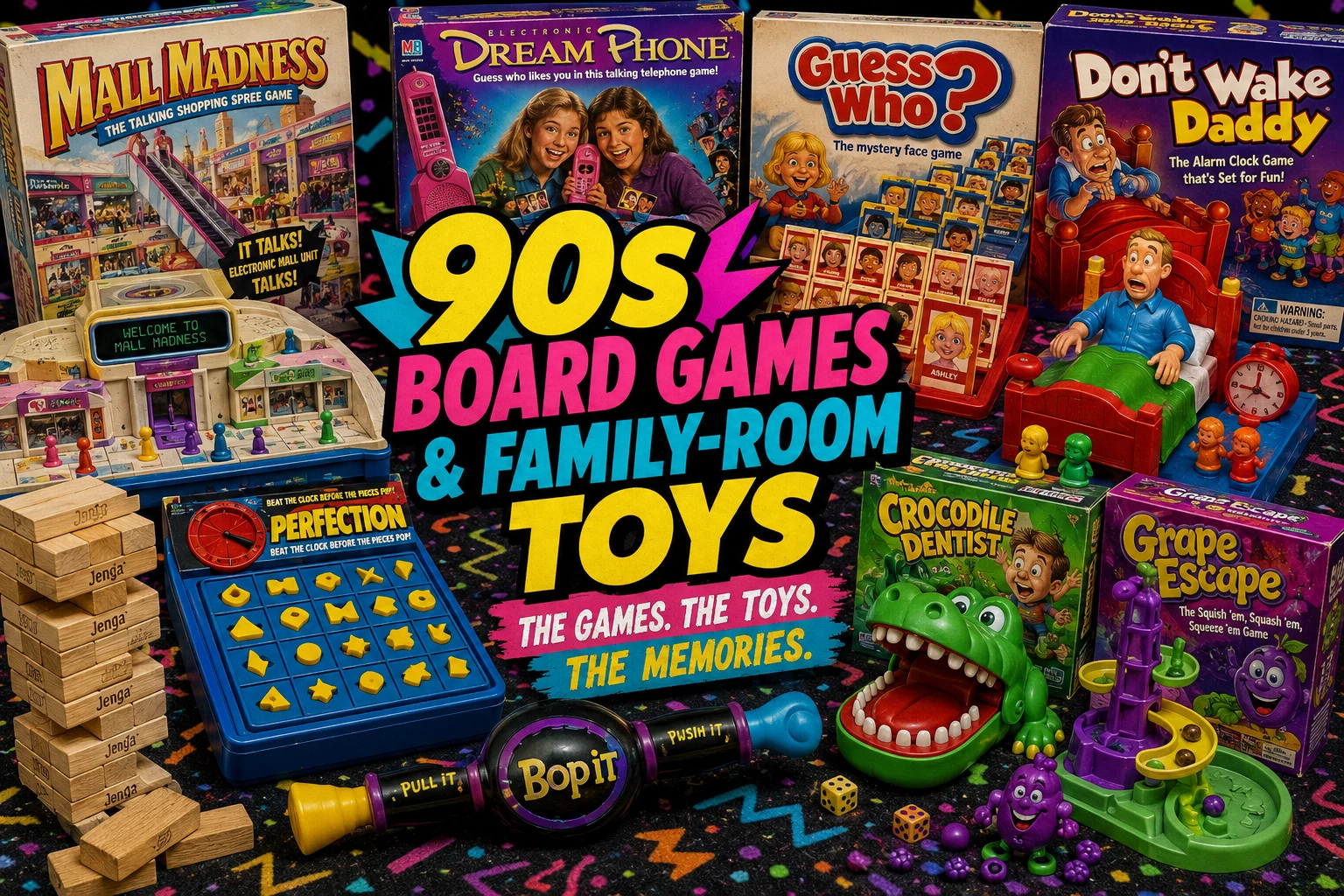
90s Board Games & Family-Room Toys: The Carpet-Floor Chaos Era
Before every kid had a screen in their pocket, boredom got handled on the carpet. The 90s family room was where board games, buzzer toys, plastic traps, electronic voices, mystery phones, mall fantasies, snapping crocodiles, and sleepover arguments all collided on a coffee table with soda cans, VHS tapes, and somebody’s little brother refusing to play by the rules.
So yeah, this is the rewind for 90s board games and family-room toys: Mall Madness, Dream Phone, Guess Who?, Don’t Wake Daddy, Grape Escape, Mouse Trap, Crossfire, Bop It, Jenga, Crocodile Dentist, Perfection, Operation, Scattergories, Pictionary, and the kind of loud plastic games that made a normal Tuesday night feel like a game-show hostage situation.
90s Toys
Head back to the full 90s Toys hub for action figures, collectibles, electronic pets, handheld games, dolls, plush, commercials, and the rest of the decade’s plastic chaos.
Battery-Powered CousinsElectronic Toys & Digital Pets
Tamagotchi, Giga Pets, Furby, Bop It, Talkboy, Yak Bak, Tiger handhelds, electronic diaries, and the beeping toy era right next door.
Soft Toy Side QuestDolls, Plush & Pet Toy Chaos
Barbie, Polly Pocket, Sky Dancers, Beanie Babies, Furby, Tickle Me Elmo, Puppy Surprise, and the soft side of the aisle getting strangely competitive.
So What Were the Big 90s Board Games and Family-Room Toys?
The big 90s board games and family-room toys were the ones that turned carpet floors and coffee tables into tiny arenas: Mall Madness, Dream Phone, Guess Who?, Don’t Wake Daddy, Grape Escape, Mouse Trap, Crossfire, Bop It, Jenga, Crocodile Dentist, Perfection, Operation, Scattergories, Pictionary, and every game that came with cardboard, plastic pieces, a timer, a buzzer, or a commercial that made it look ten times more dramatic than it was.
What made the 90s different was the mix. Classic board games were still around, but now they were surrounded by electronic voices, big plastic gimmicks, noisy reflex toys, pop-culture themes, sleepover games, and games that turned shopping, mystery calls, sleeping dads, collapsing towers, snapping mouths, or exploding timers into something kids actually wanted to do indoors.
The family room mattered because it was neutral territory. It was not quite the bedroom, not quite the kitchen, not quite the living room. It was the place where kids sprawled on the floor, lost pieces under couches, accused each other of cheating, and learned that board games are only “family fun” until somebody flips the mood.
Why the 90s Were Built for This Stuff
The 90s were perfect for board games and family-room toys because the decade still had real boredom. You could not scroll. You could not stream. You could not disappear into a phone. If you were stuck inside, somebody eventually pulled out a game, and now the room had rules, pieces, and a problem.
Family-room toys worked because they were social without needing much setup. A game could pull in siblings, cousins, friends, parents, and the one kid who did not understand the rules but insisted on playing anyway. Some games were strategy. Some were luck. Some were pure noise. Some were really just plastic anxiety machines pretending to be toys.
The 90s also loved a gimmick. A talking phone. A mall speaker. A sleeping dad. A snapping crocodile. A timer that exploded pieces. A tower that collapsed. A hand-eye coordination toy that barked commands. A metal-tweezers game that buzzed like you had committed a medical crime. If a game could add tension, noise, or humiliation, the 90s said yes.
The 90s family-room game formula
- Electronic voices: Mall Madness and Dream Phone made board games feel modern, bossy, and slightly magical.
- Plastic tension: Don’t Wake Daddy, Crocodile Dentist, Operation, and Perfection turned tiny actions into panic.
- Social guessing: Guess Who?, Pictionary, Scattergories, and clue-based games gave everyone a chance to be wrong loudly.
- Action toys: Bop It, Jenga, Crossfire, and reflex games brought competition off the board and into your hands.
- Sleepover energy: Some games just worked better with pizza, soda, sleeping bags, and no adult supervision within earshot.
The result was a family-room toy culture that felt physical, loud, and weirdly memorable. The best games did not just fill time. They created moments: a bad guess, a buzzer, a collapse, a scream, a laugh, and somebody yelling, “That does not count.”
90s Board Games and Family-Room Toys Timeline
A fast visual map of how game night got louder
The 90s family-room game wave came in stages: Guess Who? stayed everywhere, Mall Madness made shopping electronic, Dream Phone turned teen mystery into sleepover fuel, Don’t Wake Daddy made silence stressful, Grape Escape and Mouse Trap leaned into plastic contraptions, Crossfire kept the ad louder than reality, Bop It made reflex toys unavoidable, and Jenga/Crocodile Dentist proved simple tension could still own a room.
Guess Who? stays everywhere
Simple faces, yes-or-no questions, and the devastating power of asking about glasses.
Mall Madness talks back
A voice tells kids where to shop, what is on sale, and why a pretend mall somehow became thrilling.
Dream Phone dials in
A pink phone, secret clues, mystery crushes, and the most 90s sleepover premise imaginable.
Don’t Wake Daddy makes silence stressful
A sleeping plastic dad becomes the loudest threat in the room.
Grape Escape gets squishy
Play-Doh-style grape guys, traps, rollers, and 90s weirdness all in one box.
Bop It starts yelling
Twist it, pull it, bop it, fail instantly, and pretend the toy was cheating.
Crocodile Dentist bites back
A simple plastic mouth becomes a family-room jump scare.
Jenga owns the coffee table
Simple blocks, shaking hands, and the kind of silence that only happens before disaster.
Game night survives the screen era
Even with consoles everywhere, noisy hands-on games still had a place on the carpet.
The 90s Board Games and Family-Room Toys We Actually Remember
Talking malls, mystery phones, plastic panic, and rage-quitting on carpet
The games below are not just a random list of boxes from the closet. They show how 90s family-room play split into different lanes: electronic talking games, sleepover mystery games, quick deduction games, plastic jump-scare toys, reflex challenges, tactile mess-makers, and classic holdovers that kept surviving every toy purge.
That mix is what made the 90s game shelf feel different. You could go from a fake mall shopping spree to a crush-mystery phone call, then to a snapping crocodile, then to Bop It yelling at you, then to a half-broken copy of Mouse Trap that took longer to assemble than to play. The decade did not have one kind of game-night energy. It had several, and all of them somehow ended up on the carpet.
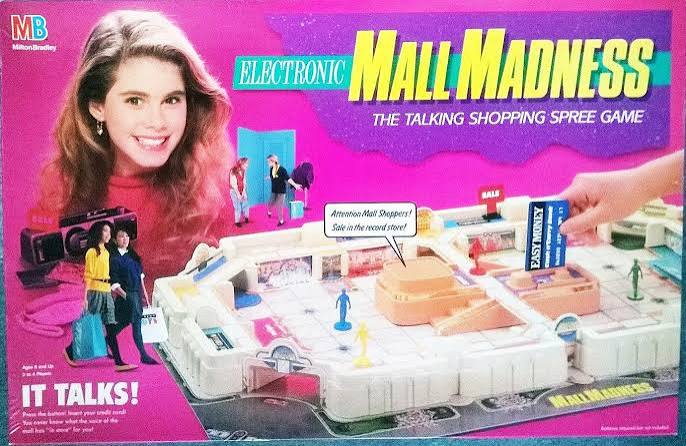
Mall Madness: The Talking Shopping Game That Somehow Felt Like Freedom
Mall Madness was peak 90s because it took the mall — that sacred indoor temple of pretzels, fountains, music stores, and trying to look casual near a crush — and turned it into a board game with an electronic voice bossing everyone around. You moved through stores, chased sales, checked where to shop next, and pretended a plastic card made you financially powerful.
The talking unit was the whole spell. Without it, the game was a shopping-themed board. With it, the mall came alive. It announced sales, sent players to stores, and made the game feel more modern than plain cardboard. In the 90s, a board game that talked automatically felt like technology had entered the room wearing lip gloss.
Why it hit so hard
Mall Madness worked because mall culture was real culture. Kids and teens understood the mall as a place of freedom, fashion, snacks, music, and social possibility. The game translated that into something younger kids could play on the floor, which is exactly the kind of weird consumer fantasy the 90s specialized in.
It also had that sleepover quality. It was social, loud, colorful, easy to understand, and just dramatic enough to keep everyone involved. You were not conquering empires. You were trying to buy stuff before someone else did. Honestly, very American.
What it felt like in the room
Mall Madness had a rhythm that felt different from regular board games. The electronic unit made it feel like the game was hosting the room. Players waited for announcements, reacted to sales, groaned when they were sent somewhere annoying, and treated the tiny mall like it had real geography. It was not just “move a piece and buy an item.” It was a little consumer obstacle course with a voice in charge.
The game also worked because the mall itself still meant something. For 90s kids, the mall was where older kids seemed independent, where music stores had listening stations, where food courts smelled like freedom, and where every store had its own tiny identity. Mall Madness bottled that feeling for kids who were still too young to wander the real mall without a parent pretending not to hover.
The commercial made it look like the mall was alive
The ads leaned into the fantasy: friends, shopping bags, flashing excitement, and the idea that the mall was a place where everything could suddenly go your way. In real life, you were on carpet arguing over plastic pieces. But the commercial version felt like a mall trip with no parents, no budget, and no boring shoe store detours.
That gap is part of why it stuck. The game gave kids a pretend version of teenage freedom. You could shop, move fast, respond to deals, and win by knowing where to go. It was capitalism in a box, but with better colors and fewer consequences.
- Core appeal: electronic voice, mall fantasy, shopping goals, sales, and 90s consumer sparkle.
- Kid behavior: racing to stores, repeating the voice lines, fighting over turns, and treating fake sales like breaking news.
- Most 90s detail: a board game teaching kids the emotional power of a sale announcement.
Mall Madness mattered because it captured the 90s mall as a lifestyle fantasy. It was not just a game about shopping. It was a tiny plastic mall you could control from the carpet.
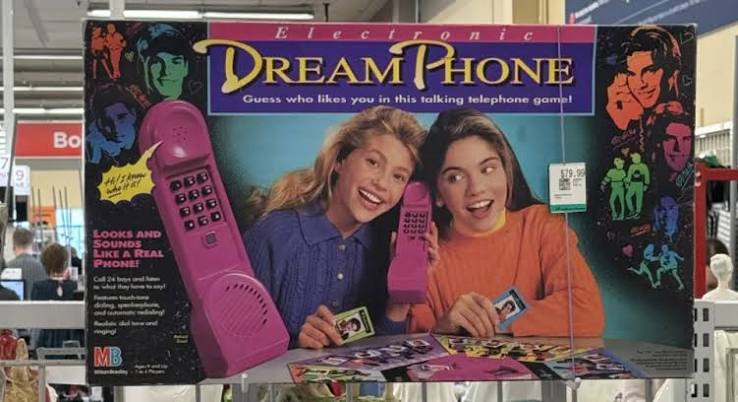
Dream Phone: Mystery, Crushes, and the Pink Phone Sleepover Machine
Dream Phone was not subtle. It gave kids a big pink electronic phone, a bunch of mystery boys, clue cards, and a premise that felt ripped from a teen magazine that had been left in a caboodle. You called numbers, listened for clues, eliminated suspects, and tried to figure out who liked you. Because apparently board games needed caller ID and emotional stakes.
The game worked because the phone felt like the toy. The board mattered, but the phone was the magic. Pressing buttons, hearing clues, and pretending the game had a tiny social network inside it made Dream Phone feel different from a normal deduction game.
Why it became sleepover fuel
Dream Phone had the perfect sleepover energy. It was interactive, dramatic, silly, easy to talk over, and built around secrets. It invited commentary. It invited teasing. It invited overreactions. Basically, it understood the assignment.
It also hit during the era when phones were still household objects with social power. Calling someone was a big deal. Private phone lines, cordless phones, bedroom phones, and call waiting all had cultural weight. Dream Phone turned that into a game kids could control.
What it felt like at a sleepover
Dream Phone was less about quietly solving a mystery and more about the entire room reacting to every call. Someone would read a clue too dramatically. Someone would insist they knew who it was. Someone would forget what had already been ruled out. Someone would make fun of the boy cards. The actual deduction mattered, but the commentary around the deduction mattered more.
The phone gave the game permission to be louder than a normal board game. It felt like a prop from a 90s teen sitcom. You were not just drawing a card; you were making a call. That tiny difference gave the game its whole personality.
Why the phone was the whole hook
In the 90s, phones still had drama. A phone call could interrupt a room. A phone in a bedroom felt like status. A cordless phone felt like power. Dream Phone understood that and turned it into a toy. The plastic phone was not a decoration; it was the reason the game felt modern.
It also made the game feel more private and more public at the same time. You were listening for clues, but everyone else was listening too. That created the perfect sleepover tension: secrets that were not actually secret, crushes that were not real, and reactions that were absolutely real.
- Core appeal: electronic phone, clues, mystery, crush culture, and sleepover drama.
- Kid behavior: calling numbers, narrowing suspects, quoting clues, and making the game louder than necessary.
- Most 90s detail: a board game built around calling people before texting existed.
Dream Phone mattered because it was so specifically 90s. It turned landline culture, teen crushes, and mystery play into a family-room object that still feels instantly recognizable.
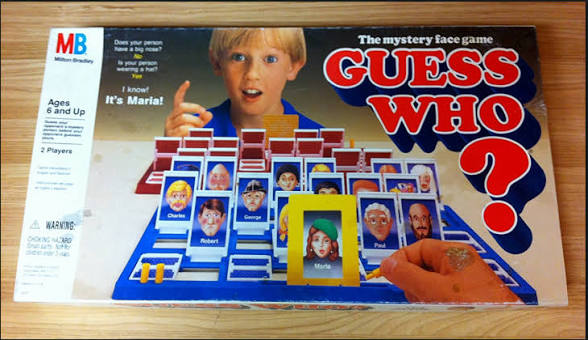
Guess Who?: The Flip-Down Face Game That Started Every Question With “Does Your Person…”
Guess Who? was one of those games that did not need batteries, electronics, or a commercial screaming at you to work. It just needed two boards full of faces and one kid willing to ask, “Does your person have glasses?” like they had cracked the case of the century.
The flip-down mechanic was perfect. Every question created a little physical response. Faces dropped. Possibilities disappeared. A good question felt powerful. A bad question made you look like you had never met humans before.
Why it stayed everywhere
Guess Who? survived because it was quick, visual, and easy. You could play with a sibling, parent, cousin, or friend without a 20-minute rules lecture. It was simple enough for younger kids but still competitive enough to create accusations, especially when someone asked a suspiciously specific question.
It also had that great 90s toy quality of being tactile. The little doors flipping down mattered. Modern versions of things can be smoother, but nothing replaces the tiny satisfaction of knocking down half the board with one question.
Why it was better than it looked
Guess Who? looked almost too simple: two plastic boards, a stack of faces, and questions about hair, hats, glasses, and facial hair. But that simplicity is why it worked. Kids could understand it instantly, and then spend the next ten rounds pretending they were master detectives because they eliminated twelve people with one question.
There was also a strange personality to the character grid. The faces became familiar. Certain names felt suspicious. Certain features felt powerful. Kids developed favorite questions, bad habits, and personal theories about which cards were easier to win with, even though the whole thing was basically logic in a plastic frame.
The little plastic doors mattered
The tactile part was huge. Flipping down faces felt satisfying. It made deduction visible. Every question physically changed the board. Modern games can track information digitally, but Guess Who? let kids watch the suspect pool collapse one plastic tab at a time.
That is why it stayed in closets for years. Even when newer, louder games showed up, Guess Who? was easy to pull out. It did not require batteries, a full group, or a long attention span. It just required two people and the emotional courage to ask if someone had a mustache.
- Core appeal: simple deduction, flip boards, quick rounds, and visual elimination.
- Kid behavior: asking about hair, hats, glasses, facial hair, and pretending every guess was strategic.
- Most 90s detail: getting emotionally attached to a plastic face named Bernard.
Guess Who? mattered because it proved that a family-room game did not need much to become iconic. Give kids faces, questions, and plastic flaps, and they will create drama.
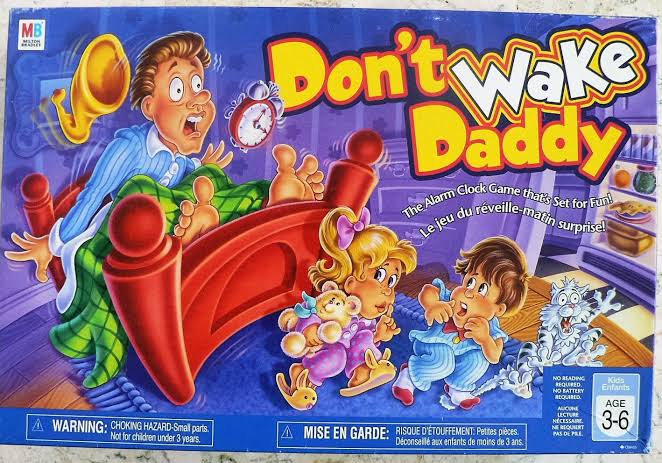
Don’t Wake Daddy: The Plastic Bed That Turned Silence Into Terror
Don’t Wake Daddy took a basic childhood idea — sneaking around the house for a snack — and turned it into a board game where a plastic father figure could violently sit up and ruin your life. The whole room knew it was coming. That did not make it less stressful.
The game worked because the bed was the star. You pressed the alarm clock, counted clicks, and waited for the pop-up. Every turn carried dread. It was not complicated strategy. It was suspense in molded plastic form.
Why kids loved the panic
Don’t Wake Daddy had the same appeal as a jack-in-the-box. You knew the scare was coming, but not exactly when. That made every click feel dangerous. The rules were simple enough that everyone could play, but the tension made it feel bigger than it was.
It also had a deeply 90s premise: kids sneaking through a house for food while a dad sleeps like a cartoon bear. The whole thing felt like a sitcom subplot converted into a board game.
Why the premise was so 90s
Don’t Wake Daddy had a premise that felt like it came from a family sitcom: kids sneaking through the house for snacks while Dad sleeps in bed. It was ridiculous, but it also felt weirdly relatable. The game turned nighttime snack theft into a mission, then added one giant plastic consequence.
The board itself was not complicated, which helped. The tension came from the bed, the clicks, and the waiting. That meant younger kids could play, older kids could laugh at it, and adults could understand the joke immediately. Everybody knew the dad was going to wake up eventually. The fun was watching who caused it.
The pop-up was the whole memory
Some games are remembered for strategy. Don’t Wake Daddy is remembered for the jump. The plastic dad sitting up was the commercial moment, the gameplay moment, and the reason kids wanted another round. The rest of the board existed to lead you back to that one piece of action.
That made it a perfect 90s toy-commercial game. It had a visual hook that could be shown instantly. Kids watching TV understood the entire appeal in five seconds: sneak, press, panic. Done.
- Core appeal: suspense, pop-up action, simple play, and jump-scare timing.
- Kid behavior: pressing carefully, yelling when Daddy woke up, and accusing the mechanism of being unfair.
- Most 90s detail: building an entire game around snack theft and parental rage.
Don’t Wake Daddy mattered because it understood that kids love tension when the stakes are fake. It was loud, silly, and absolutely built for family-room reactions.
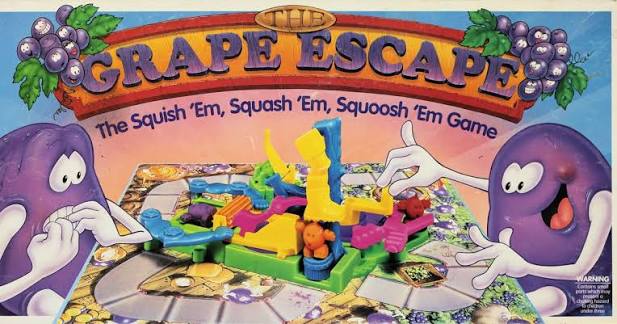
Grape Escape: Squishy Grape Men, Plastic Traps, and 90s Weirdness
Grape Escape is one of those games that sounds fake if you did not live through the decade. You made little grape characters out of soft compound, moved them through a game board, and tried to avoid traps that could smash, slice, or otherwise ruin them. Family fun, apparently.
This was 90s toy design at its weirdest and best. The game was part board game, part activity toy, part gross-out contraption. It did not just use pieces; it let kids make the pieces. Then it threatened those pieces with plastic doom. Beautifully deranged.
Why it stuck in memory
Grape Escape stood out because it was tactile. You were not just moving a pawn. You were shaping a character and watching it survive or get mangled. That gave the game a kind of messy ownership most board games did not have.
The 90s were full of toys that leaned into goo, slime, compound, gross-out food labs, and weird textures. Grape Escape belongs in that family. It made game night feel like a tiny obstacle course for clay fruit people.
Why the weirdness was the selling point
Grape Escape did not feel like a safe committee idea. It felt like someone asked, “Can a board game also be a squishy torture chamber for fruit people?” and the 90s answered yes before anyone could rethink it. That was the charm. The game was strange enough to stand out in a toy aisle full of loud boxes.
The compound pieces gave kids a reason to care. You made your grape character. You shaped it. Then the game threatened it with traps. That little bit of creation made the destruction funnier. It was part craft, part board game, part cartoon violence.
The 90s loved toys that made a mess
Grape Escape belonged to the same world as gross-out kits, slime, Creepy Crawlers, Nickelodeon goo energy, and food-lab weirdness. It understood that kids liked tactile toys that did something. Moving a pawn was fine. Moving a squishy character through danger was better.
It also had replay value because the pieces were not precious. If your grape got wrecked, you made another one. That gave the game a chaotic energy most traditional board games did not have. The whole thing felt less like a contest and more like a tiny disaster factory.
- Core appeal: soft compound pieces, traps, weird humor, and hands-on play.
- Kid behavior: shaping grapes, laughing at traps, rebuilding pieces, and making the game messier than intended.
- Most 90s detail: a board game where the pieces could be physically destroyed and everyone was fine with it.
Grape Escape mattered because it shows how experimental 90s board games could be. It was not elegant. It was not quiet. It was weird, squishy, and unforgettable.
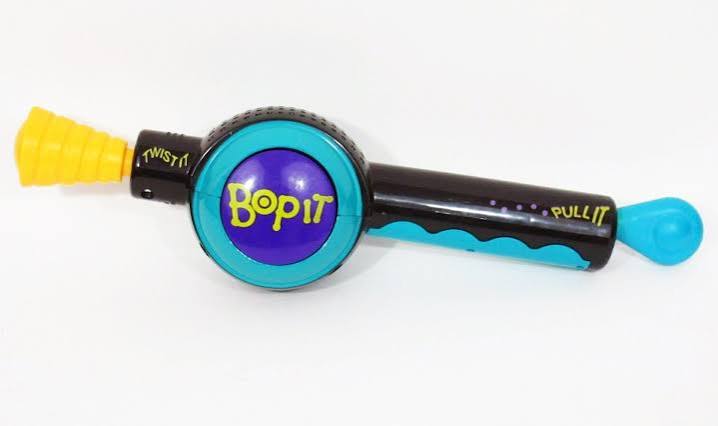
Bop It: The Bossy Plastic Stick That Judged Your Reflexes
Bop It was not exactly a board game, but it absolutely belonged in the 90s family room. It was the bossy plastic toy that yelled commands at you until your brain disconnected from your hands. Bop it. Twist it. Pull it. Panic. Fail. Hand it to someone else like they were not about to do the same thing.
Bop It worked because it was instant. No board setup. No long rules. No tiny pieces. Just commands, speed, sound, and pressure. It could sit on a coffee table and become the center of a room in five seconds.
Why everyone wanted one more turn
The genius was the score chase. You always felt like you could do better. The mistake was always stupid. The toy did not beat you; you messed up. That made it addictive in the most annoying way.
It also worked across ages. Kids, teens, parents, cousins, and bored adults could all pick it up immediately. That made it a true family-room toy, not just a kid’s game.
Why Bop It took over the room so fast
Bop It had almost no barrier to entry. You could hand it to someone and they understood the game immediately. That made it perfect for family rooms, sleepovers, school events, cousins visiting, or any moment when people were sitting around waiting for something else to happen.
It also had a built-in audience. The person holding it was under pressure, but everyone else was watching. Every command increased tension. Every mistake was public. Every failed run made the next person think they could do better. That pass-around humiliation loop was the engine.
The sound design was part of the addiction
Bop It did not just give commands. It had attitude. The voice, the rhythm, the increasing speed, and the sudden failure all made it feel like the toy had a personality. It was not friendly exactly. It was more like a tiny electronic gym coach who enjoyed your failure.
That sound carried through the house. You could hear someone playing Bop It from another room and know immediately whether they were doing well or falling apart. It made private failure impossible, which is why it was so effective.
- Core appeal: commands, reflexes, score pressure, sound, and pass-around play.
- Kid behavior: chasing high scores, yelling at mistakes, passing it around, and blaming the toy.
- Most 90s detail: being roasted by a plastic object with three commands.
Bop It mattered because it showed where family-room games were heading: faster, louder, electronic, portable, and built around immediate reactions.
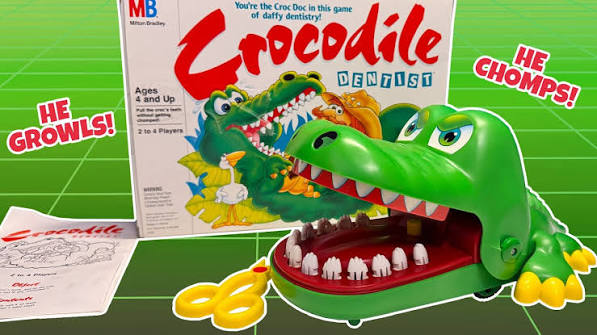
Crocodile Dentist: The Tiny Plastic Jump Scare With Teeth
Crocodile Dentist was barely a game and somehow completely effective. You pressed teeth one at a time until the crocodile snapped. That was it. No deep strategy. No epic board. No narrative. Just a plastic mouth and the human desire to watch someone flinch.
It worked because suspense does not need complexity. Everyone knew the snap was coming. Nobody knew exactly when. That tiny uncertainty made the toy feel bigger than it was.
Why simple tension worked
Crocodile Dentist was the kind of toy that could pull people in instantly. You did not explain rules for ten minutes. You just opened the mouth and started pressing teeth. Kids understood the risk immediately, which made it perfect for younger players, family rooms, and quick rounds.
It also had strong spectator energy. Watching someone else press a tooth was half the fun. The toy turned a single motion into a group reaction.
Why a tiny toy got such big reactions
Crocodile Dentist worked because everyone understood the danger instantly. No reading. No setup. No complicated board. Just open the mouth, press a tooth, and hope the crocodile did not choose violence. It was basically suspense distilled into a toy.
The best part was that the stakes were fake but the reaction was real. The snap did not actually hurt in any serious way, but kids acted like they were defusing explosives. That gap between tiny consequence and huge emotional response is exactly why the toy was fun.
Perfect for short attention spans
A lot of 90s family-room toys succeeded because they did not ask much from the player. Crocodile Dentist could be played in a minute. That made it perfect for younger kids, quick rounds, and chaotic rooms where nobody wanted to sit through a full board game.
It was also naturally dramatic. The toy created its own rhythm: press, relief, press, relief, press, snap. The room followed along without anyone needing to narrate. Simple, physical, and weirdly powerful.
- Core appeal: suspense, snap action, simple rules, and instant reactions.
- Kid behavior: hesitating dramatically, pressing with one finger, screaming when it snapped, and demanding another round.
- Most 90s detail: a plastic crocodile becoming the most emotionally powerful object on the coffee table.
Crocodile Dentist mattered because it captured the family-room toy perfectly: cheap thrill, fast setup, big reaction, zero dignity.
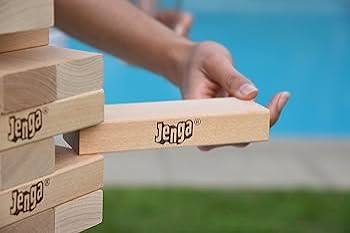
Jenga: The Quietest Game Until Everything Went Wrong
Jenga did not need batteries, cards, characters, or a talking unit. It just needed wooden blocks and people willing to make terrible structural decisions. The game started calm and ended with everyone holding their breath while one person gently touched a block like they were defusing a bomb.
That simplicity made it powerful. Anyone could understand it. Anyone could play. And everyone understood the moment the tower started leaning that someone was about to become the problem.
Why it owned coffee tables
Jenga was perfect for family rooms because it worked in almost any setting. Kids could play it. Adults could play it. It could be serious, silly, fast, slow, quiet, or extremely loud when the tower finally collapsed.
It also had no hiding behind luck. You made the move. You caused the wobble. You took the risk. The tower remembered.
Why Jenga worked with basically anyone
Jenga was one of those rare games that crossed age groups without changing much. Little kids understood it. Teens could make it competitive. Adults could pretend they were above it and then immediately care too much. It did not need a theme, a character, or a battery compartment. It just needed gravity and poor judgment.
That made it a family-room staple. It could come out during holidays, parties, sleepovers, rainy days, or bored afternoons. The box did not scream 90s in the same way Mall Madness or Dream Phone did, but the way people played it on carpet, coffee tables, and kitchen tables absolutely belongs to that decade.
The silence before the crash
Jenga created one of the best sounds in game night: the sudden quiet before disaster. People who had been talking over everything would stop and watch a hand hover near the tower. Then the blocks fell, and the room exploded.
The collapse was not just the end of the round. It was the punchline. That is why everyone wanted to play again. The build-up was tense, the failure was loud, and resetting the tower gave the whole group another chance to pretend they had learned something.
- Core appeal: physical tension, simple rules, dramatic collapse, and endless replay.
- Kid behavior: tapping blocks, holding breath, blaming shaky hands, and yelling when someone bumped the table.
- Most 90s detail: playing on carpet and pretending the uneven floor was not the real villain.
Jenga mattered because it proved simple physical play could still dominate a room during a decade packed with electronics and licensed chaos.
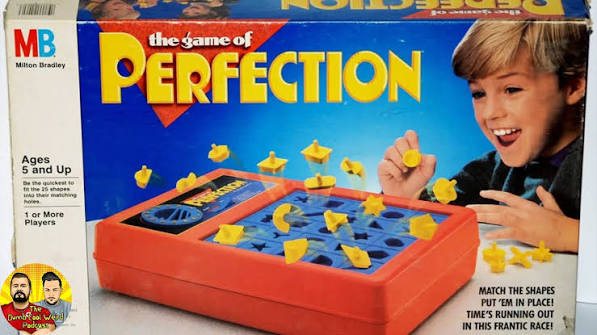
Perfection, Operation, Mouse Trap, Crossfire, Scattergories, and the Classic Holdovers
Not every family-room toy was born in the 90s. A lot of the decade’s game-night memory comes from classic holdovers that kept showing up in closets, toy aisles, and commercials: Perfection, Operation, Mouse Trap, Crossfire, Scattergories, Pictionary, and the games that had been around long enough to feel like part of the furniture.
Perfection was pure timer panic. Operation was medical malpractice with tweezers. Mouse Trap was a Rube Goldberg dream that was often more fun to build than actually play. Crossfire had one of the loudest commercials in memory and a gameplay style that made kids feel like they were in a plastic arena. Scattergories and Pictionary gave family rooms wordplay and drawing disasters.
Why the classics still mattered
The 90s family room was not just about brand-new games. It was about whatever was in the closet, whatever a cousin brought over, whatever got pulled out during holidays, and whatever still had enough pieces to function. Classic games survived because they were reliable.
They also had strong physical identity. Operation had the buzzer. Perfection had the pop. Mouse Trap had the contraption. Crossfire had the metal balls and plastic intensity. Those tactile hooks kept them alive even as newer electronic games arrived.
Why old games still felt 90s
A lot of these games started before the 90s, but that does not make them any less part of 90s childhood. Toys do not live only in the year they were released. They live in closets, classrooms, rec rooms, grandparents’ houses, and basements where the box has been crushed since someone’s birthday party three years earlier.
That is why classics like Operation, Perfection, Mouse Trap, and Crossfire still belong here. They were still being sold, advertised, handed down, borrowed, and pulled out when kids needed something to do. The 90s were full of inherited game-night culture. Not everything had to be brand new to feel like part of the decade.
Each classic had its own family-room personality
Operation was the buzzer game that made everyone suddenly bad at fine motor skills. Perfection was the timer game that turned shape-sorting into an anxiety disorder. Mouse Trap was the contraption game that looked incredible and somehow made setup feel like the main event. Crossfire was the arena game whose commercial energy was permanently burned into a generation’s memory. Scattergories and Pictionary were the games that let families argue over words and drawings instead of plastic parts.
Together, they made the game closet feel deeper than it really was. Some were fast. Some were loud. Some were stressful. Some took forever to set up. But they gave the family room options, and in the pre-phone era, options mattered.
- Core appeal: timers, buzzers, traps, drawing, categories, speed, and physical gimmicks.
- Kid behavior: racing the clock, flinching at buzzers, building contraptions, arguing over answers, and losing pieces.
- Most 90s detail: a game box held together with tape still being considered fully playable.
These games mattered because they formed the family-room backbone. Newer 90s games brought attitude and electronics, but the classics kept the closet stocked.
Sleepover Culture: Where These Games Became Unhinged
A lot of 90s board games made the most sense during sleepovers. The rules mattered less than the energy in the room. Pizza boxes, soda, sleeping bags, rented movies, someone’s older sibling walking through and making fun of everyone, and a game on the floor that nobody was taking seriously until someone started winning.
Dream Phone was built for this. Mall Madness worked there too. Guess Who? became faster and meaner. Bop It got passed around until someone killed the streak. Jenga became a whole-room event. Crocodile Dentist worked because everyone wanted to watch somebody else get startled. These games were not just activities. They were social fuel.
The family-room setting also meant the game could fade in and out. Someone might be playing while other people talked, watched TV, made popcorn, or argued about what movie to put on next. That loose, chaotic play style is exactly what makes these games feel so 90s. They were part of the room, not the whole room.
Why sleepovers made the games better
- More people meant more noise: games like Bop It, Jenga, and Crocodile Dentist needed spectators.
- The stakes were fake but loud: nobody cared until they were losing, then suddenly everyone cared deeply.
- The games were easy to pause: perfect for rooms where attention moved every six seconds.
- They gave kids something to do: before phones, you needed actual objects to fill dead air.
- They created repeatable jokes: the same bad guess, same flinch, same collapse, same argument — every time.
Sleepovers made these games legendary because they turned them into shared memories. The box was only the starting point. The real game was the noise around it.
Electronic Tabletop Chaos: When Board Games Started Talking Back
The 90s loved adding electronics to things that had previously been perfectly fine without them. Sometimes that made the toy better. Sometimes it just made it louder. But in games like Mall Madness, Dream Phone, Bop It, and other battery-powered family-room toys, the electronics became the hook.
A voice gave the game personality. A sound made mistakes public. A command created pressure. A buzzer made everyone flinch. That tiny dose of electronics made a board game feel modern without turning it into a video game. It was the perfect middle ground for the 90s: cardboard and plastic pretending to be futuristic.
Why 90s Board Games and Family-Room Toys Still Hit
The nostalgia is not just about the games. It is about the whole setup: the carpet, the coffee table, the game box with crushed corners, the missing pieces, the battery compartment, the timer, the dice, the fake money, the plastic parts that never fit back in the box correctly, and the one person who always had to read the rules out loud.
These games also hit because they were social in a way that did not require a server, headset, or login. Everyone was in the room. Everyone saw the mistake. Everyone heard the buzzer. Everyone watched the tower fall. Everyone knew who cheated. There was nowhere to hide.
And maybe that is why they still feel good to remember. They were messy, loud, tactile, and imperfect. The pieces got lost. The boxes got taped. The batteries died. The rules were misread. The commercials lied. But for a while, the whole room was playing the same thing, and that was enough.
90s Board Games and Family-Room Toys FAQ
What were the most popular 90s board games?
Some of the most remembered 90s board games and family-room games include Mall Madness, Dream Phone, Guess Who?, Don’t Wake Daddy, Grape Escape, Mouse Trap, Crossfire, Perfection, Operation, Scattergories, Pictionary, Jenga, and Crocodile Dentist.
Why were electronic board games big in the 90s?
Electronic board games felt modern because they added voices, sounds, commands, timers, or buzzers to physical play. Games like Mall Madness, Dream Phone, and Bop It made family-room games feel more interactive without becoming full video games.
What board games were popular at 90s sleepovers?
Dream Phone, Mall Madness, Guess Who?, Jenga, Bop It, Crocodile Dentist, Scattergories, Pictionary, and other quick, loud, social games worked well at sleepovers because they were easy to play while everyone was talking, eating, and half-watching something on TV.
Was Bop It a board game?
Bop It was not a traditional board game, but it absolutely belongs with 90s family-room toys. It was a pass-around electronic reflex game that became a coffee-table staple because it was loud, fast, competitive, and easy for almost anyone to play.
Why do 90s board games feel so nostalgic?
They were tied to physical play, family rooms, sleepovers, game closets, missing pieces, commercials, and shared reactions. They created noise and drama in the same room, which makes them feel very different from modern digital games.