Murphy Brown: The Sitcom That Put Work, Politics and Attitude in Prime Time
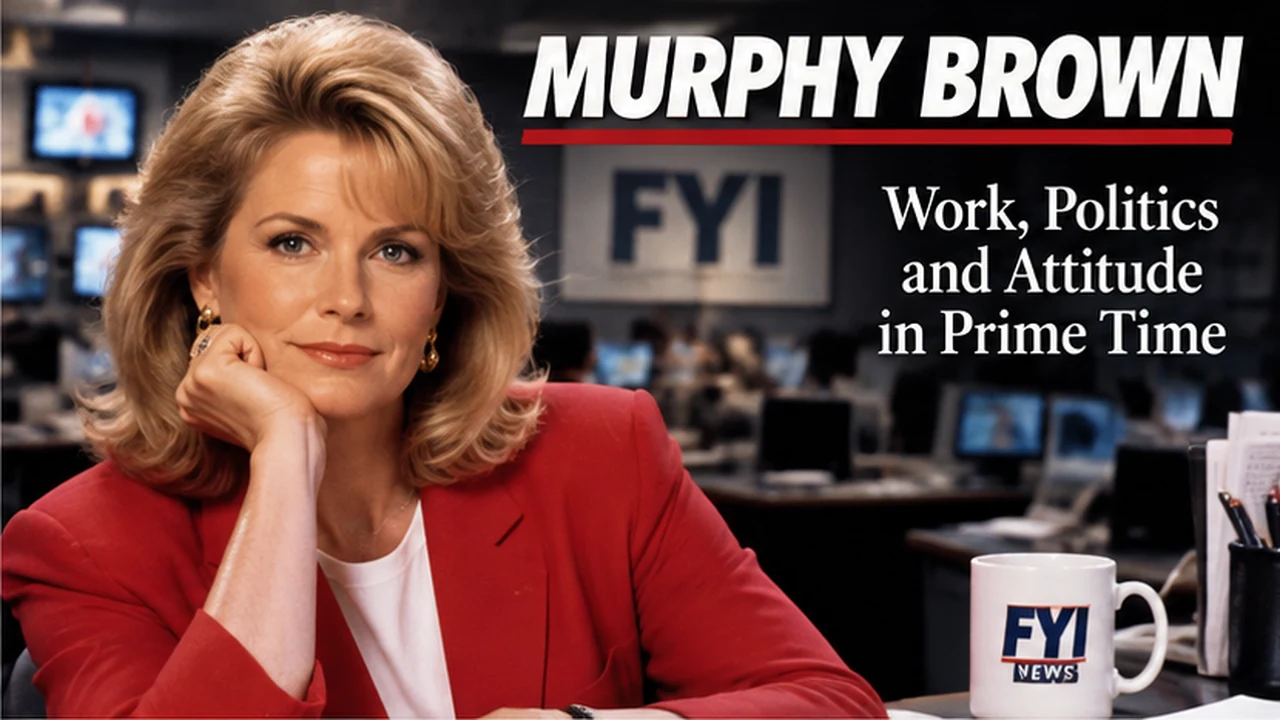
MURPHY BROWNThe Sitcom That Put Work, Politics and Attitude in Prime Time
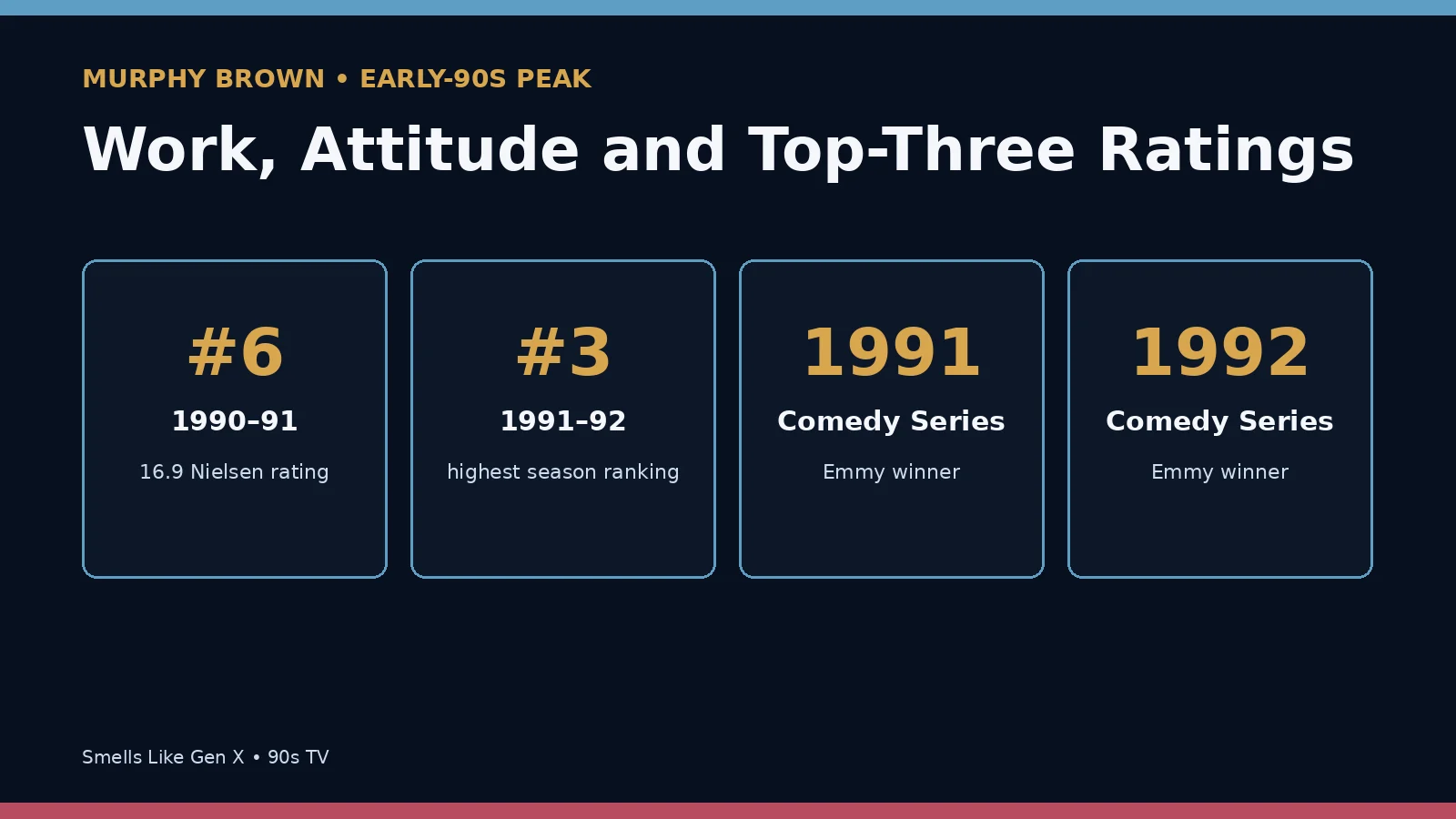
Murphy Brown was not waiting for network television to decide whether an outspoken middle-aged professional woman could carry a hit sitcom. By 1990–91, she already was. The show finished #6 for the season, then climbed to #3 a year later. The political firestorm came after the audience was established, which is exactly why the controversy became national news in the first place.
Why was Murphy Brown important to early-90s television?
Murphy Brown proved that a sitcom could be topical, adult, workplace-driven and openly argumentative while still attracting a mass network audience. Its #6 finish in 1990–91 and #3 finish in 1991–92 put Candice Bergen’s abrasive television journalist near the center of American prime time, not on the cultural fringe.
Murphy Brown in the 90s: Why a Workplace Sitcom Could Feel Like the News
Murphy Brown entered the 1990s with a premise that sounded almost aggressively grown-up: a veteran television journalist returning to work after treatment for alcoholism, surrounded by colleagues who had careers, opinions, grudges and enough professional ego to make every staff meeting combustible.
That was the first thing the show got right. Murphy was not introduced as a young woman figuring out adulthood. She had already lived a lot of it. She had ex-husbands, bad habits, professional scars, a national reputation and the kind of confidence that comes from surviving rooms where people underestimate you. The comedy began after all that history already existed.
The fictional FYI newsmagazine gave the series a natural reason to engage with current events. Political figures, media personalities, public controversies and newsroom ethics could enter stories without feeling imported from another show. Murphy’s job put her in the middle of the conversation.
At the same time, the series did not ask viewers to admire Murphy every minute. She was competitive, impatient, vain, combative and capable of being spectacularly wrong. That made the show feel sharper than sitcoms built around endlessly agreeable leads.
Seen beside our guide to 1990s TV shows, sitcoms, dramas and prime-time classics, Murphy’s success looks like part of a broader early-decade widening of network television. Prime time was making room for more specific voices without giving up mass audiences.
Murphy Brown Was Funny Because the Show Never Needed Her to Be Nice
Murphy’s greatest comic advantage was that the series trusted viewers to like watching her even when she was not particularly likable.
Candice Bergen played her with a dry precision that made Murphy’s arrogance feel earned rather than decorative. This was a woman who had interviewed powerful people, fought through a male-dominated industry, survived addiction and returned to work expecting the newsroom to keep up with her. She was not asking for permission.
That did not mean the show treated her as infallible. Murphy could be wrong in ways that were funny because she was so certain she was right. She could misjudge Corky, bulldoze Miles, push Frank too hard or discover that professional competence did absolutely nothing to solve a private emotional problem.
The recovery-from-alcoholism premise also kept the character from becoming a fantasy of total control. Murphy had already had a life fall apart badly enough to require treatment. She returned with confidence, but the history remained underneath the jokes.
That combination—competence, ego, damage and a complete lack of interest in becoming sweeter for the audience—made Murphy one of the strongest sitcom leads of the era.
FYI Made Murphy Brown One of the Defining Workplace Sitcoms of the Early 90s
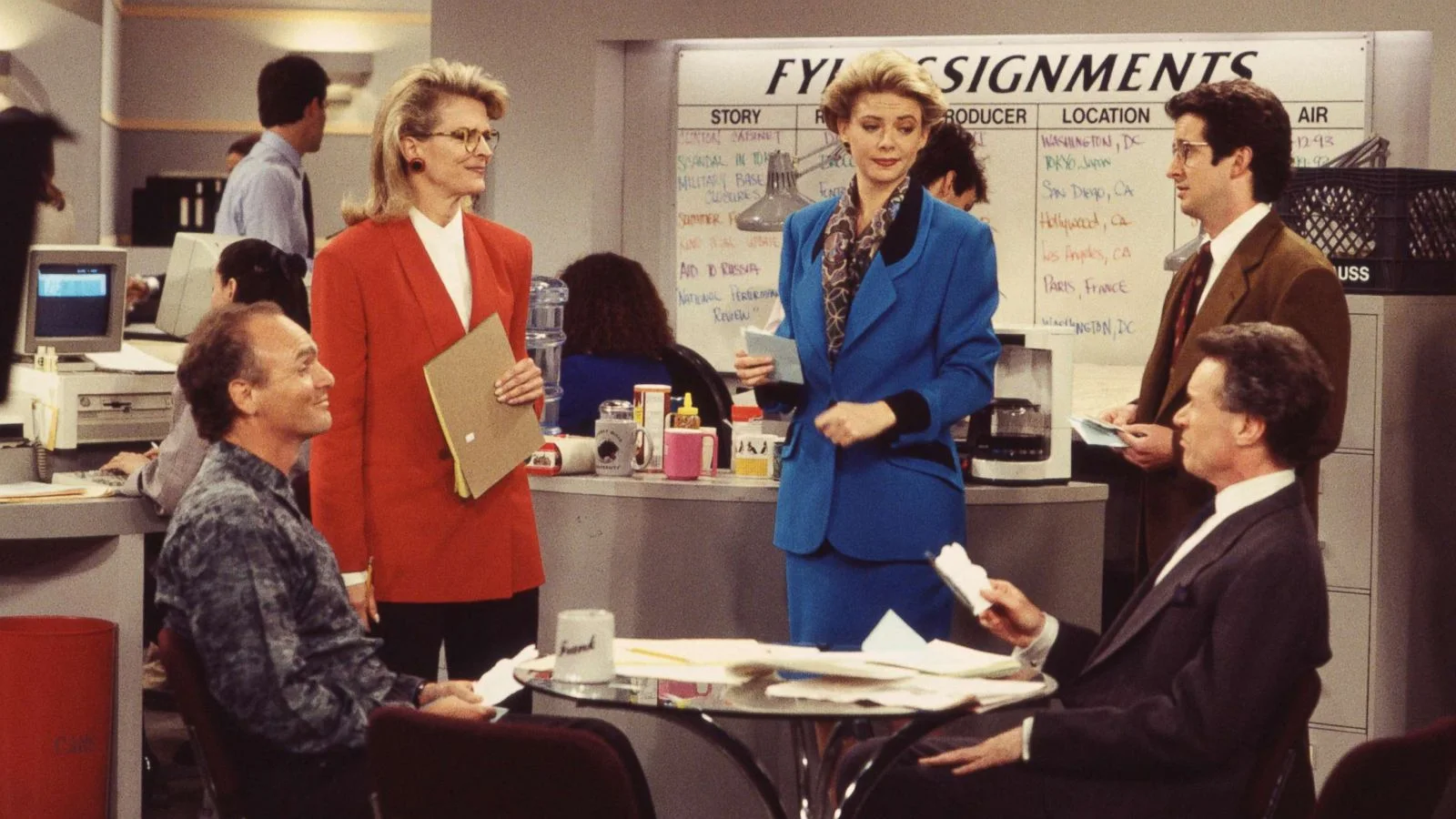
The fictional FYI newsmagazine gave the series a workplace where status, ethics, ratings and public relevance were constantly in play.
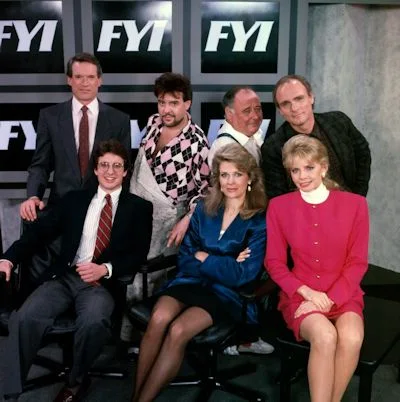
Jim Dial represented old-school broadcast authority. Frank Fontana brought investigative instincts and a looser personality. Corky Sherwood entered as a former beauty queen whom Murphy initially underestimated, then gradually became a capable journalist in her own right. Miles Silverberg had the impossible job of producing a team full of people older, more experienced and more certain of themselves than he was.
The structure meant office conflict could be about more than promotions or romance. A producer could push for a booking while a reporter worried about credibility. A political interview could become a fight over access. A ratings decision could expose the uncomfortable difference between journalism as a public service and television as a business.
That is why the workplace mattered so much to the show’s identity. Murphy’s opinions did not float in a vacuum. They had professional consequences, deadlines and colleagues who could tell her when she was behaving like a self-important pain in the neck.
Diane English Built Murphy Brown Around Work, Language and Adult Conflict
Creator Diane English understood that the show’s strongest asset was not topicality by itself. It was a lead character whose job naturally put her in contact with topical issues.
That distinction kept Murphy Brown from becoming a weekly editorial disguised as a sitcom. The series could address an issue and still undercut Murphy’s self-righteousness five minutes later. It could care about journalism without pretending journalists were automatically noble. It could discuss politics without turning every supporting character into a spokesperson for one viewpoint.
English also built the character around adult specificity. Murphy was not deciding whether she wanted a career. She already had one. She was not discovering that work could be hard. She was deciding what parts of herself she was willing to sacrifice to stay excellent at something she loved.
The Television Academy’s interviews on the series repeatedly return to English’s role in shaping that tone, and the show’s 1991 Emmy for Outstanding Comedy Series confirmed that the industry saw more than a topical gimmick.
Murphy Brown Ratings in 1991: #6 in the 1990–91 Nielsen Rankings
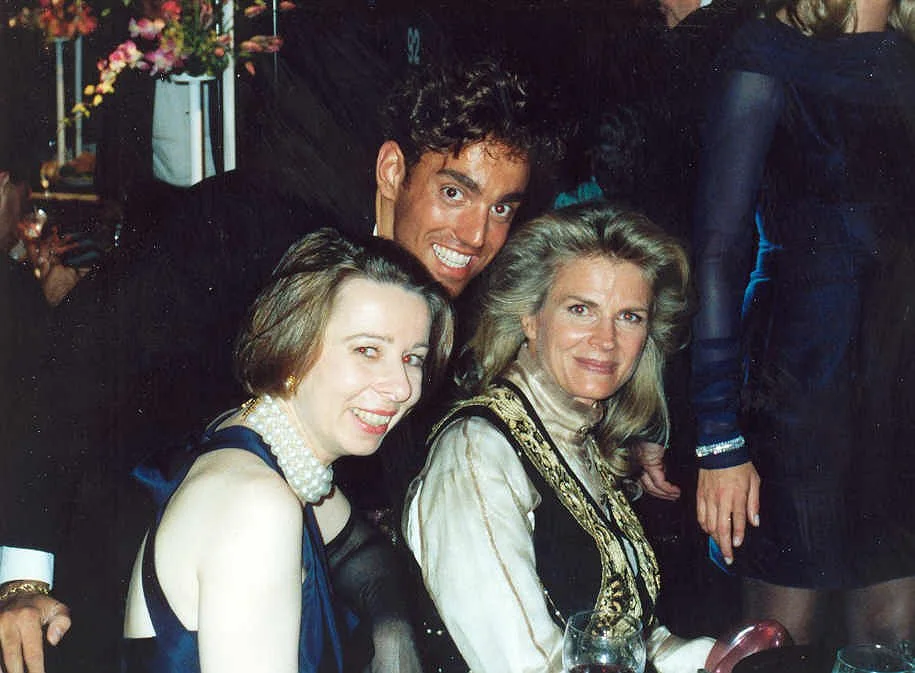
The 1990–91 ratings are the cleanest way to kill the idea that Murphy Brown was merely a prestige favorite for a narrow audience.
The series finished #6 for the season with a 16.9 Nielsen rating. It sat behind Cheers, 60 Minutes, Roseanne, A Different World and The Cosby Show, but ahead of nearly everything else on television.
Our ranking of the biggest TV shows of 1991 puts that finish into the full season. The striking thing is not simply that Murphy was sixth. It is what surrounded her: family comedies, a bar sitcom, a Black college comedy, a newsmagazine and a workplace comedy all occupying the center of network television.
The show climbed even higher in 1991–92, reaching #3 behind 60 Minutes and Roseanne. That rise happened before the Dan Quayle controversy exploded into national news, which matters because it shows the political attention did not create the audience. The audience created the conditions for the political attention to matter.
Murphy Brown, Roseanne and A Different World Showed How Fast the Sitcom Center Was Changing
The early 1990s were not one clean break from 1980s television. They were an overlap where familiar hits remained huge while sharper voices moved into the center.
Roseanne brought working-class domestic life and sarcasm into the top three. A Different World made Black college life and HBCU-inspired specificity a major mainstream hit. Murphy Brown made a newsroom, adult professional identity and public argument into sitcom material.
That multi-show shift belongs in our look at how Roseanne, Murphy Brown and A Different World changed early-90s prime time. Here, Murphy’s role is more specific: she demonstrated that a sitcom could be topical and opinionated without giving up mass appeal.
There is also a useful contrast with how Roseanne changed working-class television. Roseanne Conner and Murphy Brown lived in completely different economic worlds, but both characters were allowed to be abrasive, funny and flawed without the shows spending every week teaching them to become sweeter.
And where Murphy’s world centered on national media, A Different World made Hillman College a mainstream television destination. Together, those successes show that early-90s network television was already becoming more specific before younger friend-group sitcoms took over the cultural conversation later in the decade.
The Dan Quayle Controversy Turned Murphy Brown Into a National Debate
In May 1992, Vice President Dan Quayle criticized the fictional Murphy Brown while discussing family values, pointing to the character’s decision to have a child as a single mother. The remark transformed a sitcom storyline into a real political controversy.
The important distinction is that Quayle was using a fictional television narrative as a cultural example. The show’s producers then chose to answer within the series. The next season premiere incorporated real news footage and had Murphy respond by presenting examples of working single-parent families.
The Television Academy describes the exchange as a national event that generated extensive discussion across news and late-night television. It is easy to remember the moment as a novelty—politician argues with sitcom character—but it was really an early example of entertainment, politics and news media becoming one circular story.
The timeline matters. Murphy Brown had already finished #6 in 1990–91 and #3 in 1991–92. The show was not made relevant by the controversy. Its existing cultural reach is what made the controversy possible.

Motherhood Did Not Turn Murphy Brown Into a Different Character
One reason the single-mother storyline mattered is that the series did not use motherhood to erase the professional identity that had defined Murphy from the beginning.
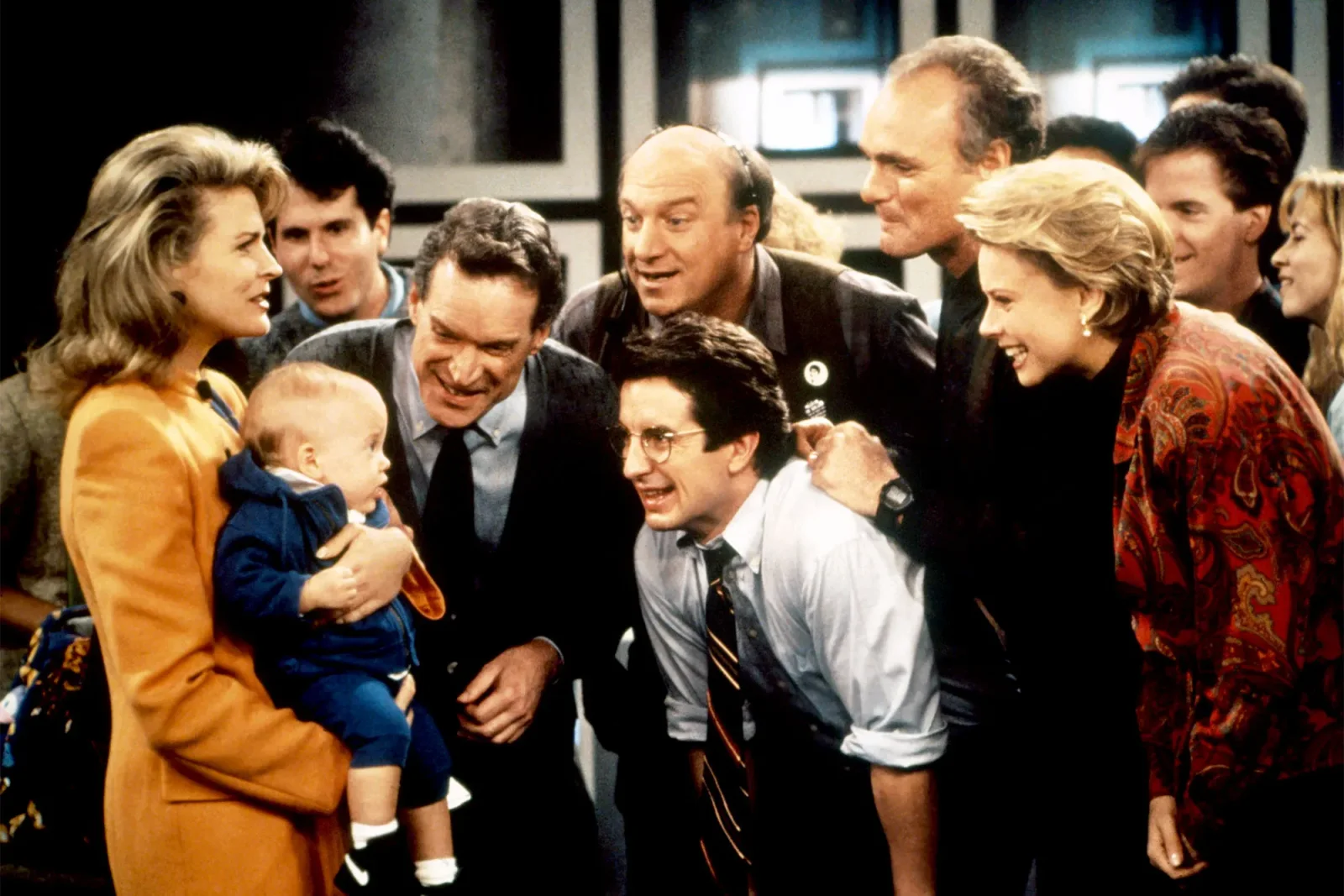
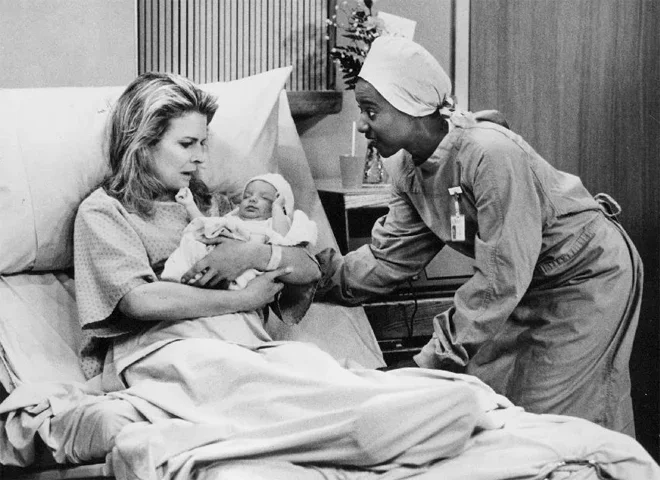
Avery changed her life, but he did not transform the show into a domestic sitcom. Murphy remained a journalist. She remained impatient, ambitious and frequently difficult. The comedy came from adding another responsibility to a person who already believed she could control every part of her schedule.
That choice was more interesting than either extreme. The series did not pretend a baby changed nothing, and it did not insist that becoming a mother had to replace Murphy’s career. It let the conflict remain unresolved in the ordinary way adult life often is unresolved.
The character also had financial and professional advantages many real single parents did not have, something the political controversy sometimes flattened. The series itself was usually strongest when it stayed with Murphy’s specific situation rather than treating her as representative of every family.
Jim, Frank, Corky, Miles and Eldin Kept Murphy Brown From Becoming a One-Woman Monologue
The series worked because Murphy’s confidence was constantly tested by people who had their own expertise, blind spots and loyalties.
Charles Kimbrough’s Jim Dial carried the authority of old broadcast news. Joe Regalbuto’s Frank Fontana could be both friend and professional rival. Faith Ford’s Corky grew far beyond the easy joke of a former beauty queen entering journalism. Grant Shaud’s Miles brought a younger producer’s insecurity into a room where everyone else seemed impossible to manage.
Then there was Eldin, the house painter who seemed permanently employed at Murphy’s home. Robert Pastorelli’s character created a second world outside FYI, one where Murphy’s professional status meant much less. His presence also made the home feel lived in rather than like a separate sitcom set the writers visited only when they needed a domestic plot.
Strong workplace comedy depends on resistance. Murphy was funniest when somebody told her no, ignored her status or knew her well enough not to be intimidated.
Murphy Brown Used Motown as Character, Not Just Background Music
Murphy’s love of Motown became one of those recurring details that made the character feel as if she had existed before the pilot.
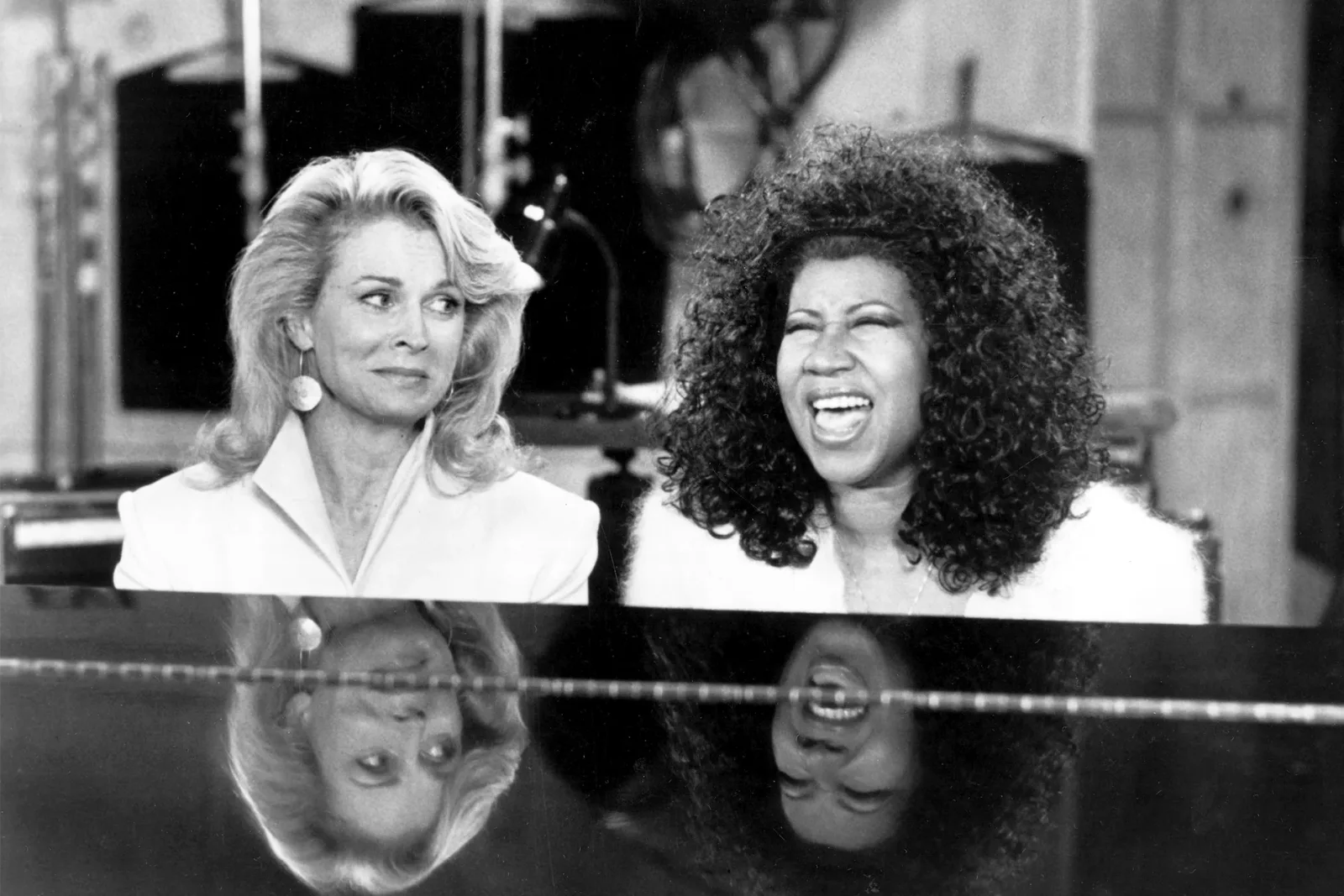
The series used Motown songs, references and guest appearances to give Murphy taste that was specific rather than generically “cool.” Aretha Franklin’s appearance mattered because Murphy’s admiration had been established. The Temptations could show up because the music was already part of the show’s comic vocabulary.
That specificity is easy to underestimate. Sitcom characters become memorable when they have preferences that are not merely plot devices. Murphy’s music, Frasier’s opera and Tim Taylor’s tools all tell you who a character is before the episode’s main conflict even begins.
Murphy Brown Won the 1991 and 1992 Emmys for Outstanding Comedy Series
The series’ early-90s peak was not only commercial. The Television Academy awarded Murphy Brown Outstanding Comedy Series in 1991 and again in 1992.
Candice Bergen won multiple lead-actress Emmys across the original run, while the series also earned awards for writing, directing, editing and supporting performances. That pattern matters because it shows how much of the show’s reputation rested on craft rather than topical attention alone.
By the time the Quayle controversy hit in 1992, Murphy Brown had already been recognized as one of television’s strongest comedies. The political story amplified the show’s visibility, but it did not create its legitimacy.
Murphy Brown Put an Established Professional Woman at the Center of the Sitcom
Part of Murphy’s importance came from how little explanation the show needed for her authority.
She was not waiting for a boss to discover her potential. She had already earned a national reputation, already made enemies and already learned how to survive a high-pressure workplace. That shifted the usual sitcom question. The story was not whether Murphy could become successful. It was what success had cost her, what she still wanted and how badly she could behave once she knew her value.
The series also let age work in the character’s favor. Murphy entered the 1990s with the accumulated confidence of somebody who had spent years in rooms where being underestimated was normal. Candice Bergen could play that history without turning every episode into an explanation of sexism. The confidence was simply there.
That mattered in a television landscape where women were often written as younger romantic leads or as family roles first and professionals second. Murphy’s job was not an accessory to her identity. It was one of the central facts of who she was.
The show still carried 1990s assumptions about gender, work and relationships, but its baseline was unusually strong: this woman belonged in the room, had earned her chair and did not need the audience to find her agreeable before taking her seriously.
Watching Murphy Brown in the Early 90s
What I remember about Murphy Brown is that it felt more plugged into the adult world than most sitcoms around it.
You could watch a family comedy and recognize the kitchen-table problems immediately. Murphy was dealing with producers, politicians, interviews, ratings and newsroom egos. Even if you had no idea how a television newsmagazine actually worked, the show made that world feel like a place where adults competed for real stakes.
It also expected you to keep up. A joke could reference something in the news and then move on. There was no pause to explain why a name mattered. If you missed it, another joke was coming. That confidence gave the show a pace and attitude that fit the early 90s unusually well.
And Murphy herself did not behave like television was waiting for her to become more agreeable. She could be exhausting. That was part of the point. The series understood that charisma and likability are not the same thing.
What Has Aged Unevenly About Murphy Brown
A sitcom built around current events will inevitably contain references that need more context decades later.
Political names, media personalities and specific controversies can land differently for viewers who did not live through them. Some gender jokes are unmistakably of their era, and the newsroom’s assumptions about broadcast power come from a time when a handful of network anchors could still define the national conversation.
What has aged better is the character structure. Workplace ego still exists. News organizations still argue about ratings and credibility. Famous people still confuse access with importance. Professionals still discover that being excellent at work does not make them emotionally competent everywhere else.
The show is strongest today when the topical reference opens a door into those durable behaviors instead of being the entire joke.
Murphy Brown Television Legacy: Work, Politics and Attitude Moved Into Prime Time
The lasting Murphy Brown television legacy is bigger than the Dan Quayle fight.
The series made a professional woman in midlife the unquestioned center of a major network comedy. It treated journalism as a source of character and conflict. It used topicality without surrendering the mechanics of a sitcom. And during its early-90s peak, it did all of that while sitting near the top of the Nielsen rankings.
Murphy’s #6 finish in 1990–91 and #3 finish a year later matter because they put the cultural story in perspective. This was not a tiny sophisticated show that later became historically important. It was already mass television.
Its influence is easiest to see in the permission it helped create: a female lead could be successful, abrasive, funny, political, imperfect, unmarried and still carry a mainstream comedy without the series reducing her to a lesson about becoming more conventional.
The arguments around Murphy Brown changed. The media world changed. The network audience shrank. But the basic idea that a workplace sitcom could enter the national conversation without giving up jokes became part of television’s vocabulary.
Murphy Brown FAQ: Ratings, Politics, Cast and Legacy
How high did Murphy Brown rank in 1990–91?
Murphy Brown finished #6 in the 1990–91 Nielsen rankings with a 16.9 rating.
What was Murphy Brown’s highest season ranking?
The show reached #3 in the 1991–92 season, behind 60 Minutes and Roseanne.
Who created Murphy Brown?
Diane English created the CBS sitcom.
Why did Dan Quayle criticize Murphy Brown?
In 1992, Vice President Dan Quayle cited the fictional character’s decision to become a single mother while discussing family values. The remark sparked a national debate, and the show answered in its next season premiere.
Did Murphy Brown win Outstanding Comedy Series?
Yes. The Television Academy lists Murphy Brown as the Outstanding Comedy Series winner in both 1991 and 1992.
Who played Murphy Brown?
Candice Bergen played Murphy throughout the original series and later revival.
What was FYI?
FYI was the fictional television newsmagazine where Murphy worked with Jim Dial, Frank Fontana, Corky Sherwood and producer Miles Silverberg.
Why was Murphy Brown important to 90s television?
It showed that a topical workplace comedy centered on an outspoken middle-aged professional woman could be both critically acclaimed and one of the most-watched shows on network television.
Murphy Brown ratings, history and awards sources
More 90s television