Frasier: How the Smartest Sitcom on TV Became a Mainstream Hit

FRASIER
How the Smartest Sitcom on TV Became a Mainstream Hit
Frasier should have been too fussy to become one of the biggest comedies in America. Its hero was a psychiatrist who cared about opera, antiques, wine and the proper way to throw a dinner party. His brother was even more particular. Half the jokes depended on vanity, language, timing and people being just intelligent enough to make their own lives harder. Yet in 1998–99, after NBC moved the show into the Thursday 9 p.m. slot vacated by Seinfeld, Frasier finished #3 for the entire television season with 22.5 million viewers. The smartest sitcom on television was not hiding in a corner of the schedule. It was sitting in the center of American prime time.
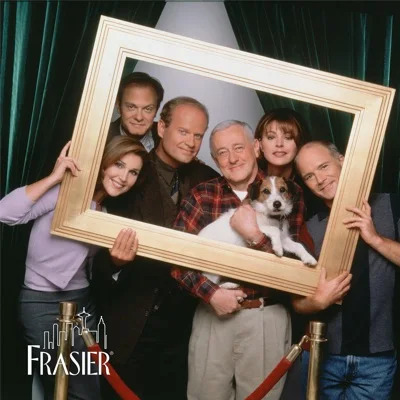
Why was Frasier such a big hit in the 90s?
Frasier became a mainstream hit because it made intelligence part of the joke without making intelligence the price of admission. The show could reference opera, Jung, French food or fine wine, but the actual comic engine was universal: brothers competing, a father embarrassing his sons, a man overestimating his own sophistication, romantic disasters, workplace friction and dinner parties collapsing in spectacular fashion. By 1998–99, the series had moved from Tuesday to the Thursday 9 p.m. slot that Seinfeld had left behind and jumped to #3 in the season with 22.5 million viewers.
Frasier in the 90s: Why a Sophisticated Sitcom Became Mass-Audience Television
The easiest way to misunderstand Frasier is to call it the “smart sitcom” and stop there. The series absolutely loved language, culture, psychiatry, theater, classical music and people who could spend fifteen minutes arguing over the correct wine. But none of that explains why millions of viewers came back every week.

The real trick was that the show never required the audience to be as pretentious as Frasier and Niles. In fact, most of the comedy came from watching the brothers assume that taste, education and social polish made them more competent than everybody else. Martin could puncture that illusion with one sentence. Roz could recognize a romantic disaster three scenes before Frasier did. Daphne could walk into an argument about etiquette and solve the practical problem everyone else had ignored. Eddie could stare at Frasier and somehow win.
That structure made the show welcoming. If you caught the opera reference, great. If you did not, the joke still worked because two grown brothers were destroying themselves over a seating chart. The series could sound literate without becoming exclusionary, and that distinction is the heart of its popularity.
You can see how unusual that balance was across our guide to 1990s TV shows, sitcoms, dramas and prime-time classics. The decade produced friend-group comedies, working-class family shows, workplace hits and increasingly fast dramas. Frasier carved out another lane: adult comedy built around verbal precision, emotional embarrassment and people whose cultural confidence routinely outran their common sense.
From Cheers to Frasier: Why Moving Frasier Crane to Seattle Was the Right Decision
Frasier Crane was already a familiar television character before Frasier existed. Kelsey Grammer had joined Cheers in the 1980s as Dr. Frasier Crane, and by the time that series ended in 1993, the character had enough history that a spin-off could easily have leaned on Boston nostalgia.
The creators made the smarter choice. David Angell, Peter Casey and David Lee took Frasier away from the bar, away from Boston and away from the social ecosystem that had defined him. Seattle gave the new series room to build a different family, a different workplace and a different rhythm. David Lee later described the process of creating the spin-off with Casey and Angell in his Television Academy interview, including the deliberate effort to distinguish the new series from Cheers.
The move also reset Frasier emotionally. On Cheers, he was one member of a group. In Seattle, he arrived expecting to reinvent himself as an independent, sophisticated man with a radio career and a beautiful apartment. Instead, his injured father moved in, Daphne became part of the household, his brother Niles turned out to be even more Frasier-like than Frasier, and the great independent reinvention became a family comedy.
That is one reason the spin-off worked so well. It kept the character but changed the pressure around him. The Frasier Crane who had been the refined outsider at Cheers became the less refined Crane brother in his own show. Suddenly there was somebody in the room who could out-snob him, out-psychiatry him and make him feel like the normal one. Niles did not dilute the original character. He revealed new sides of him.
Why Seattle Was More Than a New Address for Frasier
Seattle was a smart setting because it gave the series a city that felt urban and cultured without carrying the television baggage of New York, Los Angeles or Boston.
The skyline became part of the visual identity. Frasier’s apartment looked out across the city. Café Nervosa gave the characters a coffeehouse home at exactly the moment when coffee culture was becoming a recognizable piece of 90s urban life. KACL gave the show a workplace rooted in local radio rather than national celebrity. The setting supported Frasier’s taste for culture while still leaving plenty of room for Martin’s practical, blue-collar worldview.
There is also something very 1990s about the choice. Seattle was culturally visible in the decade for reasons that had nothing to do with Frasier Crane. The city had become shorthand for music, coffee, rain, tech growth and a kind of Pacific Northwest identity that felt contemporary. Frasier used almost none of the grunge imagery people associated with Seattle, which made the contrast funny in its own way. This was Seattle through an apartment full of African art, expensive furniture and sherry.
The city helped the show feel separate from Cheers while still remaining recognizably adult and metropolitan. Frasier had not simply moved. He had built a new life in a place where nobody cared that he used to be the psychiatrist at a Boston bar.
Frasier Crane Worked Because Intelligence Never Protected Him From Himself
Frasier’s greatest comic flaw is not that he is pretentious. It is that he is almost always capable of understanding the mistake he is making and somehow makes it anyway.
He is a psychiatrist. He gives advice for a living. He can identify denial, projection, jealousy and self-sabotage in callers within minutes. Then he hangs up the microphone, walks into his own life and becomes helpless in the presence of exactly those things. That contradiction keeps the character from turning into a smug fantasy of intelligence.
Kelsey Grammer understood that Frasier had to be theatrical without becoming unreal. The character can make a simple romantic misunderstanding sound like a Greek tragedy, then trip over a piece of furniture trying to preserve his dignity. He is generous but vain, compassionate but competitive, self-aware in theory and magnificently blind in practice.
His job as a radio psychiatrist is perfect because it turns his strongest quality into a public performance. Every day he tells strangers to listen more carefully, communicate honestly and recognize their own patterns. At home, Martin, Niles, Daphne and Roz spend years waiting for him to follow his own advice.
That is why the character remains likable. The audience is allowed to admire his intelligence while enjoying the fact that intelligence alone does not save him. Frasier earns sympathy because he tries. He wants to be a good son, brother, father, friend and partner. He just wants to be right at the same time.
Niles Crane Made Frasier Funnier by Being Even More Frasier Than Frasier
David Hyde Pierce’s Niles is one of the great supporting-character ideas in sitcom history because the character gives Frasier a mirror that exaggerates everything Frasier thinks makes him special.
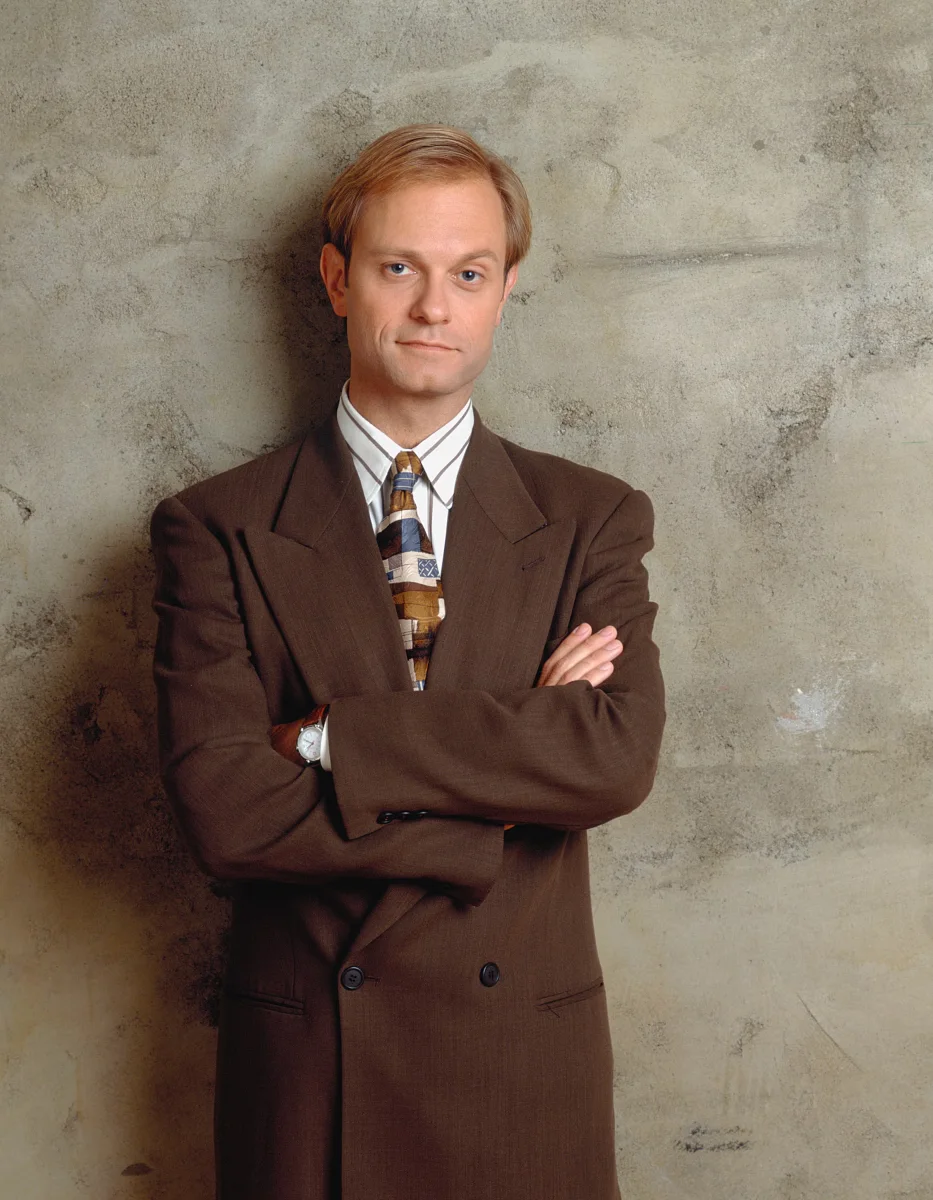
Niles is more delicate. More competitive. More socially ambitious. More particular about food, art, furniture and status. He is also physically precise in a way that allows the series to jump from verbal comedy into almost silent farce without changing shows. The opening section of “Three Valentines,” with Niles alone in Frasier’s apartment trying to prepare for a date, is famous because Pierce can build a complete comic disaster with almost no dialogue.
The brothers work because their rivalry has real affection underneath it. They can insult each other’s taste for ten minutes and then close ranks instantly if an outsider attacks one of them. They compete over intelligence, psychiatry, childhood memories, restaurants and wine, but the competition is never the whole relationship.
Niles also gives the show its longest romantic thread through Daphne. His feelings begin as a running gag, but the writers allow the situation to accumulate consequences. Maris remains offscreen. Niles’ marriage deteriorates. His attraction to Daphne becomes harder to treat as harmless fantasy. By season six, Daphne’s relationship with Donny forces the story toward a place where Niles can no longer remain safely in love from across the room.
David Hyde Pierce won four Emmys for playing Niles, including 1995, 1998 and 1999 during the original 90s run. The awards make sense, but the more important evidence is how impossible it became to imagine the show without him.
Martin Crane Kept Frasier From Becoming a Sitcom About People Who Were Too Impressed With Themselves
John Mahoney’s Martin Crane is the practical weight that keeps the show from floating away on sherry fumes.
Martin is a retired Seattle police officer. His sons are psychiatrists. They care about restaurants where reservations require strategy. Martin cares whether the chair is comfortable and the game is on. That contrast could have been written as a simple culture-war joke, but the series usually treats both sides with more generosity.
Frasier and Niles can be absurdly snobbish. Martin can be stubborn, emotionally closed and dismissive of things he does not understand. The comedy works because nobody owns all the wisdom. Martin sees through his sons’ pretensions, but Frasier and Niles can also recognize the places where their father uses toughness to avoid vulnerability.
The relationship changes slowly. That matters. The pilot begins with Martin moving into Frasier’s apartment after an injury makes living alone difficult. The arrangement feels temporary and intrusive to Frasier. Over time, the apartment becomes their shared home, and the arguments over furniture, privacy, Eddie and daily habits become evidence of intimacy rather than inconvenience.
Mahoney gives Martin dignity without sanding away the crankiness. He can be funny because he is unimpressed with his sons, then suddenly devastating when the show lets him talk about aging, police work, loneliness or their mother Hester. The emotional center of Frasier is not Frasier’s radio career. It is the fact that three Crane men who love one another do not naturally know how to say it.
Daphne Moon Gave the Crane Family Warmth, Weirdness and an Outsider’s View
Jane Leeves enters a household already crowded with strong personalities and somehow creates a character who never feels like hired help orbiting the important people.
Daphne is Martin’s physical therapist, but her real role in the ensemble is harder to define. She is family without being a Crane. She can side with Martin against the brothers, then turn around and understand Frasier’s emotional point before Martin does. She brings her own stories, family history, odd beliefs and a proudly unfiltered Manchester background into an apartment that might otherwise become too polished.
Her supposed psychic ability is a perfect Frasier joke because the show never fully needs to decide whether it is real. Frasier and Niles want a rational explanation. Daphne is comfortable with mystery. The comedy comes from everybody behaving according to character rather than from the series solving the supernatural question.
The Niles-Daphne story is more complicated. For years, Daphne is unaware of Niles’ feelings, which lets the audience enjoy his panic without making her responsible for it. As the series approaches the end of the decade, that arrangement becomes less sustainable. Donny’s arrival and proposal move Daphne out of the role of oblivious crush object and into choices that affect the whole family.
That progression is crucial to the show’s longevity. Running gags have to evolve or become furniture. Daphne remains funny because she continues to become more than the person Niles cannot confess his feelings to.
Roz Doyle Made Frasier’s Radio Career Feel Like a Real Workplace
Peri Gilpin’s Roz is essential because she gives Frasier a relationship that is neither family nor romance.
She produces his radio show, manages callers, keeps the hour moving and regularly saves Frasier from the consequences of his own ego. Their friendship is affectionate but unsentimental. Roz can tell him he is being ridiculous without the emotional baggage that Martin or Niles bring to the same conversation.
The series also lets Roz have a sex life without turning her into a cautionary tale. The jokes can be very 90s, and some have aged better than others, but the character retains agency. She dates, makes mistakes, judges Frasier’s choices and refuses to apologize for being more socially comfortable than he is.
Motherhood deepens the character without replacing her. Alice becomes part of Roz’s life while Roz remains Roz. She still works. She still dates. She still trades insults with Bulldog and pushes back when Frasier becomes patronizing. That continuity matters because sitcoms have often treated major life changes as excuses to rewrite women into narrower roles.
Roz also helps the show stay connected to the world outside Frasier’s apartment. KACL has gossip, ratings pressure, bosses, coworkers and professional consequences. Without Roz, the radio station could have become a set where Frasier waits for phone calls. With her, it feels like a workplace.
KACL Turned Therapy Into Entertainment Without Making Frasier a Celebrity Fantasy
The call-in radio format is one of the show’s best structural ideas because it gives Frasier a public identity while keeping the scale local and human.
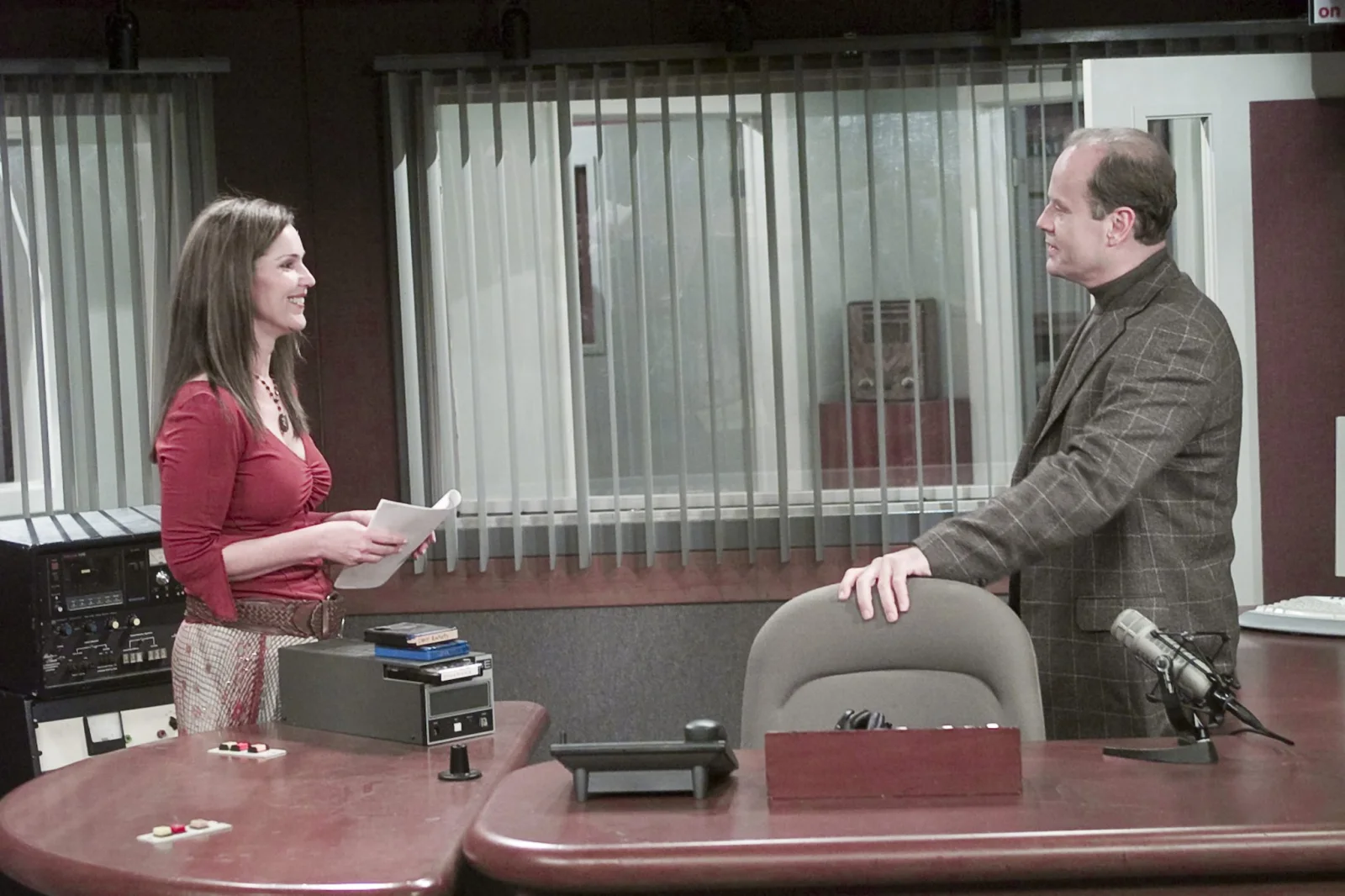
He is famous enough in Seattle to be recognized at the wrong moment, invited to civic events and worry about ratings. He is not so famous that he lives in a different universe from ordinary people. That middle level of celebrity creates endless comedy. Frasier can believe he is a major public intellectual while Martin remembers that he talks to people between traffic reports.
The callers also create a weekly reminder of Frasier’s professional competence. The series needs that because his personal life is such a parade of misjudgment. Listening to a caller lets us see the version of Frasier who genuinely can help somebody. The comedy becomes richer when we know he deserves his career even if he cannot organize his own emotions.
KACL’s staff broadens the comic world. Bulldog gives the station a crude sports-radio energy that drives Frasier crazy. Gil Chesterton turns food criticism into theatrical self-importance. Noel brings obsessive fandom and workplace awkwardness. Kenny eventually provides a management style built more on anxiety than authority.
Season six even temporarily removes Frasier from KACL after the station changes format, which proves how useful the workplace is. “Good Grief” opens the season with Frasier unemployed and throwing himself into projects because he cannot admit how lost he feels without the microphone. The station is not merely where scenes happen. It is part of who he thinks he is.
Frasier’s Apartment Made Taste, Family and Conflict Visible in the Set Design
The apartment works because it is not merely expensive. It tells you exactly who Frasier believes he is, and then Martin’s belongings interrupt the story.
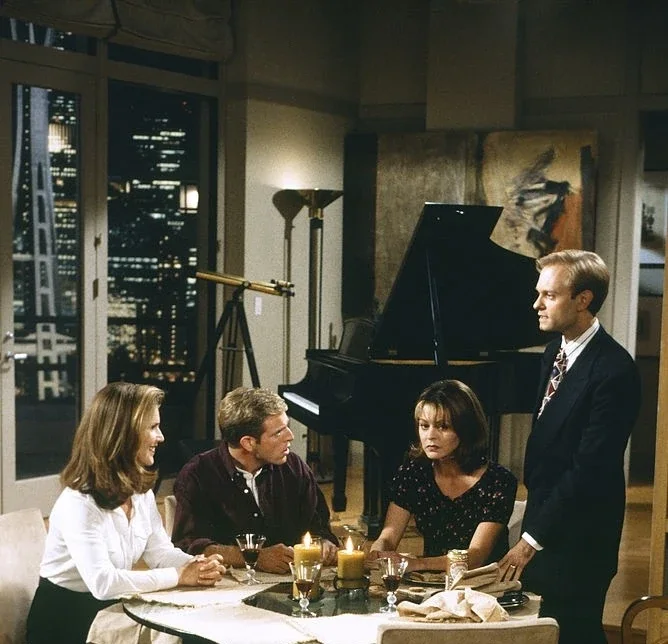
Frasier wants a home of curated modern furniture, art, books and objects with stories. The skyline view announces sophistication before he does. Then Martin arrives with the battered recliner that clashes with everything. The chair is funny because it is aesthetically offensive to Frasier, but it is emotionally important to Martin. Every argument over the room is really an argument over whose life gets to define the home.
Production designer Roy Christopher and the creative team built a set that could support both elegance and farce. There is enough visual openness for physical comedy, enough doorways for entrances and misunderstandings, and enough personality that the audience recognizes the apartment instantly.
The piano, fireplace, balcony and dining area allow the same room to host serious father-son conversations, romantic dates, black-tie disasters and ridiculous social competitions. Great sitcom sets are flexible without looking generic. Frasier’s apartment is unmistakably his, yet it can become almost any kind of stage.
And then there is the recliner. The fact that viewers can picture it immediately tells you the set design did its job.
Maris Crane Became One of Frasier’s Greatest Characters Without Ever Appearing
The decision never to show Maris is a master class in escalation.
At first, Niles’ wife is simply offscreen. Then the writers begin adding details. She is impossibly thin. Impossibly pale. Socially terrifying. Physically delicate in ways that make ordinary human activity sound dangerous. Each new description makes casting the role less possible, which only makes the joke stronger.
David Lee has discussed the unseen Maris in his Television Academy interview, and the brilliance is that the audience becomes a collaborator. Every viewer builds a slightly different impossible woman. Any actual actress would have collapsed the joke into one interpretation.
Maris also serves a dramatic purpose beyond the running gag. Niles’ marriage gives his infatuation with Daphne a boundary. His social ambition has consequences. The collapse of the marriage forces Niles into financial and emotional situations that expose how dependent he has been on a lifestyle he pretends to control.
By the time Maris’ family fortune is revealed in “To Tell the Truth,” the show can land a joke on years of accumulated mythology. That is how long-form sitcom writing rewards viewers without requiring homework.
Frasier’s Writing Was Precise Enough to Make Complicated Comedy Feel Effortless
The show’s reputation for intelligence comes from vocabulary and references, but the deeper craft is structural.
A typical strong episode introduces a small social problem. Frasier wants to impress someone. Niles wants to hide something. Martin refuses to participate. Roz knows the truth. The writers then tighten the situation until every reasonable solution is gone and the characters are left protecting lies that have become much harder than honesty would have been.
That architecture requires precision. A line in act one has to become useful later. A misunderstanding has to be believable enough to start but absurd enough to grow. Characters must make bad choices for reasons consistent with who they are, not because the plot needs another complication.
The series also trusts silence. Some of its most famous comedy is physical. Some comes from a pause after Frasier says something pompous and Martin looks at him. Some comes from Niles attempting to maintain dignity while his body betrays him.
The writers’ room included major comedy talent across the run, including Christopher Lloyd, Joe Keenan, David Lloyd, Suzanne Martin, Jay Kogen, Ken Levine and David Isaacs among many others. The result was a show that could move between verbal wit, romantic comedy, bedroom farce, workplace story and family emotion without feeling like a collection of different series.
Frasier Turned Old-School Farce Into Some of the Sharpest Comedy of the 90s
The series loved a form of comedy much older than network television: people entering at the wrong time, identities being mistaken, lies multiplying and social dignity collapsing by degrees.
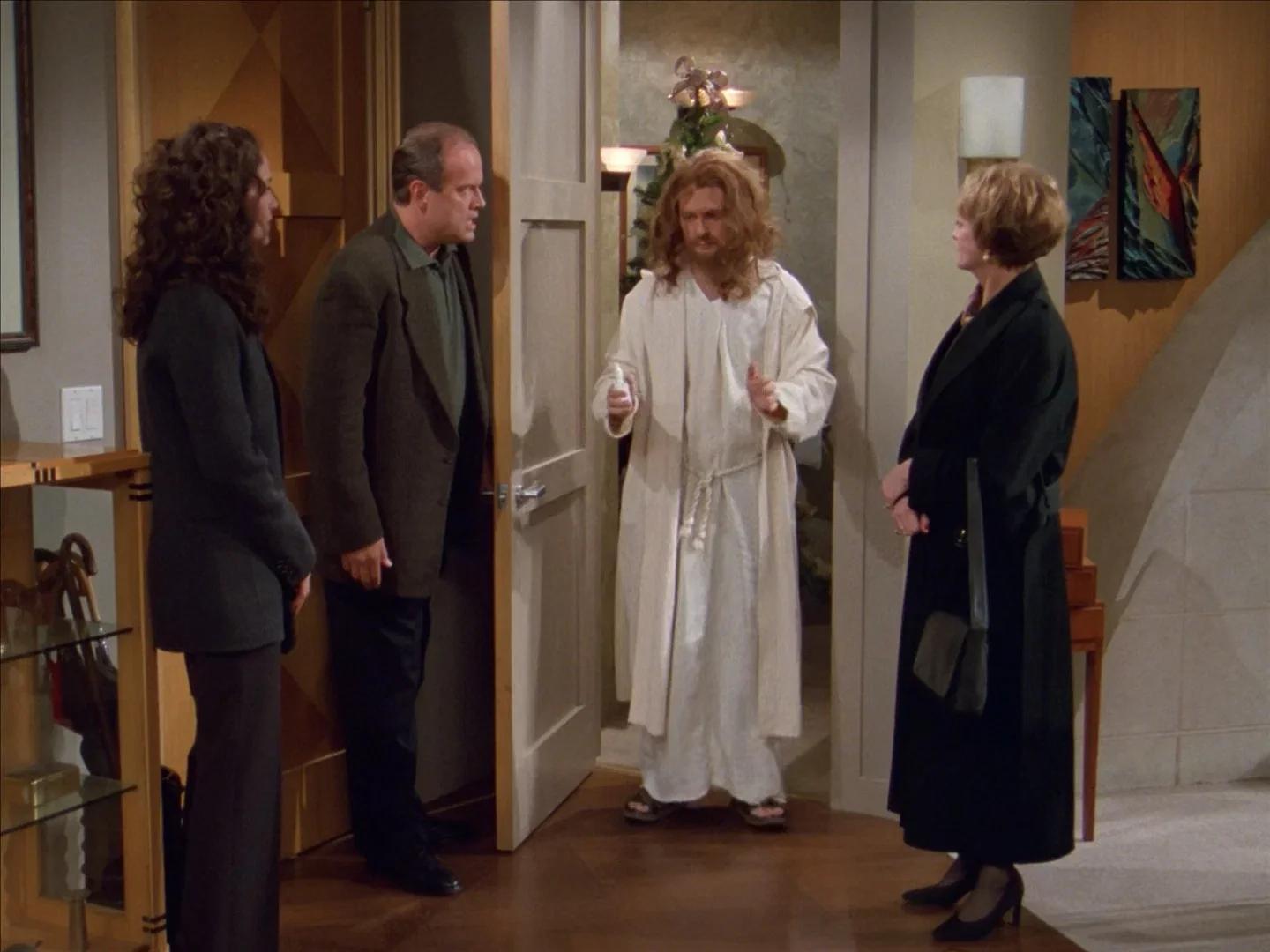
What made the farce feel modern was character. Frasier does not lie because the writers need a lie. He lies because he cannot bear a minor embarrassment. Niles participates because pride, romantic panic or loyalty pulls him in. Martin often sees the disaster coming and either refuses to help or enjoys watching his sons learn the lesson.
“Merry Christmas, Mrs. Moskowitz” is a perfect example. Frasier lets Faye’s mother believe he is Jewish because correcting the misunderstanding feels awkward. That tiny decision requires Martin and Niles to participate, Christmas decorations to disappear, religious details to be improvised and every new visitor to threaten the entire construction. The joke is not religious identity itself. The joke is how much work Frasier will do to avoid one uncomfortable honest sentence.
“Dinner Party” reduces the scale even further. Frasier and Niles attempt to organize a tasteful evening and become consumed by the guest list before the party even happens. The episode understands that for these men, social planning can become a full contact sport.
This kind of farce rewards performance, writing and timing equally. It is one of the reasons the show still feels carefully built rather than merely funny.
Frasier’s Snobbery Worked Because the Show Was Usually Laughing at the Snobs
There is a reason the expensive wine and opera references do not turn the series into an advertisement for upper-class taste.
Frasier and Niles genuinely love the things they love. The show does not need to pretend opera is boring or fine food is ridiculous. What it mocks is the belief that taste makes the brothers superior. Their knowledge is real. Their social judgment is frequently terrible.
That distinction gives Martin an important role. His beer, sports, steak and old recliner are not presented as the secret “correct” culture either. He can be as narrow in his assumptions as his sons. The series gets comedy from the collision between taste and identity without requiring one side to win every time.
The Crane brothers are funniest when status becomes competitive. Restaurant reservations, wine clubs, apartment buildings, museum boards and charity events can turn into arenas where two psychiatrists lose all psychological perspective. Their sophistication becomes another version of sibling one-upmanship.
That keeps the class comedy human. The series is not really asking whether expensive taste is good or bad. It is asking what people are trying to prove when taste becomes performance.
The Crane Family Made Frasier More Than a Workplace or Dating Sitcom
For all the radio callers, restaurants, dates and cultural references, the durable emotional story is family repair.
Frasier returns to Seattle as a middle-aged man who assumes independence will make him happy. Martin’s injury forces them into the same home. Niles is nearby, but the brothers’ relationship with their father is polite in the way families can become polite when they do not know how to talk about old hurt.
The series does not repair that history quickly. Martin still thinks his sons are too sensitive. Frasier still resents the disruption to his home. Niles still wants approval while pretending he is above needing it. The affection grows through ordinary repetition: dinners, arguments, errands, holidays, hospital visits and the fact that they keep showing up.
That is where the show becomes warmer than its reputation suggests. Frasier may be one of television’s great snobs, but Frasier is not a cold series. It is full of people learning how to tolerate one another long enough for love to become visible.
The brothers also become closer because Martin is there. Their competition remains, but family crises reveal how completely they depend on one another. The series understands that adulthood does not end sibling dynamics. It simply gives siblings better vocabulary for the same old fights.
Frasier Used Guest Stars Without Letting Celebrity Overwhelm the Ensemble
The radio format gave the series an unusually elegant way to use famous voices. A celebrity could call Frasier’s show, deliver a problem and disappear without bending the episode around a stunt cameo.
That became a long-running game for the series. Famous voices appeared as callers, while familiar faces could enter Frasier’s romantic, professional or family life. The key was that guest casting usually served the episode rather than becoming the episode.
Cheers characters occasionally returned, which allowed the spin-off to acknowledge its history without living inside it. Lilith was especially valuable because Bebe Neuwirth’s character belonged to Frasier’s family story, not just his Boston nostalgia. Their marriage, divorce and son Frederick gave the new series real continuity with the old one.
Season six brought Woody Harrelson back as Woody in an episode built around a surprisingly adult idea: old friends can still care about each other even when the shared context that created the friendship is gone. Frasier discovers he has almost nothing in common with Woody beyond memory, then learns Woody feels much the same way. That is a more interesting use of nostalgia than simply reopening the Cheers bar.
By 1999, the show could also attract performers like Christine Baranski and Piper Laurie, while David Hyde Pierce, Kelsey Grammer and John Mahoney were all Emmy-level performers in their own roles. The guest stars entered an ensemble confident enough not to disappear around them.
Frasier and Must See TV: How a Sophisticated Sitcom Fit NBC’s Biggest Night
The phrase “Must See TV” can make NBC’s 90s dominance sound inevitable in retrospect. It was not. The network had to keep replacing hits, moving pieces and protecting Thursday as programs ended.
Frasier had premiered on Thursday in 1993 as the successor to Cheers, then moved to Tuesday in 1994, where it built its own identity and audience. By the end of the decade, NBC needed the show back on Thursday for a much bigger reason: Seinfeld was ending.
The larger story of NBC’s Must See TV era shows how much money and cultural weight the network concentrated into that night. Friends opened Thursday. ER closed it. The 9 p.m. hour in between was enormously valuable. When Jerry Seinfeld left, NBC needed a known quantity that advertisers, affiliates and viewers already trusted.
Frasier was an interesting choice because it was not a copy of Seinfeld. The rhythms were different. The characters were older. The humor was more theatrical and less observational. NBC was not trying to replace one show creatively. It was trying to protect the idea that Thursday at 9 still belonged to a major comedy.
That pressure makes what happened next more impressive. The move did not reproduce Seinfeld numbers, but it dramatically expanded Frasier itself.
Replacing Seinfeld: Why NBC Moved Frasier to Thursday at 9 in 1998
When Seinfeld ended, NBC did not merely lose a hit. It lost the show sitting in the most strategically important half-hour on the most valuable night in network television.
In May 1998, NBC announced that Frasier would move from Tuesday to Thursday at 9 p.m. The Los Angeles Times described the slot as the coveted center of Must See TV, and NBC Entertainment president Warren Littlefield publicly expressed confidence that the Emmy-winning comedy could help preserve the network’s dominance.
The move was a homecoming in one sense. Frasier had launched on Thursday in 1993. It was also a major promotion. By 1997–98, the show was already a respected hit, but it ranked #13 in total viewers with 16.8 million. Moving into the post-Friends, pre-ER corridor gave it access to television’s strongest viewing environment.
There was enormous risk in that visibility. Every ratings story could compare Frasier’s number with what Seinfeld used to deliver. NBC executives openly worried about the post-Seinfeld decline. Early in the season, trade coverage noted that Frasier was drawing millions fewer viewers than the show it replaced.
But replacement is the wrong way to judge it creatively. Frasier did not need to become Seinfeld. It needed to remain itself while proving that millions of additional viewers would follow a comedy about a Seattle radio psychiatrist into the biggest sitcom slot in America.
That is exactly what happened.
Frasier Ratings in 1998–99: #3 With 22.5 Million Viewers
The 1998–99 Nielsen results are the cleanest evidence that Frasier was not merely a critically admired comedy with a loyal upscale audience. It was mass television.

The Los Angeles Times season-end table placed ER at #1 with 25.4 million viewers, Friends at #2 with 23.5 million and Frasier at #3 with 22.5 million. The table also showed Frasier up 34% from the previous season, with a notation that it had changed nights.
That one-year jump is extraordinary. In 1997–98, the series averaged 16.8 million viewers and ranked #13 in the Times’ top-20 list. A year later it had gained roughly 5.7 million viewers and moved ten places higher in the season ranking.
Our ranking of the biggest TV shows of 1999 puts that #3 finish into the full network picture. This was the final full television season of the 1990s, and the top of the chart still looked like classic broadcast monoculture: huge audiences, familiar network brands and weekly shows capable of reaching more than twenty million people on average.
The important point is not that Thursday did all the work. A great time slot can expose a show to more viewers, but it cannot make millions of them continue watching something they do not like. The move gave Frasier the opportunity. The show’s writing, cast and accumulated reputation converted that opportunity into one of the biggest seasons of its run.
Frasier’s #3 Finish Says Something Bigger About Television in 1999
There is another reason the 22.5 million number matters now: it came near the end of an era when one network sitcom could still become part of the weekly routine of an enormous national audience.
The top of the 1998–99 chart is almost a diagram of broadcast power. ER, Friends and Frasier occupied the top three spots, all on NBC. CBS still had Touched by an Angel and 60 Minutes pulling massive audiences. ABC had Monday Night Football and Home Improvement. Fox had major cultural visibility but fewer shows in the absolute top tier.
The larger story of 1999 and the end of the great network TV monoculture is that this shared-audience structure was already beginning to fracture. Cable choice was expanding. The internet was becoming part of daily life. The next decade would make television audiences more fragmented and eventually more on-demand.
Frasier sits at a fascinating point in that transition because nothing about it feels designed for the lowest common denominator. NBC placed a comedy full of psychiatric terminology, classical references and social farce in the center of its biggest night, and twenty-two and a half million people watched on average.
That does not mean everybody watching cared about opera. It means broadcast television was still capable of carrying a distinctive show into homes far beyond the audience that might have sought it out on its own.
Frasier Season 6 Shows Why the Ratings Boom Was More Than a Time-Slot Gift
Season six is a useful test because the show entered its biggest ratings year by destabilizing Frasier’s career.

“Good Grief” opens with KACL having changed format and Frasier unemployed. Instead of immediately restoring the familiar workplace, the writers let him move through denial, frantic activity and the discomfort of not knowing who he is without the show. “Frasier’s Curse” pushes the embarrassment further by making a school reunion arrive at exactly the wrong point in his professional life.
The season eventually brings KACL back into the center, but the temporary unemployment gives the ensemble new combinations. Roz has money problems in “Roz, a Loan.” Niles is dealing with the aftermath of his marriage. Martin and Daphne have their own relationships and frustrations. The show is stable enough by year six to remove a piece of its formula and trust the characters to carry the comedy.
Then the season delivers some of the series’ most enduring farce. “Merry Christmas, Mrs. Moskowitz” turns one mistaken assumption into a full apartment performance. “Three Valentines” gives Niles an almost silent opening disaster. “Dinner Party” lets Frasier and Niles unravel over a guest list. “IQ” turns childhood test scores into sibling warfare.
The back half also moves long-term story. Donny enters Niles’ divorce case and becomes Daphne’s boyfriend. “Visions of Daphne” moves toward their engagement while Niles tries to behave honorably. The two-part “Shutout in Seattle” closes the season with several relationships collapsing at once.
That is not a show coasting on reputation. The #3 season is full of structural confidence.
Essential Frasier Episodes From the 1998–99 Ratings Peak
This is not a ranking of the best Frasier episodes ever. These season-six episodes explain the exact version of the show that moved to Thursday, jumped to #3 and proved sophisticated comedy could still play huge.
“Good Grief”
Frasier deals with unemployment by doing almost everything except admitting he is grieving the loss of his professional identity. The episode turns a career setback into character comedy rather than simply rushing him back to the radio booth.
“Frasier’s Curse”
A school reunion arrives while Frasier is unemployed and embarrassed, which is exactly the sort of social situation guaranteed to activate his vanity. The episode works because the humiliation matters more to Frasier than it does to anybody else.
“The Seal Who Came to Dinner”
Niles tries to protect his gourmet-club standing while a dead seal threatens a fancy event at Maris’ beach house. It is quintessential Crane-brother farce: status anxiety plus a practical problem they are far too elegant to solve elegantly.
“Merry Christmas, Mrs. Moskowitz”
Frasier allows Faye’s mother to think he is Jewish and recruits the family into maintaining the misunderstanding. The escalation is a perfect example of how the show turns social discomfort into mechanical farce.
“Three Valentines”
The opening Niles sequence is physical comedy stripped to essentials: ironing, fire, panic and David Hyde Pierce’s timing. The rest of the episode contrasts Frasier’s uncertainty about a date with Martin and Daphne spending Valentine’s Day together.
“To Tell the Truth”
Donny Douglas takes over Niles’ divorce case, the truth about Maris’ family money becomes leverage, and Daphne begins dating Donny. One episode advances legal, romantic and running-gag story at the same time.
“Dinner Party”
Frasier and Niles attempt to plan a small tasteful dinner and become psychologically destroyed by the guest list. The party barely matters. The brothers’ need to engineer social perfection is the entire comic event.
“IQ”
A childhood intelligence test turns the Crane brothers into competitive children again. The episode is a perfect statement of the show’s attitude toward intelligence: being smart does not stop you from behaving stupidly.
“Dr. Nora”
Frasier helps launch another advice host, then discovers she uses the microphone very differently. The KACL setting becomes a way to explore professional ego, ratings and the limits of Frasier’s belief that advice should be compassionate.
“Visions of Daphne”
Daphne’s psychic vision and Donny’s proposal push the Niles-Daphne story toward consequences. Niles has an opportunity to manipulate the situation and instead tries to do the honorable thing, which makes the long-running crush feel more adult.
“Shutout in Seattle”
The two-part finale clears the romantic board with Frasier, Niles, Roz and Martin all facing relationship chaos. The final piano-bar image of the Crane men together is a reminder that family remains the show’s safest place after romance collapses.
Frasier’s Emmy Run Confirmed What the Ratings Already Suggested
Frasier won Outstanding Comedy Series five consecutive years, from 1994 through 1998. At the 50th Primetime Emmy Awards in 1998, the Television Academy specifically noted that the series had rewritten the record book with five straight Comedy Series victories.
The original run ultimately accumulated 37 Emmy wins, which the Academy later listed as the record for most Emmys won by a series. Kelsey Grammer, David Hyde Pierce, writers, directors, editors and production teams all contributed to the total. David Hyde Pierce alone won four supporting-actor Emmys for Niles.
The timing is important. By the time Frasier moved to Thursday in fall 1998, it was not a respected little show hoping a better slot would save it. It was already the reigning five-time Emmy champion for Outstanding Comedy Series. NBC was placing one of television’s most decorated comedies into one of television’s most valuable time periods.
In 1999, the show did not win a sixth straight Comedy Series Emmy—Ally McBeal took the category—but David Hyde Pierce won supporting actor again and the series continued to receive major nominations. The awards run had already done its work: sophistication was part of the brand, not a barrier to mass appeal.
Watching Frasier in the 90s: The Gen X Memory of a Sitcom That Expected You to Keep Up
What I remember most is that Frasier never seemed worried that somebody might miss a reference.
The show just kept moving. If Niles dropped a name you did not know, there was another joke behind it. If Frasier was furious about some restaurant reservation or opera performance, the emotional situation was clear even if the cultural detail was not. That gave the series a confidence that felt different from a lot of television built around making sure every joke announced itself.
And then there was the sound of it. The piano. The short skyline title cards. “Tossed Salads and Scrambled Eggs.” Frasier saying he was listening. The radio booth. Café Nervosa. The apartment. The show had a complete sensory identity without needing a giant theme-song montage.
By 1998, when it moved into the old Seinfeld slot, it felt like NBC was making a statement: this is the grown-up comedy we trust with Thursday night now. That did not make it cooler. Frasier was never trying to be cool in the way younger 90s shows were cool. It was comfortable being itself.
That confidence is probably why so many of us watched even when we had almost nothing in common with Frasier Crane’s actual lifestyle. I was not choosing sherry or worrying about opera tickets. I understood having a brother who knew exactly how to annoy you, a parent who could puncture your ego and the terrible realization that your attempt to impress somebody had become a full-scale disaster.
The fancy details were the wrapping. The embarrassment was universal.
What Has Aged Unevenly About Frasier
The show has held up remarkably well as writing and performance, but it still carries the assumptions of 1990s network comedy.
Some jokes about sexuality, gender and body image land differently now. Roz’s dating life is occasionally treated as an easy punch line in ways the character herself is stronger than. Daphne’s accent and background can slide into broad stereotype. Certain psychiatric language reflects television shorthand more than current clinical understanding.
The unseen-Marisa joke also lives partly on exaggerated physical descriptions that can feel harsher when isolated from the accumulated absurdity of the running gag. The series usually makes the Crane brothers’ judgment the joke, but not every line is equally graceful decades later.
What has aged extremely well is the basic comic architecture. Vanity still exists. Sibling rivalry still exists. People still lie because the truth feels embarrassing and then spend hours protecting the lie. Families still love one another badly before they learn to do it better.
The performances help enormously. John Mahoney, David Hyde Pierce, Jane Leeves, Peri Gilpin and Kelsey Grammer create characters strong enough that dated surface jokes rarely define the entire scene.
Frasier Television Legacy: Sophisticated Comedy Could Still Be Huge
The most important part of the Frasier television legacy is not that the show proved audiences were smart enough for sophisticated comedy. That framing gives the series too much credit and viewers too little.
What Frasier proved was that sophistication and accessibility were not opposites. The writers did not need to remove cultural references to make the show popular. They needed to build jokes so the human behavior underneath the reference was obvious. That is a much more useful lesson.
The series also demonstrated how a spin-off can become independent. Frasier Crane carried history from Cheers, but Seattle, Niles, Martin, Daphne, Roz, KACL and Café Nervosa created a world strong enough to stand without Boston. The show honored its origin without behaving like an appendix to it.
Its 1998–99 season is the clearest summary. A comedy six years into its run moved into the most scrutinized sitcom time slot on television and grew from 16.8 million viewers to 22.5 million. It finished #3 for the season behind only ER and Friends. This happened after five straight Outstanding Comedy Series Emmys, not before the industry recognized it.
That is why the series belongs near the center of any serious discussion of smart 90s sitcoms. It was not the brilliant show everybody respected but nobody watched. Millions watched it. Then millions more watched it when NBC put it on Thursday.
The television business that produced those numbers was already beginning to change, but for one late-90s season the evidence was sitting right there at #3: a psychiatrist, his brother, their father, a radio producer, a physical therapist and one very judgmental dog could still command one of the biggest audiences in America.
Frasier FAQ: Ratings, Cast, Emmys and 90s Television Legacy
How high did Frasier rank in the 1998–99 TV season?
Frasier finished #3 in total viewers for the 1998–99 season, averaging 22.5 million viewers according to Nielsen figures published by the Los Angeles Times.
What did Frasier rank in 1997–98 before moving to Thursday?
The series ranked #13 with an average of 16.8 million viewers in the Los Angeles Times’ season-end 1997–98 top-20 table.
Why did Frasier move to Thursday night in 1998?
NBC moved Frasier from Tuesday to Thursday at 9 p.m. to take over the time period vacated by Seinfeld and help protect the network’s valuable Must See TV lineup.
How much did Frasier’s audience grow in 1998–99?
The Los Angeles Times reported a 34% increase versus the previous season, with average viewership rising from 16.8 million to 22.5 million after the move to Thursday.
Who created Frasier?
The series was created by David Angell, Peter Casey and David Lee.
Was Frasier a spin-off of Cheers?
Yes. Kelsey Grammer had played psychiatrist Frasier Crane on Cheers before the character moved to Seattle for the spin-off in 1993.
How many seasons did Frasier run?
The original NBC series ran 11 seasons, from 1993 through 2004.
How many episodes were in the original Frasier run?
The original series produced 264 episodes across its 11-season NBC run.
How many consecutive Outstanding Comedy Series Emmys did Frasier win?
Frasier won Outstanding Comedy Series five consecutive years, from 1994 through 1998.
How many Emmys did the original Frasier series win?
The original run accumulated 37 Emmy wins, which the Television Academy later listed as the record for most Emmys won by a series at the time.
Why was Niles Crane so important to Frasier?
Niles gave Frasier an intellectual and social rival inside his own family while also expanding the series into physical comedy, sibling competition and the long-running Daphne romance.
Why was Maris never shown?
The writers kept escalating the descriptions of Niles’ wife until the unseen version became funnier and more impossible than any casting choice could have been.
What was KACL?
KACL was the fictional Seattle radio station where Frasier hosted his call-in psychiatry program with producer Roz Doyle.
Why does Frasier still hold up?
The references and some social jokes belong to the 90s, but the core comedy is built on family tension, vanity, romance, sibling rivalry and carefully constructed farce—situations that remain recognizable.
Frasier ratings, history, Emmy and episode sources
- Los Angeles Times — May 28, 1999 season-end ratings, for the 1998–99 top-20 Nielsen table, Frasier’s #3 finish, 22.5 million viewers and 34% year-over-year increase.
- Los Angeles Times — May 22, 1998 season-end ratings, for Frasier’s 1997–98 #13 finish and 16.8 million average viewers.
- Los Angeles Times — May 19, 1998 NBC schedule announcement, for the move into Seinfeld’s Thursday 9 p.m. slot and NBC’s strategy around Must See TV.
- Television Academy Foundation Interviews — Frasier, including David Lee on creating the spin-off, casting, writing, the apartment, Maris and the show’s success.
- Television Academy — Frasier awards database, for Emmy wins and nominations across the series.
- Television Academy — Frasier to end 11-year run, for the original series’ 11-season history and five consecutive Comedy Series wins.
- Television Academy Emmy facts and figures, for the original series’ 37 Emmy wins and five Comedy Series victories.
- TV Guide — Frasier Season 6 episode guide, for 1998–99 episode dates and story summaries.
More 90s television after KACL signs off