Riptide in the 80s: Boats, Helicopters and a Forgotten Detective Hit
Cody and Nick are at the marina. Murray brought his equipment. Give the pink helicopter a minute.
Murray’s got the computer, and the guys have somewhere to be.
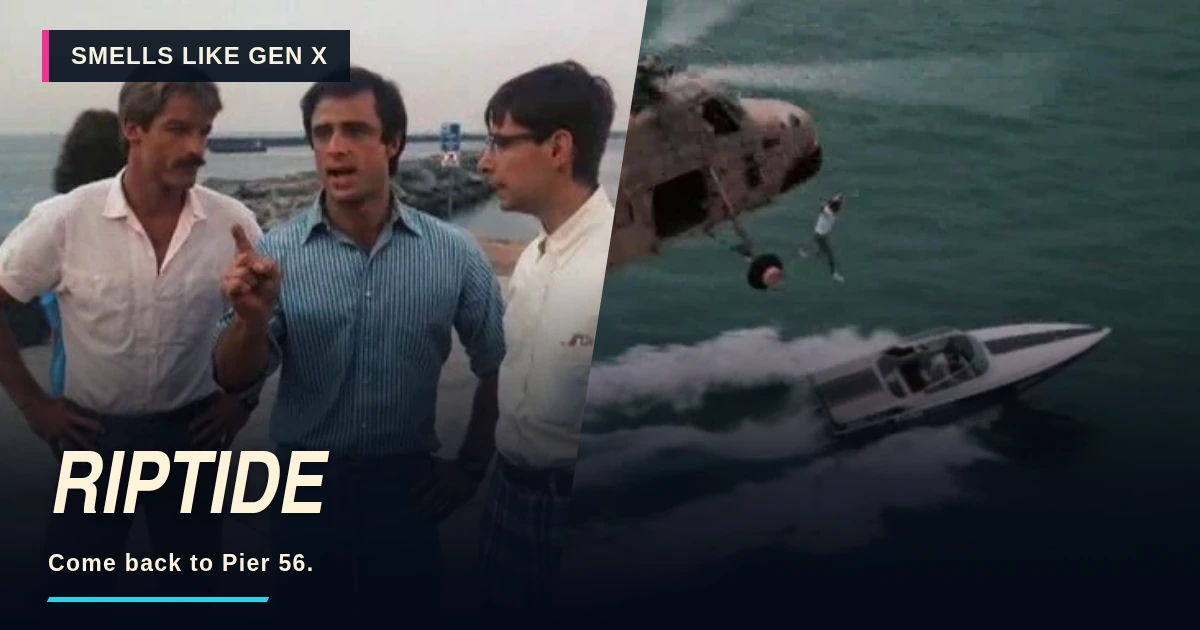
Somebody can say Riptide and for half a second I’m waiting for a pink helicopter to get going. I might need a minute on the name of the episode. The helicopter, the boat, and the little robot come right back. And there are three guys at the marina trying to do enough detective work to keep the whole operation afloat. You can have a lot of fun getting reacquainted with a show while you’re still trying to remember what any of those guys was called.
Cody Allen was Perry King. Nick Ryder was Joe Penny. Murray “Boz” Bozinsky was Thom Bray. The first two were Army friends who knew each other well enough to get into a job together, and Murray brought the brains and the equipment they needed when the job went somewhere new. Cannell had already helped put a Southern California detective on NBC with The Rockford Files. Jim had a trailer by the beach. This bunch had a boat, and their address could leave without them. The boat was Riptide. The helicopter was the Screaming Mimi. The robot was Roboz. I like a show that can get that far into introducing the cast and still have a few pieces of transportation to tell you about.
Riptide began on NBC on January 3, 1984. Stephen J. Cannell and Frank Lupo created it. The series ran for three seasons, long enough to get used to the idea that a night of television could start at a dock in Southern California and find its way to a boat that had blown up, a computer problem, or a detective show inside the detective show. I was usually happy if we spent a little time out on the water along the way.
Cody and Nick could work the dock and Murray could make something work
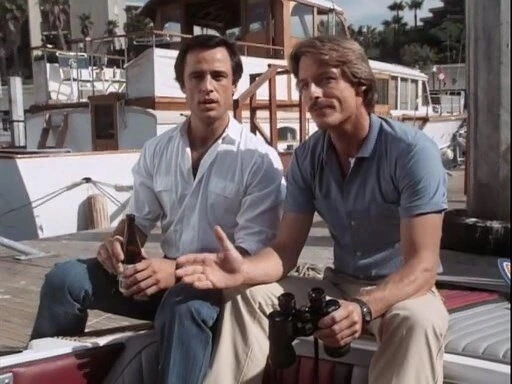
You can tell from the way Cody and Nick talk that somebody has heard a version of this argument before. Cody can get a conversation started with somebody who’d rather be left alone. Nick is good company to have when that person has decided there’s a shorter way to end the conversation. Put Murray in with them and the whole arrangement starts to feel like the kind of business that took three different phone calls to get started.
Thom Bray makes Murray somebody I’m always glad to see get a bit of the hour to himself. There’s a kind of confidence he has when he’s looking at a piece of equipment and has time to work out what he wants it to do. It’s fun to watch the other two realize that some part of the afternoon is now going to depend on him having all the time he needs.
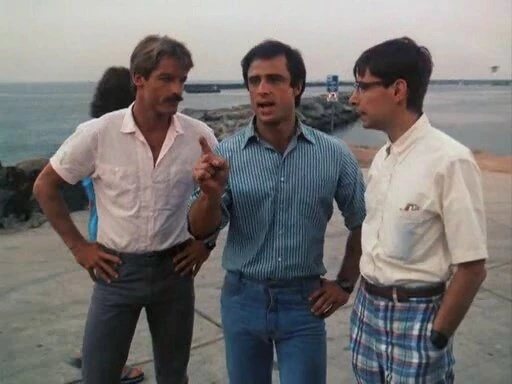
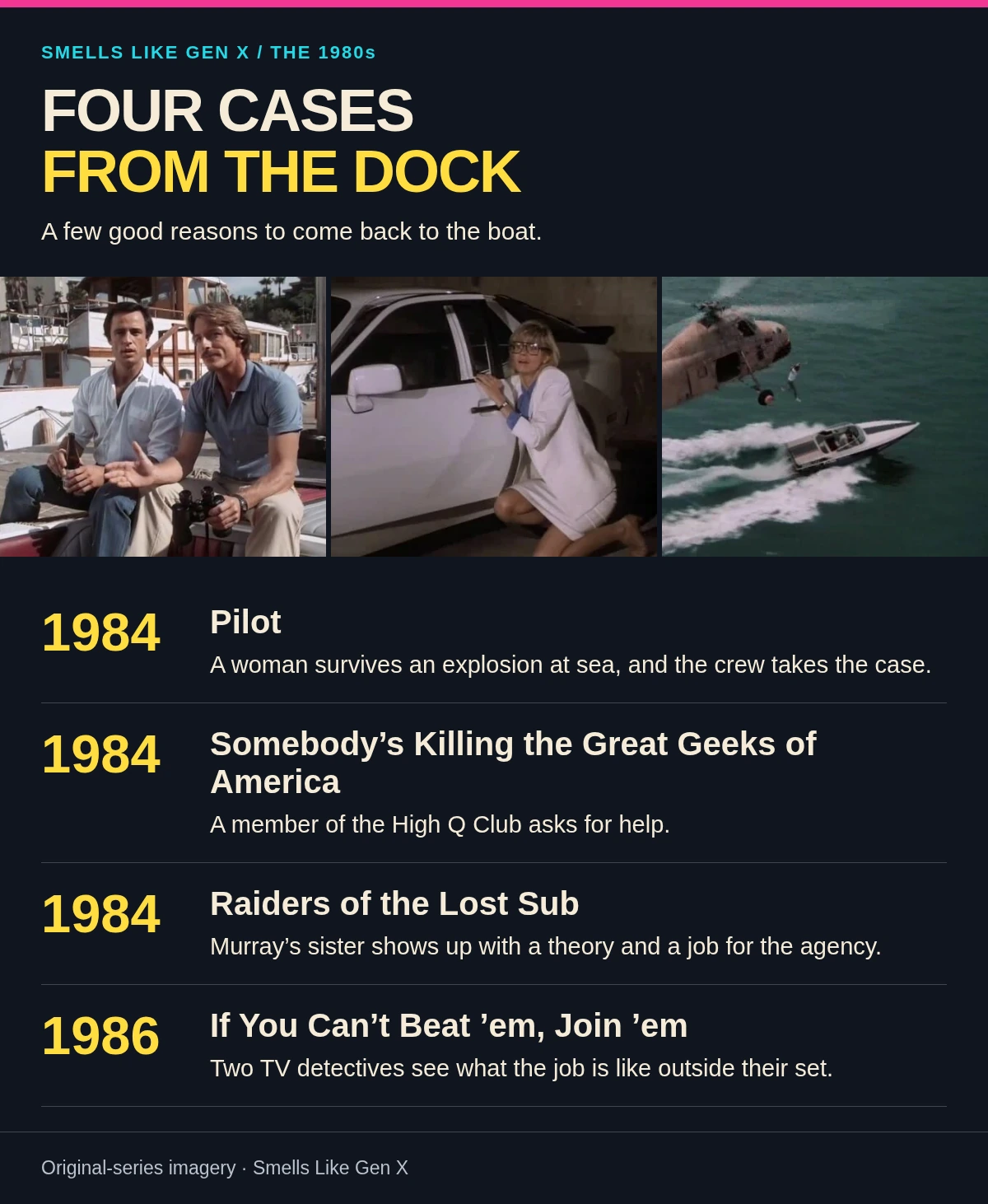
“Somebody’s Killing the Great Geeks of America” gets to the people Murray knows. A member of the High Q Club hires the agency when a co-worker is killed. For a detective show that had an easy way into any scene that needed two men to go looking for somebody, it was a nice early choice to give the third guy a reason to understand the people asking the questions. It gives you a different starting place for the hour and more of a sense of whose life goes on when the job is over.
“Baxter and Boz,” in the second season, lets Murray help another inventor. It turns out he’s been working with a billionaire who generally likes to keep to himself. I enjoy the thought of two people wanting to see whether a thing they’ve been fiddling with will finally work while there’s all that other information to catch up on. There’s a perfectly good reason to talk when you have something sitting between you that still needs fixing.
The helicopter sounded like something somebody owned
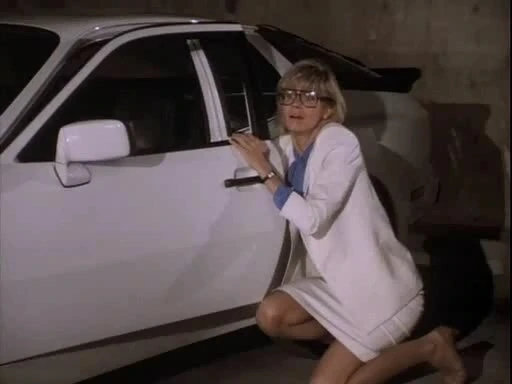
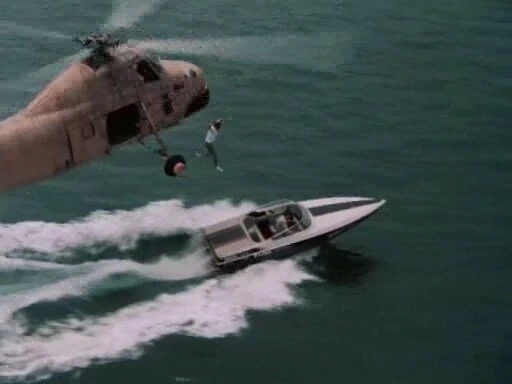
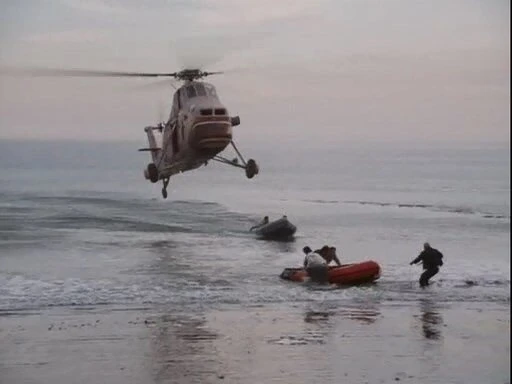
The Screaming Mimi is pink enough to know you’ve seen her before she’s made it across the shot. You could hear the name without seeing the machine and picture something that was going to give the pilot a reason to pay attention. I’m fond of a vehicle on television that looks like it had a life before the people on the screen started asking it to do one more thing for them.
A ride in Airwolf comes back to me as the music and the moment the black helicopter arrives. Riptide makes me think of an aircraft I can imagine somebody having to find a place to park. Both shows came along in January 1984, and both had a good reason to let the machine stay on the screen long enough for the kids at home to get a look. Put the two on the same evening and I’d get up from the couch wanting to hear each one take off again.
Roboz gives the office the other sort of sound I remember. The robot feels like something Murray might build and then have to bring through a narrow doorway, which is a whole lot of appeal for one piece of equipment. It is very 1984 to have a computer guy in a detective show whose work you can watch physically roll into the room. We liked to see the future doing something at floor level, where the people it was meant to help still had to get around it.
There’s plenty of dock and open air in a show that could have made a standing set out of a regular office. You can see where the case ends and where the people are going to spend the night once they’ve dealt with it. I always liked the implication that somebody had to think about the boat even on a day when there wasn’t a detective story. It’s hard to imagine Cody and Nick talking about anything for very long before one of them has a reason to go check something outside.
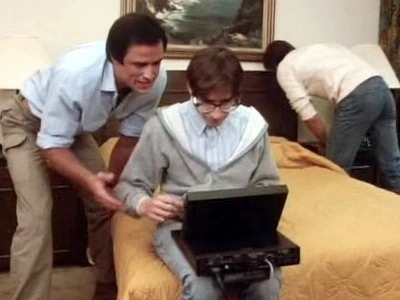
Murray sometimes took a GRiD Compass out when the crew went away from the boat. I enjoy seeing what counted as a computer you could take with you. The screen opens, somebody’s got to put it somewhere, and the people standing around can see that using it takes up part of the afternoon. It fit in a detective show where the new thing could go somewhere you’d already been. You’d seen the guys work from the boat. Now Murray could bring a little more of what he did on the boat with him.
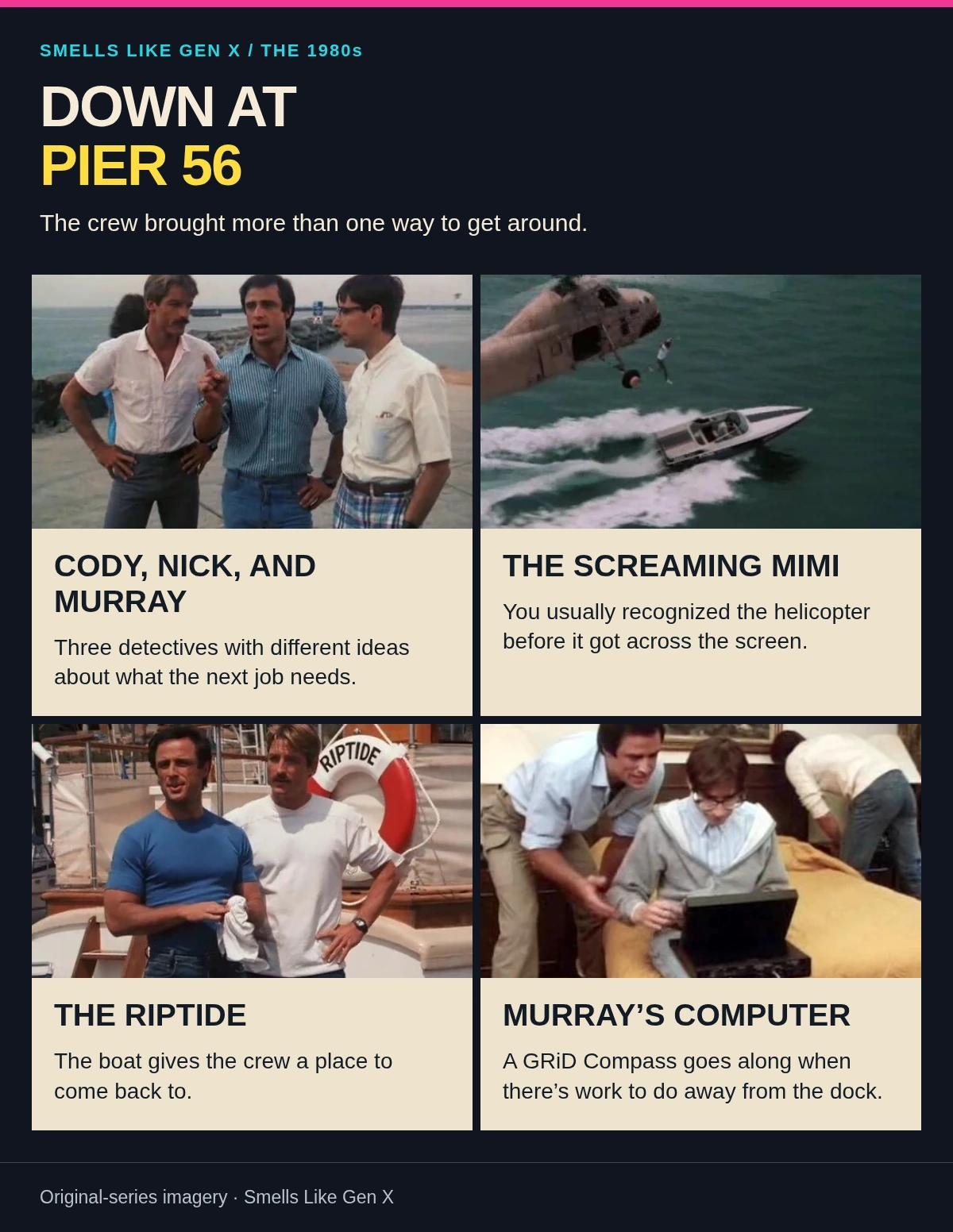
Everybody was already down at Pier 56
The two-hour “Pilot” starts with an explosion at sea and gives Mama Jo a reason to be out on the water. Anne Francis plays Mama Jo, who rescues Kimba Hall and brings her back to Pier 56. Kimba ends up under suspicion and the guys have a case. I like how much of the show’s home base you get out of that first job. If I were trying to remember where the boat was and who could show up looking for help, I could spend worse company on a first night.
There’s a nice feeling to the marina as a place where somebody can know more than you thought they did. A person is around when a boat comes back in. Somebody recognizes who has come down to the dock. Once the same faces show up often enough, it feels like you’re watching a neighborhood. You could take a ten-minute walk along a waterfront like this and hear six different versions of something that happened on the water. I can believe a detective agency would find plenty to do there.
Lt. Quinlan, played by Jack Ging, has an official reason to come around when the boys know enough about a case to make his work more complicated. Ging can make you feel the amount of time he’s spent hearing people say they can explain things if he’ll just give them a minute. Meanwhile the three people who live around the dock would like him to give them that minute and then maybe another one.
“Raiders of the Lost Sub” brings Murray’s sister Melba into the story, with a theory about a World War II submarine facility on the West Coast. She arrives when business is quiet enough for everybody to have noticed. Having a relative who turns up with a theory and a use for a detective agency is a pretty good way to spend a day that began with nothing going on. You get Murray with a person who knew him before there was a boat full of work for him to do.
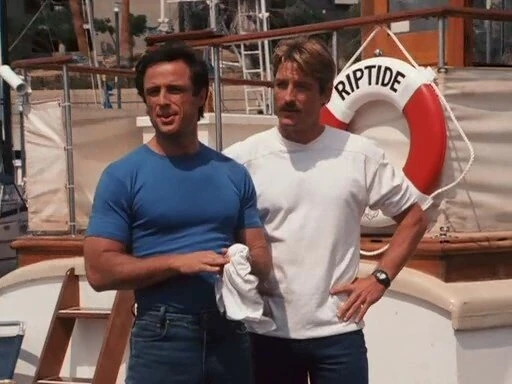
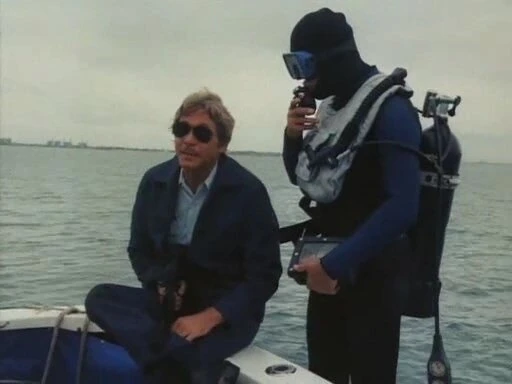
“Catch of the Day” gives the hour a reason to get out on the water, and I still get a kick out of how much you can tell just from seeing somebody dressed to dive standing beside somebody who plainly isn’t. Television could give you a sense of the day’s work without asking you to remember what had gone wrong the week before. I can turn on an episode years after I last saw it, watch somebody balance himself on the edge of a boat, and have an immediate opinion about what he’s about to do.
It had a spot on Tuesday for a while
Riptide arrived at the beginning of 1984 and spent its first two seasons on Tuesday nights. An early Washington Post ratings report had it at No. 14 for the week ending January 15, two weeks into the run. There was an audience finding the boat, the helicopter and the three guys pretty much as soon as they showed up. The 1983–84 TV lineup and the 1984–85 season give you more of the company they were keeping when the show was new.
What sticks with me about the NBC action shows from that part of the decade is how easily I can recognize one as it’s coming on. There could be an argument in the room about whose turn it was to pick something and suddenly you heard the beginning of a theme you wanted to hear out. Riptide has plenty to show you while you’re deciding if you’ve got time for it. If all I saw was that helicopter, I could remember the night before I could remember the title.
There’s something I like about a show that gives you room to come and go that way. Spend a few weeks away, find it again and the three guys can get a new job without making you look up where they’d left off. It made sense when it was on a schedule with everything else you had to do that night. It makes sense now if you have an hour and want to get back to a time when you could watch a boat leave the dock and see where the show went with it.
There were three seasons and the run reached 1986. The scheduling changed by the time it was winding down. If you remember it showing up later and wondered how much of it you’d missed, I’m with you. A show could move to a different night, the local listings had to tell you where it was, and you could still wind up turning on the set to see what had taken its place.
Four ways back to the boat
Start with the “Pilot” if you remember the vehicles first. The case and the dock make a nice way to meet the people. “Somebody’s Killing the Great Geeks of America” is where I’d go if all I could remember about Murray was the robot. The case gives you a reason to spend time with him and to see how much of the show he brought with him.
“Raiders of the Lost Sub” has the boat, the family visit, and the kind of big claim you can hear someone make over a meal while everybody else decides whether there’s time to go look. It seems to me like a good episode to catch after you’ve spent a little time with the three guys. You get to see what happens when somebody from outside the regular workday gets to tell them how they’re going to spend it.
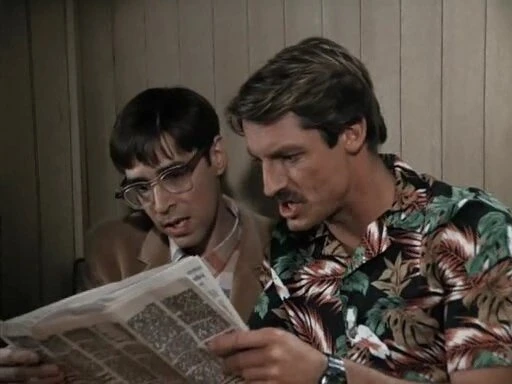
“If You Can’t Beat ’em, Join ’em” is a late-run episode in which a TV detective show wants the crew to consult. Its two leads get to watch the real detectives work a case. There’s a nice piece of nerve in having characters who are already television detectives spend an hour dealing with people who play detectives on television. It’s even better if you know which one of the three you’d trust to tell them how the job works.
I’d still spend a little time on the opening when I came back. For a while there were three guys on a boat at Pier 56, with a pink helicopter and a robot nearby. That takes less time to remember than it does to say, and a little more than an hour to get all the way out of my head once I’ve seen it again.
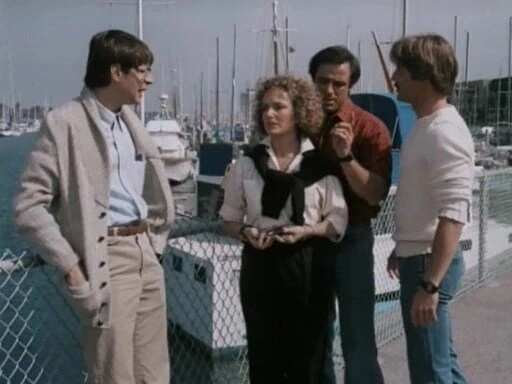
There’s also a pleasure in going through a show like this with somebody who only knows Perry King or Joe Penny from a later job. Give them an hour with Cody and Nick at the marina and see how long it takes them to pick out Murray as the guy they want to have handy when something stops working. That’s about how the show gets me every time. I come back to see the helicopter and keep watching because I’m glad somebody brought a computer.
Questions about Riptide
When did the original Riptide air?
NBC premiered the 1980s Riptide on January 3, 1984. The series ran for three seasons into 1986, beginning with a two-hour pilot. Its first two seasons were part of NBC’s Tuesday schedule.
Who played the detectives on Riptide?
Perry King played Cody Allen, Joe Penny played Nick Ryder, and Thom Bray played Murray “Boz” Bozinsky. Cody and Nick had served together, and Murray brought his electronics and computer skills to the detective agency.
What were the Riptide helicopter and robot called?
The pink helicopter was the Screaming Mimi. Murray’s robot was Roboz. Riptide was the name of the boat where the detectives based their operation.
Where was Riptide set?
Riptide followed the detectives around a Southern California waterfront. The show’s home base was Pier 56 in King Harbor, with the boat, the marina, and the people who knew their way around it.