Real People in the 80s: Before Reality TV Had a Name
There was a studio audience, a road crew, and a good chance the next person on TV reminded you of someone you knew.
A few minutes with somebody who had a story worth bringing back to the studio.
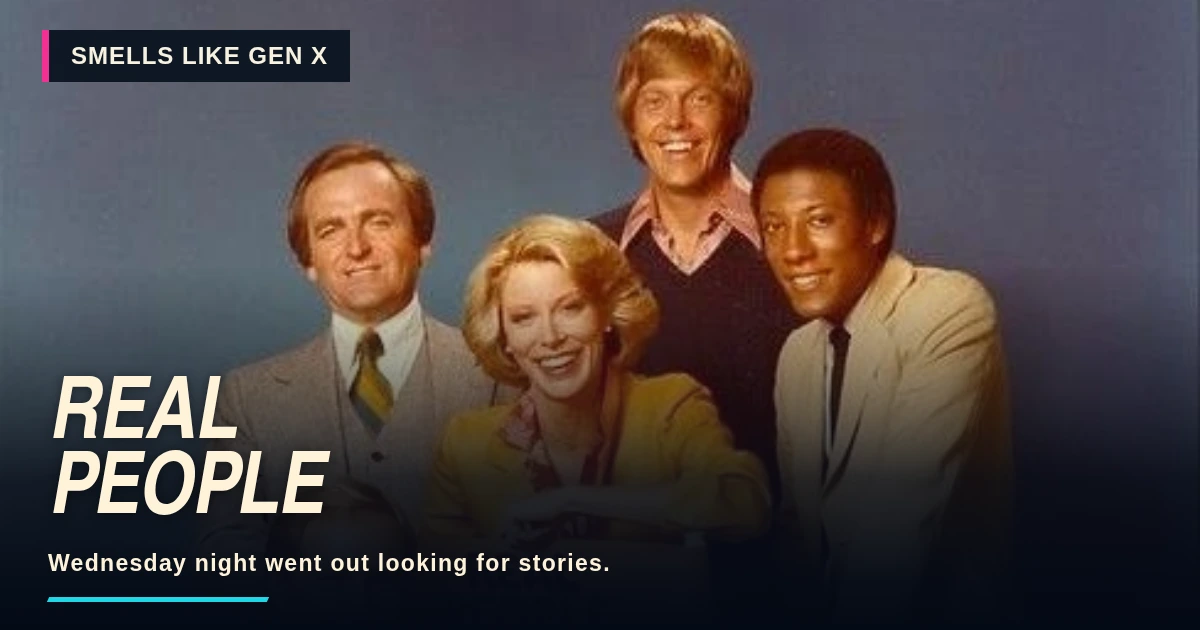
Somebody sent in a newspaper clipping. Somebody else had figured out a way to put a ship in a bottle. A reporter had found a couple who could spend their retirement hauling disco equipment out of the garage. Put those people in the same hour of television and I’d have stayed to see where we were going next.
That’s what comes back to me about Real People. There were familiar faces in the studio, but the reason to keep an eye on the screen was usually a person you hadn’t met yet. The show began on NBC on April 18, 1979. If you want to put that first spring back in its surroundings, our ’70s television guide has the rest of the dial. By the early ’80s there was a place in the week for Sarah Purcell, Byron Allen and company to turn up and tell us who they’d been to see.
People were already using words like reality and infotainment for this kind of television. What I remember is the simpler pleasure of watching a reporter ask somebody a question in their own town. Sometimes the person had a funny answer. Sometimes you could see they’d been waiting a long time for somebody to come ask.
Inside This Article
- You could recognize the hosts before you knew where they’d been
- The people on television could have come from your town
- The retired disco DJs are my kind of television
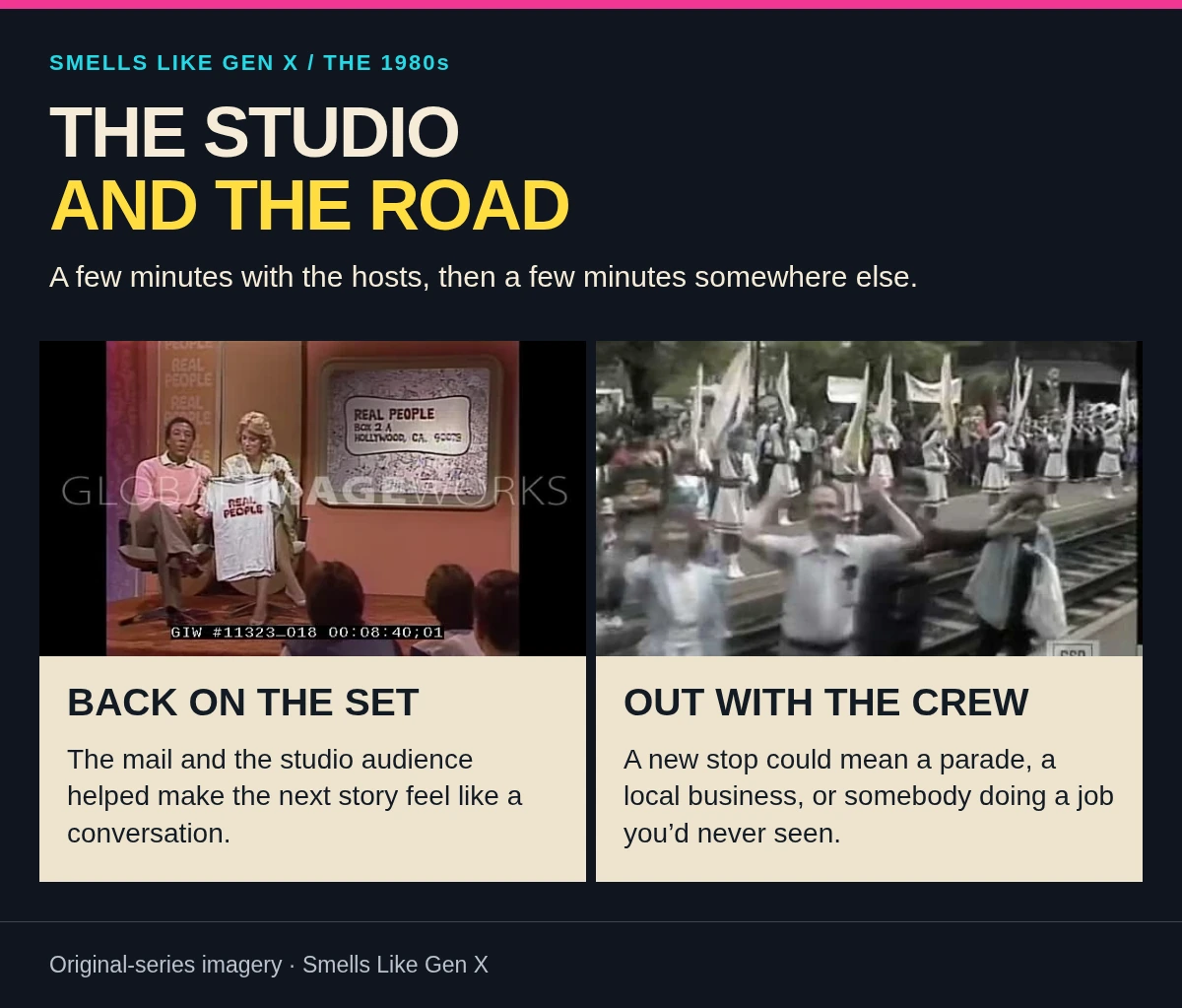
- The mailbox was part of the show
- Every so often the room got quiet
- The show could get a host out of the studio, too
- What ABC found on the other channel
- Where I’d start now
- A few things I had to look up
You could recognize the hosts before you knew where they’d been
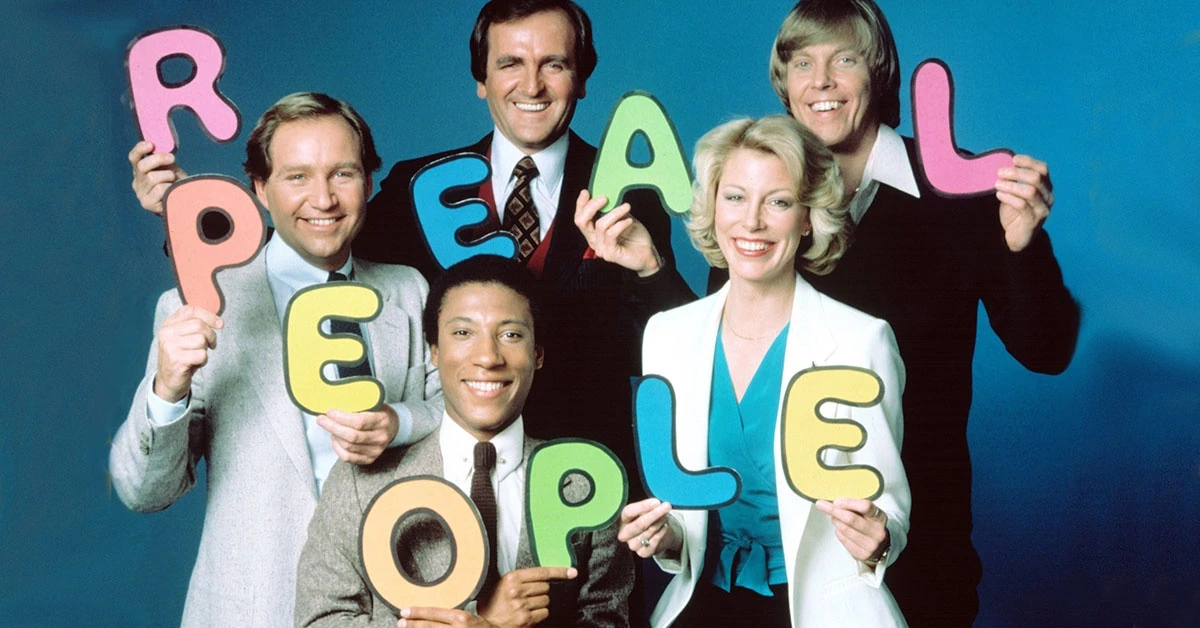
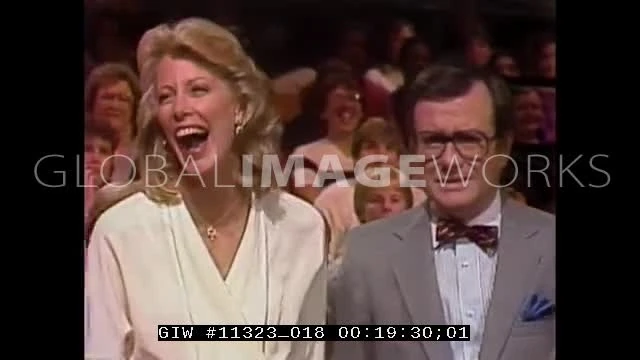
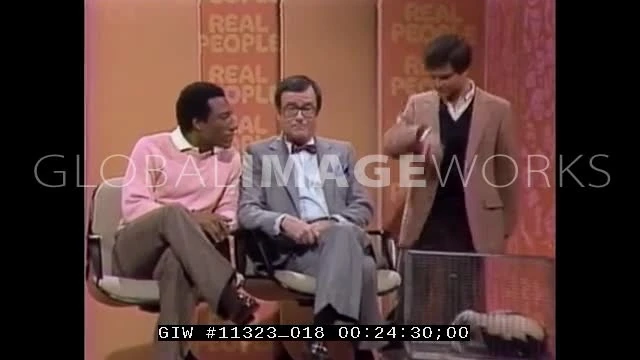
George Schlatter produced the show. The lineup changed over the run, and some of the faces you might put in the same photograph had different years of regular appearances. Sarah Purcell, John Barbour, Byron Allen and Skip Stephenson were among the familiar names. So was Bill Rafferty, who could bring back a story from somewhere a television viewer might never have had much reason to see.
I like remembering the studio for what it gave the person at home. There was a crowd there to hear the same introduction we were hearing. You could get a laugh out of a story before seeing any of the people in it. Then the show went out on the road and the room on the other side of the camera could have an entirely different feeling. That made it possible to go from a gag about a newspaper headline to somebody who needed a few minutes to explain something they’d spent years doing.
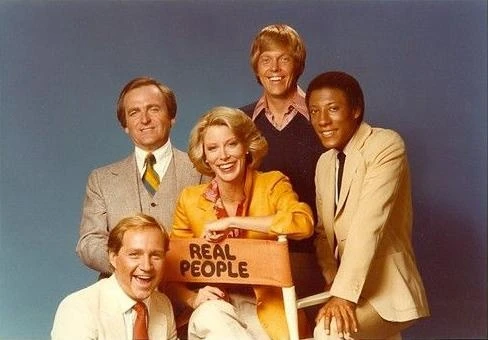
A good field piece needs a reporter who can find the next question when the first answer turns out to be more interesting than expected. Purcell and the rest of the crew could be part of the fun. They were also there to give you a feel for a person who might never be on television again. I appreciate that part more now than I did when I was mainly hoping the next thing would make the room laugh.
If you’ve ever told somebody about a person from your hometown who did a very particular thing, you know how much of the story depends on what you think of them. It’s one thing to announce that a person builds ships in bottles. It’s another to have spent a morning with him and learned that he has a pretty good reason to keep getting up to do it.
The people on television could have come from your town
One surviving program has Bill Rafferty visiting George Fulford, a retired meatpacking worker who built ships in bottles. He’d put together a large collection and made tiny parts from things he had on hand. I like this story for the time it gives you to imagine the room where he did it. Somebody had to find a piece of wire that would do for an anchor and sit long enough to make it look like one.
A person who does careful work like that can have a whole set of reasons for doing it that nobody has asked him to say out loud. The more of the ships you see, the easier it is to wonder how he got started and what he’s working on next. Before long you have as many questions about the man in the room as you do about getting the ship through the opening.
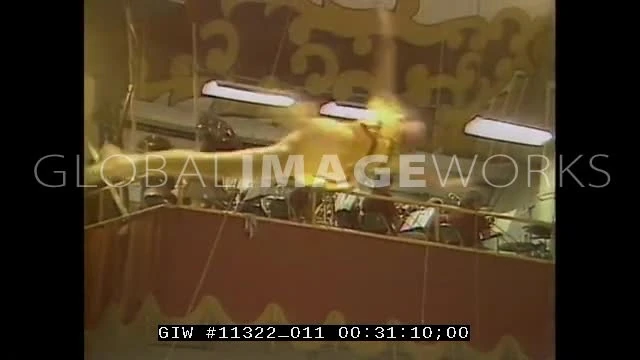
In another archived broadcast, Sarah Purcell visits the amateur circus in Peru, Indiana. The performers include kids and young people, and the work of putting on a circus belongs to a lot of people in town. I’d enjoy that story even if I knew exactly what the acts were going to be. A parent watching from the ground has a different afternoon from the kid on a trapeze. The town has another reason to pay attention when it’s somebody they know up there.
That’s what I liked about the idea of going out to see people. There was a decent chance the setting mattered as much as the thing the person could do. You got to see somebody at work in a place they already knew and take a guess at what would go on there after the camera left.
The retired disco DJs are my kind of television
I have a soft spot for the piece about Meyer and Estelle Share. In the Global ImageWorks record of the broadcast, Purcell goes to see the retired couple in Queens who ran a mobile disco. They carried tapes, amps and speakers and played events that could include dances for other older people. Meyer worked the microphone. Estelle had ideas about getting people out on the floor.
The thing I remember about taking equipment to a room is that the people who show up for the fun usually get there after the heavy work. Somebody has to figure out how far the car is from the place the speakers need to go. Somebody needs to have an opinion about how loud they can be once they’re in there. The way two people handle that part tells you a little about what the music is going to be like when it’s time to start.
A show like this could let the job sound as funny as it was. Here were two people who’d worked other jobs and decided to do something together that meant carrying more things up more stairs. They could talk about the difference between what a young crowd wanted and what the people their own age were willing to get up for. The conversation is as good a reason to watch as hearing what they played.
Some of the people the show visited had a talent you could demonstrate in seconds. I like this one because it’s about an evening you’d want to stay and see through. You can think about the two of them doing it again tomorrow and have a fair idea who’s going to be talking while they load the car.
The mailbox was part of the show
People sent in pictures of signs and odd bits of print. A sentence that looked perfectly ordinary to whoever laid out the local paper could sound a little different in front of a studio audience. You could hear a host give it a chance to settle and then somebody in the room would hear the other meaning.
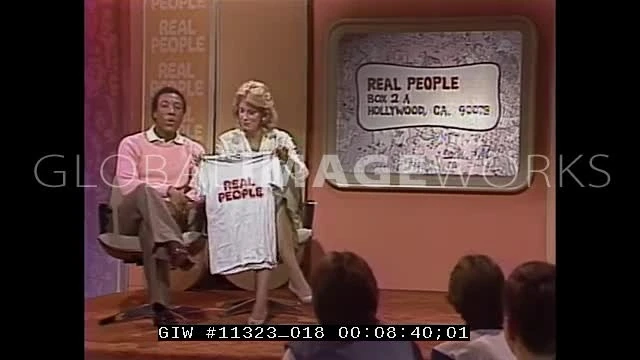
This was a good kind of joke for a house with a newspaper in it. There might be something worth calling across the room about right there on the page. If it was especially good you could clip it out or leave the paper open for somebody to find later. Real People gave that small thing another place to go. The people who sent items in could get a show T-shirt. And there was the possibility your town would get read out on television because somebody had seen the funny part of a line of type.
I like how low the threshold was for joining in. A person could happen on a marquee while they were going somewhere else and have a reason to remember who might enjoy it. The studio audience gave you a little of what you wanted to hear when you showed that thing to somebody in person. They understood it, or they understood it just a second later, which might have been even better.
The clips can take you back to the act of looking at a piece of paper with somebody else standing nearby. It’s a small thing to bring back from a television show. It’s one I’m glad the show made time for.
Every so often the room got quiet
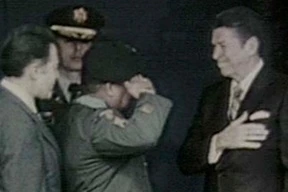
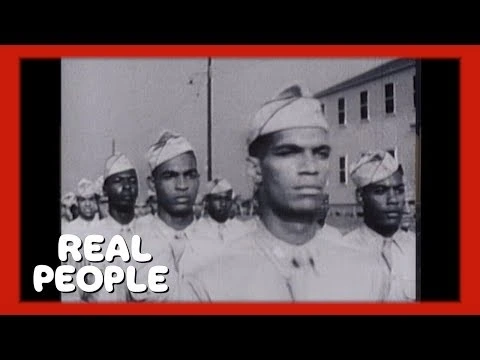
The producer’s archive includes reports on the Navajo Code Talkers and the Tuskegee Airmen. That’s a different use of a prime-time visit than asking somebody to show you an unusual hobby. There are people who can tell you what they did and what it was like to do it. You have an opportunity to listen because a show you put on for company has decided there’s a reason to go see them.
I think about the viewer who might not have heard much about either group in school by the time those stories came along. The television could put a face and a voice to a part of history that had never had much of either in that house. A handful of minutes is a small amount of time. It can still give somebody a reason to ask where they can hear a little more.
In one archived episode, Byron Allen meets Roger Crawford, a competitive tennis player and coach who plays with limb differences. It’s a piece with room for a racket, a coach and a person who knows exactly what he wants out of the game. I’d much rather hear what a tennis player has to say about how he plays than have a host use up that time telling me how to feel about him. That’s the part of the report I want to go back for.
A host might have a joke waiting when the show came back to the studio. I’m glad the hour could also let a person finish telling a story before we got there. The shift was part of watching it. Everybody in the room could have a different reason to want to hear what happened next.
The show could get a host out of the studio, too
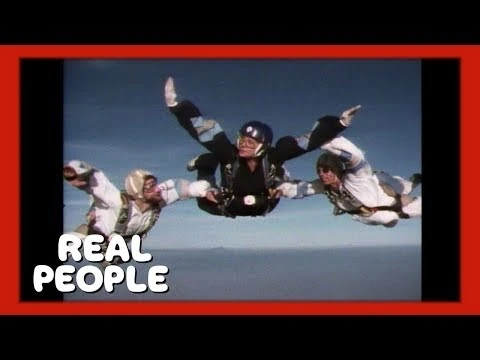
Sarah Purcell’s skydiving segment is in George Schlatter’s archive. It gives me the same curious feeling I get when a presenter finally agrees to do something they’ve been helping other people talk about. Somebody has to get into the plane. Somebody has to take the next step. There’s only so much the person at home can do to make either one easier.
I also like the other kind of outing, when the reporter gets someplace a little out of the way and finds that the person they’re interviewing considers it a perfectly ordinary part of the week. The program could have a man in Toronto showing how to work on a tiny ship, or Sarah visiting people who expected to see a circus every summer. The fun is finding out what a good afternoon looks like for the people already there.
The Paley Center lists a New York special from November 25, 1981. Even the idea of a Real People special built around a place sounds right. You could do several stories and still have a good reason to think you’d only heard from a small part of the people there. For a show about whatever a reporter could find in the course of a visit, a city full of people had plenty of room left.
What ABC found on the other channel
NBC had Real People in 1979. ABC brought out That’s Incredible! in 1980. You can see why a person who watched both would remember them as part of the same period. Each one had a studio full of familiar faces and a chance to see something you weren’t planning to see when you got home.
There’s a difference I still feel when I go back to the stories. The ABC show could get me to wait through a break to see a feat. I want to hang around Real People for the part where somebody explains why they went to all the trouble. Both could make room for a good performer. The reporter sitting with a person who had never expected to have a story on television is what I look for when I turn this one on.
Our 1980 TV lineup puts that new ABC series in the same season as a lot of television you could identify in a few seconds. NBC’s earlier program had already given people something to talk about. I like remembering the competition from the couch. One day you might hear about a person who had done a thing you couldn’t imagine doing. Another day you could spend a few minutes listening to somebody talk about a job you’d never known existed.
The name for this kind of television changed and the shows that followed went in a lot of directions. I’d still stay in the room for two people loading speakers into a station wagon and explaining how they decided this was a good way to spend their retirement.
Where I’d start now
Put on a clip from the producer’s archive and give it time to get through the introduction. I’d start with Purcell’s skydive for the feeling of seeing somebody familiar in a place she wasn’t normally going to be. Then try one of the historical interviews. If you find a full archived hour, see how much you enjoy the part where the studio audience hears a bad line from a local paper.
The bit I like to remember is the person who had already spent a long time doing something by the day NBC turned up. They had their own plans for the next morning. The show gave the rest of us a few minutes to see what those plans might be.
A few things I had to look up
When did Real People run?
The original NBC series began on April 18, 1979, and continued into 1984. The 1991 reunion was a later special.
Who hosted Real People?
Sarah Purcell, John Barbour, Byron Allen, Skip Stephenson and Bill Rafferty were among the recurring presenters and reporters. The lineup changed over time.
Who produced the show?
George Schlatter was the executive producer. His archive preserves several stories from the original program.
What could viewers send in?
The show welcomed funny signs, photographs and newspaper items. Some of the submissions became part of the studio segments.
Sources & Further Reading
- George Schlatter — Real People’s original clips and series history
- Television Academy Interviews — Real People and its original run
- The Paley Center — the November 1981 New York special
- Global ImageWorks archive — the Peru circus, disco DJs and other reports
- Global ImageWorks archive — Roger Crawford, George Fulford and other reports